Writing the book was supposed to be the hard part. It wasn't.
Over 4 million titles hit Amazon annually. Your book is competing with all of them, and standing out requires more than a good cover and a prayer. In 2026, book marketing tools span email platforms, social schedulers, advertising dashboards, promotion services, analytics apps, and design software. Most authors respond to this in one of two ways: they buy every author marketing tool recommended in a Facebook group and burn through cash, or they avoid marketing entirely and hope readers find them. Neither works.
This guide covers 15 specific tools, each evaluated on what it actually does for best book marketing outcomes, what it costs, and who should (and shouldn't) use it. We reviewed pricing, user ratings, and author community adoption for every tool on this list. Selection criteria: relevance to book marketing specifically, pricing accessibility for indie authors, ease of use without a marketing degree, and proven adoption in the publishing community.
What's inside
This guide covers 15 book marketing tools across 7 categories (email, social media, advertising, analytics, promotion, design, and author platforms). Here's what you'll find:
- A side-by-side comparison table with pricing and G2 ratings for all 15 tools
- Detailed reviews with honest limitations for each tool
- A "when to use" framework organized by your marketing stage
- Budget-tier recommendations ($0/mo, $50/mo, $200+/mo stacks)
- A decision framework for choosing the right 3-5 tools
- 8 FAQs covering the most common author marketing questions
TL;DR
- Book marketing in 2026 requires tools across email, social, advertising, analytics, and promotion, but most authors only need 3-5 from this list
- BookBub remains the single highest-ROI promotion channel for most authors
- Kit (formerly ConvertKit) and Mailchimp dominate author email marketing for different reasons: Kit for its 10,000-subscriber free tier and segmentation, Mailchimp for familiarity and design
- Amazon Ads is unavoidable if you sell on Kindle, but expect a learning curve and $150-300 in testing before profitability
- Canva replaced hiring a graphic designer for 90% of author marketing visuals
- Free tiers exist for most tools on this list, so test before committing budget
What are book marketing tools?
Book marketing tools are software platforms and services that help authors and publishers promote, distribute, and sell books. Book marketing software spans multiple categories, and understanding the taxonomy helps you pick the right tools instead of buying everything.
Here are the 7 core categories of book promotion tools:
- Email marketing platforms: Build and manage reader lists, send newsletters, automate welcome and launch sequences. For a broader look at this category, see our guide to the best email marketing software tools.
- Social media tools: Schedule posts, manage multiple platforms, track engagement metrics. We also cover the best social media management tools in a dedicated review.
- Book promotion services: Feature deals, price promotions, and new release announcements to curated reader audiences
- Advertising platforms: Run paid campaigns on Amazon, Facebook/Instagram, and BookBub
- Analytics tools: Track sales, ad performance, keyword rankings, and reader behavior
- Design tools: Create social graphics, ad creatives, bookmarks, and promotional materials. Check out our roundup of the best content creation software tools for more options.
- Author website builders: Build landing pages, author sites, and reader funnels
Most authors don't need a tool in every category. Your genre, budget, and publishing stage determine which categories matter most right now.
When to use book marketing tools
As a book marketer, your priorities shift depending on where you are in the publishing cycle. Don't think in tool categories. Think in stages.
Pre-launch (building your audience before publication)
- Start an email list 3-6 months before publication (Kit or Mailchimp)
- Establish social media presence and schedule content (Buffer or Hootsuite)
- Run a cover reveal campaign using design tools (Canva)
- Collect advance readers and deliver ARCs (BookFunnel)
Launch week (maximizing visibility at release)
- Send email blast to your full list (Kit or Mailchimp)
- Submit for a BookBub Featured Deal (apply 2-4 weeks early)
- Launch Amazon Ads campaigns targeting genre keywords
- Run a coordinated social media blitz (Buffer)
- Cross-promote with other authors (StoryOrigin)
Ongoing promotion (sustained sales after launch)
- Maintain evergreen Amazon Ads campaigns with ongoing bid optimization
- Run backlist promotions through Written Word Media and Freebooksy
- Nurture your email list with regular newsletters and automations
- Track website traffic and optimize for SEO (Google Analytics, WordPress)
Series and backlist marketing
- Use a permafree first-in-series strategy with promotion services
- Track read-through rates across your series (Book Report)
- Retarget readers who bought book 1 with Amazon Ads on book 2
- Run series bundle promotions through Written Word Media and BookBub
Book marketing tools comparison table
The table below ranks tools by general usefulness to the broadest range of authors, not by quality score. Pricing reflects current published rates as of 2026. G2 ratings are included where available. Use this as a quick reference for book promotion tools before diving into the detailed reviews.
| # | Tool | Category | Best For | Pricing | G2 Rating |
|---|---|---|---|---|---|
| 1 | Mailchimp | Email marketing | Author newsletters and automations | Free; from $13/mo | 4.3/5 |
| 2 | Kit (ConvertKit) | Email marketing | Creator-focused list building | Free; from $25/mo | 4.4/5 |
| 3 | BookBub | Book promotion | Featured deals to millions of readers | Free profile; Deals from $200+ | 4.3/5 |
| 4 | Amazon Ads | Paid advertising | Sponsored ads on Amazon | Pay-per-click (no min) | 3.8/5 |
| 5 | Canva | Graphic design | Social graphics, ad creatives | Free; Pro from $13/mo | 4.7/5 |
| 6 | Publisher Rocket | Keyword research | Amazon keyword/category research | $199 one-time | 4.5/5 |
| 7 | Hootsuite | Social media | Multi-platform scheduling | From $99/mo | 4.2/5 |
| 8 | Buffer | Social media | Simple social scheduling | Free; from $6/mo/channel | 4.3/5 |
| 9 | Meta Ads | Paid advertising | Targeted ads to reader audiences | Pay-per-click (no min) | 4.2/5 |
| 10 | Written Word Media | Book promotion | Multi-service book promotion | From $40/promo | N/A |
| 11 | BookFunnel | Reader magnets | Deliver lead magnets and ARCs | From $20/yr | 4.8/5 |
| 12 | WordPress | Author website | Full author website and blog | Free; hosting from ~$3/mo | 4.4/5 |
| 13 | Google Analytics | Web analytics | Track website traffic and behavior | Free | 4.5/5 |
| 14 | Book Report | Sales analytics | Real-time KDP sales dashboard | $14.99 one-time | N/A |
| 15 | StoryOrigin | Cross-promotion | Group promos, newsletter swaps | Free; from $10/mo | N/A |
1. Mailchimp
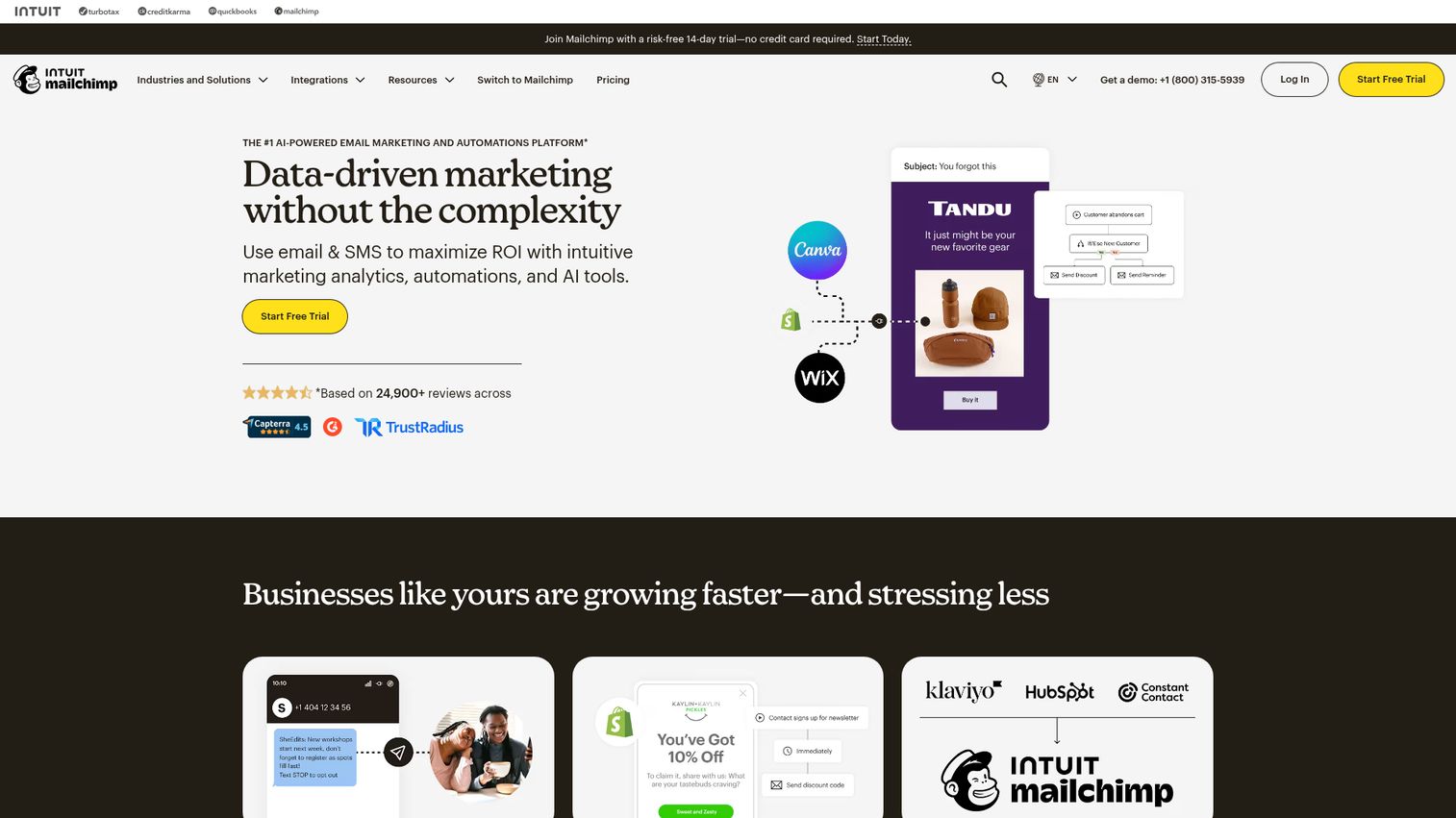
Mailchimp is the email marketing platform most authors encounter first, and for good reason. The free tier supports up to 500 contacts, the drag-and-drop editor requires zero technical skill, and the landing page builder lets you create opt-in pages without a website.
For book marketing specifically, Mailchimp's automation features (welcome sequences, launch sequences, post-purchase follow-ups) are available on paid plans. It's also the most widely integrated email platform in publishing, connecting to virtually every other tool on this list.
Best for: Authors building their first email list who want a familiar, widely-supported platform.
Key strengths
- Free tier for up to 500 contacts with landing pages
- Drag-and-drop email builder with author-friendly templates
- Landing page builder included on all plans
- Wide integration with BookFunnel, WordPress, and 300+ apps
- Extensive tutorials and community support for beginners
Why choose Mailchimp: If you've never sent a marketing email, Mailchimp's learning curve is the gentlest. The template library, tutorials, and community resources mean you'll find an answer to almost any question within minutes. The integration depth also means it connects to whatever tools you add later. You can also explore the Mailchimp interactive demo to see the interface before signing up.
Pricing: Free (500 contacts); Essentials from $13/mo; Standard from $20/mo.
Honest limitation: Gets expensive fast past 500 contacts. At 1,000 contacts, you're paying $23/mo. The free tier removed automations in recent years, pushing authors toward paid plans earlier than expected. If your list is growing and you want free automation, Kit is more generous.
2. Kit (formerly ConvertKit)
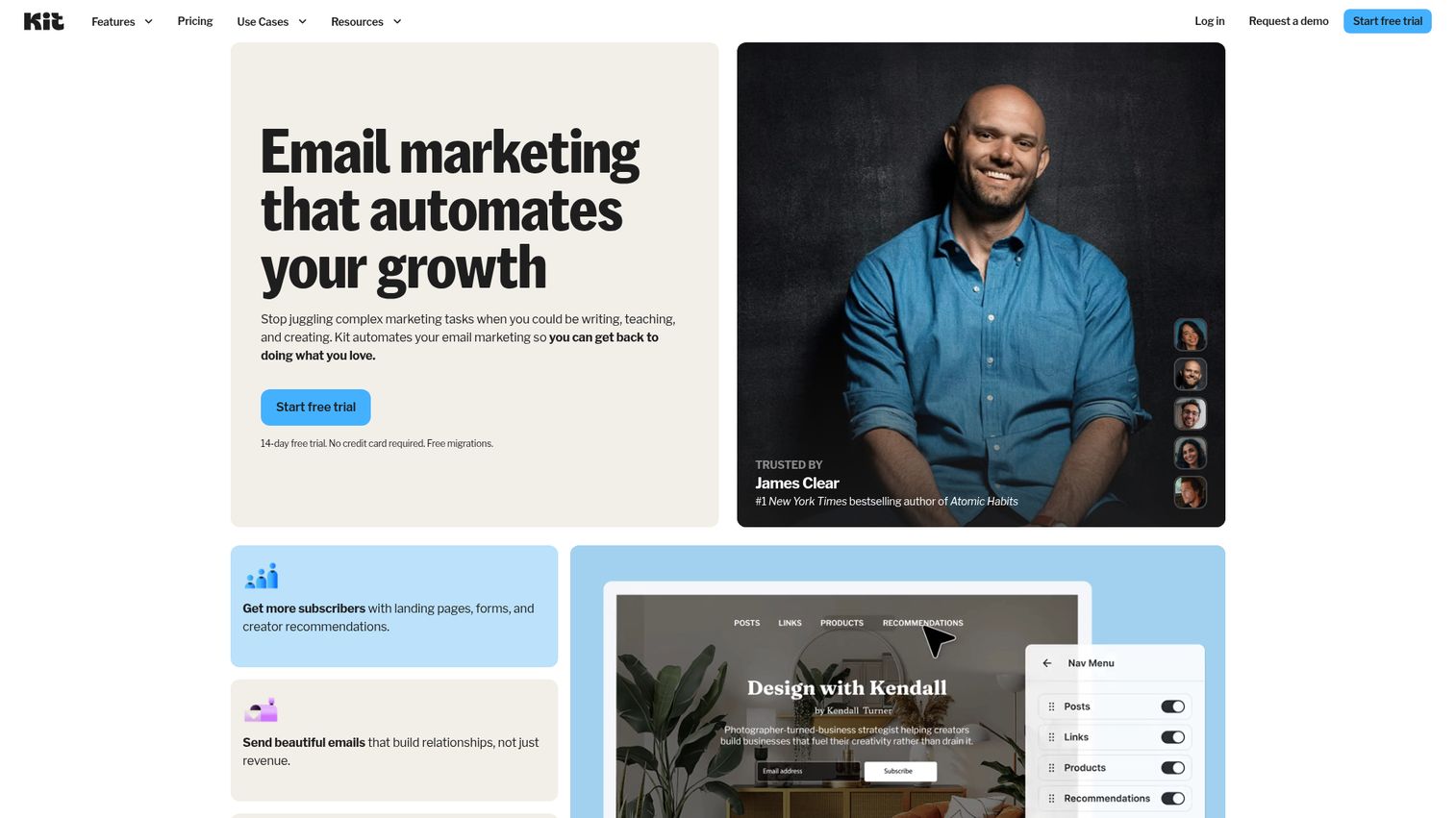
Kit is the email platform built for creators, with specific advantages for authors who want advanced segmentation without enterprise complexity. The free tier supports up to 10,000 subscribers, which is dramatically more generous than Mailchimp's 500-contact limit.
The tagging system lets you segment readers by genre, series, engagement level, or purchase history. The visual automation builder makes it possible to create complex launch sequences without writing code. Kit also includes built-in commerce features, so you can sell ebooks and courses directly to readers without a separate storefront.
Best for: Authors who want advanced segmentation and creator-specific features without enterprise complexity.
Key strengths
- Free tier supporting up to 10,000 subscribers
- Visual automation builder for launch and nurture sequences
- Built-in commerce to sell ebooks and courses directly
- Powerful tagging and segmentation by genre, series, or behavior
- Strong author community with creator-specific templates
Why choose Kit: The 10,000-subscriber free tier alone makes Kit the better financial choice for growing authors. The tagging system is where it pulls ahead for series authors: tag readers by which books they've bought, then automate targeted recommendations for the next book in the series.
Pricing: Free (10,000 subscribers, limited features); Creator from $25/mo; Creator Pro from $50/mo.
Honest limitation: Email template design options are intentionally minimal. Kit favors plain-text-style emails. Authors who want highly designed, image-heavy newsletters may find it limiting compared to Mailchimp or MailerLite.
3. BookBub
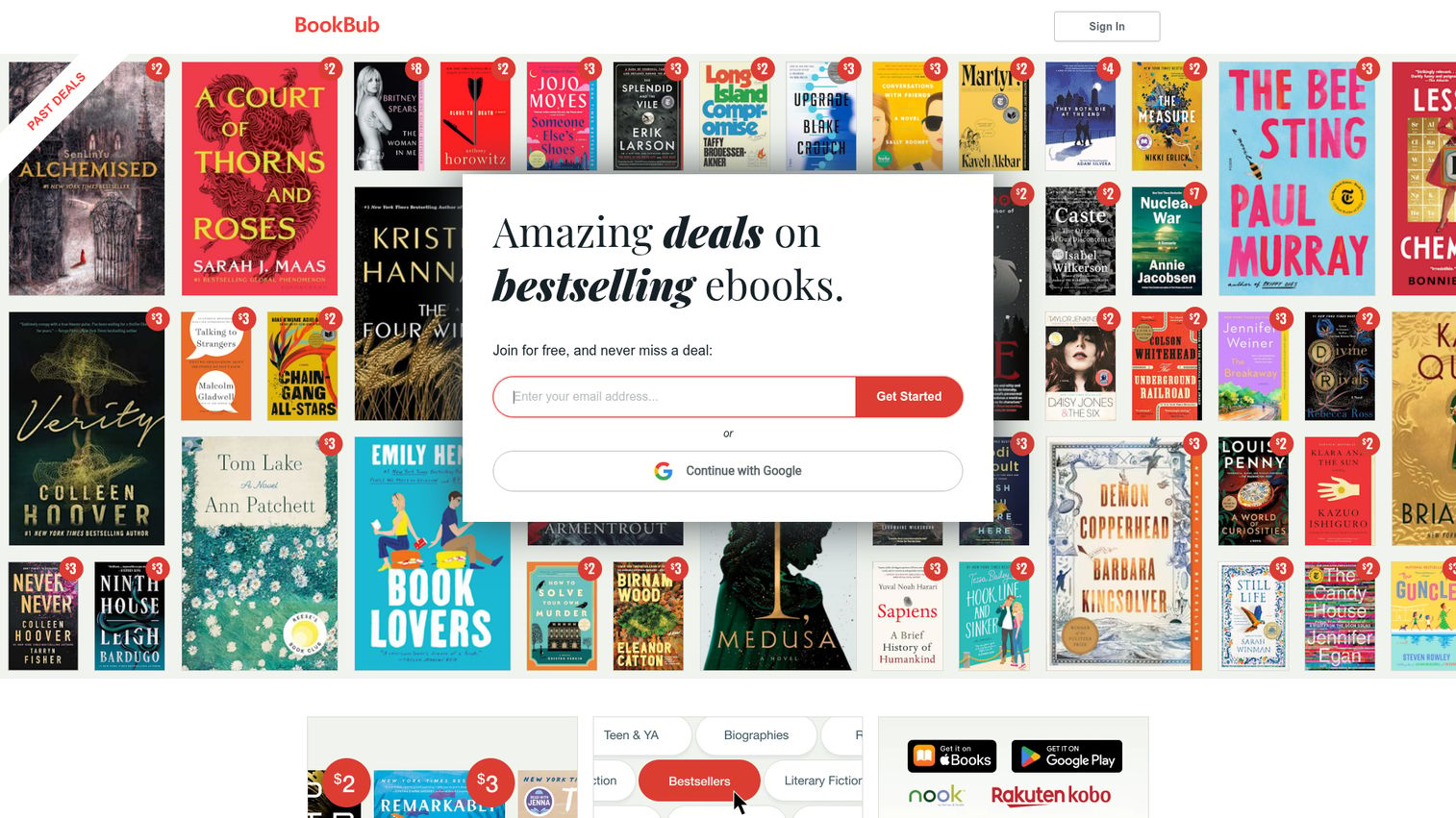
Among book promotion tools, BookBub stands alone in reach. It operates the largest curated reader email list in publishing, with millions of genre-specific subscribers who've opted in to receive book deals.
BookBub offers two distinct products. Featured Deals are curated email promotions sent to BookBub's massive reader lists. You apply, BookBub's editorial team decides if your book is selected. Acceptance rates are estimated at 10-20%. BookBub Ads is a separate, self-serve advertising platform where you create campaigns targeting BookBub's reader base. The free Author Profile includes a follower system and new release alerts.
Best for: Authors running price promotions (free or discounted) who want massive, targeted reader reach in a single day.
Key strengths
- Largest curated reader email list in publishing
- Genre-targeted Featured Deals with proven ROI
- Self-serve BookBub Ads platform for ongoing campaigns
- Free Author Profile with follower system
- New release alerts sent automatically to your followers
Why choose BookBub: A single Featured Deal can generate hundreds to thousands of downloads or sales in 24 hours. No other promotion channel in publishing matches that concentrated reach. The free Author Profile alone is worth setting up, as followers get notified every time you publish.
Pricing: Free Author Profile; Featured Deals from ~$200 (nonfiction) to $3,000+ (popular fiction genres); BookBub Ads are pay-per-click with no minimum.
Honest limitation: Featured Deal acceptance is competitive and not guaranteed. Costs vary significantly by genre (romance is cheaper; thriller and mystery are more expensive). BookBub Ads have a steep learning curve and lower volume than Amazon or Meta ads.
4. Amazon Ads (KDP Advertising)
Amazon Ads is the most direct path to reaching buyers at the point of purchase. When someone searches "cozy mystery series" on Kindle, your Sponsored Products ad can appear in those results or on competitor book pages.
The platform offers Sponsored Products (search results and product pages), Sponsored Brands (banner-style ads for your author brand), and Lockscreen ads (on Kindle devices). Targeting options include keyword targeting (bid on search terms) and product targeting (bid on specific competitor book ASINs). Most successful authors treat Amazon Ads as an always-on channel, not a one-time campaign. Publisher Rocket (#6) is the companion tool for keyword research.
Best for: Authors selling on Kindle/KDP who want to reach readers actively searching for books in their genre.
Key strengths
- Ads appear at the exact point of purchase on Amazon
- Keyword and product (ASIN) targeting options
- No minimum spend requirement
- Detailed reporting on impressions, clicks, and sales
- Direct integration with your KDP sales data
Why choose Amazon Ads: No other advertising platform puts your book in front of someone who is actively searching for something to read right now. The intent is higher than any social media ad. With the online book sales segment growing at a CAGR of 8.6% (Stellar Market Research, 2026), Amazon's audience keeps expanding.
Pricing: Pay-per-click; no minimum budget; typical author spend ranges from $5/day to $100+/day.
Honest limitation: The learning curve is significant. Amazon's reporting has attribution delays and data lag that make optimization frustrating for beginners. Expect to spend $150-300 in testing before finding profitable campaigns. This is normal, not a failure.
5. Canva
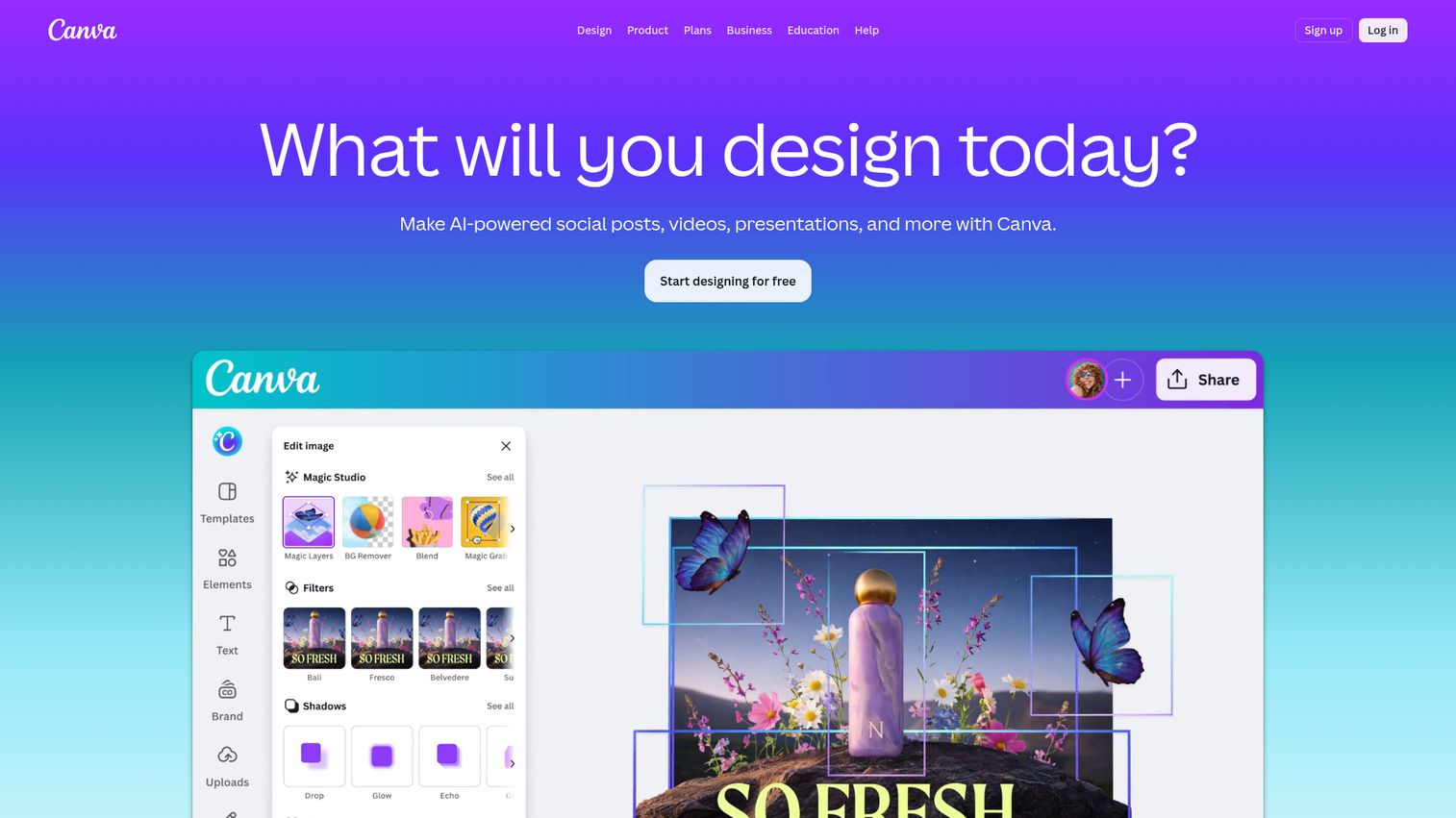
Canva made professional-looking book marketing graphics accessible to anyone without design skills. The template library includes book-specific designs for social posts, ad creatives, email headers, bookmarks, and promotional banners. You can preview the platform via the Canva interactive demo before creating an account.
For authors pursuing free book marketing strategies on social media, Canva's free tier handles most visual content needs. The Pro plan adds Brand Kit (consistent colors, fonts, and logos across all materials), background remover, and magic resize (adapt one design to every social platform's dimensions instantly).
Best for: Authors who need professional-looking marketing graphics without hiring a designer or learning Photoshop.
Key strengths
- Massive template library including book-specific designs
- Drag-and-drop editor with zero learning curve
- Brand Kit for consistent branding across all materials (Pro)
- Background remover and magic resize for multi-platform use (Pro)
- Free tier covers most author marketing visual needs
Why choose Canva: With BookTok driving over $800 million in book sales and accumulating 200 billion views (Write Light Group, 2026), visual content is non-negotiable. Canva lets you create scroll-stopping graphics in minutes, not hours.
Pricing: Free tier; Canva Pro from $13/mo (or $120/yr); Canva for Teams from $10/person/mo.
Honest limitation: Not a replacement for a professional book cover designer. Canva-made covers are identifiable and can hurt perceived book quality. Use Canva for marketing materials, not the cover itself.
6. Publisher Rocket
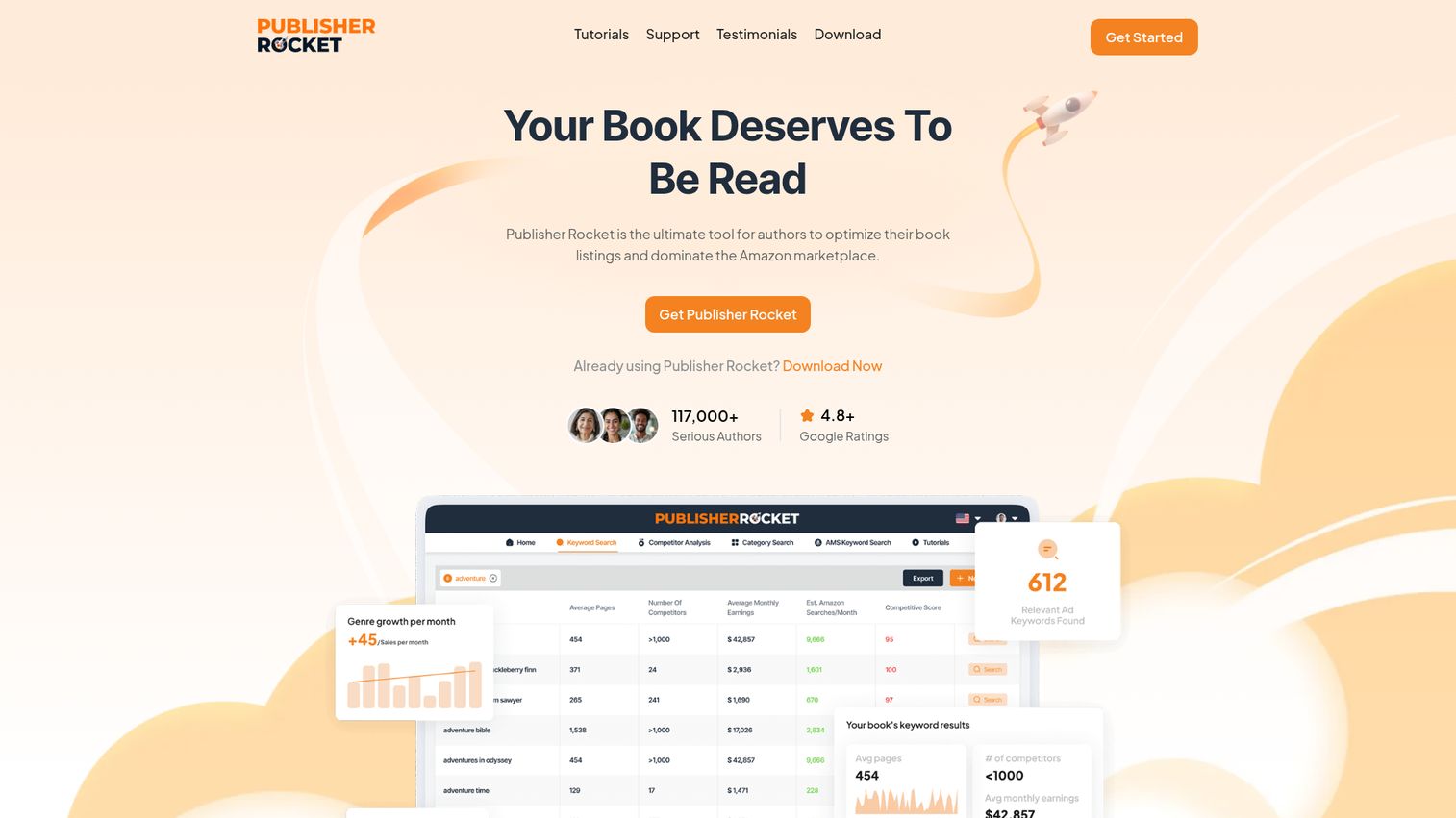
Publisher Rocket is the only dedicated keyword and category research tool built specifically for the book market. It analyzes Amazon search volume, competition scores, and category data to help you choose the right keywords for book listings and ad campaigns. If you're interested in keyword and SEO research tools more broadly, our list of the best SEO tools covers the wider landscape.
The AMS Keyword Search feature generates keyword lists for Amazon Ads campaigns. The Competition Analyzer shows estimated monthly earnings for competing books, so you can gauge market demand before writing or launching. The one-time purchase model is unusual and welcome in a world of monthly subscriptions.
Best for: Authors who want data-driven Amazon keyword and category selection instead of guessing.
Key strengths
- Amazon-specific keyword search volume and competition data
- AMS keyword generator for Amazon Ads campaigns
- Category explorer for finding less competitive categories
- Competition analyzer with estimated earnings per title
- One-time purchase with regular updates included
Why choose Publisher Rocket: Guessing at keywords costs money in wasted ad spend and missed visibility. Publisher Rocket replaces guesswork with data. The keyword lists it generates feed directly into your Amazon Ads campaigns, making tools #4 and #6 a natural pair.
Pricing: $199 one-time purchase.
Honest limitation: Data is Amazon-specific. If you sell primarily through other retailers (Kobo, Apple Books, B&N), the keyword data is less directly applicable. The interface is functional but not modern.
7. Hootsuite
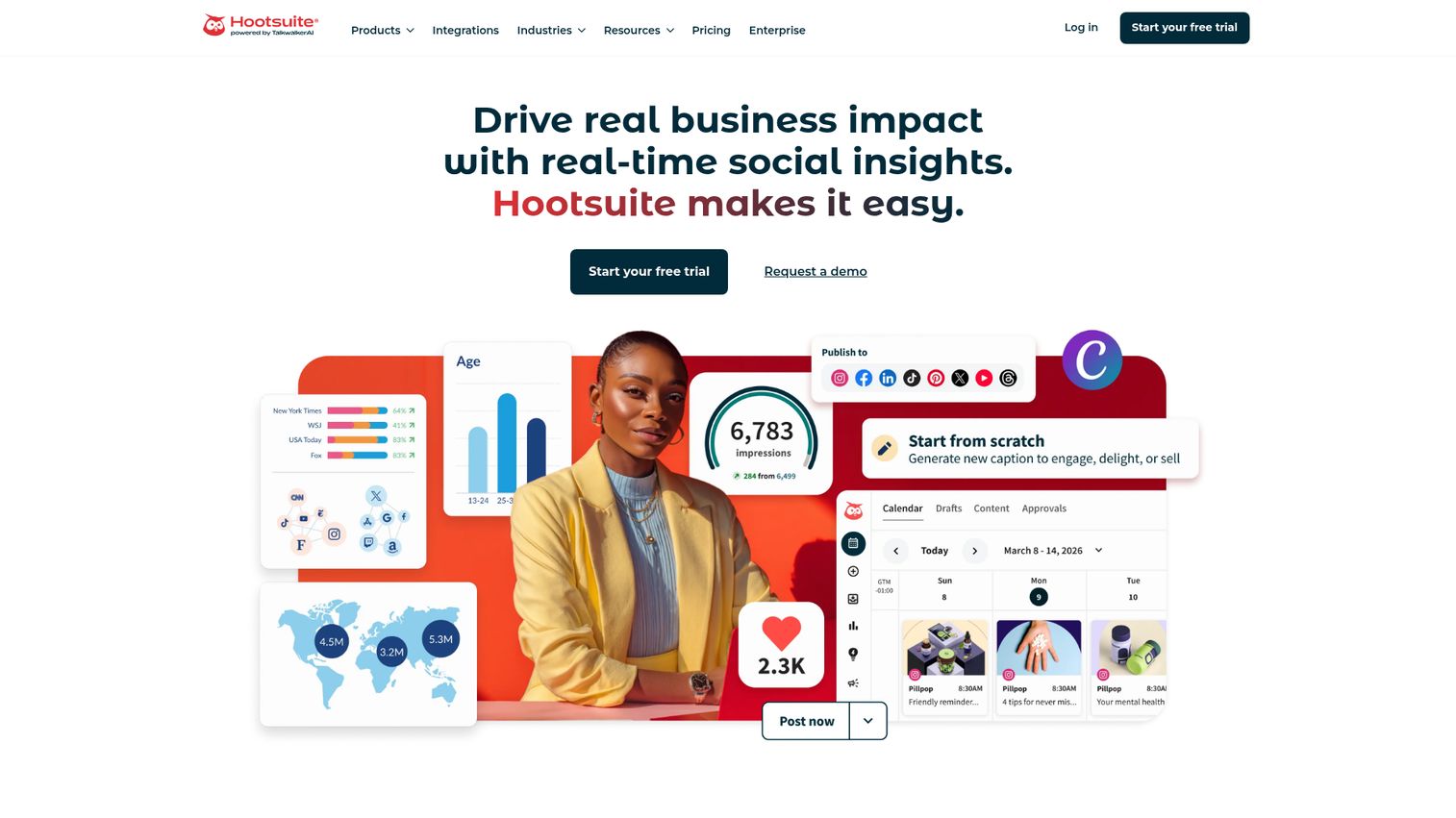
Hootsuite is the established social media management platform for authors active on 3 or more platforms. It covers scheduling, publishing, analytics, and content calendar management across every major network, including TikTok (critical for BookTok in 2026).
The social listening feature lets you track mentions of your book title, pen name, or genre keywords across platforms. AI-powered content suggestions help fill your calendar when inspiration runs dry. For a deeper comparison of tools in this category, see our guide to the best social media analytics tools.
Best for: Authors or publishing teams active on 3+ social platforms who need centralized scheduling and analytics.
Key strengths
- Supports all major social platforms including TikTok
- Content calendar with visual planning and scheduling
- Social listening for tracking book mentions and genre trends
- Analytics across all connected platforms in one dashboard
- AI-powered content suggestions for post ideas
Why choose Hootsuite: If you're managing Instagram, TikTok, Facebook, X, and Pinterest simultaneously, Hootsuite's centralized dashboard saves hours per week. The analytics help you identify which platform actually drives book sales versus which just generates vanity metrics.
Pricing: Professional from $99/mo; Team from $249/mo; 30-day free trial available.
Honest limitation: Expensive for solo authors. The cheapest plan at $99/mo is steep for someone marketing a single book. If you're focused on free book marketing strategies on social media, Hootsuite's pricing doesn't fit. See Buffer below.
8. Buffer
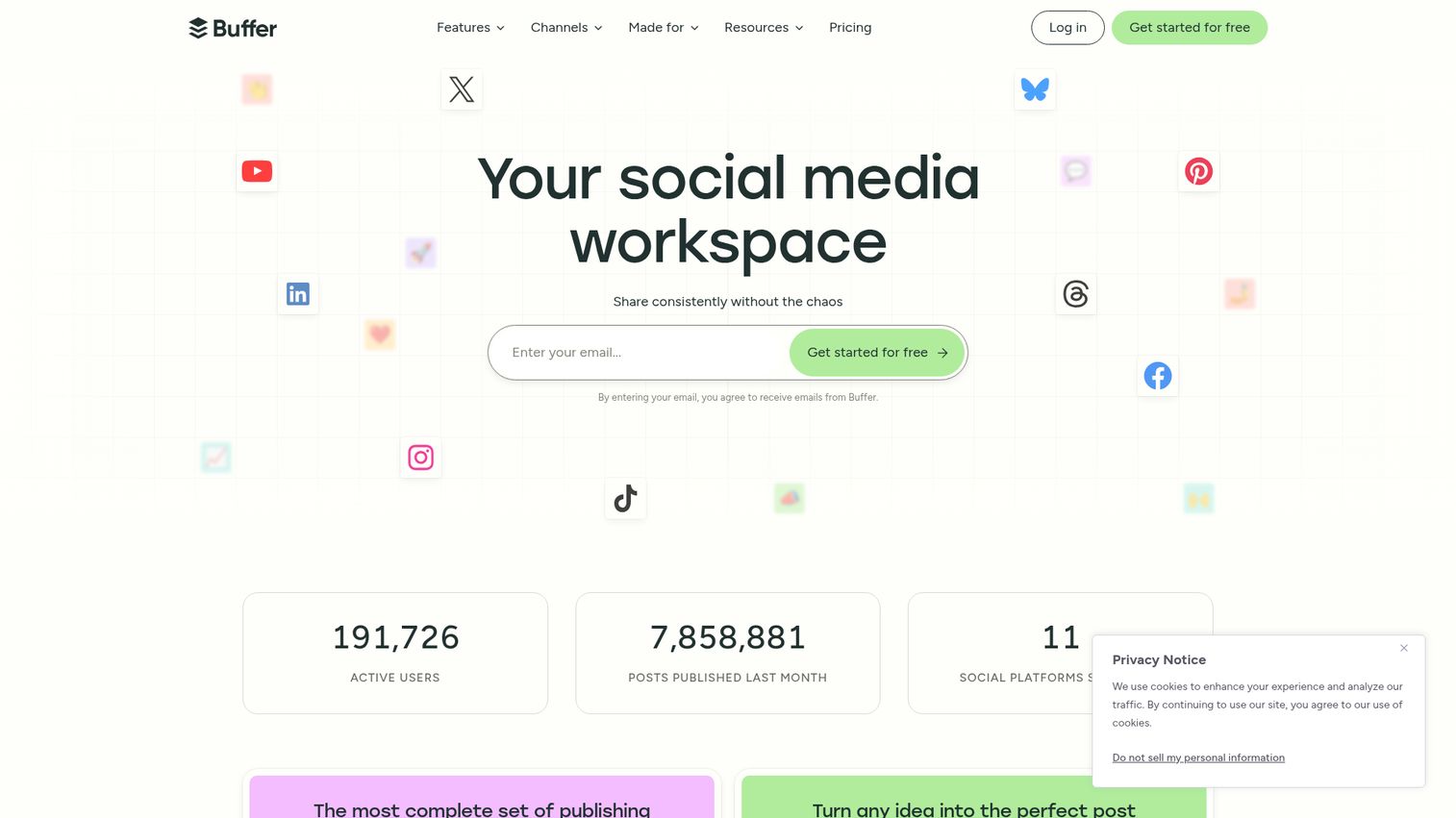
Buffer is the simpler, more affordable alternative to Hootsuite for authors who need social scheduling without enterprise features. The free tier covers 3 channels with 10 posts per channel. That's enough for most indie authors starting out.
The Start Page feature (a link-in-bio page similar to Linktree) is included on all plans, giving you a single URL for your Instagram or TikTok bio that links to your books, email signup, and website. The AI Assistant helps generate captions when you're staring at a blank post.
Best for: Authors who want simple, affordable social scheduling without the complexity of enterprise tools.
Key strengths
- Free tier with 3 channels and 10 scheduled posts each
- Clean, intuitive interface with minimal learning curve
- Start Page (link-in-bio) included on all plans
- AI Assistant for caption writing and content ideas
- Browser extension for quick sharing from anywhere
Why choose Buffer: This is the social media tool most solo authors should start with. The free tier is functional, the paid plans are affordable, and the interface doesn't require a tutorial to understand. Start here, upgrade to Hootsuite only if you outgrow it.
Pricing: Free (3 channels, 10 posts/channel); Essentials from $6/mo/channel; Team from $12/mo/channel.
Honest limitation: Limited analytics on the free tier. No social listening or monitoring features. If you need to track brand mentions or competitor activity, you'll need a different tool.
9. Meta Ads (Facebook & Instagram Advertising)
Meta Ads is one of the most effective paid channels for book marketing beyond Amazon, particularly for building email lists and driving traffic to retailer pages. The audience targeting is granular: interests (readers of specific authors or genres), lookalike audiences (people similar to your existing readers), and custom audiences (upload your email list to retarget).
Ad formats matter for books. Video and carousel ads tend to outperform static images. A 15-second video showing your book cover, a compelling quote, and a call to action consistently drives better results than a single image ad.
Best for: Authors who want to build email lists, drive sales to retailer pages, or promote to specific reader demographics beyond Amazon.
Key strengths
- Granular audience targeting by interests, demographics, and behaviors
- Lookalike audiences built from your existing reader email list
- Retargeting via Meta Pixel on your author website
- Multiple ad formats including video, carousel, and collection
- Works for both direct sales and email list building
Why choose Meta Ads: Amazon Ads reach people searching for books. Meta Ads reach people who don't know they want your book yet. The two channels complement each other. Meta is particularly strong for list building, where you drive signups to your email platform rather than directly to a retailer.
Pricing: Pay-per-click/impression; no minimum; typical author testing budget starts at $5-10/day.
Honest limitation: Rising CPMs make profitability harder than 3-5 years ago. The learning curve for profitable campaigns is steep, and iOS privacy changes have reduced targeting precision. Budget for a testing phase before expecting ROI.
Wait — let me re-check that URL. The adexchanger URL is about GA4, not iOS privacy changes. Let me correct this. I should not use that URL for this anchor since it doesn't match. Let me look for the correct one.
The correct URL for iOS privacy changes would be from the search results: https://conquerradigital.ae/meta-ads-performance-post-ios-privacy-changes-whats-working-now/ or https://www.adamigo.ai/blog/ios-privacy-changes-impact-on-meta-ad-targeting. Let me use the adamigo one as it's more directly about the topic.
Let me restart the Meta Ads section properly:
Honest limitation: Rising CPMs make profitability harder than 3-5 years ago. The learning curve for profitable campaigns is steep, and iOS privacy changes have reduced targeting precision. Budget for a testing phase before expecting ROI.
10. Written Word Media
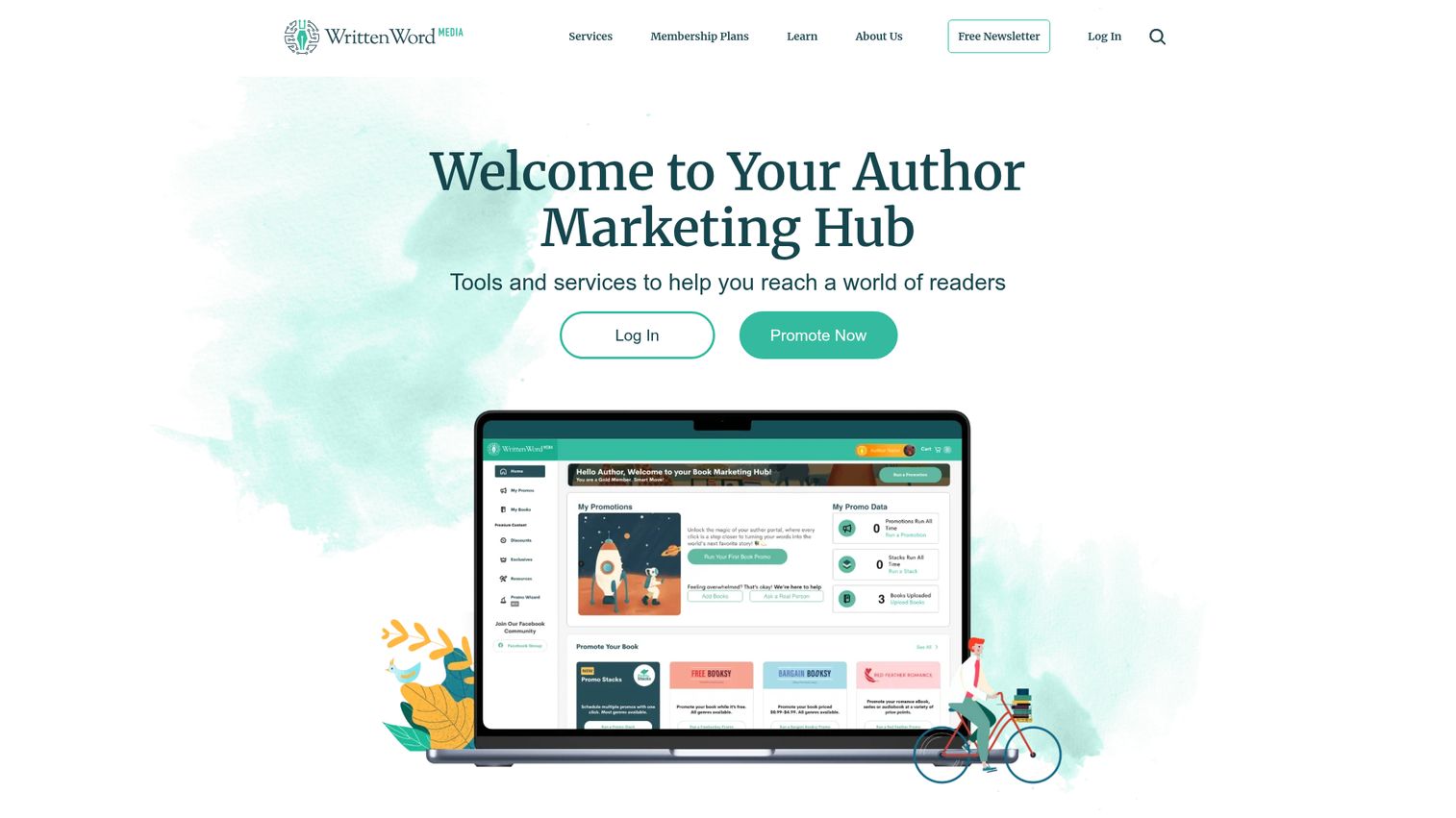
Written Word Media is the reliable, accessible alternative to BookBub for authors running frequent price promotions. The company operates multiple reader-facing brands: Freebooksy (free books), Bargain Booksy (discounted books), Red Feather Romance (romance-specific), and NewInBooks (new releases).
Among book promotion tools, Written Word Media stands out for higher acceptance rates and more accessible pricing compared to BookBub. Where BookBub might accept 10-20% of submissions, Written Word Media accepts a larger percentage, making it a more predictable promotion channel.
Best for: Authors running frequent price promotions who want reliable, affordable promotion beyond BookBub.
Key strengths
- Multiple promotion channels targeting different price points
- Higher acceptance rates than BookBub Featured Deals
- Affordable pricing per promotion across all genres
- Genre-targeted reader audiences across all brands
- Consistent, predictable results for free and $0.99 promotions
Why choose Written Word Media: Use it as a complement to BookBub, not a replacement. Stack a Written Word Media promotion with a BookBub Featured Deal during launch week for maximum impact. On weeks when you don't have a BookBub deal, Written Word Media keeps your backlist visible.
Pricing: Promotions from ~$40 (nonfiction) to ~$150+ (popular genres); pricing varies by genre and promotion type.
Honest limitation: Reach per promotion is smaller than a BookBub Featured Deal. Results are more modest but more predictable. Best used alongside other promotion channels, not as your only one.
11. BookFunnel
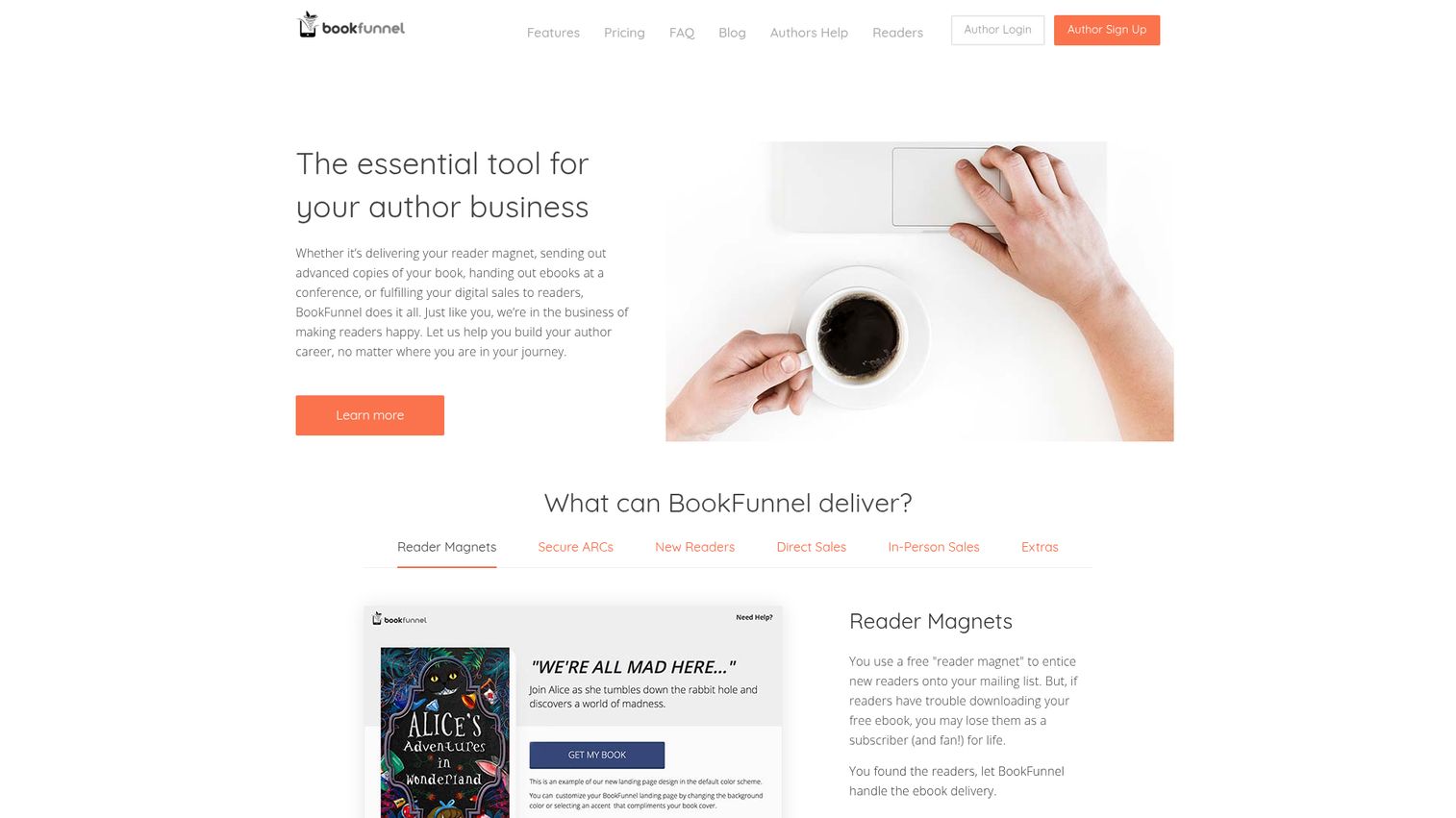
BookFunnel is the go-to platform for delivering reader magnets (free ebooks given in exchange for email signups) and ARCs (Advance Reader Copies). It handles file delivery across all ebook formats and devices, removing the technical friction of getting files to readers.
The group promotion feature is one of the most effective organic list-building strategies in the indie author community. Multi-author giveaways and newsletter swaps let you reach readers who already enjoy your genre but haven't found you yet. BookFunnel also handles reader support ("how do I get this on my Kindle?"), which saves you significant time.
Best for: Authors using reader magnets for list building and participating in cross-author promotions.
Key strengths
- Delivers ebooks in all formats (EPUB, MOBI, PDF) with device instructions
- Reader magnet landing pages with email platform integration
- Group promotion and multi-author giveaway features
- ARC delivery and management for launch teams
- Dedicated reader support so you don't handle device questions
Why choose BookFunnel: Reader magnets are the foundation of most indie author email list-building strategies. BookFunnel removes every technical barrier between "reader wants your free book" and "reader is on your email list." It integrates directly with Kit and Mailchimp.
Pricing: Mid-List from $20/yr; Bestseller from $100/yr; pricing based on features and file limits.
Honest limitation: Does one thing (file delivery and reader magnets) and does it well. It's not an email platform, not a promotion service, and not a website builder. You'll need it alongside other tools, not instead of them.
12. WordPress
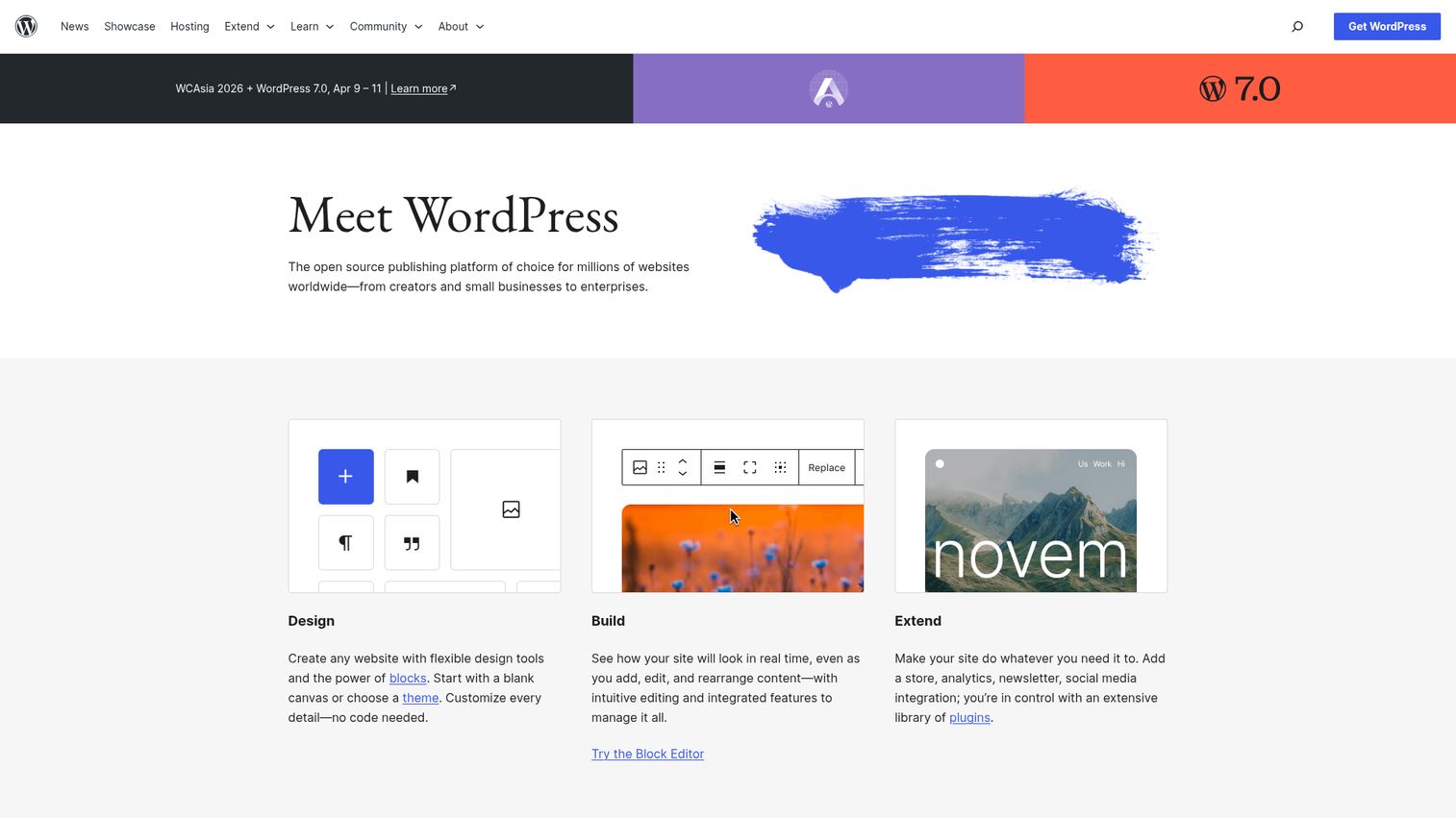
WordPress (self-hosted, WordPress.org) is the platform for authors building a long-term web presence they fully own. Your email list can be taken away by a platform change. Your social following depends on algorithms. Your WordPress site is yours.
Key use cases for authors: blog (SEO-driven content that attracts readers searching for your genre), book pages (dedicated landing pages for each title), email opt-in forms (connected to Kit or Mailchimp), and direct sales via WooCommerce. Author-specific themes exist, and the plugin system covers SEO (Yoast or Rank Math), email integration, and analytics. If you're building dedicated book landing pages, WordPress offers the most flexibility.
Best for: Authors building a long-term web platform they fully own and control.
Key strengths
- Full ownership of your website, content, and reader data
- Massive theme and plugin library including author-specific options
- SEO-friendly architecture for long-term organic traffic
- WooCommerce for selling ebooks and merchandise directly
- Integrates with every email platform and marketing tools on this list
Why choose WordPress: With the global book market valued at over $142 billion annually and growing (NielsenIQ BookData, 2026), having a web presence you control is a long-term asset. WordPress scales from a simple blog to a full author commerce site without switching platforms.
Pricing: WordPress software is free; hosting from ~$3/mo (shared) to $30+/mo (managed); domain ~$12/yr.
Honest limitation: Requires hosting setup and basic technical comfort. Not as simple as Squarespace or Wix for complete beginners. Maintenance (updates, security, backups) is your responsibility unless you pay for managed hosting.
13. Google Analytics
Google Analytics 4 (GA4) is the free analytics platform that tells you what's actually happening on your author website. Without it, you're guessing which traffic sources drive book sales and email signups. For authors who want to go deeper into performance measurement, our roundup of best marketing analytics software covers additional options.
Key metrics for authors: traffic sources (are readers finding you through Google, social media, or ads?), page views (which book pages get the most attention?), event tracking (how many visitors click your "Buy on Amazon" button or sign up for your email list?), and audience demographics (what age groups and interests does your audience skew toward?).
Best for: Any author with a website who wants to understand traffic sources and reader behavior.
Key strengths
- Free and comprehensive traffic and behavior analytics
- Tracks traffic sources so you know what's working
- Event tracking for email signups and outbound retailer clicks
- Audience demographics and interest data
- Integrates with Google Ads and Search Console
Why choose Google Analytics: It's free, it's the standard, and it answers the question every book marketer needs answered: "Where are my readers coming from, and what do they do when they arrive?" If you're running ads or content marketing, GA4 data tells you what's worth continuing.
Pricing: Free.
Honest limitation: GA4's interface is a significant departure from the older Universal Analytics and has a steep learning curve. The event-based model confuses many authors. Consider pairing with a simpler dashboard tool or investing time in GA4-specific tutorials before expecting useful insights.
14. Book Report
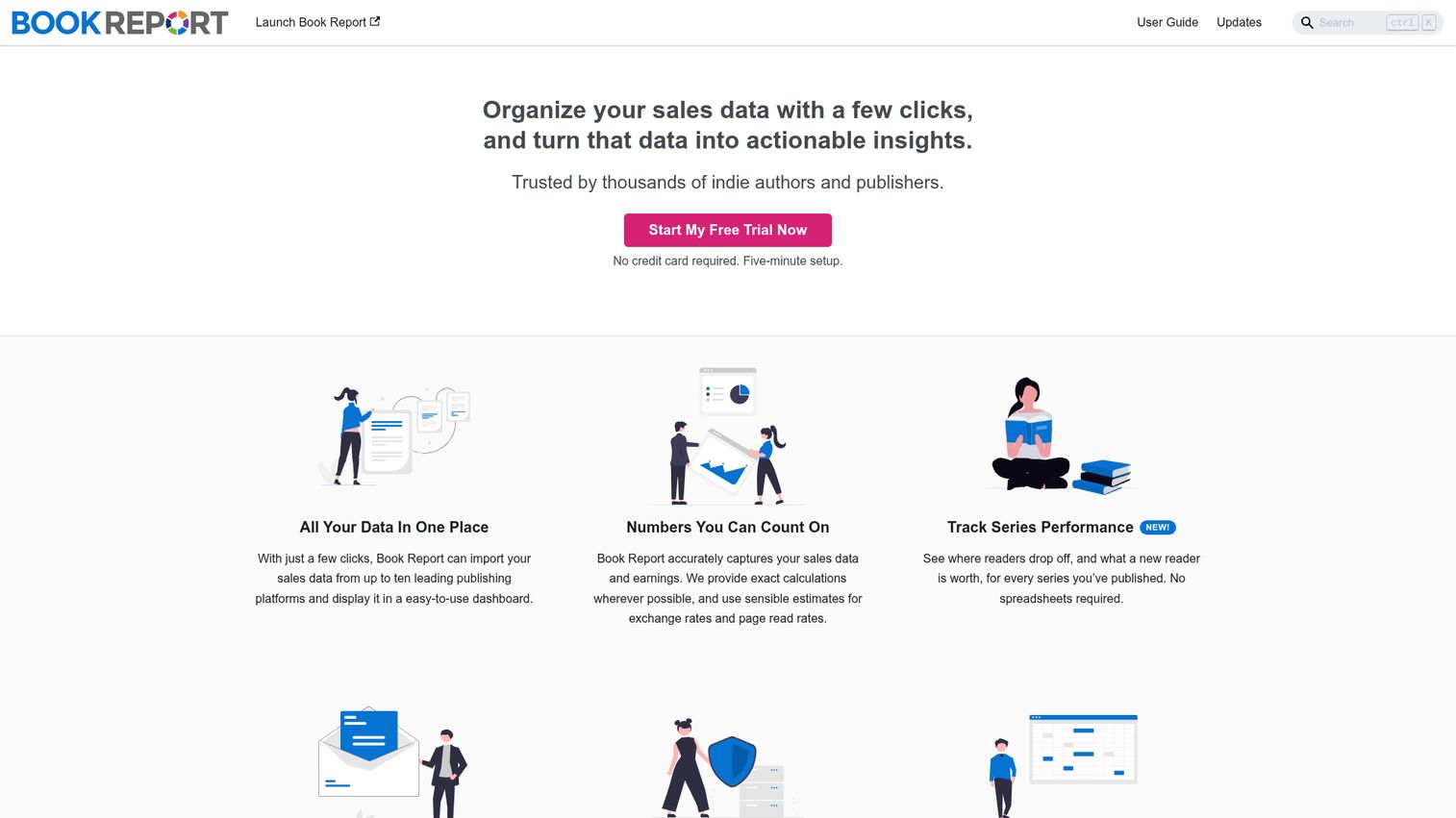
Book Report solves a specific, universal author frustration: Amazon's native KDP reporting is delayed (sometimes 24-48 hours) and difficult to parse. Book Report pulls data more frequently and presents it with clean graphs, trends, and breakdowns by title, marketplace, and format.
For authors who obsessively refresh their KDP dashboard (which is most of them), this tool saves time and provides better visibility into what's selling, where, and in what format. The historical data and trend tracking help you spot patterns, like which promotions actually moved the needle on sales.
Best for: KDP authors who want real-time sales tracking without refreshing the KDP dashboard every hour.
Key strengths
- Near-real-time KDP sales data with clean visual dashboard
- Breakdown by title, marketplace, and format (ebook, paperback, audiobook)
- Historical data and trend tracking for spotting patterns
- Graphs and charts that make reporting to yourself (or a team) simple
- One-time purchase with no ongoing subscription
Why choose Book Report: At $14.99 once, this is the cheapest tool on the list and one of the most immediately useful. If you sell on KDP, you'll use it daily. The visual dashboard alone is worth the price compared to squinting at Amazon's native reporting.
Pricing: $14.99 one-time purchase.
Honest limitation: Only works with Amazon KDP. If you're wide (selling on multiple retailers), you'll need additional tracking for non-Amazon sales. Data accuracy depends on Amazon's API, which occasionally lags.
15. StoryOrigin
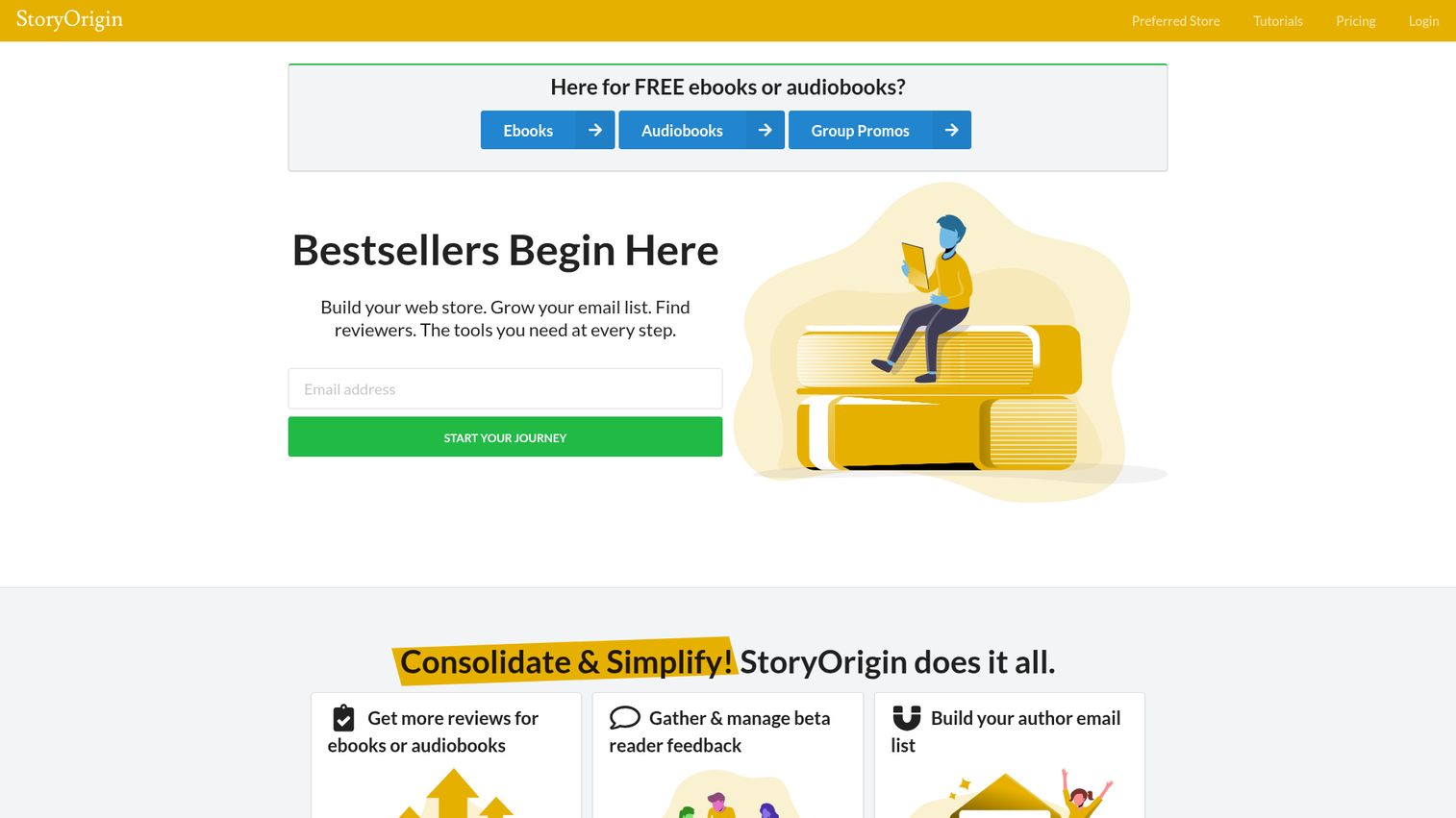
StoryOrigin is the platform built specifically for author cross-promotion, newsletter swaps, and reader magnet delivery. The group promo feature (multi-author giveaways and newsletter recommendations) is one of the most cost-effective organic growth strategies in indie publishing.
The newsletter swap matching system connects you with authors who have similar audience sizes and genres. Universal book links route readers to their preferred retailer (Amazon, Kobo, Apple Books, B&N) from a single URL. Review copy (ARC) management rounds out the feature set.
Best for: Authors who want to grow their email list through cross-promotion with other authors in their genre.
Key strengths
- Group promo and giveaway management for multi-author events
- Newsletter swap matching to find authors with similar audiences
- Reader magnet delivery with email platform integration
- Universal book links routing to each reader's preferred retailer
- Free tier available for testing before committing
Why choose StoryOrigin: Cross-promotion is how indie authors grow without ad spend. StoryOrigin systematizes the process of finding swap partners, running group promos, and tracking results. It's particularly valuable for authors in active genres like romance, fantasy, and sci-fi.
Pricing: Free tier (limited features); Basic from $10/mo; Premium from $20/mo.
Honest limitation: The value depends heavily on the activity level of authors in your specific genre on the platform. Romance, fantasy, and sci-fi have robust communities. Other genres are thinner. Results scale with your participation.
How to choose the right book marketing tools
Every book marketer faces the same temptation: buying tools before identifying the problem. Don't buy 15 tools. Identify your biggest bottleneck and start there.
Start with your biggest bottleneck
If you have fewer than 100 email subscribers, your bottleneck is audience. Start with Kit or Mailchimp and BookFunnel. If readers see your book but don't buy, your bottleneck is conversion. Start with Publisher Rocket and Amazon Ads. If no one sees your book at all, your bottleneck is visibility. Start with BookBub and Written Word Media. For authors looking to improve conversion on their own website, conversion rate optimization tools can help you test what works.
Match tools to your budget reality
Most indie authors in 2026 invest between 10% and 20% of expected book revenue in marketing (Write Light Group, 2026). Here are three budget tiers for the best book marketing stack:
- $0/mo: Kit (free), Canva (free), BookBub Author Profile (free), Google Analytics (free), Buffer (free)
- $50/mo: Kit Creator ($25), Canva Pro ($13), Buffer Essentials ($6), occasional Written Word Media promos
- $200+/mo: Kit Creator Pro ($50), Amazon Ads ($5-10/day), Meta Ads ($5-10/day), BookBub Featured Deals, Publisher Rocket ($199 one-time)
Prioritize tools that compound
Email lists and author websites compound over time. Social media posts and ads don't. Weight your investment toward tools that build long-term assets (email platform, website) before spending on one-time promotions. If you want to go deeper on marketing automation, automating your email sequences and reader funnels is one of the highest-leverage investments an author can make.
Test free tiers before committing
Most tools on this list offer free tiers or trials. Run a 30-day test with your actual workflow before paying. Kit, Mailchimp, Canva, Buffer, Google Analytics, StoryOrigin, and BookBub Author Profile all have functional free options.
Integration matters
Check that your email platform integrates with your reader magnet delivery tool (BookFunnel), your website (WordPress), and your analytics (Google Analytics). A disconnected stack creates manual work that kills consistency. Kit and Mailchimp both integrate with BookFunnel and WordPress natively.
Book marketing in 2026 doesn't require 15 tools. It requires the right 3-5 for your specific stage, genre, and budget. The most common winning stack for indie author tools: an email platform (Kit or Mailchimp) + a promotion service (BookBub + Written Word Media) + an advertising platform (Amazon Ads or Meta Ads) + a design tool (Canva). The authors who succeed at best book marketing aren't the ones with the most tools. They're the ones who pick a small stack, learn it deeply, and use it consistently. The tools will evolve, but the fundamentals (build an audience you own, reach readers where they buy, measure what works) won't change.
This guide is published by Guideflow, a platform that helps teams create interactive demos. If you're building a SaaS product in the publishing space, or if you want to see how interactive demos can improve your own marketing, start here.
FAQs
BookBub's free Author Profile is the highest-impact free author marketing tool available. The follow button notifies readers of your new releases, and it costs nothing to set up on the largest reader audience in publishing. Beyond that, Kit's free tier (up to 10,000 subscribers), Canva's free tier for design, and Google Analytics for website tracking round out the stack. You can build a functional book marketing stack for $0/mo using just these four tools.
Debut authors with no budget should start at $0/mo using free tiers: Kit, Canva, Buffer, Google Analytics, and BookBub Author Profile. Authors with an established backlist typically spend $50-200/mo on tools (email platform + ads + occasional promotions). General rule: spend on tools that build compounding assets (email lists, websites) before spending on one-time promotions. Note that ad spend (Amazon Ads, Meta Ads) is separate from tool costs and varies widely.
Yes. An email list is the only marketing channel you fully own. Social media algorithms change, ad costs rise, promotion services can reject your submission. Your email list is the one audience you can reach reliably and repeatedly. Even a list of 100 engaged readers is more valuable for a book launch than 10,000 social media followers, because you control when and how you reach them.
Featured Deals are curated email promotions sent to BookBub's reader lists. You apply, BookBub's editorial team decides if your book is selected. High reach, competitive acceptance (estimated 10-20%). BookBub Ads is a self-serve advertising platform where you create and manage your own campaigns targeting BookBub's audience. Available to anyone with a budget, but requires campaign management skills. Among book promotion tools, Featured Deals are high-impact but gatekept; Ads are accessible but require optimization.
Yes, with caveats. Amazon Ads put your book in front of readers actively searching in your genre, which is the highest-intent audience available. But profitable campaigns require keyword research (Publisher Rocket helps), ongoing bid optimization, and patience during the learning phase. Start with $5/day and a Sponsored Products campaign targeting specific competitor ASINs. Don't expect profitability in the first 30 days. Treat the first month as paid research.
Self-published author marketing tools that work best are ones you control directly without a publisher's involvement. The core stack: Kit or Mailchimp (email), BookBub + Written Word Media (promotion), Amazon Ads (advertising), Canva (design), BookFunnel (reader magnets), Publisher Rocket (keyword research). The specific combination depends on genre, budget, and whether you're exclusive to Amazon (KDP Select) or selling wide across multiple retailers.
Every book marketer starts at zero. Here's the path: Create a reader magnet (free short story, prequel, or bonus content). Deliver it through BookFunnel. Use it to build an email list via your author website or social media. Participate in group promotions on StoryOrigin or BookFunnel to cross-promote with established authors in your genre. Run a small Amazon Ads campaign targeting readers of comparable authors. Frame the first 6 months as audience infrastructure building, not sales volume.
Yes. Many successful indie authors have minimal social media presence and rely primarily on email marketing, Amazon Ads, and promotion services. Social media is one channel, not a requirement. If you enjoy it and your readers are active there (BookTok for YA/romance, Bookstagram for literary fiction), it can amplify other efforts. If you don't, invest that time in email list building and advertising instead. Among free book marketing strategies, social media is optional. The key is choosing channels you'll actually use consistently, not channels you think you "should" be on.