A user signs up. They type a phone number with a transposed digit, or a disconnected line, or a throwaway VoIP number they grabbed to dodge your SMS check. Your verification flow breaks. Your activation email never lands. Three weeks later, that record sits dead in your CRM, and your outreach campaign quietly burns deliverability against numbers that were never real.
Most teams treat bad phone data as an operations cleanup problem. It is a product problem. When a phone number fails at the point of entry, you lose the signup, not just the row. The phone verification software category now carries over 2,239 verified user reviews on G2, a signal that buyers are actively trying to fix this before it compounds across the funnel.
For a product manager, phone quality touches activation, two-factor flows, trial-to-paid conversion, and support load. A clean number means a deliverable SMS, a reachable lead, and a fraud signal you can act on. A dirty one means friction you instrumented for but cannot explain. The same instinct that drives teams toward cleaner onboarding, interactive demos, and tighter activation paths applies here: remove the friction at the source. If you are already auditing your contact stack, our roundup of the best email verification tools pairs naturally with this guide, since email and phone hygiene tend to fail together.
This guide compares eight tools that validate phone numbers in real time, clean them in bulk, and enrich them with carrier and line-type data so you can decide what belongs in your stack.
What's inside
This guide is for product, growth, and operations teams who need to verify phone numbers at signup, clean legacy lists before campaigns, or add fraud signals to high-risk flows. We selected tools across four criteria that matter when phone data is a product concern, not just a database chore: real-time API quality, bulk cleansing workflow support, enrichment depth (carrier, line type, country, disposable detection), and ease of adoption across a stack you already run. Each tool below includes who it fits, what it does well, and pricing where a vendor publishes it. We flag the criteria, then let you match the tool to your workflow.
TL;DR
- Best broad enterprise data-quality fit: Experian Data Quality (EDQ) for teams that want phone verification inside a wider cleansing, matching, and profiling platform.
- Best for credit and identity-adjacent risk: Experian for businesses tying phone checks to broader data and risk signals.
- Best API-first for communications products: Plivo for teams embedding verification into voice and messaging flows.
- Best for global messaging and verification at scale: Sinch for companies already running on its communications infrastructure.
- Best for contact-data hygiene beyond phone: Loqate and Melissa Data Quality Suite for address, name, and phone validation together.
- Best for fraud and signup integrity: IPQS for risk scoring alongside validation.
- Best focused phone validator for lean teams: ClearoutPhone for fast real-time and bulk phone cleansing.
What is phone verification software?
Phone verification software checks whether a phone number is valid, active, correctly formatted, and reachable, and often enriches it with metadata like carrier and line type. The terms phone verification, phone number verification, and phone validation get used interchangeably, though some vendors reserve "validation" for the status-and-enrichment layer.
The core functions break down into a handful of jobs your stack will lean on.
- Real-time validation: A phone verification API checks a number at the moment of entry, inside a signup form, checkout, or onboarding flow, so a bad number never enters your database.
- Bulk cleansing: Bulk phone number validation runs an existing list (CRM export, marketing database, migration file) through a validator to flag dead, invalid, or unreachable numbers before a campaign.
- Carrier and phone type enrichment: Good tools return the carrier, the line type (mobile vs landline vs VoIP), and country, so you can route SMS only to numbers that can receive it.
- Disposable number detection: Flagging temporary or throwaway numbers helps protect signup integrity and reduces fraud exposure.
- Compliance support: Cleaner lists reduce wasted sends and support tighter SMS and telemarketing practices by removing numbers you should not be contacting.
- Validation status taxonomy: Most tools return a status (valid, invalid, unreachable, unknown) plus enrichment fields, and understanding that taxonomy is what separates a useful integration from a noisy one.
That status taxonomy is where buyers get tripped up. A "valid" result usually means the number is correctly formatted and assigned, not that a human will answer it. Read each vendor's status definitions before you wire them into a gating decision.
When to use phone verification software
Phone verification earns its place in three distinct moments. Each maps to a different metric you already own.
Validate numbers at signup or lead capture
Point-of-entry validation is the highest-leverage use. When you verify a phone number inside the signup form, you stop bad data before it pollutes everything downstream: your activation emails, your two-factor flows, your sales follow-up. Real-time phone verification here protects activation rate and trial-to-paid conversion because the user reaches a working first experience instead of a broken SMS loop. For PMs, this is the same logic as removing friction from onboarding: catch the problem at the source, not in a cleanup job later.
Clean legacy databases in bulk
Most teams inherit a messy contact database. Before a migration, a re-engagement campaign, or a CRM consolidation, bulk phone number validation flags the dead weight. Running contact number validation across a legacy list tells you what fraction of your "reachable" audience is actually reachable, which changes how you forecast a campaign and how you read its results. This is recurring hygiene, not a one-time fix, because lists decay as people change numbers.
Support SMS, outreach, and compliance workflows
Phone cleansing ties directly to deliverability and contact rates. Carrier and line-type enrichment lets you route SMS only to mobile numbers that can receive it, which lifts delivery and protects your sender reputation. Cleaner lists also reduce regulatory exposure by stripping numbers you should not be texting or calling. For teams running outreach at volume, this is the difference between a campaign that lands and one that quietly degrades your messaging infrastructure.
Comparison table
We ordered the list to move from the broadest enterprise data-quality platforms to the most focused phone-specific validators, with API-first and fraud-oriented options in between. Compare on four axes: real-time API quality, bulk workflow support, enrichment depth, and pricing transparency. Ratings reflect current G2 listings where available; some pricing is gated behind sales, which we note rather than guess.
| # | Product | Intent | Key use case | Pricing | G2 rating |
|---|---|---|---|---|---|
| 1 | Experian Data Quality (EDQ) | Enterprise data quality | Phone verification inside a full cleansing and matching suite | Not publicly listed | 4.4/5 |
| 2 | Experian | Data and risk | Phone validation tied to credit and identity data | Business pricing on request | Not listed |
| 3 | Plivo | API-first comms | Embedding verification into voice and messaging flows | $10 free credits, then pay-as-you-go | 4.5/5 |
| 4 | Sinch | Global messaging | Verification alongside omnichannel communications | Engage plans from $49/mo | 4.4/5 |
| 5 | Loqate | Contact data hygiene | Address plus phone validation and enrichment | Pay-as-you-go from $100 | 4.4/5 |
| 6 | Melissa Data Quality Suite | Data quality suite | Batch validation across phone, address, email, name | $12,300/yr (G2-reported) | 4.4/5 |
| 7 | IPQS | Fraud and risk | Phone validation with fraud and disposable detection | Free, paid from $99/mo | 4.6/5 |
| 8 | ClearoutPhone | Focused validation | Real-time and bulk phone cleansing | Free tier, paid plans available | 4.6/5 |
1. Experian Data Quality (EDQ)
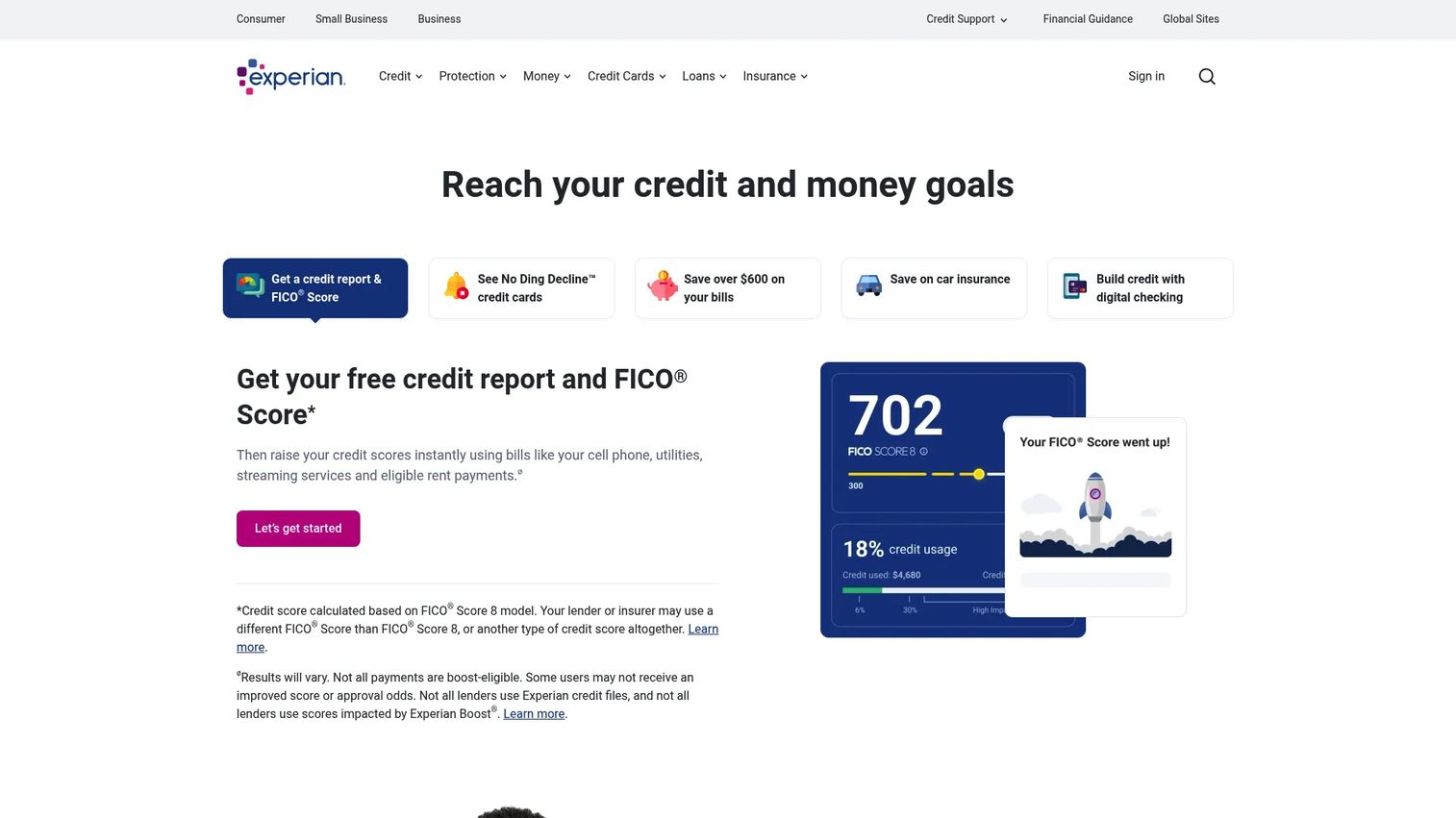
Experian Data Quality (EDQ) is the broadest enterprise option on this list. It is data quality and data management software for cleansing, matching, profiling, monitoring, and standardizing business data, with phone verification as one capability inside a larger platform. If your phone problem is really a contact-data problem, EDQ treats it that way.
The platform supports real-time API validation for point-of-entry checks and bulk validation for cleansing existing lists. It returns status outputs and enrichment fields, flags problematic numbers, and offers flexible deployment so it can sit inside an enterprise data stack rather than alongside it.
Best for: Enterprises that want phone verification as one feature of a wider data-quality platform, not a single-purpose validator.
Key strengths
- Full data-quality suite: Cleansing, matching, profiling, and monitoring in one platform, so phone is one of several data types you govern.
- Real-time and bulk modes: Validate at signup or run large list cleansing in the same system.
- Enterprise deployment flexibility: Designed to integrate into established data infrastructure rather than bolt on.
Why choose Experian Data Quality (EDQ): Choose EDQ when phone verification is part of a broader mandate to improve customer data accuracy across the business. Teams already wrestling with deduplication, profiling, and standardization get more from a suite than from a standalone phone tool. The trade-off is that you adopt a platform, which suits enterprise data owners more than a lean growth team chasing a quick API.
Experian Data Quality (EDQ) pricing: Experian does not publish first-party pricing for EDQ on the pages reviewed. Expect enterprise packaging that requires a sales conversation, scoped to volume and deployment model. If you need a published price to start testing, the API-first tools lower in this list are easier to trial.
2. Experian
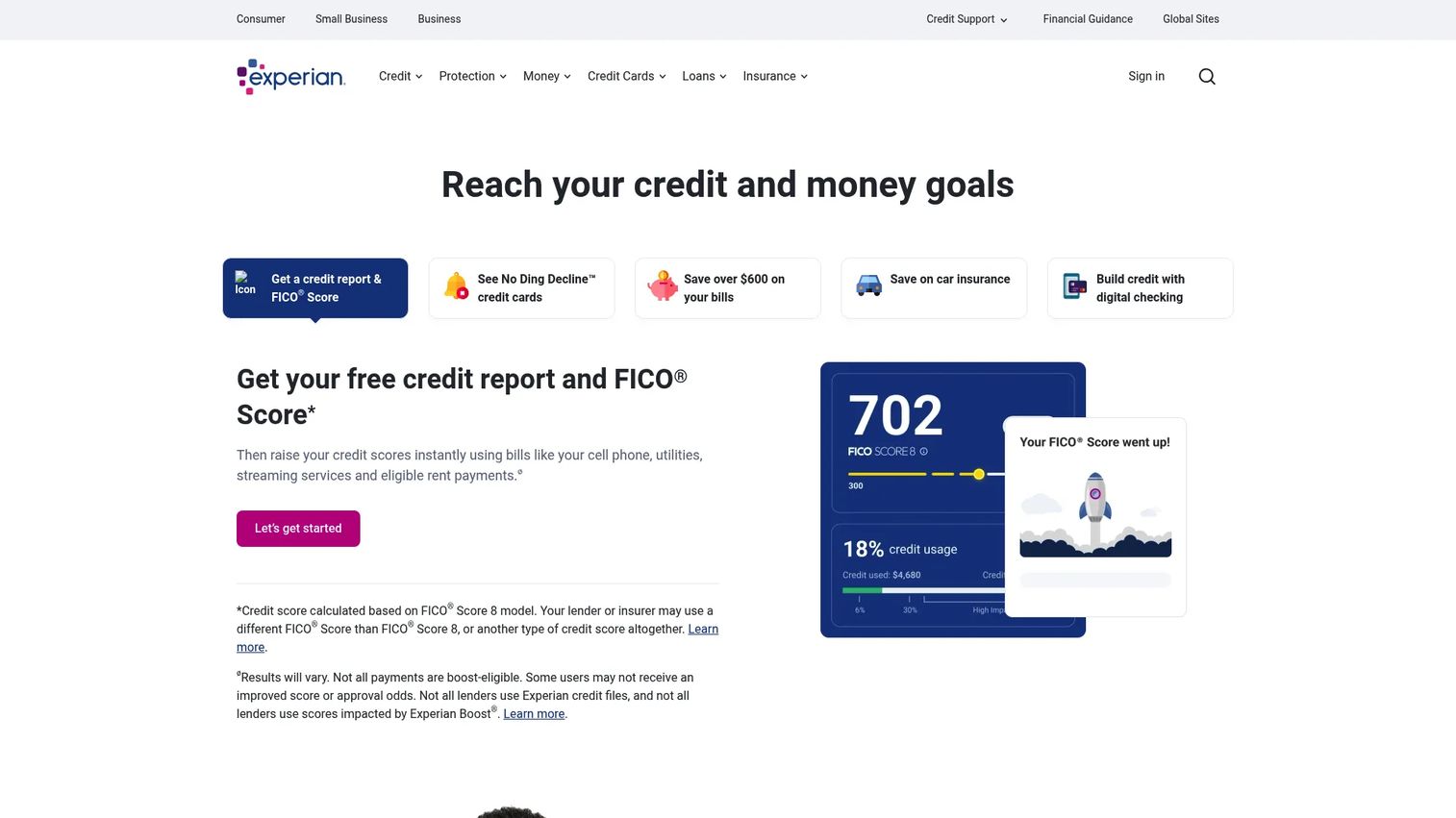
Experian is the broader global data and technology company behind EDQ, offering consumer, business, and healthcare information and analytics. Its business phone verification sits inside a wider portfolio of credit, identity, and risk solutions, which is the reason to consider it over a pure validator.
For teams that already tie phone data to fraud screening, credit checks, or identity workflows, Experian's breadth means phone validation can share context with the rest of your risk stack. Real-time and bulk phone validation, database cleansing, and broad provider coverage anchor the offering, with accuracy and compliance as the core business case.
Best for: Businesses that want phone verification connected to broader credit, identity, and risk data.
Key strengths
- Identity and risk context: Phone checks live alongside credit and identity data, useful for fraud-sensitive workflows.
- Real-time and bulk validation: Validate at entry and cleanse existing databases in the same vendor relationship.
- Enterprise trust and coverage: Broad provider coverage and a recognized name carry weight in procurement and compliance reviews.
Why choose Experian: Pick Experian over EDQ when your priority is connecting phone signals to credit and identity data rather than running a dedicated data-quality platform. It fits organizations that already buy risk and identity products and want phone validation in the same house. If you only need phone validation, the breadth is more than you require.
Experian pricing: Experian publishes consumer identity-protection pricing, with a free Basic tier and paid plans such as Premium at $24.99/month and Family at $34.99/month after a trial. Business and verification products generally require a sales conversation and do not show public prices, so budget for a quote rather than a self-serve plan.
3. Plivo
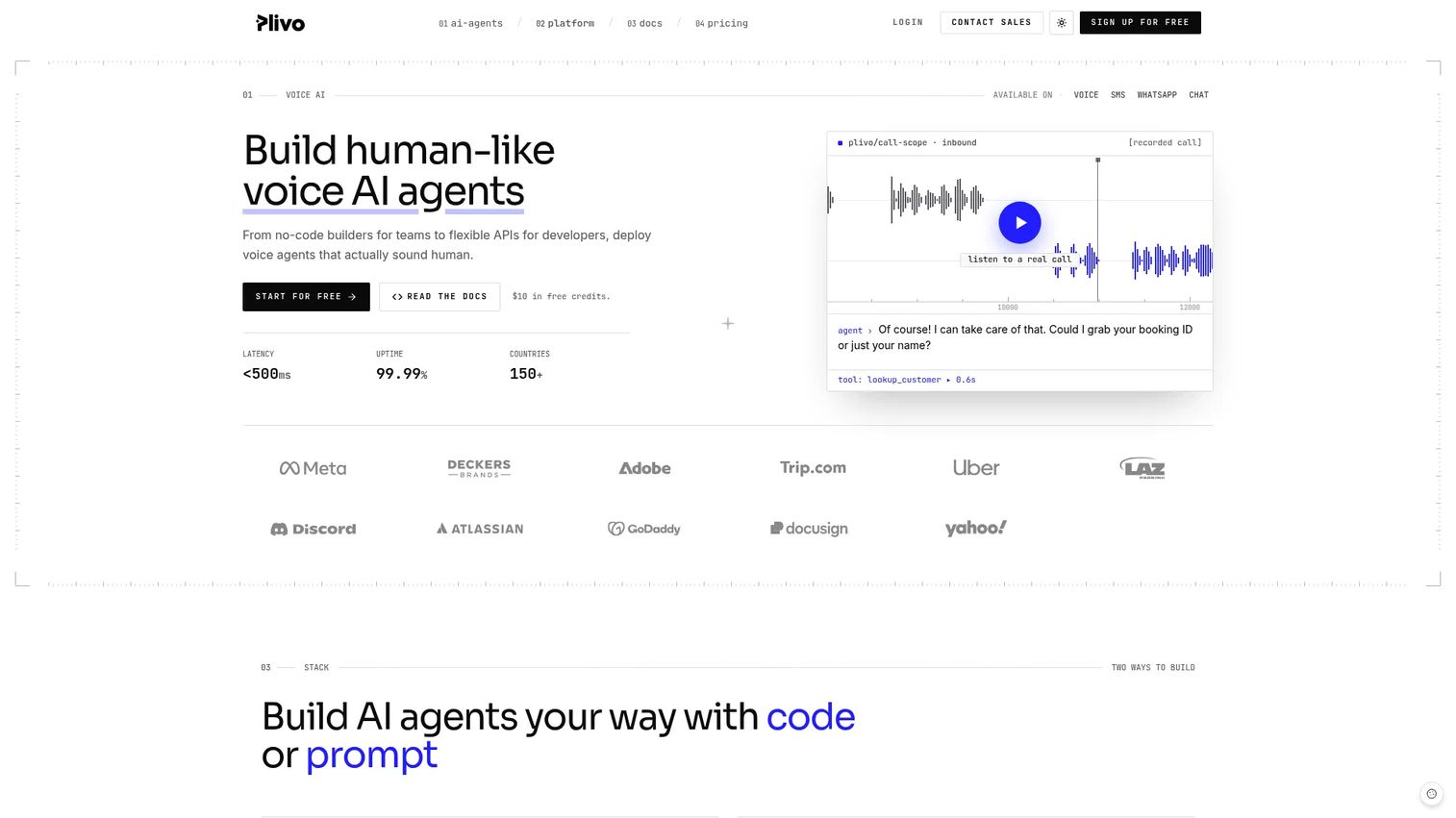
Plivo is a cloud communications platform for voice, SMS, WhatsApp, and AI agents, and it appeals to API-first teams that want verification wired directly into product flows. If your product already sends messages or places calls, validating numbers in the same platform keeps the stack tight.
Plivo's strength is developer fit. Teams embedding real-time phone verification into signup forms, backend checks, or communications-heavy products get usage-based pricing and a programmable API rather than a packaged data-quality tool. That makes it a natural choice when phone validation is part of a broader messaging build.
Best for: API-first teams embedding verification into voice and messaging products.
Key strengths
- Programmable voice and messaging: Call queueing, IVR, recording, plus SMS, RCS, and WhatsApp in one API.
- Usage-based pricing: Pay-as-you-go rates suit teams that want to start small and scale with volume.
- AI agents: Voice and text conversation support for teams building automated flows.
Why choose Plivo: Choose Plivo when verification is one part of a communications product you are already building, and you want developers to own the integration. It fits teams with engineering bandwidth who prefer an API over a sales-led data-quality platform. If you need deep contact-data enrichment beyond phone, a dedicated data-quality suite covers more ground.
Plivo pricing: Plivo offers $10 in free credits to start, then a Professional plan on pay-as-you-go per-use rates. Enterprise pricing starts at $1,000/month with volume-based terms. The usage model makes it easy to trial without a contract, which API-first teams tend to prefer.
4. Sinch
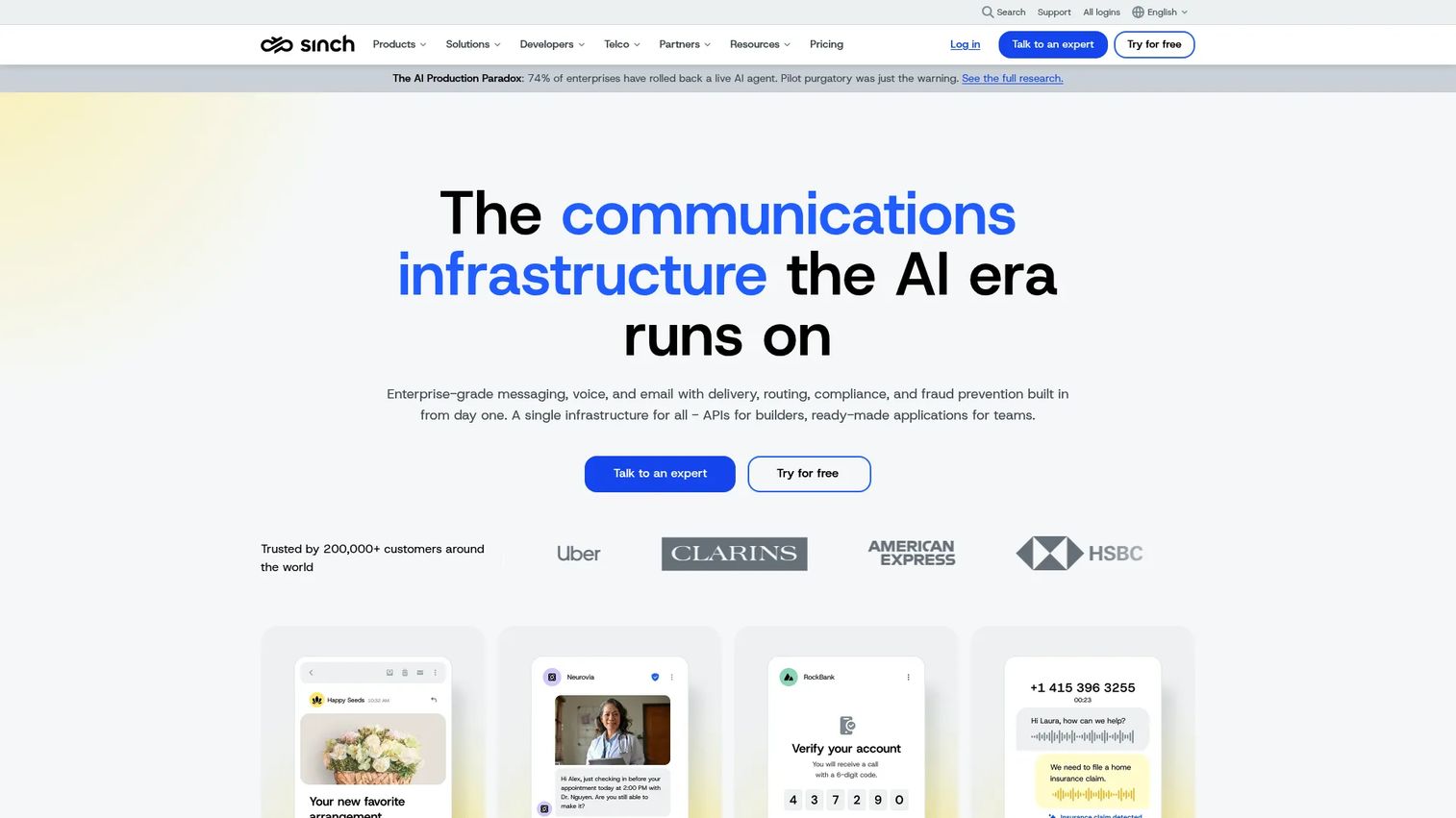
Sinch is a cloud communications platform spanning messaging, voice, verification, and customer engagement. It fits teams that care about messaging infrastructure and want verification alongside global SMS reach rather than as a standalone check.
Sinch's appeal is breadth of reach and a developer-friendly workflow. Companies already running SMS, RCS, or voice through Sinch can add verification without introducing a new vendor, and the global operator coverage matters when your audience spans countries and carriers. The verification fits naturally into SMS-related use cases like two-factor flows and outreach.
Best for: Teams already using Sinch's communications stack who want verification in the same place.
Key strengths
- Global messaging reach: Pay-as-you-go SMS, RCS, and voice across a broad operator network.
- Verification in-platform: Add number checks alongside the messaging you already send.
- Omnichannel engagement: Sinch Engage adds web and mobile apps, email-to-SMS, and integrations.
Why choose Sinch: Choose Sinch when global messaging is central to your product and you want verification to share that infrastructure. It suits teams with international SMS volume who value consolidating vendors. If your only need is bulk list cleansing, a dedicated validator gets you there with less surrounding platform.
Sinch pricing: Sinch's core platform uses pay-as-you-go messaging pricing without public numeric rates for every category. Sinch Engage offers a 14-day free trial and monthly plans starting at $49/mo, rising through $99, $249, $450, and $799/mo tiers. Budget based on your messaging volume rather than a flat verification fee.
5. Loqate
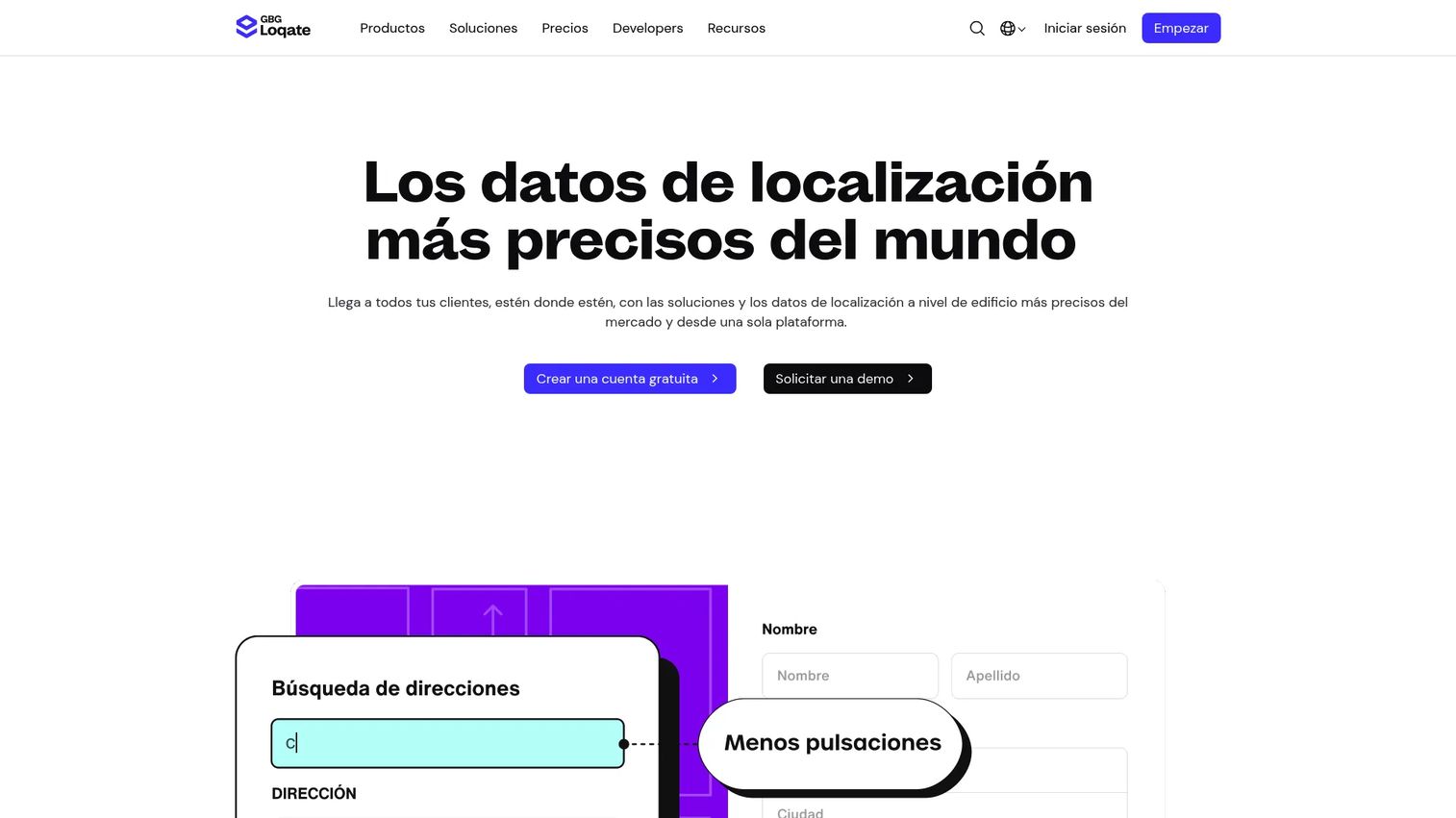
Loqate is a global address verification and location data platform that also handles phone validation and data enrichment. It belongs on this list for teams whose data problem extends past phone numbers into addresses and broader contact hygiene.
Loqate's center of gravity is location and contact data quality. If you are validating addresses at checkout and want phone validation in the same workflow, a single platform that captures, verifies, and enriches contact data reduces the number of vendors you stitch together. That breadth is the reason to choose it over a phone-only tool.
Best for: Teams that need phone validation as part of broader address and contact-data hygiene.
Key strengths
- Address plus phone: Capture, verify, and enrich addresses and phone numbers in one platform.
- Global coverage: Built for international address and contact data across many countries and formats.
- Data enrichment: Adds quality and context beyond a simple valid/invalid flag.
Why choose Loqate: Choose Loqate when address verification is already a need and phone validation rides alongside it. It fits ecommerce and operations teams that care about deliverable physical and digital contact data together. If you only validate phone numbers, the address-first orientation is more than you need.
Loqate pricing: Loqate publishes pay-as-you-go top-up plans at $100, $300, and $1,000, with bespoke pricing for larger needs and a 45-day free trial. The credit model lets you test against real data before committing, which suits teams validating cautiously.
6. Melissa Data Quality Suite
Melissa Data Quality Suite is a data quality platform for profiling, verifying, cleansing, matching, and enriching contact data across address, email, phone, and name. It suits teams that want batch processing and broad data hygiene rather than phone validation alone.
Melissa's strength is suite breadth with real-time verification across four contact-data types. For operations teams running recurring batch cleansing before campaigns or migrations, having phone sit next to address, email, and name validation in one tool reduces handoffs. That is the case for choosing a suite over a single validator.
Best for: Teams that need global contact-data validation across address, email, phone, and name.
Key strengths
- Four-in-one validation: Real-time verification of address, name, email, and phone in one suite.
- Batch and real-time: Run bulk cleansing or validate at the point of entry.
- Recognized data-quality footprint: A long-established platform with G2 recognition in data quality.
Why choose Melissa Data Quality Suite: Choose Melissa when your hygiene problem spans multiple contact-data types and you want them validated together. It fits operations and data teams running recurring cleansing rather than a single point check. If phone is your only concern, the suite covers more than you need.
Melissa Data Quality Suite pricing: G2 lists a free trial and a Data Quality Suite plan reported at $12,300.00 per year, with custom tiers also available. Melissa's own pricing appears flexible and tiered, so treat the G2 figure as a reference point and confirm scope directly for your volume.
7. IPQS
IPQS (IPQualityScore) is a fraud detection and risk intelligence platform covering IP, email, phone, device, and transaction screening. Phone verification here sits alongside fraud scoring, which matters when signup integrity and abuse prevention are the real goal.
IPQS treats a phone number as a risk signal, not just a contactability check. It flags disposable, suspicious, and high-risk numbers, which helps protect signup flows from fraud and abuse. For PMs guarding activation against fake accounts, pairing validation with fraud detection in one API is the appeal.
Best for: Teams that need phone validation combined with fraud and abuse detection.
Key strengths
- Fraud and risk scoring: Phone checks alongside IP reputation, proxy/VPN detection, and device fingerprinting.
- Disposable number detection: Flags throwaway and high-risk numbers to protect signup integrity.
- API-first delivery: Built for programmatic screening across multiple risk signals.
Why choose IPQS: Choose IPQS when fraud prevention is the driving concern and phone validation is one input among several risk signals. It fits high-risk signup flows, marketplaces, and products fighting fake accounts. If you only need clean numbers for outreach, a dedicated validator is more direct, though it returns fewer fraud signals.
IPQS pricing: IPQS publishes a free plan with 1,000 lookups per month, then paid tiers starting at $99/month (Startup), $499/month (SMB Basic), and $999/month (SMB+), with custom Enterprise pricing. The free tier makes it easy to test fraud signals before committing.
8. ClearoutPhone
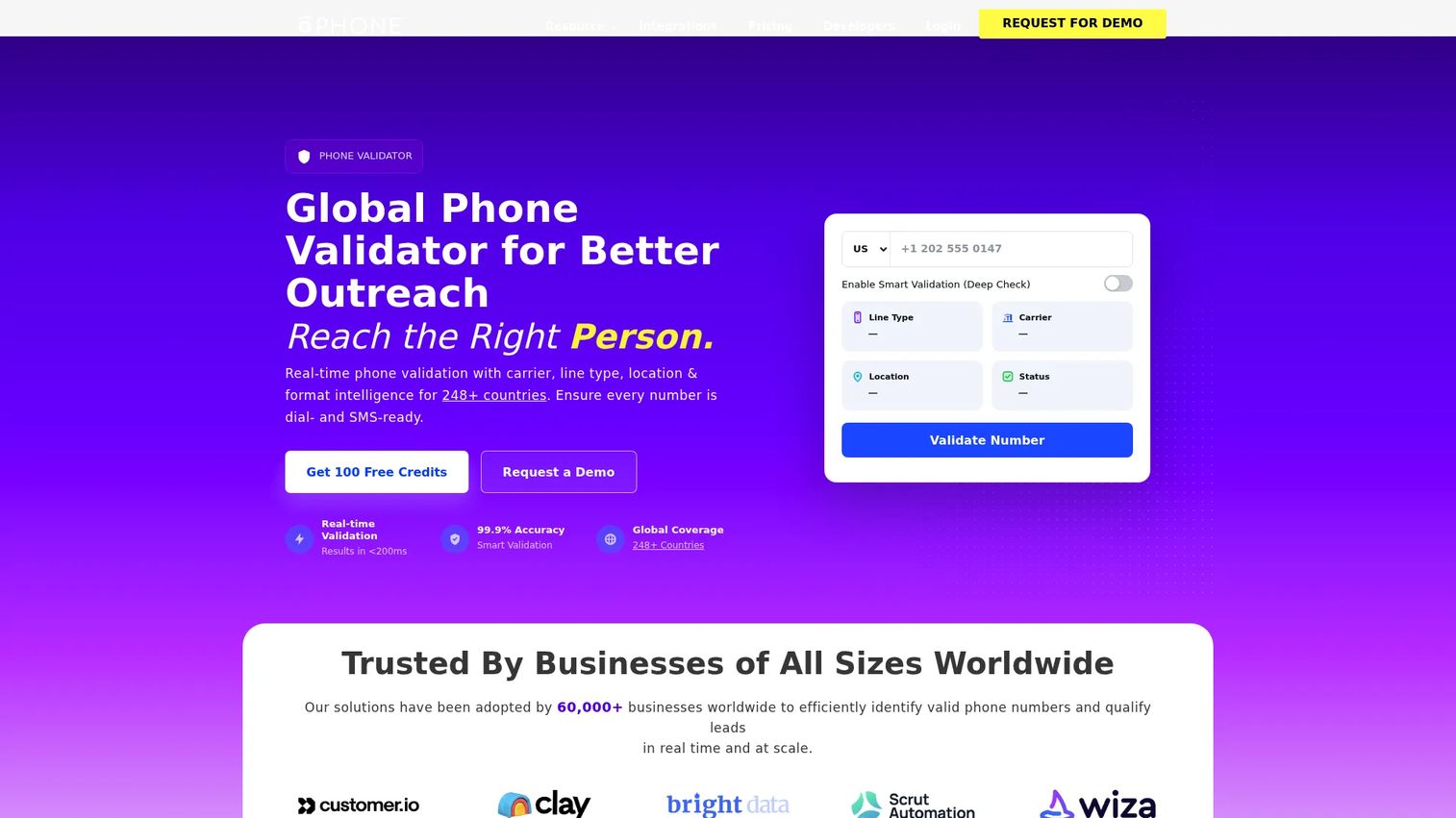
ClearoutPhone is phone number validation software with real-time carrier, line-type, location, and formatting intelligence. It is the most focused option here, built for teams that want fast phone cleansing without adopting a broader platform.
ClearoutPhone's appeal is simplicity and speed. Lean teams that need to validate numbers in real time at signup or clean a list in bulk before outreach get a dedicated phone validator with a real-time API and CSV/XLSX bulk uploads. When phone is the whole job, a focused tool keeps the workflow short.
Best for: Lean teams that need real-time or bulk phone validation without a wider data-quality platform.
Key strengths
- Real-time validation API: Carrier, line-type, location, and formatting intelligence at the point of entry.
- Bulk uploads: Validate large lists via CSV/XLSX before campaigns or migrations.
- Carrier and line-type lookup: Returns the metadata you need to route SMS correctly.
Why choose ClearoutPhone: Choose ClearoutPhone when phone validation is the entire job and you want a fast, focused tool rather than a suite. It fits growth and operations teams that value a short workflow and quick cleanup. If your hygiene problem spans address, email, and name too, a suite covers more in one place.
ClearoutPhone pricing: ClearoutPhone offers prepaid pay-as-you-go, monthly, and annual subscription options plus a free tier, though the page reviewed did not display public numeric prices. Confirm current rates on the pricing page for your expected volume, and use the free tier to test accuracy first.
How to choose: match the tool to your workflow
The right pick depends less on a feature checklist and more on where phone data fails in your stack. Run through these criteria before you compare prices.
Real-time API quality
If you validate at signup, the API is the product. Check latency, status definitions, and how the tool behaves on edge cases like VoIP and international numbers. A validator that gates a flow needs to be fast and predictable, because every millisecond and false negative costs you a signup.
Bulk workflow support
If your job is cleaning legacy lists, look at upload formats, batch size limits, and how results come back. CSV/XLSX support, secure transfer, and a clear status taxonomy matter more than raw API speed here. The goal is a repeatable hygiene routine, not a one-off run.
Enrichment depth
Decide which fields you actually need: carrier, line type, country, roaming, disposable detection. SMS routing needs line type. Fraud prevention needs disposable detection. Buying enrichment you will not instrument is wasted spend, so map fields to a decision you will make.
Coverage and compliance
If your audience is global, verify the tool covers the countries and carriers you care about. Tie that to your compliance posture: cleaner lists support tighter SMS and telemarketing practices, but no validator is a compliance program by itself. Treat it as one input, not the whole answer.
Conclusion
Phone verification software splits into a few clear shapes. Enterprise data-quality suites like Experian Data Quality (EDQ), Melissa Data Quality Suite, and Loqate fit teams whose phone problem is really a contact-data problem spanning address, email, and name. API-first options like Plivo and Sinch suit teams embedding verification into communications products they are already building. IPQS fits fraud-sensitive signup flows where a phone number is a risk signal. ClearoutPhone fits lean teams that want focused, fast phone cleansing.
Start by naming where phone data fails in your stack: signup gating, list hygiene, SMS routing, or fraud. Match the tool to that workflow first, then compare pricing and coverage. The cheapest validator that solves the wrong problem still costs you activation, deliverability, and clean data. Pick for the job, instrument the results, and treat phone quality as the product concern it is.
FAQs
Phone verification software checks whether a phone number is valid, active, correctly formatted, and reachable, usually returning a status plus metadata like carrier and line type. Teams use it to stop bad numbers at signup, clean existing lists, and add fraud signals to high-risk flows.
The terms are often used interchangeably. Some vendors use "validation" for the status-and-enrichment layer, checking format, assignment, carrier, and line type, while "verification" can imply confirming the number reaches a real person, for example through an OTP. Read each vendor's definitions, since the labels are not standardized.
Most teams eventually need both. Real-time phone verification runs inside signup or checkout to stop bad numbers at entry. Bulk phone number validation cleans existing lists before campaigns or migrations. Validate at entry to protect new data, then run bulk passes to maintain legacy records as they decay.
A typical response includes a validity status, country, carrier, and line type (mobile, landline, or VoIP). Many tools also flag disposable or roaming numbers where available. Decide which fields map to a decision you will make, since enrichment you never instrument is spend you do not need.
By flagging invalid, unreachable, and non-mobile numbers, it strips records you should not text and improves delivery to the ones you keep. Cleaner lists reduce wasted sends and protect sender reputation, which supports tighter SMS and telemarketing practices. It is one input to compliance, not a complete compliance program.
It depends on developer workflow, coverage, and integration depth. API-first communications platforms like Plivo and Sinch suit teams embedding verification into voice and messaging products. ClearoutPhone offers a focused real-time validation API, and IPQS adds fraud scoring. Match the API to the flow you are gating.
It helps. Detecting disposable, VoIP, and suspicious numbers flags risky signups before they enter your product, and tools like IPQS pair that with broader risk scoring. It is a useful signal, but not a complete fraud system on its own, so treat it as one layer alongside other identity and abuse checks.