Hotel reservations software looks invisible until it breaks. A rate update goes into the PMS. The OTA still shows yesterday's price. A direct booking comes in at the wrong number. Now someone on the front desk is manually reconciling inventory while the revenue manager tries to explain the gap.
That's the operational cost of disconnected reservation systems. According to Dataintelo (2026), the global hotel reservations software market reached $4.22 billion in 2025, growing at a 9.2% CAGR toward $9.28 billion by 2034. The investment is justified: OTAs still accounted for 61% of bookings at independent lodging properties worldwide in 2024, according to Cloudbeds (2025). Every point you can shift toward direct bookings at lower distribution cost is real margin.
The right reservation system centralizes rates, keeps inventory synchronized across channels, and gives your leadership team data they can act on. The wrong one adds another reconciliation task to someone's morning routine.
What's inside
This guide compares 15 hotel reservations software platforms for 2026. It is for hotel owners, GMs, revenue managers, and operators evaluating their current stack or choosing their first real system.
Each tool was selected based on:
- Coverage of core reservation workflows: PMS, CRS, booking engine, and channel management
- Fit by property type, from small independent hotels to multi-property enterprise groups
- Distribution depth: OTA connections, GDS access, metasearch, and direct booking capability
- Pricing and G2 rating transparency, verified against live sources
TL;DR
- Best all-in-one hotel platform: Cloudbeds covers PMS, booking engine, channel manager, and payments from $9/room/month
- Best for modern multi-property operations: Mews offers cloud-native reservation management with 1,000+ integrations
- Best for independent inns and boutique properties: ThinkReservations bundles PMS, channel manager, booking engine, and guest messaging
- Best CRS-first option for hotel groups: SynXis Central Reservation System handles enterprise-scale rate, inventory, and distribution
- Best for direct-booking and channel control: SiteMinder is the strong pick when distribution is the primary bottleneck
- Best for small hotels: Little Hotelier gives B&Bs and guesthouses a 30-day free trial and room-based monthly pricing
What is hotel reservations software?
Hotel reservations software is a system hotels use to manage room availability, rates, bookings, guest data, and distribution across direct booking channels, OTAs, GDS connections, and internal property systems.
The category bundles several distinct components. Understanding which ones your property needs determines which platform makes sense.
Core system types:
- PMS (property management system): Handles rooms, front desk operations, housekeeping schedules, folios, and property workflows
- CRS (central reservation system): Manages rates, availability, inventory, and distribution across all channels from a single source
- Booking engine: The direct booking layer on the hotel website, letting guests reserve without going through an OTA
- Channel manager: Synchronizes rates and inventory with OTAs and distribution partners in real time
- RMS (revenue management system): Pricing and demand optimization software, sometimes built in and sometimes a separate tool
- Payments and guest profiles: Deposits, billing, guest preferences, and stay history
- Reporting: Booking pace, occupancy, RevPAR, source mix, and cancellation patterns
Key features to look for:
- Real-time rate and availability updates across all channels
- Direct booking engine connected to the hotel website
- OTA and metasearch connections
- PMS and CRS integration, whether combined or via API
- Dynamic pricing capability
- Group booking and allotment controls
- Multi-property management for hotel groups
- Revenue and channel reporting
Some vendors bundle PMS, CRS, booking engine, and channel management into one platform. Others specialize in one layer, such as CRS-first tools for hotel chains, and expect integration with a separate PMS. A small independent property and a 40-hotel group will not need the same architecture.
When to use hotel reservations software
Centralize rates and availability across channels
When a revenue manager updates a rate in one system but the OTA still shows the old price, the team is manually reconciling rather than improving yield. Reservation software with real-time channel synchronization removes that daily firefighting. The trigger is usually the first time an overbooking happens because two channels showed different availability.
Grow direct bookings without losing OTA reach
OTAs remain useful for demand generation, especially for properties without strong brand recognition. The goal is not to abandon them but to convert enough guests through a direct booking engine that commission costs stop compressing margin. Good reservation software supports both: Strong OTA connectivity and a hotel website booking flow that actually converts.
Scale operations from one property to many
A single-property stack held together with exports and manual updates does not survive the move to multiple locations. When consistent rate controls, centralized guest data, and cross-property reporting become requirements, the reservation system becomes the operational foundation for the whole group.
Hotel reservations software comparison
The 15 platforms below were chosen for their coverage of hotel reservation workflows, their distribution capabilities, and their fit across property sizes. Pricing and G2 ratings were verified against live vendor pages and G2 listings.
| # | Product | Best for | Key differentiator | Pricing | G2 rating |
|---|---|---|---|---|---|
| 1 | Cloudbeds | Independent hotels and growing groups | All-in-one PMS, booking engine, and channel manager | From $9/room/month | 4.3/5 |
| 2 | Mews | Modern hotels and multi-property operators | Cloud-native hospitality OS with 1,000+ integrations | Custom pricing | 4.8/5 |
| 3 | ThinkReservations | Inns, B&Bs, and boutique properties | PMS plus direct booking, channel management, and guest messaging | Custom pricing | N/A |
| 4 | Vertical Booking | Hotels needing CRS and distribution depth | CRS, booking engine, channel manager, and GDS connectivity | Custom pricing | N/A |
| 5 | Blastness | Hotels focused on direct revenue growth | AI booking engine with revenue management and direct-channel strategy | Custom pricing | N/A |
| 6 | Profitroom | Resorts improving direct sales | Booking engine, CRM, and hotel marketing automation | Custom pricing | N/A |
| 7 | Aven Hospitality | Hotels wanting AI-powered commerce | CRS, booking engine, retailing, and AI concierge | Custom pricing | 4.0/5 |
| 8 | SynXis Central Reservation System | Hotel groups and enterprise chains | Enterprise CRS for rate, inventory, and global distribution | Custom pricing | 4.5/5 |
| 9 | Cendyn | Enterprise hotel commercial teams | CRS, CRM, booking engine, and revenue insights | From $450/month (web hosting promotion) | 4.0/5 |
| 10 | Pegasus RezTrip CRS | Hotels needing centralized reservations | Cloud CRS with rate management and global distribution | Custom pricing | N/A |
| 11 | Amadeus iHotelier Central Reservations System | Large properties and global brands | CRS connected to global travel distribution | Custom pricing | 3.7/5 |
| 12 | SHR Central Reservation System | Hotels needing a dedicated CRS | Web-based CRS for rates, inventory, and channel distribution | Custom pricing | 3.7/5 |
| 13 | GuestCentric | Independent hotels growing direct bookings | AI booking engine, hotel websites, and distribution | Custom pricing | N/A |
| 14 | SiteMinder | Hotels prioritizing channel management | Channel manager, direct booking, and metasearch in one platform | Custom pricing | N/A |
| 15 | Little Hotelier | Small hotels and B&Bs | Lightweight front desk, booking, and channel tools with free trial | Room-based monthly pricing | N/A |
Best 15 hotel reservations software for 2026
1. Cloudbeds
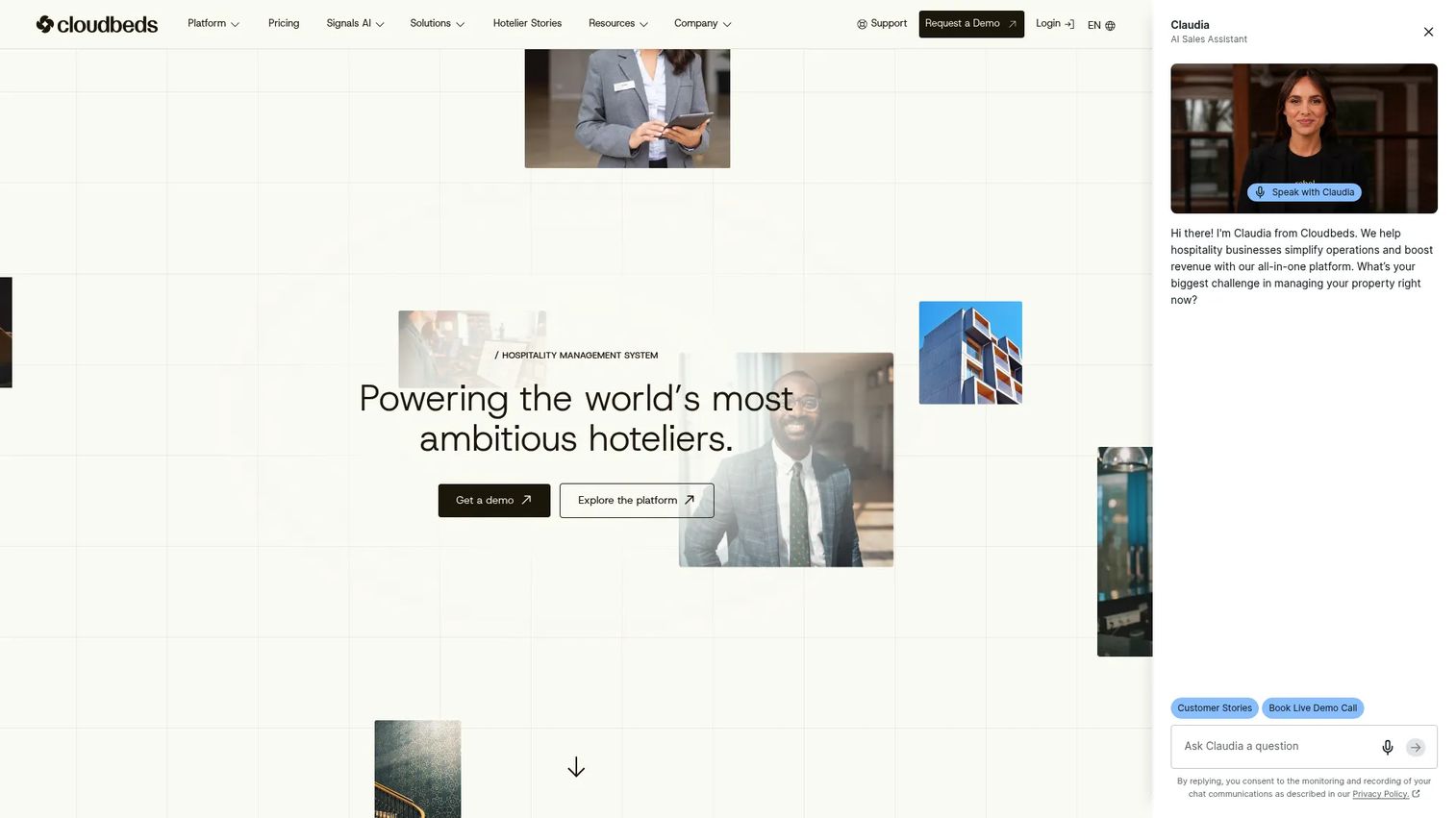
Cloudbeds is a unified hospitality management platform that combines PMS, booking engine, channel manager, payments, and reporting in a single system. It is built for independent hotels, hostels, vacation rentals, and growing multi-property groups that want to operate from fewer disconnected tools. The platform also includes a marketplace for third-party integrations and revenue intelligence reporting.
Best for: Independent hotels and growing groups that want one operating system for reservations, channel distribution, and property workflows.
Key features
- PMS with reservation calendar, room management, and housekeeping
- Commission-free direct booking engine
- Real-time channel manager
- Integrated payments and digital check-in
- Multi-property management and revenue intelligence dashboards
Why choose Cloudbeds: Strong all-in-one fit for hotels that want to consolidate PMS, distribution, and guest experience into a single system. Teams replacing a legacy PMS should validate data migration scope before committing.
Cloudbeds pricing: Plans are priced per room per month. Cloudbeds Flex starts at $9/room/month (minimum $180/month). Cloudbeds One is $11/room/month (minimum $220/month). Cloudbeds Experience, which adds guest experience and reputation tools, is $16/room/month in the United States (minimum $320/month).
G2 rating: 4.3/5
2. Mews
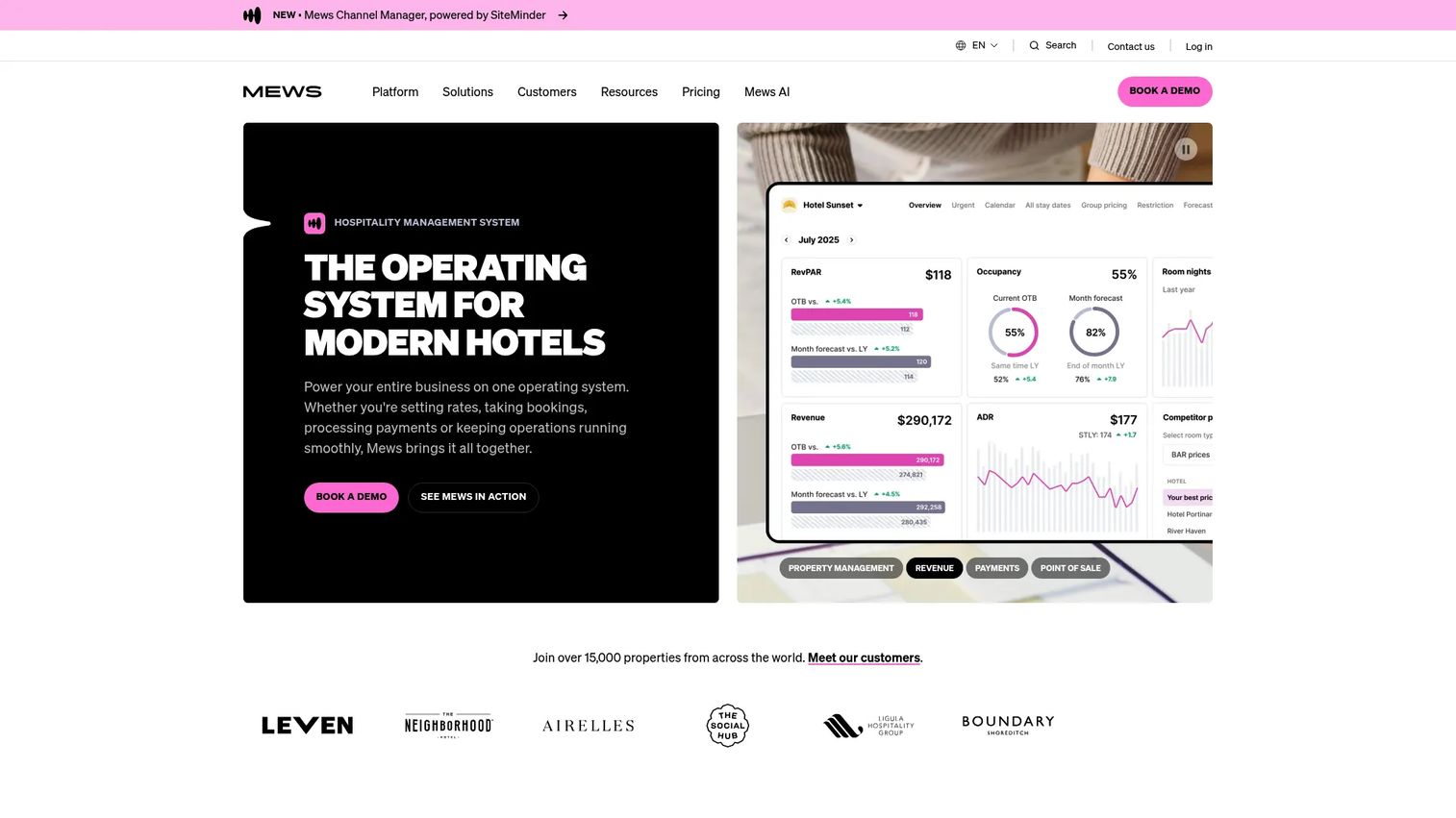
Mews is a cloud hospitality operating system built for modern hotel operations. It covers PMS, reservation management, guest journeys, embedded payments, POS, housekeeping, accounting, and revenue management in a connected platform. With more than 1,000 integrations and an open API, Mews is designed for hotel groups that want their technology stack to actually talk to each other.
Best for: Modern hotels and multi-property operators that want cloud-native reservation management tied to daily operations.
Key features
- Reservation timeline with real-time rate management
- Online check-in, check-out, self-service kiosks, and digital keys
- Embedded payments and POS
- Group bookings and guest profiles
- Open API with 1,000+ third-party integrations
Why choose Mews: Strong fit for operators modernizing fragmented hotel technology. Teams replacing an older PMS should validate integration requirements and rollout timeline with the Mews implementation team before signing.
Mews pricing: Mews prices by quote. The cost depends on property count, modules selected, payment processing scope, and implementation requirements. The Mews RMS add-on has documented launch pricing starting around $9/room/month in USD, though current rates require confirmation directly with Mews.
G2 rating: 4.8/5
3. ThinkReservations
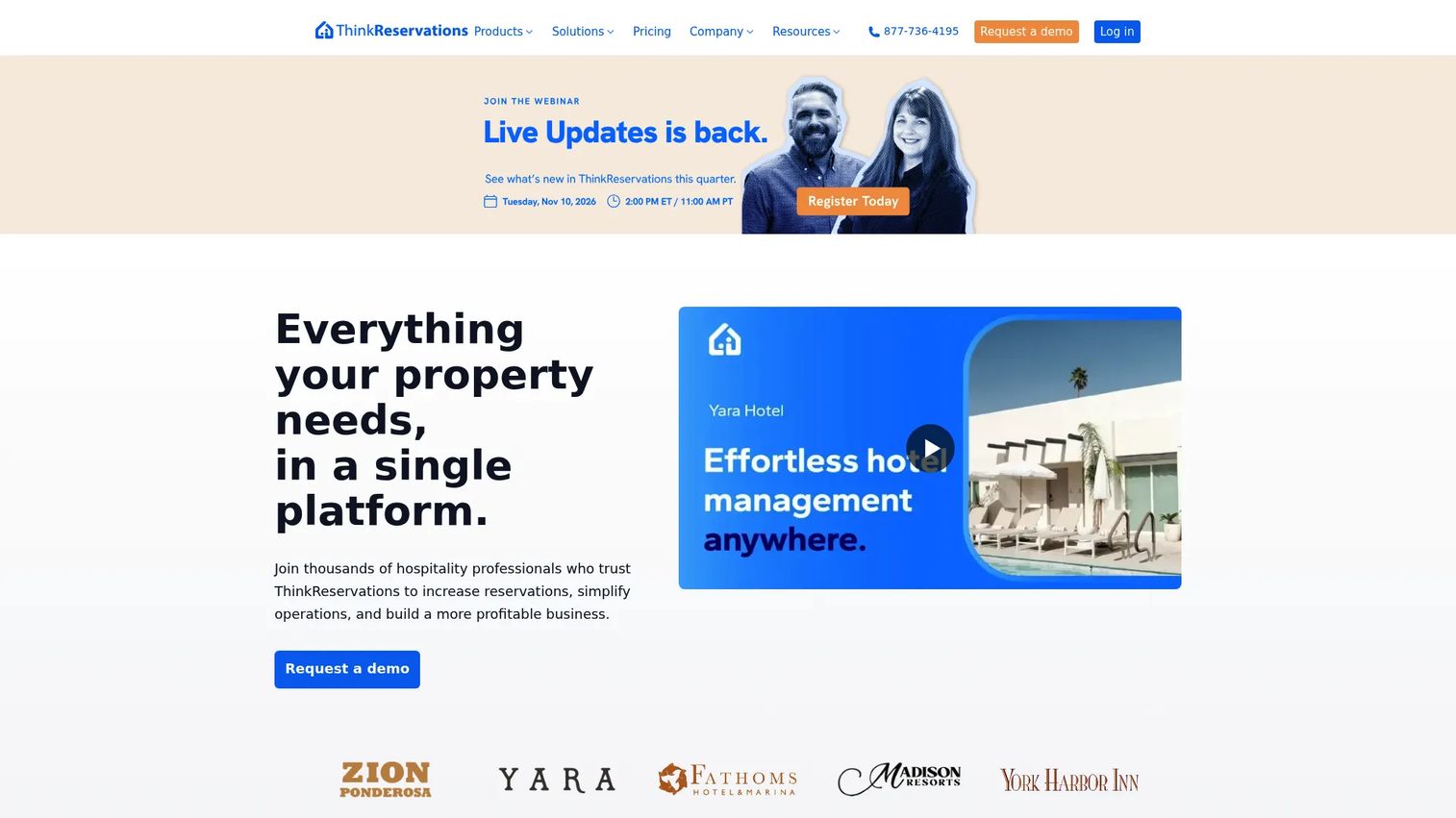
ThinkReservations is an all-in-one hotel management platform built specifically for independent inns, B&Bs, boutique hotels, and lodging property groups. The system bundles property management, channel management, a booking engine, automated guest communications, and payment processing. Dynamic pricing tools and package management are included, making it practical for smaller teams without a dedicated revenue manager.
Best for: Inns, B&Bs, boutique hotels, and independent operators that need reservations, website bookings, and guest messaging in one platform.
Key features
- PMS with reservation calendar, task management, and mobile access
- Channel manager with real-time synchronization
- Booking engine with packages, promotions, and rate restrictions
- Automated guest messaging via text
- Integrated payments including Apple Pay and Google Pay
Why choose ThinkReservations: Good fit for properties that need hospitality-specific workflows without enterprise CRS complexity. The Capterra rating sits at 4.9/5, reflecting strong satisfaction among smaller independent properties. Teams should validate channel depth and migration support before replacing a legacy stack.
ThinkReservations pricing: ThinkReservations prices by quote. Contact their sales team for a proposal based on property size and module requirements.
4. Vertical Booking
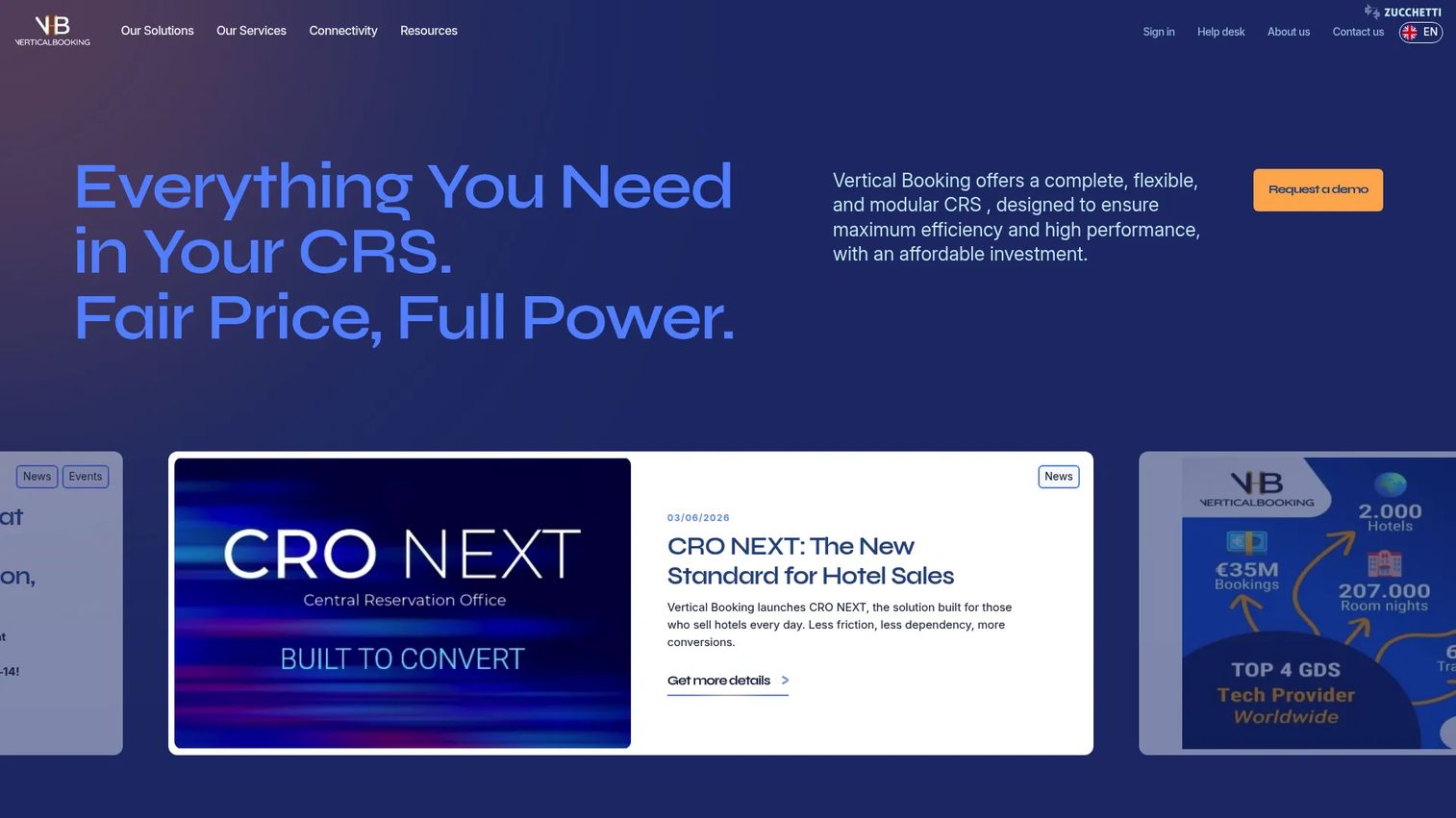
Vertical Booking is a hotel reservation and distribution platform providing CRS, booking engine, channel management, metasearch connectivity, and GDS access. It is designed for hotels and hotel chains that need CRS depth and broad distribution control rather than a lightweight booking tool. A mobile app lets revenue managers handle reservations, rates, availability, and sales reports on the go.
Best for: Hotels and groups that need CRS depth, direct booking tools, and OTA plus GDS distribution control.
Key features
- Central reservation system
- Direct booking engine
- Channel manager with real-time synchronization
- Metasearch connectivity
- GDS distribution and multi-property management
Why choose Vertical Booking: Strong fit for hotel operators focused on distribution architecture rather than front-desk operations. Teams should verify PMS integration options and implementation support during evaluation.
Vertical Booking pricing: Contact Vertical Booking directly for a quote based on property count, distribution modules, and CRS configuration.
5. Blastness
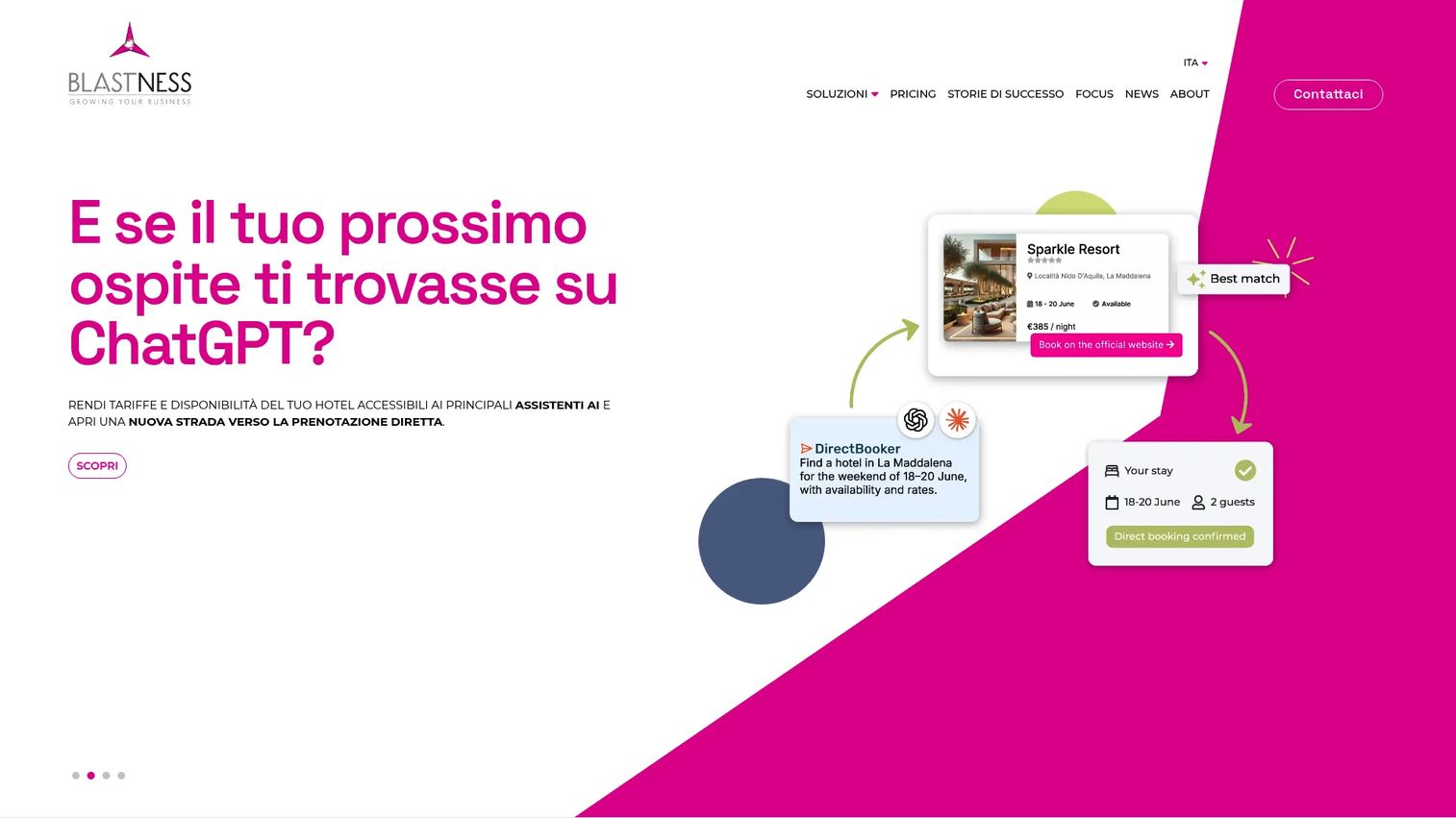
Blastness is a hospitality technology and revenue partner that combines an AI-powered booking engine, revenue management system, digital marketing, and direct-booking tools. It offers three collaboration models: Pay Per Result (fixed and variable fees tied to outcomes), Pay Per Product (one-off or monthly payments), and Pay Per Reservation (fees based on tracked bookings with no setup or monthly management cost). The model is designed for hotels that want their technology vendor to share accountability for direct revenue results.
Best for: Hotels and hotel groups where growing direct-channel revenue is the primary strategic objective.
Key features
- AI-powered booking engine
- Revenue management with dynamic pricing and Autopilot mode
- Blastness Suite for centralized hotel performance data
- AI-driven PPC and metasearch campaign management
- CRM, rate shopper, and market intelligence tools
Why choose Blastness: Useful when a hotel wants a single partner handling both technology and revenue strategy. Validate geographic coverage, PMS integrations, and which collaboration model aligns with your budget structure before shortlisting.
Blastness pricing: Blastness uses three pricing models with no standard published rates. The Pay Per Reservation model carries no setup cost or fixed monthly fee. Contact Blastness for a proposal based on your property profile and channel mix.
6. Profitroom
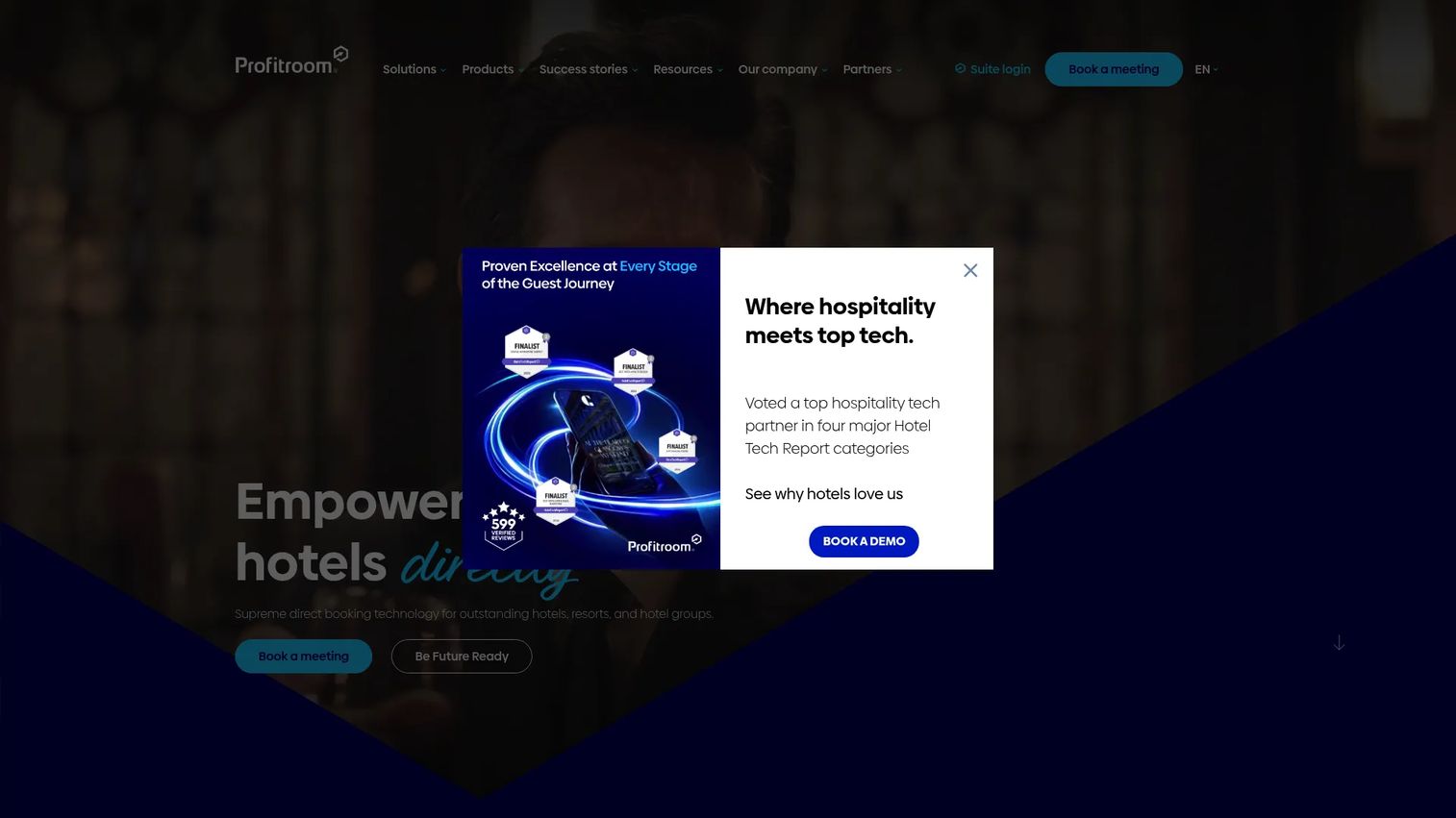
Profitroom is an all-in-one hospitality platform focused on growing direct bookings, guest loyalty, and hotel revenue. The platform covers a booking engine with packages, extras, and vouchers, a CRM with email marketing automation, channel management, hotel websites, and paid advertising. It is built for resorts, leisure hotels, and independent properties that want their reservation system connected to their guest marketing.
Best for: Resorts and independent hotels that want reservation software connected to direct sales and guest acquisition.
Key features
- Booking Engine 360 with packages, extras, and vouchers
- CRM with email marketing automation and loyalty tools
- AI Agent for guest engagement
- Channel manager and hotel websites
- SEO, paid advertising, and payment services
Why choose Profitroom: Strong when the booking experience and hotel marketing need to work from the same data. Teams should verify PMS integration depth and regional support during evaluation.
Profitroom pricing: Contact Profitroom for a quote based on room count, modules, and service package.
7. Aven Hospitality
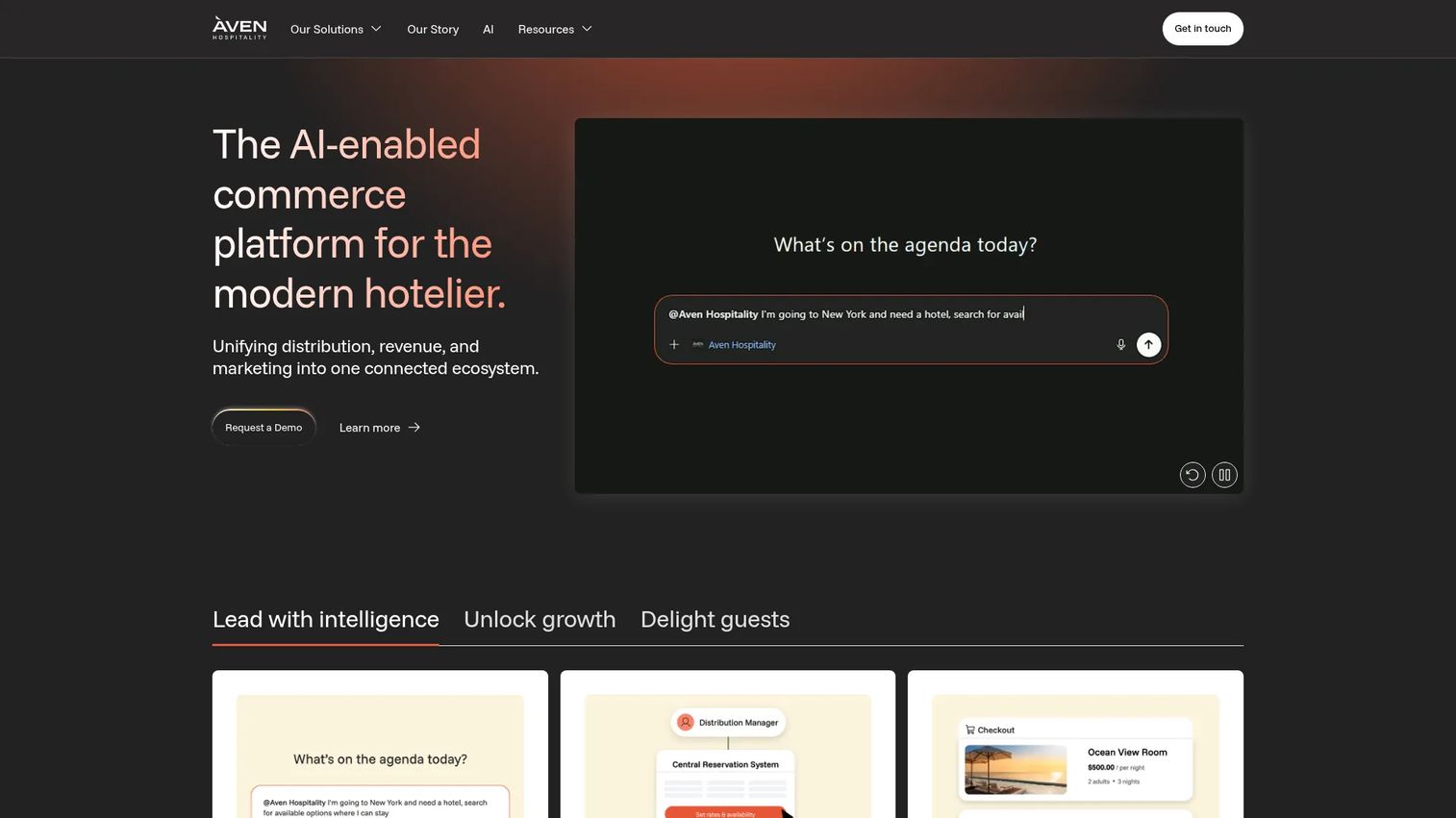
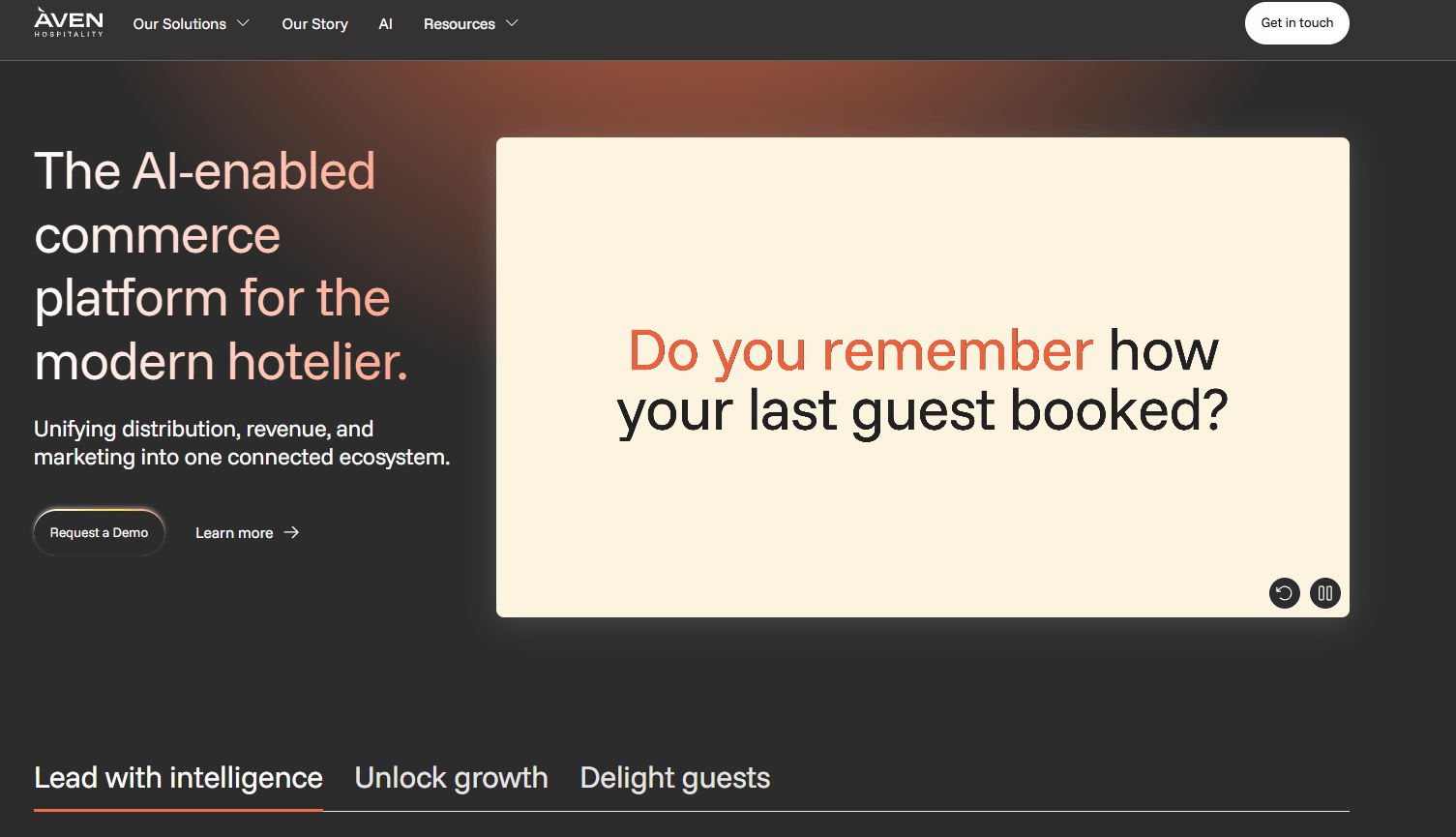
Aven Hospitality is an AI-enabled hospitality commerce platform that unifies distribution, direct bookings, retailing, digital marketing, and guest operations. The platform includes the SynXis Central Reservation System, a booking engine, personalized retailing with offers and add-ons, and an AI Voice Agent and Concierge. Aven also supports MCP-enabled sharing of rates, availability, and content with AI platforms, positioning it for hotels thinking about AI-driven demand channels.
Best for: Hotels and hotel groups needing an integrated platform for distribution, direct bookings, retailing, and AI-enabled guest engagement.
Key features
- SynXis CRS for rate and inventory management
- Direct booking engine
- Personalized retailing with offers and add-ons
- AI Voice Agent and Concierge
- Digital marketing and MCP-enabled AI distribution
Why choose Aven Hospitality: Good option for hotels that want CRS capability bundled with modern retailing and AI engagement tools. Validate which SynXis features are included versus separately licensed.
Aven Hospitality pricing: Contact Aven Hospitality for a quote based on property scope and modules.
G2 rating: 4.0/5
8. SynXis Central Reservation System
SynXis Central Reservation System is Sabre Hospitality's enterprise CRS, built for hotel brands, groups, and chains that need centralized rate, inventory, and reservation management across global distribution channels. The system manages distribution strategy across GDS, OTAs, direct channels, and call centers. It supports eight languages and is designed for portfolio-level reservation control rather than single-property simplicity.
Best for: Hotel groups and chains that need enterprise CRS capabilities and global distribution reach.
Key features
- Enterprise CRS with rate and inventory management
- GDS distribution connectivity
- OTA and direct channel management
- Multi-property distribution strategy management
- Support for eight languages
Why choose SynXis Central Reservation System: Best suited for hotel groups that need central control across a large portfolio with broad distribution infrastructure. Teams should validate implementation timeline, migration complexity, and commercial terms.
SynXis pricing: Contact Sabre Hospitality for a quote based on portfolio size, distribution channels, and modules.
G2 rating: 4.5/5
9. Cendyn
Cendyn is a cloud-based hospitality technology company that provides CRS, CRM, booking engine, ecommerce tools, and revenue insights for hotels, resorts, casinos, and hospitality groups. The CRS uses a cloud-native architecture with microservice APIs and intelligent rate tools. The CRM provides unified guest profiles, segmentation, and cross-channel marketing automation. Together, they are designed for hotel commercial teams where reservations, guest data, and revenue strategy need to work from the same system.
Best for: Enterprise hospitality teams connecting reservations, guest data, ecommerce, and revenue strategy in one commercial platform.
Key features
- Cloud-native CRS with intelligent rate tools and distribution management
- Hospitality CRM with unified guest profiles and marketing automation
- Direct booking engine with dynamic pricing and loyalty features
- Hotel ecommerce with cross-selling and merchandising
- Revenue insights and analytics
Why choose Cendyn: Strong fit when reservation workflows must connect with broader commercial strategy. Note that Pegasus RezTrip and Travel Tripper were consolidated under Cendyn, so current product packaging should be confirmed directly.
Cendyn pricing: Cendyn generally uses custom enterprise pricing. A current web hosting promotion lists $450/month for Core or Pro website hosting on a 36-month term. Full CRS and CRM pricing requires a quote from Cendyn.
G2 rating: 4.0/5
10. Pegasus RezTrip CRS
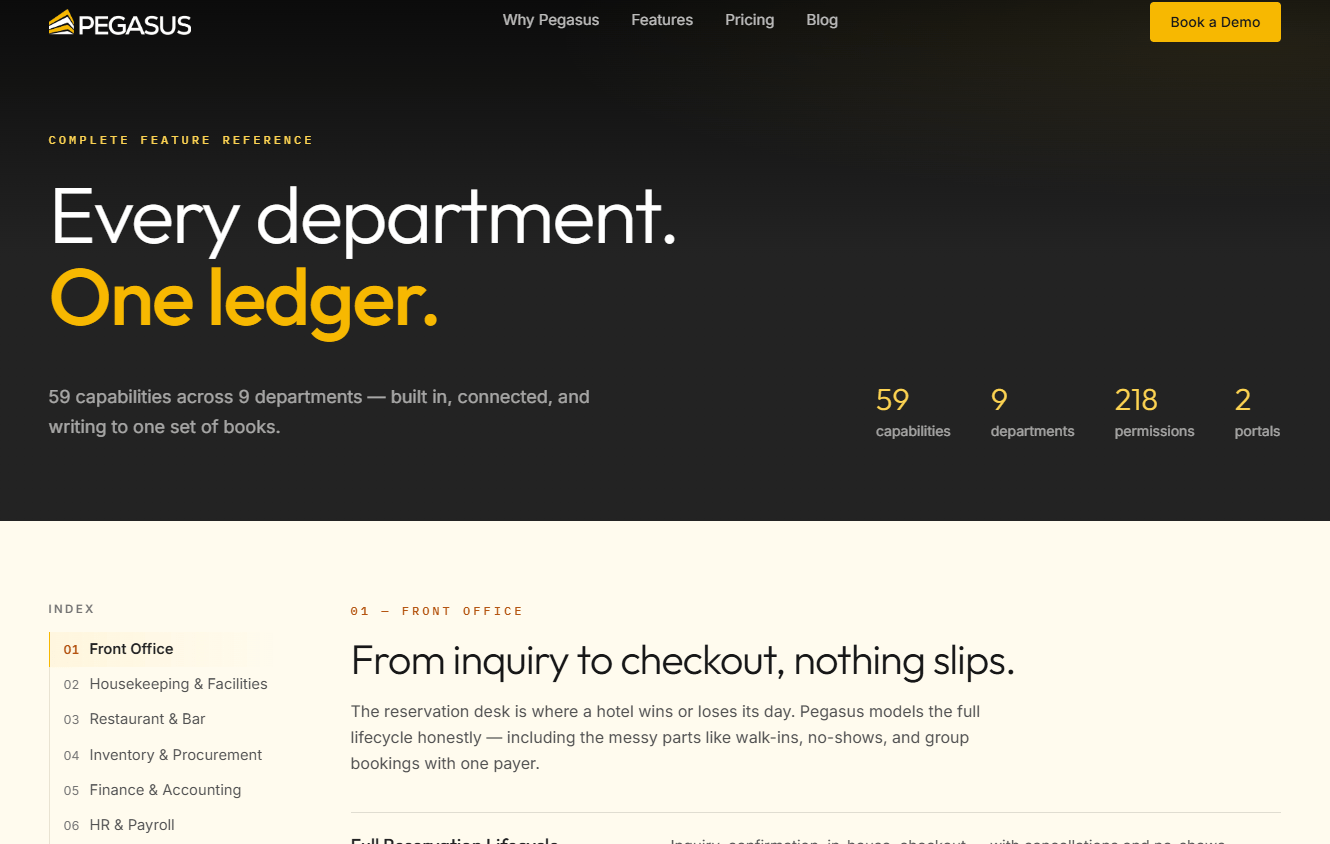
Pegasus RezTrip CRS is a cloud-based central reservations and distribution platform for hotels and hotel groups. The system is built on a serverless architecture with microservice APIs, providing intelligent rate and inventory management with global distribution connectivity across hundreds of channels. Pegasus was later consolidated into the Cendyn portfolio, so current product packaging and support should be confirmed directly.
Best for: Hotels that want CRS plus booking engine capabilities for central reservation distribution.
Key features
- Cloud-native CRS with serverless architecture
- Intelligent rate and inventory management
- Global distribution across hundreds of channels
- Microservice API connectivity
- PMS and hospitality system integrations
Why choose Pegasus RezTrip CRS: Useful for properties that need a dedicated CRS rather than a PMS-integrated reservation module. Confirm current product ownership, packaging, and support structure before proceeding, given the Cendyn consolidation.
Pegasus RezTrip CRS pricing: Contact Pegasus or Cendyn for a quote based on property scope, distribution channels, and implementation.
11. Amadeus iHotelier Central Reservations System
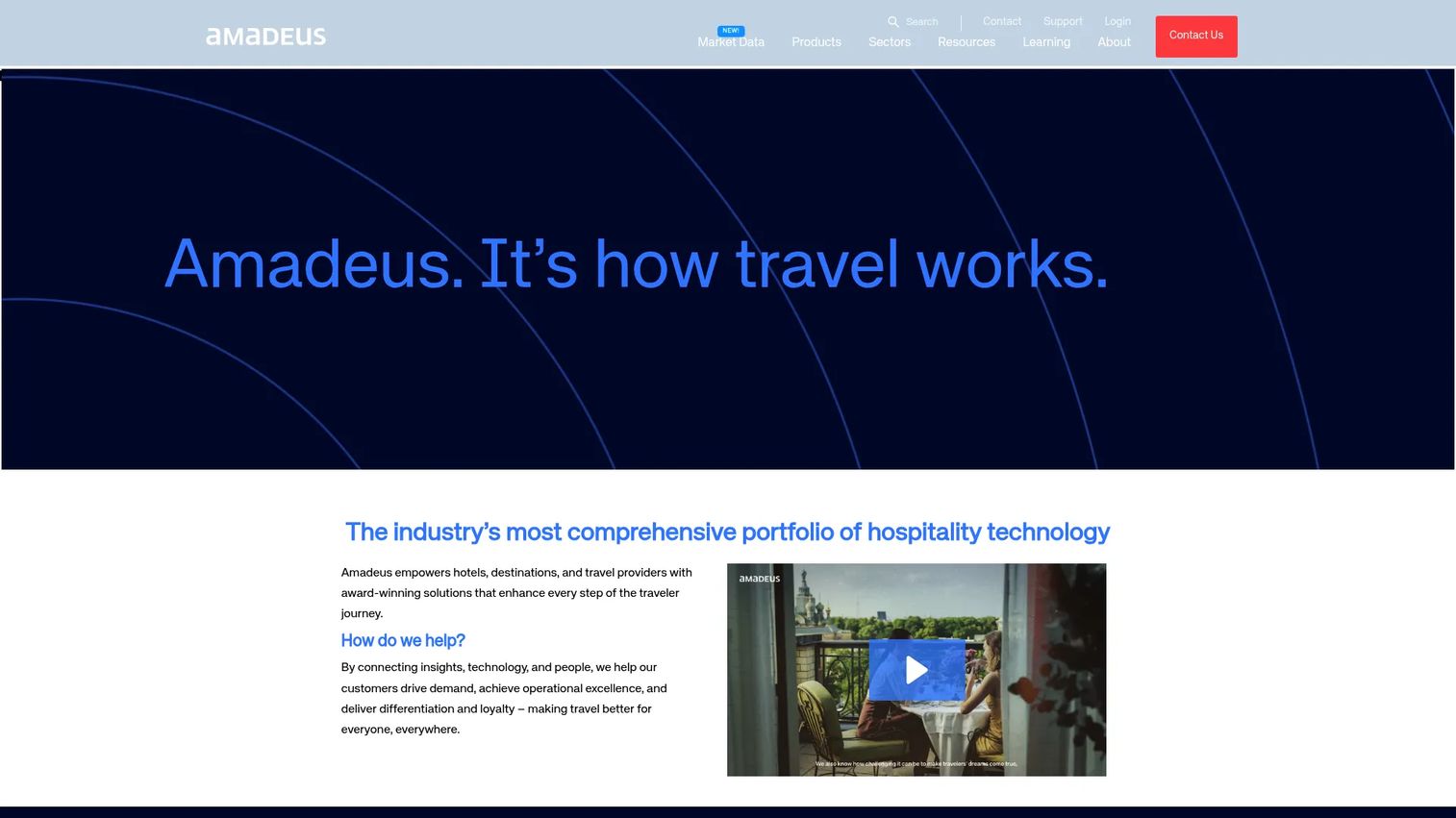
Amadeus iHotelier Central Reservations System centralizes hotel rates, availability, inventory, distribution, and booking operations. The system manages reservations across web, mobile, voice, travel agent, OTA, and metasearch channels from a single platform. It includes a booking engine for direct website reservations, call-center capability, and real-time ARI management with bulk update tools. Business intelligence dashboards surface booking pace and performance data for revenue teams.
Best for: Independent hotels, small groups, and mid-scale chains needing centralized reservation and multi-channel distribution management.
Key features
- CRS for rates, availability, and inventory across all channels
- Integrated direct booking engine
- Call-center reservation capabilities
- Real-time ARI management with bulk updates
- Multi-property management and performance reporting
Why choose Amadeus iHotelier Central Reservations System: Strong fit for teams that need reservation distribution connected to broader travel infrastructure. Validate implementation scope, contract terms, and integration requirements with Amadeus Hospitality.
Amadeus iHotelier pricing: Contact Amadeus Hospitality for a quote based on property scale, channels, and modules.
G2 rating: 3.7/5
12. SHR Central Reservation System
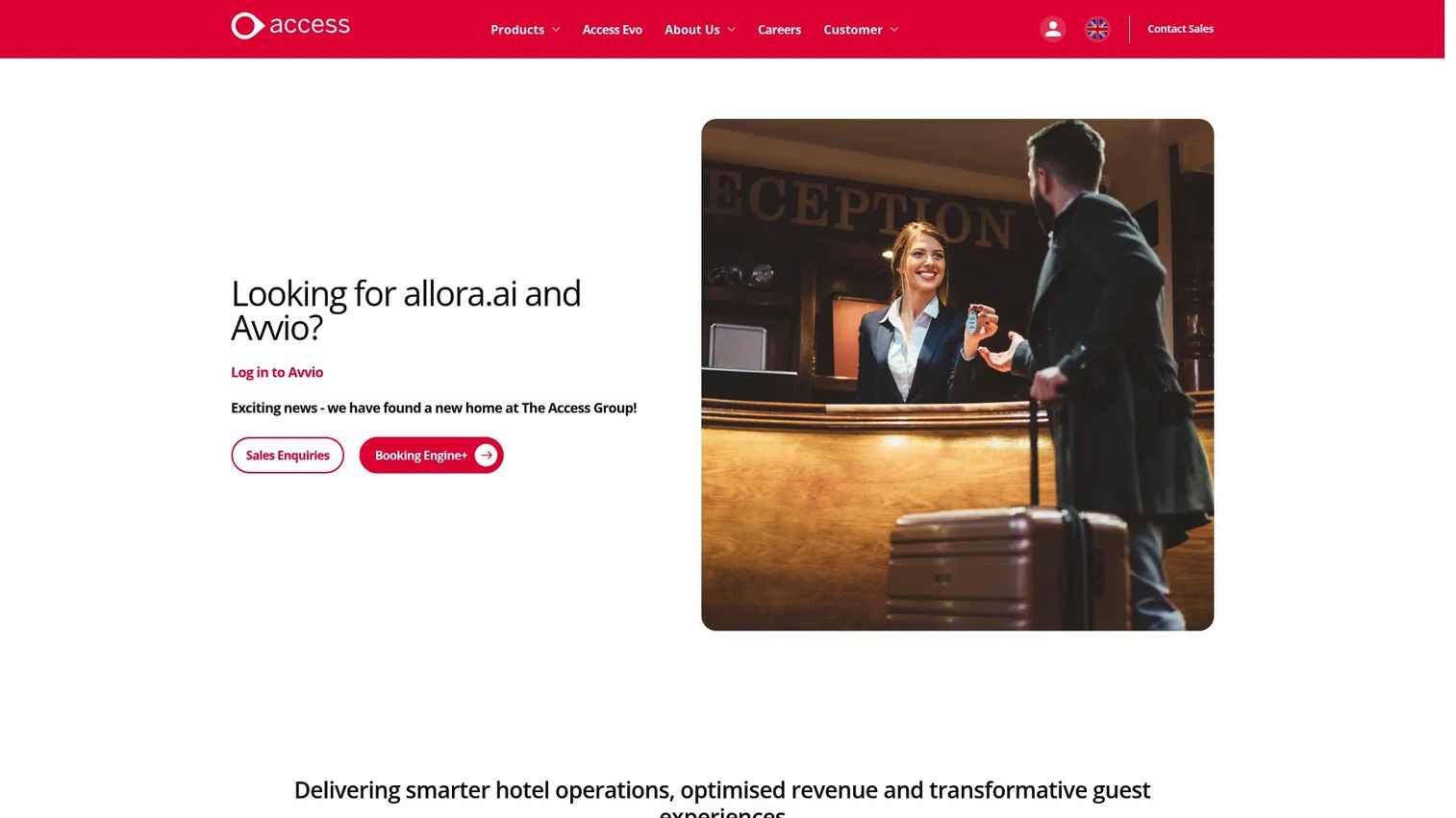
SHR Central Reservation System (Windsurfer CRS) is a web-based hotel central reservation system for managing rates, inventory, and reservations across distribution channels. The platform includes property website integration, web-based reservation management, and customer information management. Note that SHR products have moved to The Access Group, so current product naming, packaging, and support should be confirmed before evaluation.
Best for: Hotels needing a web-based CRS to manage reservations, rates, and inventory across distribution channels.
Key features
- Web-based reservation management
- Rate and inventory management across distribution channels
- Property website integration
- Reservation search and customer information management
Why choose SHR Central Reservation System: Useful for teams needing a dedicated CRS rather than a PMS add-on. Confirm current branding, product scope, and support under The Access Group before shortlisting.
SHR CRS pricing: Contact SHR or The Access Group for a current quote.
G2 rating: 3.7/5
13. GuestCentric
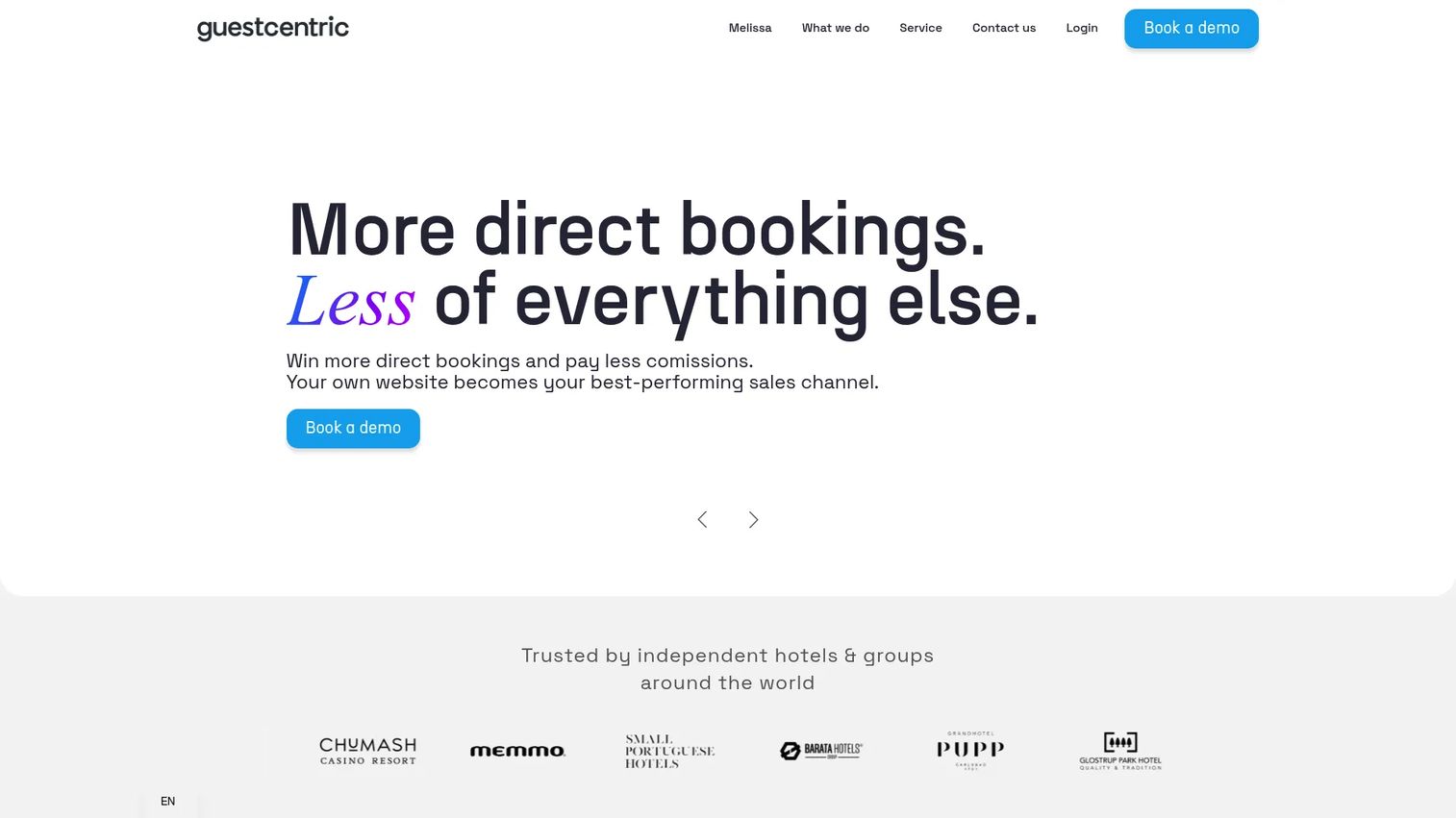
GuestCentric is a hotel HyperCommerce platform combining AI-powered booking, hotel websites, real-time distribution, payments, and marketing tools. The platform's AI sales assistant, Melissa, handles direct booking conversations. The booking engine supports upsells, personalized rates, and packages. PMS integrations synchronize availability, rates, and reservations in real time. GuestCentric is built for independent hotels where the website and booking flow are the primary direct revenue channel.
Best for: Independent hotels focused on increasing direct bookings through better website conversion.
Key features
- AI sales assistant (Melissa) for direct booking conversations
- Mobile-first booking engine with upsells and packages
- SEO-ready hotel website design
- Real-time distribution across booking channels
- PMS integrations for availability and rate sync
Why choose GuestCentric: Strong for hotels where direct-booking experience is the core problem to solve. Validate PMS integration and channel management depth before choosing it as the central reservation hub.
GuestCentric pricing: Contact GuestCentric for a quote based on website requirements, booking engine needs, and property profile.
14. SiteMinder
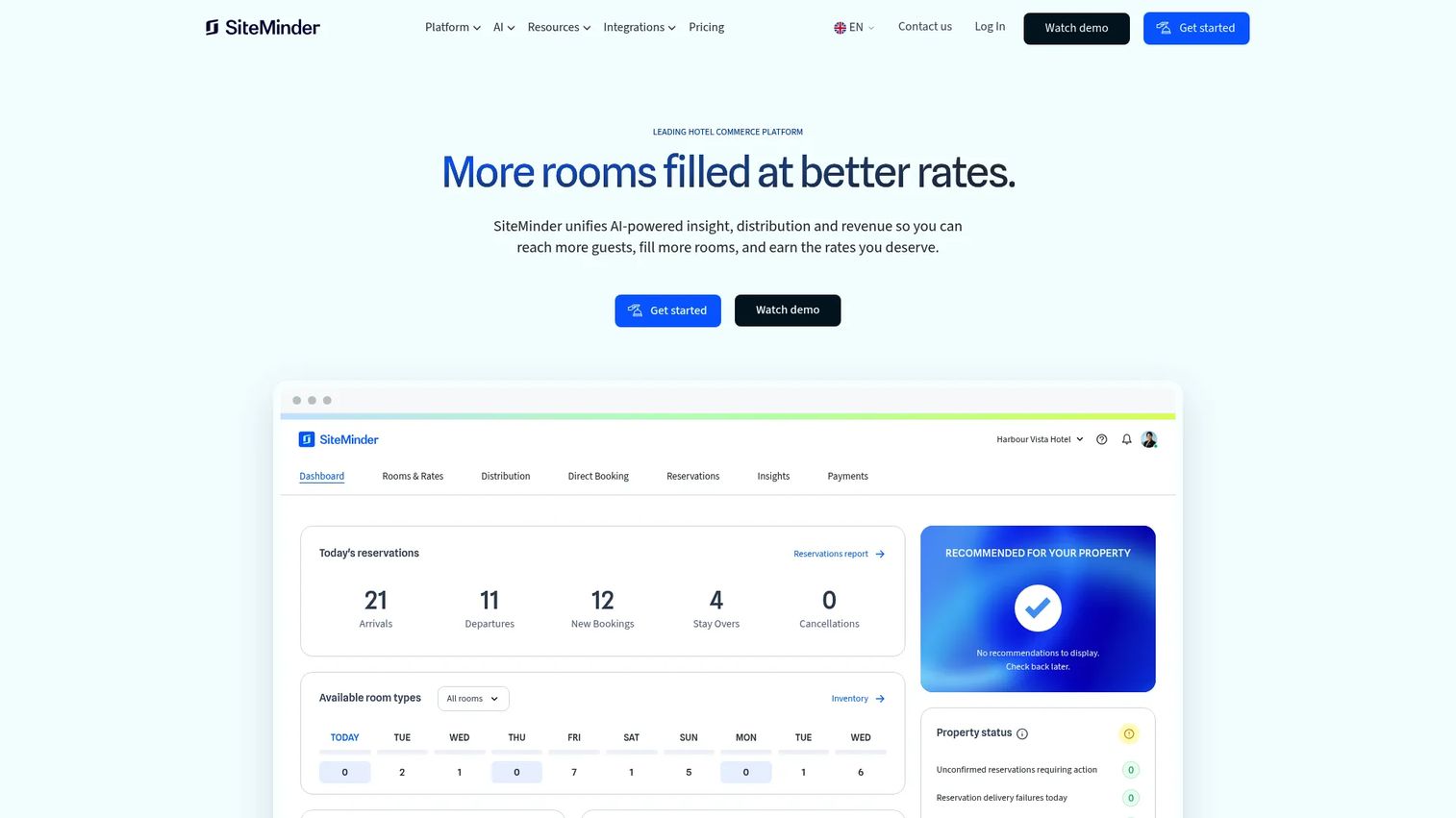
SiteMinder is a hotel commerce platform built around distribution. Its channel manager synchronizes rates and availability across OTAs and other booking channels in real time. The platform also covers direct bookings via a hotel booking engine, metasearch advertising, a hotel website builder, rate parity monitoring, competitor insights, and performance analytics. SiteMinder is designed for properties where distribution complexity is the main operational problem.
Best for: Hotels prioritizing channel management, OTA synchronization, direct booking, and distribution visibility.
Key features
- Channel manager with real-time synchronization
- Direct booking engine and hotel website builder
- Metasearch advertising tools
- Rate parity monitoring and competitor insights
- PMS and CRS integration
Why choose SiteMinder: Strong fit when distribution is the bottleneck and teams need cleaner channel control. Validate whether the property also needs a full PMS or CRS alongside SiteMinder, as it is primarily a commerce and distribution layer.
SiteMinder pricing: SiteMinder and SiteMinder Plus plans are priced per property monthly, with rates calculated based on room count. Groups and Chains pricing is a custom quote. Contact SiteMinder for current figures.
15. Little Hotelier
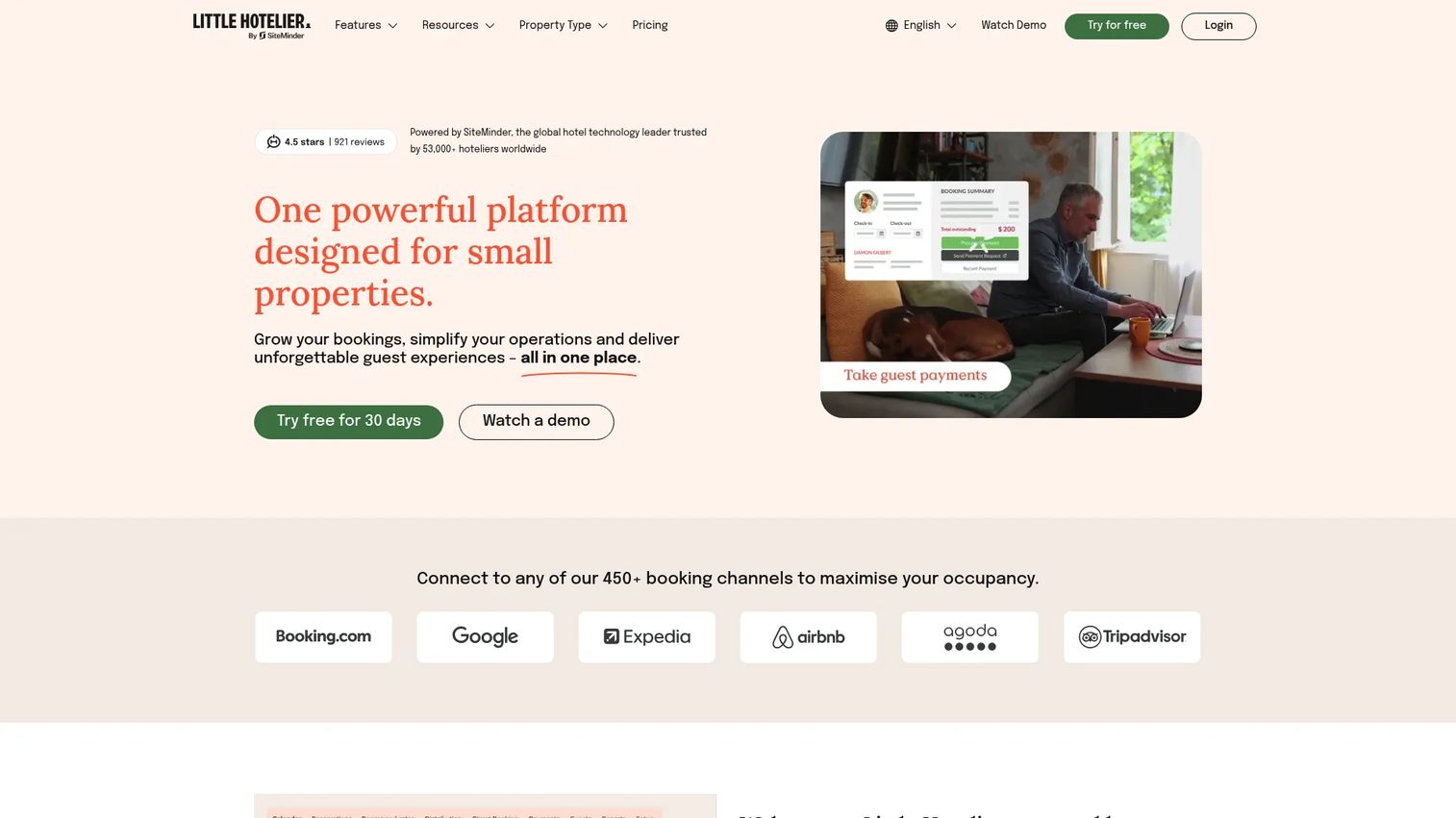
Little Hotelier is all-in-one hotel management software for small accommodation providers: Guesthouses, B&Bs, inns, motels, and small hotels. The platform covers a direct booking engine and hotel website, a channel manager connecting to 450+ booking channels, synchronized reservation and guest calendars, automated guest communications, integrated payments, a mobile app, and data-driven pricing insights. A 30-day free trial is available.
Best for: Small hotels, B&Bs, inns, and guesthouses that need reservation tools and channel reach without enterprise overhead.
Key features
- Direct booking engine and hotel website
- Channel manager with 450+ booking channel connections
- Synchronized reservation, room, and guest calendar
- Automated guest communications
- Integrated payments and mobile app
Why choose Little Hotelier: Good fit for small teams that need reservation control and OTA reach quickly. The 30-day free trial lowers commitment risk for first-time buyers. Validate growth limits if the property expects to add locations.
Little Hotelier pricing: Little Hotelier prices by room count on a monthly basis, with Basics and Pro tiers available. A 1% variable booking fee applies to applicable bookings. Monthly and annual payment options are available. Use the pricing calculator on their website for a property-specific estimate.
Considerations when choosing hotel reservations software
Property size and operating model
A 12-room inn and a 40-property hotel group have fundamentally different requirements. Map the buying decision to room count, property count, staffing model, and growth plan before evaluating platforms. Tools built for small properties will not handle multi-property reporting and rate controls at scale.
PMS, CRS, and booking engine fit
Identify what the new system must replace or integrate with. Some platforms are PMS-first, some are CRS-first, and others lead with the booking engine or channel manager. Trying to run a CRS-first tool as a full PMS replacement creates gaps in front-desk operations, and vice versa.
Distribution and OTA strategy
Check OTA connections, metasearch support, GDS access, and rate parity controls. 45.8% of hotel reservations were made on mobile in 2025, up from 28.3% in 2019, according to Dataintelo (2026). That shift means your distribution layer needs to handle mobile booking flows cleanly across every channel, not just desktop OTAs.
Implementation and migration
Data migration covers room types, historical reservations, guest profiles, payment setup, and staff training. This is where most implementations stall. Ask each vendor for a clear cutover timeline and confirm what migration support is included. For operators building toward a VP hire or fundraise, a failed migration is a costly distraction.
Reporting and revenue visibility
Check that the system surfaces booking pace, cancellation patterns, channel profitability, occupancy, ADR, RevPAR, and source mix. If your GM or revenue lead cannot pull those numbers in under five minutes, the reporting layer is not working. Board-level metrics need a system that generates them automatically, not one that requires a weekly export.
Conclusion
The right hotel reservation system depends on where your operation breaks down today.
For independent hotels and growing groups that want one consolidated platform, Cloudbeds covers PMS, channel management, and payments from $9/room/month. Mews fits modern operators building a cloud-native technology stack with deep integration requirements. ThinkReservations and Little Hotelier serve smaller independent properties well, with Little Hotelier offering a no-risk free trial.
For multi-property groups and enterprise chains, SynXis CRS and Cendyn handle the distribution architecture and commercial strategy layer. Amadeus iHotelier suits larger properties connected to global travel infrastructure. SHR's Windsurfer CRS provides a dedicated web-based CRS option, though current packaging should be confirmed under The Access Group.
When distribution is the core problem, SiteMinder is the strongest standalone channel management pick. When direct bookings are the primary goal, Profitroom, GuestCentric, and Blastness each offer booking-first platforms with different emphasis on marketing, revenue strategy, and AI tools.
Before committing, shortlist three vendors by operating model, verify integrations before comparing subscription costs, and ask each vendor to walk through the exact reservation flow your team runs every day. The gap between "demo" and "production workflow" is where most implementations succeed or fail.
Start your journey with Guideflow today!
FAQs
Hotel reservations software is a system that manages room availability, rates, bookings, guest data, and distribution across direct channels, OTAs, GDS connections, and internal property systems. It may include a PMS, CRS, booking engine, channel manager, or some combination of all four, depending on the vendor and the property's needs.
A PMS manages property operations: Front desk, housekeeping, folios, and room status. Reservation software may focus specifically on booking, inventory management, rate distribution, and channel connectivity. Many hotel platforms combine both, but some vendors specialize in one layer and expect integration with a separate system for the other.
A CRS centralizes rates, availability, and inventory across all distribution channels, ensuring every channel reflects the same information at the same time. A booking engine is the tool guests use to book directly through the hotel website. Many platforms include both, but CRS-first tools like SynXis are often separate from the booking engine layer.
Little Hotelier and ThinkReservations are both strong fits for small independent properties. Little Hotelier suits guesthouses, B&Bs, and small hotels that need a channel manager, booking engine, and payments with minimal setup. ThinkReservations is well-suited to inns and boutique properties that also want guest messaging and dynamic pricing built in. The choice depends on room count, channel mix, and whether the property needs a full PMS or primarily a booking and distribution layer.
For hotel groups, SynXis Central Reservation System, Mews, Cendyn, Amadeus iHotelier Central Reservations System, and SHR Central Reservation System are the primary options to evaluate. SynXis and Amadeus iHotelier are built for enterprise-scale distribution. Mews suits groups modernizing operations with a cloud-native platform. Cendyn adds CRM and commercial strategy to the CRS layer. The right choice depends on distribution footprint, PMS requirements, and how centralized rate control needs to be.
Pricing models vary widely across the category. Cloudbeds charges per room per month, starting at $9. Many enterprise platforms, including Mews, SynXis, Amadeus, and Cendyn, price by quote based on property count, modules, and implementation scope. Little Hotelier calculates pricing by room count with a 1% variable booking fee on applicable bookings. Comparing total cost requires including implementation, support, and integration fees alongside the subscription.
Yes, most modern hotel reservation systems connect to OTAs directly or through a channel manager. The channel manager synchronizes rates, availability, and reservations across OTA platforms in real time. This is what prevents the stale-availability problem where a guest books a room on Booking.com that the front desk already sold.
Reservation software supports direct bookings through a booking engine on the hotel website, metasearch tools that surface the hotel alongside OTA listings, promotional rates for direct channels, and guest communications that encourage returning guests to book directly. OTAs remain useful for demand generation, particularly for properties with limited brand recognition. The goal is shifting enough volume to direct channels that commission costs stop compressing margin, not eliminating OTA presence entirely.