The annual strategy deck exists. Every department head has a slightly different version of it. Board prep still means three days of spreadsheet work. And somehow, every major alignment conversation still routes through you.
This is the operational reality for most Series B founders. The company has strategy documents, a collection of dashboards, and a set of objectives that made sense in January. What it does not have is a reliable system connecting strategic priorities to department goals, KPI tracking, initiative ownership, and board-ready reporting.
According to Spherical Insights & Consulting (2026), the strategic planning software market reached USD 1.90 billion in 2025 and is growing at a 14.3% CAGR through 2035. The market is accelerating because the problem is real: Fragmented planning breaks down as companies grow past 30 people. The right platform gives your leadership team a shared view of priorities, ownership, and progress without routing every decision through the founder.
What's inside
This guide is for Series B SaaS founders evaluating strategy execution and account planning software to support quarterly operating cadences and board reporting. Tools were selected based on:
- Strategy-to-execution depth: Does it connect company priorities to department goals, KPIs, and initiative owners?
- Adoption likelihood: Will executives actually update it, or will it become another ignored system?
- Reporting output: Can it reduce manual board preparation?
- Stage fit: Does it work for a 30 to 150 person SaaS team without enterprise implementation overhead?
TL;DR
- Best overall for strategy mapping and execution: Cascade connects strategic plans, objectives, initiatives, and real-time dashboards in one place
- Best for enterprise operating cadences: WorkBoard suits complex organizations that need formal business reviews and portfolio governance
- Best for Balanced Scorecards and executive reporting: ClearPoint Strategy specializes in scorecards, strategy maps, and automated board reporting
- Best for OKR-led planning at Series B scale: Mooncamp and Perdoo offer fast adoption without heavy implementation programs
- Best for teams already on a work management stack: Asana, ClickUp, or monday.com can extend existing workflows into goal tracking
- Best for product and engineering strategy visibility: Jira connects product roadmaps and delivery work directly to team-level objectives
What is strategic planning software?
Strategic planning software is a platform that helps organizations define priorities, translate them into measurable goals, assign initiatives to owners, and monitor execution through dashboards and recurring reviews.
It is distinct from a static strategy document or a shared spreadsheet. The software creates a live, interactive operating layer where goals cascade from company level to department to individual, KPIs update automatically or through structured check-ins, and progress is visible without a manual reporting cycle.
Core capabilities
Most platforms in this category cover some combination of:
- Strategic priorities and themes
- Objectives and key results (OKRs)
- KPI and metric tracking
- Initiative and portfolio management
- Strategy maps and Balanced Scorecards
- Goal cascading across departments
- Executive dashboards and scorecards
- Business review workflows
- Progress updates and accountability prompts
- Integrations with CRM, finance, product analytics, and collaboration tools
How it differs from project management software
Project management tools track tasks and delivery. Strategic planning software connects work to organizational outcomes. A project tool tells you whether tasks are progressing. A strategy platform answers whether those tasks are moving the metrics that matter to your board. Many teams run both: Project management handles delivery details, while strategy software shows how that delivery maps to company priorities.
| Capability | Strategic planning software | Project management software |
|---|---|---|
| Primary focus | Strategy and outcomes | Tasks and delivery |
| Typical objects | Goals, KPIs, initiatives, scorecards | Tasks, projects, dependencies |
| Executive visibility | Built in | Often requires configuration |
| Review cadence | Quarterly, monthly, weekly | Sprint or project cadence |
| Best question answered | Are we executing the strategy? | Are tasks progressing? |
Where AI fits in strategy software
AI is most useful when it reduces reporting work, summarizes progress updates, surfaces stalled initiatives, or helps prepare business review briefings. Generic text generation is secondary. The tools worth evaluating use AI to connect actual goal data to recommendations, not just to produce boilerplate objective statements.
When to use strategic planning software
Connect company goals to department execution
A founder at 50 employees is often the only person who knows how the Product roadmap connects to the Sales pipeline target, which connects to the NRR goal on the board deck. Strategic planning software makes that connection visible to every department head. When a new VP of Marketing joins, they should see the quarter's priorities on day one without scheduling a founder briefing.
Prepare for board and investor reviews
Dashboards that pull ARR growth, NRR, burn multiple, pipeline coverage, and activation metrics into one view can cut board prep from three days to a few hours. The output should show metric trends, initiative status, and risk visibility without requiring a manual data pull from five different tools.
Run a repeatable quarterly planning cadence
Annual strategy, quarterly priorities, monthly business reviews, and weekly check-ins all become more consistent when they share a common data layer. The software does not create the cadence. It makes the cadence sustainable by removing the manual work that causes teams to skip reviews when things get busy. Pair the tool with a clear operating rhythm and defined update frequency, or the system will decay.
Strategic planning software comparison
The table below covers 14 platforms across strategy execution, OKR management, business process management software, and executive reporting. Pricing and ratings reflect verified figures from vendor pricing pages and G2 listings as of September 2026.
| # | Product | Best for | Key differentiator | Pricing | G2 rating |
|---|---|---|---|---|---|
| 1 | Cascade | Strategy mapping and execution | Connects strategic plans, goals, initiatives, and real-time reporting | Free plan; paid plans contact sales | 4.8/5 |
| 2 | WorkBoard | Enterprise strategy execution | Strategy cascades, OKRs, business reviews, and AI governance | Contact sales | 4.7/5 |
| 3 | ClearPoint Strategy | Balanced Scorecards and reporting | Strategy maps, scorecards, dashboards, automated reporting | Custom pricing | 4.6/5 |
| 4 | Betterworks | OKR and performance alignment | Goals, performance conversations, and talent intelligence | From $8/user/month | 4.4/5 |
| 5 | Mooncamp | Flexible OKR planning | Configurable objectives, check-ins, and planning workflows | From €7/user/month (annual) | 4.8/5 |
| 6 | Perdoo | Purpose-to-OKR alignment | Connects strategy maps, OKRs, KPIs, and progress tracking | Free plan; from €6.40/user/month | 4.4/5 |
| 7 | Quantive | Strategy execution and OKR visibility | Objectives, initiatives, analytics, and 170+ integrations | From $6/seat | 4.6/5 |
| 8 | Asana | Goals connected to project execution | Goals linked to projects, portfolios, and dashboards | Free plan; from $10.99/user/month | 4.4/5 |
| 9 | ClickUp | Goals, tasks, and dashboards combined | Customizable goals, tasks, automations, and reporting | Free plan; from $7/user/month (annual) | 4.6/5 |
| 10 | monday.com | Flexible cross-functional planning | Boards, goals, dashboards, and workflow automations | Free plan; from €9/seat/month (annual) | 4.7/5 |
| 11 | Profit.co | OKRs and performance workflows | OKRs, initiatives, check-ins, and 360 performance reviews | Custom pricing | 4.7/5 |
| 12 | Microsoft Viva Goals | Microsoft-based goal management | OKRs and goal tracking integrated with Microsoft 365 | Retired Dec 31, 2025 | 4.3/5 |
| 13 | Jira | Product and engineering strategy | Goals connected to roadmaps, epics, and delivery work | Free plan; paid plans contact Atlassian | 4.3/5 |
| 14 | Power BI | Executive reporting from business data | Custom KPI dashboards from connected CRM and finance data | Free account; Pro from $14/user/month | N/A |
Best strategic planning software for 2026
1. Cascade
Cascade is an AI-powered strategy execution platform designed to connect strategic planning, goal alignment, initiative tracking, and performance reporting in one place. Teams can import an existing strategy from a PowerPoint or PDF, map it into Cascade's frameworks, and start tracking execution without rebuilding everything from scratch. It is one of the few purpose-built strategy platforms that covers the full cycle from annual planning through weekly check-ins.
Best for: Organizations that need a centralized platform to plan, align, and track strategy across multiple departments without building a custom reporting system.
Key features
- Strategy maps with customizable frameworks, objectives, and KPIs
- AI-assisted planning with import from existing strategy documents
- Real-time health scores, dashboards, and performance analysis
- Dependency and risk mapping across teams and initiatives
- Automated team update prompts and AI-powered recommendations
Why choose Cascade: For a Series B founder, the most immediate value is visibility. When a new department head joins, they can see the quarter's priorities, their team's objectives, and how progress maps to company-level goals without a founder briefing. Cascade is the strongest option for teams that want a dedicated strategy execution layer rather than a work management tool extended to cover goals.
Cascade pricing: A free Plan supports up to 2 users, which works for initial evaluation. Essentials and Enterprise tiers require contacting Cascade for pricing. G2 reviewer ranges suggest paid plans are in the mid-market to enterprise range, so factor in a sales conversation as part of the buying process.
G2 rating: 4.8/5
2. WorkBoard
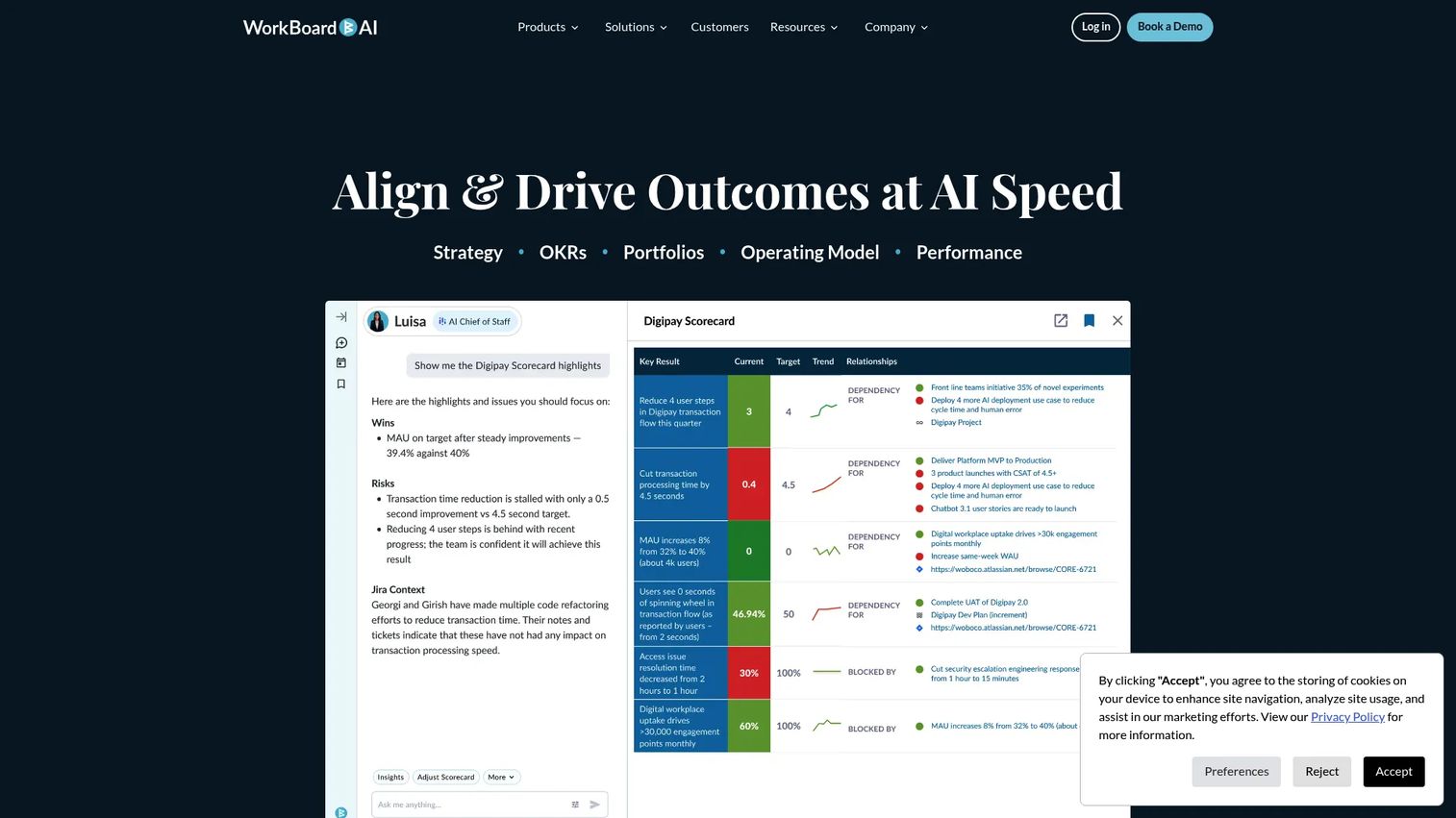
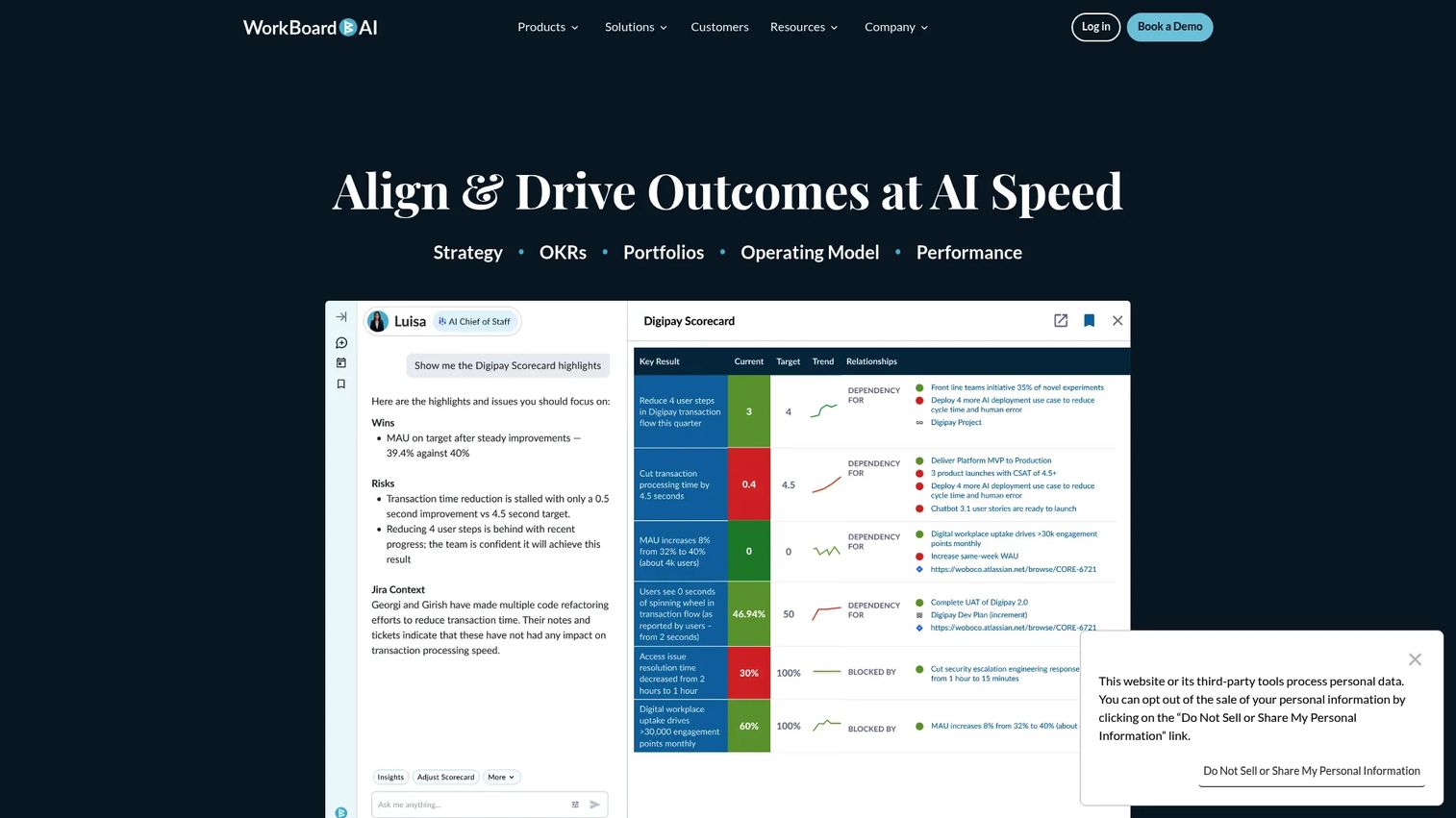
WorkBoard is an AI-native strategy execution platform that covers long-range planning, OKRs, strategic portfolio management, operating cadence automation, and talent alignment in a single system. Its AI agents, including a Portfolio Analyst and Leadership Coach, are designed to surface execution risk and automate the production of business reviews, quarterly scorecards, and MBR materials.
Best for: Large or complex organizations with formal operating review structures, multi-level goal cascades, and a dedicated strategy or chief of staff function.
Key features
- Strategy and OKR alignment with multi-level goal cascades
- Strategic portfolio and initiative management
- Operating cadence automation for MBRs, QBRs, and scorecards
- AI agents for portfolio analysis, executive coaching, and briefing preparation
- Talent and performance management aligned to strategic goals
Why choose WorkBoard: WorkBoard suits companies with formal operating review structures and multiple layers of leadership. For a Series B company at 50 to 80 people, it may carry more implementation weight than the team can absorb in the first quarter. Evaluate it if you have a chief of staff, a dedicated strategy function, or a board that expects structured portfolio governance.
WorkBoard pricing: WorkBoard does not display pricing on its website. All packages are quote-based and require a sales conversation. If you are comparing costs against lighter OKR tools, expect enterprise-range contracts.
G2 rating: 4.7/5
3. ClearPoint Strategy
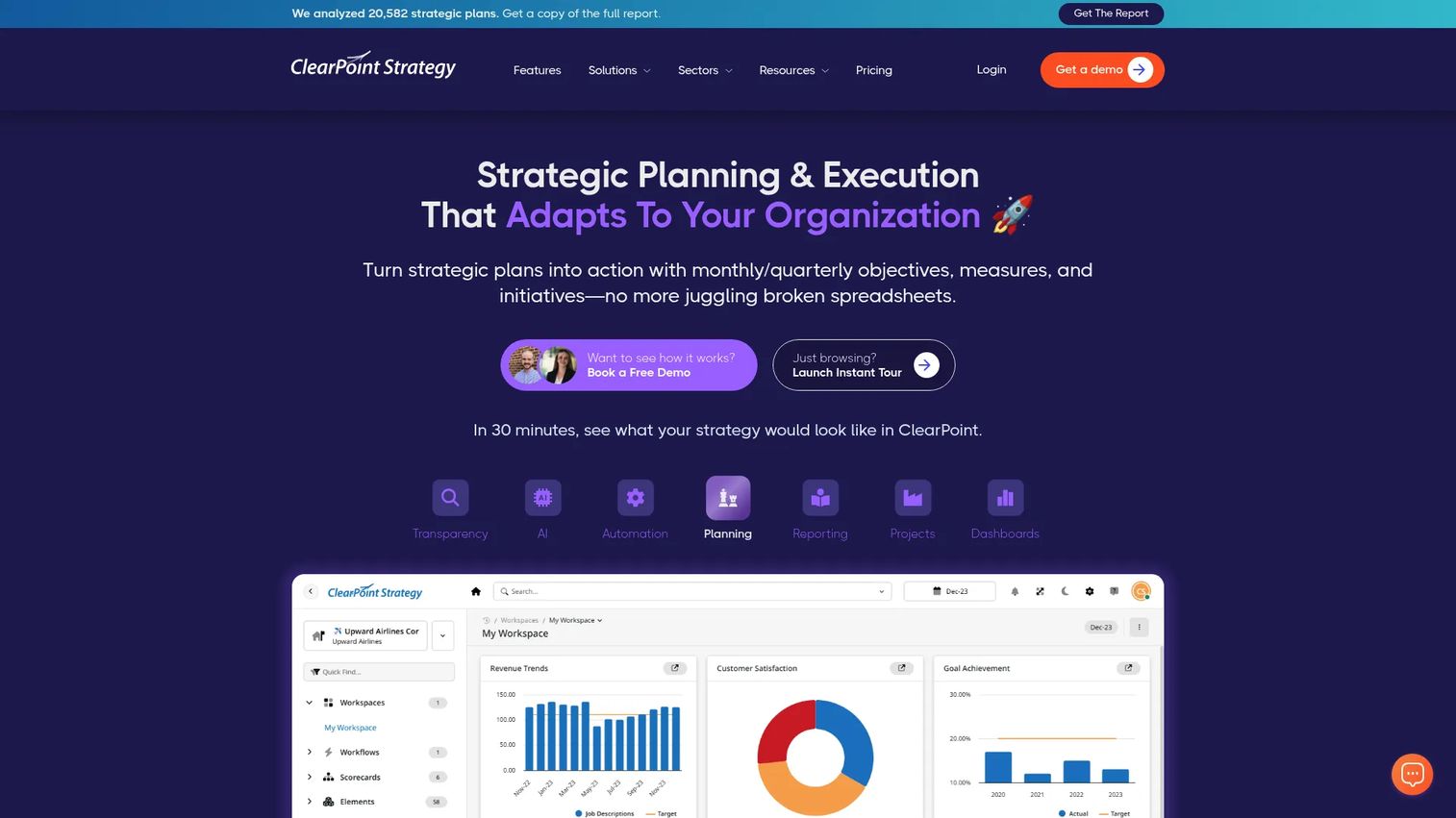
ClearPoint Strategy focuses on strategic scorecards, KPI reporting, strategy maps, and automated board-level reporting. It is one of the few platforms designed explicitly around the Balanced Scorecard methodology, making it a natural fit for leadership teams that run formal quarterly reviews and need a structured way to present strategic performance to boards and investors.
Best for: Organizations with an established strategy that need centralized execution tracking, automated reporting, and executive-ready scorecards.
Key features
- Strategy maps and Balanced Scorecards
- KPI and measure tracking with automated reporting
- Initiative and project tracking tied to strategic objectives
- Risk management and accountability tracking
- AI-powered strategy assistance and dashboard automation
Why choose ClearPoint Strategy: If board preparation is the primary pain, ClearPoint Strategy is purpose-built for it. The platform is designed to produce repeatable executive reports and scorecards rather than serve as a daily work management tool. It works best when a strategy or finance team owns the system and department heads contribute updates on a defined cadence.
ClearPoint Strategy pricing: Plans start at 10 users and are customized by user count, support level, and integrations. Contact ClearPoint directly for a quote. The platform does not display per-seat pricing publicly.
G2 rating: 4.6/5
4. Betterworks
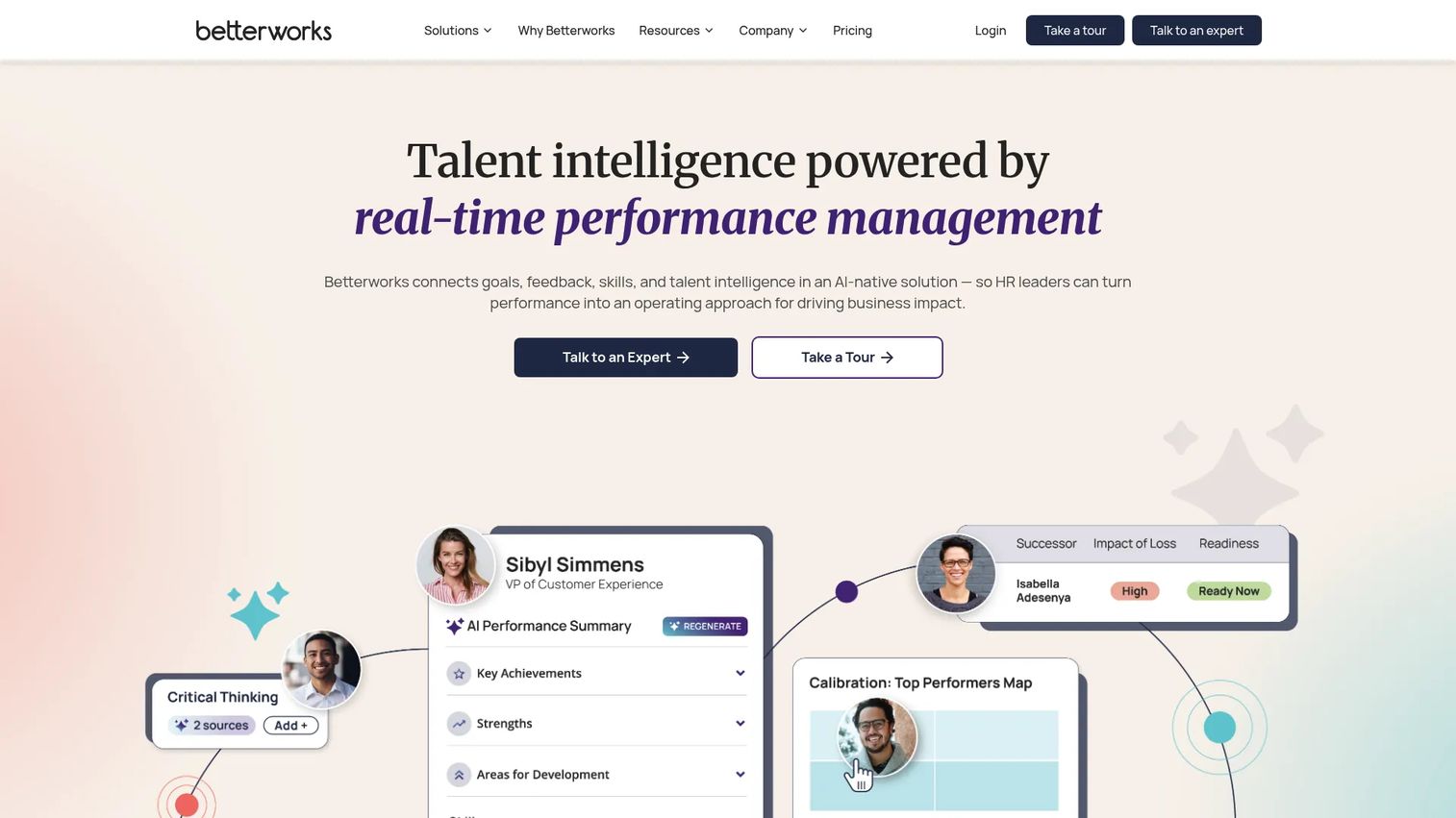
Betterworks combines OKR management with performance conversations, feedback, calibration, and talent intelligence. It is positioned at the intersection of strategic goal management and people management, which makes it relevant when you need department goals, manager check-ins, and performance reviews to operate from a shared data layer.
Best for: Mid-market and enterprise organizations connecting strategic OKRs to manager conversations, performance reviews, and succession planning.
Key features
- Goals and OKRs with alignment across company, team, and individual levels
- Real-time feedback and structured performance conversations
- 1:1 meetings with AI-generated summaries
- Talent intelligence, skills tracking, and calibration tools
- Analytics and insights dashboards across goals and engagement
Why choose Betterworks: Choose Betterworks when you need strategic goal alignment and performance management to share the same data. If you are a Series B company where the VP of People and the VP of Sales need to see the same objective data during quarterly reviews, Betterworks closes that gap. If you only need OKRs without the HR layer, lighter tools will serve you faster.
Betterworks pricing: The Performance plan starts at $8 per user per month. Performance plus Talent Intelligence is $9 per user per month. Enterprise pricing is custom. No free tier is available, though implementation is a one-time cost separate from the per-user rate.
G2 rating: 4.4/5
5. Mooncamp
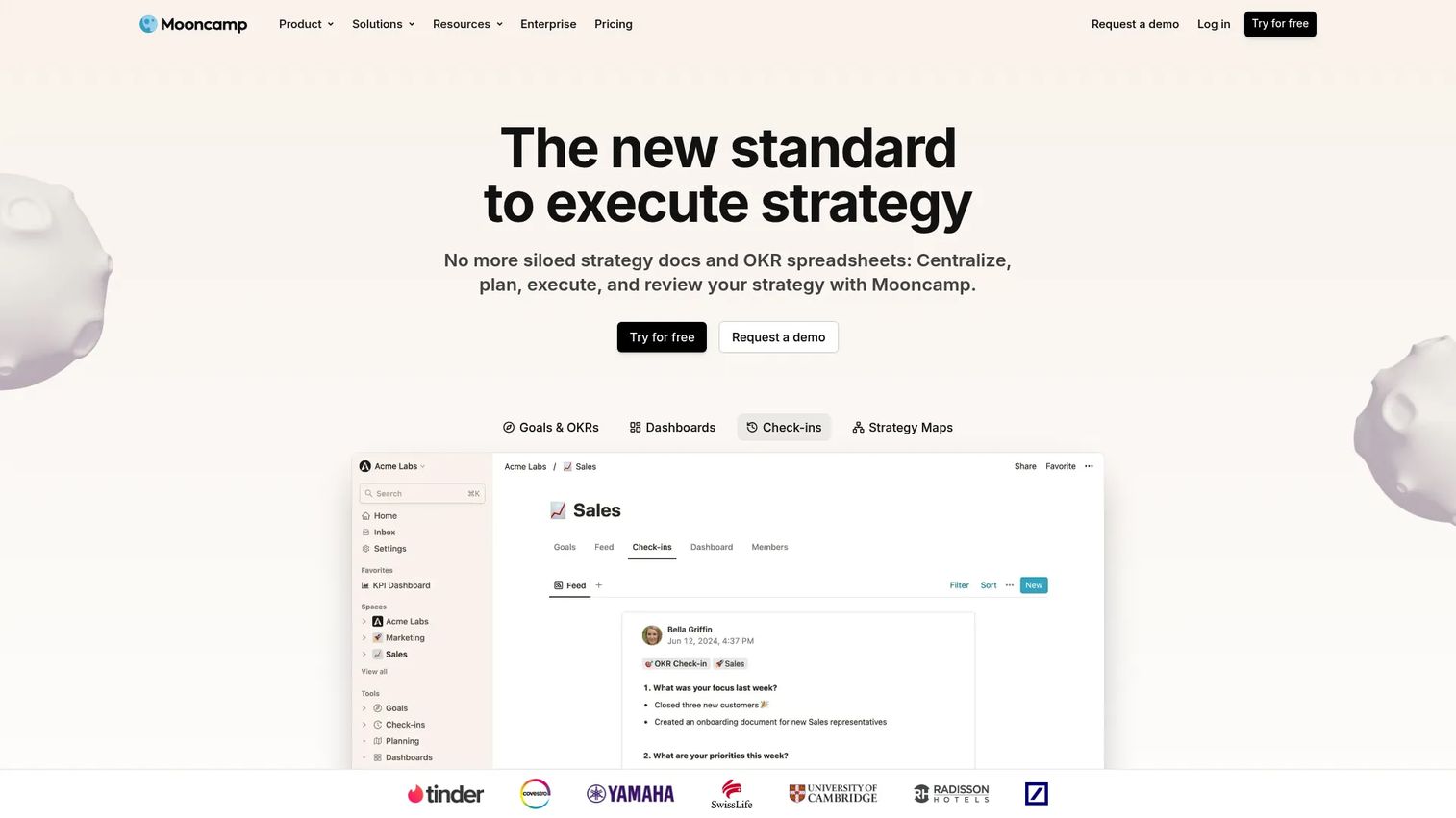
Mooncamp is a strategy execution and goal management platform built for configurable OKR workflows, team check-ins, and planning views. It is designed to be adopted quickly without a long implementation program, which makes it relevant for Series B teams that need a quarterly planning system running within the first few weeks.
Best for: Growing SaaS teams that need configurable OKR planning, check-in workflows, and goal-tree visibility without heavy onboarding overhead.
Key features
- Strategy planner and configurable goal frameworks
- Goal tree and alignment views across company, team, and individual levels
- Automated check-in reminders and progress reporting
- Customizable dashboards and reporting views
- Integrations with Slack, Microsoft Teams, Jira, Salesforce, and Google Sheets
Why choose Mooncamp: Mooncamp suits founders who want a quarterly operating cadence running fast. The platform is configurable without requiring a dedicated admin to maintain it. A VP joining on day one can orient themselves to the quarter's priorities without a training session. It is a strong fit for 30 to 100 person SaaS companies that want OKR discipline without enterprise complexity.
Mooncamp pricing: The Essential plan starts at €7 per user per month, billed annually, with a minimum of 5 users. Professional is €10 per user per month, also billed annually. Enterprise requires a minimum of 100 users and custom pricing. A 14-day free trial is available on Essential and Professional.
G2 rating: 4.8/5
6. Perdoo
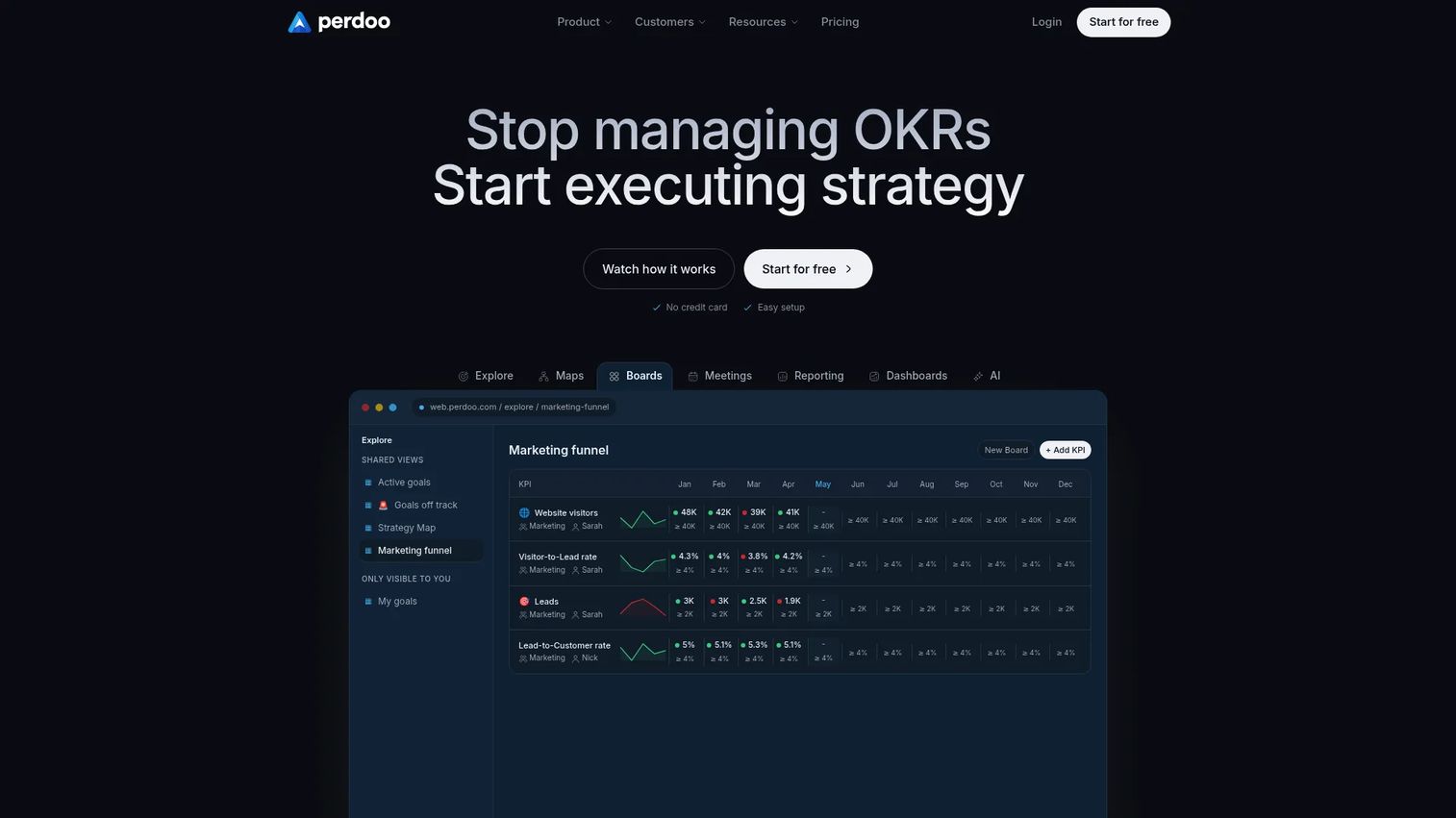
Perdoo is a strategy execution platform that connects company mission and vision through strategy maps to OKRs, KPIs, and initiative tracking. It includes an AI Assistant and AI Coach to help teams draft objectives, review progress, and identify risks without requiring a dedicated strategy function.
Best for: Organizations that want to connect strategic intent, OKRs, and KPI tracking with AI-assisted coaching and a free entry tier for initial evaluation.
Key features
- Strategy maps linking mission, vision, and OKRs
- OKR and KPI tracking with structured progress reporting
- AI Assistant and AI Coach for objective drafting and review
- Dashboards with alignment views across the organization
- Integrations with Slack, Teams, Jira, Salesforce, and Power BI
Why choose Perdoo: Perdoo is one of the few platforms with a permanently free tier, which allows a small leadership team to evaluate it against real quarterly goals before committing. The strategy map feature helps founders translate a narrative strategy into a structured objective hierarchy, which is the step most teams skip when they go straight to writing OKRs.
Perdoo pricing: A Free plan covers up to 5 users. Premium is €6.40 per user per month, billed quarterly or annually. Supreme is €8.00 per user per month with the same billing options. Premium adds dashboards, SSO, SCIM, and premium integrations. Supreme adds custom dashboards and board views.
G2 rating: 4.4/5
7. Quantive
Quantive is an AI-powered strategy management platform covering strategic planning, execution, evaluation, and data connectivity. It is built around the idea that strategy should be connected to live business data rather than manually entered updates. With over 170 integrations, Quantive can pull metrics from CRM, finance, product analytics, and other systems to keep goal progress current without requiring teams to update numbers by hand.
Best for: Organizations that want strategy execution and OKR management connected to live business data with minimal manual update overhead.
Key features
- AI-powered strategic planning with insights and guidance
- OKR and KPI management with automated check-ins and reporting
- Strategy evaluation using unified, real-time data sources
- 170+ integrations including Salesforce, Jira, and HubSpot
- Organizational alignment views across company, department, and individual goals
Why choose Quantive: If the biggest adoption problem is that department heads do not update their goals because it takes time, Quantive's integration depth addresses that directly. Metrics that sync automatically from existing tools reduce the manual update burden that kills most OKR programs. Note that Quantive has indicated alignment with WorkBoard as of 2026, so confirm current product availability and roadmap before committing.
Quantive pricing: Quantive publicly states that pricing starts at $6 per seat, with a 30-day free trial available. Full tier details and billing terms require contacting the sales team.
G2 rating: 4.6/5
8. Asana
Asana is a work management platform that added Goals and Portfolios to connect project execution to company-level objectives. If your team already uses Asana for project tracking, the Goals feature provides a layer of strategic alignment without migrating to a separate platform. The connection between goals and the underlying projects that drive them is Asana's primary differentiator in this category.
Best for: Teams and organizations already running projects in Asana that want goal alignment without switching to a dedicated strategy tool.
Key features
- Goals connected to portfolios, projects, and workstreams
- Portfolio-level dashboards and status reporting
- Workflow automation, forms, and templates
- Resource management and workload visibility
- AI Teammates and Asana Dash for automated reporting
Why choose Asana: Asana works best when adoption is the primary concern and the team already lives in the platform. The tradeoff is depth: Asana's goal hierarchy and strategy mapping features are less structured than purpose-built strategy tools. If you need Balanced Scorecards, strategy maps, or formal business reviews, you will reach the limits of Asana's goal layer quickly. For teams extending existing workflows into goal tracking, it earns its place.
Asana pricing: The Personal plan is free for up to 2 users. Starter costs $10.99 per user per month, billed annually. Advanced, Enterprise, and Enterprise+ pricing requires contacting sales.
G2 rating: 4.4/5
9. ClickUp
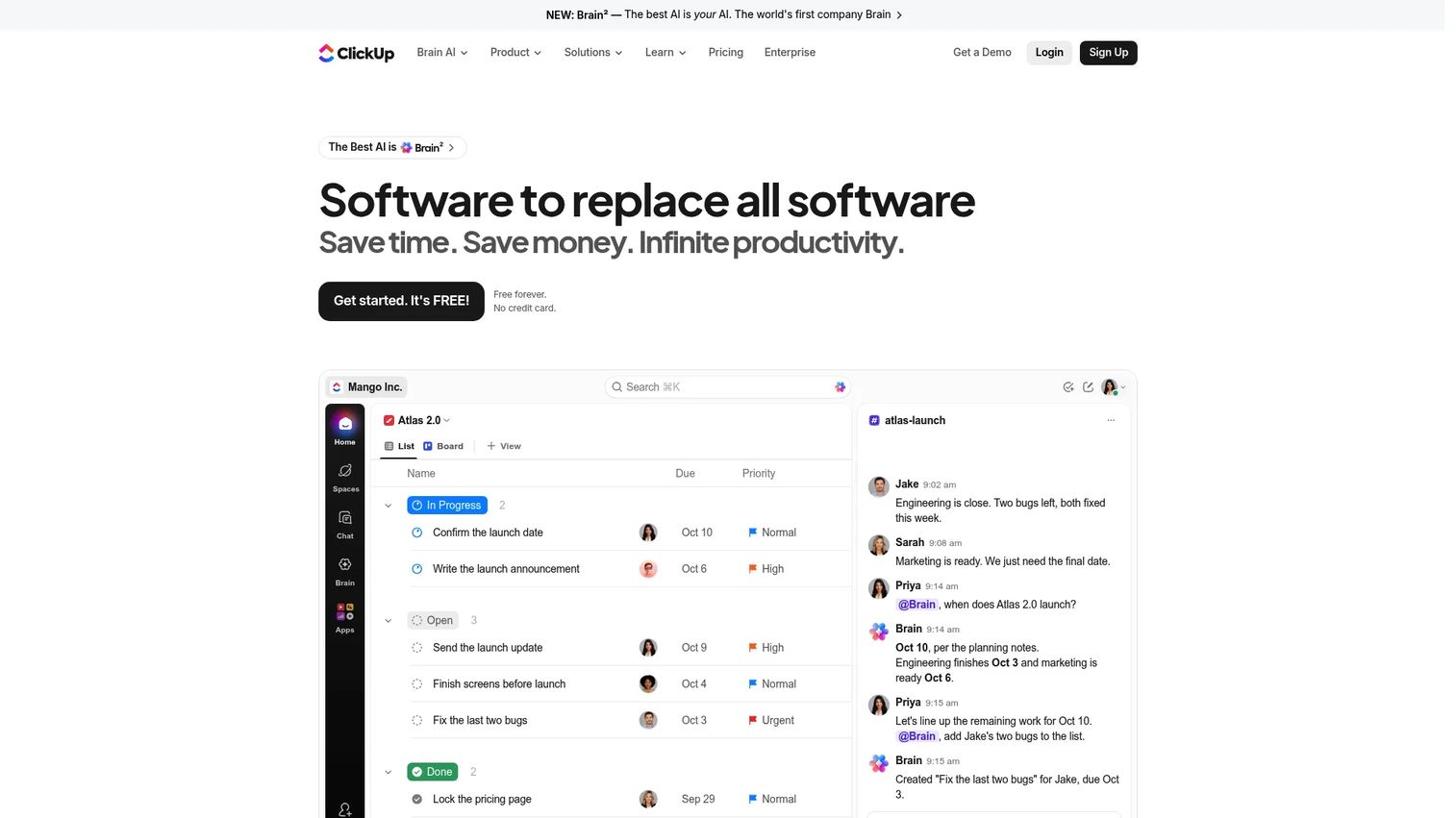
ClickUp is an all-in-one work management platform with Goals, Tasks, Dashboards, and Docs built into a single workspace. It appeals to founders who want to consolidate planning and execution rather than run a separate strategy tool alongside their project management system. The configurability is a genuine strength, though it also means the platform requires deliberate setup to function as a strategy system rather than a very flexible task manager.
Best for: Teams seeking a consolidated platform for goal tracking, task management, and reporting without adding another tool to the stack.
Key features
- Goals with measurable targets linked to tasks and projects
- Custom dashboards and reporting with flexible data views
- Docs, wikis, and knowledge management built in
- Automations and integrations across 1,000+ tools
- AI agents and AI-assisted task and goal management
Why choose ClickUp: ClickUp suits founders motivated by stack consolidation. The risk is building an overly customized operating system that only one person understands. Before migrating to ClickUp for strategic planning, define the goal hierarchy, update frequency, and reporting standards. Without that structure, configurable flexibility becomes configuration debt.
ClickUp pricing: A free Forever plan is available with unlimited tasks and members. Unlimited costs $7 per user per month, billed annually, or $10 per user per month, billed monthly. Business is $12 per user per month annually or $19 per user per month monthly. Enterprise pricing requires contacting ClickUp's sales team.
G2 rating: 4.6/5
10. Monday.com
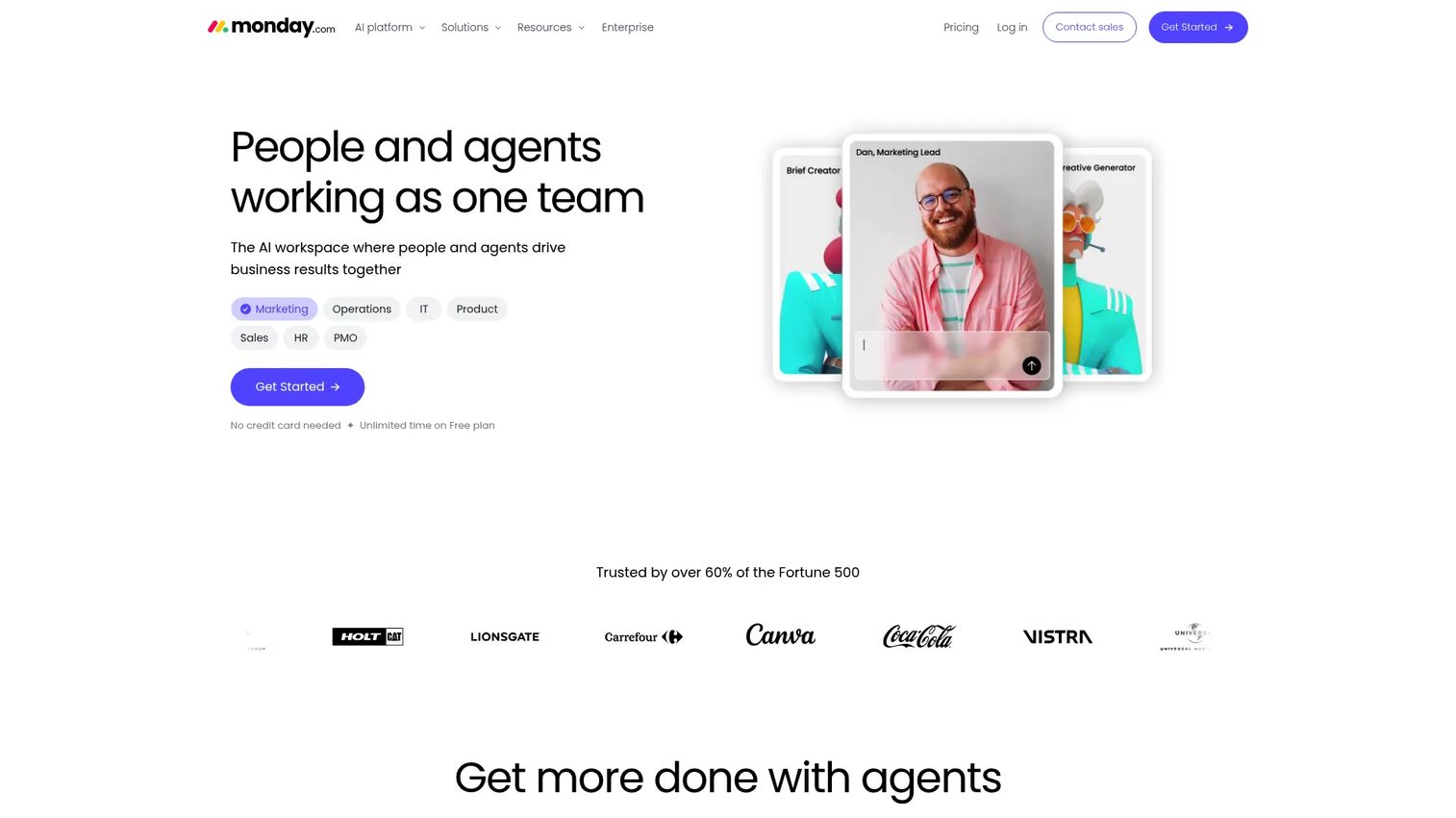
monday.com is an AI work platform built around flexible boards, customizable workflows, and visual dashboards. Its approach to strategic planning is similar to ClickUp: You build the structure you need using boards, goals, and dashboards rather than inheriting a fixed strategy framework. This works well when cross-functional adoption is the priority and teams want familiar visual layouts.
Best for: Teams needing flexible cross-functional planning with strong visual interfaces and broad workflow customization.
Key features
- Customizable boards and workflows for any planning structure
- Dashboards with real-time reporting and data visualization
- Goal tracking connected to boards and project milestones
- Automations and 200+ integrations
- AI assistants and AI workflow building
Why choose monday.com: monday.com is a strong choice when cross-functional teams need a visual planning layer they can configure themselves. The platform excels at making work visible. For strategic planning specifically, you need to define the KPI hierarchy and reporting standards before building, or you will end up with a collection of boards that do not produce a coherent executive view. It pairs well with a separate 360-review software cadence for leadership teams.
monday.com pricing: A Free plan supports up to 2 seats. Basic costs €9 per seat per month, billed annually. Pro is €19 per seat per month, also billed annually. Enterprise pricing requires a quote.
G2 rating: 4.7/5
11. Profit.co
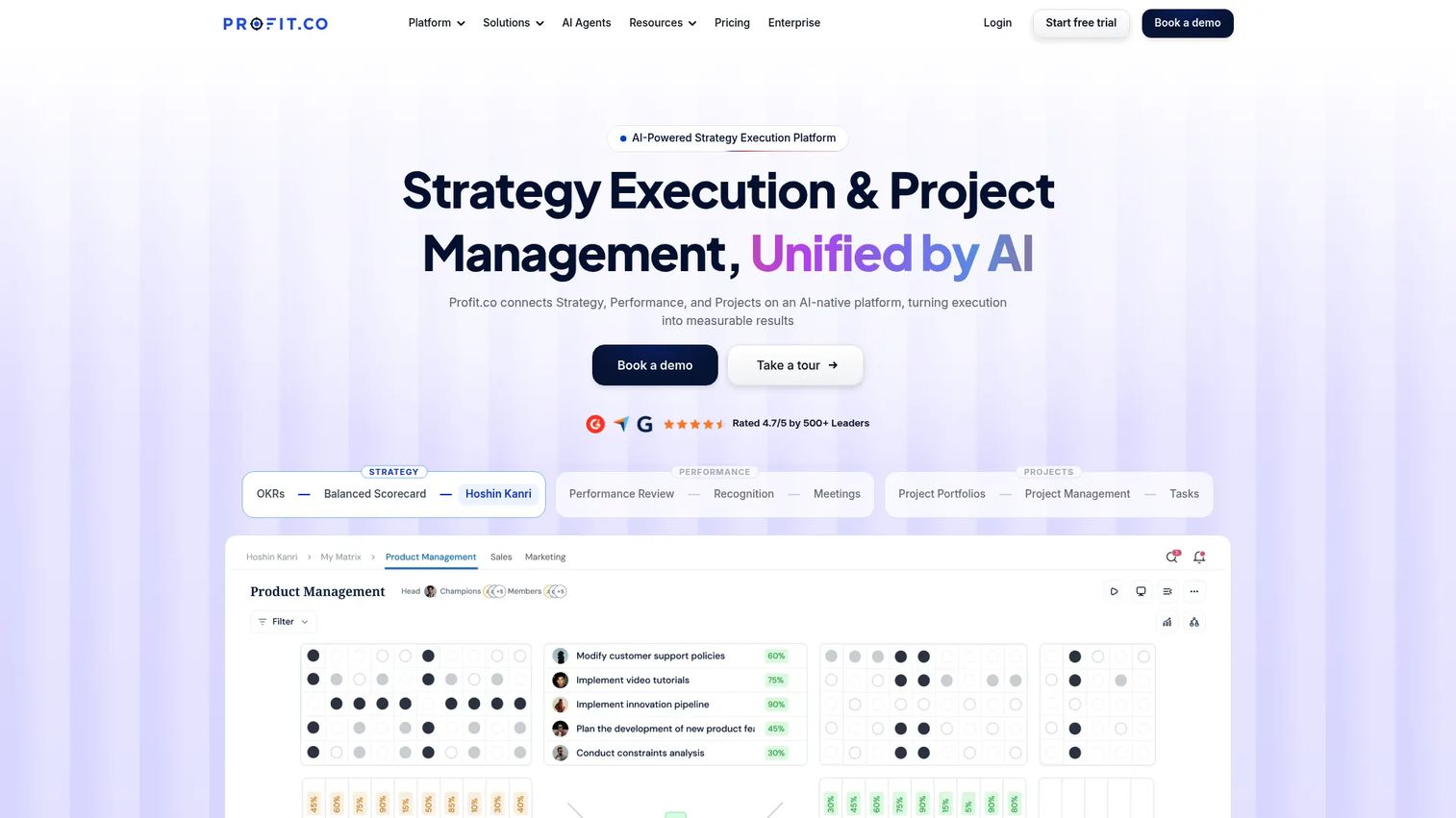
Profit.co is a strategy execution platform that connects OKRs, performance management, project portfolio management, and Balanced Scorecards in one system. It is one of the more comprehensive platforms in this list for teams that want OKR tracking and structured performance reviews operating from the same data layer.
Best for: Organizations needing a unified platform for strategy execution, OKRs, performance management, and project portfolios without managing separate systems for each.
Key features
- OKR creation and structured progress tracking
- Performance reviews and 360-degree feedback workflows
- Project portfolio management with resource management and timesheets
- Balanced Scorecard views and strategic initiative tracking
- Dashboards and analytics across goals and performance data
Why choose Profit.co: Profit.co suits leadership teams that want OKRs and performance conversations to share a common data model. If you are building a quarterly review cadence that includes both business results and talent conversations, the platform handles both. The module-based pricing means the cost depends on which features you activate, so get a detailed quote before comparing against simpler OKR tools.
Profit.co pricing: Profit.co customizes pricing based on selected modules and user count. Contact the sales team for a quote. No flat per-user price is shown on the pricing page.
G2 rating: 4.7/5
12. Microsoft Viva Goals
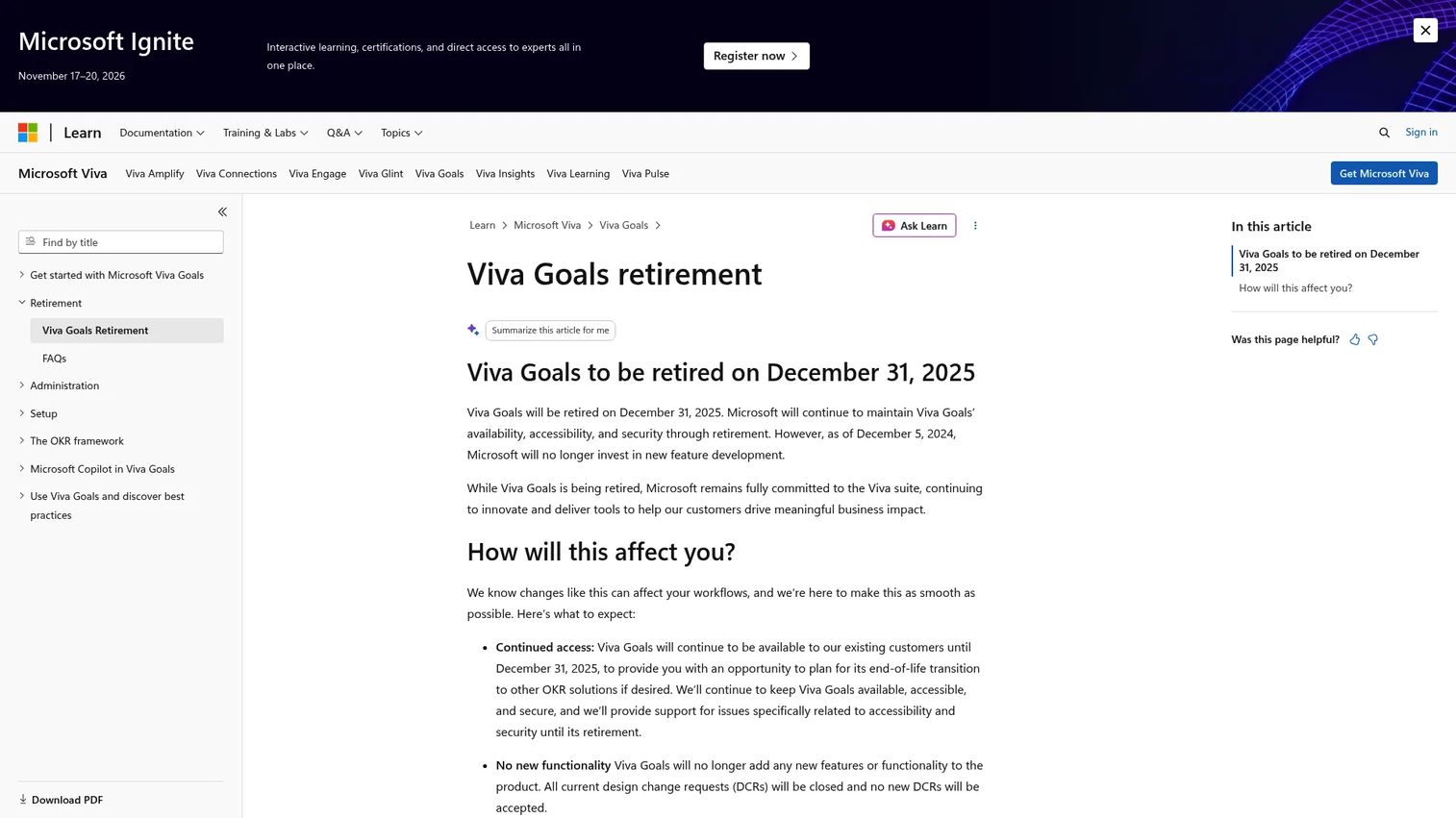
Microsoft Viva Goals was a goal-alignment and OKR management solution integrated with Microsoft 365, Teams, and Copilot. It provided OKR creation, progress tracking, dashboard views, and goal alignment connected to the Microsoft workplace tools many organizations already use.
Best for: Organizations using Microsoft 365 that needed centralized OKR creation, alignment, and progress tracking inside the existing Microsoft environment.
Key features
- OKR creation and management with alignment views
- Goal progress tracking through check-ins and dashboards
- Integration with Microsoft Teams, Outlook, and Microsoft 365
- Copilot-assisted goal drafting and summarization
- Review and reporting views connected to organizational hierarchy
Why choose Microsoft Viva Goals: One critical note for 2026 evaluations: Microsoft retired Viva Goals on December 31, 2025. If you are running an evaluation now, Viva Goals is no longer available as a standalone product. Microsoft has pointed customers toward Quantive for migration, which is worth evaluating if you were planning to use Viva Goals. The G2 history and pricing context remain relevant for understanding where organizations have come from, not where they can go today.
Microsoft Viva Goals pricing: Viva Goals was priced at $6 per user per month as a standalone product. It was also included in the Microsoft Viva Suite at $12 per user per month, billed annually. The product is no longer available for new purchase.
G2 rating: 4.3/5
13. Jira
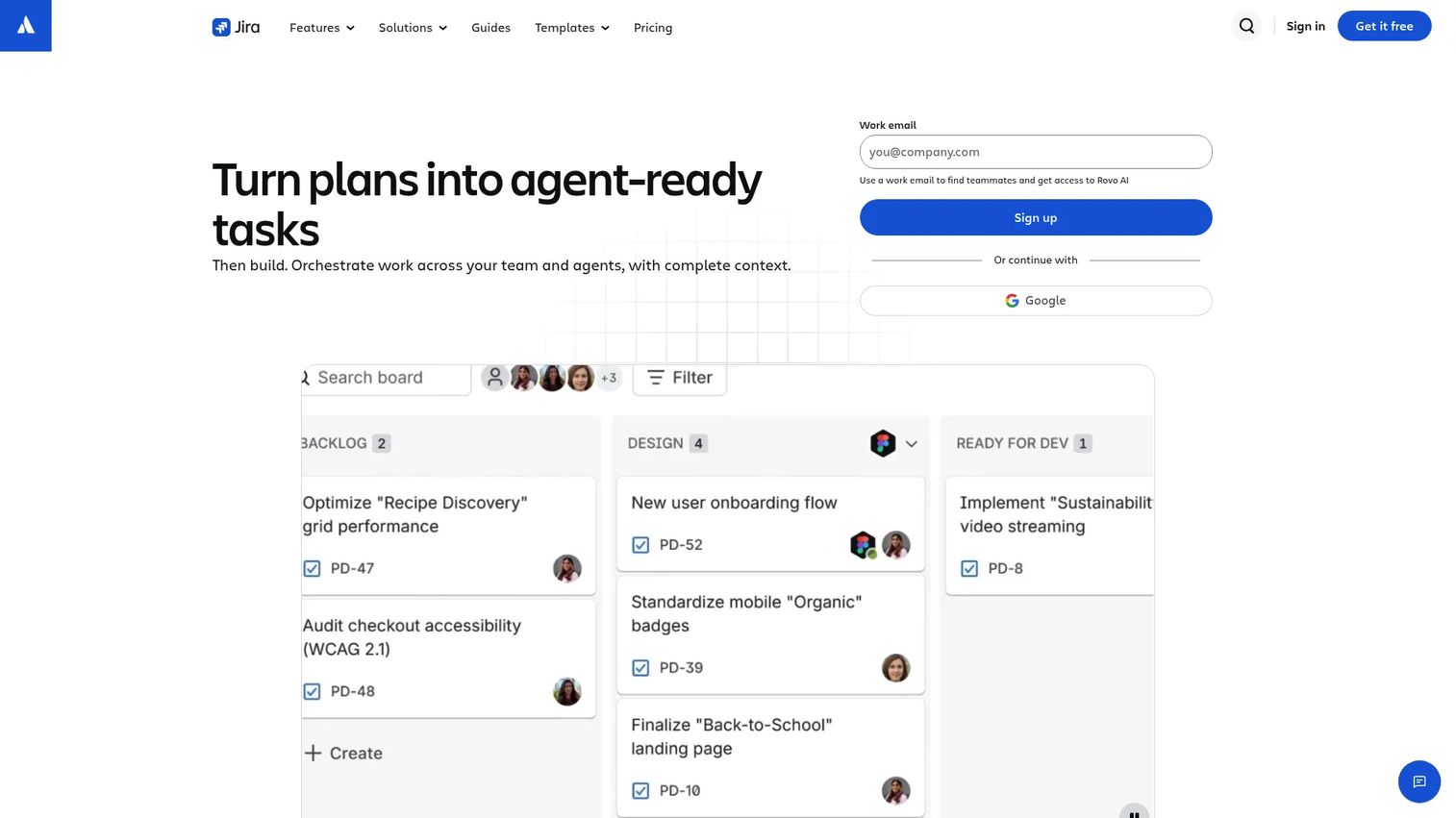
Jira is Atlassian's project and work management platform, used by software and product teams to plan, track, and ship work. It supports product roadmaps, epics, initiatives, and delivery reporting, which makes it relevant for founders whose strategic execution primarily runs through the product and engineering organization.
Best for: Software, product, and cross-functional teams managing agile delivery, roadmaps, and engineering-led strategic initiatives.
Key features
- Customizable Scrum and Kanban boards
- Backlogs, timelines, and dependency management
- Customizable workflows, automation, and reporting dashboards
- Roadmap views connecting epics and initiatives
- Integration with Confluence, Atlassian suite, and 3,000+ apps
Why choose Jira: Jira is the right tool when product and engineering execution is the primary driver of company strategy. For a founder where most quarterly priorities involve shipping features, improving product metrics, or reducing technical debt, Jira provides strategic visibility at the delivery level. Its limitation is scope: GTM, finance, customer success, and board-level reporting all require a separate layer. Pair it with a company-wide planning tool or a reporting platform to cover the full executive view. For broader organizational planning, consider supplementing with application portfolio management software.
Jira pricing: A Free plan supports up to 10 users. Standard and Premium pricing scales by user count and billing cycle; contact Atlassian for current figures. Enterprise requires contacting the sales team. No fixed per-user price was displayed on the public pricing page at time of research.
G2 rating: 4.3/5
14. Power BI

Power BI is Microsoft's unified analytics platform for connecting, modeling, visualizing, and sharing business data. It can pull KPI data from CRM, finance systems, product analytics, and other sources into custom executive dashboards. For founders who already have strong data infrastructure and internal analytics support, Power BI can serve as the reporting surface for strategic performance without requiring a dedicated strategy platform.
Best for: Organizations with existing Microsoft data infrastructure and internal analytics capacity that need custom KPI dashboards and executive reporting.
Key features
- Interactive data visualization and custom report creation
- Data connectivity across cloud and on-premises sources
- Copilot-powered natural-language analysis and report generation
- Governed data sharing and security controls
- Integration with Microsoft Fabric and the broader Microsoft data stack
Why choose Power BI: Power BI shows whether strategic metrics are moving. It does not create goal ownership, initiative accountability, or review behavior. A well-built Power BI dashboard can replace manual board prep for a data-mature team. The tradeoff is implementation: Building and maintaining the data models requires internal technical resources or a consulting engagement. For a 50-person SaaS company without a dedicated data analyst, the setup cost often outweighs the benefit. Consider it when you already have the Microsoft data stack and need reporting depth rather than a strategy management system. It works well alongside tools covered in our guide to the best business intelligence software.
Power BI pricing: A free account supports report creation. Power BI Pro costs $14 per user per month, billed annually. Power BI Premium Per User is $24 per user per month, billed annually. Embedded pricing varies by capacity.
G2 rating: Not currently available from G2; Capterra shows 4.6/5.
Considerations when choosing strategic planning software
Strategy-to-execution depth
Evaluate whether the platform connects company priorities to department goals, initiative owners, and measurable KPIs. A dashboard that shows metric status without capturing who owns each objective is a reporting surface, not an operating system. Ask the vendor to show you the workflow from a company-level goal through to a department team's weekly check-in.
Adoption and operating cadence
The most common failure mode is a system that gets updated for the first quarter and abandoned by the second. Before selecting a tool, ask how executives will update their data, what the expected update frequency is, and whether department heads can operate the system without help from a strategy team. Prioritize first-win speed over feature volume.
Board and executive reporting output
Verify whether the platform can produce executive dashboards, quarterly progress summaries, KPI trend views, and initiative status reports. The output should reduce the manual work required to prepare board materials. Ask to see a sample board deck or quarterly review output generated directly from the system.
Integrations and data ownership
Check which metrics sync automatically from your CRM, finance system, and product analytics. Identify which updates require manual entry. A system where department heads must manually enter every number will decay quickly. Prioritize tools where the key metrics your board cares about, ARR, NRR, pipeline coverage, burn multiple, and activation rates, can be connected to a live data source.
Pricing and implementation reality
Calculate the first-year cost at your current headcount, not just the per-seat entry price. Factor in implementation services, minimum contract terms, required modules, and admin seat costs. A tool priced at $8 per user per month with a minimum of 50 users and a required implementation package lands differently than the headline rate suggests.
How to choose the right strategic planning software for your team
If the founder still owns every major alignment conversation
The primary symptom is that no one knows the quarter's priorities without asking you. The fix is a platform with clear goal cascading and structured check-ins, where a new VP can orient themselves on day one without a briefing.
Cascade, Mooncamp, or Perdoo are the strongest starting points. All three are designed to make company priorities visible at the department level. Cascade offers the deepest strategy framework. Mooncamp and Perdoo get teams operational faster.
The evaluation question is simple: Can a new VP of Sales understand the quarter's goals and their team's objectives within 30 minutes of getting access?
If the leadership team needs formal business reviews
If the board expects structured quarterly business reviews with scorecard-level reporting and initiative status, prioritize platforms built around that output. WorkBoard and ClearPoint Strategy are the strongest options here. Betterworks adds the people management layer if performance conversations need to connect to the same data.
Verify implementation effort before committing. These platforms carry more onboarding weight than simpler OKR tools. Match the implementation requirement to your team's current operating maturity.
If the company already runs on a work management platform
Asana, ClickUp, or monday.com can extend into goal tracking without requiring a separate system. Adoption is the advantage: Teams are already in the tool. The risk is assuming that existing task data automatically produces strategic insight. Define the goal hierarchy and reporting standards explicitly before building the structure.
If product and engineering execution drives most company priorities
Jira works well for product-led strategy visibility, connecting roadmap items and epics to team-level objectives. Pair it with a company-wide planning tool, a reporting layer, or best data visualization tools for GTM, finance, and board metrics. Engineering teams will adopt Jira without change management effort. Non-technical leadership often will not, so account for that gap.
Conclusion
The right strategic planning software is the one your leadership team will actually update.
For most Series B SaaS founders, the short decision path looks like this:
- Cascade for a purpose-built strategy execution layer covering maps, goals, and dashboards
- WorkBoard for complex organizations with formal operating reviews and portfolio governance
- ClearPoint Strategy for scorecard-focused teams preparing structured board materials
- Betterworks, Mooncamp, Perdoo, Quantive, or Profit.co for OKR-led alignment at varying levels of complexity
- Asana, ClickUp, or monday.com for teams extending an existing work management stack
- Jira for product and engineering execution
- Power BI for organizations with strong data infrastructure and internal analytics resources
The practical next step: Shortlist three platforms, build one quarterly operating cadence, and test it with one company goal, three department goals, and five KPIs. Ask each vendor to walk you through that workflow using your actual metrics. The platform that makes that test fast and clear is the one your team will update.
Start your journey with Guideflow today!
FAQs
Strategic planning software is a platform that connects organizational priorities to measurable goals, initiative owners, KPI tracking, and recurring review workflows. It differs from a static strategy document or task list by creating a live operating layer where goal progress is visible without a manual reporting cycle. The category includes dedicated strategy execution platforms, OKR tools, and Balanced Scorecard systems.
The answer depends on company size, existing tools, reporting requirements, and how formal the operating cadence needs to be. For a Series B SaaS company moving from founder-led execution to a repeatable leadership system, Cascade, Mooncamp, or Perdoo are strong starting points. WorkBoard and ClearPoint Strategy suit companies with more formal review structures or dedicated strategy functions.
OKR software focuses primarily on creating and tracking objectives and key results. Strategic planning software may also include strategy maps, Balanced Scorecards, initiative and portfolio management, executive dashboards, and structured business review workflows. Some platforms combine all of these. Others specialize in OKRs only. Evaluate which capabilities your operating cadence actually requires before choosing a platform.
Generally, it should not replace project management tools entirely. Strategic planning software connects projects to company priorities and provides executive visibility into outcomes. Project management tools handle delivery details: Tasks, dependencies, and sprint cadence. Most organizations run both, with the strategy layer showing how delivery maps to business goals and the project layer managing how the work gets done.
Pricing varies by users, modules, integrations, and contract terms. Dedicated OKR platforms like Mooncamp start around €7 per user per month, billed annually. Platforms like Betterworks start at $8 per user per month. Enterprise-focused tools like WorkBoard and ClearPoint Strategy require a sales conversation. Compare first-year cost at your current headcount, including implementation and minimum contract requirements, rather than headline per-seat rates.
Focus on the metrics that matter to your board: ARR growth, NRR, gross margin, burn multiple, pipeline coverage, win rate, sales cycle length, activation rate, retention, and feature adoption. Add hiring milestones and team-level objectives for department heads. Avoid turning the platform into a warehouse for every metric the business generates. A focused set of 8 to 12 company-level indicators, supported by department-level OKRs, is more sustainable than comprehensive tracking across 50 metrics.
Start with one quarterly priority cycle, not a full implementation. Assign owners to each objective, define an update frequency (weekly or every two weeks works for most teams), and connect the review to a leadership meeting that already exists. Remove duplicate reporting immediately: If the platform captures the data, stop asking for it in a separate slide deck. Adoption follows reduced friction, not training programs.
AI adds clear value when it reduces reporting work, summarizes check-in updates, surfaces stalled initiatives, or prepares business review briefing materials from existing data. Generic text generation for writing OKRs is less useful than it sounds. The AI features worth evaluating are those that connect to the company's actual goal and performance data, not those that generate boilerplate objectives from a text prompt. Ask vendors to demo AI features using your real metrics, not a generic demo dataset.