


You built the account plan. Whitespace mapped, stakeholders listed, expansion goals set. It looked sharp in the QBR deck.
Then the quarter started, and nobody opened it again.
This is the pattern that kills most account planning: the plan lives in a slide or a doc, disconnected from the deals it's supposed to guide. The account planning software market was valued at $3.2 billion in 2025 and is forecast to reach $7.8 billion by 2034, growing at 11.4% CAGR, according to MarketIntelo (2025). That growth is not about prettier templates. It's about teams trying to close the gap between planning an account and actually executing against it.
For an AE carrying a number, that gap is where revenue leaks. The right account planning platform pulls the plan into your CRM, ties it to live opportunities, and shows your manager where things stand without another spreadsheet update. The wrong one becomes another tab you forget to open.
This guide breaks down seven platforms built to fix that.
What's inside
This guide is for AEs, key account managers, and revenue leaders comparing account planning tools that turn static plans into working revenue workflows. We looked at platforms across CRM-native and standalone approaches, from enterprise account teams to leaner mid-market crews.
We ranked each tool on four things that decide whether a plan gets used:
- CRM fit: how deeply it embeds in Salesforce or your system of record
- Execution tracking: whether it ties plans to live opportunities and next steps
- Stakeholder visibility: relationship mapping, org charts, whitespace analysis
- Adoption: whether reps actually update it or abandon it
TL;DR
- Best CRM-native option: Salesforce Sales Cloud, if your team already lives in Salesforce and wants planning inside the system of record.
- Best for enterprise account strategy: Altify, with relationship mapping, whitespace, and AI-guided recommendations built for complex deals.
- Best for post-sale retention and growth: Kapta, purpose-built for account managers running renewals and expansion.
- Best for structured, repeatable planning: DemandFarm, strong on whitespace analysis and relationship maps.
- Best modular Salesforce add-on: Squivr, with per-module pricing for org charts, whitespace, and action plans.
What is account planning software?
Account planning software is a category of sales tools that helps revenue teams map, grow, and retain their most important accounts by turning account strategy into a structured, trackable workflow. It centralizes stakeholder relationships, whitespace analysis, and expansion goals, then connects them to live deal execution inside a CRM.
Unlike a static account plan template in a slide deck, a purpose-built platform keeps the plan current, tied to opportunities, and visible to managers. It sits at the middle and bottom of the funnel, where account growth, expansion, and retention decide net revenue.
Key features to expect from a strong account planning platform:
- Relationship mapping and org charts: visualize stakeholders, decision-makers, and influence across the buying committee
- Whitespace analysis: surface untapped products, business units, or use cases inside an account
- Account health scoring: flag risk and opportunity across your book of business
- Execution tracking: tie plans to opportunities, next steps, and mutual action items
- CRM integration: embed planning inside Salesforce or another system of record
- Manager visibility: reporting and dashboards that show plan status without extra admin
- Account plan templates: repeatable frameworks so every rep plans the same way
Adoption is climbing fast. Over 40% of SMBs used account planning tools in 2023, up from 15% in 2020, per PMarketResearch (2023). The reason is simple: manual planning in docs does not survive a busy quarter.
When to use account planning software
Not every deal needs a formal plan. Here's when the software earns its seat in your stack.
Grow and retain strategic accounts
When a handful of accounts drive most of your revenue, ad hoc planning gets dangerous. Account planning software gives you a structured view of whitespace, relationships, and renewal risk so expansion and retention stop depending on one rep's memory.
Coordinate multi-stakeholder deals
Enterprise deals involve 8 to 15+ stakeholders. Stakeholder mapping and org charts keep everyone on the buying committee visible, so you know who to multi-thread and where champions or blockers sit before a deal stalls.
Give managers forecast-ready visibility
When forecast calls turn into archaeology, account planning tools help. Managers see account health, plan progress, and next steps in one place, cutting the "reconstruct what happened" tax that eats rep and manager time alike.
Account planning software comparison
Here's a side-by-side look at the seven platforms. Pricing and ratings reflect verified vendor and G2 data at the time of writing. Several vendors use custom pricing tied to team size and requirements.
| # | Product | Best for | Key use case | Pricing | G2 rating |
|---|---|---|---|---|---|
| 1 | Salesforce Sales Cloud | Teams deep in Salesforce | CRM-native planning, forecasting, pipeline | From $25/user/mo | 4.4/5 |
| 2 | Altify | Enterprise account strategy | Relationship maps, whitespace, execution | Custom | 4.2/5 |
| 3 | Kapta | Post-sale account management | Retention, renewals, QBRs | Custom | 4.7/5 |
| 4 | DemandFarm | Structured key account planning | Whitespace, relationship maps, planning | Custom | 4.4/5 |
| 5 | Prolifiq | Salesforce-native revenue teams | Account plans, relationship maps, enablement | Custom | 4.7/5 |
| 6 | Korn Ferry Sell | Methodology-driven teams | Strategic Selling, coaching, planning | Custom | 4.4/5 |
| 7 | Squivr | Modular Salesforce planning | Org charts, whitespace, action plans | From $10/user/mo | 5.0/5 |
Best 7 tools for account planning
1. Salesforce Sales Cloud
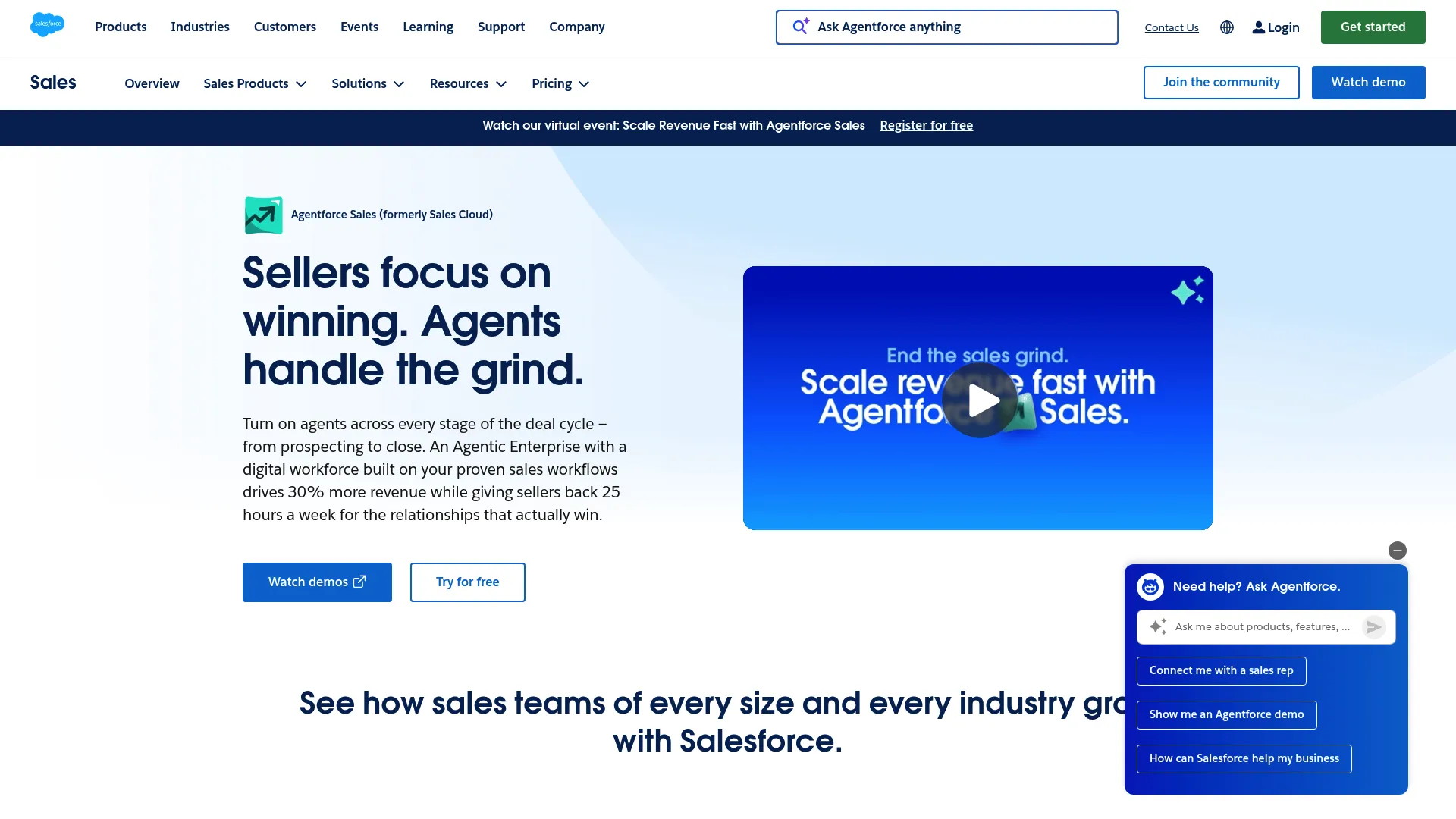
Salesforce Sales Cloud is the AI-powered CRM that most revenue teams already run on, which makes it the default starting point for CRM account planning software. Account hierarchies, contact roles, and opportunity context all live in one system, so planning does not require exporting data into a separate tool. For teams already deep in Salesforce, a planning layer built on the system of record keeps everything current without duplicate entry.
Best for: Teams that need an enterprise-grade CRM with strong automation, forecasting, and AI-assisted selling, plus a native place to build account plans.
Key strengths
- Lead, account, contact, and opportunity management
- Pipeline management and forecasting
- AI and automation for sales workflows and deal insights
- Account hierarchies and relationship visibility
- Broad ecosystem of planning add-ons
Why choose Salesforce Sales Cloud: If your team already lives in Salesforce, planning inside the CRM avoids the adoption problem that kills standalone tools. The plan sits next to the deal, so reps update it in the flow of work instead of reconstructing it later.
Salesforce Sales Cloud pricing: Starter Suite starts at $25/user/month, billed monthly or annually. Pro Suite is $100/user/month, Enterprise is $175/user/month, and Unlimited is $350/user/month, all billed annually. A 30-day free trial is available with no credit card required.
2. Altify
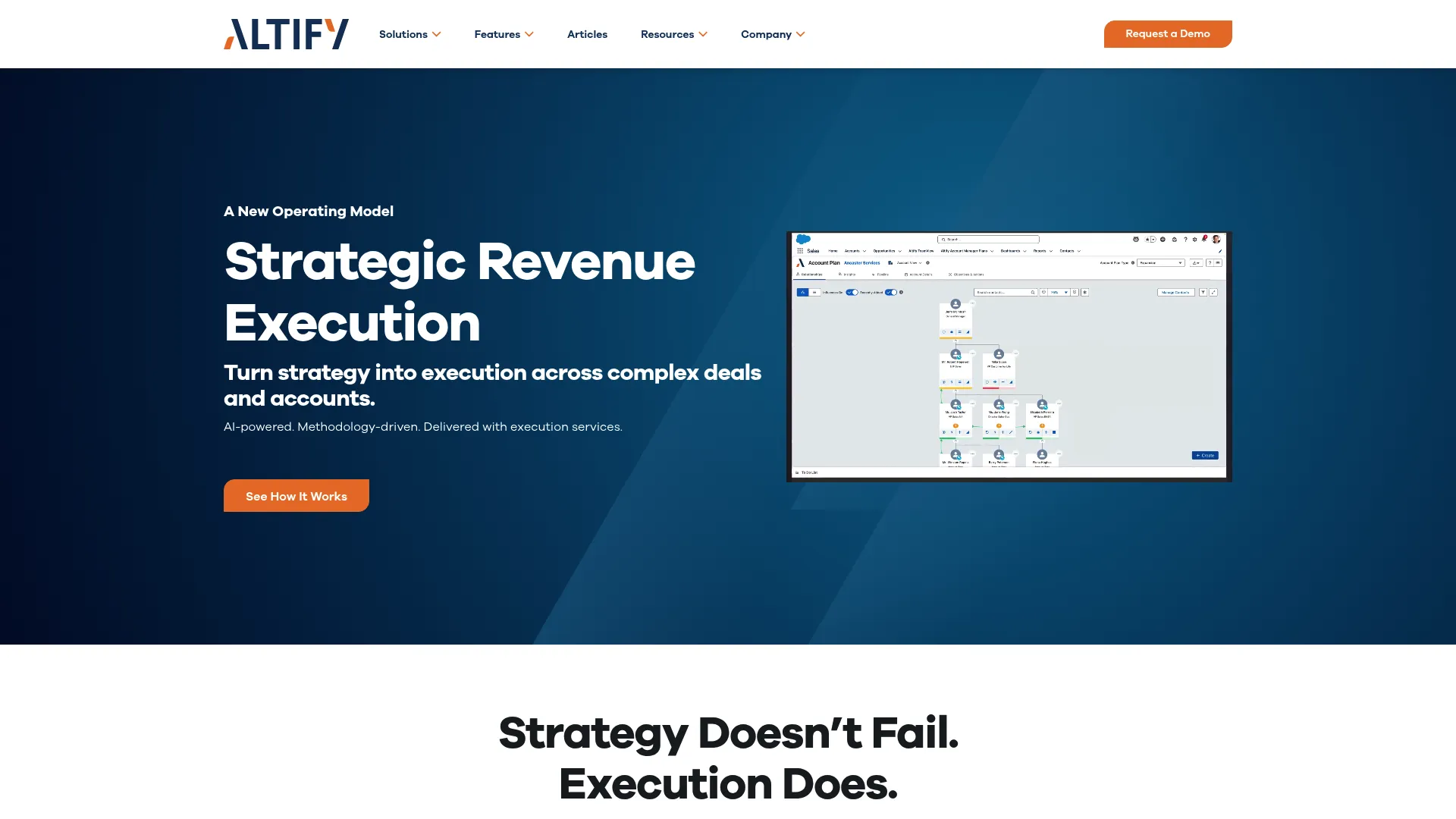
Altify is sales execution software built natively inside Salesforce, focused on account planning, deal management, and revenue enablement for complex deals. Its Relationship Map and Insight Map help enterprise teams see stakeholders, whitespace, and account strategy in one view, while guided selling nudges reps toward the next best action. This is strategic account planning software built for the execution gap between creating a plan and actually using it.
Best for: Enterprise sales teams selling complex, multi-stakeholder deals inside Salesforce.
Key strengths
- Relationship Map for visualizing stakeholders and influence
- Insight Map for account strategy and whitespace
- TeamView pipeline management
- MaxAI guided selling and automation
- Native Salesforce execution tracking
Why choose Altify: For enterprise teams where a single account can carry a quarter, Altify ties account strategy to live opportunities so the plan drives daily selling. The AI-guided recommendations help reps act on the plan instead of letting it gather dust.
Altify pricing: Altify does not publish public pricing. Plans are quoted based on team size and requirements, so you'll need to contact their sales team for a figure tailored to your deployment.
3. Kapta
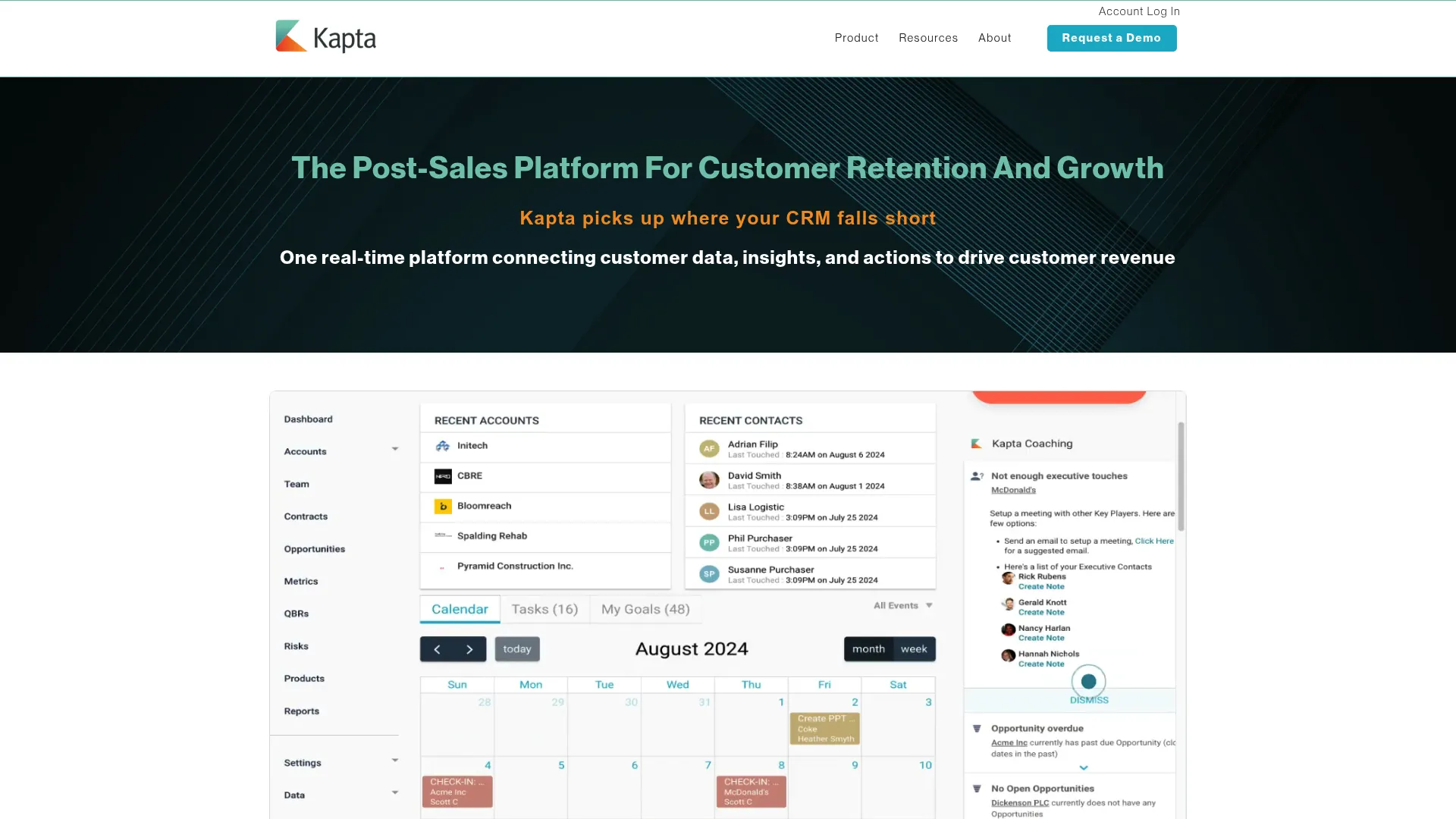
Kapta is post-sales account management software built for customer retention and growth rather than new logo acquisition. It gives account managers structured planning, QBR management, voice-of-customer capture, and org charts to keep strategic accounts on track through renewals and expansion. If your revenue depends on growing existing customers, Kapta's customer-centric planning approach fits the motion.
Best for: B2B account teams managing strategic existing customers, renewals, and expansion.
Key strengths
- Account management and planning
- QBR management and executive reporting
- Voice of customer capture
- Contract and opportunity management
- Org charts and account health tracking
Why choose Kapta: Most account planning software leans toward net-new selling. Kapta leans toward keeping and growing what you already have, which makes it a strong pick for CS-adjacent AEs and account managers who own retention and net revenue.
Kapta pricing: Kapta uses custom pricing tailored to each customer. No public price is listed, so plans are scoped to your team and account portfolio through their sales team.
4. DemandFarm
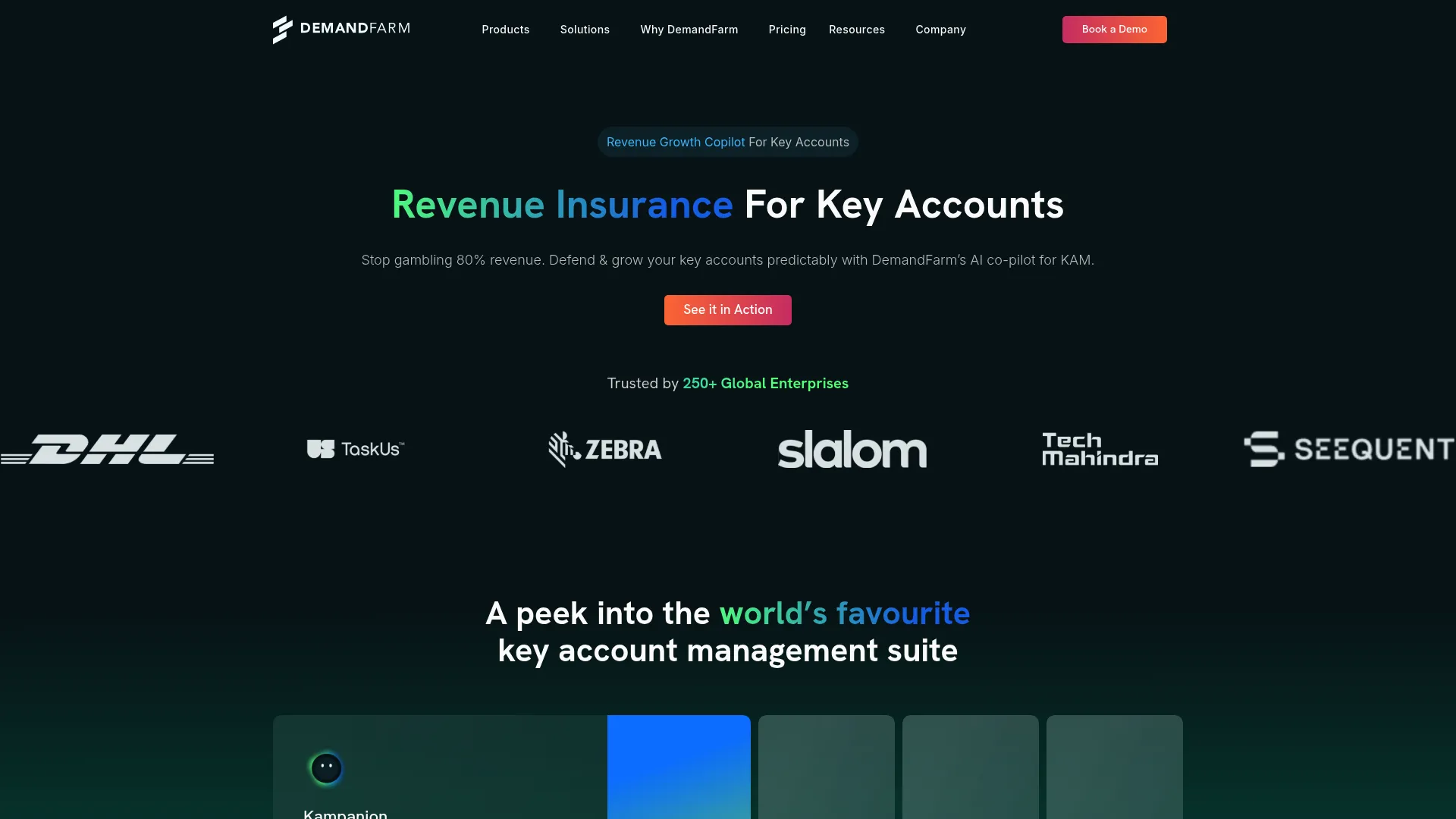
DemandFarm is key account management software focused on account planning, relationship mapping, and opportunity planning. It brings whitespace planning, heatmaps, and relationship maps into a structured framework, with an AI copilot layered on top for teams that want repeatable planning across a large book of strategic accounts. It appeals to teams that want a disciplined, framework-driven approach rather than freeform planning.
Best for: B2B sales teams managing strategic and key accounts who want structured, repeatable planning.
Key strengths
- AI copilot for key account management
- Whitespace planning and heatmaps
- Relationship maps and stakeholder mapping
- Opportunity planning
- Governance-friendly, repeatable frameworks
Why choose DemandFarm: If your team needs consistency across reps and accounts, DemandFarm's structured frameworks make every plan look and work the same way. That repeatability is what makes account planning governable at scale rather than a per-rep improvisation.
DemandFarm pricing: DemandFarm does not display public pricing. It offers plans for small businesses, mid-size businesses, and enterprises, all quoted directly, so reach out for a figure matched to your segment.
5. Prolifiq
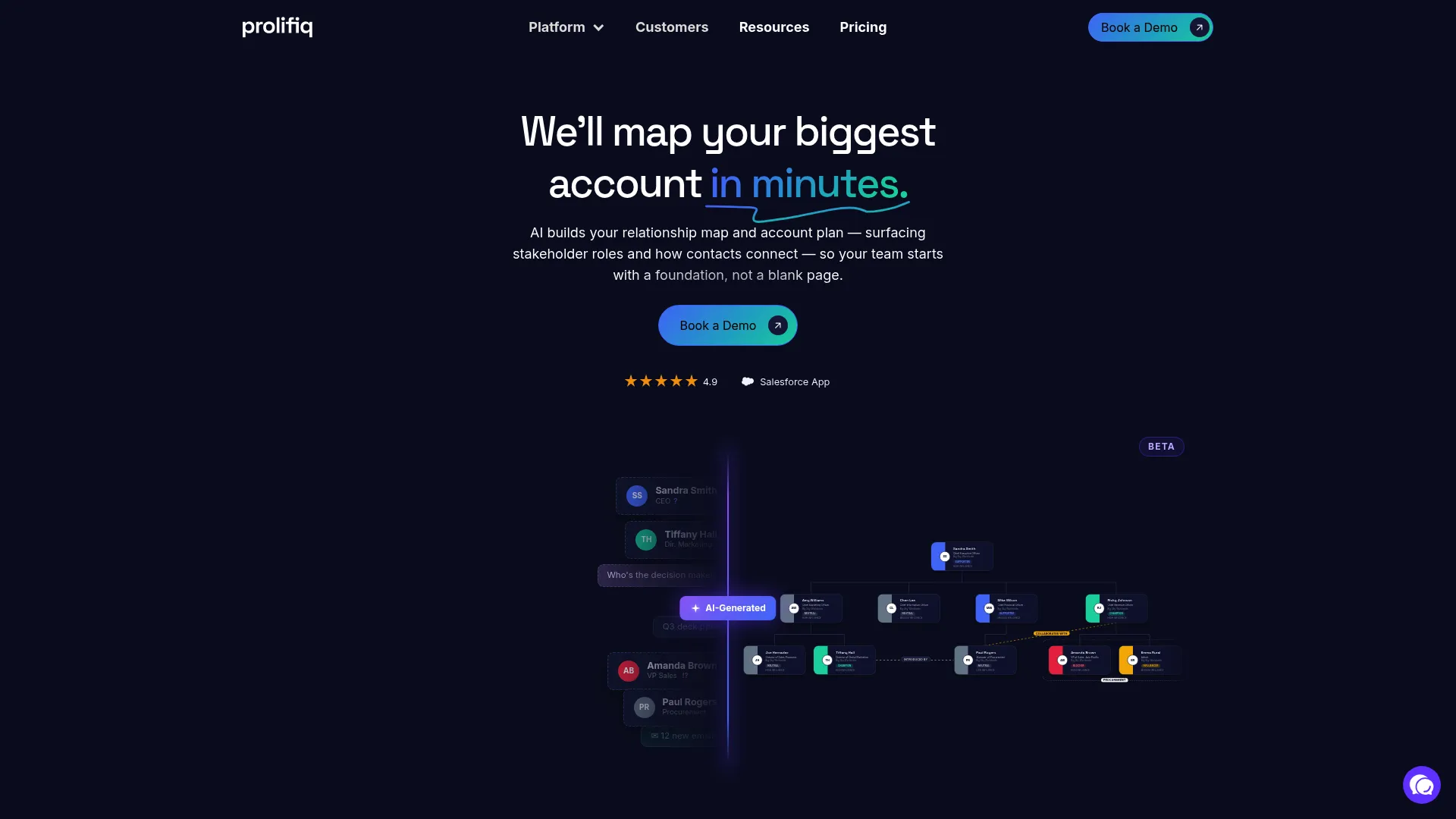
Prolifiq is Salesforce-native revenue software combining account planning, relationship mapping, and content enablement in one place. Its CRUSH module handles account plans, SWOT, whitespace, and tasks, while Relationship Maps visualize stakeholders and ACE surfaces recommended content, all inside Salesforce. For teams standardized on Salesforce, keeping planning and enablement in the CRM cuts the tab-switching that kills adoption.
Best for: B2B revenue teams already standardized on Salesforce.
Key strengths
- Relationship Maps for visualizing stakeholders in Salesforce
- CRUSH account planning with plans, SWOT, whitespace, and tasks
- ACE content enablement with recommended assets
- Native Salesforce execution
- Stakeholder mapping tied to live deals
Why choose Prolifiq: Prolifiq pairs account planning with content enablement, so the plan and the assets reps need to move a deal live in the same place. For Salesforce-first teams, that consolidation reduces the number of tools an AE has to touch.
Prolifiq pricing: Prolifiq uses quote-based pricing tied to team size and requirements. No public price is listed, so contact their team for a tailored quote.
6. Korn Ferry Sell

Korn Ferry Sell is CRM-embedded sales software that combines the Miller Heiman methodology with sales analytics, coaching, and learning tools. It brings the Blue Sheet and Strategic Selling with Perspective workflow into Salesforce and Microsoft Dynamics, with real-time coaching and on-demand micro-learning built in. For teams that want a proven methodology baked into their account planning, not just a blank template, this is the fit.
Best for: Sales teams needing methodology-driven account management inside their CRM.
Key strengths
- Native Salesforce and Microsoft Dynamics integration
- Blue Sheet and Strategic Selling with Perspective workflow
- Real-time coaching and on-demand micro-learning
- Relationship mapping and account planning
- Methodology-driven execution support
Why choose Korn Ferry Sell: If your team's problem is inconsistent selling motion, not just missing tooling, Korn Ferry Sell embeds a structured methodology into the workflow. It pairs planning with coaching, which helps newer reps ramp on a repeatable approach.
Korn Ferry Sell pricing: Korn Ferry Sell does not publish public pricing. Plans are scoped to your team and methodology needs, so contact their team for a quote.
7. Squivr

Squivr is Salesforce-native relationship intelligence and account planning software, sold as modular components you can mix and match. Org charts, relationship maps, playbooks, action plans, and whitespace analysis are each available on their own, so teams add exactly the planning and hierarchy visibility they need without heavy process overhead. With a 5.0/5 G2 rating, it lands well with teams that want native Salesforce planning without a big platform commitment.
Best for: Revenue teams that want native Salesforce account planning and relationship mapping without buying a full suite.
Key strengths
- Org charts and relationship maps inside Salesforce
- Playbooks and action plans
- Whitespace analysis and revenue visibility
- Modular, per-module adoption
- Native Salesforce integration
Why choose Squivr: Squivr's modular pricing lets you start with just org charts or whitespace analysis and add more as you grow. For teams that want relationship mapping and hierarchy visibility without a heavy rollout, the pay-for-what-you-use model keeps it lightweight.
Squivr pricing: Individual modules like ArcSight, Playbooks & Action Plans, and Revenue Summary & WSA start at $10 per user/month each. ArcSuite is $20 per user/month, and the Full Suite is $40 per user/month. Volume discounts are available with no setup fees.
Considerations before you buy
The feature list matters less than whether the plan actually gets used. Here's what to weigh before committing.
CRM fit
The single biggest predictor of adoption is whether planning lives inside your CRM. A Salesforce-native tool that surfaces the plan next to the deal beats a standalone platform reps have to open on purpose. Check how deeply the tool embeds, not just whether it "integrates."
Execution tracking
A plan that does not connect to live opportunities is just a document. Look for tools that tie whitespace, stakeholders, and next steps to actual pipeline, so the plan updates as the deal moves. This is what turns account planning from a quarterly ritual into a working revenue workflow.
Stakeholder visibility
Enterprise deals live and die on relationships. Strong relationship mapping software, org charts, and stakeholder mapping show you who holds power, who champions you, and where the gaps sit. Without this, multi-threading is guesswork.
Manager visibility and adoption
If reps do not update it, none of the features matter. Evaluate how much admin the tool adds and whether managers get forecast-ready visibility without chasing updates. The best account planning platform is the one your team actually maintains.
Conclusion
Account planning software only earns its keep when the plan stops living in a deck and starts driving daily execution. That's the lens to buy on.
If your team already runs on Salesforce, a CRM-native approach through Salesforce Sales Cloud, Prolifiq, or Squivr keeps planning next to the deal and adoption high. For enterprise account teams managing complex, multi-stakeholder deals, Altify brings relationship mapping and whitespace into execution. If retention and expansion drive your number, Kapta is built for the post-sale motion. Teams wanting structured, repeatable frameworks should look at DemandFarm, and those baking in a sales methodology should evaluate Korn Ferry Sell.
Start with your CRM fit and adoption reality, not the longest feature list. Shortlist two tools that map to your motion, run them against a handful of live strategic accounts, and see which one your reps actually keep current. The plan that gets used is the only one that grows revenue.
Start your journey with Guideflow today!
FAQs
Account planning software helps revenue teams map, grow, and retain key accounts by turning account strategy into a structured, trackable workflow. It centralizes stakeholders, whitespace, and expansion goals, then ties them to live deals inside a CRM so the plan stays current instead of dying in a slide deck.
The features that decide value are relationship mapping, whitespace analysis, execution tracking tied to opportunities, and deep CRM integration. Account health scoring and manager visibility matter too. But the real test is adoption: a tool reps actually update beats a feature-rich one they abandon.
They overlap heavily and the terms are often used interchangeably. Account planning software emphasizes strategy, whitespace, and stakeholder mapping. Key account management software leans toward the ongoing motion of retaining and growing named accounts. Most modern platforms, like DemandFarm and Kapta, cover both.
If your team already runs on Salesforce, native tools like Prolifiq, Squivr, or Altify keep planning inside your system of record, which is the biggest driver of adoption. If you use a different CRM or want a standalone approach, a broader platform can still work, but check the integration depth carefully.
Whitespace analysis maps which products, business units, or use cases an account has not yet bought. Account planning tools visualize this as a grid or heatmap, so reps see untapped expansion opportunities at a glance instead of guessing. It's one of the clearest ways to turn a plan into pipeline.
AEs should prioritize workflow fit and low admin overhead. If the tool sits inside your CRM and updates as deals move, you'll actually use it. Look for execution tracking that ties plans to next steps, stakeholder mapping for multi-threading, and manager reporting that reduces forecast-call archaeology.
Adoption comes down to friction. If a rep has to leave their CRM and open a separate tool to update a plan, it gets skipped in a busy quarter. Run a short pilot on real accounts before buying, and watch whether reps keep the plan current on their own. That behavior, not the feature list, tells you the truth.
Opportunity planning focuses on winning a single deal: stakeholders, competition, and close steps for one opportunity. Account planning zooms out to the whole account across multiple deals, renewals, and expansion over time. Strong platforms connect the two, so account strategy informs each opportunity and each deal feeds the account view.




.avif)