Most companies do not have a spend problem. They have a visibility problem. Purchase requests live in email. Approvals stall in Slack threads. Contracts sit in someone's downloads folder. And by the time finance reconciles the quarter, half the spend already happened off-contract, unbudgeted, and untracked.
That gap is why the procurement software market is growing fast. Precedence Research (2025) puts the global market at roughly USD 9 to 10.5 billion in 2025, on a path toward USD 22 to 28 billion by 2034 at close to a 10% CAGR. Polaris Market Research (2025) reports that North America drives about 40% of that revenue, and that small and mid-sized companies are the fastest-growing segment at nearly a 13.9% CAGR. Translation: this is no longer enterprise-only tooling.
If you are a product manager, RevOps lead, or finance operator evaluating procurement management software, the questions are practical. Which procurement software companies actually fit your org size? What separates procure-to-pay from source-to-pay? Will the platform reduce approval friction or add another workflow island your team has to babysit through every release?
This guide answers those questions with a shortlist of eight procurement software solutions, a comparison table you can scan in 30 seconds, and honest guidance on where each tool fits. It leans on the same evaluation lens you would apply to any operational system: instrumentation, segmentation, maintainability, and clear proof of impact. If you evaluate adjacent systems too, our guides to contract lifecycle management and contract management cover overlapping ground, and our audit management software roundup helps when compliance sits next to procurement on your roadmap.
What's inside
This guide is for product, finance, and operations leaders comparing procurement automation software for a real buying decision, not a market survey. We selected eight platforms based on four criteria that matter across org sizes:
- Lifecycle coverage: intake, approvals, purchase orders, supplier management, contracts, and AP.
- Automation depth: how much manual work the platform removes from routing and matching.
- Integrations: ERP fit, plus finance and analytics connections.
- Implementation reality: time-to-value and how much ongoing maintenance the system demands.
Each entry includes who it fits best, key strengths, why teams choose it, pricing where public, and its current G2 rating.
TL;DR
Short on time? Here is the shortlist by buyer type.
- Best packaged procure-to-pay for mid-market: Precoro. Public pricing, AP automation, and fast implementation.
- Best for enterprise spend orchestration: Coupa. Deep guided buying, supplier collaboration, and risk controls.
- Best for unifying procurement with HR and IT: Rippling. One system across the workforce.
- Best for invoice-heavy finance teams: Basware. AP automation and e-invoicing at scale.
- Best AI-first source-to-pay: GEP. Enterprise procurement and supply chain in one platform.
- Best for highly configurable enterprise workflows: Ivalua and Jaggaer. Deep source-to-pay for complex orgs.
- Best for large ERP ecosystems: SAP Ariba. Supplier network scale and native SAP fit.
What is procurement software?
Procurement software is a platform that manages how an organization requests, approves, purchases, and pays for goods and services, while tracking spend, suppliers, and contracts in one place. It replaces the scattered mix of email, spreadsheets, and manual approvals that most teams outgrow.
A few distinctions matter before you shortlist:
- Purchasing software narrowly handles requisitions and purchase orders. Procurement software is broader, adding approvals, supplier records, and spend reporting.
- Procure-to-pay (P2P) covers the operational flow from intake through payment: request, approve, order, receive, match invoice, pay.
- Source-to-pay (S2P) adds the strategic front end: sourcing events, supplier discovery, negotiation, and contract management on top of P2P.
- A procurement management system is the umbrella term for the platform that runs all of the above with governance and an audit trail.
Core capabilities to expect from a modern procurement platform:
- Guided intake that routes requests to the right form and owner.
- Approval workflows with rules by amount, category, department, or budget.
- Supplier management including onboarding, a supplier portal, and risk data.
- Purchase order creation and receiving.
- Invoice matching (two-way and three-way) and accounts payable automation.
- Contract management with a central repository and renewal tracking.
- Spend analytics and reporting for spend visibility across teams.
- ERP integration so procurement data flows to your system of record.
- An audit trail for compliance and policy enforcement.
The best systems reduce time-to-value and prove ROI through cleaner data, not just more features.
When to use procurement software
Not every team needs a full procurement platform on day one. Here are the three signals that it is time.
Reduce manual approvals
When a $2,000 purchase needs four people to sign off and the request lives in an email chain, the process is the bottleneck. You lose days waiting on replies and reconstructing who approved what. Guided intake and rule-based routing fix this. Requests hit the right form, route to the right approver by amount or category, and leave an audit trail automatically. Consistency replaces guesswork, and finance stops chasing signatures.
Control spend across teams
When finance cannot see committed spend until the invoice lands, off-contract and rogue purchasing quietly compounds. Procurement software ties every request to a budget, enforces policy at the point of intake, and applies category controls before money moves. That is real spend visibility: you see the commitment when it happens, not at month-end close.
Centralize supplier and contract data
When supplier records live in one system, contracts in another, and renewal dates in a spreadsheet nobody opens, you miss auto-renewals and re-onboard vendors you already have. A central supplier and contract repository with onboarding workflows fixes this. It supports compliance, shortens supplier onboarding, and turns contract management into a system instead of a scramble.
Comparison table
Read this table top to bottom for the fastest shortlist. The Intent column tells you the buyer profile each tool targets, Key use case is where it earns its keep, and pricing reflects publicly listed figures where vendors disclose them. Many enterprise procurement software providers quote custom pricing, which is normal at that tier.
| # | Product | Intent | Key use case | Pricing | G2 rating |
|---|---|---|---|---|---|
| 1 | Precoro | Mid-market P2P | Packaged procure-to-pay with AP automation | From $499/mo | 4.7/5 |
| 2 | Coupa | Enterprise spend | Business spend management and orchestration | Custom | 4.2/5 |
| 3 | Rippling | Unified operations | Procurement inside HR, IT, and finance | Custom | 4.8/5 |
| 4 | Basware | Finance-heavy AP | Invoice automation and e-invoicing | Custom | 4.0/5 |
| 5 | GEP | Enterprise S2P | AI-native source-to-pay and supply chain | Custom | 4.3/5 |
| 6 | Ivalua | Complex enterprise | Configurable source-to-pay | Custom | 4.3/5 |
| 7 | Jaggaer | Complex sourcing | Source-to-pay for regulated industries | Custom | 4.1/5 |
| 8 | SAP Ariba | Large ERP estates | Enterprise procurement with supplier network | Custom | 4.1/5 |
1. Precoro
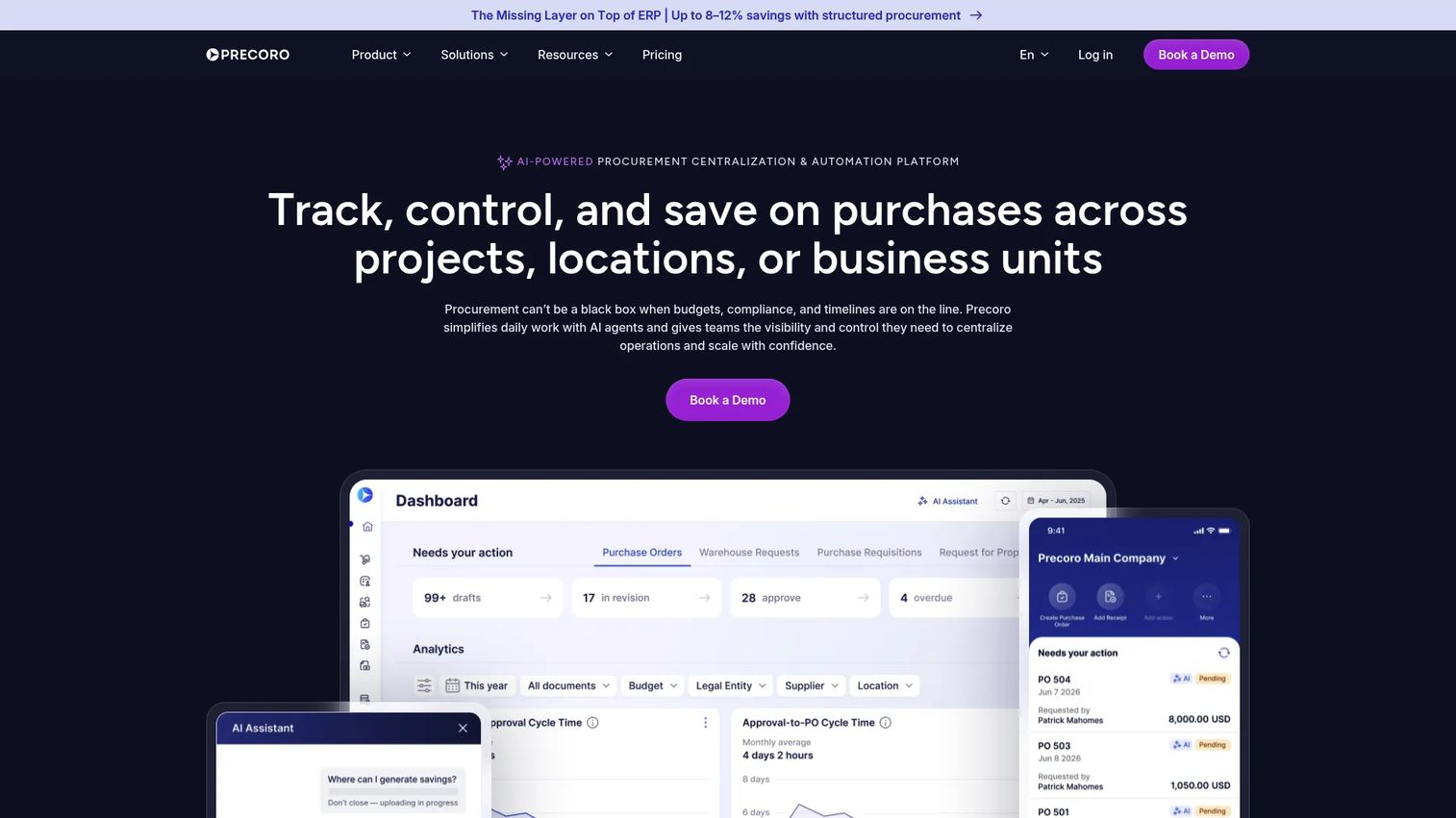
Precoro is procurement and AP automation software built to control spend, approvals, and purchasing workflows in one packaged platform. It covers the full procure-to-pay flow: purchase requests, purchase orders, receipts, invoices, and two- and three-way matching. Mid-market teams evaluate it because it delivers real lifecycle coverage without the multi-quarter rollout that enterprise suites demand. The interface is clean enough that requesters actually use it, which is where most rollouts succeed or stall.
Best for: Mid-market teams that need a packaged procure-to-pay platform with AP automation and spend controls without a heavy implementation.
Key strengths
- Full P2P coverage: Purchase requests, POs, receipts, invoices, and matching in one system.
- Automated approvals: Custom fields and workflows route requests without manual chasing.
- Intelligent AP automation: AI document scanning, budget tracking, and vendor management reduce data entry.
Why choose Precoro: For a product or finance leader who wants spend visibility and approval discipline without an enterprise budget, Precoro hits the sweet spot. It publishes pricing openly, which is rare in this category and a signal of confidence. The packaged scope means fewer integration surprises and a faster path to a first meaningful win.
Precoro pricing: Precoro lists three public plans billed annually. Core starts at $499 per month, Automation at $999 per month, and Enterprise is custom. There is no free tier, but the transparent entry price makes budgeting straightforward for mid-market teams. Precoro holds a 4.7/5 rating on G2.
2. Coupa
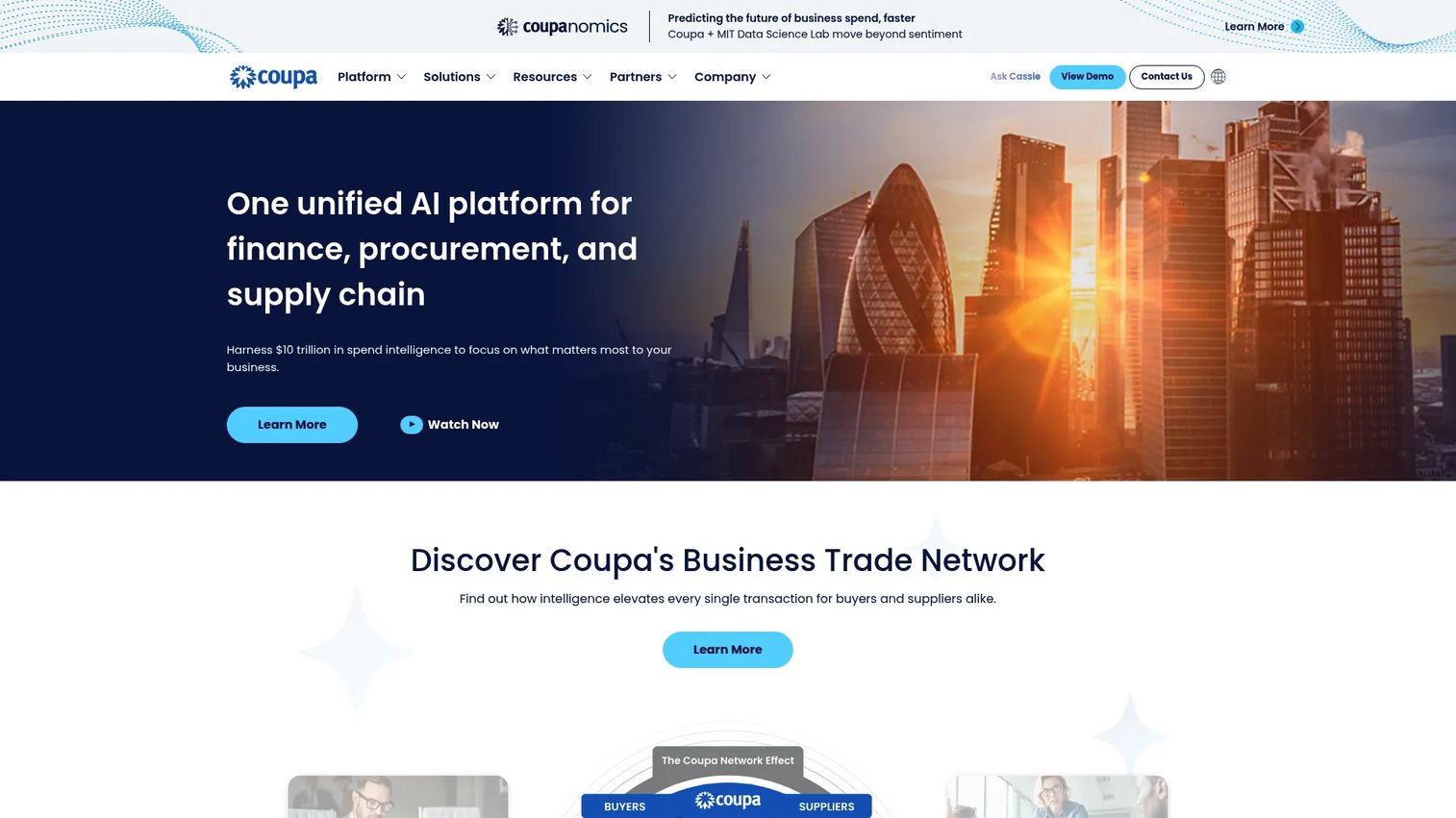
Coupa is a business spend management platform that unifies procurement, invoicing, payments, expenses, and sourcing. It is built for organizations that want intelligent spend decisions across the full source-to-pay flow rather than a single module. Coupa's guided buying steers requesters toward preferred suppliers and compliant catalogs, which is where governance-focused teams see the most value. Supplier collaboration, contract handling, and risk controls round out an enterprise-grade platform.
Best for: Mid-market and enterprise teams that need deep spend governance, guided buying, and supplier collaboration in one unified platform.
Key strengths
- Guided buying: Steers purchasing toward approved catalogs and preferred suppliers automatically.
- Unified spend management: Procurement, invoicing, payments, and expenses in one platform.
- Risk and compliance controls: Supplier risk data and policy enforcement built into workflows.
Why choose Coupa: When your priority is control at scale, Coupa earns its shortlist spot. It excels for organizations with complex approval hierarchies and a mandate to reduce off-contract spend across many departments. The breadth is the point: finance, procurement, and AP work from the same data, which cuts the reconciliation cycle at close.
Coupa pricing: Coupa uses quote-based pricing and does not publish list prices, which is standard for enterprise spend management. Expect a sales-led evaluation scoped to your entity count and spend volume. Coupa holds a 4.2/5 rating on G2.
3. Rippling
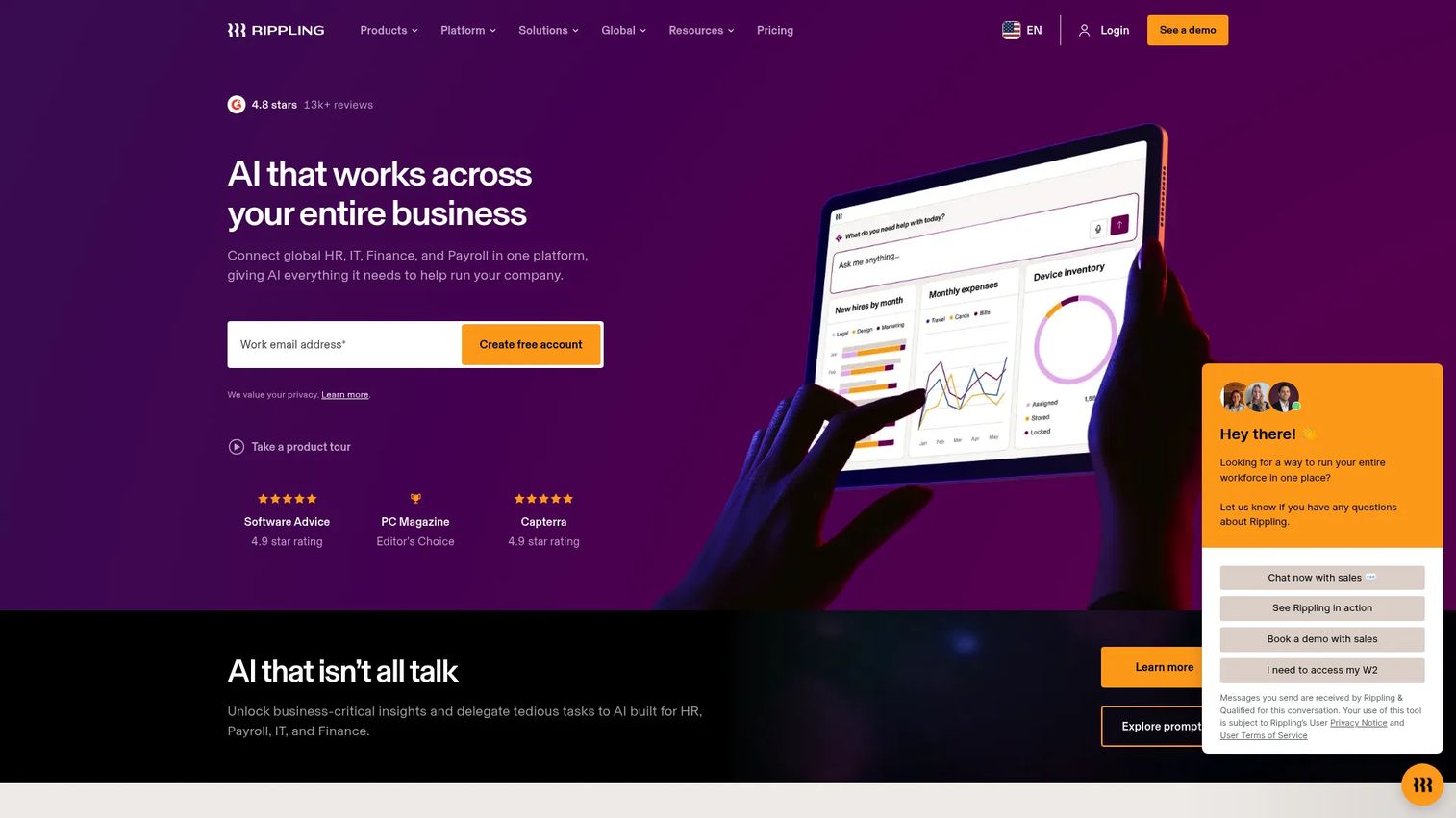
Rippling is a unified HR, IT, and finance platform that folds procurement and spend management into a single workforce system. It matters for teams that want purchasing connected to the people, devices, and budgets it touches, rather than run as a standalone island. Because Rippling already knows who works where, on what team, with what budget, it can enforce policy and route approvals with context most standalone tools lack.
Best for: Companies that want one system across HR, IT, payroll, and spend, with procurement as part of a broader operational fabric.
Key strengths
- Unified workforce data: Directory and analytics tie spend to real org structure.
- Real-time policy enforcement: Approvals and controls use live employee and budget context.
- Consolidated operations: Payroll, benefits, device management, and spend in one platform.
Why choose Rippling: If tool sprawl is your actual pain, Rippling replaces several systems at once. A product or ops leader consolidating HR, IT, and finance gets procurement as a connected capability instead of a seventh login. That consolidation is the trade-off worth weighing: you commit to a broader platform to gain the context that makes procurement smarter.
Rippling pricing: Rippling uses custom, quote-based pricing. Most products bill per employee per month, sometimes with a base fee, and modules can be purchased alongside the required core platform. There is no public free tier. Rippling holds a 4.8/5 rating on G2.
4. Basware
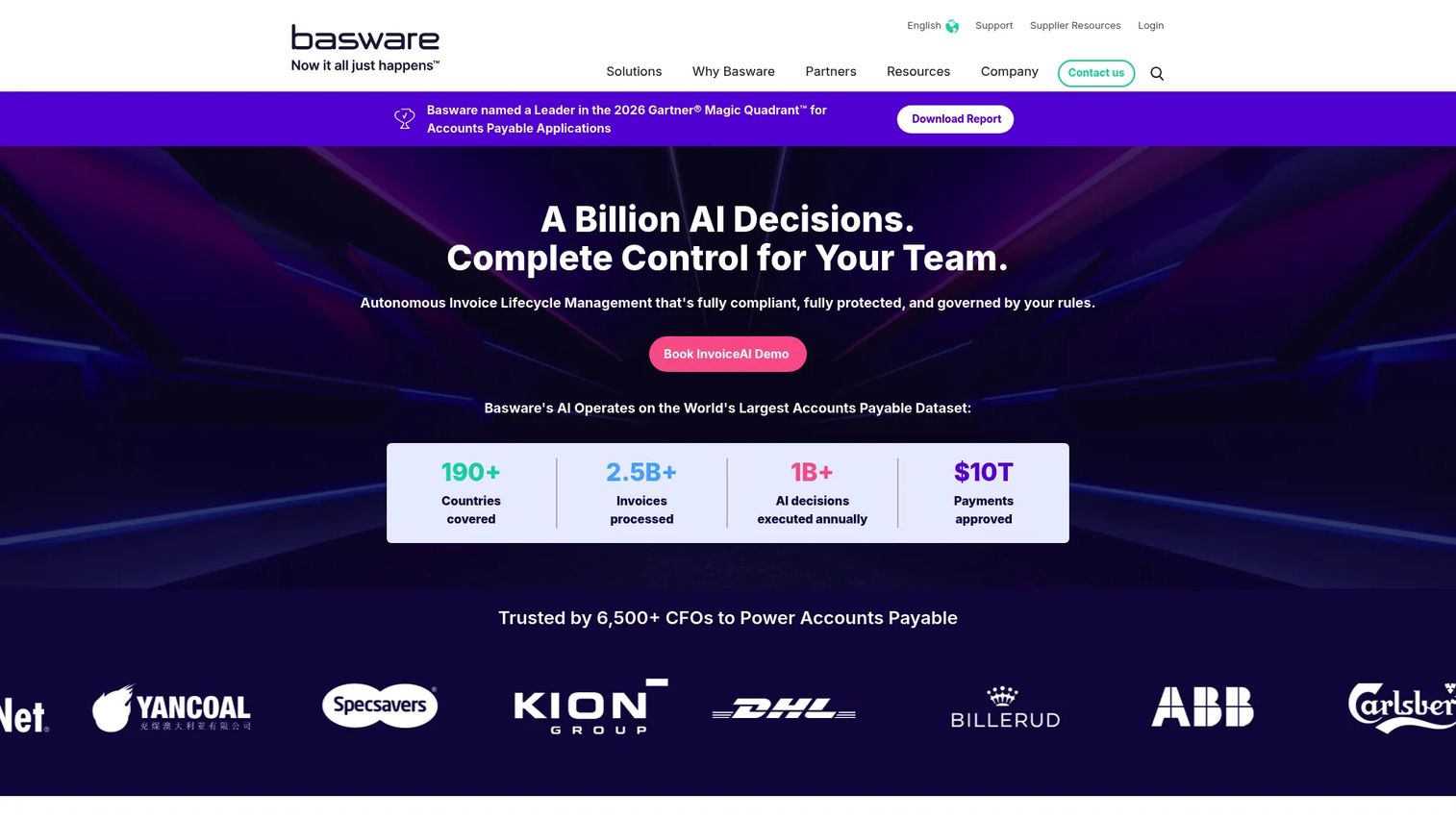
Basware is cloud-based invoice lifecycle management and procure-to-pay automation software built for finance teams. Its center of gravity is accounts payable: invoice automation, e-invoicing, and compliance at scale. For organizations processing high invoice volumes across many entities and geographies, Basware's e-invoicing network and compliance coverage are the draw. This is a finance-led platform first, with procurement capabilities that support the AP engine.
Best for: Mid-market to enterprise finance teams with invoice-intensive workflows that need AP, e-invoicing, and procure-to-pay automation.
Key strengths
- AP and invoice automation: Automated capture, matching, and processing at high volume.
- E-invoicing network: Broad compliance coverage across regions and tax regimes.
- Procure-to-pay automation: Connects purchasing to the invoice and payment flow.
Why choose Basware: When invoices are your bottleneck, Basware is purpose-built for the job. It fits finance organizations where AP volume, e-invoicing mandates, and multi-country compliance outweigh the need for heavy sourcing features. The focus is a strength: it does the invoice lifecycle deeply rather than spreading thin across every procurement module.
Basware pricing: Basware does not publish list pricing. It uses a subscription model tailored to organization size and requirements, quoted through its sales team. Basware holds a 4.0/5 rating on G2.
5. GEP
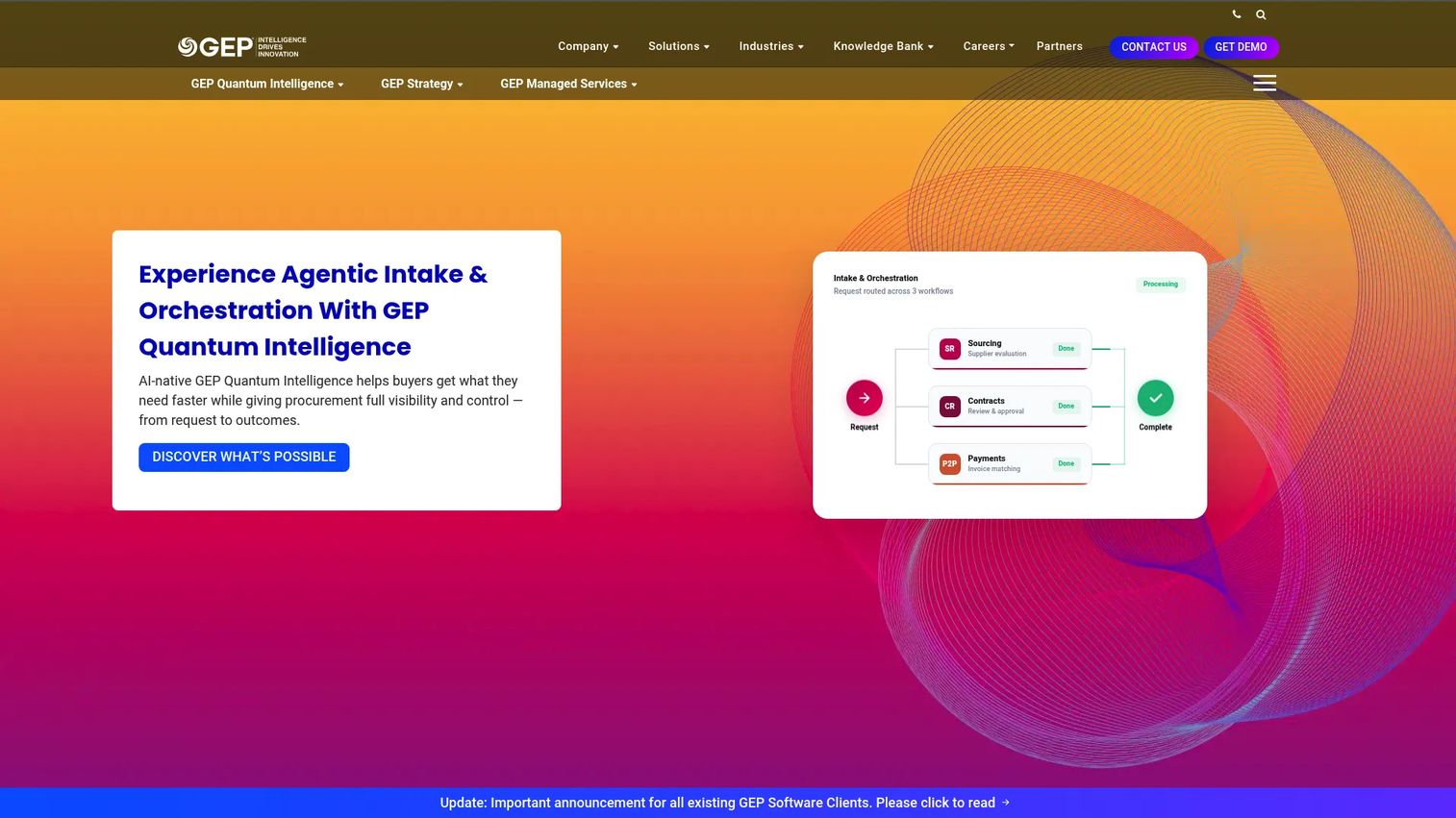
GEP delivers AI-native procurement and supply chain software alongside strategy and managed services. Its platform spans source-to-pay with unified procurement orchestration and integrations into ERP and back-end systems. Large enterprises evaluate GEP when they want procurement and supply chain in one AI-first platform rather than stitched-together point tools. The combination of software plus advisory services appeals to organizations running a transformation, not just a software swap.
Best for: Large enterprises seeking AI-native procurement and supply chain transformation with source-to-pay breadth and analytics.
Key strengths
- AI-native source-to-pay: Sourcing, contracts, and procurement built on an AI foundation.
- Unified orchestration: Connects procurement workflows across ERP and back-end systems.
- Supply chain breadth: End-to-end procurement and supply chain in one platform.
Why choose GEP: For enterprises where procurement and supply chain decisions are inseparable, GEP's breadth is the argument. It fits organizations that want spend analytics, workflow automation, and orchestration in a single system, with services support to run the change. The scope suits complex, multi-entity operations more than lean teams.
GEP pricing: GEP does not publish public pricing, and G2 notes that pricing details are directed to the vendor. Expect an enterprise, sales-led evaluation. GEP holds a 4.3/5 rating on G2.
6. Ivalua
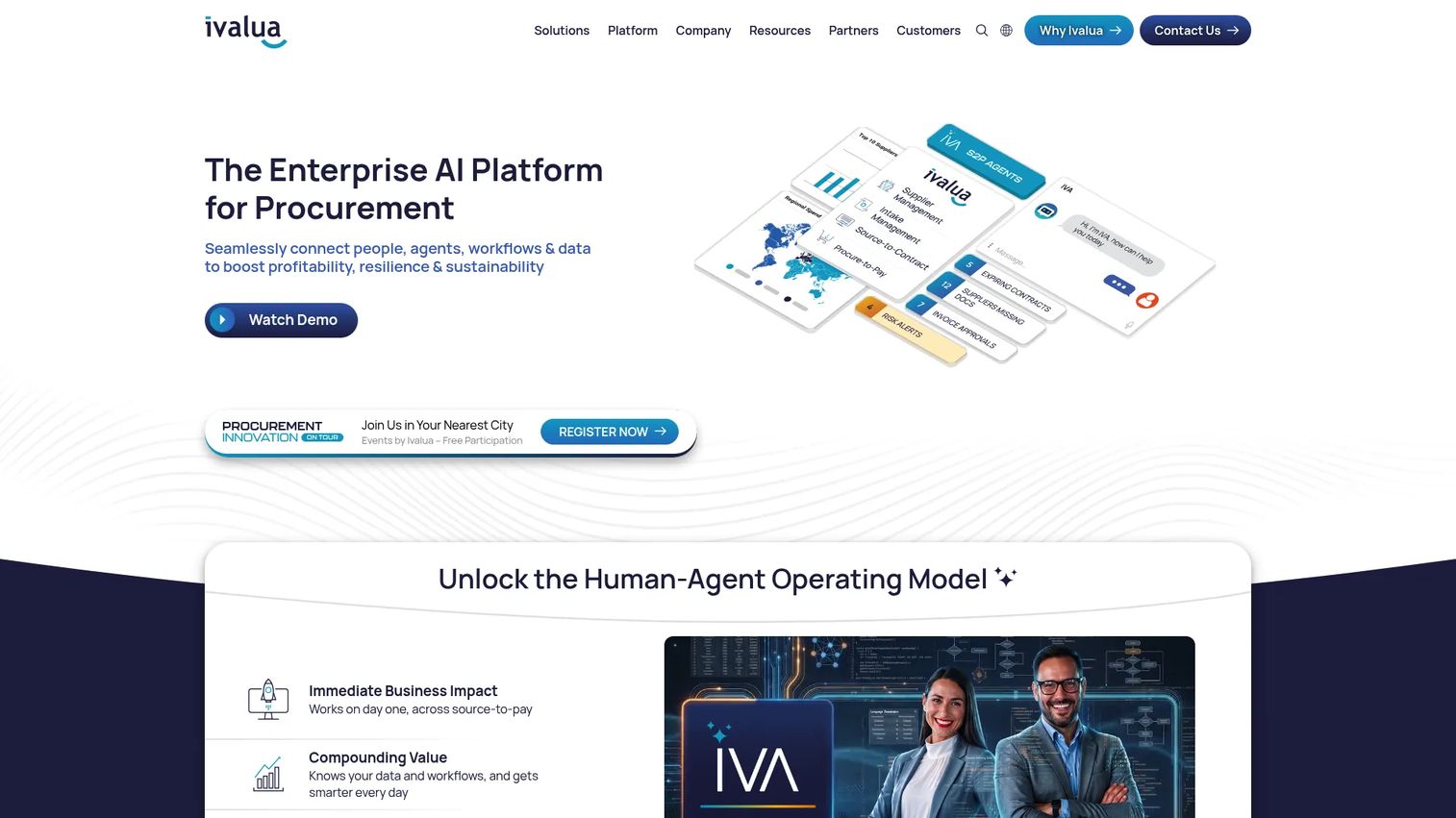
Ivalua is enterprise AI procurement and source-to-pay software known for depth and configurability. It unifies people, AI agents, workflows, and data across intake, sourcing, supplier management, contract management, eProcurement, AP automation, and payments. Teams with complex, non-standard workflows evaluate Ivalua because its no-code and low-code configurability lets them model their real process rather than bend to a rigid template. An integration hub and prebuilt connectors handle ERP and system fit.
Best for: Large enterprises needing configurable source-to-pay and supplier management that maps to complex, specific workflows.
Key strengths
- Deep configurability: No-code and low-code tools model your actual process.
- Full source-to-pay coverage: Intake through payments, including sourcing and supplier management.
- Integration hub: Prebuilt connectors for ERP and back-end systems.
Why choose Ivalua: For a procurement org with requirements that off-the-shelf tools cannot handle, Ivalua's flexibility is the payoff. The honest read: that configurability rewards teams ready to invest in a structured setup and clear internal ownership. If your workflows are complex and your team can steward the configuration, it scales well. Ivalua holds a 4.3/5 rating on G2.
7. Jaggaer
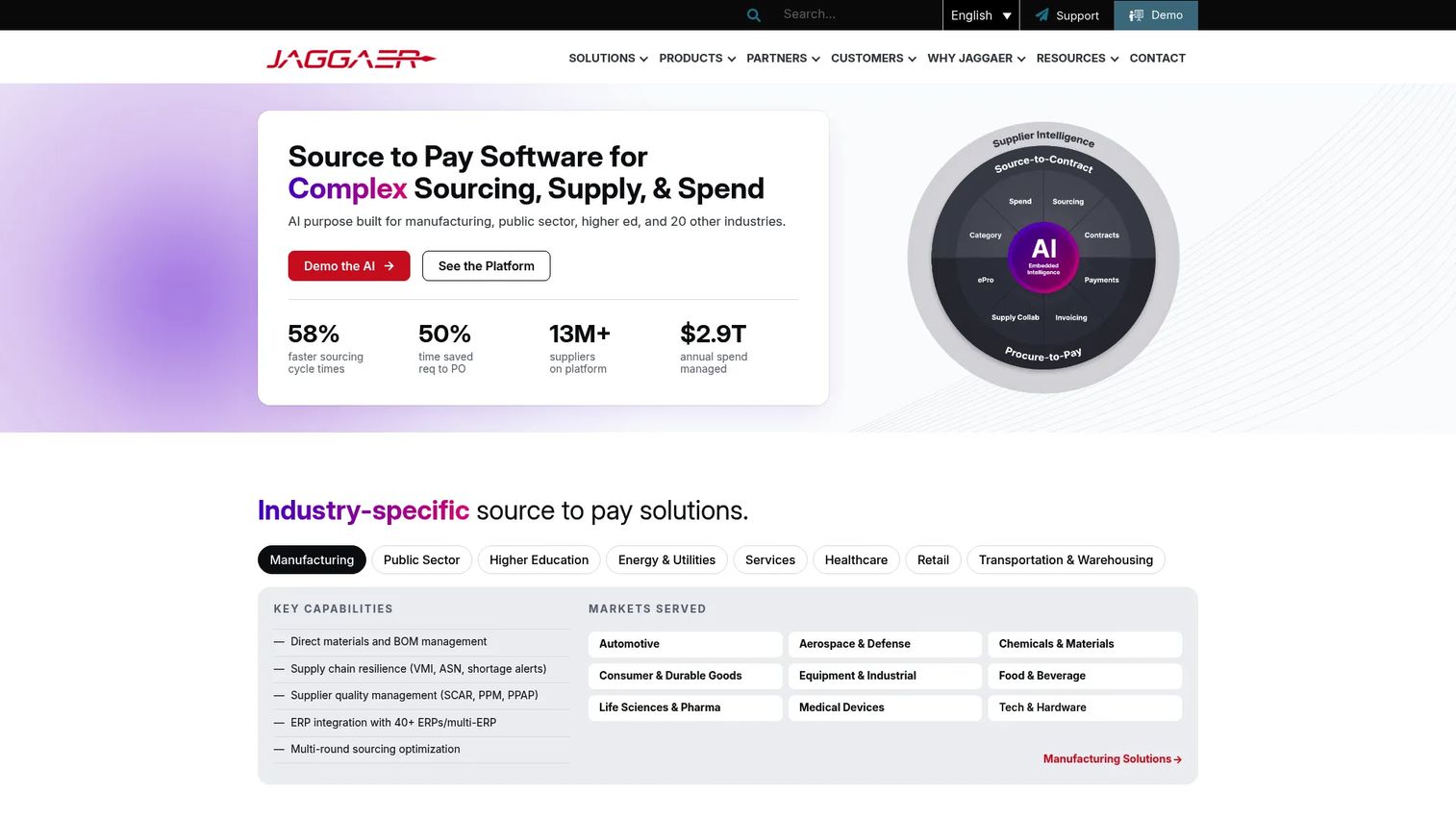
Jaggaer is AI-powered source-to-pay procurement software built for complex industries. It covers AI sourcing, contract lifecycle management, spend analytics, supplier relationship management, eProcurement, guided buying, invoicing automation, and payments. It fits organizations with heavy sourcing and category management needs, particularly in regulated or manufacturing-heavy sectors where supplier depth and analytics matter. The practical draw is category-level control: Jaggaer helps procurement teams manage complex supplier relationships at scale.
Best for: Enterprises with complex sourcing, category management, and supplier relationship workflows, often in regulated industries.
Key strengths
- AI-powered sourcing: Structured sourcing events with analytics and guided buying.
- Supplier relationship management: Deep supplier data and category management.
- Full S2P coverage: Contracts, spend analytics, eProcurement, invoicing, and payments.
Why choose Jaggaer: When category management and supplier depth drive your procurement strategy, Jaggaer is built for that reality. It suits organizations with complex, high-stakes sourcing where analytics and supplier governance directly affect cost and risk. The breadth serves large, process-mature teams best. Jaggaer holds a 4.1/5 rating on G2.
8. SAP Ariba
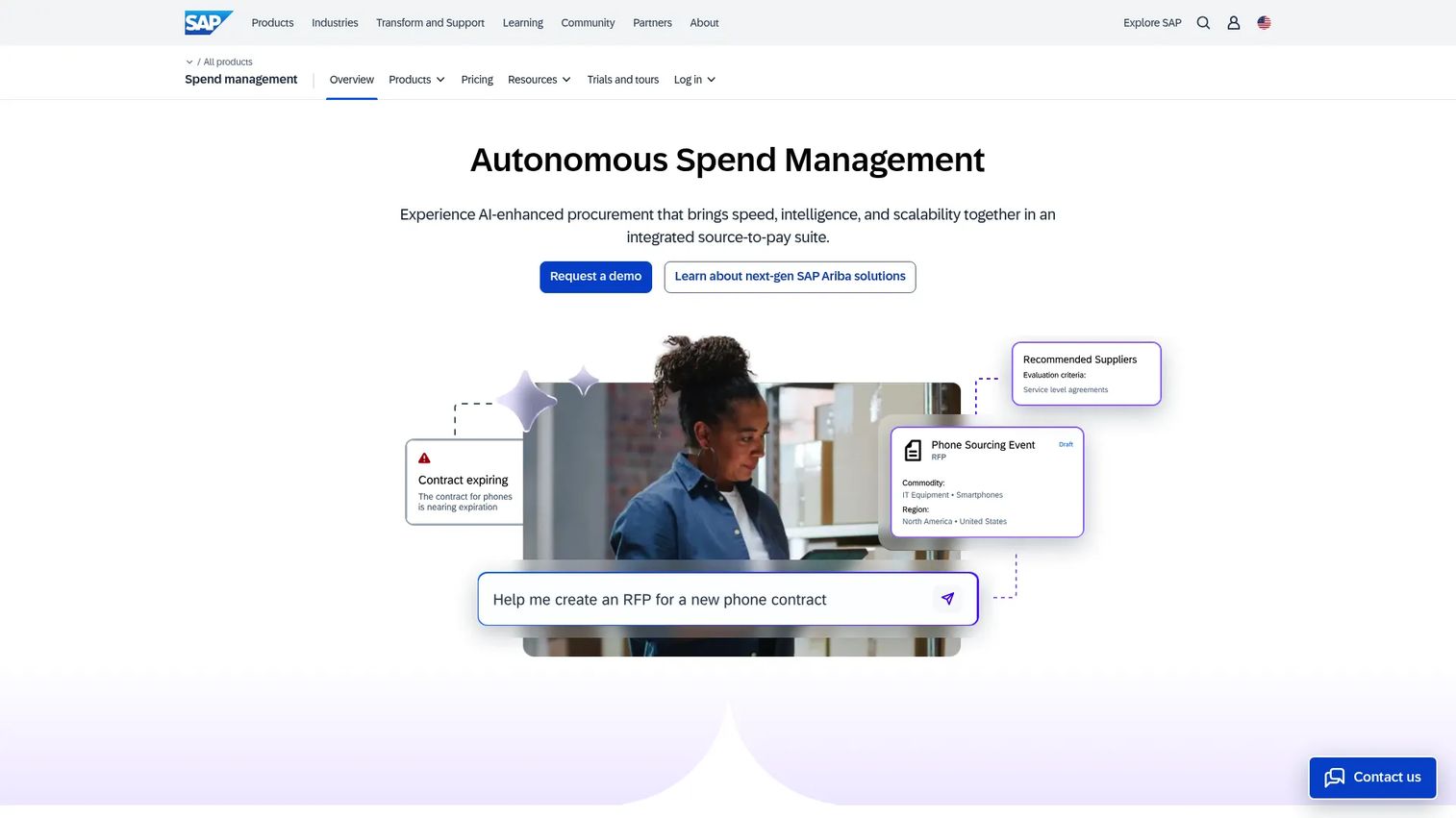
SAP Ariba is SAP's spend management portfolio for procurement, sourcing, supplier management, and procure-to-pay workflows. Its defining advantage is the Ariba Network, a large supplier network, plus native integration with SAP ERP environments. Large organizations already running SAP shortlist Ariba because the data flows into their system of record without heavy middleware. Spend management tools, AI-assisted sourcing, supplier discovery, and risk workflows complete an enterprise-grade platform.
Best for: Mid-market to enterprise procurement teams inside large SAP ERP estates that need end-to-end spend management and supplier network scale.
Key strengths
- Supplier network scale: The Ariba Network connects a large ecosystem of suppliers.
- Native SAP integration: Deep fit with SAP ERP as the system of record.
- Sourcing and supplier management: AI-assisted sourcing, discovery, and risk workflows.
Why choose SAP Ariba: For organizations standardized on SAP, Ariba is the path of least resistance for ERP fit and supplier reach. It suits large, governance-heavy procurement functions that value network scale and ecosystem alignment. The commitment matches an enterprise footprint rather than a lean team.
SAP Ariba pricing: SAP lists its Ariba modules, including Buying and Invoicing, as price upon request, typically on multi-year contracts. There is no public list price or free tier. SAP Ariba holds a 4.1/5 rating on G2.
Considerations
Before you sign, pressure-test each shortlist candidate against the criteria that actually determine success. A product manager evaluating this like any operational system should weigh the following.
ERP integration and data flow
Confirm the platform integrates with your ERP as a system of record, not a replacement for it. Ask how master data syncs, how often, and whether the connector is native or middleware-dependent. Procurement software should feed your ERP cleanly, not create a second source of truth you reconcile by hand.
Approval routing and policy enforcement
Test whether approval workflows model your real hierarchy: routing by amount, category, department, and budget. Verify that policy enforcement happens at intake, not after the fact. The goal is fewer manual approvals and a consistent audit trail, so ask to see rule-building in a live environment.
Supplier onboarding and contract management
Check how suppliers onboard through a supplier portal, how contract management handles renewals, and whether risk and compliance data is native or bolted on. Scattered supplier and contract data is the problem you are solving, so confirm the repository is genuinely centralized.
Spend visibility and reporting
Evaluate spend analytics and reporting for the segmentation you need: by category, department, entity, and supplier. Ask whether dashboards are real-time and exportable. Clean instrumentation is what proves ROI later, so treat reporting depth as a first-class requirement.
Implementation effort and maintainability
Get a realistic timeline and a clear picture of who maintains the system as your org changes. Fast implementation and low maintenance matter as much as features, because a procurement platform that decays after every reorg quietly loses its value.
Conclusion
The right procurement software depends on your org size, your ERP, and how much of the lifecycle you need on day one. For mid-market teams that want packaged procure-to-pay with transparent pricing and quick time-to-value, Precoro is the cleanest starting point. For enterprise spend governance, Coupa and SAP Ariba lead, with Ariba the natural fit inside SAP estates. Teams drowning in invoices should look hard at Basware, while GEP, Ivalua, and Jaggaer serve complex, source-to-pay-heavy organizations that need configurability and depth. If tool sprawl is the real problem, Rippling folds procurement into a single workforce system.
Whichever way you lean, remember the point of these procurement software providers: reduce friction, not add another workflow island. Shortlist two or three tools that match your org size and ERP, run a scoped pilot against your real approval and spend data, and judge them on time-to-value and clean reporting, not feature-count. The platform that proves ROI fastest is usually the one your team actually adopts.
FAQs
It ranges from a few weeks for packaged mid-market platforms to several quarters for enterprise source-to-pay suites. Packaged tools with public pricing tend to go live fastest because scope is contained. Enterprise deployments take longer due to ERP integration, multi-entity setup, and change management. Ask each vendor for a realistic timeline tied to your entity count.
ERP procurement modules handle purchasing inside your system of record but are often rigid and general-purpose. Dedicated procurement management software adds deeper guided intake, flexible approval workflows, supplier portals, and richer spend analytics. Most teams run procurement software alongside their ERP, integrating the two so procurement data flows to the ERP rather than replacing it.
Very useful for mid-market. Polaris Market Research (2025) found small and mid-sized companies are the fastest-growing segment at nearly a 13.9% CAGR, driven by cloud adoption. Packaged platforms like Precoro deliver full procure-to-pay coverage without the multi-quarter rollout enterprise suites require, making them a practical fit for growing teams.
Yes. Most modern platforms include a supplier portal for onboarding, a central contract repository, and renewal tracking. This replaces scattered supplier records and spreadsheet-based renewal dates. When evaluating, confirm whether supplier risk and compliance data is native to the platform or requires a separate integration.
Look for rule-based routing by amount, category, department, and budget, plus policy enforcement at the point of intake rather than after purchase. Strong approval workflows produce a clean audit trail automatically and reduce the email chains that stall purchasing. Ask to build a sample rule in a live environment before you commit.
Test whether reporting segments spend by category, department, entity, and supplier, and whether dashboards are real-time and exportable. Real spend visibility shows committed spend when it happens, not at month-end close. Treat reporting depth as a first-class requirement, since clean instrumentation is what proves ROI to leadership later.
Sometimes. Many procurement platforms include accounts payable automation, invoice matching, and payments, so a strong procure-to-pay tool can consolidate AP. Finance-heavy teams with high invoice volume may still prefer an AP-specialist platform like Basware. Map your invoice volume and existing AP stack before deciding whether one system can cover both.
ERP integration is the most important, since procurement data must flow to your system of record cleanly. After that, prioritize finance, accounting, and analytics connections, plus single sign-on for access control. For e-procurement software buyers, also confirm supplier network and e-invoicing compatibility if you operate across multiple countries or entities.