The expensive part of a lost package is rarely the package itself. It is the chain reaction. Support answers the customer. Operations checks the carrier scan. Finance approves the refund. Then your team has to decide whether filing a claim is even worth the effort.
According to a 2025 UPS Capital and Dynata survey, 73% of U.S. ecommerce merchants have paid out of pocket for lost, stolen, or damaged shipments. The same study found that 46% of merchants reported fewer than half of their shipping claims were actually paid. Carrier coverage alone rarely closes that gap. It tends to leave teams with manual claims work, poor visibility into recovery rates, and no clean way to report loss exposure to leadership.
Shipping insurance software addresses this directly. The right platform centralizes coverage administration, claims management, customer communication, and financial recovery into one operating layer, so exceptions do not spiral across support, finance, and operations simultaneously.
What's inside
This guide covers 10 shipping insurance software tools chosen for ecommerce operators, logistics leaders, and founders evaluating protection programs at scale. Tools were selected based on four criteria:
- Claims workflow depth: intake, evidence, status visibility, and reimbursement
- Coverage model fit: insurer-backed, self-funded, or carrier-recovery focused
- Integration range: ecommerce platforms, shipping APIs, and support stacks
- Pricing transparency: verified against each vendor's official pricing page
Pricing and G2 ratings were verified at publication. All figures should be confirmed before purchase.
TL;DR
- Best for high-value and complex shipping workflows: Cabrella
- Best for carrier-connected insurer-backed protection: InsureShield
- Best for enterprise post-purchase experience: Narvar
- Best for customer-funded checkout protection: Route
- Best for self-funded merchant control: Navidium
- Best for carrier refund recovery: LateShipment.com
- Best for embedded protection infrastructure: Cover Genius
- Best for developer-led shipping stacks: EasyPost
What is shipping insurance software?
Shipping insurance software helps businesses manage shipment protection, coverage administration, claims, and recovery workflows for parcels or freight that are lost, damaged, or stolen.
The category covers several distinct operating models. Understanding which model fits your business is the first decision, not the last.
Insurer-backed shipment protection
An external insurance provider underwrites the risk. The merchant or customer pays a premium, and the insurer handles eligible claims under its policy terms. Financial exposure moves off the merchant's balance sheet for covered losses.
Customer-funded checkout protection
Shoppers opt into a protection fee at checkout. The platform handles claims, replacements, and customer communication. The merchant may or may not carry residual liability depending on the provider's model.
Merchant self-insurance
The merchant collects a protection fee and retains it, taking full responsibility for payouts and policy administration. Done well, this creates margin; done poorly, it creates a claims operation the team wasn't prepared to run.
Carrier claim recovery
These tools identify carrier service failures, file refund claims on the merchant's behalf, and recover shipping costs. They complement insurance coverage rather than replacing it.
Key capabilities to look for
- Multi-carrier coverage support
- Claims intake and status tracking
- Checkout or shipping-workflow integration
- Shipment tracking and exception alerts
- Fraud and risk controls
- Customer communication workflows
- Finance and reimbursement reporting
- API, webhooks, and developer documentation
| Model | Who funds it | Who holds the risk | Best fit |
|---|---|---|---|
| Insurer-backed | Merchant or customer (premium) | Insurer | Predictable payout, lower payout volatility |
| Customer-funded | Customer (checkout fee) | Provider or merchant (varies) | High-AOV brands, checkout opt-in |
| Self-insurance | Customer (fee retained by merchant) | Merchant | Margin expansion, volume maturity needed |
| Carrier recovery | Merchant (service fee) | Carrier (refund claims) | Invoice leakage, late-delivery credits |
When to use shipping insurance software
Protect margin as order volume grows
A low shipment exception rate looks manageable at 500 orders a month. At 50,000 orders, a 2% loss rate is a P&L line item that finance will ask about. The right platform makes loss exposure, claim recovery rates, and protection-fee performance visible in one operating view, so leadership can see the numbers before they become a board conversation.
Reduce manual claims work
Support teams fielding "where is my order?" tickets and operations teams chasing carrier scans are doing claims work without a claims system. Structured evidence gathering, case status visibility, and reimbursement workflows remove the manual coordination that consumes hours per incident and creates inconsistent customer outcomes.
Add protection without rebuilding checkout
Native ecommerce integrations and well-documented APIs mean a protection program can go live without a major checkout rebuild. The decision point is which platform fits your current stack: A Shopify-native app, a shipping-platform integration, or a full API implementation.
Shipping insurance software comparison
The table below compares operating model, pricing, and G2 rating. "Best for" reflects fit by business type and risk model, not coverage marketing language. Pricing verified October 2026 from each vendor's official pricing page; G2 ratings verified from each tool's live G2 listing.
| # | Product | Best for | Key differentiator | Pricing | G2 rating |
|---|---|---|---|---|---|
| 1 | Cabrella | High-value and complex shipping operations | Unified shipping, insurance, claims, and risk reporting | Contact for quote | 5.0/5 |
| 2 | InsureShield | Multi-carrier insurer-backed protection | Carrier-linked coverage with ecommerce and API options | Contact for quote | Not listed on G2 |
| 3 | Narvar | Enterprise post-purchase operations | Protection embedded in broader post-purchase experience | Contact for demo | 4.2/5 |
| 4 | Route | Customer-funded ecommerce checkout protection | Checkout protection paired with tracking and claims | Free (Standard) | 4.5/5 |
| 5 | AfterShip | Connected post-purchase stack with tracking | Protection connected to shipping visibility workflows | From $9/month | 4.7/5 |
| 6 | Navidium | Self-funded merchant-controlled protection | Merchant retains protection fees, full program control | From $29.99/month | Not listed on G2 |
| 7 | LateShipment.com | Carrier refund and claims recovery | Automated carrier invoice auditing and refund recovery | Free tier available | 5.0/5 |
| 8 | Cover Genius | Embedded protection programs at scale | API-led protection programs for commerce and marketplaces | Contact for demo | 0 reviews on G2 |
| 9 | ShipTection Shipping Protection | Ecommerce package protection | 1-click Shopify integration with revenue sharing | Contact for rate | 5.0/5 |
| 10 | EasyPost | Developer-led shipping and protection stacks | Shipping API infrastructure with insurance at 1% of shipment value | Free up to 3,000 labels | 4.2/5 |
Best 10 shipping insurance software tools for 2026
1. Cabrella
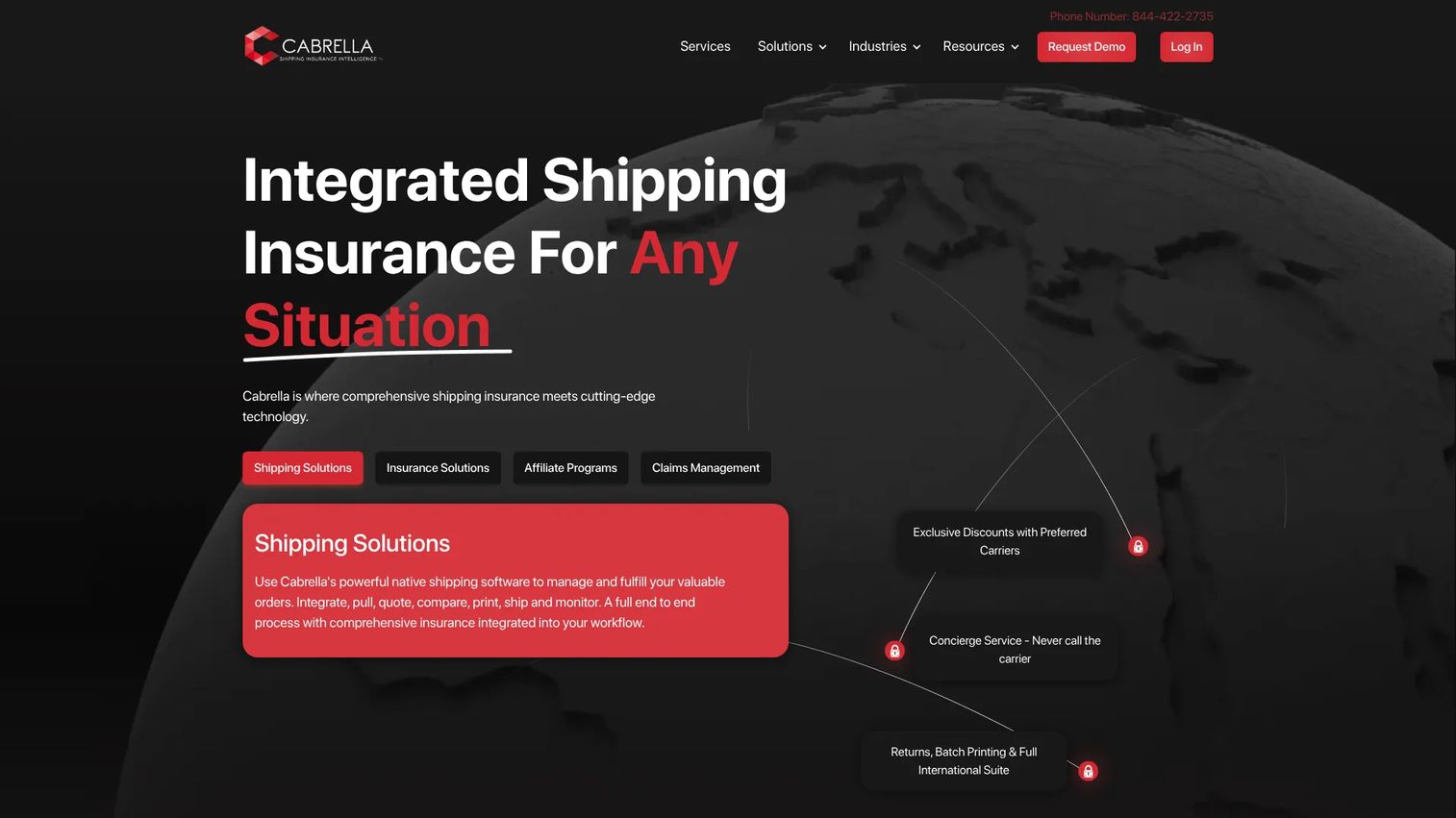
Cabrella is a shipping and insurance platform built for businesses that treat shipment risk as an operational problem, not just a coverage checkbox. It combines multi-carrier shipping, insurance for high-value parcels up to $150,000 and freight up to $1,000,000 per conveyance, proactive tracking, paperless claims management, and business intelligence reporting in one workflow.
Best for: Businesses shipping high-value, specialty, or complex goods that need integrated logistics, coverage, and claims in a single platform.
Key features
- Multi-carrier shipping and insurance integration
- Proactive package tracking and exception alerts
- Paperless digital claims filing and management
- Business intelligence and loss-ratio reporting
- International shipping including AES/ITN filing
- API integrations and white-labeled claims options
Why choose Cabrella: This is the strongest fit when shipping insurance is part of a broader operational process that includes carrier management, risk visibility, and financial reporting. A small merchant needing only a checkout widget will find it more than necessary.
Cabrella pricing: Cabrella works on a quote model. Rate the volume, declared value, coverage type, and shipping workflow scope to get pricing, which you can start by requesting a demo at their site. There is no self-serve subscription displayed.
G2 rating: 5.0/5
2. InsureShield
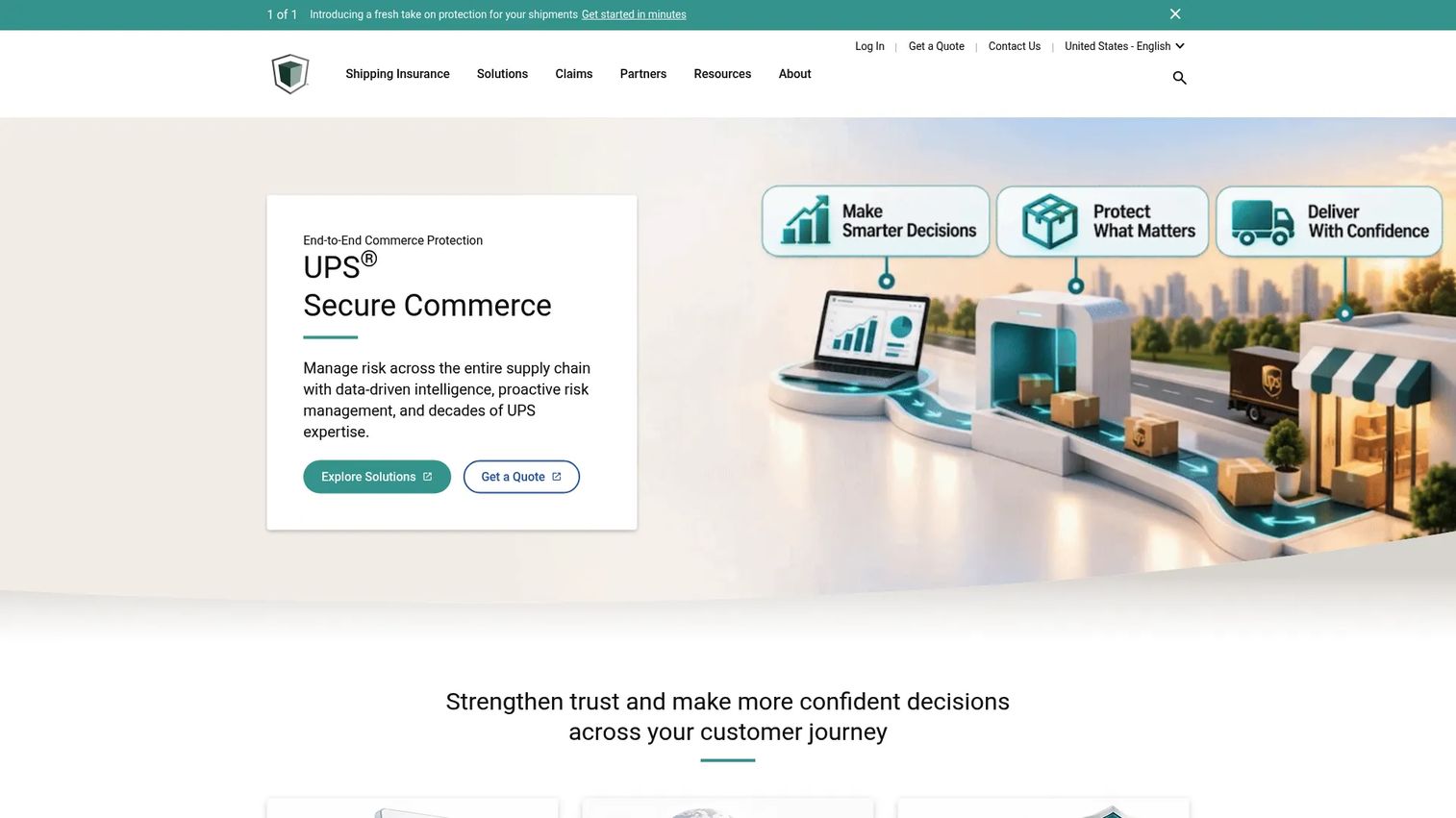
InsureShield is UPS Capital's business shipping insurance product. It covers loss, damage, theft, and porch piracy across carriers and transportation modes, with options for API-based automation, ecommerce integrations, and configurable coverage rules. The Shopify app is free to install; coverage is priced per shipment based on declared value.
Best for: Merchants and shipping teams that want insurer-backed coverage across multiple carriers without building a claims operation internally.
Key features
- Multi-carrier and multimodal coverage
- Loss, damage, theft, and porch piracy protection
- Automated insurance election via API and webhooks
- Online claims filing and status tracking
- Checkout protection and configurable coverage rules
Why choose InsureShield: The UPS Capital backing means an external insurer absorbs eligible losses rather than the merchant. Before committing, check coverage exclusions, claim evidence requirements, and which carrier service levels are included. The economics shift when coverage terms and premium costs are modeled against actual loss rates.
InsureShield pricing: Pricing is customized by business need. The Shopify app installs free and coverage is charged per shipment. Businesses outside Shopify should request a quote directly from InsureShield's site.
G2 rating: InsureShield does not have a current G2 listing
3. Narvar
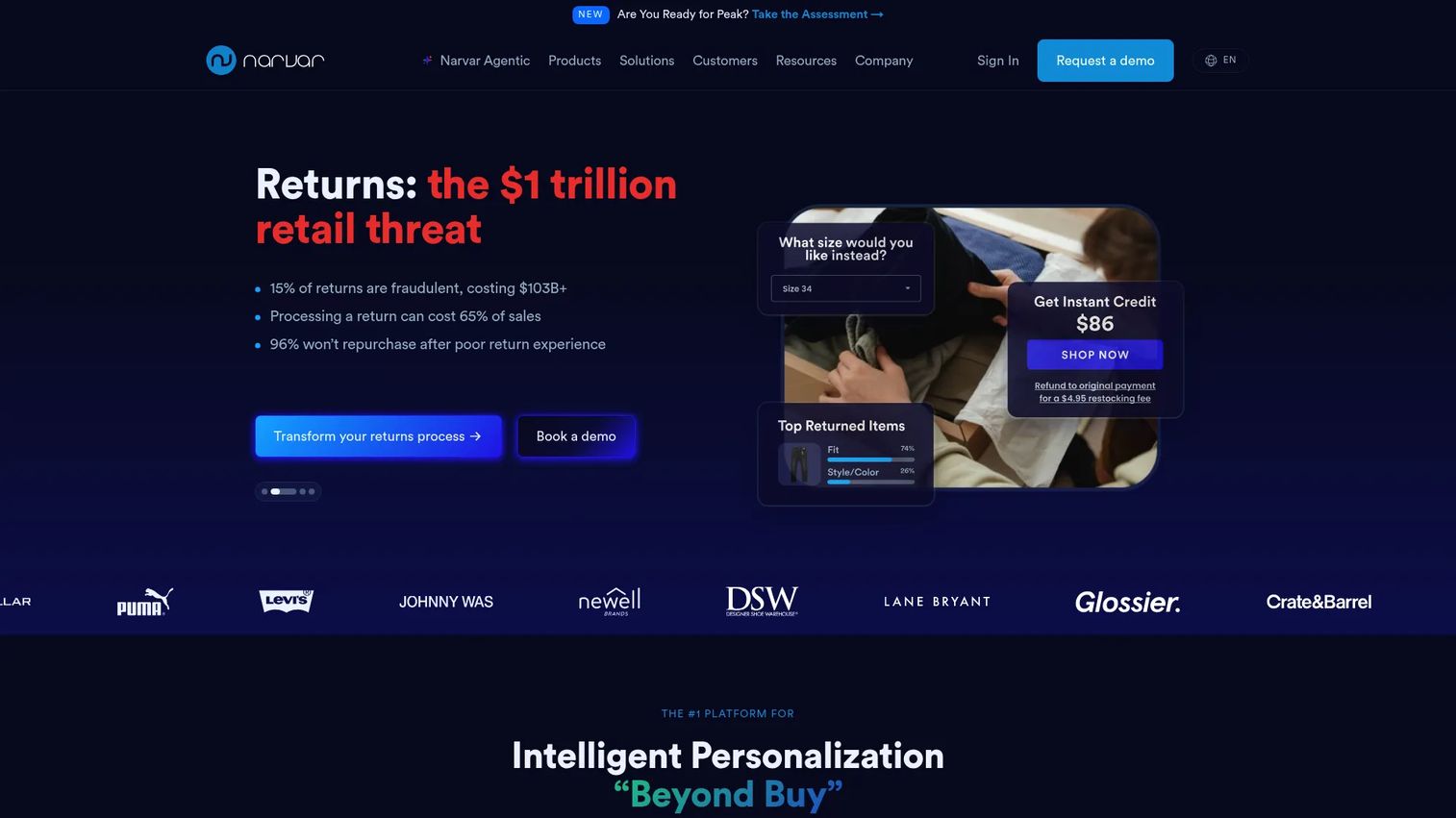
Narvar is an enterprise post-purchase platform. Protection sits alongside AI-powered delivery promises, branded tracking, returns management, and delivery-claim fraud prevention as part of a broader commerce experience. It is not a standalone insurance carrier but a post-purchase operating layer that enterprise retailers use to control the full customer journey after checkout.
Best for: Enterprise retailers that want shipment protection tied into order tracking, customer notifications, and returns, managed from one platform.
Key features
- AI-powered delivery estimates and branded tracking
- Shipping protection for loss, theft, and damage
- Returns and exchanges management
- Delivery-claim fraud prevention
- Enterprise ecommerce platform integrations
Why choose Narvar: A lost package often becomes a brand problem before it becomes a claims problem. Narvar fits teams that want to control both. If the only need is coverage administration, a focused insurer will be faster to implement and cheaper to run.
Narvar pricing: Custom pricing. Narvar directs all prospects to request a demo; contract scope and module selection drive cost. There is no self-serve pricing page.
G2 rating: 4.2/5
4. Route
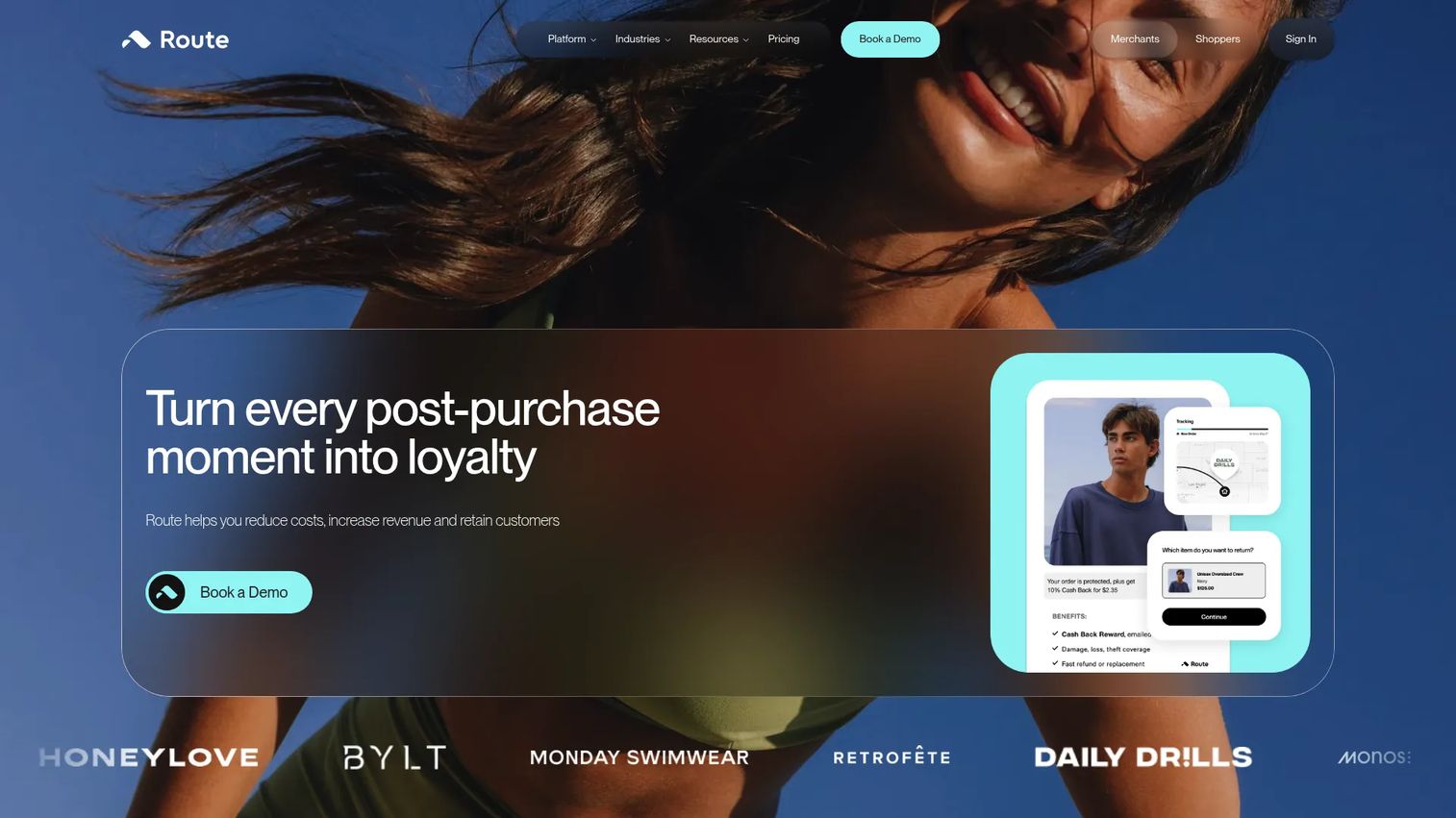
Route is an AI-powered post-purchase ecommerce platform covering package protection, order tracking, returns, and customer engagement. Its Standard plan is consumer-funded: Shoppers opt in at checkout and Route handles the protection fee, claims, and customer communication. The Custom plan adds configurable funding options, monthly billing, and API access.
Best for: Ecommerce brands that want customer-funded package protection with tracking and claims experience built in.
Key features
- Checkout package protection (consumer-funded model)
- Order and shipment tracking
- Claims and replacement workflows
- Returns and exchanges management
- AI-driven product recommendations post-purchase
Why choose Route: The consumer-funded model means Route can reduce merchant financial exposure without adding a direct line item to operating costs. The key question to answer before launch is checkout conversion impact. Run an A/B test on the protection offer before treating it as margin-neutral.
Route pricing: The Standard plan runs at $0/month with consumer-funded pricing and no hidden fees. The Custom plan carries custom pricing and adds API access, configurable funding, and custom integrations.
G2 rating: 4.5/5
5. AfterShip
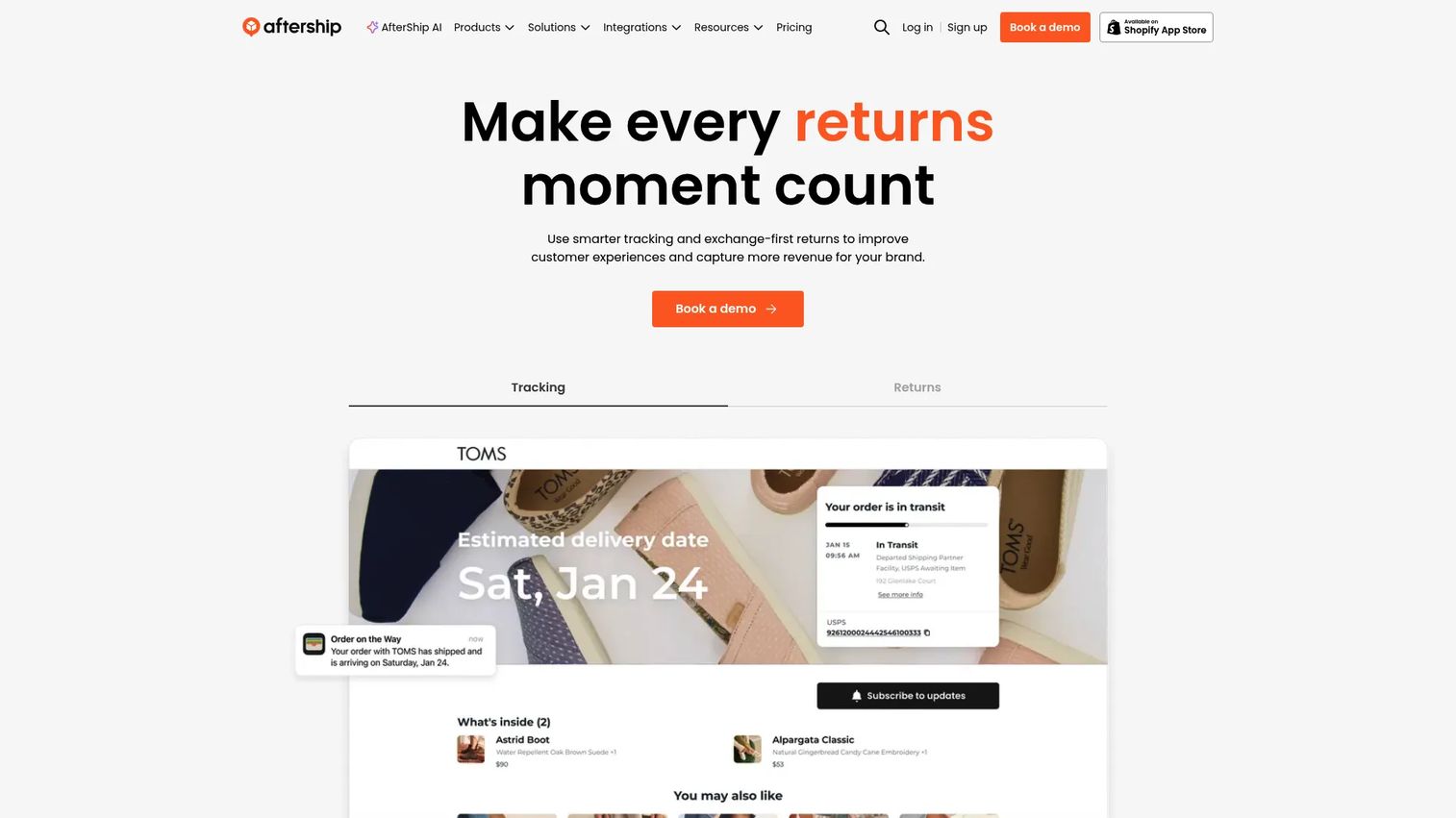
AfterShip is a post-purchase ecommerce platform covering branded tracking, proactive notifications, returns management, and package protection. It is built for merchants that want shipping visibility and protection in the same operating layer rather than stitching together separate tools.
Best for: Merchants already using, or evaluating, a connected post-purchase stack where tracking and protection should live in the same system.
Key features
- Branded tracking pages and proactive notifications
- Package protection program support
- Returns and exchanges management
- AI estimated delivery dates
- Multi-carrier tracking API
Why choose AfterShip: Stack consolidation is the primary argument here. If your team is currently running separate tools for tracking, notifications, and returns, AfterShip can reduce that footprint. Verify whether the shipping protection module covers your specific carriers and product categories before assuming coverage parity with a dedicated insurer.
AfterShip pricing: The Shipping product starts at $9/month (Essentials). Tracking is priced separately, starting at $9/month for Essentials, $99/month for Pro, and $199/month for Premium. Enterprise pricing is custom.
G2 rating: 4.7/5
6. Navidium
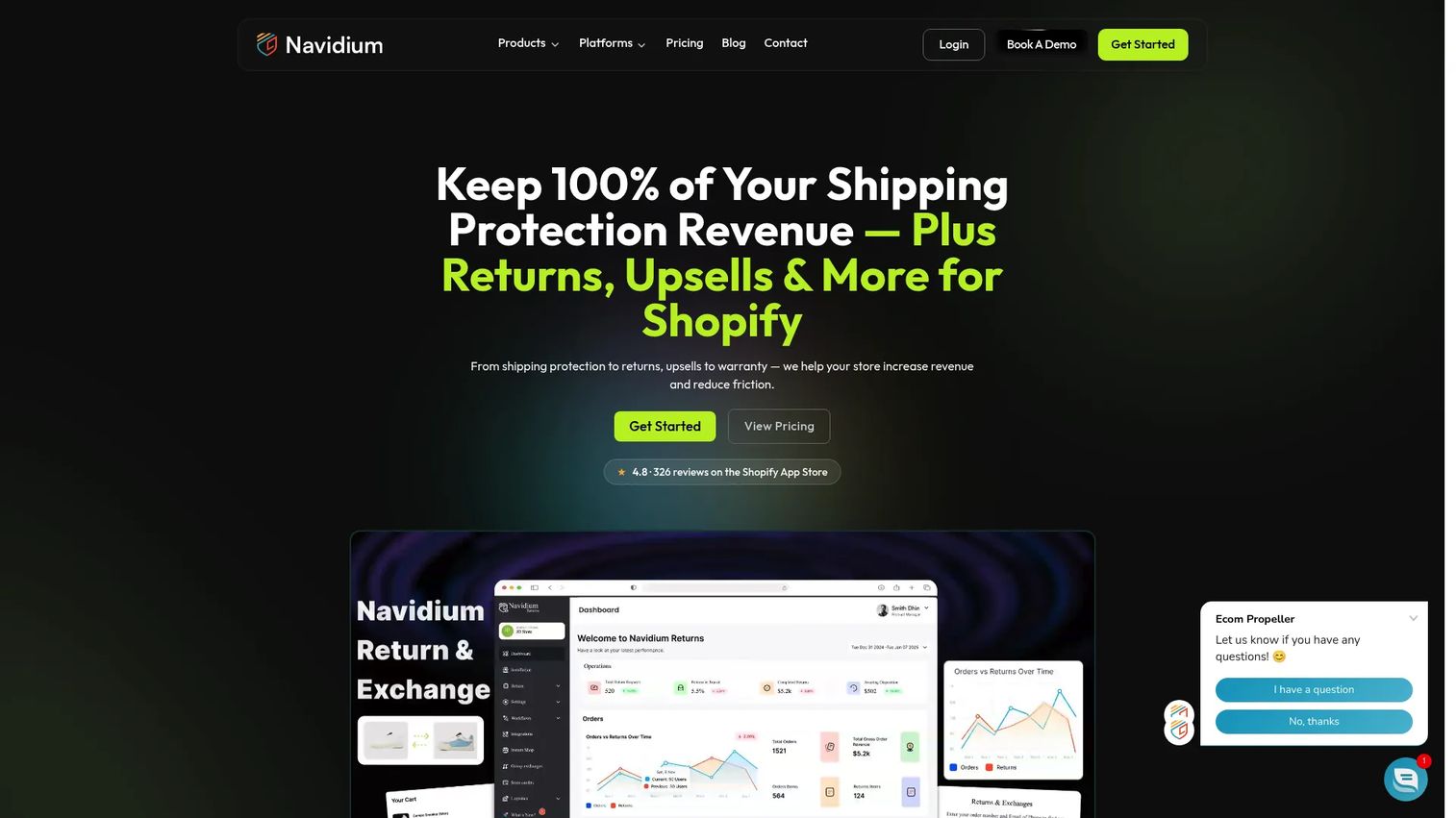
Navidium is a Shopify ecommerce suite that gives merchants full control over a self-funded shipping protection program. Merchants collect the protection fee at checkout and retain 100% of it. In exchange, they own the payout liability, claim policies, and customer resolution.
Best for: Shopify merchants with enough order volume to model the economics of self-insurance and willing to own the protection program end to end.
Key features
- Merchant-funded protection with 100% fee retention
- Customizable checkout and cart protection widgets
- Automated claims portal and issue-resolution workflow
- Branded returns and exchanges portal
- Cart and post-purchase upsell tools
Why choose Navidium: Self-insurance can expand gross margin when the fee revenue exceeds payout liability, support costs, and fraud exposure. Model those four numbers before treating this as a margin play. Navidium also bundles returns, upsells, and warranties into the same Shopify app, which can reduce app sprawl.
Navidium pricing: Free for up to 50 orders/month. Essential is $29.99/month for up to 500 orders; Growth is $49.99/month for up to 1,000 orders; Enterprise is $99.99/month for unlimited orders.
7. LateShipment.com
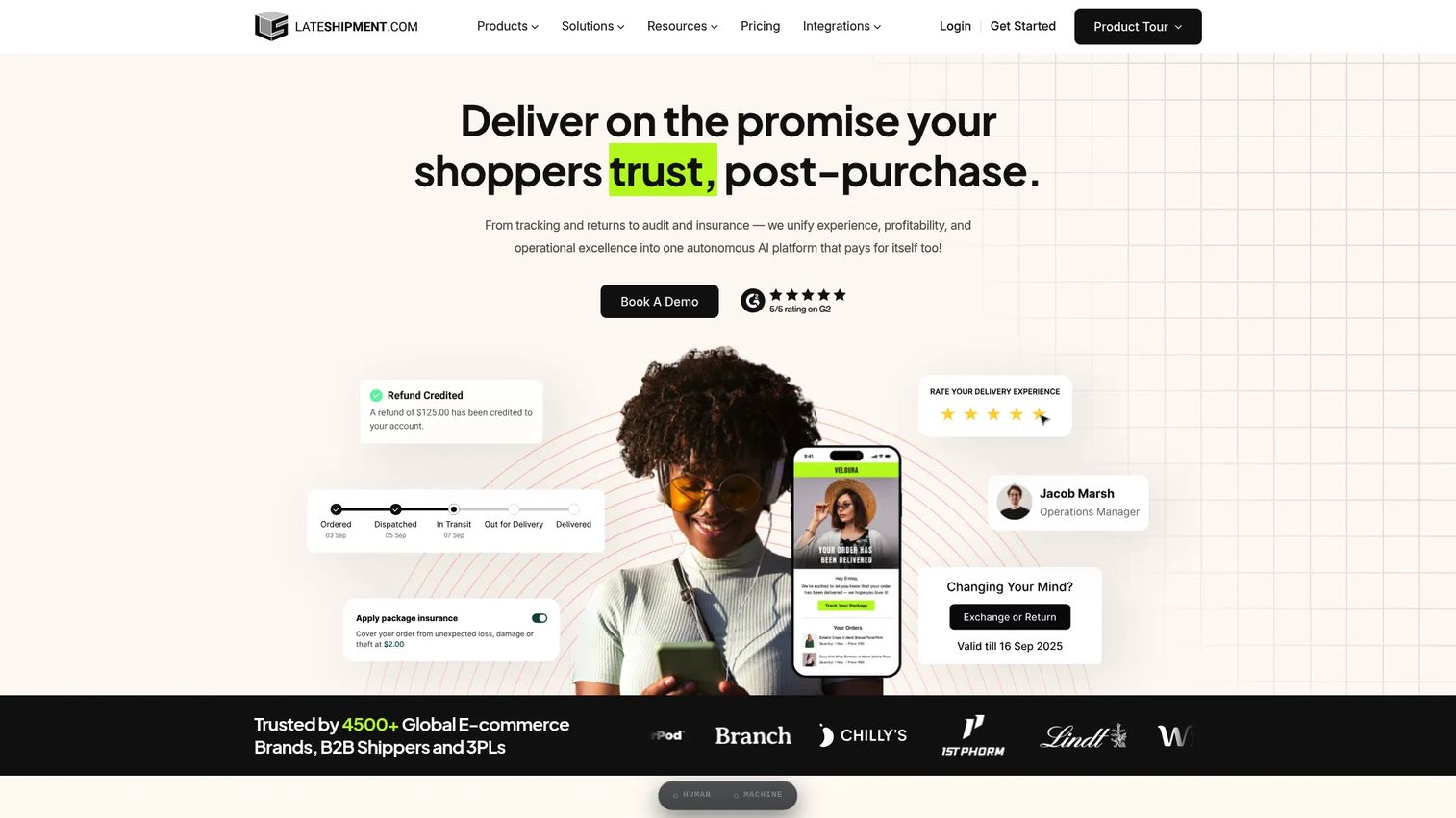
LateShipment.com is an AI-powered post-purchase platform that combines shipment tracking, returns, automated carrier invoice auditing, refund recovery, and shipment insurance up to $2,000 per US-origin parcel. The carrier audit and refund recovery module is the most operationally distinct capability: It automatically identifies service failures and recovers credits from carrier invoices without manual review.
Best for: High-volume shippers that want automated carrier invoice auditing, late-delivery refund recovery, and shipment protection in one platform.
Key features
- Multi-carrier tracking with predictive delivery estimates
- Automated carrier invoice audits and refund recovery
- Automated shipment insurance up to $2,000/parcel
- Self-service returns, exchanges, and store credits
- Shipping performance analytics and reporting
Why choose LateShipment.com: If carrier billing leakage is as significant a problem as lost-package liability, this platform addresses both. The OneAudit module operates on a 25% savings-share model, so it only costs money when it recovers money. That makes it a low-friction addition to an existing protection stack.
LateShipment.com pricing: OneTrack Starter is free forever. OneReturn charges $0 per return. OneAudit takes 25% of refunds recovered. OneProtect charges $0.65 per $100 of coverage. Fixed monthly pricing is available through direct sales.
G2 rating: 5.0/5
8. Cover Genius
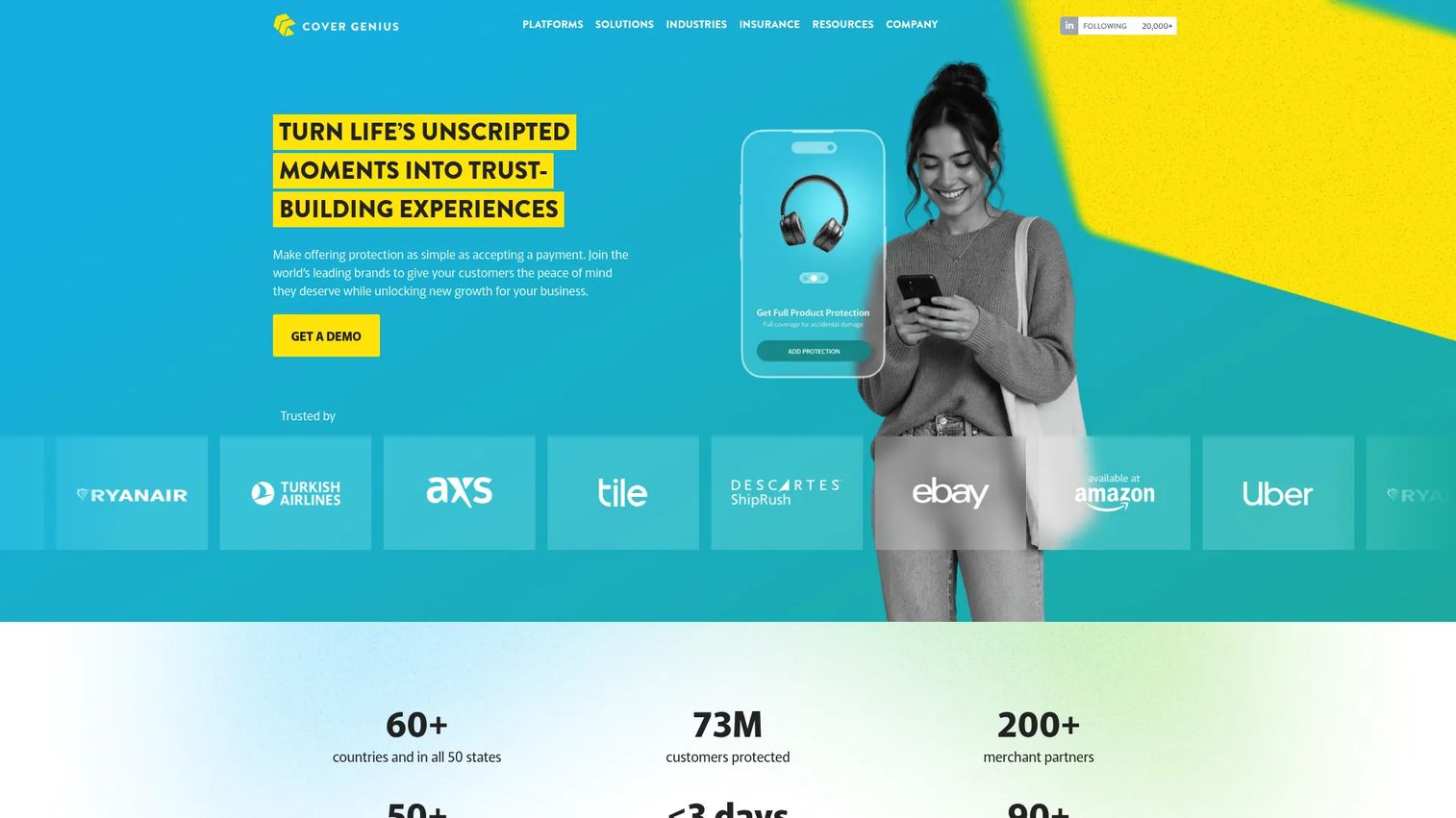
Cover Genius is a B2B2C embedded protection platform that lets digital businesses offer insurance and protection products at the point of sale through a single API integration. Coverage spans 60+ countries and all 50 U.S. states. Claims pay out instantly in 90+ currencies. The model is built for businesses treating protection as a product feature, not a bolt-on widget.
Best for: Marketplaces and digital commerce businesses building embedded protection into their customer journey at scale, across multiple geographies.
Key features
- Single integration for multiple protection products
- Dynamic pricing and product recommendations
- Instant claims payments in 90+ currencies
- White-labeled customer journeys
- Multi-market program support across 60+ countries
Why choose Cover Genius: The embedded model suits businesses where protection is architecturally part of the product rather than a third-party app added to checkout. Implementation requires engineering time and a commercial agreement. A smaller merchant needing a ready-to-install protection app will find this out of scope for their current stage.
Cover Genius pricing: Enterprise pricing is not displayed. Request a demo to begin a commercial conversation. Cost factors include geography, transaction volume, and coverage program design.
9. ShipTection Shipping Protection
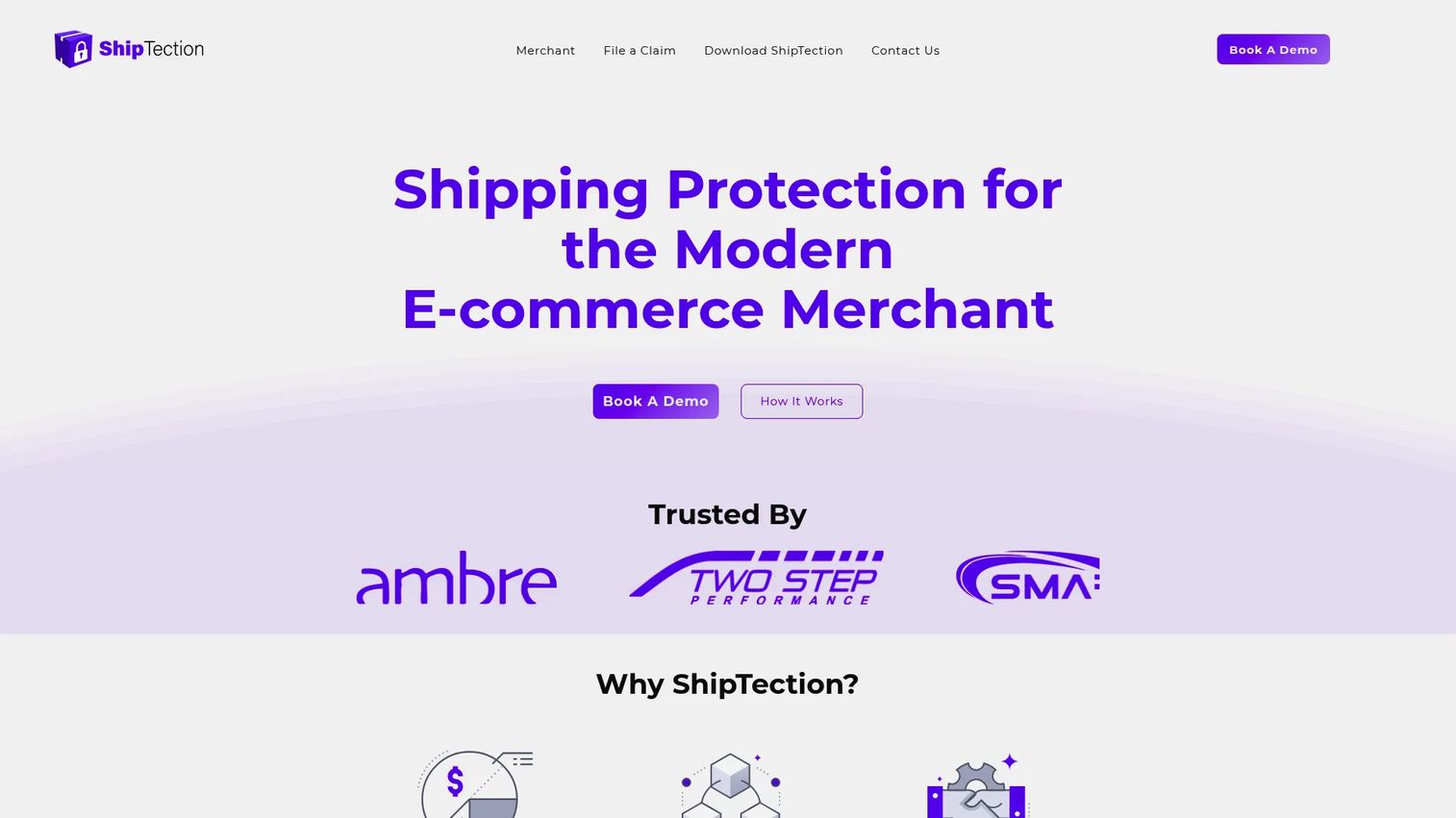
ShipTection Shipping Protection provides package protection for ecommerce merchants with a 1-click Shopify integration. It covers lost, damaged, and stolen packages with online claims that result in replacement or refund. Merchants choose between a customer-funded model (shoppers pay at checkout, merchants retain a revenue share) or a merchant-funded model (merchant absorbs the cost).
Best for: Shopify merchants that want a fast-to-install shipping protection layer with optional revenue sharing and no complex setup.
Key features
- 1-click Shopify integration
- Customer-funded or merchant-funded protection options
- Revenue sharing for customer-funded coverage
- Online claims with replacement or refund resolution
- Coverage for lost, damaged, and stolen packages
Why choose ShipTection: Installation is free and the app is low-friction to launch. Before committing, test the claims experience by submitting a claim or walking through the resolution flow. Protection tools touch customers at high-stress moments, and the quality of that experience reflects directly on the brand.
ShipTection Shipping Protection pricing: Installation is free. Per-order rates depend on the funding model selected. Contact ShipTection directly for a current rate card, as no specific fee is displayed on the site.
G2 rating: 5.0/5
10. EasyPost
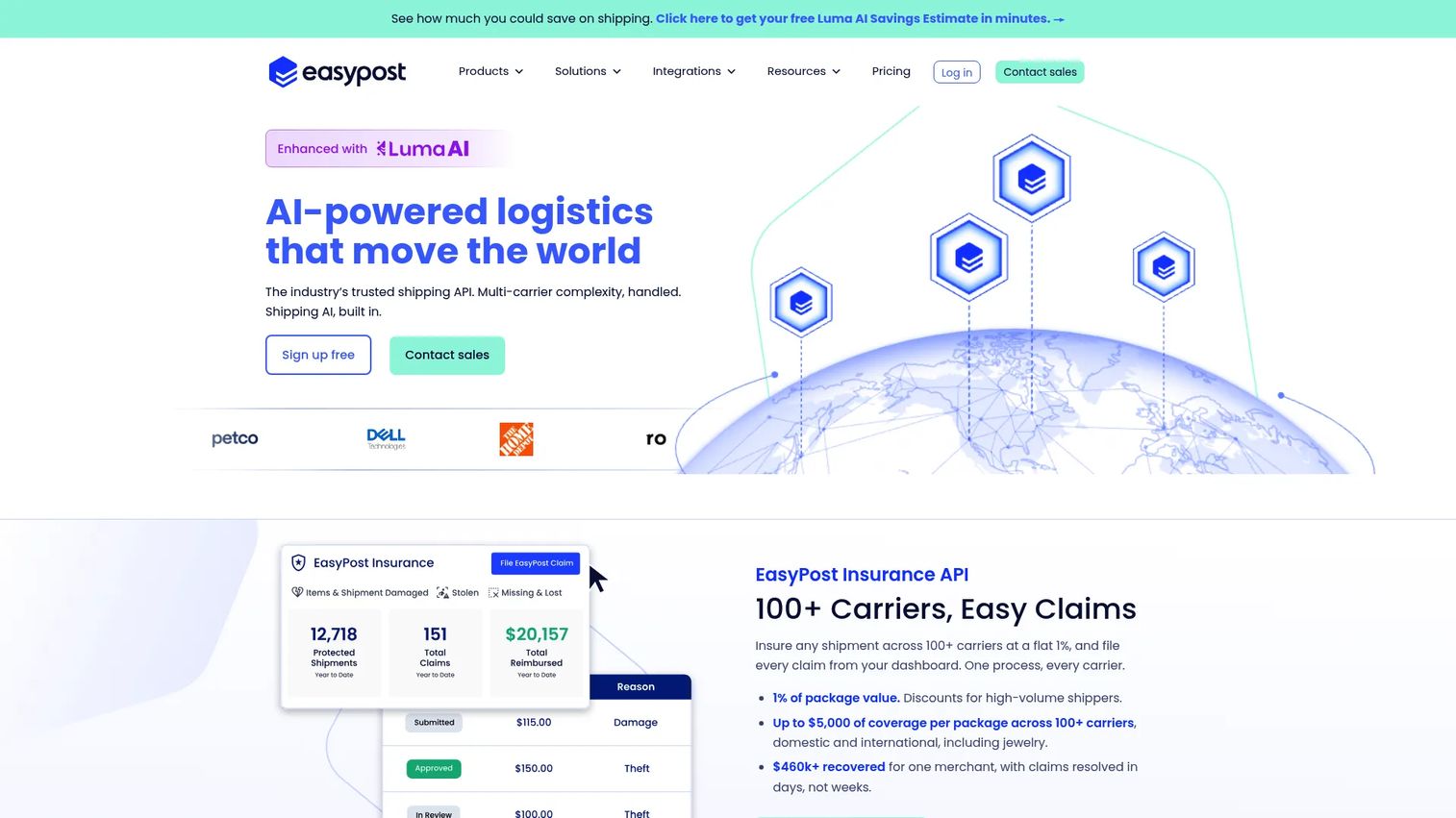
EasyPost is a multi-carrier shipping API and logistics platform. Its insurance product charges 1% of shipment value with a $1.00 minimum per shipment, making it a usage-based option for engineering teams building shipping and protection into a custom stack. The platform also covers multi-carrier label creation, address verification, tracking, rate shopping, and white-label services.
Best for: Product and engineering teams building custom shipping workflows where insurance needs to sit inside a developer-controlled API stack.
Key features
- Multi-carrier shipping API with label and rate tools
- Address verification API
- Tracking API at $0.01 to $0.03 per shipment
- Shipping insurance and claims at 1% of shipment value
- AI-powered rate shopping and logistics insights
Why choose EasyPost: API flexibility pays off when engineering owns the shipping stack and can maintain integrations, handle edge cases, and monitor for failures. If the team wants a managed protection program with minimal maintenance, a packaged ecommerce app will be cheaper to operate over time.
EasyPost pricing: Free access for up to 3,000 labels (postage not included). Bring Your Own Carrier Accounts (BYOCA) is $20/month plus per-label fees. Enterprise pricing is custom. Insurance is priced at 1% of shipment value, minimum $1.00 per shipment. Tracking is $0.01 to $0.03 per shipment.
G2 rating: 4.2/5
Considerations when choosing shipping insurance software
Choose the risk model before comparing features
The most important decision is who absorbs the financial loss when a shipment fails. Insurer-backed models move payout liability off the merchant's balance sheet. Self-funded models keep protection revenue but require the merchant to pay claims from it. Customer-funded models shift the premium to the shopper. These differences change gross margin, cash flow, and operational overhead in ways that a feature list will not reveal.
Map the full claims workflow
Evaluate what happens after a customer reports a problem: How does evidence get collected? Who approves the payout? What does the customer see? A platform that captures a claim form but leaves reimbursement, replacement approval, and customer communication to your support team has not actually automated claims work. Ask vendors to walk through a complete claim from submission to resolution before signing.
Check carrier and platform compatibility
Confirm which carriers, service levels, and shipping platforms are covered. Multi-carrier does not always mean every carrier or every service type. Verify compatibility with your ecommerce platform, OMS, and customer support stack. Coverage exclusions by geography or product category can significantly reduce effective protection rates for some catalogs.
Model the economics with finance
Build a simple forecast: Order volume, average order value, protection fee adoption rate, expected claims rate, average replacement cost, premium or fee cost, and support labor per claim. This is the only way to know whether a protection program improves gross margin or simply moves costs around. Self-funded programs require this analysis before launch. Insurer-backed programs still need it to compare premium cost against payout volatility.
Test the claims experience before committing
Submit a test claim or walk through the resolution process end to end before signing a contract. Evaluate the email cadence, required evidence, service-level expectations, and escalation path. How the platform handles a frustrated customer is a brand decision, and it is one your team will be accountable for even when the tool is doing the work.
Conclusion
No single winner fits every operating model. The decision comes down to three questions: Who carries the financial risk when a shipment fails, who does the operational work when a claim comes in, and whether the economics improve as volume grows or create another support burden.
Cabrella fits complex, high-value shipping operations that need coverage and logistics in one platform. InsureShield is the cleaner fit for insurer-backed multi-carrier protection. Narvar belongs in an enterprise post-purchase stack where protection is one layer in a broader customer experience. Route and Navidium separate on a single variable: Route passes the protection fee to the customer; Navidium lets the merchant keep it and own the risk. LateShipment.com adds carrier refund recovery on top of protection, which makes it worth evaluating alongside any insurer-backed program. Cover Genius suits platforms building embedded protection as a product feature. ShipTection offers a fast Shopify-native launch. EasyPost fits engineering teams building the shipping stack from scratch.
Forward this to your Head of Operations or VP of Finance with the section on risk models marked. The right tool for your business starts with that decision.
Start your journey with Guideflow today!
FAQs
Shipping insurance software helps businesses manage shipment coverage, claims intake, tracking, customer communication, and financial recovery for parcels or freight that are lost, damaged, or stolen. The category includes insurer-backed protection programs, merchant self-insurance tools, customer-funded checkout protection, and carrier claim recovery platforms. The exact scope and capabilities change by provider.
Carrier insurance is typically purchased at the time of shipping through the carrier itself, and claims are filed directly with that carrier. Shipping insurance software adds a broader layer: Multi-carrier support, automated claims workflows, checkout protection options, risk reporting, and integrations with ecommerce and support systems. The two can coexist, and carrier recovery tools like LateShipment.com are designed specifically to complement existing coverage rather than replace it.
This depends on checkout conversion impact, average order value, loss rate, and how the tool handles payout liability. A consumer-funded model reduces merchant financial exposure but only if adoption is high enough to generate meaningful fee revenue. Test the protection offer with and without the fee before assuming the model is conversion-neutral. Customer satisfaction with the claims experience matters as much as the economics.
Many platforms streamline claims intake, evidence collection, status updates, and customer notifications. The degree of automation varies. Claims approval, reimbursement timing, and payout amounts are still governed by policy terms, evidence requirements, and coverage eligibility. A platform that automates intake but requires manual approval at every step still leaves significant work with your team. Ask vendors to show the full claims workflow before evaluating automation depth.
At minimum, confirm support for your ecommerce platform, shipping-label tool, and customer support system. Depending on the business, relevant integrations also include carrier APIs, OMS, WMS, finance reporting, and marketing automation. The most common integration gaps are on the finance side: Many platforms capture claims data but do not export reimbursement or loss data in a format that connects cleanly to accounting or board reporting.
Self-funded protection generates margin when protection fee revenue exceeds claim payouts, support labor, and fraud exposure. It requires the merchant to act as the insurer: Setting policy terms, handling disputes, and absorbing payout volatility during high-loss periods. At low order volumes, the fee pool is too small to absorb unusual loss events. At high volumes with well-modeled loss rates, it can outperform premium-based coverage. Run the unit economics before treating self-insurance as a margin improvement.
Yes. Most platforms on this list handle claims for lost, damaged, and stolen packages, including porch piracy where supported. Coverage eligibility depends on policy terms, carrier scan history, evidence submitted, product category, and geography. Check coverage exclusions before assuming all shipments qualify. High-value or restricted product categories often have separate claim requirements or coverage limits.
Pricing models vary across the category. Insurer-backed programs charge a premium based on declared shipment value. Self-funded and consumer-funded tools may charge a monthly platform fee, per-order fee, or operate on revenue sharing. Carrier recovery tools often use a savings-share model, taking a percentage of refunds recovered. API-based options like EasyPost charge per shipment at a percentage of value. To compare total cost, model platform fees, claims operations labor, and expected payout or premium cost together rather than evaluating the base price in isolation.