

You sent 200 cold emails this week. You made 90 calls. Your CRM has 40 half-finished records, and three of your prospects bounced because the data was wrong.
That is the outbound reality for most SDRs. The problem isn't effort. It's friction, spread across seven browser tabs.
Here's the part that gets missed: activity volume is not the constraint. Your time is. Every minute spent fixing bad data, copying contacts, or chasing a reply is a minute not spent on the next qualified meeting. And the market keeps raising the bar. The global sales software market hit $31.26B in 2025 and is projected to reach $71.83B by 2031 at a 14.86% CAGR, according to Mordor Intelligence (2025). More tools, more automation, more pressure to hit numbers with less waste.
So the question isn't whether you need outbound sales tools. It's which ones cut the friction without adding another tab. This guide compares the eight tools that actually move the needle on pipeline creation, reply rates, and deliverability.
What's inside
This guide is for SDRs, outbound managers, and RevOps partners who need prospecting, sequencing, lead enrichment, and analytics in one working rhythm, not a pile of disconnected apps.
We picked tools based on four criteria:
- Speed: fewer clicks between research and a booked meeting
- Data quality: accurate contacts and firmographics so you stop wasting touches
- Workflow fit: works inside your CRM and multichannel outreach, not around it
- Deliverability: inbox-safety features that protect reply rates at volume
The list mixes all-in-one platforms with focused point solutions, so you can match the tool to your team's actual motion.
TL;DR
- Best overall all-in-one outbound sales software: Apollo. Prospecting, enrichment, sequencing, and a dialer in one workflow.
- Best for enterprise data and intent signals: ZoomInfo.
- Best sales engagement platform for structured execution: Salesloft.
- Best for deep sequencing and enterprise workflow automation: Outreach.
- Best CRM-native outbound: HubSpot Sales Hub.
- Best for LinkedIn-first prospecting: LinkedIn Sales Navigator.
- Best for email reply rates and fast launch: Reply.io.
- Best for compliant data and European coverage: Cognism.
Most SDR teams start with Apollo for consolidation, then layer in specialist tools where signal quality or regional coverage demands it.
What is outbound sales software?
Outbound sales software is a category of tools that help sales teams find target accounts, enrich contact data, run multichannel outreach, and track engagement so reps can book more qualified meetings with less manual work.
The core workflow is consistent across tools: identify target accounts, enrich the contacts, launch sequences across email, phone, and LinkedIn, track engagement, then push the next step into your CRM. Done well, it replaces hours of copy-paste research with a repeatable rhythm.
Adoption is already mainstream. Cirrus Insight reports that 75% of organizations use sales automation in some form, with 61% of B2B firms having adopted it by 2025 (Cirrus Insight, 2025). The category now spans several overlapping capabilities:
- Prospecting and list building: firmographic, technographic, and intent filters to build target lists
- Lead enrichment and intent: verified emails, phone numbers, and buying signals
- Sequencing and multichannel outreach: email, phone, LinkedIn, and SMS from one cadence
- Dialer and phone workflows: click-to-call, local presence, and call logging
- Analytics and deliverability: open, reply, and connect tracking plus inbox-safety controls
More than 72% of B2B organizations had implemented a sales engagement platform by 2025, per Industry Research Biz (2025). The direction is clear: outbound is consolidating into fewer, deeper tools.
When to use outbound sales software
When you need to build pipeline without adding headcount
Hiring more SDRs is slow and expensive. Software is the faster lever. A good prospecting software plus a sales sequencer replaces the manual research, list building, and follow-up that eats most of an SDR's day. One rep with a tuned stack can cover the ground of two without one.
When data quality is breaking your outreach
Bad data compounds. A wrong email bounces and hurts your domain reputation. A wrong title kills your personalization. A stale phone number wastes a dial. When bounce rates climb and reply rates fall, the fix usually isn't better copy, it's better data. Lead enrichment with verified contacts protects both your deliverability and your time.
When your team needs multichannel consistency
Email alone rarely breaks through anymore. Phone, LinkedIn, and email should work from one operating rhythm so every touch builds on the last. When 64% of enterprises have centralized multichannel outbound into a single platform, the reason is simple: scattered channels produce scattered results. One cadence keeps the sequence tight and the reporting honest.
Outbound sales software comparison
We ranked these tools by relevance to the core outbound motion: prospecting, enrichment, sequencing, and analytics in one workflow. Apollo leads because it consolidates the most of that motion into a single tool. The rest are sorted by how directly they serve SDR pipeline creation. Pricing and G2 ratings below reflect verified, current values where public; where a vendor keeps pricing quote-based, we say so plainly.
| # | Product | Best for | Key differentiator | Pricing | G2 rating |
|---|---|---|---|---|---|
| 1 | Apollo | All-in-one prospecting, enrichment, and outreach | Database, sequencing, and dialer in one tool | Free tier; paid from $49/user/mo | 4.7/5 |
| 2 | ZoomInfo | Enterprise data and intent signals | Deep B2B intelligence and buyer intent | Custom pricing | - |
| 3 | Salesloft | Structured sales engagement and coaching | Cadence and workflow orchestration | Custom pricing | 4.5/5 |
| 4 | Outreach | Deep sequencing and enterprise automation | Sequencing depth and deal execution | Custom pricing | 4.3/5 |
| 5 | HubSpot Sales Hub | CRM-native outbound | Sequencing inside the CRM | Free tier; paid from $10/mo/seat | 4.4/5 |
| 6 | LinkedIn Sales Navigator | LinkedIn-first prospecting | 50+ search filters and account insights | From $119.99/mo/license | 4.4/5 |
| 7 | Reply.io | Email reply rates and fast launch | Multichannel sequences and AI SDR | Free trial; paid from $59/mo | 4.6/5 |
| 8 | Cognism | Compliant data and European coverage | Phone-verified, GDPR-friendly data | Custom pricing | 4.5/5 |
Best 8 outbound sales software tools for 2026
1. Apollo

Apollo is the closest thing to a full outbound stack in one tool. It combines a large B2B contact and company database with sequencing, enrichment, and a built-in dialer, so an SDR can go from finding an account to sending the first touch without leaving the app. For teams tired of paying for separate data, sequencing, and dialer subscriptions, this is the consolidation play.
The appeal for SDRs is speed. You build a list with firmographic and technographic filters, enrich the contacts, drop them into a sequence, and dial, all in the same tab. That is fewer clicks and less context switching across a workday.
Best for: B2B revenue teams that want prospecting, outreach, and enrichment in one tool.
Key strengths
- B2B contact and company database with rich filters
- Sales engagement and sequencing across channels
- Data enrichment and analytics in one workflow
- Built-in dialer for phone-heavy outbound
Why choose Apollo: If tool sprawl is your real problem, Apollo replaces three or four subscriptions with one. It fits SDR teams that value speed and a single source of truth over best-of-breed depth in every category.
Apollo pricing: Free tier available. Paid plans start at $49/user/month billed annually, with Professional and Organization tiers for larger teams.
2. ZoomInfo

ZoomInfo is the choice when data accuracy and intent signals matter more than anything else. It is a B2B go-to-market intelligence platform built for sales, marketing, and operations teams that need deep company data, buyer intent, and CRM enrichment at scale. When your outbound depends on reaching the right account at the right moment, ZoomInfo is built to surface that timing.
For SDRs, the value is in signal. Instead of spraying a cold list, you can prioritize accounts showing active buying intent and route them faster. That means fewer wasted touches and more meetings that actually convert.
Best for: Teams that need enterprise B2B prospecting and data enrichment with strong intent signals.
Key strengths
- Deep B2B contact and company data
- Buyer intent and engagement signals
- CRM data enrichment and workflow automation
Why choose ZoomInfo: Signal-heavy orgs pick ZoomInfo when the cost of reaching the wrong account is high. It fits enterprise and mid-market teams that treat data quality as revenue quality.
ZoomInfo pricing: ZoomInfo uses custom pricing tied to your data needs, seat count, and modules. Pricing is quote-based rather than published, so you request a quote through their sales team.
3. Salesloft
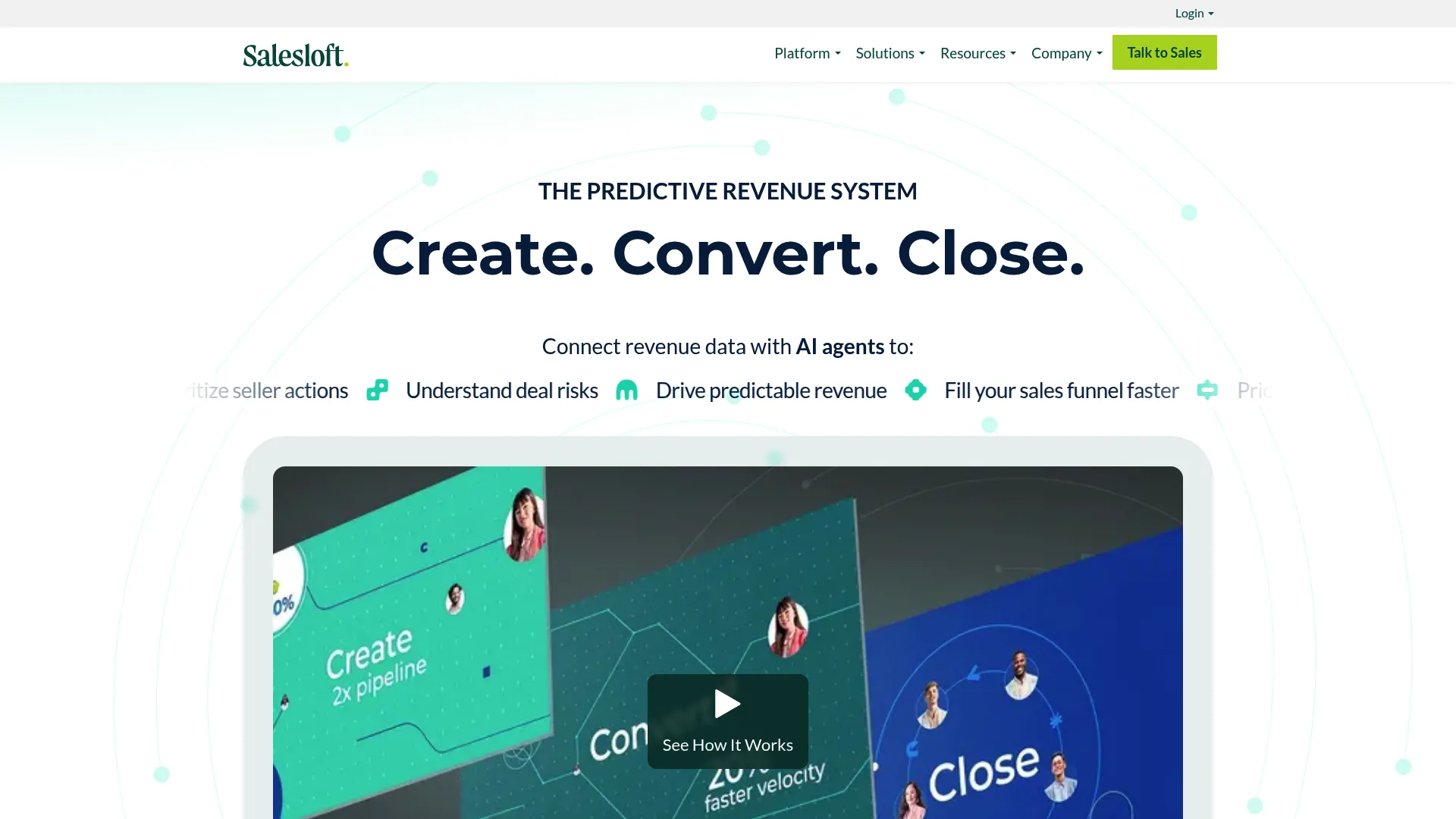
Salesloft is a revenue orchestration platform built for teams that want structured, disciplined sales engagement. Its Cadence feature governs the rhythm of outreach, Rhythm prioritizes what each rep should do next, and Deals ties activity to forecasting. This is the tool for teams that want outbound to run like a system, not a scramble.
For SDRs, the draw is execution discipline. Everyone works from the same cadence, managers coach against consistent data, and new reps ramp against a repeatable process. That standardization is what makes meeting quality predictable.
Best for: B2B sales teams that need outbound engagement plus revenue workflow automation.
Key strengths
- Cadence-based sales engagement
- Rhythm workflow prioritization for reps
- Deals and forecasting tied to activity
Why choose Salesloft: Choose Salesloft when your team is scaling and needs consistency across reps. It fits managers who care about coaching and repeatable process over raw sending volume.
Salesloft pricing: Salesloft uses quote-based pricing that is not publicly displayed. You contact their sales team for a plan tailored to your team size and needs.
4. Outreach

Outreach is a sales engagement platform built for depth. It combines sequencing, deal management, and forecasting into one platform aimed at revenue teams running complex, multi-touch outbound. Where lighter tools stop at sending emails, Outreach goes deep on workflow automation and deal execution.
For SDRs, the strength is sequencing depth. You can build sophisticated multi-step, multichannel sequences with granular rules, then hand off warm opportunities cleanly to AEs inside the same system. That tight handoff is where pipeline stops leaking.
Best for: Revenue teams that need sales engagement, forecasting, and deal management in one platform.
Key strengths
- Sales engagement with deep sequencing
- Deal management across the funnel
- Sales forecasting tied to activity
Why choose Outreach: Pick Outreach when your outbound motion is complex and your team is large enough to use workflow automation seriously. It rewards teams that invest in structure.
Outreach pricing: Outreach uses per-user pricing with no public dollar figure listed; the pricing page directs you to request a quote or demo. There are no separate platform fees.
5. HubSpot Sales Hub
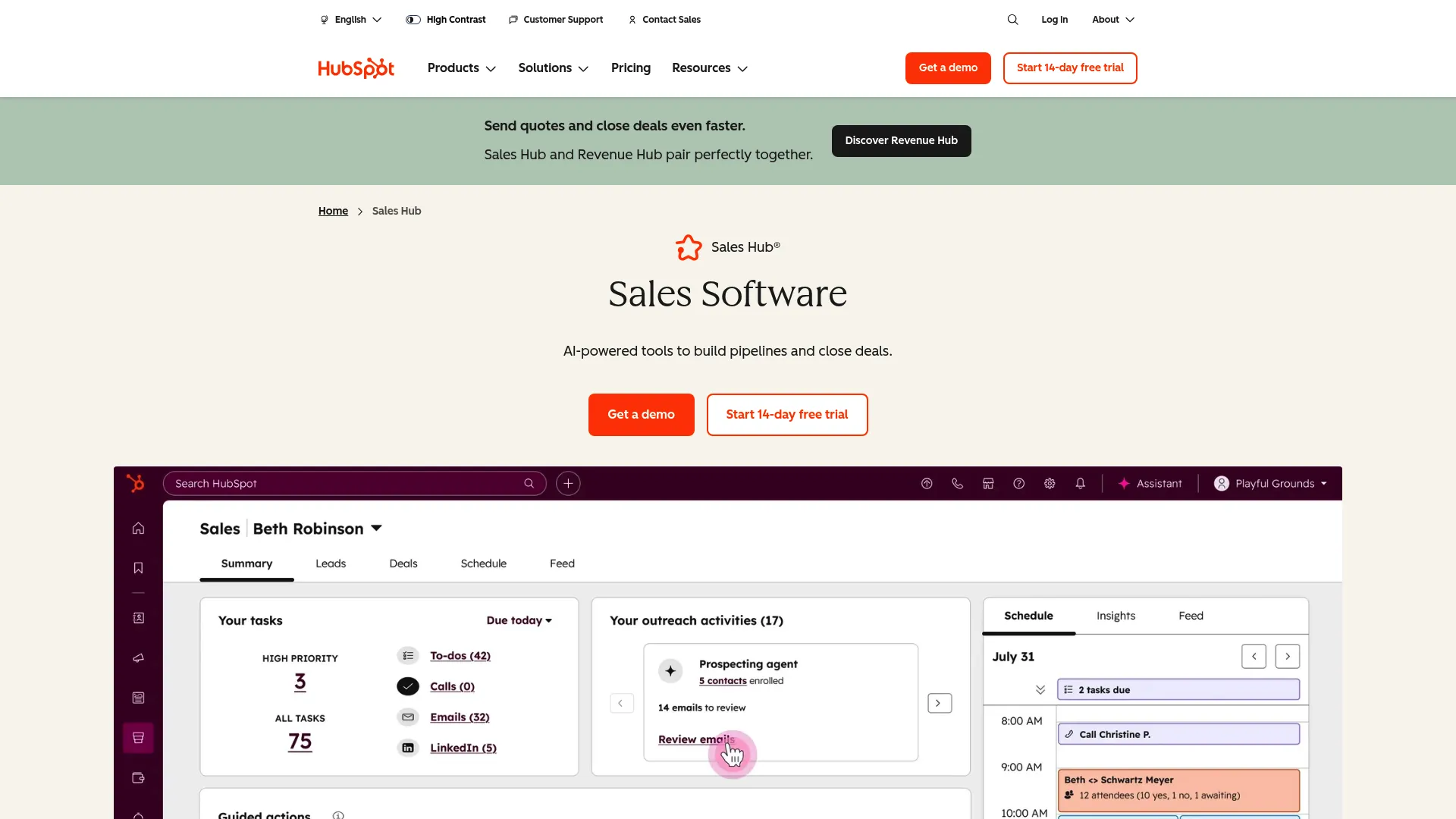
HubSpot Sales Hub is outbound built directly on top of the CRM. Sequencing, email tracking, meeting scheduling, and forecasting all live where your contact records already are, which removes the sync headaches that come from bolting a sequencer onto a separate system. If your team already runs on HubSpot, this is the natural next step.
For SDRs, the win is simplicity and CRM integration. There is no second tool to reconcile, no data drift between your sequencer and your pipeline. Everything updates in one place, so your reporting stays clean.
Best for: Teams that want an easy-to-use sales CRM with automation and forecasting built in.
Key strengths
- Deal and pipeline management in the CRM
- Email tracking and sequencing automation
- AI-powered forecasting and conversation intelligence
Why choose HubSpot Sales Hub: Choose it when CRM-native outbound and fast adoption matter more than best-of-breed sequencing depth. It fits teams already invested in HubSpot who want one system.
HubSpot Sales Hub pricing: Free tier available. Starter starts at $10/month per seat, Professional at $90/month per seat, and Enterprise at $150/month per seat, with annual-billing discounts and onboarding fees on higher tiers.
6. LinkedIn Sales Navigator
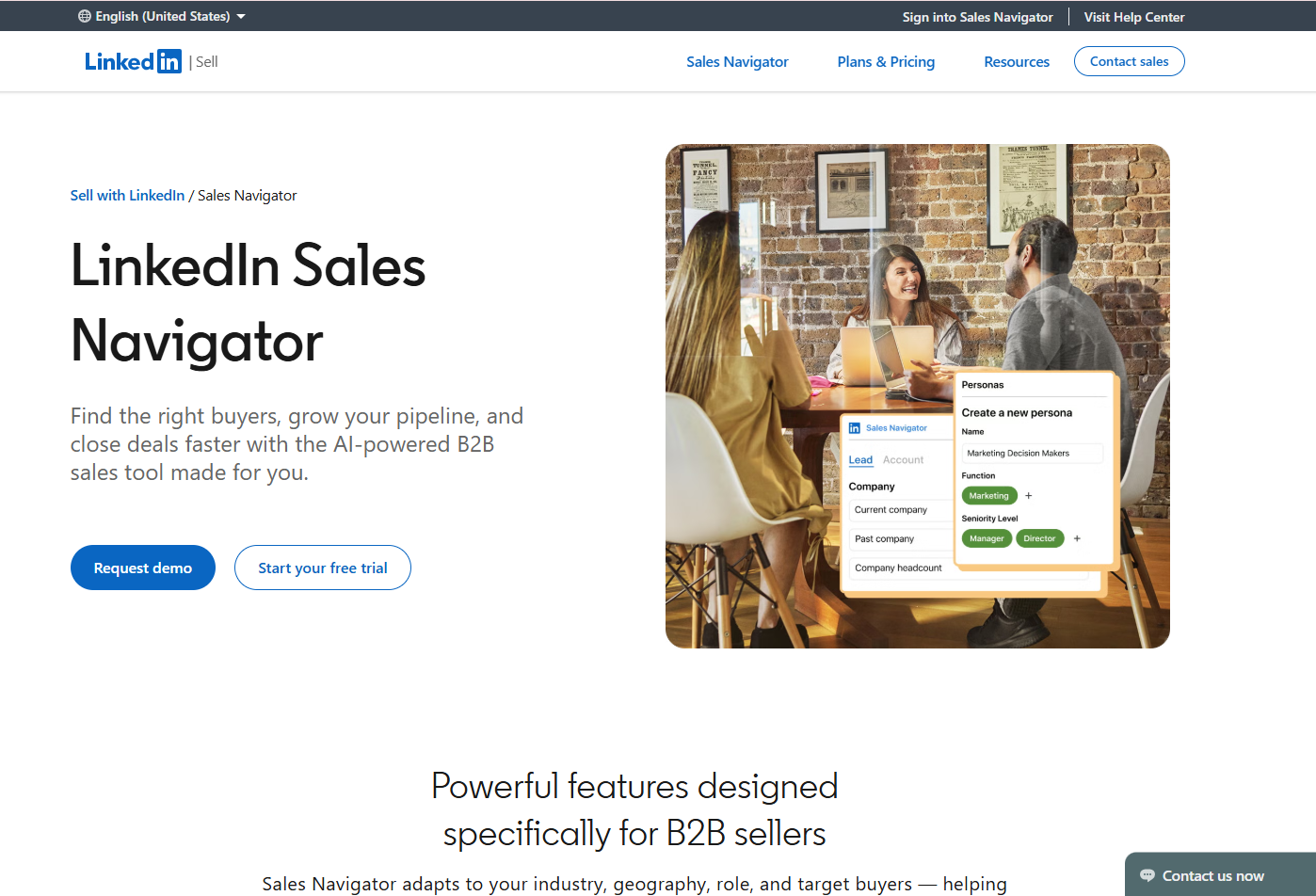
LinkedIn Sales Navigator is the prospecting layer for LinkedIn outreach. With 50+ advanced search filters, lead and account alerts, and account insights, it helps you find and research the right buyers before you reach out. It is not a full sequencer, and it does not try to be. It sits upstream, feeding your outbound with better-qualified prospects.
For SDRs, the value is research and timing. You see when a prospect changes roles, when an account grows, or when a lead engages, then act on that signal. That context makes your first touch land warmer.
Best for: B2B sellers and teams that need prospecting, account insights, and CRM-connected workflows.
Key strengths
- 50+ advanced search filters
- Lead and Account IQ insights
- CRM integrations and embedded profiles
Why choose LinkedIn Sales Navigator: Use it as a prospecting and research layer alongside a sequencer, not as a replacement for one. It fits teams whose buyers live on LinkedIn.
LinkedIn Sales Navigator pricing: Core starts at US$119.99/month per license, Advanced at US$159.99/month per license, and Advanced Plus is custom-priced for teams needing CRM integration. There is no free tier, though a free trial is available.
7. Reply.io
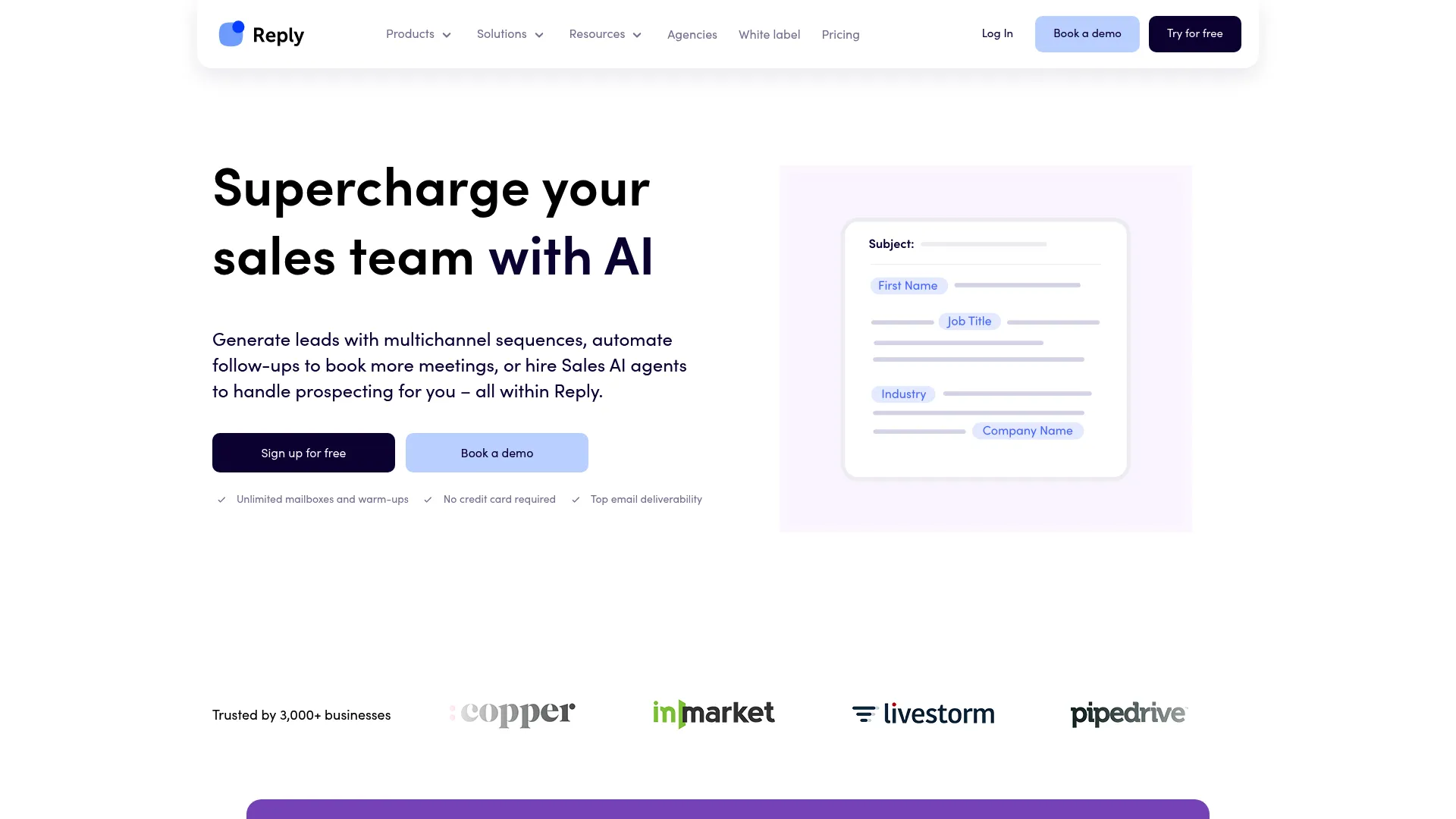
Reply.io is an AI-powered sales engagement platform built for fast, multichannel outreach. It runs email, LinkedIn, SMS, WhatsApp, and calls from one place, with deliverability tools and AI-assisted sequencing to keep reply rates up. SMB and mid-market SDR teams like it for speed-to-launch: you can have a sequence running the same day.
For SDRs, the appeal is email outreach performance without heavy setup. The AI SDR and reply-handling features take manual work off your plate, while built-in deliverability protections guard your domain reputation as you scale volume.
Best for: Sales teams and agencies running multichannel outbound outreach.
Key strengths
- Email, LinkedIn, SMS, WhatsApp, and calls in one flow
- AI SDR for sequence building and reply handling
- Deliverability tools, analytics, and CRM integrations
Why choose Reply.io: Choose Reply.io when you want to optimize email reply rates and launch fast without a long implementation. It fits leaner teams that value speed and multichannel depth.
Reply.io pricing: A free trial is available. The Email Volume plan starts from $59/month, Multichannel from $99/month, AI SDR from $500/month, and Agency from $166/month.
8. Cognism

Cognism is a B2B sales intelligence platform known for compliant, phone-verified data with strong European coverage. If your outbound crosses into the EU and UK, GDPR compliance and accurate mobile numbers are not optional, and Cognism is built around both. Its data, not just its software, is the product.
For SDRs running international outbound, the value is connect rates and compliance. Phone-verified mobile numbers mean more live conversations, and GDPR-friendly sourcing keeps your outreach clean in stricter regions.
Best for: Teams needing compliant B2B contact data and prospecting, especially across Europe.
Key strengths
- Firmographic and technographic prospecting filters
- AI company research, persona builder, and AI search
- Mobile verification, intent data, CRM enrichment, and API delivery
Why choose Cognism: Choose Cognism when data quality and regional compliance drive your outbound results. It fits teams selling into Europe or running global campaigns where clean, verified data matters most.
Cognism pricing: Cognism uses custom pricing tailored to your needs. The platform offers Standard and Pro plans for prospecting, plus CRM Enrichment and Data-as-a-Service options; you contact sales for a quote.
Considerations before you buy
Evaluate data accuracy first
Bad data compounds across every other layer of your stack. A wrong email hurts deliverability, a wrong title breaks personalization, and a stale number wastes a dial. Before you weigh features, test the data: run sample lookups against accounts you know and check the bounce rate.
Check CRM fit
Your outbound tool has to work inside the CRM you already run, whether that is Salesforce or HubSpot. Weak CRM integration creates data drift, duplicate records, and reporting you can't trust. Confirm the sync is two-way and covers the fields your team actually uses.
Compare deliverability protections
At volume, deliverability is the difference between a full pipeline and a burned domain. Look for inbox rotation, warm-up, send throttling, and bounce protection. A tool that sends fast but torches your reputation is a net loss.
Look at multichannel depth
Email volume alone is not multichannel outreach. Check whether phone, LinkedIn, and SMS run from the same cadence with unified reporting. Scattered channels produce scattered results and messy sales analytics.
Confirm it consolidates rather than adds a tab
Tool sprawl is the SDR's tax. The best sales stack consolidation move is a tool that replaces two or three subscriptions, not one that becomes a fourth tab. Confirm the analytics tie activity directly to meetings booked and pipeline influenced.
Conclusion
There is no single best outbound sales software, only the best fit for your motion.
For most SDR teams, Apollo is the strongest starting point because it consolidates prospecting, enrichment, sequencing, and dialing into one workflow. Signal-heavy orgs that live and die by data accuracy should look hard at ZoomInfo, while Cognism wins when European coverage and compliance matter. For teams that want structured, disciplined execution, Salesloft and Outreach are the mature engagement platforms. If you already run on HubSpot, Sales Hub keeps outbound CRM-native. Reply.io fits leaner teams optimizing email reply rates, and LinkedIn Sales Navigator is the research layer that feeds all of them.
Your next step: shortlist the two tools that match your motion, run a trial or demo on each with real accounts, and measure bounce rate, reply rate, and meetings booked. The data will tell you which one earns a place in your stack.
Want to make your first outbound touch do the selling for you? Interactive demos let prospects experience your product at their own pace through a guided path, whether embedded in a cold email, a landing page, or a sales follow-up. Start your journey with Guideflow today!
FAQs
Outbound sales software is a set of tools that help reps find target accounts, enrich contact data, run multichannel outreach, and track engagement to book more qualified meetings. It typically bundles prospecting, sequencing, dialing, and analytics so SDRs spend less time on manual research and more on selling.
Speed, data quality, workflow fit, and deliverability. An SDR needs accurate contacts, sequences that run across email, phone, and LinkedIn, and CRM integration that keeps records clean. The best tools reduce clicks between research and a booked meeting while protecting your domain reputation at volume.
No. A CRM is your system of record for deals and contacts, while outbound sales software drives the top-of-funnel activity that fills it. Some tools like HubSpot Sales Hub blur the line by building outbound on top of the CRM, but most outbound platforms integrate with a separate CRM rather than replacing it.
They solve different problems, and strong teams use both. Data tools like ZoomInfo and Cognism give you accurate contacts and intent signals; sequencing tools like Salesloft and Outreach run the outreach. Bad data makes great sequencing worthless, and great data with no sequencer means slow, manual follow-up. All-in-one tools like Apollo combine the two.
Prioritize consolidation and speed-to-launch over enterprise depth. A small team benefits most from an all-in-one tool like Apollo or a fast, multichannel platform like Reply.io that gets sequences running the same day. Avoid heavy tools that require weeks of setup before you see a booked meeting.
Warm up new inboxes, rotate sending addresses, throttle send volume, and remove bad contacts before you send. Deliverability protections built into tools like Reply.io help, but data quality is the foundation: a high bounce rate from stale contacts is the fastest way to damage your domain reputation.
Track both activity and outcome. Activity metrics include emails sent, calls made, and LinkedIn touches; outcome metrics include reply rate, connect rate, meetings booked versus held, and pipeline influenced. Deliverability metrics like open and bounce rate matter too, since they signal whether your outreach is even landing.
Very, because they tell you which accounts to prioritize. Instead of working a cold list top to bottom, intent signals surface accounts showing active buying behavior so you reach them at the right moment. That focus reduces wasted touches and lifts the share of meetings that convert to pipeline.