The AML software market reached USD 3.22 billion in 2025 and is projected to grow to USD 3.75 billion in 2026, a 16.3% increase, according to The Business Research Company (2026). That growth reflects a real operational shift: Regulators are moving faster, transaction volumes are climbing, and the days of routing every compliance exception through a spreadsheet or a single compliance lead are over.
For a Series B founder, AML infrastructure is both a board question and a hiring question. Your newly appointed compliance leader needs something they can own on day one. Your investors want to see repeatable processes, not founder-dependent reviews. And your next market expansion almost certainly requires documented, auditable financial crime controls before you can launch.
The problem is that most AML software comparisons read like vendor directories. They list features without connecting them to operating outcomes. This guide is different. It covers 15 anti money laundering software platforms, connects each to specific workflow needs, and gives you the evaluation criteria to choose one that your team can actually run without you.
What's inside
This guide covers AML compliance software for fintechs, payments companies, banks, and financial institutions. Tools were selected based on:
- Workflow coverage: Does the platform cover customer screening, transaction monitoring, case management, and reporting?
- Data quality: What are the data sources, update frequency, and geographic reach?
- Implementation fit: Can a lean compliance team operate it without heavy engineering support?
- Pricing transparency: Where available, current pricing is included. Where not, the pricing drivers are explained.
TL;DR
- Best overall AML software: AML Watcher offers broad screening coverage, customizable transaction monitoring, and a G2 rating of 4.5/5, making it a strong starting point for fintechs and growing financial services companies
- Best for growing fintechs with API-first needs: ComplyAdvantage starts at $99/month and combines customer screening, transaction monitoring, and agentic AI workflows
- Best for enterprise case management: NICE Actimize and Oracle serve large institutions needing deep investigation workflows and enterprise-scale reporting
- Best for entity and ownership intelligence: Moody's for Compliance provides beneficial ownership discovery and registry-based verification across 200+ countries
- Best for screening-focused programs: FinScan and Smart Search are strong fits for compliance teams that need precise sanctions, PEP, and adverse media matching
- Best for lean compliance teams modernizing legacy monitoring: Napier's no-code rule configuration and AI-assisted detection reduce the engineering overhead of traditional AML platforms
What is AML software?
AML software is technology that helps financial institutions detect, investigate, document, and report activity that may indicate money laundering or related financial crime.
Modern AML platforms typically combine several capabilities across the customer and transaction lifecycle:
- Customer onboarding and identity verification: Verify who a customer is before they transact
- Customer and client screening: Match names against global risk databases
- Sanctions and watchlist screening: Check against OFAC, UN, EU, and other official lists
- PEP screening: Identify politically exposed persons and their associates
- Adverse media monitoring: Surface negative news tied to customers or counterparties
- Transaction screening: Check individual payments in real time before they clear
- Transaction monitoring: Analyze patterns across accounts and time periods
- Risk scoring and segmentation: Assign dynamic risk levels to customers and accounts
- Alert triage and case management: Assign, document, and escalate suspicious activity
- Suspicious activity reporting: Generate and submit regulatory filings
- Audit trails and ongoing monitoring: Maintain records and continuously re-screen customers
How AML software works
The core workflow runs in seven steps: Collect customer and transaction data, screen names and entities against risk databases, apply rules and risk models to generate alerts, assign investigations to analysts, document decisions with evidence, escalate confirmed suspicions for regulatory reporting, and then iterate by tuning thresholds based on outcomes.
What separates AML software from adjacent tools
AML software differs from point solutions. Basic identity verification confirms who someone is but does not monitor their ongoing behavior. Fraud detection flags anomalous payments but typically lacks the regulatory reporting and case management infrastructure AML programs require. Sanctions screening alone addresses one risk type. Case management systems organize reviews but need data feeds to trigger them. A full AML platform connects these capabilities into a single auditable workflow.
Key capabilities to look for
- Broad and current data coverage across jurisdictions
- Configurable rules, thresholds, and risk scoring
- Explainable alerts with analyst override controls
- Flexible transaction monitoring with scenario libraries
- Case management with audit trails and evidence storage
- Regulatory reporting support and suspicious activity report templates
- APIs and event-based integration with payment and data systems
- Model governance, versioning, and false positive measurement
When to use AML software
Scale customer onboarding without growing the review queue
Manual KYC, sanctions checks, and enhanced due diligence slow down customer activation. When your onboarding queue is measured in days rather than minutes, that delay has a cost: Customers abandon, competitors win, and your compliance team burns out on repetitive reviews. AML software automates the routine checks, surfaces only the cases that need human judgment, and keeps a full audit trail for every decision.
Monitor transactions continuously as volume grows
Batch review and spreadsheet-based monitoring stop working the moment transaction volume climbs past what one analyst can read in a day. Cross-border payments, multiple payment rails, and complex transaction patterns require automated scenario detection running continuously. Transaction monitoring software generates alerts when activity deviates from expected behavior, so your team investigates exceptions rather than reading every row.
Standardize investigations and reporting
Lost context, inconsistent decisions, and missing documentation are the compliance failures that turn into regulatory findings. A structured case management and audit workflow assigns alerts to reviewers, captures evidence, tracks escalations, and produces the documentation needed for suspicious activity reporting. This matters especially when a new compliance leader joins: They need a system, not a filing cabinet.
AML software comparison
The table below covers all 15 platforms. Pricing and G2 ratings were verified against each vendor's official pricing page and G2 listing as of September 29, 2026. Where no numeric price is displayed on the vendor's site, that is noted. G2 ratings reflect the specific product profile listed in the merged brand research.
| # | Product | Best for | Key differentiator | Pricing | G2 rating |
|---|---|---|---|---|---|
| 1 | AML Watcher | Fintechs needing broad global screening | 150+ AML typologies, crypto wallet screening | Contact sales | 4.5/5 |
| 2 | TruRisk Agent | Group insurance underwriting risk modeling | Clinical predictive analytics for claims forecasting | Contact sales | N/A |
| 3 | ComplyAdvantage | Growing fintechs needing API-first AML | Agentic AI workflows and auto-remediation | From $99/month | 4.3/5 |
| 4 | LexisNexis Risk Solutions | Enterprises needing broad identity and risk data | HPCC Systems big-data processing and LexID linking | Contact sales | 4.4/5 |
| 5 | Dow Jones Risk and Compliance | Global compliance screening at enterprise scale | Regulatory intelligence and high-volume monitoring | Contact sales | 4.3/5 |
| 6 | LSEG Data and Analytics | Financial institutions needing market and risk data | Multi-asset analytics and AI-powered workflows | Contact sales | 3.8/5 |
| 7 | Refinitiv | Market data and risk intelligence workflows | Now presented under LSEG branding | Contact sales | 3.8/5 |
| 8 | Oracle | Large institutions needing enterprise AML | Cloud infrastructure plus enterprise AML applications | From $54/month (OCI) | 4.1/5 |
| 9 | Accuity | Payment screening and financial-crime compliance | Now part of LexisNexis Risk Solutions | Contact sales | N/A |
| 10 | NICE Actimize | Enterprise fraud, AML, and investigation workflows | AI-driven financial crime and case management | Contact sales | 4.1/5 |
| 11 | Smart Search | KYC, KYB, and AML screening for regulated businesses | Integrated identity verification and PEP/OFAC screening | Contact sales | 5.0/5 |
| 12 | FinScan | Sanctions and adverse media screening programs | UBO identification and configurable risk scoring | Contact sales | 4.1/5 |
| 13 | Napier | Institutions modernizing legacy transaction monitoring | No-code rules engine and AI-assisted detection | Contact sales | 3.8/5 |
| 14 | Moody's for Compliance | Entity intelligence and beneficial ownership discovery | Registry-based verification across 200+ countries | Contact sales | N/A |
| 15 | Napier Intelligent Compliance Platform | Enterprise AML with AI fuzzy name matching | 25+ language support and unified case management | Contact sales | 3.8/5 |
Pricing and ratings verified September 29, 2026 from each vendor's pricing page and G2 listing.
Best AML software tools for 2026
1. AML Watcher
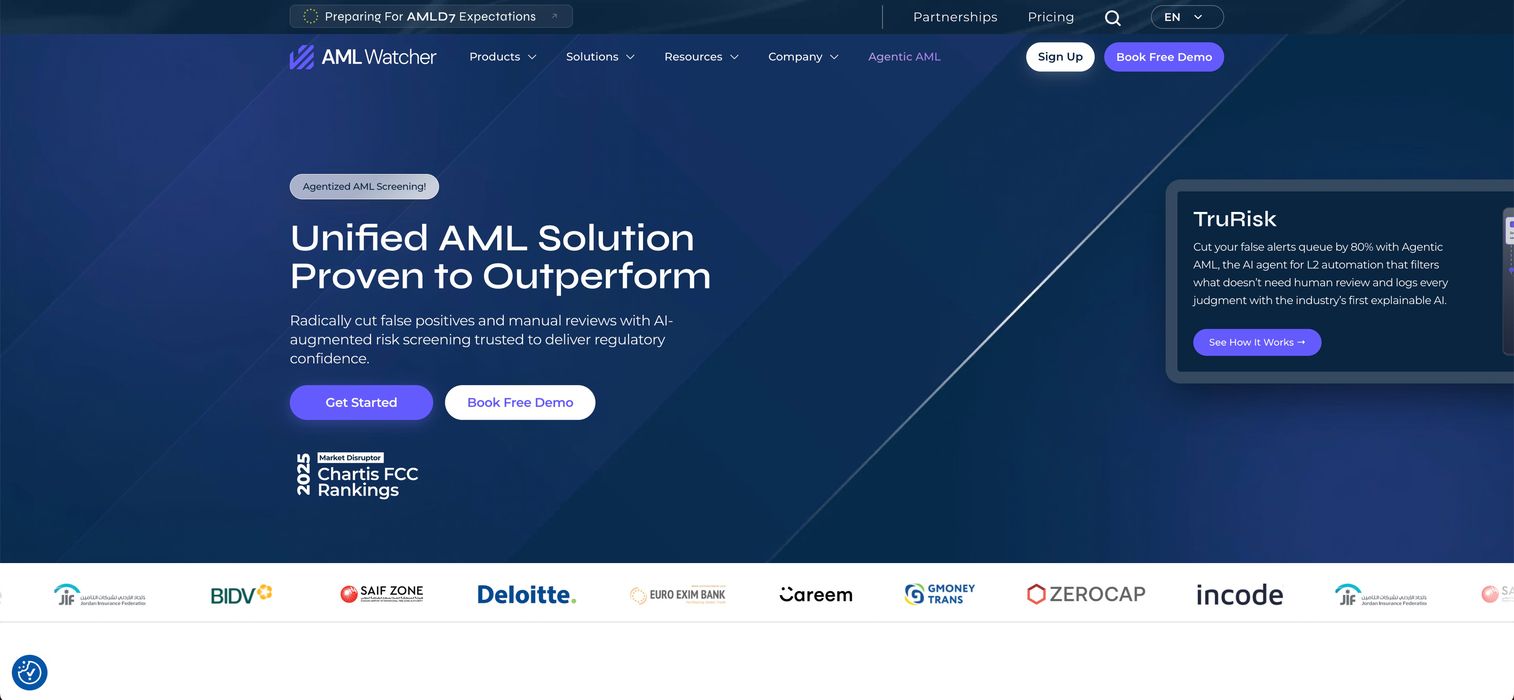
AML Watcher is an AML compliance platform covering sanctions, PEP, watchlist, adverse media, biometric, and transaction screening in one place. The platform combines 150+ AML typologies with over 10,000 customizable risk rules, which gives compliance teams meaningful control over detection sensitivity without requiring engineering involvement. Crypto wallet screening and ongoing monitoring round out a capability set suited to fintechs running both fiat and digital asset products.
Best for: Compliance teams at fintechs or payments companies needing a broad, configurable AML screening and monitoring program.
Key features
- PEP, sanctions, watchlist, and adverse media screening across global databases
- Transaction monitoring with 150+ AML typologies and 10,000+ customizable risk rules
- Biometric AML screening for identity verification workflows
- Crypto wallet screening for digital asset programs
- Custom risk scoring, search profiles, and whitelisting controls
Why choose AML Watcher: The combination of screening depth and configurable transaction monitoring makes this a strong fit for a lean compliance team that needs to cover multiple risk types without managing multiple vendors. The whitelisting and search profile controls reduce analyst workload on repeated false positives.
AML Watcher pricing: AML Watcher offers Basic, Premium, and Enterprise plans. Exact monthly or annual figures are not displayed on the pricing page; the site confirms the first five searches are free and the minimum Basic tier includes 100 monitored entities. Contact sales for current pricing on higher volumes.
G2 rating: 4.5/5
2. TruRisk Agent
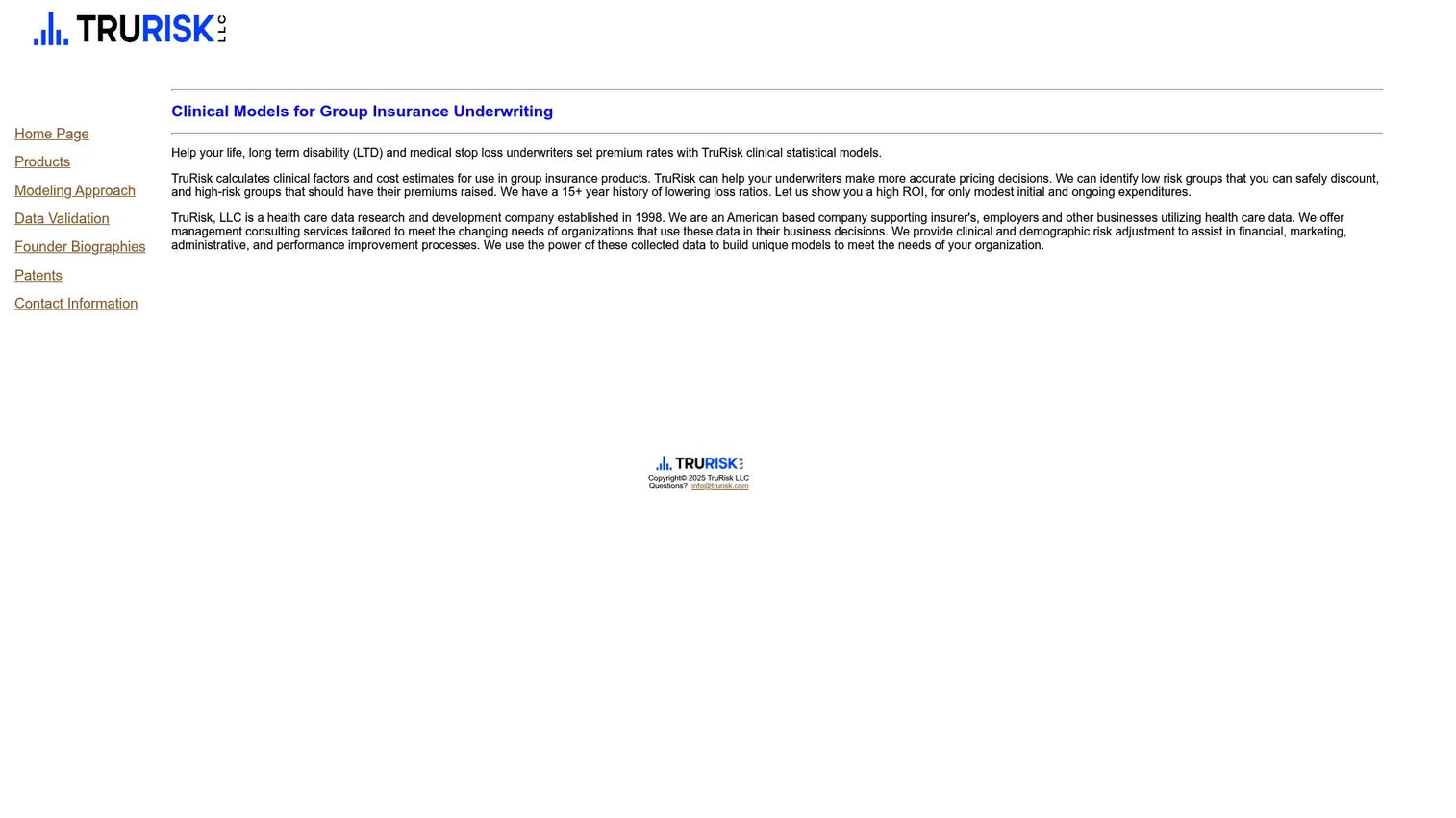
TruRisk provides clinical statistical models for group insurance underwriting, helping actuaries and underwriters forecast claims and set premium rates for group term life and long-term disability programs. The platform applies clinical risk factors to member-level data, producing aggregate stop-loss predictions and identifying data quality issues in claims and eligibility files.
Best for: Insurers, reinsurers, MGUs, and brokers that need predictive analytics for group insurance underwriting rather than transaction-based AML workflows.
Key features
- Clinical risk modeling for group term life and long-term disability underwriting
- Medical aggregate stop-loss predictive analytics
- Data validation and quality auditing for claims and eligibility data
Why choose TruRisk Agent: If your compliance program centers on insurance underwriting risk rather than sanctions screening or transaction monitoring, TruRisk addresses a distinct actuarial need. For founders evaluating AML platforms in the payments or banking sense, this product covers a different domain.
TruRisk pricing: The official site does not display pricing. Contact TruRisk directly for current rates and packaging.
G2 rating: No current G2 rating verified for this product.
3. ComplyAdvantage
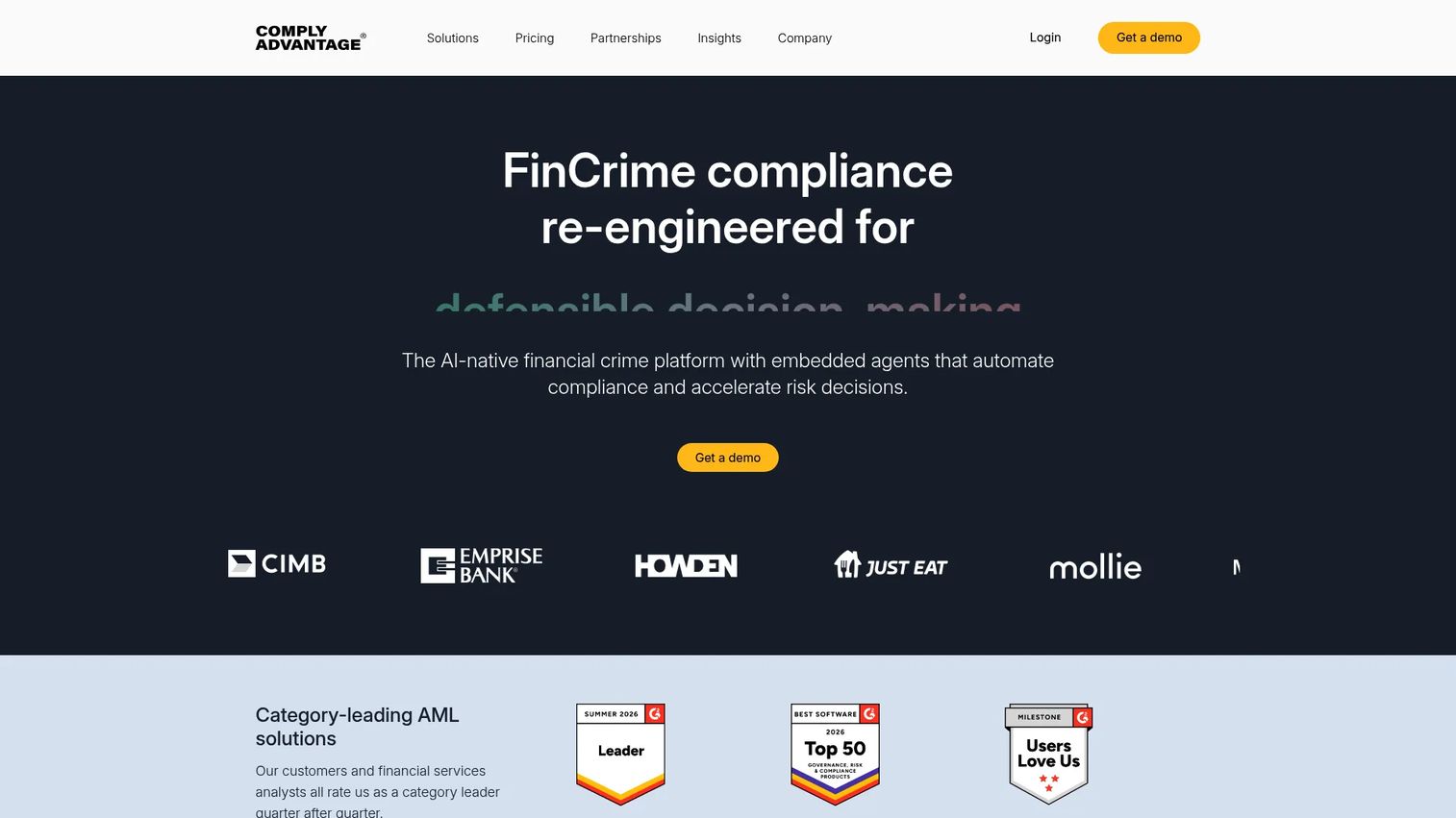
ComplyAdvantage is an AI-native financial crime risk platform covering customer screening, ongoing monitoring, transaction monitoring, and payment screening. The platform is built API-first, which matters for fintechs that need to embed compliance checks into existing product flows without heavy middleware. Agentic AI workflows can auto-remediate routine alerts, reducing the queue that analysts need to manually review.
Best for: Growing fintechs and payments companies that want a configurable, API-driven AML platform with transparent entry-level pricing.
Key features
- Sanctions, PEP, adverse media, and watchlist screening with continuous monitoring
- Transaction monitoring and real-time payment screening
- Agentic AI workflows for auto-remediation of routine alerts
- API, SFTP, and web interface options for flexible integration
- ComplyLaunch free access for eligible early-stage startups (12 months)
Why choose ComplyAdvantage: The Starter tier is one of the few entry-level AML products with a published monthly price, which makes budget planning straightforward at Series B. The agentic AI layer reduces manual review volume as transaction counts grow, which directly affects compliance headcount planning.
ComplyAdvantage pricing: Starter Essentials starts at $99/month on annual billing, covering up to 2,000 monitored entities. The Starter Agentic plan starts at $149/month on annual billing and adds auto-remediation workflows. Enterprise pricing requires contacting sales and includes unlimited usage, payment screening, and transaction monitoring.
G2 rating: 4.3/5
4. LexisNexis Risk Solutions
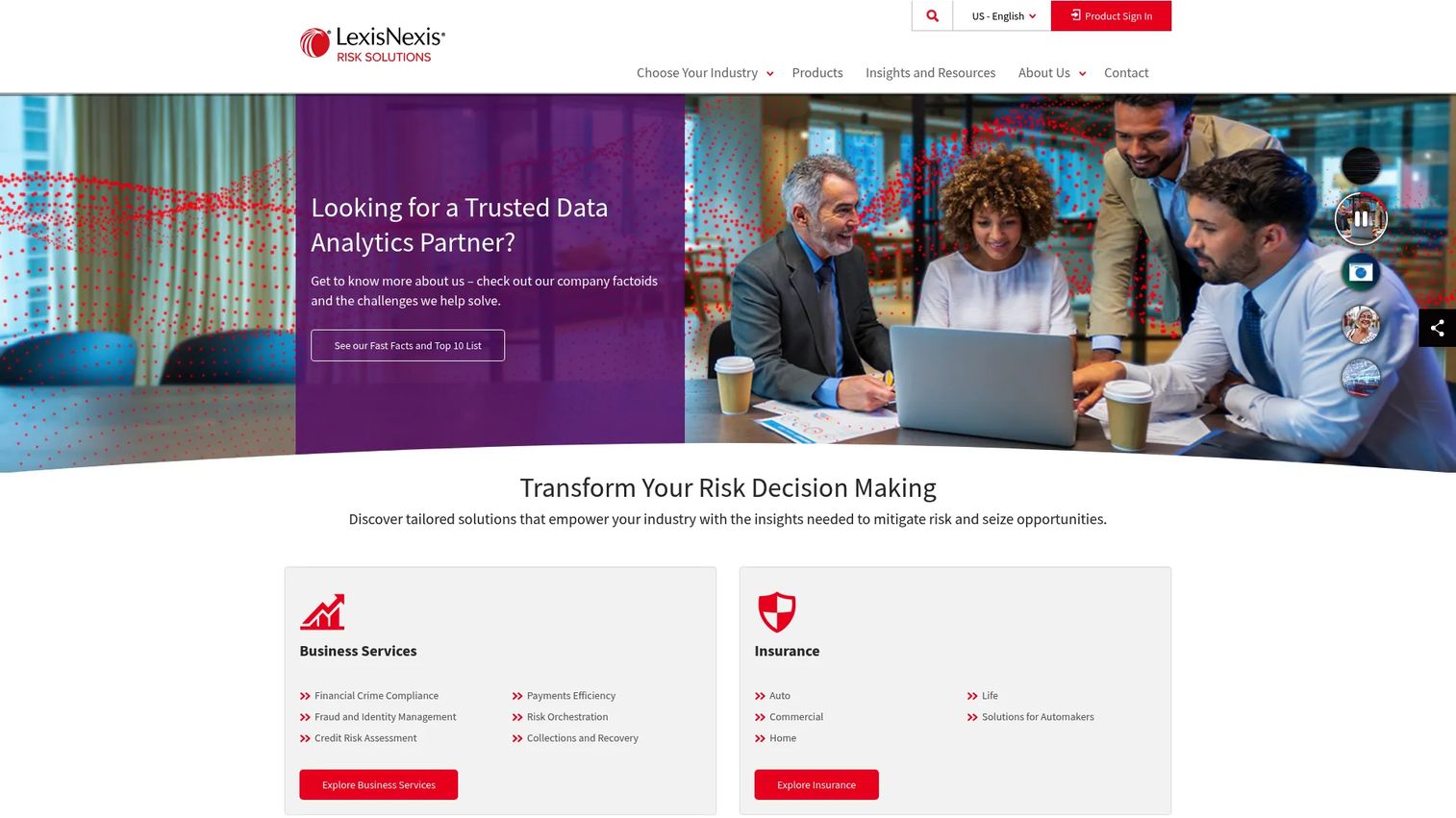
LexisNexis Risk Solutions provides data analytics, identity intelligence, financial crime compliance, and risk decisioning tools for enterprises in financial services, insurance, government, and healthcare. The platform uses HPCC Systems for large-scale data processing and LexID linking technology to resolve entities across disparate datasets. Coverage spans fraud prevention, identity verification, credit risk, and sanctions screening.
Best for: Large enterprises needing a broad risk intelligence platform that connects identity verification, fraud, AML, and credit decisioning in one data environment.
Key features
- Fraud and identity intelligence with LexID entity linking
- Financial crime compliance and sanctions screening
- Credit risk assessment and decision analytics
- Risk orchestration and customer onboarding workflows
- Big-data processing with HPCC Systems for high-volume environments
Why choose LexisNexis Risk Solutions: If your product spans multiple regulated activities and you need a single data provider to support fraud, AML, and credit decisioning, LexisNexis offers more breadth than most point solutions. Implementation complexity and contract structure reflect an enterprise procurement model, so plan accordingly.
LexisNexis Risk Solutions pricing: Pricing is not listed on the official site. Contact LexisNexis Risk Solutions directly for current rates, which vary by product module, data package, and volume.
G2 rating: 4.4/5
5. Dow Jones Risk and Compliance
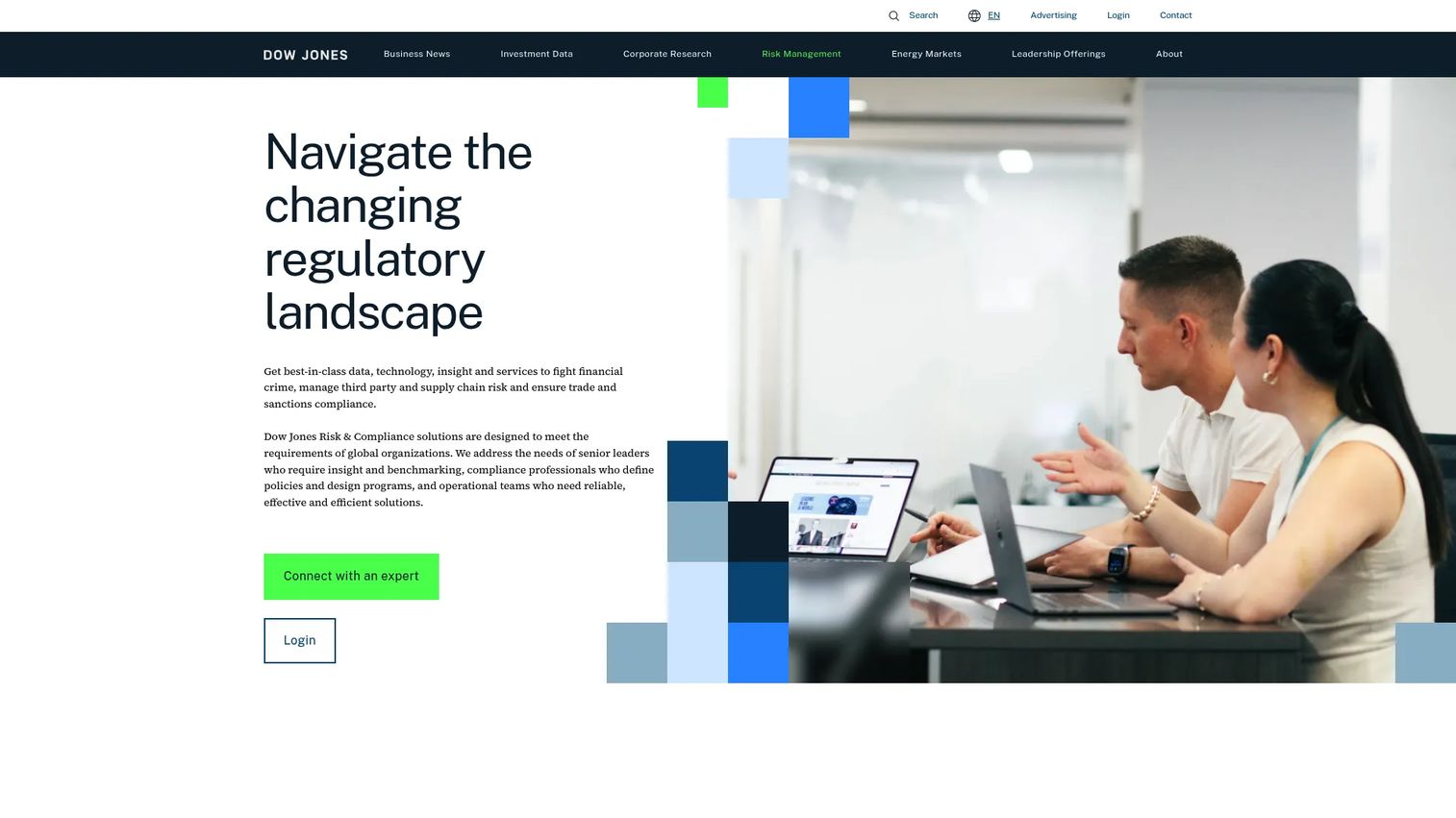
Dow Jones Risk and Compliance is a global risk data and screening platform covering sanctions, PEP, adverse media, and regulatory intelligence. The product supports high-volume screening and ongoing monitoring, with entity resolution capabilities that reduce false matches on common names. Regulatory intelligence updates reflect changes to sanctions lists and compliance frameworks across jurisdictions.
Best for: Enterprise organizations running global compliance screening programs that require current regulatory data and high-volume throughput.
Key features
- Sanctions, PEP, and adverse media screening with entity resolution
- High-volume screening and continuous ongoing monitoring
- Global risk data coverage across jurisdictions
- Regulatory intelligence updates tied to sanctions list changes
- API and enterprise system integrations
Why choose Dow Jones Risk and Compliance: Dow Jones data quality is particularly strong for PEP and adverse media coverage, which matters for institutions with exposure to high-risk individuals or politically sensitive relationships. The regulatory intelligence layer reduces the manual effort of tracking list updates.
Dow Jones Risk and Compliance pricing: Pricing is not displayed on the official site. Contact Dow Jones directly for current rates, which typically reflect screening volume and data module selection.
G2 rating: 4.3/5
6. LSEG Data and Analytics
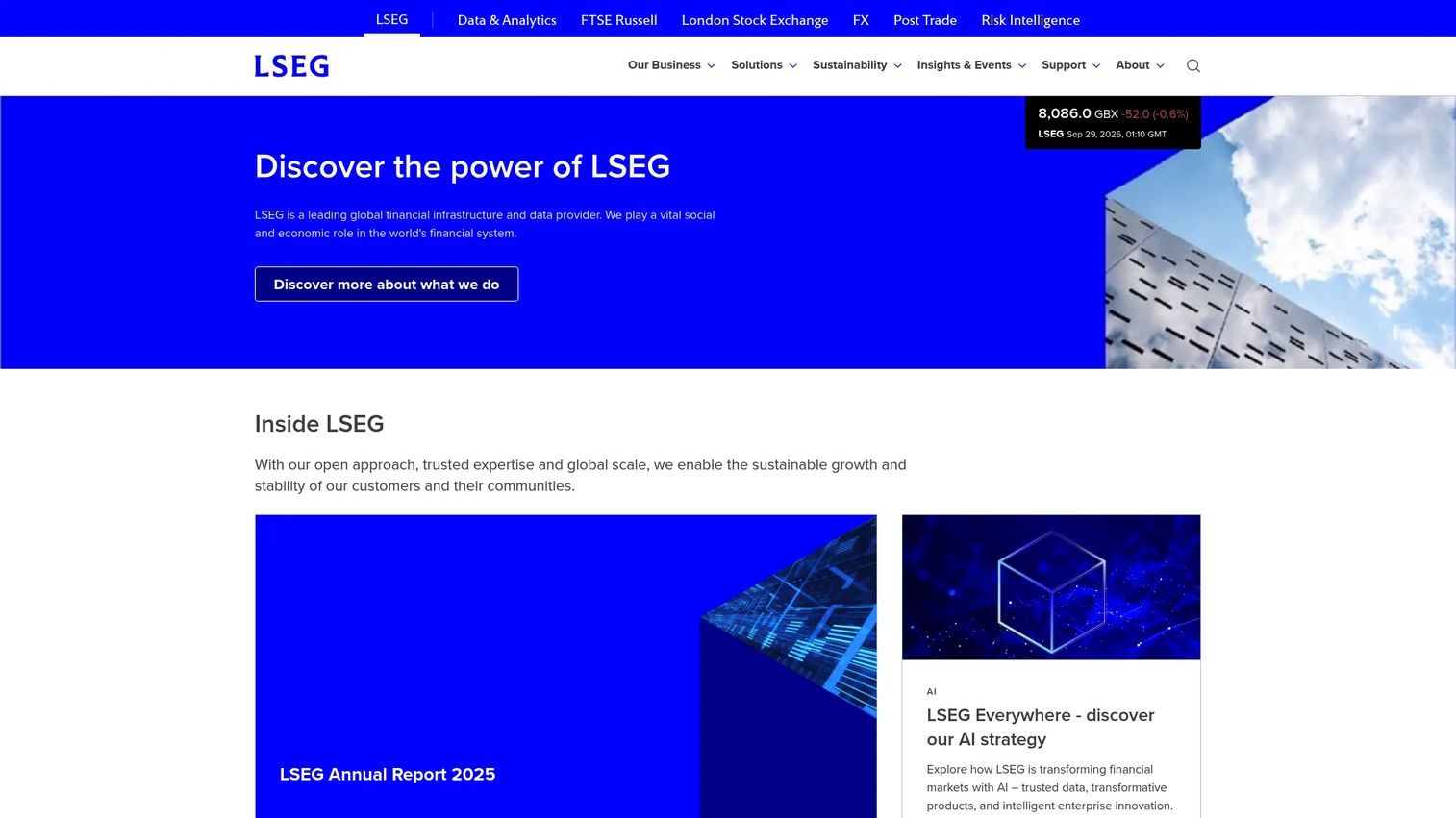
LSEG Data and Analytics provides financial markets data, analytics, AI-powered intelligence, and workflow tools for trading, investing, and risk management. The LSEG Workspace product combines financial data, news, analytics, and AI in a single environment. For compliance use cases, LSEG's risk and entity data supports screening, ownership analysis, and counterparty due diligence at enterprise scale.
Best for: Financial institutions and market participants that need enterprise-grade financial data, risk analytics, and AML-adjacent entity intelligence in an integrated platform.
Key features
- Global market data across real-time, historical, and reference datasets
- AI-powered analytics across equities, fixed income, risk, and sustainability
- LSEG Workspace combining data, news, and workflow tools
- Analytics APIs for multi-asset integration
- Cloud delivery via AWS, Azure, Databricks, and Snowflake
Why choose LSEG Data and Analytics: LSEG is strongest for institutions that need financial markets data and compliance data from a single provider. It is a broader financial data platform rather than a purpose-built AML system, so consider whether your team needs dedicated AML workflow tooling alongside it.
LSEG Data and Analytics pricing: LSEG does not display pricing on its website. Contact LSEG directly for current rates, which reflect data module selection, seat count, and delivery channel.
G2 rating: 3.8/5 (LSEG Workspace product profile)
7. Refinitiv

Refinitiv, now an LSEG business, provides financial markets data, news, analytics, and technology for investment, trading, and risk decisions. Products previously branded as Refinitiv are now presented under LSEG branding, with Refinitiv Workspace succeeded by LSEG Workspace. Datastream and other legacy Refinitiv data services continue to operate within the LSEG portfolio.
Best for: Existing Refinitiv customers evaluating their current contract or transition options, and institutions researching historical financial time-series and market data capabilities.
Key features
- Financial markets data across multiple asset classes
- Historical financial time-series analysis via Datastream
- Market news, analytics, and research workflows
- API and developer access across Python, JavaScript/TypeScript, and .NET
- Microsoft Office integration and data export
Why choose Refinitiv: If you are already a Refinitiv data customer, understanding the LSEG transition path is the immediate priority. New buyers evaluating risk intelligence should review LSEG Data and Analytics directly, as that is where current product development and go-to-market activity sits.
Refinitiv pricing: Pricing is not displayed on the official site. Contact LSEG directly for current rates covering Refinitiv-branded and LSEG-branded products.
G2 rating: 3.8/5 (reflected via LSEG Workspace profile)
8. Oracle

Oracle provides cloud infrastructure, databases, enterprise applications, and industry-specific technology. For financial crime compliance, Oracle Financial Services Anti Money Laundering covers transaction monitoring, customer screening, case management, and rules configuration. The platform runs on Oracle Cloud Infrastructure and integrates with Oracle's broader financial services application suite.
Best for: Large financial institutions that need enterprise-scale AML transaction monitoring and case management tightly integrated with Oracle's database and application stack.
Key features
- Transaction monitoring with configurable rules and scenario libraries
- Customer screening and risk assessment workflows
- Case management with investigation tracking and audit trails
- Enterprise integration with Oracle financial services applications
- Cloud and on-premises deployment options via Oracle Cloud Infrastructure
Why choose Oracle: Oracle's AML product is strongest for institutions already running Oracle financial services applications, where the integration reduces data mapping effort. Standalone AML implementations outside the Oracle stack carry higher services requirements and longer timelines.
Oracle pricing: Oracle Cloud Infrastructure starts at $54/month for a virtual machine instance, with a free tier available. Oracle Financial Services AML is enterprise-priced separately; contact Oracle for current rates. Individual SaaS AML application pricing is not listed on the official pricing pages.
G2 rating: 4.1/5
9. Accuity
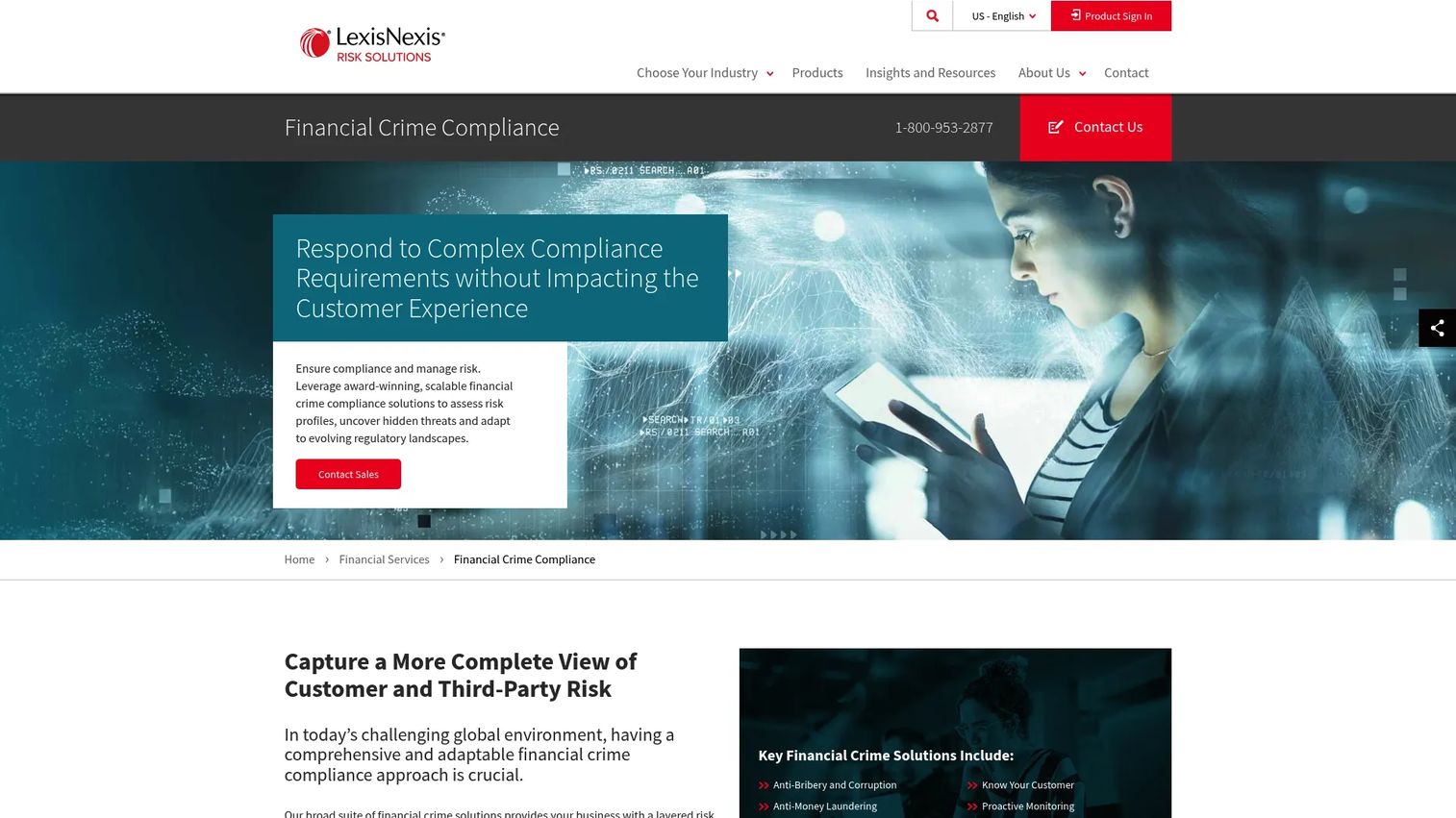
Accuity provides financial crime screening, global payment services, and financial asset verification. Accuity announced the integration of its operations with LexisNexis Risk Solutions in 2021. Current compliance-focused capabilities, including payment screening and sanctions data, are delivered through the LexisNexis Risk Solutions portfolio.
Best for: Banks and financial institutions evaluating payment screening and financial crime compliance solutions within the LexisNexis Risk Solutions ecosystem.
Key features
- Financial crime screening for payments and customer onboarding
- Global payment services and payment data
- Financial asset verification and fraud prevention
Why choose Accuity: If you are evaluating Accuity specifically for payment screening, review what the current LexisNexis Risk Solutions portfolio offers, since that is where ongoing product development sits. For new buyers, engaging LexisNexis Risk Solutions directly is the recommended path.
Accuity pricing: The Accuity homepage timed out during verification, and no current pricing page was accessible. Contact LexisNexis Risk Solutions for current rates covering Accuity-branded screening products.
G2 rating: No current G2 rating verified for this product.
10. NICE Actimize
NICE Actimize provides AI-driven financial crime, fraud prevention, AML, and compliance investigation tools for financial institutions. The platform combines transaction monitoring, suspicious activity detection, fraud and AML convergence, and case management in an enterprise-grade environment. Xceed is the cloud-delivered product line within the Actimize portfolio.
Best for: Enterprise financial institutions and regulators needing integrated fraud prevention, AML transaction monitoring, and investigation case management at scale.
Key features
- AI and machine learning-based fraud and financial crime detection
- AML transaction monitoring and suspicious activity identification
- Investigation and case management with network analytics
- Fraud and AML convergence for unified financial crime operations
- Enterprise reporting for regulatory and board-level compliance
Why choose NICE Actimize: Actimize is built for institutions where fraud and AML operations overlap significantly, and where case management depth matters as much as detection coverage. Implementation requires enterprise services engagement; this is not a self-serve platform for a lean startup compliance team.
NICE Actimize pricing: Pricing is not displayed on the official site. Contact NICE Actimize directly for current rates, which reflect deployment model, module selection, and transaction volume.
G2 rating: 4.1/5 (Xceed product profile)
11. Smart Search
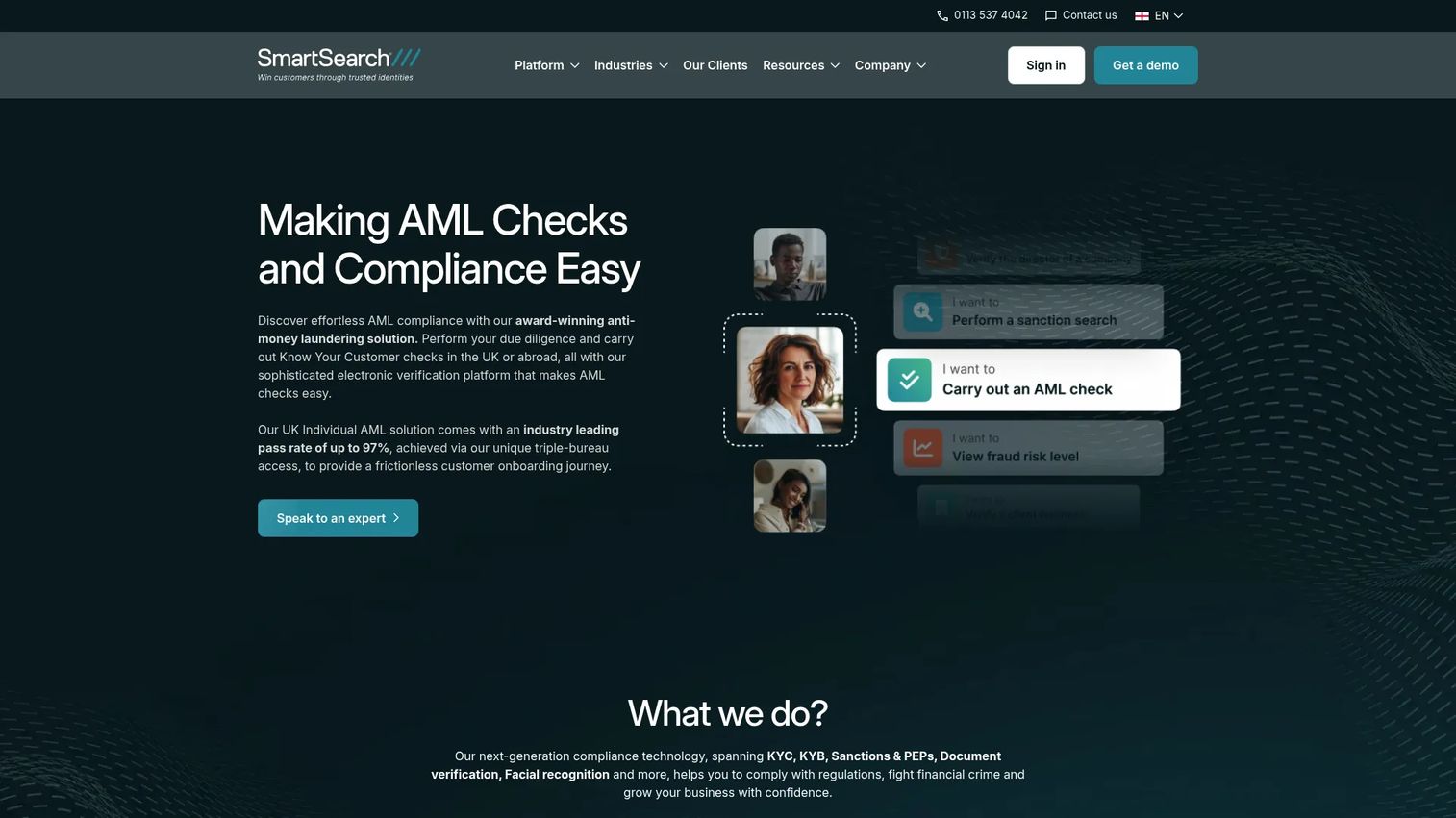
Smart Search is an AML and compliance platform combining identity verification, KYC/KYB checks, sanctions and PEP screening, enhanced due diligence, and ongoing monitoring. Individual and business identity verification runs through a single interface, which simplifies onboarding workflows for regulated businesses that handle both consumer and corporate customers. Monitoring covers OFAC, OFSI, SIP, RCA, and other major lists.
Best for: Financial institutions and regulated businesses that need a combined KYC, KYB, and AML screening platform with persistent monitoring and enhanced due diligence.
Key features
- Individual and business identity verification in one workflow
- Sanctions, PEP, SIP, RCA, and OFAC screening
- Enhanced due diligence with adverse media monitoring
- Ongoing monitoring with alert triggers for risk changes
Why choose Smart Search: Smart Search earns a 5.0/5 rating on G2, reflecting strong user satisfaction across its core screening and monitoring workflows. The platform does not offer pay-as-you-go service, which means it suits businesses with predictable, recurring screening volumes rather than episodic use cases.
Smart Search pricing: Pricing is tailored to each business and is not listed on the official site. Contact Smart Search for current rates.
G2 rating: 5.0/5
12. FinScan
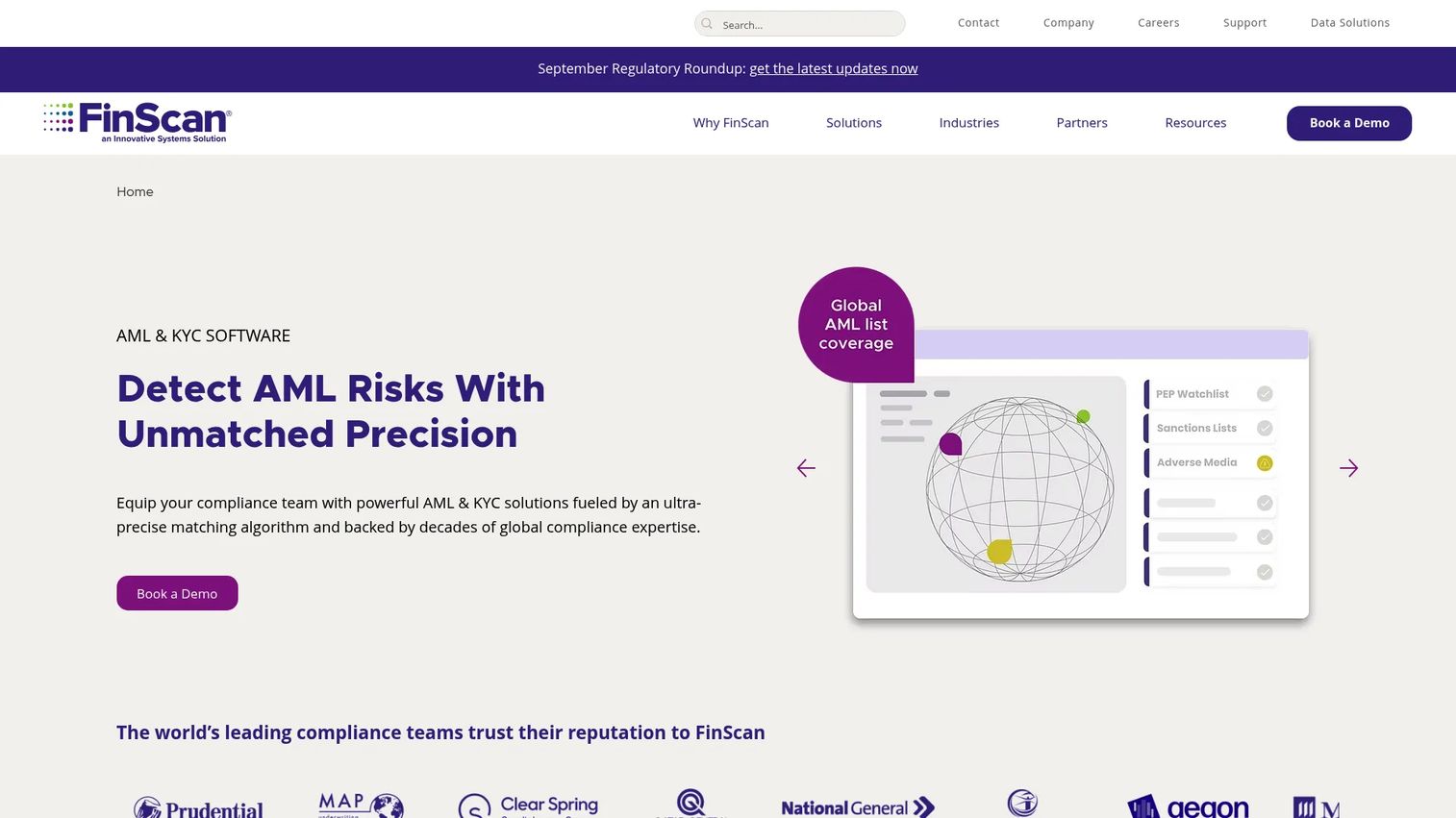
FinScan is AML and sanctions compliance software combining KYC, payment screening, adverse media, UBO identification, and configurable risk scoring. The platform's name matching engine supports fuzzy matching to reduce both missed hits and false positives. Batch and API workflows give compliance teams flexibility in how they integrate screening into onboarding and payment flows.
Best for: Compliance and sanctions teams at financial institutions needing precise name matching, UBO identification, and configurable risk modeling.
Key features
- Sanctions, PEP, watchlist, and adverse media screening
- Real-time payment screening with API and batch options
- UBO identification and beneficial ownership screening
- Configurable risk scoring and modeling
- Case management and full audit trails
Why choose FinScan: FinScan's combination of fuzzy name matching and UBO screening addresses two of the most common gaps in basic sanctions programs: Missed transliterated names and hidden beneficial owners. The audit management trails support both internal review and regulatory examination requirements.
FinScan pricing: Pricing is not displayed on the official site. Contact FinScan for current rates, which reflect screening volume, module selection, and integration requirements.
G2 rating: 4.1/5
13. Napier
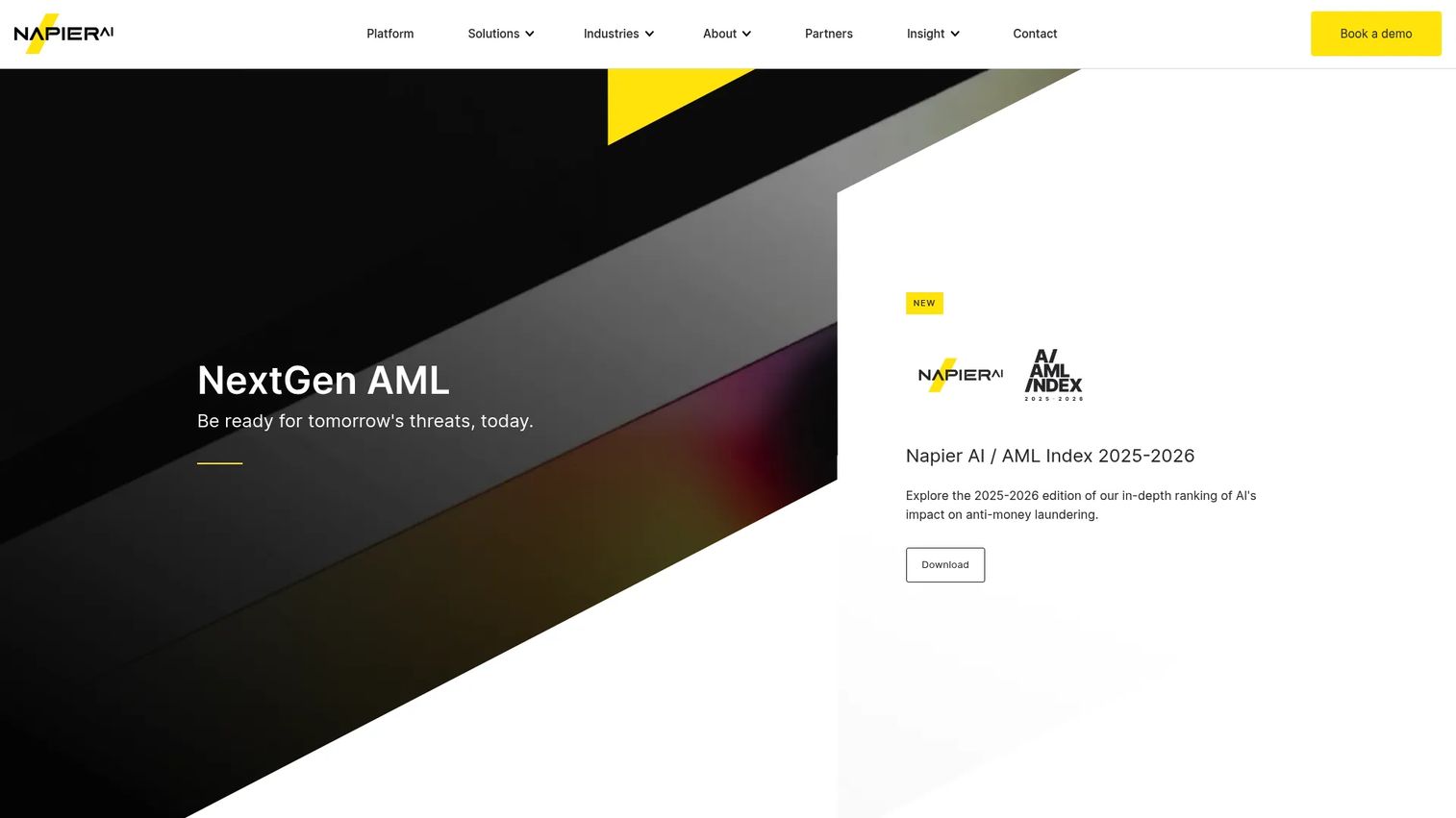
Napier AI provides an AI-enhanced financial crime compliance platform covering client screening, transaction monitoring, transaction screening, and customer risk assessment. The no-code rules engine lets compliance teams build and test detection scenarios without writing code, which directly reduces the engineering dependency that slows down most AML implementations. AI-assisted detection generates explainable risk insights alongside each alert.
Best for: Financial institutions and regulated businesses modernizing legacy transaction monitoring systems and needing explainable, no-code rule configuration.
Key features
- Client screening across sanctions, PEPs, and adverse media
- Real-time transaction screening and monitoring
- No-code rules and threshold configuration with sandbox testing
- AI-assisted detection with explainable risk insights
- Unified investigation, workflow, and case management
Why choose Napier: The no-code rules engine is the practical differentiator for compliance teams that have been dependent on IT or engineering to change detection logic. Explainable AI outputs also help analysts document their reasoning, which matters for regulatory examination and internal audit purposes.
Napier pricing: Pricing is not displayed on the official site. Contact Napier for current rates under their subscription model.
G2 rating: 3.8/5
14. Moody's for Compliance
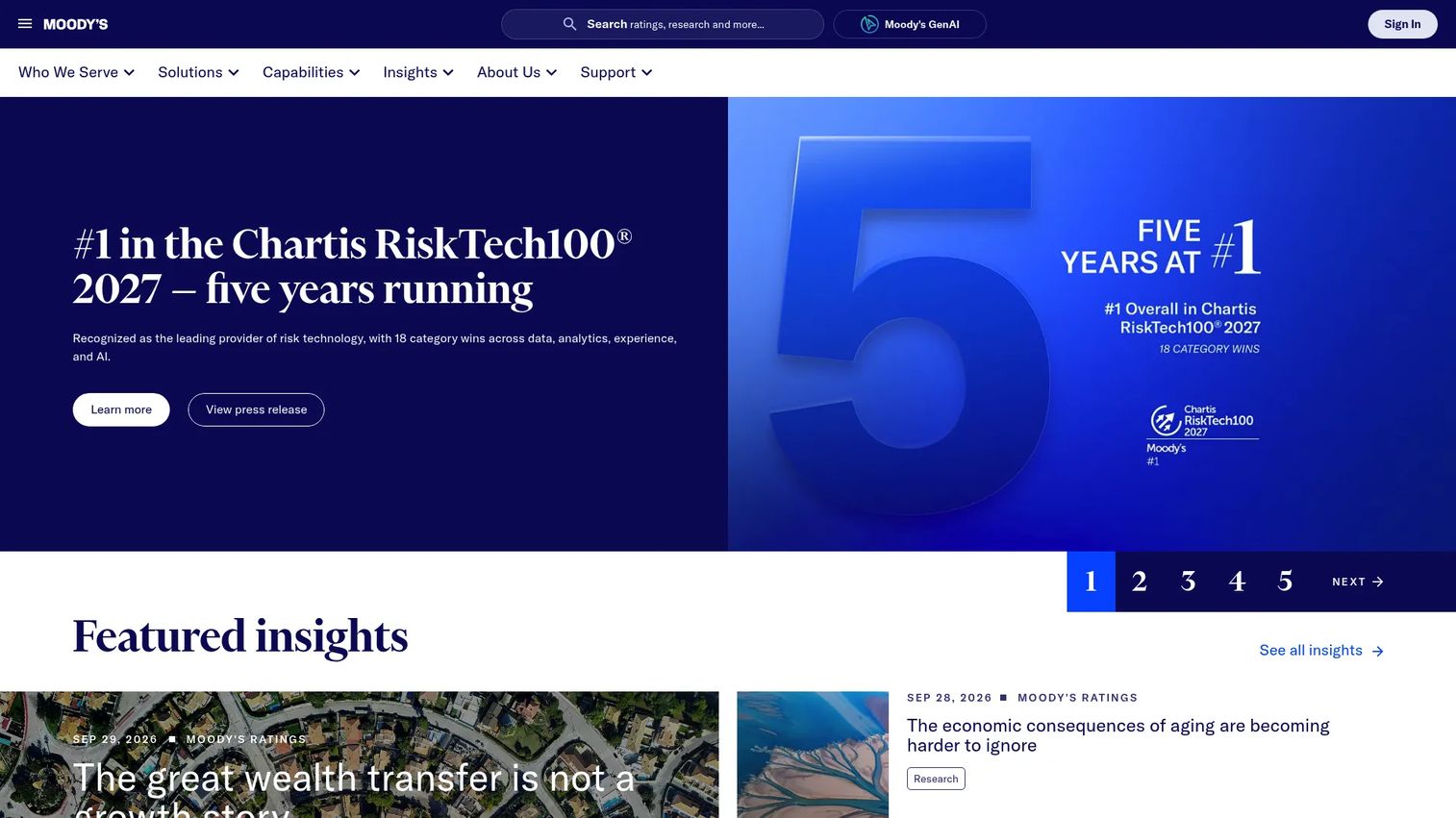
Moody's for Compliance is a connected compliance platform supporting onboarding, due diligence, screening, monitoring, and third-party risk management. The platform's entity intelligence layer covers registry-based verification across more than 200 countries and jurisdictions, with ownership discovery that surfaces beneficial ownership structures and shell company indicators. Continuous, event-driven monitoring triggers reviews when risk signals change.
Best for: Organizations prioritizing entity intelligence and beneficial ownership discovery for KYC, AML, and third-party risk programs.
Key features
- Entity search and global entity data across 200+ countries
- Beneficial ownership discovery and registry-based verification
- Sanctions, watchlist, PEP, and adverse media screening
- Continuous, event-driven monitoring for risk signal changes
- Configurable onboarding workflows, case management, and APIs
Why choose Moody's for Compliance: If beneficial ownership transparency is a core requirement, Moody's entity data depth is a strong differentiator. Organizations that also need transaction monitoring should assess whether a separate transaction monitoring tool is needed alongside Moody's compliance capabilities, or whether a combined platform better fits the program design.
Moody's for Compliance pricing: Pricing is not displayed on the official site. Contact Moody's directly for current rates.
G2 rating: No current G2 rating verified for this specific product.
15. Napier Intelligent Compliance Platform
The Napier Intelligent Compliance Platform is an AI-enhanced financial crime compliance platform for client screening, transaction screening, transaction monitoring, and customer risk assessment. Available research confirms this is the same underlying platform as the Napier product covered in entry 13, with "Napier Intelligent Compliance Platform" being the formal product name. It is included here as a distinct entry to reflect the brand research provided, covering the platform's full enterprise feature set.
Best for: Payments, banking, and wealth management firms needing enterprise AML with multilingual fuzzy name matching and a unified compliance platform.
Key features
- Client screening with AI fuzzy name matching across 25+ languages
- Transaction monitoring with no-code rule building and sandbox testing
- Unified case management with dashboards and audit trails
- AI-assisted detection with full workflow and API support
Why choose Napier Intelligent Compliance Platform: The 25+ language fuzzy matching capability makes this a practical choice for institutions with customers across multiple geographies where name transliteration creates screening gaps. The unified architecture means screening, monitoring, and case management share a single data model, which simplifies audit trail production.
Napier Intelligent Compliance Platform pricing: Pricing is not displayed on the official site. Napier operates a subscription model; contact Napier for current rates.
G2 rating: 3.8/5
Considerations when choosing AML software
Coverage across the AML workflow
Evaluate whether the platform covers the specific workflows your program requires now and in the next 12 months. A tool that handles sanctions screening but lacks transaction monitoring forces you to manage two vendors and two data environments. Map your current compliance obligations against each platform's capability set before signing.
Data quality and geographic coverage
Ask each vendor about data sources, update frequency, and country coverage. Entity resolution quality affects how many false positives your analysts review each day. PEP and beneficial ownership coverage matters for high-risk jurisdictions. Outdated or incomplete data is a compliance gap, regardless of how good the platform's interface is.
Detection quality and explainability
Review the rules, scenarios, and risk scoring logic each platform uses. Alert explanations need to be clear enough for an analyst to document their decision and for an auditor to follow the reasoning. Platforms that generate alerts without explaining why create documentation problems during regulatory examination. Ask about false positive measurement and how thresholds are adjusted over time.
Workflow and implementation fit
Estimate the internal cost of the implementation, not only the subscription fee. API documentation quality, data mapping requirements, case assignment workflows, and role-based access controls all affect how long it takes your team to go live. For a lean Series B compliance team, a platform that requires a six-month implementation with external consultants carries a real opportunity cost.
Reporting and regulatory change management
Check what the platform produces for suspicious activity reporting, audit exports, and board-level compliance metrics. Regulatory requirements change. A platform that makes it easy to update rules and scenarios when regulations shift reduces the recurring engineering work of staying current. Evidence retention and version history matter for multi-year audit cycles.
Conclusion
The right AML software choice depends on where your compliance program sits today and what it needs to support in 12 months.
For a growing fintech building its first structured AML program, AML Watcher's broad screening coverage and ComplyAdvantage's transparent entry-level pricing and API-first design both offer accessible starting points. ComplyAdvantage's Starter tier is one of the few options with a published price, which simplifies budget planning.
For entity and ownership intelligence, Moody's for Compliance provides registry-based verification across more than 200 countries. For institutions modernizing legacy monitoring, Napier's no-code rule configuration reduces the engineering dependency that usually slows down AML platform changes.
Enterprise deployments with complex investigation workflows, high transaction volumes, and deep Oracle or LexisNexis ecosystem ties will find NICE Actimize and LexisNexis Risk Solutions better matched to that scale. Screening-focused programs can look closely at FinScan for fuzzy name matching and UBO coverage, or Smart Search for its 5.0/5 G2 rating and integrated KYC/KYB workflows.
Before you decide, assign internal ownership, define your board-level compliance metrics, and price the implementation effort alongside the subscription. The best AML system is the one your compliance lead can operate without routing exceptions back to you.
Start your journey with Guideflow today!
FAQs
AML software helps financial institutions detect, investigate, document, and report suspicious financial activity. Core functions include customer screening, transaction monitoring, risk scoring, alert triage, case management, and suspicious activity reporting. Coverage depth varies significantly across vendors, from point screening tools to full-program platforms.
KYC software focuses on identifying and verifying customers at onboarding, confirming identity and assessing initial risk. AML software covers the broader ongoing program: Continuous monitoring, transaction analysis, alert investigation, and regulatory reporting after the customer relationship is established. Many modern AML platforms include KYC capabilities, but they are distinct functions within the compliance workflow.
Both categories need screening and monitoring, but the specifics differ across transaction volume, payment rails, geographic exposure, regulatory obligations, and internal team size. A bank with millions of daily transactions and a complex correspondent banking network has different detection requirements than a fintech processing domestic card payments for small businesses. Choose a platform calibrated to your actual transaction profile and regulatory perimeter.
Better entity resolution, current data, risk-based segmentation, and configurable thresholds all reduce unnecessary alerts. Fuzzy name matching improvements also lower false hits on common names and transliterated characters. Vendors should be able to show you how false positive rates are measured and what tuning controls are available. Avoid any vendor that promises a specific reduction percentage without connecting it to your data and transaction profile.
Priority integrations include customer data systems, payment processors, transaction ledgers, identity verification providers, and case management tools. Downstream, you need connections to your data warehouse, reporting tools, and CRM. Event-based integration via webhooks or message queues allows real-time alert routing. Check whether your specific CRM and payment processor are supported before committing to a platform.
Pricing typically varies by screening volume, monitored entities, transaction count, number of users, data packages selected, API call volume, geographic coverage, and implementation services. ComplyAdvantage is one of the few vendors with a published entry price, starting at $99/month for up to 2,000 monitored entities on annual billing. Most enterprise AML platforms require a direct conversation with sales for current rates.
Perpetual KYC means continuously monitoring customer information and risk signals after the initial onboarding check. Rather than relying on periodic manual re-review cycles, the system triggers updates when specific events occur: Ownership changes, new sanctions designations, adverse media hits, or significant shifts in transaction behavior. It reduces the compliance lag between a risk event and your team's awareness of it.
Implementation timelines depend on data readiness, integration scope, workflow complexity, and internal resources. A screener-only deployment with a clean API can go live in weeks. A full transaction monitoring implementation with custom scenarios, data mapping, analyst training, and regulatory sign-off typically runs several months. The largest enterprise platforms with on-premises components can extend further. Ask each vendor for reference customer timelines at your company size and complexity level.
Track alert quality (what percentage of alerts lead to actual investigations), false positive rate, investigation cycle time, onboarding delays attributable to compliance holds, case backlog, reporting timeliness, and manual analyst hours per review. Over time, a well-tuned platform should produce a measurable decline in manual hours per case and a reduction in onboarding queue length, both of which translate directly into compliance staffing efficiency and customer activation speed. These metrics also give your board and investors concrete evidence that the program is becoming more repeatable.