An enterprise prospect emails your head of sales asking for your SOC 2 report, security policies, and a completed vendor questionnaire. Nobody knows where the evidence lives. Your CTO pulls engineers off roadmap work to reconstruct it. The deal stalls.
That scenario repeats at almost every Series B company that has outgrown spreadsheets but not yet built repeatable compliance infrastructure. According to Mordor Intelligence (2025), the GRC software market was valued at $21.04 billion in 2025, projected to reach $39.01 billion by 2031. That growth reflects how many organizations are moving the same evidence-collection work out of ad hoc folders and into governed systems.
GRC software gives you the infrastructure to do that at scale: A control environment that a new security or RevOps leader can own on day one, board reporting that does not require reconstructing data across five dashboards, and customer security reviews that do not pull your engineers off their actual jobs.
This guide covers 10 GRC platforms evaluated for SaaS teams at the Series B stage and beyond.
What's inside
This guide is for founders, security leaders, and compliance owners evaluating governance, risk, and compliance software for the first time or rebuilding after outgrowing their initial approach.
Tools were selected based on:
- Compliance automation depth: Automated evidence collection, continuous control monitoring, and framework support
- Risk management scope: Risk registers, assessments, third-party risk, and operational coverage
- Audit readiness: Internal audit workflows, controls testing, and documentation
- Integration and implementation fit: Connections to identity, HR, ticketing, and cloud infrastructure, plus realistic onboarding requirements for a 50 to 150-person team
TL;DR
- Best overall for SaaS compliance operations: Vanta, for automated evidence collection and fast time to audit readiness
- Best for broad risk and compliance coverage: Risk Cognizance, with a free MSP tier and wide module depth
- Best for configurable risk workflows: LogicGate, for teams that need process flexibility without building software internally
- Best for audit and SOX-focused teams: AuditBoard, purpose-built for internal audit and controls workflows
- Best for automated compliance with a trust center: Drata, for founders who want customer-facing security assurance alongside internal controls
- Best for enterprise programs: Archer, MetricStream, ServiceNow GRC, Workiva Platform, and IBM OpenPages each serve mature, multi-domain risk programs
What is GRC software?
GRC software is a platform that helps organizations manage governance activities, identify and monitor risk, maintain compliance controls, collect evidence, and report assurance status to leadership and external auditors.
The three disciplines it covers:
Governance: Policy ownership, accountability structures, decision records, and executive reporting. Governance tools make sure the right people own the right controls, and that those assignments are documented rather than assumed.
Risk: Risk registers, assessments, scoring, mitigation tracking, and monitoring across operational, cyber, third-party, and business continuity domains. Risk management converts scattered exposure into a view leadership can act on.
Compliance: Control libraries, framework mapping, evidence collection, testing, exception handling, remediation workflows, and audit preparation. Compliance tools connect your controls to the specific frameworks your customers and auditors care about.
Key features to look for
- Automated evidence collection from cloud, identity, and HR systems
- Continuous control monitoring with alerting
- Framework cross-mapping (SOC 2, ISO 27001, GDPR, HIPAA, and others)
- Risk registers and assessment workflows
- Third-party and vendor risk management
- Internal audit support with controls testing
- Remediation tracking and issue management
- Compliance management software dashboards and board-level reporting
- APIs and integrations with your existing stack
- Role-based permissions and audit trails
Compliance automation vs. full GRC platforms
Compliance automation tools focus narrowly on evidence collection, control monitoring, and audit preparation for one or two frameworks. Full GRC platforms add enterprise risk management, internal audit workflows, policy management, third-party risk, business continuity software, and multi-domain reporting. Neither is universally better. The right scope depends on whether you have a narrow audit goal or a maturing multi-domain risk program.
When to use GRC software
Prepare for enterprise customer security reviews
Enterprise buyers increasingly run formal security questionnaires and evidence reviews before signing contracts. GRC software centralizes your policies, controls, evidence, and questionnaire responses in one governed system. Rather than pulling your CTO into every review, your security owner handles it with current, organized documentation. This shortens deal cycles and removes a recurring founder escalation point.
Build repeatable audit readiness
Manual evidence collection degrades as your team grows. Controls get assigned to people who leave, folders multiply, and audit prep becomes a fire drill. Automated evidence collection and continuous control monitoring means your SOC 2 or ISO 27001 audit preparation runs as a background process rather than a quarterly emergency. The goal is getting your first audit management software workflow live, then expanding from there.
Give the board a usable risk view
Board members and investors ask for risk visibility at exactly the moments when you have least time to compile it. Risk registers, control status dashboards, and remediation progress reports give leadership a consistent view of exposure without requiring a manual slide deck. GRC software turns board risk reporting from a founder task into a system output.
GRC software comparison
The table below covers 10 GRC platforms evaluated for SaaS teams at different operating stages, from compliance-first SaaS tools to broad enterprise GRC platforms. Use it as a shortlist anchor before digging into each section.
Pricing and G2 ratings verified September 2026 from each vendor's pricing page and G2 listing.
| # | Product | Best for | Key differentiator | Pricing | G2 rating |
|---|---|---|---|---|---|
| 1 | Vanta | SaaS compliance automation | Continuous evidence collection with 300+ integrations | Custom pricing | 4.6/5 |
| 2 | Risk Cognizance | Broad GRC with free entry tier | Free MSP tier plus wide module coverage | Free tier available | 5.0/5 |
| 3 | LogicGate | Configurable risk workflows | No-code workflow builder for GRC processes | Custom pricing | 4.6/5 |
| 4 | ServiceNow GRC | Existing ServiceNow environments | Integrated GRC across ServiceNow IT data | Custom pricing | 4.4/5 |
| 5 | Archer | Mature enterprise risk programs | Regulatory change management and risk aggregation | Custom pricing | 4.3/5 |
| 6 | MetricStream | Broad enterprise GRC programs | AI-first federated data model across risk domains | Custom pricing | 4.3/5 |
| 7 | AuditBoard | Audit and SOX-focused teams | Purpose-built audit workflows with 200+ integrations | Custom pricing | 4.6/5 |
| 8 | Drata | Automated compliance with trust center | Agentic compliance with AI questionnaire assistance | Custom pricing | 4.7/5 |
| 9 | Workiva Platform | Connected reporting and assurance | Data-linked reporting across finance, audit, and ESG | Custom pricing | 4.5/5 |
| 10 | IBM OpenPages | Enterprise risk management | Modular AI-powered GRC with transparent SaaS pricing | From $3,300 | 4.2/5 |
10 best GRC software tools for 2026
1. Vanta
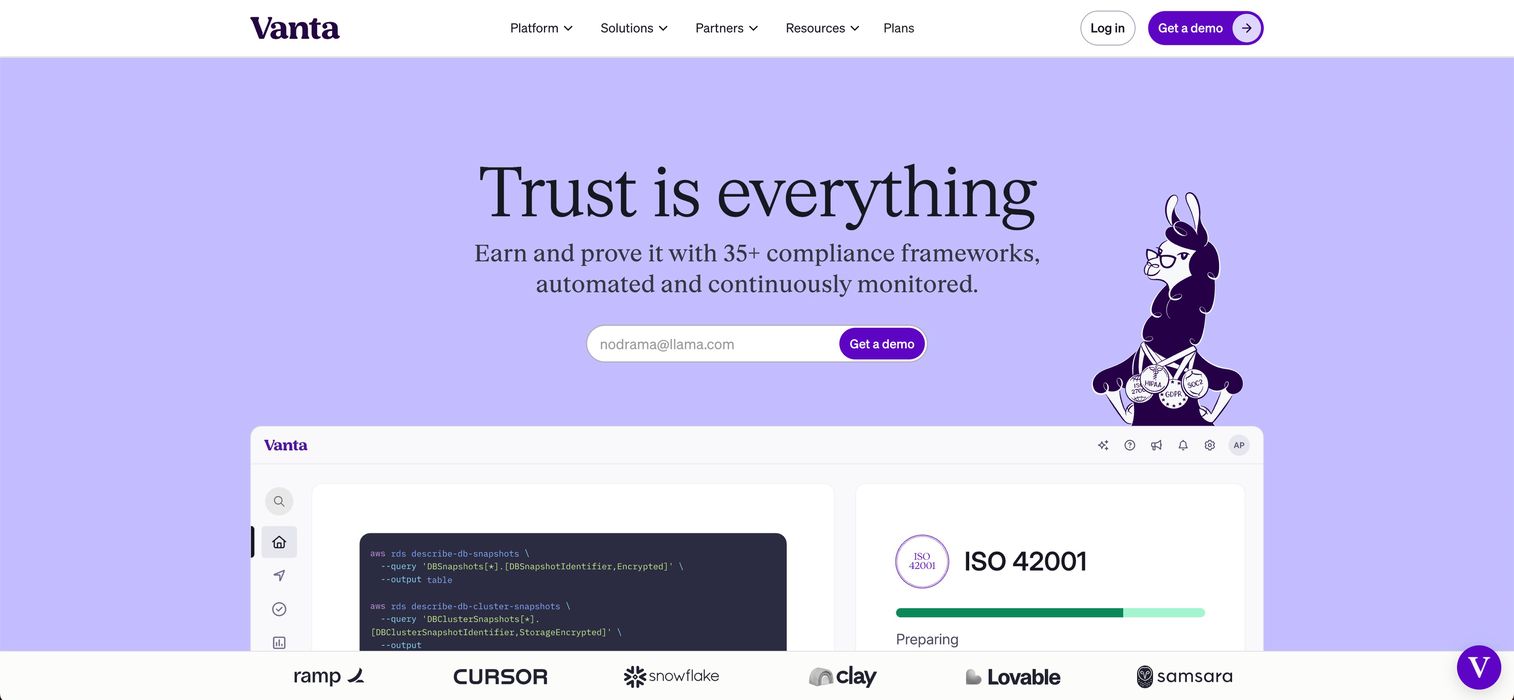
Vanta is an agentic trust platform built for SaaS teams moving from spreadsheets and shared folders to continuous compliance operations. The platform automates evidence collection from cloud infrastructure, identity systems, HR tools, and code repositories, then maps that evidence to frameworks including SOC 2, ISO 27001, HIPAA, and GDPR. Vanta also includes vendor risk management workflows and a customer-facing Trust Center for sharing compliance documentation during security reviews.
Best for: Series B SaaS teams preparing for their first formal audit or managing recurring enterprise customer security reviews.
Key features
- Automated evidence collection across 300+ integrations
- Continuous control monitoring with remediation workflows
- Framework cross-mapping: SOC 2, ISO 27001, HIPAA, GDPR, and more
- Vendor risk management with questionnaire automation
- Trust Center for customer-facing compliance documentation
- Vanta AI Agent for compliance workflow automation
Why choose Vanta: Vanta is built for the founder who wants their next security hire to run compliance independently from day one, without inheriting a folder of manually gathered screenshots.
Vanta pricing: Vanta offers Essentials, Plus, Professional, and Enterprise plans. All pricing is personalized and requires a sales conversation. G2 reviewers report that starting costs for smaller teams typically run in the low thousands annually, with pricing scaling by number of integrations and frameworks.
G2 rating: 4.6/5.
2. Risk Cognizance
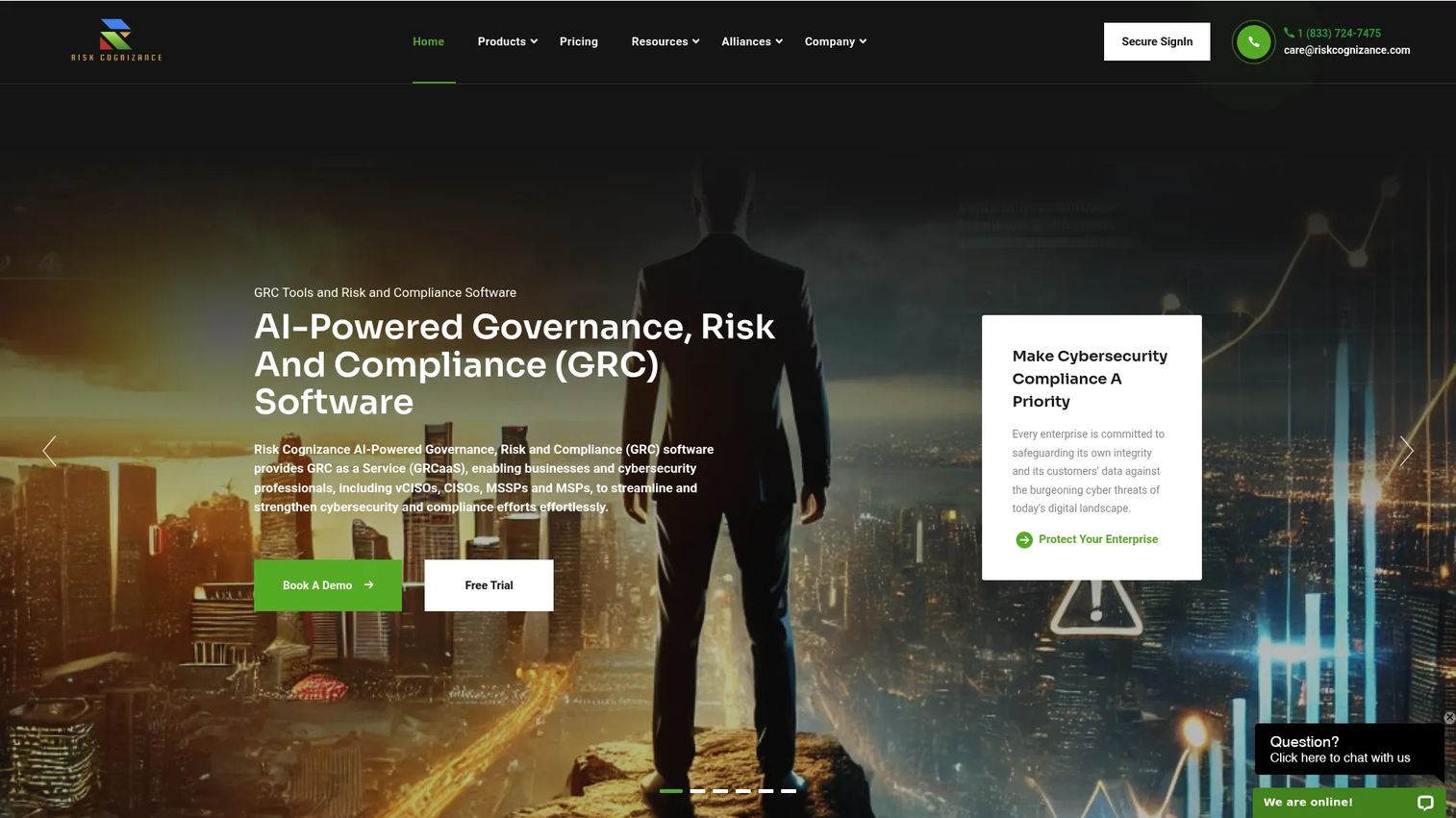
Risk Cognizance is an AI-powered, cloud-based GRC platform covering compliance management, risk management, cybersecurity, dark web monitoring, cloud posture scanning, and attack surface management in a single platform. The breadth here goes well beyond narrow compliance automation: Risk Cognizance supports third-party risk workflows, policy management, internal audit, and multi-tenant GRC for MSPs and MSSPs managing multiple client environments. An AI-powered assessment engine automates questionnaire completion and control gap analysis.
Best for: Companies managing compliance alongside operational, cyber, or vendor risk, and MSPs running GRC programs for multiple clients simultaneously.
Key features
- AI-powered compliance management and automated assessments
- Unified risk register with workflow automation and reporting
- Third-party risk management with vendor questionnaire tools
- Dark web monitoring and attack surface management
- Multi-tenant architecture for MSP and MSSP environments
- Cloud posture scanning and continuous monitoring
Why choose Risk Cognizance: If your compliance needs extend into active security monitoring, attack surface management, or managing GRC across multiple entities, Risk Cognizance covers more ground than a pure compliance automation tool.
Risk Cognizance pricing: Risk Cognizance offers a free tier for MSPs at $0 per tenant, with Growth, Business, and Enterprise packages available at personalized pricing. The free tier is a genuine entry point for managed service providers testing the platform before committing to a paid plan.
G2 rating: 5.0/5.
3. LogicGate
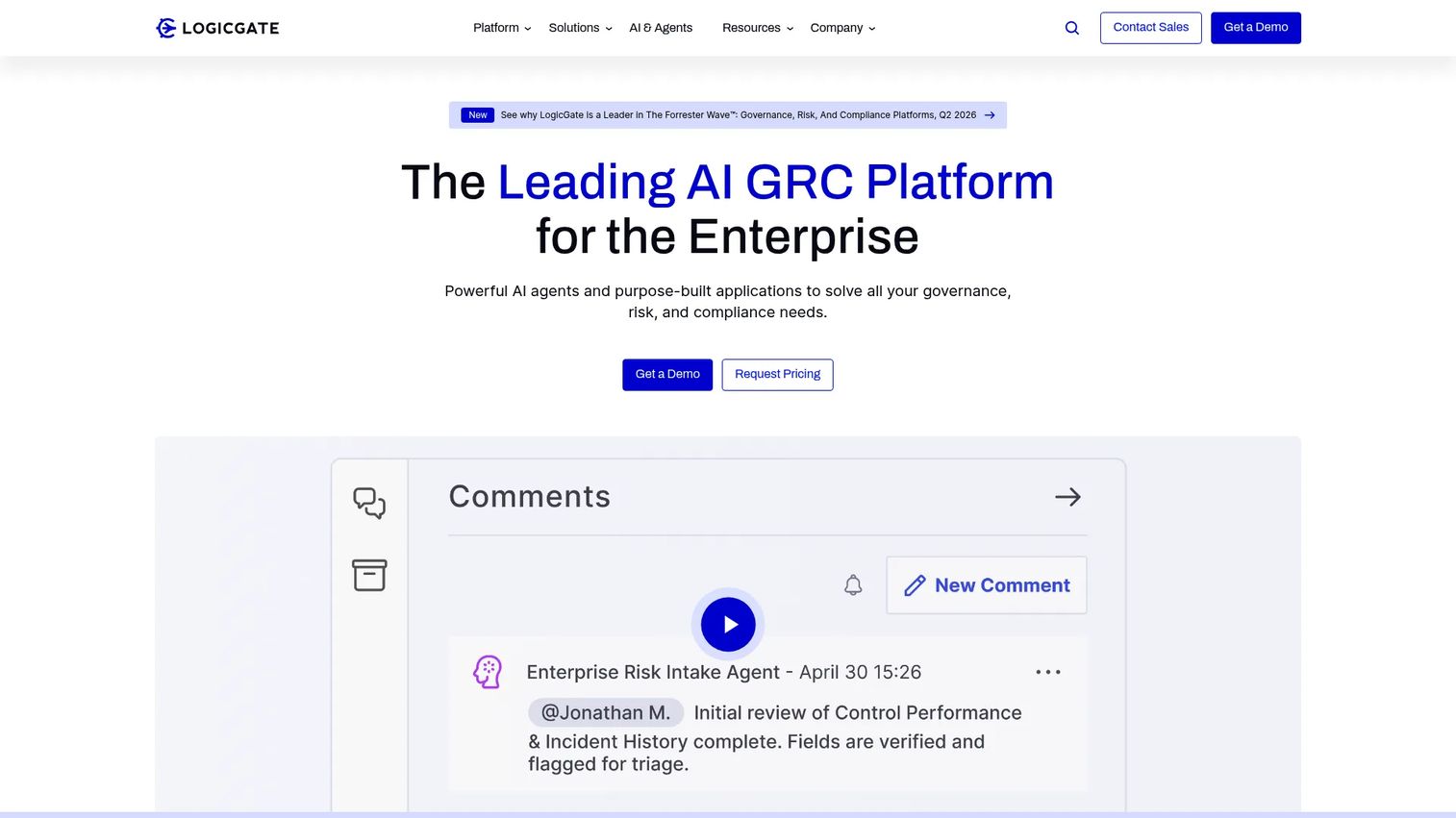
LogicGate offers Risk Cloud, an AI-enabled GRC platform built around a no-code workflow builder that lets risk and compliance teams configure their own processes without relying on professional services for every change. The platform covers enterprise risk management, compliance, audit, policy management, incident management, and third-party risk. Trend reporting and dashboards give leadership a real-time view of how risk exposure is moving across the program.
Best for: Enterprise teams with defined risk processes that need flexible, configurable workflows and a risk program that can evolve after the first audit without requiring rebuilds.
Key features
- No-code workflow and application builder for GRC processes
- Enterprise risk management and compliance modules
- Audit, policy, incident, and third-party risk management
- Configurable dashboards and trend reporting
- AI skills and optional GRC Agents
- REST API and integrations with common enterprise tools
Why choose LogicGate: LogicGate suits teams whose risk program will grow in complexity after initial implementation. The no-code builder lets a compliance owner reconfigure workflows as frameworks and business units evolve, without filing a change request with IT.
LogicGate pricing: LogicGate does not display pricing on its website. Pricing is quote-based and varies by modules, user count, and implementation scope. Request a demo directly to get figures relevant to your team size and program maturity.
G2 rating: 4.6/5.
4. ServiceNow GRC
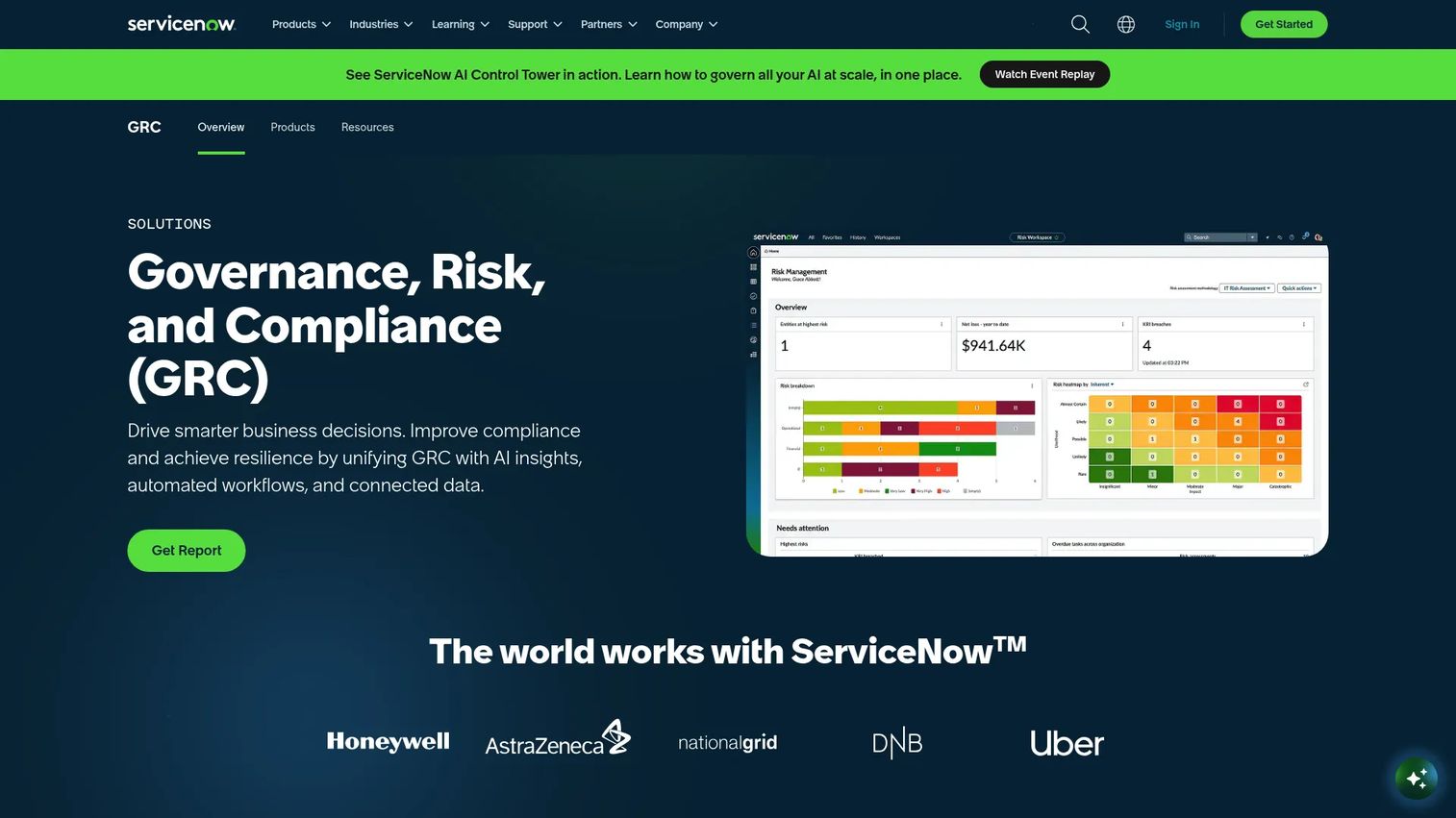
ServiceNow GRC integrates governance, risk, and compliance workflows directly into the ServiceNow platform, drawing on IT, operations, and security data that many enterprise teams already manage there. The product covers policy and compliance management, integrated risk workflows, third-party risk assessments, audit management, business continuity planning, and privacy management. For companies already running ServiceNow for IT service management, GRC sits inside the same environment as incidents, assets, and change requests.
Best for: Larger companies with an established ServiceNow environment where shared workflow data and single-platform administration outweigh the cost of a standalone GRC tool.
Key features
- Policy and compliance management with continuous monitoring
- Integrated risk management with real-time risk visibility
- Third-party risk workflows with automated vendor assessments
- Audit management and audit workspace capabilities
- Business continuity and operational resilience planning
- Privacy management and regulatory change management
Why choose ServiceNow GRC: The platform makes the most sense if ServiceNow is already your system of record for IT workflows. Bolt-on GRC inside an existing environment avoids a separate integration project and keeps risk data next to the operational data it reflects.
ServiceNow GRC pricing: ServiceNow does not display module pricing. It requires a sales conversation, with costs driven by licensing model, modules selected, and existing ServiceNow contract terms. For a Series B team evaluating ServiceNow GRC without an existing platform agreement, factor in both licensing and implementation services.
G2 rating: 4.4/5.
5. Archer
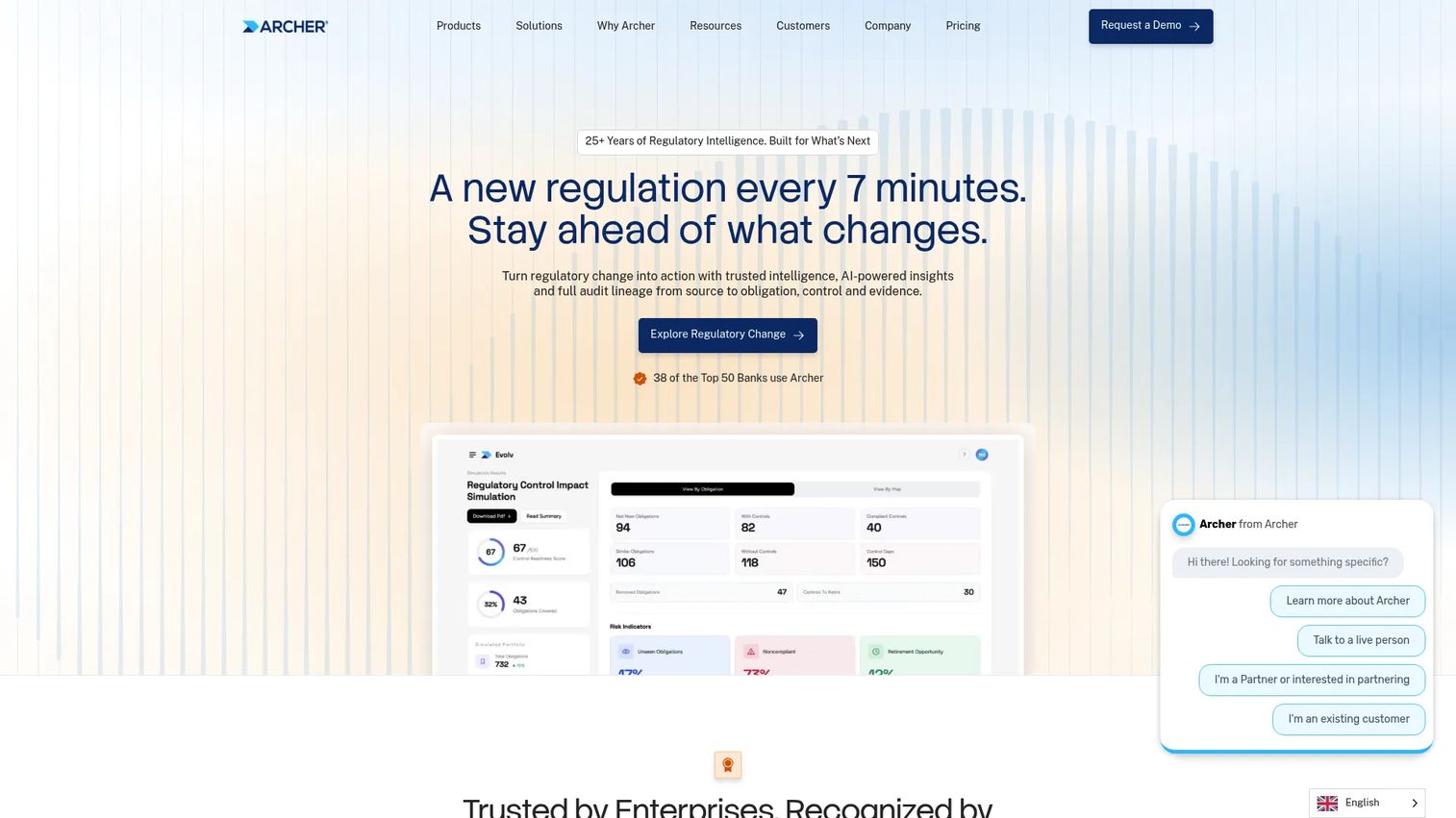
Archer is an enterprise GRC platform focused on regulatory change management, integrated risk programs, and compliance for large, regulated organizations. The platform monitors regulatory sources and extracts obligations automatically, then maps them to controls across enterprise risk, operational risk, IT risk, third-party risk, and resilience domains. Audit management, evidence tracking, and issue remediation complete the picture for organizations running formal risk programs across multiple business units.
Best for: Organizations with dedicated risk teams, formal risk governance structures, and complex enterprise risk requirements across several domains.
Key features
- Regulatory change management with automated obligation extraction
- Integrated enterprise, operational, IT, and third-party risk management
- Business continuity and resilience risk workflows
- Compliance management and controls library
- Audit management with evidence tracking and issue remediation
- Risk aggregation and executive reporting dashboards
Why choose Archer: Archer fits organizations that need a formal risk operating model, not just audit automation. If your risk program spans regulatory tracking, operational risk, and third-party oversight across multiple business units, the breadth matches.
Archer pricing: Archer directs all pricing inquiries to its sales team. No plan tiers or indicative costs are visible on the pricing page. Implementation services are typically required, so budget for both platform licensing and a professional services engagement when requesting a quote.
G2 rating: 4.3/5.
6. MetricStream
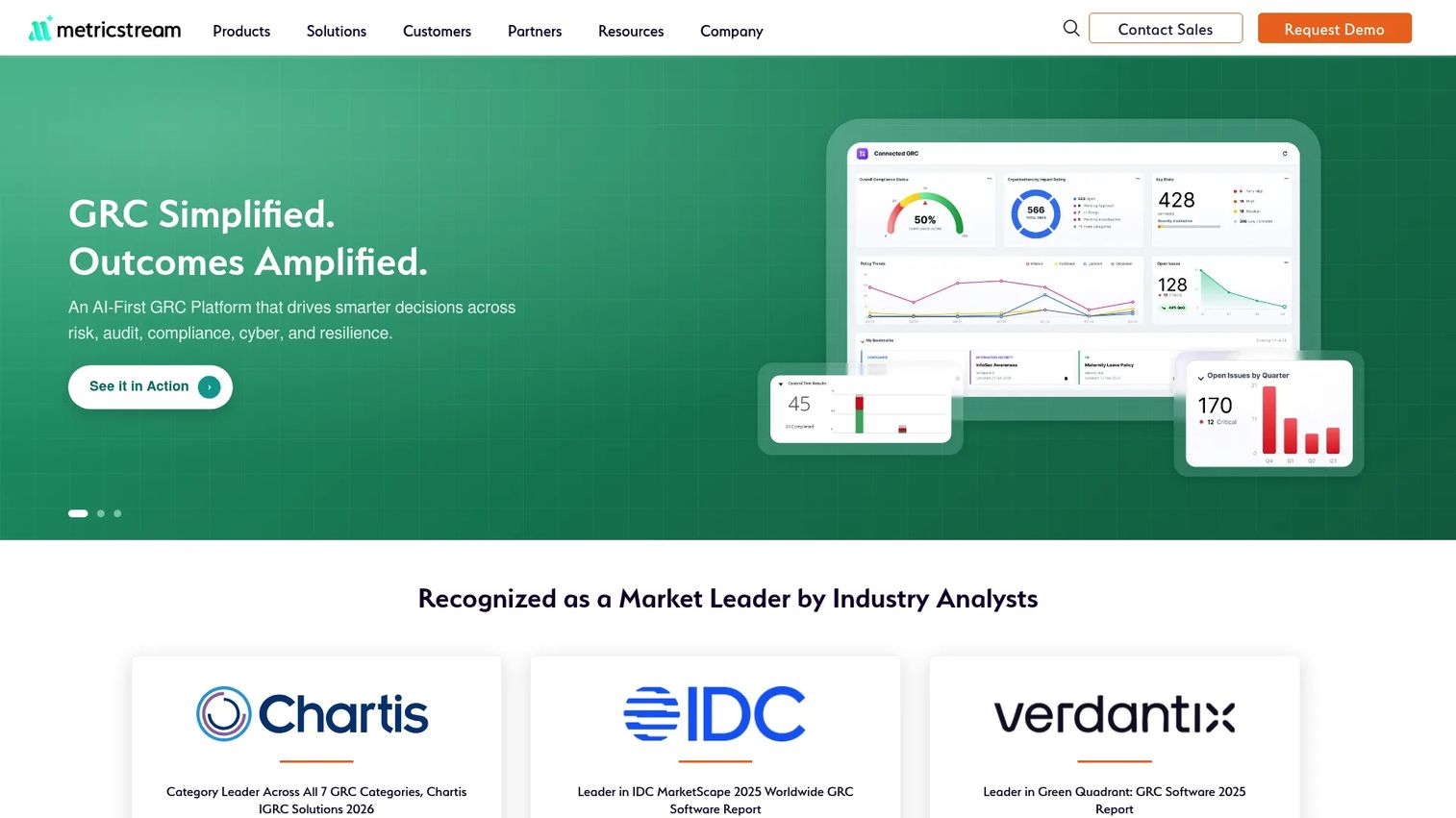
MetricStream delivers an AI-first GRC platform built around a federated data model that connects risks, regulations, assets, controls, organizational entities, processes, and issues into a single governed view. The platform covers enterprise risk, compliance, audit, cyber risk, third-party risk, and resilience programs, with predictive intelligence, semantic search, and continuous control monitoring layered across those domains. AppStudio lets teams extend the platform without custom code.
Best for: Large organizations managing several GRC disciplines across business units or regions, where cross-domain risk visibility and analytical depth matter as much as workflow automation.
Key features
- Federated data model linking risks, controls, and organizational entities
- AI-powered predictive intelligence and semantic search
- Continuous control monitoring and automated evidence collection
- Compliance management, audit workflows, and framework mapping
- Third-party risk management
- Built-in analytics, dashboards, APIs, and AppStudio extensibility
Why choose MetricStream: MetricStream suits programs that have moved past initial audit automation and need analytical depth across multiple risk domains. The federated model is what differentiates it from compliance automation tools, but that scope comes with implementation and governance requirements to match.
MetricStream pricing: MetricStream requires a tailored quote through its sales team. No numerical pricing is displayed. Pricing varies by modules, deployment options, and contract terms. Factor in implementation services alongside license cost.
G2 rating: 4.3/5.
7. AuditBoard
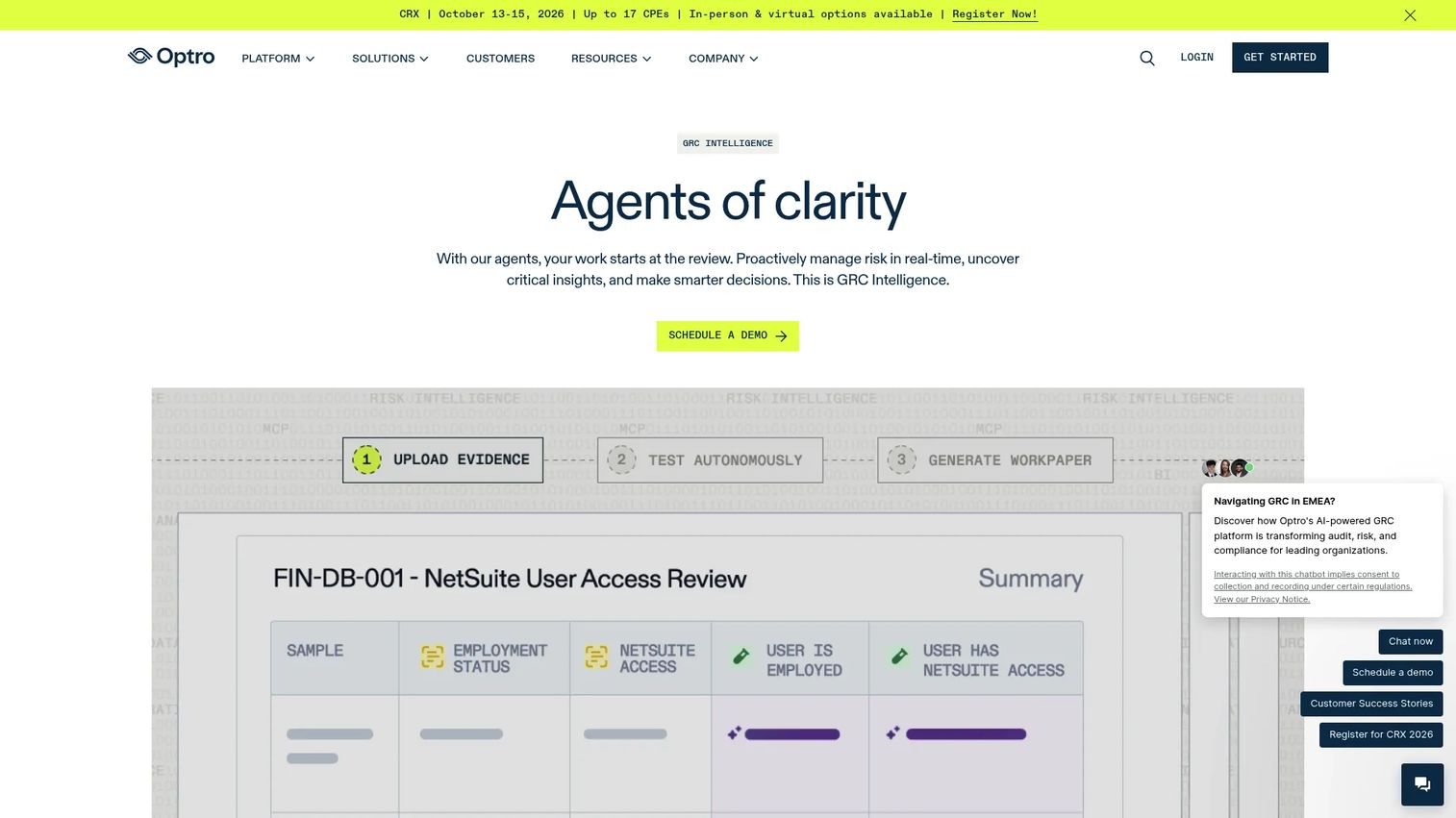
AuditBoard is a connected risk platform built primarily for internal audit, SOX controls management, and risk teams. The platform supports risk-based audit planning, controls testing, SOX assurance, ESG compliance, IT risk, and enterprise risk management, with AI-powered workflow automation and recommendations across all modules. Over 200 integrations connect AuditBoard to the systems where audit evidence and risk data actually live.
Best for: Companies where internal audit, controls testing, or SOX compliance drives the GRC purchase, and where audit leaders need a platform built for their workflow rather than adapted from a broader risk tool.
Key features
- Risk-based audit planning and controls testing
- SOX management and assurance workflows
- Enterprise, operational, IT, and third-party risk management
- ESG and regulatory compliance management
- AI-powered workflow automation and audit recommendations
- 200+ integrations and executive reporting dashboards
Why choose AuditBoard: Audit-led buyers get a platform whose core logic is organized around audit workflows rather than bolted on. Evidence ownership, issue tracking, and executive reporting are built for the audit function specifically, which reduces the configuration work required to get a usable program running.
AuditBoard pricing: AuditBoard requires a sales conversation for pricing. No plan tiers or indicative costs appear on the website. Pricing reflects the modules selected and user count. G2 reviewers note the platform is positioned toward mid-market and enterprise teams, with contract minimums that may exceed what early-stage teams typically budget.
G2 rating: 4.6/5.
8. Drata
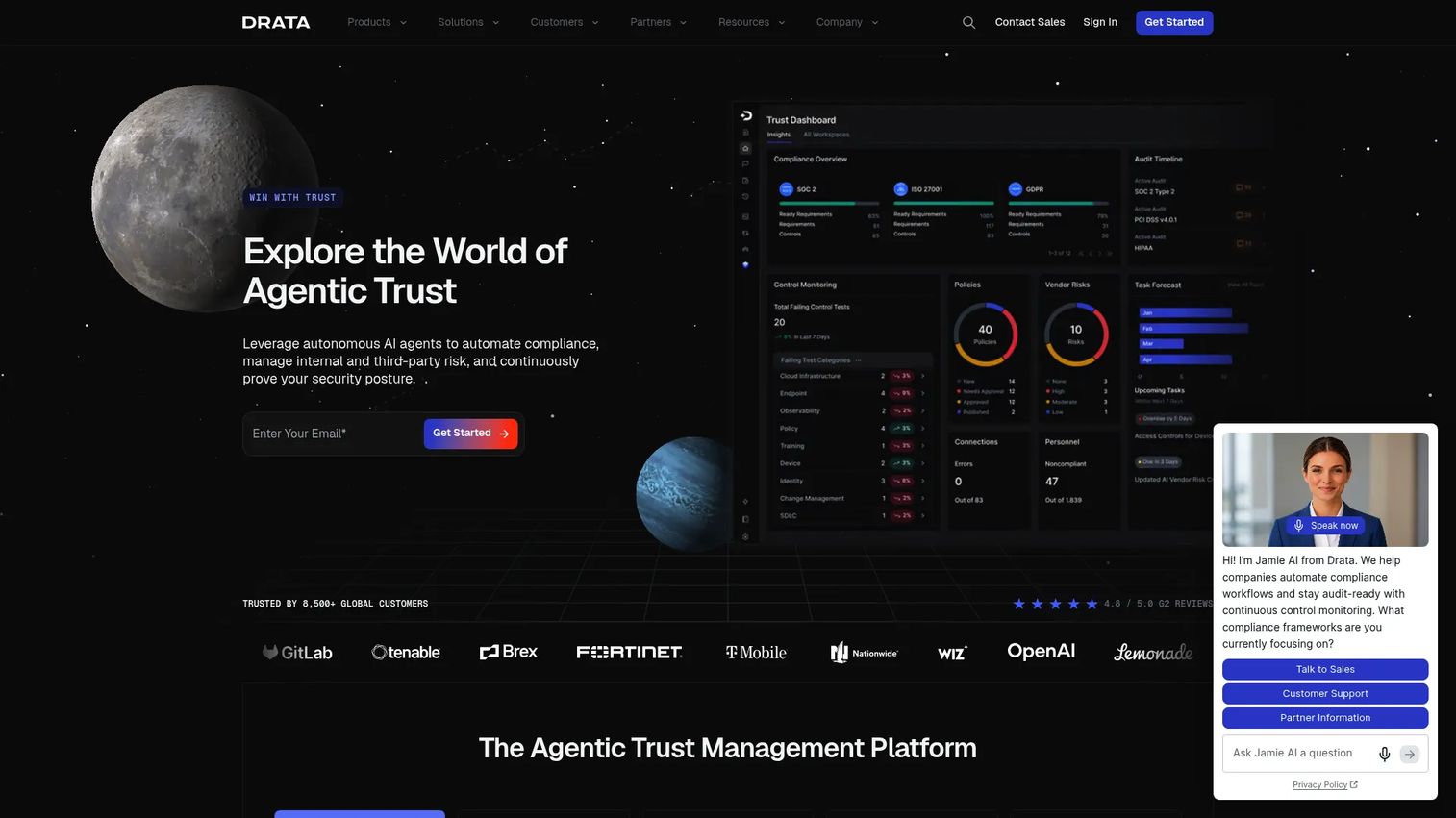
Drata is an agentic trust management platform that automates evidence collection, continuous control monitoring, and multi-framework compliance alongside integrated governance, risk management, and user access reviews. The Trust Center gives customers and prospects a live view of your compliance posture without requiring a manual response to every security questionnaire. AI-powered questionnaire assistance accelerates the review process further.
Best for: SaaS companies that want automated audit readiness for multiple frameworks without building a large compliance team, paired with a customer-facing security assurance layer.
Key features
- Automated evidence collection with continuous compliance monitoring
- Integrated governance and risk management with risk registers
- Trust Center for customer-facing security documentation
- AI-powered security questionnaire assistance
- User access reviews and policy management
- Multi-framework support across SOC 2, ISO 27001, HIPAA, GDPR, and others
Why choose Drata: Drata works well for founders who need to close enterprise deals faster by reducing security review friction. The Trust Center handles customer questions proactively, while the automated evidence layer keeps audit preparation running without manual intervention.
Drata pricing: Drata offers Foundation, Advanced, and Enterprise plans for its compliance and GRC workflows, plus a parallel set of Assurance plans. All pricing is personalized and requires contacting sales. G2 reviewers report that costs scale with the number of integrations, frameworks, and users included in the contract.
G2 rating: 4.7/5.
9. Workiva Platform
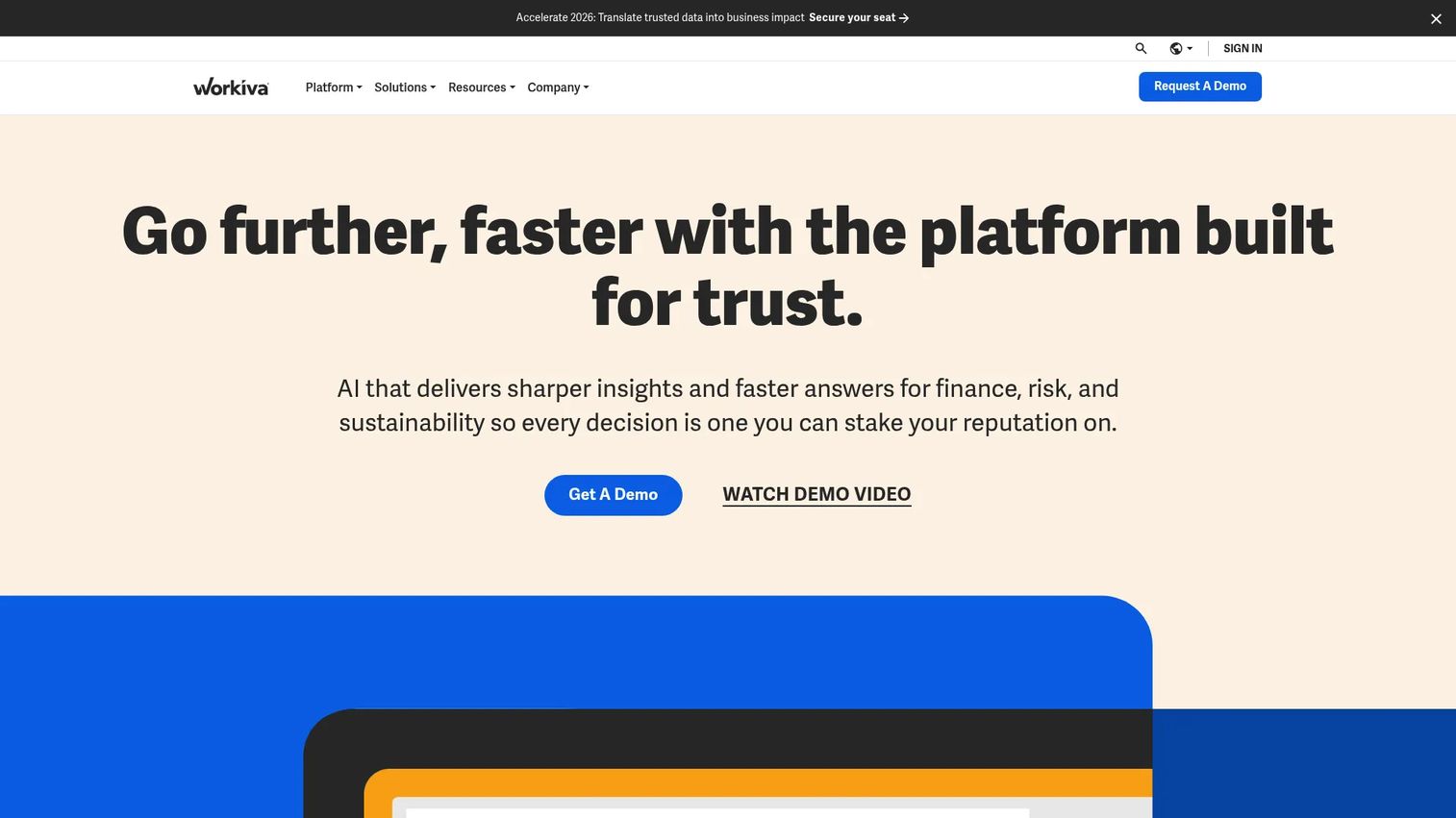
Workiva is an integrated platform for finance, risk, sustainability, reporting, compliance, and AI-governed workflows. Its defining feature is data linking: The same number or control finding updates everywhere it appears across documents, spreadsheets, and presentations simultaneously. Risk and compliance workflows feed directly into financial and sustainability reporting, with version control, digital review trails, and role-based permissions governing every change. Workiva AI and AI agents automate document preparation and data validation across those connected workflows.
Best for: Enterprise finance, audit, and compliance teams where assurance reporting must connect directly to financial reporting, sustainability disclosures, and board-level documentation.
Key features
- Data linking across documents, spreadsheets, and presentations
- Real-time collaboration, version control, and digital review trails
- SEC, XBRL, financial, sustainability, risk, and controls reporting
- 70+ connectors and open APIs for data integration
- Workiva AI and AI agents for document automation
Why choose Workiva Platform: Workiva suits organizations where the cost of disconnected reporting is measurable: Time spent reconciling numbers between audit findings, financial statements, and board materials. The data-linking model eliminates that reconciliation work.
Workiva pricing: Workiva uses custom pricing with good/better/best packaging options and unlimited users across its offerings. Contact sales for figures relevant to your module selection and organizational scope.
G2 rating: 4.5/5.
10. IBM OpenPages
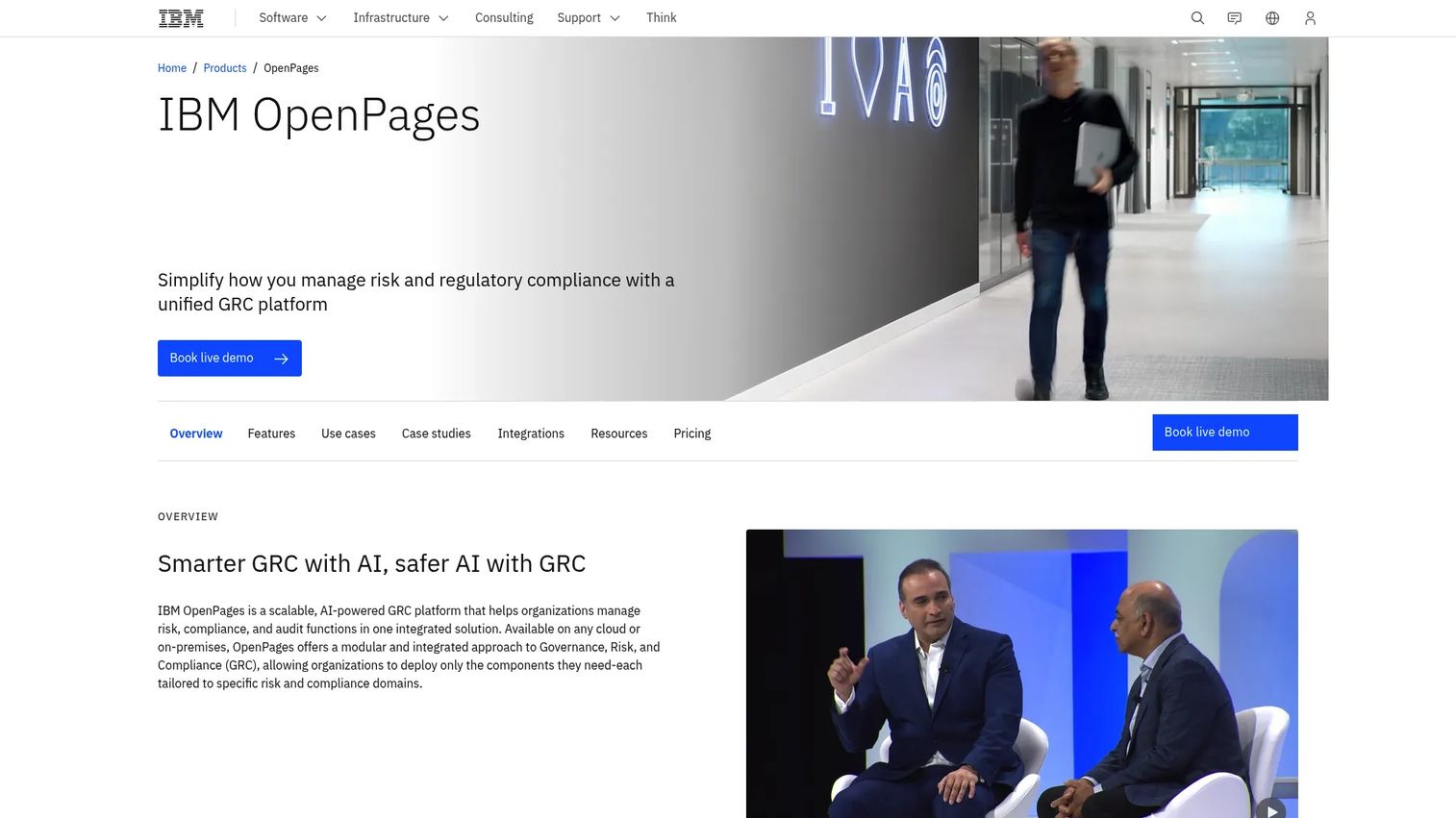
IBM OpenPages is a scalable, AI-powered GRC platform covering operational risk, regulatory compliance, internal audit, IT governance, third-party risk, data privacy, ESG, and additional risk management use cases through a modular architecture. A GRC Canvas visualization tool maps relationships between risks, controls, and organizational entities. Configurable workflows, dashboards, and views can be adjusted without custom code. IBM OpenPages is notable for publishing indicative SaaS pricing, which is rare among enterprise GRC vendors.
Best for: Large organizations that need a modular enterprise GRC platform and want transparent starting-price visibility before engaging sales.
Key features
- AI-powered GRC automation and risk classification
- GRC Canvas for risk and controls visualization
- Configurable workflows and dashboards without custom code
- Modules for operational risk, regulatory compliance, audit, IT governance, third-party risk, data privacy, and ESG
- REST APIs and enterprise integrations
Why choose IBM OpenPages: The modular architecture lets organizations activate specific risk domains without purchasing the full platform upfront. Published pricing gives procurement teams a baseline for budget planning before a sales conversation.
IBM OpenPages pricing: SaaS on AWS starts at $3,300 for the Essentials edition and $6,050 for Standard. IBM Cloud-hosted editions start at $6,250 (Single Solution) and $9,000 (Enterprise). On-premises pricing requires a direct quote. Prices are indicative and may vary by region. No free tier is available.
G2 rating: 4.2/5.
Considerations
Start with the primary job you need to solve
Before evaluating platforms, name the specific problem: Audit readiness for a specific framework, customer security questionnaire response, board risk reporting, or third-party vendor oversight. A narrow, urgent need does not require a broad enterprise platform. Buying more coverage than you can operate creates shelfware, not control.
Verify framework coverage and cross-mapping
Confirm that the platform supports the specific frameworks your customers and auditors require: SOC 2, ISO 27001, HIPAA, GDPR, FedRAMP, or others. Check whether controls map automatically across frameworks when you add a second certification, or whether each framework requires a separate configuration effort. Cross-mapping efficiency directly affects how much work scales with each new audit.
Validate integrations with your actual stack
Review which integrations are available natively versus which require API configuration. Prioritize connections to the systems where your evidence actually lives: AWS or GCP, your identity provider, HR system, ticketing tool, and code repository. An integration catalog matters less than whether the specific connections you need remove recurring manual work rather than adding configuration overhead.
Estimate implementation ownership before signing
Ask each vendor to walk through who owns configuration, evidence mapping, control testing, policy updates, and user administration after go-live. A platform without a clear internal owner fails regardless of feature coverage. If your team does not yet have a dedicated security or compliance hire, factor that role into the timeline before committing to an implementation scope.
Price the full operating model, not just the license
Compare total cost across the contract period: License fees, implementation services, required modules, additional users added as you grow, framework expansion costs, and any audit or consulting dependencies the platform assumes. Enterprise GRC platforms frequently carry implementation services that cost as much as or more than the annual license. Year-two costs can look materially different from year-one estimates.
Conclusion
The right GRC platform moves risk and compliance out of the founder's head and into a system the next functional owner can run. For most Series B SaaS teams, that means starting with the narrowest high-value workflow rather than purchasing a platform that exceeds current operating maturity.
Vanta and Drata are the natural starting points for SaaS teams prioritizing automated compliance and customer security workflows. LogicGate suits teams that need configurable risk processes as their program evolves. AuditBoard fits buyers where internal audit or SOX drives the decision. Risk Cognizance covers more ground than a pure compliance tool and offers a free MSP entry tier.
For mature enterprise programs, ServiceNow GRC, Archer, MetricStream, Workiva Platform, and IBM OpenPages each address specific program depth requirements. IBM OpenPages is the only platform in this list with published SaaS pricing, which simplifies initial budget planning.
Pick two or three finalists based on the job you need to solve first. Map their integrations against your actual stack, run a real evidence or risk workflow during the evaluation, and ask each vendor specifically what the year-two operating cost looks like. The platform you can actually operate is worth more than the one with the most modules.
Start your journey with Guideflow today!
FAQs
GRC software helps organizations manage governance activities, identify and monitor risk, maintain compliance controls, collect evidence, and report assurance status to leadership and auditors. Platforms range from narrow compliance automation tools focused on a single framework to broad enterprise GRC systems covering operational risk, internal audit, policy management, third-party risk, and executive reporting. The right scope depends on whether you have a narrow, urgent audit goal or a maturing multi-domain risk program.
GRC software pricing depends on modules, users, frameworks, integrations, assets or entities under management, implementation services, and contract length. Most enterprise platforms require a sales conversation before providing figures. IBM OpenPages is an exception, with published SaaS pricing starting at $3,300 for its Essentials edition. When comparing costs across vendors, price the full operating model: License, implementation services, and year-two costs as your user count and framework requirements grow.
Compliance automation tools focus on evidence collection, continuous control monitoring, and audit preparation, typically for one or two frameworks. They are faster to implement and suited to teams with a narrow, immediate audit goal. Full GRC platforms add enterprise risk management, internal audit workflows, policy management, third-party risk oversight, business continuity planning, and multi-domain executive reporting. Vanta and Drata lean toward compliance automation with some GRC capabilities; Archer, MetricStream, and IBM OpenPages are full GRC platforms.
GRC software becomes operationally necessary when enterprise sales create recurring security review requests, audits require repeatable evidence rather than one-time document collection, risk ownership is moving beyond the founder, or board reporting needs a consistent view of exposure across frameworks. At Series B, the trigger is usually the first enterprise deal requiring SOC 2 or the first audit where manual evidence collection consumed significant engineering time. Start with compliance automation software and expand the scope as the program matures.
Prioritize integrations with cloud infrastructure (AWS, GCP, Azure), identity and access management, HR systems, ticketing tools, code repositories, and finance systems. The most valuable integrations pull evidence automatically from the systems where your controls actually operate. A long integration catalog matters less than whether your specific stack connections remove recurring manual work. Ask vendors to demonstrate the integration you care most about during the evaluation.
GRC software automates evidence collection, control monitoring, task assignment, and progress reporting for frameworks including SOC 2 and ISO 27001. It does not replace leadership ownership of control design, auditor judgment during testing, or the requirement for an accredited auditor to issue an opinion. Software accelerates the operational work of preparing for an audit; the compliance outcome still depends on the strength of your controls and your auditor's review. No platform guarantees a clean audit report.
Implementation timing depends on existing control maturity, number of frameworks to map, integration depth, data quality in source systems, internal ownership clarity, and whether professional services are involved. Compliance automation tools like Vanta and Drata can produce a working evidence collection workflow within weeks for teams with a clear framework target. Broader enterprise GRC platforms with custom workflow configuration and multi-domain scope typically run from three months to over a year. Start with one high-value workflow rather than attempting to configure the full platform before going live.
Ask how long it takes to get the first evidence collection workflow live after signing. Ask which integrations require configuration versus which are available out of the box. Ask how framework cross-mapping works when you add a second certification. Request a live walkthrough of the risk register and board reporting output. Ask how user permissions and access controls are managed. Confirm what happens to data export if you choose not to renew. Ask for year-two pricing assuming 20% team growth and one additional framework. These questions surface the gap between what a demo shows and what running the platform actually requires.
Vendor risk management covers the process of assessing, monitoring, and managing the compliance and security posture of third-party suppliers and service providers. Within a GRC platform, it typically includes automated questionnaire sending, risk scoring based on vendor responses, continuous monitoring of vendor security signals, and issue remediation workflows. For SaaS teams relying heavily on cloud services and third-party tools, vendor risk management is increasingly required by enterprise customers and auditors as part of SOC 2 and ISO 27001 assessments. See also our guide on ai governance tools for managing risk in AI-dependent vendor relationships.