Your board asks for a current entity chart. Your CFO needs ownership percentages for a tax filing. Your new general counsel wants to see the director appointment history. And the answer to all three requests is: Somewhere in a spreadsheet, probably outdated, owned by whoever last touched it.
This is the operational reality for most Series B SaaS companies. Entity data sits in shared drives, email threads, and local counsel inboxes. Nobody has a trusted view. According to Wolters Kluwer's 2025 benchmark, 27% of legal teams still use spreadsheets to manage entity data, and 30% rely on shared drives. That fragmentation creates real risk when a diligence process, audit, or board request arrives without warning.
Legal entity management software creates a structured, auditable operating view for subsidiaries, ownership structures, governance records, officers, directors, and compliance deadlines. The global market for this software reached $1.8 billion in 2025 and is projected to reach $3.9 billion by 2034, according to MarketIntelo (2026).
Which entity management platform gives a growing SaaS company enough control for diligence and compliance without creating another system nobody owns?
What's inside
This guide covers 12 legal entity management software platforms evaluated for 2026. It's written for founders, legal leads, and finance or operations leaders who need to replace fragmented entity records with a system a new VP can operate on day one.
Selection criteria:
- Entity data and document centralization
- Compliance calendars and filing workflows
- Ownership, subsidiary, officer, and director tracking
- Governance reporting and historical records
- Integrations, access controls, and implementation support
Pricing and ratings were verified against each vendor's live pricing page and G2 listing as of September 29, 2026.
TL;DR
- Best for global entity governance: Nasdaq Kube and Athennian both offer strong multi-jurisdictional coverage with structured compliance workflows and reporting
- Best for fast-growing SaaS companies: Athennian and EntityKeeper offer clear pricing, clean data models, and onboarding paths that suit growing legal and finance teams
- Best for legal operations teams: DiliTrust and Legisway by Wolters Kluwer connect entity management to contracts, matters, and legal department workflows
- Best for private equity and complex holding structures: Atlas by Ontra is purpose-built for fund administration and ownership modeling
- Best for corporate records and minute books: MinuteBox earns the highest G2 rating in this list (5.0/5) and focuses specifically on governance records
- Best spreadsheet replacement with transparent pricing: EntityKeeper and Filejet both publish clear pricing tiers and offer structured entity data out of the box
What is entity management software?
Entity management software is a system for storing, maintaining, and reporting on a company's legal entities, ownership structures, governance records, officers, directors, compliance obligations, and related documents.
It replaces disconnected spreadsheets, shared drives, and outside counsel updates with a single operating view that legal, finance, tax, HR, and executive teams can access with appropriate permissions.
Core records
An entity database typically stores legal name, jurisdiction, entity type, formation date, registered office, tax identifiers, current status, ownership percentages, and subsidiary relationships. Custom fields handle jurisdiction-specific or industry-specific requirements.
Governance and corporate documents
The document layer covers articles of incorporation, bylaws, board and shareholder resolutions, meeting minutes, stock and ownership records, officer and director appointments, powers of attorney, and filing receipts.
Compliance calendars and recurring obligations
Platforms track annual reports, registered agent renewals, tax and regulatory deadlines, board and shareholder meeting requirements, and license renewals. Reminders and escalation rules route alerts to the right owner before a deadline passes.
Ownership and organizational structures
Ownership modeling handles parent and subsidiary relationships, direct and indirect ownership percentages, and entity changes over time. Organizational charts give executives and boards a current visual view.
Reporting and auditability
Point-in-time reporting lets legal and finance teams answer questions about what was true on a prior date. Audit trails, permission history, and data exports support diligence data rooms and board requests.
Integrations and workflow automation
Entity management platforms connect to ERP and finance systems, HR platforms, board portals, document management tools, e-signature providers, and filing systems. APIs and data warehouse integrations support custom reporting.
Entity management software is not a replacement for legal counsel, tax advisors, registered agents, or board portal tools. It organizes information and automates workflows. The people and services responsible for legal decisions remain separate.
When to use entity management software
Expand across jurisdictions
Each new subsidiary, employer registration, or tax nexus adds a set of compliance deadlines, governance requirements, and reporting obligations. A spreadsheet covering five entities stays manageable. Add ten more across four countries and the relationships between parent entities, subsidiaries, and branches become difficult to maintain accurately without a dedicated system.
Prepare for fundraising, diligence, or acquisition
A financing round or acquisition process typically generates requests for current entity charts, ownership records, officer and director history, and governing documents. Teams that rely on shared drives and outside counsel for this data spend significant time reconstructing records under deadline pressure. A current, searchable entity system reduces that effort substantially.
Hand off ownership to a new legal or finance leader
A new VP of Legal or Head of Finance needs to understand the corporate structure without the founder explaining every entity, deadline, and document location. The system should give that person a working view in the first week. If the current process depends on tribal knowledge held by one or two people, a handoff becomes a reconstruction project.
Entity management software comparison
The table below covers all 12 platforms in this guide. Use it to narrow your shortlist before reviewing the detailed entries. Pricing and G2 ratings were verified as of September 29, 2026.
| # | Product | Best for | Key differentiator | Pricing | G2 rating |
|---|---|---|---|---|---|
| 1 | CT hCue Entity Management | Large organizations managing subsidiaries across jurisdictions | Centralized entity records with Workday and DocuSign integrations | Contact for quote | 4.8/5 |
| 2 | Filejet | Multi-entity compliance and filing management | Transparent per-entity pricing with filing services included | From $150/entity/year | 4.6/5 |
| 3 | DiliTrust | Legal teams needing governance and entity data in one platform | AI-native platform covering boards, contracts, entities, and matters | Contact for quote | 4.4/5 |
| 4 | Athennian | Multinational companies with complex subsidiary structures | Equity and debt modeling with dynamic structure charts | From $25,000/year | 4.6/5 |
| 5 | MinuteBox | Corporate records and minute book management | Highest-rated platform in this list with board portals and AI workflows | Contact for quote | 5.0/5 |
| 6 | Legisway by Wolters Kluwer | Legal departments building broader legal operations | Integrated contract, entity, and risk management for in-house teams | Contact for quote | Not listed on G2 |
| 7 | Atlas by Ontra | Private equity and complex holding structures | AI-powered entity administration purpose-built for fund managers | Contact for quote | 4.8/5 |
| 8 | EntityKeeper | Legal and finance teams replacing spreadsheets | Published pricing with entity-capacity-based plans | From $465/month | 4.0/5 |
| 9 | GaLexy Solution by Legal Suite | Corporate legal departments managing matters and entities | Enterprise legal management covering litigation, contracts, and entities | Contact for quote | 2.0/5 |
| 10 | Scanmarket by Unit4 | Procurement and supplier entity data | Source-to-contract platform with entity and supplier management | Contact for quote | 4.4/5 |
| 11 | Cres Technology | Commercial real estate organizations | Microsoft 365-based document, portfolio, and entity management | Contact for quote | 5.0/5 |
| 12 | Nasdaq Kube Global Entity Governance Platform | Global companies managing entities across multiple jurisdictions | API-first governance with automation, dashboards, and full audit trail | Contact for quote | 5.0/5 |
Pricing and ratings verified September 29, 2026, from each vendor's pricing page and G2 listing.
Best 12 entity management software tools for 2026
1. CT hCue Entity Management
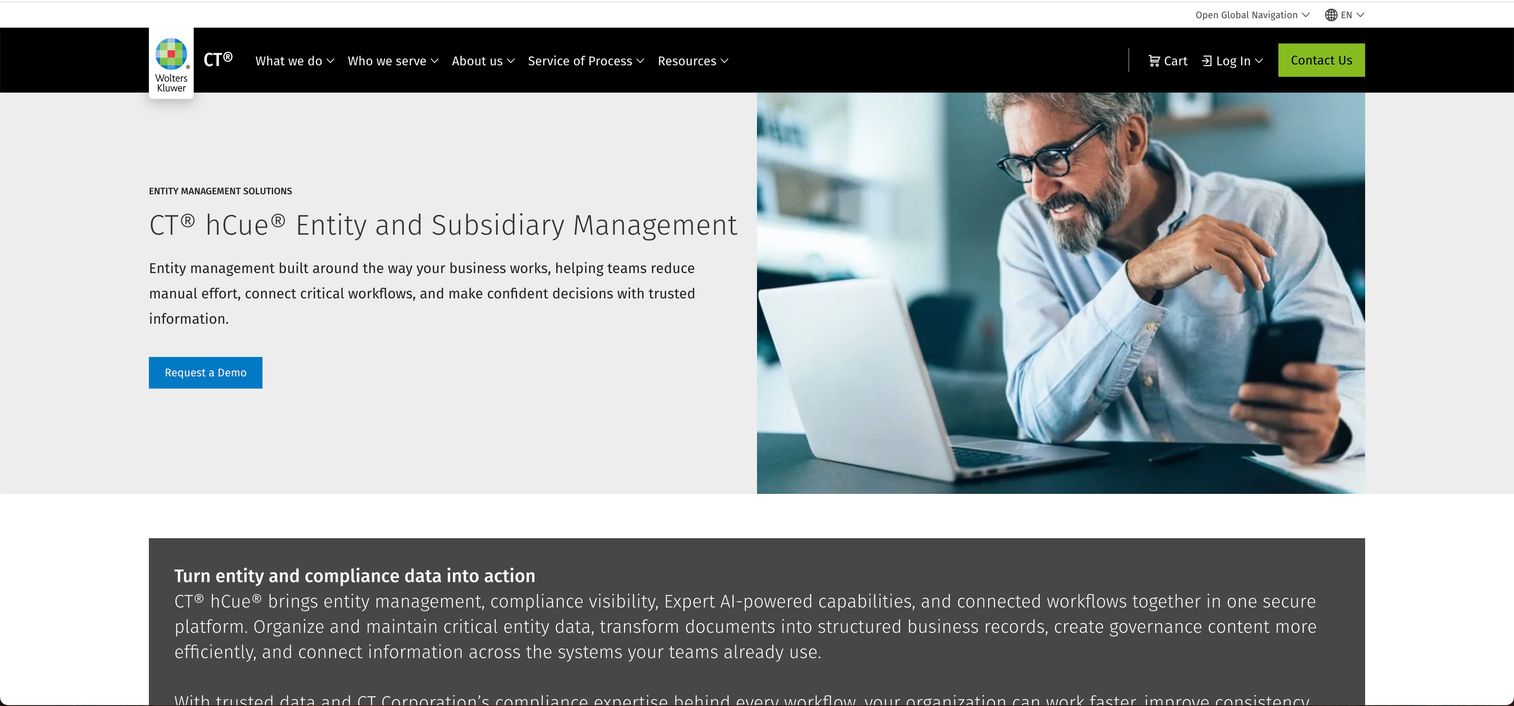
CT hCue Entity Management is a secure, cloud-based platform from CT Corporation (a Wolters Kluwer company) for managing legal entity records, subsidiary data, governance documents, and compliance activities in one centralized location. It's designed for organizations managing multiple legal entities across jurisdictions, connecting entity data to adjacent workflows through integrations with platforms like Workday and DocuSign.
Best for: Legal and corporate secretarial teams at large organizations that need a centralized entity record system with enterprise-grade integrations.
Key features
- Centralized entity records and secure document repository
- Customizable entity fields and organization chart generation
- Workflow integration via API, Workday, and DocuSign connections
- Compliance activity management and deadline tracking
- Role-based access controls and audit history
Why choose CT hCue Entity Management: CT Corporation's background in registered agent services and corporate compliance gives hCue a credible foundation for teams that want entity software backed by a provider with deep jurisdictional knowledge. It suits organizations prioritizing data governance and enterprise integrations over self-service configurability.
CT hCue Entity Management pricing: CT hCue requires a demo request through CT Corporation's sales team; no tier prices appear on the product page. Contact CT Corporation directly to discuss scope, entity volume, and implementation requirements.
G2 reviewers rate CT hCue at 4.8/5, based on 2 reviews as of September 2026.
2. Filejet
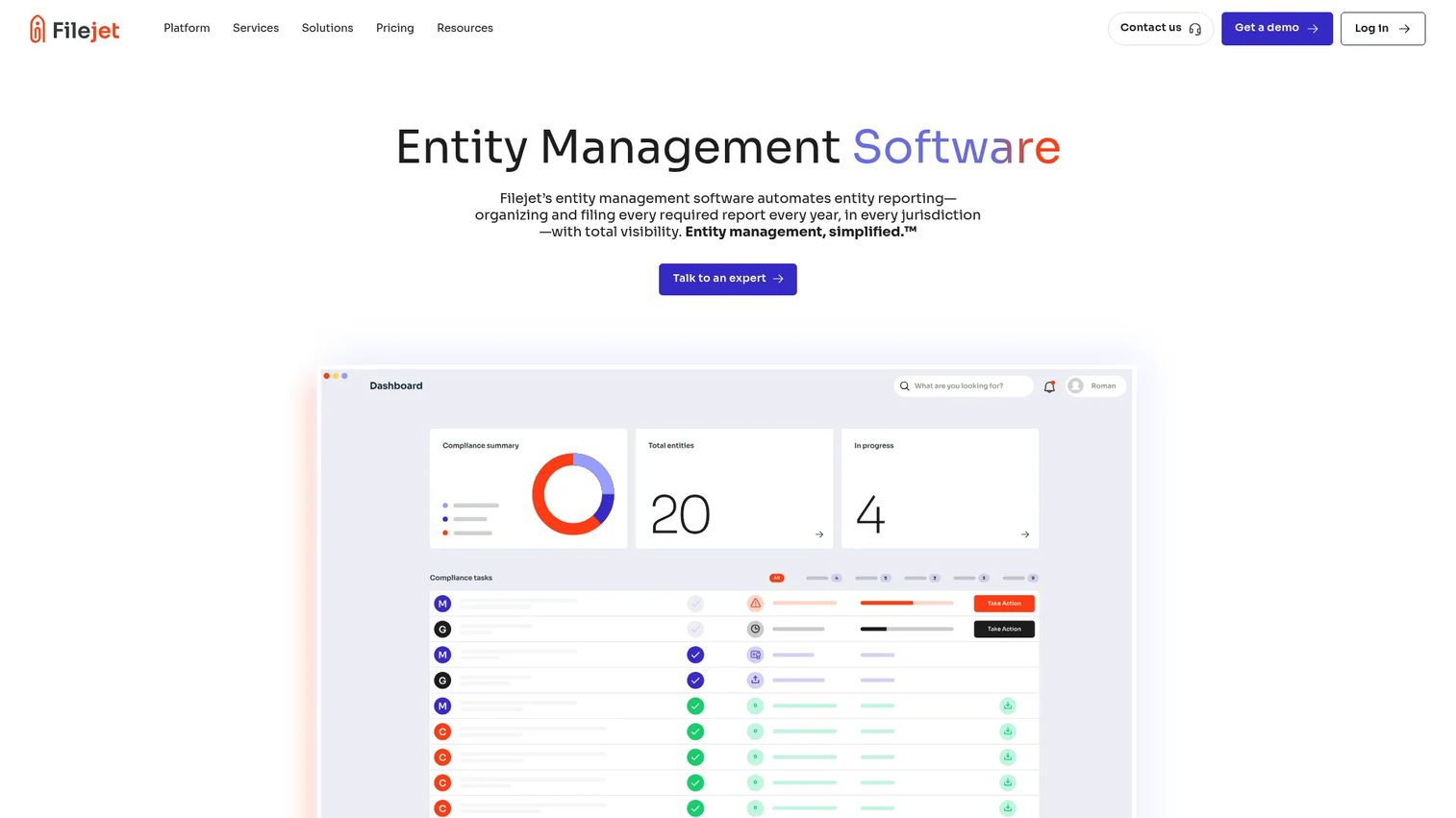
Filejet is an entity management and compliance platform built for in-house legal, finance, tax, and accounting teams, as well as law and accounting firms managing multi-entity portfolios. It combines a centralized entity dashboard with automated annual report filings, registered agent services, and business license renewals, making it one of the few platforms in this list that integrates filing services directly with software.
Best for: Organizations that want one system covering entity records, compliance deadlines, and transactional filings across multiple jurisdictions.
Key features
- Entity dashboard and centralized document repository
- Automated annual report filings and deadline tracking
- Registered agent services and business license renewals
- Bulk entity uploading and advanced document tagging
- Calendar integration with reminders and notifications
Why choose Filejet: Filejet's combination of software and filing services reduces the handoffs between a legal team and outside filing providers. For a growing SaaS company with subsidiaries across multiple states or countries, having deadline tracking and filing execution in one place cuts administrative overhead and reduces the risk of a missed annual report.
Filejet pricing: Filejet publishes its pricing directly: The Standard plan runs $150 per entity registration per year, and the Professional plan runs $350 per entity registration per year. Both are billed annually. A Premium tier uses custom pricing for larger portfolios. Law and accounting firm packages are also available on a custom or volume basis. Filejet's pricing page confirms no free tier.
G2 rates Filejet at 4.6/5. Capterra reports 4.8/5 from 44 reviews, which aligns with positive user sentiment on deadline automation and filing tracking.
3. DiliTrust
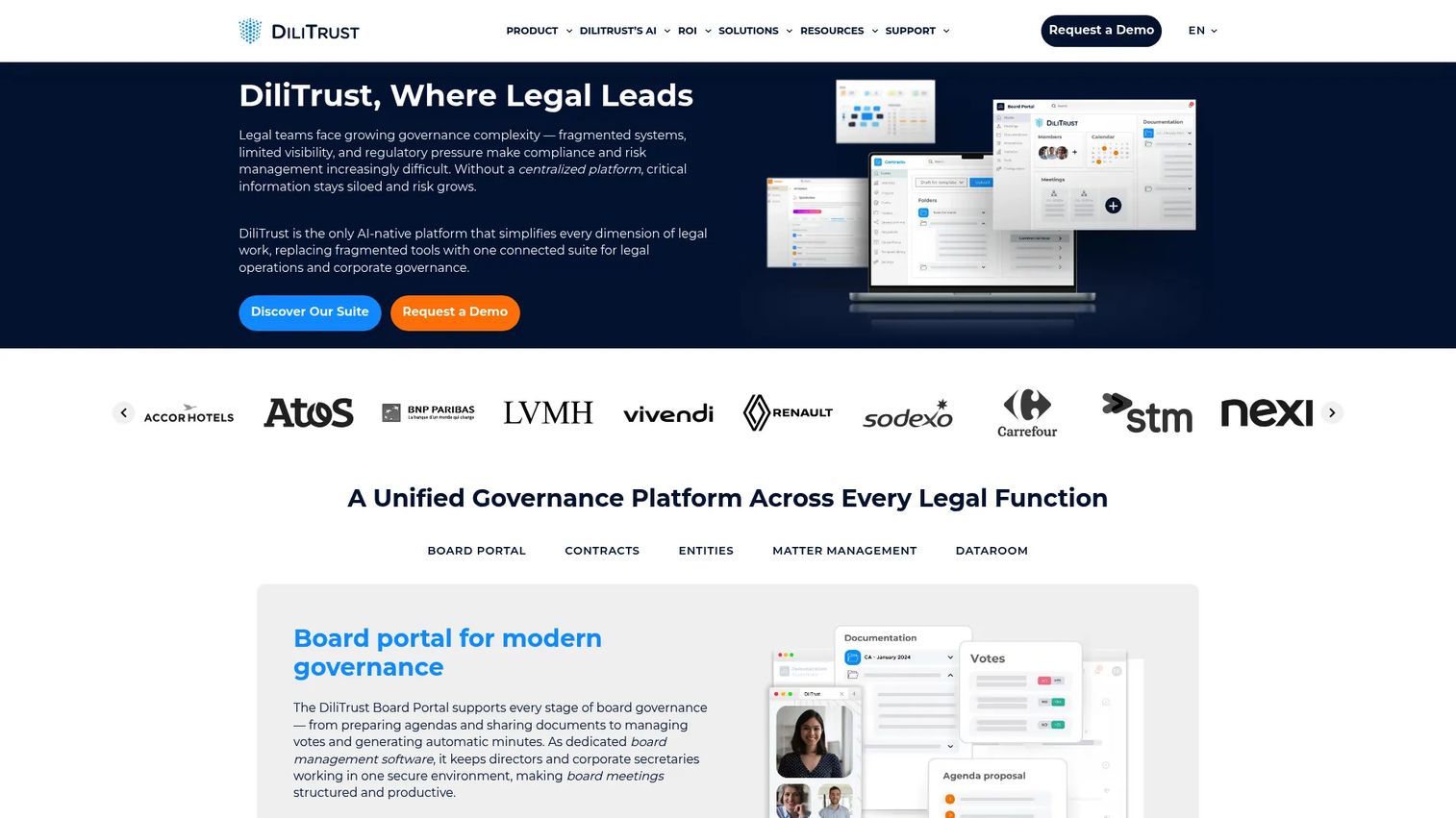
DiliTrust is an AI-native legal and corporate governance platform covering board management, contract management, entity management, matter management, and secure data rooms in a single system. Its entity management module handles centralized corporate data and compliance visibility alongside the broader legal department suite.
Best for: In-house legal, governance, and corporate secretarial teams that want entity information connected to board workflows, contracts, and legal matters.
Key features
- Legal entity management with centralized corporate data
- Board portal for agendas, documents, votes, and automated minutes
- Contract lifecycle management with AI risk detection
- Matter management for tasks, deadlines, and documents
- AI features including document summarization and audio transcription
Why choose DiliTrust: DiliTrust suits legal teams that need more than a standalone entity register. If your legal function also manages board meetings, contracts, and legal matters, consolidating those workflows into one platform reduces context-switching and keeps related documents and decision records in one searchable location.
DiliTrust pricing: DiliTrust does not publish pricing on its website. Contact DiliTrust directly for edition options, contract terms, and implementation costs.
G2 rates DiliTrust at 4.4/5 based on verified reviews as of September 2026.
4. Athennian
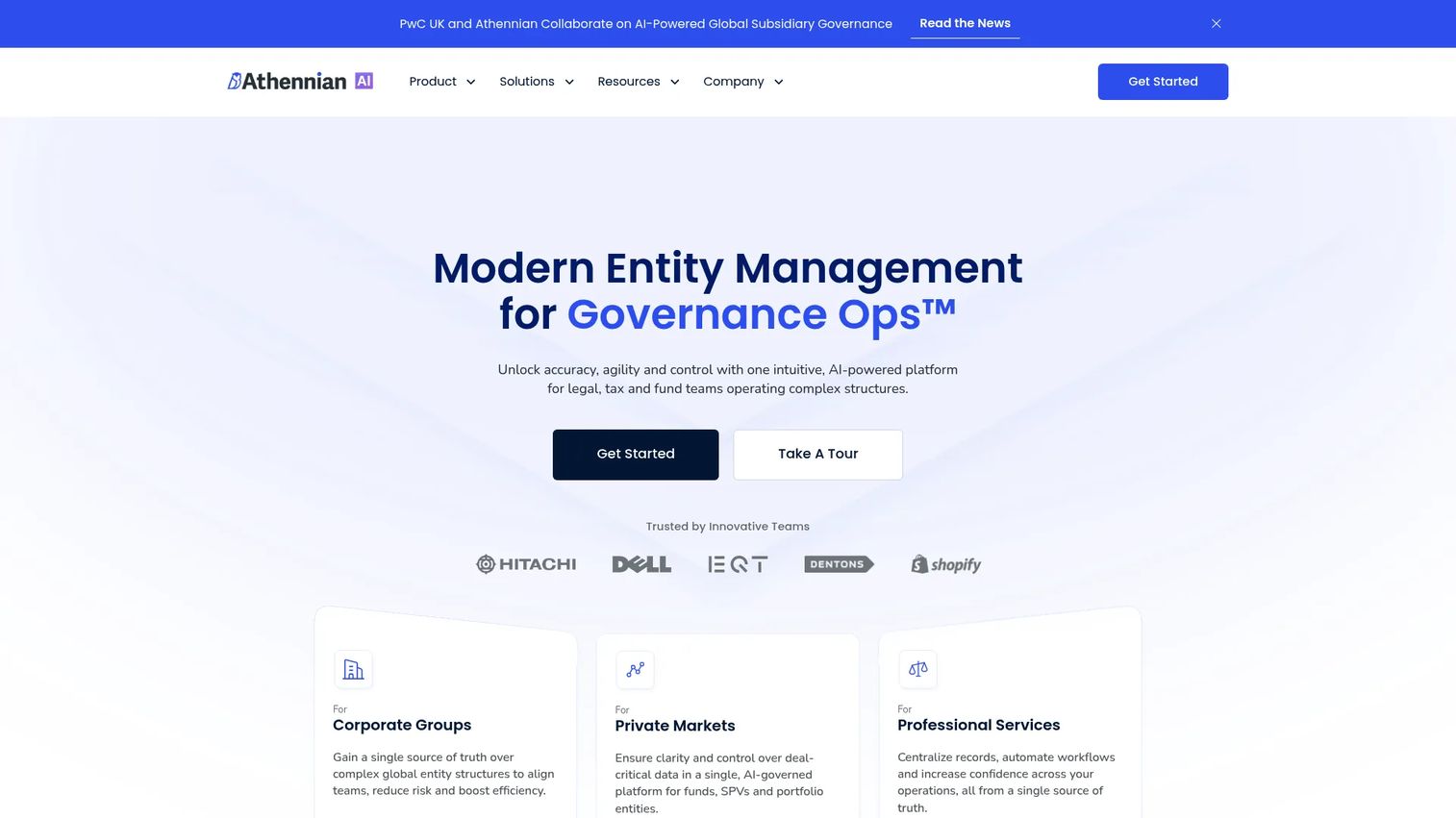
Athennian is a governance operations and entity management platform for legal, finance, tax, and compliance teams managing complex, multi-jurisdictional entity structures. It covers entity and people records, equity and debt structures, dynamic structure charts, document management, director and officer tracking, compliance reporting, and an AI-assisted workflow layer.
Best for: Multinational SaaS companies with growing subsidiary structures that need a combination of entity data, ownership modeling, and compliance tracking in one system.
Key features
- Entity and people records with appointments and D&O management
- Equity and debt structure tracking
- Dynamic structure charts updated as ownership changes
- Compliance tasks, reports, and audit trails
- Athennian AI for workflow assistance
Why choose Athennian: Athennian's strength is handling complexity at scale. If your company has subsidiaries across multiple jurisdictions with layered ownership, the platform's structure charts and point-in-time reporting give legal, tax, and finance teams a shared view without reconstructing the data for each request. It's also a common choice for teams preparing for diligence or board reporting.
Athennian pricing: The Essentials plan starts at $25,000 per year and covers up to 100 entities. Professional (up to 200 entities) and Enterprise (up to 300 entities) plans require contacting Athennian's sales team for a quote. All plans are billed annually with no free tier.
G2 rates Athennian at 4.6/5 as of September 2026.
5. MinuteBox
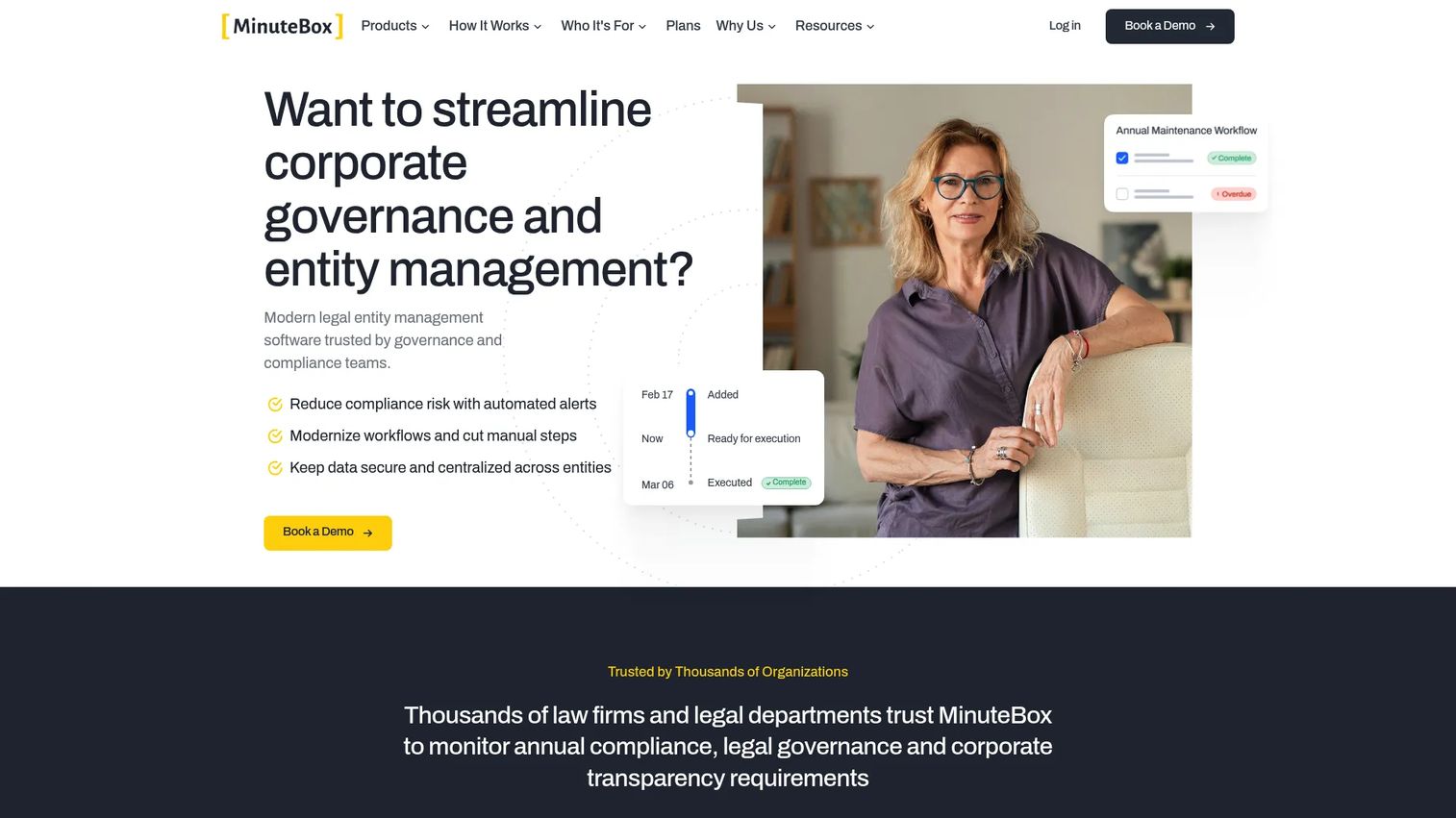
MinuteBox is a cloud-based legal entity management platform focused on corporate records, minute books, governance documents, and compliance workflows. It serves law firms, in-house legal teams, and corporate services teams that need organized, searchable entity records with board portal and data room functionality built in.
Best for: Corporate secretarial and legal teams that prioritize accurate minute books, resolution management, and governance records over filing automation.
Key features
- Entity management and centralized corporate records
- Document generation and management with AI organization
- Compliance calendars, reporting, and audit trails
- Board portals and secure data rooms
- AI chat and workflow automation
Why choose MinuteBox: MinuteBox earns the top G2 rating in this list at 5.0/5. For teams where corporate records quality directly affects board meeting preparation, financing events, or diligence reviews, the platform's focus on organized, complete minute books is its primary advantage over broader legal operations platforms.
MinuteBox pricing: MinuteBox offers Starter, Starter Plus, Small Enterprise, and Enterprise plans. Pricing for all tiers is customized based on entities, user seats, and required features; the official pricing page lists no numeric amounts. Contact MinuteBox directly to discuss your entity count and configuration requirements.
G2 rates MinuteBox at 5.0/5 from 15 reviews as of September 2026.
6. Legisway by Wolters Kluwer

Legisway by Wolters Kluwer is all-in-one legal management software for corporate legal departments. It centralizes legal information across contracts, entity management, risk management, workflows, and alerts, connecting these functions in a single system with reporting and KPI dashboards.
Best for: Legal departments building a broader legal operations function that includes entity management alongside contract and risk management.
Key features
- Corporate records and entity management
- Contract management with AI-powered analysis
- Legal risk management with workflows, alerts, and reporting
- KPI dashboards for legal department oversight
- Team collaboration and document management
Why choose Legisway by Wolters Kluwer: Legisway suits a company hiring its first general counsel or head of legal who needs one system covering the full legal department workload. Entity management is one module within a broader legal operations platform rather than a standalone product, which makes it a better fit for teams with diverse legal responsibilities than for teams focused solely on entity compliance.
Legisway by Wolters Kluwer pricing: Wolters Kluwer does not publish Legisway pricing on its official site. Reach out to their sales team for edition options, implementation scope, and contract terms.
A current G2 listing for Legisway was not verifiable at publication. Capterra reports 4.6/5 from 8 reviews.
7. Atlas by Ontra
Atlas by Ontra is an AI-powered entity administration solution built specifically for private equity firms. It provides a single source of truth for entity data and documents, structure charts for current and pro forma ownership, governance information tracking, automated compliance workflows, and advanced permissions with a standard API package.
Best for: Private equity firms, fund managers, and organizations with complex holding structures that need purpose-built entity administration rather than a general corporate records tool.
Key features
- AI-enabled entity data and document management
- Current and pro forma ownership structure charts
- Director, officer, and authorized signatory tracking
- Automated compliance workflows and task management
- Advanced user permissions and standard API package
Why choose Atlas by Ontra: Atlas is purpose-built for private markets. If your company has venture investors, special-purpose vehicles, or complex fund ownership structures, Atlas handles scenarios that general entity management platforms were not designed for. SaaS companies without private equity backing or complex holding arrangements will find simpler platforms more appropriate for their needs.
Atlas by Ontra pricing: Ontra prices Atlas on an annual license basis, with the quote reflecting the firm's specific scale and configuration. Contact Ontra's sales team for a proposal.
G2 rates Ontra at 4.8/5 based on verified reviews as of September 2026.
8. EntityKeeper
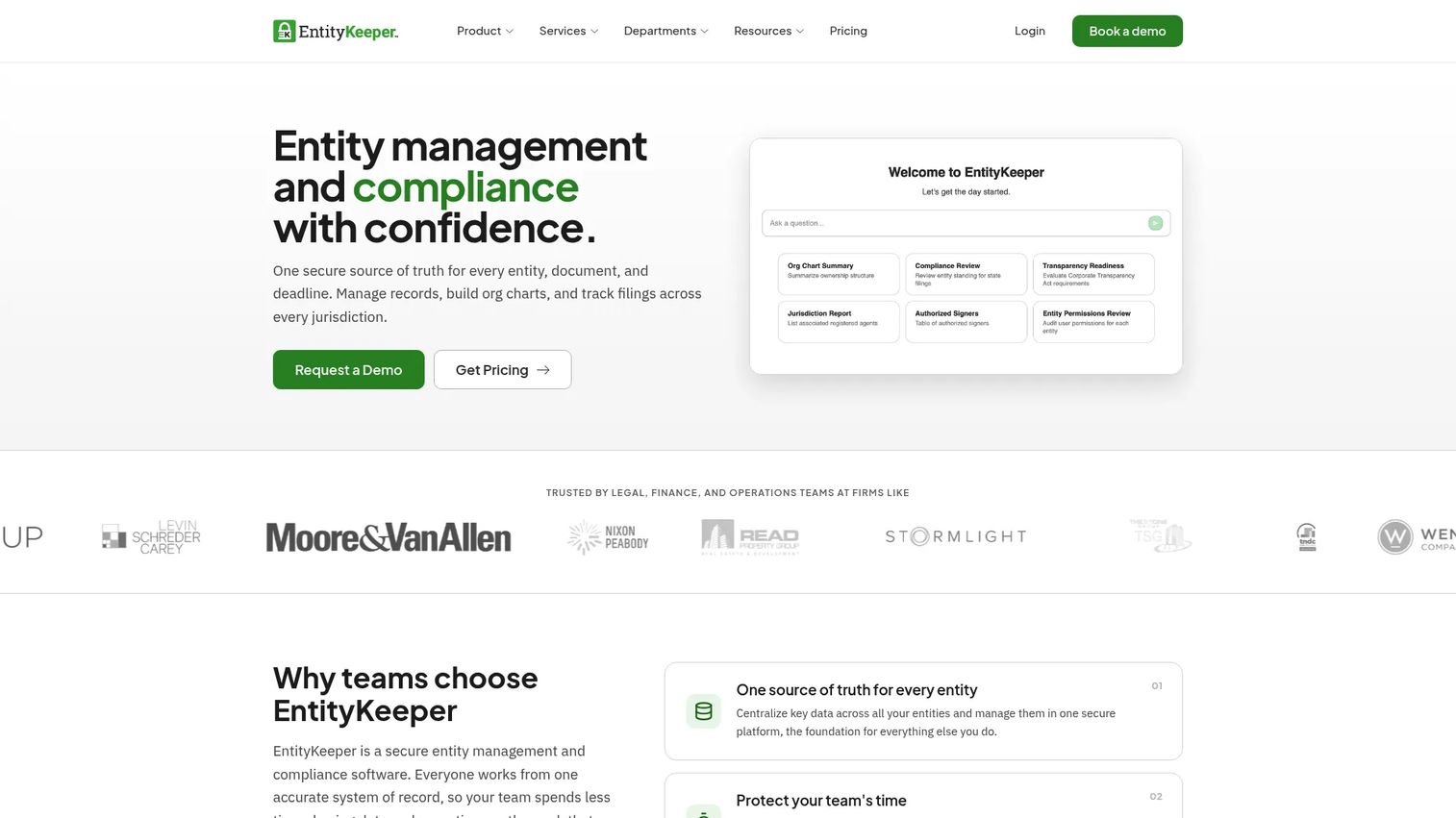
EntityKeeper is entity management and compliance software that centralizes entity data, ownership structures, documents, deadlines, and reporting. Its transparent pricing model and structured implementation path make it accessible for legal, finance, and operations teams replacing spreadsheets without undertaking a large platform deployment.
Best for: Legal and finance teams at growing companies that want structured entity records, ownership charts, and deadline workflows without an enterprise implementation cycle.
Key features
- Entity management and centralized records
- Ownership structures and interactive org charts
- Document management with versioning and search
- Deadline alerts, notifications, and task workflows
- Role-based permissions, SSO, SOC 2 Type II, and audit trails
Why choose EntityKeeper: EntityKeeper's published pricing and defined entity tiers make budget planning straightforward. For a founder handing entity oversight to a new legal or finance lead, the platform's clear data model and first-week usability matter more than advanced governance features you may not need at this stage.
EntityKeeper pricing: Corporate plan runs $465 per month (monthly) or $5,000 per year (annual) for up to 100 entities. Enterprise plan runs $925 per month or $10,000 per year for up to 200 entities. Platinum covers portfolios over 200 entities at custom pricing. Every plan includes a one-time implementation fee equal to one-sixth of the annual subscription. Full-service EntityKeeper (managed administration) costs $50 per entity per year for annual subscribers, excluding state and filing fees.
G2 rates EntityKeeper at 4.0/5 from 1 review. Capterra reports 4.8/5 from 24 reviews, indicating strong user satisfaction in the broader review pool.
9. GaLexy Solution by Legal Suite
GaLexy Solution by Legal Suite is enterprise legal management software for corporate legal departments. It covers matter management, contract management, litigation management, corporate entity management, legal spend, intellectual property, and leasing within a single collaborative platform with Office 365 integration.
Best for: Large corporate legal departments that manage entity information as part of a broader enterprise legal management workload.
Key features
- Corporate legal entity management and records
- Matter and contract management workflows
- Litigation management and tracking
- Automated document generation with Office 365 integration
- Legal spend management and reporting
Why choose GaLexy Solution by Legal Suite: GaLexy suits legal departments that need entity information connected to the full scope of legal department operations including matters, disputes, and spend. For teams focused primarily on entity compliance and governance records, a more specialized platform will provide greater depth on those specific workflows.
GaLexy Solution by Legal Suite pricing: Legal Suite does not publish pricing on its website. Contact their sales team for enterprise pricing, deployment options, and implementation scope.
G2 rates GaLexy at 2.0/5 from 3 reviews as of September 2026. Evaluate current user feedback directly on G2 before committing to a demonstration.
10. Scanmarket by Unit4
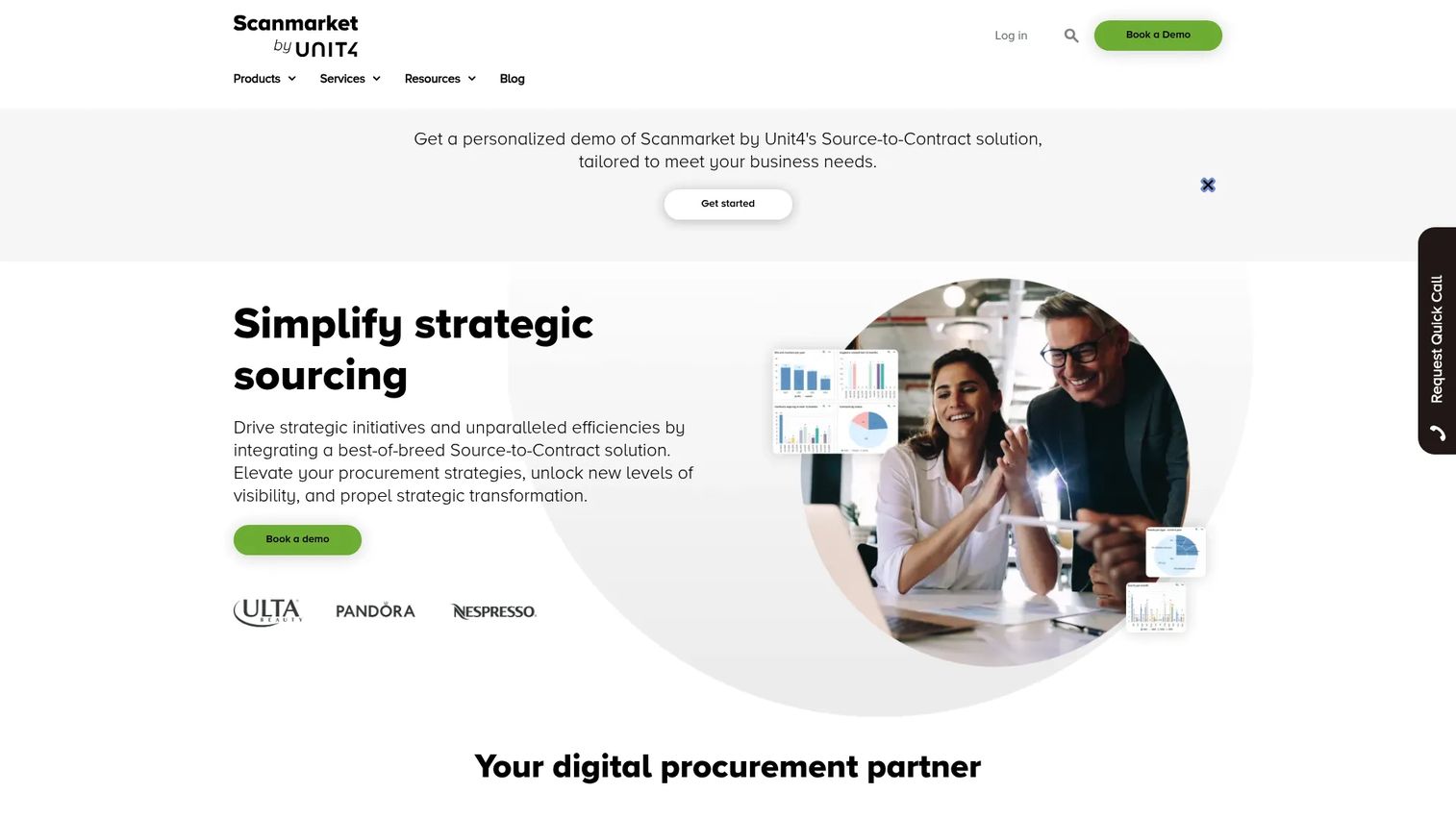
Scanmarket by Unit4 is a cloud-based source-to-contract procurement platform covering strategic sourcing, supplier management, contract management, spend analytics, and eAuctions. Its entity and supplier record management capabilities make it relevant for procurement and operations teams tracking supplier entities and contract counterparties rather than internal legal entity governance.
Best for: Medium-sized and enterprise procurement teams that need supplier entity data and contract management integrated with sourcing workflows.
Key features
- eRFx tendering with supplier prequalification and response comparison
- Contract repository with OCR search, templates, version control, and eSignature
- eAuctions with multiple auction type configurations
- Supplier entity records and relationship management
- Spend analytics and sourcing performance reporting
Why choose Scanmarket by Unit4: Scanmarket's primary job is managing the procurement lifecycle, not internal corporate entity governance. For legal teams seeking a subsidiary register, compliance calendar, or corporate document repository, this platform addresses a different problem. Choose Scanmarket when the entity data requirement centers on supplier and counterparty management within a procurement function.
Scanmarket by Unit4 pricing: Scanmarket prices by annual license, covering the core platform, optional modules, user count, and a one-time implementation fee. The official site does not publish numeric amounts. Contact Scanmarket's sales team for a scoped proposal.
G2 rates Scanmarket at 4.4/5 from 22 reviews as of September 2026.
11. Cres Technology
Cres Technology provides Microsoft 365-based cloud software and IT services for commercial real estate organizations, including document management, portfolio management, workflow automation, and legal entity and transaction management. Its entity management capabilities are embedded within a broader real estate operations platform.
Best for: Commercial real estate organizations that need legal entity and transaction management integrated with document repositories, portfolio data, and finance system connections.
Key features
- Document management and repository
- Portfolio management and business intelligence
- Contract, legal entity, transaction, and loan management
- Workflow and process automation
- Integrations with MRI, Yardi, VTS, RealPage, and other systems
Why choose Cres Technology: Cres Technology fits real estate teams that manage a portfolio of legal entities alongside property records, transactions, and finance system data. For SaaS companies without a real estate operational context, the platform's industry focus means many features will be irrelevant to the entity governance use case.
Cres Technology pricing: Cres Technology offers Basic, Standard, Professional, and Advanced plans billed as annual software licenses. Numeric prices are not published; contact Cres Technology to discuss scope and requirements.
G2 rates Cres Technology at 5.0/5 from 1 review as of September 2026.
12. Nasdaq Kube Global Entity Governance Platform
Nasdaq Kube Global Entity Governance Platform is an API-first global entity governance platform that centralizes entity data, connects secretariat, legal, finance, and tax teams, and delivers automation, configurable workflows, dashboards, and a complete audit trail across jurisdictions. Its reporting and e-filing capabilities are designed for organizations managing entities in multiple countries.
Best for: Governance, legal, finance, tax, and company-secretariat teams at global companies that need structured entity governance and reporting across many jurisdictions.
Key features
- API-first entity management with configurable workflows
- Data insights and dashboards with full audit trail
- E-filings and form creation
- Document management with secure access and SSO
- Automation across governance tasks and reporting cycles
Why choose Nasdaq Kube Global Entity Governance Platform: Nasdaq Kube's API-first architecture and automation capabilities suit organizations where entity governance connects to multiple internal systems and where board scrutiny of entity data is a regular requirement. The platform's global coverage and configurable workflows make it a strong candidate for multinationals that have outgrown simpler entity registers.
Nasdaq Kube Global Entity Governance Platform pricing: Nasdaq does not publish Kube pricing. Contact Nasdaq's governance team for a scoped proposal based on entity count, jurisdictions, and required modules.
Considerations when choosing entity management software
Data model and entity coverage
Check whether the platform handles parent entities, subsidiaries, branches, joint ventures, special-purpose entities, and inactive entities. Confirm support for custom fields covering jurisdiction, tax identifiers, registered office, ownership percentages, and entity status. A narrow data model will require workarounds as your structure grows.
Compliance and filing workflows
Review how the system tracks annual reports, registered agent renewals, tax and regulatory deadlines, and license renewals. Confirm that reminders route to named owners rather than a shared inbox. Platforms like Filejet include filing execution alongside deadline tracking; others handle the calendar but require a separate filing process.
Governance records and historical reporting
Evaluate minute books, resolution management, officer and director change history, document versioning, and point-in-time reporting. Diligence teams routinely ask what the ownership structure or director appointments looked like at a specific prior date. A system without historical record capability forces manual reconstruction under deadline pressure.
Implementation and ownership
Ask who maps existing data, validates records, imports documents, and maintains the system going forward. The platform is only as useful as the data inside it. Legal, finance, tax, and operations leaders need to agree on who owns each entity's records before the implementation starts, not after.
Integrations, permissions, and total cost
Review integrations with your finance, HR, board, e-signature, and document management tools. Confirm role-based permissions, SSO availability, and export options for diligence data rooms. Factor in implementation fees, training, and any per-entity or per-jurisdiction charges alongside the subscription cost. Athennian and EntityKeeper both publish starting prices; most other vendors in this list require a scoped quote.
How to choose the right entity management software for your team
If your company has a small, simple structure
Start with EntityKeeper or Filejet. Both publish transparent pricing, offer structured entity records, and have clear implementation paths. Avoid paying for complex governance functionality your current entity count does not justify. The goal at this stage is replacing a spreadsheet with something a new hire can own immediately.
If you are expanding internationally
Prioritize Athennian or Nasdaq Kube. Both handle multi-jurisdictional structures, ownership modeling, and compliance tracking across many countries. Factor in implementation support, because mapping an international entity structure correctly at the start saves significant correction work later.
If fundraising or diligence is approaching
Athennian's point-in-time reporting and Nasdaq Kube's audit trail are relevant here. MinuteBox is also worth evaluating if corporate records quality is the primary concern. Give yourself enough lead time to populate the system with accurate data before diligence begins; a system with incomplete records creates as many problems as no system at all.
If you are hiring a legal or finance leader
Choose a platform your new leader can evaluate and configure in the first week. EntityKeeper's defined pricing tiers and MinuteBox's focused scope make them practical starting points for a new legal or finance hire who needs to establish their own operating view quickly. A platform requiring months of implementation and consulting support delays that handoff unnecessarily.
If you are replacing spreadsheets
Export your current entity list and map it against each platform's data model before committing. Confirm the platform can import existing data, identify gaps in ownership or director records, and assign deadline owners. Athennian and EntityKeeper both support structured data import; confirm your specific fields are covered during a demonstration using your own entity data.
Conclusion
Entity management software earns its place when corporate structure moves out of the founder's memory and into a system the legal, finance, tax, and operations teams can trust. That shift matters most when subsidiaries, investors, jurisdictions, or diligence requests make spreadsheets unreliable.
For a growing SaaS company, the practical shortlist depends on a few factors. EntityKeeper and Filejet offer transparent pricing and structured onboarding for teams starting from scratch. Athennian handles complex multinational structures with strong ownership modeling and compliance reporting. MinuteBox leads on corporate records quality. Nasdaq Kube suits global teams needing an API-connected governance layer. DiliTrust and Legisway connect entity management to the broader legal department workload. Atlas by Ontra serves private equity and fund structures specifically.
Before you shortlist three platforms, export your current entity list, gather governing documents and filing records, and mark the gaps in ownership, officer, director, and deadline data. Run a structured demonstration using your own entity structure, not a vendor's sample data. That test will surface data model gaps faster than any product brochure.
You can also explore related compliance and operations software guides on the Guideflow blog, including compliance automation software and compliance management software, to round out your legal and finance stack evaluation.
Start your journey with Guideflow today!
FAQs
Entity management software is a system for tracking legal entities, ownership structures, governance records, compliance obligations, and related documents in a single operating view. It creates an auditable, searchable record that legal, finance, tax, and executive teams can access with role-appropriate permissions. The software organizes information and automates workflows; it does not replace legal counsel, registered agents, or tax advisors.
Primary users include general counsels, corporate secretaries, legal operations managers, CFOs, tax leads, and finance or operations teams responsible for subsidiary oversight. Access typically varies by role, with executives viewing dashboards and structure charts while legal and corporate secretarial staff manage records and documents. Board members may access read-only governance summaries through connected board portals.
Core capabilities include entity records, ownership and subsidiary structures, compliance calendars with deadline routing, officer and director tracking, document management, workflow automation, audit trails, point-in-time reporting, and role-based permissions. Integration with finance, HR, e-signature, and filing systems determines how well the platform fits into an existing operational stack.
No. The software organizes information and automates internal workflows. Registered agent services handle statutory state filings, service of process, and official correspondence. Law firms provide legal advice, handle complex filings, and manage legal risk. A legal entity management system makes it easier to work with those providers by maintaining current records and surfacing upcoming obligations.
Pricing varies by entity count, jurisdiction coverage, user seats, modules included, and whether filing or managed services are part of the package. Filejet starts at $150 per entity registration per year for its Standard plan. EntityKeeper starts at $465 per month for up to 100 entities. Athennian's Essentials plan starts at $25,000 per year. Most other platforms in this guide require a direct quote. Evaluate implementation fees and per-entity charges alongside the subscription rate, as these significantly affect the total annual cost.
It becomes useful once subsidiaries, investors, jurisdictions, or board requirements make spreadsheets unreliable. According to Wolters Kluwer's 2025 benchmark, 52% of surveyed teams spend at least six hours each week tracking entity filings, deadlines, and record updates when relying on manual processes. A structured system removes that overhead and gives a new legal or finance lead an operating view that does not depend on institutional memory. See also our guide to approval workflow software for related process automation across legal and finance functions.
Buyers and investors typically request current entity charts, ownership records, officer and director history, governing documents, filing receipts, and an audit trail of changes. A system with point-in-time reporting and searchable documents makes responding to those requests a matter of generating a report rather than reconstructing records. The quality of the response depends directly on data quality and how consistently the system has been maintained.
A spreadsheet remains workable for a small, simple structure with few entities and stable ownership. Replacement becomes more pressing when multiple people update the same file, when deadlines are tracked across email and calendars, or when the company cannot produce a current, trusted entity chart on short notice. If a financing round, audit, or board request has ever required significant reconstruction effort, that's a concrete indicator the current process has reached its limit.