
The VP who runs your biggest function gives notice. You open the folder labeled "backup plan." It is a spreadsheet. One name, last updated 14 months ago, and that person left in March.
That is the moment most leadership continuity plans get tested, and most of them lose. Around 74% of enterprises with more than 1,000 employees now deploy succession planning and management software to support leadership readiness and internal mobility, according to Market Growth Reports (2024). The companies still running succession out of a spreadsheet are the ones discovering, mid-crisis, that they never actually had a plan.
For a founder, this is not an HR administration problem. It is a key-person risk problem. When 40% of your closed deals still route through you, or one engineering lead holds the entire architecture in their head, the business does not scale, it balances. Succession management software exists to turn that fragility into a system: named successors for critical roles, readiness tracking that shows who is actually ready versus who is a hopeful guess, and bench strength you can defend in a board meeting.
This guide ranks eight succession planning tools for 2026. None of them is a magic fix, and the right one depends on how clean your HRIS data is and how complex your org has become. We compared them on the criteria that actually matter when you are building leadership continuity, not just filling a compliance checkbox. If you are mapping out adjacent stack decisions, our roundups of the best customer data platform and best event planning software follow the same evaluation logic.
What's inside
This guide is for HR leaders, people ops teams, and founders who need a succession planning platform to replace spreadsheet-based succession with structured workflows. We focused on tools that identify internal successors, track readiness, map talent pools, and pull HRIS data into succession decisions.
We selected and ranked each platform on five criteria:
- Successor identification and candidate matching
- Readiness and promotion readiness tracking
- Analytics depth, including 9-box grids and talent matrices
- HRIS integration and data freshness
- Support for scenario planning and gap analysis
Pricing and G2 ratings reflect verified, current values where vendors publish them. Where a vendor gates pricing behind sales, we say so rather than guess.
TL;DR
- Best for broad readiness and talent reviews: Dayforce, with talent matrices, readiness scoring, and flight-risk signals inside a full HCM suite.
- Best for regulated enterprise talent management: PeopleFluent, built for configurable succession and learning in compliance-heavy industries.
- Best for flight-risk and people analytics: Confirm, with AI-assisted performance data feeding succession decisions.
- Best for talent-acquisition-led teams: PageUp, pairing internal mobility with recruiting workflows.
- Best for org design and scenario planning: Orgvue, for modeling workforce change and bench depth.
- Best for HRIS-native teams: UKG Pro, when you want succession living inside payroll and workforce management.
- Best for skills-based career pathing: TalentGuard, for skills taxonomies and mobility.
- Best for learning-driven development: Cornerstone OnDemand, tying succession to a deep learning and skills platform.
What is succession planning software?
Succession planning software is a tool that identifies internal successors for critical roles, tracks their readiness, and supports leadership continuity decisions using performance, potential, and HRIS data.
In practice, it replaces the spreadsheet and the once-a-year talent review meeting with a continuous system. Instead of a single name jotted next to a role, you get ranked successor pools, readiness levels, and a clear view of where your bench is thin before someone resigns.
Core capabilities most succession planning solutions share:
- Successor identification: name and rank candidates for key roles, not just one fallback per seat.
- Readiness tracking: mark candidates as ready now, ready in one to two years, or developmental, based on evidence.
- Talent pools: group employees into development pools by function, level, or critical capability.
- 9-box grids and talent matrices: plot performance against potential to drive structured talent review conversations.
- Scenario planning and gap analysis: model what happens to coverage if a leader leaves, and where the bench breaks.
- HRIS data access: pull current roles, performance, and compensation data so decisions run on live data, not stale exports.
What it replaces: spreadsheets, slide decks, and the institutional memory that walks out the door when a manager quits.
When to use succession planning software
Not every company needs a dedicated succession platform on day one. These are the trigger moments where it earns its place.
A founder or executive is a key-person risk
When the business depends on one person holding critical knowledge, relationships, or decisions, that is concentration risk an investor will flag in diligence. Succession software forces you to name backups for those roles and develop them on purpose, so the org survives a departure intact.
The company is scaling into multiple layers of leadership
At 30 people, leadership lives in everyone's head. At 150, it does not. Once you have managers managing managers, you need readiness tracking and bench strength visibility to know which leadership layers are one resignation away from a gap.
HR needs a repeatable talent review process
If your talent review is an annual scramble of conflicting spreadsheets, a platform standardizes the 9-box grid, readiness definitions, and successor pools so reviews produce decisions instead of debate.
Internal mobility is your retention strategy
When you want to promote from within and keep high performers from leaving, career-path mapping and talent pools give people a visible path forward, which is itself a flight-risk lever.
What to look for in succession planning software
Five criteria separate a real succession planning platform from a glorified org chart.
Successor search and candidate matching
The tool should surface qualified internal successors based on skills, performance, and role requirements, not force you to remember who might fit. Verify how candidates are ranked and whether the matching uses skills data or just manager nominations. Weak matching means you are still doing the work by hand.
Readiness and promotion readiness tracking
Naming a successor is meaningless without knowing whether they are actually ready. Look for readiness levels tied to evidence such as performance history, completed development, and assessed potential. Check whether readiness updates as employees grow, or whether it is a static field someone has to remember to change.
Bench strength and talent pool visibility
You want to see, at a glance, which critical roles have a deep bench and which have none. Confirm the platform shows coverage ratios across key roles and lets you build talent pools by function or capability. Thin benches should be obvious before they become emergencies.
Scenario planning and gap analysis
The real value is answering "what breaks if this person leaves." Strong tools let you model departures, see downstream coverage gaps, and run scenario planning across multiple roles at once. Verify whether modeling is interactive or just a static report you regenerate by hand.
HRIS and HCM integration and data freshness
Succession decisions made on stale data are guesses. Check which HRIS and HCM systems the platform integrates with, how often data syncs, and whether performance and compensation data flow in automatically. HRIS integration is what keeps the system from drifting back into spreadsheet territory.
Comparison table
Here is the shortlist at a glance. Use it to narrow to two or three platforms, then pressure-test them against your current HRIS data quality and review workflows.
| # | Product | Intent | Key differentiation | Pricing | G2 rating |
|---|---|---|---|---|---|
| 1 | Dayforce | Broad readiness and talent reviews | Talent matrices and flight-risk inside a full HCM suite | Custom, contact sales | 4.2/5 |
| 2 | PeopleFluent | Regulated enterprise talent management | Configurable succession plus learning | Custom, contact sales | Not published |
| 3 | Confirm | Flight-risk and people analytics | AI-assisted performance feeding succession | From $8/person/mo | 4.3/5 |
| 4 | PageUp | Talent-acquisition-led teams | Internal mobility tied to recruiting | Custom, contact sales | 3.4/5 |
| 5 | Orgvue | Org design and scenario planning | Workforce modeling and bench depth | Custom, contact sales | 4.4/5 |
| 6 | UKG Pro | HRIS-native teams | Succession inside payroll and workforce management | Custom, contact sales | 4.3/5 |
| 7 | TalentGuard | Skills-based career pathing | Skills taxonomy driving mobility | From $1.60/user/day | 4.6/5 |
| 8 | Cornerstone OnDemand | Learning-driven development | Succession tied to deep learning platform | Custom, contact sales | 4.0/5 |
Best succession planning software for 2026
1. Dayforce
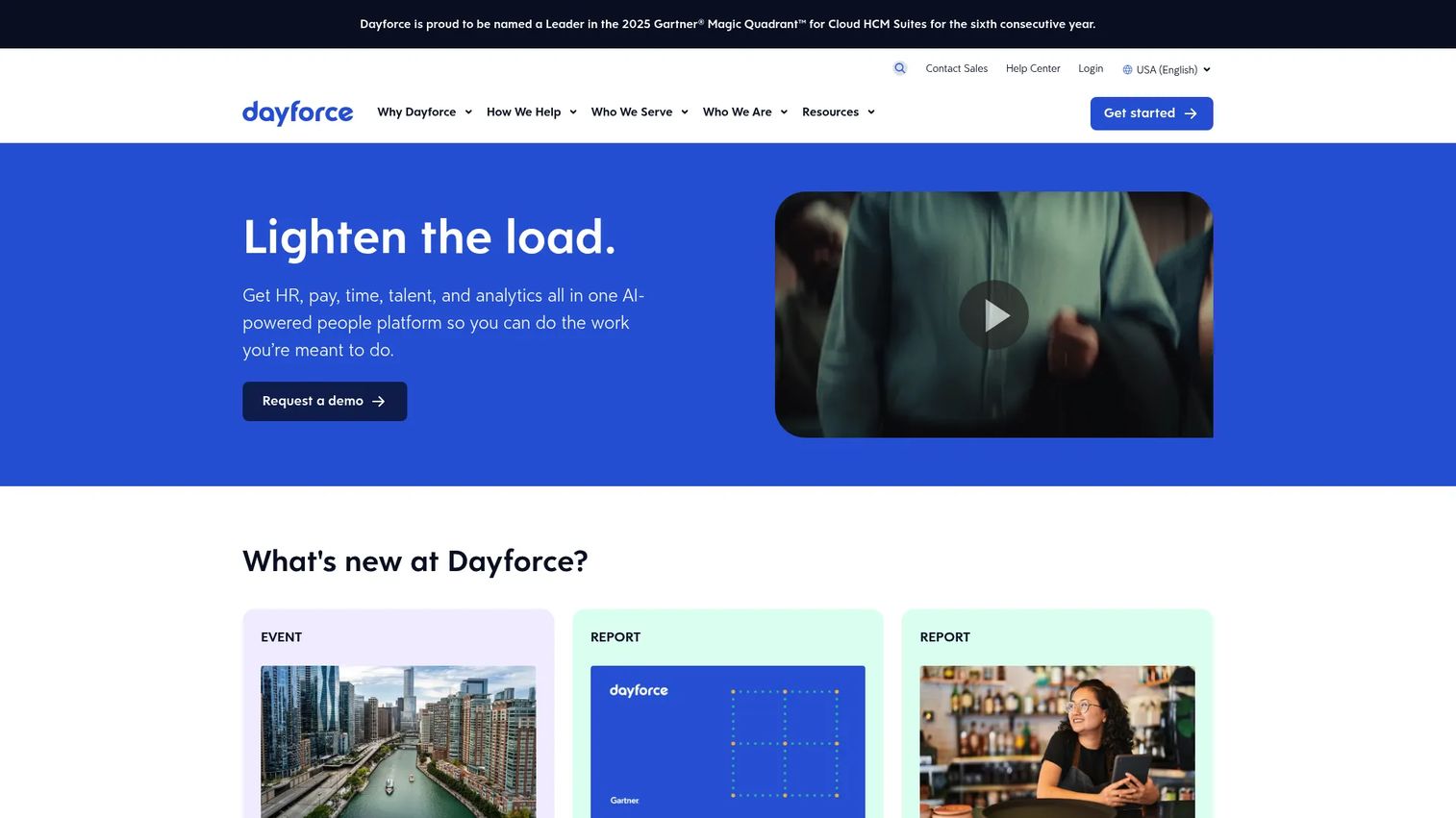
Dayforce is an AI-powered global HCM platform that runs HR, payroll, workforce management, and talent in one system. Its succession capabilities sit inside that broader suite, which means readiness, talent matrices, and flight-risk signals draw on live employee data rather than a separate import. For organizations that want succession planning connected to the same record that runs payroll and performance, that integration is the draw.
Best for: Mid-market to enterprise organizations that want succession planning embedded in a full HCM suite.
Key strengths
- Talent matrices and readiness: Plot performance against potential and track readiness for key roles using live HR data.
- Flight-risk signals: Surface promotion readiness alongside retention risk so you see continuity gaps early.
- Unified HCM data: Succession decisions run on the same record as payroll, performance, and workforce management.
Why choose Dayforce: If you are already consolidating HR, payroll, and talent, Dayforce keeps succession planning inside that system instead of bolting on a separate tool. The trade-off is that you are buying into a full suite, so it fits best when you want broad coverage rather than a standalone succession point solution.
Dayforce pricing: Dayforce does not publish pricing. The site routes pricing inquiries to a sales contact form, so expect a custom quote scoped to your headcount and module mix.
2. PeopleFluent
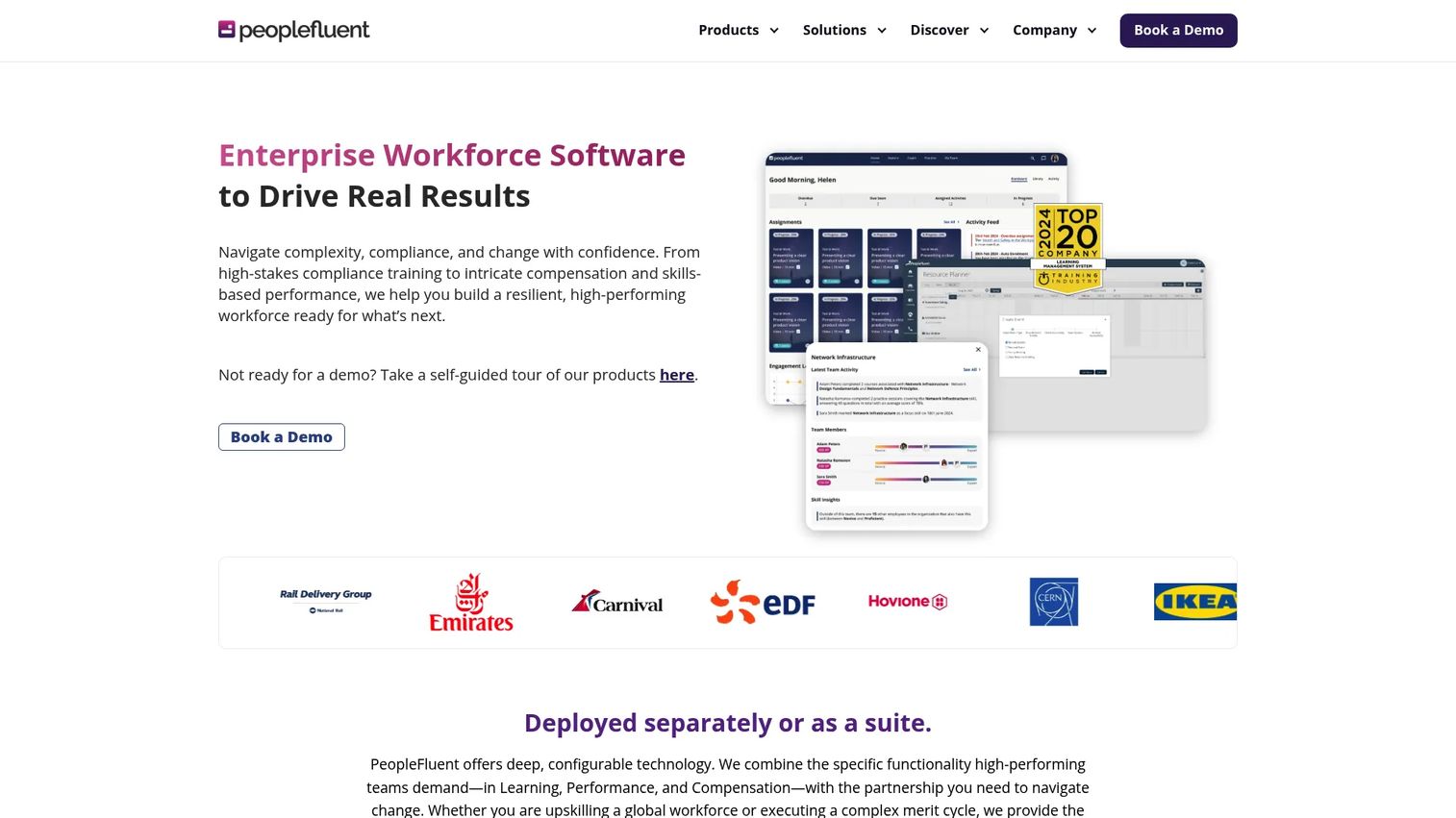
PeopleFluent is enterprise talent management and learning software built for hiring, developing, and managing employees at scale. Its succession and development tooling leans on talent pools, leader mapping, gap analysis, and what-if planning, which makes it a fit for large organizations that treat succession as part of a wider talent and learning strategy rather than a standalone exercise.
Best for: Large enterprises in regulated industries needing configurable talent and learning systems.
Key strengths
- Configurable succession workflows: Adapt successor pools, readiness definitions, and review processes to complex org structures.
- Talent pools and gap analysis: Build development pools and surface where bench strength is thin against critical roles.
- Integrated learning: Tie development plans to succession so identified successors actually progress toward readiness.
Why choose PeopleFluent: If you operate in a regulated industry where configurability and documentation matter, PeopleFluent's flexibility is the case for it. It fits teams that need succession, learning, and compliance handled in one configurable platform rather than a lightweight tool.
PeopleFluent pricing: PeopleFluent does not display pricing publicly. Pricing is quote-based through a contact-sales process, scoped to your enterprise requirements.
3. Confirm
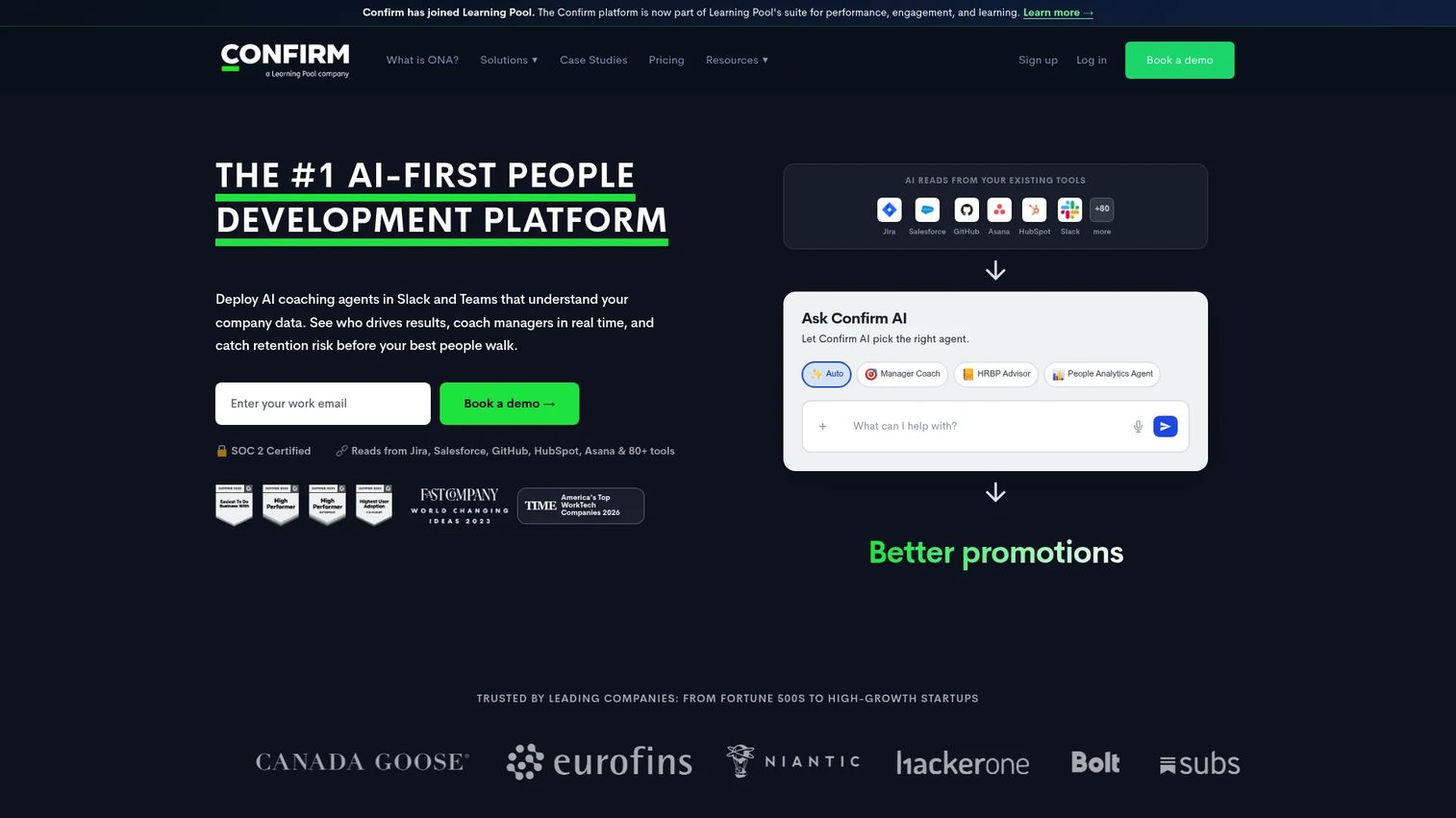
Confirm is AI-powered performance management software for reviews, feedback, goals, and people analytics. While it leads with performance, that data is exactly what feeds good succession decisions: readiness tracking and successor identification are only as good as the performance and potential signals behind them. For teams that want succession grounded in continuous performance data rather than a once-a-year guess, Confirm is a strong, modern option.
Best for: Mid-market and enterprise HR teams that want succession decisions grounded in AI-assisted performance and people analytics.
Key strengths
- People analytics: Surface performance and potential signals that inform readiness and flight-risk insight.
- Continuous feedback: Keep readiness assessments current with ongoing feedback rather than annual snapshots.
- AI-assisted reviews: Reduce the manual work of documenting performance that underpins talent review decisions.
Why choose Confirm: If your succession process keeps stalling because performance data is stale or thin, Confirm fixes the upstream problem first. It fits teams that want a modern, analytics-led foundation feeding their talent reviews, with transparent published pricing as a bonus.
Confirm pricing: Confirm's base Performance Management and Career Development plan starts at $8 per person per month, billed annually. Add-ons for Continuous Feedback, OKRs and Goals, Employee Engagement, and AI Agents and MCP are each +$3 per person per month. Minimum pricing applies and enterprise discounts are available.
4. PageUp
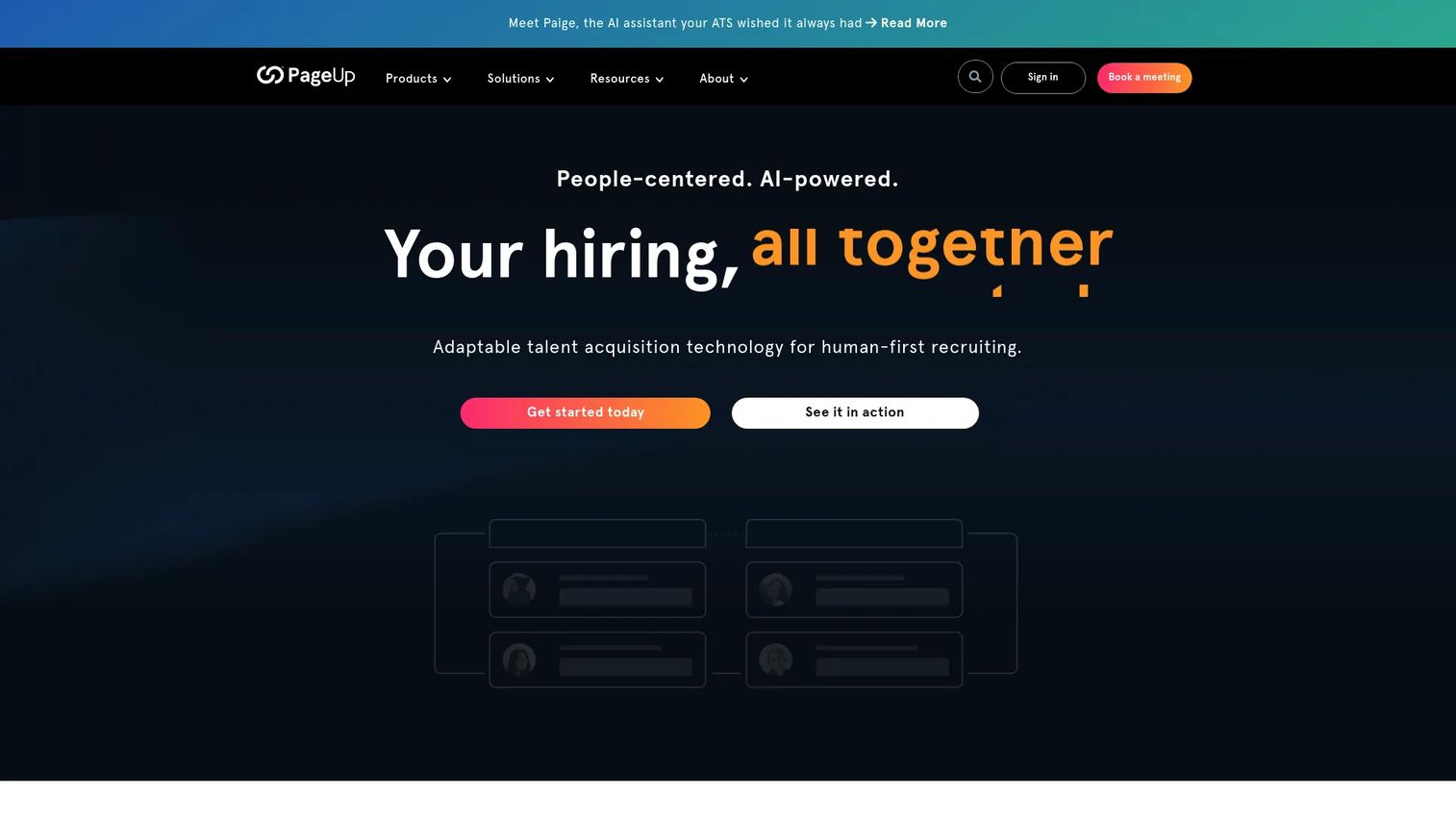
PageUp is an enterprise talent acquisition and talent management suite covering recruitment marketing, applicant tracking, onboarding, learning, performance, and analytics. Its succession strength comes from connecting internal mobility to recruiting, so when a key role opens, you see internal successors alongside external pipeline in one workflow. For organizations that run a heavy talent-acquisition motion, that connection is the differentiator.
Best for: Large organizations that want internal mobility and succession tied into an end-to-end talent acquisition platform.
Key strengths
- Internal mobility: Treat open roles as both internal succession and external recruiting opportunities in one view.
- Talent and performance data: Feed readiness tracking with performance and learning records already in the suite.
- End-to-end workflows: Move from succession planning to onboarding the chosen successor without leaving the platform.
Why choose PageUp: If recruiting and internal mobility live on the same team, PageUp keeps succession and hiring in one system. It fits talent-acquisition-led organizations more than teams looking for a pure, analytics-heavy succession tool.
PageUp pricing: PageUp does not publish pricing on its site. Expect a custom quote based on modules and headcount through its sales process.
5. Orgvue
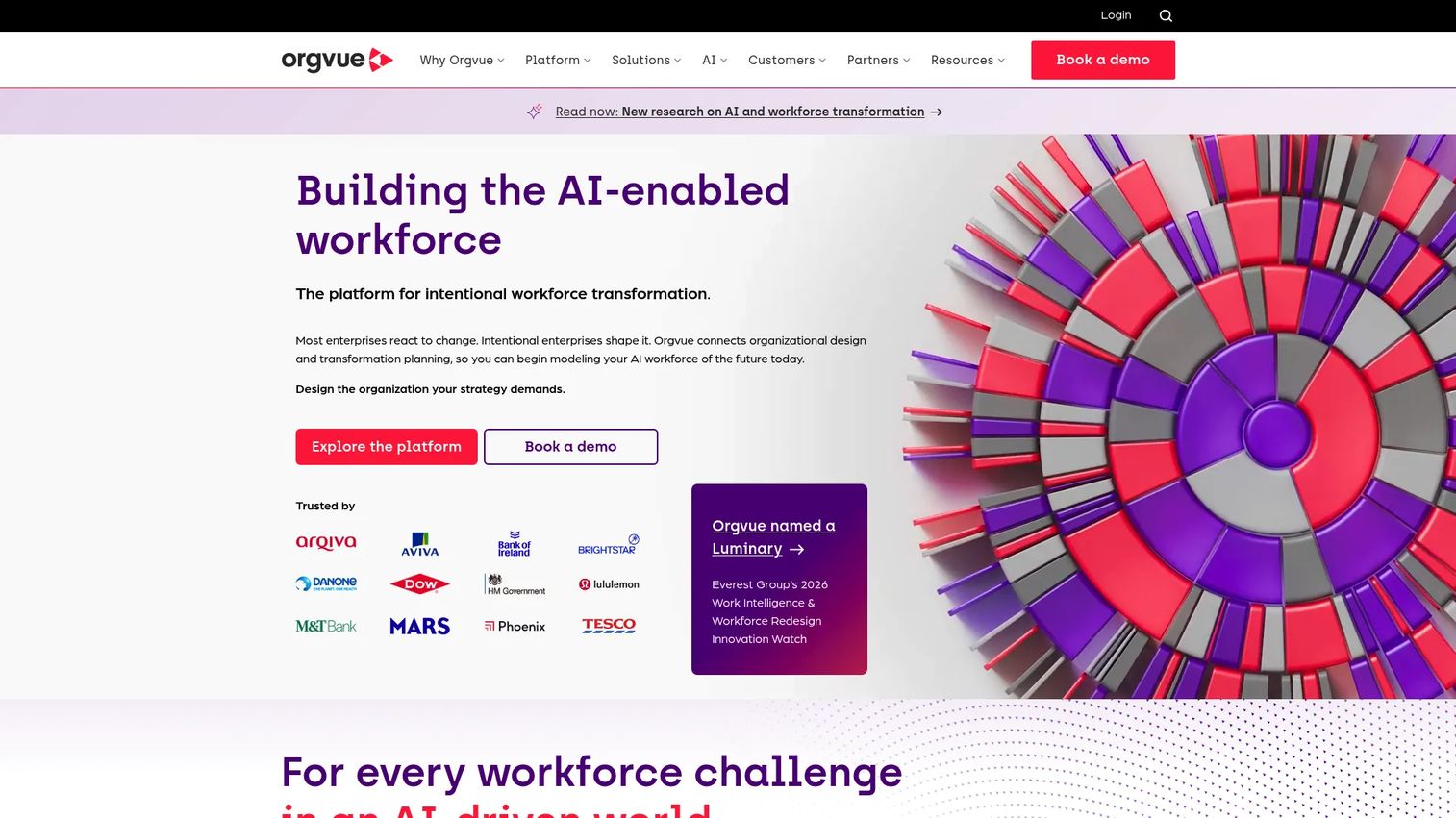
Orgvue is an organizational design and workforce planning platform for analyzing, designing, planning, and monitoring workforce change. It approaches succession from the org-design angle: model the structure, see where leadership depth is thin, and run scenario planning across the whole workforce. For companies going through transformation or restructuring, Orgvue connects succession to the bigger question of how the org should be shaped.
Best for: Large enterprises needing organizational design, workforce planning, and transformation tracking.
Key strengths
- Workforce modeling: Run scenario planning to see how leadership coverage and bench strength change under different org designs.
- Connected workforce data: Harmonize data from multiple sources into one view of roles, capabilities, and gaps.
- Continuous monitoring: Track workforce change over time rather than relying on a point-in-time talent review.
Why choose Orgvue: If your succession question is really an org-design question, Orgvue models the whole structure, not just named successors. It fits enterprises managing transformation more than teams that want a focused, employee-by-employee succession workflow.
Orgvue pricing: Orgvue does not display pricing publicly. The site uses a demo and enquiry flow with a subscription-based model, so pricing comes through a custom quote.
6. UKG Pro
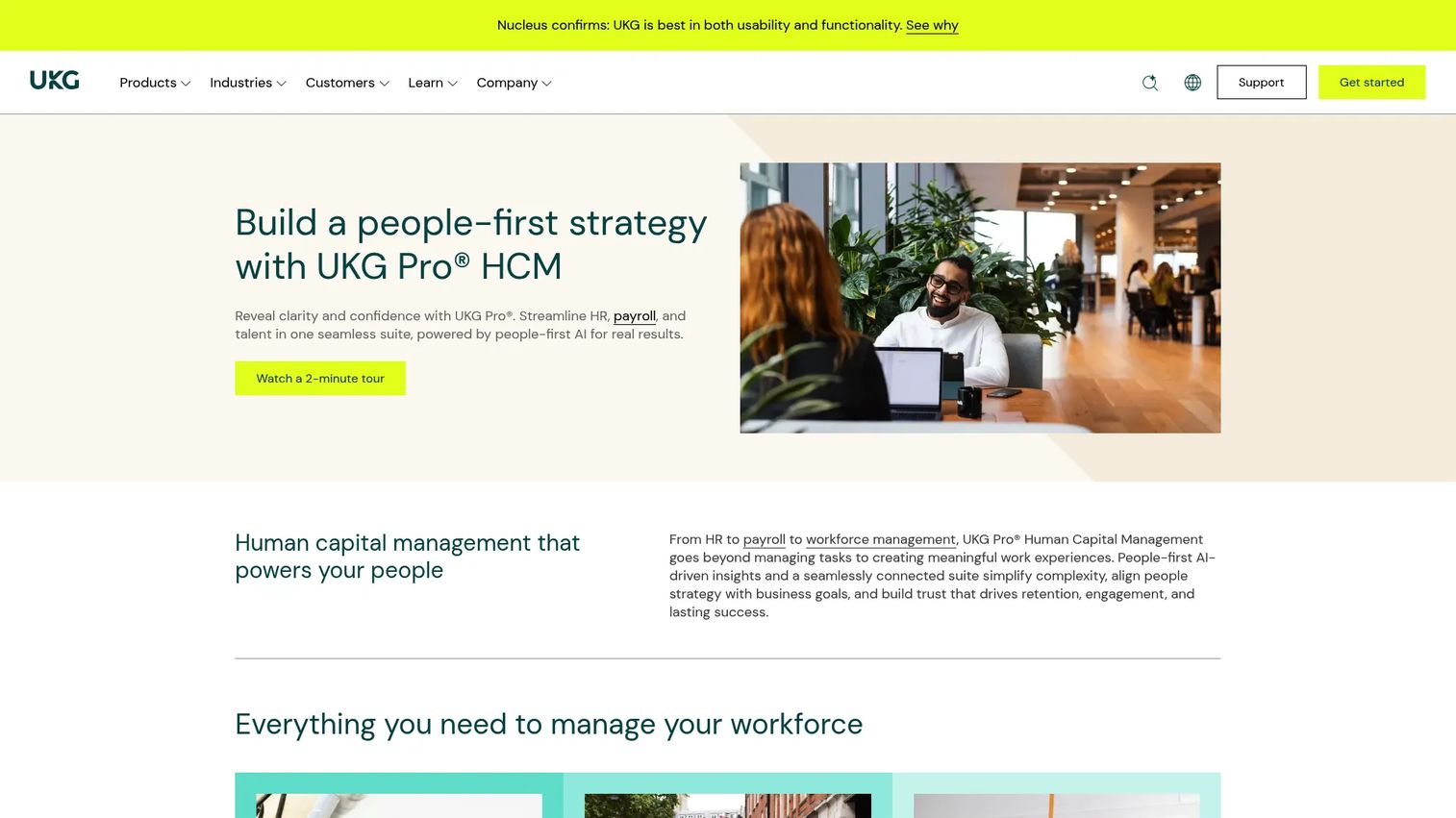
UKG Pro is a cloud HCM suite covering HR, payroll, talent, and workforce management, with AI-driven insights through Bryte AI. Its succession capabilities sit inside that suite, so readiness tracking and talent pools draw on the same data that runs scheduling, payroll, and compliance. For HRIS-native teams that want succession to live where the rest of their people data already lives, UKG Pro is a natural fit.
Best for: Midmarket to enterprise organizations that want succession inside an integrated HR, payroll, and workforce platform.
Key strengths
- HRIS-native succession: Run readiness tracking and talent pools on the same record as payroll and workforce data.
- AI-driven insights: Use Bryte AI to surface patterns across performance, retention, and readiness.
- Workforce management depth: Connect succession to scheduling and compliance for frontline-heavy organizations.
Why choose UKG Pro: If you are standardizing on a single HCM and do not want a separate succession tool, UKG Pro keeps it native. It fits organizations that value data consolidation over a specialized standalone succession platform.
UKG Pro pricing: UKG Pro uses a custom-quote model. No public price is shown on the product page, so pricing is scoped to your headcount and module selection through sales.
7. TalentGuard
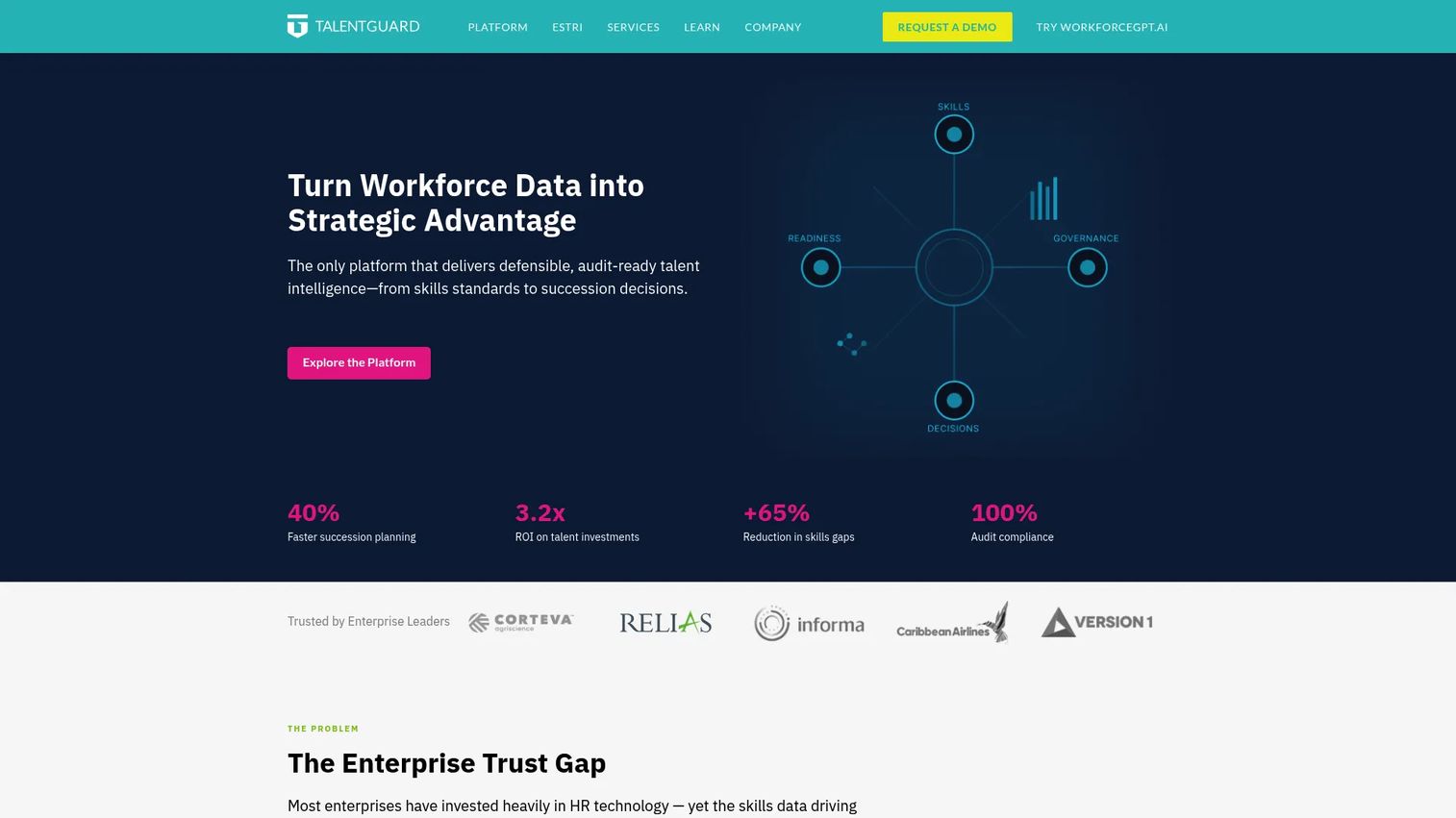
TalentGuard is enterprise talent management software built around skills intelligence, career pathing, succession, performance, and certification tracking. Its differentiator is the skills taxonomy: succession and internal mobility run on a structured map of who has which skills, which makes successor matching and gap analysis more precise than nomination-based approaches. For skills-based organizations, that foundation changes how readiness gets assessed.
Best for: Mid-market and enterprise teams that need governed skills intelligence and talent mobility tooling.
Key strengths
- Skills taxonomy: Match internal successors to roles based on a governed skills map, not just manager opinion.
- Career pathing: Show employees a visible path forward, supporting internal mobility and retention.
- Gap analysis: Surface skill gaps between current employees and target roles to focus development.
Why choose TalentGuard: If you are moving toward a skills-based talent model, TalentGuard's taxonomy makes succession decisions more defensible. It fits teams investing in skills intelligence rather than those wanting a quick, lightweight succession tracker.
TalentGuard pricing: TalentGuard publicly shows at least one use-case offering, Front-Line Manager Development, at $1.60 per user per day, billed annually at $579. Broader platform pricing is customized through a request-based process.
8. Cornerstone OnDemand
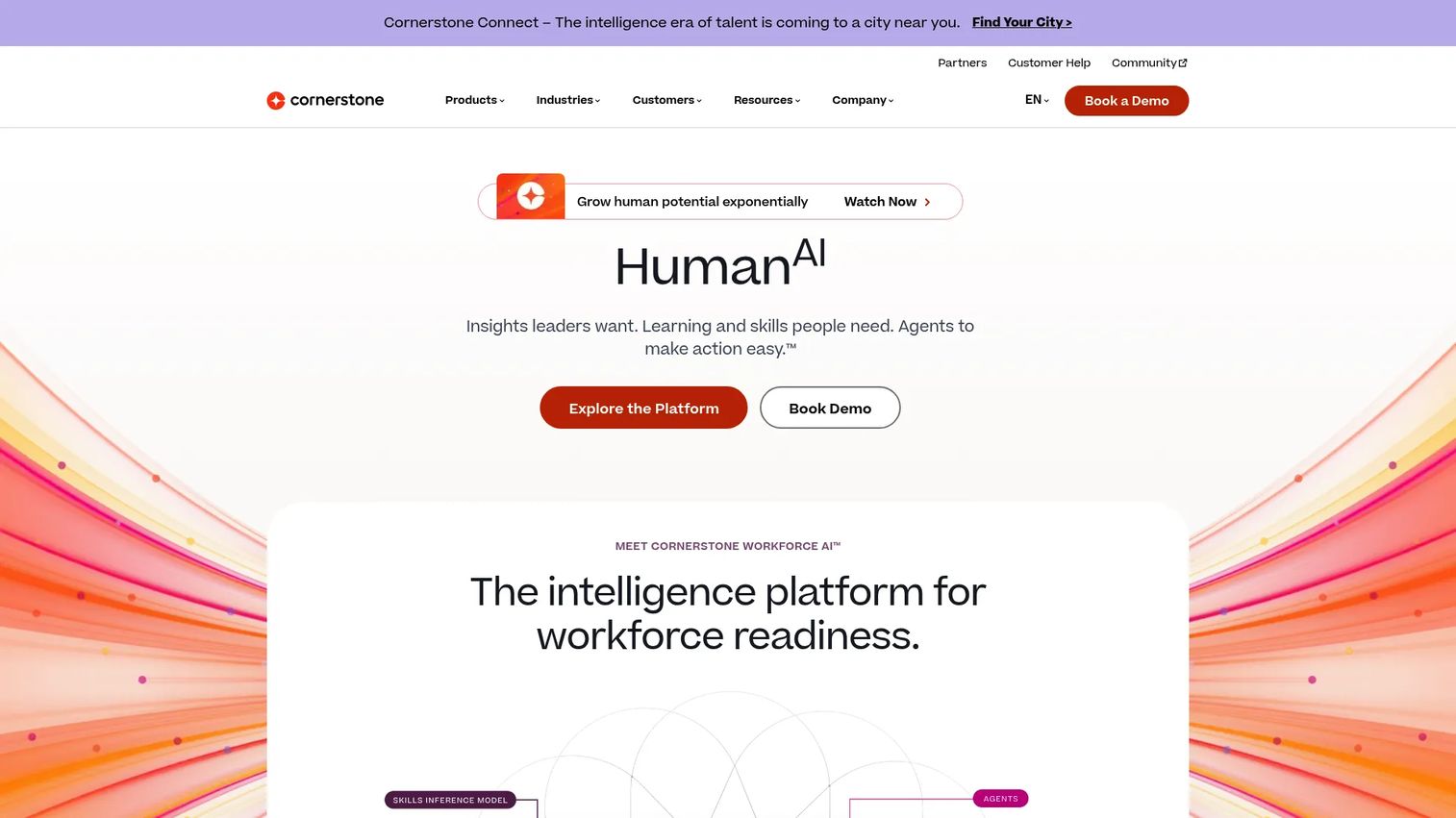
Cornerstone OnDemand is enterprise workforce readiness software spanning learning, talent development, content, and workforce intelligence. Its succession approach is development-led: a talent marketplace and internal mobility engine sit on top of a deep learning platform, so identified successors get pushed toward the development they need to close readiness gaps. For learning-driven organizations, that connection between succession and skill-building is the core appeal.
Best for: Large organizations needing a unified learning, talent, and skills platform.
Key strengths
- Talent marketplace: Connect employees to internal mobility opportunities and development that builds bench strength.
- AI-powered learning: Push identified successors toward targeted development to close readiness gaps.
- Workforce intelligence: Use skills and readiness data to inform talent review and succession decisions.
Why choose Cornerstone OnDemand: If development is how you build readiness, Cornerstone ties succession directly to a deep learning engine. It fits organizations that see succession as a development problem more than a pure tracking exercise.
Cornerstone OnDemand pricing: Cornerstone does not display a public price. Pricing is handled through a demo and contact-sales process, scoped to your platform and headcount needs.
Considerations
Before you commit, pressure-test any shortlist against the operational realities below. The best platform on paper fails if your data is dirty or your governance is undefined.
Data quality and HRIS connectivity
A succession platform is only as good as the data feeding it. Confirm which HRIS and HCM systems the tool integrates with, how often data syncs, and whether performance and compensation flow in automatically. If you are exporting spreadsheets to keep it current, you have rebuilt the problem you were trying to solve.
Readiness definitions and review governance
Decide who owns readiness ratings and how they get updated before you buy. The tool should support clear readiness levels and a defined talent review cadence. Without governance, "ready now" becomes a subjective label that means different things to different managers.
Key-role coverage
Identify your critical roles first, then check that the platform shows coverage and bench strength for each. You want thin benches to surface automatically, not get discovered when someone resigns. Verify how the tool flags single-points-of-failure across key roles.
Talent pool and scenario planning depth
Look at how deep the modeling goes. Can you run scenario planning across multiple departures at once, or only one role at a time? Can you build talent pools by capability, not just by manager? Shallow modeling limits the strategic value.
Reporting for board and leadership reviews
You will eventually present succession depth to a board or leadership team. Check whether the tool produces clean, defensible reporting on readiness, coverage, and flight risk without manual assembly. Reporting that survives scrutiny is what turns succession from an HR exercise into a continuity strategy.
Conclusion
Succession planning software exists to turn leadership continuity from a spreadsheet gamble into a system you can defend. The right pick depends on what problem you are actually solving.
For broad readiness and talent reviews inside a full HCM, Dayforce and UKG Pro lead. For performance-grounded, analytics-led succession with transparent pricing, Confirm is the modern choice. For skills-based career pathing, TalentGuard's taxonomy stands out, while Cornerstone OnDemand wins on learning-driven development. For org design and scenario planning, Orgvue models the whole structure, and PageUp suits talent-acquisition-led teams that want internal mobility tied to recruiting. PeopleFluent fits regulated enterprises needing deep configurability.
The fastest path forward: shortlist two or three of these succession planning solutions, then score each against your current HRIS data quality and how mature your talent review process actually is. The tool that fits your data and your governance, not the one with the longest feature list, is the one that will hold up when a key leader walks.
FAQs
It is used to identify internal successors for critical roles, track their readiness, and support leadership continuity decisions. The software replaces spreadsheets with structured successor pools, readiness levels, and bench strength visibility. The goal is to know who can step into a key role before that role opens, not after.
It typically combines performance history, assessed potential, skills data, and role-criticality to assign readiness levels such as ready now, ready in one to two years, or developmental. The better platforms update readiness as employees grow and complete development. Weaker setups treat readiness as a static field someone has to remember to change.
A talent pool is a broad group of employees developed for future opportunities, often by function or capability, without targeting a specific seat. A successor pool is a named, ranked set of candidates identified as backups for one specific role. Talent pools build general bench strength; successor pools answer "who replaces this exact person."
You do not strictly need it, but HRIS integration is what keeps the system from drifting back into spreadsheet territory. It pulls current roles, performance, and compensation data automatically, so succession decisions run on live data instead of stale exports. Without it, you are manually keeping the platform current, which usually means it falls out of date.
A 9-box grid plots employee performance against potential across nine cells, giving talent review conversations a shared framework. Succession platforms automate the grid using existing performance and potential data, so managers debate placement instead of building spreadsheets. It is a structured way to surface high-potential successors and spot who needs development.
Yes, some platforms add predictive or retention signals that flag employees at higher risk of leaving, which matters most for hard-to-replace roles with thin benches. This flight-risk insight should complement manager judgment, not replace it. A signal tells you where to look; a conversation tells you what is actually going on.
Care about reducing key-person risk and proving the business survives a key departure. When one person holds critical knowledge or relationships, that concentration is a risk investors flag in diligence. Succession software forces you to name and develop backups for critical roles, which is part of building a company that does not route everything through the founder.
Prioritize HRIS integration, clarity of readiness workflows, and reporting you can actually act on, over the longest feature list. Shortlist two or three succession planning platforms, then test each against your current data quality and talent review maturity. Internal mobility, bench strength visibility, and clean board-level reporting matter more than features you will never configure.