A claim comes in. Someone logs it in a spreadsheet. An email goes out requesting documents. Then another. A follow-up call gets missed. The adjuster switches to a different claim. Two weeks later, nobody can say where the first one stands without opening four systems and asking three people.
That is the real cost of running claims on email, spreadsheets, and manual follow-up. Not one dramatic failure, but a slow leak: stalled files, missed deadlines, compliance gaps, and cycle times nobody can explain. The work depends on individual memory instead of a measurable process.
The market has noticed. The global claims processing software market was worth $47.63 billion in 2025 and is projected to reach $108.09 billion by 2035, according to Precedence Research (2026). More telling for anyone evaluating this year: Forrester reports that 91% of insurance organizations expect to have AI-powered claims automation running in production by the end of 2026, per Regure's 2026 analysis.
The point of claims adjuster software is not features. It is turning a fragmented, memory-dependent process into a repeatable workflow you can measure, staff around, and scale without adding headcount for every new claim volume tier. Below, we break down eight platforms worth evaluating, what each does well, and which buyer profile each one fits.
What's inside
This guide covers claims adjuster software for carriers, MGAs, TPAs, independent adjusting firms, self-insured teams, and captives. We looked at platforms that handle the claims lifecycle rather than a single narrow task.
We selected and ranked each tool on six criteria that separate a system of record from a spreadsheet with extra steps:
- End-to-end lifecycle coverage from FNOL to settlement and closure
- Workflow automation and task routing
- Integrations with core insurance and payment systems
- Collaboration and stakeholder communication
- Analytics and reporting depth
- AI support and realistic implementation fit
Pricing and ratings should be verified at publishing, since most vendors in this category sell through direct quotes rather than public price pages.
TL;DR
- Best overall for end-to-end claims operations: VCA Software, for configurable lifecycle coverage across carriers, TPAs, and adjusting firms.
- Best for recorded statement management: n2uitive, for teams that treat statements as a critical claims asset.
- Best for claims workflow automation and AI: Agentech, for layering AI agents onto existing claims operations.
- Best for enterprise claims administration: Riskonnect, for large or complex risk and claims environments.
- Best for a claims system of record: Guidewire ClaimCenter, for large P&C carriers.
- Best for modular or platform-style operations: EIS ClaimCore and Majesco, for insurers standardizing claims inside a broader core stack.
- Best for digital auto and property claims: Snapsheet, for teams moving faster through review and settlement.
What is claims adjuster software?
Claims adjuster software is a system that manages the insurance claims lifecycle, from first notice of loss (FNOL) through investigation, documentation, collaboration, settlement, and closure, in one platform instead of across disconnected tools.
It replaces the email-and-spreadsheet model with a structured claims management system where every file has a status, an owner, a next action, and an audit trail.
Most claims software in this category covers a consistent set of capabilities:
- FNOL and intake: structured first notice of loss capture, often with mobile and web submission.
- Workflow automation: rules-based routing, task creation, deadline tracking, and alerts.
- Document management: centralized storage for photos, estimates, statements, and correspondence.
- Collaboration: portals and communication tools for adjusters, claimants, vendors, and legal.
- Analytics and reporting: dashboards for cycle time, reserves, leakage, and compliance.
- Integrations: connections to policy, billing, payment, and third-party data systems.
- AI and automation: document extraction, summarization, fraud signals, and decision support.
Typical buyers are claims operations leaders, claims managers, and independent adjusters, usually evaluating alongside IT and compliance. Modern claims teams reach for this software when manual follow-up stops scaling and leadership starts asking for cycle-time and leakage numbers nobody can produce on demand. AI, analytics, and mobile access are where the current wave of investment sits, which is why insurance claim management software increasingly leads with those capabilities.
When to use claims adjuster software
Not every team needs a full claims platform on day one. Three situations usually make the case.
Streamline FNOL and intake
When first notice of loss arrives by phone, email, and web with no standard structure, files get logged inconsistently and routed by hand. Claims software standardizes intake, captures required fields upfront, and creates the initial file and tasks automatically. That removes the first place where claims quietly stall, before anyone has even opened them.
Reduce manual follow-up and handoffs
Most stalled claims are not complicated. They are waiting on a document, an approval, or a handoff nobody flagged. Claims workflow automation assigns tasks, tracks deadlines, and fires alerts when a step is overdue. The adjuster stops being the human reminder system, and files keep moving even when someone is out or the queue spikes.
Improve collaboration and reporting
Claims involve claimants, adjusters, vendors, legal, and managers, often across organizations. Portals and shared communication tools keep everyone on the same record instead of trading email threads. Dashboards then give leaders real-time visibility into cycle time, reserves, and bottlenecks, so decisions run on data rather than status meetings.
Comparison table
The table below gives quick decision context by specialty and company fit. Pricing in this category is almost entirely quote-based, so verify pricing and ratings at the time you evaluate.
| # | Product | Intent | Key differentiation | Pricing | G2 rating |
|---|---|---|---|---|---|
| 1 | VCA Software | End-to-end claims operations | Configurable SaaS claims platform for carriers, TPAs, and adjusting firms | Custom (contact sales) | 4.4/5 |
| 2 | n2uitive | Recorded statement management | Recorded statement lifecycle capture and retention | Custom (contact sales) | Not listed |
| 3 | Agentech | Claims automation and AI | 200+ specialized AI agents for claims workflows | Custom (contact sales) | Not listed |
| 4 | Riskonnect | Enterprise claims administration | Integrated risk, compliance, and claims platform | Custom (contact sales) | 4.4/5 |
| 5 | Guidewire ClaimCenter | Claims system of record | Core P&C claims system with deep configuration | Custom (contact sales) | Not listed |
| 6 | Snapsheet | Digital auto and property claims | Virtual claims operations and workflow software | Custom (contact sales) | 4.1/5 |
| 7 | EIS ClaimCore | Modular core claims platform | Cloud-native claims module inside EIS OneSuite | Custom (contact sales) | Not listed |
| 8 | Majesco | Claims in a broader stack | Core insurance platform with embedded analytics and AI | Custom (contact sales) | 3.0/5 |
1. VCA Software
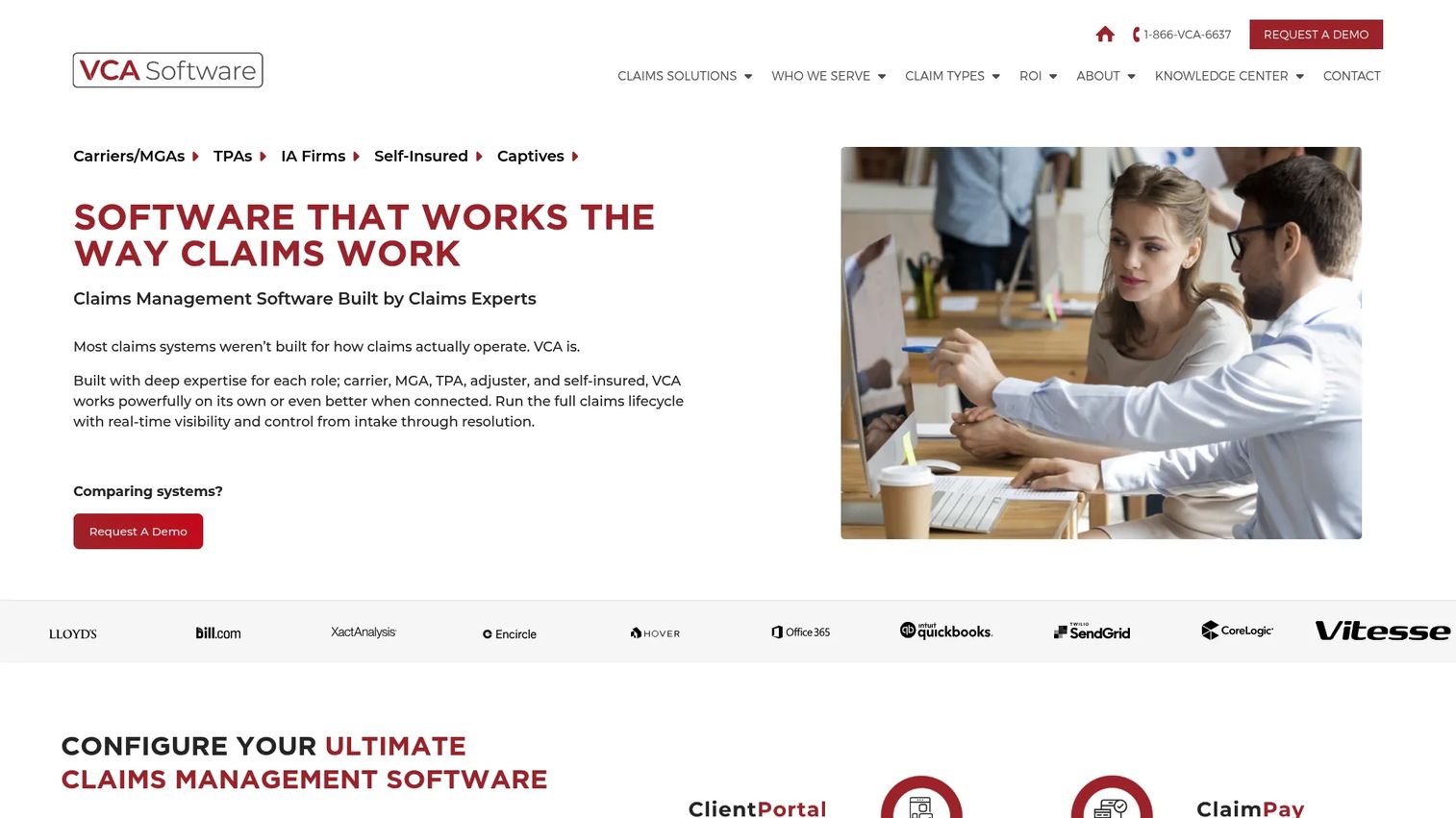
VCA Software is a cloud-based claims management system built for carriers, TPAs, adjusting firms, captives, and self-insured companies. It covers the lifecycle from FNOL to resolution with configurable workflows, so operations can shape the system around how they actually process claims rather than the reverse.
Best for: insurance organizations needing a configurable claims core that supports multiple claim types and role-based workflows.
Key strengths
- SaaS claims platform: cloud-based claims management that scales without on-premise overhead.
- Customizable workflows and fields: configure routing, statuses, and data capture to match your process.
- Digital payments and mobile FNOL: capture first notice of loss in the field and issue claim payments digitally.
Why choose VCA Software: if repeatability is the goal, VCA's configurable core lets you standardize how claims move without hardcoding your process into rigid software. That fit matters most for TPAs and adjusting firms handling varied claim types across multiple clients, where one static workflow never covers every account.
VCA Software pricing: VCA does not publish pricing. Its pages direct visitors to request a demo, and pricing appears to depend on scope and configuration. It holds a 4.4/5 rating on G2. Confirm current pricing directly with the vendor.
2. n2uitive
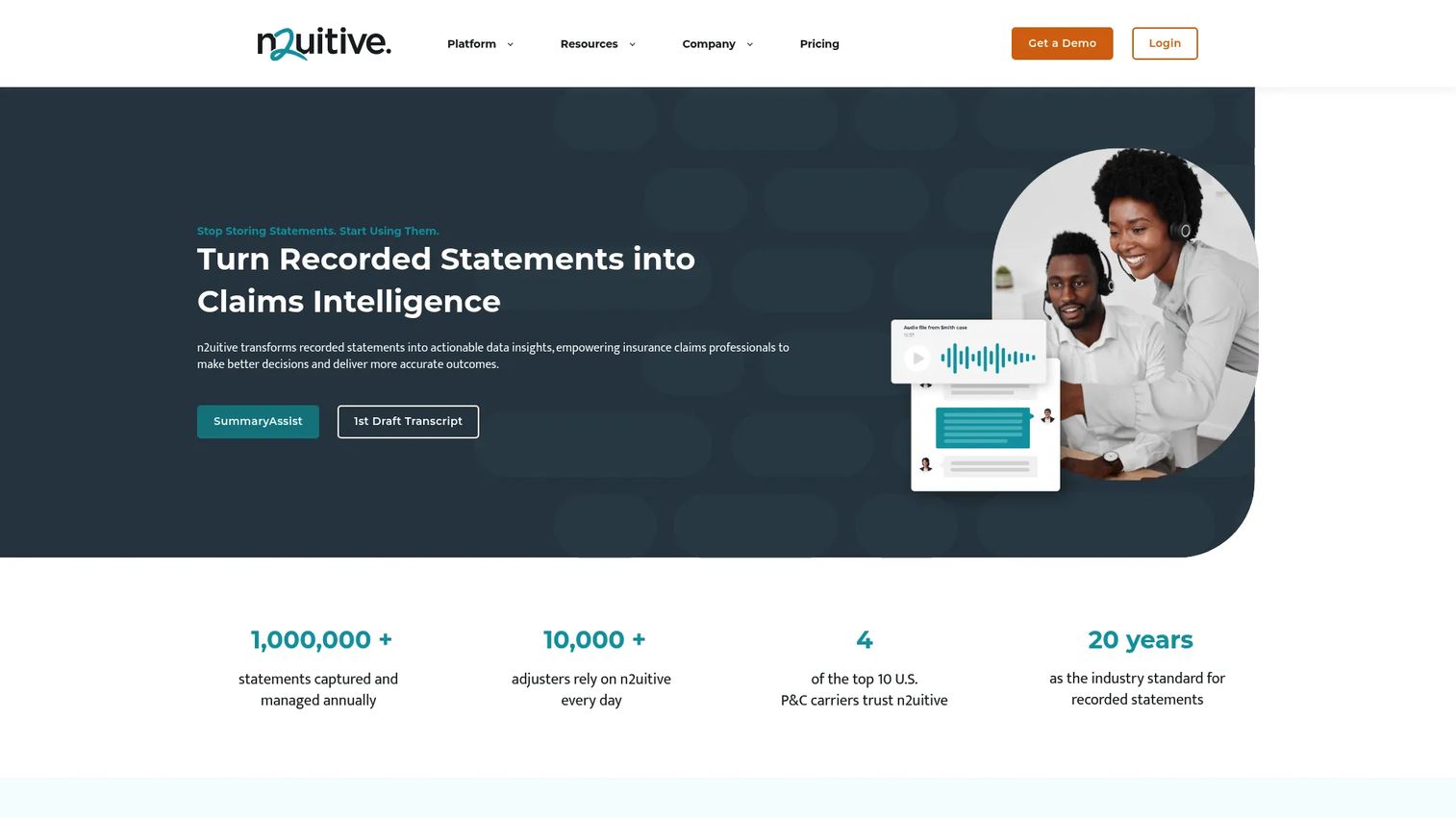
n2uitive is cloud-based recorded statement lifecycle management software for insurance claims teams. It treats the recorded statement as a critical claims asset, handling secure capture, transcription, and long-term retention rather than trying to run the entire claims process.
Best for: claims organizations that manage recorded statements at volume and need reliable capture and retention.
Key strengths
- Recorded statement capture: record statements from any phone or device without special hardware.
- SummaryAssist and 1st Draft Transcript: AI-assisted summaries and first-draft transcripts speed up review.
- Guidewire ClaimCenter integration: statements flow directly into the core claims system of record.
Why choose n2uitive: most claims platforms treat statements as an afterthought. n2uitive makes them a managed workflow, which matters for liability, injury, and SIU-heavy operations where a clean, retained statement can decide a claim. It slots alongside a broader claims management system rather than replacing it.
n2uitive pricing: n2uitive lists three plan tiers, Basic, Pro, and Premium, but publishes no dollar amounts. Pricing is contact-sales only. Verify current pricing and plan differences directly with the vendor.
3. Agentech
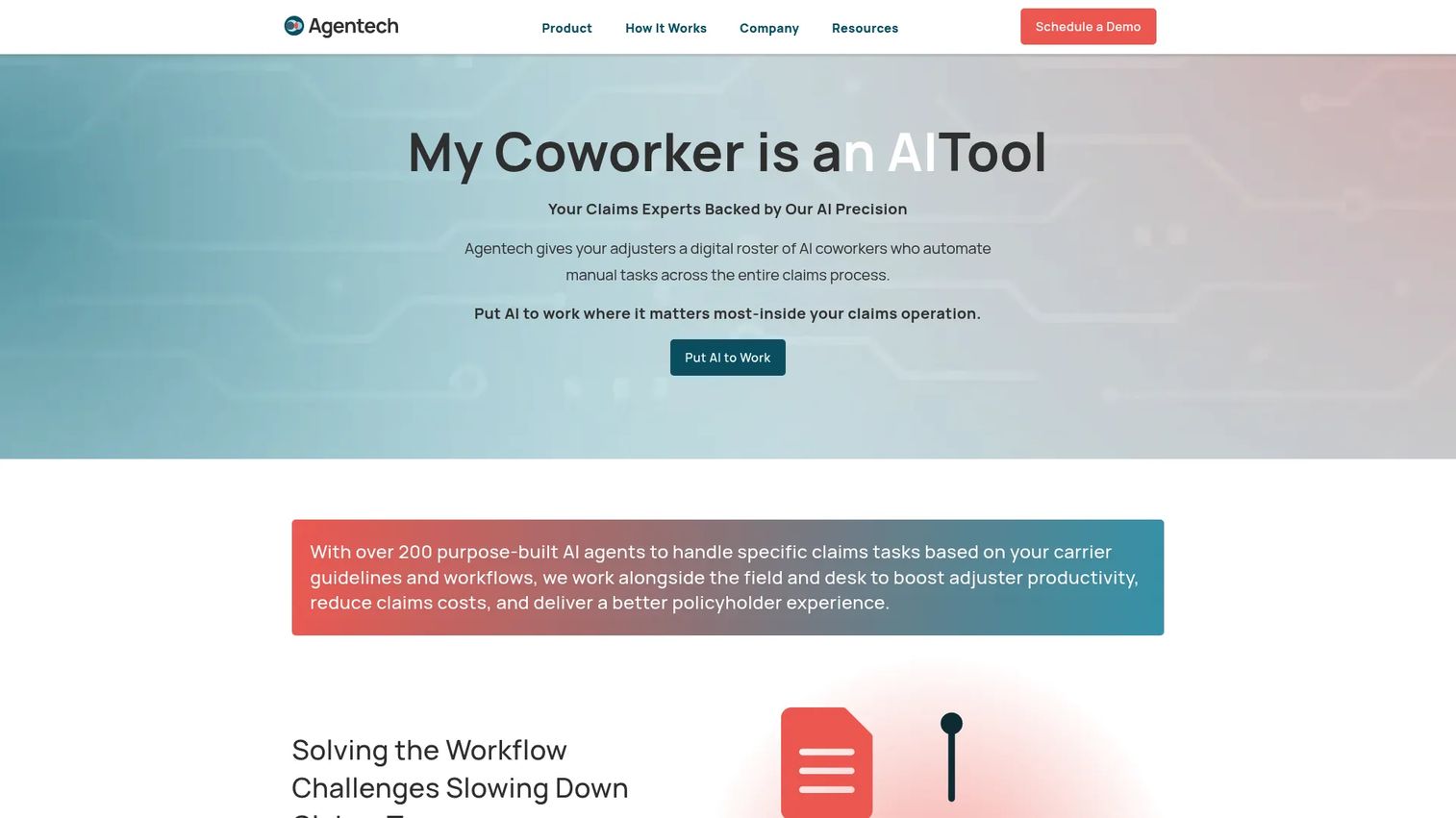
Agentech builds AI-powered digital coworkers for insurance claims teams. Rather than a full claims system of record, it layers over 200 specialized AI agents onto the systems you already run, automating discrete steps across the claims workflow with a human in the loop.
Best for: carriers, MGAs, TPAs, and adjusters that want to add automation to existing claims operations without a full platform replacement.
Key strengths
- 200+ specialized AI agents: purpose-built agents handle specific claims tasks across the workflow.
- API and embedded integration: plug agents into your current claims system rather than migrating off it.
- Human-in-the-loop with audit trails: role-based access and audit logging keep automation reviewable and compliant.
Why choose Agentech: if your core claims system works but manual steps are eating adjuster time, an automation layer beats a rip-and-replace. Agentech fits teams testing where claims AI actually moves cycle time before committing to a larger platform decision. That is a lower-risk path to repeatable operations.
Agentech pricing: Agentech does not publish pricing on its site and directs visitors to schedule a demo. No public G2 rating was available at review. Confirm pricing and terms directly with the vendor.
4. Riskonnect

Riskonnect is integrated risk management software spanning governance, risk, compliance, insurable risk, and business continuity. Its claims capabilities sit inside a broader platform, which suits organizations that want claims administration connected to enterprise risk and compliance rather than isolated.
Best for: large insurers, corporate risk teams, and complex operations that need claims tied into a wider risk and compliance platform.
Key strengths
- Governance, risk, and compliance: manage GRC alongside claims in one connected system.
- Risk and claims management: intake-to-settlement claims administration with configurable workflows.
- Business continuity and resilience: extend the platform beyond claims into broader risk operations.
Why choose Riskonnect: for enterprises where claims data feeds risk decisions, keeping claims in the same platform as GRC removes reconciliation work between systems. It is more than claims software, which is the point for buyers who need reporting and compliance across the whole risk picture, not just claim files.
Riskonnect pricing: Riskonnect does not publish pricing; first-party pages note that cost depends on project size, complexity, and customization, and route buyers to sales. Its GRC product holds a 4.4/5 rating on G2. Verify pricing for the specific product configuration you need.
5. Guidewire ClaimCenter
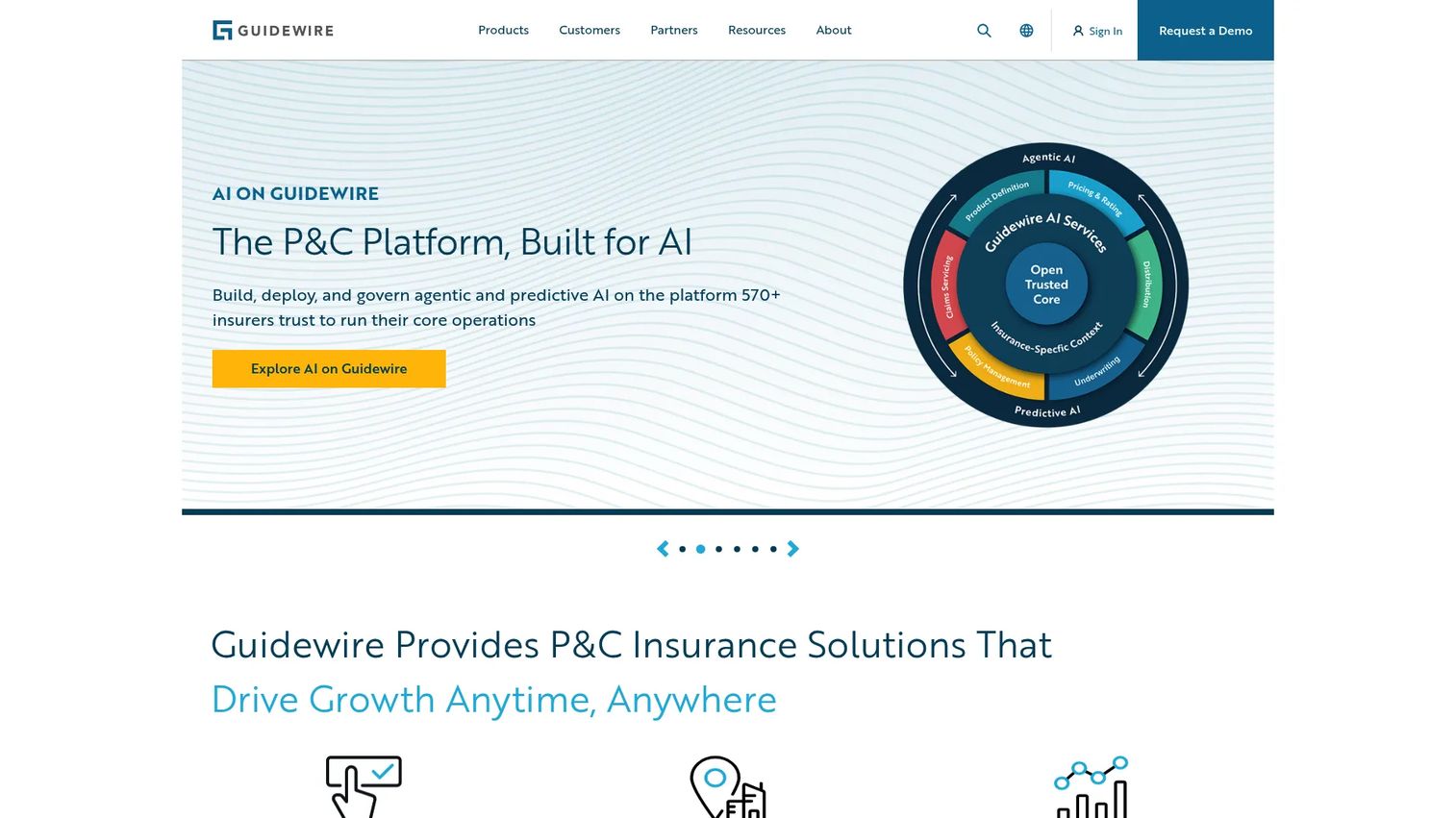
Guidewire is a P&C insurance software platform, and ClaimCenter is its core claims system. It is built for mid-to-large property and casualty insurers that need a claims system of record with deep configuration, tight integration to policy and billing, and a mature ecosystem around it.
Best for: mid-to-large P&C carriers that need an enterprise claims system of record at the center of their operations.
Key strengths
- InsuranceSuite core products: ClaimCenter works alongside PolicyCenter, BillingCenter, and more as one core system.
- Guidewire Analytics: analytics products support claims and underwriting decisions with data.
- Guidewire Cloud platform: cloud delivery and a broad integration ecosystem for enterprise scale.
Why choose Guidewire ClaimCenter: for a carrier standardizing claims across large volumes and lines of business, a configurable core system of record is the foundation everything else connects to. Guidewire's ecosystem depth is the differentiator. It is an enterprise commitment, best suited to teams with the scale and IT resources to match.
Guidewire pricing: Guidewire does not publish pricing and runs a demo-led sales motion. Enterprise implementations are scoped individually. Confirm pricing and implementation scope directly with Guidewire.
6. Snapsheet

Snapsheet is an insurance claims software and services company focused on virtual claims operations. It pairs claims management software with operational support, helping auto and property teams move faster through review and settlement with a digital-first workflow.
Best for: auto and property claims teams that want to speed up review and settlement with digital claims handling.
Key strengths
- Virtual claims operations: digital-first handling reduces the manual steps between intake and settlement.
- Claims management software: workflow tooling to move files through the lifecycle efficiently.
- Customer review support: operational support alongside the software for faster resolution.
Why choose Snapsheet: teams processing high volumes of auto and property claims benefit most from workflow automation that compresses the review-to-settlement cycle. Snapsheet's combination of software and services fits operations that want to move quickly without building every process in-house. Repeatable, faster settlement is the payoff.
Snapsheet pricing: Snapsheet does not expose a public pricing page, and detailed pricing is not published. It holds a 4.1/5 rating on G2 based on a small number of reviews. Confirm pricing and service scope directly with Snapsheet.
7. EIS ClaimCore
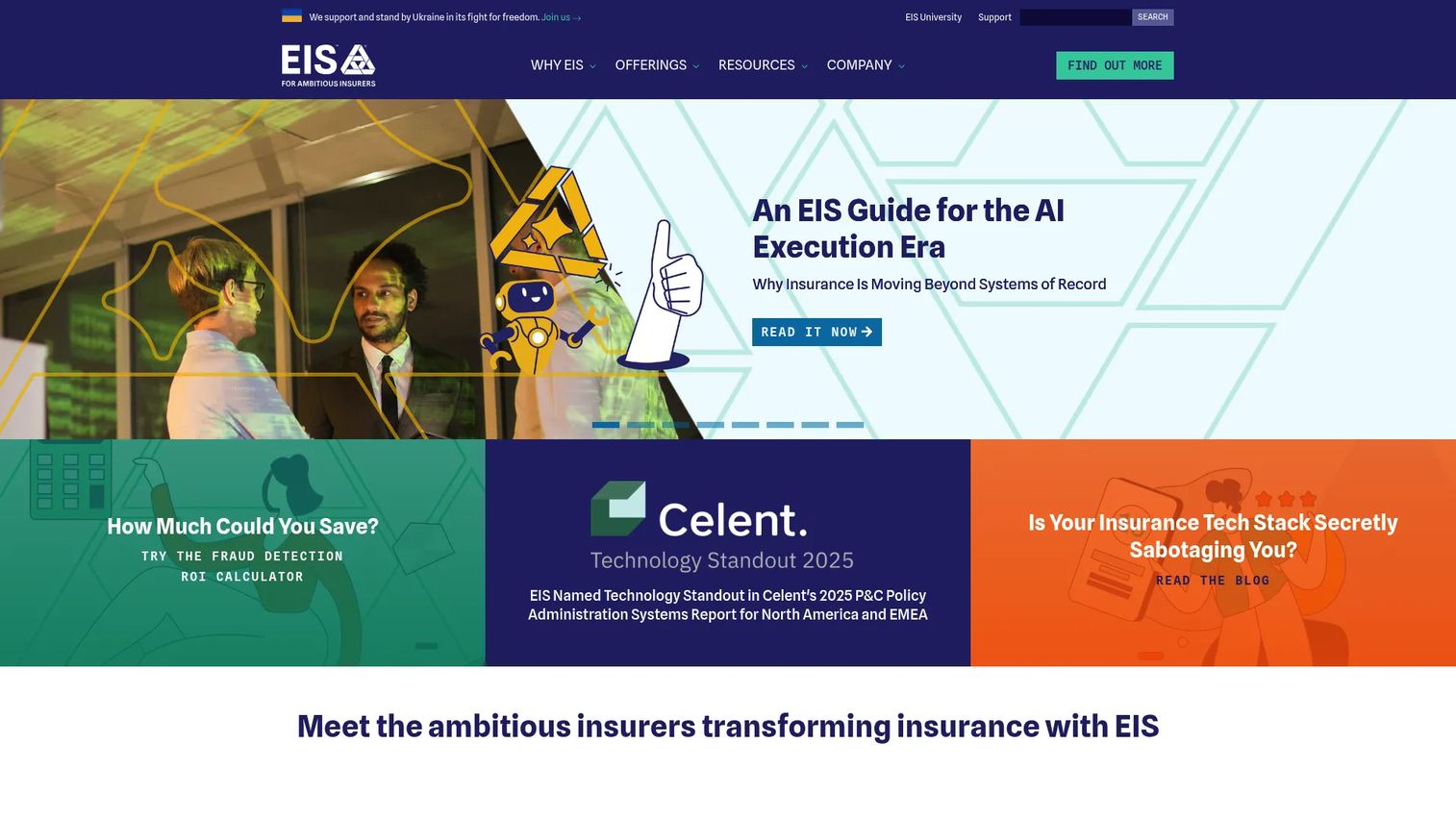
EIS offers cloud-native, AI-native insurance core software, and ClaimCore is its claims module. It sits inside the modular EIS OneSuite platform alongside PolicyCore, BillingCore, and CustomerCore, so insurers can adopt claims as part of a broader core modernization or on its own.
Best for: mid-to-large insurers modernizing core systems that want a modular claims platform they can adopt alongside policy and billing.
Key strengths
- Modular OneSuite platform: ClaimCore works standalone or with PolicyCore, BillingCore, and CustomerCore.
- Cloud-native, AI-native architecture: built for cloud delivery with AI capabilities embedded in the core.
- Portals, workflows, and APIs: configurable workflows and open APIs support integration and collaboration.
Why choose EIS ClaimCore: the modular architecture is the draw for insurers that do not want an all-or-nothing core replacement. You can standardize claims first and add other modules later, which makes the path to a repeatable, modern core less disruptive. It fits carriers with a longer-term modernization roadmap.
EIS pricing: EIS does not publish pricing on its primary site, and pricing appears to be quote-based. No public G2 rating was available at review. Confirm pricing and module scope directly with EIS.
8. Majesco
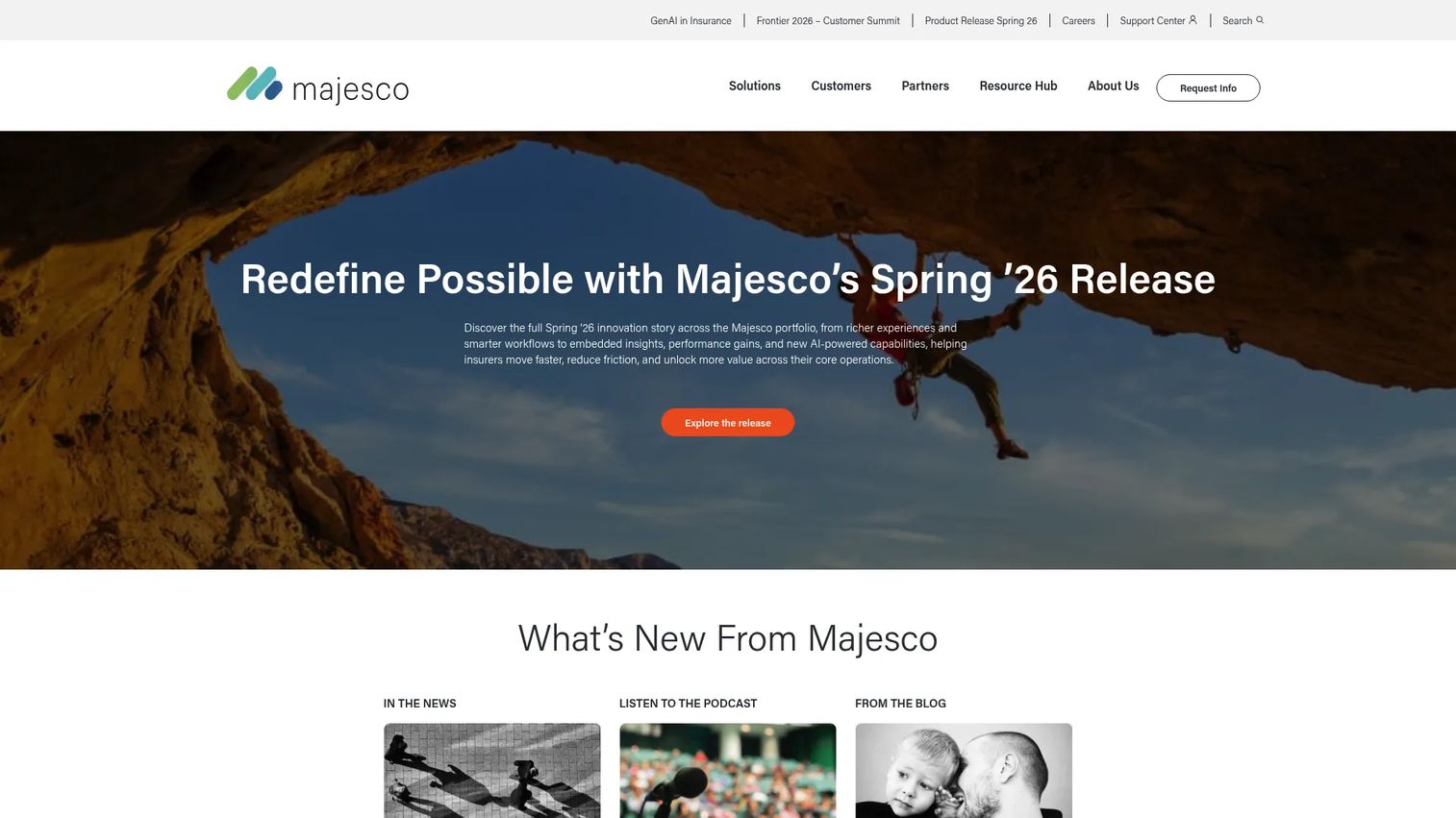
Majesco is an insurance software platform for property and casualty and life, annuity, and health insurers. Its claims capabilities live inside a broader core system, which suits insurers that want claims processing as one part of a wider insurance stack with shared analytics and AI.
Best for: insurers that want claims handling inside a broader core insurance platform rather than a standalone claims tool.
Key strengths
- Core insurance software: policy, billing, and claims managed within one platform.
- Embedded analytics and GenAI: built-in analytics and agentic AI support claims decisions.
- P&C rating and underwriting support: enterprise rating and underwriting alongside claims.
Why choose Majesco: insurers running policy and billing on a shared core benefit from keeping claims in the same platform, so data and analytics stay connected end to end. Majesco fits buyers prioritizing a unified stack over a best-of-breed claims specialist. It holds a 3.0/5 rating on G2 from a small review sample, so weigh recent reviewer feedback in your evaluation.
Majesco pricing: Majesco does not display public pricing and routes buyers to request information or a demo. Verify pricing and configuration directly with the vendor.
Considerations before you buy
Feature lists blur together fast in this category. Use these criteria to separate a real fit from a demo-day impression.
Lifecycle coverage vs. specialization
Decide whether you need a full claims system of record or a specialized tool that plugs into one you already have. A carrier standardizing operations wants end-to-end coverage. A team with a working core but a statement or automation gap wants a focused claims automation software layer instead.
Workflow configurability
The test is whether the software bends to your process or forces you to bend to it. Ask how routing rules, statuses, and required fields get configured, and who can change them. Rigid workflows create workarounds, and workarounds are where repeatability dies.
Integration depth
Claims software rarely lives alone. Confirm it connects to your policy, billing, payment, and third-party data systems, and ask whether integrations are native, API-based, or custom. Shallow integration means manual re-keying, which reintroduces the exact problem you bought software to fix.
Implementation reality
Enterprise core systems can take many months to deploy; focused tools can go live far faster. Map the timeline against your team's IT capacity before signing. A platform you cannot implement this year is not solving this year's problem.
Analytics and compliance
You should be able to produce cycle-time, reserve, leakage, and compliance numbers without exporting to spreadsheets. If reporting depends on manual work, the visibility you were promised will not survive contact with a busy quarter.
Conclusion
The right claims adjuster software depends less on feature counts and more on what kind of repeatability you need. VCA Software is the strongest end-to-end fit for carriers, TPAs, and adjusting firms wanting a configurable core. n2uitive owns recorded statement workflows. Agentech adds an AI automation layer over what you already run. Riskonnect connects claims to enterprise risk and compliance. Guidewire ClaimCenter, EIS ClaimCore, and Majesco anchor large-scale operations as systems of record or modular core platforms. Snapsheet moves digital auto and property claims through settlement faster.
Before you shortlist, map your current claim handoffs, where files stall, who owns each step, and which numbers you cannot produce today. That map tells you whether you need a system of record, a specialized workflow, or an automation layer, and it turns vendor demos into an honest comparison instead of a feature parade.
FAQs
Claims adjuster software is a system that manages the insurance claims lifecycle from first notice of loss through investigation, collaboration, settlement, and closure in one platform. It replaces email and spreadsheets with structured workflows, document management, and reporting so every claim has a clear status, owner, and audit trail.
The highest-impact features are FNOL intake, workflow automation, document management, collaboration portals, integrations with policy and payment systems, and analytics. For teams evaluating in 2026, AI support for document extraction and summarization is increasingly central, since it directly reduces manual adjuster time.
It replaces manual follow-up with rules-based routing, automatic task creation, deadline tracking, and alerts. When a step is overdue or a handoff is pending, the system flags it instead of relying on someone to remember, which is where most claims quietly stall in a manual process.
Configurable claims management systems can handle auto, property, liability, workers' compensation, and specialty lines by adapting workflows, fields, and routing per claim type. Confirm that a platform supports your specific lines and lets operations, not just IT, adjust how each type flows through the system.
At minimum, look for connections to policy administration, billing, payment, and third-party data sources such as estimating or fraud tools. Ask whether integrations are native, API-based, or custom, since shallow integration forces manual re-keying and undermines the automation you are paying for.
Measure cycle time, leakage, reserve accuracy, and adjuster capacity before and after implementation. The clearest ROI signals are shorter time to settlement, fewer stalled files, and more claims handled per adjuster without added headcount. Tie the numbers to metrics your leadership already tracks.
Yes. TPAs and independent adjusting firms often benefit most, since they handle varied claim types across multiple clients and need configurable workflows plus clean reporting per account. Configurable claims platforms let them standardize processes without forcing every client onto an identical workflow.
It varies widely. Focused tools such as recorded statement or automation layers can go live in weeks, while enterprise core systems of record often take several months to configure, integrate, and roll out. Map the timeline against your IT capacity and current claim volume before committing.