You bought the vehicles. The trucks are on the road. Then the first utility bill lands, and half of it is demand charges you never planned for.
That is the moment most fleet operators discover their old telematics stack was never built for this. It tracks location and mileage fine. It has nothing to say about state of charge at 4am, whether a route fits the battery, or how to stagger 40 chargers so you do not spike your peak load.
The market is scaling fast around that exact gap. MarketsandMarkets valued the electric vehicle fleet management market at USD 9.10 billion in 2025, projecting USD 32.25 billion by 2030 at a 22.7% CAGR (GlobeNewswire, 2026). Growth like that means new platforms, new claims, and a harder buying decision.
So the real question for anyone running an electrified fleet is narrow: which software actually controls charging, battery health, and energy cost, and which just reports on them after the fact.
What's inside
This guide is a working buyer's document for anyone evaluating ev fleet management software in 2026. It is written for fleet operators, EV program managers, and operations leaders who need charging, battery, and energy control in one place, not a glossary.
We selected and ranked the seven platforms below against four criteria:
- Charging management depth: does it actively schedule and control charging, or only monitor it
- Battery and range visibility: state of charge, degradation, and route fit
- Transition planning: support for phasing in EVs across a mixed fleet
- Interoperability and energy cost control: OCPP, telematics, utility, and ERP connections, plus demand charge avoidance
Pricing and ratings reflect what each vendor publishes at the time of writing.
TL;DR
Short on time? Here are the decision shortcuts.
- Best for zero-emission transition planning: BetterFleet, built as an operating system for fleet electrification and charge management.
- Best for large-scale charging operations: Driivz, for operators running charging, billing, and energy management together.
- Best for charging-specific fleet visibility: EVenergi, for teams that want EV planning and monitoring tools over general fleet software.
- Best for mixed ICE and EV fleets: Fleetio, when maintenance and inspections sit at the center of your operation.
- Best for telematics plus EV inside a bigger stack: Samsara, when EV needs live alongside GPS tracking, safety, and compliance.
What is ev fleet software
Electric vehicle fleet management software is a system that plans, manages, and optimizes electric fleets across charging, battery health, energy use, routing, and the transition from combustion vehicles. It extends traditional telematics with the variables EVs introduce: charge scheduling, state of charge, degradation, and utility pricing.
A traditional fleet tool answers "where is the vehicle and when is it due for service." An electric vehicle fleet management system has to answer more: is this vehicle charged enough for its route, when should it charge to avoid a demand spike, and how healthy is the battery after 18 months of daily cycling.
Core capabilities of fleet management software for electric vehicles typically include:
- Charging management software: schedule, sequence, and load-balance depot and public charging
- Battery health monitoring: track state of charge, degradation, and range over time
- Route and range fit: match assignments to available battery and charging windows
- Energy cost control: time-of-use optimization and demand charge avoidance
- Transition planning: model which routes and vehicles to electrify next
- Interoperability: OCPP chargers, telematics, utility data, and ERP or maintenance systems
The category splits roughly into three groups: electrification and charge-management platforms (BetterFleet, EVenergi), charging network and energy software (Driivz, ChargePoint), and broad fleet platforms adding EV coverage (Fleetio, FleetRabbit, Samsara). Where your fleet sits on that spectrum decides which group you shortlist first.
When to use ev fleet software
Manage depot charging without chaos
You have more vehicles than chargers, and every one needs to be ready by 5am. Without central control, that turns into a spreadsheet and a night-shift supervisor guessing. EV fleet software sequences charging across the depot, balances load so you do not trip your service limit, and confirms each vehicle hits target state of charge before dispatch. This is where depot charging optimization earns its keep: turnarounds get predictable instead of hopeful.
Plan a mixed ICE and EV transition
Most fleets are not flipping to electric overnight. You are phasing EVs in route by route, and you need to know which assignments actually fit an electric vehicle's range and charging window. Transition planning tools model that: they show which routes electrify cleanly, what charging infrastructure each depot needs, and where a diesel vehicle should stay for now. Mixed fleet support keeps both powertrains visible in one operational view instead of two disconnected systems.
Reduce energy costs and avoid demand charges
Utility pricing punishes uncontrolled charging. Plug 30 vehicles in at once and your peak demand, and the charge tied to it, jumps. Software that manages charging load can stagger sessions into cheaper time-of-use windows and cap simultaneous draw. Demand charge avoidance and energy cost reduction are often the fastest measurable payback in the whole category, and the reason many operators buy in the first place.
Comparison table
The table below sorts by relevance to buyers whose primary job is charging, battery, and energy control. Pricing and ratings reflect each vendor's published figures at the time of writing; where a vendor sells through a demo-led process, that is noted.
| # | Product | Best for | Key differentiator | Pricing | G2 rating |
|---|---|---|---|---|---|
| 1 | BetterFleet | Zero-emission transition and charge management | Operating system for fleet electrification, OCPP-compliant | Demo-led | Not listed |
| 2 | Driivz | Large-scale charging operations | Charging, billing, and energy management in one platform | Demo-led | Not listed |
| 3 | EVenergi | Charging-specific fleet planning | GridFleet scenario planning and EV monitoring | Demo-led | Not listed |
| 4 | Fleetio | Mixed fleets centered on maintenance | Inspections, work orders, parts, per-vehicle pricing | From $4/vehicle/mo | 4.6/5 |
| 5 | FleetRabbit | All-in-one fleet operations | Inspections, maintenance, compliance, dispatch | From $50/vehicle/yr | Not rated |
| 6 | ChargePoint | Charging network and infrastructure | Charging network plus cloud charge management | Demo-led | 5.0/5 |
| 7 | Samsara | Telematics plus EV in a larger stack | GPS, safety, compliance, and EV visibility together | Demo-led | 4.5/5 |
Best 7 ev fleet software tools for 2026
1. BetterFleet
BetterFleet positions itself as an operating system for zero-emission fleets, covering planning, operations, and charge management in one place. It is built for transit, government, and logistics operators moving away from combustion vehicles, where the hard part is not tracking assets but coordinating charging infrastructure, energy, and route readiness across a transition.
Best for: Transit, government, and logistics fleets running a structured electrification program.
Key features
- Fleet planning and transition planning for electrification
- Charge management with smart charging and load balancing
- OCPP-compliant charger control
- Open API integration with telematics and energy systems
- Depot-level scheduling and readiness
Why choose BetterFleet: If your priority is planning the transition and then running charging day to day, BetterFleet keeps both in a single operating layer instead of stitching a planning tool to a separate charge manager. It fits operators who treat electrification as a program, not a one-off purchase.
BetterFleet pricing: BetterFleet sells through a request-a-demo process, so plans are quoted per fleet rather than listed publicly. Reach out through their site for a scoped proposal.
2. Driivz
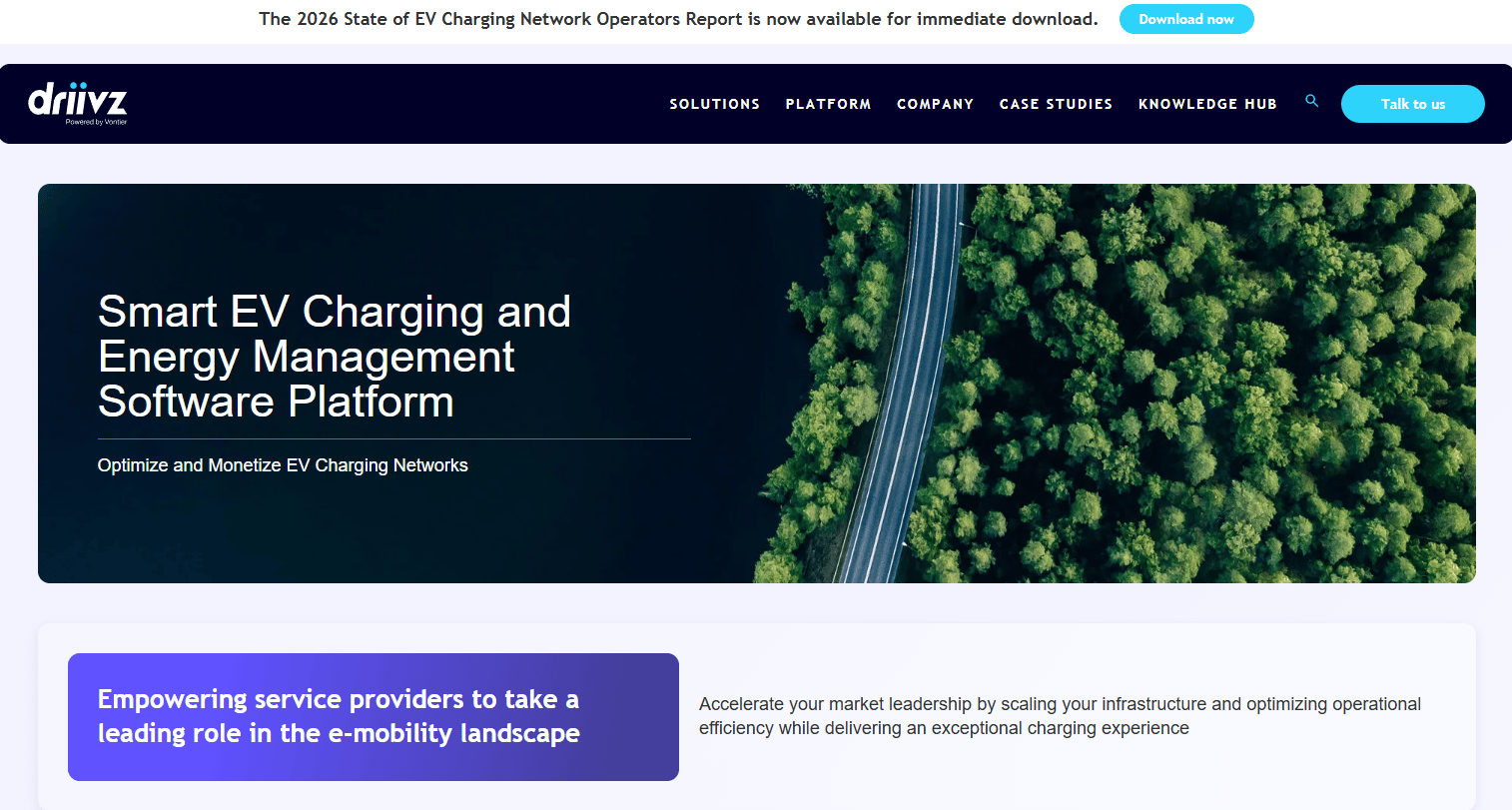
Driivz is an EV charging and energy management platform built for operators, automakers, fleets, and e-mobility service providers. Its strength is running charging operations at scale: managing charger uptime, billing and tariffs, and energy load in one system. For a fleet with a large depot or network of chargers, that operational control is the whole point.
Best for: Large-scale charging networks that need operations, billing, and energy management together.
Key features
- EV charging operations management
- Billing and tariff management
- Energy management and load balancing
- Charger reliability monitoring and alerts
- Smart energy control across sites
Why choose Driivz: Driivz suits operators whose challenge is charger utilization and reliability across many stations, not just vehicle tracking. If keeping chargers online and energy costs controlled is your daily fire drill, its operations focus lines up well.
Driivz pricing: Driivz quotes pricing directly based on network size and requirements, so figures come through a sales conversation rather than a published tier. Contact them for a proposal matched to your charging footprint.
3. EVenergi
EVenergi is a zero-emissions transport software and consulting brand focused on EV fleet planning, monitoring, and grid transition. Its GridFleet tool models electrification and grid scenarios, while its monitoring layer tracks vehicles, routes, and battery analytics. It fits fleets that want charging-specific planning tools rather than general fleet tracking with EV bolted on.
Best for: Fleet operators and utilities planning or managing an EV transition program.
Key features
- GridFleet EV and grid transition scenario planning
- Electric vehicle monitoring and route analytics
- Battery and range analytics
- Fleet electrification modelling
- Charge management planning
Why choose EVenergi: EVenergi leans into the analytical side of electrification, so it fits teams who need to model scenarios before committing capital. Note that EVenergi has been aligning under the BetterFleet brand, so confirm current product naming when you evaluate.
EVenergi pricing: EVenergi works through a consultative, demo-led process, with scope shaped by the planning and monitoring work involved. Reach out directly for a quote.
4. Fleetio
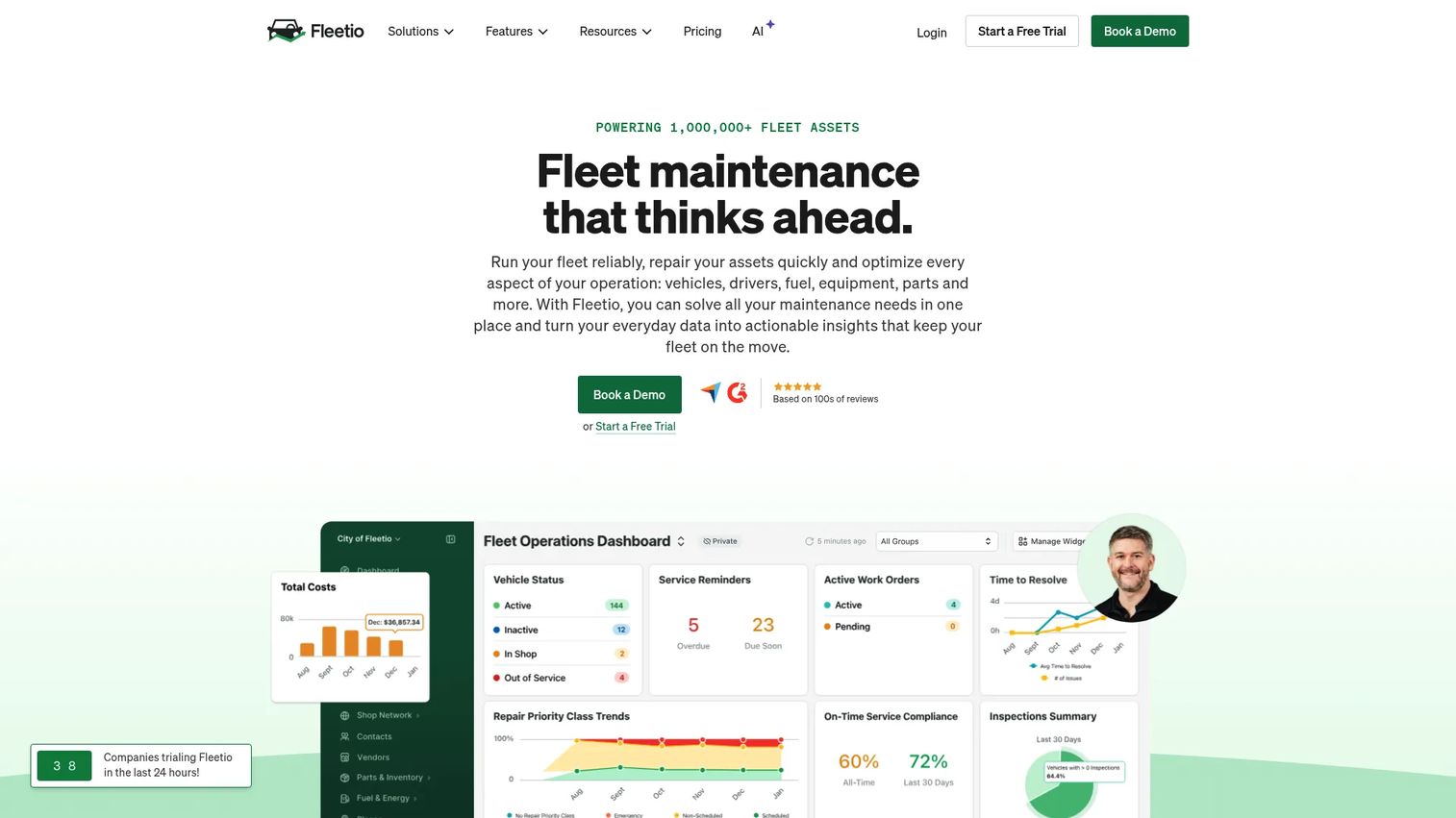
Fleetio is fleet management software built around maintenance, inspections, parts, and work orders. It tracks EVs inside a broader fleet system, which makes it a strong fit for mixed ICE and EV teams that want one operational platform rather than a dedicated charging tool. If maintenance and uptime are the center of your operation, Fleetio keeps both powertrains in one workflow.
Best for: Mixed fleets that need strong maintenance and inspection management across ICE and EV.
Key features
- Vehicle inspections and digital DVIR
- Work orders and maintenance tracking
- Parts and inventory management
- Asset lifecycle and service history
- EV tracking within the broader fleet view
Why choose Fleetio: Fleetio wins when maintenance workflows, not charging control, are your primary pain. It gives a mixed fleet a single system for service, inspections, and asset management while EVs phase in alongside diesel.
Fleetio pricing: Fleetio offers three plans. Essential starts at $4 per vehicle per month billed annually, or $5 monthly. Professional is $7 per vehicle per month and Premium is $10 per vehicle per month, both billed annually. A 14-day free trial is available with no credit card required.
Fleetio holds a 4.6/5 rating on G2.
5. FleetRabbit
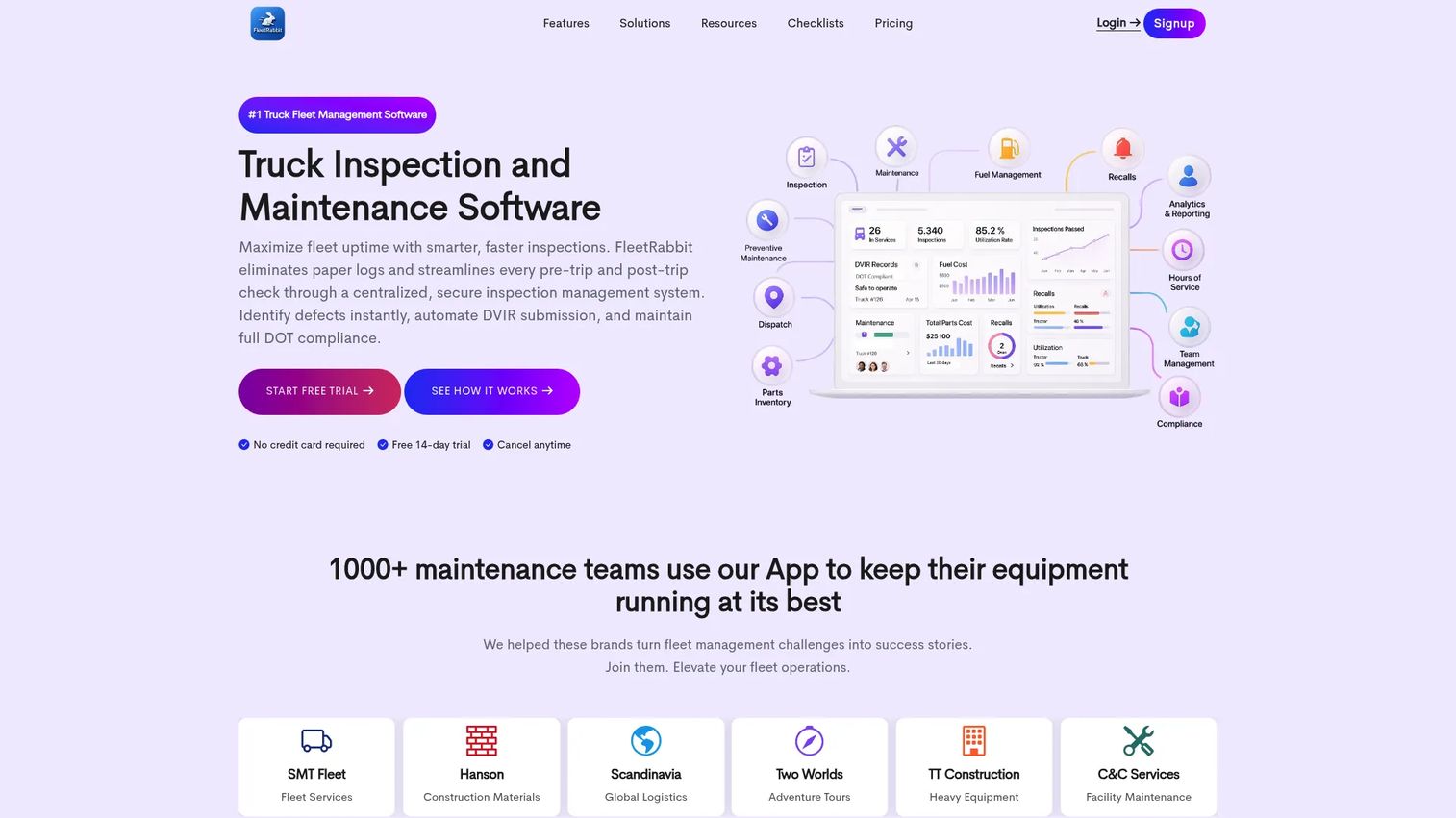
FleetRabbit is an all-in-one fleet management platform covering inspections, maintenance, fuel, compliance, dispatch, and reporting. It also publishes category-level guidance on EV planning and battery health, which makes it useful as much for buyer education as for operations. For fleets electrifying gradually, it offers a broad operational base with EV considerations layered in.
Best for: Fleets wanting one platform for inspections, maintenance, compliance, and dispatch.
Key features
- Digital inspection management and DVIR
- Maintenance and work order workflows
- Fuel management and HOS monitoring
- Dispatch and parts inventory
- EV planning and battery health guidance
Why choose FleetRabbit: FleetRabbit fits operators who want broad fleet coverage at a low entry price while they figure out their EV path. Its comparison-led content also helps teams still defining requirements.
FleetRabbit pricing: FleetRabbit is free for up to three assets and offers a 14-day trial with no credit card required. Its Business Plan is $50 per vehicle per year billed annually, with Enterprise Plan and Fleet Rabbit One available at custom pricing.
FleetRabbit does not currently carry a substantive G2 star rating.
6. ChargePoint
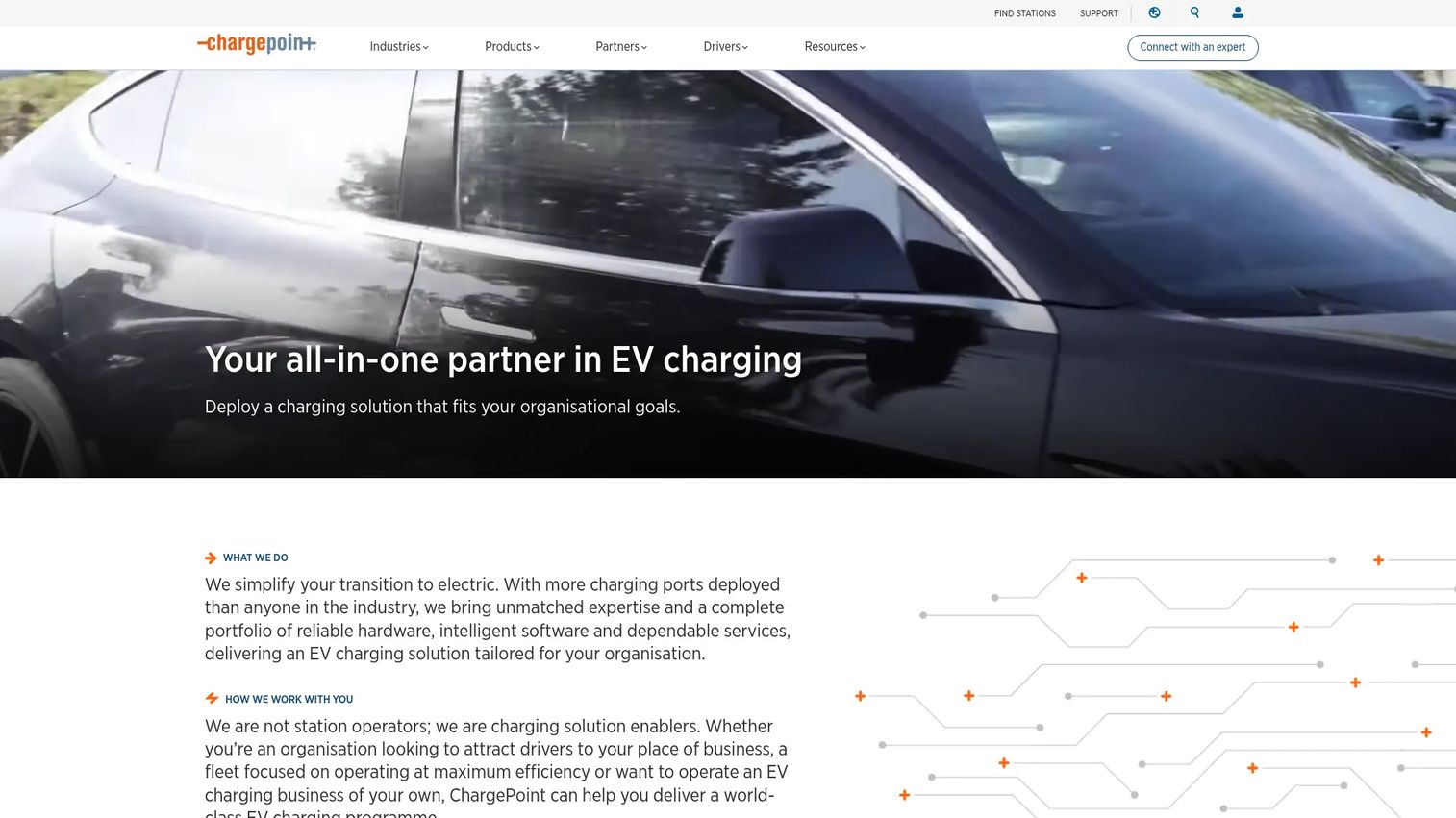
ChargePoint runs an EV charging network and software platform for drivers, fleets, workplaces, and commercial properties. Its charge management software handles pricing, access control, waitlists, and reporting, with real-time station status across the network. For fleets whose bottleneck is charging infrastructure itself, ChargePoint pairs hardware reach with cloud control.
Best for: Organizations and drivers needing both an EV charging network and cloud-based charge management.
Key features
- Find stations and start charging via the ChargePoint app
- Real-time station status and charging notifications
- Charge management software with access control
- Pricing, waitlists, and usage reporting
- Time-of-day charging optimization
Why choose ChargePoint: ChargePoint fits fleets that want charger infrastructure and management from the same provider, with visibility into demand charges and time-of-day cost. It suits operations where charging hardware coverage is the deciding factor.
ChargePoint pricing: ChargePoint sets station pricing through station owners and configures software plans by deployment, so figures come through its sales team rather than a public tier. Contact ChargePoint for pricing matched to your sites.
ChargePoint shows a 5.0/5 rating on G2, based on a small review count.
7. Samsara
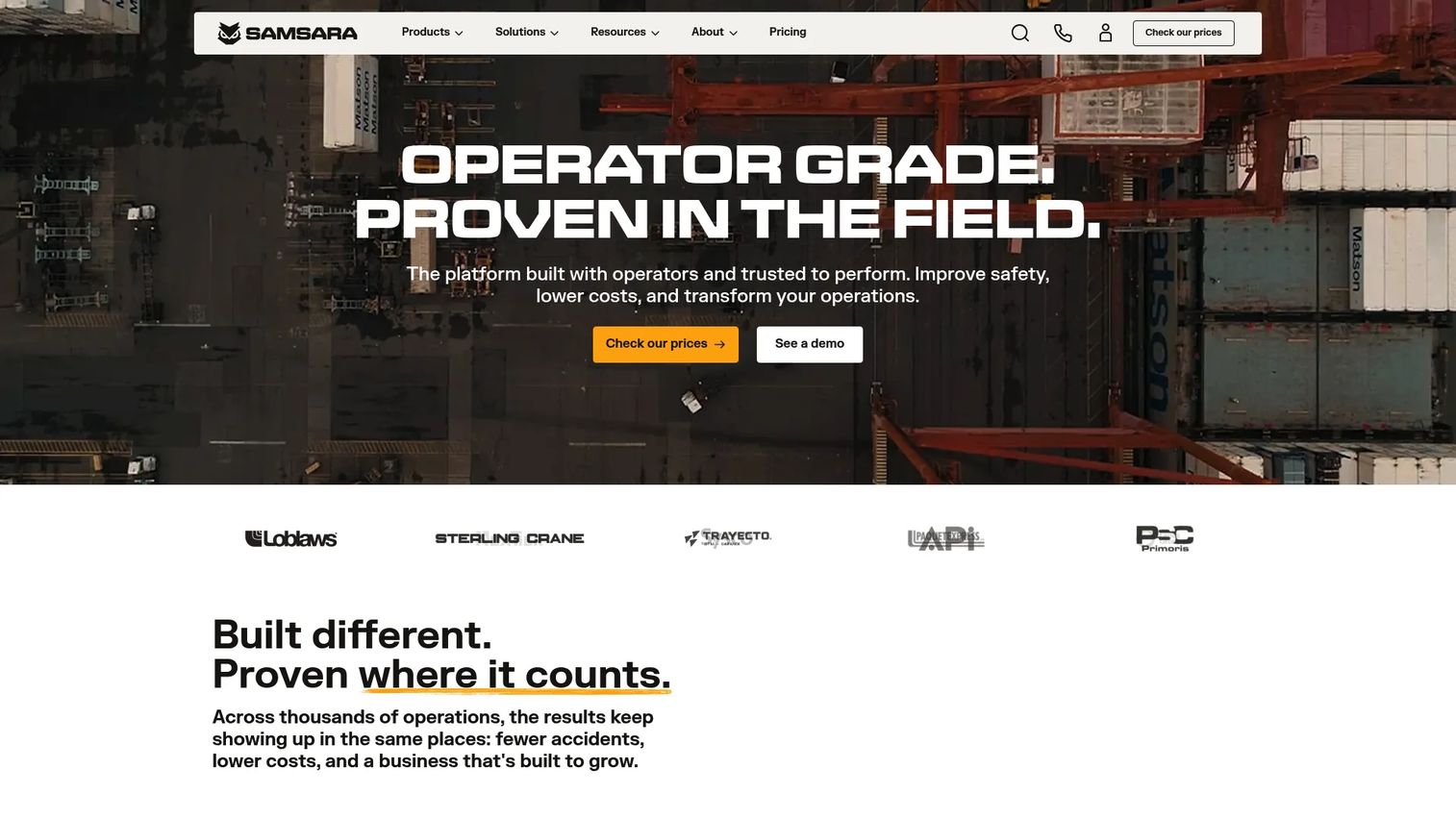
Samsara is a connected operations platform for managing fleets, equipment, workforce, and sites. It combines GPS tracking, AI dash cams, ELD compliance, and asset monitoring with EV fleet visibility. That makes it a strong option when EV needs sit inside a larger fleet stack rather than standing alone, and you want routing, safety, and compliance in the same system.
Best for: Fleet and operations teams that need EV visibility inside an integrated operations platform.
Key features
- GPS fleet tracking and routing
- AI dash cams and in-cab alerts
- ELD compliance and safety reporting
- Asset tracking and maintenance
- EV fleet visibility and reporting
Why choose Samsara: Samsara fits operations that already run a broad telematics and safety stack and want EV data folded into it. If your fleet is mostly ICE with EVs growing, keeping everything in one operations platform reduces tool sprawl.
Samsara pricing: Samsara quotes pricing through a guided flow based on fleet size and product mix, so numbers come from its team rather than a listed tier. Request a quote through its site for figures matched to your fleet.
Samsara holds a 4.5/5 rating on G2.
Considerations
Before you commit, run each shortlisted platform against this checklist. The goal is to separate tools that control your operation from tools that only describe it.
Charging management depth
Confirm whether the software actively schedules and controls charging or only reports on it. Active control means sequencing sessions, load balancing across the depot, and guaranteeing target state of charge before dispatch. Reporting alone leaves the hard scheduling work with your team.
Battery and range visibility
Check for real state of charge, degradation tracking, and route-fit analysis, not just a battery percentage on a dashboard. Battery health monitoring over months is what tells you when range no longer covers a route and when a vehicle needs reassigning.
Transition planning support
Verify the tool helps you phase EVs in, not just track the ones you already have. Look for scenario modelling that shows which routes electrify cleanly and what charging each depot needs. Mixed fleet support matters here, since most operations run both powertrains for years.
Interoperability and integrations
Confirm the platform connects to your chargers, telematics, utility data, and ERP or maintenance systems. OCPP compliance keeps you from being locked to one charger brand. Weak interoperability turns every new integration into a project.
Cost and energy controls
Review demand charge avoidance, time-of-use optimization, and energy reporting. This is often the fastest payback in the category, so ask vendors to show exactly how they cap peak load and shift charging into cheaper windows.
Conclusion
EV fleet software only earns its place if it manages charging, battery health, energy cost, and transition planning in one place. Anything that just mirrors your telematics with a battery icon added is not solving the problem that electrification created.
Match the pick to your operating model. If electrification is a structured program, BetterFleet and EVenergi lead on planning and charge management. If charging operations and energy are the daily fight, Driivz and ChargePoint bring depth there. If your fleet is mixed and maintenance-led, Fleetio and FleetRabbit keep both powertrains in one workflow. And if EV needs sit inside a broader telematics stack, Samsara folds them into an operations platform you may already run.
The best next step is a scoped demo against your own routes and depot load. Bring your real utility rate structure and one hard route. The platform that can show you controlled charging and demand charge avoidance on those inputs is the one worth buying.
FAQs
For fleets running both ICE and EV, Fleetio and Samsara are strong picks because they keep both powertrains in one operational view. Fleetio centers on maintenance and inspections, while Samsara adds telematics, safety, and compliance. Choose based on whether service workflows or broad operations visibility is your priority.
Yes, the stronger platforms actively schedule and sequence charging rather than just reporting on it. Charging management software staggers sessions across a depot, balances electrical load, and confirms each vehicle reaches target state of charge before dispatch. That is the difference between predictable turnarounds and a night-shift guessing game.
It can, and demand charge avoidance is often the fastest payback in the category. By capping how many vehicles draw power at once and shifting charging into cheaper time-of-use windows, the software lowers your peak demand. Ask any vendor to demonstrate this against your actual utility rate structure.
Track state of charge, degradation over time, and how current range maps to each route. Battery health monitoring across months of daily cycling tells you when a vehicle can no longer cover its assignment. Route-fit analysis then flags when to reassign a vehicle before it strands a driver.
Yes. Traditional fleet management software tracks location, mileage, and service due dates. An electric vehicle fleet management system adds charge scheduling, state of charge, degradation, energy cost control, and transition planning. Those EV-specific variables are exactly what standard telematics was never built to handle.
Prioritize OCPP charger compatibility, telematics connections, utility and energy data, and links to your ERP or maintenance systems. OCPP compliance keeps you from being locked to a single charger brand. Strong interoperability decides whether the platform fits your stack or becomes another silo.
Score each vendor on charging control depth, battery and range visibility, transition planning, interoperability, and energy cost tools. Then run a demo against one hard route and your real depot load. The platform that shows controlled charging and demand charge avoidance on your own inputs is the credible choice.
If you run only a handful of EVs, a broad fleet platform with EV visibility may cover you at first, and tools like FleetRabbit start free for up to three assets. As charging complexity and energy costs grow, dedicated charging and transition tools start to pay for themselves. The trigger is usually your first surprising demand charge.