
A shipment leaves the dock. From that moment, every stakeholder wants the same thing: to know where it is, when it will arrive, and what to do when something breaks. But the information lives in five systems, three inboxes, and one carrier portal that logs you out every 20 minutes. So your team spends its day chasing status updates instead of preventing the next exception.
The stakes are climbing. The global logistics software market is projected to grow from USD 17.47 billion in 2026 to USD 31.74 billion by 2034 at a 7.75% CAGR, according to Fortune Business Insights (2024). That growth is not vanity spend. It reflects a real shift: manual coordination does not scale, and buyers now expect real-time shipment visibility as table stakes, not a premium feature.
If you own operational systems, this is the same evaluation pattern you apply to any tool that reduces manual work and touches your data stack. You care about integration depth, data quality, and whether the platform holds up as your volume and product change. The same instinct that drives you to compare analytics platforms that drive ROI or evaluate agentic AI platforms applies here. Logistics software is infrastructure. Pick it like infrastructure.
This guide breaks down eight logistics management software platforms, from configurable low-code builders to enterprise transportation backbones, with honest fit notes for each.
What's inside
This is a comparison-first guide for operations leaders, logistics managers, supply chain teams, and the product and RevOps folks who evaluate operational software. We selected the eight platforms below based on four criteria: depth of real-time visibility and tracking, automation and exception handling, integration and API breadth, and fit across company size. We skipped tools that only solve one narrow slice without a path to the broader logistics stack. Pricing and ratings reflect verified, first-party sources where public, and we say so plainly when a vendor gates pricing behind sales.
TL;DR
- Best for no-code custom apps: Zoho Creator, if you want to build logistics workflows and mobile field tools without a dev team.
- Best for AI-driven insight: GPX Scout AI, for teams that want to query supply chain data in plain language.
- Best for enterprise visibility: FourKites and project44, for large shippers running complex, multimodal freight.
- Best for European and global transport visibility: Shippeo, for multimodal predictive ETAs and exception management.
- Best for the full logistics stack: Descartes Systems Group, for route optimization, freight execution, and trade compliance in one modular suite.
- Best transportation backbone: Oracle Transportation Management and SAP Transportation Management, for large enterprises standardizing planning and execution.
What is logistics software?
Logistics software is a category of operational tools that plan, execute, track, and optimize the movement and storage of goods across a supply chain. It spans shipment tracking software, transportation management software, warehouse management, inventory management, and order fulfillment, connecting the systems and people involved in getting a product from origin to destination.
The category is broad, and the terms overlap. A useful way to frame it is by what each system optimizes:
- Logistics tracking software: Focuses on real-time shipment visibility, predictive ETAs, and exception detection across carriers and modes.
- Transportation management software: Plans, executes, and settles freight, including carrier selection, route optimization, and freight audit.
- Warehouse management: Controls receiving, putaway, picking, packing, and inventory management inside a facility.
- Order fulfillment systems: Coordinate orders across channels, allocate stock, and trigger downstream shipping.
- Configurable and low-code platforms: Let teams build custom logistics apps, fleet management tools, and automation without heavy engineering.
- AI logistics software: Layers predictive analytics, natural-language querying, and automated exception resolution on top of operational data.
Most mature operations run several of these together. The best supply chain software gives you clean API integrations so shipment data, inventory levels, and order status stay in sync instead of drifting apart. That data quality question matters more than any single feature. A predictive ETA is only as good as the tracking feed behind it.
When to use logistics software
Replace manual status-chasing with real-time visibility
If your team spends hours pulling shipment status from carrier portals and emails, a visibility platform pays for itself fast. Real-time shipment visibility and predictive ETAs cut the reactive back-and-forth. You see delays before your customer does, and you can act instead of apologize. This is the highest-value entry point for most teams.
Automate transportation planning and execution
When freight volume grows past what spreadsheets can handle, transportation management software takes over carrier selection, route optimization, and freight audit. Automation here reduces cost per shipment and removes the human error that creeps into manual rate shopping and invoice matching.
Build custom operational workflows you cannot buy off the shelf
Some logistics problems are specific to your business. A configurable, low-code platform lets you build the exact workflow, mobile app, or fleet management tool you need without waiting on an engineering roadmap. This is the right move when your process is your differentiator and no packaged product fits.
Comparison table
Here is the shortlist at a glance. Pricing reflects public first-party sources where available. Several enterprise vendors gate pricing behind sales, which is noted directly.
| # | Product | Intent | Key use case | Pricing | G2 rating |
|---|---|---|---|---|---|
| 1 | Zoho Creator | Build custom logistics apps | No-code workflows, mobile field tools, automation | From INR 90/user/mo, free tier | 4.3/5 |
| 2 | GPX Scout AI | AI supply chain insight | Natural-language querying over operational data | Contact sales | 4.8/5 |
| 3 | FourKites | Enterprise visibility | Multimodal tracking, autonomous exception resolution | Contact sales | 4.5/5 |
| 4 | project44 | End-to-end visibility | Shipment and inventory visibility, transportation, yard | Contact sales | 4.7/5 |
| 5 | Shippeo | Multimodal transport visibility | Real-time tracking, predictive ETAs, alerts | Contact sales | 4.8/5 |
| 6 | Descartes Systems Group | Full logistics stack | Routing, freight execution, trade compliance | Quote-based; Ocean Rates public | 4.6/5 |
| 7 | Oracle Transportation Management | Enterprise transport backbone | Multimodal planning, execution, freight audit | Contact sales | 4.2/5 |
| 8 | SAP Transportation Management | SAP-native transport | Planning, execution, freight settlement | Price upon request | 4.2/5 |
1. Zoho Creator
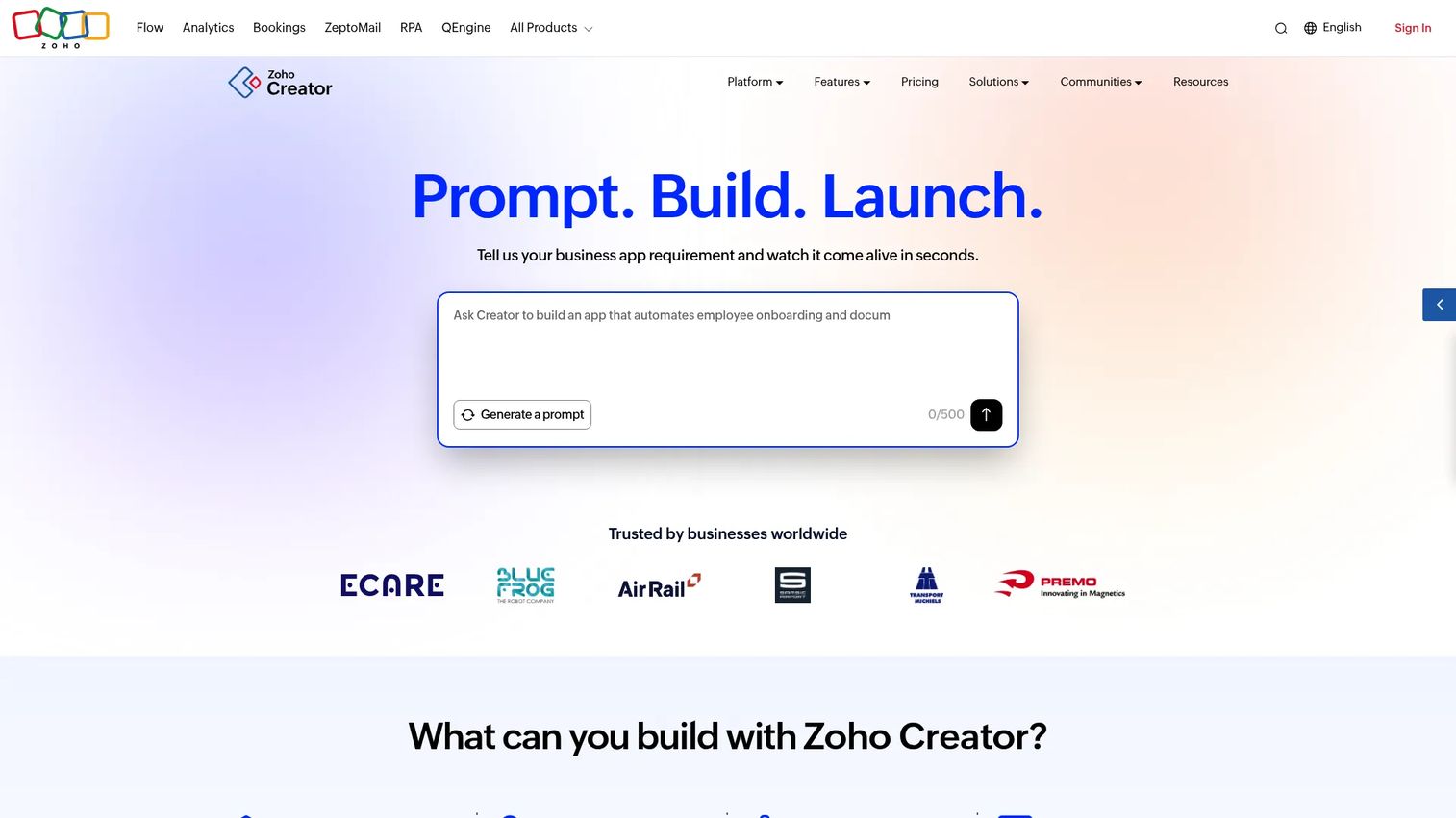
Zoho Creator is an AI-powered low-code application development platform for building custom business apps, portals, and workflows. For logistics teams, that means you can assemble a shipment tracker, driver dispatch app, or fleet management tool with a drag-and-drop builder instead of a six-month development cycle. It is the outlier on this list because it is not a packaged logistics product. It is the toolkit you use when packaged products do not fit your process.
Best for: Teams that need to build custom internal logistics apps and automate processes without heavy coding.
Key strengths
- Drag-and-drop app builder: Assemble logistics workflows, forms, and portals visually, so ops teams ship tools without waiting on engineering.
- Workflow automation and approvals: Trigger status updates, dispatch actions, and approval chains automatically to cut manual coordination.
- Mobile and web app deployment: Publish the same app to web and mobile, so drivers and field teams capture updates from the road.
Why choose Zoho Creator: Choose it when your logistics process is genuinely yours and no off-the-shelf tracking or transportation tool maps to it cleanly. The trade-off is that you are building, not buying, so you own the design and iteration. For a PM or ops leader who wants full control over data model, segmentation, and workflow logic, that control is the point. It also fits teams already inside the Zoho ecosystem.
Zoho Creator pricing: Zoho Creator offers a free tier plus three paid plans: Standard, Professional, and Enterprise. On Zoho's public pricing page, the entry Standard plan is listed from 90 per user per month, with Professional at 300 and Enterprise at 600, billed per user with monthly and annual options. Zoho Creator holds a 4.3/5 rating on G2.
2. GPX Scout AI

GPX Scout AI is a supply chain AI analyst that lets teams query business data in plain language and get actionable operational insights. Instead of building a dashboard for every question, you ask the question. It pulls from IoT feeds and operational data to surface predictive analytics, so you can spot a developing disruption before it becomes an exception you have to manage.
Best for: Manufacturing, logistics, fleet, construction, and agriculture teams that need AI-driven supply chain insights without a data-science team.
Key strengths
- Natural-language Q&A over business data: Ask operational questions in plain English, so decision-makers get answers without waiting on an analyst.
- IoT data integration: Connect sensor and telemetry feeds, giving you live signal on assets, fleet, and conditions.
- Predictive analytics and security controls: Forecast disruptions early while keeping access and data governance controlled.
Why choose GPX Scout AI: Choose it when your bottleneck is not tracking data but making sense of it. If your team already has visibility feeds but struggles to turn them into decisions fast enough, the natural-language layer removes the analyst-as-gatekeeper problem. It fits operations spanning physical assets, where IoT signal matters as much as shipment status. Scout AI holds a strong 4.8/5 rating on G2.
GPX Scout AI pricing: GPX does not publish pricing on its first-party site. The product routes prospects through a Get Pricing or Request a Demo flow, so expect a sales conversation to scope cost against your data volume and use case.
3. FourKites
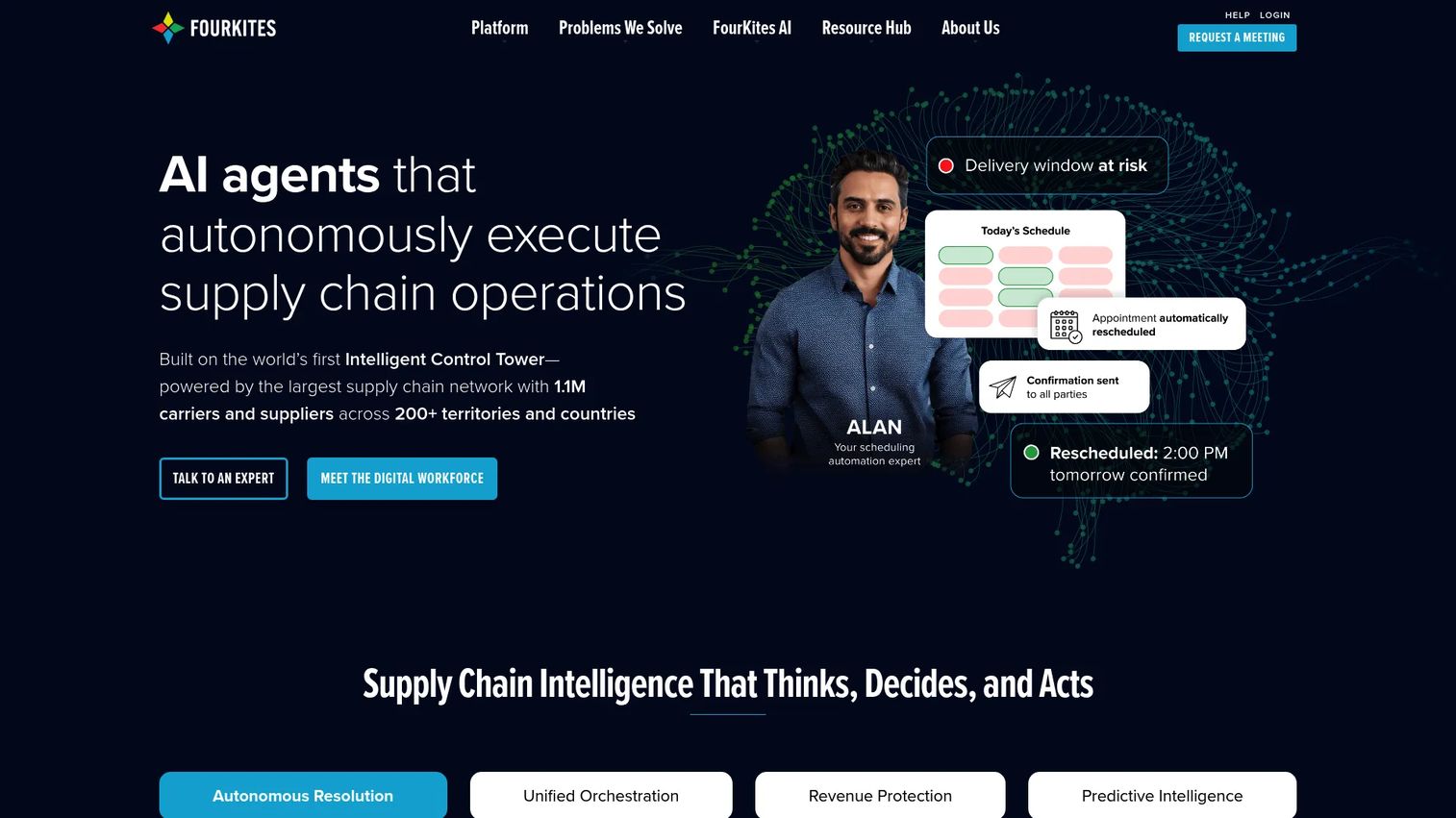
FourKites is an AI-powered supply chain orchestration and visibility platform built for global enterprises. It delivers real-time visibility across shipments, orders, inventory, yards, and facilities, then layers on AI digital workers that resolve exceptions autonomously. For a large shipper drowning in status calls and manual carrier follow-up, that autonomous layer is the difference between a bigger ops team and a smarter one.
Best for: Large shippers that need enterprise supply chain visibility and orchestration across modes.
Key strengths
- End-to-end visibility: Track shipments, orders, inventory, yards, and facilities in one view, so you stop stitching feeds together.
- AI digital workers: Automate exception resolution, reducing the manual follow-up that eats operations capacity.
- Multimodal tracking and communication: Cover road, rail, ocean, and air with built-in carrier and customer communication workflows.
Why choose FourKites: Choose it when your operation is complex enough that visibility alone is not enough and you need control-tower orchestration. The autonomous exception handling is the standout: instead of surfacing a problem for a human to chase, it acts. That fits enterprises with high shipment volume and thin margins on operational headcount. FourKites holds a 4.5/5 rating on G2.
FourKites pricing: FourKites does not display public plan pricing. The company states that customers pay a subscription fee and directs prospects to contact sales, so pricing is scoped per deployment. Expect an enterprise procurement motion rather than self-serve signup.
4. project44
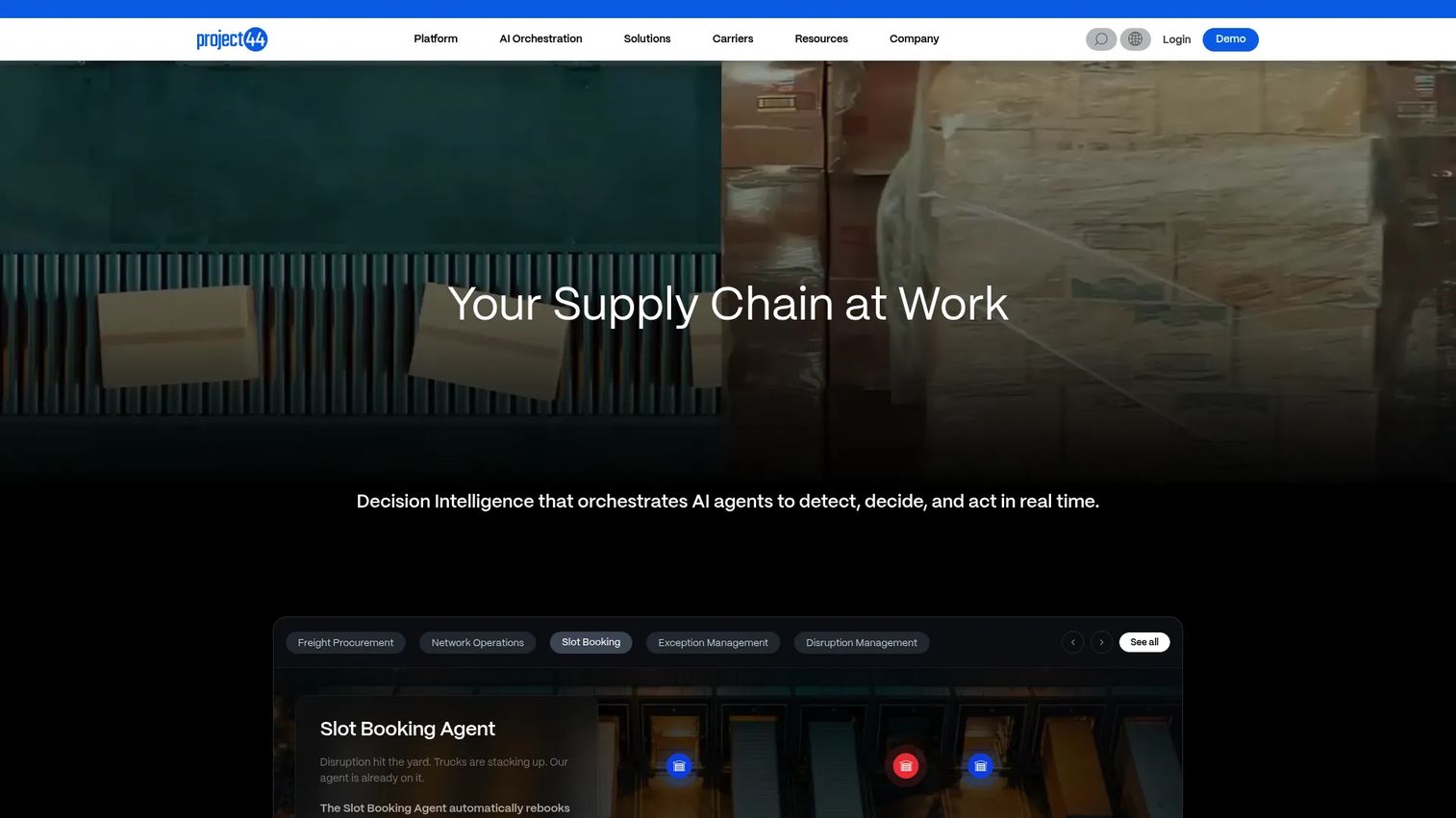
project44 is a decision intelligence platform for supply chain visibility, transportation, yard, and eCommerce logistics. Its differentiator is network depth: the more carriers and modes connected, the more accurate your predictive ETAs get. For high-volume shippers, that network effect turns shipment tracking software from a status feed into a planning input you can actually trust.
Best for: Enterprise shippers and logistics teams that need end-to-end supply chain visibility and decision automation.
Key strengths
- Real-time shipment and inventory visibility: See where goods are across the network, so planning decisions rest on live data.
- Intelligent transportation management: Combine visibility with execution, tightening the loop between what you see and what you do.
- Intelligent yard management: Extend visibility into the yard, closing a common blind spot between transit and warehouse.
Why choose project44: Choose it when shipment volume is high and ETA accuracy directly affects downstream commitments to customers. The platform's strength is turning visibility into decisions, not just dashboards, which matters when your team is measured on on-time performance. It fits shippers with complex, multi-carrier operations who need one source of truth. project44 holds a 4.7/5 rating on G2.
project44 pricing: project44 does not list public pricing. The site routes visitors to a contact-sales or demo flow, consistent with an enterprise sales motion. Cost is scoped against shipment volume, modes, and network requirements.
5. Shippeo
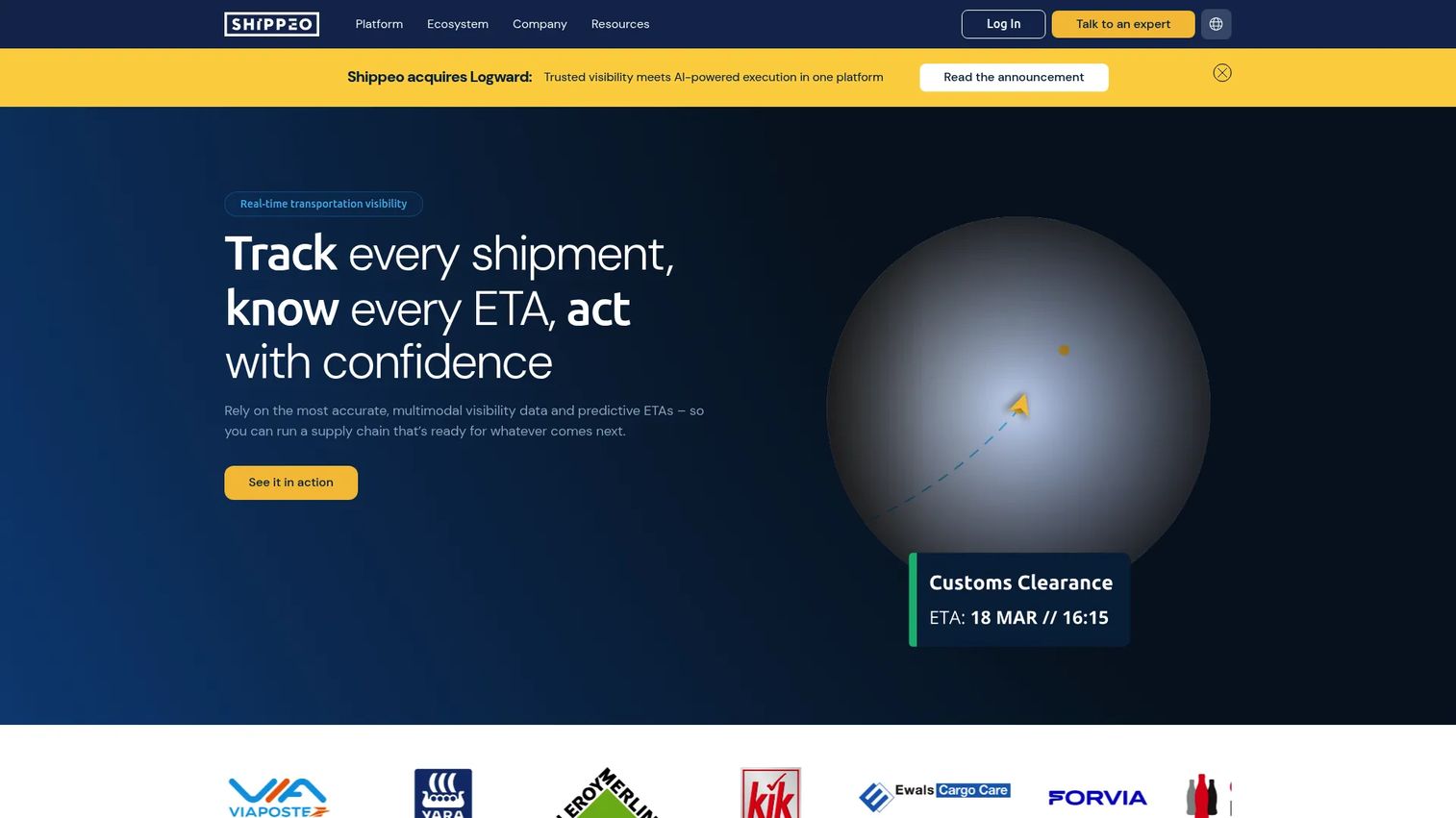
Shippeo is a real-time multimodal transportation visibility platform with AI-powered orchestration for supply chains. It tracks shipments across road, rail, sea, and air, delivering predictive ETAs and instant alerts so exceptions surface early. Shippeo has strong European roots and global reach, which makes it a natural fit for teams whose freight crosses borders and modes constantly.
Best for: Large shippers and logistics teams that need multimodal real-time visibility and exception management.
Key strengths
- Real-time shipment tracking across modes: Follow freight across road, rail, sea, and air in one platform, so nothing falls between systems.
- Predictive ETAs and instant alerts: Get early warning on delays, giving your team time to act before customers notice.
- Digital documentation and carbon tracking: Centralize documents and traceability while measuring emissions, a growing compliance need.
Why choose Shippeo: Choose it when your operation is multimodal and international, and customer experience hinges on accurate delivery promises. The predictive ETA and alerting engine is the core value: it converts raw tracking into proactive exception management. The carbon tracking is a meaningful bonus for teams facing sustainability reporting requirements. Shippeo holds a 4.8/5 rating on G2.
Shippeo pricing: Shippeo does not publish pricing on its site. Prospects book a demo or contact sales, and cost is scoped against shipment volume, modes, and integration needs. Plan for an enterprise evaluation rather than a self-serve trial.
6. Descartes Systems Group
Descartes Systems Group is a cloud-based logistics and supply chain software provider for logistics-intensive businesses. Where pure visibility tools stop at tracking, Descartes covers the wider stack: routing and delivery resource management, shipment planning and execution, and transportation invoice audit and pay. That breadth makes it a fit for teams that want to consolidate multiple logistics functions rather than bolt on point tools.
Best for: Enterprises that need modular logistics, transportation, trade compliance, and ecommerce operations software.
Key strengths
- Route, track, and manage delivery resources: Plan and optimize routes while managing the fleet and assets that run them.
- Plan, allocate, and execute shipments: Move from planning to execution in one system, reducing handoffs between tools.
- Rate, audit, and pay transportation invoices: Automate freight audit and settlement, catching billing errors that leak margin.
Why choose Descartes: Choose it when you want a modular logistics suite you can assemble by function rather than a single-purpose visibility feed. The route optimization and freight execution depth is the draw for teams that own delivery operations end to end. Its trade compliance and customs capabilities also matter for cross-border operations. Descartes holds a 4.6/5 rating on G2.
Descartes pricing: Descartes uses quote-based pricing for most of its suite, with cost scoped by the modules you deploy. One exception is its Ocean Rates product, which lists public pricing including a free tier and usage-based options such as a per-minute rate with a monthly minimum. For the broader logistics suite, expect a sales-led scoping conversation.
7. Oracle Transportation Management
Oracle Transportation Management is cloud transportation management software for planning, execution, visibility, and freight optimization across global supply chains. It is a heavyweight backbone: multimodal transportation planning, shipment execution with carrier and mode selection, freight audit and settlement, and even emissions calculation during planning. For a large enterprise standardizing its transportation function, that depth is the appeal.
Best for: Enterprises that need global transportation planning and execution inside Oracle Cloud SCM.
Key strengths
- Operational planning for multimodal transport: Plan across modes and lanes at scale, so complex networks run on one engine.
- Shipment execution with visibility: Select carriers and modes, then track execution, closing the gap between plan and reality.
- Freight audit and emissions calculation: Settle freight accurately while measuring emissions during planning, not after the fact.
Why choose Oracle Transportation Management: Choose it when you need a robust transportation backbone and especially when you already run Oracle Cloud SCM. The emissions-during-planning capability is a forward-looking differentiator as carbon reporting tightens. This is enterprise software with the scope and the implementation weight that comes with it, so it fits organizations with the volume to justify it. Oracle Transportation Management holds a 4.2/5 rating on G2.
Oracle Transportation Management pricing: Oracle does not display public pricing for its transportation management product. The site directs prospects to contact logistics sales or request a demo, so cost is scoped through Oracle's enterprise sales process against your volume and module selection.
8. SAP Transportation Management
SAP Transportation Management is SAP's software for planning, execution, costing, and settlement of freight operations. Its defining strength is integration: for enterprises already running SAP, it connects logistics directly into finance, order management, and the wider supply chain, so transportation data does not live in a silo. Requirements and order management, transportation planning and execution, and freight costing and settlement all sit inside one connected environment.
Best for: Enterprises that need integrated transportation planning, execution, and freight settlement inside SAP.
Key strengths
- Requirements and order management: Turn orders directly into transportation requirements, keeping logistics tied to demand.
- Transportation planning and execution: Plan and run freight movements in one system connected to core SAP processes.
- Freight costing and settlement: Calculate freight cost and settle carrier charges without leaving the SAP environment.
Why choose SAP Transportation Management: Choose it when you are an SAP-centric enterprise and want connected logistics rather than a standalone visibility tool. The value is coherence: orders, transportation, and finance share one data backbone, which removes the reconciliation work that fragmented stacks create. This fits large organizations already committed to SAP for supply chain processes. SAP Transportation Management holds a 4.2/5 rating on G2.
SAP Transportation Management pricing: SAP does not publish numeric pricing. Its pricing page lists transportation management editions, including SAP S/4HANA Cloud Private Edition options, as "price upon request," scoped in blocks tied to annual spend. Expect an enterprise procurement conversation to arrive at a figure.
Considerations before you choose
Picking logistics software is less about the feature checklist and more about how the system fits your operation, your stack, and your growth. Here is what to weigh.
Data quality and integration depth
A predictive ETA is only as reliable as the tracking feed underneath it. Before you commit, map how the platform ingests carrier data, IoT signal, and order status, and how clean that data stays. Check the API integrations against your existing systems: your ERP, WMS, and order management. Fragmented data quietly kills the value of any visibility layer.
Automation and exception management
Visibility without action is just a nicer dashboard. Evaluate what the platform automates: alerting, exception routing, rate shopping, freight audit. The strongest tools reduce manual coordination, not just surface it. Ask specifically how exceptions get resolved, and how much of that is autonomous versus a task queue for your team.
Scalability across volume and use cases
The tool that fits your current volume may not fit next year's. Consider whether the platform scales across modes, regions, and shipment volume without a re-platform. For PM-minded buyers, this is the maintainability question: will the system hold up as your operation and product change, or will you outgrow it?
Fit with your operating model
A configurable low-code platform, an enterprise transportation backbone, and a pure visibility feed solve different problems. Be honest about whether you are buying a packaged process or building your own. That single decision narrows the list faster than any feature comparison.
Conclusion
There is no single best logistics platform, only the right fit for how you move goods. If your process is unique and you want to build rather than buy, Zoho Creator gives you a no-code foundation. If your bottleneck is turning data into decisions, GPX Scout AI puts an AI analyst on top of your operational data. For enterprise-grade real-time visibility and autonomous exception handling, FourKites and project44 lead, while Shippeo excels at multimodal, international transport visibility. For the broader logistics stack, Descartes covers routing through freight audit, and Oracle and SAP provide the transportation backbones for large, standardized operations.
The next step is simple: shortlist two platforms that match your operating model, then pressure-test them against your real integration and data-quality requirements before you commit. That is where the fit gets proven, not on the pricing page.
FAQs
Logistics software is a category of operational tools that plan, execute, track, and optimize the movement and storage of goods. It covers shipment tracking software, transportation management software, warehouse management, inventory management, and order fulfillment, connecting the systems that move a product from origin to destination.
Logistics software is the broad category covering visibility, warehousing, inventory, and fulfillment. Transportation management software is a subset focused specifically on planning, executing, and settling freight, including carrier selection, route optimization, and freight audit. Every transportation management system is logistics software, but not all logistics software handles transportation planning.
For enterprise real-time shipment visibility, FourKites, project44, and Shippeo are strong choices thanks to deep carrier networks and predictive ETAs. project44 and Shippeo stand out for multimodal freight tracking, while FourKites adds autonomous exception resolution. The best fit depends on your modes, volume, and geography.
Prioritize real-time visibility, predictive ETAs, exception management, and automation, then verify integration depth against your existing stack. Strong API integrations, clean data quality, and analytics that turn tracking into decisions matter more than a long feature list. For warehouse-heavy operations, add inventory and warehouse management to the checklist.
It aggregates data from carriers, IoT devices, telematics, and order systems into a single live view, then applies predictive models to forecast ETAs and flag disruptions. Instead of chasing status across portals and emails, your team sees delays early and acts before they reach the customer.
Yes. Many platforms include mobile apps or mobile-friendly interfaces for drivers and field teams to capture updates, proof of delivery, and status changes from the road. Configurable platforms like Zoho Creator let you build custom mobile field and fleet management tools tailored to your workflow.
Increasingly, yes. AI logistics software applies machine learning to historical and live data to generate predictive ETAs, detect exceptions, and in some cases resolve them autonomously. Platforms like GPX Scout AI go further, letting teams query supply chain data in natural language for faster operational insight.
Focus on the same criteria you apply to any operational system: integration depth, data quality, automation, and scalability across volume and use cases. Verify how cleanly the platform connects to your ERP, WMS, and order systems, how much manual work it removes, and whether it holds up as your operation and product evolve.