You know the drill. A review cycle kicks off, and suddenly your managers are juggling a Google Doc template, a spreadsheet of ratings, a Slack thread of "did you finish yours yet," and a calendar reminder they already snoozed twice. Half the reviews come in late. The scoring is inconsistent because every manager interprets "meets expectations" differently. And when your board asks how your top performers are trending, you have no clean answer.
That is the real cost of running reviews without a system. It is not just wasted hours. It is inconsistent evaluations, weak calibration, and blind spots in the people decisions that shape retention and promotions. According to the Talent Strategy Group 2026 Performance Management Report, more than nine out of ten organizations now run a formal performance management process, and 93.6% include a review component. Reviews are no longer optional infrastructure. The question is whether yours run on a platform or on willpower.
Performance review software fixes the operating layer underneath those conversations. Good performance management software makes review cycles repeatable, ties them to goals and feedback, and gives leadership visibility that survives due diligence. For a founder trying to hand performance off to a leadership team without becoming the bottleneck, that shift matters. This guide ranks eight platforms so you can shortlist fast. If your evaluation touches adjacent people-ops needs, our roundups of 360 feedback software and employee advocacy tools pair well with this one.
What's inside
This list is for HR leaders, people-ops buyers, founders, and ops-minded managers replacing spreadsheet reviews or unifying reviews with goals, feedback, and reporting. We selected platforms based on four criteria that decide whether the tool reduces admin or adds to it: review automation and cycle flexibility, goal and feedback integration, reporting and calibration depth, and stack fit with your HRIS and communication tools. We prioritized tools that managers will actually use, not the ones with the longest feature list. Pricing and G2 ratings reflect what vendors published as of mid-2026 and should be reverified before you buy.
TL;DR
- Best overall platform: Lattice, for teams that want reviews, goals, feedback, and engagement in one place with strong AI assistance.
- Best for custom workflows: PerformYard, when you want to control every step of the review process.
- Best for small companies: Trakstar, for smaller teams that want a simpler operating model without heavy setup.
- Best for a broader people-ops stack: HiBob, when you want reviews inside a full HR platform with rich employee data context.
- Best for goals plus reviews: Betterworks and Leapsome, for organizations that care about OKR alignment and development tied to performance.
What performance review software is
Performance review software is a tool that runs employee evaluations on a structured, repeatable cycle instead of scattered documents and spreadsheets. It centralizes the review process and connects it to the data around it.
Most platforms in this category cover:
- Review cycles: annual, quarterly, project-based, or continuous evaluations with configurable templates.
- Goal tracking: goals or OKRs that connect individual work to company objectives.
- Feedback: 360-degree feedback, peer input, self-assessments, and continuous manager feedback.
- Analytics: dashboards, people analytics, and reporting that surface performance trends.
- Automation: review automation, reminders, and workflows that move cycles forward without manual chasing.
Think of it as the system that makes performance conversations measurable and consistent, so a review means the same thing whether it is run by a first-time manager or a tenured VP.
Why companies buy it now
The category is growing because the way companies run reviews is changing. The performance appraisal software market is projected to grow from USD 3.61 billion in 2024 to USD 16.13 billion by 2033, an 18.1% CAGR, per Business Research Insights. The broader performance management software market is forecast to reach USD 6.3 billion in 2026, according to Persistence Market Research.
That growth tracks a real shift. Annual-only reviews are giving way to ongoing, structured performance conversations. Companies buy this software to make manager evaluations consistent, support calibration, improve retention, and make better promotion and comp decisions. Fragmented feedback creates blind spots. When feedback lives in a dozen Slack threads and nobody's memory, leadership cannot see who is thriving and who is quietly disengaging. A shared system closes that gap.
Performance review software vs broader performance management software
Not every buyer needs the same breadth. Some want a focused employee appraisal software tool that nails review cycles. Others want a suite that folds reviews into goals, engagement, surveys, and 1:1s.
| Type | What it covers | Best for |
|---|---|---|
| Review-focused tools | Review cycles, feedback, scoring, reporting | Teams that want deep control of the review process |
| Broader performance management suites | Reviews plus goals, engagement, surveys, 1:1s, sometimes HRIS | Teams consolidating multiple people-ops jobs into one platform |
The right call depends on your stack. If you already run engagement surveys and goal tracking elsewhere, a focused review tool avoids overlap. If you are consolidating tools to reduce sprawl, a broader suite earns its place faster.
When to use performance review software
When reviews are still run in spreadsheets
Manual workflows hold up at ten people. They break at fifty. Version conflicts, missed deadlines, and inconsistent formats multiply with headcount. A platform enforces one process and one source of truth, so nobody is emailing around a doc titled "review_final_v3_USE_THIS."
When managers need more consistent evaluation criteria
Different managers score differently. One's "exceeds expectations" is another's "meets." Templates, defined scoring scales, and calibration tools reduce that drift. The Talent Strategy Group 2026 report found 56.9% of organizations use a 5-point rating scale, so consistency around a shared scale is a solved problem when the software enforces it.
When you need better visibility into performance trends
Reporting and people analytics turn scattered reviews into a picture leadership can act on. You can see who is trending up, where flight risk is concentrated, and how performance distributes across teams, without stitching together five exports the night before a board meeting.
When you want reviews tied to goals and development
Reviews land better when they connect to goals, check-ins, and ongoing feedback. Tying self-assessments, 360s, and goal progress into the same cycle makes the conversation about growth, not just a backward-looking score.
Comparison table
Use this table to filter fast. Scan by intent and buyer breadth, then read the full section on the two or three that fit. Pricing and G2 ratings were current at publication and should be reverified before purchase.
| # | Product | Intent | Key differentiation | Pricing | G2 rating |
|---|---|---|---|---|---|
| 1 | Lattice | Best overall all-in-one | Reviews, goals, engagement, and comp with AI assistance | From $8 seat/month (Performance) | 4.7/5 |
| 2 | PerformYard | Best for custom workflows | Highly configurable review process | $5-10 per person/month | 4.7/5 |
| 3 | Trakstar | Best for small companies | Simple talent development suite | Quote-based | 4.2/5 |
| 4 | HiBob | Best for broader HR stack | Reviews inside a full people platform | Custom pricing | 4.5/5 |
| 5 | Leapsome | Best for growth plus reviews | Modular HR with learning and development | From €199/month | 4.8/5 |
| 6 | Betterworks | Best for goals at scale | OKRs, calibration, and skills intelligence | Custom quote | 4.3/5 |
| 7 | 15Five | Best for continuous cadence | Check-ins and manager enablement | From $4 per user/month | 4.6/5 |
| 8 | Culture Amp | Best for engagement plus performance | Performance data tied to sentiment | Quote-based | 4.5/5 |
1. Lattice
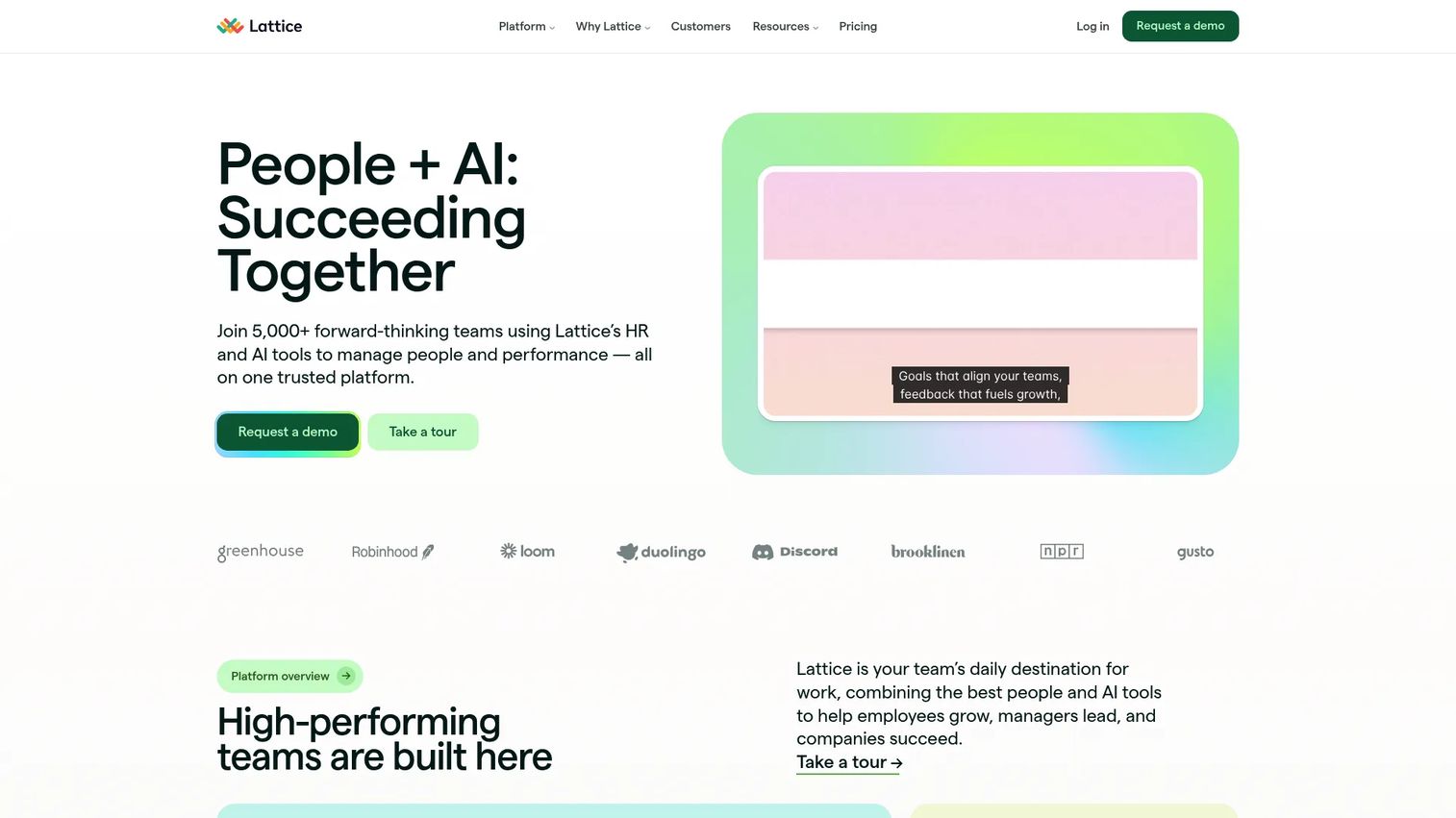
Lattice is a people management platform that brings performance reviews, goals, engagement, and compensation into one system. It is the closest thing this category has to an all-in-one benchmark. Reviews connect to goals and feedback, and AI features help managers draft, summarize, and analyze without staring at a blank page. For a founder handing performance off to a new VP of People, Lattice gives that leader working infrastructure on day one.
Best for: Mid-market and enterprise HR teams managing performance, goals, engagement, and compensation in one place.
Key strengths
- Review cycles with AI drafting: Reviews, succession, promotions, PIPs, and calibration in one flow, with AI to speed up composition.
- Goals and OKRs: Customizable goal cycles and progress tracking that tie individual work to company objectives.
- AI across the workflow: Coaching, review drafting, note-taking, and analysis reduce manager admin.
Why choose Lattice: If you want one platform that covers the full performance and people lifecycle rather than bolting tools together, Lattice is the default pick. It suits teams scaling past the point where spreadsheets and one-off surveys hold up, and it gives leadership clean data for calibration and comp decisions.
Lattice pricing: Lattice uses modular, seat-based pricing billed annually. The Performance plan and Goals & OKRs each start at $8 per seat per month, with a bundle at $11. Engagement and Grow start at $4 per seat per month. There is no free tier, and the minimum annual agreement is $4,000.
2. PerformYard
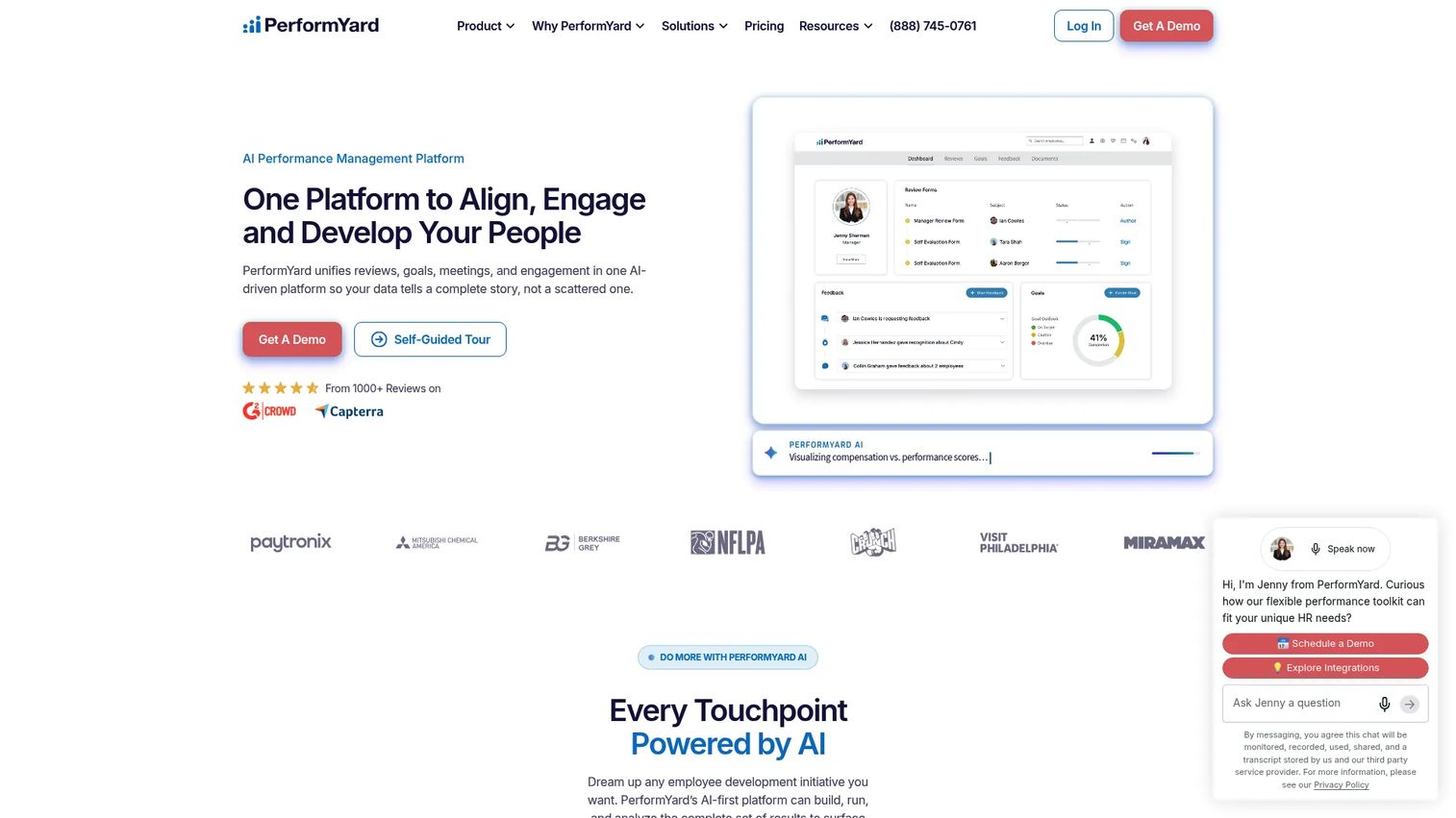
PerformYard is performance management software built around a configurable review process. If your evaluation workflow has quirks, PerformYard bends to fit rather than forcing you into a fixed template. It unifies reviews, goals, feedback, and reporting, with optional add-ons for engagement, meetings, and surveys. Teams that want operational control over every step of the cycle tend to land here.
Best for: HR teams that want a configurable performance management platform with reviews, goals, and feedback.
Key strengths
- Custom review workflows: Build the exact review process you run, from cadence to approval steps.
- 360 feedback and check-ins: Continuous feedback, 360-degree feedback, and self-assessments in one place.
- Reporting and AI assist: Analytics plus AI review summaries that cut writing time.
Why choose PerformYard: Choose PerformYard when your review process is specific and you refuse to compromise it to fit a rigid tool. It rewards teams that know exactly how they want cycles to run and want software that adapts to that, not the other way around.
PerformYard pricing: Performance Management is billed annually at roughly $5 to $10 per person per month, with minimums and enterprise discounts. Add-ons include PerformYard AI, Employee Engagement, Meetings, and Surveys, each priced per person per month on top of the base. There is no free tier.
3. Trakstar
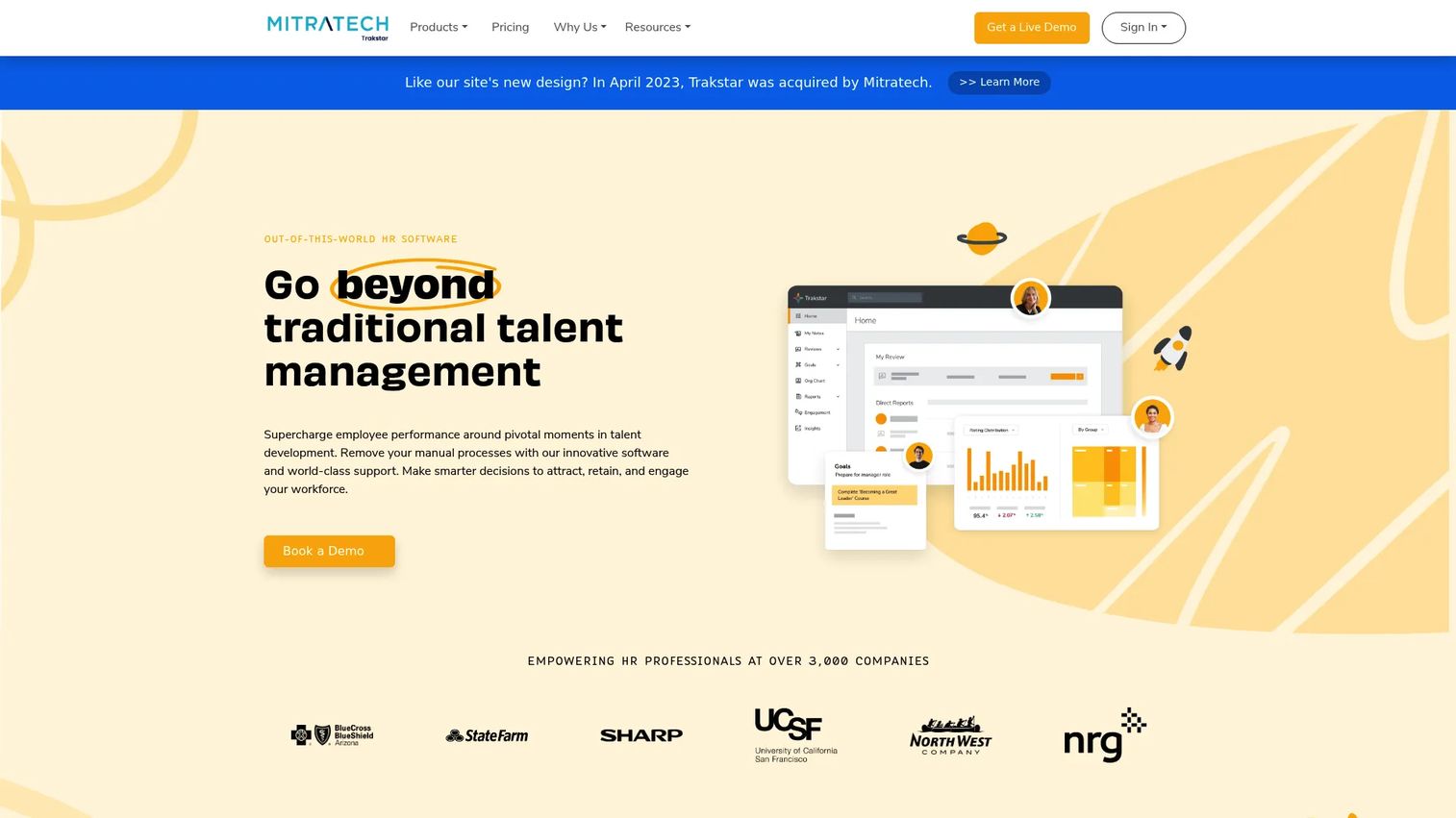
Trakstar is a cloud-based talent development suite covering performance management, applicant tracking, learning, and workforce analytics. For smaller teams, the appeal is a simpler operating model: goals, appraisals, dashboards, reminders, and notes without the weight of an enterprise rollout. It is a solid pick as performance appraisal software for small companies that want structure without complexity.
Best for: HR teams needing an all-in-one talent development platform with a lighter footprint.
Key strengths
- Performance management: Appraisals, goal alignment, and reminders that keep cycles moving.
- Learning and hiring in one place: Talent development beyond reviews, useful as you scale headcount.
- Workforce analytics: Dashboards that surface trends without heavy configuration.
Why choose Trakstar: Smaller teams that want reviews, goals, and reminders running quickly, without a long implementation, will find Trakstar approachable. It fits companies that value a friendly, unintimidating operating model over deep customization.
Trakstar pricing: Trakstar uses quote-based pricing. The pricing page asks visitors to request a personalized, no-obligation quote rather than listing public tiers. On G2 the product is listed under Mitratech Perform following its acquisition by Mitratech.
4. HiBob
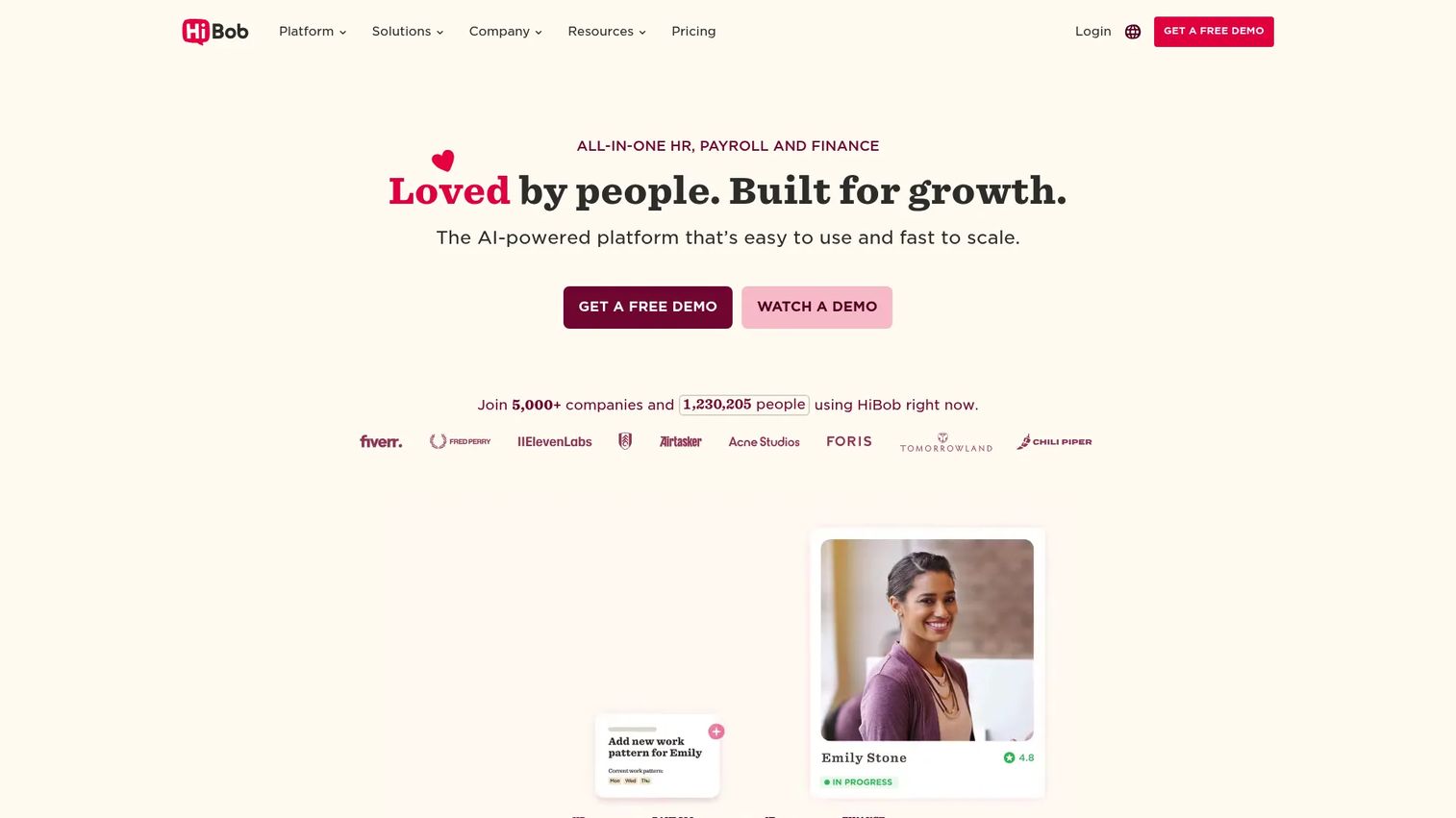
HiBob, known as Bob, is a modular HR platform where performance reviews live inside a full people operations system. Reviews draw on the same employee data as core HR, onboarding, time, and compensation, so managers get context without switching tools. For teams that want HR breadth with reviews included rather than a standalone review tool, HiBob fits.
Best for: Mid-market companies needing a configurable global HR platform with performance built in.
Key strengths
- Reviews with data context: 360-degree reviews from managers, peers, and self-reviews, grounded in employee records.
- Goal tracking: Measurable goals that track ongoing growth alongside core HR data.
- Modular people platform: Core HR, onboarding, time, compensation, and hiring in one flexible system.
Why choose HiBob: If you are consolidating HR tools and want reviews inside the same platform as your employee data, HiBob reduces stack sprawl. It scales with the business and suits mid-market teams that value a single people system over point tools.
HiBob pricing: HiBob does not publish public pricing. Cost is customized based on company size, needs, and the modules you select. You request a quote through their team, which lets you scope only the modules you actually need.
5. Leapsome
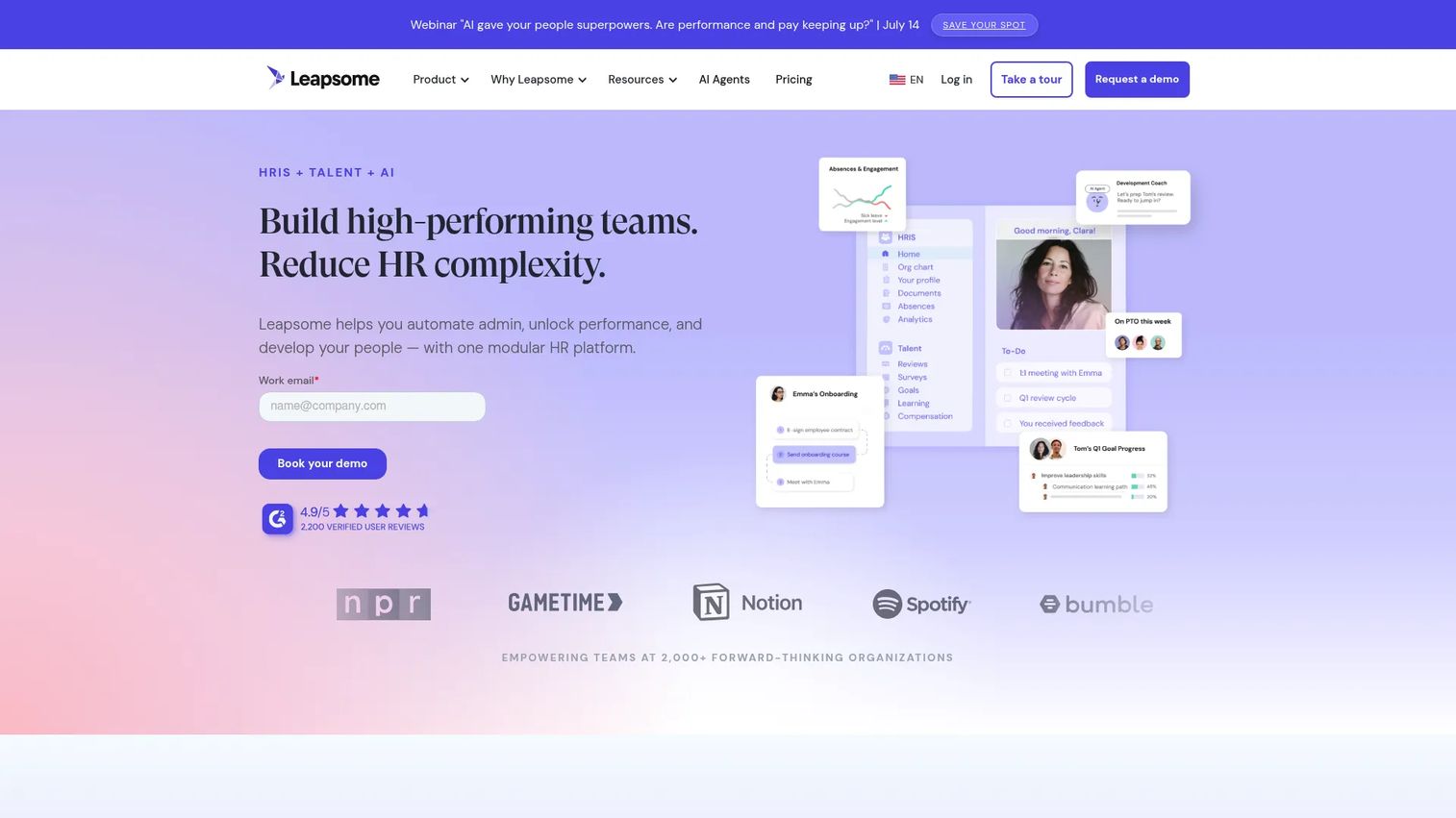
Leapsome is an AI-powered people platform that connects performance, feedback, goals, surveys, and learning in one modular system. Its edge is tying reviews to development, so a performance conversation flows into a growth plan rather than ending at a score. Teams that want performance and people development in the same place tend to prefer it.
Best for: Mid-market and enterprise HR teams wanting an all-in-one people platform with learning built in.
Key strengths
- Connected performance and development: Reviews, feedback, goals, and learning in one connected platform.
- HRIS depth: Employee records, documents, e-signature, absence, and time tracking alongside performance.
- AI for HR workflows: AI agents for coaching, employee questions, and faster reporting.
Why choose Leapsome: Choose Leapsome when you want performance reviews to feed directly into development and learning, not sit apart from them. Reported outcomes on their site include 30% less time on admin, 90% manager adoption of feedback tools, and 5x faster reporting with AI insights.
Leapsome pricing: Public pricing starts at €199 per month per the pricing page, with multi-module and volume discounts available and a custom quote for larger deployments. A 14-day free trial is available with no credit card required. No perpetual free tier was verified.
6. Betterworks
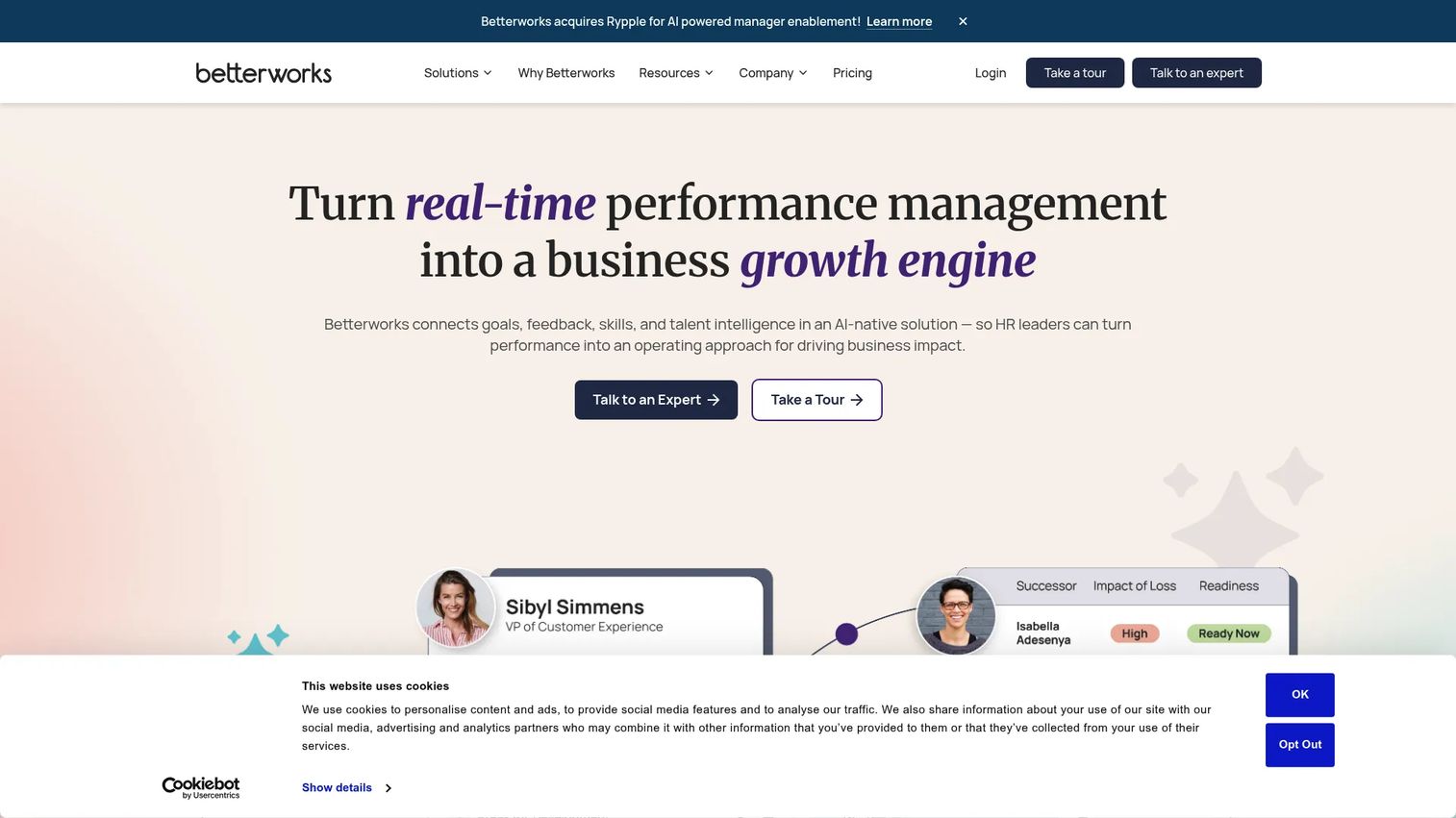
Betterworks is enterprise performance management software built around goals and alignment. It centers OKRs, continuous feedback, 1:1s, calibration, and skills intelligence, making it a strong fit for organizations that care about strategic alignment at scale. If your priority is connecting individual goals to company strategy across a large org, Betterworks is designed for that.
Best for: Mid-market and enterprise teams seeking continuous performance management and talent intelligence.
Key strengths
- Goals and OKRs at scale: Alignment from company strategy down to individual contributors.
- Calibration and succession: Calibration support and succession planning for large, distributed teams.
- Skills intelligence: Unified talent profiles and skills data that inform development decisions.
Why choose Betterworks: Betterworks fits organizations where alignment is the central problem: many teams, cascading goals, and a need for calibration that holds up at scale. Founded in 2013, it reports managing 12.9 million goals and milestones and 705K active users across the globe.
Betterworks pricing: Betterworks uses custom quotes. Two main plans are listed: Enterprise, starting at 2,500 employees, and Mid-Market, starting at 500 employees. An Employee Engagement standalone option is available through sales. Contact their team for numbers scoped to your size.
7. 15Five
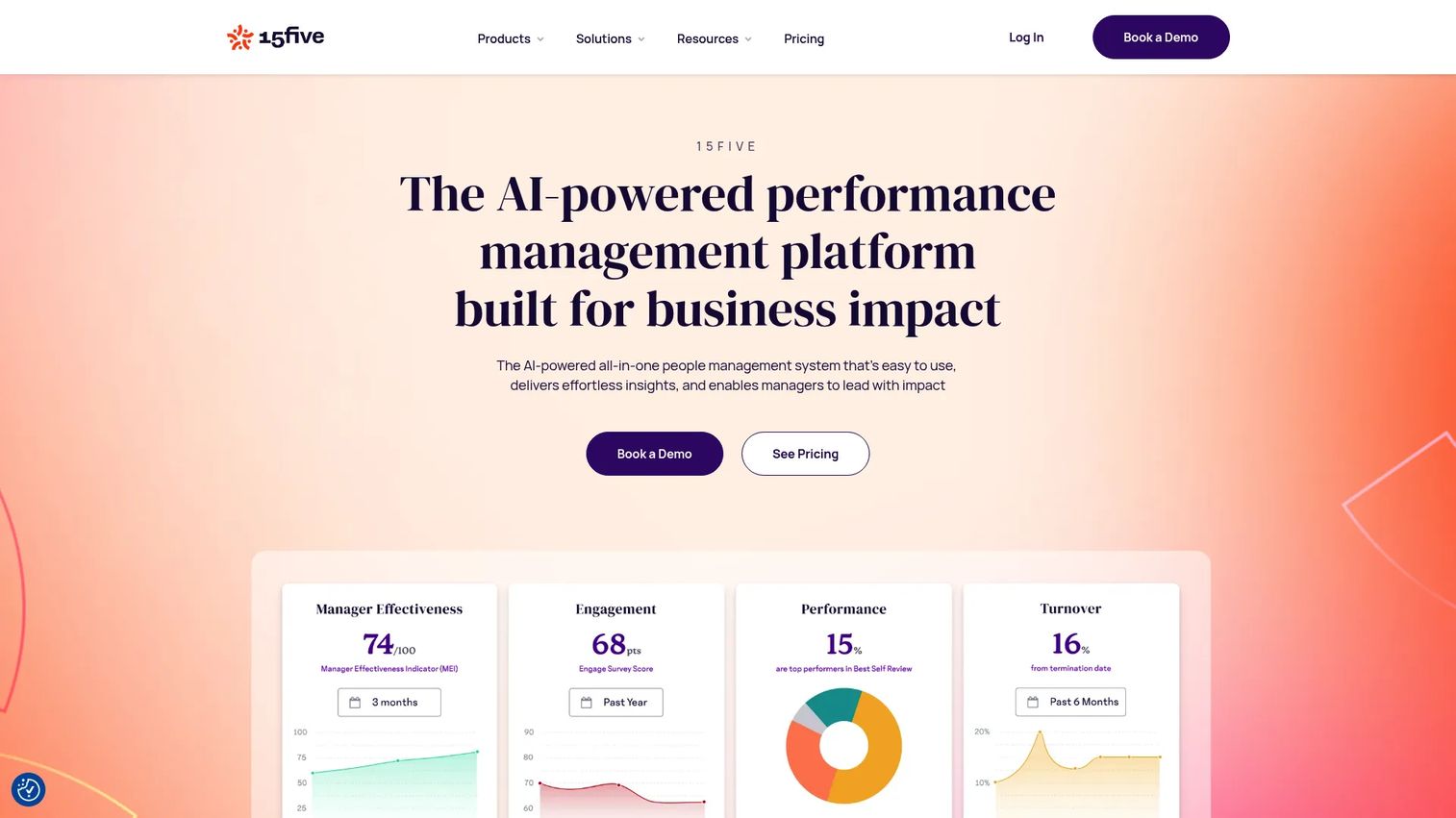
15Five is a performance management platform built around continuous check-ins, manager enablement, and feedback cadence. Where some tools center the formal annual review, 15Five leans into the ongoing habits that make reviews easier: weekly check-ins, engagement surveys, and manager coaching. Teams that want to build a consistent manager habit, not just run a cycle, gravitate here.
Best for: Mid-market teams that want a combined performance, engagement, and manager effectiveness platform.
Key strengths
- Continuous check-ins: Weekly cadence that keeps manager feedback flowing between formal cycles.
- AI-assisted reviews: Performance reviews with AI support plus OKRs, goals, and 360-degree feedback.
- Manager enablement: Coaching and action planning that lift manager effectiveness.
Why choose 15Five: Choose 15Five when the goal is building ongoing manager habits, not just surviving a review cycle. Over 3,000 companies use it to support engagement, performance, and retention, and the check-in model suits teams that want continuous feedback baked into the week.
15Five pricing: 15Five publishes pricing billed annually. Engage starts at $4 per user per month, Perform at $11, and Total Platform at $16. Manager-focused Content and Coaching, plus Compensation packages, are available as add-ons. No free tier is shown on the pricing page.
8. Culture Amp
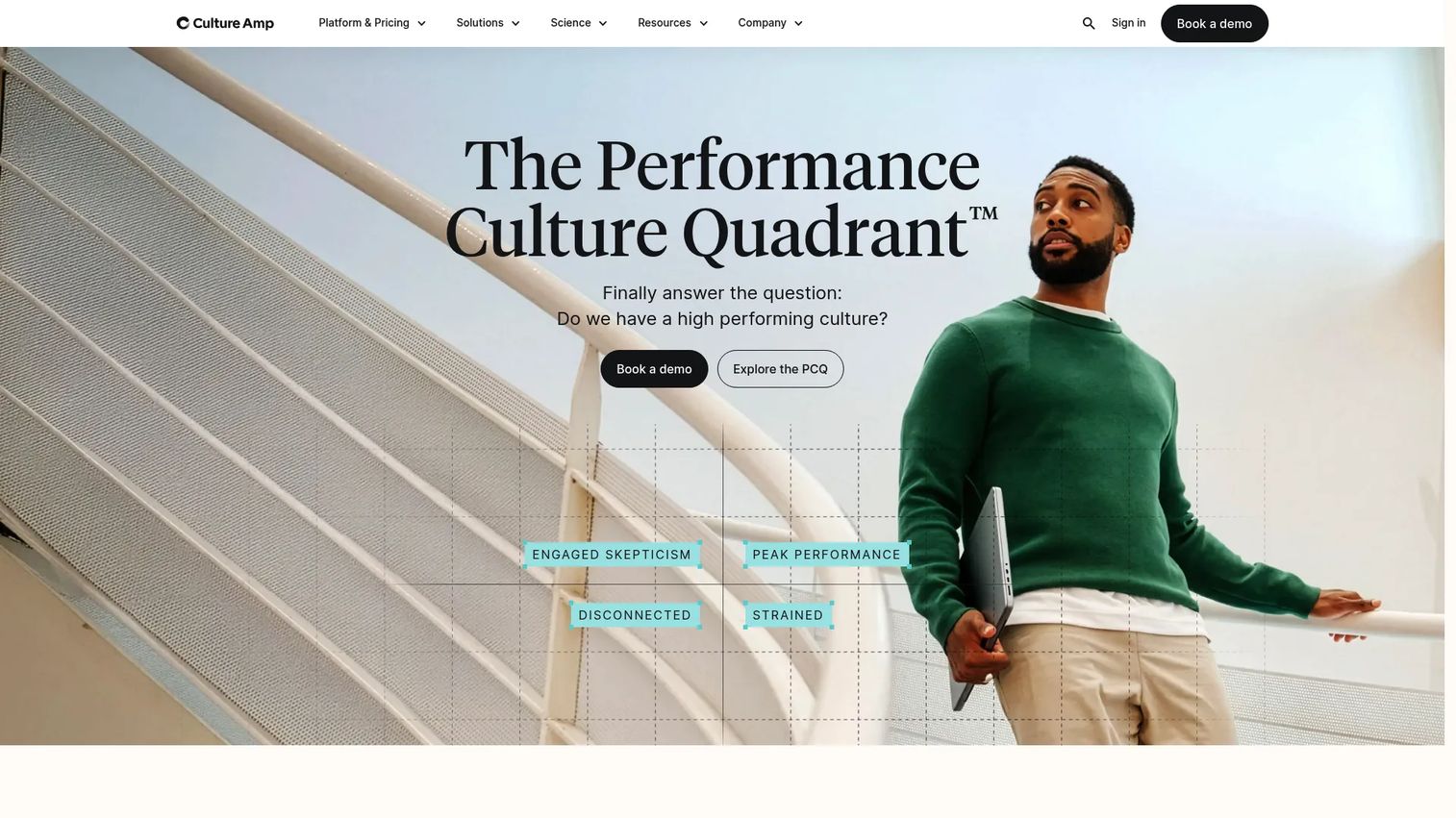
Culture Amp is an employee experience platform that pairs performance management with engagement and development data. Its strength is context: reviews sit alongside sentiment and engagement signals, so leadership sees performance and culture together. For teams that want people analytics behind their reviews, Culture Amp brings deep data to the table.
Best for: Mid-market and enterprise teams that want a unified employee experience platform.
Key strengths
- Performance plus sentiment: Reviews, 1:1s, and goals alongside engagement survey data.
- 360, peer, and manager feedback: Multi-source feedback including 360-degree feedback.
- People analytics depth: Culture Amp AI draws on 1.5 billion data points gathered over a decade of research.
Why choose Culture Amp: Culture Amp fits teams that want performance decisions informed by engagement and sentiment, not just ratings. Its Performance Culture Quadrant helps leaders spot what is working and where risk is concentrated, and it reports review completion lifts of 233% for some customers.
Culture Amp pricing: Culture Amp uses quote-based pricing across Engage, Perform, and Develop plans, plus an Enterprise tier. Pricing depends on employee count, product chosen, and service tier, and all products are billed annually. Request a quote for numbers specific to your org.
Considerations before you buy
Review cycle flexibility
Check whether the tool supports annual, quarterly, project-based, and continuous cycles, and whether you can edit mid-cycle without breaking the process. Rigid cadence support is a common source of friction. If your review model shifts as you grow, buy for flexibility now.
Goal and feedback integration
Reviews work better tied to goals and ongoing feedback. Confirm the platform handles goal tracking, self-assessments, and 360-degree feedback in the same flow as reviews. Disconnected feedback recreates the blind spots you bought the software to fix.
Reporting and calibration
Dashboards, cross-team comparisons, and calibration support are what turn reviews into leadership decisions. Ask what people analytics you get out of the box and whether calibration is a first-class feature or an afterthought. This is the layer your board cares about.
Integrations and security
Verify HRIS, SSO, Slack, and Teams integrations, plus core privacy and security expectations. A review tool that does not sync with your HR software integrations creates duplicate data entry and stale records. Security review is non-negotiable for people data.
Manager adoption
The best tool is the one managers actually use without friction. If the workflow is heavy, adoption drops and your data gets patchy. Test the manager experience before you commit, because low adoption undermines every downstream report and calibration.
Conclusion
The right pick depends on your buyer type. Lattice is the strongest all-in-one for teams unifying reviews, goals, engagement, and comp. PerformYard wins when you need to control every step of a custom review process. Trakstar suits smaller teams that want a lighter operating model. HiBob folds reviews into a broader HR platform. Leapsome and Betterworks stand out when goals and development matter most, with Betterworks leaning enterprise. 15Five builds continuous manager habits, and Culture Amp ties performance to engagement and people analytics.
Run your decision through four filters: cycle flexibility, manager adoption, reporting and calibration depth, and fit with your existing stack. Shortlist two or three that match your stage, then test the manager experience with real reviewers before you commit. The goal is not the longest feature list. It is a system your leadership team can run without you, that produces data clean enough to survive board scrutiny and improves employee engagement along the way.
FAQs
Performance review software is a tool that runs employee evaluations on a structured, repeatable cycle instead of scattered documents and spreadsheets. It centralizes review cycles, scoring, and feedback, and usually connects them to goals, analytics, and automation so performance conversations are consistent and measurable.
Performance review software focuses on the review cycle itself: evaluations, scoring, and feedback. Performance management software is broader, folding reviews into goals, engagement, 1:1s, surveys, and sometimes HRIS. Review-focused tools give deep control of the cycle, while suites consolidate multiple people-ops jobs into one platform.
The features that decide whether the tool helps or adds admin are review automation and cycle flexibility, goal and feedback integration, 360-degree feedback and self-assessments, reporting and calibration, and manager adoption. Integrations with your HRIS and communication tools matter too, since disconnected data recreates the blind spots you bought the software to fix.
Yes. Several tools work well as performance appraisal software for small companies. Trakstar offers a lighter operating model, and platforms like Lattice and 15Five scale down for smaller teams. The key is choosing a tool with fast setup and low manager friction so a small team is not buried in configuration.
Most modern platforms support 360-degree feedback, gathering input from managers, peers, and self-reviews. HiBob, PerformYard, 15Five, and Culture Amp all include multi-source feedback. If 360s are central to your process, confirm the tool handles peer and self-review workflows in the same cycle as manager reviews.
Many do. Lattice integrates with more than 20 systems across workforce management, communication, productivity, and identity, and suites like HiBob and Leapsome include HRIS capabilities natively. Before buying, verify the specific integrations you need, including SSO, Slack, Teams, and your existing HR software.
Review workflows give managers templates, defined scoring scales, reminders, and AI drafting so evaluations stay consistent and on time. They reduce the drift where one manager's "exceeds expectations" is another's "meets," and they cut the manual chasing that makes annual review software feel like a burden rather than a tool.
Founders should treat this as operating infrastructure. Look for a platform that makes performance repeatable without founder involvement, produces reporting clean enough for board scrutiny, and gets adopted by managers without heavy change management. Prioritize cycle flexibility, calibration, and stack fit, then test the manager experience before committing.