Your team ran 400 calls last month. Discovery calls, demos, renewal conversations, objection-heavy negotiations. Somewhere in those recordings sit the exact phrases buyers use, the competitors they keep naming, and the moments deals quietly started to die.
Then the call ended. And all of that evaporated.
Most marketing and revenue teams treat call data as a sales artifact, something a manager skims if a deal goes sideways. That is the wrong frame. Call recordings are the cleanest record you have of what buyers actually care about, in their own words, before any of it gets sanitized into a CRM note.
Conversational intelligence software exists to stop that signal from leaking. It records, transcribes, and analyzes those conversations at scale, so you are not relying on a rep's memory or a half-finished Salesforce field. SoftwareReviews, in its current category definition, describes conversation intelligence software as tools that record, transcribe, and analyze customer and prospect conversations to derive insights and recommendations for sales and customer success teams.
For the growth marketer, the appeal is specific. The right platform validates your messaging against real buyer language, surfaces objections worth countering in a campaign, and feeds attribution with data that does not depend on manual logging. The wrong one adds another seat-priced tab to a stack you are already trying to shrink. If attribution sits high on your list, our roundup of the best attribution software tools pairs well with the platforms here.
This guide ranks the platforms that earn their place.
What's inside
This is a buyer's guide for growth marketers, RevOps leads, and sales managers comparing conversational intelligence tools before a shortlist decision. We focused on the factors that decide whether a platform survives a budget review, not just a feature demo.
We evaluated each tool on four criteria:
- AI call analysis quality: how well it transcribes, summarizes, and surfaces objections, competitor mentions, and deal risk.
- CRM and meeting-tool integration depth: which CRMs and conferencing platforms it connects to, and whether it logs activity automatically.
- Pricing transparency and scaling cost: published tiers, free options, and how the bill grows with seats.
- Coaching and buyer-signal capabilities: scorecards, coachable-moment detection, and the insights marketers can act on.
TL;DR
Short on time? Here are the fast picks from the list below.
- Best overall for revenue teams: Gong, for depth of conversation and pipeline analytics.
- Best free option: Fathom, with unlimited recordings and transcription at no cost.
- Best for HubSpot-native teams: HubSpot Sales Hub, with conversation intelligence built into the Smart CRM.
- Best for Salesforce shops: Salesforce Einstein Conversation Insights, native inside Sales Cloud.
- Best budget all-in-one: Avoma, pairing meeting notes, scorecards, and CI on published tiers.
- Best for contact-center volume: Observe.AI, built for high-volume support QA and agent coaching.
What is conversational intelligence software?
Conversational intelligence software is a tool that records, transcribes, and uses AI to analyze sales and customer conversations, surfacing insights like objections, competitor mentions, deal risk, and coachable moments. It turns hours of unstructured calls into searchable, structured data that sales, marketing, and customer teams can act on.
Most people first meet the category as a meeting notetaker. That is the entry point, not the full picture. A true conversation intelligence platform layers analysis on top of transcription: it scores calls against a methodology, flags when a deal goes quiet, and rolls up patterns across hundreds of conversations so you can see trends, not just single moments. If you are mainly after lightweight notetaking, our list of the best AI note-taking tools covers that entry-level layer in depth.
Here is what the core features typically cover:
- AI transcription: accurate, speaker-separated transcripts of every recorded call or meeting.
- Searchable call library: a central archive you can query by keyword, account, competitor, or topic.
- Sentiment and tone analysis: detection of how a conversation felt, not just what was said.
- Deal-risk detection: alerts when an opportunity shows warning signs like single-threading or stalled momentum.
- Sales coaching scorecards: structured evaluations that benchmark reps against top performers.
- CRM sync: automatic logging of call summaries, activity, and risk flags into Salesforce, HubSpot, and other systems.
- Trend analysis across calls: aggregated insight into objections, competitor mentions, and buyer language at scale.
That last capability is where the category earns its keep for marketers. A single call is an anecdote. Five hundred calls, analyzed together, are a dataset you can build positioning on.
When to use conversational intelligence software
The category covers a lot of ground. Here are the three situations where a conversation intelligence platform for sales pays off fastest.
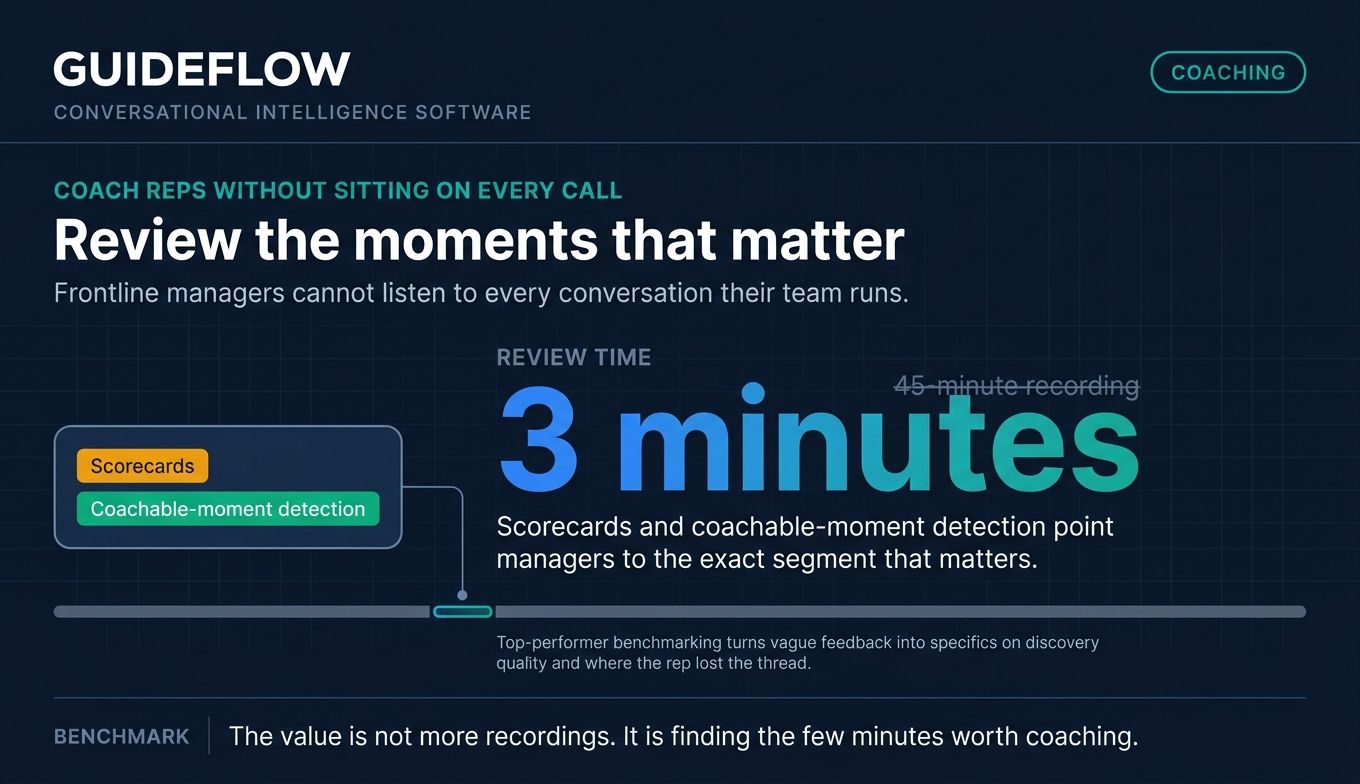
Coach reps without sitting on every call
A frontline manager cannot listen to every conversation their team runs. Conversation intelligence software changes the math. Scorecards and coachable-moment detection let a manager review the three minutes that matter instead of the full 45-minute recording. Top-performer benchmarking turns vague feedback into specifics: here is how your discovery compares, here is where you lost the thread. For dedicated platforms in this space, see our guide to the best sales coaching software.
Surface buyer objections and competitor mentions at scale
When one rep hears an objection, it is noise. When the same objection shows up in 60 calls this quarter, it is a signal worth acting on. These tools tag competitor mentions and recurring concerns automatically, so you stop guessing about what is actually slowing deals. RevOps gets deal-risk patterns. Product marketing gets the competitive intel it needs to update battlecards for competitive positioning. Teams that lean into this often pair CI with the best competitive intelligence tools for a fuller view.
Feed real call language back into campaigns and messaging
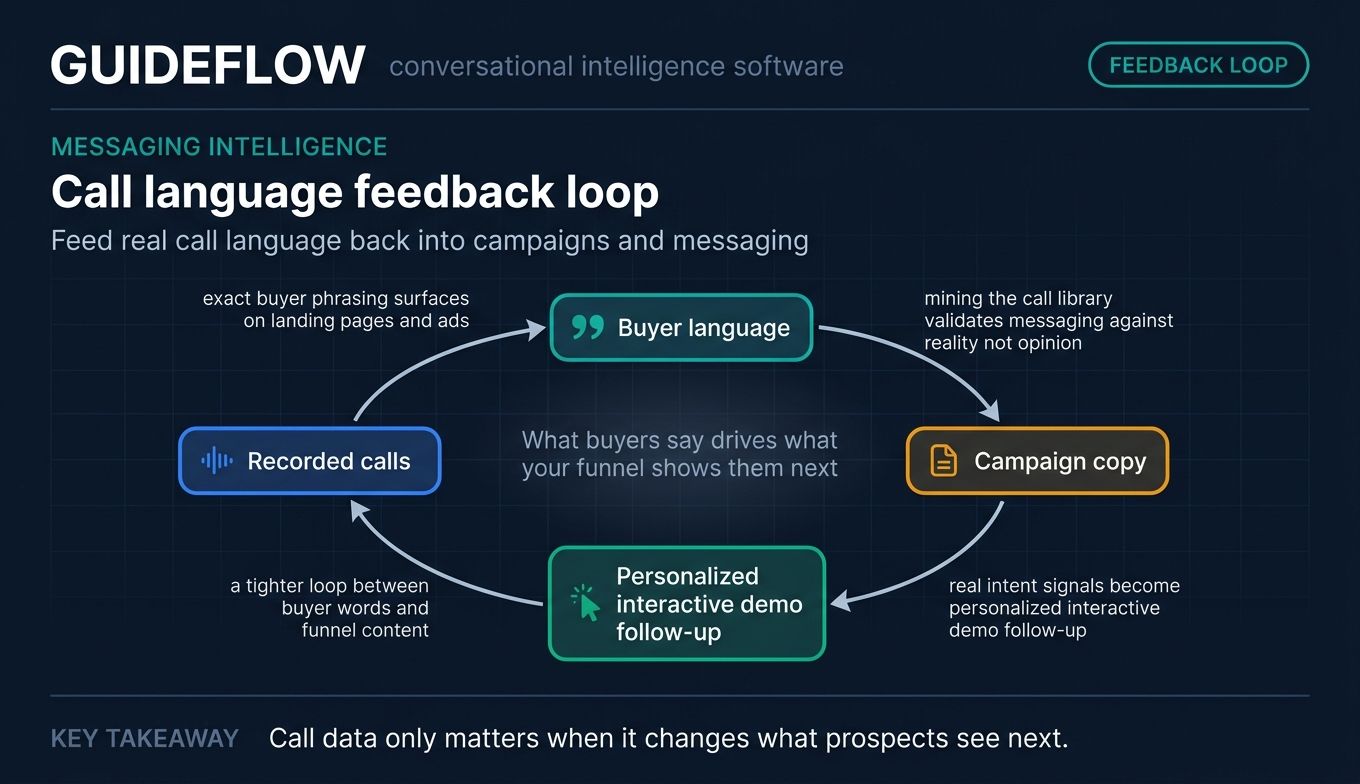
This is the growth-marketer angle most guides skip. The exact phrasing buyers use on calls is the phrasing that should appear on your landing pages and in your ads. Mining the call library for that language lets you validate messaging against reality instead of internal opinion. Once a call surfaces what a prospect genuinely cares about, marketers often turn that signal into a personalized interactive demo follow-up, acting on the insight while it is still warm. The result is a tighter loop between what buyers say and what your funnel shows them.
Comparison table
Here is the shortlist at a glance. Pricing reflects published vendor figures verified in June 2026; several enterprise platforms quote custom pricing only. G2 ratings are pulled from each tool's live G2 listing. Use this to narrow your options, then read the full sections for fit.
| # | Product | Intent | Key use case | Pricing | G2 rating |
|---|---|---|---|---|---|
| 1 | Gong | Revenue intelligence | Deep conversation and pipeline analytics for revenue teams | Custom quote | 4.7/5 |
| 2 | Chorus by ZoomInfo | CI in a data ecosystem | Call analysis tied to ZoomInfo enrichment | Custom quote | 4.5/5 |
| 3 | Avoma | All-in-one meeting + CI | Budget-friendly notes, scorecards, and CI | From $19/seat/mo | 4.6/5 |
| 4 | Salesforce (Einstein Conversation Insights) | Native CRM CI | CI inside Sales Cloud | Add-on to Sales Cloud | 4.4/5 |
| 5 | HubSpot Sales Hub | CRM-native CI | Call analysis inside HubSpot | From $0; CI on Enterprise | 4.4/5 |
| 6 | Jiminny | Coaching-first CI | Coaching workflows for revenue teams | From $42/seat/mo | 4.6/5 |
| 7 | Fathom | Free meeting assistant | Strong free transcription and summaries | From $0 | 5.0/5 |
| 8 | Fireflies.ai | Meeting coverage + library | Broad meeting capture and searchable notes | From $0 | 4.7/5 |
| 9 | Observe.AI | Contact-center CI | QA and agent coaching at high volume | Custom quote | 4.6/5 |
| 10 | Clari | Revenue + forecasting | CI tied to forecasting and pipeline | Custom quote | 4.6/5 |
The 10 best conversational intelligence software for 2026
Each entry below covers what the tool does, who it fits, its standout strengths, and verified pricing. Tools are ranked by relevance to revenue and marketing teams evaluating a serious shortlist.
1. Gong
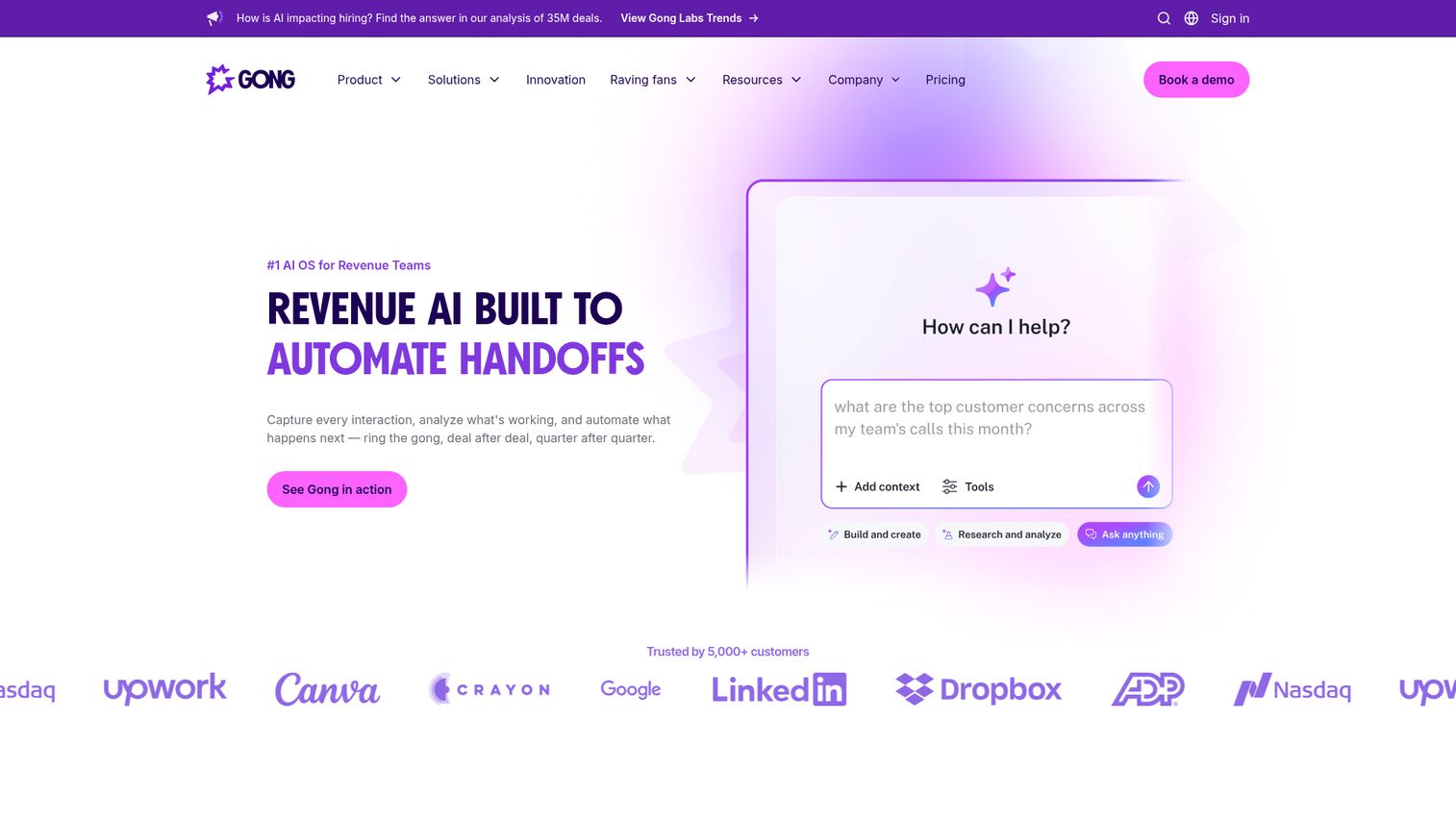
Gong is a Revenue AI platform that captures customer interactions, analyzes what works, and automates next actions for revenue teams. It is the name most people reach for first when they think of sales conversation intelligence, and for good reason: the depth of its analysis goes well beyond transcription into forecasting and deal execution.
Best for: Enterprise and mid-market revenue teams that want conversation analytics and pipeline intelligence in one platform.
Key strengths
- Automatic interaction capture: Gong records and maps every call, email, and meeting to its business context without manual logging.
- AI analytics and agents: the platform surfaces strategic revenue insights and recommended next actions across the team.
- Pipeline and forecasting with risk detection: AI flags deal risk and opportunity, tying conversation data directly to the forecast.
Why choose Gong: If your team treats conversation data as a strategic asset rather than a notetaking convenience, Gong is built for you. It is the choice for teams prioritizing depth of revenue intelligence over a low entry price. Marketers benefit too, because the trend analysis surfaces buyer language and objection patterns you can feed straight into messaging. Gong also appears on our list of the best revenue intelligence platforms if you want to compare it against forecasting-first tools.
Gong pricing: Gong does not publish public price figures. According to its pricing page, licenses are priced per user with a platform fee based on the number of users supported, and pricing depends on team-specific factors. You request a tailored quote. Gong holds a 4.7/5 rating on G2.
2. Chorus by ZoomInfo
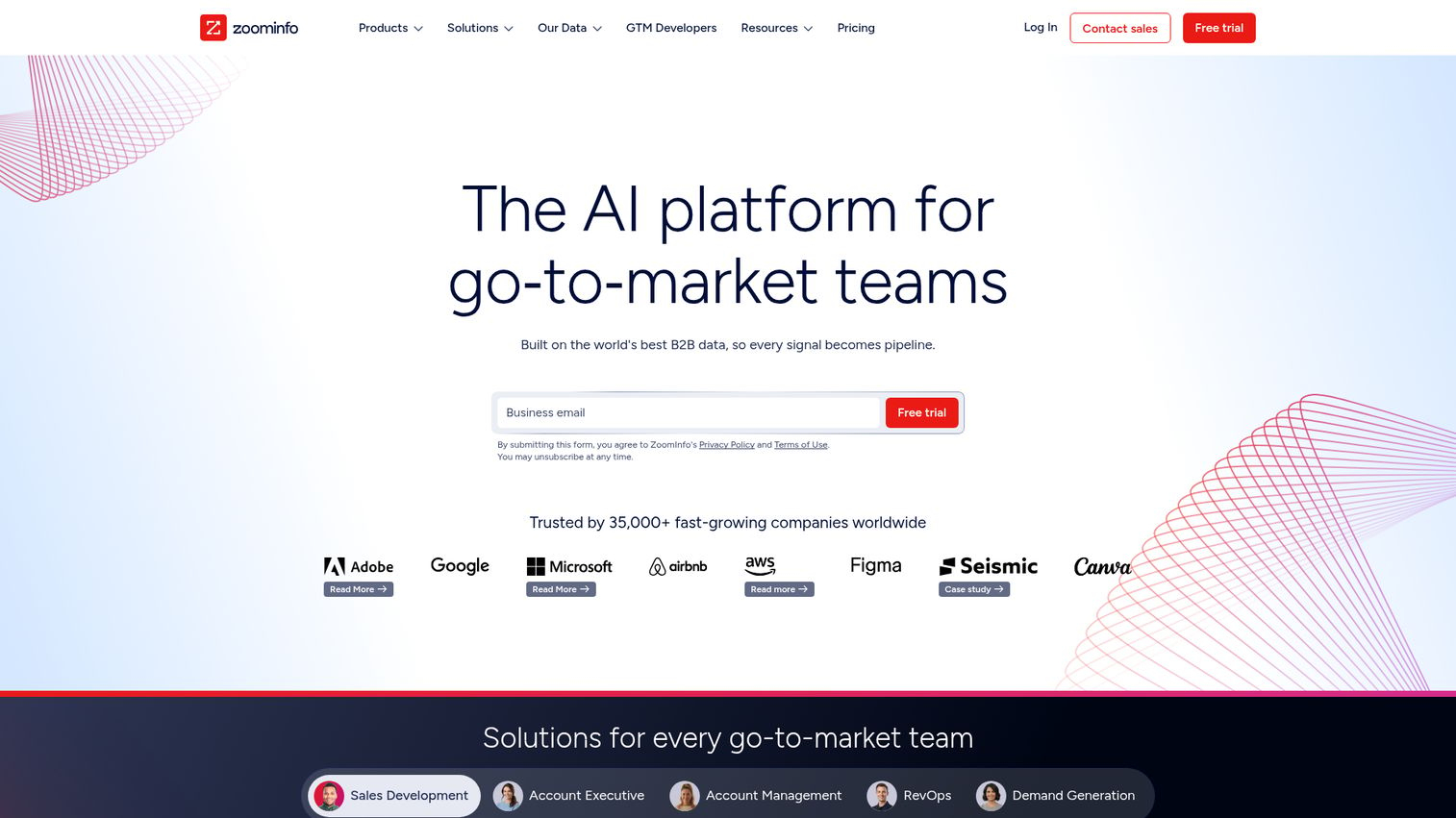
Chorus by ZoomInfo is a conversation intelligence product that captures and analyzes customer calls, meetings, and emails to help revenue teams improve performance and deal visibility. Its distinguishing feature is the connection to ZoomInfo's broader go-to-market data ecosystem, which appeals to teams already invested there.
Best for: Teams already in, or considering, the ZoomInfo data ecosystem who want CI and enrichment under one roof.
Key strengths
- Call, meeting, and email capture: Chorus records and analyzes interactions across channels, not just live calls.
- Instant transcription and insights: transcripts and coaching insights are accessible immediately after a conversation.
- Deal intelligence with CRM syncing: relationship and deal tracking sync back to your CRM for pipeline visibility.
Why choose Chorus: The case for Chorus strengthens considerably if you already run ZoomInfo. Pairing conversation insights with firmographic and intent data gives RevOps a fuller picture of each account, and the coaching layer supports rep development without extra tooling.
Chorus by ZoomInfo pricing: Chorus is typically bundled within ZoomInfo's broader platform, and public pricing figures were not available on the ZoomInfo pricing page at the time of writing. Expect a custom quote tied to your ZoomInfo package. Chorus by ZoomInfo holds a 4.5/5 rating on G2 from roughly 2,993 reviews.
3. Avoma
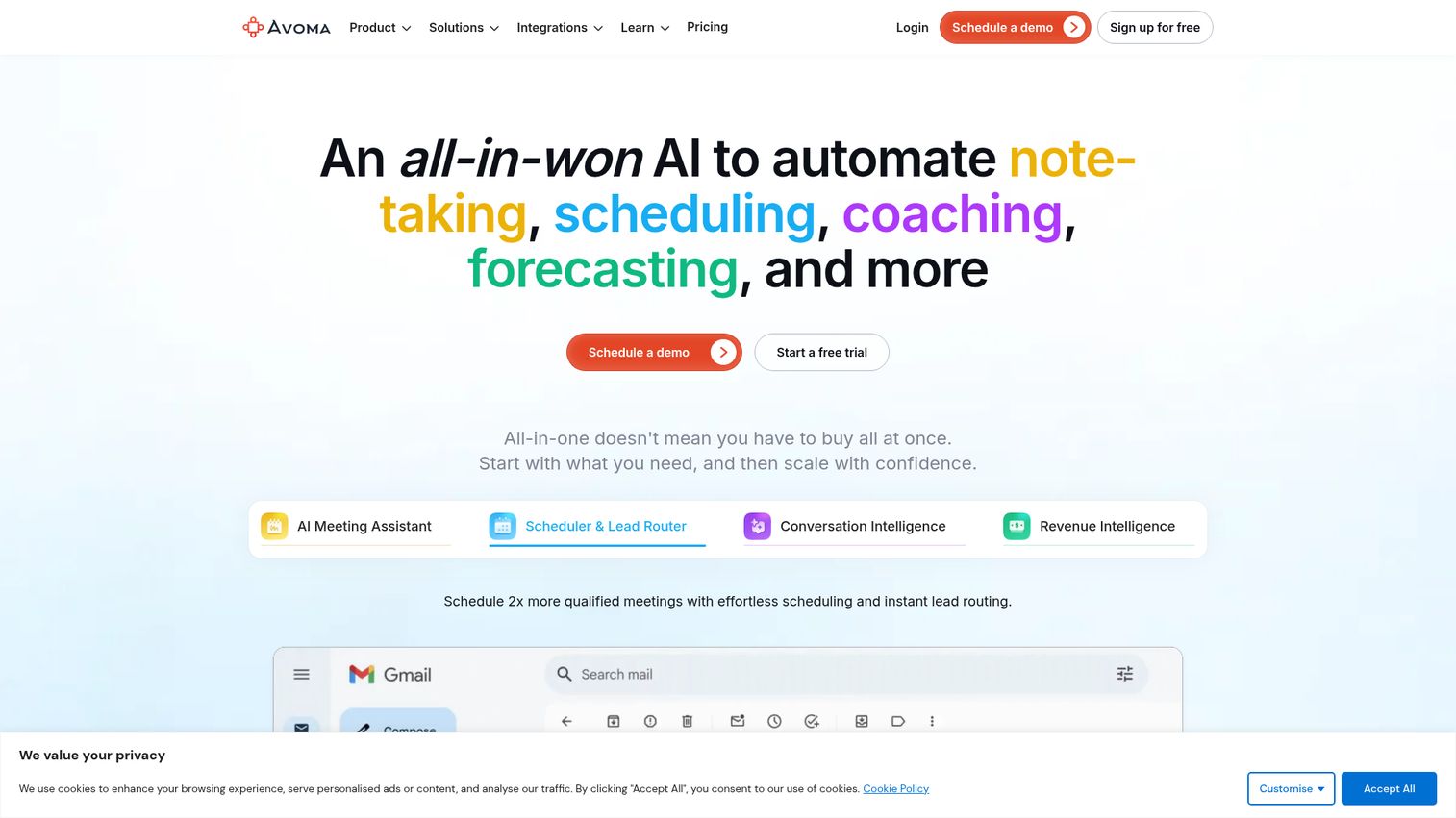
Avoma is an AI meeting assistant, conversation intelligence, and revenue intelligence platform for customer-facing teams. It earns its spot by packing meeting notes, coaching, and CI into transparent, published tiers that mid-market budgets can actually plan around.
Best for: Sales, customer success, and RevOps teams that want AI meeting notes, call coaching, CRM sync, and revenue intelligence without an enterprise contract.
Key strengths
- Automatic recording and real-time transcription: every meeting is captured with unlimited transcription out of the box.
- AI summaries and email follow-ups: Avoma generates meeting notes and drafts follow-up emails automatically.
- CRM sync, coaching, and revenue intelligence add-ons: conversation intelligence layers onto the core notetaking when you need it.
Why choose Avoma: Avoma is the practical pick for a team that wants more than a notetaker but is not ready for a Gong-sized commitment. The published pricing makes it defensible in a budget review, and the methodology support helps managers run consistent coaching.
Avoma pricing: Avoma publishes USD pricing. The Startup tier starts at $19 per recorder seat per month billed annually, or $29 billed monthly, with free viewer seats. The Organization tier is $29 per seat per month billed annually, and Enterprise is $39 per seat per month billed annually with a 10-seat minimum. Conversation Intelligence is also available as a $29 per seat per month add-on. A 14-day free trial is available. Avoma holds a 4.6/5 rating on G2 from around 1,360 reviews.
4. Salesforce (Einstein Conversation Insights)
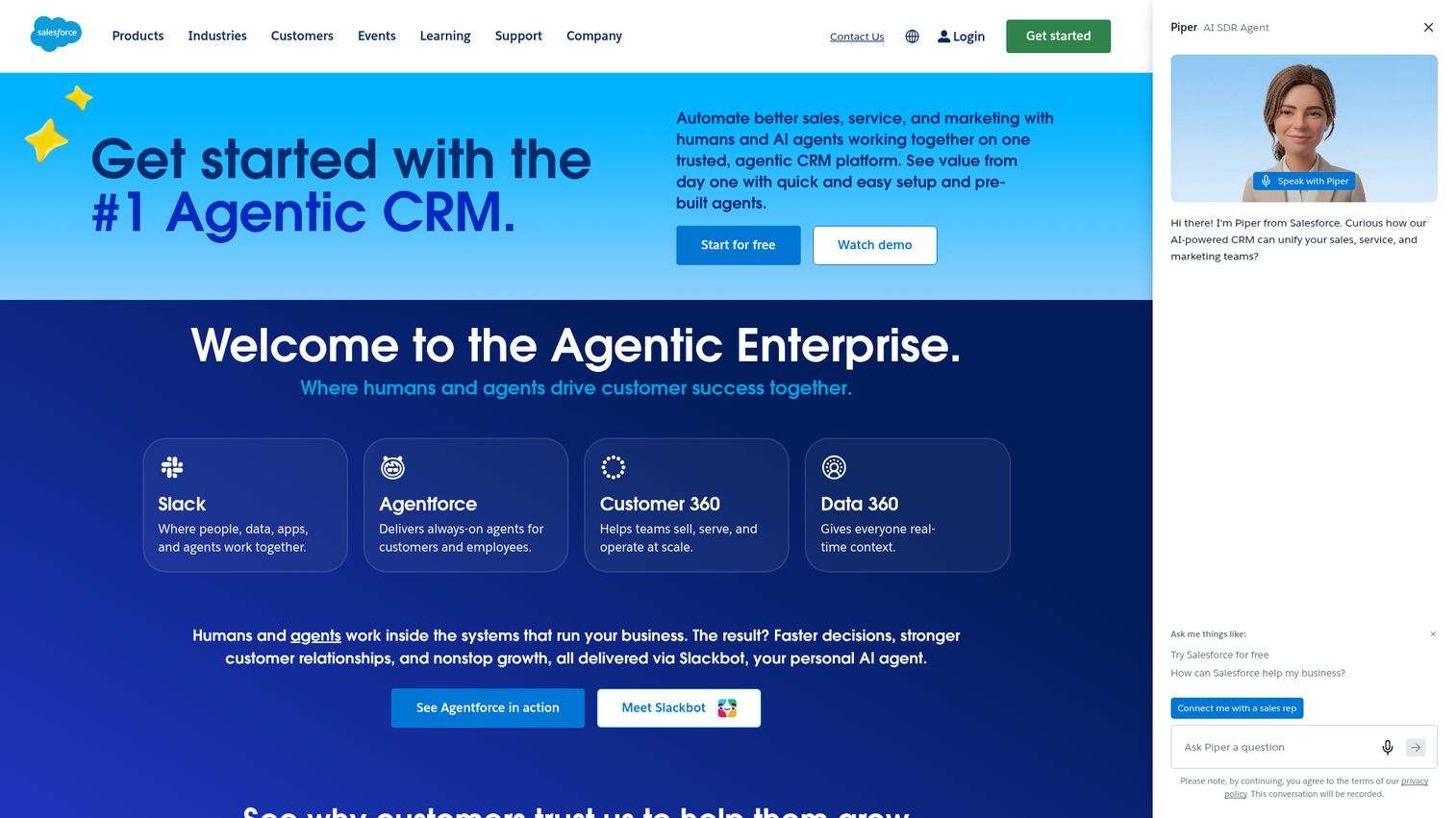
Salesforce offers Einstein Conversation Insights as native conversation intelligence inside Sales Cloud. For organizations already running their revenue motion on Salesforce, einstein conversation insights removes the need for a separate platform and keeps call data where the rest of your pipeline lives.
Best for: Salesforce-native organizations that want conversation intelligence without adding another standalone tool.
Key strengths
- Native CRM data sync: call insights flow directly into the same records your team already works in.
- Call Explorer search: reps and managers can search across recorded calls for key moments and topics.
- Deal guidance: the platform ties conversation signals to opportunity and pipeline updates.
Why choose Salesforce: The value here is consolidation. If Salesforce is your system of record, keeping CI native avoids the integration friction and duplicate data that come with bolting on a third party. It is the answer to the growth marketer's recurring question of what a new tool replaces. If you are still evaluating your core CRM, our roundup of the best CRM software can help frame that decision.
Salesforce pricing: Einstein Conversation Insights is part of the Salesforce sales product family rather than a standalone purchase. The broader Salesforce CRM pricing page lists a Free Suite at $0 per user per month, Starter Suite at $25 per user per month, and Pro Suite at $100 per user per month, with conversation intelligence capabilities available within the sales product tiers. Confirm exact add-on cost with Salesforce for your edition. The Salesforce sales product holds a 4.4/5 rating on G2.
5. HubSpot Sales Hub
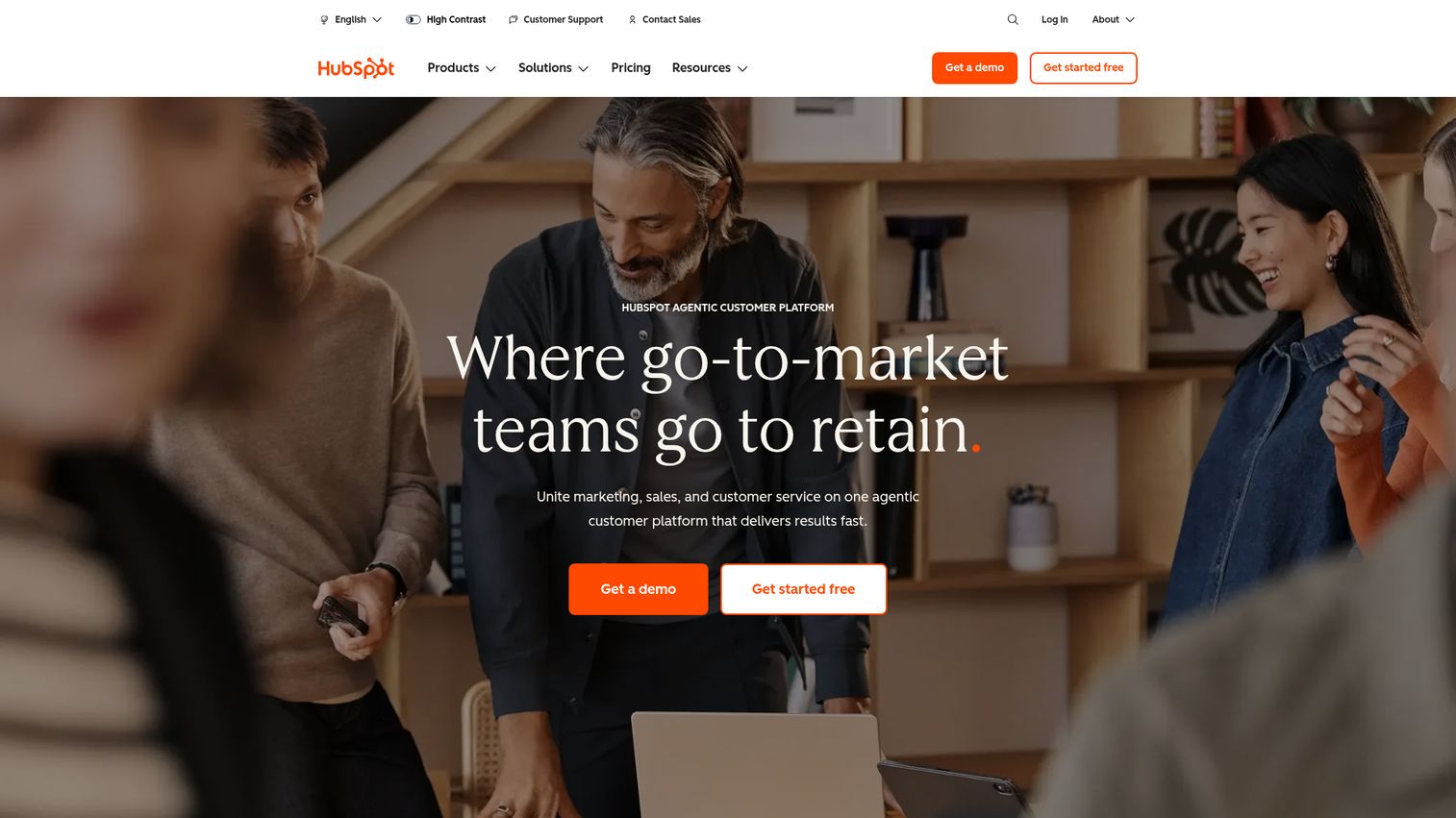
HubSpot Sales Hub is AI-powered sales software for building pipelines, managing deals, automating outreach, and closing on HubSpot's Smart CRM. Conversation intelligence sits inside the same platform marketers already use for campaigns, which is a meaningful advantage for aligned teams.
Best for: HubSpot-native marketing and sales teams that want call analysis integrated with their existing CRM and marketing data.
Key strengths
- Native HubSpot CRM and marketing data: call insights live alongside campaign, contact, and deal data with no separate sync.
- Call transcription and coaching: the platform records, transcribes, and supports coaching workflows on calls.
- Ease of use: HubSpot's interface keeps adoption friction low for teams already in the ecosystem.
Why choose HubSpot Sales Hub: For a marketing-led organization, the appeal is the single source of truth. Call language and objections sit next to the campaigns that generated those conversations, making it easy to close the loop between messaging and buyer response.
HubSpot Sales Hub pricing: HubSpot publishes USD pricing. A Free tier is available at $0 per month with no credit card. Starter begins at $10 per seat per month, Professional at $100 per seat per month, and Enterprise at $150 per seat per month. Conversation intelligence is included at the Enterprise tier. HubSpot Sales Hub holds a 4.4/5 rating on G2.
6. Jiminny
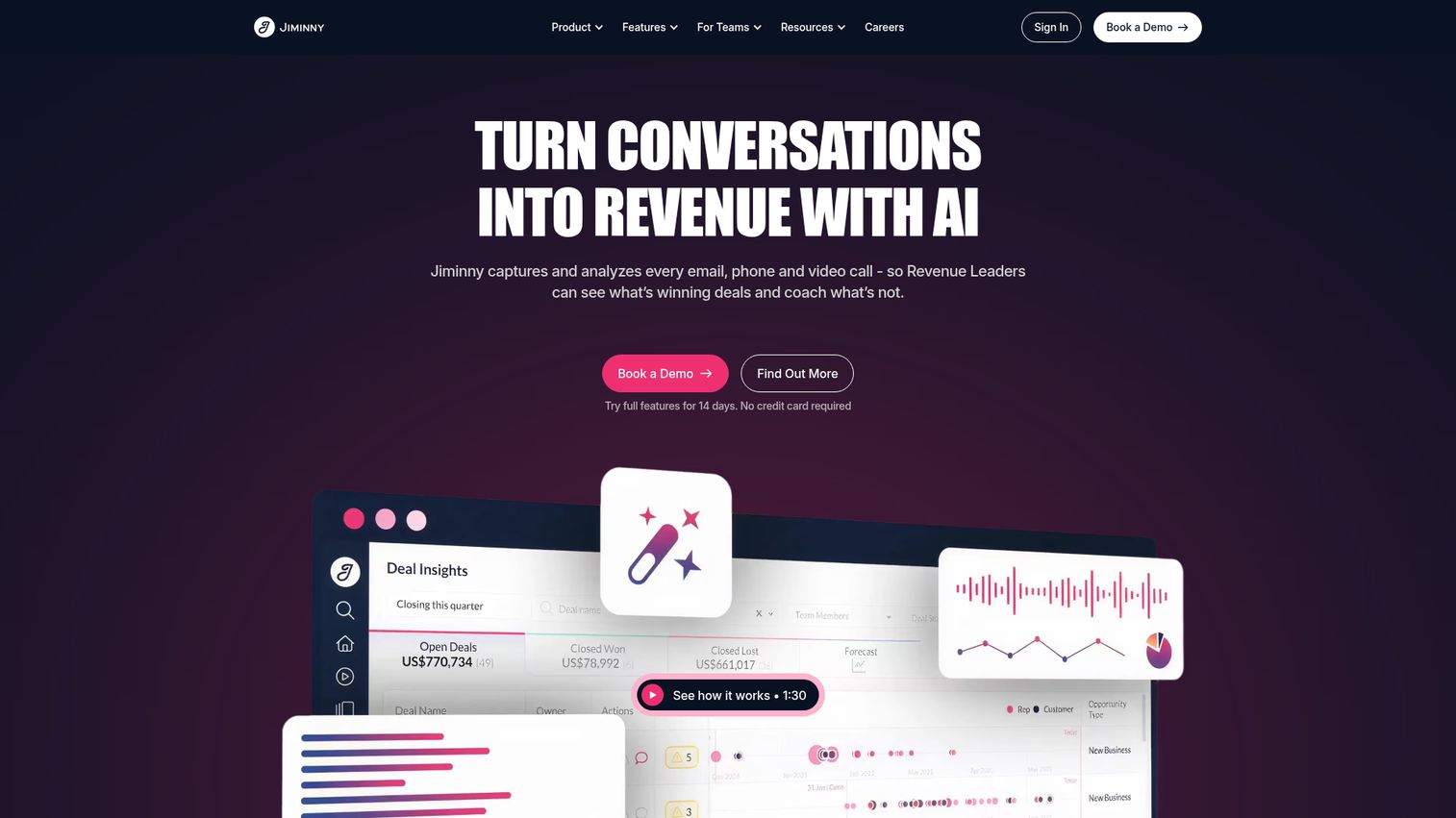
Jiminny is a conversation and revenue intelligence platform that captures emails, phone and video calls, provides deal insights, and syncs them to CRM. It leans hard into coaching, making it a strong fit for managers who want development built into the daily workflow.
Best for: Mid-market revenue teams that put sales coaching at the center of their process.
Key strengths
- AI recording, transcription, and summaries: Jiminny captures and summarizes calls automatically for fast review.
- Broad CRM integrations: it logs to Salesforce, HubSpot, Zoho, Pipedrive, Close, Bullhorn, and Copper.
- Revenue intelligence features: pipeline visibility, deal insights, risk alerts, forecasting, and coaching come together in one view.
Why choose Jiminny: Jiminny suits teams that want coaching to be a habit rather than a quarterly event. The seat-based model with a free Listener tier lets you bring more of the team into the call library without paying for full recording seats across the board.
Jiminny pricing: Jiminny structures pricing around three seat types. The Recording Seat starts from $83 per month, the Insights Seat from $42 per month, and the Listener Seat at $0 per month. There is no platform fee, only a one-time setup fee, with a 12-month minimum contract billed monthly or annually at a discount. Jiminny holds a 4.6/5 rating on G2 from around 928 reviews.
7. Fathom
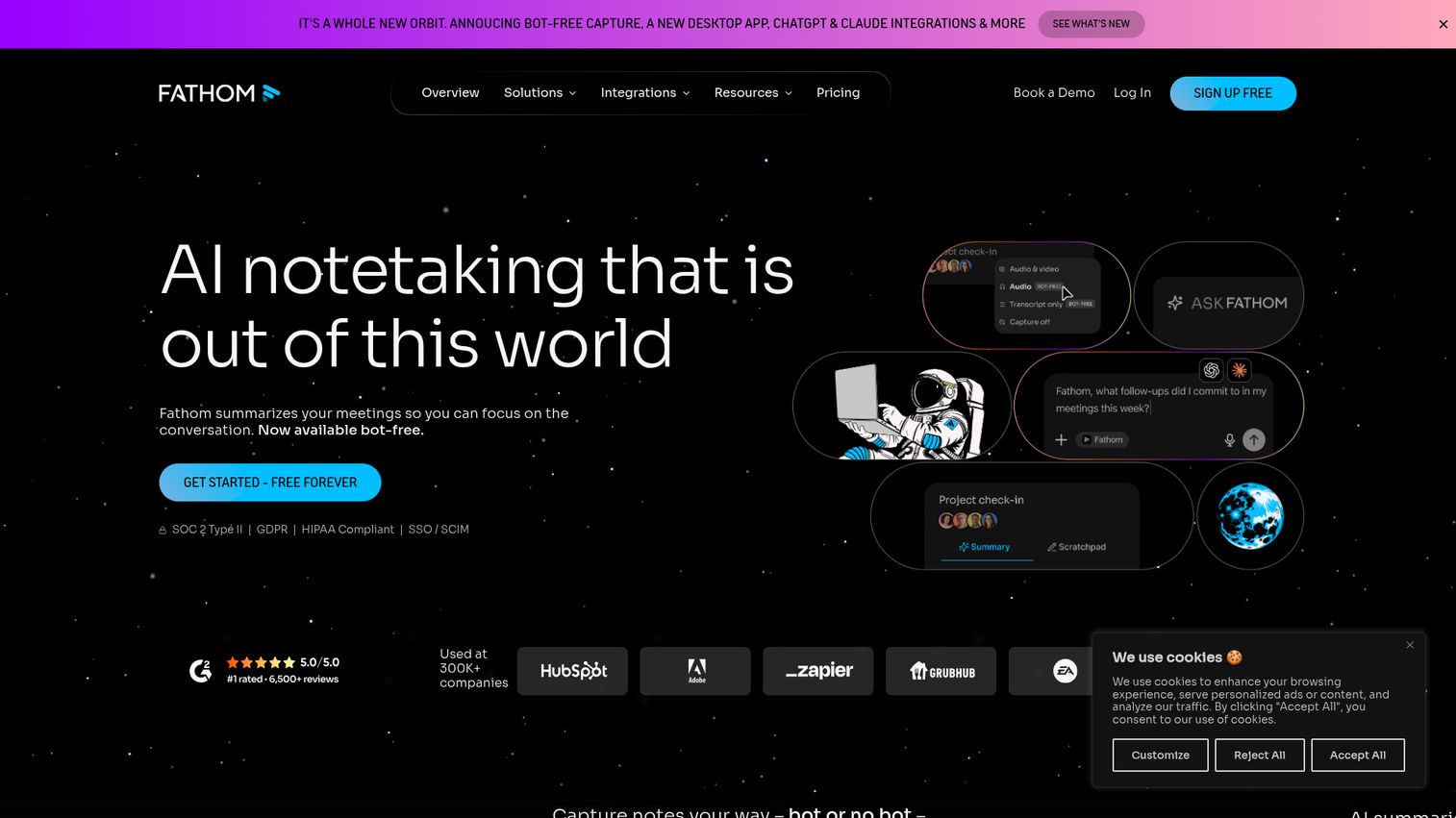
Fathom is an AI meeting notetaker that summarizes meetings so users can focus on the conversation instead of taking notes. It is the strongest free entry point in this list, which makes it a natural starting place for startups and individuals testing the category.
Best for: Startups, individuals, and small teams that want a genuinely useful free tier before committing budget.
Key strengths
- Unlimited recordings and transcriptions: even the free plan captures and transcribes without a meeting cap.
- Instant AI summaries and action items: Fathom generates summaries and pulls action items the moment a call ends.
- Searchable content with CRM sync: meeting content is searchable and syncs to CRM and productivity tools on paid plans.
Why choose Fathom: Fathom's free tier is rare in how much it gives away, making it the low-risk way to prove conversation intelligence delivers value before a budget conversation. As teams grow, the Business tier adds CRM field sync, Deal View, coaching metrics, and AI scorecards.
Fathom pricing: Fathom publishes USD pricing. The Free plan is free forever with unlimited recordings and transcriptions. Premium is $20 per user per month, Team is $19 per user per month with a two-user minimum, and Business is $34 per user per month with a two-user minimum. The Business tier adds CRM sync, coaching metrics, and AI scorecards. Fathom holds a 5.0/5 rating on G2.
8. Fireflies.ai
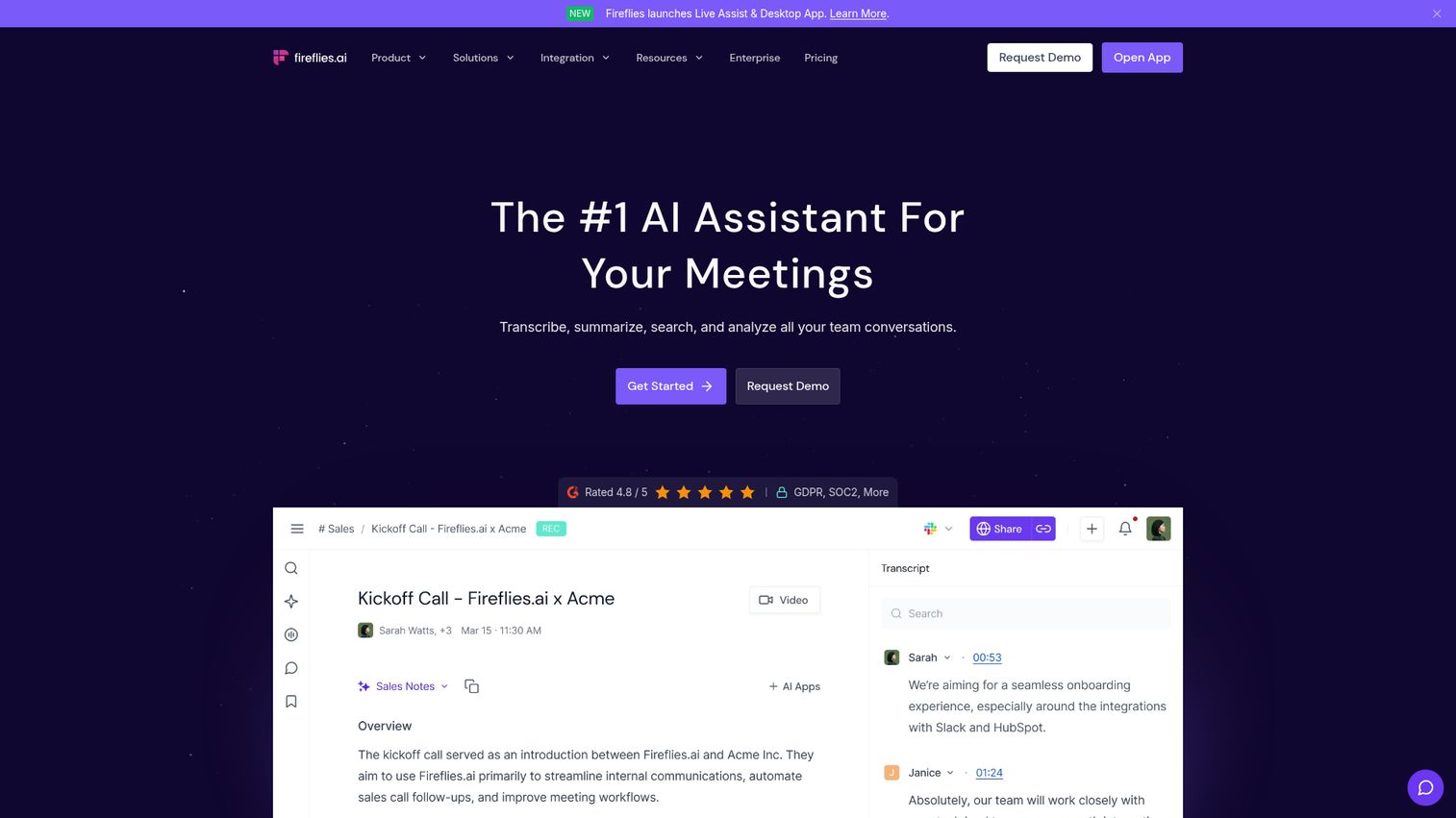
Fireflies.ai is an AI meeting assistant that transcribes, summarizes, searches, and analyzes team conversations. Its strength is broad meeting coverage paired with a searchable knowledge base, which suits teams that want every conversation captured, not just sales calls.
Best for: Teams wanting wide meeting coverage and a searchable archive of every conversation.
Key strengths
- Wide platform transcription: Fireflies captures meetings across Zoom, Google Meet, Microsoft Teams, and other conferencing apps.
- AI summaries and action items: it generates notes, action items, and customized summaries after every meeting.
- Meeting search and AskFred assistant: the AskFred AI lets you query past meetings conversationally.
Why choose Fireflies.ai: Fireflies works well for organizations that treat the meeting archive as shared knowledge across departments. Conversation intelligence and team analytics arrive at the Business tier, and the affordable per-seat pricing keeps it accessible as coverage expands.
Fireflies.ai pricing: Fireflies publishes USD pricing. The Free plan is free forever with unlimited transcription and summaries. Pro is $10 per seat per month, Business is $19 per seat per month, and Enterprise is $39 per seat per month, all billed annually. Conversation intelligence and team analytics are included from the Business tier. Fireflies.ai holds a 4.7/5 rating on G2.
9. Observe.AI
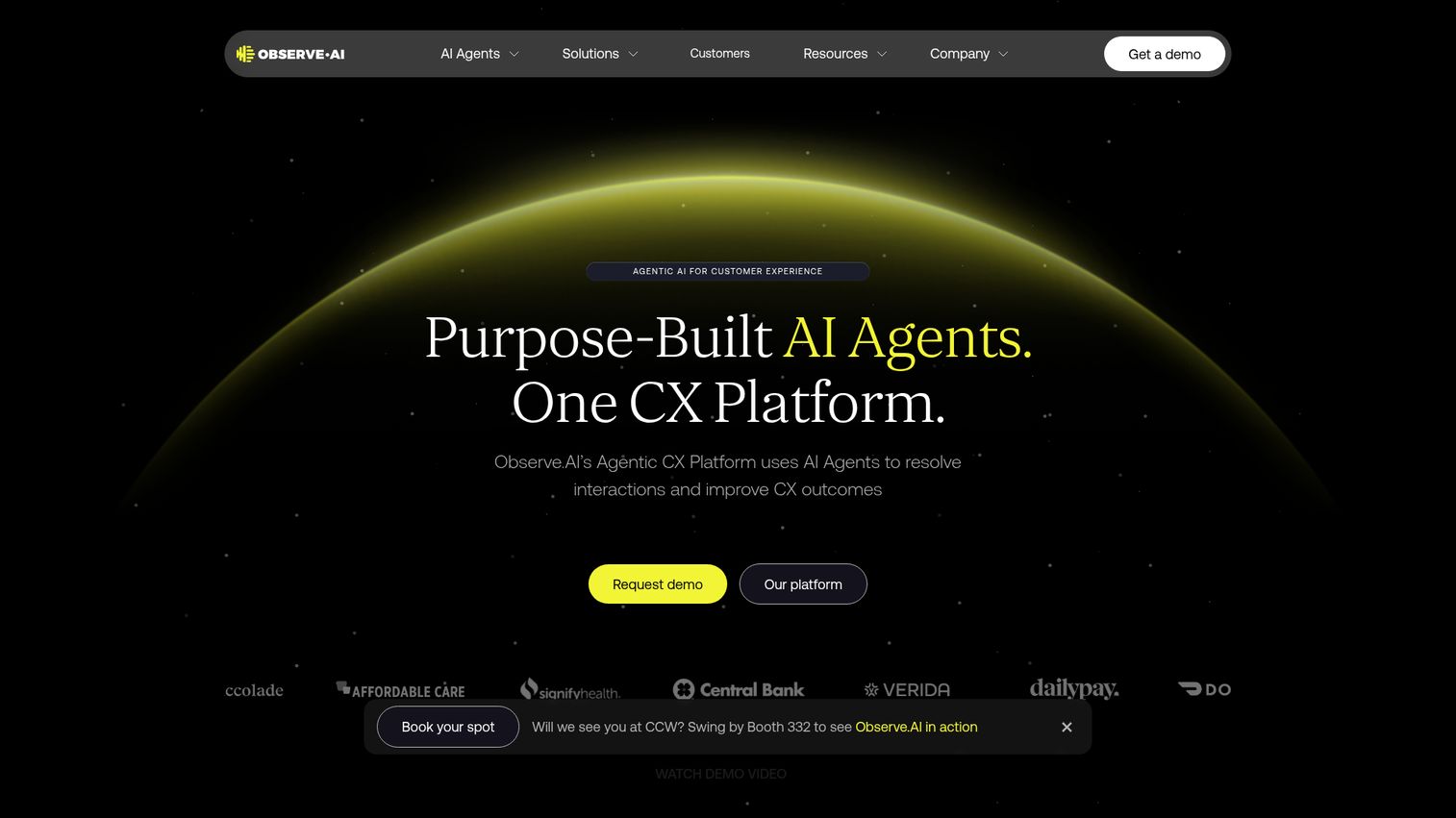
Observe.AI is an Agentic CX platform for contact centers that uses AI agents, copilots, and conversation intelligence to automate and improve customer interactions. It is the specialist on this list, built for support and service volume rather than outbound sales.
Best for: Support and contact-center teams handling high call volume that need QA and coaching at scale.
Key strengths
- Voice-first AI agents: the platform handles customer support across voice and chat.
- Real-time AI copilots: live guidance, coaching, and insights support agents mid-conversation.
- Post-interaction AI: Auto QA, manual QA, agent coaching, and screen recording cover compliance and quality monitoring.
Why choose Observe.AI: If your conversation volume sits in a support or service center rather than a sales team, Observe.AI is purpose-built for that reality. Automated QA across thousands of interactions catches compliance and quality issues no manual review process could keep up with.
Observe.AI pricing: Observe.AI does not publish public price figures. Its pricing page lists plans including VoiceAI Agents, Real-time AI, Post-interaction AI, Enterprise Advanced, and Enterprise Unlimited, all of which require contacting sales for a quote. Observe.AI holds a 4.6/5 rating on G2.
10. Clari
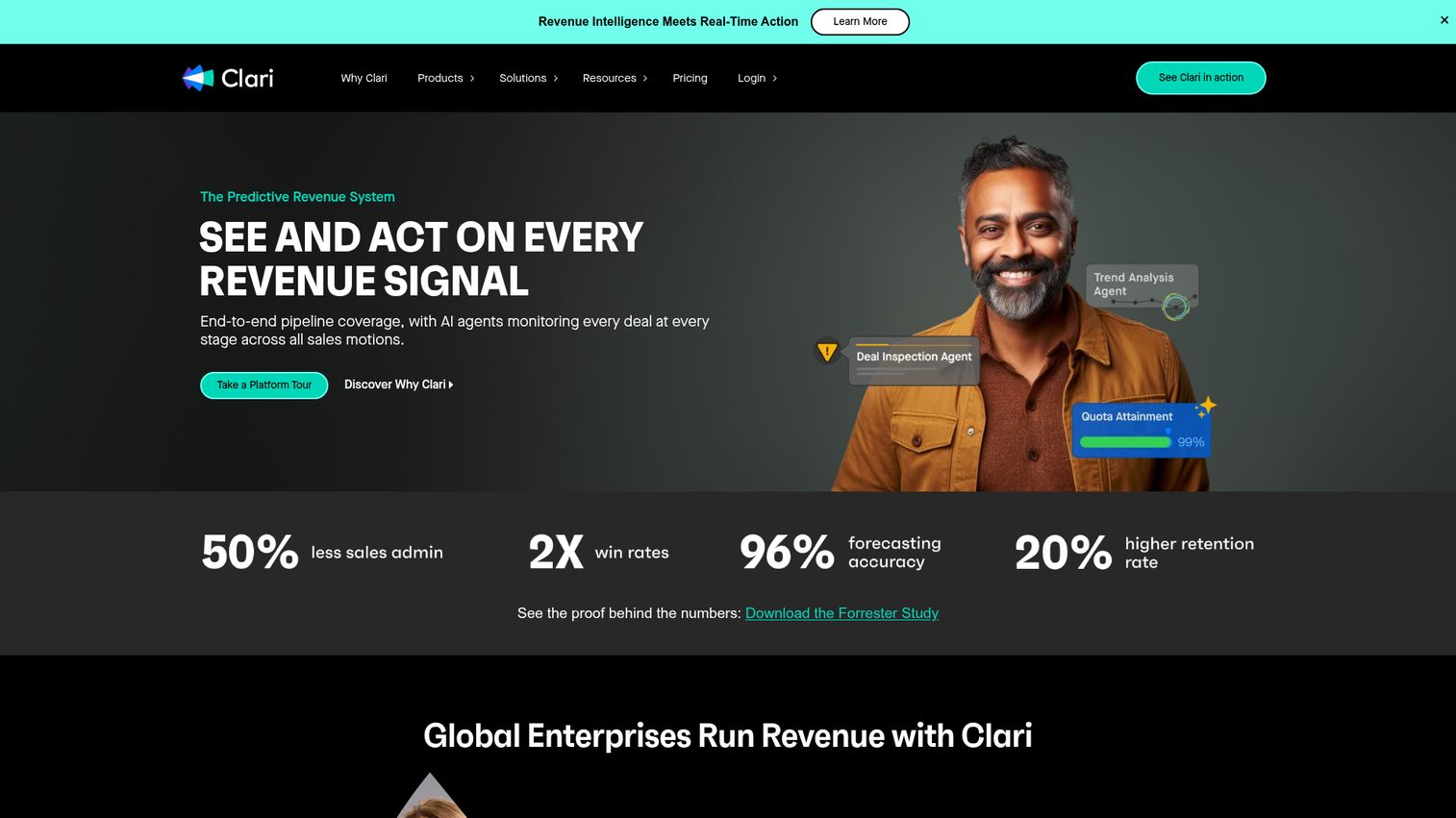
Clari is an AI revenue orchestration platform for unifying revenue data, orchestrating workflows, and guiding go-to-market actions. Conversation intelligence sits inside a broader forecasting and pipeline platform, which appeals to RevOps teams that want call data tied directly to the number.
Best for: Revenue operations teams that want to unite forecasting and pipeline inspection with conversation data.
Key strengths
- Data quality and activity autocapture: Clari captures activity automatically to keep the revenue picture current.
- Opportunity and deal inspection: managers can inspect deals and accounts alongside conversation signals.
- Forecasting and pipeline management: conversation data informs the forecast rather than living in a separate silo.
Why choose Clari: Clari fits teams where the forecast is the center of gravity. Tying call coaching and deal intelligence into the same platform that runs your pipeline review keeps conversation insight from becoming a disconnected report nobody opens. RevOps leaders weighing platforms like this should also browse the best revenue operations software.
Clari pricing: Clari does not publish public price figures. Its pricing page describes a tailored, AI-driven revenue platform and directs visitors to request a quote, with no named paid tiers visible. Clari holds a 4.6/5 rating on G2.
Considerations before you buy
Features sell the demo. These criteria decide whether the tool survives the next budget review.
Does it replace something you already pay for?
This is the first question to answer, because the strongest case for any new tool is consolidation. If you already run HubSpot or Salesforce, a native CI option may replace a standalone notetaker entirely. Map what each platform absorbs before you add another line item to the stack.
CRM and meeting-tool integration depth
A conversation intelligence platform is only as useful as the systems it connects to. Confirm it syncs with your CRM (Salesforce, HubSpot, or otherwise) and your conferencing tools (Zoom, Google Meet, Microsoft Teams). Shallow integration means manual work and stale data, which defeats the point. Guideflow's own integrations show how a tool should slot into an existing stack rather than fight it.
Pricing model and how it scales with seats
Per-seat pricing looks reasonable at five users and painful at fifty. Model the cost at your projected headcount, not today's. Tools with free viewer or listener seats, like Avoma and Jiminny, let you expand access without paying full price for every team member.
Call-recording compliance and data privacy
Recording conversations carries legal obligations that vary by region. Check whether the platform offers automatic consent disclosure and supports the one-party versus all-party consent recording laws in the states or countries where you operate. Data retention controls and security certifications matter for any regulated industry.
Analytics exportability and reporting fit
Call insight is only valuable if it reaches the people who act on it. Verify you can export data and that the reporting maps to the dashboards your team already trusts. For marketers, this is what turns call language into defensible pipeline and messaging decisions.
Conclusion
The conversation intelligence category has matured into clear lanes. Gong remains the depth pick for revenue teams that treat call data as strategic. Fathom is the obvious free starting point, generous enough to prove the value before any spend. If your stack is already built on a CRM, HubSpot Sales Hub and Salesforce Einstein Conversation Insights keep CI native and answer the consolidation question directly. For budget-conscious mid-market teams, Avoma delivers transparent tiers, and Observe.AI is the specialist for high-volume support centers.
The right choice is rarely the one with the most features. It is the one that fits your existing stack, scales at a cost you can defend, and turns raw call data into pipeline insight your CFO will actually believe.
Start with a low-risk test. Spin up a free Fathom account to see the value firsthand, or book a demo of Gong if depth of revenue intelligence is your priority. And if you want to turn those call insights into self-serve buying experiences, book a demo with Guideflow to see how interactive demos close the loop. Either way, pick the platform that consolidates your tooling rather than crowding it.
FAQ
Conversational intelligence software is AI that records, transcribes, and analyzes sales and customer conversations to surface insights like objections, competitor mentions, deal risk, and coachable moments. It converts unstructured calls into searchable, structured data that revenue, marketing, and customer teams can act on. The category goes beyond simple transcription by adding analysis, scoring, and trend detection across many conversations.
Most platforms sync call summaries, deal-risk flags, and activity directly into CRMs like Salesforce and HubSpot. This auto-logging removes the manual data entry reps usually skip, keeping records current without extra effort. The depth varies by tool, so confirm whether it writes to custom fields and supports your specific CRM edition before buying.
No. Transcription is one feature of conversation intelligence, not the whole category. A transcription tool produces a text record of what was said. A conversation intelligence platform adds deal-risk detection, coaching scorecards, sentiment analysis, and trend analysis across many calls. Tools like Fathom and Fireflies start as notetakers and add CI capabilities at higher tiers.
It lets managers coach without listening to every call. Scorecards benchmark reps against top performers, and coachable-moment detection points managers to the specific minutes worth reviewing. Trend analysis shows where deals consistently stall, turning coaching from gut feel into data-backed feedback. The result is faster ramp time and more consistent execution across the team.
It depends on where you and your participants are located. Some regions follow one-party consent rules, while others require all parties to consent before recording. Many conversation analytics platforms include automatic disclosure features to handle consent, but you should verify regional compliance for every market you sell into. Consult legal counsel for regulated industries.
Pricing ranges widely. Tools like Fathom and Fireflies.ai offer genuinely free tiers, with paid plans starting around $10 to $20 per seat per month. Mid-market platforms like Avoma and Jiminny publish per-seat pricing in the $19 to $83 range depending on seat type. Enterprise platforms like Gong, Clari, and Observe.AI use custom quotes. All figures here were verified in 2026.
Tie the decision to four factors: CRM and meeting-tool fit, integration depth, how pricing scales with seats, and the coaching or buyer-signal capabilities you need. Then weigh team size and budget. A five-person startup and a 200-rep enterprise will land on very different tools, so start from your stack and your scale, not the longest feature list.
Yes, and it is an underused application. Marketers mine call language to validate messaging against the exact words buyers use, surface recurring objections worth countering in campaigns, and inform positioning with real evidence rather than internal opinion. The call library becomes a continuous source of voice-of-customer research data that sharpens copy, ads, and landing pages.