A DOT auditor asks for six months of hours-of-service logs. You have three of them in one system, two in a driver's glovebox, and one that a former dispatcher swore was "somewhere in the shared drive." That gap is where fines start.
The cost of finding a problem after a roadside stop or an audit is never just the citation. It is the CSA score damage, the insurance premium bump, and the operational drag of reconstructing records you should have had on tap. For a founder or operations lead watching burn and predictability, that unplanned scramble is exactly the kind of surprise you cannot afford.
DOT compliance software exists to remove that scramble. Instead of scattered logbooks, paper inspection forms, and manual follow-ups, you get a single system that captures hours of service, electronic logs, and vehicle inspection reports as they happen, then keeps them audit-ready. The category sits inside a fast-growing market: the broader compliance software market is projected to grow from USD 40.82 billion in 2026 to USD 74.12 billion by 2031, a 12.67% CAGR, according to Mordor Intelligence (2024).
The tools below cover the range from FMCSA-certified ELD platforms to full fleet telematics suites. What matters is matching the tool to your current compliance workload, not the fleet you might run in three years.
What's inside
This guide is for fleet managers, safety officers, owner-operators, and operations leaders who need DOT compliance software that keeps recordkeeping clean and audit-ready without adding admin drag. We focused on tools that handle the core FMCSA workflows rather than generic fleet apps.
We selected and ranked each platform against six criteria that matter most for compliance:
- ELD support and FMCSA certification
- Hours-of-service (HOS) monitoring
- Driver vehicle inspection report (DVIR) workflows
- Mobile usability for drivers in the field
- Reporting and audit readiness
- Implementation fit for your fleet size
TL;DR
- Best for broad fleet compliance: Samsara, a unified telematics and safety platform.
- Best for mobile-first inspections and audits: SafetyCulture, built around field-ready checklists.
- Best for integrated telematics and reporting: Verizon Connect.
- Best for smaller fleets that want straightforward ELD compliance: HOS 247.
- Best for owner-operators and simple logbook needs: Route One ELD.
- Best for fleet operations plus compliance: Fleetio, strongest on maintenance oversight.
- Best for configurable compliance workflows: GoCanvas, built on custom mobile forms.
- Best for balancing monitoring, routing, and driver workflows: Motive.
What is DOT compliance software?
DOT compliance software is a system that helps commercial fleets meet Federal Motor Carrier Safety Administration (FMCSA) rules by automating electronic logging, hours-of-service tracking, vehicle inspection reporting, and audit-ready recordkeeping.
Where a general fleet management tool focuses on routing and utilization, DOT compliance software centers on the specific regulatory obligations that carry penalties when missed. Most platforms in this category cover a consistent set of components.
Core components of DOT compliance software:
- ELD compliance: An FMCSA-approved ELD that automatically records driving time from the engine, replacing paper logs.
- HOS tracking: Real-time hours-of-service monitoring that alerts drivers and managers before a violation happens.
- DVIR and maintenance records: Digital driver vehicle inspection reports tied to maintenance history and defect tracking.
- Driver mobile workflows: A mobile app that lets drivers log status, complete inspections, and present logs during a stop.
- Inspection and audit readiness: Roadside inspection mode plus centralized records you can produce on demand for an auditor.
- Dashboards and alerts: A compliance dashboard that surfaces violations, expiring documents, and CSA score risk.
The strongest trucking compliance software connects these pieces so a single driver action, like completing a pre-trip inspection, updates the record everywhere it needs to appear. That connection is what turns compliance from a monthly cleanup project into a background process.
When to use DOT compliance software
Not every fleet needs the same depth. Here is how to pattern-match your situation to the category.
When you need audit-ready recordkeeping
If you cannot produce six months of HOS logs in minutes, you are exposed. Centralized records matter because an audit or a roadside stop does not wait for you to reconcile spreadsheets. Look for a system that stores logs, DVIRs, and supporting documents in one place with export-ready formats. Audit readiness is the difference between a routine review and a fine.
When your drivers need mobile workflows
Drivers live on their phones, not at a desk. A strong driver compliance software puts inspections, log edits, and certifications in a mobile app that works offline in dead zones. Field execution matters most when a driver needs to present logs at a scale house or complete a DVIR before pulling out of the yard.
When you want fewer manual follow-ups
If your team spends hours chasing missing logs or expired documents, automation pays for itself fast. Alerts, dashboards, and scheduled reporting move the work from reactive to proactive. The compliance dashboard should tell you what needs attention before it becomes a violation.
When the fleet is growing
Spreadsheets and paper logs work at five trucks. At fifty, they become a liability. As complexity rises, dot driver management software scales the same process across every vehicle and driver without adding headcount. Growth is the clearest trigger to move off manual recordkeeping.
Comparison table
Read this table top to bottom by relevance to core DOT compliance jobs. The "Intent" column tells you the primary reason a fleet reaches for each tool, and "Key differentiation" is what separates it from the pack. Pricing and G2 ratings reflect verified values as of mid-2026; some vendors route pricing through sales, noted as quote-based.
| # | Product | Intent | Key differentiation | Pricing | G2 rating |
|---|---|---|---|---|---|
| 1 | SafetyCulture | Mobile inspections and audit workflows | Field-ready checklists and templates | From $24/month; free tier | 4.6/5 |
| 2 | Verizon Connect | Integrated telematics and compliance | Near real-time tracking plus ELD | Quote-based; min. 5 units | 3.8/5 |
| 3 | Samsara | Unified compliance and safety | AI safety detections plus ELD | Quote-based | 4.5/5 |
| 4 | HOS 247 | Straightforward ELD compliance | Affordable ELD with GPS tracking | From $19/month | Not yet rated |
| 5 | Route One ELD | Owner-operator ELD logbook | Simple FMCSA-certified logging | See vendor site | Not yet rated |
| 6 | Fleetio | Fleet ops plus compliance | Maintenance and inspection depth | From $4/vehicle/month | 4.6/5 |
| 7 | Motive | Monitoring plus driver workflows | AI dashcam plus custom DVIR | Quote-based | 4.4/5 |
| 8 | GoCanvas | Configurable compliance forms | Custom mobile form builder | From $29/user/month | 4.3/5 |
The 8 best DOT compliance software tools
1. SafetyCulture
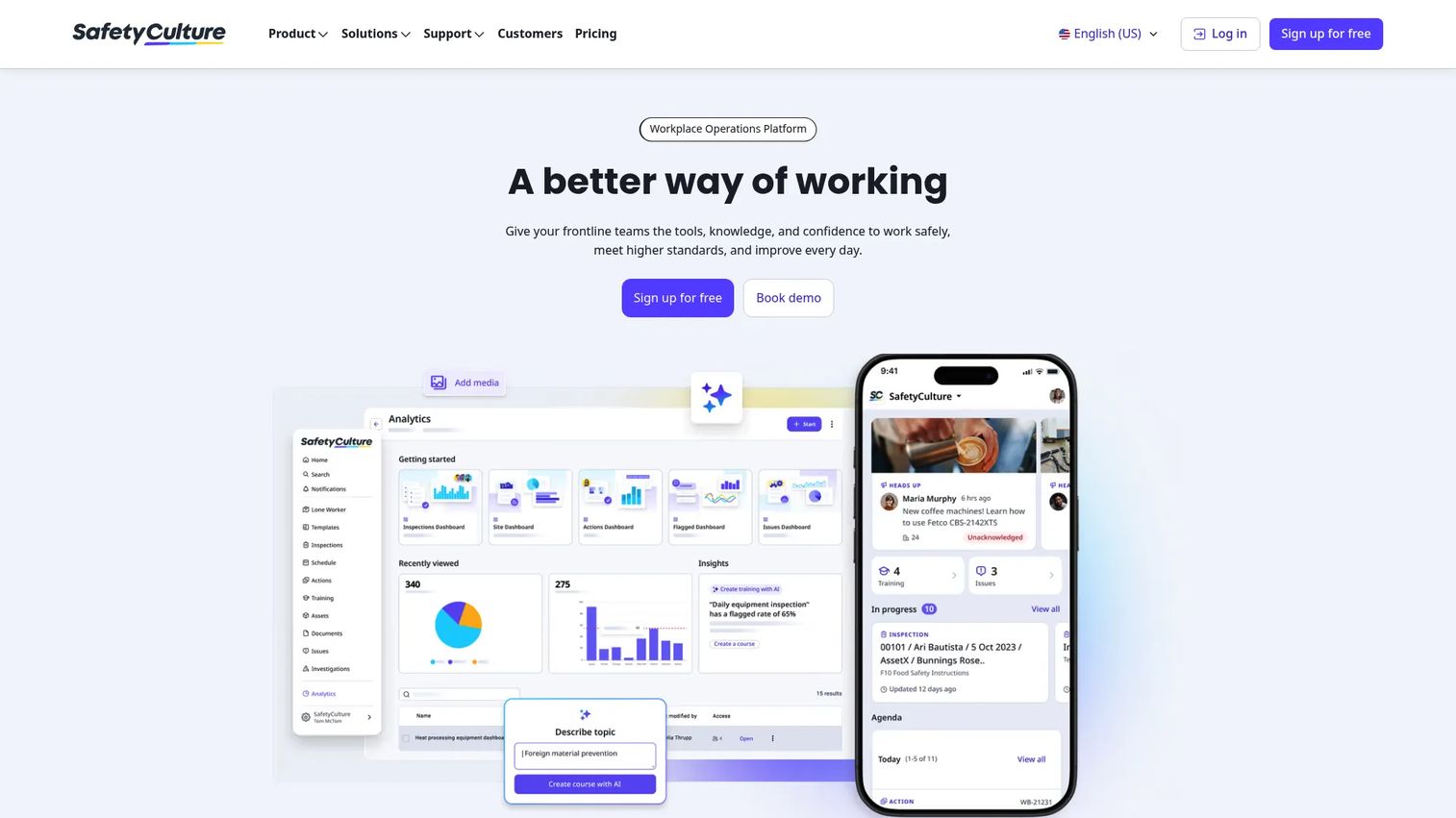
SafetyCulture is a workplace operations platform built around mobile inspections, actions, issues, and analytics. For fleets, its strength is turning DOT checks into repeatable field workflows: pre-trip inspections, defect reporting, and corrective actions all run from a phone, online or offline. It fits teams that want compliance tied directly to operational execution rather than a separate logging silo.
Best for: Teams that need a mobile-first platform for inspections and operational workflows across the fleet.
Key strengths
- Customizable templates: Build DVIR and pre-trip checklists that match your exact inspection process and regulatory requirements.
- Actions, issues, and investigations: Route a flagged defect to the right person and track it to resolution, so problems do not sit idle.
- Analytics, assets, and sensors: See inspection completion rates and asset status across the fleet from one dashboard.
Why choose SafetyCulture: If your compliance risk lives in inconsistent inspections rather than log automation, SafetyCulture is the strongest fit. It excels when field teams need to execute checks reliably and managers need visibility into what was actually done. It pairs well alongside a dedicated ELD for HOS.
SafetyCulture pricing: SafetyCulture offers a free plan billed annually, a Premium plan at $24.00 per month, and an Enterprise plan with custom pricing through sales. A free trial is available, which lets smaller fleets validate the inspection workflows before committing.
2. Verizon Connect
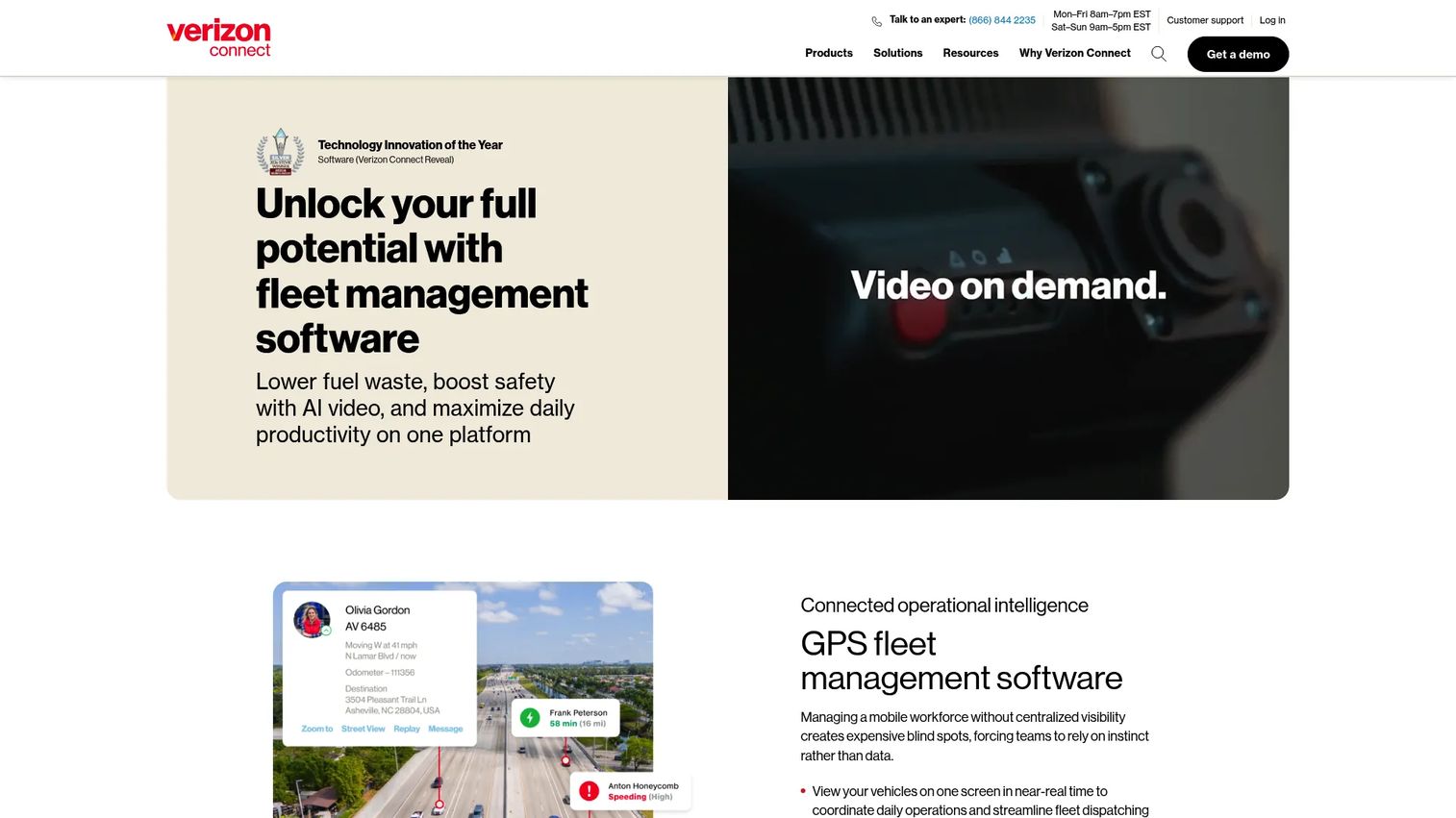
Verizon Connect is fleet management and GPS tracking software that folds ELD, DVIR, and HOS compliance into a broader telematics platform. Its near real-time vehicle tracking, asset tracking, and integrated dashboards make it a fit for fleets that want compliance and operational visibility in one system rather than bolting compliance onto a separate stack.
Best for: Businesses managing vehicle fleets that need tracking, compliance, and operational visibility together.
Key strengths
- Near real-time vehicle tracking: Know where every vehicle is and tie location data to HOS and route records.
- Compliance and ELD: FMCSA electronic logging and DVIR workflows run inside the same platform as tracking.
- Dashboards, reports, and alerts: Surface compliance exceptions and generate reports for audits from one place.
Why choose Verizon Connect: This platform earns its place when telematics and compliance need to live together. It excels for fleets already invested in GPS tracking that want to consolidate rather than run parallel systems. The integrated hardware means location and compliance data share one source of truth.
Verizon Connect pricing: Verizon Connect does not publish public pricing; the site routes fleets to a demo and quote flow, and the platform requires a minimum of five tracking units. Expect a sales conversation to scope pricing to your fleet size and hardware needs.
3. Samsara
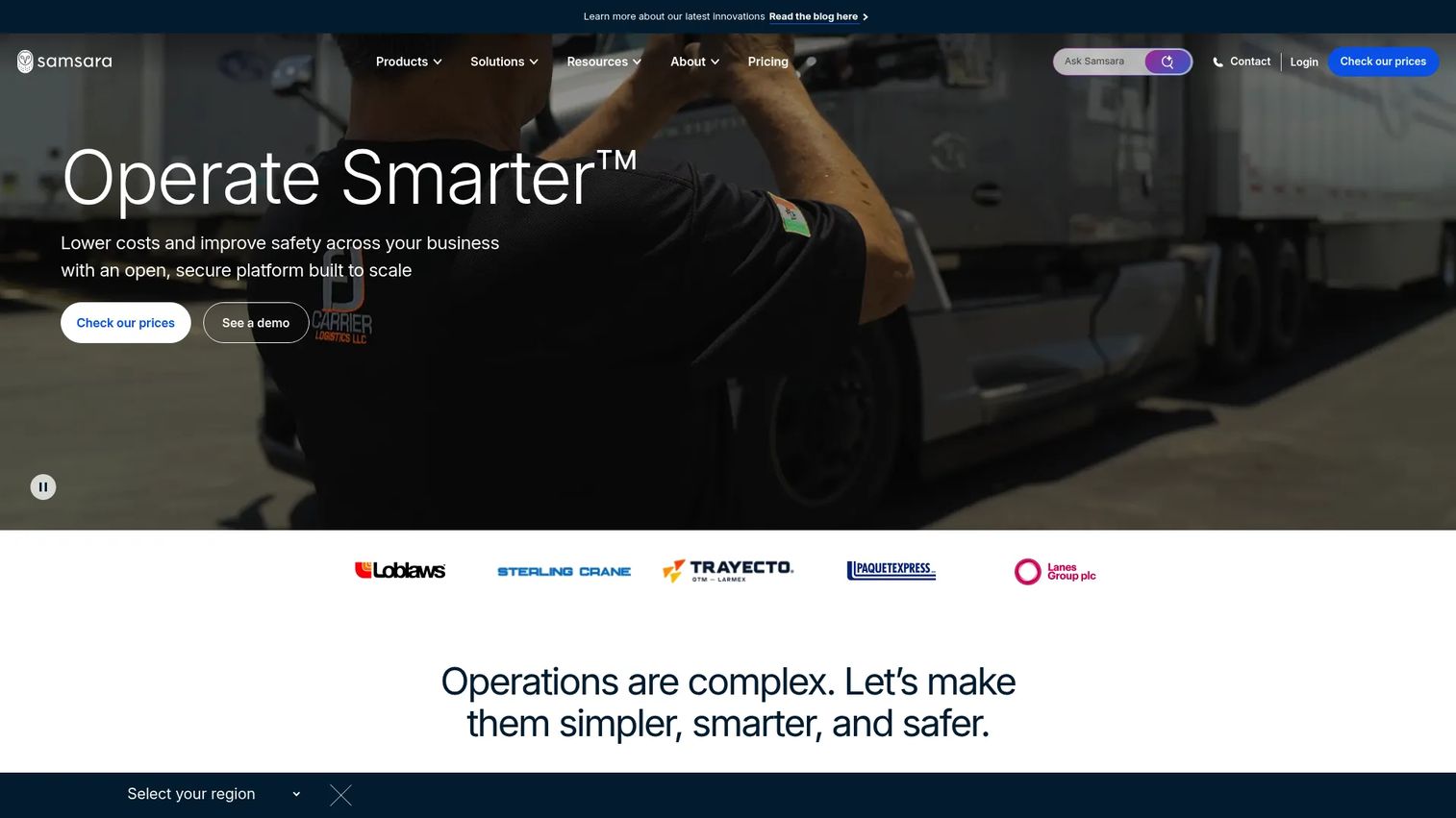
Samsara is a connected operations platform spanning fleet telematics, safety, equipment, and workforce management. On the compliance side, it delivers FMCSA ELD, HOS monitoring, DVIRs, and a driver app, then layers AI-powered safety detections and coaching on top. It fits fleets that want compliance and safety unified rather than treated as separate problems.
Best for: Mid-market to enterprise fleets needing unified operations visibility and safety alongside compliance.
Key strengths
- Real-time GPS tracking and routing: Tie location and route data directly to HOS and compliance records.
- AI-powered safety detections and coaching: Catch risky driving events and improve CSA scores over time.
- Equipment and site visibility with cloud video: Extend visibility beyond vehicles to trailers, equipment, and yards.
Why choose Samsara: Samsara is the pick when a fleet wants one platform for compliance, safety, and operations. Its driver app makes HOS logging and DVIRs straightforward for drivers, which drives adoption. It excels for scaled operations that need depth across every category rather than a single-purpose ELD.
Samsara pricing: Samsara does not display public pricing and directs visitors to check prices or contact sales. Pricing is scoped to fleet size, hardware, and feature mix, so plan for a quote conversation before you can compare total cost.
4. HOS 247
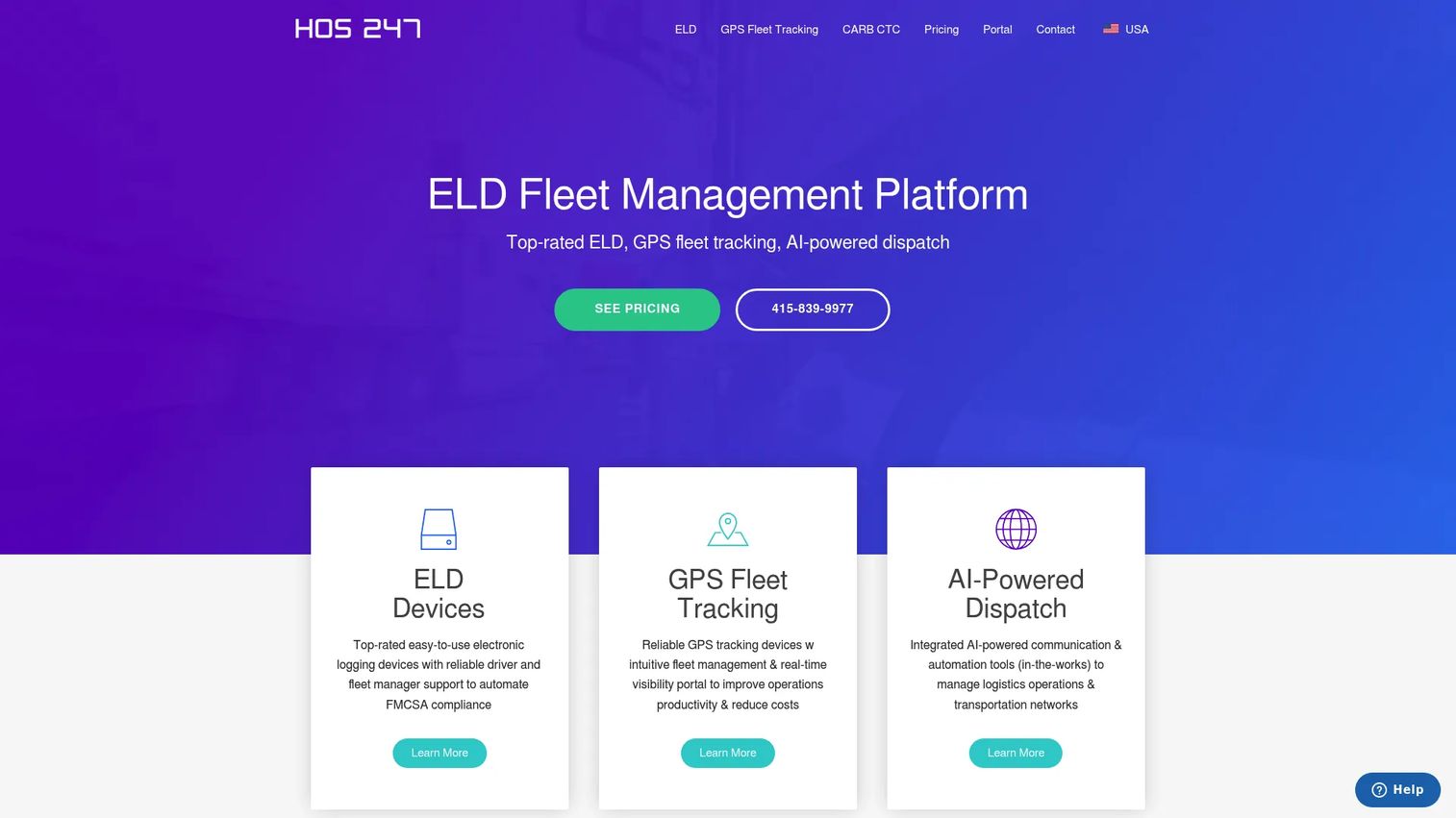
HOS 247 is an ELD, GPS fleet tracking, and dispatch platform built for trucking fleets and owner-operators. It covers the FMCSA essentials: an electronic logging device, a logbook app, real-time GPS tracking, IFTA mileage reporting, and engine code monitoring. The appeal is a straightforward, affordable system without the overhead of a full telematics suite.
Best for: Trucking fleets and owner-operators needing FMCSA-approved ELD compliance with GPS tracking.
Key strengths
- FMCSA-approved ELD and logbook app: Automatic driving-time capture and a clean logbook for roadside inspections.
- Real-time GPS fleet tracking: Location visibility bundled with compliance, not sold as a separate tier.
- IFTA and maintenance monitoring: Mileage reporting and engine code alerts reduce manual paperwork.
Why choose HOS 247: HOS 247 is the fit for smaller fleets and operators who want ELD compliance without complexity or a long implementation. It excels when the priority is getting FMCSA-compliant fast at a predictable monthly cost. The bundled tracking means you are not paying separately for basic visibility.
HOS 247 pricing: HOS 247 publishes tiered pricing: ELD Compliance at $19 per month, ELD Track at $22 per month, and ELD Plus at $25 per month. A promotional first month is available for switching drivers, and the vendor offers free logging devices when you pay annually.
5. Route One ELD
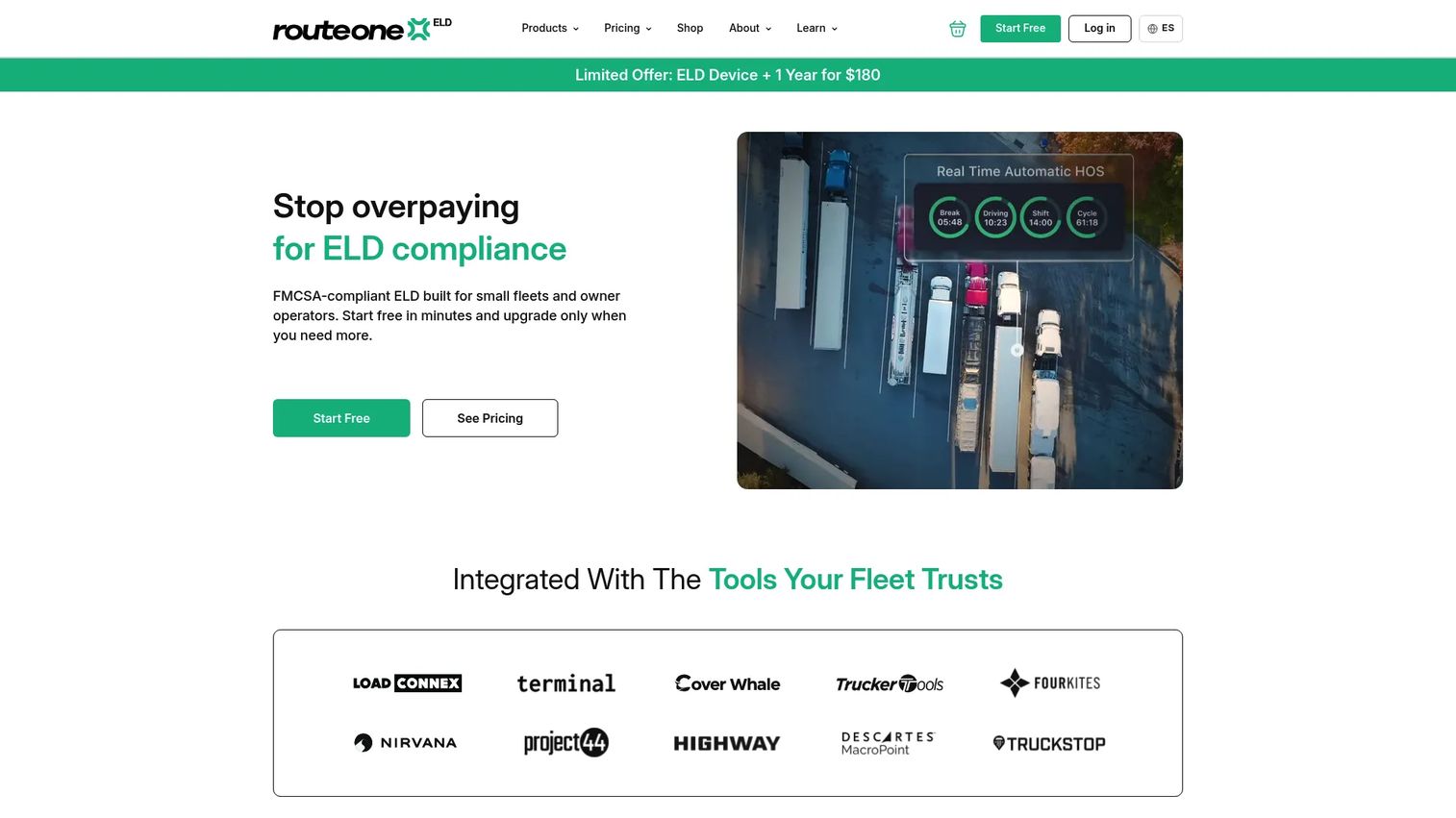
Route One ELD is an FMCSA-certified electronic logging system focused on the core compliance job: accurate driver logs, hours-of-service tracking, and roadside inspection support. It keeps the feature set deliberately simple, which suits operators who want compliance handled without a learning curve or features they will never touch.
Best for: Owner-operators and small fleets with lighter operational needs that want simple, certified ELD compliance.
Key strengths
- FMCSA-certified ELD: Meets the federal logging mandate with automatic driving-time capture.
- Driver logs and HOS: Clean electronic logs that drivers can manage and certify from a mobile app.
- Roadside inspection support: Present logs quickly during a stop without fumbling through paperwork.
Why choose Route One ELD: Route One ELD is the fit when simplicity is the point. It excels for owner-operators and small fleets that need certified compliance and nothing they have to configure around. When your operational needs are light, a focused logbook system removes friction rather than adding it.
Route One ELD pricing: Route One ELD lists its plans and hardware options on its site rather than through a public tier table here. Owner-operators should confirm the current device and subscription cost directly with the vendor, since ELD hardware bundles change frequently.
6. Fleetio
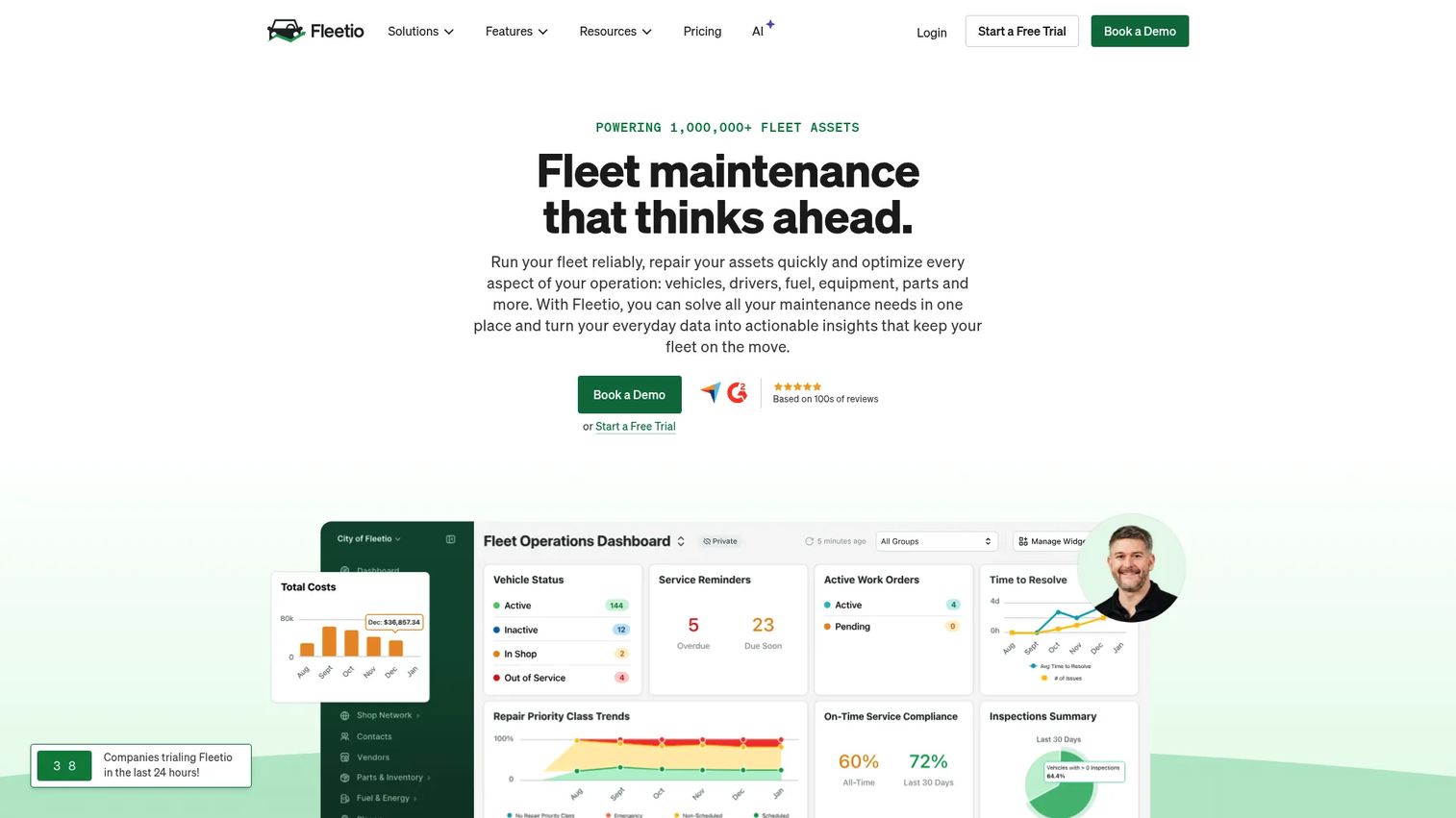
Fleetio is fleet management software built around maintenance, assets, inspections, fuel, and reporting. Its compliance value comes from tying DVIRs and inspection records directly to preventive maintenance and defect tracking, so a flagged issue during a pre-trip inspection flows straight into a work order. It fits teams that want compliance and maintenance oversight in one system.
Best for: Fleets that need centralized maintenance, inspections, and cost control alongside compliance.
Key strengths
- Preventive maintenance scheduling: Keep vehicles service-ready and document maintenance for audit trails.
- Vehicle inspections: Digital DVIRs that connect defects to work orders automatically.
- Fleet reports and dashboards: Track cost, uptime, and inspection compliance across the fleet.
Why choose Fleetio: Fleetio earns its spot when maintenance and compliance are the same problem for your team. It excels at making inspection findings actionable rather than filed and forgotten. Pair it with a dedicated ELD for HOS, and you get strong maintenance recordkeeping that supports audit readiness.
Fleetio pricing: Fleetio uses per-vehicle pricing: Essential at $4 per vehicle per month billed annually ($5 monthly), Professional at $7 per vehicle per month billed annually, and Premium at $10 per vehicle per month billed annually. A 14-day free trial is available, so you can validate the maintenance workflows before committing.
7. Motive
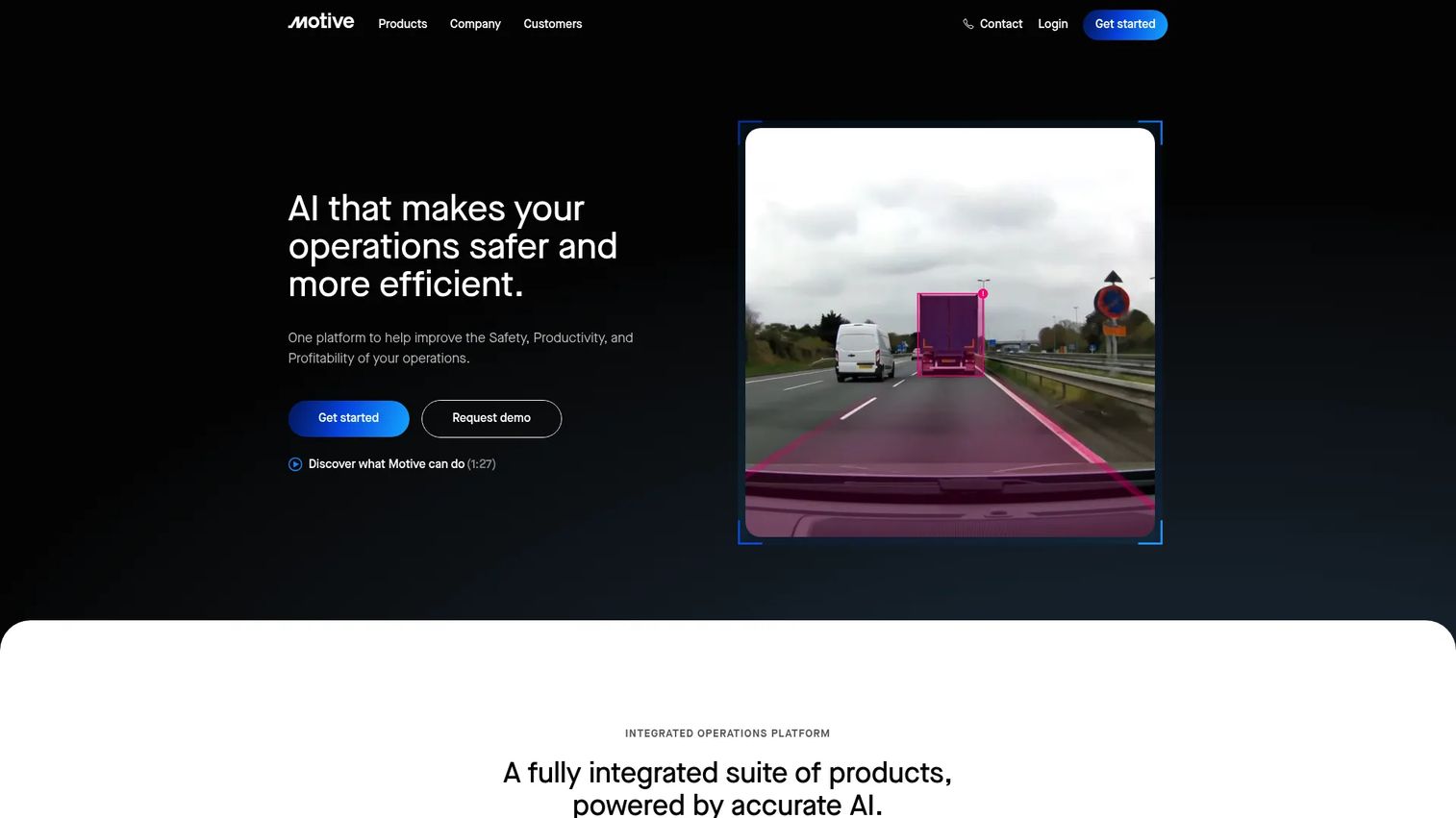
Motive is an AI-powered fleet management platform spanning safety, compliance, telematics, and driver operations. On compliance, it delivers ELD and HOS along with driver experience tools like custom DVIR, document management, and driver communication. Its AI dashcam and safety coaching layer make it a fit for fleets that want compliance and operational monitoring in one place.
Best for: Fleets needing an integrated platform for safety, compliance, telematics, and driver workflows.
Key strengths
- Custom DVIR and driver tools: Tailor inspection reports and manage documents from the driver app.
- Fleet telematics and GPS visibility: Tie location and vehicle data to compliance and routing.
- AI dashcam and safety coaching: Reduce risky events and support CSA score improvement.
Why choose Motive: Motive is the fit when a fleet wants compliance sitting alongside active safety monitoring and driver workflows. It excels for operations that value the AI safety layer as much as the ELD. The custom DVIR and document management keep driver-side compliance organized without extra tools.
Motive pricing: Motive does not list a fixed public price and directs fleets to contact sales. Its Workforce Management product references a free tier and paid subscription, but core fleet pricing is sales-led, so scope a quote to your fleet size and feature needs.
8. GoCanvas
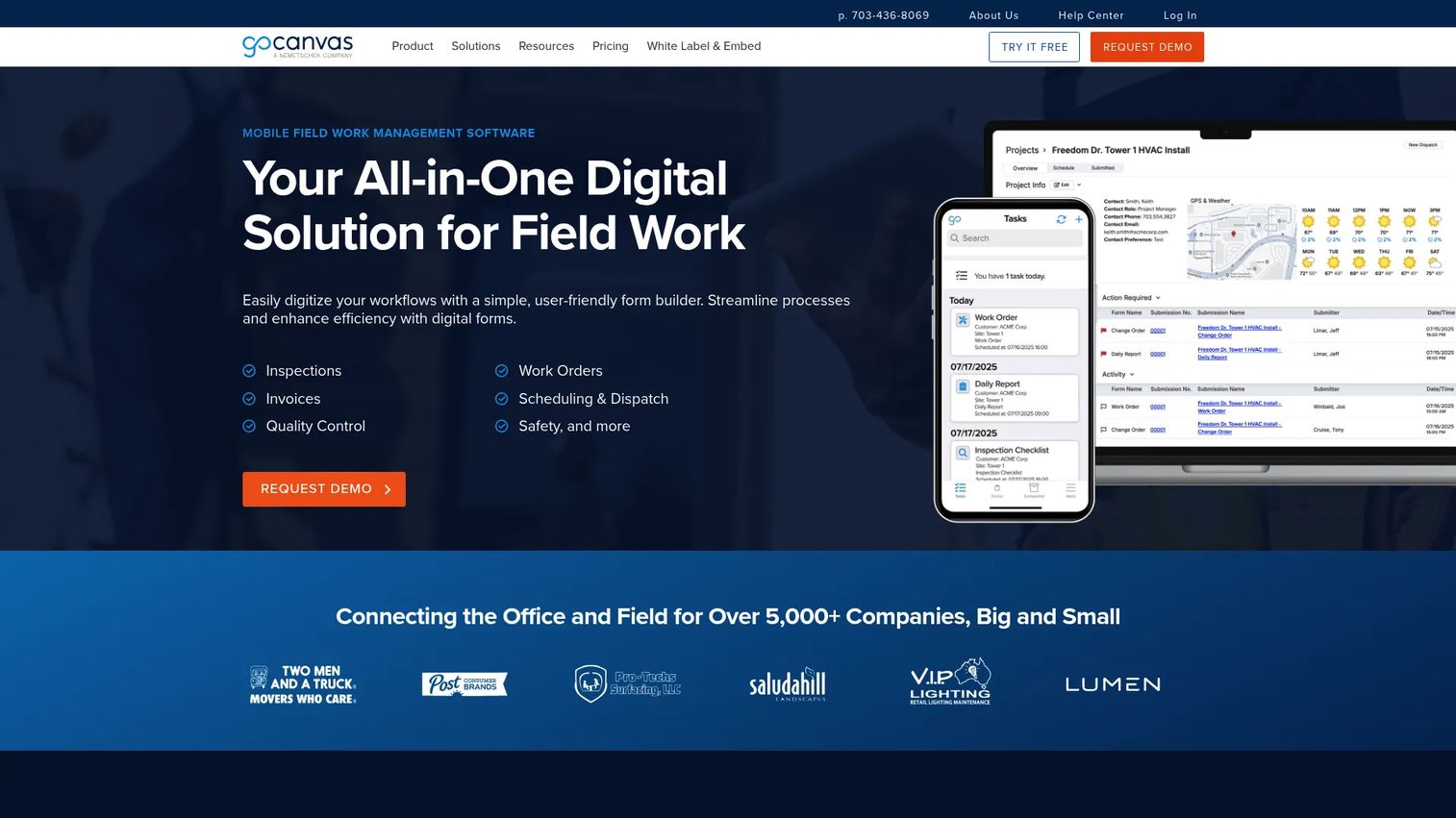
GoCanvas is mobile field operations software built around digital forms and workflow automation. Rather than a rigid ELD-first setup, it lets you build custom compliance documentation, inspections, and DVIRs with a drag-and-drop form builder. It fits teams whose compliance needs are configurable and document-heavy rather than centered on hours-of-service automation.
Best for: Field teams needing mobile forms, scheduling, and workflow automation for custom compliance documentation.
Key strengths
- Drag-and-drop form builder: Build any inspection, DVIR, or compliance form to match your exact process.
- Dispatch and scheduling: Coordinate field work and tie documentation to specific jobs.
- Offline mobile access: Complete and submit forms without a connection, then sync when back online.
Why choose GoCanvas: GoCanvas is the fit when your compliance workflows do not fit a template. It excels for field teams that need configurable documentation and automation over a fixed ELD structure. Pair it with a certified ELD for HOS, and you get flexible recordkeeping that adapts to how your operation actually runs.
GoCanvas pricing: GoCanvas offers three annually billed plans with a three-user minimum: Essentials at $29 per user per month, Pro at $39 per user per month, and Max at $49 per user per month. There is no free tier, so factor the three-seat minimum into your budget.
Considerations before you buy
The right DOT compliance software depends less on feature counts and more on how the tool fits your current workload. Run every option through this checklist.
FMCSA certification and ELD support
Confirm the platform's ELD appears on the FMCSA registered device list. A tool can call itself compliant, but only a certified ELD satisfies the mandate. If you run mixed operations, verify the device supports your specific vehicle types and exemptions.
HOS and DVIR coverage
Check that the system handles both hours-of-service tracking and DVIR workflows, not just one. Some tools lead with tracking and treat inspections as an afterthought, or vice versa. Your fleet needs both to stay audit-ready across the full FMCSA scope.
Mobile usability for drivers
The best system fails if drivers will not use it. Test the mobile app for offline function, ease of log edits, and how quickly a driver can present logs during a roadside inspection. Driver adoption is the single biggest predictor of clean records.
Reporting and audit readiness
Ask how fast you can export six months of logs and supporting records. A strong compliance dashboard surfaces violations and expiring documents before they cost you. Audit readiness should be a two-minute export, not a two-day reconstruction.
Implementation fit for your fleet size
Match the tool to your stage. An owner-operator does not need enterprise telematics, and a hundred-truck fleet will outgrow a bare logbook app. Weigh setup time, per-vehicle cost, and whether the platform scales without a rebuild.
Conclusion
The best DOT compliance software is the one that matches your current compliance workload, not the fleet you imagine running later. For unified compliance and safety at scale, Samsara leads. For mobile-first inspections tied to operational execution, SafetyCulture is the strongest pick. Fleets already invested in telematics should look at Verizon Connect, while smaller operators and owner-operators will find straightforward ELD compliance in HOS 247 and Route One ELD.
If maintenance and compliance are the same problem for your team, Fleetio connects inspections to work orders. Motive fits fleets that want AI safety monitoring alongside compliance, and GoCanvas suits teams whose documentation needs are too custom for a fixed ELD structure.
Start with the tool that solves your current pain, whether that is scattered logs, failed inspections, or manual follow-ups. Get audit-ready first, then scale the stack as the fleet grows. The practical next step is a free trial or demo of the two options that match your fleet size, so you can validate driver adoption before you commit.
FAQs
DOT compliance software is a system that helps commercial fleets meet FMCSA regulations by automating electronic logging, hours-of-service tracking, vehicle inspection reports, and audit-ready recordkeeping. It replaces paper logs and scattered spreadsheets with a single source of truth for compliance data. The goal is to keep fleets audit-ready and avoid penalties from missed or incomplete records.
An ELD satisfies the electronic logging mandate, but it is only one part of DOT compliance. Full DOT compliance software adds DVIR workflows, document management, audit-ready reporting, and dashboards that surface violations before they cost you. If your ELD only handles HOS logging, you likely still have gaps in inspection records and audit readiness.
The essentials are FMCSA-certified ELD support, hours-of-service monitoring, DVIR workflows, and a mobile app drivers will actually use. Beyond those, strong reporting and a compliance dashboard determine how fast you can respond to an audit. Prioritize the features that address your current compliance gaps over a long feature list you will not use.
Most platforms include a roadside inspection mode that lets a driver present hours-of-service logs to an officer directly from the mobile app, no paperwork shuffle required. Logs are formatted to FMCSA standards and can be transferred electronically. This speeds up the stop and reduces the risk of a violation from missing or disorganized records.
Mobile access is critical because drivers complete inspections, edit logs, and present records from the field, not from a desk. A strong mobile app works offline in areas with no signal, then syncs when a connection returns. Without reliable mobile access, driver adoption drops and records stay incomplete.
HOS tracking monitors driving and duty time to keep drivers within federal hours-of-service limits and prevent fatigue violations. DVIR workflows handle driver vehicle inspection reports, documenting pre-trip and post-trip checks and any defects found. Both are required for full DOT compliance, and the best tools connect them so a single driver action updates every record.
Smaller fleets and owner-operators usually want straightforward ELD compliance without enterprise complexity. HOS 247 offers affordable tiered ELD pricing with bundled GPS tracking, and Route One ELD keeps the feature set simple and FMCSA-certified. Both let a small operation get compliant quickly without a long implementation or features they will not use.
Compare on total cost, not just the headline rate. Per-vehicle models like Fleetio scale with fleet size, per-user models like GoCanvas depend on how many people need access, and telematics platforms like Samsara and Verizon Connect bundle hardware into quote-based pricing. Factor in device costs, contract terms, and free trial availability so you can validate the tool before committing budget.