You plug your personal Spotify into the store speakers. It works for a week. Then a licensing letter shows up, the playlist skips into a track nobody wants at lunch rush, and a second location is playing something completely different. Business music is never just "hit play." It is licensing you can defend, scheduling that matches your hours, and consistent audio across every room you operate.
The stakes are real. Consumer streaming accounts explicitly prohibit commercial use, and performing rights organizations do enforce it. Meanwhile, the broader music software market keeps expanding: the global digital audio workstation market was valued at $4.4B in 2025 and is projected to reach $8.9B by 2033 at a 9.4% CAGR, according to Grand View Research (2025). The software segment alone accounted for 57.9% of DAW revenue in 2025. Businesses are moving audio management from manual, ad hoc setups to purpose-built platforms.
If you are a marketer or operator evaluating tools, the real question is consolidation. Does one platform cover licensed playback, dayparting, announcements, and multi-location control, or do you stitch together three subscriptions and a manual process? The same instinct that drives teams to replace scattered tools with an interactive demo on a landing page applies here: fewer moving parts, cleaner data, less ambient risk. This guide compares eight platforms so you can shortlist the two or three that fit your format, location count, and compliance needs.
What's inside
This guide is for operators, marketers, and multi-location teams choosing a licensed music service for business. We compared eight platforms against four criteria that actually matter at buying time: licensing clarity (is commercial use covered without extra paperwork), scheduling and dayparting, multi-location and multi-user control, and audio operations like announcements or paging. The list spans pure background music services, announcement-first players, and full in-store media platforms. Each entry includes verified pricing where public, a G2 rating where available, and a plain statement of who the tool fits best. No vague "best music app" language, just decision support.
TL;DR
- Best overall for multi-location control: Soundtrack, for licensed streaming with a central dashboard across many zones.
- Best for music plus announcements: BMS Music & Announcement Player, for zoned audio, paging, and scheduled messaging.
- Best branded background music service: SoundMachine, for curated stations and playlist import with simple scheduling.
- Best for enterprise retail and hospitality: Mood Media, for managed programs across large footprints.
- Best for simpler SMB setups: Cloud Cover Music, for licensed music plus optional messaging at an affordable entry price.
- Best for location-based customer experience: Rockbot, for unified music, signage, and TV per zone.
- Best licensed streaming built for business: Soundtrack Your Brand, for restaurants and retail wanting a strong music identity.
- Best for omnichannel audio programs: PlayNetwork, for enterprise brands blending music, media, and AV systems.
What is business music software?
Business music software is a licensed platform that lets a company legally stream, schedule, and control background music (and often announcements) across one or many commercial locations.
Unlike a consumer streaming app, it clears the commercial performance rights you need to play music in public-facing spaces, and it adds the operational controls a business actually runs on.
Core capabilities of the category:
- Licensed commercial playback: music cleared for public, in-store use, not personal listening.
- Playlist scheduling and dayparting: different energy by time of day, hours, or season.
- Multi-location and multi-user control: manage every zone from one dashboard, with role-based access.
- Announcements and in-store messaging: overhead paging, promos, and text-to-speech alongside music.
- Device and hardware compatibility: works with common players, speakers, and network audio setups.
Here is the part most teams learn the hard way: a personal Spotify, Apple Music, or Amazon Music subscription does not cover commercial playback. Their terms restrict use to personal, non-commercial listening. Performing rights organizations like ASCAP, BMI, and SESAC license public performance separately, and a business music service bundles that licensing into the subscription. That single fact is why the category exists, and why "just use my phone" is a compliance liability, not a shortcut.
The same shift toward purpose-built, measurable tools is happening across the marketing stack. Teams replacing static PDFs with an interactive experience, or consolidating reporting into business intelligence platforms, are chasing the same outcome here: one system that does the job cleanly instead of a manual workaround that eventually breaks.
When to use business music software
Not every business needs the same feature depth. Here is how to pattern-match your situation to the category.
Schedule music by location, time, or daypart
A coffee shop wants mellow mornings and upbeat afternoons. A gym wants high energy at 6am and again at 6pm. A retailer in a warm region wants a different vibe than the same brand up north. When your audio should change automatically by hour, region, or customer segment, you need dayparting and scheduling, not a static playlist someone remembers to swap.
Add announcements without rebuilding the audio stack
Stores, malls, and warehouses often need overhead paging, promo messages, or safety announcements layered over music. When you want one system for both music and PA (rather than a separate paging box and a separate music source), look for platforms with scheduled messaging, text-to-speech, and live announcement support built in.
Manage music centrally across multiple locations
Once you run more than a handful of sites, brand consistency beats local improvisation. A central dashboard lets a marketing or operations lead push the right playlist to the right zones, enforce an explicit-lyrics filter, and see what is playing everywhere without calling each store. If consistency and control matter more than one-off local choices, prioritize multi-location management.
Comparison table
This table helps you narrow the field fast. It sorts by relevance to licensed, controllable business music playback, not alphabetically. Pricing and ratings reflect verified first-party and G2 sources where available; where a figure is not public, we note it plainly.
| # | Product | Intent | Key differentiation | Pricing | G2 rating |
|---|---|---|---|---|---|
| 1 | Soundtrack | Multi-location licensed streaming | AI playlists, Spotify import, multi-location dashboard | Per zone, per month (billed annually); Enterprise custom | 4.5/5 |
| 2 | SoundMachine | Curated background music service | Station-based mixes, playlist import, scheduled messages | From $29.95 license/month | Not listed |
| 3 | BMS Music & Announcement Player | Music plus announcements | Up to 16 zones, paging, live PA, scheduled ads | From $385 one-time; $149.82/quarter | Not listed |
| 4 | Soundtrack Your Brand | Business-licensed streaming identity | Licensed library, scheduling, API, multi-location | Per zone, per month (billed annually); Enterprise custom | 4.5/5 |
| 5 | PlayNetwork | Omnichannel enterprise audio | Music, digital media, and AV systems combined | Contact sales | Not listed |
| 6 | Rockbot | Location experience platform | Unified music, signage, and TV per zone | From $25/mo per zone | 4.5/5 |
| 7 | Mood Media | Enterprise managed programs | Music, messaging, signage via Mood Harmony | From $26.99/mo | 3.5/5 |
| 8 | Cloud Cover Music | Simple SMB streaming | Commercial-free music plus overhead messaging | From $16.95/mo (annual prepaid) | Not listed |
1. Soundtrack
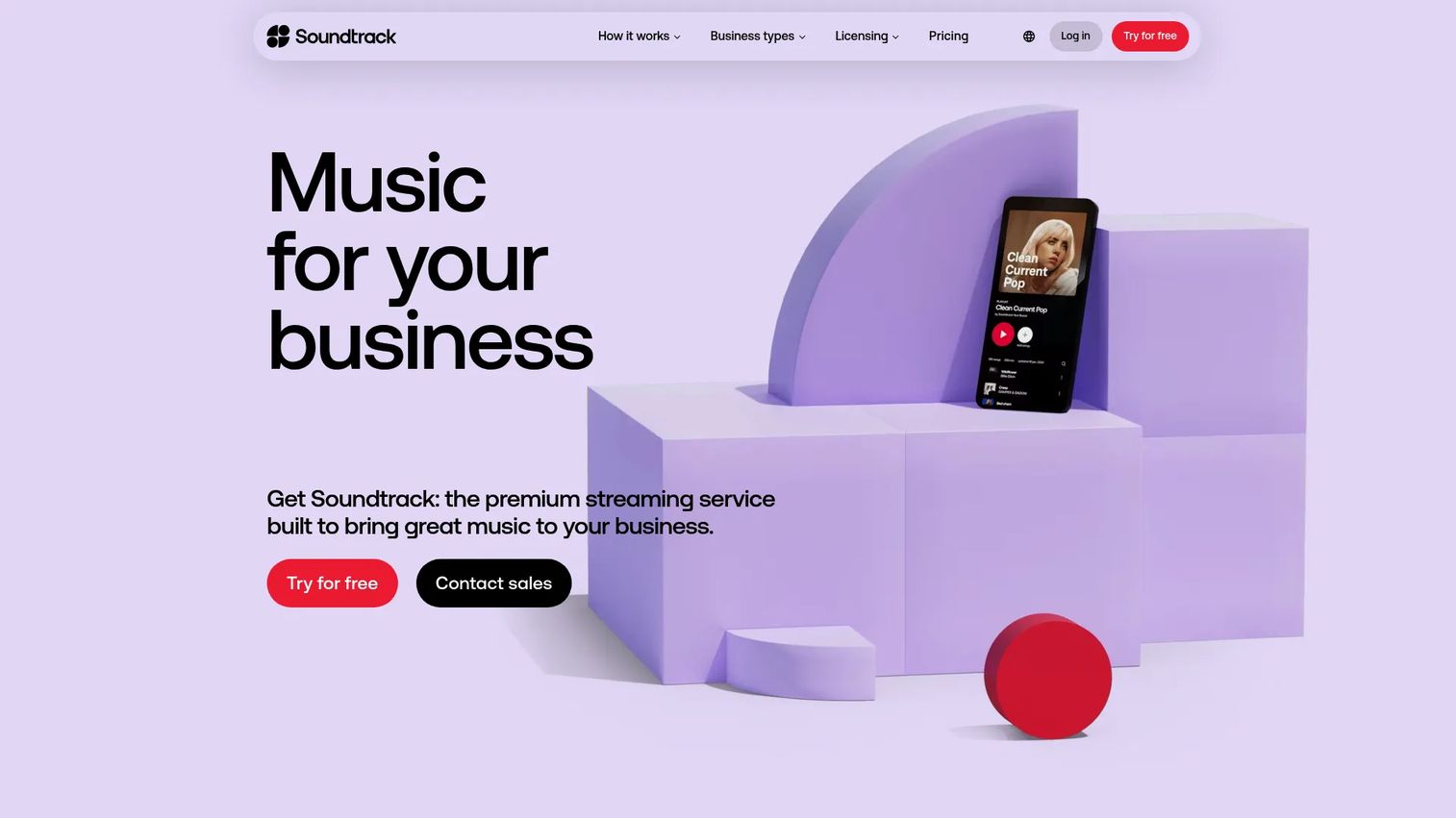
Soundtrack is a licensed business music streaming service built for companies that need legal playback plus real control. It pairs a large commercial library with AI-generated playlists, Spotify playlist import, and a multi-location dashboard, so a single admin can run audio across many zones without touching each site. Scheduling and an explicit-lyrics filter round out the operational side. For growing multi-location businesses, it hits the sweet spot between curated music and centralized management.
Best for: Businesses that need licensed background music controlled centrally across one or many locations.
Key strengths
- Licensed business library: commercial performance rights are built into the subscription, so public playback is covered.
- AI playlists and Spotify import: generate stations automatically or bring in playlists your team already knows.
- Multi-location dashboard: push music, schedules, and filters to every zone from one place.
Why choose Soundtrack: If you are scaling past a single site and want brand-consistent audio without calling each store, Soundtrack centralizes control while keeping licensing clean. The explicit-lyrics filter and scheduling matter most for retail and hospitality brands that care about atmosphere and compliance in equal measure.
Soundtrack pricing: The public pricing page shows Starter, Essential, and Unlimited plans priced per zone, per month when billed annually, plus a custom Enterprise tier via sales. A free trial is available. Soundtrack Your Brand holds a 4.5/5 rating on G2. Because exact numeric prices are not published on the accessible page, confirm current per-zone rates directly with Soundtrack before purchase.
2. SoundMachine
SoundMachine is a commercial background music service focused on curated stations you can shape into custom mixes. You build from professionally programmed stations, schedule music and custom messages, and import playlists from Spotify, Apple Music, Amazon Music, and more. It leans toward businesses that want a polished, ready-to-run background music service without heavy configuration, which makes deployment fast for retail, restaurants, healthcare, and hotels.
Best for: Businesses that want licensed background music with scheduling and playlist import, minus the complexity.
Key strengths
- Curated business stations: professionally programmed stations you can mix to fit your brand.
- Scheduling with custom messages: schedule music and drop in your own announcements or promos.
- Broad playlist import: pull in playlists from Spotify, Apple Music, Amazon Music, and others.
Why choose SoundMachine: If your priority is a great-sounding, licensed background music service that a non-technical manager can run, SoundMachine keeps deployment simple while still offering scheduling and messaging. Its station-first approach suits teams that want curation done for them rather than building every playlist from scratch.
SoundMachine pricing: First-party pricing starts at $29.95 per license/month for Business, with Business Premium at $36.95 and Business Premium HD at $39.95. Enterprise is custom. Annual billing carries a 10% savings versus monthly. There is no free tier, so factor the per-location license cost into multi-site rollouts.
3. BMS Music & Announcement Player
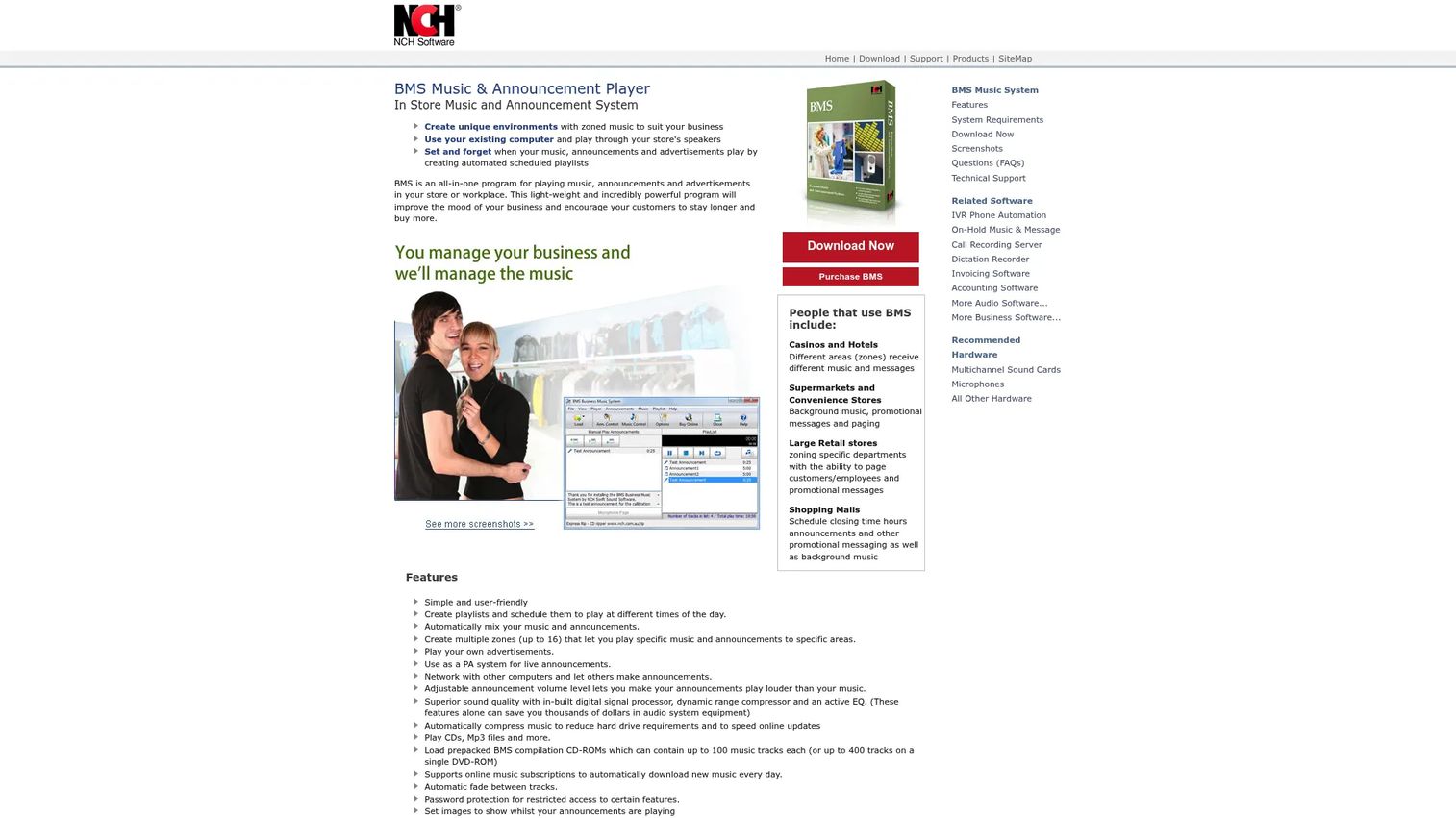
BMS Music & Announcement Player from NCH is built for audio operations, not just streaming. It handles scheduled background music, advertisements, and live PA messages across up to 16 zones, so stores, malls, and warehouses can run music and paging from one system. You create playlists and scheduled playlists, layer in announcements, and keep separate zones playing what each space needs. This is the pick when announcements are a first-class requirement, not an afterthought.
Best for: Businesses that need scheduled background music, paging, and announcement playback in one Windows-based system.
Key strengths
- Zoned audio up to 16 zones: run different music and messaging per area from a single install.
- Announcements and live PA: schedule ads, play announcements, and trigger live paging.
- Scheduled playlists: build playlists and time them to your hours and dayparts.
Why choose BMS Music & Announcement Player: If your location needs music and announcements as a unified workflow (think a mall food court or a large retail floor), BMS puts paging and playback in the same tool. Its one-time license model also appeals to operators who prefer owning software over a recurring per-zone subscription.
BMS pricing: NCH's store shows a User license at $385.00 one-time and a Professional license at $639.99 one-time, plus a Professional Quarterly Plan at $149.82 per quarter. Prices display in USD with GST/VAT notes. There is no free tier. The one-time model can be cost-effective for a single fixed location versus ongoing subscriptions.
4. Soundtrack Your Brand
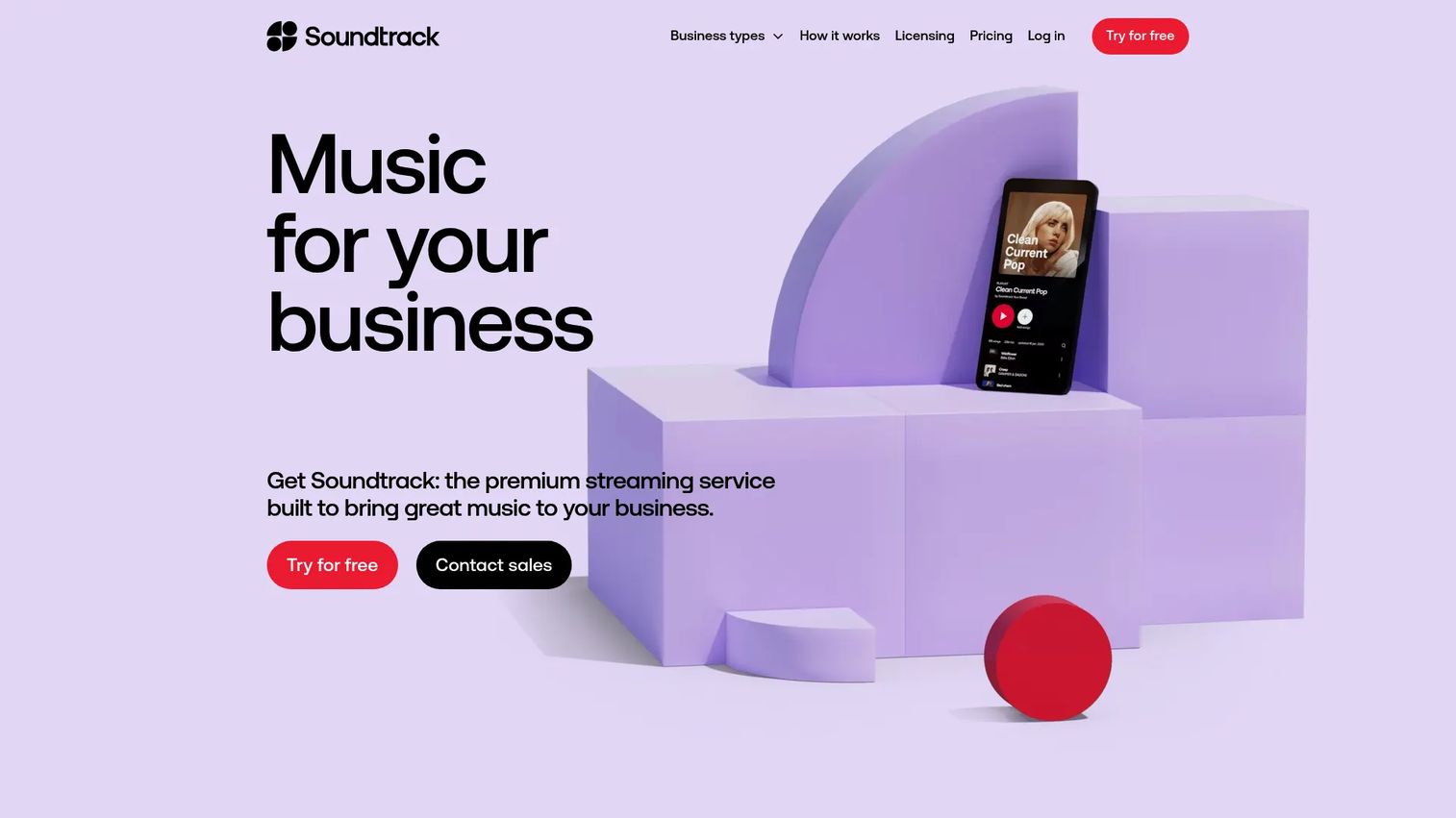
Soundtrack Your Brand is a business music streaming platform for brands that want a strong, licensed music identity across locations. It offers licensed commercial streaming, curated playlists and scheduling, Spotify import, API access, and multi-location control. The emphasis is on legal playback at scale for restaurants, retail, and hotels that treat music as part of the brand experience rather than background filler.
Best for: Restaurants, retail, hotels, and multi-location businesses needing licensed background music control with a distinct sound.
Key strengths
- Licensed commercial streaming: public performance rights covered for in-store playback.
- Scheduling and curation: program playlists by daypart and keep them on-brand.
- API and multi-location control: integrate with your systems and manage many sites centrally.
Why choose Soundtrack Your Brand: If music is core to how your brand feels, this platform gives you curation, scheduling, and centralized control with the licensing handled. The API access is a differentiator for teams that want to tie music control into existing operational systems across a fleet of locations.
Soundtrack Your Brand pricing: Plans are shown as Starter, Essential, and Unlimited, priced per zone, per month when billed annually, with a custom Enterprise tier. The platform holds a 4.5/5 rating on G2. Because numeric per-zone prices are not visible on the accessible pricing page, confirm current rates with sales before committing to a multi-zone rollout.
5. PlayNetwork
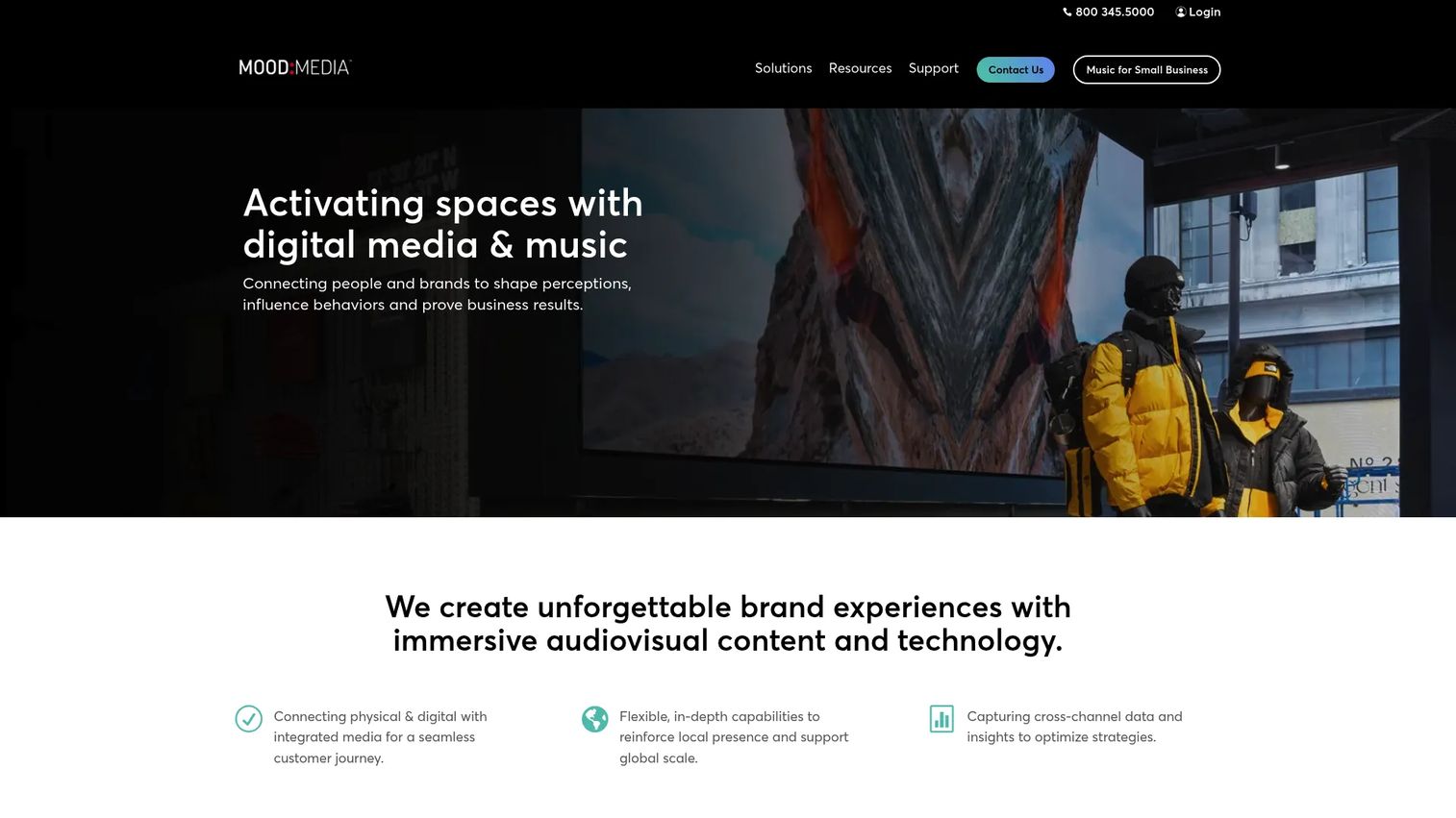
PlayNetwork is a broader in-location media provider, not only a playlist tool. It combines music for business, digital media and signage, and audiovisual systems design and installation, helping brands build cohesive customer experiences while simplifying IT operations and reducing licensing risk. This is enterprise territory: large retail, hospitality, and venue brands that want music as one layer of a fully managed media program.
Best for: Multi-location brands needing managed music alongside in-store media and AV systems.
Key strengths
- Music plus custom programs: licensed music for business built into tailored programs.
- Digital signage and visuals: interactive visual experiences to match the audio brand.
- AV systems and installation: design, engineering, and install for physical spaces.
Why choose PlayNetwork: If you are running a national or global footprint and want one partner for music, media, and the hardware behind it, PlayNetwork positions itself as that omnichannel provider. The reduced licensing risk and simplified IT operations matter most to enterprise teams juggling compliance across many countries.
PlayNetwork pricing: No public pricing is listed on the first-party site, which routes buyers to sales and contact forms. Expect a quote-based, program-level engagement rather than a per-zone subscription. For enterprise buyers, that is typical, but it means budgeting requires a sales conversation up front.
6. Rockbot
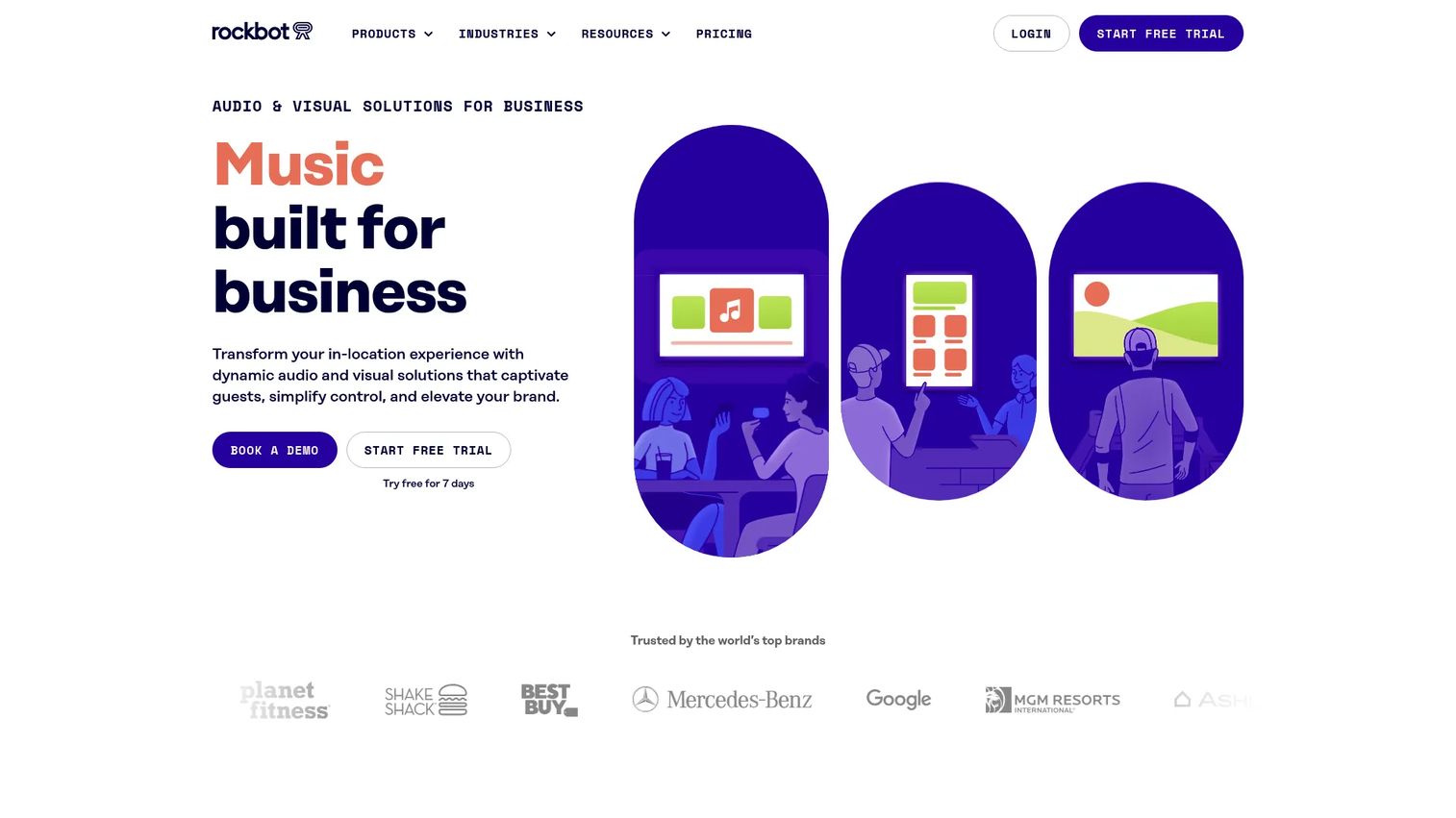
Rockbot is a commercial media platform that manages music, TV, digital signage, and retail media from one place. It offers music scheduling and automation, digital signage management, and Rockbot TV for business, and it scales from single locations to national chains. The appeal is a unified in-location experience: audio and screens controlled together, per zone, from a central account.
Best for: Businesses wanting a single platform for in-location music, signage, and TV across one or many zones.
Key strengths
- Music scheduling and automation: program and automate playback by zone and time.
- Digital signage management: control screens and content alongside audio.
- Rockbot TV: licensed TV for business layered into the same platform.
Why choose Rockbot: If your customer experience spans sound and screens, Rockbot consolidates both instead of running separate vendors. The per-zone pricing is transparent and predictable, which makes it easy to model costs as you add locations or add signage and TV to existing music zones.
Rockbot pricing: Public pricing starts at $25/mo per zone for Music, Digital Signage, or TV on a 12-month term. A Media Player is $175 one-time. Optional Music add-ons include Audio Messaging (+$10/mo) and Request (+$25/mo). Rockbot holds a 4.5/5 rating on G2. There is no free tier, but the à la carte structure lets you buy only what each zone needs.
7. Mood Media
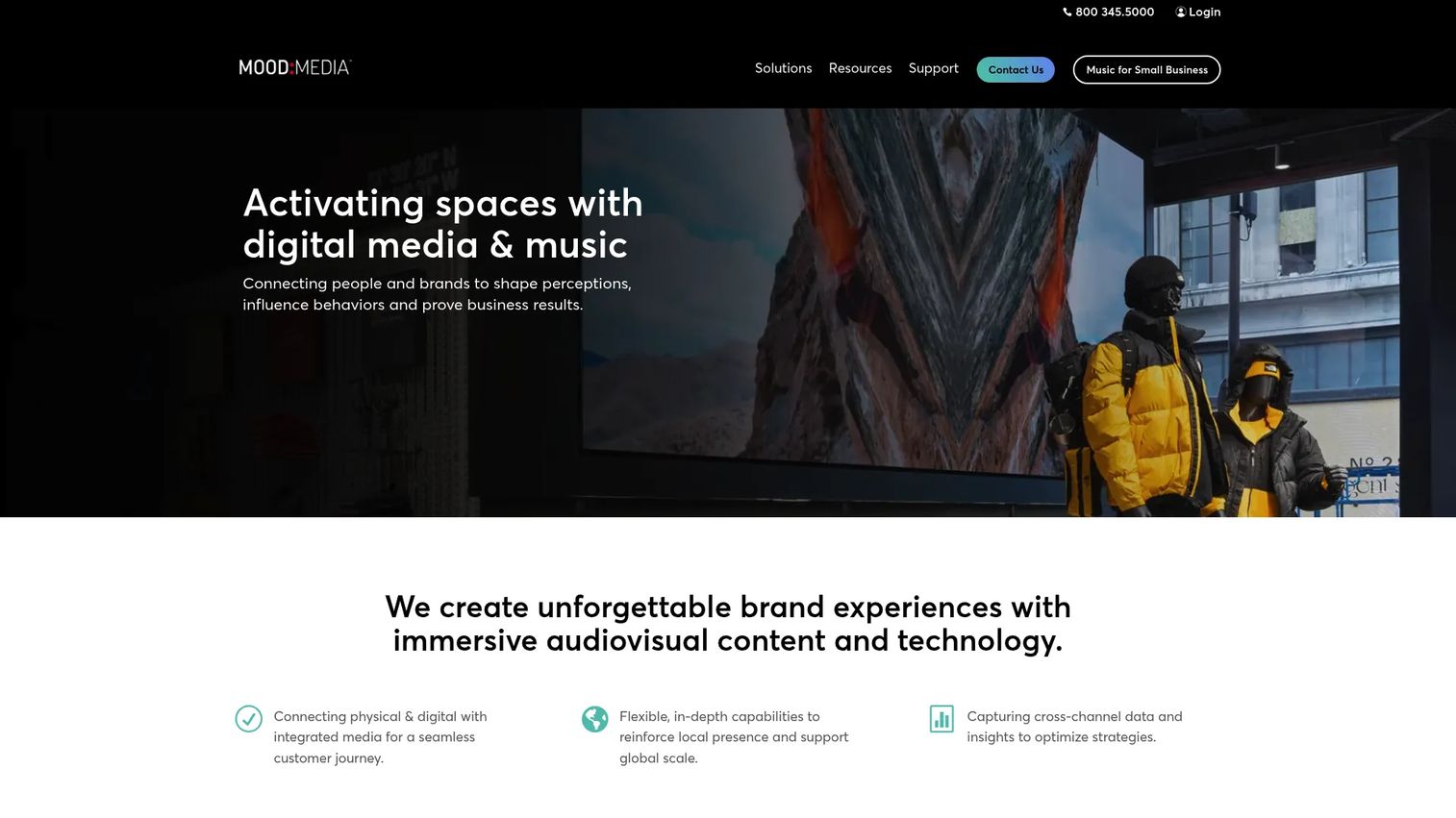
Mood Media is a brand experience platform spanning music, messaging, and digital signage for physical locations. Its music-for-business subscriptions include automated recommendations, while digital signage adds centralized content management and remote playback control. The Mood Harmony platform ties music, messaging, and signage together across locations. This is a mature choice for enterprise retail and hospitality buyers who want service depth and managed deployment at scale.
Best for: Multi-location businesses that need managed music, messaging, and digital signage under one program.
Key strengths
- Music with automated recommendations: subscriptions that suggest fitting music for your space.
- Digital signage control: centralized content management and remote playback.
- Mood Harmony platform: unify music, messaging, and signage across every location.
Why choose Mood Media: If you value service depth, support, and a proven track record across large footprints, Mood Media brings a full managed program rather than a self-serve tool. Enterprise retail and hospitality teams that want a single vendor accountable for the whole in-store experience are the natural fit here.
Mood Media pricing: Public music-for-business subscription plans are Starter at $26.99/mo, Intermediate at $31.49/mo, and Advanced at $35.99/mo, billed annually with a 10% savings versus monthly. Broader enterprise media solutions use contact-sales pricing. Mood Media holds a 3.5/5 rating on G2. The published tiers make entry pricing clear, while larger programs require a quote.
8. Cloud Cover Music
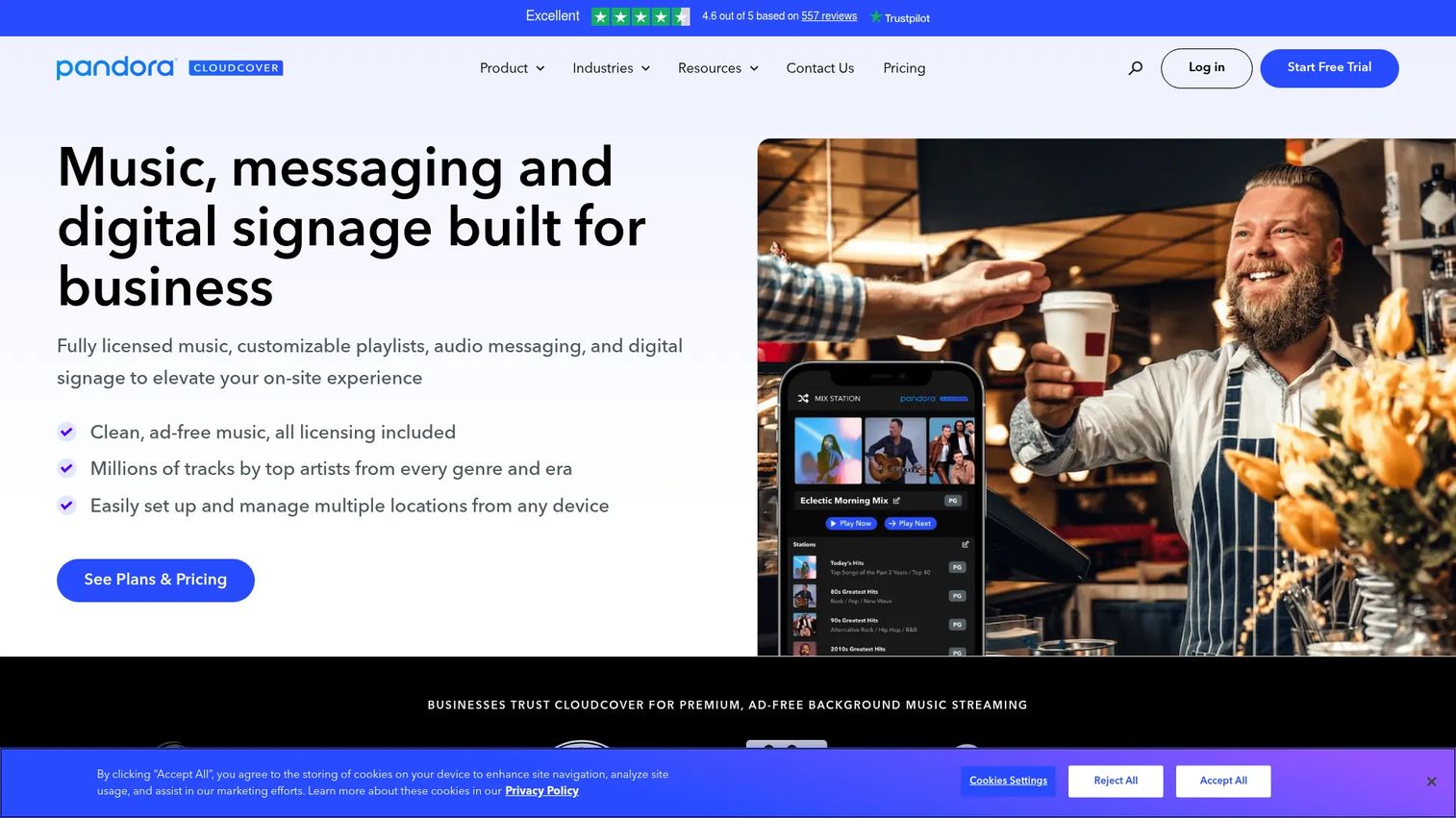
Cloud Cover Music is a licensed background music and messaging service built for simplicity. It offers commercial-free business music stations, overhead messaging with scheduling, and multi-location management with remote control. It fits smaller businesses that want compliant, controllable music without a heavy platform, and its entry pricing is the most approachable on this list.
Best for: Businesses needing licensed in-store music with optional overhead messaging across one or many locations.
Key strengths
- Commercial-free stations: licensed music cleared for business use, no ads.
- Overhead messaging: schedule promos and announcements over the music.
- Multi-location remote control: manage and adjust playback across sites from anywhere.
Why choose Cloud Cover Music: If you want compliant music without complexity or a big budget, Cloud Cover Music delivers licensed stations, messaging, and remote control at an SMB-friendly price. The tiered structure lets you start with music only and add management or messaging as you grow.
Cloud Cover Music pricing: Public plans include Music at $18.95/mo monthly or $16.95/mo prepaid annually, Manage at $23.95/mo (or $21.50/mo annual prepaid), and Messaging at $29.95/mo. A 14-day free trial is offered with no credit card required, though there is no permanent free tier. The low entry price makes it easy to test one location before rolling out.
Considerations before you buy
Before you commit, run every shortlisted tool through this checklist.
Licensing coverage
Confirm the subscription includes public performance rights for your country and business type. A service that clears ASCAP, BMI, SESAC, and equivalents removes the biggest compliance risk. Never assume a consumer plan or a "royalty-free" library covers commercial in-store playback the same way.
Scheduling and dayparting depth
Check whether you can schedule by hour, day, region, and season, and how granular the control gets. If your energy needs to shift across the day, a static playlist will not cut it. Test how easy it is to build and adjust schedules across zones.
Multi-location and user control
If you run more than one site, evaluate the central dashboard: can you push playlists, filters, and schedules to specific zones, and set role-based access? The gap between "manage one store" and "manage fifty" is exactly where cheaper tools tend to fall short on control.
Announcements and messaging
Decide whether you need overhead paging, scheduled promos, or text-to-speech. If yes, prioritize platforms that treat announcements as a first-class feature rather than a bolt-on, so you avoid running a separate paging system.
Hardware and total cost
Verify compatibility with your existing speakers, players, or network audio, and whether hardware is extra. Then model total cost per location, including per-zone fees, add-ons, and any one-time hardware, so the sticker price reflects reality at your scale.
Which business music software should you choose?
The right pick depends on what you actually need the audio to do. If you run many locations and want licensed streaming with central control, Soundtrack and Soundtrack Your Brand lead for multi-location management. If announcements and paging are core, BMS Music & Announcement Player unifies music and PA in one system. For a polished, easy background music service, SoundMachine keeps things simple, while Cloud Cover Music wins on affordability for smaller setups.
Enterprise retail and hospitality teams that want a fully managed program should look at Mood Media or PlayNetwork, and brands that want music, signage, and TV together should evaluate Rockbot. The pattern is consolidation: buy the platform that covers licensing, scheduling, and control in one place instead of stitching subscriptions together.
Shortlist two or three, then compare them head to head on licensing coverage and scheduling before you commit. Most offer trials or demos, so test in one real location first.
Building buyer-facing product experiences instead? Start your journey with Guideflow today!
FAQs
Business music software is a licensed platform that lets a company legally stream, schedule, and control background music (and often announcements) across commercial locations. Unlike consumer apps, it includes the public performance rights required for in-store playback, plus scheduling and multi-location controls that businesses run on day to day.
No. Spotify's personal plans restrict use to non-commercial, personal listening, and Spotify has retired its business product in favor of directing companies to Soundtrack Your Brand. Playing consumer streaming in a public commercial space can expose you to claims from performing rights organizations. Use a licensed music service for business instead.
Prioritize licensing clarity, dayparting so audio shifts by time and store hours, an explicit-lyrics filter, and multi-location control from a central dashboard. If you page customers or run promos, add scheduled announcements to the list. Together these cover both the compliance and the customer-experience sides of retail audio.
Yes. Several platforms combine music and announcements. BMS Music & Announcement Player supports live PA, scheduled ads, and paging across zones, while Cloud Cover Music, SoundMachine, and Mood Media offer overhead messaging alongside music. If announcements are essential, choose a tool that treats them as a core feature.
They use a central dashboard to assign playlists, schedules, and filters to specific zones, often with role-based access for local versus corporate control. Platforms like Soundtrack, Rockbot, and Mood Media let one admin push consistent audio across every site and see what is playing without contacting each location.
Background music describes the content, ambient music meant to fill a space without distracting. Commercial music software describes the platform that licenses, schedules, and controls that music for business use. In practice, a good background music service is delivered through commercial music software that handles the licensing and operational controls.
Many do, but compatibility varies by platform. Some integrate with common commercial players, network audio systems, and consumer hardware like Sonos, while others ship or recommend a dedicated media player. Confirm supported hardware with each vendor before you buy, especially if you already have speakers and players installed.
Compare on a per-location, per-zone basis rather than headline price, and include add-ons like messaging, signage, hardware, and any one-time fees. Note billing terms too: annual prepaid plans (like Cloud Cover Music at $16.95/mo) often beat monthly, and enterprise providers like PlayNetwork use quote-based pricing that requires a sales conversation.