You sent the survey. Responses came back. Then nothing happened.
The detractor who flagged a broken workflow never heard from anyone. The feature request sat in a spreadsheet. The account that scored you a 3 renewed anyway, this time somewhere else. Most teams treat feedback like a data collection problem. It is not. It is a follow-through problem.
CustomerGauge research from 2023 found that closing the loop on customer feedback within 48 hours is associated with a 12% increase in retention and an average 6-point NPS lift. The gap between collecting feedback and acting on it is where the money leaks out.
That gap is exactly what closed loop feedback software exists to fix. The tools below do more than run surveys. They route each response to an owner, trigger follow-up, and prove the loop actually closed. This guide compares eight of them so you can match capture, routing, action, and follow-up to how your team actually works.
What's inside
This guide is for customer experience, product, support, and revenue teams choosing software to operationalize closing the feedback loop, not just collect responses.
We evaluated each tool against four criteria that decide whether a loop actually closes:
- Feedback capture breadth: how many channels and signal types the platform pulls in
- Routing and case management: how feedback gets to the right owner and becomes a task
- Follow-up automation: how the platform triggers NPS follow-up and outreach back to the customer
- Integrations and reporting: how it connects to your CRM and proves impact on retention
Pricing and G2 ratings were verified against live sources at publication.
TL;DR
- Best for enterprise CX: Qualtrics XM and Medallia handle omnichannel capture, case routing, and closed loop customer experience at scale.
- Best for account-level NPS: CustomerGauge links feedback to revenue and at-risk accounts, ideal for B2B NPS follow-up.
- Best for customer success teams: Gainsight ties feedback to lifecycle, health scores, and renewal workflows.
- Best for support-linked follow-up: Zendesk routes feedback from tickets into case management your agents already live in.
- Best for fast NPS action: AskNicely automates follow-up and keeps the workflow simple for smaller teams.
- Best for a modern capture-to-action workflow: Perspective AI frames the loop around capture, routing, action, and follow-up.
What is closed loop feedback software?
Closed loop feedback software is a system that captures customer feedback, routes it to the right owner, drives action, follows up with the customer, and measures whether the loop actually closed.
A basic customer survey tool stops at collection. Closed loop tools carry each response through the full workflow. That difference is the whole category.
The core mechanics look like this:
- Capture: collect feedback from surveys, in-app prompts, support tickets, reviews, and other channels
- Route: send each response to the person or team who owns the issue, with feedback routing rules and alerts
- Act: turn feedback into a case, task, or response workflow so it does not sit idle
- Follow up: reach back out to the customer to close the loop, often through NPS follow-up automation
- Measure: track whether the loop closed and tie it to retention, churn reduction, and NPS movement
Here is the difference between collection and closed-loop action:
| Capability | Basic customer survey software | Closed loop feedback software |
|---|---|---|
| Collect responses | Yes | Yes |
| Route to an owner | No | Yes |
| Case management | No | Yes |
| Follow-up automation | Rare | Yes |
| Proof the loop closed | No | Yes |
Most voice of the customer software and feedback management software now includes some closed-loop capability. The depth is what separates the tools below.
When to use closed loop feedback software
Not every team needs full case management on day one. These three situations are where the software earns its cost.
Turn survey responses into follow-up tasks
You run an NPS or CSAT program and responses pile up faster than anyone can read them. A survey tool shows you the score. It does not assign the detractor to a CSM or trigger a call. Closed loop software converts each low score into a task with an owner and a due date, so no response dies in a dashboard.
Route urgent complaints to the right team
A customer flags a billing bug in a survey comment at 9pm. If that comment waits three days for someone to notice, the account is already cooling. Feedback routing and alerts push urgent signals to the right team in real time, so the fix starts before the customer escalates.
Prove customer experience improvements over time
Leadership wants to know whether the feedback program moved retention. Simple survey tools cannot connect a closed case to a renewal. A closed loop customer experience platform ties action back to outcomes, so you can show that faster follow-up reduced churn and lifted NPS.
Comparison table
The eight tools below are ordered by how directly they map to the full closed-loop workflow, from account-level CX platforms to support-linked and NPS-first options. Pricing and ratings reflect verified values at publication; several enterprise vendors publish request-based pricing only.
| # | Product | Best for | Key differentiator | Pricing | G2 rating |
|---|---|---|---|---|---|
| 1 | CustomerGauge | Account-level NPS and revenue-linked CX | Revenue-based NPS tied to at-risk accounts | Request-based | 4.6/5 |
| 2 | Qualtrics XM | Enterprise omnichannel CX | VoC across digital, voice, chat, and social | Request-based | 4.3/5 |
| 3 | Gainsight | Customer success-led feedback | Feedback tied to lifecycle and health scores | Request-based | 4.5/5 |
| 4 | Medallia | Enterprise experience management | Omnichannel capture with closed-loop workflows | Request-based | 4.5/5 |
| 5 | InMoment | Analytics-heavy CX programs | AI-driven experience analytics | Contact for pricing | Not listed |
| 6 | Perspective AI | Modern capture-to-action workflow | Four-stage closed-loop framing | From 47€/month | 4.7/5 |
| 7 | Zendesk | Support-linked feedback | Ticketing and case routing in one place | $55/agent/month | 4.3/5 |
| 8 | AskNicely | Fast NPS follow-up | Simple, action-oriented NPS workflow | Response-based | 4.7/5 |
Best 8 closed loop feedback software tools for 2026
1. CustomerGauge
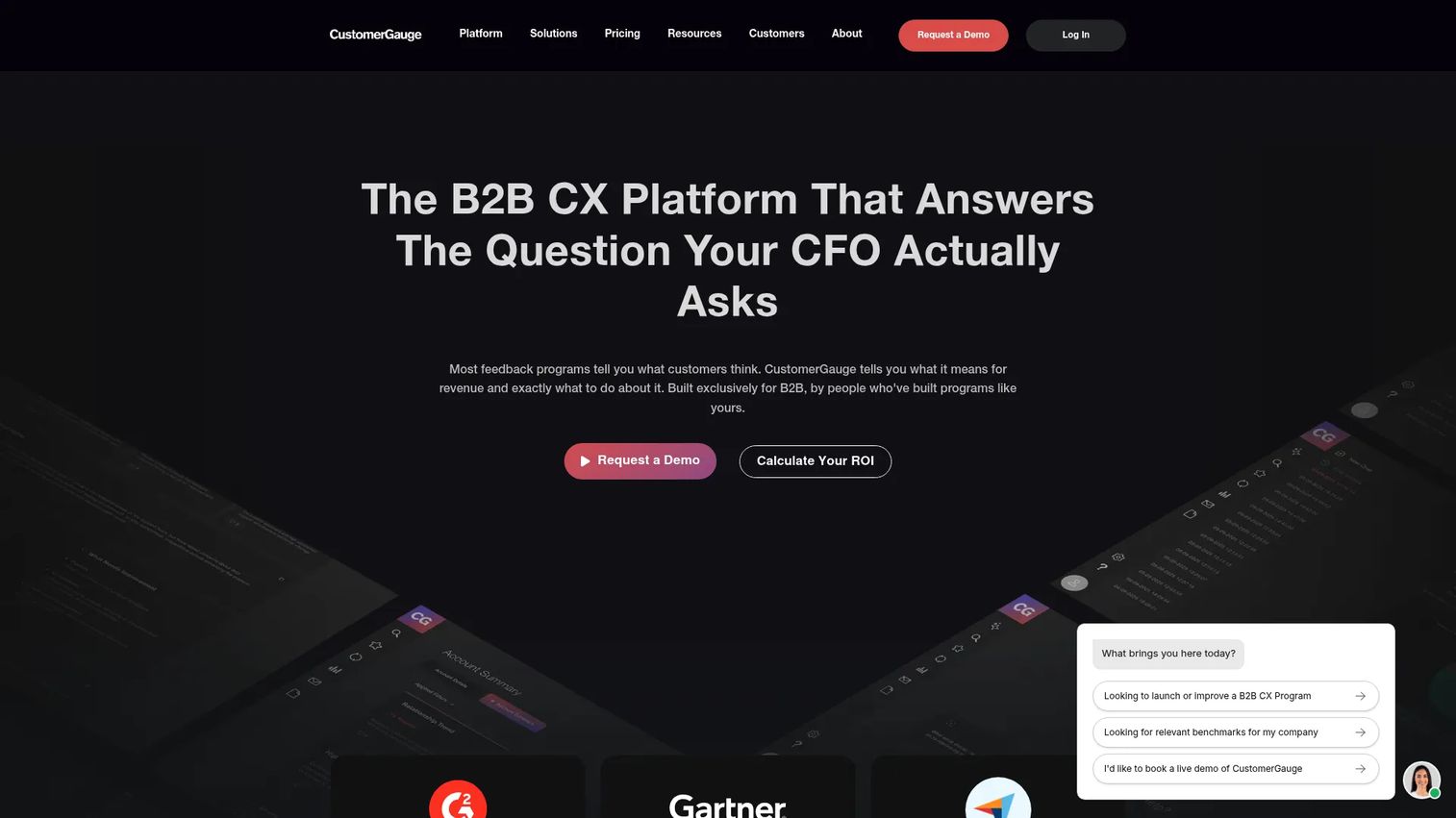
CustomerGauge is a customer experience management platform built around NPS, account feedback, and revenue-linked loyalty. It stands out for tying feedback directly to accounts and dollars, so you see which at-risk accounts need follow-up before they churn. For B2B teams, that account-centric view is the difference between a survey score and a retention signal.
The platform carries the closed loop through capture, routing, and follow-up. A detractor score does not just land in a report. It surfaces the account, its revenue, and the owner who needs to act.
Best for: B2B teams that want account-level NPS and revenue-linked customer experience management.
Key strengths
- Unlimited surveys, users, and integrations
- Account-centric NPS and revenue-based NPS
- Dashboards and analytics for feedback and at-risk accounts
Why choose CustomerGauge: If your buyers are accounts, not individuals, revenue-based NPS answers the question leadership actually asks: which renewals are at risk, and did our follow-up save them.
CustomerGauge pricing: Pricing is request-based. CustomerGauge sets a fixed annual price based on your account base size and the modules you activate. Pilots are not free.
2. Qualtrics XM for Customer Experience
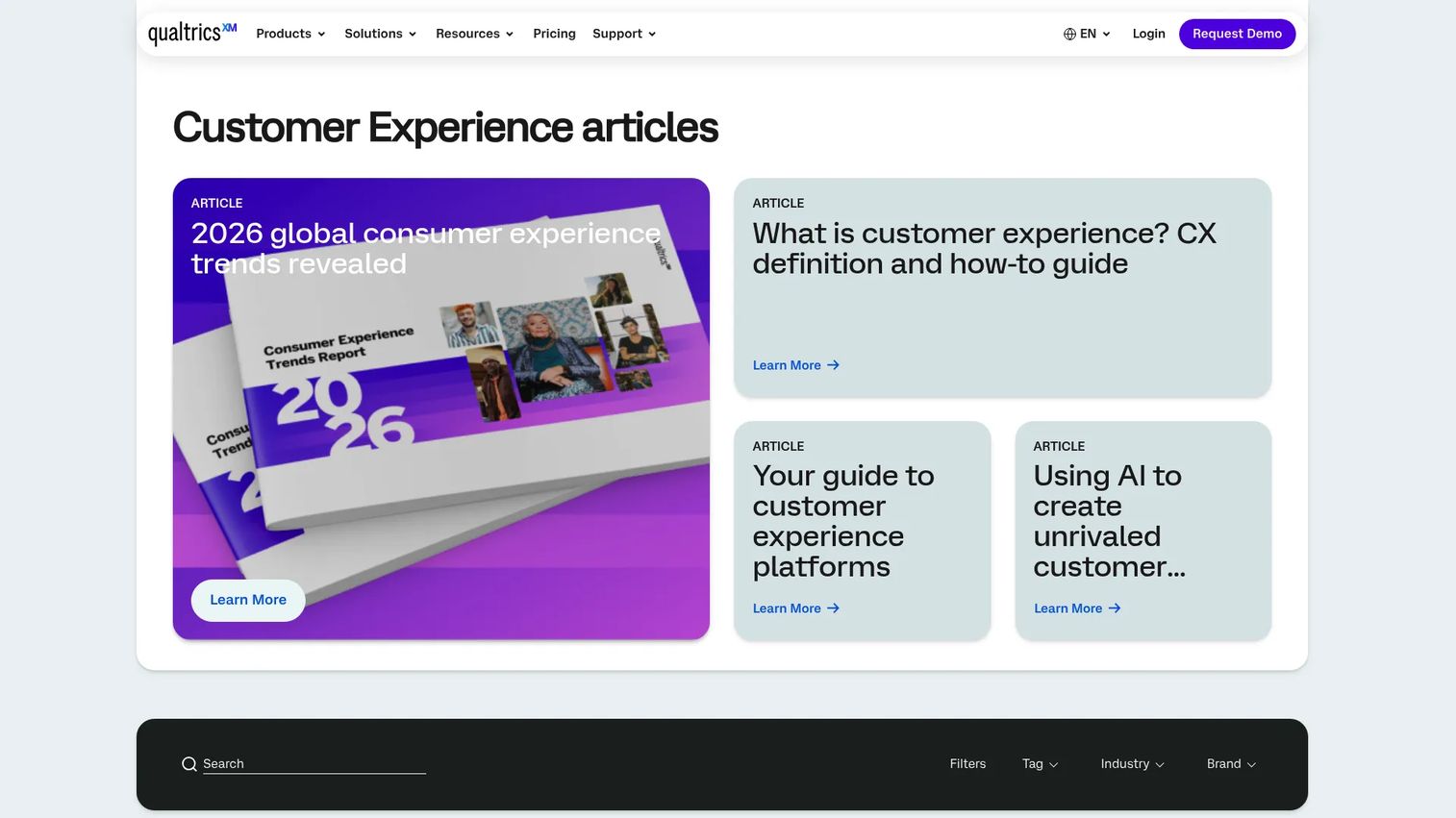
Qualtrics XM for Customer Experience is enterprise customer experience software for collecting, analyzing, and acting on feedback across channels. It captures voice of the customer across digital, voice, chat, and social, then routes signals into case and response workflows. For large organizations, the appeal is one platform that unifies feedback and signals rather than five disconnected tools.
Its case-handling and root cause analysis are the strengths that matter for closing the loop. Feedback becomes a case, gets an owner, and ties into CRM and contact center systems.
Best for: Large organizations needing scalable, AI-assisted CX programs across multiple channels.
Key strengths
- Voice of Customer across digital, voice, chat, and social
- Omnichannel experience management with unified feedback and signal views
- Digital Experience Analytics with session replay, heatmaps, and funnel analytics
Why choose Qualtrics XM: When feedback arrives from a dozen channels and needs to reach the right team with context, the omnichannel routing and analytics justify the enterprise footprint.
Qualtrics XM pricing: The customer experience product is request-based, priced on interactions and product usage rather than a posted number. Qualtrics does publish self-serve research pricing separately, including a free account and a Strategic Research plan at $420/month billed annually, but the CX suite itself is quoted.
3. Gainsight
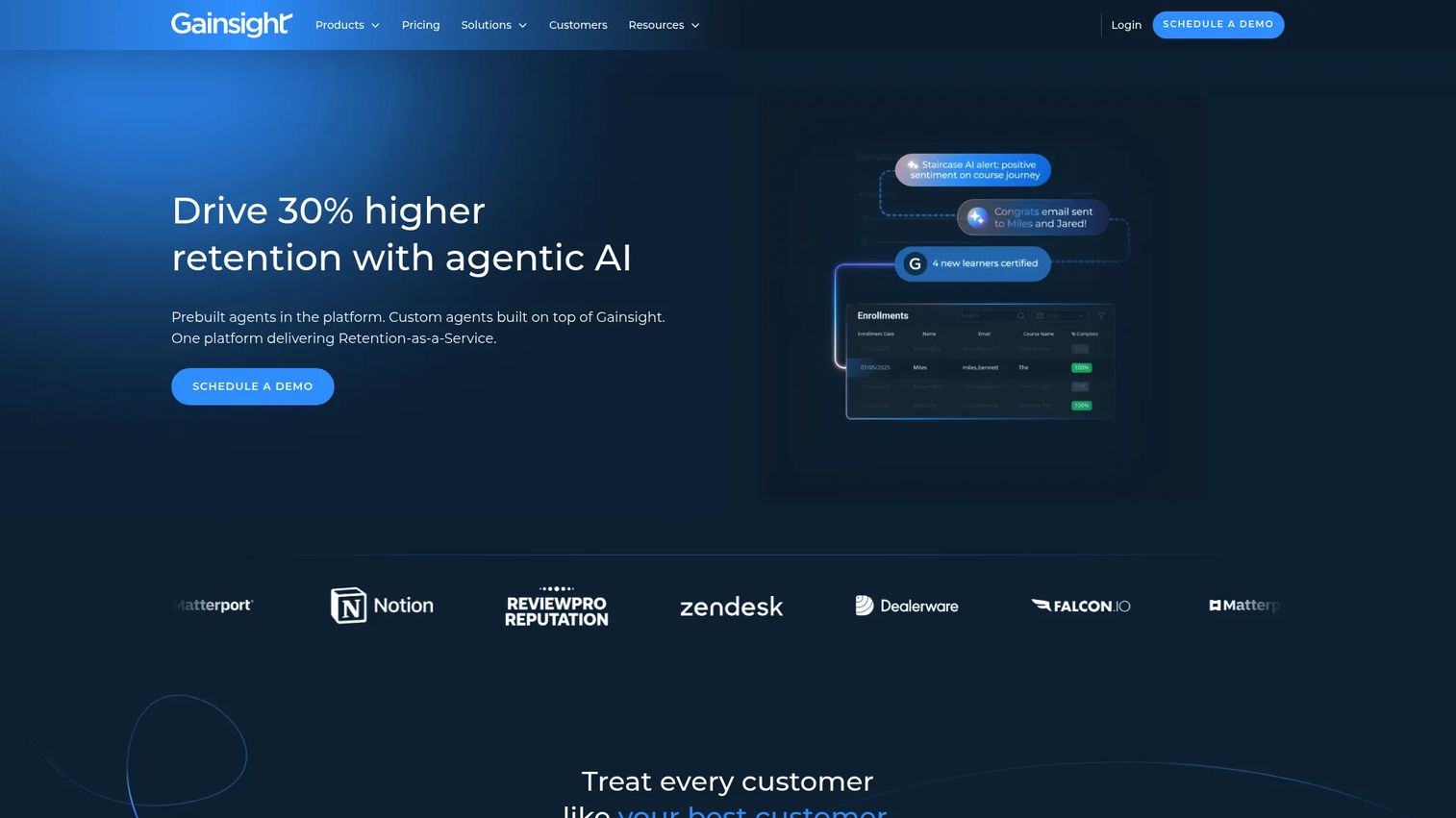
Gainsight is customer success and product experience software that ties feedback to retention, adoption, education, and community. For teams that want feedback connected to lifecycle management, it captures signals and routes them into playbooks, health scorecards, and renewal forecasting. The loop closes inside the customer success workflow rather than in a standalone survey tool.
Internal collaboration and task routing are core here. A feedback signal can trigger a playbook, assign a CSM, and update the account's health score in one motion.
Best for: Mid-market and enterprise teams needing a unified customer success, product adoption, education, and community platform.
Key strengths
- Customer success platform with customer 360, playbooks, health scorecards, and renewal forecasting
- Product experience tools with analytics, in-app guides, surveys, and feedback
- Customer education and community products for academies and self-service support
Why choose Gainsight: CS-led organizations get feedback that feeds directly into health scores and renewal motions, so closing the loop and reducing churn become the same workflow.
Gainsight pricing: Pricing is request-based. The pricing page shows Essentials and Enterprise plans for customer success, both quoted rather than publicly listed, alongside separate product experience and community product lines.
4. Medallia
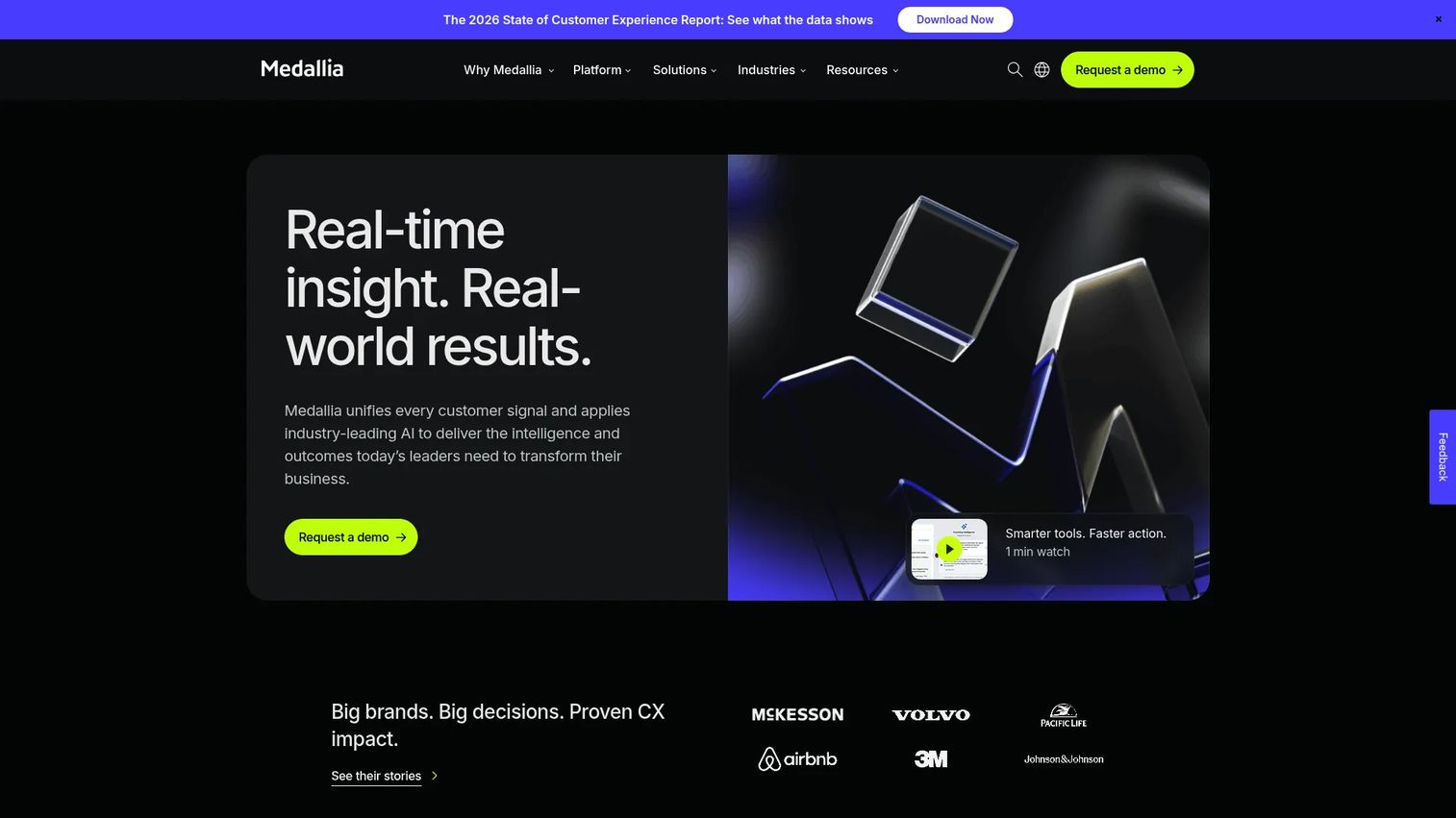
Medallia is enterprise experience management software for customer and employee feedback, analytics, and action. It captures feedback broadly across channels, applies AI-driven themes, and drives closed-loop workflows with role-based reporting. For large operations, the strength is consistent follow-up across many teams and touchpoints.
Case management and journey analytics carry the loop from signal to action. A theme surfaced by AI can route to the owning team, become a case, and feed a dashboard leadership actually watches.
Best for: Large organizations needing a unified platform for customer and employee experience programs.
Key strengths
- Comprehensive feedback capture across channels
- AI-driven analytics and themes
- Closed-loop workflows and role-based reporting
Why choose Medallia: When you need thousands of frontline and account owners following the same closed-loop process, Medallia's role-based workflows keep follow-up consistent at scale.
Medallia pricing: Pricing is not publicly listed. The pricing page describes an Experience Data Record model and directs buyers to sales for a quote.
5. InMoment
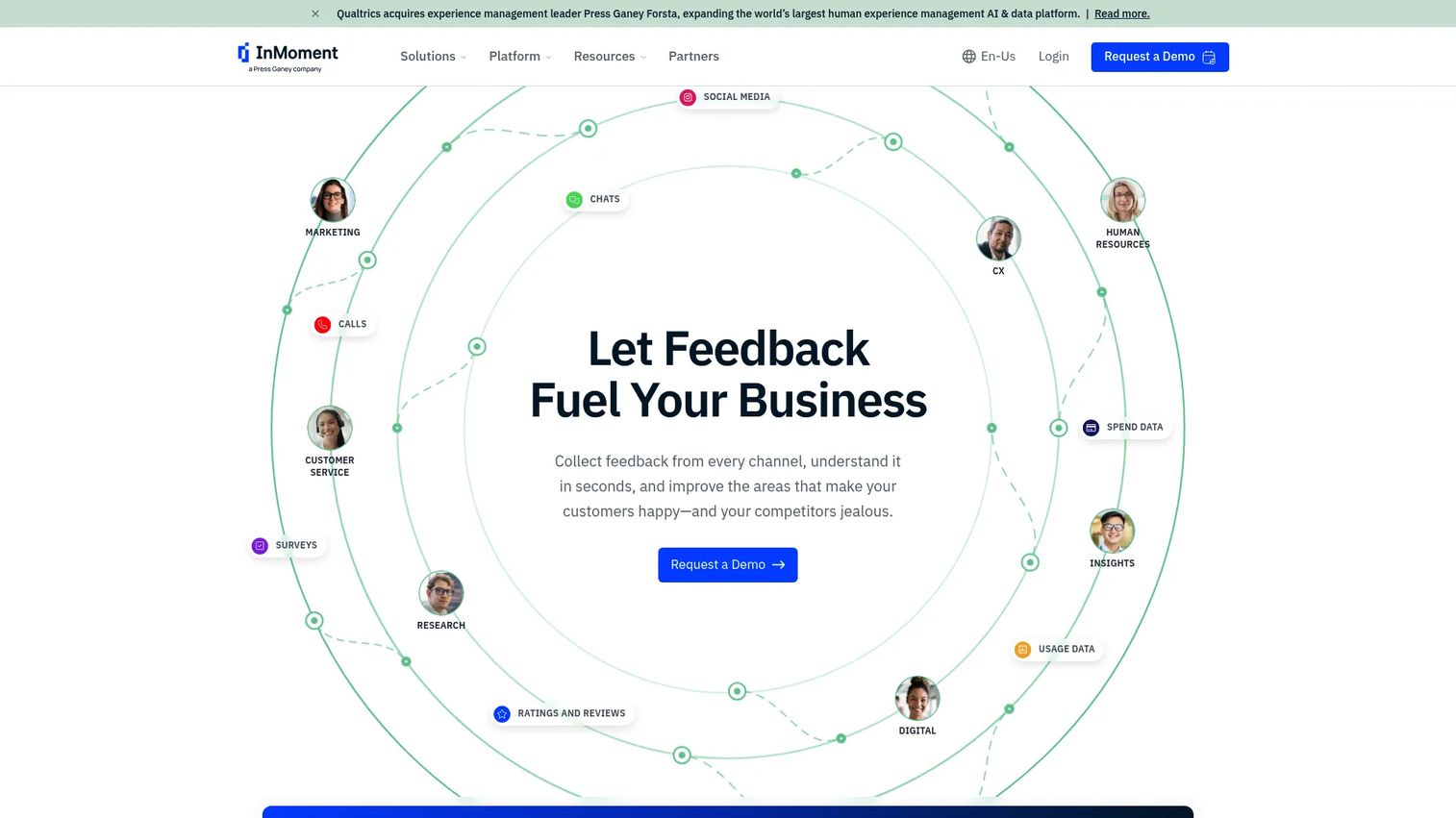
InMoment is a customer experience platform for collecting, analyzing, and acting on feedback across channels. Its center of gravity is analytics: AI-driven experience analytics, omnichannel reporting, and conversational intelligence. For teams that live in the data, InMoment turns survey, review, and conversation signals into themes and reporting that guide where to act.
The platform supports the full loop, from capture through routing and actioning, with measurement and reporting as the standout layer. If your program is judged on insight quality and reporting depth, that emphasis fits.
Best for: Enterprises running customer experience programs that need feedback collection, analytics, and closed-loop actioning.
Key strengths
- AI-driven experience analytics
- Omnichannel reporting and dashboards
- Survey, review, and conversational intelligence tools
Why choose InMoment: Analytics-heavy CX teams get depth in themes, reporting, and conversational intelligence, so the loop is driven by insight rather than raw response counts.
InMoment pricing: Pricing is not publicly listed. InMoment presents pricing through a sales contact and demo rather than a posted plan.
6. Perspective AI
Perspective AI frames the closed loop around a clear four-stage workflow: capture, route, act, and follow up. It leans into modern capture-to-action framing, which is why it resonates in 2026 buyer research. For product and CX operations teams that want the loop laid out explicitly rather than buried in an enterprise suite, that structure is the draw.
The tool emphasizes capture depth and routing that carries feedback into follow-up. It reads as a purpose-built closed-loop workflow rather than a survey tool with actioning bolted on.
Best for: Teams that want an explicit capture-to-action workflow with AI-assisted funnels and built-in lead handling.
Key strengths
- AI-assisted funnel and capture builder
- A/B testing on capture flows
- CRM, metrics, and email built in
Why choose Perspective AI: If you want the four stages of the loop visible and structured rather than assumed, Perspective AI's capture-to-action framing keeps the workflow front and center.
Perspective AI pricing: Plans start at 47€/month on the Base tier, billed annually, with Grow at 147€/month, Expand at 297€/month, and Scale at 969€/month. A 14-day free trial is available.
7. Zendesk
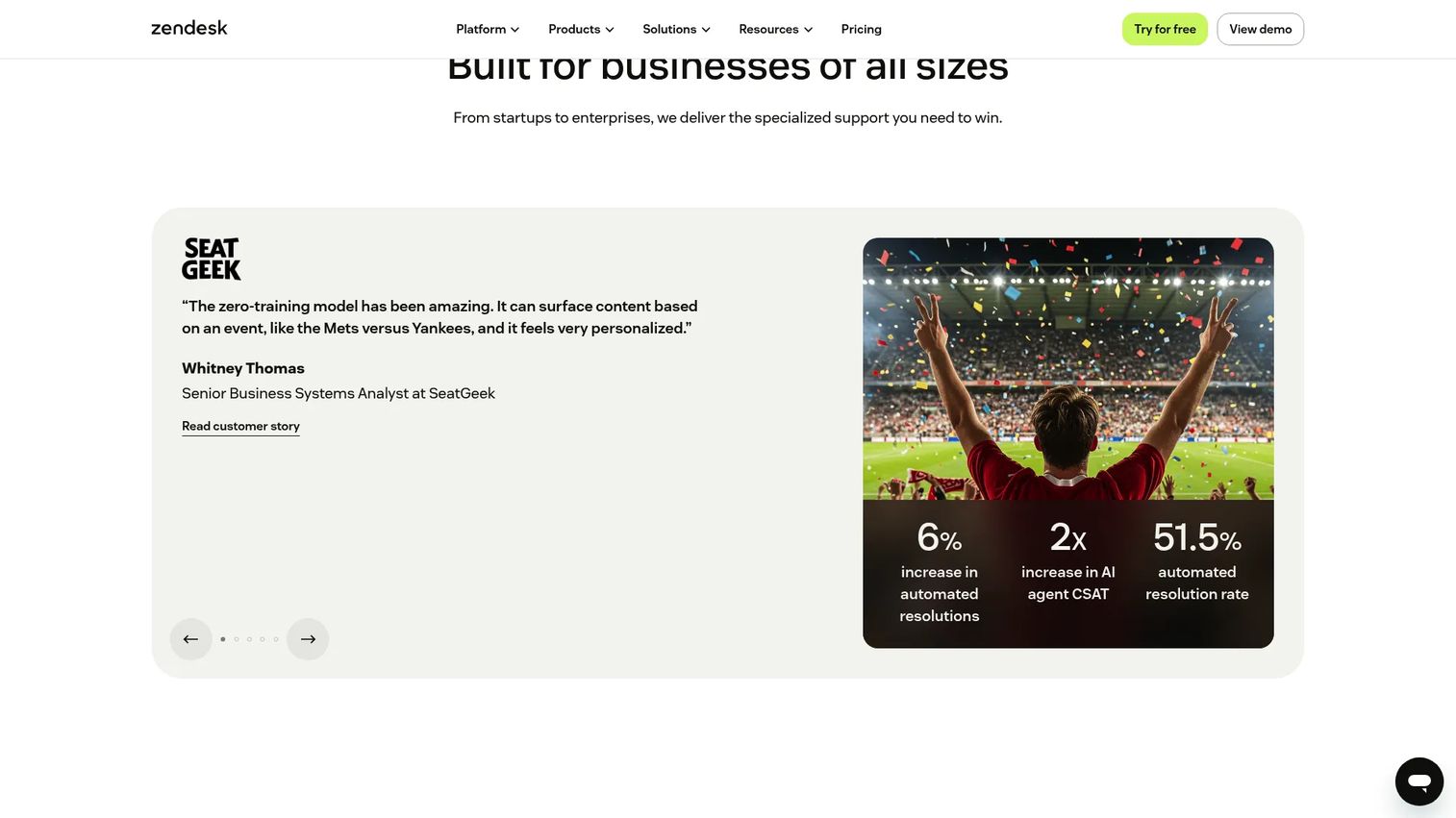
Zendesk is customer service software for support, messaging, and help desk workflows. It fits the closed loop from the support side rather than as a full voice of the customer suite. Feedback from support channels routes into a ticketing workflow your agents already use, with case history and team visibility built in.
For support teams, the pull is a survey to case workflow that lives where the work already happens. A CSAT signal becomes a ticket, follows an owner, and keeps its full history for the next agent.
Best for: Teams needing a multichannel customer service platform with ticketing and automation.
Key strengths
- Ticketing system with case history
- Messaging across web, mobile, and social media
- Email, voice, SMS, and live chat support
Why choose Zendesk: Support teams that want feedback follow-up inside the same queue as their tickets get case management without adopting a separate CX platform.
Zendesk pricing: Suite Team starts at $55 per agent per month billed yearly, and Suite Professional at $115 per agent per month billed yearly. Suite Enterprise is sales-only. Add-ons like Copilot and the Workforce Engagement Bundle start at $50 per agent per month billed yearly.
8. AskNicely
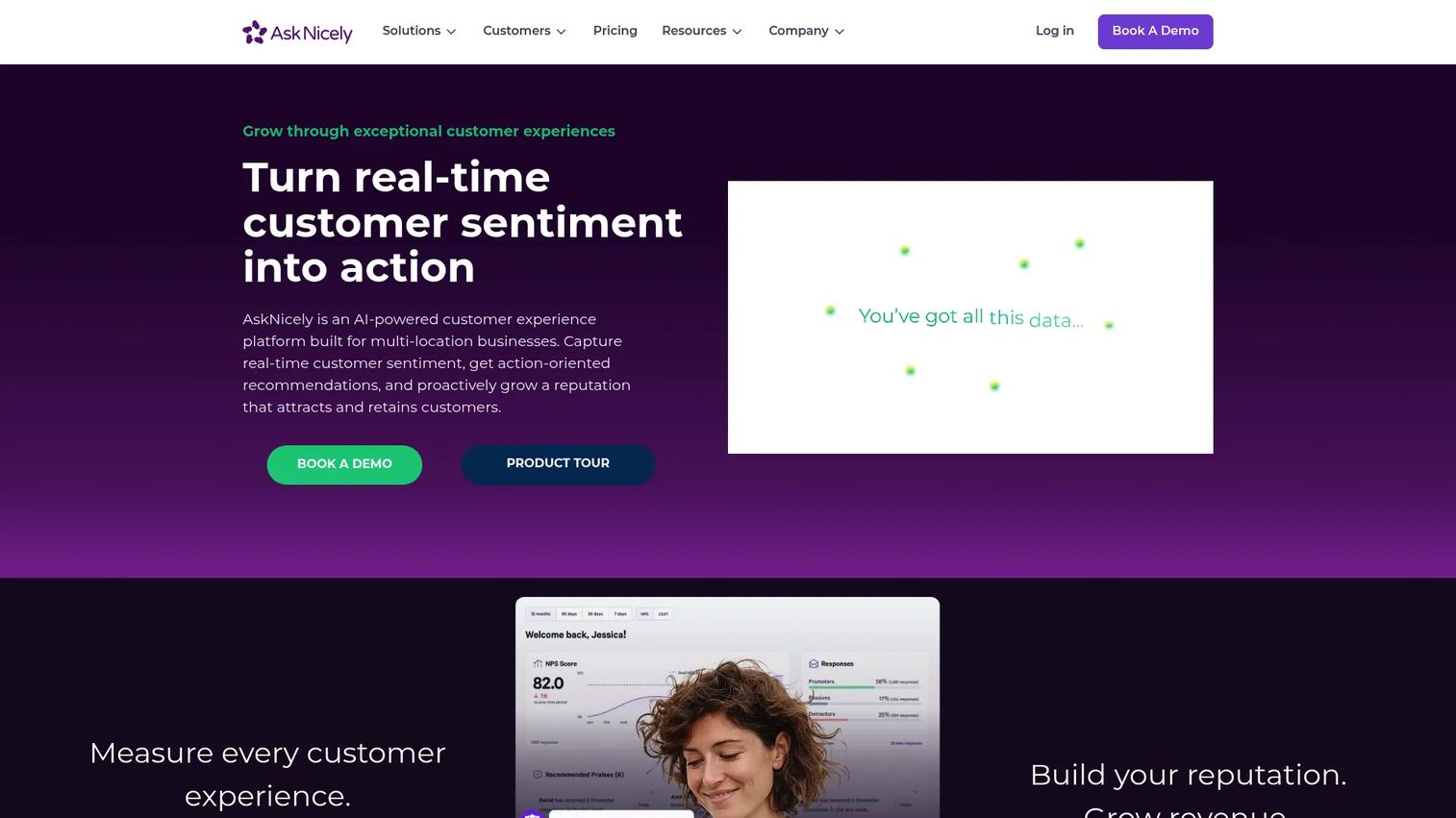
AskNicely is an AI-powered customer experience platform built for multi-location service businesses. It centers on NPS and CSAT collection paired with fast, action-oriented follow-up. For teams that want simple workflow design and quick actioning rather than a heavy enterprise deployment, it keeps closing the loop lightweight.
Automated follow-up is the standout. A score triggers a recommended action and, where relevant, a reputation or review workflow, so frontline teams act on feedback without a complex setup.
Best for: Multi-location service businesses that want NPS/CSAT feedback, action workflows, and reputation management.
Key strengths
- AI-powered surveys and sentiment analysis
- Real-time feedback and action-oriented recommendations
- Integrations, workflows, and reputation management
Why choose AskNicely: Smaller and service-led teams get fast NPS follow-up and simple actioning, so the loop closes without the overhead of a full CX suite.
AskNicely pricing: AskNicely offers three plans: Learn, Grow, and Transform, all billed annually. Learn starts at 500 responses and scales with response volume. Grow and Transform are quoted by sales. There is no free trial.
Considerations
The right tool depends less on feature counts and more on where your loop breaks today. Run each candidate through this checklist before you buy.
Feedback capture breadth
Verify which channels the platform actually captures: surveys, in-app, support tickets, reviews, and social. A tool that only ingests survey responses will miss the feedback your customers leave everywhere else. Map its capture sources against where your customers actually talk.
Routing and case management
Confirm how feedback becomes a case and reaches an owner. Look for feedback routing rules, alerts, and case management that assign tasks automatically. If routing is manual, the loop will stall the moment volume rises.
Follow-up automation
Check how the platform triggers follow-up back to the customer. NPS follow-up and response workflows should fire without someone remembering to send them. Manual follow-up is where most programs quietly break.
Integrations and handoff quality
Verify the CRM and support integrations you depend on, and how cleanly feedback hands off between teams. Feedback that cannot flow into Salesforce, HubSpot, or your ticketing system creates a new silo instead of closing one.
Reporting and proof of impact
Confirm the platform can tie closed cases to retention, churn reduction, and NPS movement. If it cannot show that follow-up changed an outcome, you cannot prove the program works. Ask for the specific dashboards that connect action to results.
Conclusion
The best closed loop feedback software depends on where your loop needs to close. For account-level NPS follow-up tied to revenue, CustomerGauge fits B2B teams cleanly. For enterprise omnichannel closed loop customer experience, Qualtrics XM and Medallia carry capture, routing, and case management at scale. CS-led organizations get lifecycle-connected feedback from Gainsight, while analytics-heavy programs lean toward InMoment.
If your feedback lives in support, Zendesk keeps follow-up inside the ticket queue. For fast, simple NPS action, AskNicely suits smaller and service-led teams. And Perspective AI is worth a look when you want the capture, route, act, follow-up workflow made explicit.
Start with the criteria, not the logo. Pick the tool that captures your channels, routes to real owners, automates follow-up, and proves the loop closed. Then run a short pilot on your worst-performing feedback segment before you commit.
FAQs
It is software that captures customer feedback, routes it to an owner, drives action, follows up with the customer, and measures whether the loop closed. The point is follow-through, not collection. A survey tool tells you the score; closed loop software makes sure someone acts on it and the customer hears back.
A survey tool collects responses and stops. Closed loop feedback software carries each response through routing, case management, follow-up, and measurement. The survey is one step. Closing the loop is the other four.
Feedback routing, case management, follow-up automation, integrations, and proof-of-impact reporting. Capture breadth matters too, but routing and follow-up are where programs usually stall. If a tool cannot assign an owner and trigger follow-up automatically, the loop will not close at volume.
Yes, when it drives fast action. CustomerGauge research from 2023 found that closing the loop within 48 hours is associated with a 12% increase in retention and a 6-point NPS lift. The reduction comes from acting on detractors before they leave, not from collecting more responses.
It depends on where feedback enters. Customer success often owns account-level NPS follow-up, support owns ticket-linked feedback, and product owns feature requests. The strongest programs share one workflow across CX, support, product, and revenue so nothing falls between teams.
Track the percentage of feedback that reached an owner, the time to first follow-up, and the share of cases resolved with a customer response. Then tie those to retention and NPS movement. If you cannot connect a closed case to an outcome, you are measuring activity, not impact.
Inner loop feedback closes with the individual customer: you respond to their specific issue and follow up directly. Outer loop feedback aggregates signals to fix root causes across the product or process. Strong programs run both, so one detractor gets a call while recurring themes drive systemic change.