You just spent three hours reconciling proof gallons against your last TTB report. The numbers don't match. Your inventory count lives in one spreadsheet, your production logs in another, and your excise tax figures somewhere in a notebook by the still. Sound familiar?
This is the daily reality for most distilleries running on manual processes. Every barrel filled, every batch distilled, and every gallon moved has to be tracked, and then re-tracked for compliance. The distillery management software market was valued at $0.4 billion in 2025 and is projected to reach $0.85 billion by 2034 at an 8.5% CAGR, according to MarketIntelo (2025). That growth reflects a simple truth: distilleries are done fighting their own paperwork.
The problem is rarely a lack of data. It is that the data lives in disconnected systems that do not talk to each other. When your production numbers, inventory counts, and compliance reports pull from different sources, reconciliation eats hours you should be spending on the product. Small and medium distilleries account for 64.1% of global distillery management software spend, per MarketIntelo (2025), which tells you this is not just an enterprise concern. Craft operators feel the reporting burden most acutely because they have the fewest people to absorb it.
So how do you choose a system that actually reduces the drag instead of adding another login to your day? That is what this guide is built to answer.
What's inside
This guide compares seven distillery software tools built for production tracking, inventory management, compliance reporting, and financial visibility. It is written for distillery owners, operations leads, finance managers, and production managers who already know they need software and are now comparing options.
We selected and ranked tools based on four criteria: workflow breadth (how much of production, inventory, and finance a tool covers), compliance depth (TTB, excise, and regulatory support), inventory visibility (real-time traceability across the operation), and fit (whether the tool suits a craft distillery, a scaling operation, or an enterprise). Pricing for most of these tools is quote-based, so we note that where it applies.
TL;DR
- Best broad distillery-specific platform: Distillery Software, for operators who want production, inventory, and compliance in one purpose-built system.
- Best for centralized compliance and onboarding: DISTILL x 5®, for craft distilleries that want TTB reporting and operations support with a long-term partner.
- Best affordable compliance-first option: Whiskey Systems®, for teams that need production tracking, TTB reports, and excise tax tools without heavy overhead.
- Best AI-driven beverage ERP: Crafted ERP, for producers who want end-to-end operations control and real-time analytics.
- Best enterprise ERP baseline: NetSuite, for larger or multi-entity operations that need finance, inventory, and reporting unified.
- Best for a different "distillery software" job: Condor, for public-sector investigation and intelligence teams, a separate meaning of the phrase.
What is distillery software?
Distillery software is a category of tools that manage the operational, inventory, compliance, and financial workflows involved in producing distilled spirits, from raw materials through fermentation, distillation, aging, and finished goods.
At its core, a distillery software platform helps you replace spreadsheets and paper logs with a single system of record. The strongest tools connect what happens on the production floor to what your finance team and regulators need to see.
Core capabilities usually include:
- Production planning and tracking: Managing batches, mash bills, fermentation, distillation runs, and proof gallon calculations.
- Barrel management and batch tracking: Following each barrel and batch through aging, blending, and bottling with full traceability.
- Inventory management: Tracking raw materials, work in progress, and finished goods in real time.
- Compliance and TTB reporting software: Generating production, storage, and processing reports plus excise tax filings.
- Real-time dashboards: Surfacing production, inventory, and financial data so decisions do not wait on manual reconciliation.
It helps to separate three overlapping terms. Distillery management software focuses on day-to-day production, inventory, and compliance for a distillery. A distillery ERP goes wider, adding finance, purchasing, order management, and often manufacturing planning across the whole business. Specialized distillery compliance software zeroes in on regulatory reporting, TTB filings, and excise tax, and is often bundled inside the first two. Cloud-based deployment now dominates the category, making up 58.2% of revenue in 2025 per MarketIntelo, which is why most tools here run in the browser.
When to use distillery software
Not every distillery needs to buy software this quarter. These three signals tell you it is time.
When manual reporting is slowing the team down
If someone on your team spends a full day each month assembling TTB reports from spreadsheets, that is a system problem, not an effort problem. Distillery production software pulls report data directly from logged production and inventory activity. Instead of rebuilding the numbers, you review them. That single shift can hand a full workday back to your operations lead every reporting cycle.
When inventory and production data live in separate systems
When your proof gallons on the floor do not match your inventory records, reconciliation becomes a recurring tax. Integrated distillery inventory management software ties production activity to inventory counts automatically. A distillation run that yields new-make spirit updates inventory the moment it is logged. Over 80% of beverage companies adopting digital production tools report improved operational efficiency from sensors, analytics, and dashboards, per ZipDo cited by Catalyst ERP (2024). Integrated visibility is where that efficiency comes from.
When compliance mistakes are getting expensive
TTB errors, late excise tax filings, and inventory discrepancies carry real financial risk. Distillery compliance software reduces that exposure by generating filings from the same data you already track and flagging discrepancies before they reach a regulator. When one missed filing can trigger penalties, automated compliance reporting pays for itself quickly.
Comparison table
The table below ranks all seven tools by relevance to distillery operations. Read the Intent column to match a tool to your primary job, whether that is a broad distillery-specific platform, a compliance-first system, or full ERP breadth. Most vendors here use quote-based pricing, so treat pricing as a signal of sales motion rather than a fixed sticker. Verified public G2 ratings were not available for these products at the time of writing, so that column is noted accordingly.
| # | Product | Intent | Key differentiation | Pricing | G2 rating |
|---|---|---|---|---|---|
| 1 | Distillery Software | Broad distillery-specific platform | Purpose-built production, inventory, and compliance | Quote-based | Not available |
| 2 | DISTILL x 5® | Centralized compliance and operations | TTB reporting with onboarding and partnership support | Quote-based | Not available |
| 3 | Whiskey Systems® | Compliance-first production system | Production, inventory, and TTB/excise tools | Subscription | Not available |
| 4 | Crafted ERP | AI-driven beverage ERP | End-to-end ERP with real-time insights | Proposal-based | Not available |
| 5 | NetSuite | Enterprise ERP baseline | Unified finance, inventory, and operations | Custom | Not available |
| 6 | Condor | Investigation and intelligence management | Modular case and compliance workflows | Quote-based | Not available |
| 7 | Doozy Solutions | NetSuite-based manufacturing tooling | SuiteApps for batch manufacturing and agriculture | Custom | Not available |
1. Distillery Software
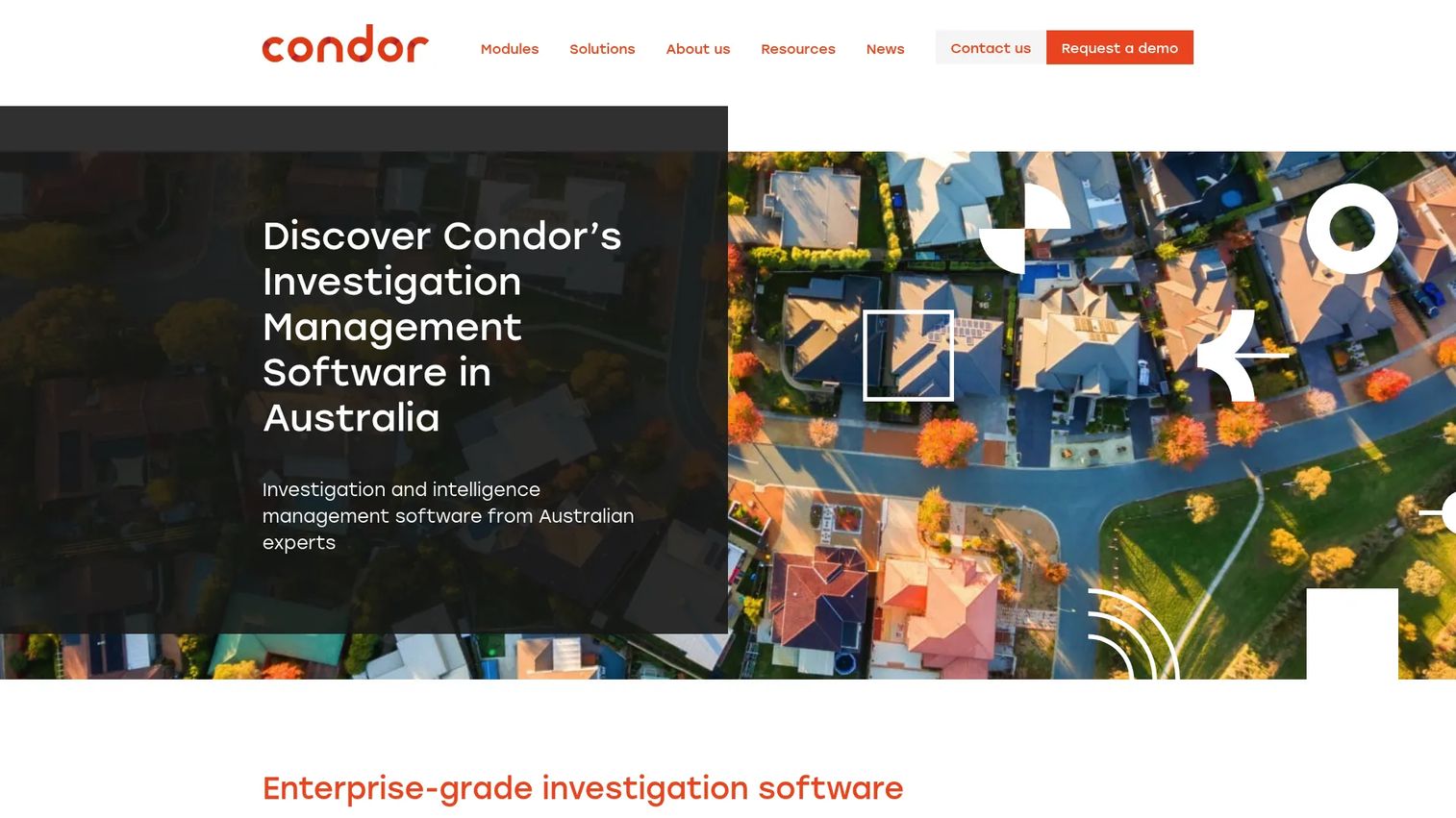
Distillery Software leads this list as the broad, category-exact option for operators who want a purpose-built system rather than a general tool bent to fit a distillery. In practice, this category of platform aims to cover the full arc of distillery work: production planning, batch and barrel tracking, inventory control, and compliance reporting in one place. For a distillery evaluating software, that breadth is the whole point. You are not stitching together a production log, an inventory sheet, and a compliance filing tool. You are running them from a single source of truth.
Where this fits is the operator who wants distillery management software that speaks the language of their operation out of the box. Proof gallons, mash bills, aging inventory, and TTB categories are native concepts, not custom fields you configure into a generic system. That saves setup time and reduces the chance of a mismatch between what you track and what you file.
Best for: Distilleries that want a broad, distillery-specific platform covering production, inventory, and compliance without assembling separate tools.
Key strengths
- Production and inventory in one system: Batch tracking, barrel management, and inventory counts stay connected, so floor activity updates records automatically.
- Compliance-aware by design: TTB categories and proof gallon logic are built in, which keeps reporting close to the source data.
- Operator-friendly framing: The system is organized around how a distillery actually runs, reducing the gap between production reality and recorded data.
Why choose Distillery Software: If your main pain is fragmentation, a broad distillery-specific platform is the cleanest answer. It fits operators who want one system that understands spirits production rather than a horizontal tool they have to teach. The trade-off is that a focused platform may not stretch as far into general business finance as a full ERP, so weigh that against how much accounting breadth you need.
Distillery Software pricing: Public pricing is not displayed on the brand site, which directs visitors to request a demo. Pricing is quote-based, so plan to have a short discovery conversation to get a figure that matches your operation's size and module needs.
2. DISTILL x 5®
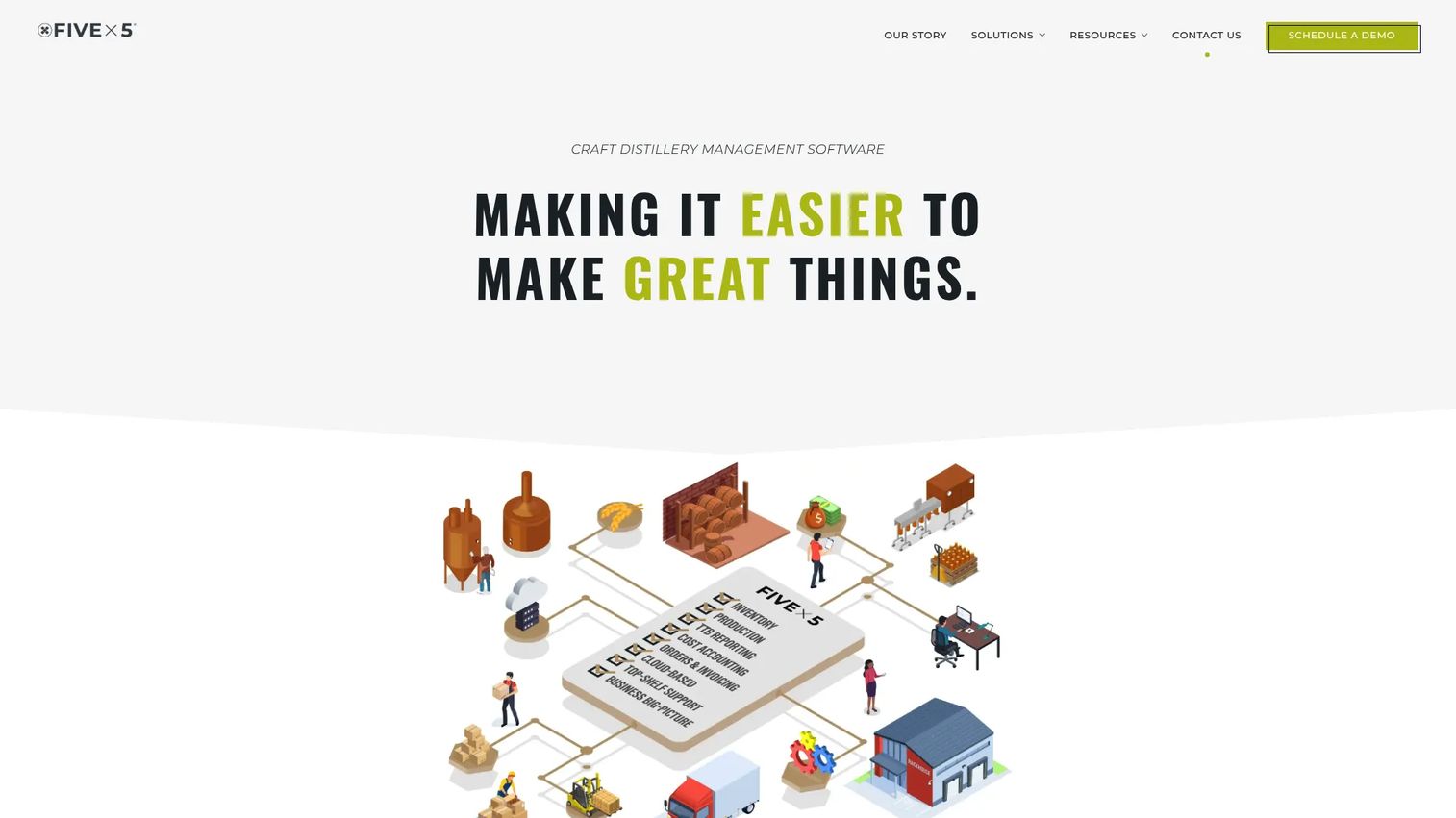
DISTILL x 5® is distillery process management software built specifically for craft distilleries, with a strong emphasis on compliance and centralized operations. It brings operations monitoring, batch traceability, inventory management, and TTB reporting under one roof. The pitch is not just software but a working relationship: onboarding, system setup, and ongoing support to get TTB report submission running smoothly.
That partnership angle matters for craft operators who do not have a dedicated systems administrator. Getting a distillery software platform configured correctly, mapping your production stages, inventory categories, and compliance requirements, is where many implementations stall. DISTILL x 5® frames setup and TTB report support as part of the offering, which lowers the risk for a small team taking on new software.
Best for: Craft distilleries that want production tracking, compliance, and reporting in one system, backed by hands-on onboarding.
Key strengths
- TTB reporting and compliance: Built to support TTB report submission, keeping regulatory filings tied to logged production and inventory data.
- Operations monitoring and batch traceability: Tracks batches through production with traceability that supports both quality and compliance.
- Centralized inventory management: Keeps raw materials, work in progress, and finished goods visible in one system.
Why choose DISTILL x 5®: This is a strong fit if you value a long-term partner over a self-serve tool. Craft distilleries that want help standing up TTB workflows and centralizing operations, rather than configuring everything alone, get the most from it. If you prefer a fully self-directed setup, weigh how much of the value is tied to the guided onboarding.
DISTILL x 5® pricing: Pricing is quote-based. The site directs you to get in touch for a tailored quote rather than publishing a public price, so expect pricing scoped to your distillery's size and module requirements.
3. Whiskey Systems®

Whiskey Systems® is distillery operations software focused on production, inventory, compliance, and reporting, with a reputation for being accessible to smaller and compliance-minded teams. It tracks raw materials, fermentation, distillation, barrels, tanks, and finished goods, then feeds that activity into TTB production, storage, and processing reports plus excise tax tools. For a distillery whose top priority is staying compliant without overbuilding, this is a focused fit.
The tool also handles adjacent operational needs that craft distilleries actually have, including timeclock functionality, QuickBooks export, and distillery tour bookings. That practical range means whiskey production software like this can cover more than just the still, without forcing you into a heavy enterprise system.
Best for: Distilleries that need compliance-focused production and inventory management in a straightforward, operational system.
Key strengths
- Full production tracking: Follows raw materials, fermentation, distillation, barrel, tank, and finished goods stages in one flow.
- TTB and excise tax tools: Generates TTB production, storage, and processing reports and supports excise tax reporting from tracked data.
- Practical operational extras: Timeclock, QuickBooks export, and tour bookings extend the system beyond core production.
Why choose Whiskey Systems®: Choose it when you want a narrower, compliance-first operating system rather than sprawling ERP breadth. It fits teams that need reliable TTB reporting software and inventory traceability without a long implementation. If your business needs deep financial planning or multi-entity accounting, an ERP will reach further.
Whiskey Systems® pricing: The terms page indicates service runs as a month-to-month or yearly subscription and references a fee schedule, but a public numeric price is not displayed on the brand site. Expect a subscription model scoped to your usage; confirm current figures directly with the vendor.
4. Crafted ERP
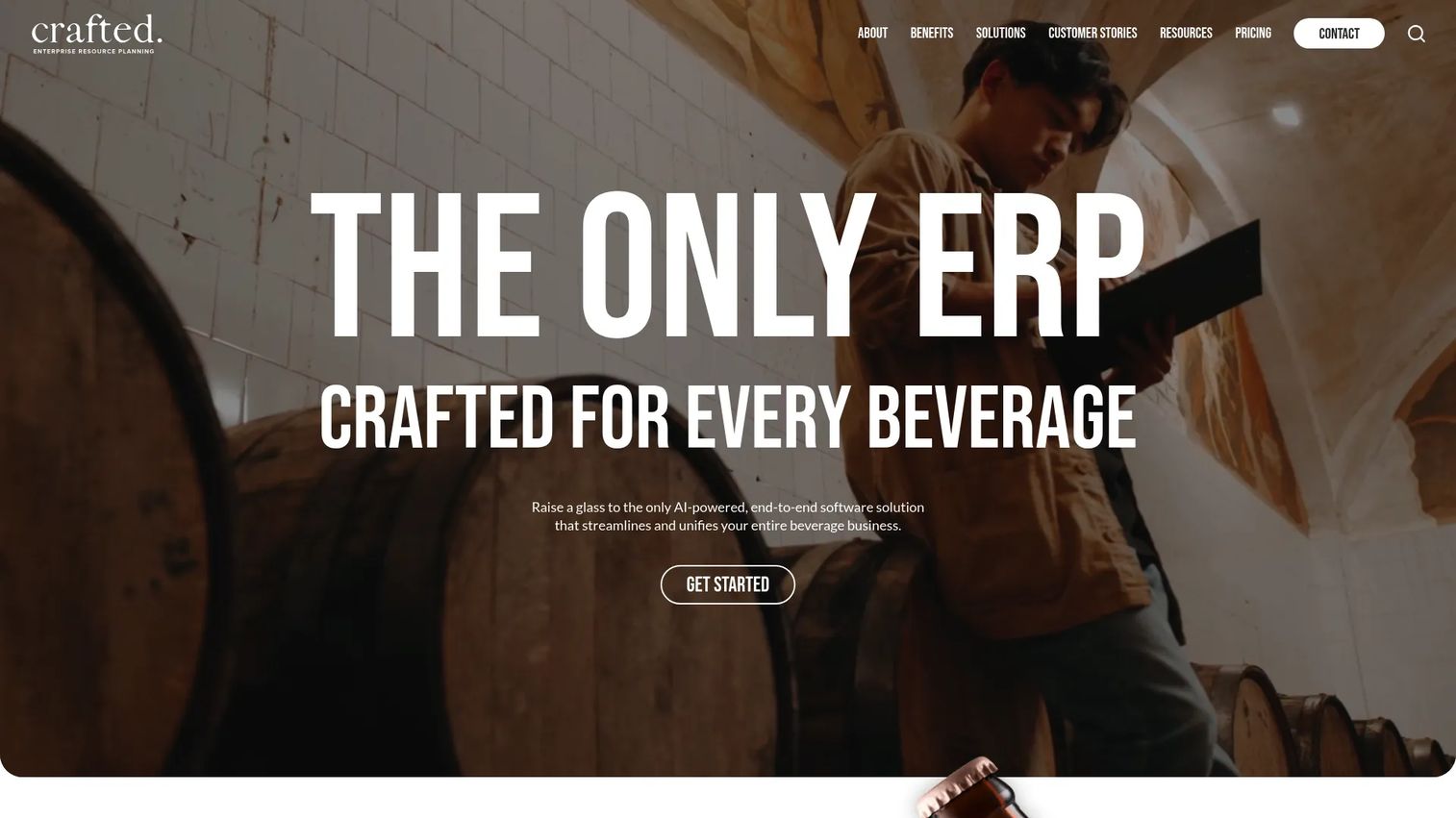
Crafted ERP is an AI-powered, end-to-end ERP built for beverage makers, including distilleries. Where the more focused tools on this list concentrate on production and compliance, Crafted ERP aims for full operations control: production and inventory management, automated administrative and regulatory tasks, and real-time insights across the business. It is the choice for a distillery that has outgrown point solutions and wants one system spanning the floor and the finance office.
The distillery ERP angle matters as you scale. When production, inventory, purchasing, and reporting all live in one platform, you get 360-degree visibility instead of a patchwork of exports. Crafted ERP emphasizes AI-powered real-time insights, which for an operator means surfacing what is happening in production and inventory without waiting on manual rollups.
Best for: Beverage producers and scaling distilleries that need an industry-specific ERP with end-to-end visibility and real-time analytics.
Key strengths
- 360-degree visibility with real-time insights: AI-powered dashboards surface production and inventory data across the operation.
- Production and inventory management: Covers the operational core alongside broader ERP functions.
- Automated administrative and regulatory tasks: Reduces the manual load of compliance and back-office work.
Why choose Crafted ERP: Pick it when you want ERP breadth built for beverage, not a generic platform you have to adapt. It fits distilleries ready to unify operations and finance and willing to invest in a proper ERP implementation. If your needs are limited to production tracking and TTB reporting today, a more focused tool may get you there faster.
Crafted ERP pricing: Pricing is proposal-based. The pricing page states cost depends on the core platform, number of users, and optional modules, plus a one-time implementation fee. Expect a discovery and demo step before you receive a quote.
5. NetSuite
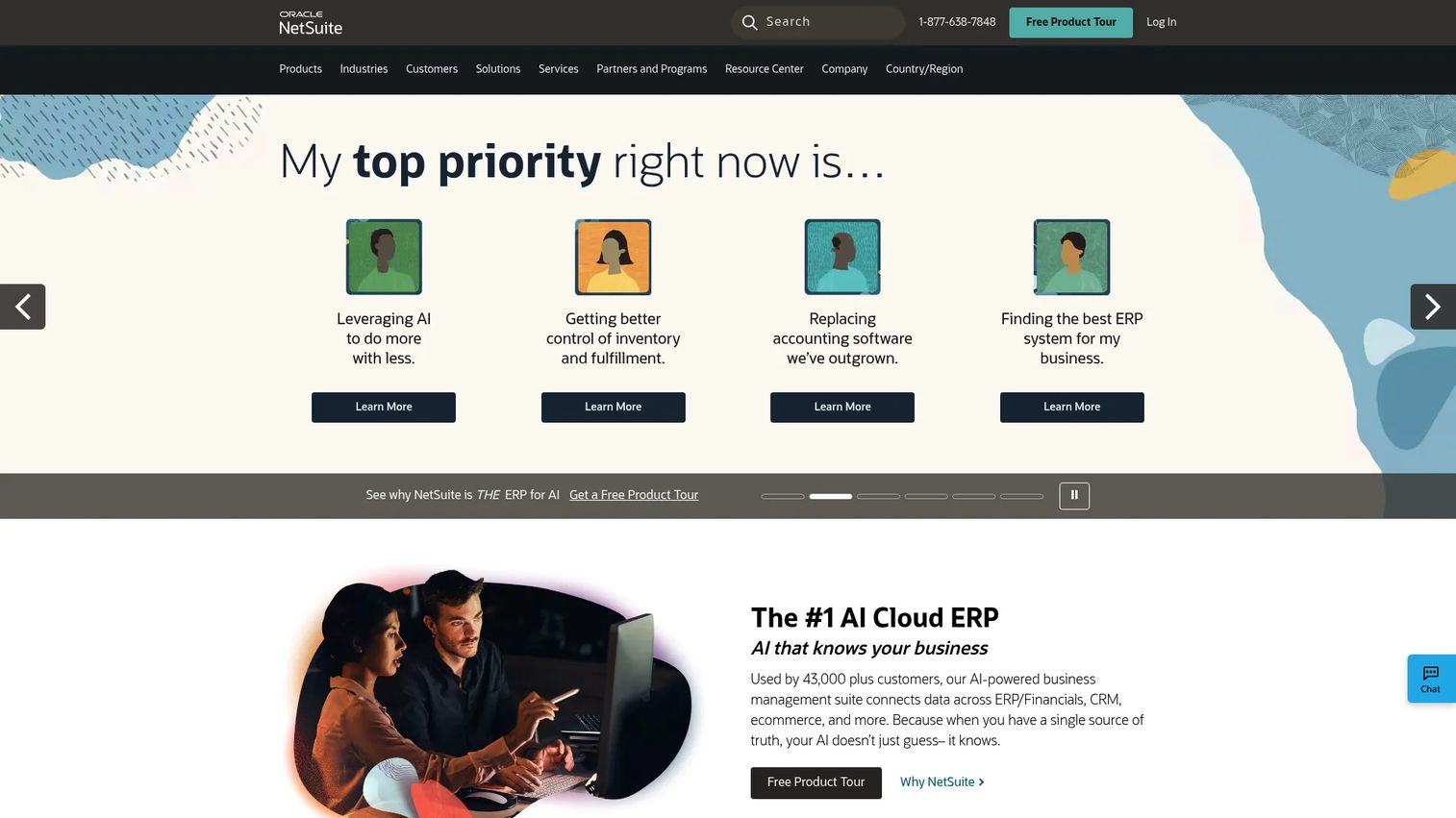
NetSuite is a cloud-based ERP and business management suite built for mid-market to enterprise companies. It is not distillery-specific, which is exactly why it belongs on this list as the enterprise baseline. For a larger or multi-entity distillery operation, a distillery ERP layered on a platform like NetSuite provides the financial and operational backbone that a purpose-built craft tool may not reach.
NetSuite covers financial management, SuiteBilling subscription management, and planning and budgeting, with inventory and operations available through its broader suite and industry partners. Distilleries usually reach for NetSuite when finance complexity, multi-location operations, or reporting demands exceed what a focused tool handles. Beverage-specific capability often comes through partners and add-ons built on top of the platform.
Best for: Mid-market to enterprise distilleries that need a unified ERP spanning finance, inventory, operations, and reporting.
Key strengths
- Financial management depth: Handles complex accounting, multi-entity structures, and consolidated reporting.
- SuiteBilling and subscription management: Supports varied billing and revenue models across the business.
- Planning and budgeting: Brings forecasting and budgeting into the same platform as operations.
Why choose NetSuite: Choose NetSuite when your operation has outgrown distillery-specific tools and needs enterprise-grade finance and operations in one place. It fits companies with multiple entities, locations, or complex reporting. Distillery-specific production and compliance features typically come from a beverage add-on or partner, so factor that into your evaluation and budget.
NetSuite pricing: NetSuite does not publish a public pricing page with displayed figures; pricing is custom and quoted after a sales conversation. Plan for platform, user, and module costs plus implementation, and confirm current terms directly with NetSuite.
6. Condor
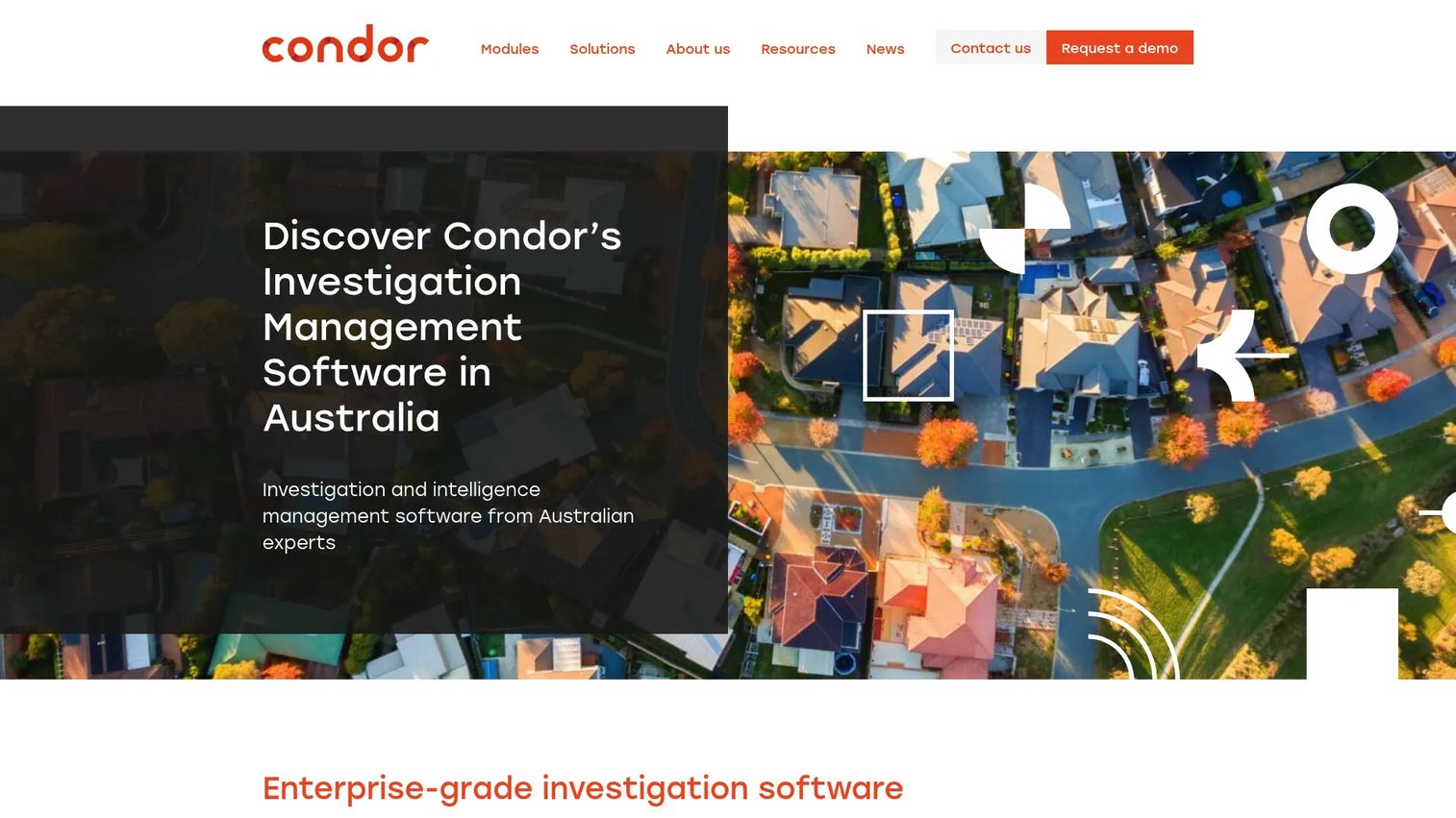
Condor is worth including because it clarifies an important point about the phrase "distillery software." Condor is enterprise investigation and intelligence management software for government, law enforcement, and regulatory teams, built by the company behind the Distillery Software brand name. It is a different meaning of the term entirely, and readers whose use case is not beverage production may actually be looking for this.
For beverage distilleries, Condor is not the tool. But if you arrived here searching for case management, investigation workflows, or intelligence handling, Condor is the relevant option. It offers modular investigation and intelligence management, case, evidence, and brief production workflows, and secure role-based access with audit and chain-of-custody controls.
Best for: Public-sector investigation and intelligence teams needing a secure, configurable case management platform.
Key strengths
- Modular investigation and intelligence management: Configurable modules match different investigative and regulatory workflows.
- Case, evidence, and brief production: Manages the full lifecycle from case intake through brief production.
- Secure, auditable access: Role-based access with audit and chain-of-custody controls suits regulated environments.
Why choose Condor: Choose Condor only if your "distillery software" search is about investigation and intelligence management, not spirits production. For public-sector and regulatory teams, its modular, secure design is a strong fit. Beverage distillery operators should look to the production and ERP tools elsewhere on this list.
Condor pricing: No public pricing is displayed on the brand site; the sales motion is contact and demo driven. Pricing is quote-based and scoped to the deploying organization, so expect a discovery conversation to get figures.
7. Doozy Solutions

Doozy Solutions closes the list as the specialized, adjacent option. It is a NetSuite-focused software and services company that builds purpose-built SuiteApps for manufacturing and agriculture, and it connects to beverage ERP through its relationship with Crafted ERP. For a distillery already committed to NetSuite, Doozy is the layer that adds manufacturing-specific capability on top of the platform.
The relevance here is for operators standing up a distillery ERP on NetSuite who need batch manufacturing and inventory features that the base platform does not cover natively. Doozy offers native NetSuite integration, modular SuiteApps for batch manufacturing and agriculture, and FEFO (first expired, first out) inventory management, which maps well to how perishable and aging inventory moves.
Best for: Manufacturers and agricultural businesses on NetSuite that need batch manufacturing and FEFO inventory features.
Key strengths
- Native NetSuite integration: SuiteApps run inside NetSuite, so there is no separate system to maintain.
- Batch manufacturing SuiteApps: Modular apps handle batch production workflows relevant to spirits and food production.
- FEFO inventory management: First expired, first out logic supports inventory traceability for time-sensitive goods.
Why choose Doozy Solutions: Choose Doozy when your foundation is NetSuite and you need manufacturing depth that the base ERP does not provide. It fits operators who want to extend NetSuite rather than replace it. If you are not on NetSuite, a distillery-specific platform or beverage ERP will be a more direct path.
Doozy Solutions pricing: No public pricing page or displayed figures were found on the brand site. Because Doozy sits on NetSuite and delivers SuiteApps and services, pricing depends on scope; confirm figures directly with the vendor.
Considerations before you buy
Once you have a shortlist, use these criteria to pressure-test each option against how your distillery actually runs.
Compliance depth
Confirm the tool generates the exact TTB reports you file, including production, storage, and processing, plus excise tax reporting. Ask whether filings pull from tracked data automatically or require manual entry. Automated compliance reporting is where the real time savings live, so verify it rather than assuming it.
Inventory and production integration
Check that production activity updates inventory in real time, not on a batch export. A distillation run should update proof gallons on the floor and in your records at the same moment. Weak integration reintroduces the reconciliation problem you are trying to solve.
Scalability and finance breadth
Decide how far the tool needs to reach beyond production. A focused distillery platform may cover today's needs, while a distillery ERP handles multi-entity finance and complex reporting as you grow. Match the breadth to your actual trajectory, not a hypothetical one.
Deployment and support
Cloud deployment dominates the category for a reason: no on-premise maintenance and access from anywhere. Also weigh implementation support. For a small team, guided onboarding can be the difference between software that sticks and software that gets abandoned.
Conclusion
The right distillery software depends on what job you are solving. If you want a broad, distillery-specific platform covering production, inventory, and compliance, Distillery Software leads the list. For craft distilleries that want compliance and operations support with a hands-on partner, DISTILL x 5® fits. Whiskey Systems® is the compliance-first, affordability-minded pick for teams that want TTB reporting and inventory traceability without heavy overhead.
For distilleries scaling into full operations control, Crafted ERP delivers AI-driven, end-to-end beverage ERP, while NetSuite provides the enterprise finance and operations baseline for larger or multi-entity businesses, often extended by partners like Doozy Solutions. Condor sits apart as investigation and intelligence software for those who searched the phrase with a different job in mind.
Your next step is simple: take the two or three tools that match your intent and test them against your real workflows, your actual TTB reports, your live inventory, and your production stages. The best system is the one that fits how you already run, not the one with the longest feature list.
FAQs
Distillery software is a category of tools that manage production, inventory, compliance, and reporting for producing distilled spirits. It replaces spreadsheets and paper logs with a single system that tracks batches, barrels, and inventory while generating TTB and excise tax filings from that same data.
At a minimum, look for production planning and batch tracking, barrel management, real-time inventory management, and TTB reporting with excise tax support. Real-time dashboards and inventory traceability matter too, since they turn tracked activity into decisions without manual reconciliation.
Yes. Strong TTB reporting software generates production, storage, and processing reports directly from your logged production and inventory data. That means you review filings rather than rebuild them each cycle, which reduces both time spent and the risk of errors.
They tie inventory counts to production activity, so a distillation run or bottling batch updates stock automatically. This inventory traceability removes the double-entry between production logs and inventory sheets, which is where most stock discrepancies originate.
Distillery software typically focuses on production, inventory, and compliance for the distillery itself. A distillery ERP goes wider, adding finance, purchasing, order management, and production planning across the whole business. Choose the ERP when finance complexity and multi-entity reporting exceed what a focused tool covers.
Purpose-built distillery platforms and beverage ERPs both handle barrel management well, following each barrel through aging, blending, and bottling. Distillery Software and Whiskey Systems® both track barrels within their production flow, while Crafted ERP folds barrel management into broader ERP visibility.
Yes. Distillery compliance software generates excise tax figures and regulatory filings from the production and inventory data you already track. Automated compliance reporting reduces manual entry and flags discrepancies before they reach a regulator, lowering your exposure to penalties.
Match the tool to your trajectory. A distillery-specific platform speaks your operation's language out of the box and gets you to production tracking and TTB reporting fast. A general ERP like NetSuite fits when multi-entity finance, complex reporting, and production planning across the business outweigh the value of built-in distillery defaults.