
You approved a recruitment ad budget last quarter. Now someone asks you a simple question: which channels produced the hires? You don't have a clean answer. The spend went across a dozen job boards, a couple of search campaigns, and some social. The dashboards don't agree. And nobody can draw a straight line from a dollar spent to a person hired.
That gap is the whole problem. Manual ad buying leaks money. Recruiters chase channels by gut feel. The best-performing job board this month is invisible until the invoice arrives. Meanwhile the roles you actually need to fill sit open, and cost per hire creeps up without anyone deciding to let it.
Programmatic job advertising software exists to close that gap. It automates placement, pacing, and bidding across job board feeds and multi-channel distribution, then reallocates spend toward whatever is producing applicants. The category is growing fast, projected to reach US$ 2.5B by 2033 according to a LinkedIn Pulse market analysis published in 2026. For anyone running high-volume hiring or trying to prove where recruitment budget goes, programmatic recruitment advertising is becoming the default layer, not a nice-to-have.
This is a decision guide, not a directory. If you're building repeatable hiring systems, you'll recognize the same tension here that shows up in ai recruiting software and other growth marketing tools: you want measurable ROI and budget control, not more dashboards to stitch together. The buyer question is never "which tool has more features." It's "which tool tells me where my money went and gets me candidate quality without babysitting."
What's inside
This guide is for talent acquisition leaders, recruiters, HR operators, and founders scaling a hiring function who need programmatic recruiting software that pays for itself. We ranked eight platforms on four criteria: publisher reach and multi-channel distribution, optimization and spend reallocation logic, ATS integration depth, and reporting that separates real performance signals from vanity metrics. We pulled verified G2 ratings and first-party pricing where vendors publish it. Where a vendor gates pricing behind sales, we say so plainly rather than guessing. Every entry is written around who should buy it and what to measure after you do.
TL;DR
- Best overall for enterprise recruitment marketing: Appcast, for breadth of publisher management and conversion tooling across the funnel.
- Best for AI-driven optimization at scale: Joveo, with a 4.8/5 G2 rating and deep automation for complex programmatic recruitment marketing setups.
- Best for hands-on managed optimization: Recruitics, pairing analytics with a services layer.
- Best for budget transparency and high-volume hiring: DirectEmployers DE Amplify, with pay-for-performance and no long-term contracts.
- Best for social employer-brand activation: Adway, free to start with pay-as-you-go campaigns.
- Best for centralized job board access: JobTarget, distributing across 25,000+ job boards.
The right pick depends on hiring motion. High-volume, multi-location roles reward optimization depth. Hard-to-fill roles reward reach and targeting. Budget-conscious teams reward transparency over black-box bidding.
What is programmatic job advertising software?
Programmatic job advertising software is technology that automates the buying, placement, and optimization of recruitment ads across job boards, search, and social channels, then reallocates budget in real time based on performance.
Instead of a recruiter manually posting a role to ten boards and hoping, the platform distributes the job through job board feeds, bids on placements, paces spend so budget lasts the full campaign, and shifts money toward whatever produces qualified applicants. The core capabilities:
- Automated placement and optimization: The platform decides where each job runs and continuously moves spend toward higher-performing sources.
- Targeting and segmentation: Ads reach candidates by role, location, seniority, and intent signals rather than blanket posting.
- Pacing and bidding: Budgets spread across a campaign window with automated bids per click or per application.
- Analytics and reporting: Dashboards tie spend to applications, and in stronger platforms, to cost per hire and time to fill.
- ATS integration: Two-way sync with your applicant tracking system pulls jobs in and pushes application data back for closed-loop measurement.
- Multi-channel reach: One campaign spans job boards, search engines, aggregators, and social, managed from a single console.
The distinction that matters for buyers: programmatic job ads are bought on performance, not flat posting fees. You pay toward outcomes (clicks, applications, or hires) and the system optimizes against a target like CPA. That is what separates modern programmatic recruitment advertising from legacy job board posting, and it's why publisher management and spend reallocation are the features worth scrutinizing.
When to use programmatic job advertising software
Not every hiring team needs this. Here's when it earns its place.
Scaling high-volume hiring
If you're filling dozens or hundreds of similar roles, such as warehouse, retail, support, or field positions, manual posting collapses. The trigger is volume outpacing recruiter hours. The outcome is automated distribution that keeps every requisition live across the right sources, with spend flowing to the boards actually producing applicants. This is where programmatic delivers the clearest ROI.
Managing multiple locations or departments
When you hire across regions or business units, each with different labor markets, manual channel selection becomes guesswork. The trigger is fragmented spend across teams. The outcome is centralized budget control with location-level targeting, so a hard market gets more spend and an easy one gets less, automatically.
Improving candidate quality and applicant volume control
Too few applicants and roles stall. Too many unqualified applicants and recruiters drown. The trigger is either extreme. The outcome is targeting and bidding that dial applicant flow toward the volume and quality you actually want, using CPA targets and source-level performance data.
Centralizing spend across channels
When recruitment ad money is scattered across boards, search, and social with no unified view, you can't optimize what you can't see. The trigger is the invoice-time surprise. The outcome is one console where all multi-channel distribution and reporting live together, so spend reallocation happens on evidence instead of habit.
Comparison table
Read this table top to bottom by hiring motion, not by rank alone. "Intent" tells you the primary reason a team adopts the platform. "Key use case" is where it's strongest. Pricing reflects what each vendor publishes; most programmatic recruiting software is quote-based because spend and publisher fees vary by campaign. G2 ratings are pulled from each vendor's current listing.
| # | Product | Intent | Key use case | Pricing | G2 rating |
|---|---|---|---|---|---|
| 1 | Appcast | Enterprise recruitment marketing | Full-funnel programmatic and conversion | Quote-based | 4.2/5 |
| 2 | Joveo | AI-driven optimization | Complex, high-scale programmatic campaigns | Quote-based | 4.8/5 |
| 3 | Recruitics | Managed optimization + analytics | Enterprise TA with services support | Free analytics app; paid by SOW | 4.4/5 |
| 4 | Veritone Hire Programmatic | Automated ad placement | Hands-off campaign optimization | Custom | 4.2/5 |
| 5 | Adway | Social employer-brand activation | Pay-as-you-go social recruiting | Free to start; from €99/mo | 4.8/5 |
| 6 | DirectEmployers DE Amplify | Budget transparency | High-volume, hard-to-fill hiring | Pay-for-performance | 4.7/5 |
| 7 | JobTarget | Centralized distribution | Access to 25,000+ job boards | Pay per posting/campaign | 3.8/5 |
| 8 | Radancy | End-to-end TA platform | Programmatic inside a full stack | Quote-based | 4.7/5 |
1. Appcast
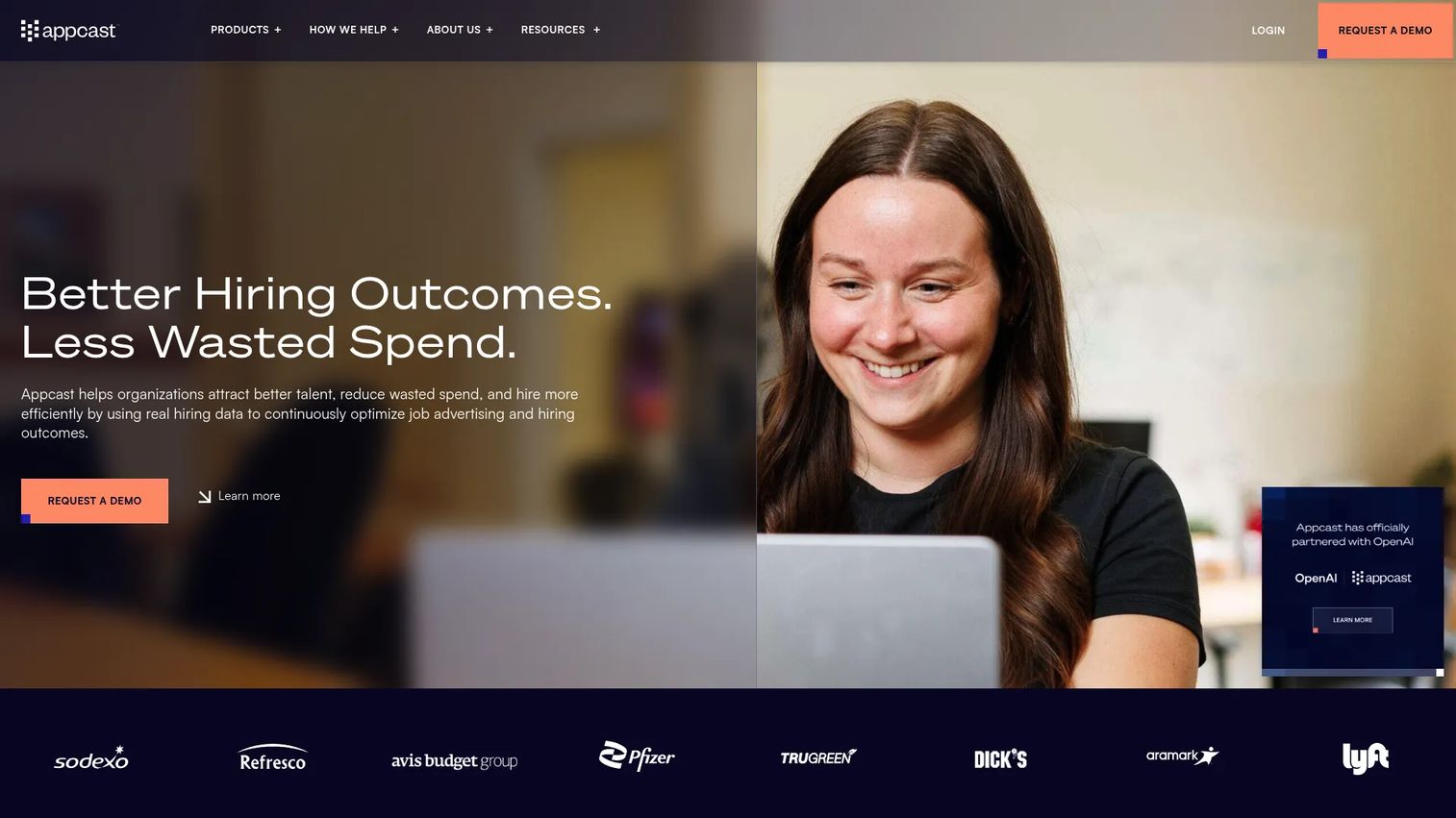
Appcast is a recruitment marketing platform built around programmatic job advertising and candidate conversion. Its AppcastOne offering ties media buying across channels to what happens after the click: apply optimization, career sites, and candidate nurturing. That full-funnel view is why large hiring teams tend to shortlist it. Most programmatic tools optimize the ad. Appcast optimizes the ad and the path from click to completed application, which is where a lot of recruitment budget quietly leaks.
Best for: Enterprise employers that need programmatic recruitment marketing plus performance optimization across the whole apply funnel.
Key strengths
- AppcastOne cross-channel media: Coordinates recruitment ad buying across job boards, search, and display from one platform, with spend reallocation toward performers.
- Apply and conversion optimization: Reduces drop-off between click and completed application, protecting the money you already spent to get the click.
- Career sites and nurturing: Owns more of the candidate journey so top-of-funnel spend converts instead of evaporating.
Why choose Appcast: If your problem is that applicants click but don't finish applying, Appcast addresses the conversion gap most programmatic platforms ignore. It fits teams with real recruitment marketing maturity, not a first-time buyer who just wants cheaper postings. The trade-off is scope: you're adopting a platform, not a point tool.
Appcast pricing: Appcast does not publish public pricing. Its site emphasizes a request-a-demo and contact-sales motion, and its terms reference usage-based fees tied to media spend. Expect a quote-based model sized to your campaign volume. Appcast holds a 4.2/5 rating on G2.
2. Joveo
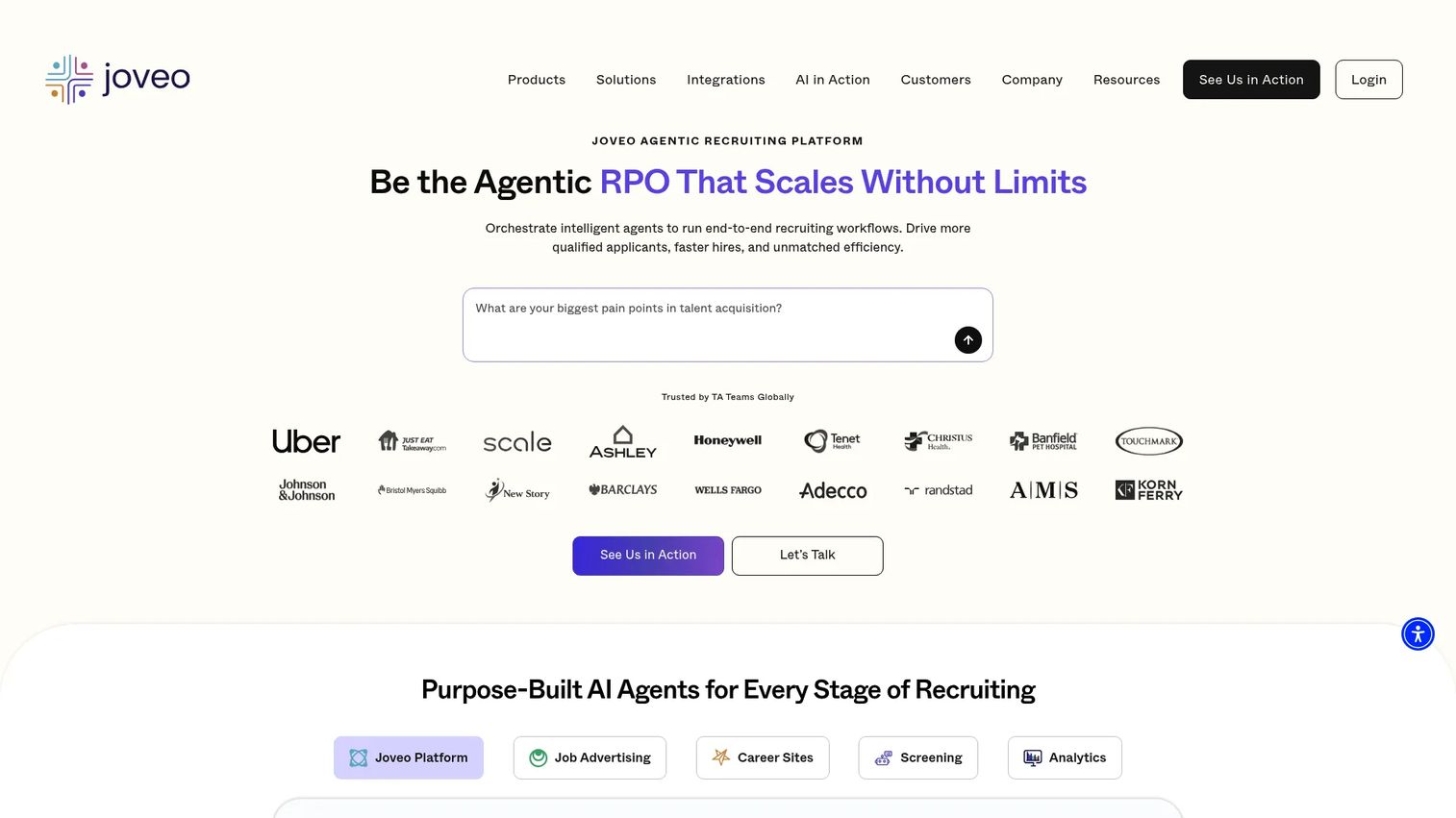
Joveo is an AI-powered recruiting and talent acquisition platform with programmatic job advertising at its core, extending into candidate engagement, scheduling, and analytics. Its optimization engine is the draw: it bids and reallocates spend across channels in real time against CPA and cost per hire targets, which is what complex, high-scale campaigns need. With a 4.8/5 G2 rating, it earns strong marks from teams running programmatic recruitment marketing at volume.
Best for: Enterprise recruiting teams that need programmatic job ads plus AI-driven candidate workflows in one system.
Key strengths
- Real-time optimization: Continuously reallocates budget across job board feeds and channels toward the lowest cost per qualified applicant.
- AI candidate workflows: Attraction, screening, and engagement layered on top of media buying, reducing recruiter manual work.
- Depth of analytics: Source-level performance that separates channels producing hires from channels producing noise.
Why choose Joveo: When your hiring is complex enough that manual optimization can't keep up, Joveo's automation is the point. It suits teams that want the media engine and the candidate-side tooling from one vendor rather than stitching them together. It's built for scale, so a small team hiring a handful of roles won't stress the engine.
Joveo pricing: Joveo does not publish numeric pricing. Its pricing page directs prospects to contact sales, so expect a quote scoped to your media spend and workflow needs. On G2, Joveo carries a 4.8/5 rating across a substantial review base.
3. Recruitics
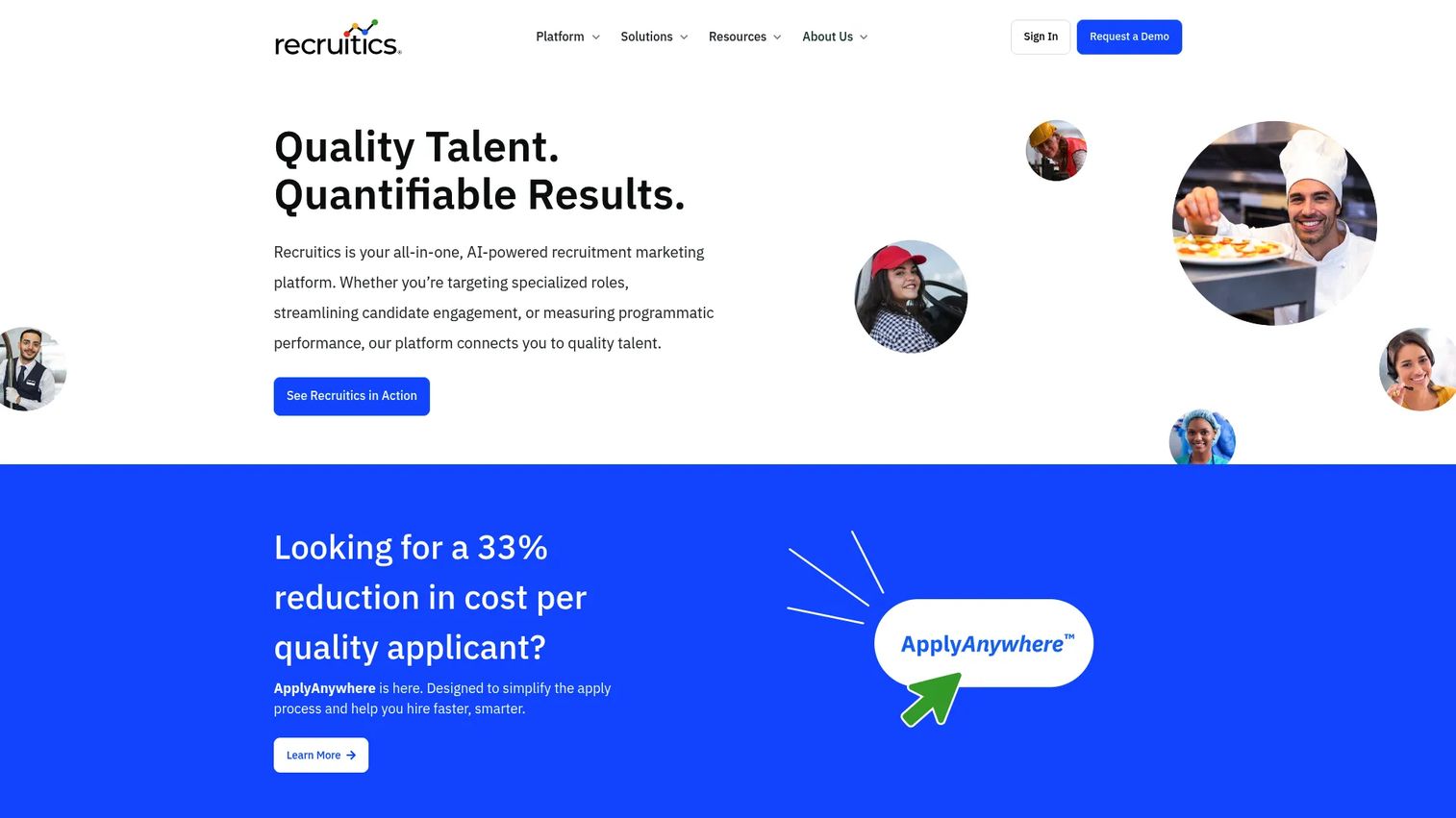
Recruitics is an AI-powered recruitment marketing platform combining programmatic job advertising, candidate conversion tooling, and performance analytics with predictive insights. What sets it apart for many enterprise teams is the services layer: you get the platform plus hands-on optimization support rather than a pure self-serve console. For talent acquisition teams that don't want to staff a full programmatic operation internally, that managed model matters.
Best for: Enterprise TA teams that want recruitment marketing, programmatic ads, and analytics with expert optimization support attached.
Key strengths
- Predictive analytics: AI-driven insights that forecast source performance rather than only reporting it after the fact.
- Programmatic reach: Distribution to active and passive candidates across channels, managed against performance targets.
- Conversion tooling: Application workflows and career sites that turn clicks into completed applications.
Why choose Recruitics: Choose it when you want a partner, not just software. The combination of analytics and managed services fits teams that value spend reallocation being handled by people who do it daily. If you have deep in-house programmatic expertise already, you may not need the services component.
Recruitics pricing: Recruitics publishes a free Analytics Application at no charge, plus paid Analytics Pro Application Services priced through a separate Statement of Work on an annual term with monthly billing. Exact figures aren't public and depend on scope. Recruitics holds a 4.4/5 rating on G2.
4. Veritone Hire Programmatic
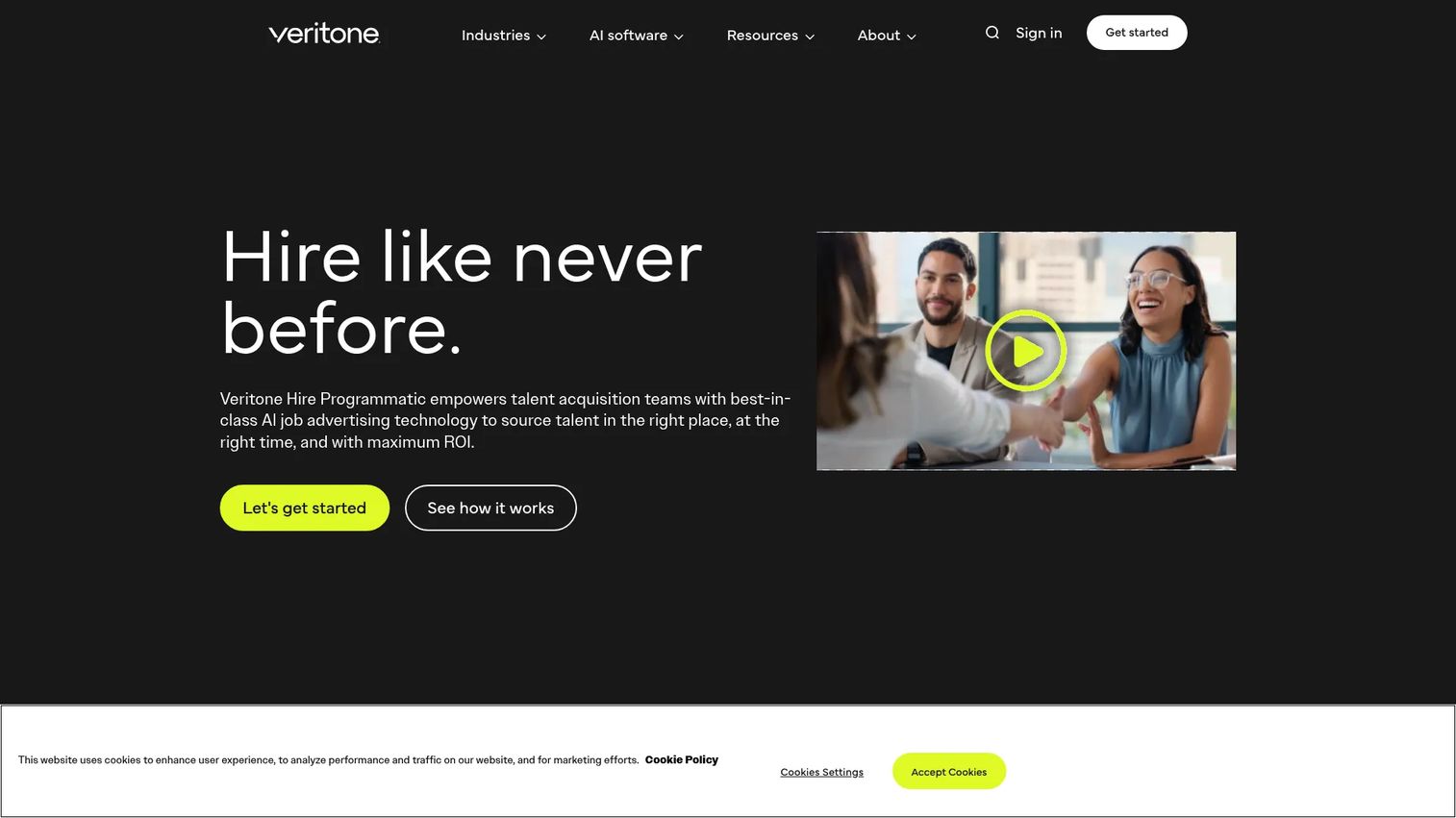
Veritone Hire Programmatic, formerly PandoLogic, is an AI-powered programmatic job advertising and recruitment optimization platform. It centers on automated ad placement with real-time campaign optimization and an analytics dashboard. The naming matters for buyers: if you're researching PandoLogic, this is the same product under the Veritone brand, so make sure comparison notes and reviews you read map to the current name.
Best for: Employers and TA teams that want automated programmatic job advertising with performance analytics and minimal manual campaign management.
Key strengths
- Automated ad placement: Distributes jobs and manages bids across channels without recruiter intervention.
- Real-time optimization: Adjusts campaigns continuously against performance, shifting spend toward what converts.
- Analytics dashboard: Consolidated reporting on spend, applications, and campaign performance.
Why choose Veritone Hire Programmatic: It fits teams that want a hands-off programmatic recruiting software engine and are comfortable with a custom, solution-based buying process. Because pricing is quote-based, budget the evaluation time to scope it properly. The Veritone rebrand also means checking that any legacy PandoLogic integrations you rely on carry forward cleanly.
Veritone Hire Programmatic pricing: The product does not show public pricing; it's positioned as a custom solution scoped to your needs. On G2, Veritone Hire Programmatic carries a 4.2/5 rating.
5. Adway
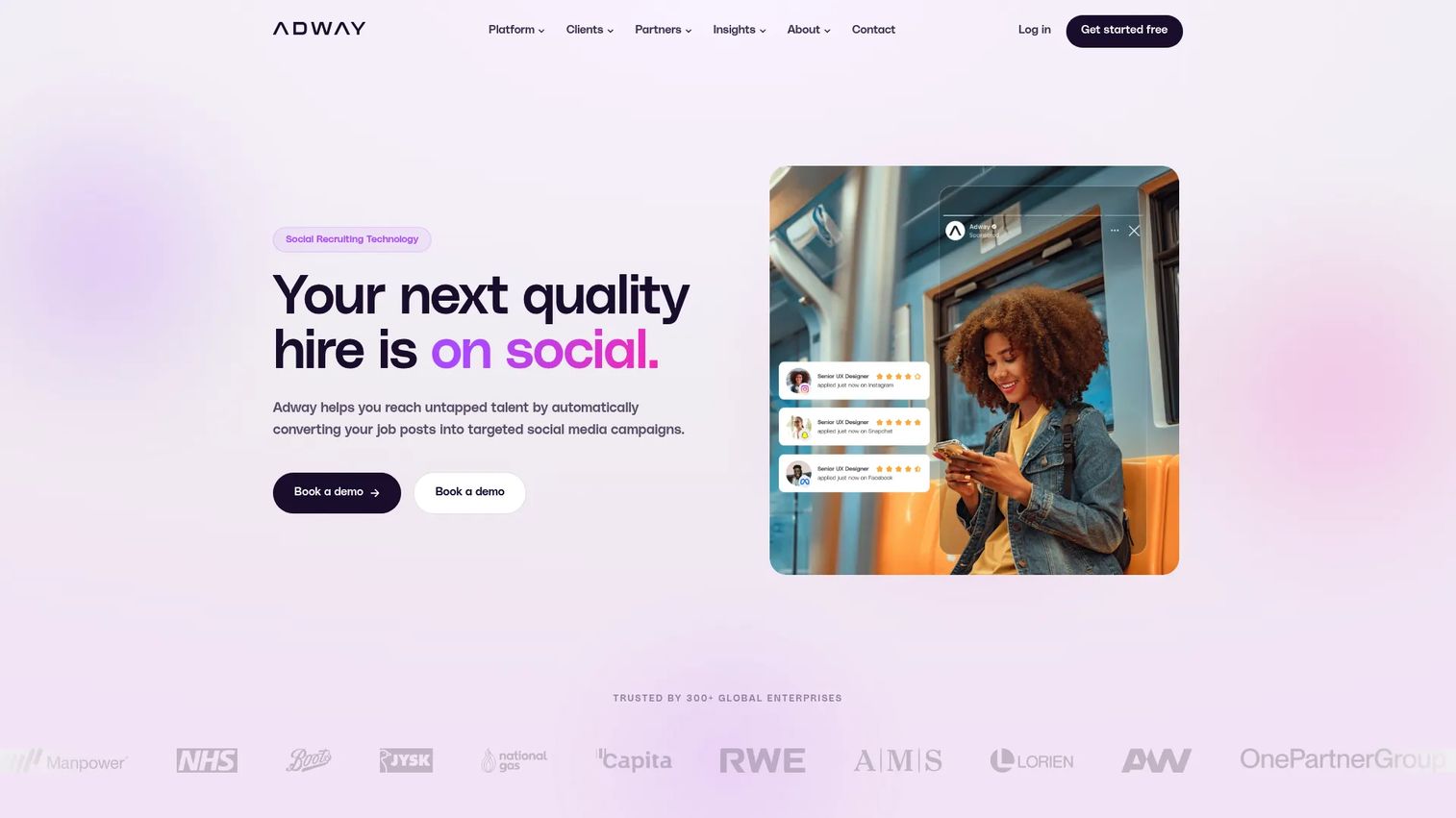
Adway takes a different angle: AI-powered employer-brand activation and social recruiting rather than pure job board programmatic. It reads a career site or EVP, generates branded social content, and runs campaigns across Meta, LinkedIn, TikTok, and Snap. For teams whose candidate pipeline lives on social rather than aggregators, this is the multi-channel distribution that matters. It also carries a 4.8/5 G2 rating.
Best for: Recruitment and employer-brand teams that want social recruiting automation with flexible, pay-as-you-go campaign activation.
Key strengths
- Auto-generated branded content: Turns your EVP and career site into social-ready creative without a design team.
- Social-first distribution: Runs across Meta, LinkedIn, TikTok, and Snap, reaching passive candidates job boards miss.
- Flexible pricing model: Free to start, then pay-as-you-go, with optional ATS sync and white-label add-ons.
Why choose Adway: Choose it when employer brand and social reach drive your hiring more than aggregator volume. The pay-as-you-go structure lowers the entry risk, which suits teams testing social recruiting before committing budget. It complements rather than replaces a job-board-focused programmatic tool if you need both channels.
Adway pricing: Adway is genuinely transparent here. It's free to start (Adway Free at €0), then pay-as-you-go: Pulse at €99/slot/month, Spark from €25/day, and Boost from €395 for a 14-day campaign. Optional add-ons include ATS sync and white-label at €99/month each. Adway holds a 4.8/5 rating on G2.
6. DirectEmployers DE Amplify
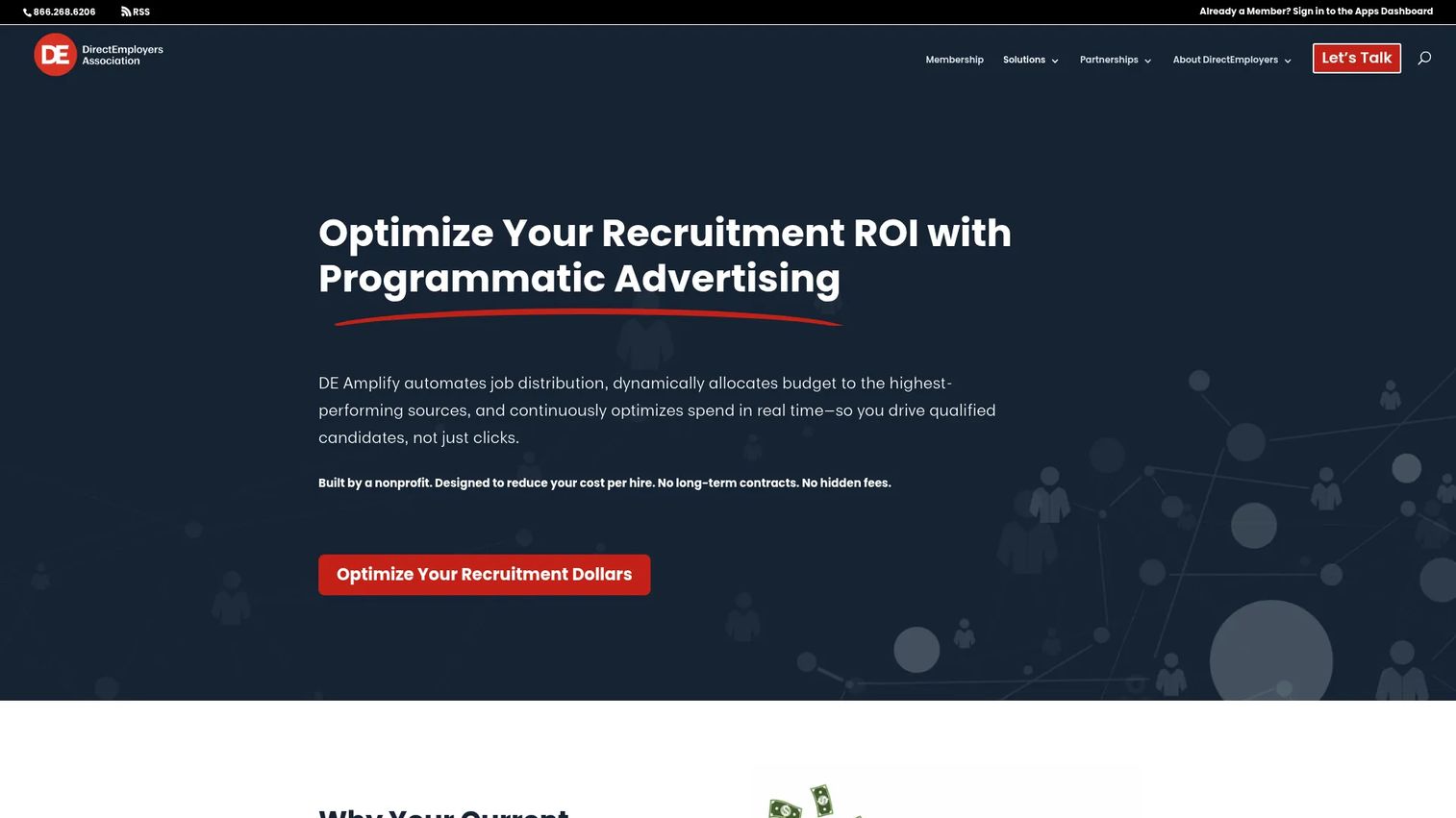
DirectEmployers DE Amplify is a managed programmatic job advertising platform from a nonprofit employer association, which shapes its positioning around transparency and no long-term contracts. It runs on XML feed integration, automated budget reallocation, and full-funnel analytics that report CPC, cost per application, and cost per hire. For high-volume and multi-location hiring where budget control is the priority, that transparent, pay-for-performance model is the differentiator.
Best for: Employers with high-volume or hard-to-fill hiring who want managed programmatic spend with clear budget accountability.
Key strengths
- Automated budget reallocation: Shifts spend in real time toward sources producing applications, no manual channel juggling.
- XML feed integration: Pulls jobs directly from your feed and refreshes them so listings stay current across publishers.
- Full-funnel analytics: Reports CPC, cost per application, and cost per hire so you see the whole chain, not just clicks.
Why choose DirectEmployers DE Amplify: The nonprofit, member-oriented positioning and pay-for-performance model with no long-term contracts appeal to teams burned by opaque, locked-in vendors. It's strong for high-volume and hard-to-fill roles where reallocating budget quickly matters. If you want a slick self-serve SaaS console above all else, weigh the managed model against that preference.
DirectEmployers DE Amplify pricing: The platform is pay-for-performance with no long-term contracts, but no public dollar figure is published; pricing scales with your spend and reach. DirectEmployers carries a 4.7/5 rating on G2.
7. JobTarget
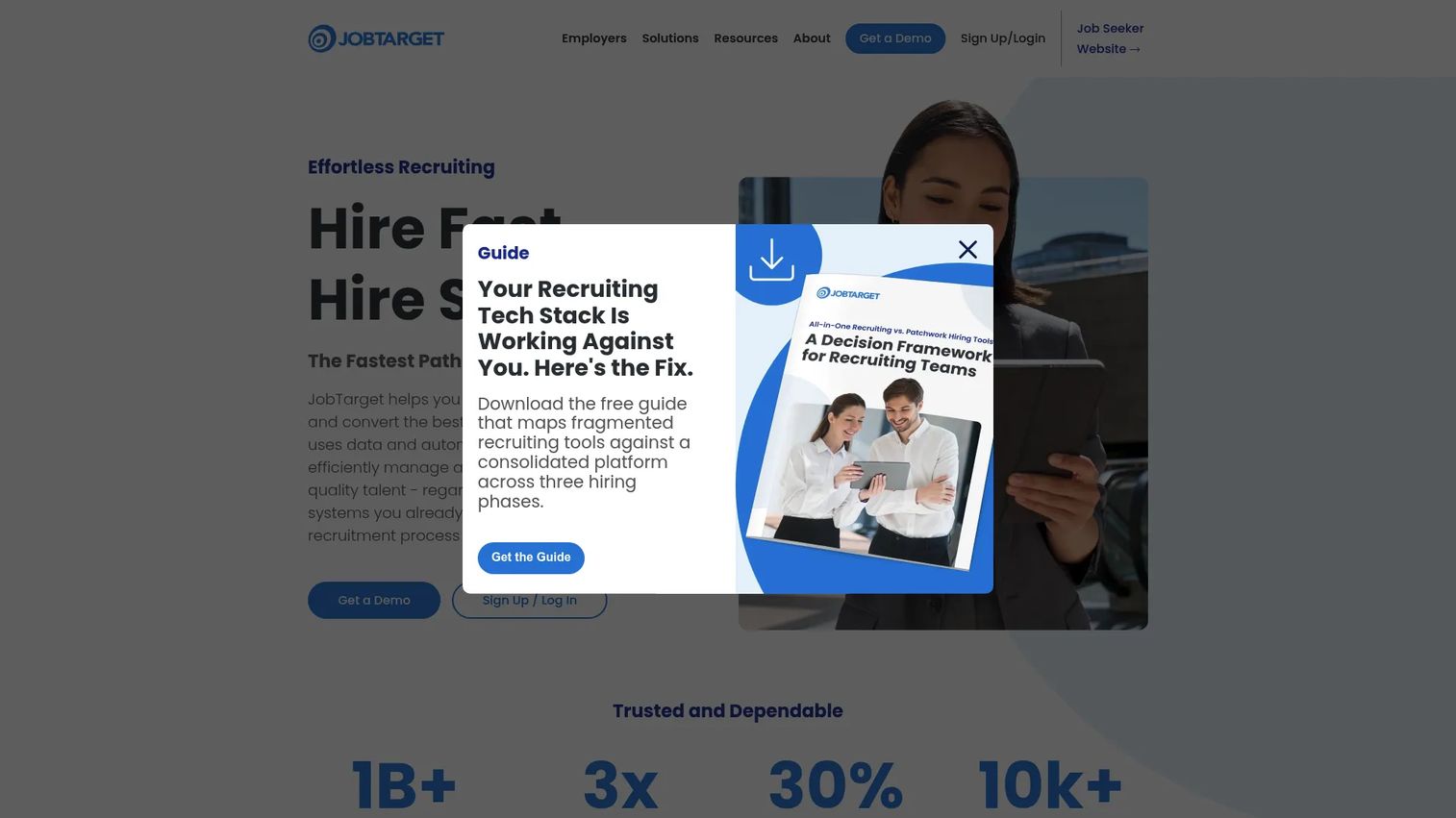
JobTarget is a recruitment platform built around job distribution, candidate management, analytics, and compliance. Its reach is the headline: a marketplace spanning 25,000+ job boards, programmatic distribution across 100+ sites, and integrations with 80+ ATS and HRIS systems. For teams that want simple access to a very large network of boards without wiring up each one, JobTarget centralizes that sprawl into one buying surface.
Best for: Employers that need centralized job distribution across a huge board network plus recruitment workflow and compliance tools.
Key strengths
- Massive board marketplace: Distribution across 25,000+ job boards from a single console, no per-board setup.
- Programmatic distribution: Automated placement across 100+ sites with performance-based buying.
- Broad ATS integration: Connects with 80+ ATS and HRIS systems for closed-loop workflows.
Why choose JobTarget: Its strength is breadth of distribution and simplicity of access. If your priority is reaching a lot of boards without managing each relationship, JobTarget makes that straightforward. Its pay-per-posting model also means you fund specific campaigns rather than a platform subscription, which some budget owners prefer.
JobTarget pricing: JobTarget says you only pay for the specific postings, products, or campaigns you buy, with no additional platform fees. Marketplace prices are set by the job boards themselves, and premium offerings require contacting a relationship manager for pricing. JobTarget holds a 3.8/5 rating on G2.
8. Radancy
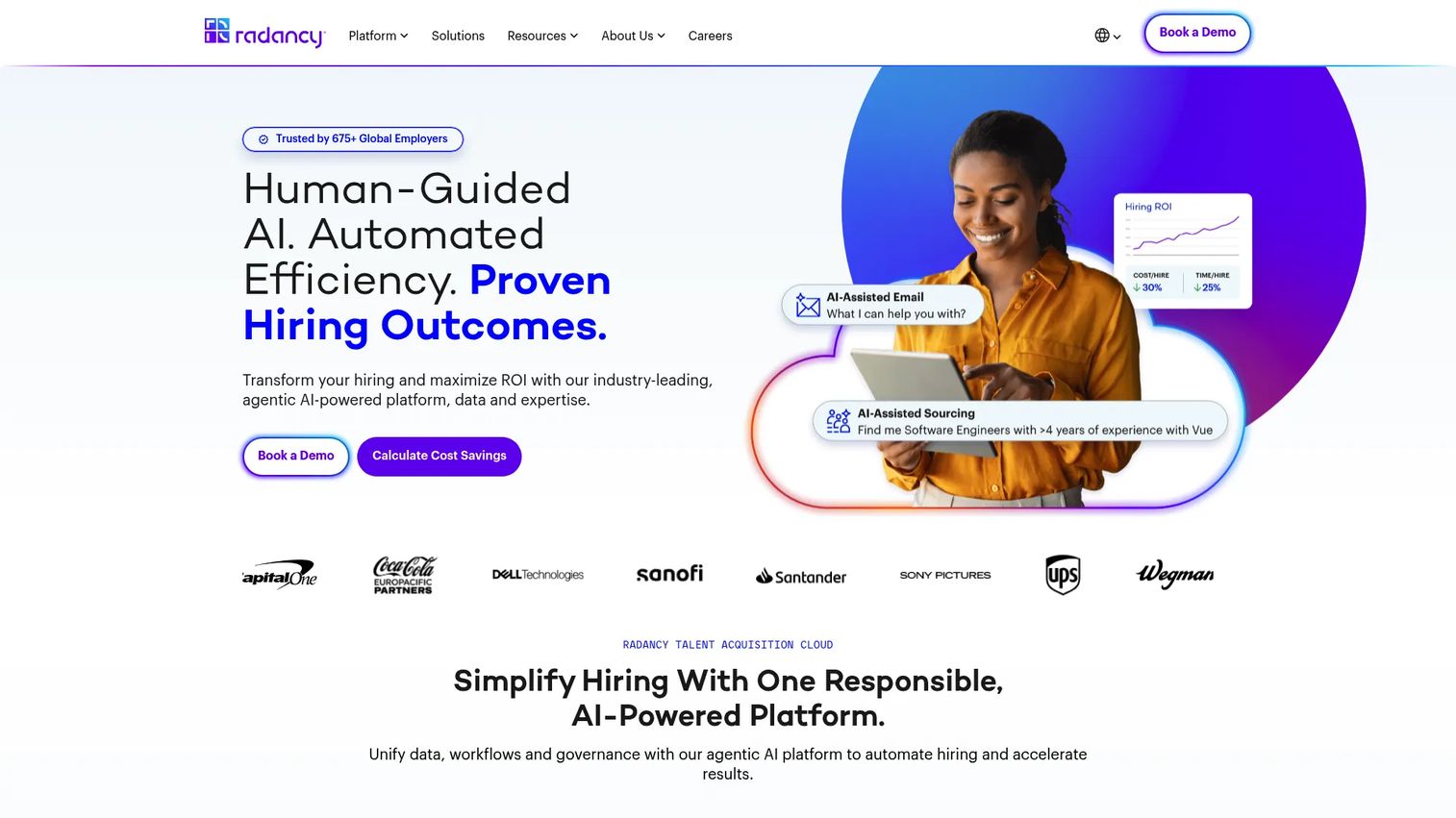
Radancy is an enterprise talent acquisition platform where programmatic job advertising sits inside a much broader stack, alongside candidate engagement, talent communities, screening, scheduling, and referral automation, increasingly driven by agentic AI. If you're consolidating your entire recruiting technology into one platform rather than buying a standalone programmatic job advertising platform, Radancy is built for that scope.
Best for: Large employers that want an end-to-end recruiting and candidate engagement platform with programmatic advertising as one component.
Key strengths
- Full talent acquisition cloud: Programmatic advertising integrated with the broader hiring and engagement stack.
- Candidate engagement and communities: Talent community tools that nurture passive candidates over time.
- Automation across the funnel: Screening, scheduling, and referral automation reduce recruiter manual load.
Why choose Radancy: Choose it when the goal is platform consolidation, not a best-of-breed programmatic point tool. Radancy's programmatic capability is strongest as part of its wider ecosystem, so the value compounds if you adopt more of the suite. If you only need programmatic advertising, a focused tool may fit better.
Radancy pricing: Radancy does not publish public pricing; it's demo- and quote-based, scoped to enterprise deployments. On G2, Radancy carries a 4.7/5 rating.
Considerations
Before you sign anything, run this checklist. The differences between these platforms show up in exactly these places.
ATS and feed integration
Confirm two-way sync with your specific applicant tracking system, not just "integrations available." You need jobs flowing in and application data flowing back, because closed-loop measurement (spend to hire) depends on it. Check XML feed refresh cadence too. Stale listings waste spend.
Reporting depth
Separate performance metrics from vanity metrics before you're impressed. Impressions and clicks are cheap to inflate. What matters is cost per application, CPA, cost per hire, and time to fill by source. Ask to see a real dashboard, not a marketing screenshot.
Budget transparency
Understand exactly what you pay for and how spend gets reallocated. Some vendors are explicit about pay-for-performance with no lock-in; others bundle media and fees opaquely. Ask how the optimization logic decides where money moves, and whether you can set guardrails.
Publisher reach and management
More boards isn't automatically better. Verify the platform reaches the sources your candidates actually use, and that publisher management (adding, pausing, and pricing sources) is handled for you. For niche or hard-to-fill roles, reach into specialized boards matters more than raw board count.
Support and onboarding
Ask whether you get a self-serve console, a managed service, or both, and which fits your team's capacity. A managed model helps teams without in-house programmatic expertise; a self-serve console suits teams that want direct control. Match the model to who will actually run it.
Conclusion
The right programmatic job advertising software depends on your hiring motion and budget maturity, not a leaderboard. For enterprise recruitment marketing across the full apply funnel, Appcast is the strongest all-around pick. For AI-driven optimization at genuine scale, Joveo leads. If you want analytics plus managed optimization support, Recruitics fits. For transparent, pay-for-performance budget control on high-volume and hard-to-fill roles, DirectEmployers DE Amplify stands out. For social employer-brand reach, Adway is the flexible entry point. For sheer distribution breadth, JobTarget covers the most ground, while Radancy suits teams consolidating recruitment marketing into one end-to-end platform.
Shortlist two or three based on your dominant hiring motion, then demand a live dashboard showing cost per hire and CPA by source before you commit. The vendor that can't show you where your money went is telling you something. Start narrow, measure hard, and expand spend only where the data earns it.
FAQs
It's technology that automates buying, placing, and optimizing recruitment ads across job boards, search, and social, then reallocates budget in real time based on performance. Instead of manually posting to individual boards, you set targets like CPA or cost per hire and the platform moves spend toward whatever produces qualified applicants. It's the modern alternative to flat-fee job board posting.
The platform ingests your open roles, usually through an XML feed or ATS integration, then distributes them across multi-channel placements. It bids on each placement, paces spend across the campaign window, and continuously shifts budget toward the sources delivering applications at the lowest cost. Analytics tie spend back to applications and hires so optimization runs on evidence.
Cost per application, CPA, cost per hire, and time to fill, broken out by source. Ignore impressions and raw clicks as headline numbers; they're easy to inflate and don't correlate with hires. The metric that matters most is whether the platform can trace a dollar of spend to a completed hire, which requires closed-loop ATS integration.
Yes, this is its strongest use case. When you're filling dozens or hundreds of similar roles, manual posting can't keep every requisition optimized across the right sources. Programmatic automates that distribution and reallocation, protecting budget control while keeping applicant flow steady. The ROI is clearest exactly when volume outpaces recruiter capacity.
Deeply. A two-way ATS integration is what makes closed-loop measurement possible: jobs flow into the platform and application data flows back for cost-per-hire reporting. Confirm your specific ATS is supported natively before buying, and check feed refresh cadence so listings don't go stale. Weak integration turns a programmatic platform into an expensive posting tool.
Ask how spend gets reallocated and whether you can set guardrails, which ATS integrations are native versus custom, and to see a live dashboard showing cost per hire and CPA by source. Ask about contract terms, whether pricing is pay-for-performance or bundled, and what publisher management they handle for you. Vague answers on any of these are a signal.
When your hiring volume is low and sporadic, the automation and minimum-spend commitments may outweigh the benefit. A handful of specialized roles per year often does better with targeted niche boards or direct sourcing. Programmatic recruitment marketing shines on scale and repeatability; it's less compelling when every hire is bespoke.
Ad spend efficiency (CPA, cost per click) measures how cheaply you generate applications; cost per hire measures the full cost of an actual hire including wasted spend on applicants who never convert. A low CPA with a high cost per hire signals a conversion or quality problem downstream. Always evaluate both together, because optimizing cheap clicks that never become hires just moves the leak.