


A claim comes in. It sits. Someone reviews it by hand. A field is missing, so it bounces. The provider resubmits. It sits again. Multiply that by tens of thousands of claims a month, and you have the operational reality most payer and insurance teams live with.
The bottleneck is rarely the volume itself. It is the manual review, the inconsistent rule application, and the rework that follows every rejected claim. When a benefit rule changes, the whole queue needs reprocessing, and that work lands on people, not systems.
Claims adjudication software exists to move that work off people. Good claims processing software automates intake, validates data, applies rules, matches claims to eligibility, routes exceptions, and tracks reprocessing. A modern claims adjudication system pushes toward near real time claims processing instead of overnight batches and manual queues.
The market reflects that shift. The global health claims adjudication software market was valued at $4.2 billion in 2025 and is projected to reach $8.9 billion by 2034, a 9.3% CAGR, according to MarketIntelo (2025). Cloud-based deployment already accounts for 64.2% of that market, generating $2.697 billion in 2025.
This guide breaks down seven options across healthcare payer platforms, insurance claim management software, and buyer research resources, so you can match a tool to your line of business instead of overbuying.
What's inside
This guide is for healthcare payer teams, insurance operations leaders, claims managers, and product and operations stakeholders evaluating claims workflow automation. It focuses on adjudication and the processing workflows around it, not generic claim trackers.
Tools were chosen against criteria that matter in real payer and insurance operations:
- Rules-based automation depth and configurability
- Integrations with EHR, EVV, EDI, APIs, and downstream systems
- Reprocessing and exception handling support
- Claims analytics, audit trails, and decision visibility
- Lifecycle coverage from intake through settlement
The list mixes full enterprise platforms, focused workflow tools, and one buyer research resource for shortlisting.
TL;DR
- Best for healthcare payer modernization: PLEXIS comprehensive enterprise platform, with rules-based core administration and benefit administration.
- Best for end-to-end lifecycle claims operations: Riskonnect Claims Management software, covering intake through settlement and recovery.
- Best for state agencies and MCO workflows: Netsmart Carefabric claims adjudication, with EHR and EVV integration.
- Best for broader healthcare revenue cycle: Waystar, tying claims workflow automation to payment operations.
- Best for focused claims automation: Claimable, a per-user cloud tool for end-to-end claim handling.
- Best for configurable payor administration: Encompass+, a Salesforce-based claims administration platform.
- Best for shortlist building: Capterra claims processing software directory, for comparing ratings and feature sets.
What is claims adjudication software
Claims adjudication software is software that automates the intake, validation, rule checking, matching, routing, payment decisioning, and reprocessing of insurance or healthcare claims. It turns manual review into rules-based claims processing so decisions are consistent, fast, and auditable.
People use three terms loosely, so it helps to separate them. Claims adjudication software handles the decision stage: does this claim get approved, denied, adjusted, or routed for review. Claims management software usually covers the broader lifecycle, from intake through settlement and recovery. Claims processing software sits in between, often describing the end-to-end movement of a claim through validation and payment. Adjudication is the decision engine inside that flow.
Core capabilities to expect:
- Rules-based adjudication: Configurable logic that approves, denies, adjusts, or routes claims automatically
- Claims scrubbing and standardization: Pre-screening that catches missing data and formatting errors before adjudication
- Matching and exceptions handling: Linking claims to eligibility and members, then flagging unmatched claims
- Audit trails and decision visibility: A record of why each claim was approved, denied, or reprocessed
- Reprocessing and resubmission tracking: Batch readjudication and resubmission workflows when rules or data change
- Integrations: Connections to EHR, EVV, EDI, APIs, and downstream payment and reporting systems
The best fit depends on your claim volume, your line of business, and how much interoperability your existing systems demand.
When to use
Speed up high-volume claims review
Automation earns its keep when volume is high and validations repeat. If your team processes thousands of claims a month against the same eligibility and coverage checks, rules-based claims processing removes the manual pass. Pre-screening, matching, and routing are the main levers. They handle the predictable claims so people focus on the genuine exceptions.
Reduce manual rework and resubmissions
Claims bounce for boring reasons: a missing field, a formatting mismatch, a coverage rule that failed silently. Every bounce means a resubmission, and every resubmission means more manual handling. Claims scrubbing catches those errors before adjudication, and structured exception handling resolves the ones that slip through. This is usually where the biggest labor savings hide.
Standardize workflows across teams and systems
When claims logic lives in people's heads, it drifts across locations, lines of business, and programs. A shared claims adjudication system keeps the rules consistent no matter who is processing. That repeatability matters for operational control and for regulatory compliance, because the same rule produces the same decision and the same audit trail every time.
Comparison table
Pricing and G2 ratings below reflect values verified at the time of writing. Several vendors use quote-based pricing, so confirm current figures on each vendor's page before you shortlist. Where a tool uses custom pricing, that is noted directly.
| # | Product | Best for | Key differentiator | Pricing | G2 rating |
|---|---|---|---|---|---|
| 1 | Riskonnect Claims Management | Insurance and risk teams needing full lifecycle coverage | Adjudication inside a broader risk and claims platform | Custom pricing | 4.3/5 |
| 2 | PLEXIS | Healthcare payers modernizing core operations | Rules-based core administration and benefit administration | Custom pricing | 3.8/5 |
| 3 | Netsmart Carefabric | State agencies and MCO workflows | EHR and EVV integration for care administration | Custom pricing | 3.6/5 |
| 4 | Waystar | Healthcare revenue cycle operations | Claims tied to payment and eligibility workflows | Custom pricing | 4.4/5 |
| 5 | Claimable | Focused, per-user claims workflow automation | Transparent per-user SaaS pricing | From $79/user/mo | 4.6/5 |
| 6 | Encompass+ | TPAs and health-plan administrators | Salesforce-based configurable claims administration | Per member, per month | Not listed |
| 7 | Capterra directory | Buyers building a vendor shortlist | Reviews, ratings, and feature comparison | Free for users | Not listed |
Best 7 claims adjudication software for 2026
1. Riskonnect Claims Management software

Riskonnect is integrated risk management software that covers governance, insurable risk, and business continuity, with claims management sitting inside that broader platform. For teams that want adjudication as one stage of a full claims lifecycle, this is the widest net on the list. It orchestrates intake, adjudication, settlement, and recovery in one system rather than stitching point tools together.
Best for: Insurance and risk teams that need adjudication plus intake, settlement, subrogation, and analytics in a single platform.
Key strengths
- Governance, risk, and compliance in one platform
- Insurable risk and claims management workflows
- Business continuity and resilience modules
- Reserve management and audit trails across the lifecycle
Why choose Riskonnect: Pick it when adjudication is one piece of a larger claims operation, and you want intake through recovery under one roof rather than a standalone decision engine.
Riskonnect pricing: Pricing is not published. Riskonnect states that cost depends on project size, complexity, and customization, so pricing is quote-based.
2. PLEXIS comprehensive enterprise platform
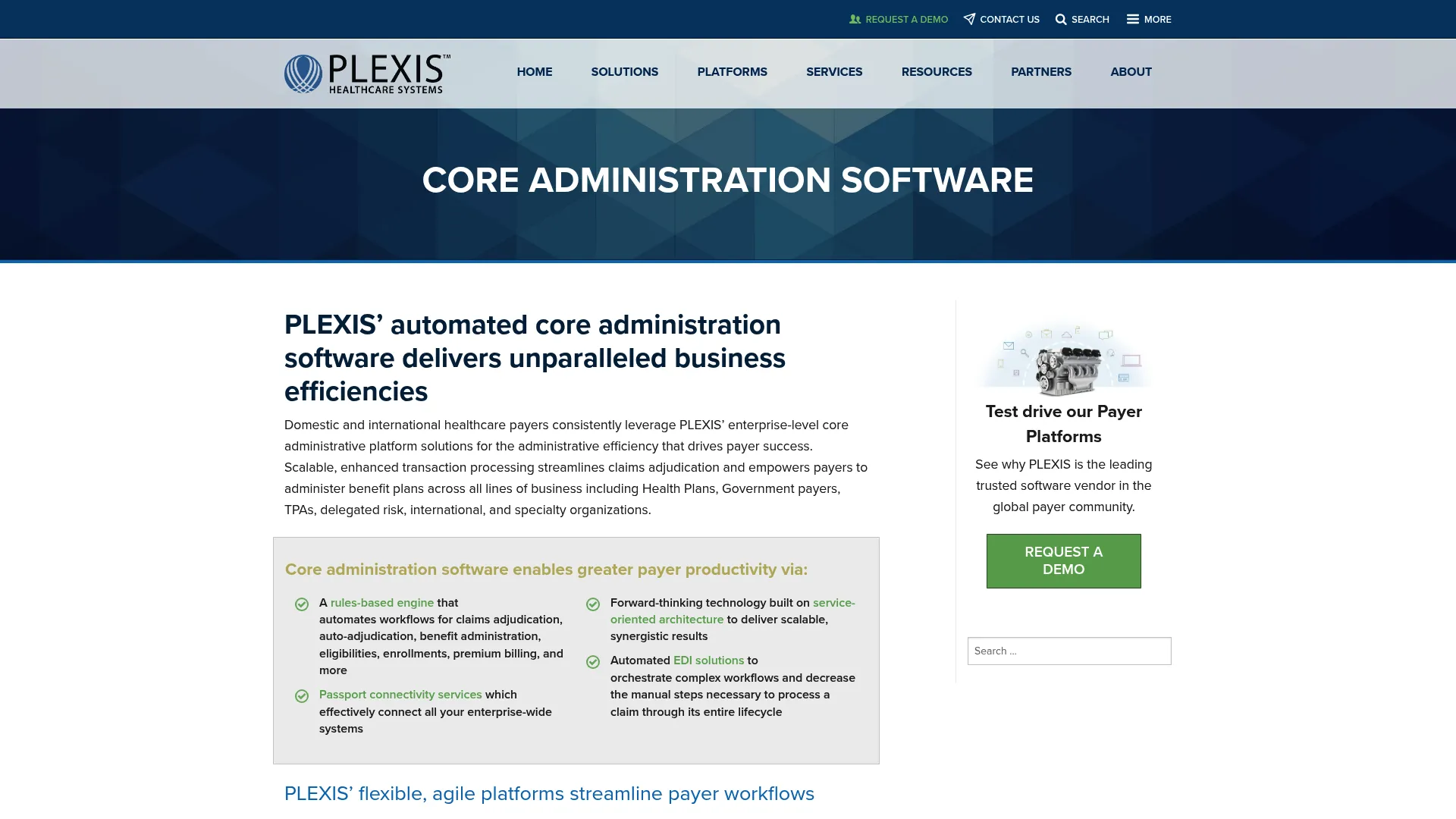
PLEXIS provides enterprise core administration and healthcare claims adjudication software built for payers, TPAs, and government health organizations. Its core is rules-based auto-adjudication, wrapped in the benefit administration, eligibility, and billing functions payers run every day. If you are modernizing an aging payer stack, PLEXIS is built for that operating model.
Best for: Healthcare payers, TPAs, and government health organizations modernizing enterprise claims operations.
Key strengths
- Rules-based claims adjudication and auto-adjudication
- Benefit administration, eligibility, enrollment, and premium billing
- Passport connectivity services for enterprise integration
- Configurable adjudication logic across lines of business
Why choose PLEXIS: Choose it when you want a healthcare-first enterprise platform where adjudication logic is configurable and connectivity to existing systems is a first-class feature.
PLEXIS pricing: PLEXIS does not publish a public price. Access is through a demo and sales conversation rather than listed tiers.
3. Netsmart Carefabric claims adjudication
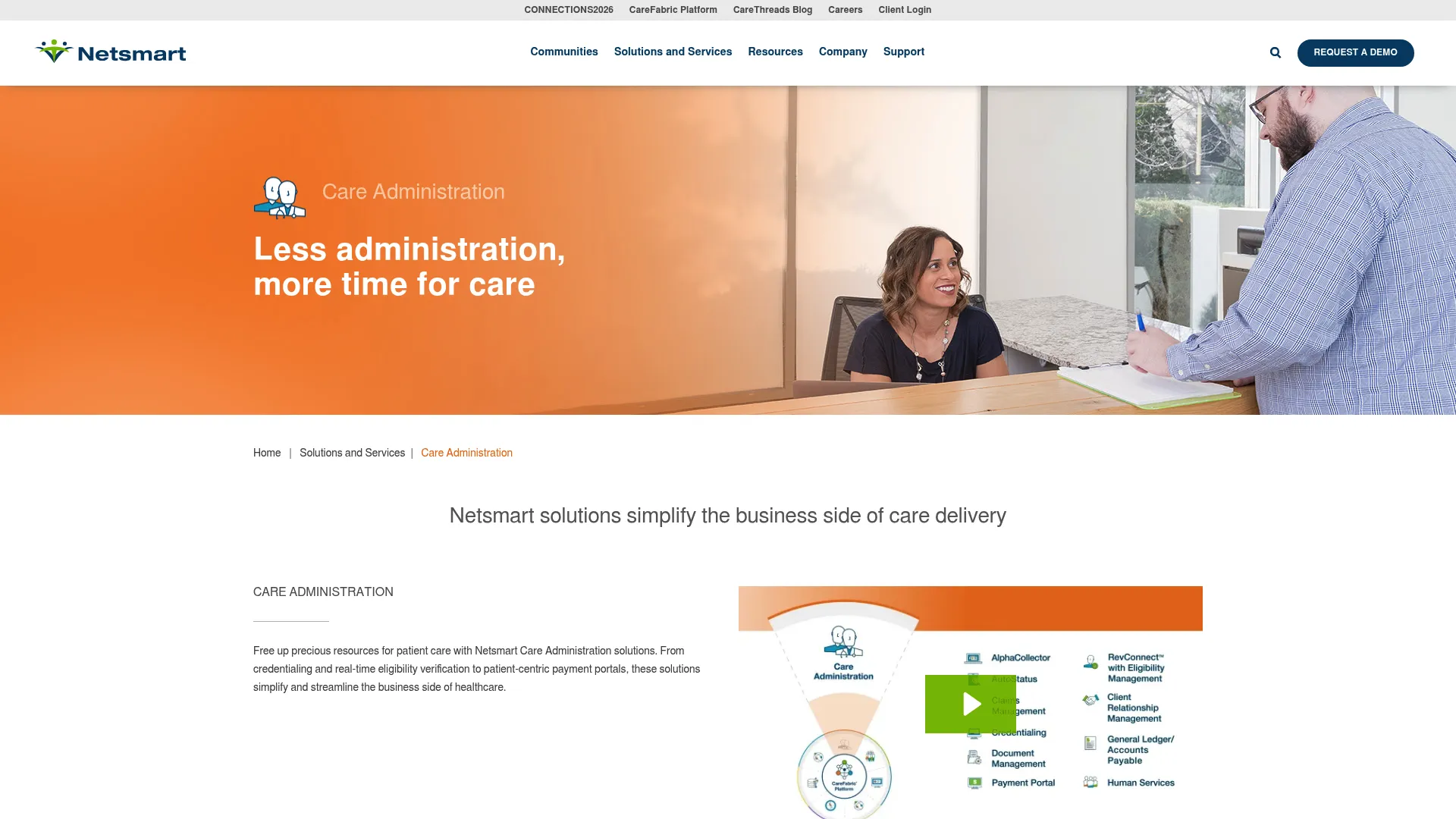
Netsmart delivers care administration and revenue cycle workflows inside its CareFabric platform, with claims adjudication and collections automation at the center. It is aimed at human services and post-acute organizations, which makes it a natural fit for state agencies and managed care organizations that live in EHR and EVV data. The revenue cycle framing means adjudication connects directly to collections.
Best for: Human services, post-acute, state agency, and MCO teams needing integrated revenue cycle and adjudication.
Key strengths
- Revenue cycle management across the workflow
- Claims adjudication and collections automation
- Credentialing, eligibility, payment portal, and document management
- Integration with EHR and EVV data sources
Why choose Netsmart: It is the strongest fit for public sector and care administration workflows, where EHR integration and EVV integration are non-negotiable parts of the claim.
Netsmart pricing: Netsmart does not list a public price for this product area. Pricing appears to be quote-based through sales.
4. Waystar

Waystar is a healthcare revenue cycle platform that simplifies payments, claims, and financial clearance. Its relevance to adjudication comes from tying claims workflow automation to the payment side: eligibility verification, price transparency, and patient payments all sit in the same platform. For providers and revenue cycle teams, that connection between claims and cash is the draw.
Best for: Healthcare providers and revenue cycle teams that want claims processing connected to payment operations.
Key strengths
- Eligibility verification across encounters
- Price transparency tooling
- Patient payment workflows
- Clearinghouse-style claims connectivity
Why choose Waystar: Choose it when you want claims processing breadth alongside payment and eligibility workflows, rather than a payer-side adjudication engine on its own.
Waystar pricing: Waystar does not publicly display pricing. Its packages page lists Starter, Core, Performance, and Premium tiers, all available on request.
5. Claimable
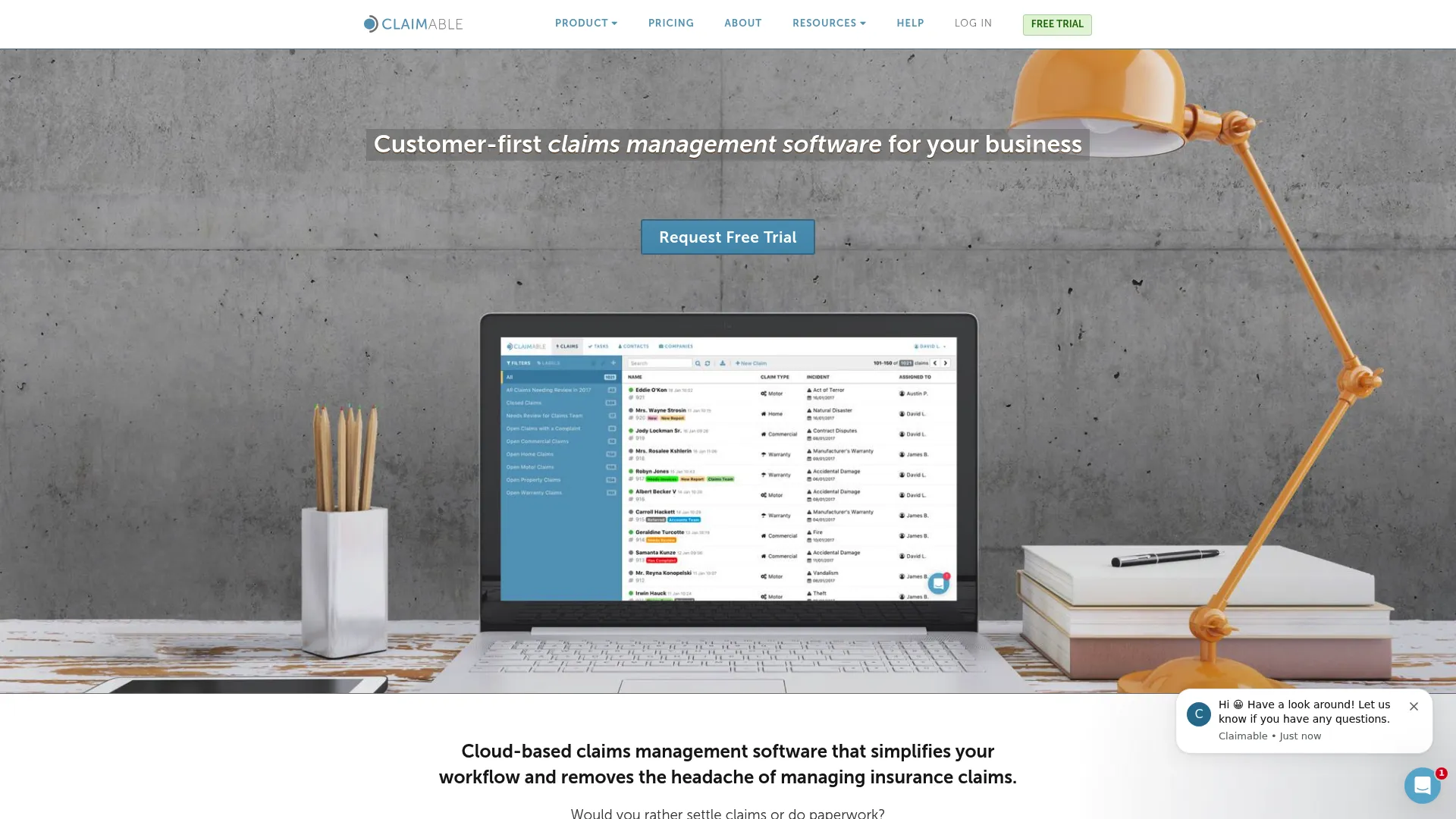
Claimable is cloud-based claims management software for teams handling claims, documents, workflows, and compliance. It is the most transparent option on pricing here, with published per-user plans and a free trial. For teams that want a focused workflow layer instead of a full enterprise suite, Claimable keeps the scope tight and the setup fast.
Best for: Claims teams that want a cloud, per-user SaaS tool for managing claims end to end.
Key strengths
- Unlimited claims file storage
- Filters and reporting for claims analytics
- Task management, notifications, and automated documents and emails
- Configurable processing steps and exception handling
Why choose Claimable: It fits teams that want a more focused claims workflow tool with predictable, transparent pricing rather than a quote-based enterprise platform.
Claimable pricing: Three paid plans, billed per user monthly: Startup at $79 per user/month, Growth at $129 per user/month, and Established at $239 per user/month. A 14-day free trial is available, with no setup fees.
6. Encompass+
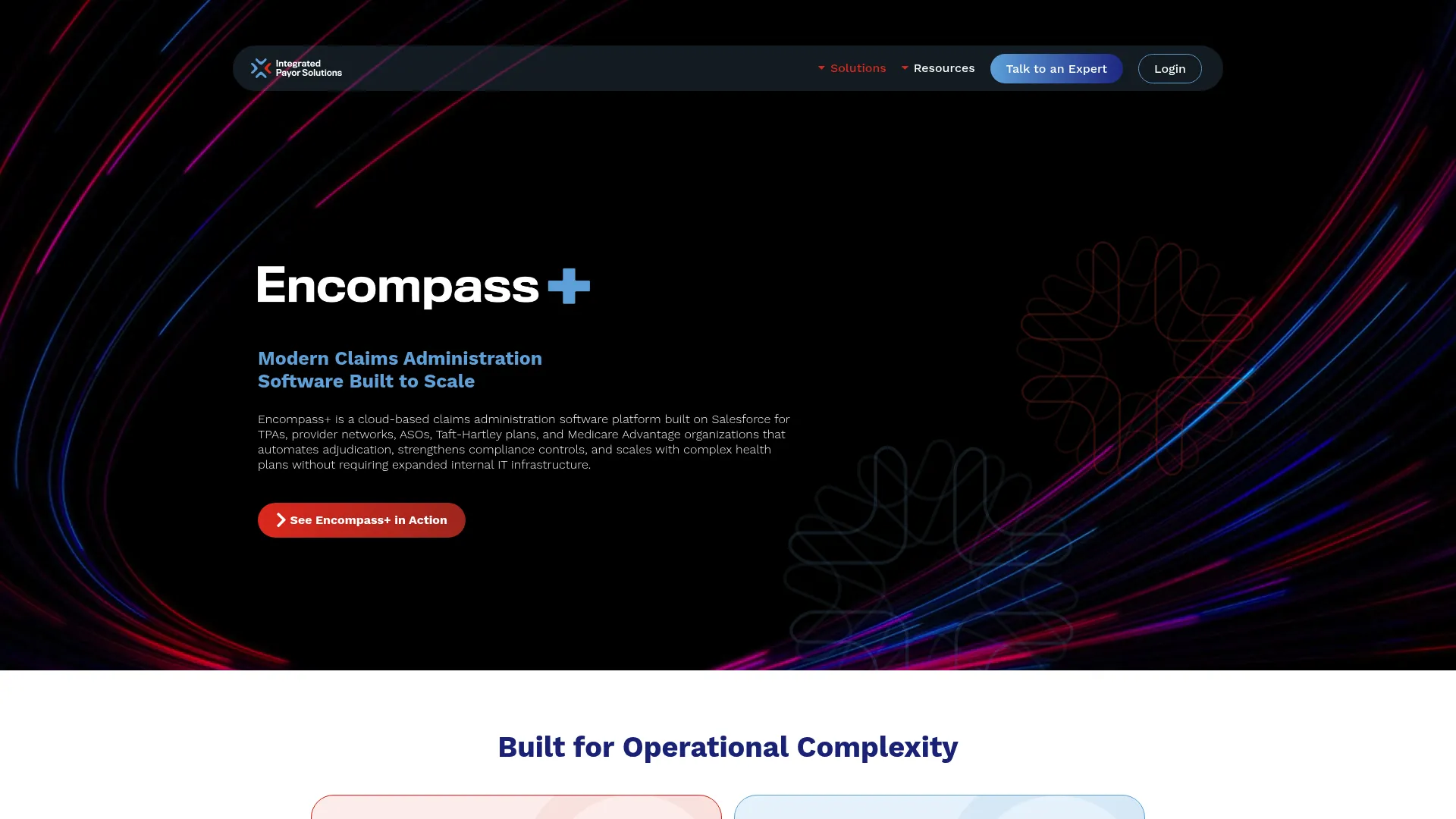
Encompass+ is cloud-based claims administration software built on Salesforce for complex health plans and payor organizations. The Salesforce foundation gives it configurability that appeals to TPAs and health-plan administrators who need plan logic to flex. Automated adjudication and configurable plan management are the core, delivered on a cloud architecture.
Best for: TPAs and health-plan administrators needing configurable, Salesforce-based claims administration.
Key strengths
- Automated adjudication
- Configurable plan management
- Cloud-based architecture
- Per-member, per-month cost model with no upfront implementation fee
Why choose Encompass+: It suits teams that want a configurable claims platform on a familiar Salesforce base, with a pricing model tied to membership rather than seats.
Encompass+ pricing: Encompass+ does not publish a numeric price. It uses a per-member, per-month structure and states there is no upfront implementation fee.
7. Capterra claims processing software directory
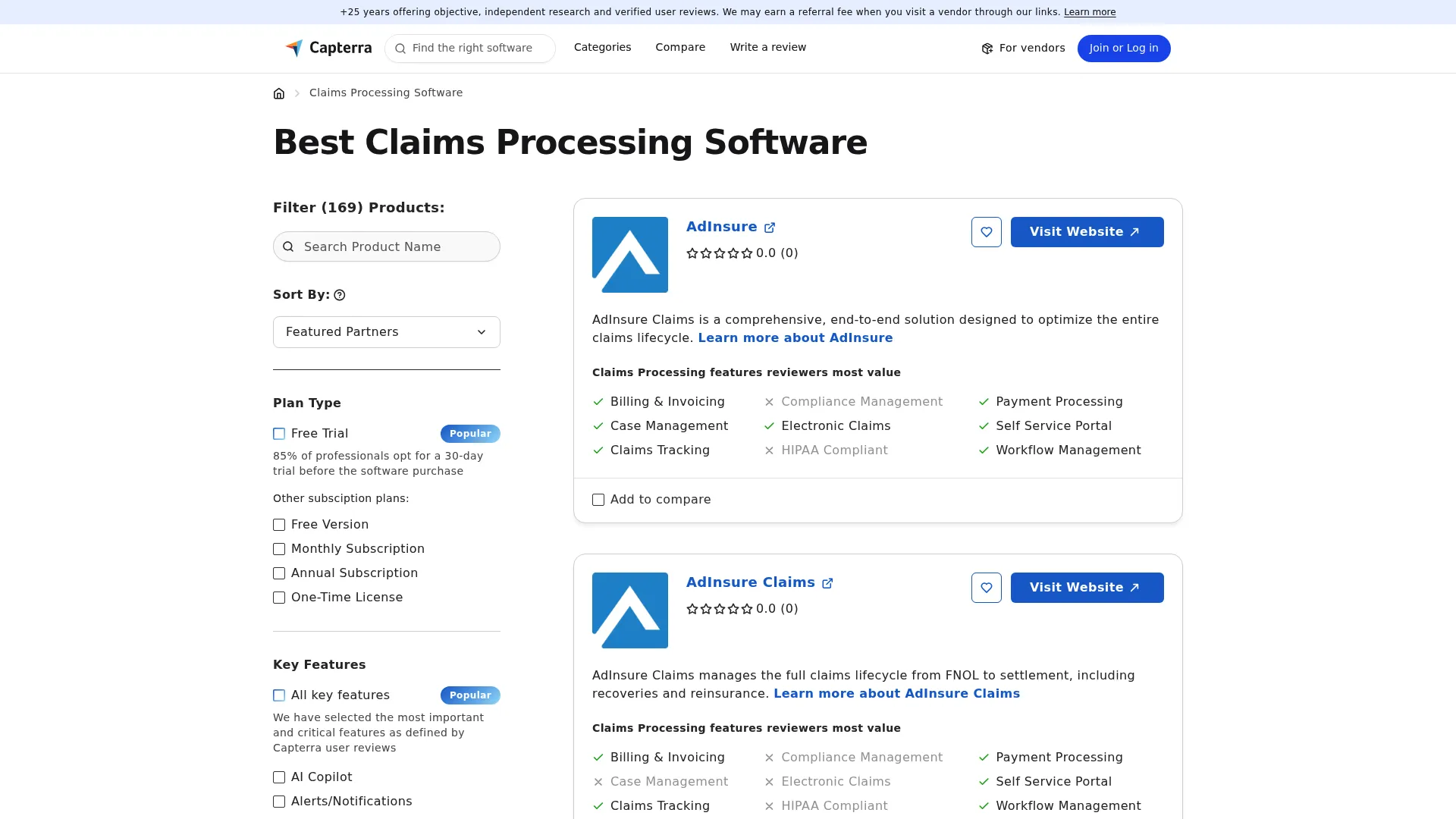
Capterra is a software marketplace and reviews platform for comparing claims processing tools, not a single product. It earns a place here because shortlisting is real work. When you need to scan the category, filter by feature, and read verified reviews before you talk to a vendor, a directory does that faster than seven separate vendor pages.
Best for: Teams building a vendor shortlist and comparing feature sets, ratings, and plan types before purchase.
Key strengths
- Verified user reviews
- Product comparison and rankings
- Pricing and feature summaries
- Filterable category browsing
Why choose Capterra: Use it for research and shortlist building, not operational execution. It is the tool you reach for before you commit to any of the platforms above.
Capterra pricing: Capterra states it is free for users. Individual product listings carry their own pricing, which you verify per vendor.
Considerations
Rules engine depth
The rules engine is the heart of any claims adjudication system. Check whether you can enforce claim-specific logic without heavy engineering involvement. Look for configurable conditions, exception rules, and versioning so you can change a rule and know exactly what changed and when.
Integration and interoperability
Adjudication does not happen in isolation. Confirm support for EHR, EVV, APIs, EDI, RMIS, and downstream payment or reporting systems. Interoperability determines how cleanly data moves in and out, and it is the difference between a platform that fits your stack and one that fights it.
Auditability and traceability
Every decision needs a reason on record. Confirm the system logs why a claim was approved, denied, routed, or reprocessed. Strong audit trails matter for internal review and for regulatory compliance, and they save hours when a decision gets questioned months later.
Reprocessing and exception handling
Reprocessing is where manual work quietly accumulates. Make sure the tool supports resubmission tracking, unmatched claims resolution, and batch readjudication when rules or data change. The better the exception handling, the less your team touches each claim.
Fit for your claims volume and line of business
A platform built for healthcare payers behaves differently from one built for workers' comp or broader insurance. Ask whether the tool matches your line of business and your volume. Overbuying a platform built for a different operating model costs more than money, it costs adoption.
Conclusion
The right claims adjudication software depends on what shape your operation takes. PLEXIS and Encompass+ suit healthcare payers and administrators who need configurable, rules-based claims processing at enterprise scale. Riskonnect fits insurance and risk teams that want adjudication inside a full claims lifecycle. Netsmart is built for state agencies and MCOs living in EHR and EVV data, and Waystar connects claims to the revenue cycle. Claimable gives smaller teams a focused, transparently priced workflow tool.
If you are still scoping the category, Capterra's directory is the fastest way to build a shortlist before you commit.
Your next step is simple. Pick two or three vendors that match your line of business, then compare them on the three things that actually drive daily work: rules engine configurability, integration depth, and reprocessing workflows. Book a walkthrough on each, and bring your own claim scenarios to test against their logic.
FAQs
Adjudication is a stage within the claims lifecycle. Claims adjudication software makes the decision: approve, deny, adjust, or route a claim based on rules. Claims management software usually covers the whole lifecycle, from intake through settlement and recovery, with adjudication as one component inside it.
The core set is a configurable rules engine, claims scrubbing, matching against eligibility, exception handling, audit trails, and integrations. Rules-based claims processing and reprocessing support tend to drive the biggest labor savings, because they cut manual review and rework on resubmitted claims.
It replaces manual review with rules-based decisions, so claims process faster and more consistently. Auto-adjudication handles predictable claims, scrubbing catches errors before they cause bounces, and audit trails support regulatory compliance. The net effect is faster payouts, fewer errors, and consistent decisioning across every claim.
At minimum, look for EHR and EVV integration for care data, EDI for standardized claim formats, and APIs for connecting to your own systems. Downstream, the system should feed analytics and payment platforms. Interoperability decides how much manual data movement your team still has to do.
Compare workflow fit for your line of business, rules configurability, reporting and claims analytics, integration depth, and reprocessing support. Bring real claim scenarios to each vendor walkthrough and test their logic against them. That surfaces gaps far faster than a feature checklist ever will.
A directory helps most at the start, when you are scanning the category and building a shortlist. It lets you compare ratings, features, and plan types across many tools at once. Once you have narrowed to two or three vendors, individual vendor pages and live walkthroughs give you the operational depth a directory cannot.

.avif)