A prospect asks whether your product supports SSO. Then SCIM. Then RBAC, MFA enforcement, access certifications, and what happens when a user leaves their company. Before a single feature gets demoed, the deal is stalled on identity.
That friction is structural. The global identity management software market reached $16.54 billion in 2025 and is projected to grow at a 10.4% CAGR through 2034, according to The Insight Partners (2026), which reflects how central IAM has become to enterprise buying decisions. Yet only 50% of surveyed organizations rated their IAM tools as very or highly effective, per the Ponemon Institute and GuidePoint Security (2025). The gap between having an IAM system and having one that works is where presales teams spend a lot of unplanned time.
This guide cuts through the category noise. Whether you're evaluating identity platforms for your own organization or helping a buyer understand what their security team will ask for, the 14 tools below cover the full spectrum: Workforce identity, governance, cloud directory, device-aware access, and HR-driven lifecycle management.
What's inside
This guide covers 14 identity management software platforms chosen for 2026. It is written for IT, security, and presales teams supporting technical validation and vendor evaluation.
Selection criteria:
- SSO and MFA depth: Quality of authentication workflows and policy controls
- Provisioning and deprovisioning: Automated account creation, role changes, and offboarding
- Governance and audit readiness: Access certifications, logs, approvals, and evidence export
- Fit by company size and stack: Pricing clarity and integration breadth from SMB to enterprise
Pricing and G2 ratings reflect verified figures from vendor pricing pages and live G2 listings.
TL;DR
- Best overall for vendor-neutral workforce identity: Okta Workforce Identity Cloud, with broad app coverage, mature SSO, and lifecycle workflows
- Best for Microsoft-centric organizations: Microsoft Entra ID, which ties identity directly into Microsoft 365 and Azure
- Best for complex enterprise orchestration: Ping Identity, suited for hybrid and federated environments
- Best for identity governance: SailPoint Identity Security Cloud, built for access certifications and policy enforcement at scale
- Best for unified identity and device management: JumpCloud, combining cloud directory with cross-OS device controls
- Best for presales teams supporting security reviews: Prioritize tools with SSO, SCIM, MFA, audit logs, and access certification support. The right shortlist depends on the buyer's existing stack and governance requirements
What is identity management software?
Identity management software helps organizations create, authenticate, authorize, manage, and audit digital identities across applications, devices, cloud services, and internal systems.
The category covers a wide range of capabilities, and buyers often conflate overlapping terms. Here is how the core concepts differ:
- Identity management: Who the user is and how their account is created, updated, and removed
- Access management: What the user can access and under what conditions (device, location, risk score)
- Identity governance: Whether access remains appropriate over time, who approved it, and when it should expire
- Privileged access management: Extra controls for admin accounts and high-risk system access
Key capabilities to evaluate:
- Single sign-on (SSO): Centralized login across approved applications
- Multi-factor authentication (MFA): Additional verification before access is granted
- User provisioning: Automated account creation and updates triggered by HR or directory events
- Deprovisioning: Fast access removal when someone leaves or changes roles
- Access governance: Certifications, approvals, audit trails, and segregation of duties
- Role-based access control (RBAC): Permissions mapped to job function rather than individual users
- Directory integration: Connection to Microsoft, Google, LDAP, HRIS systems, and cloud directories
- Conditional access: Policies that adapt based on device state, location, or risk signals
- Reporting and audit logs: Evidence for compliance reviews, security investigations, and RFP responses
Nearly 4 in 10 large organizations surveyed had not yet deployed SaaS-based identity governance, according to Omada's The State of Identity Governance (2025). For presales teams, that gap means buyers are often earlier in the IAM journey than they appear.
When to use identity management software
Standardize SSO and MFA across business applications
When employees log into dozens of apps using different credentials and inconsistent MFA policies, the authentication surface grows without controls. SSO and MFA are baseline requirements in enterprise security reviews. Presales teams encounter this early: If your product does not support SAML or OIDC, the deal stalls before technical validation begins.
Automate joiner, mover, and leaver workflows
Manual provisioning fails at scale. When a new hire joins, they need access to the right apps on day one. When someone changes teams, their permissions should update automatically. When they leave, access must be revoked immediately. A former employee retaining active credentials is a preventable failure, and one that auditors flag directly.
Prove access controls during security reviews and audits
Security teams ask for evidence, not promises. Access certification reports, audit logs, approval workflows, and segregation of duties controls all need to exist and be exportable. This is where deals in regulated industries stall longest. The IAM platform either produces the evidence or the presales team spends weeks building spreadsheets.
Identity management software comparison
The table below gives a quick snapshot across 14 platforms. Use it to orient shortlisting conversations, not as a final verdict. Pricing verified from vendor pages; G2 ratings verified from live G2 listings. Where a G2 rating was not confirmed for a specific product, that cell reflects the verified data available.
| # | Product | Best for | Key differentiator | Pricing | G2 rating |
|---|---|---|---|---|---|
| 1 | Okta Workforce Identity Cloud | Vendor-neutral workforce identity | Large app network and mature SSO | From $6/user/month | 4.5/5 |
| 2 | Microsoft Entra ID | Microsoft-centric organizations | Native identity across Microsoft 365 and Azure | Free to $10/user/month | 4.5/5 |
| 3 | Ping Identity | Complex enterprise orchestration | Flexible hybrid and orchestration depth | Custom pricing | 4.4/5 |
| 4 | SailPoint Identity Security Cloud | Identity governance and access certification | Deep IGA for complex enterprises | Custom pricing | N/A |
| 5 | CyberArk Identity | Identity security and privileged access | Security posture across high-risk identities | Custom pricing | 4.5/5 |
| 6 | OneLogin | Mid-market SSO and access management | Straightforward SSO and directory integration | From $3/user/month | 4.4/5 |
| 7 | JumpCloud | Cloud directory and device-aware identity | Identity, access, and device management together | From $9/user/month | 4.5/5 |
| 8 | IBM Verify | Large enterprises with hybrid environments | Enterprise-grade IAM and adaptive access | Custom pricing | 4.3/5 |
| 9 | Saviynt | Cloud-native identity governance | IGA, app access governance, and risk controls | Custom pricing | 4.3/5 |
| 10 | Oracle Access Management | Oracle-heavy enterprise environments | Access management for Oracle estates | Custom pricing | N/A |
| 11 | Cisco Duo | MFA and zero trust access | Device trust plus MFA for application access | Free to $9/user/month | N/A |
| 12 | Google Cloud Identity | Google Workspace and cloud identity | Google-native identity and endpoint controls | Free to $7.20/user/month | 4.3/5 |
| 13 | AWS Identity and Access Management | AWS cloud resource access control | Granular permissions for AWS services | No additional charge | 4.5/5 |
| 14 | Rippling IT | HR-driven identity and device operations | Employee lifecycle tied to HR and IT workflows | From $8/employee/month | 4.8/5 |
Best 14 identity management software tools
1. Okta Workforce Identity Cloud
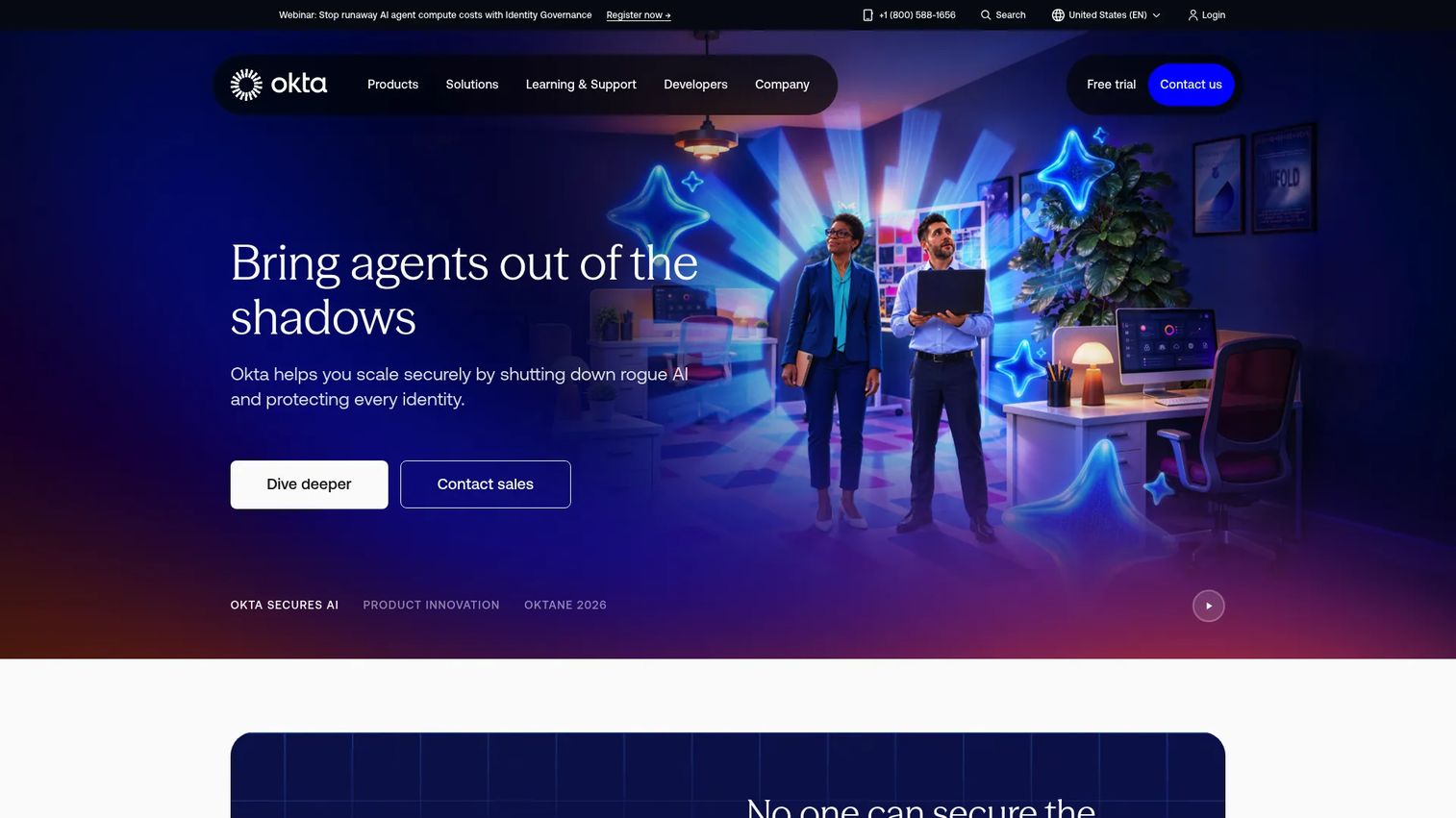
Okta Workforce Identity Cloud is a cloud-native workforce identity platform built for organizations managing access across diverse SaaS, cloud, and on-premises applications. It covers SSO, adaptive MFA, lifecycle management, universal directory, privileged access, and identity governance in one platform. Okta is vendor-neutral by design, making it a strong choice for organizations that are not standardized on a single productivity ecosystem.
Best for: Companies with mixed SaaS stacks that need broad app coverage and mature workforce identity controls.
Key features
- SSO across thousands of pre-integrated applications
- Adaptive MFA with contextual access policies
- Universal Directory for user and group management
- Lifecycle Management for automated provisioning and deprovisioning
- Privileged Access for high-risk account controls
- Identity Threat Protection with real-time risk signals
Why choose Okta: Okta's app network and workflow automation depth make it a default choice when buyers want identity infrastructure that works across a heterogeneous app estate without heavy customization. It fits well when the buying team has already standardized on Okta or is choosing a platform that does not require Microsoft or Google alignment.
Okta pricing: Starter plans begin at $6 per user per month (billed annually), covering SSO, MFA, and Universal Directory. Core Essentials is $14 per user per month and adds Lifecycle Management. The Essentials tier is $17 per user per month and includes Privileged Access and Access Governance. Professional and Enterprise tiers require contacting sales.
G2 rating: 4.5/5
2. Microsoft Entra ID

Microsoft Entra ID is Microsoft's cloud-based identity and access management service, formerly known as Azure Active Directory. It handles authentication, conditional access, lifecycle workflows, and identity governance for organizations already embedded in the Microsoft stack. For teams running Microsoft 365, Azure, and Windows environments, Entra ID is the natural identity foundation. It also supports hybrid environments through directory synchronization.
Best for: Microsoft-centric organizations that want identity tied directly into existing Microsoft infrastructure.
Key features
- Conditional Access policies based on device, location, and risk
- Multifactor and passwordless authentication
- Lifecycle workflows for joiner, mover, and leaver automation
- Privileged Identity Management for admin account controls
- Entra ID Governance for access reviews and entitlement management
- Hybrid identity support with Active Directory synchronization
Why choose Microsoft Entra ID: If your buyer is already on Microsoft 365, the identity layer is already partially in place. Entra ID earns its position because it reduces the number of vendors in the IAM stack and connects identity directly to the tools employees use every day. Conditional Access policies are particularly strong when device management is handled through Microsoft Intune.
Microsoft Entra ID pricing: A free tier is included with eligible Microsoft cloud subscriptions, covering core identity, MFA, SSO, and directory synchronization. Entra ID P1 costs $7.00 per user per month (billed annually) and adds Conditional Access and hybrid identity features. Entra ID P2 is $10.00 per user per month and adds identity protection, privileged identity management, and access reviews.
G2 rating: 4.5/5
3. Ping Identity
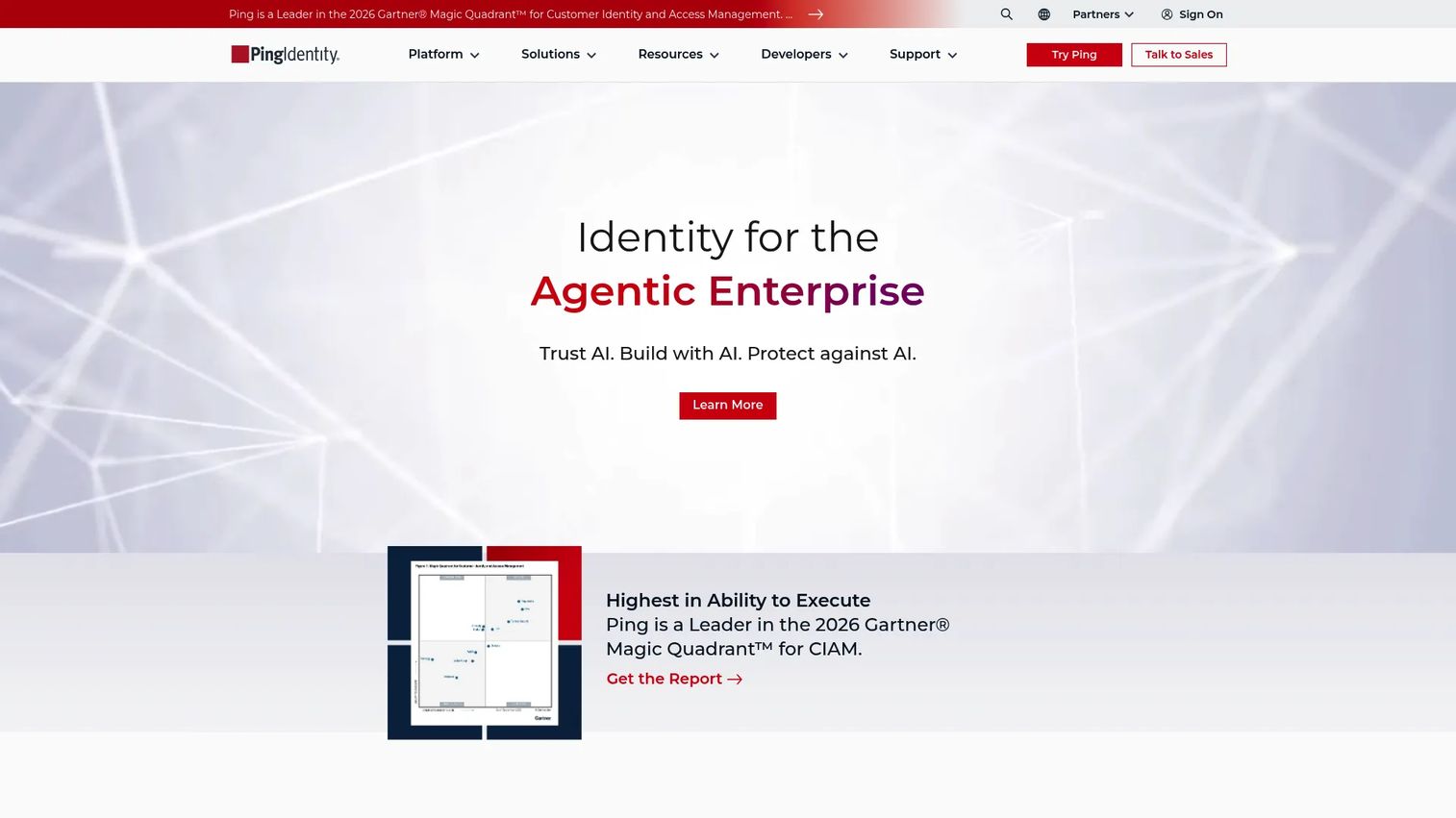
Ping Identity is an enterprise IAM platform built for organizations with complex hybrid environments, federation requirements, and advanced orchestration needs. It serves workforce, customer, partner, and AI agent identity use cases. Ping is particularly strong in scenarios where identity flows span multiple cloud providers, on-premises systems, and external identity standards, and where a single orchestration layer needs to coordinate those flows.
Best for: Large enterprises with hybrid identity, federation, and sophisticated orchestration requirements.
Key features
- Identity orchestration across cloud and on-premises systems
- Federation and SSO with SAML, OIDC, and OAuth support
- Adaptive and passwordless authentication
- Hybrid deployment options (cloud, self-managed, or combined)
- Customer identity capabilities alongside workforce identity
- Just-in-time privileged access controls
Why choose Ping Identity: Ping fits evaluations where identity flows are not simple. If the buyer has a mix of legacy on-premises directories, cloud applications, and external partner integrations, Ping's orchestration layer handles that complexity without forcing a rip-and-replace of existing infrastructure. Presales teams should flag Ping when buyers describe multi-cloud or federated identity requirements.
Ping Identity pricing: Pricing is handled through sales and customized based on use case, deployment model, selected capabilities, and identity count. Contact Ping directly for a quote.
G2 rating: 4.4/5
4. SailPoint Identity Security Cloud
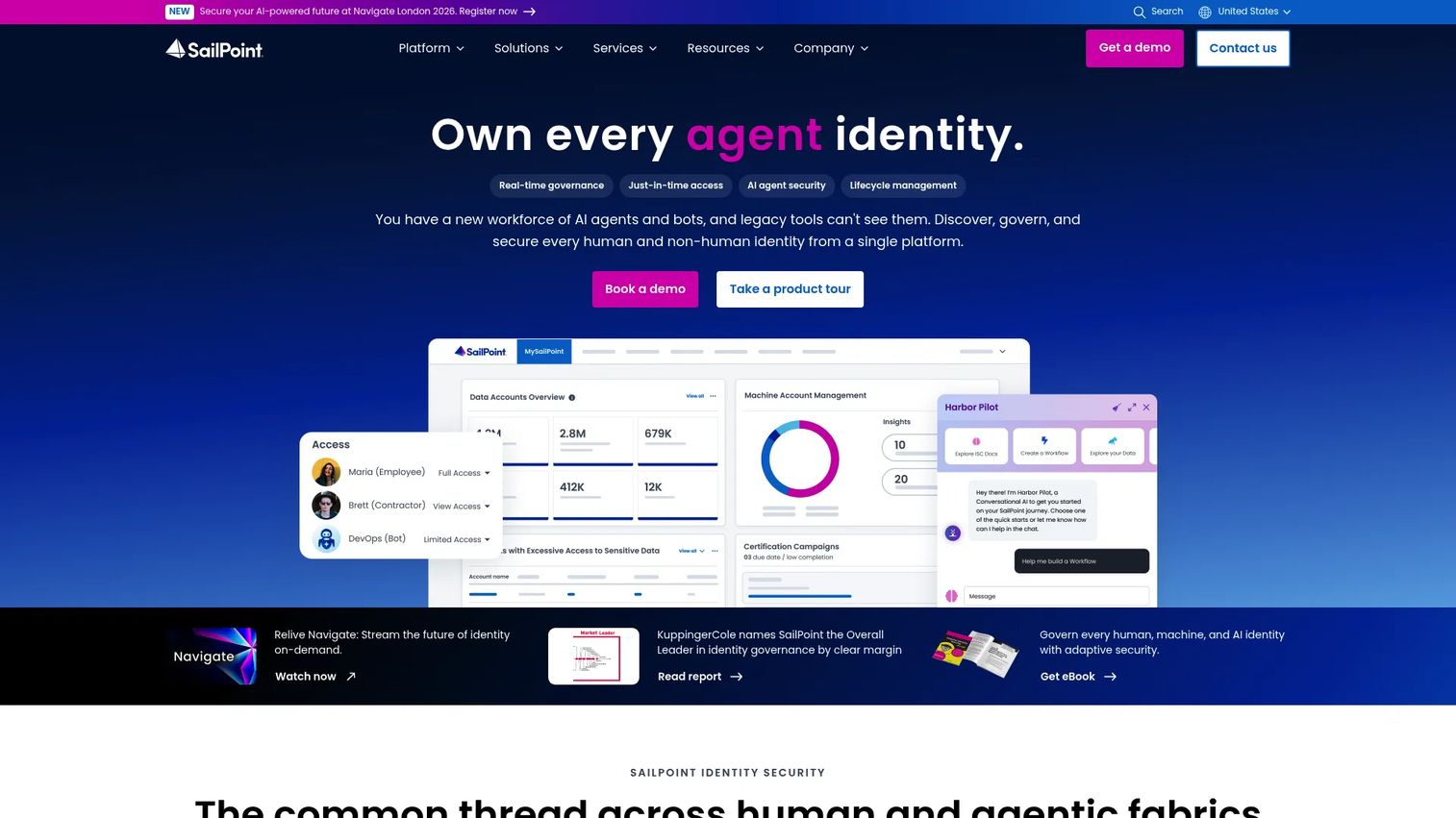
SailPoint Identity Security Cloud is a cloud-based identity governance and administration platform designed for enterprises with rigorous compliance and access certification requirements. It focuses on the governance layer: Proving who has access, why they have it, whether it is still appropriate, and who approved it. SailPoint is commonly found in regulated industries where audit evidence is a hard requirement rather than a nice-to-have.
Best for: Enterprises that need access certifications, policy enforcement, and audit-ready identity lifecycle governance.
Key features
- Access certifications and periodic access reviews
- Identity lifecycle governance with automated provisioning and deprovisioning
- Segregation of duties controls and policy enforcement
- Access request workflows with approvals and escalations
- AI-driven access modeling and outlier detection
- Cloud Infrastructure Entitlement Management (CIEM)
Why choose SailPoint: Choose SailPoint when the buyer's primary problem is proving who has access and whether that access is still justified. SSO is not the focus here. The platform earns its place when security or compliance teams demand structured access review cycles, audit logs, and policy-driven governance rather than just authentication. For access review software requirements, SailPoint is one of the strongest category fits.
SailPoint pricing: SailPoint offers tiered suites (Standard, Business, Business Plus) with additional modules available. Pricing goes through sales and varies by user count, modules selected, and governance scope.
G2 rating: A product-specific G2 rating for Identity Security Cloud was not confirmed at time of writing.
5. CyberArk Identity
CyberArk Identity is an identity security platform that addresses workforce identity alongside privileged access and machine identity management. It is part of a broader CyberArk portfolio focused on reducing identity-related risk across the full spectrum of human and non-human identities. For security-led teams, the appeal is that IAM and privileged access management sit under one vendor rather than being managed separately.
Best for: Security-focused organizations that need IAM aligned with privileged access and identity threat reduction.
Key features
- SSO and MFA with adaptive access policies
- Privileged access management and least-privilege enforcement
- Identity lifecycle governance across workforce and machine identities
- Endpoint privilege controls for workstations and servers
- Identity security analytics and risk visibility
- Agentic identity security for AI workloads
Why choose CyberArk Identity: CyberArk is a strong fit when the buyer's security team is already invested in the CyberArk portfolio or when privileged access management is as important as workforce SSO. It reduces the vendor count for organizations that would otherwise manage a separate PAM tool alongside a standard IAM platform. Presales teams encounter this during security reviews where admin account governance is a primary concern.
CyberArk Identity pricing: Pricing is handled through sales. No public tier prices are displayed on CyberArk's product pages.
G2 rating: 4.5/5
6. OneLogin
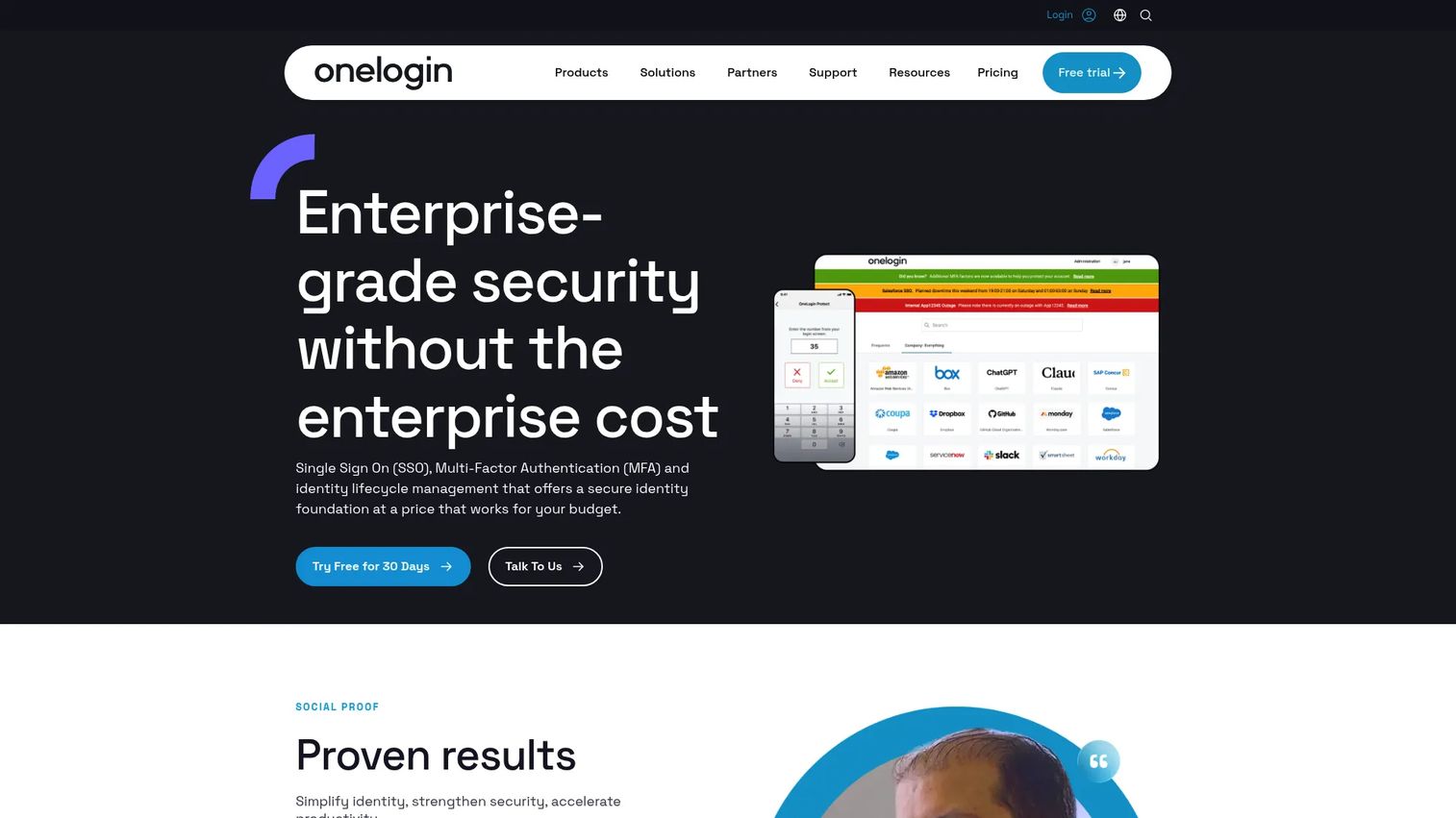
OneLogin is a cloud-based IAM platform covering SSO, MFA, directory integration, and user provisioning. It is positioned for mid-market organizations that want strong workforce identity capabilities without the implementation complexity of larger enterprise platforms. OneLogin's SmartFactor Authentication uses machine learning to adapt authentication requirements based on context, adding a risk-aware layer beyond standard MFA.
Best for: Mid-market companies that want strong SSO and access management without heavy enterprise implementation overhead.
Key features
- Single Sign-On across cloud and on-premises applications
- Multi-Factor Authentication with SmartFactor Authentication
- Advanced Directory with LDAP, Active Directory, and HR system integration
- User provisioning and deprovisioning via SCIM
- HR-Driven Identity for lifecycle triggers from HRIS systems
- OneLogin Desktop for macOS and Windows device access
Why choose OneLogin: OneLogin works well when the buyer wants a focused workforce identity platform with familiar SSO and provisioning patterns. It sits between the entry-level cloud directory tools and the large enterprise IAM platforms, making it a practical shortlist candidate for mid-market buyers who need SCIM provisioning and directory integration without the cost structure of enterprise-tier alternatives.
OneLogin pricing: Basic plans start at $3 per user per month. Essentials is $6 per user per month, and Business is $10 per user per month. Enterprise pricing requires contacting sales. OneLogin Workflows is available as an add-on at $2 per user per month.
G2 rating: 4.4/5
7. JumpCloud
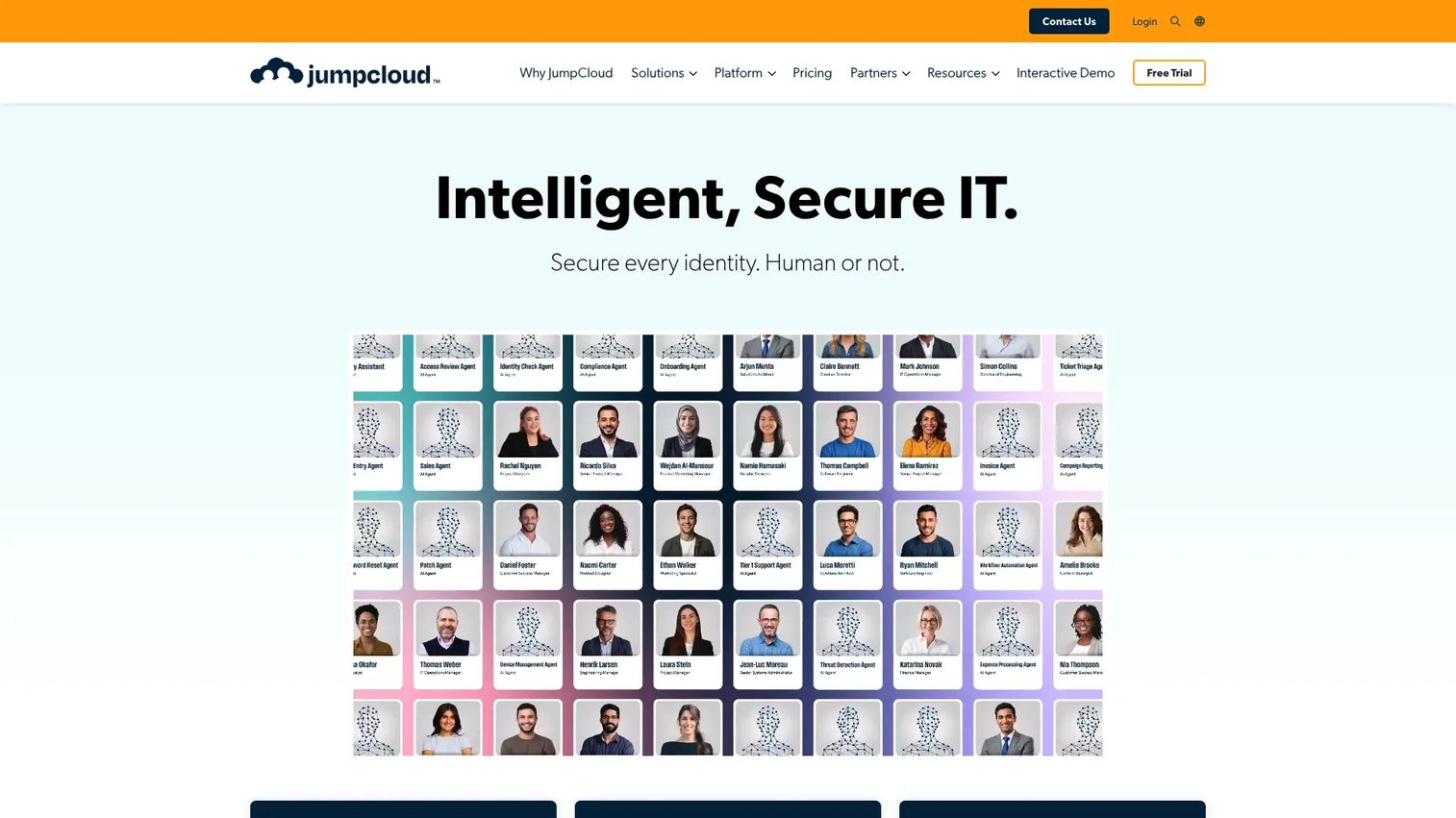
JumpCloud is a unified platform combining cloud directory services with identity management and device management across Windows, macOS, Linux, iOS, and Android. For IT teams reducing or replacing on-premises Active Directory, JumpCloud provides a cloud-native directory that also enforces access policies at the device level. This combination matters when buyers need identity and device health to inform access decisions together. It is also a useful reference point for presales teams building best presales software tools stacks that include identity awareness.
Best for: Small and mid-market IT teams managing identity, access policies, and devices from a single cloud platform.
Key features
- Cloud Directory for user and group lifecycle management
- SSO and MFA across applications and devices
- Unified device management for Windows, macOS, and Linux
- Cross-OS conditional access based on device state
- Password management options integrated with the directory
- Directory Insights for audit logging and reporting
Why choose JumpCloud: JumpCloud earns its place when the buying team needs identity and device management handled together without deploying two separate platforms. It is particularly relevant for organizations moving away from on-premises Active Directory that want cloud-native directory services alongside the access control layer. A 30-day free trial is available.
JumpCloud pricing: Module pricing starts at $9 per user per month (billed annually) for Device Management, $11 per user per month for SSO, and $13 per user per month for Device Identity Management. Platform bundles are available through sales.
G2 rating: 4.5/5
8. IBM Verify
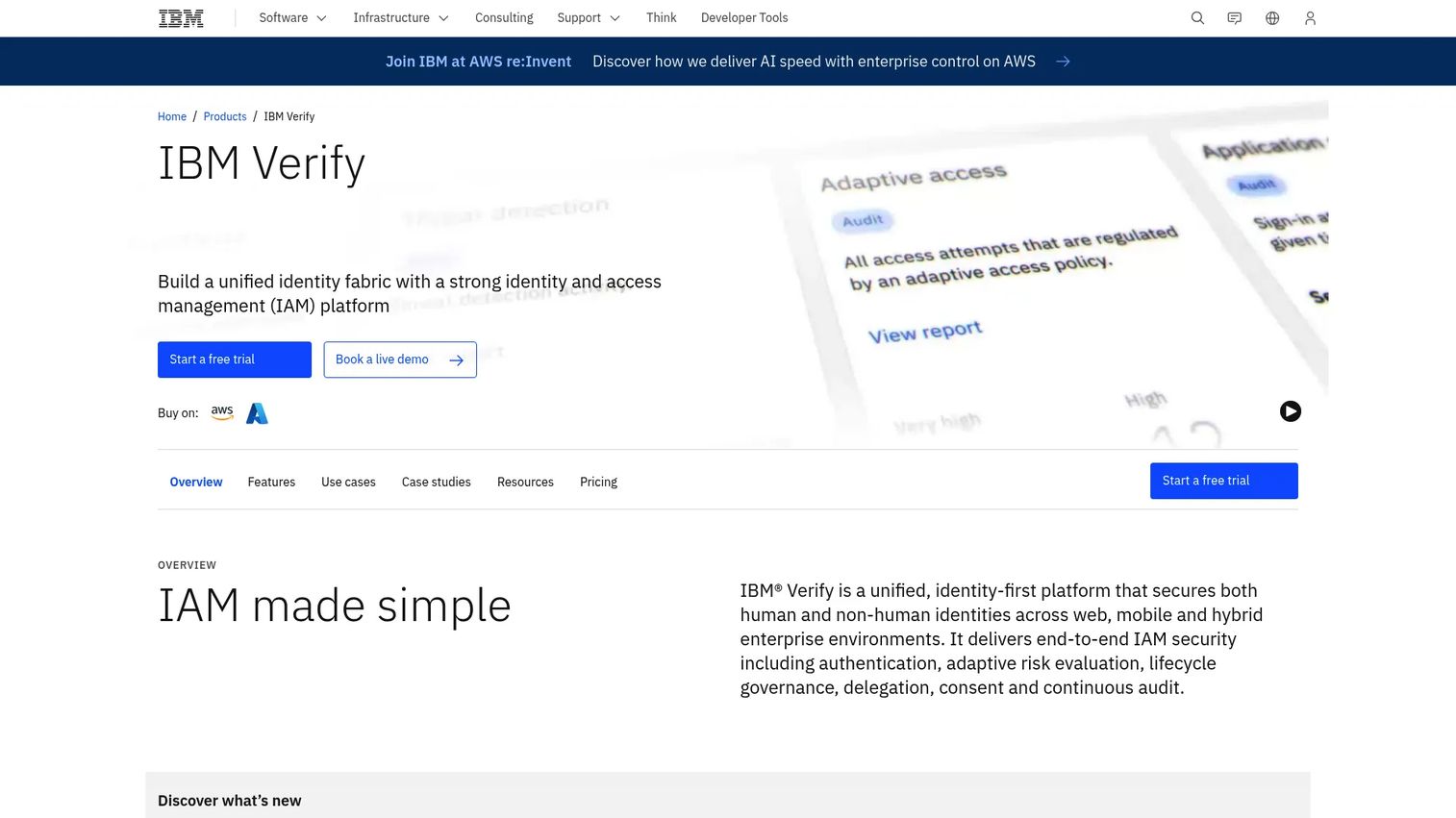
IBM Verify is an enterprise IAM platform covering workforce, customer, and non-human identity across web, mobile, and hybrid environments. It supports adaptive access, SSO, MFA, identity governance, and passwordless authentication. IBM Verify is a common presence in large enterprise and regulated environments where IBM infrastructure is already embedded and where identity requirements span cloud and on-premises systems simultaneously.
Best for: Large enterprises with IBM infrastructure or hybrid identity requirements in regulated industries.
Key features
- Adaptive access with risk-based authentication
- SSO and MFA across enterprise applications
- Identity governance with access certification workflows
- Passwordless authentication options
- Hybrid identity support across cloud and on-premises
- Identity orchestration for complex authentication flows
Why choose IBM Verify: IBM Verify fits when the buyer's environment already includes IBM infrastructure or when vendor consolidation around IBM is a procurement priority. It is also a reasonable fit for enterprises that need identity governance alongside workforce authentication and prefer an established vendor with deep enterprise support options. Pricing uses a usage-based model.
IBM Verify pricing: IBM uses a resource-unit pricing model. No fixed numeric prices are published on the IBM Verify pricing page. Contact IBM sales for a quote based on identity volumes and selected capabilities.
G2 rating: 4.3/5
9. Saviynt
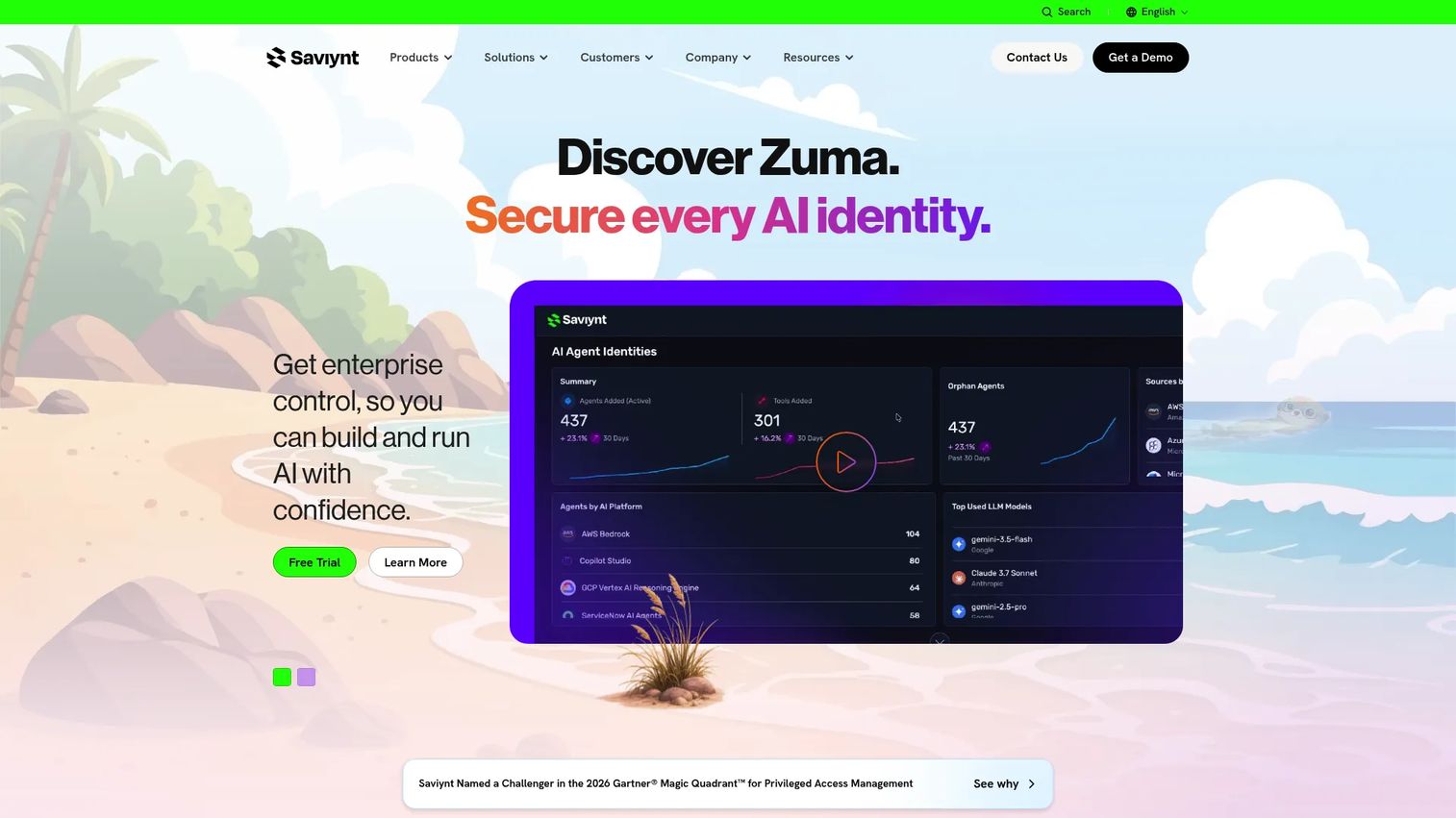
Saviynt is a cloud-native identity security platform covering identity governance and administration, privileged access management, application access governance, and identity security posture management. Where SailPoint dominates on-premises IGA heritage, Saviynt is built cloud-first, which makes it a strong option for organizations whose identity governance requirements center on SaaS and cloud workloads. For compliance teams, Saviynt's access certifications and risk-based review workflows address the audit evidence gap that often stalls enterprise deals. This is a category that intersects directly with audit management software requirements.
Best for: Enterprises prioritizing cloud-native identity governance, application access controls, and compliance workflows.
Key features
- Identity Governance and Administration with lifecycle automation
- Privileged Access Management integrated with IGA
- Application Access Governance for SaaS and cloud apps
- Identity Security Posture Management
- AI-powered access recommendations and risk scoring
- Just-in-time access for high-risk operations
Why choose Saviynt: Saviynt is a strong fit when the buyer needs IGA capabilities that go beyond basic SSO, particularly in SaaS-heavy environments where application access governance and risk controls are priorities. The platform handles access certifications, separation of duties, and lifecycle automation as core features rather than add-ons.
Saviynt pricing: Saviynt offers Essentials, Pro, and Premium tiers, but prices are not published. Contact Saviynt for a quote. A free trial is available through Zuma Insights.
G2 rating: 4.3/5
10. Oracle Access Management
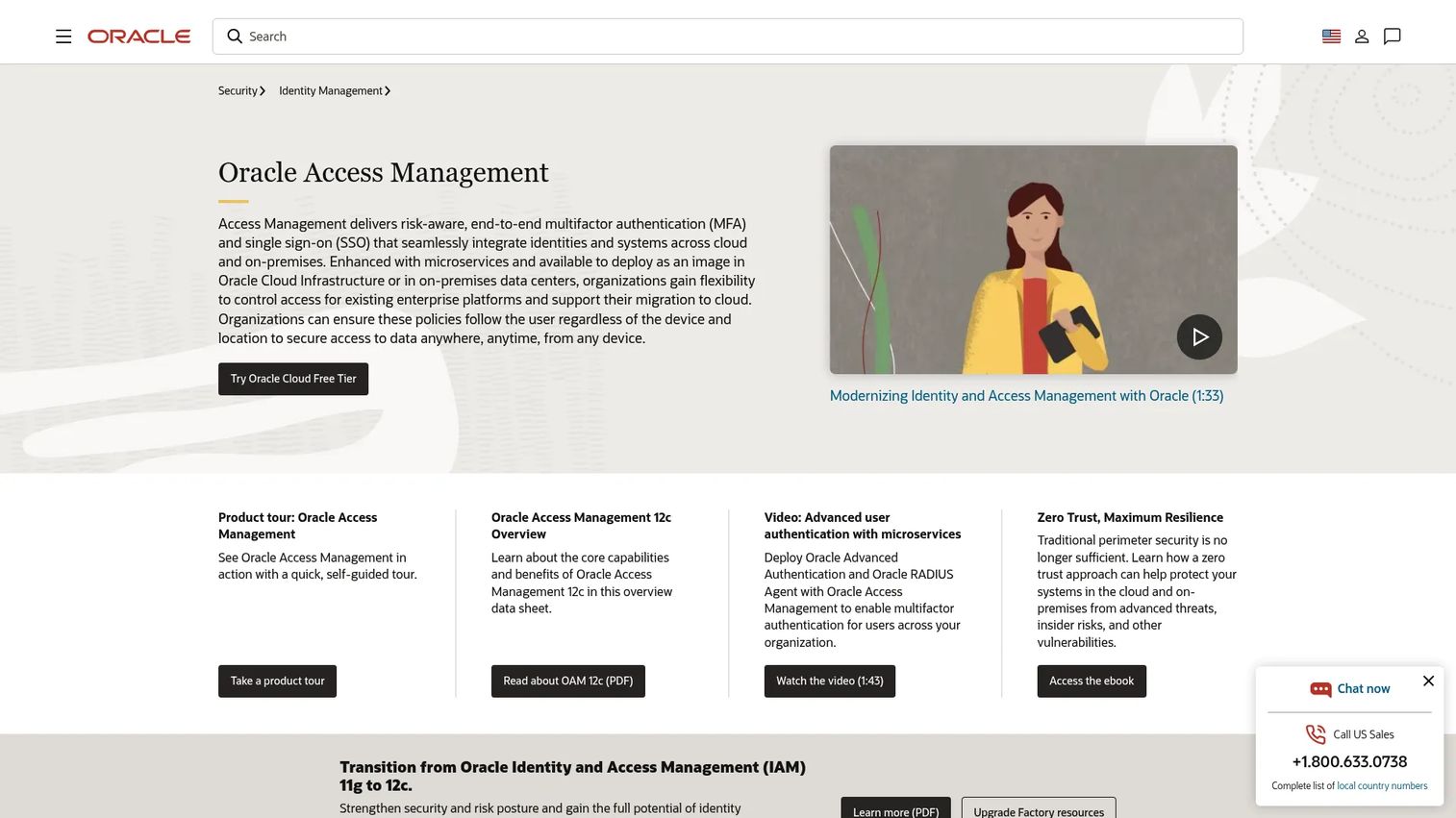
Oracle Access Management is an enterprise access management product for organizations with significant Oracle application investments, legacy infrastructure, and complex access policy requirements. It provides risk-aware MFA, SSO, and federation capabilities alongside real-time fraud prevention and context-aware access controls. Oracle Access Management belongs in evaluations where Oracle systems are central to operations.
Best for: Enterprises with Oracle applications, legacy systems, or existing Oracle identity investments.
Key features
- Enterprise SSO across Oracle and non-Oracle applications
- Risk-based and multifactor authentication
- Real-time fraud prevention and session monitoring
- Federation support for SAML and OAuth
- Context-aware access using device, geographic, and session context
- Oracle ecosystem integration for EBS, Fusion, and other Oracle products
Why choose Oracle Access Management: Oracle Access Management belongs on the shortlist when the buyer's environment is Oracle-heavy and identity must connect to existing Oracle infrastructure without introducing a separate vendor relationship. It is not a universal recommendation, but it is the right answer when Oracle is the dominant platform and access management needs to fit within that architecture.
Oracle Access Management pricing: Pricing is not published and is handled through Oracle sales. Contact Oracle directly for commercial terms.
G2 rating: A verified G2 rating for Oracle Access Management specifically was not confirmed at time of writing.
11. Cisco Duo
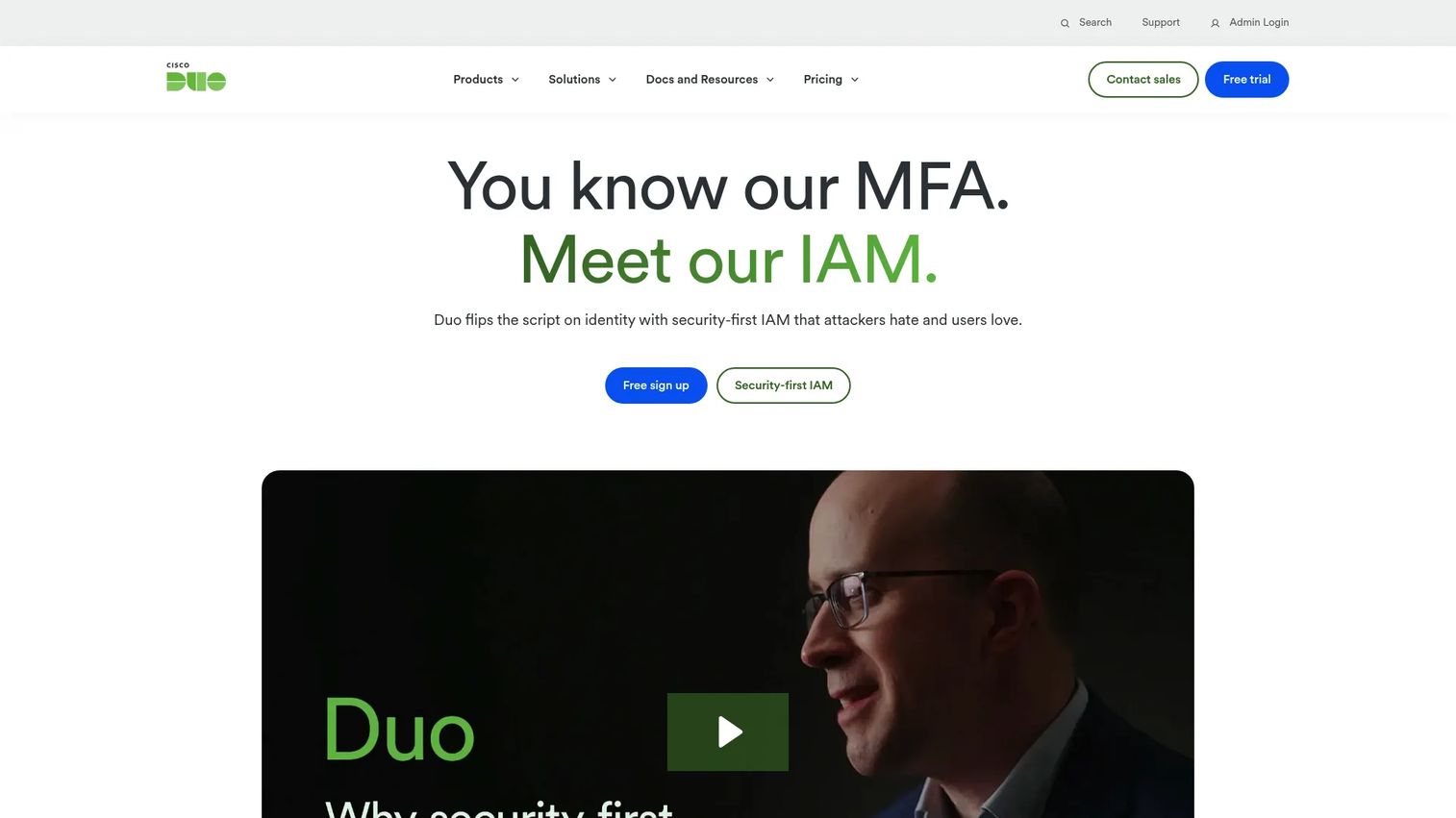
Cisco Duo is a cloud-delivered identity security platform focused on MFA, device trust, and zero trust access. It is not a full identity governance or provisioning platform, and it is commonly paired with other IAM tools in the stack. Duo's strength is in securing application access at the authentication layer: Verifying user identity, checking device health, and applying risk-based policies before granting access. For presales teams, Duo often comes up in technical discovery as the MFA layer their buyer already has in place.
Best for: Organizations that need fast MFA deployment, device trust enforcement, and application access controls without a full IGA platform.
Key features
- MFA with phishing-resistant and passwordless options
- Device trust checks before access is granted
- SSO support for cloud and on-premises applications
- Risk-based access policies adapting to user and device signals
- VPN-less remote access (Duo Premier tier)
- Identity intelligence and session threat detection
Why choose Cisco Duo: Duo is the right choice when the immediate problem is MFA and device posture, not full identity lifecycle governance. It is fast to deploy and commonly used alongside directory platforms like Microsoft Entra ID or Okta. Security teams often request Duo specifically by name during technical validation because it is a recognizable zero trust access control.
Cisco Duo pricing: Duo Free covers up to 10 users at no cost. Duo Essentials starts at $3 per user per month. Duo Advantage is $6 per user per month and adds identity intelligence and risk-based access. Duo Premier is $9 per user per month and includes VPN-less remote access.
G2 rating: A verified G2 rating for Cisco Duo was not confirmed at time of writing.
12. Google Cloud Identity
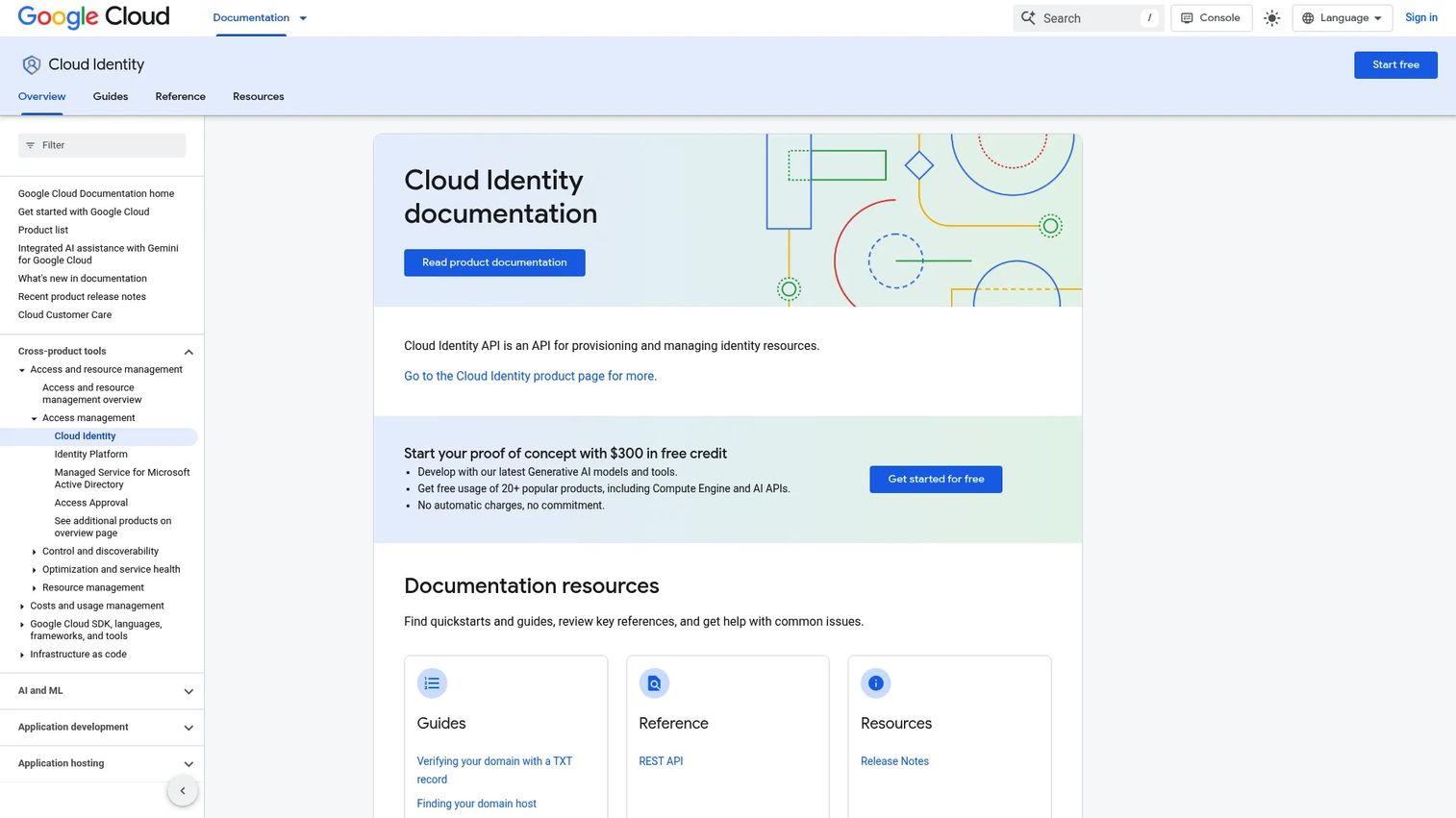
Google Cloud Identity is Google's identity-as-a-service platform for centrally managing users, groups, and access within Google Cloud and Google Workspace environments. It provides SSO, two-step verification, endpoint management, and context-aware access policies. For organizations built around Google Workspace and Google Cloud, Cloud Identity is the natural identity layer, offering deep integration without the overhead of a separate IAM vendor.
Best for: Organizations standardized on Google Workspace and Google Cloud that need identity and endpoint controls close to their core infrastructure.
Key features
- Centralized user and group management across Google Cloud
- Identity federation with Active Directory and Microsoft Entra ID
- SSO for SAML applications
- Two-step verification and security key support
- Endpoint and device management for mobile and desktop
- Context-Aware Access based on device state and user attributes
- Directory synchronization for hybrid environments
Why choose Google Cloud Identity: Cloud Identity fits when the buyer's workforce primarily operates in Google Workspace and the identity requirements center on Google-native controls. It also handles federation with Active Directory for hybrid teams, which addresses the gap between Google-first organizations and legacy on-premises directories.
Google Cloud Identity pricing: The free tier covers 50 user licenses by default with core identity management. Cloud Identity Premium costs $7.20 per user per month on a flexible plan, or $6.00 per license per month on an annual fixed-term plan.
G2 rating: 4.3/5
13. AWS Identity and Access Management
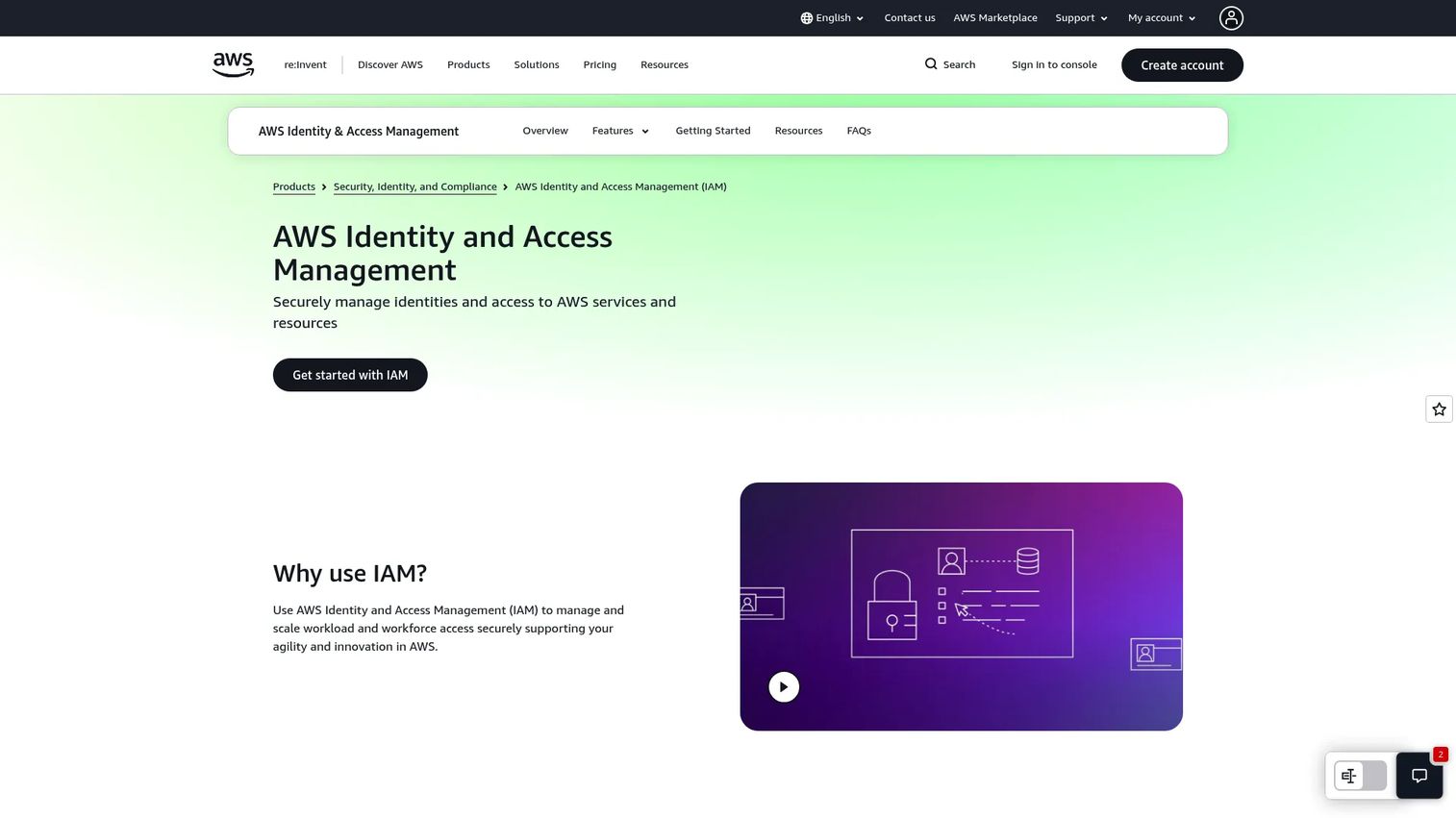
AWS Identity and Access Management controls access to AWS services and resources at the infrastructure level. It is not a workforce identity platform in the same category as Okta or Entra ID. AWS IAM manages fine-grained permissions for users, roles, and services operating within AWS, and it is a required building block for any organization running workloads on AWS. Presales teams need to understand the distinction: Buyers asking about AWS IAM are typically talking about cloud infrastructure access control, not employee SSO.
Best for: Cloud teams managing roles, policies, and service-to-service permissions within AWS environments.
Key features
- IAM users and roles for fine-grained access control
- Policy management with condition-based permissions
- Multi-factor authentication for AWS account access
- Identity federation for connecting external identity providers
- Service-linked roles for AWS service permissions
- AWS Access Analyzer for policy validation and permission visibility
Why choose AWS IAM: AWS IAM is required for any organization running infrastructure on AWS. It handles the permissions layer for AWS resources and integrates with external identity providers through federation. Understanding how a buyer's AWS IAM setup interacts with their workforce identity platform is useful context during technical validation for cloud-deployed products.
AWS IAM pricing: AWS IAM is included in every AWS account at no additional charge. Related services such as AWS IAM Identity Center or AWS Directory Service are priced separately through standard AWS billing.
G2 rating: 4.5/5
14. Rippling IT
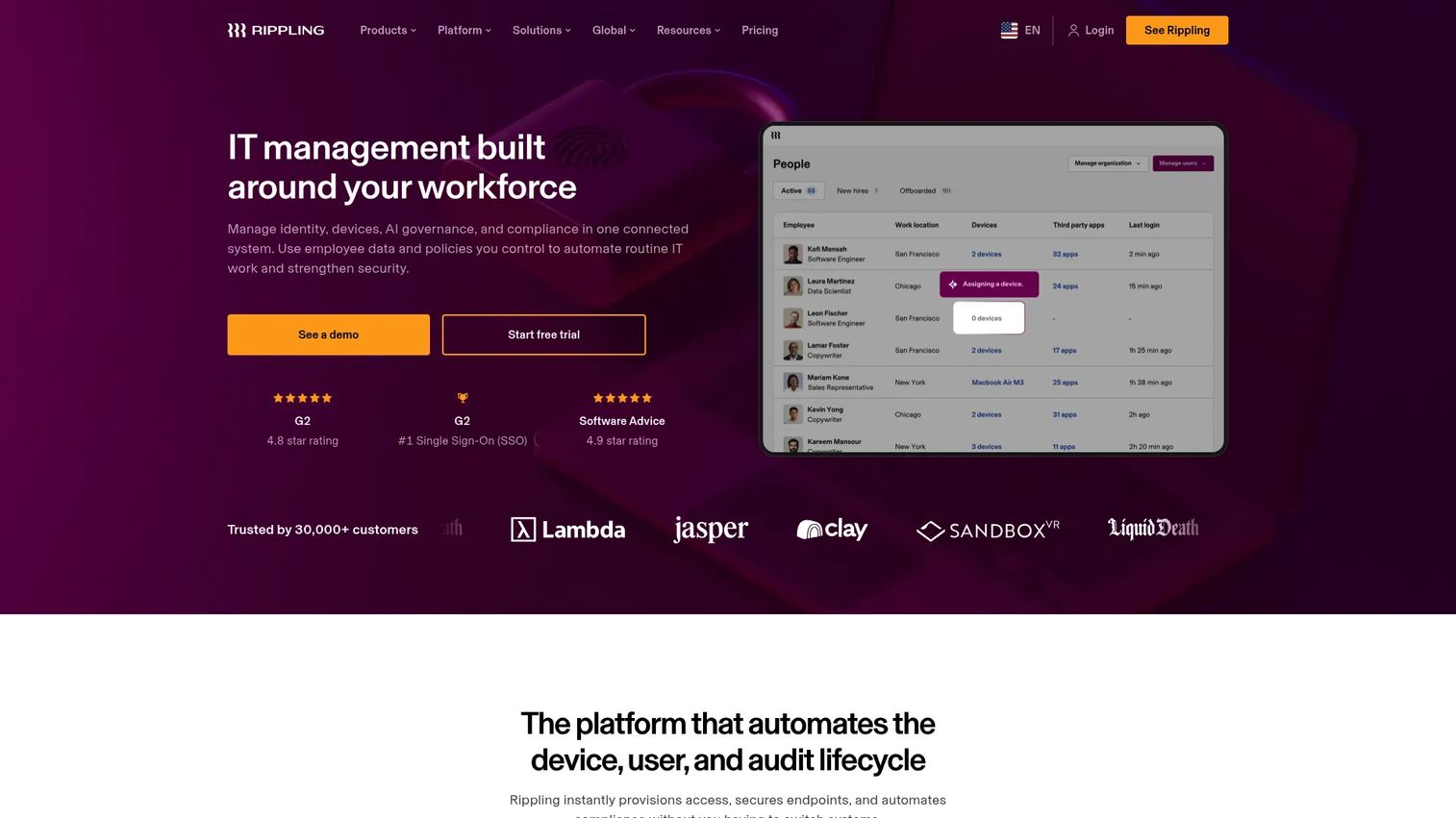
Rippling IT is a unified IT management platform that connects identity and access management directly to HR operations. When someone joins the company, Rippling triggers app provisioning, device enrollment, and access group assignments automatically based on their role. Role changes update access in real time. Offboarding revokes everything at once. For organizations where IT and HR workflows are currently managed separately, Rippling collapses that gap into a single system.
Best for: Growing companies that want identity, app access, and device management driven automatically by HR lifecycle events.
Key features
- HR-driven provisioning with role-based access assignment
- SSO, SCIM, RBAC, MFA, and conditional access
- Device management for macOS, Windows, iOS, and iPadOS
- Zero-touch device deployment and OS patching
- Inventory management and automated compliance checks
- Employee lifecycle automation from hire to offboard
Why choose Rippling IT: Rippling earns its place when hiring and offboarding speed are the primary drivers. Security teams often raise the offboarding gap as a risk: Former employees retaining active app credentials. Rippling addresses that directly by tying access revocation to the HR offboarding event rather than requiring manual IT action. It is a strong fit for companies scaling headcount quickly where manual provisioning is already breaking. For teams also evaluating related asset lifecycle management software, Rippling's device inventory layer is worth noting.
Rippling IT pricing: Pricing starts at $8 per employee per month using a modular model. The final cost varies by selected products and employee count. Contact Rippling for a full quote.
G2 rating: 4.8/5
Considerations when choosing identity management software
Start with the identity scope
Before comparing platforms, define the problem. Workforce identity (employees and contractors), infrastructure IAM (cloud resource permissions), customer identity, and identity governance are related but distinct problems. Choosing a governance platform when you need SSO and provisioning creates tool sprawl. Getting the scope right first cuts the shortlist from 14 to 3.
Check provisioning and deprovisioning depth
SSO is visible. Provisioning failures are not, until they become a security incident or an audit finding. Verify whether the platform supports SCIM, can trigger provisioning from your HRIS, and handles group mapping across your target applications. Deprovisioning speed matters too: Ask vendors how long it takes to remove access across all connected apps when an employee leaves.
Validate security review requirements
Your buyer's security team will ask for MFA enforcement, conditional access policies, audit logs, access certifications, and evidence export. Map those requirements to platform capabilities before shortlisting. A tool that produces clean audit reports on demand is worth more than one that requires a spreadsheet chase to answer a single compliance question.
Evaluate integrations and operating model fit
The IAM platform must connect to the buyer's existing HRIS, directory, cloud provider, and SaaS applications. Check whether the integration is native or requires middleware. Also consider whether the vendor supports the operating model: Cloud-only, hybrid, or self-managed. A cloud-first tool deployed into a heavily on-premises environment creates friction that will surface during implementation.
Understand how pricing scales before committing
IAM pricing changes with user count, module selection, governance features, MFA depth, and lifecycle automation. A per-user price that looks affordable at 200 users can look different at 2,000. Map the features your buyer actually needs to the tier that includes them, then model the cost at realistic scale before comparing sticker prices.
Conclusion
The right identity management software depends primarily on the buyer's existing stack and the specific IAM problem they need to solve.
For vendor-neutral workforce identity, Okta remains the broadest default. Microsoft Entra ID is the natural fit for Microsoft-centric organizations. Ping Identity handles complex enterprise orchestration. SailPoint and Saviynt both address identity governance, with SailPoint carrying more IGA heritage and Saviynt built cloud-first. JumpCloud is the practical choice when identity and device management need to travel together. Cisco Duo is where most organizations start with MFA and device trust. AWS IAM is non-negotiable for AWS environments. Rippling IT automates the full lifecycle from HR event to access grant.
The recommended next step: List current identity sources and required application integrations, map joiner/mover/leaver workflows, confirm SSO, SCIM, MFA, audit, and governance requirements, then shortlist three platforms based on operating model and budget. Running a structured discovery call before a demo saves both sides time.
If your team also needs better ways to show complex software during sales cycles, Start your journey with Guideflow today!
FAQs
Identity management software enables organizations to create, authenticate, authorize, manage, and audit digital identities across applications, devices, and cloud services. It governs employees, contractors, and administrators throughout their lifecycle, from account creation on day one through access revocation when they leave. Modern platforms also extend to machine identities and AI agents operating within enterprise environments.
Identity management focuses on identity lifecycle and user record maintenance: Who the user is, how their account is created, and when it is removed. IAM (identity and access management) is the broader category that adds authentication and authorization, controlling what each identity can access and under what conditions. In practice, most buyers use IAM as the umbrella term for the full category.
A complete IAM platform should cover SSO, MFA, automated provisioning and deprovisioning, role-based access control, conditional access policies, audit logs, directory integration, and access governance. Governance capabilities including access certifications and approval workflows are essential for regulated industries and any organization that needs to pass a security review. See the access control software category for related tools that complement a core IAM platform.
There is no single universal answer. Microsoft Entra ID leads for Microsoft-centric organizations. Okta is the default for diverse SaaS stacks without a Microsoft anchor. Ping Identity fits complex hybrid and federated environments. SailPoint and Saviynt are the strongest choices when identity governance, access certifications, and compliance reporting are the primary drivers. CyberArk Identity belongs when privileged access alignment is a security requirement.
No. SSO centralizes login, but it does not cover who gets access in the first place, what happens when someone changes roles, or how access is removed when they leave. A complete identity management approach also requires provisioning, deprovisioning, MFA enforcement, access policies, audit logs, and governance reviews. SSO without lifecycle management creates an access sprawl problem that auditors will find eventually.
Presales teams can move faster through technical validation when they understand common IAM requirements before the security review starts. Knowing which platforms support SAML, OIDC, SCIM, RBAC, and access certifications lets you pre-answer the questions that typically stall deals. Understanding your buyer's identity provider early in discovery also shapes how you position integrations and single sign-on compatibility for your own product.
Access management controls how users authenticate and what applications they can reach, enforcing policies at login time. Identity governance answers a different question: Whether that access should exist, who approved it, and when it should be reviewed or removed. Governance adds the audit layer, access certification workflows, and policy enforcement that proves access is appropriate over time rather than just controlling it at the door. For related tooling, the ai governance tools category covers adjacent policy and oversight requirements.
Per-user pricing alone is rarely enough for a meaningful comparison. Map the features you actually need to the tier that includes them, then model the cost at your real user count. Key cost drivers include governance and access certification modules, MFA depth, lifecycle automation, support tiers, implementation costs, and minimum contract terms. For platforms that price through sales, ask for the per-user range at your user count and the minimum annual commitment before requesting a formal quote.