


A rep pings you the day after payday. Their commission is off by $1,400. You open the spreadsheet. Three tabs deep, someone changed an accelerator formula last quarter and never told finance. Now you are reverse-engineering a payout while the rep quietly wonders whether every check has been wrong.
That is the real cost of messy comp. Not the rework hours, though those add up. It is the trust erosion. When reps do not believe their numbers, they stop trusting the plan, and a plan nobody trusts stops changing behavior.
About 75% of organizations that adopt sales automation say they do it primarily to reduce commission errors, according to Industry Research (2024). Accuracy is the headline reason, but the deeper win is what accuracy buys you: reps who stop shadow-tracking payouts in their own spreadsheets, managers who can coach instead of arbitrate disputes, and finance that closes the period without a fire drill.
This guide walks through eight commission management software platforms for 2026, from flexible plan modeling to enterprise-grade incentive compensation management. Commission management is not just calculation. It is trust infrastructure for Sales, Finance, and RevOps.
What's inside
This guide is for RevOps, Finance, and Sales Enablement stakeholders comparing sales commission software that replaces spreadsheets and gives everyone a shared source of truth. We picked tools that a skeptical buyer would actually shortlist.
We scored each platform on four things that matter most for revenue teams:
- Automation depth: how well it handles automated commission calculations, accelerators, and plan changes
- Data unification: integrations across CRM, ERP, HCM, payroll, and warehouse
- Reporting and transparency: rep commission statements, dashboards, and payout visibility
- Auditability and adoption: audit trails, dispute workflows, and how quickly reps trust it
TL;DR
Short on time? Here is the quick map of which commission tracking software fits which buyer.
- Best overall platform: CaptivateIQ, for teams that want planning and incentives in one place
- Best for Salesforce-heavy teams: Salesforce Spiff, for native fit and clear commission tracing
- Best for flexible commission plan modeling: QuotaPath, for a modern comp ops workflow with lighter overhead
- Best for serious commission operations: Everstage, for RevOps and finance teams that want strong implementation support
- Best for enterprise planning plus incentives: Xactly and Varicent, for complex comp structures at scale
- Best for finance and compliance-heavy teams: SAP Commissions, for organizations standardized on SAP, and Performio for mid-market control
What is commission management software?
Commission management software is a system that automates how sales commissions are calculated, tracked, reported, and paid, replacing spreadsheets with a single auditable source of truth for reps, managers, and finance.
The category overlaps heavily with sales compensation software and incentive compensation management. The lines blur, but the core job stays the same: turn a comp plan into accurate payouts without manual math.
Here is what a real commission management platform handles:
- Automated calculation logic: accelerators, tiers, splits, clawbacks, and quota attainment computed on live deal data
- Rep statements and payout visibility: clear rep commission statements showing what they earned, why, and when
- Integrations: CRM, ERP, HCM, payroll, and data warehouse connections that pull deal and org data automatically
- Analytics and dashboards: commission reporting for reps, managers, and finance leaders
- Dispute workflows and audit trails: a traceable record of every calculation and every change
- Compliance support: revenue recognition and reporting aligned to standards like ASC 606 and IFRS 15
The global sales commission software market was valued at USD 5.26 billion in 2024 and is projected to reach USD 9.38 billion by 2032 at a 7.5% CAGR, according to Congruence Market Insights (2024). Cloud-based deployment now represents roughly 65 to 70% of new installs, per Industry Research (2024). This is a maturing category, not an experiment.
When to use commission management software
Not every team needs a dedicated platform on day one. Here is how to know when spreadsheets have hit their limit.
Replace spreadsheet-based payouts
Spreadsheets break the moment your plan gets interesting. Add a few accelerators, a couple of splits, and mid-quarter quota changes, and one wrong cell cascades across every rep. Commission calculation software pulls deal data straight from your CRM and applies plan logic automatically. Manual math drops out. So do the version-control nightmares where three people edited the same tab.
Support plan changes and territory shifts
Comp plans are not static. Quotas move, accelerators get retuned, and territory management shifts reps between segments mid-year. When a plan change means rewriting formulas by hand, you delay the change or ship it with errors. A real platform lets you model the new plan, test it against historical data, and roll it out without touching a formula. Fast, safe changes keep the plan aligned to strategy.
Improve rep trust and finance visibility
This is the part spreadsheets can never fix. When a rep disputes a payout, you need traceability: what deal, what rule, what number, and who changed what. A commission platform gives reps a live statement they can check themselves, cutting the "is my check right?" pings. It gives finance an audit trail for close and compliance. Fewer commission disputes, cleaner manager conversations, more selling time.
Comparison table
Here is the shortlist at a glance, sorted by fit for most commission management software buyers rather than alphabetically. Pricing and ratings reflect verified values from each vendor and G2 at the time of writing. Several enterprise vendors publish quote-based pricing only.
| # | Product | Best for | Key use case | Pricing | G2 rating |
|---|---|---|---|---|---|
| 1 | CaptivateIQ | Mid-market and enterprise teams managing complex commissions | Unified planning plus incentives | Custom (per-seat + setup fee) | 4.7/5 |
| 2 | Salesforce Spiff | Salesforce-heavy teams needing rep visibility | Real-time commission tracing and audit trails | $75/user/mo (billed annually) | 4.6/5 |
| 3 | QuotaPath | Teams wanting transparent comp automation | Flexible plan building and payout workflows | $35/user/mo + platform fee | 4.7/5 |
| 4 | Everstage | RevOps and finance teams scaling comp ops | Commission ops with planning and disputes | Custom (per-payee) | 4.8/5 |
| 5 | Xactly | Enterprises needing mature SPM | Incentive compensation at scale | Custom (Core, Plus, Ultimate) | 4.2/5 |
| 6 | Varicent | Large revenue orgs with complex structures | Enterprise planning and incentives | Custom | 4.5/5 |
| 7 | SAP Commissions | Organizations standardized on SAP | Complex plan design and traceability | Price upon request | 4.1/5 |
| 8 | Performio | Mid-market and enterprise comp admin | Automation and payout control | Custom (quote-based) | 4.4/5 |
Best 8 commission management software tools for 2026
Below is the full breakdown. Each entry covers who it fits, what stands out, why you would choose it, and what pricing looks like.
1. CaptivateIQ

CaptivateIQ positions itself as sales performance management, not just a commission calculator. It ties comp planning and incentives into one platform, so the team modeling quotas and the team running payouts work from the same data. Its SmartGrid ELT and calculation engine handle complex plan logic, and CaptivateIQ Assist adds AI to the admin workflow. For teams tired of stitching a planning tool to a separate payout tool, that unification is the pitch.
Best for: Mid-market and enterprise teams that want planning and incentives on a single platform.
Key strengths
- SmartGrid ELT and calculation engine for complex plans
- Unified quota planning and territory management
- CaptivateIQ Assist AI for comp administration
- Predictive modeling for plan design
Why choose CaptivateIQ: If your pain is two disconnected systems, one for planning and one for payouts, CaptivateIQ collapses them. It fits teams whose comp complexity has outgrown point tools but who want one source of truth across the full sales performance workflow.
CaptivateIQ pricing: Pricing is quote-based. The site states per-seat pricing plus a one-time setup fee, with no public numeric price listed.
2. Salesforce Spiff
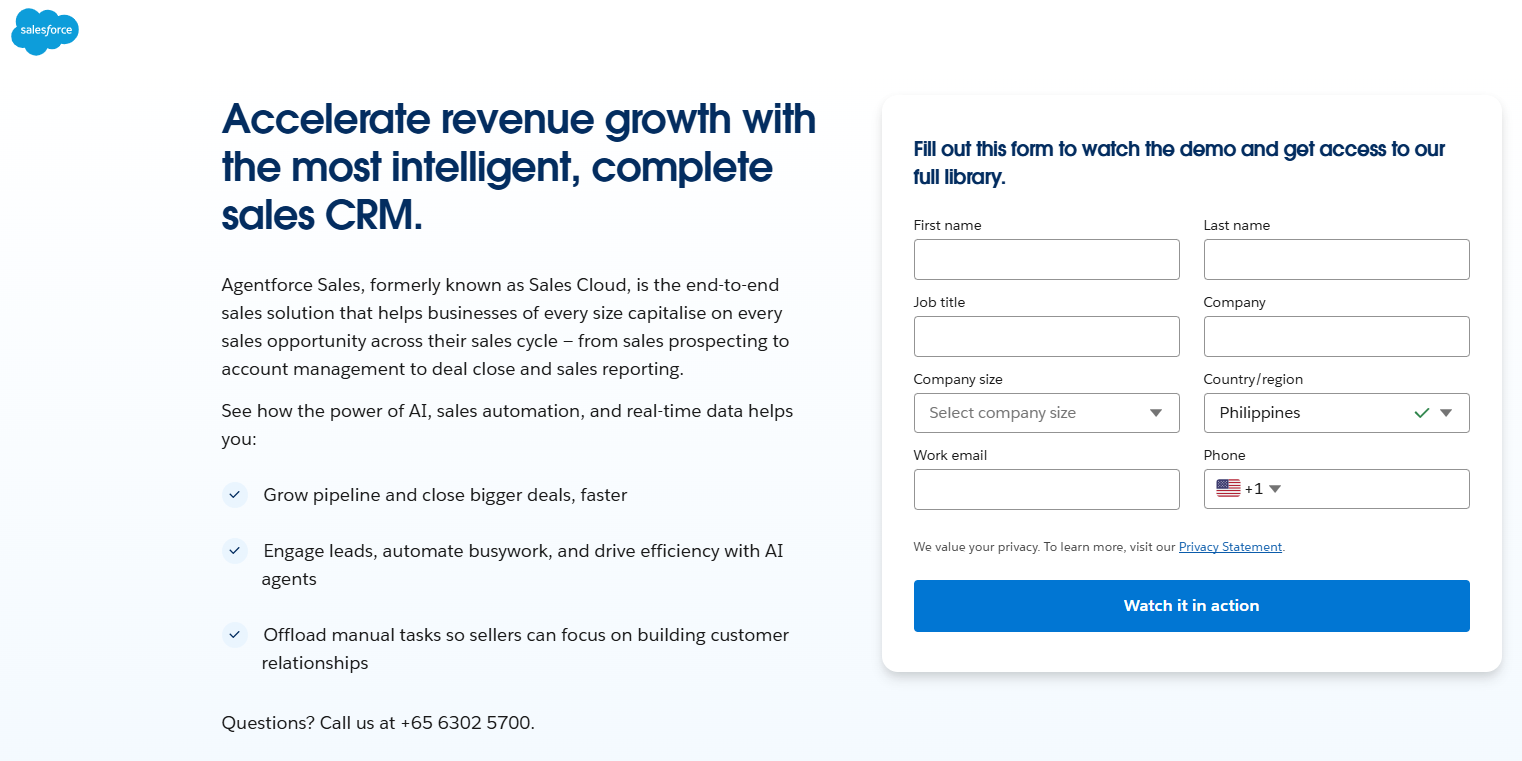
Salesforce Spiff is incentive compensation management built for teams already living in Salesforce. Its strength is real-time rep visibility: reps see what they earned and can trace each number back to the deal that produced it. The Commission Estimator lets reps model "what if I close this?" scenarios, Spiff Designer builds plan logic without heavy code, and tracing plus audit trails give finance a defensible record. For a Salesforce-native org, the data lives where the deals already do.
Best for: Sales teams on Salesforce that need transparent payouts and a clean audit trail.
Key strengths
- Commission Estimator for rep what-if scenarios
- Spiff Designer for plan configuration
- Tracing and audit trails for every payout
- Native Salesforce data flow
Why choose Salesforce Spiff: Choose it when your CRM is Salesforce and you want commission tracing reps actually understand. The native fit reduces integration friction and keeps deal data and comp data in one ecosystem.
Salesforce Spiff pricing: The publicly listed base price is $75 USD per user per month, billed annually. Salesforce also lists $250 per additional connector per month and premium support at 30% of net price. No free trial is currently offered.
3. QuotaPath
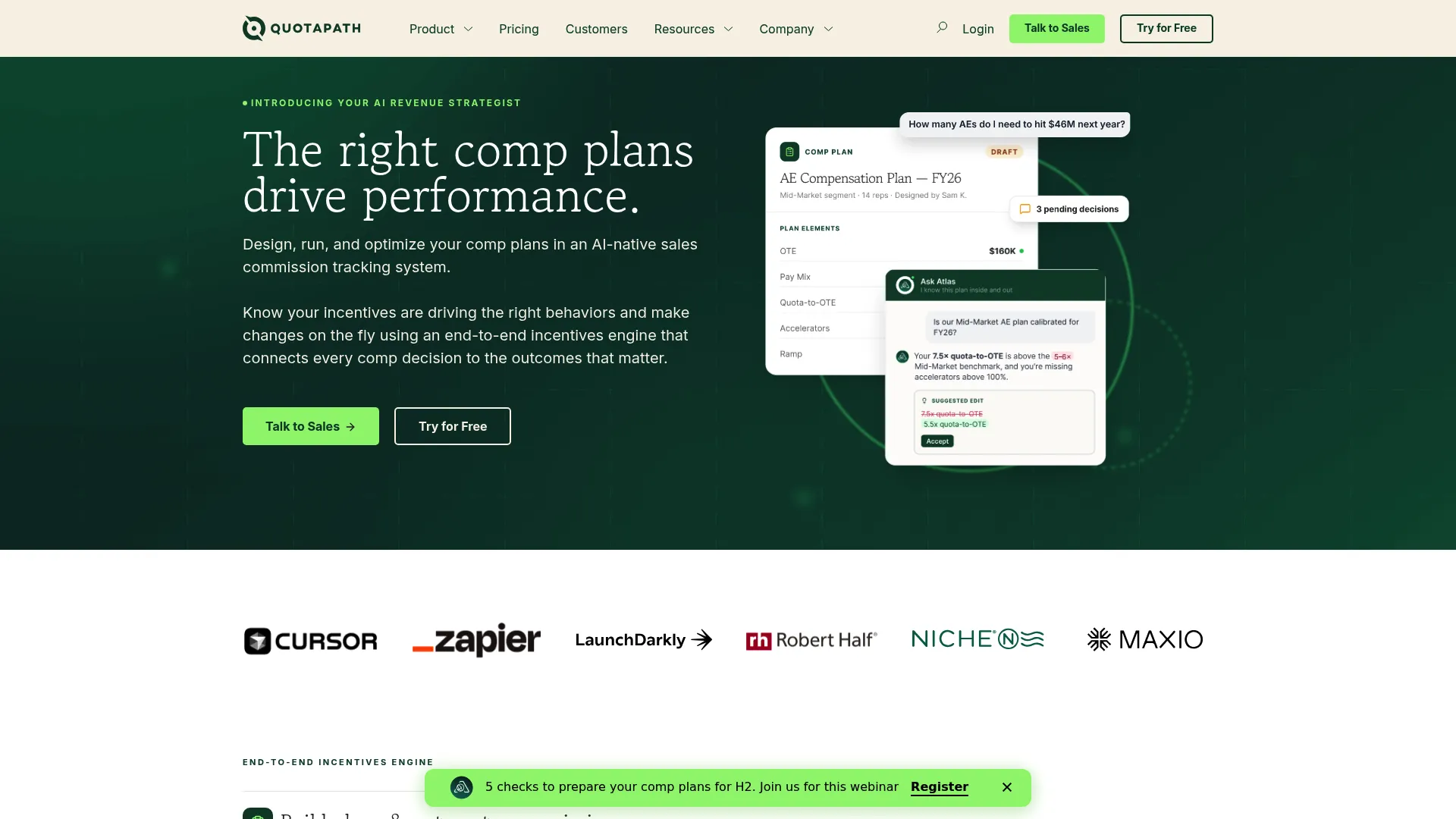
QuotaPath is a modern commission tracking software built for teams that want a clean comp ops workflow without heavy planning overhead. Its Plan Builder lets you model comp plans and payout logic, and its integrations reach across CRM, accounting, HRIS, and ERP tools. The focus is transparency: reps and managers get a shared, real-time view of earnings and quota attainment. For growing teams that outgrew spreadsheets but do not need enterprise SPM machinery, it hits a practical middle ground.
Best for: Teams that want transparent, automated commission management with a lighter setup.
Key strengths
- Plan Builder for comp modeling
- Commission tracking and payout workflows
- Approval workflows and collaboration
- Integrations across CRM, accounting, HRIS, and ERP
Why choose QuotaPath: Pick QuotaPath when transparency and speed matter more than deep enterprise configuration. It suits RevOps teams that want reps to self-serve their payout math without a long implementation.
QuotaPath pricing: Growth is $35 per user per month plus a $525 per month platform fee, billed annually. Premium is $50 per user per month plus an $800 per month platform fee. A Strategic tier with custom pricing is coming soon. A free trial is available.
4. Everstage
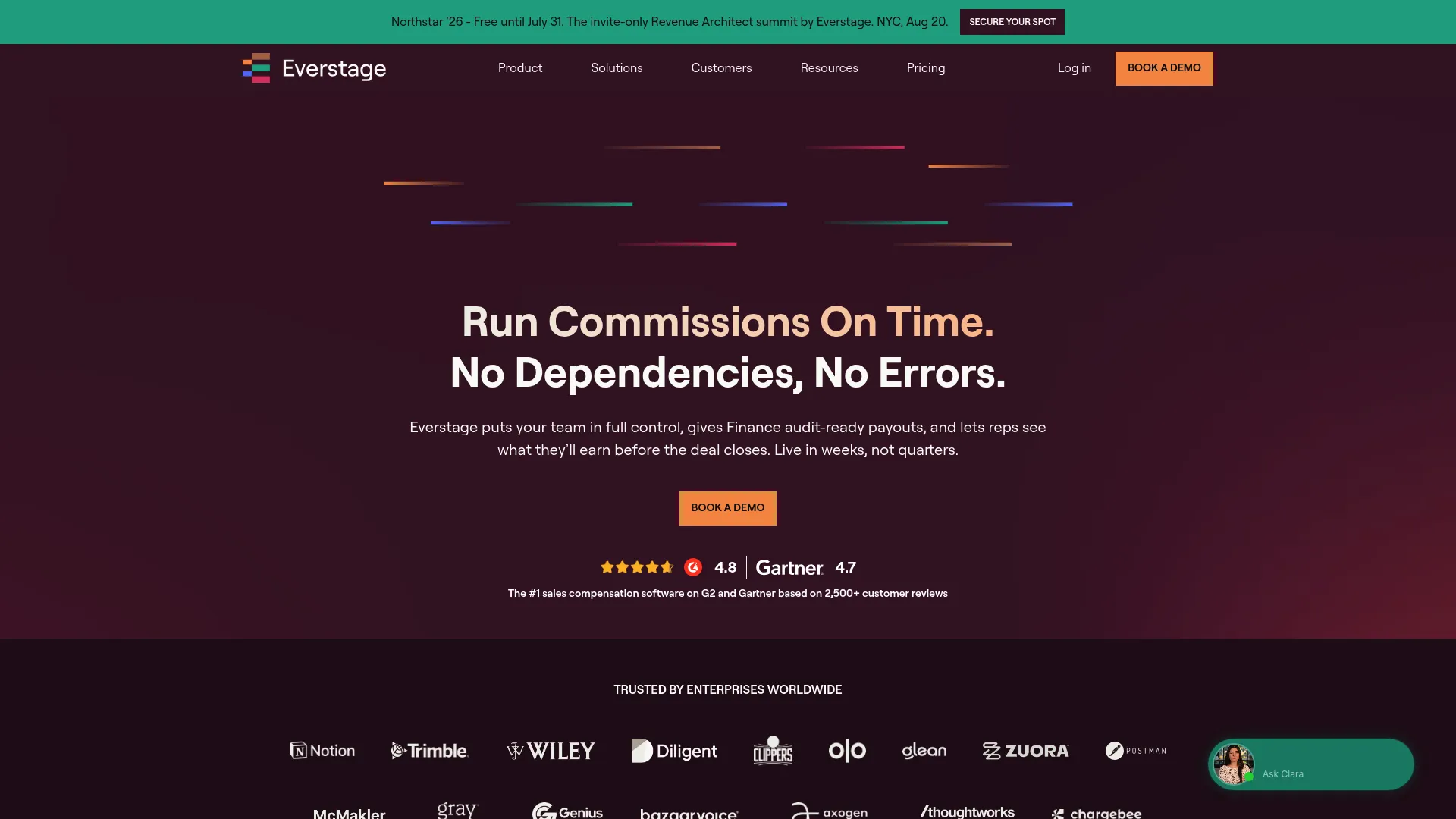
Everstage is an AI-first revenue platform spanning incentive compensation, sales planning, and CPQ. On the commission side, it delivers a calculation engine, plan management, rep dashboards, approvals, and dispute workflows in one place. Its sales planning module covers territories, quotas, and capacity, so comp and planning stay connected. RevOps and finance teams tend to like the depth of its commission reporting and its implementation support during rollout.
Best for: RevOps and finance teams that want a serious commission operations platform with strong onboarding.
Key strengths
- Calculation engine with plan management
- Rep dashboards, approvals, and dispute workflows
- Sales planning for territories, quotas, and capacity
- AI-first CPQ for quote-to-cash
Why choose Everstage: Choose Everstage when commission operations is a real function, not a side task. Its dispute workflows and analytics fit teams that need to defend every payout and want a partner during implementation.
Everstage pricing: Pricing is quote-based and structured per payee. The plan includes platform license, enterprise support, and onboarding or implementation, with no public numeric price listed.
5. Xactly
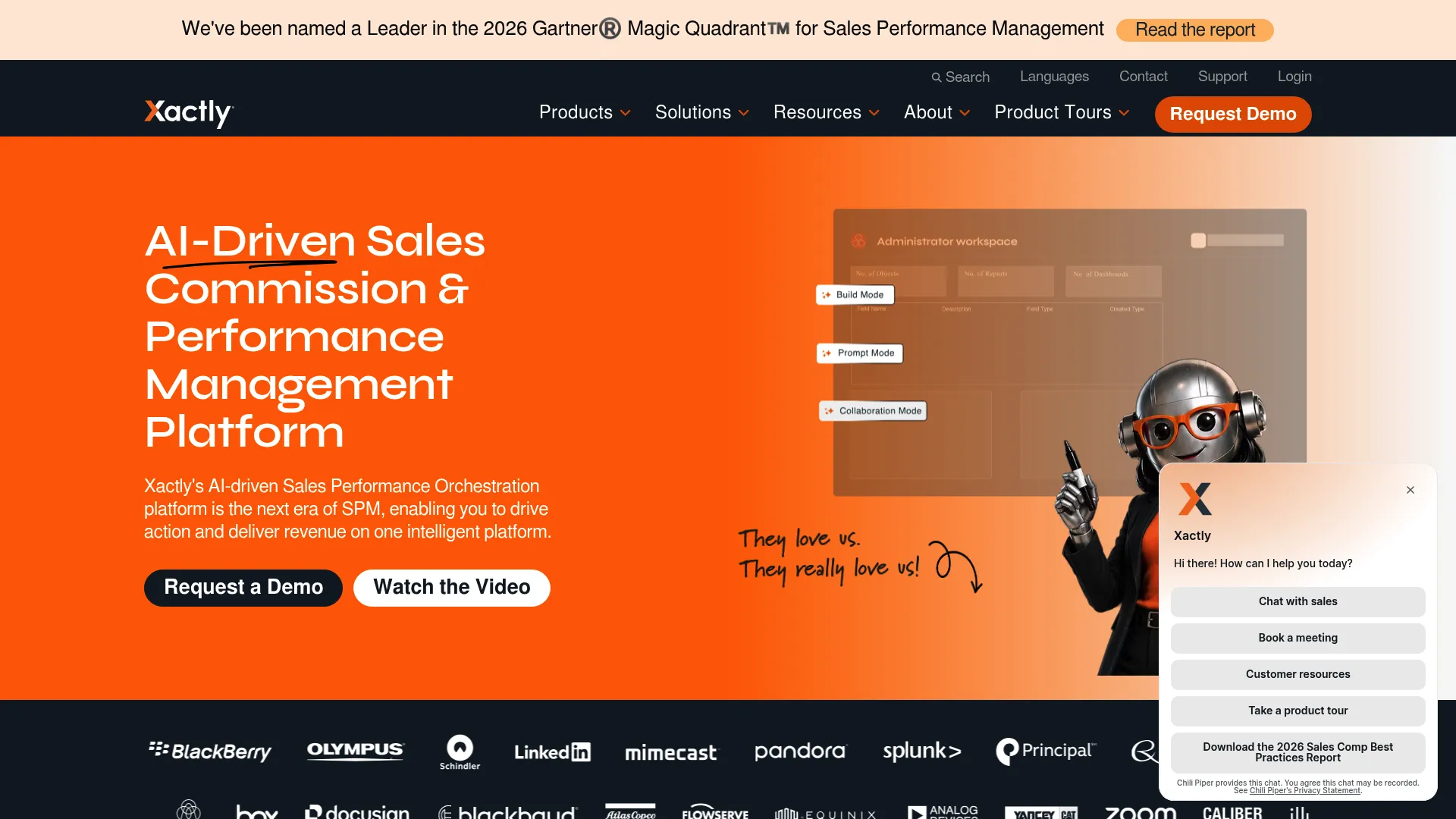
Xactly is enterprise-grade sales performance management with a long track record in incentive compensation. Beyond payouts, it covers sales and revenue forecasting and territory and quota planning, making it a fit for large orgs with complex comp structures and governance needs. Its calculation logic and analytics are built for scale, and its maturity shows in how it handles multi-plan, multi-region compensation. For enterprises that need mature workflows and audit readiness, Xactly is a familiar name.
Best for: Enterprises needing mature incentive compensation management and governance at scale.
Key strengths
- Incentive compensation management for complex plans
- Sales and revenue forecasting
- Territory and quota planning
- Enterprise analytics and governance
Why choose Xactly: Choose Xactly when scale and governance are non-negotiable. It fits large revenue organizations with sophisticated comp structures that need auditability baked into every workflow.
Xactly pricing: Public pricing is not disclosed. The company offers three tiers, Core, Plus, and Ultimate, with pricing based on user count and plan complexity. No self-service trial is offered.
6. Varicent
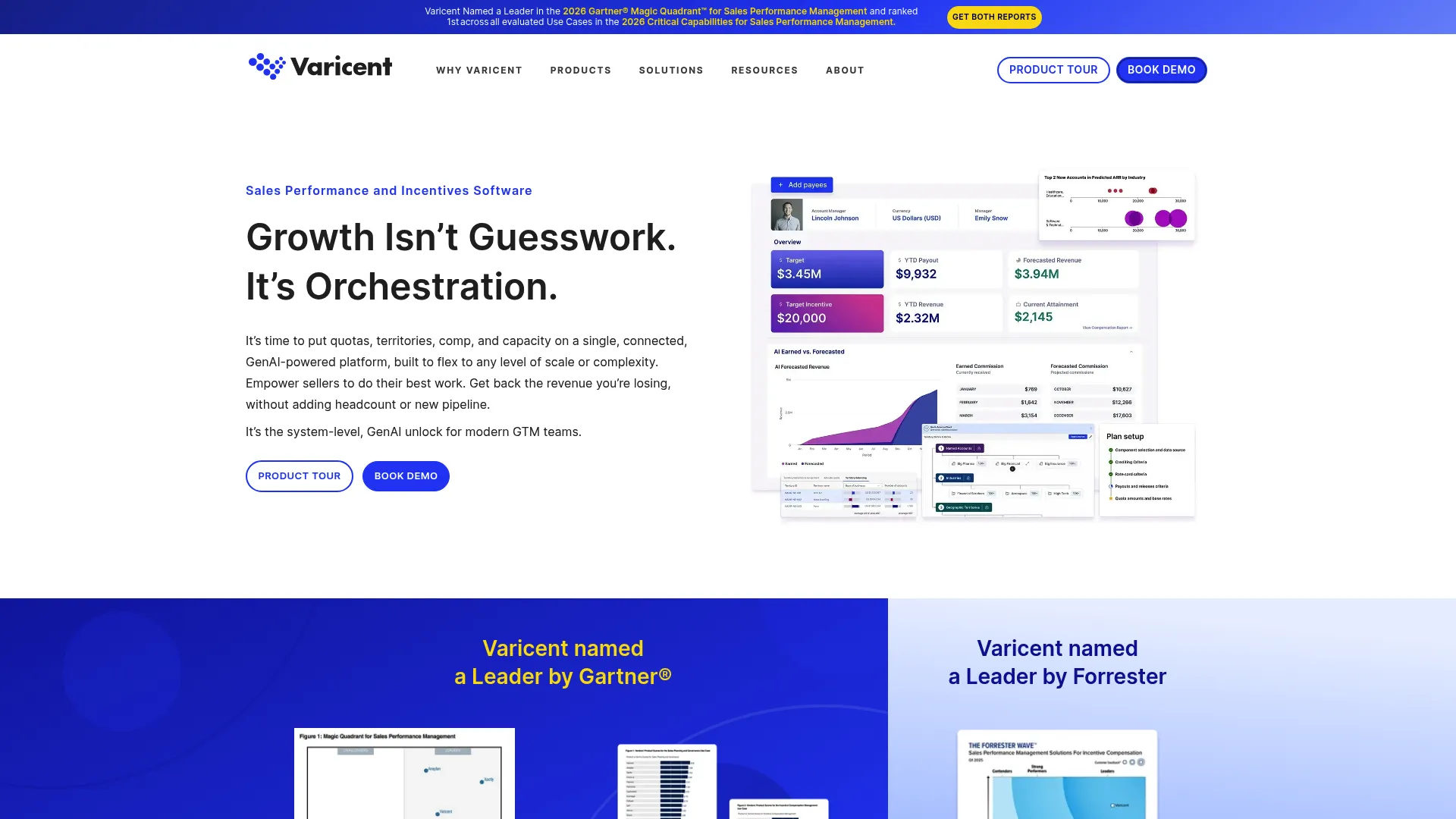
Varicent is enterprise sales performance and revenue management software built for large teams with sophisticated structures. It covers sales planning across quotas, territories, capacity, and segmentation, alongside incentive compensation management and payout logic. Its analytics layer monitors performance and surfaces where plans are working or lagging. For revenue organizations that treat comp as a strategic lever rather than an admin cost, Varicent offers the modeling flexibility and governance to match.
Best for: Large revenue teams that need enterprise planning and incentive compensation in one system.
Key strengths
- Sales planning for quotas, territories, capacity, and segmentation
- Incentive compensation management and payout logic
- Sales performance analytics and monitoring
- Flexible modeling for complex structures
Why choose Varicent: Choose Varicent when your comp structures are genuinely complex and you need planning plus incentives with room to model edge cases. It fits large orgs that want governance without sacrificing flexibility.
Varicent pricing: Varicent does not publish pricing on its site. Prospects are routed to contact sales or request a demo for a tailored quote.
7. SAP Commissions
SAP Commissions, now branded SAP Incentive Management, is SAP's incentive compensation software for designing and automating complex commission plans. It lets teams design, model, compare, test, and roll out plans, then delivers real-time payment and performance insight with one-click traceability. AI recommendations help optimize plan design. Its natural fit is organizations already standardized on SAP, where deep enterprise integration and large-scale compensation processing align with the broader financial stack.
Best for: Enterprises standardized on SAP that manage complex sales compensation at scale.
Key strengths
- Design, model, compare, test, and roll out complex plans
- Real-time payment insight with one-click traceability
- AI recommendations and plan optimization
- Deep integration with SAP environments
Why choose SAP Commissions: Choose it when your finance and ERP backbone is already SAP. The traceability and processing scale fit compliance-heavy enterprises that need comp tied into their broader financial systems.
SAP Commissions pricing: SAP lists pricing as "price upon request" across its visible plans, including hyperscaler and enterprise edition options with contract durations from one to three years. No public numeric starting price is shown.
8. Performio
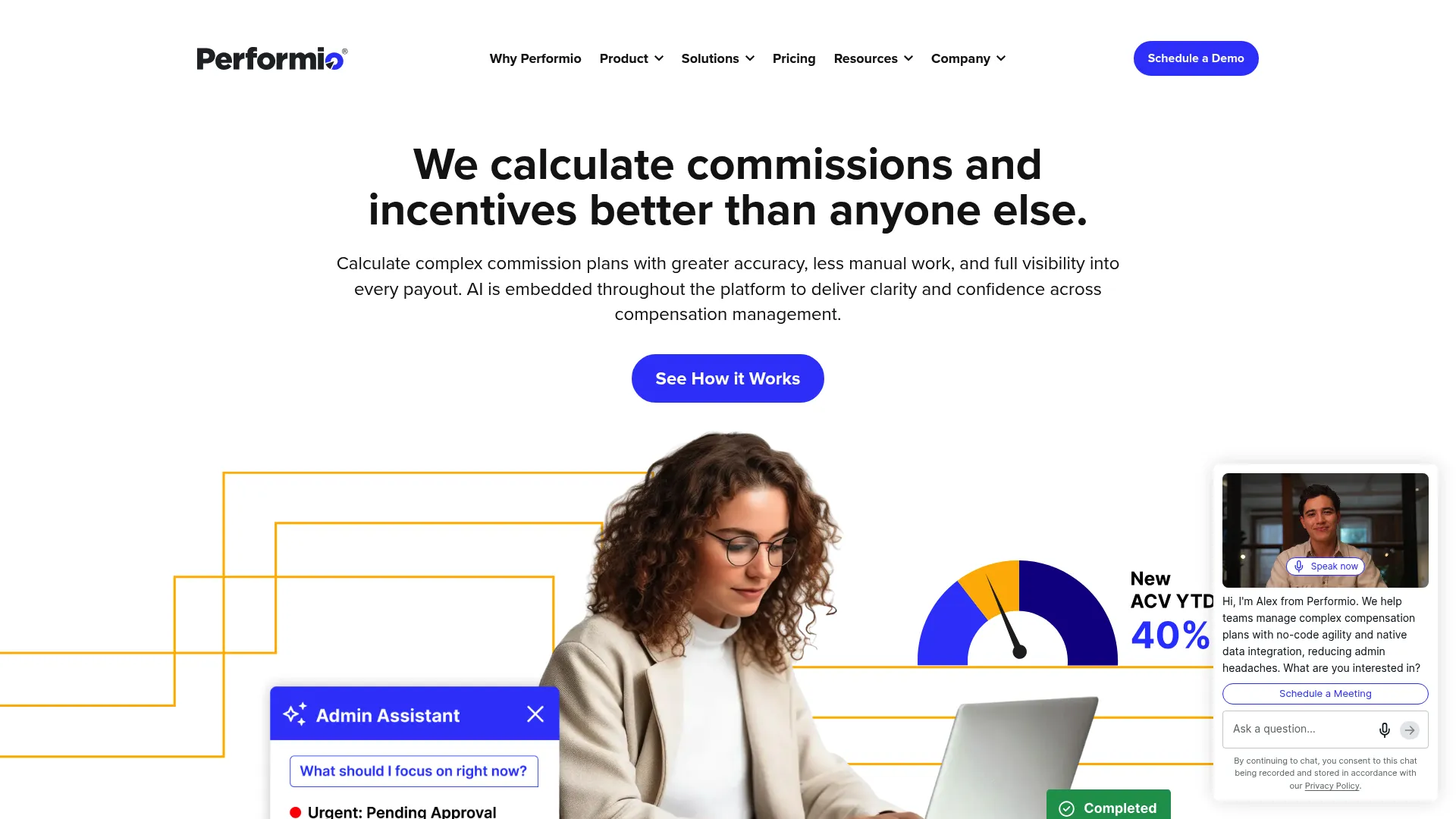
Performio is incentive compensation management built for mid-market and enterprise teams running complex, frequently changing commission plans. It focuses on automation, transparency, and operational control, with commission and incentive plan management, an AI assistant for comp administration, and dashboards for performance visibility. For teams that want strong commission administration without building a system from scratch, Performio offers a balance of depth and out-of-the-box readiness.
Best for: Mid-market and enterprise teams managing complex, frequently changing plans.
Key strengths
- Commission and incentive plan management
- AI assistant for compensation administration
- Dashboards and performance visibility
- Automation for frequently changing plans
Why choose Performio: Choose Performio when your plans change often and you want operational control without heavy custom build. It fits teams that need reliable payout automation and reporting with a shorter path to value.
Performio pricing: Public pricing is not listed. Performio offers tailored pricing through a request-an-estimate flow based on team size and implementation scope.
Considerations
Before you shortlist, pressure-test each tool against how your team actually runs comp. Here is what to evaluate.
Automation depth
Look past the demo happy path. Ask how the tool handles your ugliest plan: splits, clawbacks, accelerators, mid-quarter quota changes. If automated commission calculations break on your edge cases, you are back in spreadsheets. Test it against a real historical period.
Integration coverage
Your commission software is only as accurate as the data feeding it. Confirm native integrations with your CRM, ERP, HCM, payroll, and warehouse. Weak integrations mean manual imports, and manual imports mean errors and stale numbers.
Auditability and compliance
Every payout should trace to a deal, a rule, and a number, with a record of who changed what. Ask how the tool supports audit trails and revenue standards like ASC 606 and IFRS 15. Compliance-heavy teams should treat this as a gate, not a nice-to-have.
Rep transparency and adoption
A tool reps do not trust is a tool reps work around. Evaluate the quality of rep commission statements and dashboards. If reps can self-serve their payout math and model scenarios, disputes drop and selling time rises.
Implementation and maintenance
Ask about time to first accurate payout and who owns plan changes afterward. Some platforms need admin muscle; others let RevOps ship changes solo. Match the maintenance model to your team's capacity.
Conclusion
Commission management is trust infrastructure. Get it right and reps stop shadow-tracking payouts, managers coach instead of arbitrate, and finance closes clean. Get it wrong and every payday becomes a negotiation.
Here is the shortlist by stack and complexity:
- Salesforce-heavy teams: Salesforce Spiff, for native fit and commission tracing reps trust
- Planning-heavy teams: CaptivateIQ, for unified planning and incentives
- Enterprise governance-heavy teams: Xactly, Varicent, and SAP Commissions, for scale and compliance
- RevOps or finance teams replacing spreadsheets: Everstage, QuotaPath, and Performio, for automation and transparency without enterprise overhead
Pick one path based on your CRM, your comp complexity, and who owns plan changes. Then run a real historical period through the demo before you commit. The goal is not just accurate math. It is a plan your reps believe in.
Whatever you evaluate, the same principle applies to every buyer-facing motion: show, don't tell. When you need prospects and teams to actually experience a product rather than read about it, Guideflow turns your product into self-serve interactive demos in minutes.
Start your journey with Guideflow today!
FAQs
Commission management software automates how sales commissions are calculated, tracked, reported, and paid. It pulls deal data from your CRM, applies your plan logic, and produces accurate rep commission statements. The result is fewer errors, faster payouts, and a shared source of truth for reps, managers, and finance.
The terms overlap heavily and are often used interchangeably. Commission management software tends to emphasize calculating and paying commissions, while incentive compensation management often spans broader comp design, planning, and modeling. Many platforms on this list do both, so match the label to the capabilities, not the marketing.
For most teams, yes. Once your plans include accelerators, splits, or mid-quarter changes, spreadsheets become error-prone and hard to audit. Commission tracking software automates the math and keeps a traceable record. Some teams still use spreadsheets for one-off scenario modeling, but not for production payouts.
CRM is the priority, since that is where deal data lives. Beyond that, look for ERP, HCM, payroll, and data warehouse connections. These pull org, quota, and financial data automatically. Weak integrations force manual imports, which reintroduce the exact errors you bought the tool to remove.
Good tools keep an audit trail: every payout traces to a deal, a rule, a number, and a record of who changed what. Many also support revenue standards like ASC 606 and IFRS 15. This gives finance a defensible record for close and reduces the time spent reconstructing calculations during a dispute or review.
It usually sits with RevOps or Finance, since they own the calculation logic and payout accuracy. Sales leadership drives plan design, and Sales Enablement often gets pulled into rollout, training, and rep adoption. The best implementations treat it as a shared system, not a single team's tool.
It depends on comp complexity and integration scope. Lighter platforms can be live in weeks, while enterprise incentive compensation management with complex plans and multiple integrations can take months. Ask each vendor about time to first accurate payout, and run a historical period to validate before you rely on it.
Bring your ugliest real plan, not a clean sample. Test how the tool handles splits, clawbacks, accelerators, and a mid-quarter quota change. Check the quality of rep commission statements, the depth of commission reporting, and how disputes are tracked. If it survives your edge cases, it will survive production.




.avif)