

Most B2B buyers have already made up their mind before they talk to your sales team. According to Gartner's 2023 B2B Buying Report, they spend only 17% of their purchase journey meeting with vendors. The rest happens independently, often inside your product or your competitor's.
Product-led marketing flips the traditional playbook. Instead of gating value behind forms and sales calls, you let prospects experience your product first and qualify themselves through their behavior. This guide covers eight strategies to make that shift, from interactive demos and product-led content to the metrics and tools that make PLM work.
What is product-led marketing
Product-led marketing (PLM) is a go-to-market approach where the product itself drives customer acquisition, conversion, and retention. Instead of relying on sales teams or traditional campaigns alone, PLM focuses on free trials, freemium models, or interactive demos that showcase value immediately.
Marketing in this model serves as an extension of product success. The focus shifts to user education and reducing friction rather than generating leads for sales to chase.
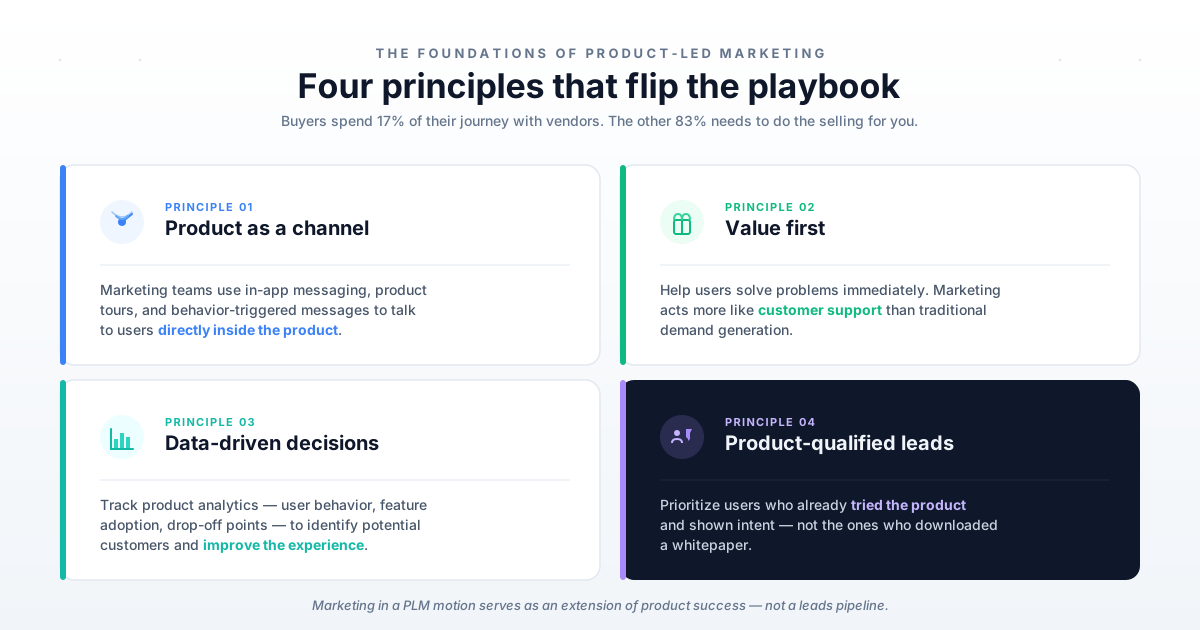
Four principles define product-led marketing:
- Product as a channel: Marketing teams use in-app messaging, product tours, and behavior-triggered messages to communicate with users directly inside the product.
- Value first: The priority is helping users solve problems immediately. Marketing functions more like customer support than traditional demand generation.
- Data-driven decisions: Marketers track product analytics (user behavior, feature adoption, drop-off points) to identify potential customers and improve the experience.
- Product-qualified leads (PQLs): Teams prioritize leads who have already tried the product and shown intent, rather than those who simply downloaded a whitepaper.
This approach works particularly well for SaaS companies where the product can demonstrate its own value. When prospects experience what you offer before talking to anyone, they enter sales conversations already convinced and 80% of the time the favorite vendor wins.
Why traditional B2B marketing no longer works
B2B buyers have changed how they research and purchase software. According to Gartner's 2023 B2B Buying Report, buyers spend only 17% of their journey meeting with potential suppliers. The rest happens independently, often before your sales team knows they exist.
Gated content (whitepapers, ebooks, webinars) no longer converts the way it once did. Prospects can find the same information elsewhere without surrendering their contact details.
The mismatch between how buyers want to buy and how most companies sell creates friction that kills deals. Buyers prefer self-serve exploration; most companies require form fills, scheduled demos, and sales calls.
The core problem? Traditional marketing generates leads. Product-led marketing generates users who already understand your value.
Product-led marketing vs sales-led marketing
This distinction matters because it shapes how your entire go-to-market motion operates. But here's the nuance: product-led marketing doesn't eliminate sales. It changes when sales enters the conversation.
In a sales-led model, marketing generates leads (often through content, ads, or events) and hands them to sales for qualification. Sales then educates prospects about the product, demonstrates value, and closes deals. The product stays behind a wall until after the contract is signed.
In a product-led model, the product qualifies leads before sales engages. Prospects try the product, explore features, and demonstrate intent through their behavior. Sales focuses on users who have already experienced value, not cold leads who might be interested.
Many successful companies use a hybrid approach. Product-led marketing feeds warmer leads to sales teams, who then focus on enterprise accounts, complex deals, or users who need help expanding their usage.
8 core strategies for product-led marketing teams
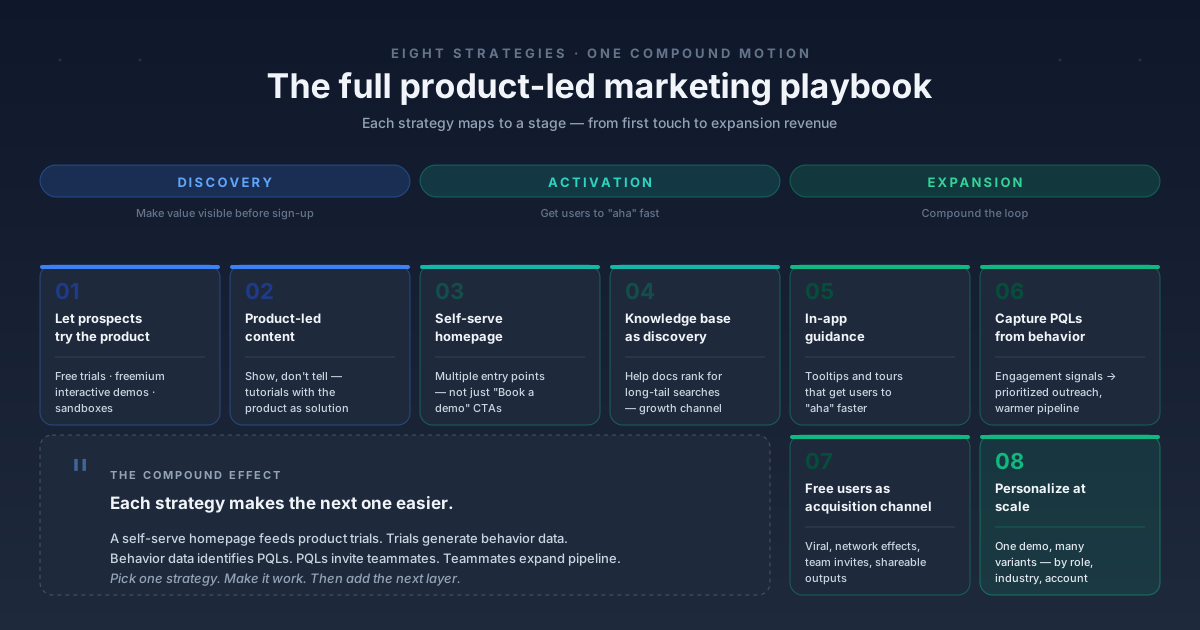
The following eight approaches form the foundation of effective product-led marketing. Each one shifts the focus from telling prospects about your product to showing them what it does.
1. Let prospects experience your product before the sales call
The most direct path to product-led marketing is removing barriers between prospects and your product. Free trials, freemium tiers, and interactive demos all serve this purpose.
Free trials give prospects full access for a limited time. Freemium models offer permanent access to a limited feature set. Interactive demos let prospects click through actual product flows without signing up at all.
Each approach reduces friction differently:
- Free trials work when your product requires setup or data import to show value.
- Freemium works when a subset of features delivers standalone value.
- Interactive demos work when you want to show value instantly, without requiring any commitment.
- Sandbox demos for marketers work when prospects need hands-on testing in a safe environment with realistic data.
What matters is that prospects can evaluate on their own timeline, without waiting for a sales call or demo scheduling.
2. Build product-led content that shows rather than tells
Product-led content weaves your product into the narrative to solve a specific problem. It differs from traditional content marketing, which educates generally and hopes readers eventually connect the dots to your solution.
Consider the difference:
- Traditional content: "10 Tips for Better Project Management"
- Product-led content: "How to Set Up Automated Task Dependencies in [Your Product]"
The second piece attracts people actively looking to solve a specific problem. Your product appears as the tool that solves it, not as an afterthought at the end.
Effective formats include interactive templates, embedded product walkthroughs, and problem-focused tutorials where the product is the solution. This approach also improves SEO because people search for solutions to problems, not product names.
3. Optimize your homepage for self-serve exploration
Most B2B homepages funnel visitors toward a single action: "Book a Demo." This creates friction for the 61% of B2B buyers who prefer a rep-free experience before committing to a conversation.
Product-led homepages offer multiple entry points based on visitor intent. Someone ready to buy can still book a demo. But someone still evaluating can explore an interactive product tour, browse use cases, or start a free trial.
Consider embedding an interactive demo directly on your homepage. Visitors can click through key workflows without leaving the page. They experience value immediately instead of reading about it.
For teams with multiple use cases, a demo center for sales can organize these experiences by persona or workflow.
4. Create a knowledge base that drives organic discovery
Your help documentation serves existing users. But it also attracts new prospects through search.
When someone searches "how to create automated workflows in [category]," they might land on your help article explaining exactly that. If the content is good, they've just discovered your product while solving a problem.
This positions your knowledge base as a growth channel, not just support infrastructure. Educational content (guides, tutorials, how-to articles) serves both audiences: existing users who need help and potential users discovering solutions.
Marketing teams often overlook this channel. But help content ranks well for long-tail searches and attracts visitors with high intent to solve specific problems.
5. Use in-app guidance to accelerate user activation
Activation is the moment a user experiences meaningful value. In product-led marketing, getting users to this moment quickly determines whether they convert or churn.
Tooltips, product tours, and contextual messaging help users reach activation faster. Instead of hoping users discover key features on their own, you guide them toward the actions that deliver value.
Effective in-app guidance is contextual, not intrusive. It appears when users need it, not as a mandatory walkthrough they click through to dismiss. The goal is reducing friction, not adding steps.
6. Capture product-qualified leads from engagement signals
Product-qualified leads (PQLs) are users who have taken actions indicating buying intent. They've used key features, hit usage thresholds, explored pricing, or invited team members.
Common PQL signals include:
- Feature usage depth: Using advanced features, not just basics
- Return visits: Coming back multiple times
- Team invites: Adding colleagues to the account
- Pricing page views: Researching costs
- Usage thresholds: Hitting limits that suggest they need a paid plan
Marketing teams use these signals to prioritize outreach and personalize demos for every prospect. Sales teams use them to focus on accounts most likely to close.
7. Turn free users into your best marketing channel
Free users can become your most effective acquisition channel through viral and network effects. When users invite colleagues, share workflows, or create public content using your product, they attract new users without marketing spend.
Referral programs formalize this dynamic. Offer incentives for users who bring in new signups. But organic sharing often matters more than formal programs.
Design your product to encourage sharing. Make it easy to invite team members. Create shareable outputs (reports, dashboards, templates) that showcase your product to others.
Build community features that connect users with each other.
8. Personalize product experiences at scale
Generic product experiences convert worse than personalized ones. When a prospect sees content tailored to their role, industry, or use case, relevance increases and friction decreases.
Dynamic personalization adjusts the product experience based on what you know about the user. This might mean showing different onboarding flows for different roles, highlighting features relevant to specific industries, or customizing demo content for individual accounts.
Tools like Guideflow let teams personalize interactive demos for different audiences without rebuilding from scratch. You create one demo, then adjust text, images, and flows for each segment.
How to create product-led content that converts
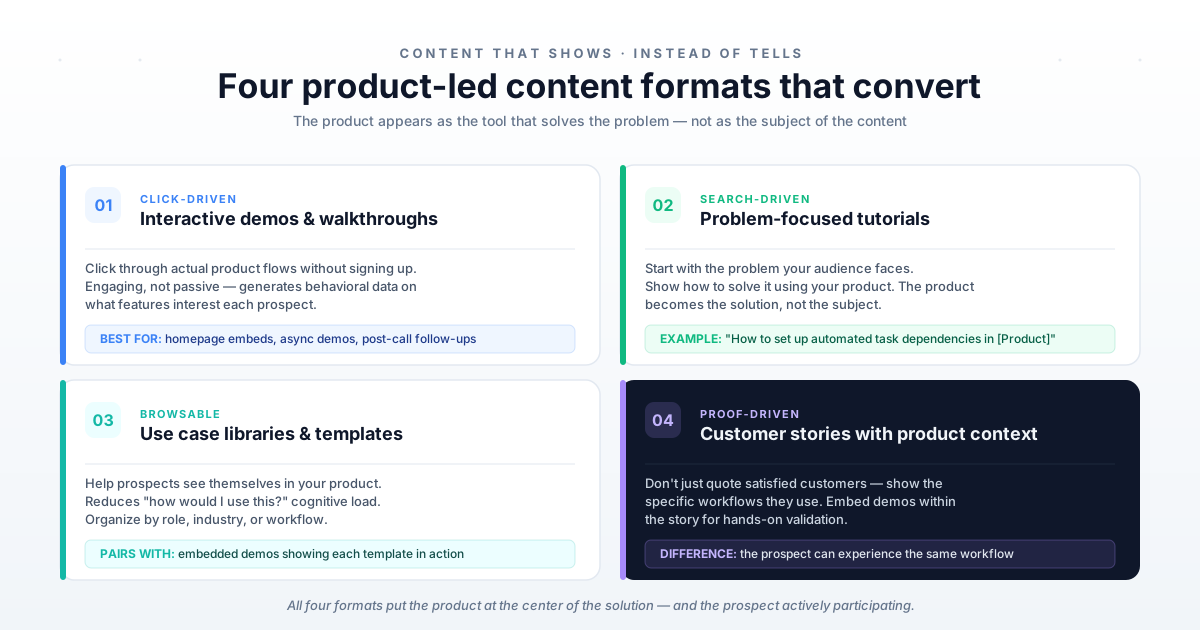
Product-led content puts your product at the center of the solution. This approach aligns with broader interactive marketing strategies that prioritize engagement over passive consumption. Here's how to create content that drives both traffic and conversions.
Interactive demos and walkthroughs
Interactive demos let prospects click through actual product flows without signing up. They experience the interface, see how features work, and understand the value before committing to anything.
Unlike static screenshots or videos, interactive demos are engaging. Prospects actively participate rather than passively watching. This increases time on page, improves comprehension, and generates behavioral data about what features interest them.
Capture any workflow directly from your browser, then customize it for different audiences. One product, many demos, each tailored to a specific use case or persona.
Problem-focused educational content
The "tutorial as acquisition" model addresses a job-to-be-done and naturally incorporates your product. The product appears as the tool that solves the problem, not as the subject of the content.
Start with the problem your audience faces. Then show how to solve it using your product. The content delivers value (teaching something useful) while demonstrating your product's capabilities.
Use case libraries and templates
Templates and use case galleries help prospects see themselves in your product. They reduce the cognitive load of imagining "how would I use this?" by showing concrete applications.
Organize templates by role, industry, or workflow. Let prospects browse and find examples relevant to their situation. Include interactive demos that show each template in action.
Customer success stories with product context
Product-led case studies differ from traditional ones. They show the product in action, not just quote satisfied customers. Include embedded demos or walkthroughs within the story. Show the specific workflows the customer uses. Let prospects experience the same features that delivered results for others.
Essential metrics for product-led marketing teams
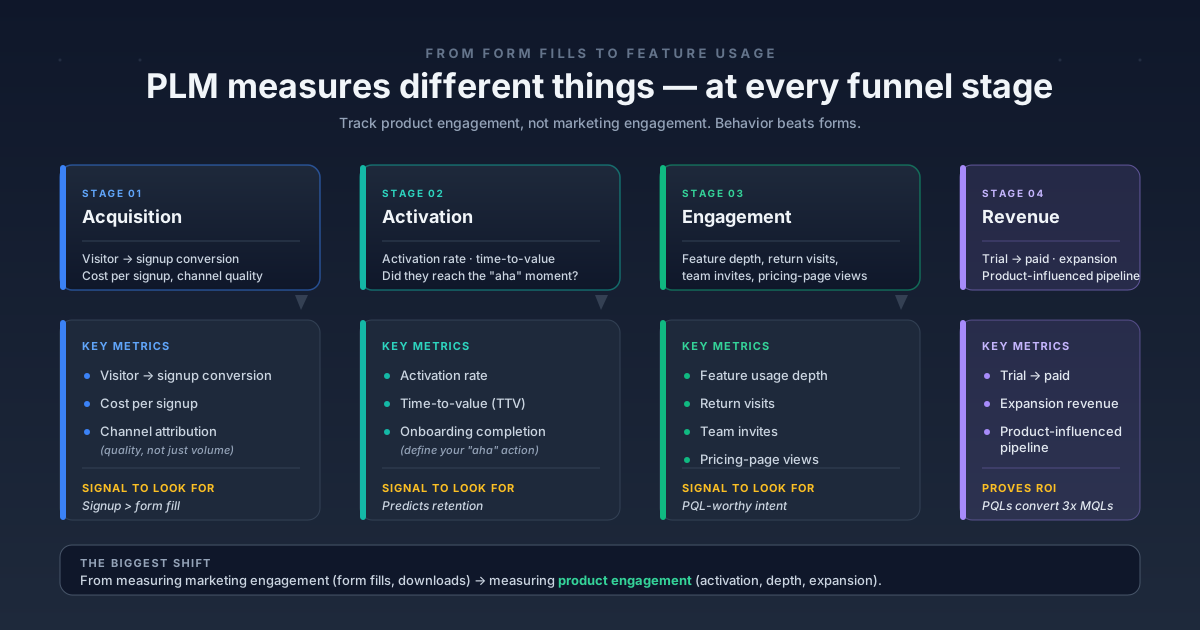
Product-led marketing requires different metrics than traditional demand generation. The shift moves from measuring marketing engagement to measuring product engagement.
Acquisition metrics for product-led funnels
Track the full path from first touch to product trial:
- Visitor-to-signup conversion: What percentage of website visitors create an account?
- Cost per signup: How much do you spend to acquire each new user?
- Channel attribution: Which channels drive the highest-quality signups (not just volume)?
A signup represents more intent than a form fill because the user has committed to trying your product.
Activation and time-to-value benchmarks
Activation rate measures the percentage of signups who reach a meaningful milestone. Time-to-value (TTV) measures how quickly they get there.
Define activation based on actions that correlate with conversion. This might be completing a key workflow, inviting a team member, or using a specific feature.
Engagement and intent signals
Track behaviors that indicate buying intent:
- Feature usage depth: Are users exploring advanced features or just basics?
- Return visits: How often do users come back?
- Team expansion: Are users inviting colleagues?
- Pricing page views: Are users researching costs?
High-engagement users deserve more attention than low-engagement ones.
Revenue impact and attribution
Connect product engagement to revenue outcomes:
- Trial-to-paid conversion: What percentage of free users become paying customers?
- Expansion revenue: How much revenue comes from existing customers upgrading?
- Product-influenced pipeline: Which deals involved product engagement before sales contact?
Essential PLG marketing software for your tech stack
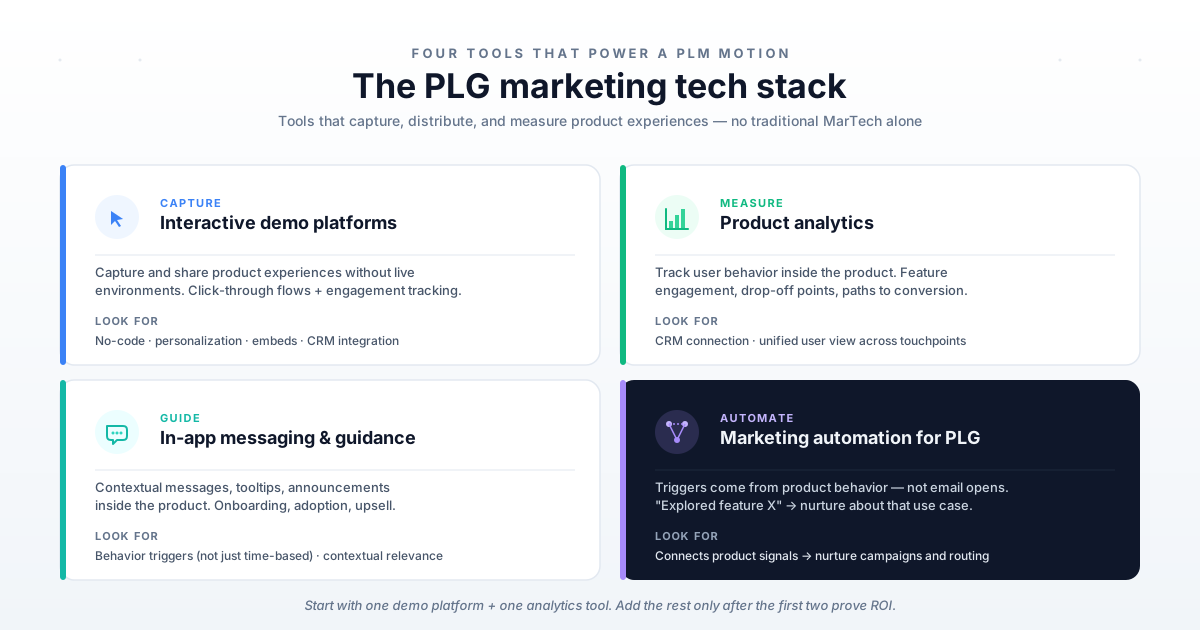
Product-led marketing requires tools that capture, distribute, and measure product experiences.
Interactive demo platforms
Interactive demo platforms let you capture and share product experiences without requiring live environments. Prospects click through actual product flows, and you track their engagement. Guideflow lets teams create, personalize, and distribute interactive demos in minutes. Key capabilities to look for:
- No-code capture and editing
- Personalization with dynamic variables
- Embedding on websites, emails, and landing pages
- Engagement analytics and intent signals
- Integration with HubSpot, Salesforce, and more
Product analytics tools
Product analytics track user behavior inside your product. They show which features users engage with, where they drop off, and what paths lead to conversion.
Look for tools that connect product data to your CRM and marketing automation software. The goal is a unified view of user behavior across marketing and product touchpoints.
In-app messaging and guidance
In-app messaging tools deliver contextual messages, tooltips, and announcements inside your product. Marketing teams use them for onboarding, feature adoption, and upsell campaigns.
The key is triggering messages based on user behavior, not just time. Show a tooltip when someone hovers over a feature they haven't used. Announce an upgrade when someone hits a usage limit.
Marketing automation for PLG
Marketing automation in product-led companies differs from traditional use. Triggers come from product behavior, not just email opens or form fills.
Connect product signals to nurture campaigns. When a user explores a specific feature, send them content about that use case. When they invite team members, trigger an expansion-focused sequence.
Building a product-led organization
Product-led marketing requires cross-functional alignment. The product team, marketing team, and sales team work together with shared metrics and goals.
How marketing roles evolve in PLG
Marketers in product-led organizations need product analytics literacy. They spend time in the product, understand user journeys, and use behavioral data to inform campaigns. The right product marketing software tools can streamline this data-driven approach.
Traditional campaign managers become growth marketers focused on activation and conversion. Content marketers create product-led content that demonstrates value.
Cross-functional alignment with product teams
Marketing and product teams share data, align on user journey definitions, and coordinate on messaging. Marketing surfaces user feedback and market insights. Product builds features that support acquisition and activation.
Regular syncs between teams prevent silos. Marketing learns what's coming in the product roadmap. Product learns what messaging resonates with prospects.
Shifting from MQL targets to product engagement goals
The practical shift in how marketing teams are measured can be challenging. Leadership accustomed to MQL dashboards may resist new metrics.
Start by showing the connection between product engagement and revenue. Demonstrate that PQLs convert at 3x the rate of MQLs. Show that activation rate predicts retention.
How to start with product-led marketing today
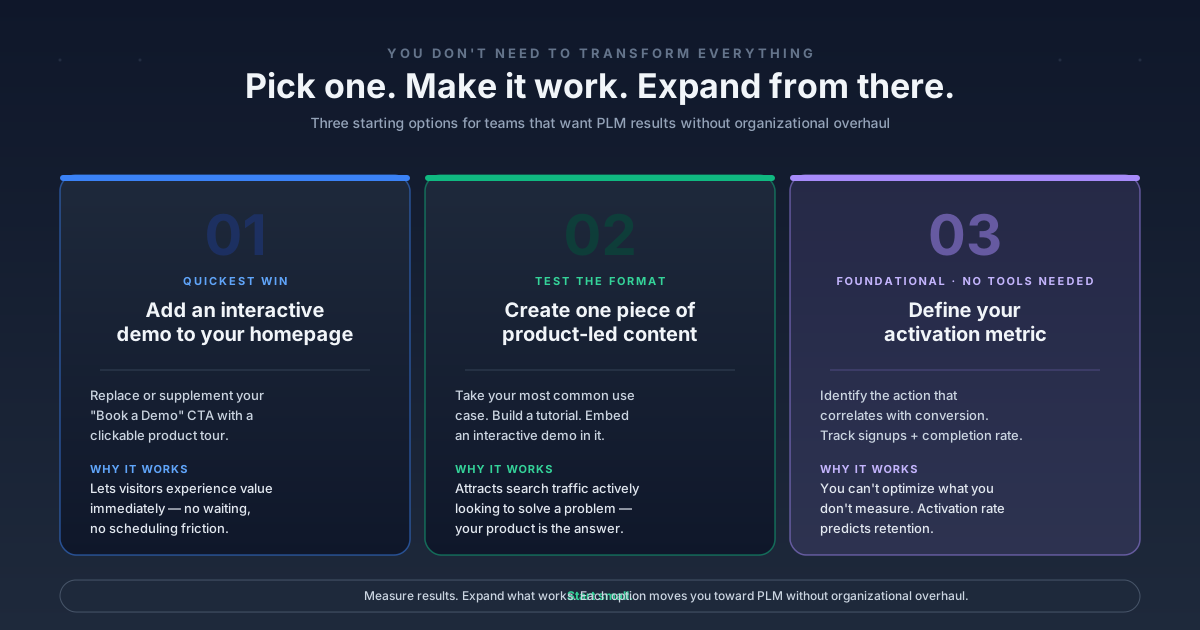
You don't need to transform your entire go-to-market motion overnight. Start with one high-impact change and build from there.
Option 1: Add an interactive demo to your homepage. Replace or supplement your "Book a Demo" CTA with an interactive product tour. Let visitors experience value immediately instead of waiting for a sales call.
Option 2: Create one piece of product-led content. Take your most common customer use case and create a tutorial that shows how to accomplish it in your product. Embed an interactive demo that lets readers try it themselves.
Option 3: Define your activation metric. Identify the action that correlates with conversion in your product. Start tracking how many signups complete that action and how quickly.
Each of these changes moves you toward product-led marketing without requiring organizational overhaul. Start small, measure results, and expand what works.
Start your journey with Guideflow today