
You hired another clinician. You added another location. And now three people are stitching together scheduling in one tool, notes in another, and claims in a third, while reimbursements sit in limbo. The admin load grows faster than the caseload.
That fragmentation is the real problem occupational therapy software is meant to fix. The global occupational therapy software market was valued at USD 386.1 million in 2024 and is projected to reach USD 1.1 billion by 2034, growing at an 11.5% CAGR, according to Global Market Insights (2024). Clinics are the fastest-growing end-use segment, projected to expand at a 12.5% CAGR from 2025 to 2030, per Mordor Intelligence (2025). Practices are consolidating, and the software they run on is where that consolidation either works or breaks.
The right occupational therapy practice management software should reduce the number of moving parts, not add to them. It should keep documentation fast, get claims out the door, and let clients move from intake to visit to follow-up without manual handoffs. This guide treats software choice as a systems decision, not a feature checklist. If you run a growing OT practice or a multi-disciplinary rehab group, that framing matters more than any single button.
If you evaluate software the way you evaluate other operational infrastructure, the same discipline applies. The buyer's guides on event management software and loyalty management software use a similar lens: does the tool replace fragmented work, and does it earn its place in the stack?
What's inside
This guide covers eight occupational therapy software platforms built for private practices, rehab groups, and larger health systems. We selected them based on four criteria: strength of OT documentation and clinical notes, billing and claims workflow, scheduling and telehealth support, and fit by practice model. Each entry includes a short overview, who it suits, key strengths, a reason to choose it, and pricing where the vendor publishes it. The goal is a decision guide, not a landing page, so you can shortlist two or three tools and compare the workflows that actually determine whether your operations run predictably.
TL;DR
- Best all-in-one for private practices: TheraPlatform combines documentation, billing, scheduling, and teletherapy in one platform, so occupational therapy software for private practices has fewer moving parts.
- Best for outpatient rehab depth: WebPT for OT-specific templates, assessments, and practice growth tooling.
- Best modern admin and AI notes: Zanda Health for cloud-based scheduling, forms, and AI-assisted documentation.
- Best free option: Allia Health for solo clinicians and small group practices.
- Best established configurable EMR: Dr. Chrono for practices that want a mature EHR and billing suite.
- Best enterprise fit: EPIC Systems for large, multi-site health systems with governance needs.
What is occupational therapy software?
Occupational therapy software is a category of clinical and administrative tools that help OT practices run documentation, scheduling, billing, and patient communication in one system. It usually combines an occupational therapy EMR (the clinical record) with practice management features (the operational layer) and, increasingly, telehealth and automation.
Most platforms in this category share a core feature set:
- Clinical documentation: OT-specific note templates, assessments, treatment plans, and outcome-measure scoring, often called occupational therapy documentation software.
- Occupational therapy billing software: charge capture, claims submission, and payment tracking for reimbursement.
- Scheduling and online booking: calendars, client self-scheduling, reminders, and waitlists.
- Client portal: intake forms, secure messaging, document sharing, and payments.
- Occupational therapy telehealth software: HIPAA-compliant video, sometimes with therapy games, whiteboards, and screen sharing.
- Cloud-based access: browser and mobile access so clinicians can chart between visits.
- Reporting and analytics: visibility into visits, revenue, and outcomes.
Cloud-based delivery accounts for roughly 61% of occupational therapy software revenue, about USD 234 million in 2024, making it the largest delivery mode, per Global Market Insights (2024). For most modern practices, cloud access is the default, not a differentiator.
Some tools are purpose-built for OT and rehab (PT, OT, SLP). Others are broader therapy EMR or general medical EMR platforms that OT teams adapt. The distinction matters when you compare documentation systems and reimbursement fit.
When to use occupational therapy software
Move off generic tools when admin outpaces caseload
If your team runs scheduling in a calendar app, notes in a word processor, and billing in a spreadsheet, you have already outgrown that setup. Purpose-built occupational therapy practice management software consolidates those workflows so nobody re-enters the same client data three times.
Standardize documentation across a growing team
When you add clinicians, note quality drifts. OT-specific templates and outcome-measure scoring keep documentation consistent and defensible, which matters for audits and reimbursement. This is where occupational therapy documentation software earns its cost.
Protect reimbursement flow
Claims that sit in limbo are cash that isn't in the bank. If denials are rising or your billing cycle is unpredictable, occupational therapy billing software with charge capture and claims tracking is the fix. For most growing practices, this is the single highest-leverage reason to switch.
Occupational therapy software comparison
Here is a side-by-side occupational therapy software comparison across intent, key use case, pricing, and rating. Use it to build a shortlist, then verify documentation and billing workflows against your own visit types before committing.
| # | Product | Intent | Key use case | Pricing | G2 rating |
|---|---|---|---|---|---|
| 1 | TheraPlatform | All-in-one OT practice | Documentation, billing, teletherapy | From $39/month | 3.9/5 |
| 2 | WebPT | Outpatient rehab depth | OT templates, assessments, growth | Plan-based, quote | 4.4/5 |
| 3 | Zanda Health | Modern admin + AI notes | Scheduling, forms, AI notes | From $9.50/mo intro | 4.7/5 |
| 4 | Allia Health | Free therapy EHR | Telehealth, assessments, messaging | Free | Not listed |
| 5 | Dr. Chrono | Configurable EHR | EHR, billing, patient engagement | Quote-based | 3.4/5 |
| 6 | Clinicient | Rehab workflow rigor | EMR, billing, outcomes | Quote-based | 4.0/5 |
| 7 | Empower EMR | Flexible rehab EMR | AI, scheduling, billing | Plan-based, quote | Not listed |
| 8 | EPIC Systems | Enterprise health systems | Multi-site EMR, governance | Enterprise | Not listed |
1. TheraPlatform
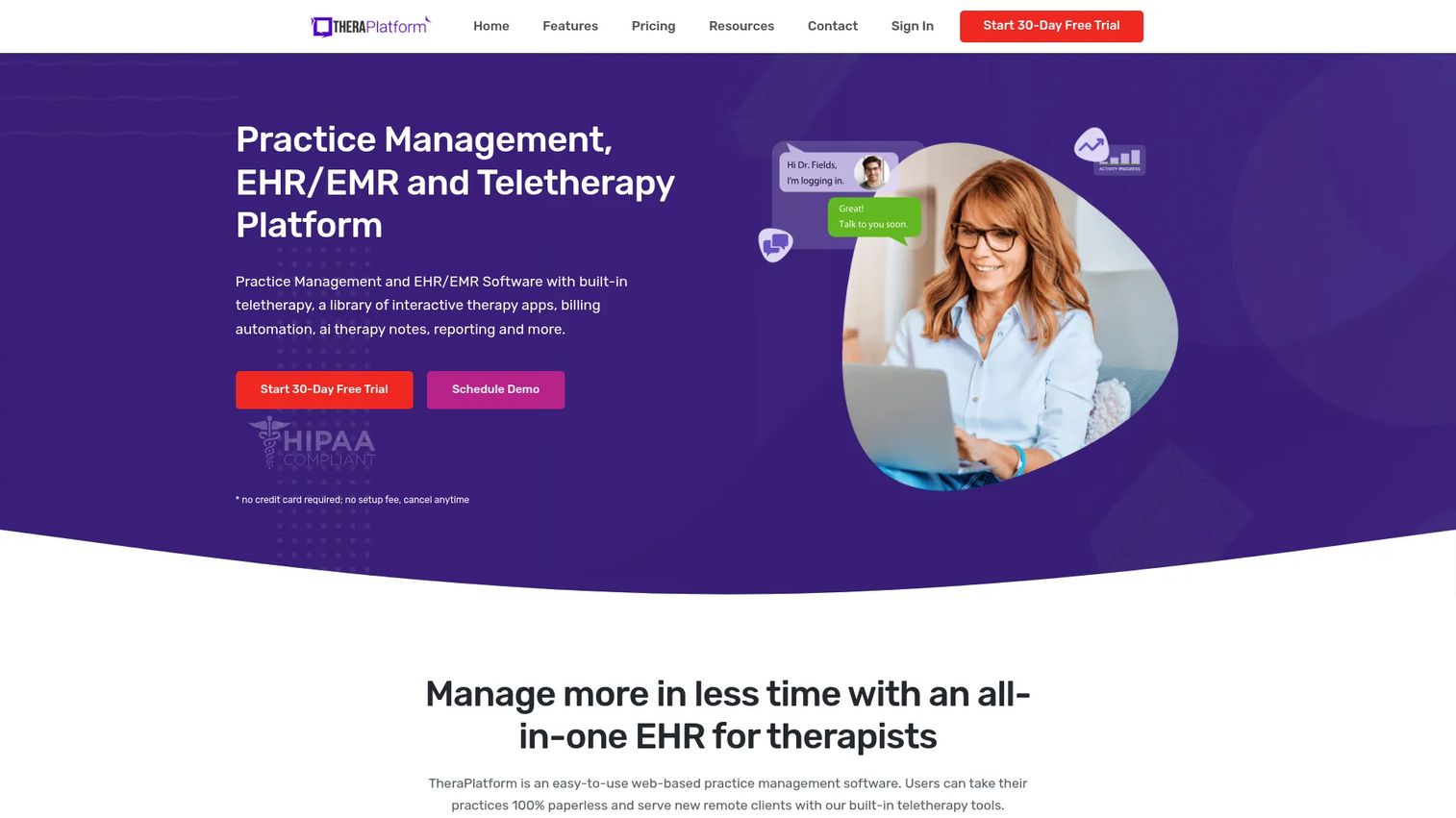
TheraPlatform is a HIPAA-compliant platform that combines practice management, EHR/EMR, and teletherapy for therapy practices. For OT teams, the appeal is fewer moving parts: scheduling, documentation, billing, and video sit in one system, so client data doesn't get re-entered across tools. It is built for practices that want to run intake, visits, notes, and claims without stitching together three separate products.
Best for: Therapy practices that want an all-in-one telehealth, documentation, and billing platform.
Key strengths
- All-in-one workflow: Scheduling, documentation, billing, and teletherapy in one platform, so the operational layer stays consolidated.
- Purpose-built teletherapy: HIPAA-compliant video with whiteboards, screen sharing, therapy games, visual scenes, reactions, and chat, which matters for pediatric and hands-on OT sessions.
- Structured documentation: Built-in therapy notes tools with Wiley Treatment Planners and automated outcome-measure scoring, so notes stay consistent and defensible.
Why choose TheraPlatform: If your practice is small enough to want one system but active enough that fragmented tools are costing you time, TheraPlatform's combined telehealth and documentation stack removes the handoffs. It suits clinicians who bill directly and want claims, notes, and video under one login rather than three subscriptions.
TheraPlatform pricing: Plans start at $39/month, billed monthly. The pricing page also lists Basic at $39/month, Pro at $69/month, and Pro Plus at $79/month. The vendor states no credit card required, no setup fee, and cancel anytime. There is no free tier.
2. WebPT
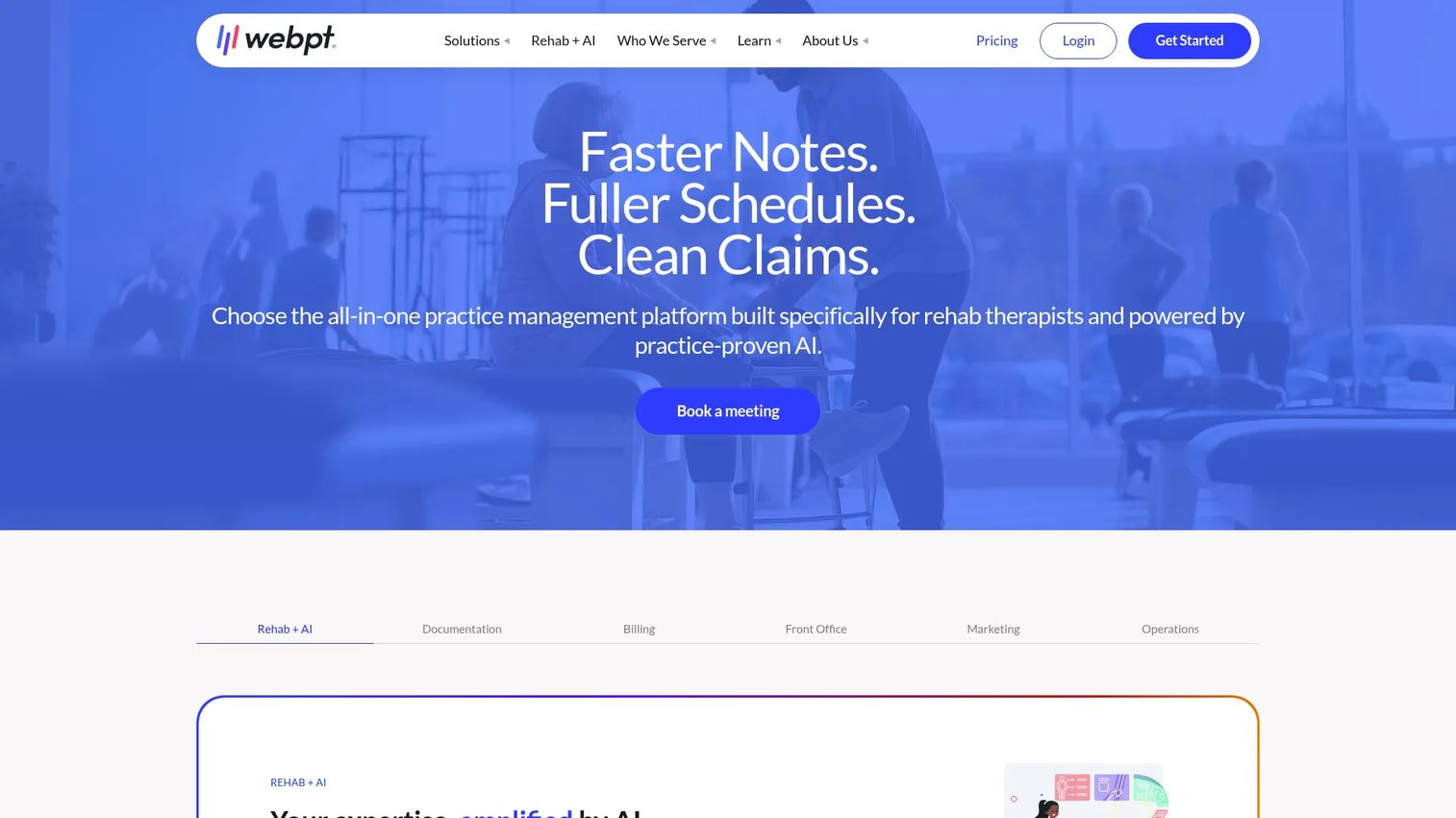
WebPT is rehab therapy practice management software built for outpatient PT, OT, and SLP teams. It leans into OT-specific documentation, assessments, and practice growth tooling, which makes it a strong fit for clinics that care deeply about clinical depth and outcomes. WebPT positions itself as an all-in-one EMR and operations platform for outpatient rehab, covering front office through billing.
Best for: Outpatient rehab therapy practices needing an all-in-one EMR and operations platform.
Key strengths
- AI-assisted documentation: AI-assisted documentation and voice-to-text scribing that speeds up note completion between visits.
- Full operations coverage: Scheduling, front office, billing, and practice management workflows in one platform.
- Specialty depth: Specialty-specific modules and built-in compliance tools tuned for rehab reimbursement.
Why choose WebPT: WebPT fits clinics that treat OT as a clinical discipline first and want templates, assessments, and compliance built around rehab workflows. If practice growth and outcome tracking are priorities alongside billing, its specialty depth is the differentiator. It suits multi-clinician outpatient groups more than solo practitioners.
WebPT pricing: WebPT lists Starter, Enhanced, and Ultimate plans. It does not publish numeric pricing on its own pricing page, stating instead that pricing depends on the selected plan and customization, and can be set per provider per month or per visit. Request a quote to get a figure tied to your practice size.
3. Zanda Health
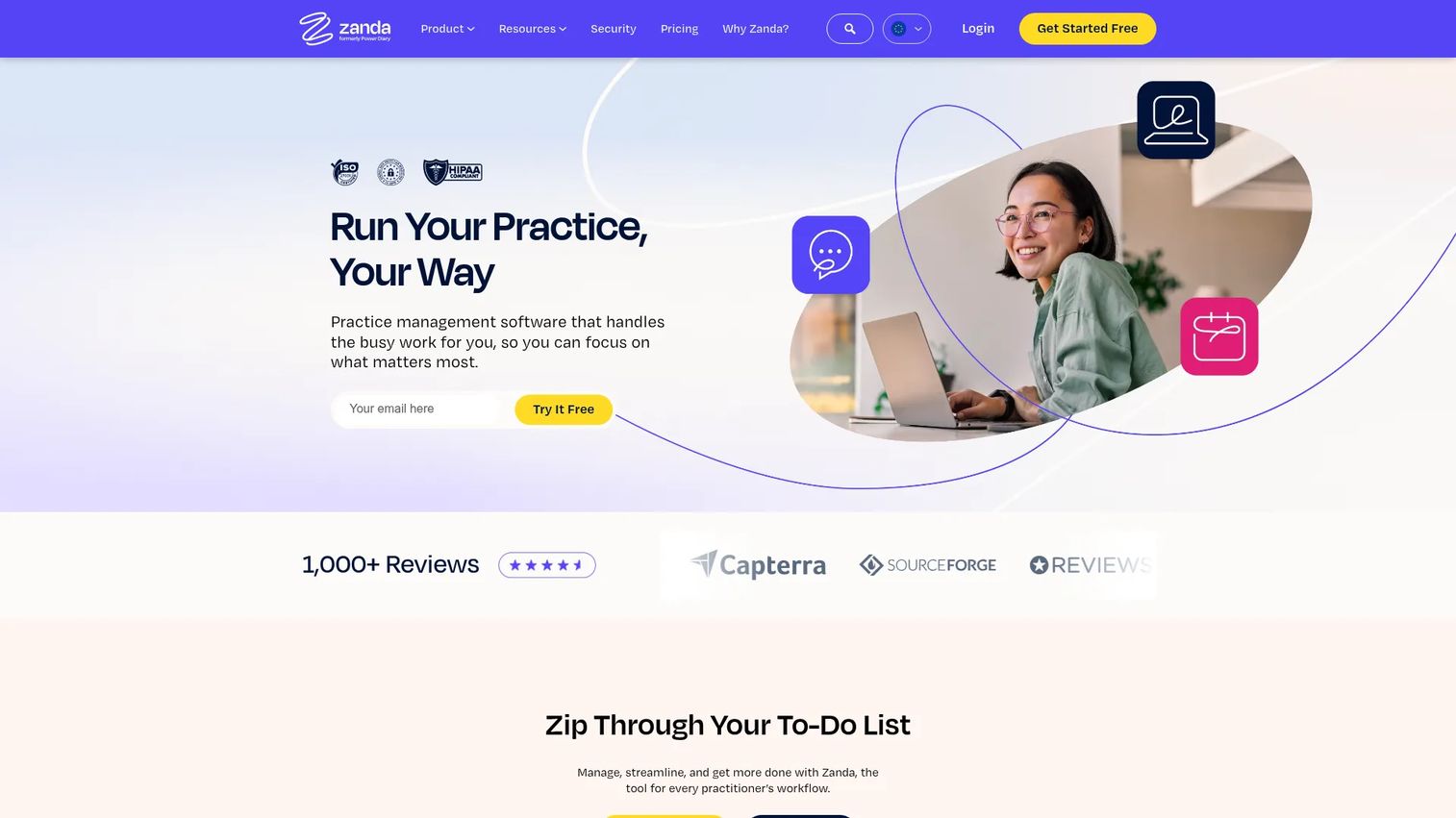
Zanda Health is cloud-based practice management software for health and allied health practices, including OT. It focuses on modern administration: scheduling, online forms, clinical notes, billing, and AI-assisted documentation through its BizzyAI feature. For practices that want a clean, mobile-friendly system with strong automation, Zanda covers the operational layer well.
Best for: Solo clinicians and growing health practices that need scheduling, forms, notes, billing, and telehealth in one system.
Key strengths
- Modern admin stack: Calendar management, online forms, clinical notes, payments, and invoices in one cloud-based system.
- AI notes and communication: BizzyAI for AI-assisted documentation, plus SMS and email communication and a client portal.
- Telehealth and reporting: Built-in telehealth and reports and analytics, with a practice operations manual for standardizing workflows.
Why choose Zanda Health: Zanda suits clinicians who want a modern, cloud-first system without long implementation. Its AI notes and online booking reduce repetitive admin, and the client portal keeps intake and payments client-facing. It fits solo and small-group OT practices that value automation and ease of use.
Zanda Health pricing: Zanda offers a 14-day free trial. US pricing shows Starter at $9.50/month for the first six months, then $19/month, for one practitioner. Growth runs $34/month for the first six months, then $68/month, for one or more practitioners. Add-ons like dedicated SMS numbers and insurance claiming are priced separately. There is no permanent free tier.
4. Allia Health
Allia Health is a HIPAA-compliant EHR built around scheduling, telehealth, messaging, documentation, assessments, and progress tracking. Its origin is in mental health, so it broadens this comparison beyond OT-only names and suits therapy practices that want a modern, no-cost EHR. For a solo OT clinician or a small group testing a documentation system, the free model lowers the barrier to getting started.
Best for: Clinicians and group practices wanting a free therapy EHR with telehealth, assessments, and outcome tracking.
Key strengths
- Self-scheduling and telehealth: Self-scheduling and secure telehealth sessions handled in one platform.
- Secure communication: Encrypted messaging and patient record sharing that keep client communication compliant.
- Assessments and tracking: Assessments with automatic scoring and progress tracking to monitor outcomes over time.
Why choose Allia Health: Allia fits clinicians who want to remove cost from the decision entirely while still getting telehealth, documentation, and assessments. Because it started in mental health, evaluate whether its templates map to your OT visit types before committing. For solo practitioners and small groups, the free model is hard to argue with.
Allia Health pricing: Allia is free for individual clinicians and free for up to 20 team members for group practices, with no trials and no hidden fees stated. An Allia Enterprise plan is available for larger organizations, but no public enterprise price is shown.
5. Dr. Chrono
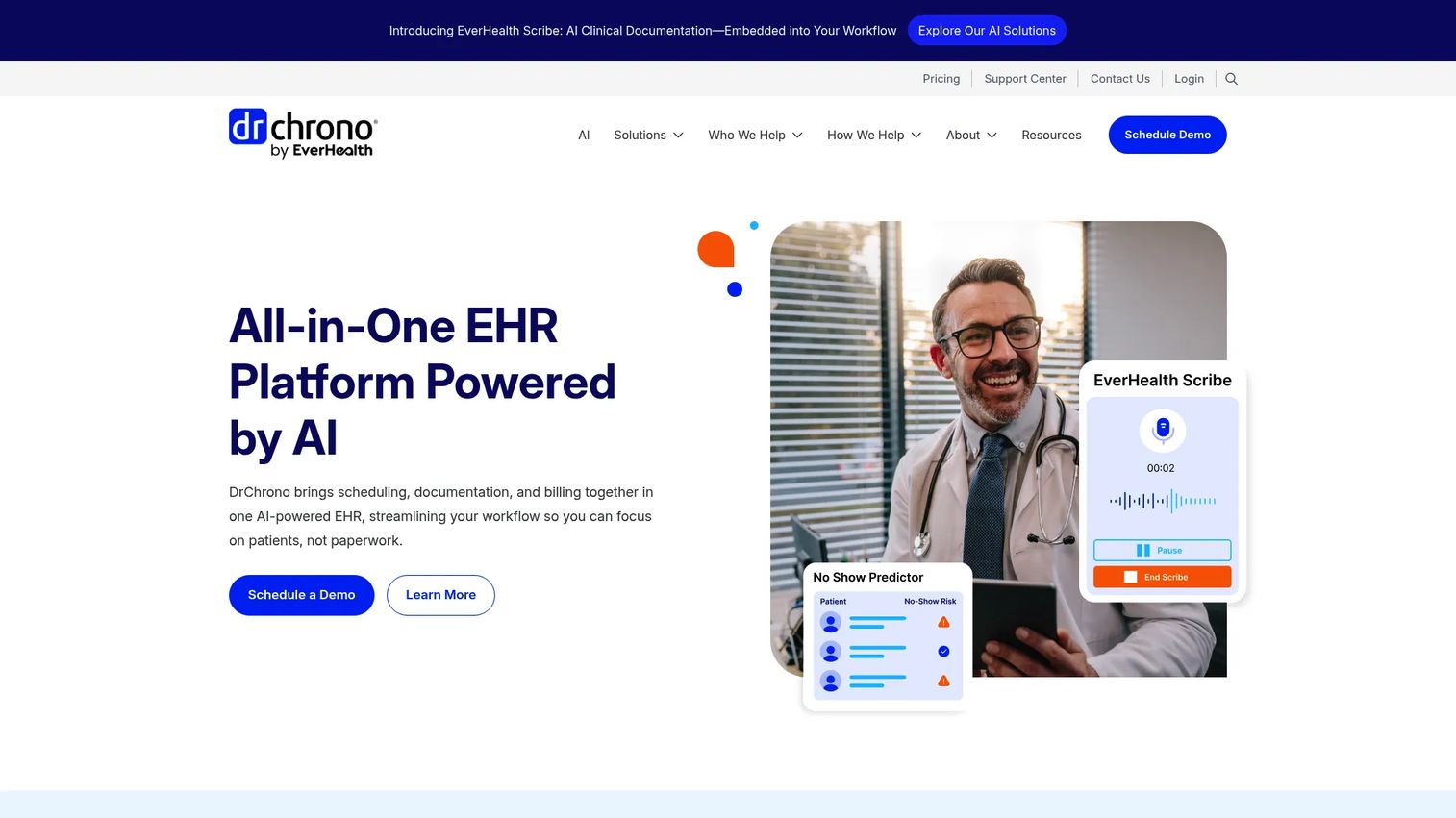
Dr. Chrono is a cloud-based EHR, practice management, billing, and patient engagement platform for medical practices. It is a broader, established medical EMR rather than an OT-only tool, which makes it a fit for practices that want a mature, configurable system and are comfortable adapting it to rehab workflows. Telehealth is included alongside the core EHR and billing suite.
Best for: Independent medical practices needing an integrated EHR and practice management suite.
Key strengths
- Established EHR depth: A mature EHR and practice management suite with configurable templates and workflows.
- Billing and engagement: Integrated billing plus patient engagement tools that keep clients connected between visits.
- Telehealth included: Built-in telehealth alongside the core clinical record.
Why choose Dr. Chrono: Dr. Chrono suits practices that want an established, configurable EHR and are willing to invest in setup to tailor it to OT documentation and billing. It fits independent medical or multi-specialty practices where OT is one of several disciplines rather than the sole focus. Weigh the configuration effort against the depth you gain.
Dr. Chrono pricing: Dr. Chrono lists Foundation, Growth, and Premium plans on its pricing page but shows "Request A Quote" rather than public prices. Contact the vendor for a figure tied to your practice size and modules.
6. Clinicient
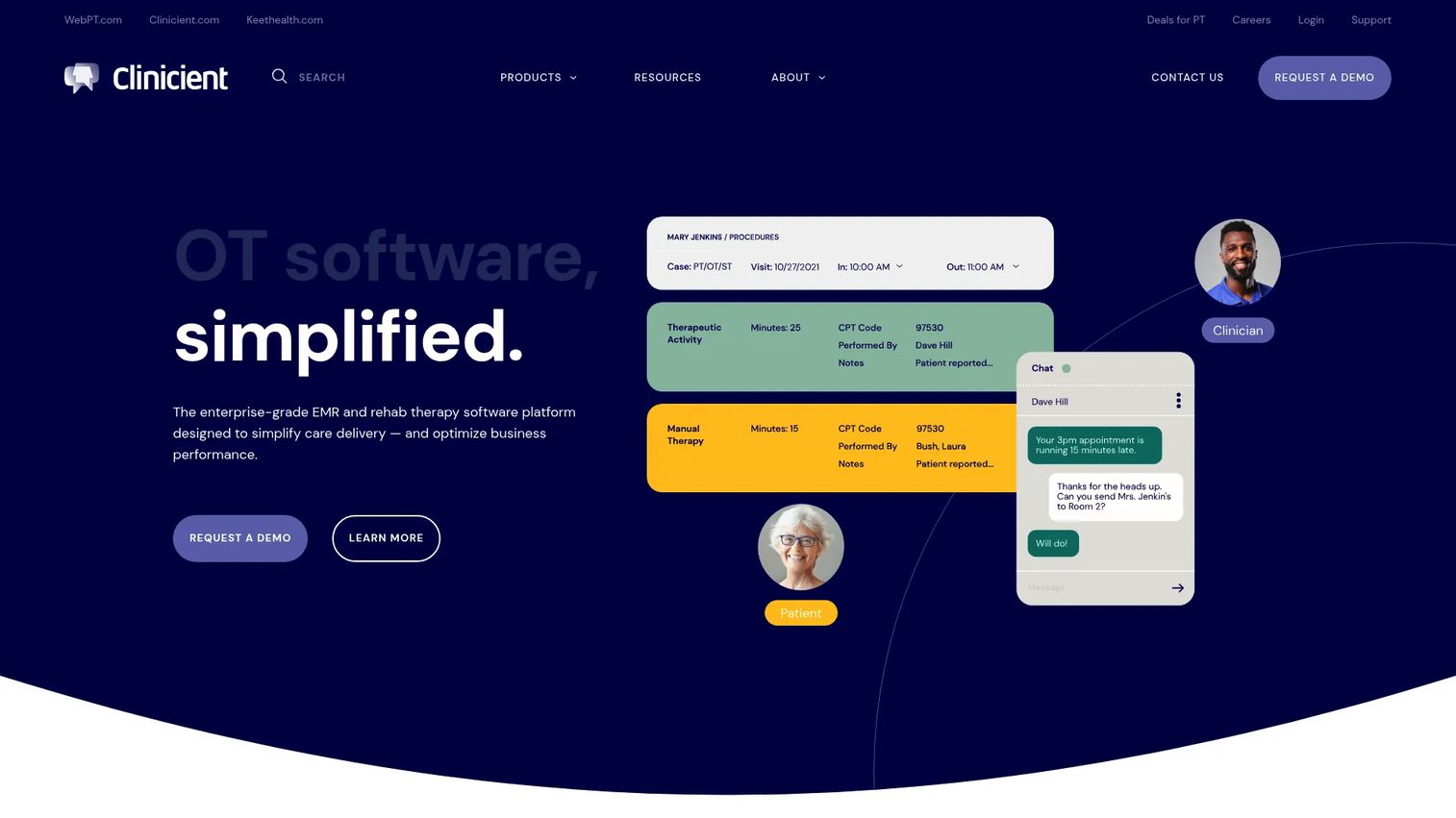
Clinicient provides outpatient rehab therapy software for PT, OT, and SLP organizations, centered on its Insight platform. It is built for clinics that need structured therapy administration with operational rigor: documentation, billing, charge capture, and outcomes management in a system designed around rehab workflows rather than general medicine.
Best for: Rehab therapy clinics needing an EMR built for PT, OT, and SLP workflows.
Key strengths
- Rehab-native EMR: EMR and practice management purpose-built for therapy, so documentation matches OT workflows.
- Billing rigor: Billing software and charge capture designed to keep rehab reimbursement clean.
- Outcomes and engagement: Outcomes management and reporting plus patient engagement and home exercise programs.
Why choose Clinicient: Clinicient fits clinics that want operational rigor across scheduling, documentation, billing, and interoperability, with outcomes reporting to back reimbursement. It suits established outpatient rehab groups more than solo clinicians. Choose it when structured therapy administration and clean billing matter more than a lightweight setup.
Clinicient pricing: Clinicient does not publish pricing on its site and primarily uses "Request a Demo" CTAs. Contact the vendor for a quote based on your organization's size and workflow needs.
7. Empower EMR
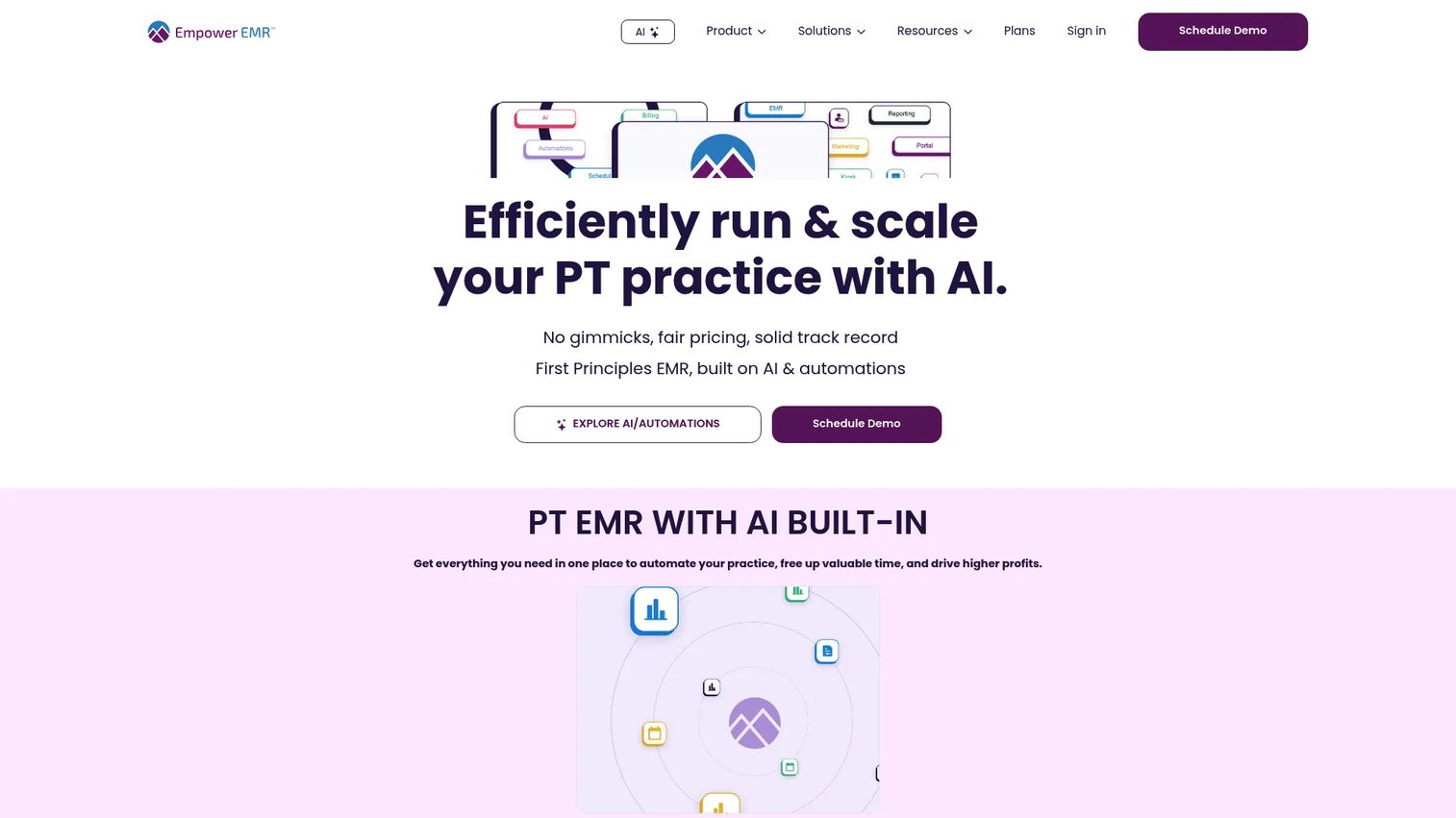
Empower EMR is an all-in-one web-based PT EMR platform with AI, scheduling, billing, reporting, and patient portal tools. It skews toward rehab specialization and offers flexible plans, which makes it worth considering when you need specialty support with more configuration room. Onboarding, unlimited notes, unlimited storage, support, and integrations are included across its plans.
Best for: Outpatient physical therapy practices wanting an all-in-one EMR.
Key strengths
- AI and automation: AI and automations that reduce repetitive documentation and admin work.
- Full operational coverage: Documentation, billing, and reporting alongside scheduling and a patient portal.
- Included essentials: Onboarding, unlimited notes, unlimited storage, support, and integrations bundled into the plans.
Why choose Empower EMR: Empower fits rehab-focused practices that want flexible plans and don't want to meter notes or storage. Its AI and automation reduce admin load, and the included integrations help it fit an existing stack. It suits outpatient PT and OT practices that want specialty support without piecemeal add-ons.
Empower EMR pricing: Empower lists two plans, AI Premium and AI Premium Plus, with onboarding, unlimited notes, unlimited storage, support, and integrations included. No public dollar amount is shown on the plans page, so request a quote for a figure tied to your practice.
8. EPIC Systems
EPIC Systems is an enterprise-grade EMR used by large hospitals and complex, multi-site health systems. It belongs on this list as the enterprise outlier: this is for a fundamentally different buyer than a small OT practice. Hospitals represent 48.4% of global occupational therapy software end-use share in 2024, per Global Market Insights (2024), and EPIC is the kind of system that share runs on.
Best for: Large hospitals and multi-site health systems that need enterprise EMR depth and governance.
Key strengths
- Enterprise-scale EMR: Built for complex, multi-department, multi-site clinical operations.
- Interoperability and governance: Deep integration and data governance suited to health systems with compliance mandates.
- Cross-discipline coverage: Handles OT as one of many specialties inside a single enterprise record.
Why choose EPIC Systems: EPIC suits health systems where OT is one department among many and IT, security, and governance drive the decision. It is not the right fit for a small or mid-sized private practice, where implementation scale and cost outweigh the benefit. Choose it only if you operate at hospital or multi-site scale.
EPIC Systems pricing: EPIC uses enterprise pricing tied to implementation scope, organization size, and modules. No public pricing is listed; procurement runs through a direct engagement with the vendor.
Considerations before you buy
Once you have a shortlist of two or three, evaluate against the criteria that actually determine whether operations run predictably.
Documentation fit for OT
Test the note templates and outcome-measure scoring against your real visit types, including pediatric and hands-on sessions. Generic therapy EMR templates can work, but confirm they map to OT documentation before you commit. Slow or ill-fitting notes tax every clinician, every day.
Billing and claims workflow
Trace a claim from charge capture to submission to payment. Occupational therapy billing software should reduce denials and make your billing cycle predictable, not just record charges. If reimbursement flow is your pain, weight this criterion heaviest.
Telehealth and client-facing tools
If you run remote sessions, confirm the occupational therapy telehealth software includes what OT needs: whiteboards, screen sharing, and interactive tools for pediatric work. Check the client portal for intake, online booking, secure messaging, and payments.
Pricing and implementation effort
Occupational therapy software pricing ranges from free to enterprise. Look past the sticker to add-ons like SMS, claiming, and per-provider fees, then estimate implementation time. A tool that takes a quarter to configure delays every downstream benefit.
Conclusion
The best occupational therapy software for private practices is the one that removes the most moving parts for your specific model. For a small practice that wants documentation, billing, and telehealth under one login, TheraPlatform is the cleanest all-in-one. WebPT and Clinicient reward outpatient rehab groups that want clinical and billing depth. Zanda Health and Empower EMR bring modern admin and AI notes. Allia Health removes cost from the decision for solo clinicians, and EPIC Systems serves large health systems where OT is one department among many.
Your next step is simple: shortlist two or three, run a real claim and a real note through each, and estimate implementation effort before you sign. The tool that keeps documentation fast, gets claims paid, and moves clients through intake to follow-up without manual handoffs is the one that earns its place in your stack.
For more buyer's guides that apply the same systems lens, see how we evaluate contract lifecycle management software, community management software, and marketing resource management software.
FAQs
Occupational therapy software is a clinical and administrative system that runs documentation, scheduling, billing, and client communication for OT practices. Most tools combine an occupational therapy EMR with practice management features, and many add telehealth and AI notes. The goal is to consolidate fragmented workflows into one system.
Prioritize OT-specific documentation templates and outcome-measure scoring, a clean billing and claims workflow, and scheduling with online booking. Confirm the therapy EMR maps to your actual visit types before committing. For most growing clinics, reimbursement flow and documentation speed matter more than any single feature.
Yes. An occupational therapy EMR focuses on the clinical record, while practice management software covers the operational layer: scheduling, billing, client portal, and reporting. Most modern occupational therapy practice management software bundles both, so you run clinical and administrative work in one place.
Look for occupational therapy billing software with charge capture, claims submission, and payment tracking built for rehab reimbursement. Clinicient and WebPT emphasize rehab billing rigor, while TheraPlatform bundles billing with documentation and telehealth. Trace a full claim through any tool before you decide.
Most modern platforms include occupational therapy telehealth software, often with HIPAA-compliant video, whiteboards, and screen sharing. TheraPlatform, Zanda Health, and Allia Health all offer built-in telehealth. For pediatric and hands-on OT, confirm the telehealth toolkit supports interactive sessions.
AI notes and transcription can cut documentation time by drafting from session content, which reduces after-hours charting. WebPT, Zanda Health, and Empower EMR include AI-assisted documentation. Always review AI-generated notes for clinical accuracy before signing, since the clinician stays responsible for the record.
Once you add clinicians, locations, or direct insurance billing, basic scheduling and charting stop scaling. That is the point to move to full occupational therapy practice management software with claims, a client portal, and reporting. If admin is growing faster than caseload, you have outgrown the basics.
Choose OT-specific or rehab-native software like Clinicient or WebPT when documentation and billing must match OT workflows precisely. Choose a broader therapy EMR like Allia Health or an established EHR like Dr. Chrono when you value flexibility, cost, or multi-discipline coverage. Test documentation and billing fit against your visit types either way.