Your currency codes live in one team's spreadsheet. Your product classifications live in another. Finance uses one set of country codes, the data team uses another, and nobody agrees on what "active customer" actually means. Then a quarterly report ships with numbers that do not reconcile, and everyone spends a week arguing about whose list was right.
That is what happens when reference values scatter across systems without a single source of truth. Reference data is small in volume but enormous in blast radius. When a code changes and three downstream applications never hear about it, your reporting breaks quietly. Segmentation drifts. Experiments produce results you cannot trust. And for anyone running product analytics, the damage shows up as decisions made on data that was never governed in the first place.
The market has noticed. The global reference data management software market was valued at roughly $2.8 billion in 2025 and is projected to reach $6.9 billion by 2034, growing at a 12.4% CAGR, according to MarketIntelo (2024). That growth reflects a simple reality: as data stacks multiply, the cost of ungoverned reference values climbs with them.
Good reference data management tools fix this by centralizing classifications and hierarchies, enforcing reference data validation, and handling reference data publishing to every system that consumes those values. This guide walks through eight reference data management solutions that do exactly that, with a lens on governance, workflow fit, and operational efficiency.
What's inside
This guide compares eight reference data management platforms built for teams that need centralized control over classifications, codes, hierarchies, and standard values. It is written for data governance leaders, MDM teams, data architects, and product-minded operators who care about reporting trust as much as data architecture.
We evaluated each tool against four criteria that matter when reference data has to hold up across an enterprise stack:
- Governance depth: approval workflows, stewardship, lineage, and audit trails
- Workflow support: how change control and reference data validation actually work in practice
- Publishing and sync: whether trusted values reach downstream applications without manual rework
- Deployment and stack fit: cloud, hybrid, and integration flexibility for enterprise environments
TL;DR
- Best overall for a unified data trust platform: Ataccama combines reference data management with data quality, governance, and MDM in one place.
- Best for MDM-heavy teams: Profisee treats reference data management as part of a broader master data strategy with strong stewardship.
- Best for multi-domain programs: Semarchy xDM balances MDM and reference data across customer, product, supplier, and reference domains.
- Best for governance-led organizations: Collibra fits teams that already run policy-driven data governance and stewardship workflows.
- Best for complex enterprise stacks: Informatica and IBM handle large-scale, legacy-heavy environments with deep publishing and hierarchy controls.
- Best for semantic and taxonomy-driven models: TopBraid manages controlled vocabularies, ontologies, and structured reference hierarchies.
What is reference data management software?
Reference data management software is a system that centralizes, governs, validates, and publishes the standard values, codes, classifications, and hierarchies that multiple applications share across an organization.
Reference data is the vocabulary your systems agree on. Country codes, currency codes, product categories, industry classifications, status values, unit-of-measure standards, and organizational hierarchies all count. Unlike transactional data, it changes slowly. Unlike master data, it describes categories rather than business entities. But when it drifts, everything built on top of it drifts too.
Here is why it matters and where it usually breaks:
- Why it matters: consistent reference values make reporting reconcile, segmentation hold, and cross-system integrations behave predictably
- What it connects to: ERPs, CRMs, data warehouses, BI tools, and product analytics platforms that all consume the same lookup values
- Where it breaks down: manual spreadsheets, team-specific lists, and copy-paste updates that never sync, leaving each system with a slightly different version of the truth
A reference data management platform solves this by holding one governed set of values, applying reference data validation before changes go live, and handling reference data publishing to every downstream application through APIs, exports, or direct sync.
Reference data management sits next to master data management (MDM) and broader data governance. MDM governs core business entities like customers and products. Data governance sets the policies and ownership across all data. Reference data management is the narrower discipline of controlling the shared lookup values that both depend on. Many tools on this list handle all three, which is why the lines blur in practice.
When to use reference data management software
Standardize classifications across business lines
When three teams use "Region 1," "North America," and "NA" to mean the same thing, every cross-team report becomes a reconciliation project. Manual spreadsheets work until the number of consumers and the rate of change outgrow a human's ability to keep them synced. A reference data management platform gives every business line one governed set of classifications and hierarchies, so a change made once propagates everywhere instead of triggering a scramble.
Publish trusted values to downstream systems
Reference data is only useful if the systems that need it actually receive the current version. This is where reference data publishing earns its keep: pushing governed values into applications, APIs, warehouses, and scheduled exports. The goal is to eliminate drift and maintain a single source of truth, so a product analytics pipeline and a finance report are reading from the same list on the same day.
Govern audits, approvals, and change control
Regulated and high-risk teams cannot let a reference value change without a record of who changed it, when, and why. Approval workflows, stewardship roles, and audit trails give that traceability. This ties directly to compliance and reporting integrity: if an auditor asks how a classification was defined last quarter, the answer should be a lineage record, not a Slack thread.
Comparison table
The table below ranks all eight tools with concise intent labels. "Intent" describes the primary center of gravity for each platform, since several handle reference data management as one capability inside a wider data governance or MDM suite. Pricing for enterprise data management software is almost always quote-based, so treat the pricing column as a model note rather than a sticker price.
| # | Product | Intent | Key use case | Pricing | G2 rating |
|---|---|---|---|---|---|
| 1 | Ataccama | Enterprise data trust | Unified RDM, quality, and governance | Contact sales | 4.2/5 |
| 2 | Profisee | MDM-centered | RDM as part of master data strategy | Quote-based | 4.4/5 |
| 3 | Semarchy xDM | Multi-domain MDM | Trusted data across multiple domains | Quote-based, free trial | 4.8/5 |
| 4 | Collibra | Governance-first | Policy-driven stewardship of reference values | Contact sales | 4.2/5 |
| 5 | Informatica | Enterprise data trust | Large-scale RDM and publishing | Consumption-based | 4.2/5 |
| 6 | IBM | Enterprise data trust | Hub-based master and reference data | Free tier available | 4.3/5 |
| 7 | TIBCO | Reference data publishing | Cross-system reference consistency | Subscription | 4.2/5 |
| 8 | TopBraid | Semantic governance | Taxonomies, ontologies, and hierarchies | Free license request | 4.7/5 |
1. Ataccama
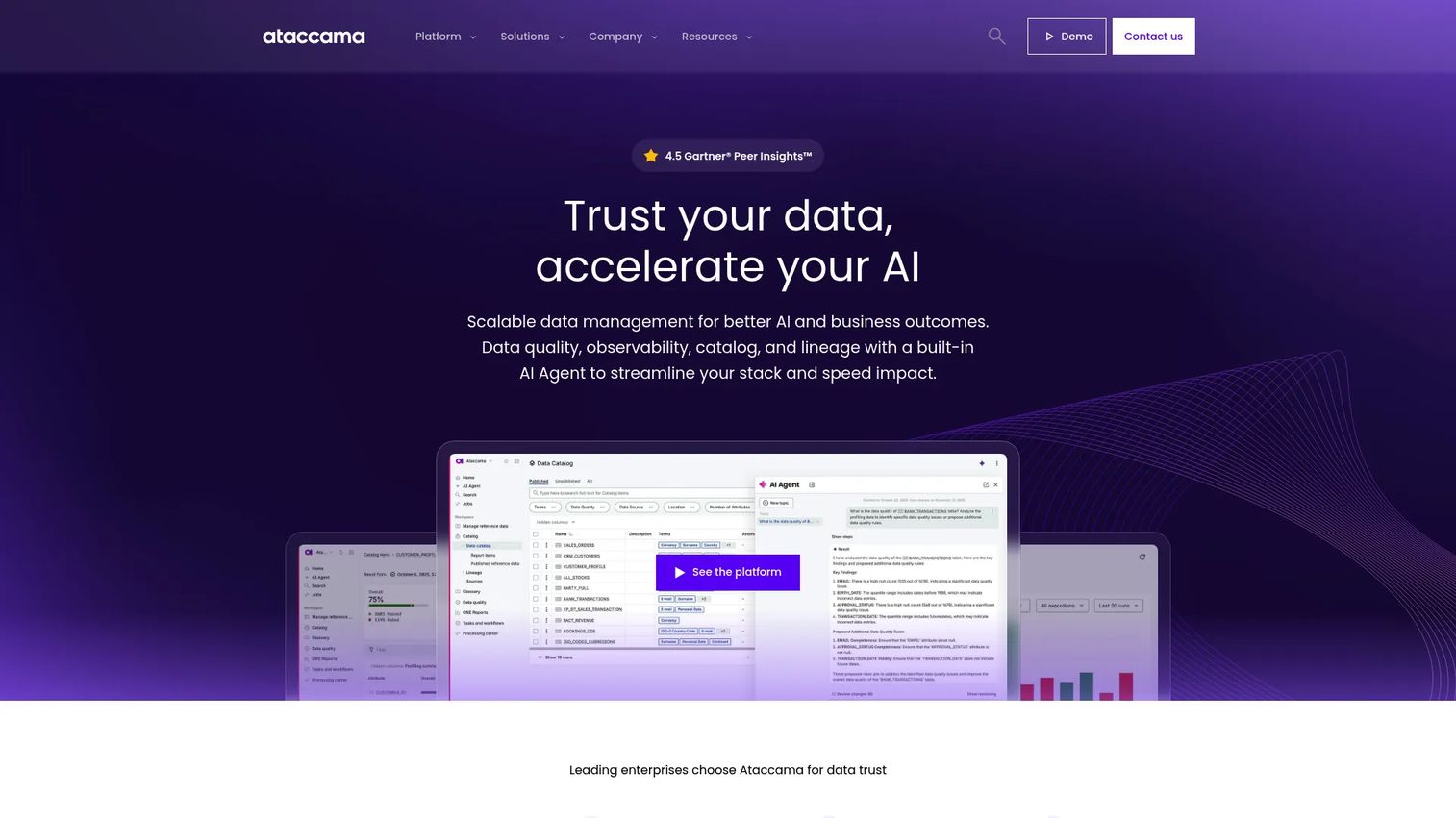
Ataccama positions reference data management inside a broader data trust platform that also covers data quality, governance, lineage, and observability. That means reference values do not live in isolation. They sit next to the rules that validate them and the catalog that documents them, which matters when a product team needs to trust the classifications feeding their analytics. Ataccama leans heavily on AI-assisted rule automation to reduce the manual work of maintaining reference sets at scale.
Best for: Large enterprises that want reference data management as one layer of a unified data quality and governance platform.
Key strengths
- Data quality monitoring: built-in cleansing, remediation, and validation so reference values stay accurate before they publish
- Governance and catalog: lineage, business definitions, and a catalog that documents how each reference set is used downstream
- MDM and RDM together: master data management and reference data management in one platform, reducing tool sprawl
Why choose Ataccama: If your reference data problem is really a data trust problem, Ataccama makes sense. It fits teams that want validation, governance, and publishing governed by the same rules engine rather than stitched across separate tools. The AI-first automation appeals to teams maintaining large reference sets with lean data teams.
Ataccama pricing: Ataccama does not publish public pricing. The site directs prospective buyers to contact sales for license cost information, which is typical for enterprise data management software at this tier. Ataccama holds a 4.2/5 rating on G2.
2. Profisee
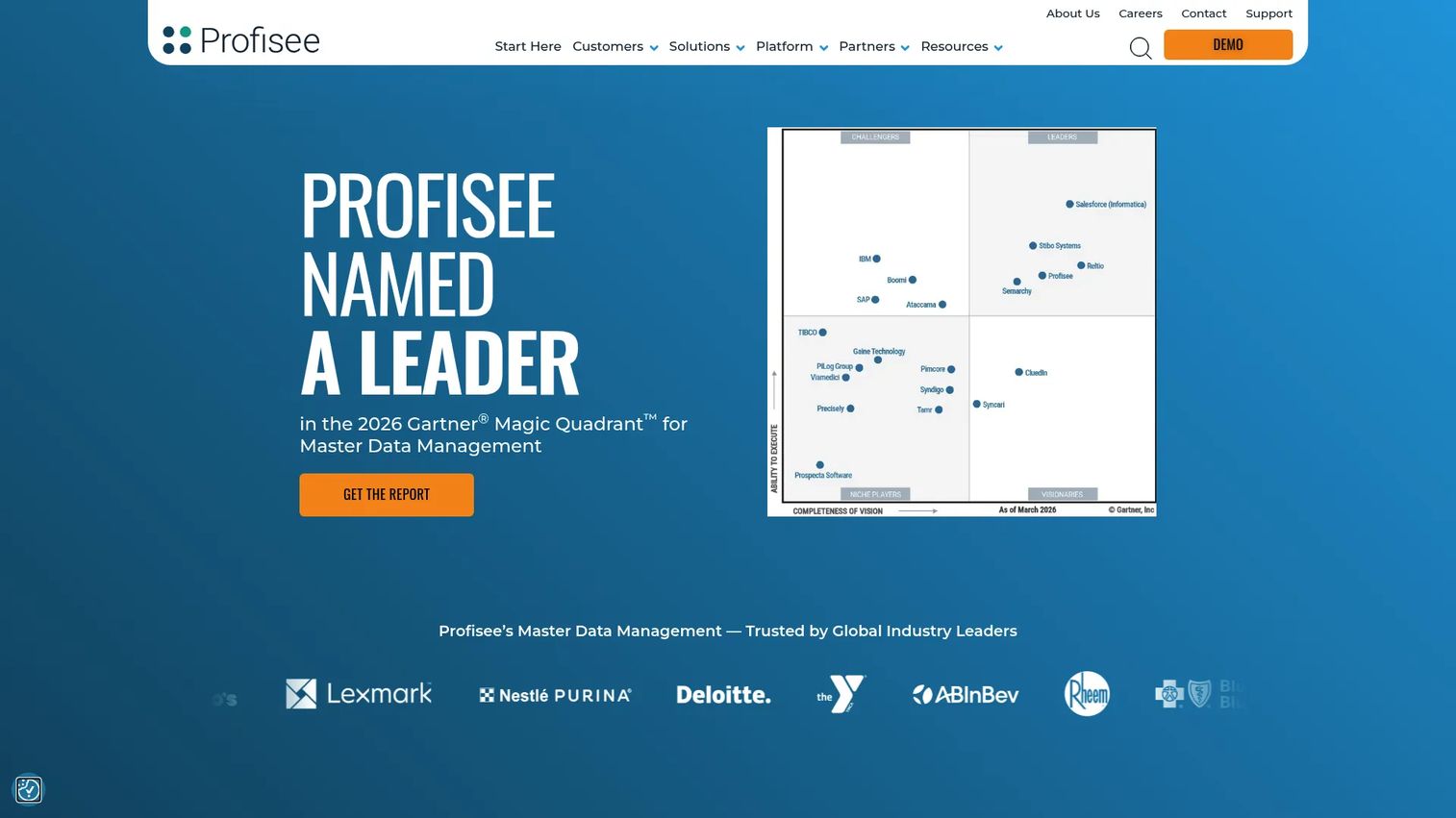
Profisee is a master data management platform that treats reference data management as part of a wider master data strategy. For teams that already think in terms of golden records and survivorship, this framing is natural: reference values are governed alongside the core entities they describe. Profisee adds AI-assisted stewardship and multi-domain data governance, so a single steward can manage both master and reference data without switching contexts.
Best for: Enterprises that want reference data management folded into a flexible, multi-domain master data management program.
Key strengths
- Pre-built connectors: connect to source systems and databases through connectors or webhooks for reference data publishing
- Match and merge: create golden records with survivorship logic, useful where reference and master data overlap
- Flexible deployment: run as SaaS, PaaS, IaaS, hybrid, or on-prem depending on stack requirements
Why choose Profisee: Profisee is the pick when reference data is one thread in a larger master data management initiative rather than a standalone project. Its deployment flexibility suits organizations with hybrid infrastructure and strict data residency needs. Stewardship-focused teams get approval workflows and governance without a separate reference tool.
Profisee pricing: Profisee offers an Enterprise Edition and an Application Edition, both priced on data volume and deployment method. No public numeric price is listed; the pricing page prompts visitors to request a quote. Profisee earns a 4.4/5 on G2.
3. Semarchy xDM
Semarchy xDM is an AI-driven data platform built for master data management, data integration, and governance across multiple domains. Reference data is one of those domains, sitting alongside customer, product, supplier, and location data. The appeal for reference data management is that Semarchy handles it in the same low-code environment as everything else, so teams balancing MDM and reference data in one program do not run two disconnected systems.
Best for: Enterprises running MDM-centric governance that need trusted data across several domains, including reference values.
Key strengths
- Multi-domain golden records: manage customer, product, supplier, location, and reference domains in one model
- Low-code integration: real-time pipelines and ELT capabilities for moving governed data into downstream applications
- DataOps governance: collaboration, automation, and AI-ready data delivery built into the workflow
Why choose Semarchy xDM: Semarchy works well for teams that do not want to separate reference data management from their broader MDM effort. The low-code approach lowers the barrier for data teams without deep engineering support, and the multi-domain model means reference hierarchies live next to the entities that use them. It carries a strong 4.8/5 rating on G2.
Semarchy xDM pricing: Semarchy does not display public pricing but promotes free trials, including a 30-day xDM trial and a self-hosted trial license, and asks buyers to contact sales for evaluation. Reported pricing is structured per designer, though no public amount is shown.
4. Collibra
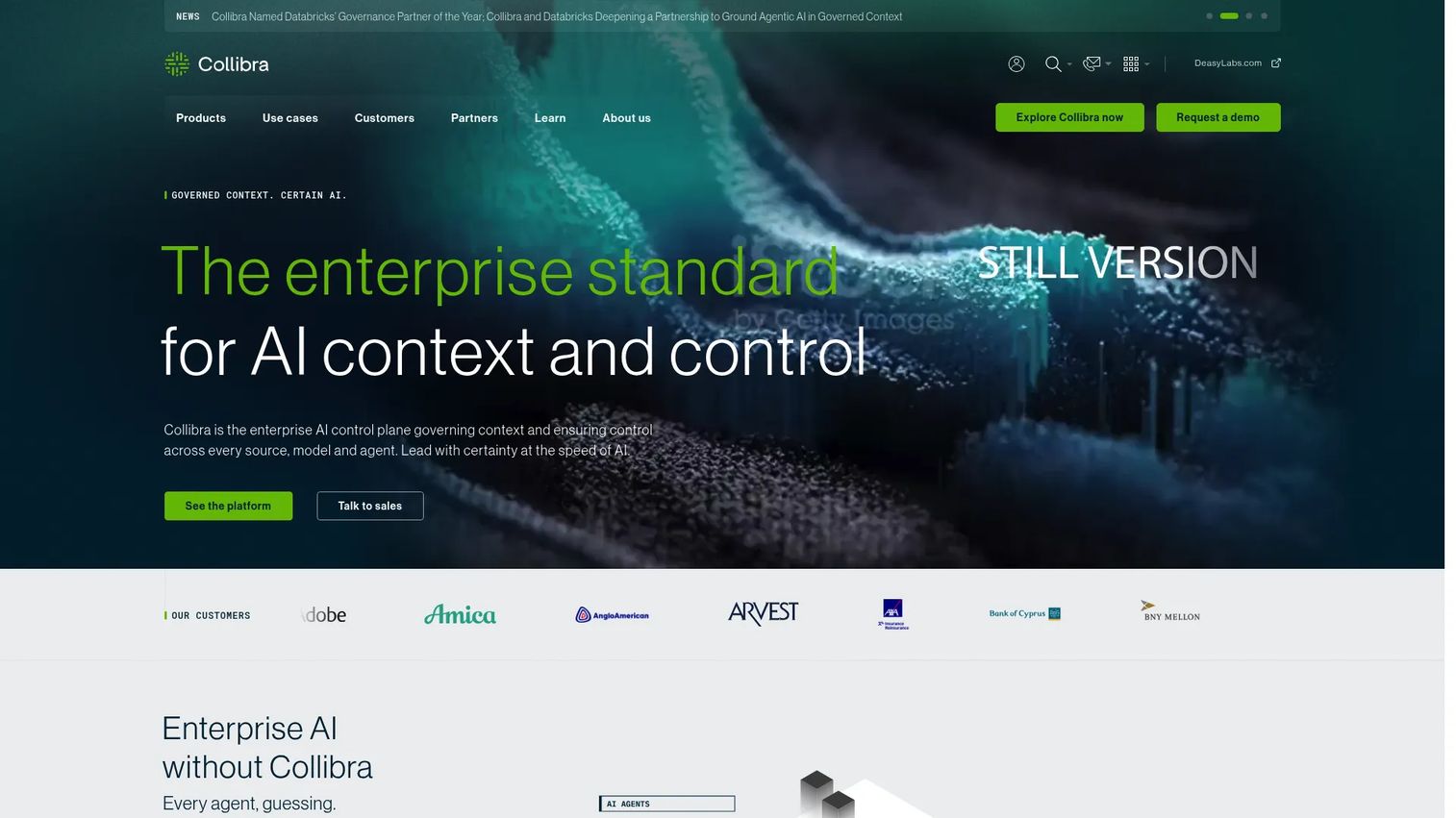
Collibra is an enterprise control plane for governing data and AI across an organization. Its reference data management strength is governance-led: approvals, stewardship, and policy-driven control over how reference values are defined and changed. For organizations that already run Collibra as their data governance backbone, managing reference values inside the same platform keeps policy, lineage, and ownership consistent rather than fragmenting them across tools.
Best for: Organizations that already operate Collibra for data governance and want reference values managed under the same policies.
Key strengths
- Data governance: policy definition, ownership, and stewardship workflows applied to reference values
- Quality and observability: monitoring so reference data stays trustworthy before it feeds downstream applications
- Access and lineage: governed access with lineage that shows how each reference set flows through the stack
Why choose Collibra: Collibra makes the most sense when reference data management is an extension of an existing governance program, not a new standalone purchase. Teams that value approval workflows, audit trails, and policy consistency across all data domains get reference management under the same roof. It fits governance-mature enterprises rather than teams looking for a lightweight, purpose-built reference tool.
Collibra pricing: Collibra does not publish public pricing. Product pages route buyers to request a demo, and pricing is handled through sales. Collibra holds a 4.2/5 rating on G2.
5. Informatica
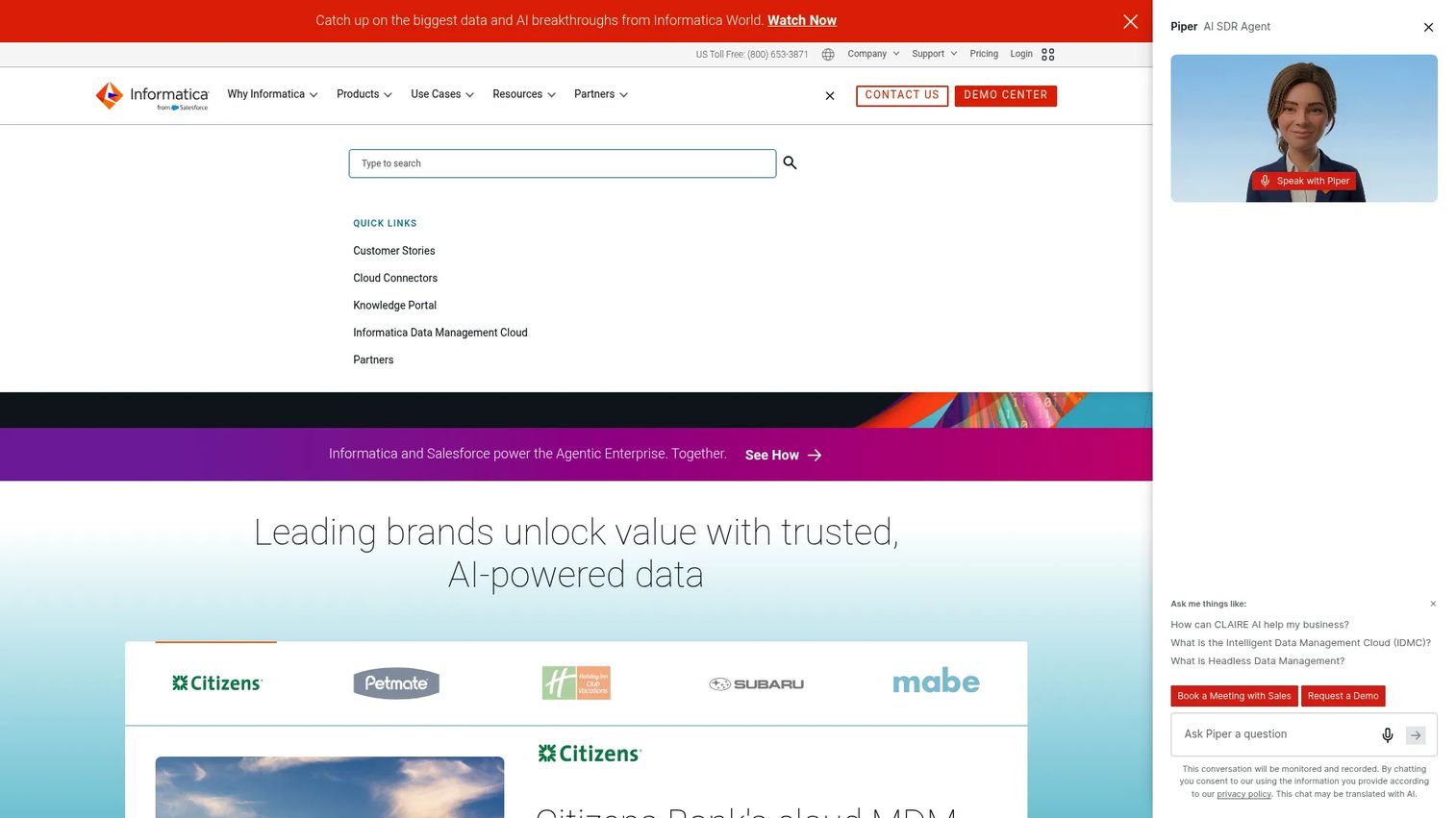
Informatica delivers reference data management as part of its Intelligent Data Management Cloud (IDMC), an AI-powered platform covering integration, governance, quality, MDM, and metadata management. This is enterprise-grade infrastructure built for large, complex environments. For reference data specifically, that means robust hierarchy handling, reference data validation, and publishing into a wide ecosystem of connected systems. It fits organizations that need reference data management as one component of a much larger data management architecture.
Best for: Large enterprises needing a unified cloud platform where reference data management sits alongside integration and governance at scale.
Key strengths
- Intelligent Data Management Cloud: one platform spanning integration, MDM, quality, and governance
- Broad module coverage: data catalog, integration, API and app integration, and MDM & 360 in a single ecosystem
- Quality and governance: data quality, observability, governance, access, and privacy controls for trusted reference data
Why choose Informatica: Informatica is the choice when reference data management is inseparable from a broader enterprise data platform strategy. The breadth is the point: teams standardizing on IDMC get reference data, integration, and governance from one vendor. That breadth suits organizations with the scale and data maturity to use it fully.
Informatica pricing: Informatica uses consumption-based, quote-led pricing. The pricing page describes flexible volume-based pricing and points buyers to request a quote. A "start for free" link appears on the products page, though it is not confirmed as a formal free tier. Informatica holds a 4.2/5 on G2.
6. IBM
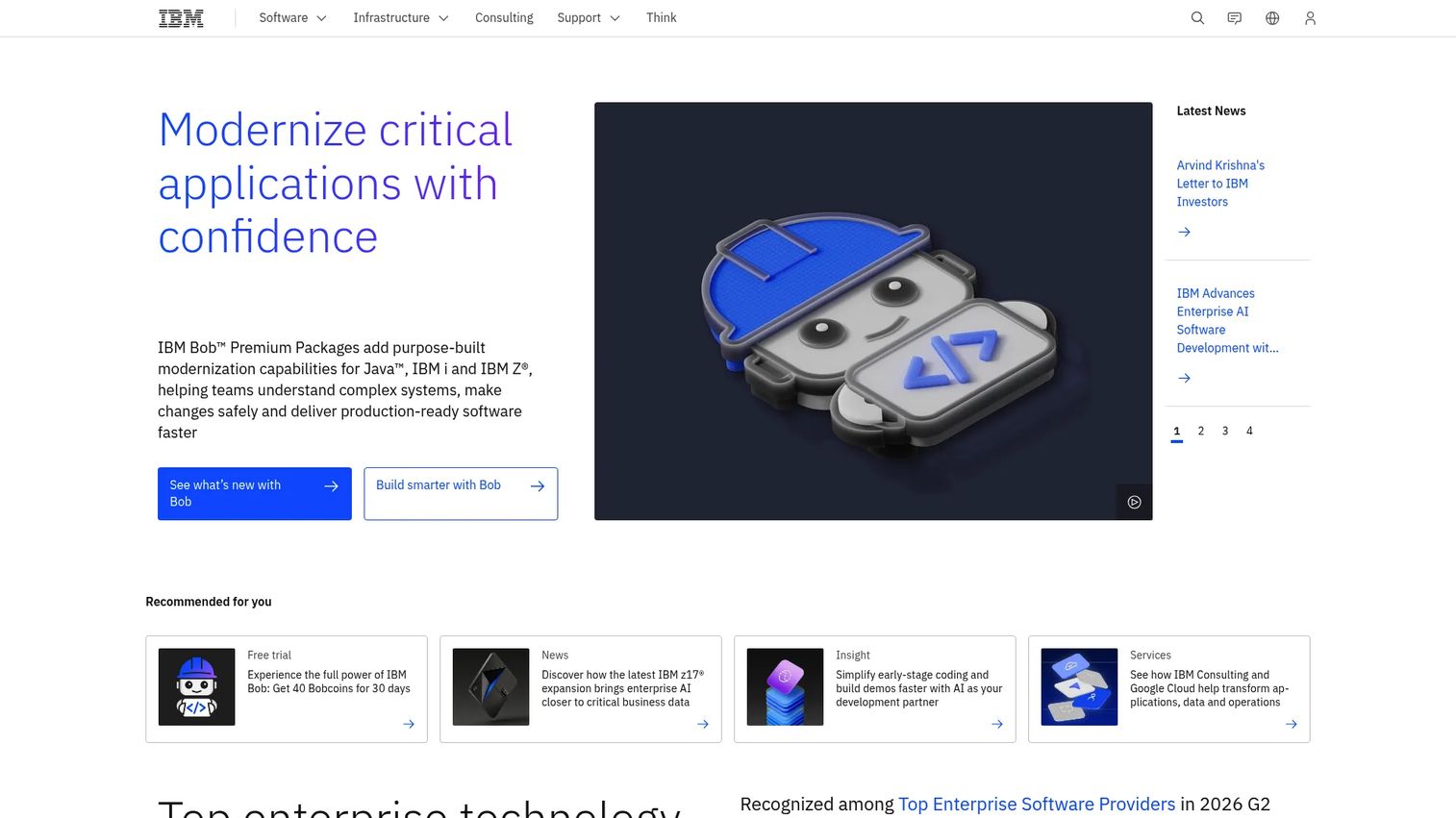
IBM offers hub-based master and reference data management as part of a broad enterprise software portfolio spanning AI, data, automation, and hybrid cloud. For reference data management, IBM's strength is scale and control in complex, legacy-heavy environments. Large organizations with decades of accumulated systems use IBM's hub model to centralize reference values and distribute them downstream with enterprise-grade controls. It is built for organizations where reference data governance has to coexist with substantial existing infrastructure.
Best for: Large enterprises with complex legacy environments and large-scale governance needs for master and reference data.
Key strengths
- Enterprise AI and analytics: products that connect governed reference data to analytics and AI workflows
- Hybrid cloud integration: software for distributing trusted reference values across hybrid environments
- Security and automation: observability, security, and automation controls for regulated, high-scale data operations
Why choose IBM: IBM fits organizations that already run significant IBM infrastructure and need reference data management that integrates with it. The hub-based model centralizes control while distributing values to a sprawling set of downstream applications. It suits enterprises where legacy complexity, not simplicity, is the defining constraint.
IBM pricing: IBM's portfolio is broad, and pricing varies by product. IBM watsonx.ai publishes Free, Essentials, and Standard plans, with the Standard tier starting at USD 1,110/month. Public pricing was not verified for every IBM data product. IBM holds a 4.3/5 on G2.
7. TIBCO
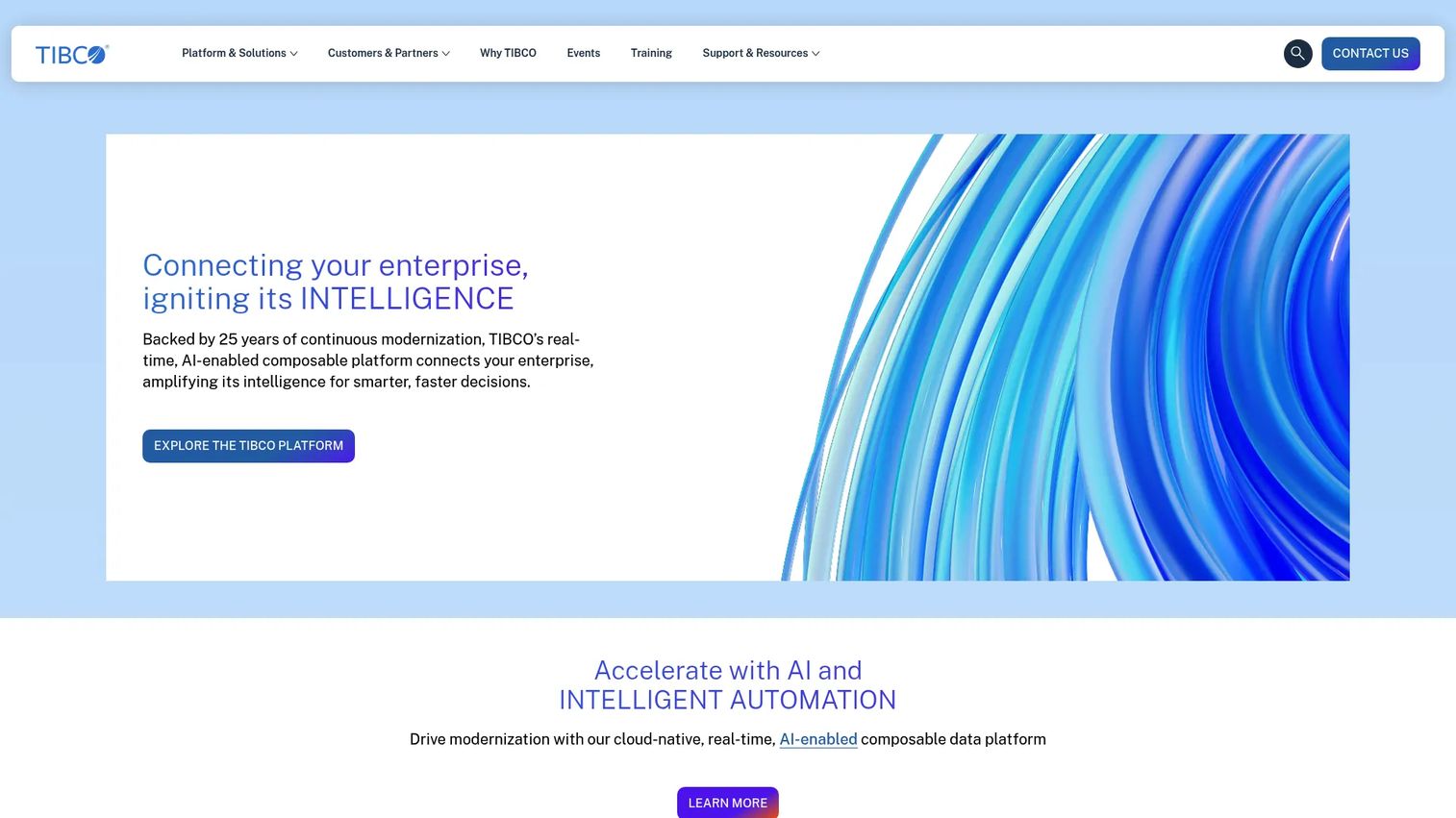
TIBCO is an enterprise software platform for real-time integration, messaging, data grid, and process automation, with reference data management capabilities focused on cross-system consistency. Its definition-aligned approach to classifications and hierarchies makes it a straightforward option for teams that want a reliable enterprise reference data layer connected to their integration backbone. Where TIBCO stands out is in moving reference values in real time across cloud, IoT, mobile, and web systems.
Best for: Large enterprises that want a straightforward reference data layer tied to a unified integration and real-time data platform.
Key strengths
- Prebuilt connectors: integration with low-code tools for connecting reference data across systems
- Real-time messaging: distribute reference values across cloud, IoT, mobile, and web in real time
- Scalable data grid: a fast, fault-tolerant data grid for high-throughput reference data publishing
Why choose TIBCO: TIBCO is a fit when reference data consistency is primarily an integration challenge. Teams already using TIBCO for real-time messaging and integration can extend it to keep reference values synced across systems without adding a separate tool. Its strength is cross-system consistency at real-time speed.
TIBCO pricing: TIBCO describes a simplified subscription model on its site, but no public price number was verifiable. Pricing appears to be quote-based. TIBCO holds a 4.2/5 rating on G2 for its integration product.
8. TopBraid

TopBraid EDG, from TopQuadrant, is a knowledge-graph-based data governance and AI-ready data foundation platform. Its reference data management strength is semantic: managing taxonomies, ontologies, business glossaries, and controlled vocabularies as structured, connected models rather than flat lookup tables. For teams that care deeply about the structure and relationships within their reference data, this graph-based approach handles complex classifications and hierarchies that simpler tools flatten.
Best for: Enterprises that need semantic reference data governance, taxonomy and ontology management, and knowledge-graph structure.
Key strengths
- Semantic modeling: model reference data as connected graphs, preserving relationships between values
- Taxonomies and ontologies: manage business glossaries, controlled vocabularies, and structured hierarchies
- Data quality management: validation and stewardship workflows for governed reference sets
Why choose TopBraid: TopBraid is the specialist pick for teams whose reference data is genuinely relational, where a country belongs to a region belongs to a market, and those relationships carry meaning. The knowledge-graph foundation also supports AI-ready data efforts. It fits organizations that prioritize structured data models and controlled vocabularies over a general-purpose governance suite.
TopBraid pricing: TopQuadrant does not publish public pricing for TopBraid EDG. The site offers a free license request and demo-based access. TopBraid holds a 4.7/5 rating on G2 under the TopQuadrant listing.
Considerations
Picking a reference data management platform is less about feature checklists and more about matching the tool to your governance maturity and how widely your reference values need to travel. Here is what to weigh.
Governance maturity
If you need approval workflows, stewardship roles, lineage, and audit trails from day one, prioritize tools built governance-first, like Collibra or Ataccama. Less mature programs may find a full governance suite heavier than needed, so match the tool to where your data governance practice actually is, not where you hope it will be in three years.
Publishing and sync model
The whole point of reference data management is getting trusted values into the systems that consume them. Check exactly how each tool handles reference data publishing: real-time APIs, scheduled exports, direct sync, or connectors. TIBCO and Informatica emphasize real-time distribution to downstream applications, which matters if your analytics and finance systems cannot tolerate drift.
MDM overlap
Decide whether you need a pure reference data tool or reference data management inside a broader master data management stack. Profisee, Semarchy, and IBM treat reference data as one domain within MDM. If your reference data problem is entangled with customer or product data, an MDM-native platform avoids running two systems.
Deployment and integration fit
Cloud, hybrid, and on-prem requirements narrow the field fast. Profisee's flexible deployment and Informatica's cloud-native IDMC sit at opposite ends of that spectrum. Confirm the tool fits your existing enterprise stack and data residency rules before you get deep into evaluation.
Reporting and compliance needs
In regulated environments, traceability is not optional. Audit trails, lineage, and evidence of who changed what and when directly support compliance and reporting integrity. Tools with mature stewardship and audit capabilities save real time when an auditor comes asking how a classification was defined.
Conclusion
The right reference data management software depends on two things: how mature your data governance practice is, and how far your reference values need to travel across systems.
- For a unified data trust platform, Ataccama pairs reference data management with quality and governance in one place.
- For MDM-heavy programs, Profisee and Semarchy xDM treat reference data as one governed domain among many.
- For governance-led organizations, Collibra extends existing policy and stewardship to reference values.
- For complex enterprise stacks, Informatica and IBM handle scale, legacy systems, and broad publishing.
- For semantic and taxonomy-driven models, TopBraid manages controlled vocabularies as connected graphs.
Start by naming your primary constraint. If it is governance, lead with Collibra or Ataccama. If it is master data, evaluate Profisee or Semarchy. If it is integration and real-time distribution, look hard at TIBCO or Informatica. The best reference data management solutions are the ones that fit your operating model and give you a single source of truth your reporting and operational efficiency can rely on.
If your product team's next challenge is showing complex software clearly rather than governing it, Guideflow turns your product into self-serve interactive experiences in minutes. You can capture a flow, edit and personalize it, share it anywhere, and analyze engagement, with AI assistance and options to collaborate across teams and integrate with your stack.
Start your journey with Guideflow today!
FAQs
Reference data management software centralizes, governs, validates, and publishes the standard values, codes, classifications, and hierarchies that many systems share. It replaces scattered spreadsheets and team-specific lists with one governed source of truth, then distributes trusted values to every downstream application that needs them.
Master data management governs core business entities like customers, products, and suppliers. Reference data management governs the shared lookup values those entities reference, such as country codes, currency codes, and status classifications. Reference data is narrower, changes more slowly, and describes categories rather than specific business objects. Many platforms handle both.
Spreadsheets have no approval workflows, no audit trails, and no way to sync changes across systems automatically. When a value changes in one file, every other copy silently goes stale. At enterprise scale, that drift breaks reporting, segmentation, and compliance. Dedicated software enforces validation and publishes changes everywhere at once.
Look for centralized storage of classifications and hierarchies, reference data validation before changes go live, approval workflows and stewardship, audit trails and lineage for compliance, and reference data publishing to downstream systems through APIs, exports, or sync. Deployment flexibility and integration with your existing data stack round out the list.
It creates traceability. Audit trails record who changed each reference value, when, and why, while lineage shows how those values flow through downstream applications. When an auditor asks how a classification was defined last quarter, the answer is a governed record rather than reconstructed memory, which directly supports compliance and reporting integrity.
Yes. Publishing is a core function. Tools distribute governed reference values through real-time APIs, scheduled exports, direct database sync, or prebuilt connectors. TIBCO and Informatica emphasize real-time distribution across cloud, mobile, and web, which keeps analytics and operational systems reading from the same current list and prevents drift.
Build only when reference data is trivial and rarely changes. Buy when multiple systems consume the same values, changes require approval and audit trails, or reference data feeds regulated reporting. A dedicated reference data management platform delivers governance, validation, and publishing that in-house scripts rarely maintain reliably over time.
Transactional data records events, like an order or a payment. Master data describes the core entities involved, like the customer who placed the order. Reference data is the shared classification layer both rely on, like the order status codes or country codes. Reference data changes slowly, master data changes occasionally, and transactional data changes constantly.