Your utility data lives in twelve places at once. Paper invoices in a filing cabinet. A spreadsheet one analyst maintains and nobody else understands. A billing portal for each provider, each with its own login. An accounting system that sees totals but not consumption. When a bill spikes 40% at one site, you find out three months later, after the payment already cleared.
That gap costs real money. The global utility management system market hit $13.0 billion in 2025 and is projected to reach $28.8 billion by 2033, according to Grand View Research (2025). The growth is not vanity spend. It reflects how much operators lose to billing errors, missed anomalies, and manual reconciliation across scattered systems.
For a product manager or operations lead evaluating this category, the real question is not "which tool has the most features." It is which platform fits your primary workflow, integrates with the systems you already run, and produces measurable outcomes: fewer billing errors, tighter utility cost control, cleaner reporting, and less manual work per site. This guide compares nine platforms across billing, analytics, automation, ERP integration, and compliance, so you can match a shortlist to how your organization actually operates.
What's inside
This guide is written for teams evaluating utility management software to control spend, centralize bills, and improve reporting across multiple sites or properties. We selected nine platforms that cover the full category: utility billing software, cost control and analytics tools, ERP for utilities, and infrastructure-grade metering and grid platforms.
Each tool earned its place against four criteria: billing accuracy and auditing depth, automation and workflow support, reporting and analytics coverage, and integration with ERP and financial systems. We also weighted compliance and emissions reporting, since those increasingly sit inside the buying decision rather than beside it. Pricing and ratings reflect verified sources where public data exists.
TL;DR
- Best for utility bill auditing and cost control: EnergyCAP, purpose-built for bill validation, anomaly detection, and benchmarking.
- Best for frontline operations and inspections: SafetyCulture, a mobile-first operations platform with a free tier.
- Best for ERP-heavy utility operations: Infor, a cloud suite pairing utilities operations with financials and workforce management.
- Best for municipal and public-sector utilities: Tyler Technologies, focused on billing, account management, and public-sector workflows.
- Best for enterprise meter-to-cash: Oracle Utilities, spanning customer operations, metering, and network management.
- Best for energy infrastructure management: Schneider Electric, ABB, Landis+Gyr, and Itron, for organizations managing metering, grid data, and industrial energy at scale.
What is utility management software?
Utility management software is a category of platforms that centralize utility data, automate billing and payment workflows, and give operators visibility into consumption, cost, and compliance across one or many sites.
The category spans several subcategories, and most buyers need a combination rather than a single flavor:
- Utility billing software: generates, validates, and processes bills, often including meter-to-cash workflows for utility providers.
- Utility bill management software: ingests third-party provider invoices, audits them for errors, and centralizes payment.
- Utility tracking software: captures consumption and cost data across meters, sites, and commodities.
- Utility analytics software: turns raw usage into benchmarks, dashboards, and anomaly alerts.
- Account management and customer information systems: manage customer records, billing accounts, and service requests.
- Meter data management: collects and validates interval data from advanced metering infrastructure.
- Utility reporting software: produces budget, variance, and regulatory reports.
- Compliance and emissions tracking: supports carbon accounting and emissions reporting for sustainability and regulatory needs.
- ERP for utilities: connects utility workflows to financials, supply chain, and workforce systems.
A utility management system can be a single product covering several of these, or a stack of specialized tools connected through integrations. The right map depends on whether your primary job is paying bills accurately, billing customers, analyzing usage, or running grid infrastructure.
When to use utility management software
The category is broad, so the clearest way to scope your evaluation is by the operational problem you are solving first.
Reduce billing errors and approval delays
If invoices route through email threads and manual sign-offs, errors slip through and payments stall. Utility bill management software validates charges against contracts and historical usage, flags exceptions, and routes approvals automatically. This is where billing accuracy and utility bill auditing pay for themselves fastest.
Centralize multi-site utility data
When each property or region maintains its own spreadsheet, portfolio-level visibility is impossible. A centralized utility tracking system pulls every meter and commodity into one place, so you can compare sites, spot outliers, and report on the whole portfolio without stitching files together.
Improve reporting, benchmarking, and savings visibility
Cost avoidance only counts if you can measure it. Analytics-first platforms benchmark sites against each other and against baselines, quantify savings from efficiency projects, and surface the dashboards leadership actually reviews.
Support compliance and emissions reporting
Carbon accounting and emissions reporting are moving from optional to mandatory in many regions. Platforms with built-in emissions tracking convert consumption data into audit-ready reports, reducing the manual work behind sustainability disclosures.
Connect utility workflows to ERP and financial systems
If utility cost has to reconcile with the general ledger, feed budgets, or trigger chargebacks, ERP integration matters more than any single feature. ERP for utilities ties billing, cost, and workforce data into the systems finance already runs.
Comparison table
The table below summarizes each platform by buyer intent, primary use case, pricing, and G2 rating. Where a vendor does not publish list pricing, the field reflects that reality rather than a guess. Ratings are drawn from verified G2 seller or product pages where available.
| # | Product | Intent | Key use case | Pricing | G2 rating |
|---|---|---|---|---|---|
| 1 | EnergyCAP | Bill management and analytics | Utility bill auditing, benchmarking, emissions | Per meter, per year (custom) | 4.7/5 |
| 2 | SafetyCulture | Frontline operations | Inspections, asset tracking, mobile workflows | Free; from $5/seat/mo | 4.6/5 |
| 3 | Infor | ERP for utilities | Cloud suite, financials, workforce | Custom | Not listed |
| 4 | Tyler Technologies | Public-sector utilities | Billing, account management, meter-to-cash | Custom | Not listed |
| 5 | Oracle Utilities | Enterprise utility operations | CIS, metering, network management | Custom (PAYG from $3.50/txn) | 3.7/5 |
| 6 | Schneider Electric | Energy and utility management | Monitoring, optimization, sustainability | Custom | 4.4/5 |
| 7 | ABB | Industrial energy and automation | Electrification, automation, monitoring | Custom | Not listed |
| 8 | Landis+Gyr | Metering and grid analytics | AMI, MDMS, grid-edge intelligence | Custom | Not listed |
| 9 | Itron | Utility intelligence | Metering, grid, data management | Custom | 5.0/5 |
A few notes on reading this table. Custom pricing is standard at the enterprise and infrastructure end of the category, so treat it as a signal of scope rather than a red flag. G2 ratings vary in sample size, so weigh them alongside the fit discussion in each section below.
1. EnergyCAP
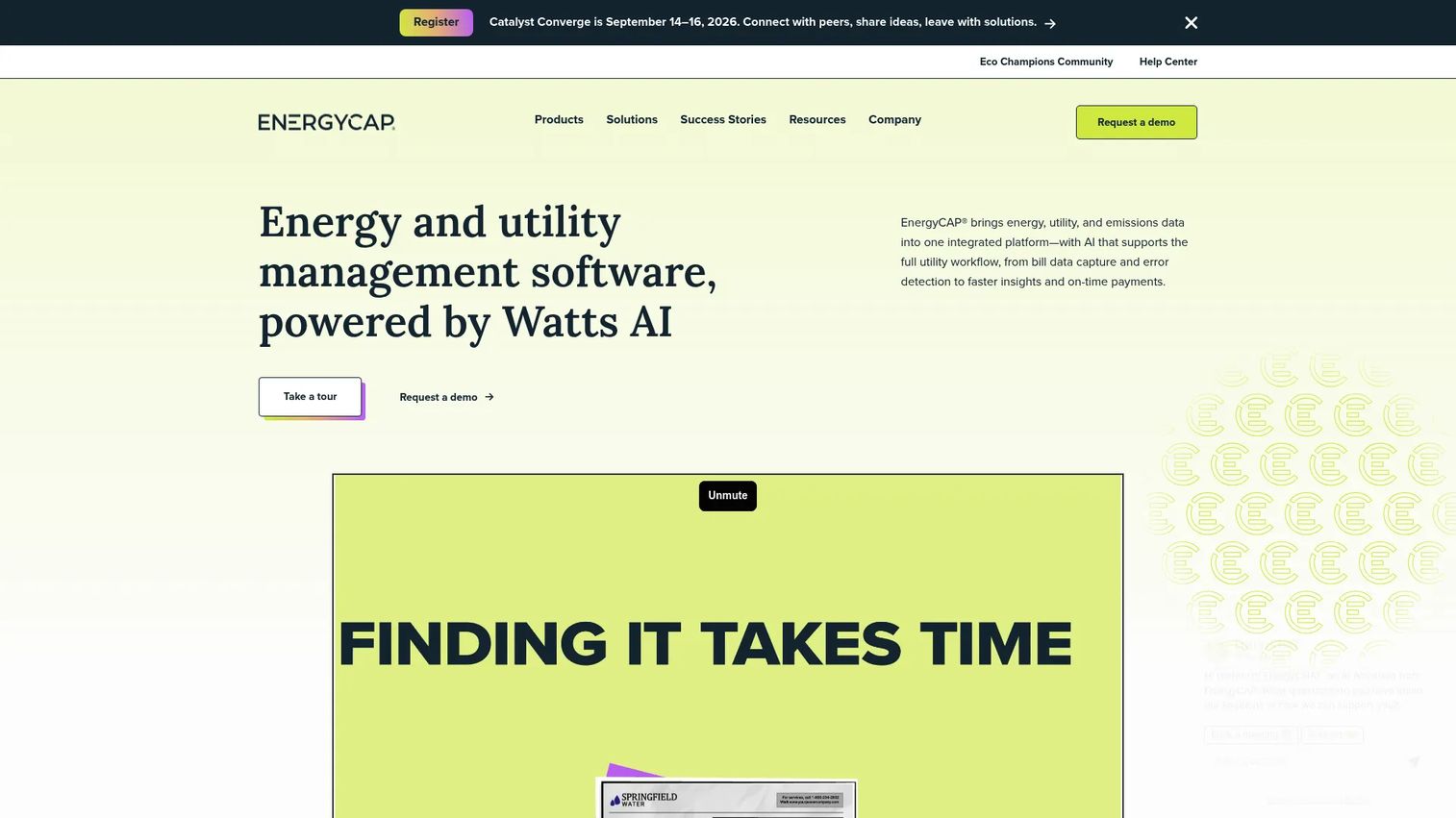
EnergyCAP is an energy and utility management platform built around utility bill management, analytics, and carbon accounting. It centralizes utility data across meters, sites, and commodities, then layers auditing and reporting on top. For organizations whose primary job is paying utility bills accurately and proving savings, it maps directly to the workflow.
The platform's strength is depth in bill management. It ingests provider invoices, audits them against expected values, and flags anomalies before payment. Anomaly detection catches the 40% spike the month it happens, not a quarter later. Benchmarking lets you compare sites against each other and against baselines, and normalization adjusts for weather and occupancy so comparisons hold up. Measurement and verification (M&V) quantifies savings from efficiency projects, which is how you turn cost avoidance into a defensible number. Chargebacks allocate costs back to tenants or departments, and dashboards give leadership a portfolio view without a spreadsheet export.
Best for: Organizations that need utility bill management plus energy and sustainability reporting in one place.
Key strengths
- Bill auditing and anomaly detection: Validates invoices automatically and flags cost spikes before payment clears.
- Benchmarking and normalization: Compares sites on a like-for-like basis, adjusted for weather and usage patterns.
- Emissions reporting and AI insights: Converts consumption into carbon accounting reports and surfaces patterns through AI-assisted analysis.
Why choose EnergyCAP: If your pain is fragmented bills, undetected errors, and weak savings visibility, EnergyCAP is the most focused fit on this list. It is not an ERP or a grid platform. It is a bill management and utility analytics software system that does that job with depth, which is exactly what a multi-site portfolio owner needs.
EnergyCAP pricing: Pricing is based on a per-meter, per-year model with annual subscription components. EnergyCAP does not publish a numeric starting price on its site, so expect a scoped quote based on meter count. The platform holds a 4.7/5 rating on G2.
2. SafetyCulture
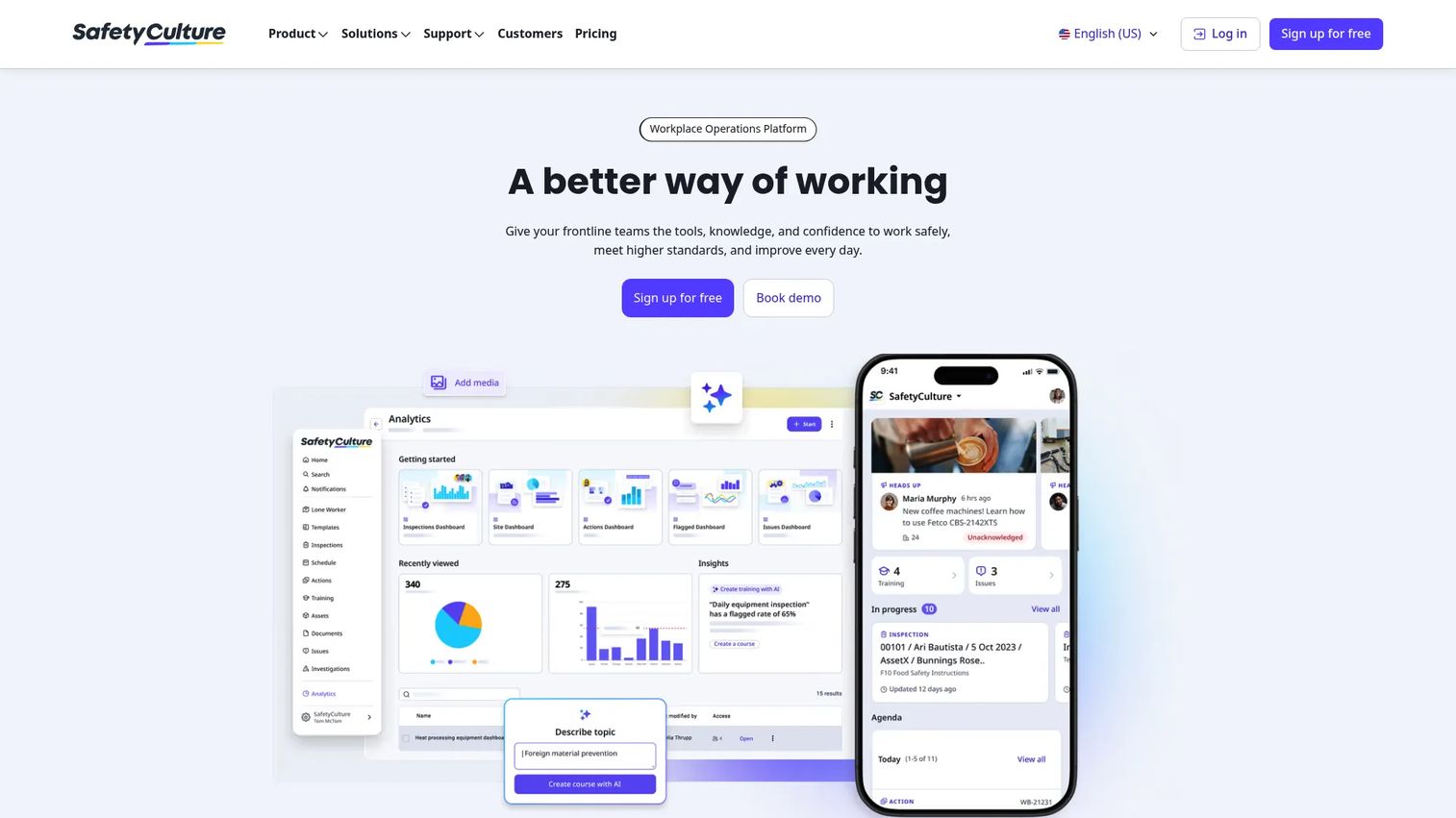
SafetyCulture is a workplace operations platform for inspections, training, asset management, and frontline workflows. It appears in utility management comparisons because operators managing physical infrastructure need more than billing data. They need mobile inspections, asset condition tracking, and a way to log issues from the field, all of which SafetyCulture handles.
For utility-adjacent operations, the fit is around visibility into the physical estate rather than the invoice. Field teams run inspections on a phone, capture asset conditions, and trigger tasks when something needs attention. Analytics roll up inspection and issue data so managers see where problems cluster. It is a broader operations tool rather than a dedicated billing or analytics system, which suits teams that want one platform for frontline work across utilities and other facilities.
Best for: Teams that need mobile-first inspections, compliance workflows, and frontline operations management alongside utility tracking.
Key strengths
- Mobile inspections and checklists: Field teams capture data and photos on any device, with results synced centrally.
- Asset management: Tracks asset condition and maintenance across sites from one system.
- Training and issue tracking: Onboards frontline staff and logs issues that route into tasks and analytics.
Why choose SafetyCulture: SafetyCulture fits operators who care as much about the condition of physical infrastructure as the accuracy of the bill. It is the broadest operational tool on this list and the easiest to trial thanks to a free tier, which matters when you want fast validation before committing budget.
SafetyCulture pricing: SafetyCulture offers a Free plan at $0, a Lite seat from $5/seat/month billed annually, and a Full seat at $24/seat/month billed annually. An Enterprise tier is available with custom pricing. The platform holds a 4.6/5 rating on G2.
3. Infor
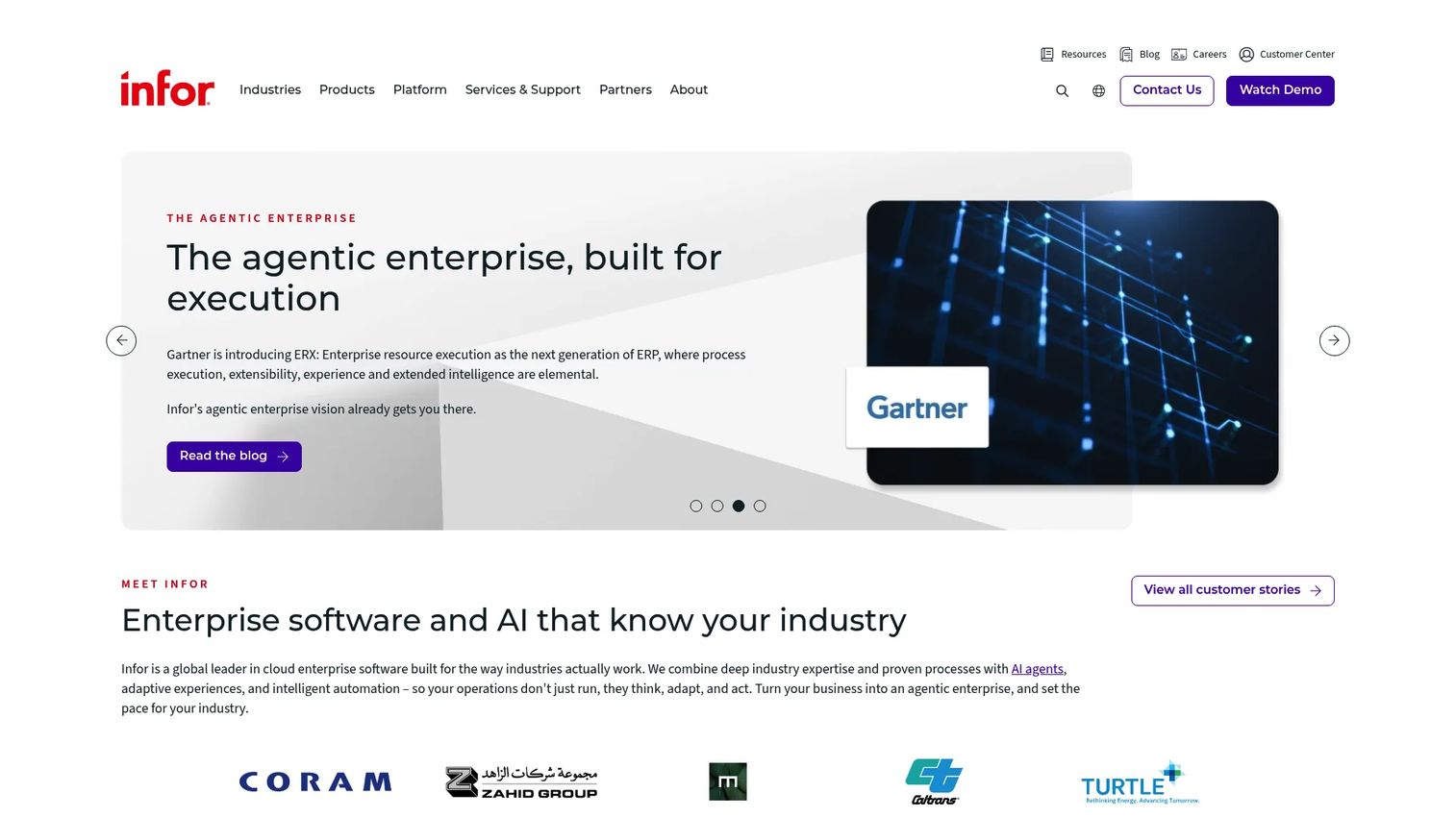
Infor is a cloud suite that pairs industry-specific operations with financials, supply management, and workforce systems. For utility organizations, its value is platform breadth: instead of connecting a billing tool to a separate ERP, workflows already share one data model. This is ERP for utilities in the fullest sense, where cost, workforce, and operations reconcile inside a single suite.
The suite spans financials and supply management, workforce management, governance, risk, and compliance (GRC), and public-sector operations. Infor also embeds AI agents and analytics across the platform, so insight sits inside the workflow rather than in a separate reporting layer. Emissions reporting and compliance capabilities align with the growing regulatory demands on utility operators. For larger organizations that already need enterprise ERP, folding utility operations into the same suite reduces the integration surface and the number of systems to maintain.
Best for: Larger utility organizations that need platform integration across operations, financials, and workforce.
Key strengths
- Cloud ERP suite: Unifies financials, supply management, and workforce data in one platform.
- Workflow automation and AI agents: Automates cross-system processes and embeds AI insights inside operations.
- GRC and compliance: Supports governance, risk, and emissions reporting for regulated utility operators.
Why choose Infor: Choose Infor when your constraint is systems fragmentation, not a single missing feature. If finance, workforce, and utility operations already need to reconcile, a suite that shares one data model beats stitching point tools together. Expect enterprise packaging and an implementation project rather than a quick self-serve setup.
Infor pricing: Infor uses custom enterprise pricing scoped to modules, users, and deployment. There is no public list price, and no verified G2 rating for the utilities suite specifically. Plan for a sales-led evaluation and a scoped implementation timeline.
4. Tyler Technologies
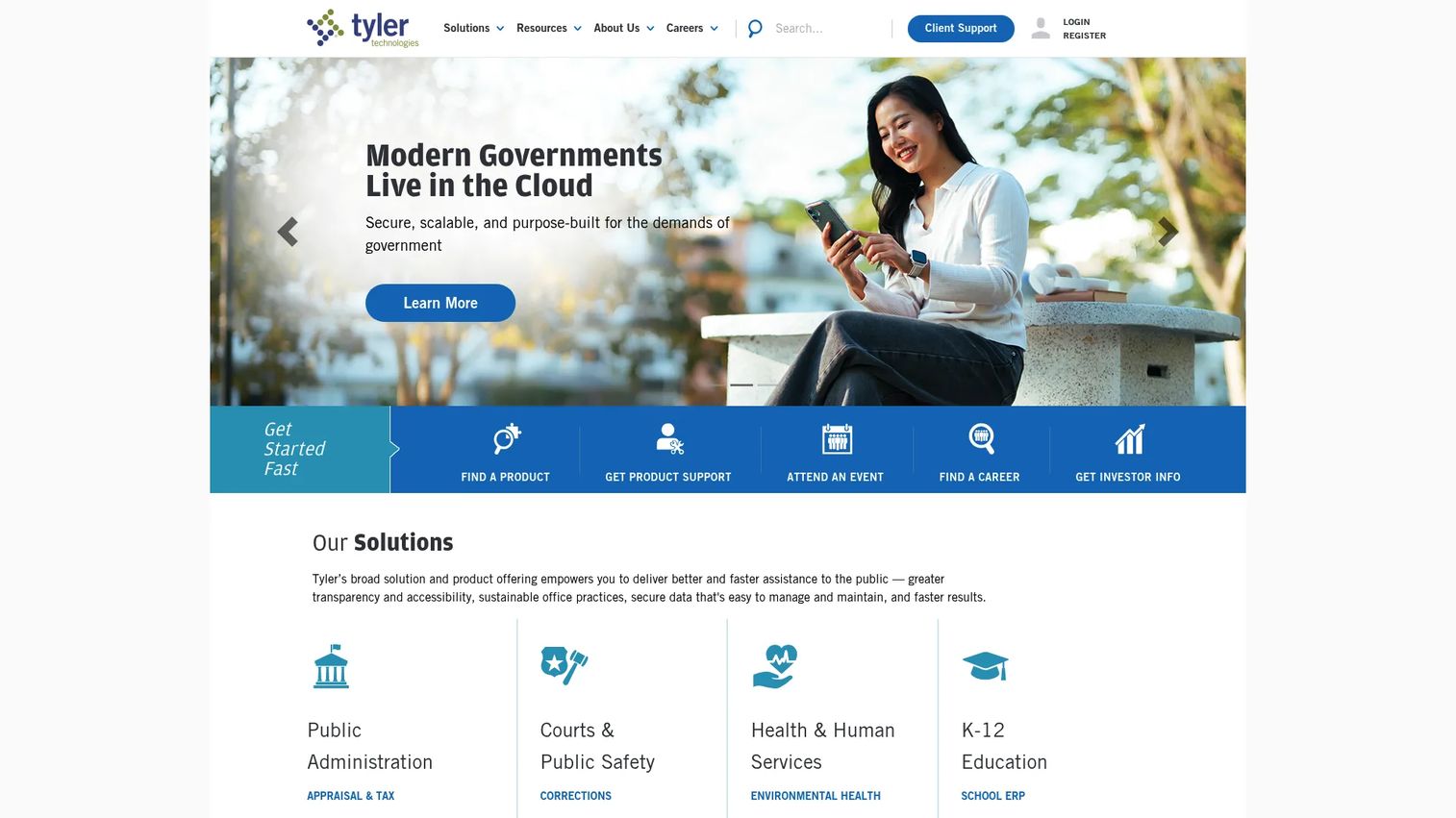
Tyler Technologies builds integrated software for state and local government and public-sector operations. For utilities, that means billing, account management, and the meter-to-cash workflows that municipal and independent providers run every cycle. Its framing is squarely public sector, which shapes both the feature set and the procurement path.
The utility capabilities cover billing, account management, work orders, notifications, scheduling, and reporting, connected to broader ERP integration across government operations. That combination matters for a municipality that runs water, electric, or gas billing alongside other public services and wants them on a common platform. Cloud-based delivery, payments, and data and insights round out the picture. Where enterprise and ERP Pro style offerings differ, the split usually tracks the size and complexity of the agency.
Best for: Municipal and independent utility providers that need billing and account management inside a public-sector platform.
Key strengths
- Billing and account management: Handles meter-to-cash workflows and customer accounts for public utilities.
- Work orders and scheduling: Coordinates field work, notifications, and service scheduling.
- ERP integration: Connects utility billing to broader government financial and operational systems.
Why choose Tyler Technologies: If you run a municipal or independent utility, Tyler speaks your language and fits your procurement reality. Its public-sector focus means the workflows, reporting, and compliance assumptions already match how government utilities operate, which shortens the gap between purchase and productive use.
Tyler Technologies pricing: Tyler does not publish general list pricing and routes buyers through demo requests, contact-sales, and public procurement vehicles. Expect a scoped quote tied to agency size and module selection. No verified G2 rating was available for the platform at time of writing.
5. Oracle Utilities
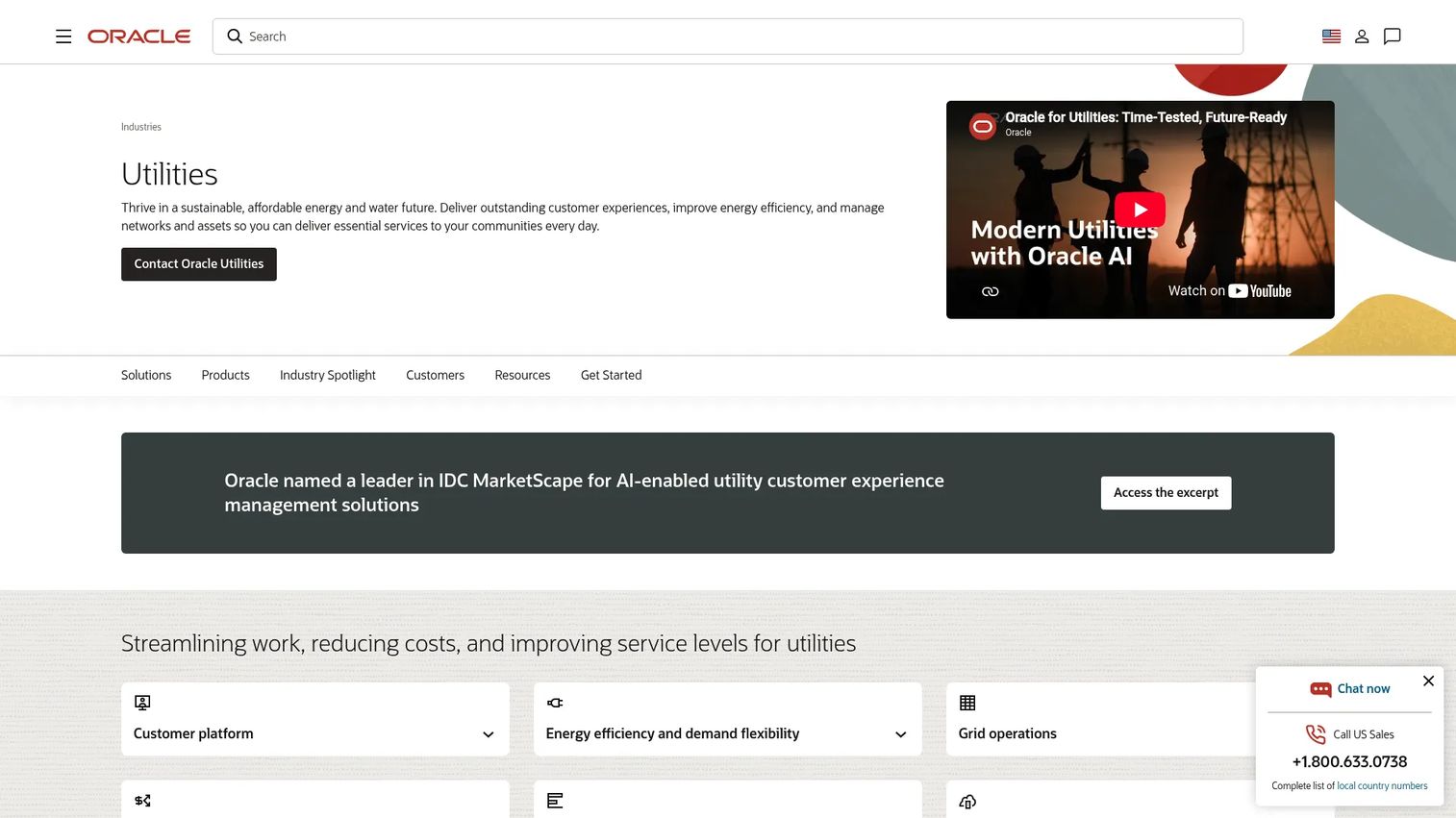
Oracle Utilities is Oracle's utility-industry suite covering customer operations, metering, network management, and Opower engagement tools. It sits at the enterprise end of the category, built for utilities that need customer, grid, and meter management working as one system. Meter-to-cash workflows here run at the scale of a full utility provider, not a single facility owner.
The suite includes advanced metering and AMI analytics, customer operations and engagement, and network management with outage and distributed energy resource (DER) handling. That breadth is the point: a large utility can manage the customer information system, the meter data, and the grid from one vendor. The depth comes with enterprise implementation, so plan the evaluation around integration scope and rollout timeline rather than a quick trial. For utilities operating millions of meters, that depth is the reason to look here.
Best for: Large utilities that need integrated customer, grid, and meter management in one suite.
Key strengths
- Meter data management and AMI analytics: Collects and analyzes interval data at utility scale.
- Customer information system: Runs billing, accounts, and customer engagement for utility providers.
- Network and outage management: Handles grid operations, outages, and DER coordination.
Why choose Oracle Utilities: Oracle fits utilities that need enterprise depth across the whole meter-to-cash and grid lifecycle. It is the choice when scale, integration breadth, and a single-vendor stack outweigh the desire for a lighter footprint. Expect a substantial implementation and a sales-led evaluation.
Oracle Utilities pricing: Most of the suite uses custom enterprise pricing with no public list price. Oracle does publish a pay-as-you-go price list for its Utilities Payment Cloud Service, with residential fees around 2.75% plus $3.50 per processed payment. The Network Management System holds a 3.7/5 rating on G2.
6. Schneider Electric
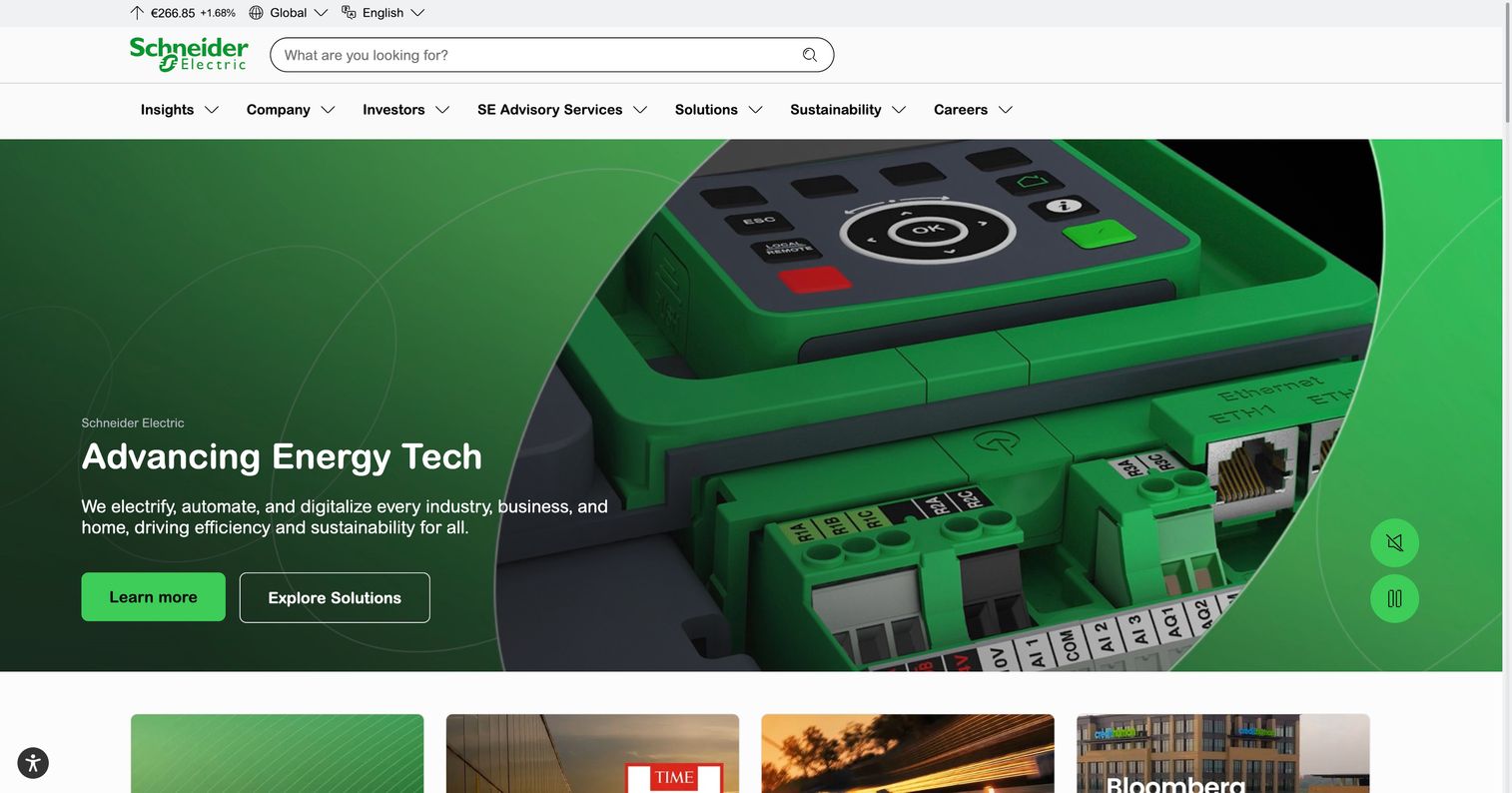
Schneider Electric is a global energy technology company whose EcoStruxure portfolio spans electrification, automation, and digitalization across buildings, data centers, factories, and infrastructure. For utility and energy management, it offers monitoring, optimization, and sustainability visibility inside one ecosystem, which suits organizations that manage both energy infrastructure and utility data.
The value here is the combination of hardware and software. Schneider covers the physical layer, metering and electrical systems, and the digital layer that monitors and optimizes them. That makes it a fit for enterprises and facilities that want energy infrastructure and management under one roof rather than a standalone bill tracker. Product selection, quote, and marketplace tools route buyers to scoped offers rather than a published plan table, reflecting the enterprise nature of the portfolio.
Best for: Enterprises that want energy and utility infrastructure management inside a single ecosystem.
Key strengths
- Energy monitoring and optimization: Tracks and optimizes consumption across electrical and energy systems.
- Electrification and automation portfolio: Covers the physical infrastructure alongside the software layer.
- Sustainability visibility: Surfaces energy and emissions data for reporting and reduction targets.
Why choose Schneider Electric: Schneider fits organizations whose utility question is really an energy infrastructure question. If you manage the systems that consume the energy, not just the bills that follow, a combined hardware and software ecosystem gives you monitoring and optimization in one place. It holds a 4.4/5 rating on G2 at the seller level.
Schneider Electric pricing: Schneider does not publish a clear first-party plan table for its software and services. Offers route through product selection, quote, and marketplace flows, so expect a scoped conversation. The company holds a 4.4/5 G2 seller rating.
7. ABB
ABB is a global technology company focused on electrification and automation, with a portfolio spanning industrial robotics and digitalization. It is not a SaaS billing product. It fits the utility management conversation for operators and industrial sites that care about reliability, infrastructure control, and energy visibility at the system level rather than the invoice level.
ABB's relevance is strongest for utilities and industrial operators managing physical energy infrastructure. Electrification and automation cover the grid and plant systems, while digitalization layers monitoring and control on top. For an organization whose primary concern is uptime, infrastructure reliability, and industrial energy visibility, ABB sits in the evaluation alongside the pure software tools, addressing a different part of the same operational picture.
Best for: Utilities and industrial operators that prioritize infrastructure reliability, automation, and system-level energy visibility.
Key strengths
- Electrification: Covers the electrical infrastructure that utilities and industrial sites depend on.
- Automation: Controls and automates industrial and grid systems for reliability.
- Digitalization and monitoring: Adds a digital layer for visibility across physical energy assets.
Why choose ABB: Choose ABB when your priority is the reliability and control of physical energy infrastructure, not bill processing. It is an infrastructure and automation vendor, so it belongs in evaluations where uptime and system control drive the decision more than billing accuracy or reporting depth.
ABB pricing: ABB does not publish first-party pricing for its solutions, and no verified G2 rating was available for the brand at time of writing. Evaluations run through direct engagement scoped to the infrastructure and automation requirements involved.
8. Landis+Gyr
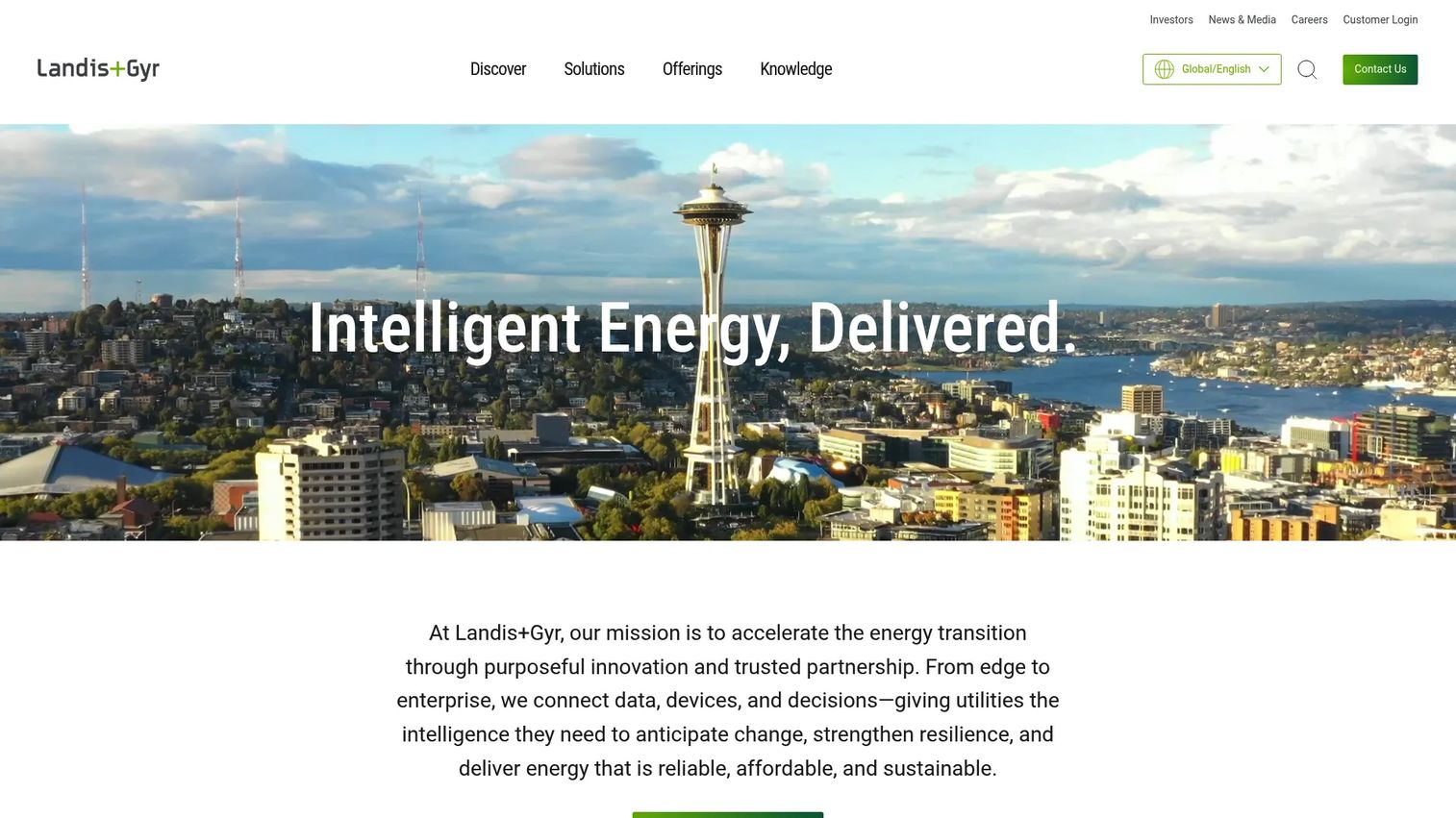
Landis+Gyr provides energy management solutions for utilities, including smart metering, grid software, and grid-edge intelligence. It fits utilities with advanced metering infrastructure or large-scale networks that need metering, grid data, and analytics working together. This is infrastructure-grade utility analytics software, aimed at the meter and the grid rather than the accounts-payable desk.
The platform combines AI-driven SaaS analytics, a meter data management system (MDMS), and grid-edge and utility IoT platforms. That stack turns meter and grid data into operational intelligence: consumption patterns, network conditions, and the analytics utilities use to run the grid. For an operator modernizing metering or managing a large distribution network, Landis+Gyr addresses the data and intelligence layer that sits underneath billing and reporting.
Best for: Utilities with advanced metering infrastructure or large networks that need metering, grid data, and analytics together.
Key strengths
- Meter data management (MDMS): Collects and validates interval data across large meter populations.
- AI-driven SaaS analytics: Turns metering and grid data into operational intelligence.
- Grid-edge and IoT platforms: Extends visibility and control to the edge of the network.
Why choose Landis+Gyr: Landis+Gyr fits utilities whose challenge is metering and grid data at scale, not invoice processing. If AMI, MDMS, and grid modernization are the project, it addresses the data foundation that billing and reporting depend on. It integrates into the broader utility stack through its analytics and IoT layers.
Landis+Gyr pricing: Landis+Gyr does not publish public pricing and routes buyers to sales and support contact flows. No meaningful third-party rating was available at time of writing. Evaluations are scoped to metering volume, grid footprint, and analytics requirements.
9. Itron
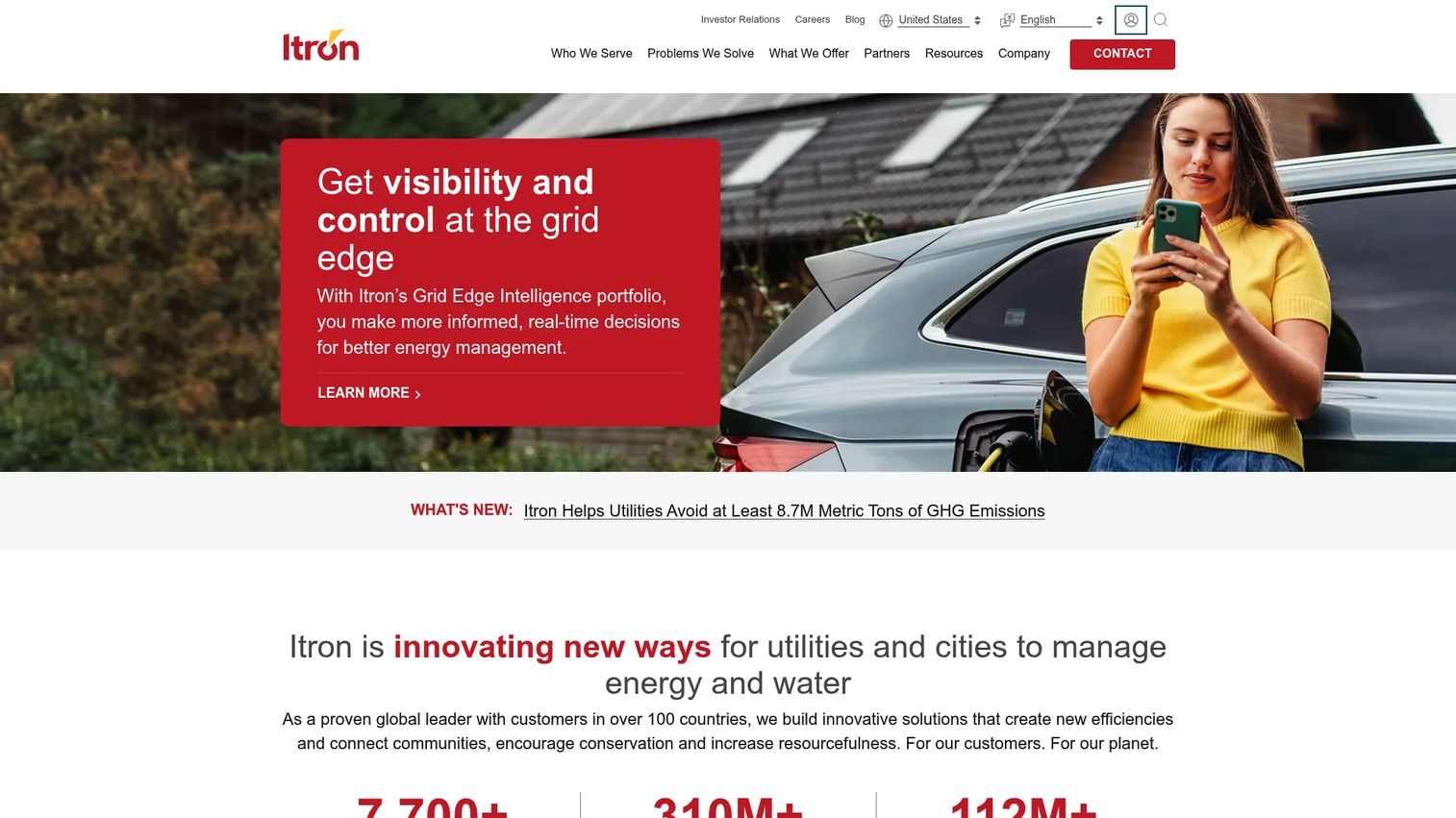
Itron is a utility technology company offering smart metering, grid management, and data management across electricity, gas, and water. It fits utilities and cities that need infrastructure-grade visibility and operational control over metering and critical infrastructure. Like Landis+Gyr, its focus is the network and the meter, giving utilities intelligence at the level where consumption is actually measured.
The platform spans meter data management and analytics, grid management with distributed intelligence, and smart water, gas, and electricity solutions. That breadth across commodities makes it a fit for multi-utility operators and municipalities managing more than one service. Itron's distributed intelligence approach pushes processing toward the grid edge, which supports faster response and richer operational data. For utilities modernizing infrastructure across several commodities, it consolidates metering and grid intelligence under one vendor.
Best for: Utilities and cities modernizing metering and critical infrastructure across electricity, gas, and water.
Key strengths
- Meter data management and analytics: Collects and analyzes metering data across multiple commodities.
- Grid management with distributed intelligence: Moves processing to the grid edge for faster operational response.
- Multi-commodity coverage: Supports smart water, gas, and electricity in one platform.
Why choose Itron: Itron fits operators managing metering and grid infrastructure across more than one commodity. Its multi-utility breadth and distributed intelligence suit cities and utilities modernizing infrastructure at scale. It holds a 5.0/5 rating on G2, though from a small sample, so weigh it against the fit discussion rather than the score alone.
Considerations
Before you shortlist, run the evaluation against the criteria that determine whether a tool fits your workflow and stack.
Billing accuracy and auditing depth
Decide whether your primary need is billing customers (meter-to-cash) or auditing bills you receive. They are different jobs. Look at how the tool validates charges, flags anomalies, and routes approvals, because that is where billing accuracy translates into recovered money.
Integration and ERP fit
Map the systems the platform must talk to: your ERP, financial system, CRM, and metering infrastructure. A tool that produces great dashboards but cannot reconcile with the general ledger creates a new silo. For finance-heavy operations, ERP integration outranks most standalone features.
Reporting, analytics, and compliance coverage
Confirm the platform produces the reports you are accountable for, including benchmarking, variance, and emissions reporting. Compliance is increasingly non-negotiable, so verify that carbon accounting and regulatory outputs are built in rather than bolted on.
Scalability across sites and teams
Test whether the platform holds up across your full portfolio, not a single site. Multi-site portfolio management, per-site normalization, and role-based access determine whether the tool scales with you or becomes a maintenance burden as you grow.
Deployment and maintenance overhead
Weigh implementation scope against time-to-value. Enterprise suites deliver depth through a longer rollout; lighter tools validate faster. Match the commitment to how quickly you need measurable results and how much operational overhead your team can absorb.
Conclusion
The right utility management software depends entirely on which workflow you are solving first. If your job is auditing bills, controlling cost, and proving savings across a portfolio, EnergyCAP is the most focused fit. If frontline inspections and asset condition matter as much as the invoice, SafetyCulture covers operations with a free tier to validate quickly. For organizations that need utility operations reconciled with financials and workforce, Infor brings ERP breadth, while Tyler Technologies fits municipal and public-sector providers running meter-to-cash.
At the enterprise and infrastructure end, Oracle Utilities delivers depth across customer, grid, and meter management, and Schneider Electric, ABB, Landis+Gyr, and Itron address the physical and grid layer for operators managing metering, energy infrastructure, and industrial systems at scale.
Start with the shortlist that matches your primary workflow, then test integration and reporting fit before you commit. The best procurement decision here is the one that maps a tool to how your organization actually operates, not to the longest feature list.
FAQs
Utility management software centralizes utility data, automates billing and payment workflows, and gives operators visibility into consumption, cost, and compliance across one or many sites. Depending on the subcategory, it validates invoices, tracks usage, produces analytics and reports, or runs meter-to-cash billing for utility providers. The goal is fewer errors, tighter cost control, and less manual reconciliation.
For auditing the bills you receive, EnergyCAP is purpose-built around bill validation and anomaly detection, catching errors before payment clears. For billing your own customers, meter-to-cash platforms like Tyler Technologies and Oracle Utilities handle account management and billing at the provider level. Match the tool to whether you are paying bills or issuing them.
Prioritize how the platform validates charges, handles exceptions, and routes approvals, since that is where accuracy lives. Check account management depth, meter-to-cash workflow support, and integration with your ERP and financial systems. For public utilities, confirm the tool matches your procurement and compliance requirements.
It catches billing errors and anomalies before payment, benchmarks sites to surface outliers, and quantifies savings through measurement and verification. Normalization adjusts comparisons for weather and occupancy, and chargebacks allocate cost accurately. Together these turn scattered invoices into a controlled, measurable spend.
Analytics-first platforms like EnergyCAP handle multi-site portfolio management with benchmarking, normalization, and dashboards built for comparison across properties. For larger operations that also need financial reconciliation, an ERP suite like Infor consolidates reporting alongside financials. The key is whether the tool aggregates every site into one view without manual file stitching.
Yes. EnergyCAP includes carbon accounting and emissions reporting alongside bill management, and Infor supports emissions and compliance inside its GRC capabilities. As regulatory disclosure requirements grow, verify that emissions reporting is built in rather than a manual add-on, so consumption data converts directly into audit-ready reports.
ERP for utilities connects billing, cost, and workforce data to financials and supply chain, so utility spend reconciles with the general ledger and feeds budgets. Infor and Tyler Technologies both offer ERP integration, with Infor providing a full cloud suite and Tyler focusing on public-sector operations. Choose an ERP-integrated approach when systems fragmentation, not a single feature, is the problem.
Utility billing software generates, validates, or processes bills, including meter-to-cash workflows for providers. Utility analytics software turns consumption and cost data into benchmarks, dashboards, and anomaly alerts to drive decisions. Many buyers need both: billing to run the transactions and analytics to understand and control the spend behind them.