Most marketing teams run six or seven tools that barely talk to each other. Campaign data lives in one place, lead scores in another, and attribution reports require three hours of spreadsheet work before Monday's pipeline review.
Software marketing platforms consolidate this chaos into systems that automate campaigns, score leads, and connect marketing activity to revenue. This guide covers 12 platforms across different use cases and company sizes, with honest assessments of what each does well and where they fall short.
What this guide covers
This guide covers the core categories of software marketing platforms, selection criteria for different team sizes, and 12 platform reviews with pricing and ratings. You'll find recommendations organized by company stage and use case, plus a buying checklist to help you evaluate options quickly.
TL;DR
Software marketing platforms: Combine campaign automation, lead management, analytics, and multi-channel coordination to help marketing teams scale without adding headcount.
Best for startups: Brevo and Mailchimp offer fast setup and low cost. Add interactive demos to landing pages to convert visitors without scheduling calls.
Best for mid-market B2B: HubSpot, ActiveCampaign, and Ortto balance power with usability and connect marketing activity to pipeline.
Best for enterprise: Salesforce Marketing Cloud and Marketo Engage handle complex orchestration but require dedicated ops resources.
Best for eCommerce: Klaviyo, Omnisend, and Drip integrate natively with commerce platforms and include pre-built revenue workflows.
What are software marketing platforms
Software marketing platforms help teams automate campaigns, manage leads, track engagement, and measure results across channels. They often work alongside specialized product marketing software tools. The category includes everything from simple email tools to full-suite platforms with CRM, analytics, and AI capabilities.
Most teams use a combination: a core software marketing platform plus specialized tools for specific channels or use cases.
Here's what the core capabilities look like in practice:
Campaign automation: scheduled emails, drip sequences, triggered messages based on user behavior
Lead management: capture forms, scoring models, routing rules, nurturing workflows
Analytics and reporting: conversion tracking, attribution modeling, pipeline visibility
Channel coordination: email, social, paid ads, website, in-app messaging
Modern stacks often include ways to show your product, not just tell through interactive marketing. Interactive product demos let prospects experience your software without scheduling a call, which increases engagement and qualification before sales involvement.
What to look for in software marketing platforms and tools
Core automation features
The best platforms let you build workflows visually without filing engineering tickets. Look for drag-and-drop builders, conditional logic, and templates for common sequences like welcome series or abandoned cart recovery.
Lead scoring matters more than most teams realize. Only 27% of leads sent to sales are actually qualified. Automated scoring based on engagement and profile data helps sales prioritize the right opportunities instead of chasing cold leads.
Integration capabilities
Integration quality matters more than feature count. 65.7% of CMOs cite data integration as their biggest martech challenge. A platform with 50 deep integrations beats one with 500 shallow connectors.
The critical categories include:
CRM sync: Salesforce, HubSpot
Ad platforms: Google, LinkedIn, Meta
Analytics: GA4, Mixpanel
Communication tools: Slack, email
Disconnected tools create reporting gaps and manual reconciliation overhead. Before committing, test how data actually flows between your existing stack and the new platform.
Pricing and scalability
Most platforms use contact-based or usage-based pricing. Costs increase as your list grows or you send more messages. Watch for hidden costs: feature gates that unlock at higher tiers, overage charges, and add-on fees for integrations.
The question to ask: what does this cost when we have 10x the contacts? Some platforms punish growth with steep price jumps. Others scale more predictably.
Marketing software comparison
# | Product | Best for | Key differentiator | Starting price | G2 rating |
|---|---|---|---|---|---|
1 | Guideflow | Product-led growth | Interactive demos that convert without calls | Free, paid from $40/mo | 5.0/5 |
2 | HubSpot Marketing Hub | Mid-market all-in-one | CRM + marketing + sales in one system | $800/mo | 4.4/5 |
3 | ActiveCampaign | Sales-marketing alignment | Sophisticated conditional automation | $145/mo | 4.5/5 |
4 | Brevo | Budget-conscious teams | Affordable multi-channel automation | Free, paid from $9/mo | 4.5/5 |
5 | Marketo Engage | Enterprise B2B | Advanced ABM and lead management | Custom pricing | 4.1/5 |
6 | Klaviyo | eCommerce email/SMS | Deep Shopify/WooCommerce integration | Free, paid from $20/mo | 4.6/5 |
7 | Mailchimp | Small business email | Low barrier to entry | Free, paid from $13/mo | 4.4/5 |
8 | Omnisend | eCommerce automation | Pre-built cart recovery workflows | Free, paid from $16/mo | 4.6/5 |
9 | Customer.io | Product-led SaaS | Event-driven behavioral messaging | $100/mo | 4.4/5 |
10 | Ortto | Data-driven campaigns | Built-in CDP with visual journeys | $169/mo | 4.4/5 |
11 | Salesforce Marketing Cloud | Enterprise orchestration | Multi-channel at massive scale | Custom pricing | 4.0/5 |
12 | Drip | Growing DTC brands | eCommerce CRM with automation | $39/mo | 4.4/5 |
12 top software marketing platforms and tools reviewed
1. Guideflow
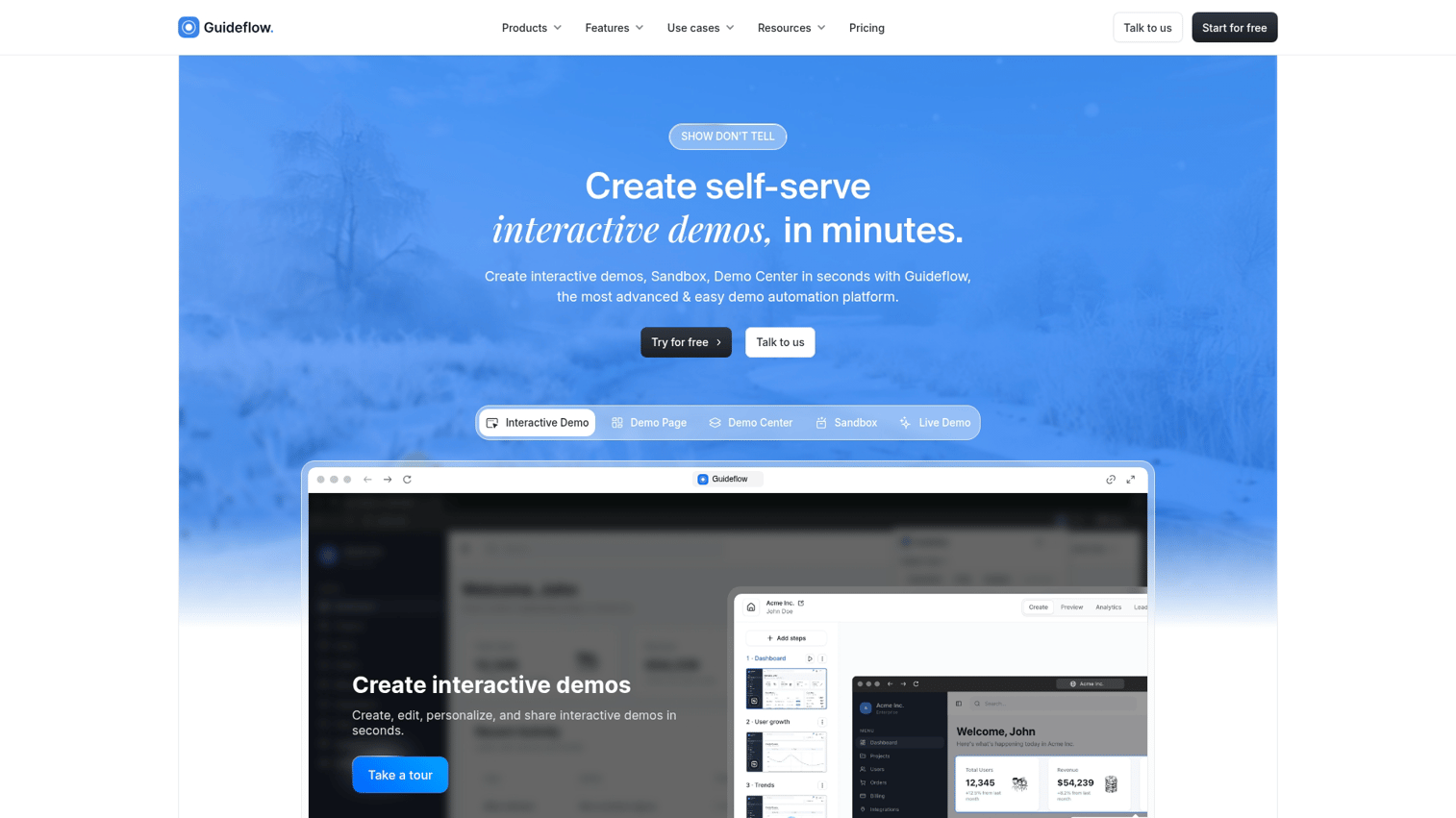
Guideflow turns your product into self-serve interactive demos that prospects can experience without scheduling a call. Instead of static screenshots or "book a demo" flows, you capture your product directly from your browser and create clickable walkthroughs in minutes.
The platform works for B2B SaaS teams who want to show their product at scale. Marketing teams embed demos on landing pages. Sales teams drop them into outbound sequences.
Customer success uses them for onboarding.
Key strengths
No-code capture: Record flows directly from your browser, then refine with a drag-and-drop editor
Deep personalization: CRM-driven variables let you tailor text, images, and graphs for each prospect
Multi-format demos: Interactive tours, sandboxes, demo centers, and mobile demos for different moments in the buyer journey
Engagement analytics: Track completion rates, drop-offs, and conversion to understand what resonates
Why pick Guideflow
Pick Guideflow when your bottleneck is getting prospects to understand your product before they talk to sales. Interactive demos function like automation because they scale a core sales action: showing, not telling.
Guideflow pricing
Free: $0/month (5 guideflows, unlimited viewers, 7-day analytics)
Solo: $40/month (unlimited guideflows, advanced analytics, lead forms, AI features)
Growth: $499/month
Advanced: $1,499/month
Enterprise: from $2,999/month
Start your journey with Guideflow today!
2. HubSpot Marketing Hub
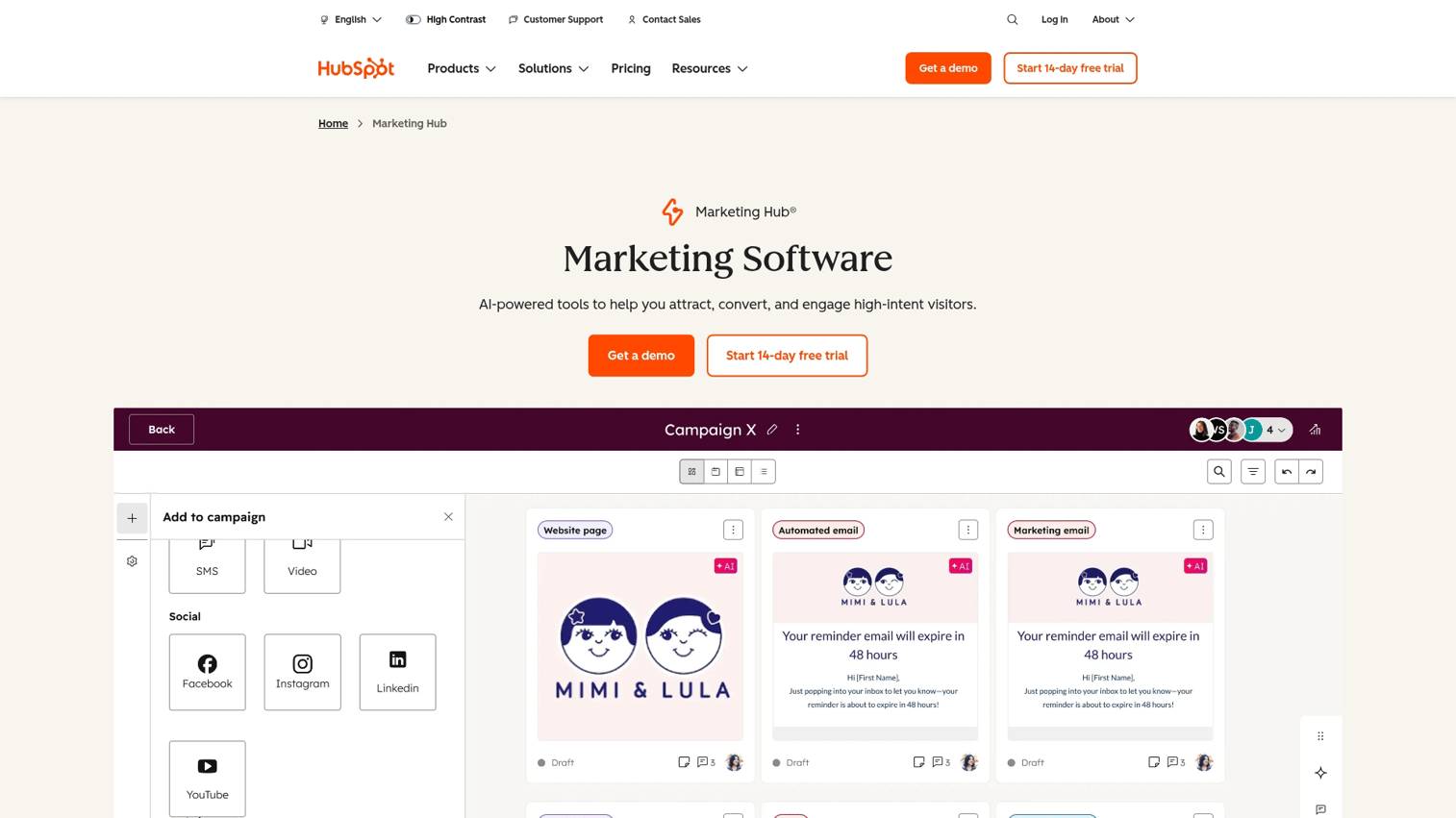
HubSpot Marketing Hub is a premium all-in-one platform that combines marketing automation, CRM, and sales tools in a single system. The visual workflow builder lets you create complex nurturing sequences without technical help, and everything connects to the same contact database.
The platform works well for mid-market and enterprise teams who want to consolidate their stack. The learning curve is real, and pricing climbs quickly as you add contacts and features.
Key strengths
Visual workflow builder: Drag-and-drop automation with branching logic and goal-based triggers
Lead scoring: AI-powered prioritization based on engagement and fit
Attribution reporting: See which campaigns and channels drive actual revenue
Native CRM: Marketing and sales work from the same contact records
Why pick HubSpot
Pick HubSpot when you want marketing, sales, and CRM in one place and your team can handle the complexity. The platform rewards investment: teams who go deep see strong results.
HubSpot pricing
Marketing Hub starts at $800/month for the Professional tier with full automation features.
3. ActiveCampaign
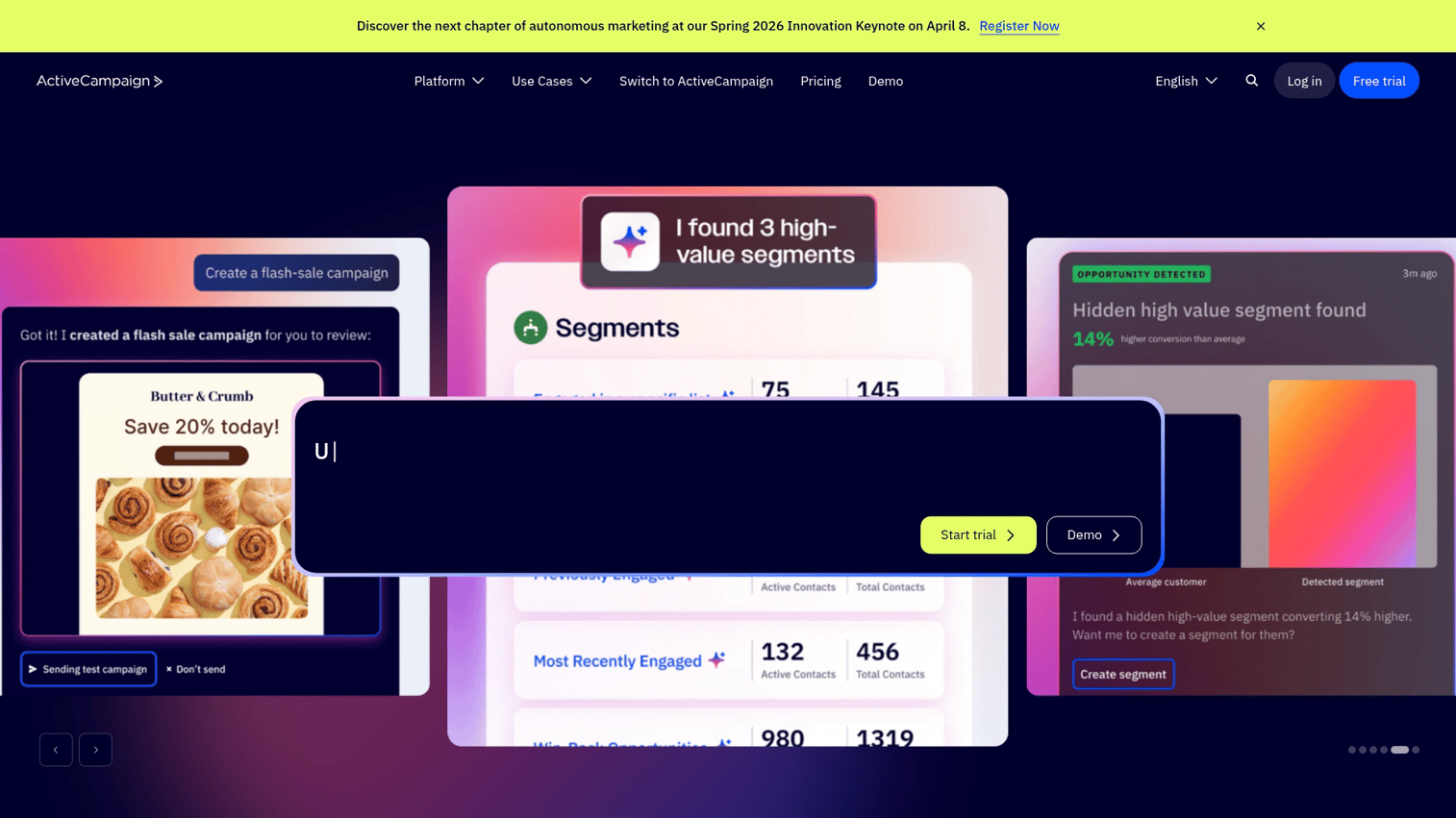
ActiveCampaign specializes in sophisticated email automation with conditional logic that goes deeper than most competitors. The platform connects marketing workflows directly to sales pipeline actions, so leads move through nurturing sequences and CRM stages in sync.
Teams choose ActiveCampaign when they want complex, behavior-based automation without enterprise pricing. The interface takes time to learn, but the flexibility pays off for teams running multi-step campaigns across email, SMS, and site messaging.
Key strengths
Conditional automation: Build workflows with if/then logic, delays, and multiple branches
Built-in CRM: Track deals and link marketing triggers to sales tasks
Multi-channel messaging: Email, SMS, and site messaging from one platform
Deliverability reputation: Strong inbox placement rates compared to competitors
Why pick ActiveCampaign
Pick ActiveCampaign when you want automation depth beyond basic drip sequences and want sales pipeline visibility built in.
ActiveCampaign pricing
Plans start at $145/month for the Plus tier with CRM and automation features. Pricing scales with contact count.
4. Brevo
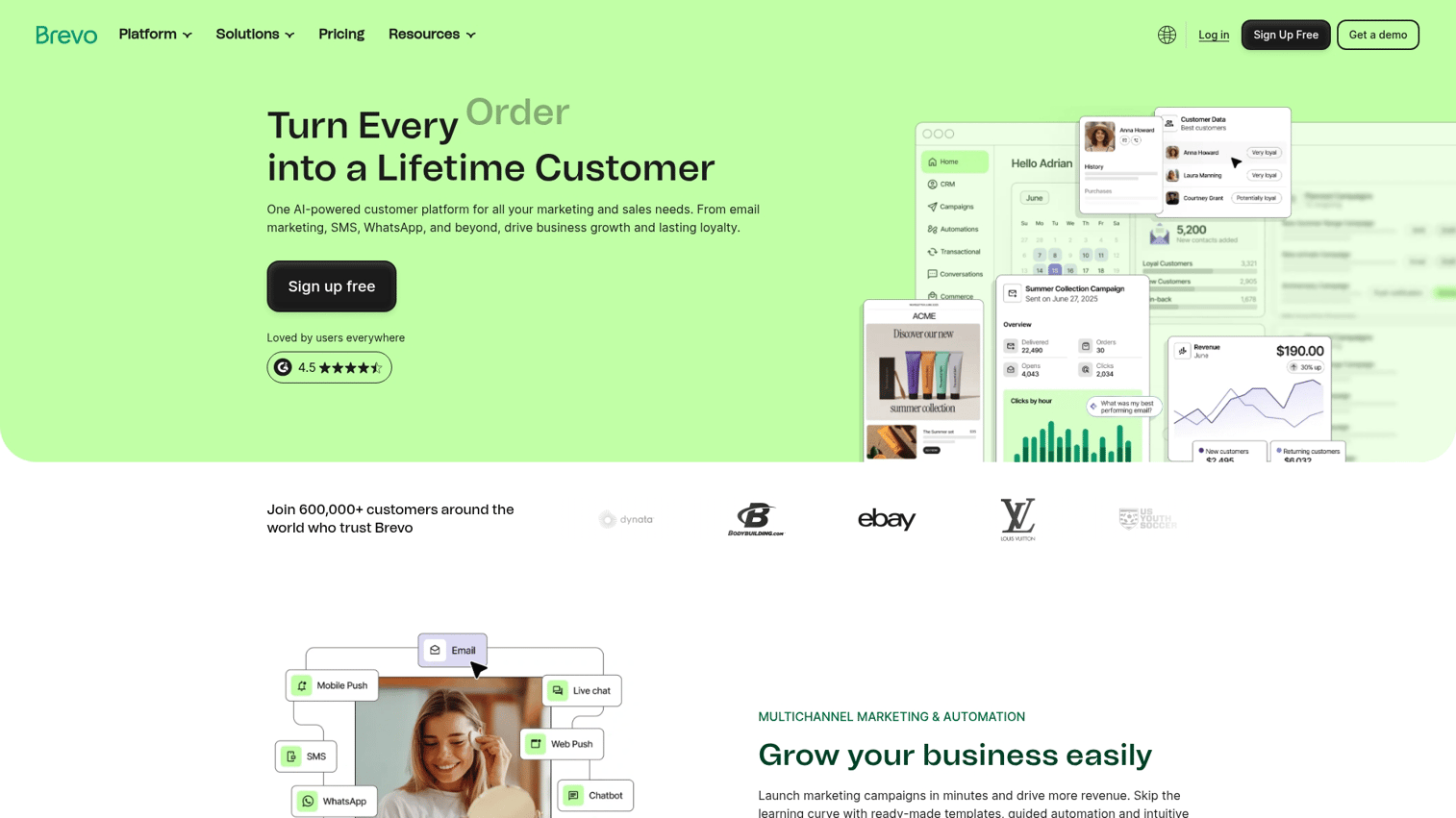
Brevo (formerly Sendinblue) offers affordable multi-channel automation for teams watching their budget. The platform includes email, SMS, WhatsApp, chat, and basic CRM in one system, making it a solid starting point before scaling to enterprise tools.
Small teams and startups often start here because the free tier is genuinely useful and paid plans stay reasonable as lists grow.
Key strengths
Multi-channel messaging: Email, SMS, WhatsApp, and chat from one workflow builder
Website tracking: Trigger messages based on page visits and cart activity
Dynamic segmentation: Automatically group contacts by behavior and update in real time
Affordable scaling: Pricing stays reasonable as contact lists grow
Why pick Brevo
Pick Brevo when you want to automate lifecycle campaigns across channels without hiring a dedicated ops specialist.
Brevo pricing
Free plan includes 300 emails/day with unlimited contacts. Paid plans start at $9/month and scale by email volume.
5. Marketo Engage
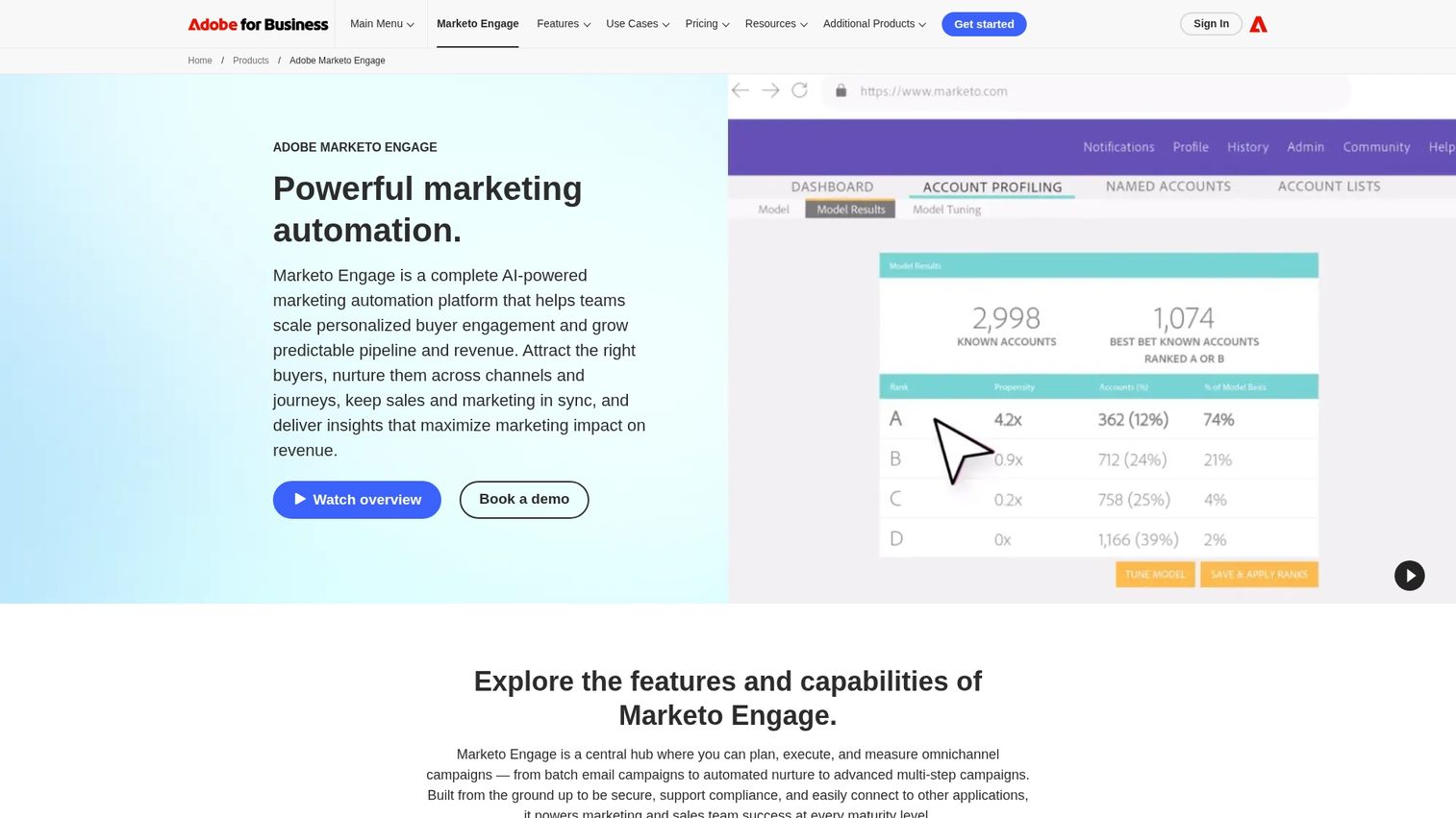
Marketo Engage is Adobe's enterprise B2B marketing automation platform, built for large organizations with complex lead management requirements. The platform excels at account-based marketing, multi-touch attribution, and sophisticated scoring models.
Marketo requires dedicated admin resources and significant implementation investment. Teams typically allocate 3-6 months to fully deploy.
Key strengths
Account-based marketing: Target and score at the account level, not just individual contacts
Advanced lead scoring: Multi-dimensional models based on behavior, fit, and engagement
Revenue attribution: Connect marketing activity to closed revenue across long sales cycles
Enterprise integrations: Deep connections to Salesforce, Microsoft Dynamics, and Adobe Experience Cloud
Why pick Marketo
Pick Marketo when you have dedicated marketing ops resources and require enterprise-grade lead management.
Marketo pricing
Custom pricing based on database size and feature requirements.
6. Klaviyo
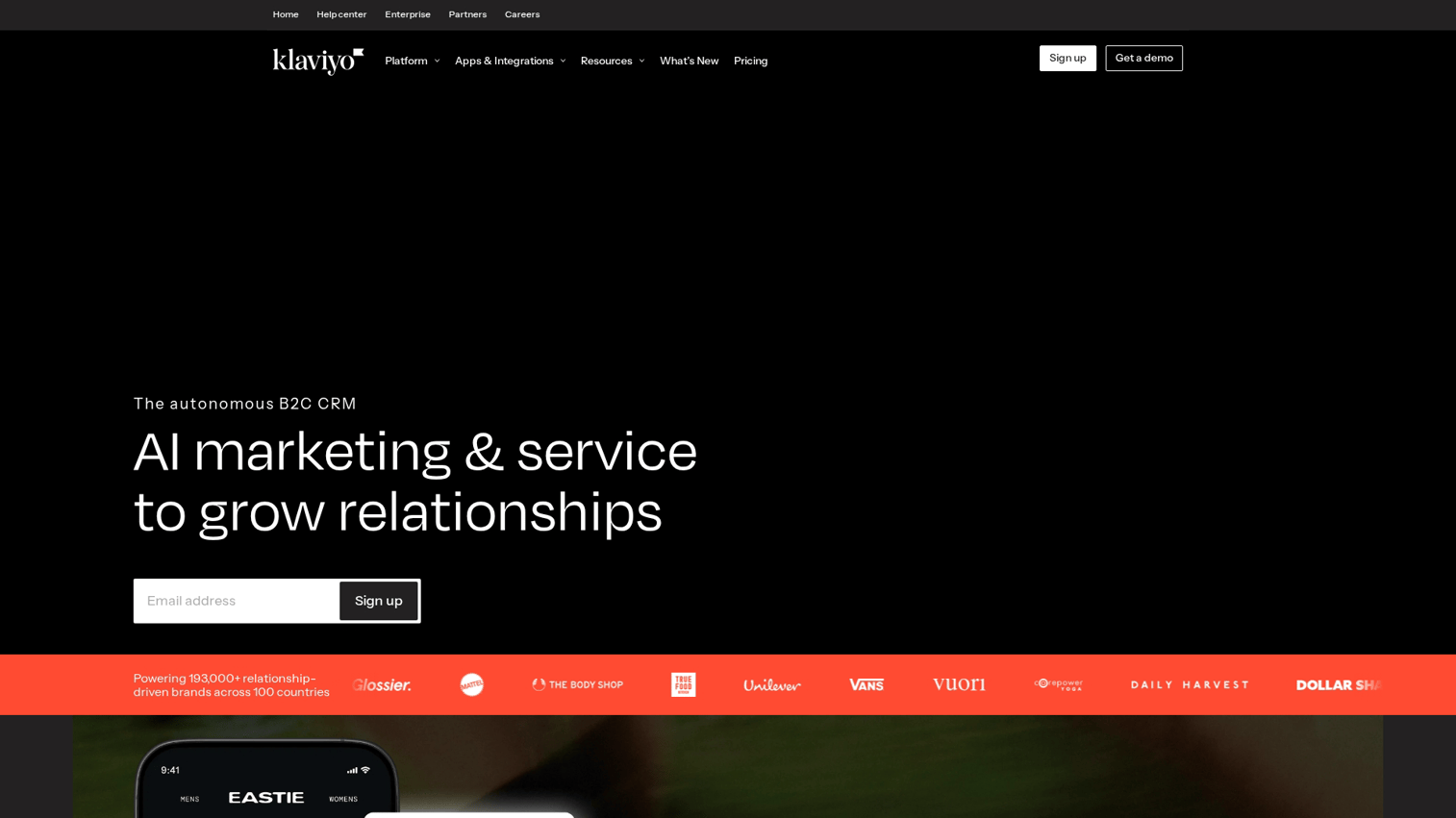
Klaviyo is built specifically for eCommerce, with deep integrations into Shopify, WooCommerce, BigCommerce, and other commerce platforms. The platform combines email and SMS automation with predictive analytics that help DTC brands maximize customer lifetime value.
The user interface is more approachable than most marketing automation tools, and pre-built flows for cart abandonment, post-purchase, and win-back campaigns get teams running quickly.
Key strengths
Commerce integrations: Native connections to major eCommerce platforms with real-time data sync
Predictive analytics: Forecast customer lifetime value and churn risk
Pre-built flows: Templates for common eCommerce sequences that work out of the box
SMS and email: Coordinate messaging across channels from one platform
Why pick Klaviyo
Pick Klaviyo when you run an eCommerce business and want automation tied directly to purchase behavior.
Klaviyo pricing
Free for up to 250 contacts. Paid plans start at $20/month and scale with list size.
7. Mailchimp
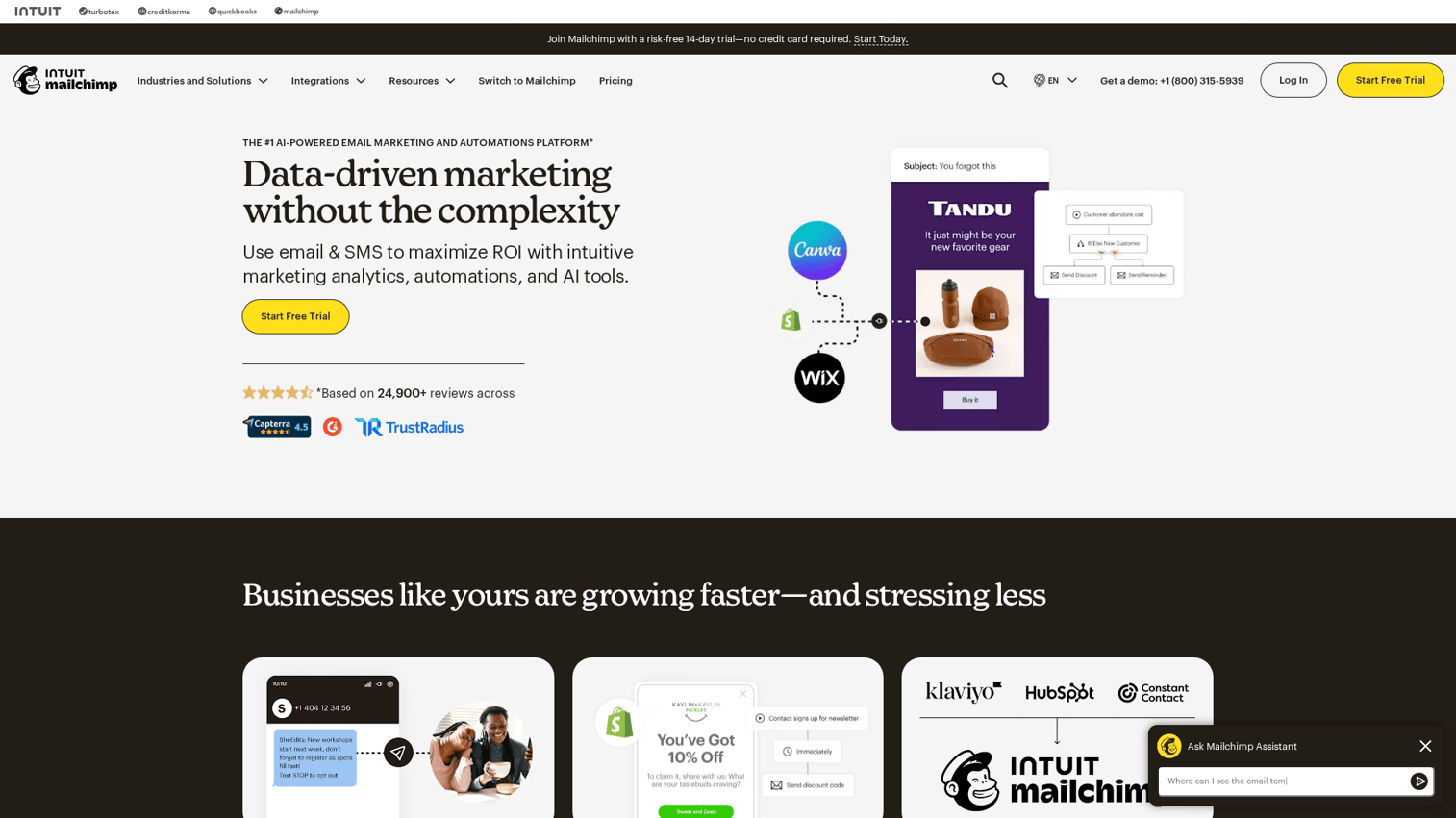
Mailchimp is the most widely adopted email marketing platform, now expanded to include automation, landing pages, and basic CRM features. The platform offers the lowest barrier to entry for teams new to marketing automation.
Mailchimp works well for small businesses and creators who want to start with email and grow into automation over time.
Key strengths
Easy setup: Intuitive interface that non-technical users can navigate immediately
Template library: Pre-designed emails and landing pages for common use cases
eCommerce connections: Integrations with Shopify, WooCommerce, and other platforms
Audience segmentation: Basic targeting based on engagement and purchase history
Why pick Mailchimp
Pick Mailchimp when you want to start simple and grow into automation gradually.
Mailchimp pricing
Free plan available with limited features. Paid plans start at $13/month and scale with contacts and features.
8. Omnisend
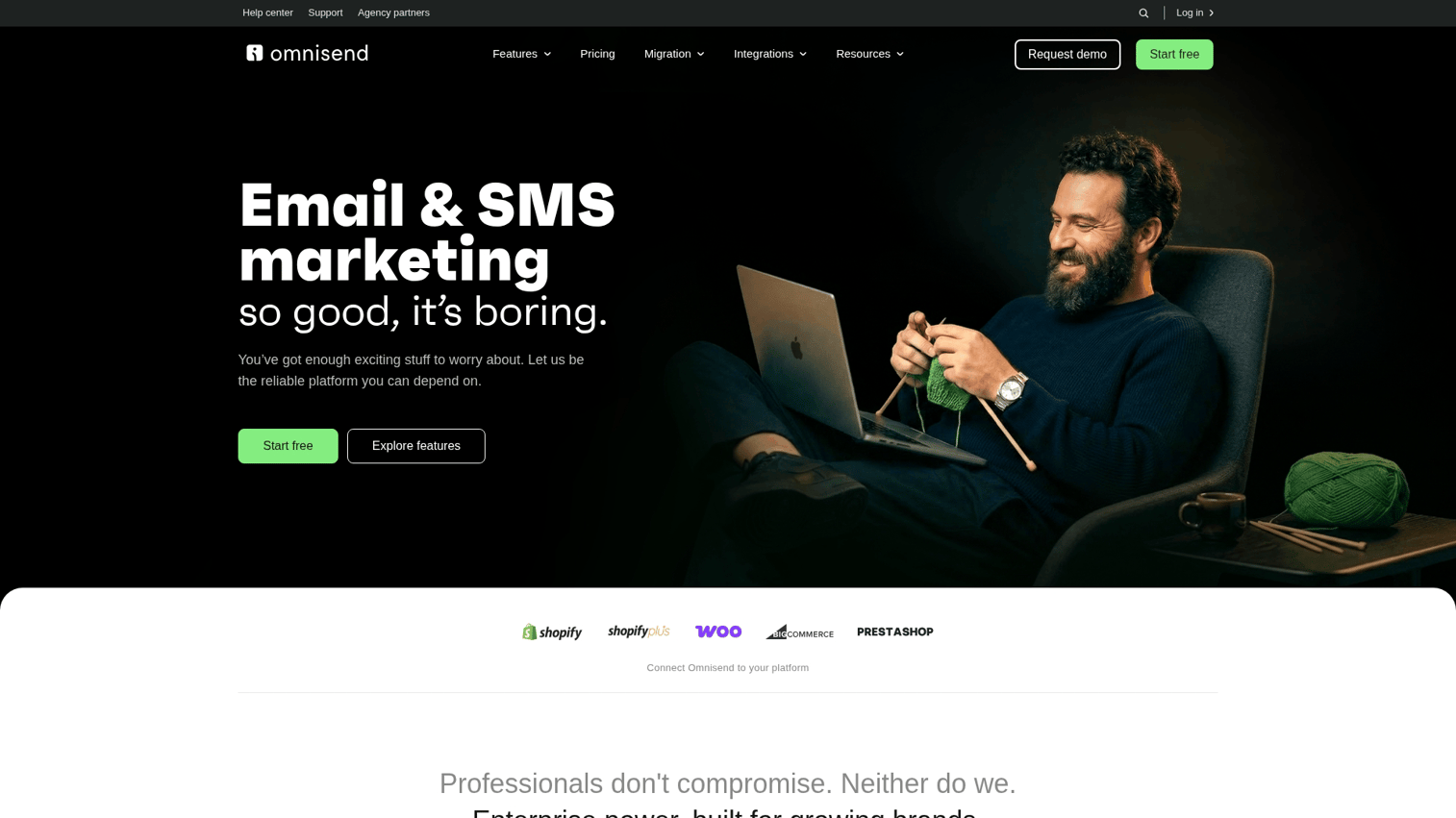
Omnisend focuses on eCommerce automation with pre-built workflows that get online retailers running quickly. The platform combines email, SMS, and push notifications with a visual builder designed for non-technical users.
Teams choose Omnisend when they want eCommerce-specific automation without extensive configuration.
Key strengths
Pre-built eCommerce flows: Templates for cart recovery, welcome series, and post-purchase that work out of the box
Multi-channel automation: Email, SMS, and push notifications in unified workflows
Visual workflow builder: Drag-and-drop editor with conditional logic
Commerce integrations: Native connections to Shopify, BigCommerce, WooCommerce, and Wix
Why pick Omnisend
Pick Omnisend when you want quick setup for eCommerce automation without custom configuration.
Omnisend pricing
Free plan includes 500 emails/month and 60 SMS credits. Paid plans start at $16/month.
9. Customer.io
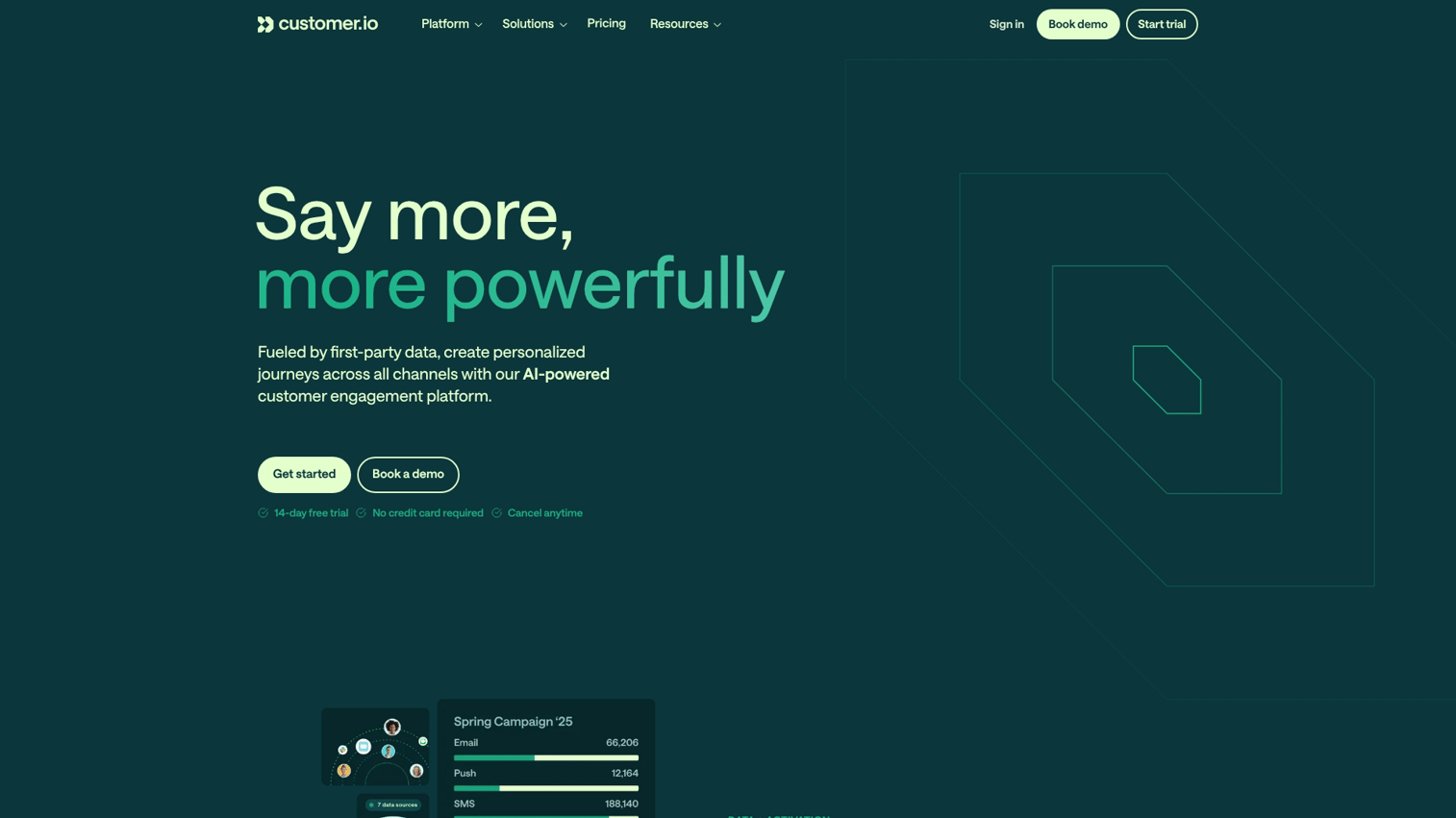
Customer.io is an event-driven messaging platform built for product-led companies. The platform triggers campaigns based on user behavior inside your product, making it ideal for SaaS teams running onboarding, activation, and retention workflows.
Customer.io requires clean event tracking to work properly. Teams with strong data infrastructure get powerful behavioral automation. Teams with messy tracking often struggle to realize the platform's potential.
Key strengths
Event-driven triggers: Fire messages based on specific user actions in your product
Visual journey builder: Map multi-channel workflows with branching and delays
Real-time segmentation: Target users based on live behavioral data
Flexible data model: Work with custom objects and relationships, not just contacts
Why pick Customer.io
Pick Customer.io when you have developer resources and want automation tied to actual product usage.
Customer.io pricing
Essentials plan starts at $100/month for up to 5,000 profiles. Premium plans start at $1,000/month.
10. Ortto
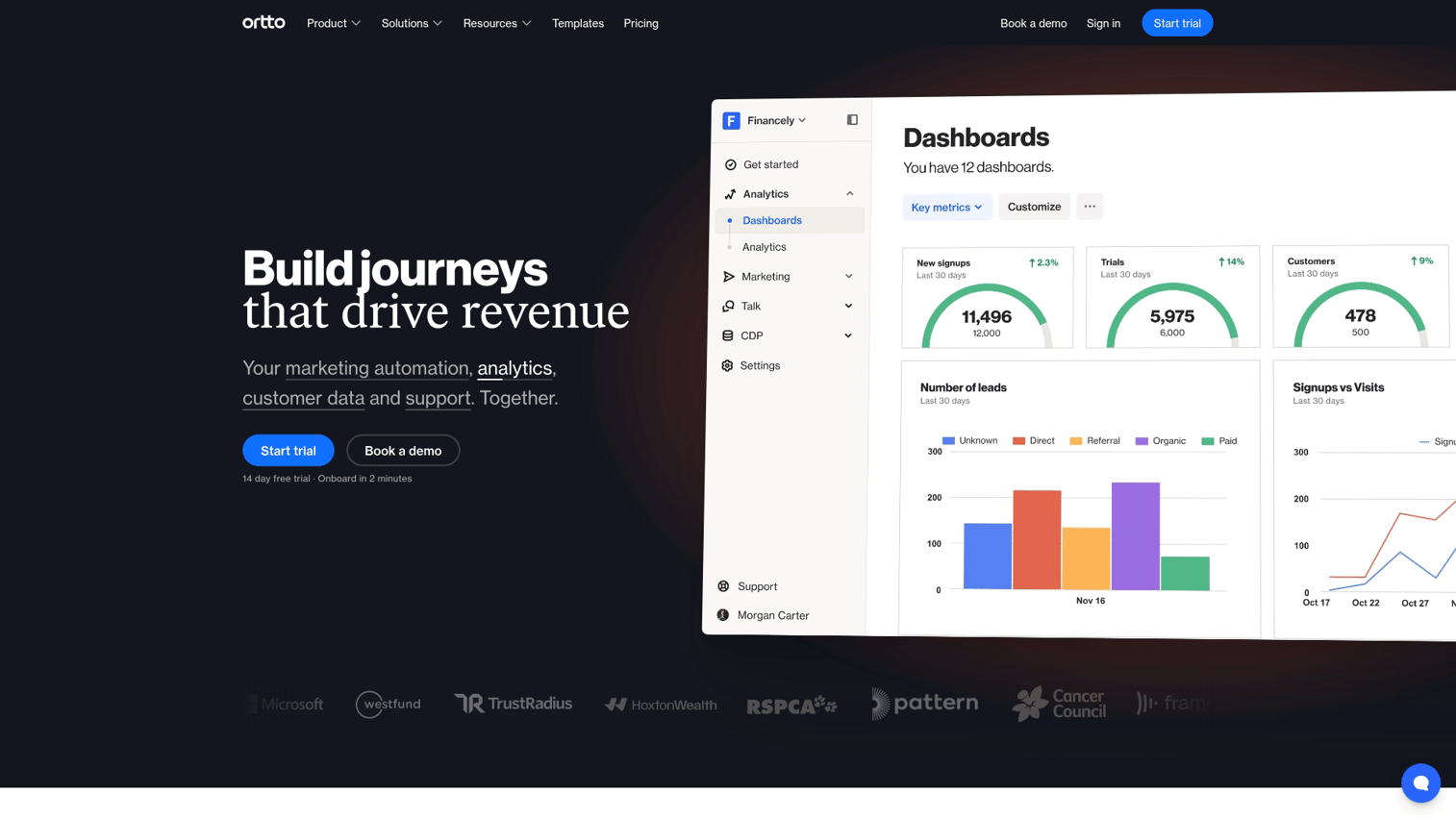
Ortto combines a customer data platform with visual journey automation. The platform pulls data from multiple sources, builds unified customer profiles, and lets you automate campaigns across email, SMS, push, and ads from one interface.
Teams choose Ortto when they want to unify messy contact data and automate multi-channel campaigns without coding.
Key strengths
Built-in CDP: Unify customer data from multiple sources into single profiles
Visual journey builder: Map automated campaigns with triggers, delays, and branches
AI segmentation: Create smart segments using natural language queries
Lead scoring: Automatically prioritize contacts based on behavior and engagement
Why pick Ortto
Pick Ortto when you want customer data and automation in one platform without building custom integrations.
Ortto pricing
Starter plans begin at $169/month. Professional plans start at $509/month. Enterprise pricing is custom.
11. Salesforce Marketing Cloud
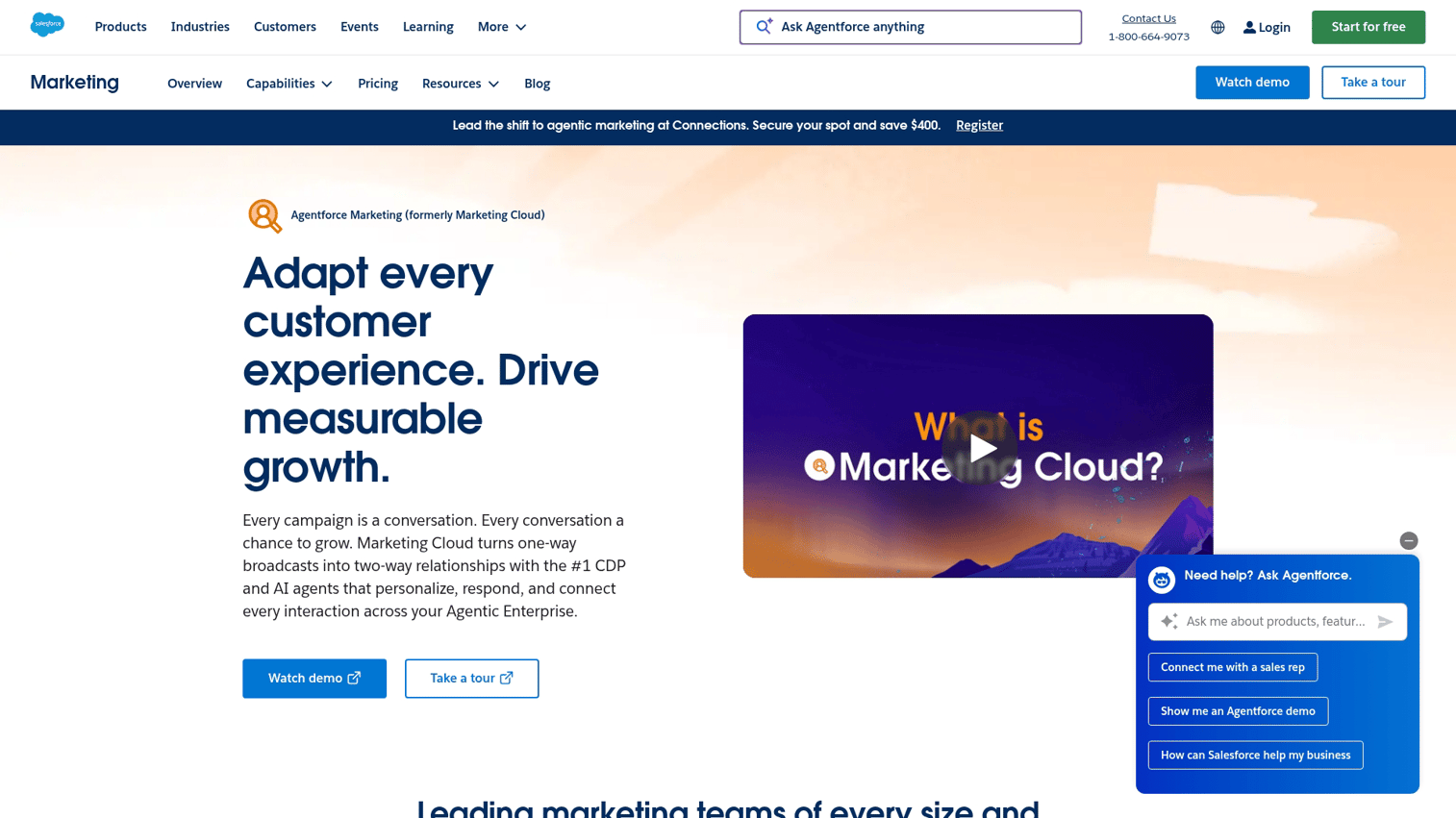
Salesforce Marketing Cloud is the enterprise suite for organizations already invested in the Salesforce ecosystem. The platform handles multi-channel orchestration at massive scale, with deep connections to Sales Cloud, Service Cloud, and the broader Salesforce platform.
Implementation requires significant investment in time, money, and specialized resources. Most organizations allocate certified consultants and dedicated admins.
Key strengths
Enterprise scale: Handle millions of contacts and complex multi-channel journeys
Salesforce integration: Native connection to Sales Cloud, Service Cloud, and CDP
Journey orchestration: Coordinate messaging across email, mobile, social, and advertising
AI personalization: Einstein-powered recommendations and send-time optimization
Why pick Salesforce Marketing Cloud
Pick Salesforce Marketing Cloud when you're already in the Salesforce ecosystem and require enterprise-grade orchestration.
Salesforce Marketing Cloud pricing
Custom pricing based on feature requirements and scale.
12. Drip
Drip positions itself as an eCommerce CRM with automation built for growing DTC brands. The platform sits between basic email tools and enterprise solutions, offering more sophistication than Mailchimp without the complexity of Klaviyo or Salesforce.
Teams choose Drip when they've outgrown simple email marketing but don't require enterprise features.
Key strengths
eCommerce CRM: Track customer relationships and purchase history in one place
Visual automation: Build workflows with triggers based on store events
Revenue attribution: See which campaigns drive actual purchases
Segmentation: Target customers by behavior, purchase history, and engagement
Why pick Drip
Pick Drip when you want more than basic email but less than enterprise complexity.
Drip pricing
Plans start at $39/month for up to 2,500 contacts. Pricing scales with list size.
Software marketing platforms by company size
For startups and small teams
Start with software marketing platforms that offer fast setup, low cost, and minimal dependencies. Brevo and Mailchimp get you running in days, not weeks. The priority at this stage is time-to-value over feature depth.
Consider adding interactive demos to your landing pages early. They let prospects experience your product without scheduling calls, which reduces reliance on sales headcount while you're still building the team.
For mid-market B2B companies
HubSpot, ActiveCampaign, and Ortto balance power with usability. Look for platforms that connect marketing activity to pipeline and revenue, not just email opens and clicks.
Mid-market teams benefit significantly from showing their product in outbound sequences and on landing pages. Interactive demos increase response rates because they lower the cognitive cost of evaluating your solution.
For enterprise organizations
Salesforce Marketing Cloud and Marketo Engage handle the scale and complexity that enterprise teams require. Budget for dedicated ops resources and expect implementation timelines measured in months, not weeks.
The key question: does your organization have the resources to run these platforms properly? Underinvestment in implementation is the most common failure mode.
For eCommerce businesses
Klaviyo, Omnisend, and Drip integrate natively with commerce platforms and include pre-built workflows for cart recovery, post-purchase, and win-back campaigns. The right choice depends on your scale and how much customization you require.
What to check before buying marketing automation software
Before committing to a platform, work through the following questions:
Does it replace or add to your stack? Consolidation reduces overhead - Gartner found martech utilization at just 49%, and another tool to manage increases it.
Can your team implement without engineering? Setup dependencies determine how quickly you'll see value.
How does pricing scale? Contact limits, feature gates, and overage charges add up faster than base pricing suggests.
Does reporting match your other platforms? Attribution discrepancies between tools destroy trust in leadership meetings.
What does onboarding look like? Time-to-first-value determines whether your team actually adopts the tool.
Build your software marketing stack
The best marketing stack combines automation with ways to show your product, not just tell. Campaigns that include interactive experiences consistently outperform campaigns that rely on static content alone.
Start by identifying your biggest bottleneck. If it's manual campaign work, prioritize automation. If it's getting prospects to understand your product, add interactive demos.
Most teams eventually require both.
Start your journey with Guideflow today!
FAQs about software marketing platforms
Marketing automation handles campaigns and nurturing. CRM manages contact records and sales pipeline. Many platforms now combine both, but the core functions remain distinct.
Simple tools like Mailchimp or Brevo can launch in days. Mid-market platforms like HubSpot or ActiveCampaign typically take 2-4 weeks for full setup. Enterprise platforms like Marketo or Salesforce often require 3-6 months of configuration and data migration.
Most modern platforms offer no-code setup for basic workflows. Visual builders handle email sequences, lead scoring, and simple integrations. Complex integrations, custom event tracking, and data warehouse connections still typically require developer involvement.
CRM sync (Salesforce, HubSpot), ad platforms (Google, LinkedIn), analytics (GA4, Mixpanel), and communication tools (Slack, email) form the essential integration layer.
Interactive demos sit between awareness and conversion. They let prospects experience your product without scheduling a call, which increases engagement and qualification before sales involvement.
Entry-level tools start free or under $50/month. Mid-market platforms range from $200-2000/month depending on contacts and features. Enterprise solutions often exceed $3000/month with custom pricing based on scale and requirements.
Track pipeline generated, conversion rate improvements, time saved on manual tasks, and reduction in cost per qualified lead. Compare metrics to your baseline before implementation.
Start with email automation, basic CRM, analytics, and an interactive demo on your landing page. This combination handles lead capture, nurturing, and product education without requiring a large team.