Your team can ship five video cuts before lunch. The music still slows everything down.
Stock libraries are either too generic or too slow to license. Custom composition is priced for campaigns you can actually afford, not the five social experiments you want to run this week. And somewhere between "find a track that fits the mood" and "get legal to approve it," the creative window closes.
The AI text to music software market hit $856 million in 2025 and is projected to reach $3.93 billion by 2033, according to Grand View Research. The tools in this category convert written prompts, mood descriptions, lyrics, or campaign concepts into generated audio, from full songs with vocals to clean instrumental beds for video production.
That matters for growth teams who need more creative output without more production dependencies. The bottleneck is rarely the video edit. It is usually the audio that has to fit it.
What's inside
This guide compares 8 text to music software tools for 2026, written for digital marketers, social teams, and growth teams testing audio-led campaigns.
- Who this is for: Marketers building paid social, video content, podcasts, and campaign creative without a full production team
- How tools were chosen: Prompt control, vocal support, export formats, licensing clarity, and pricing transparency
- What gets compared: Best use case, key differentiator, pricing, and G2 rating
- What to verify before publishing: Commercial rights by plan, attribution requirements, and ownership terms for each vendor
TL;DR
- Best overall for full AI songs: Suno is the strongest starting point for marketers who need complete tracks with vocals, lyrics, editing, and fast experimentation
- Best for structured text-to-song creation: TextSong.ai gives more guided control over lyrics, vocals, exports, and song extension
- Best for royalty-free background music: Loudly works well for teams prioritizing fast marketing tracks and commercially safe output
- Best for a licensed creative platform: Artlist fits marketers already running licensed music and creative asset workflows
- Best for background music beds: Mubert and Soundraw are the stronger picks when the campaign needs clean instrumental tracks, not lyrical songs
- Best for instrumental composition: AIVA handles structured, cinematic, and orchestral-style scoring better than prompt-first song generators
What is text to music software?
Text to music software uses AI models to turn written prompts, lyrics, moods, genres, or scene descriptions into generated music tracks. A marketer types a brief, and the tool returns a complete song, an instrumental bed, or a loop, depending on what the tool is built to produce.
The category covers two distinct product types that solve different campaign jobs.
Full-song generators versus background track tools
Full-song generators produce vocals, lyrics, song structure, and production from a text input. They are useful when the campaign needs a hook, an audio identity, or a voice-led track. Background music generators produce instrumental beds for videos, ads, podcasts, and presentations. They give marketers something to place under existing video rather than a standalone song.
Most teams need both at different points in a campaign. The tools below are not interchangeable, and matching the right type to the right use case is the most important decision you will make before picking a subscription.
Core capabilities to look for
- Prompt-to-track generation from text descriptions
- Lyrics and vocal control, including style and language options
- Genre and mood settings that affect output direction
- Instrumental-only mode for background use
- Song extension and remixing for iteration
- Stem downloads for editing vocals or instruments separately
- MP3 and WAV export, and MIDI where available
- Commercial licensing terms by plan and geography
- Credit or generation limits and what happens when you hit them
Licensing is part of the product
Commercial use rights are not universal across any of these tools. They change by plan, by vendor, and sometimes by jurisdiction. The free tier on most platforms does not include commercial rights. Verify the specific plan terms before using generated audio in paid ads, client work, or monetized content. This guide notes licensing context for each tool, but it is not legal advice.
When to use text to music software
Test more ad creative without waiting on production
Growth teams running paid social need more audio variation than a stock library subscription can supply fast enough. Text to music tools let you generate multiple musical directions for the same campaign brief, test which mood or genre performs better, and move to the next version without a production queue. Iteration speed is the primary advantage here, not audio quality alone.
Create campaign music when the stock library sounds familiar
Stock tracks get overused. Audiences recognize them. Text to music tools let you generate audio around a specific campaign prompt, audience emotion, or product scene rather than browsing a catalog for something that approximately fits. Originality does not remove the need to check commercial terms, but the output is at least purpose-built for the campaign rather than repurposed from a general catalog.
Turn scripts and launch concepts into rough audio directions
Before final production, marketers can use these tools to concept audio direction: Test how a launch theme sounds in different genres, produce a rough reference for a brand film, or give an agency a concrete audio brief. Suno and Udio work well for this kind of ideation. AIVA handles the cinematic version when a product video needs a scored feel rather than a pop hook.
Text to music software comparison
The table below covers all 8 tools by best use case, key differentiator, pricing entry point, and G2 rating. Pricing reflects annually billed plans where applicable. G2 ratings are from live listings; N/A means no sufficient rating data was available at time of writing.
| # | Product | Best for | Key differentiator | Pricing | G2 rating |
|---|---|---|---|---|---|
| 1 | Suno | Full AI songs with vocals | Song generation, editing, remixing, stem separation, and mobile apps | Free; Pro $8/mo (billed annually) | 4.4/5 |
| 2 | TextSong.ai | Structured text-to-song creation | Guided song workflow with lyric, vocal, and export controls | Free; Basic $9.70/mo (billed annually) | 4.5/5 |
| 3 | Loudly | Royalty-free marketing tracks | Text-to-music with AI remixing, mastering, and distribution | Free plan available; paid plans contact vendor | N/A |
| 4 | Artlist | Licensed creator workflows | AI generation inside a full royalty-free creative asset platform | AI Starter $11.99/mo (billed annually) | N/A |
| 5 | Udio | High-quality AI song experiments | Prompt-based songs with style controls, remixing, and stem downloads | Free; Standard $10/mo | N/A |
| 6 | Mubert | Background music for content | Generative tracks for video, podcasts, apps, and branded content | Free; Creator $14/mo | 3.7/5 |
| 7 | Soundraw | Customizable background music | Bar-level editing of genre, mood, intensity, and track length | Creator plan from €5.83/mo (billed annually) | 4.1/5 |
| 8 | AIVA | Instrumental AI composition | 250+ style presets, custom style models, MIDI export, and licensing tiers | Free; Standard €11/mo (billed annually) | N/A |
Best 8 text to music software tools for 2026
Some tools on this list produce complete songs with vocals. Others produce background tracks for video and campaign assets. "Best" depends on what the campaign needs, not which demo sounds most impressive.
1. Suno
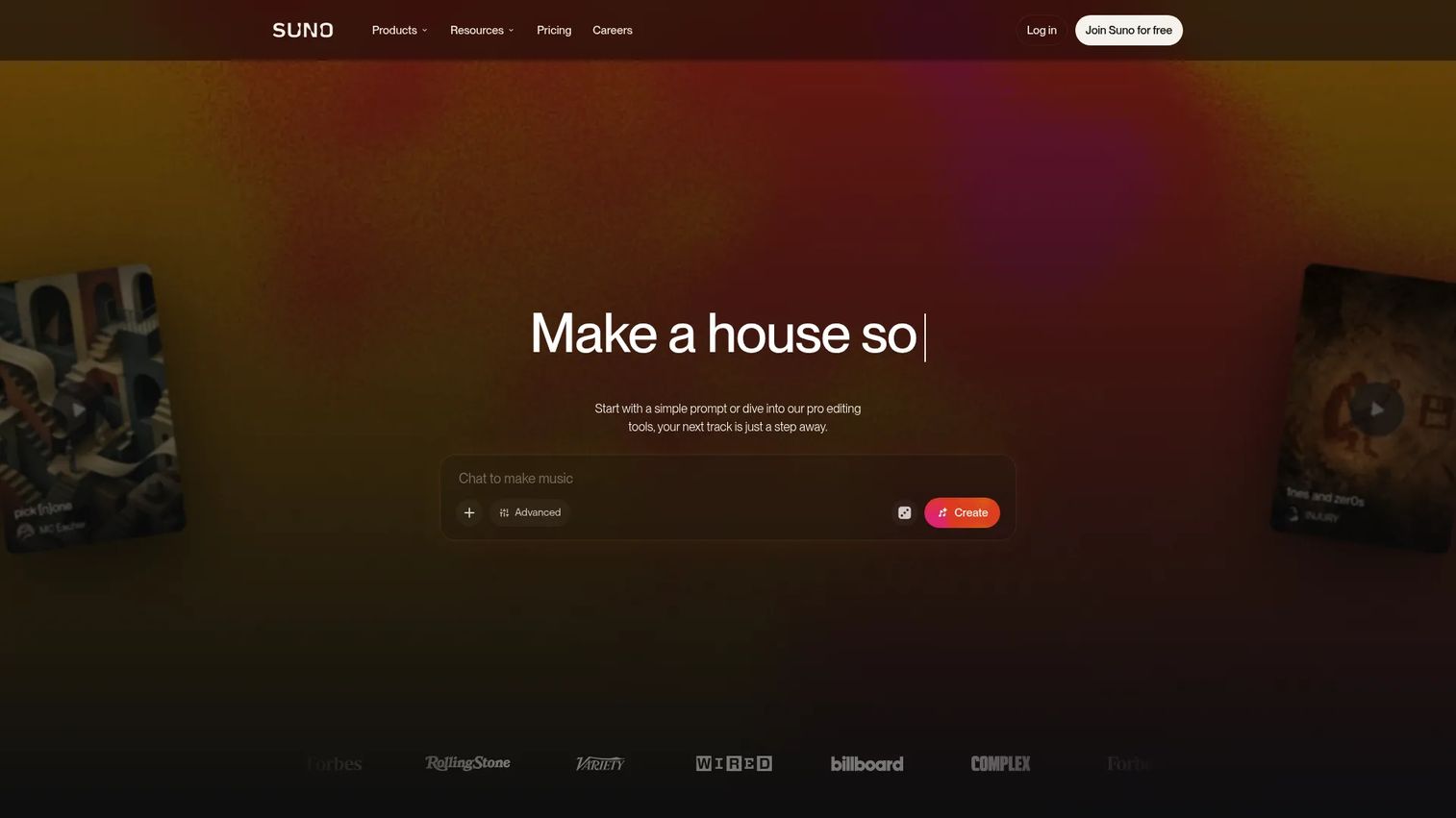
Suno is an AI music creation platform for generating, editing, remixing, and producing songs directly from text. It covers the full song-creation loop: Write a prompt, get a track with vocals and lyrics, remix it, extend it, or separate stems for further editing. The platform includes mobile apps and Suno Studio, a browser-based generative DAW with MIDI, effects, synths, and automation.
For marketers, Suno is the fastest way to generate audio concepts for campaigns, product launch videos, or social hooks without waiting on a composer. The output sounds like a real song, not a placeholder.
Best for: Creators and marketing teams who need complete AI-generated songs with vocals for campaign concepting, social content, and branded audio.
Key features
- Text-to-song generation with vocals, lyrics, and instrumentation
- Stem separation for vocals and instruments
- Song covers, mashups, and samples
- Suno Studio: Browser-based generative DAW with MIDI and effects
- Voice creation from a recorded clip of your own voice
Why choose Suno: Suno covers more of the song-production loop than most text-to-music tools, from generation to editing to export. It is the strongest pick when the output needs to sound like a complete track rather than a generated bed. Verify commercial rights by plan before using output in paid campaigns.
Suno pricing: Free plan includes 50 credits per day. Pro is $8/month billed annually, with 2,500 monthly credits and commercial use rights. Premier is $24/month billed annually, with 10,000 credits and access to Suno Studio.
G2 rating: 4.4/5
2. TextSong.ai
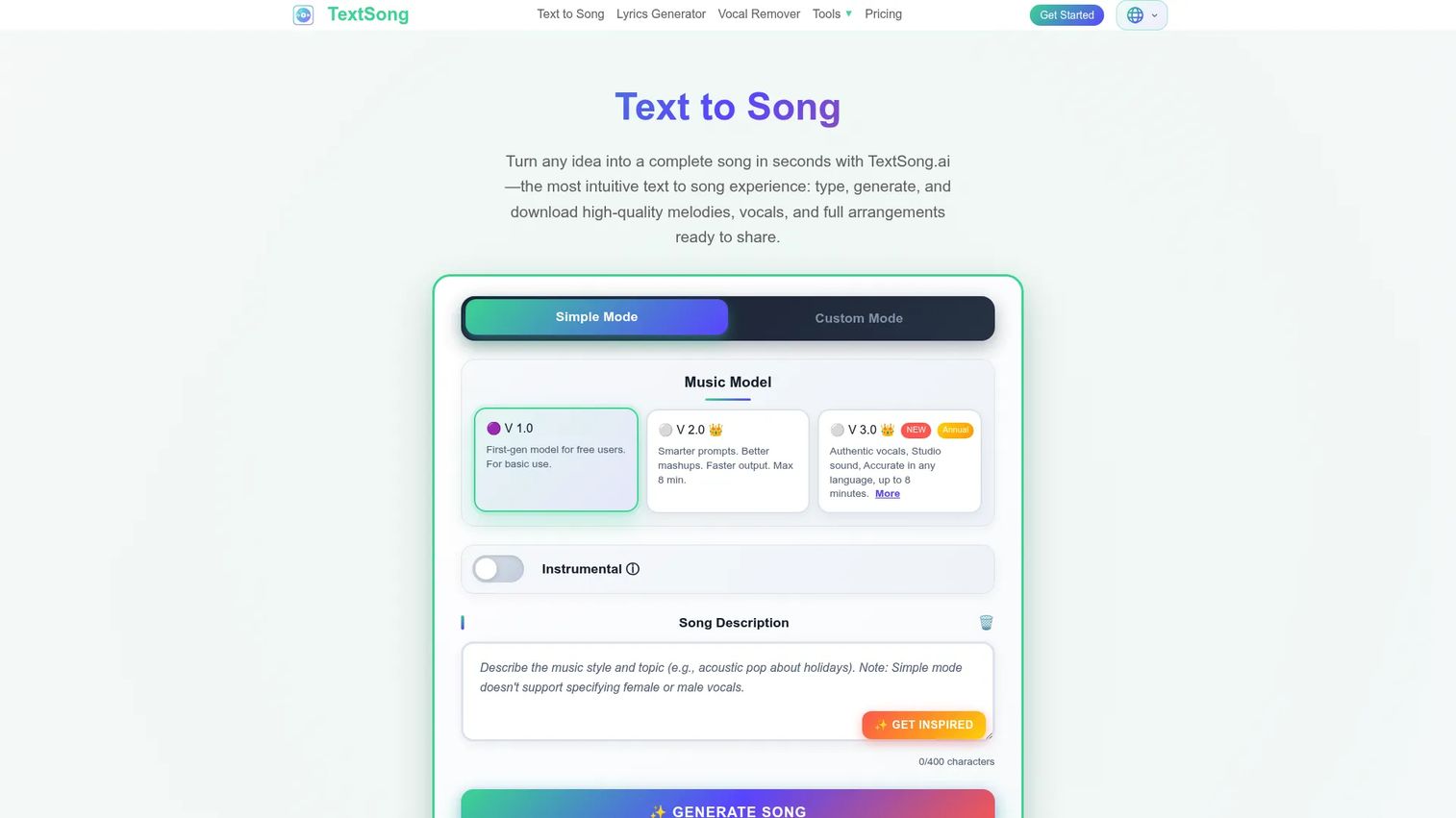
TextSong.ai transforms text descriptions or lyrics into complete songs with vocals, melody, and full arrangements. The platform offers two creation modes: A straightforward prompt-based flow and a more detailed custom workflow where you specify genre, mood, vocal style, instruments, and tempo. It also generates AI lyrics if you start without words, which makes it useful for campaigns where the brief is a concept rather than a finished script.
The tool is a good fit for marketing teams that want more explicit input controls than a single prompt box and need clean downloads for campaign use.
Best for: Teams turning campaign scripts, slogans, or launch concepts into audio drafts with structured controls over the output.
Key features
- Text-to-song generation from descriptions or written lyrics
- AI lyrics generation for prompt-based concepting
- Vocal removal and instrumental or acapella export
- Song extension up to 8 minutes
- MP3, WAV, time-synced LRC and SRT lyric exports, and audio-to-MIDI conversion
Why choose TextSong.ai: The combination of lyric generation, vocal removal, and MIDI export makes TextSong.ai more production-workflow-friendly than tools that only produce a finished track. It suits teams that want to hand off audio in multiple formats. Verify commercial rights, as those are gated to paid plans.
TextSong.ai pricing: Free plan available with limited daily credits. Basic plan is $9.70/month billed annually ($116 per year). Premium is $16/month billed annually ($192 per year), with access to model 3.0, commercial licensing, and support for three simultaneous users.
G2 rating: 4.5/5
3. Loudly
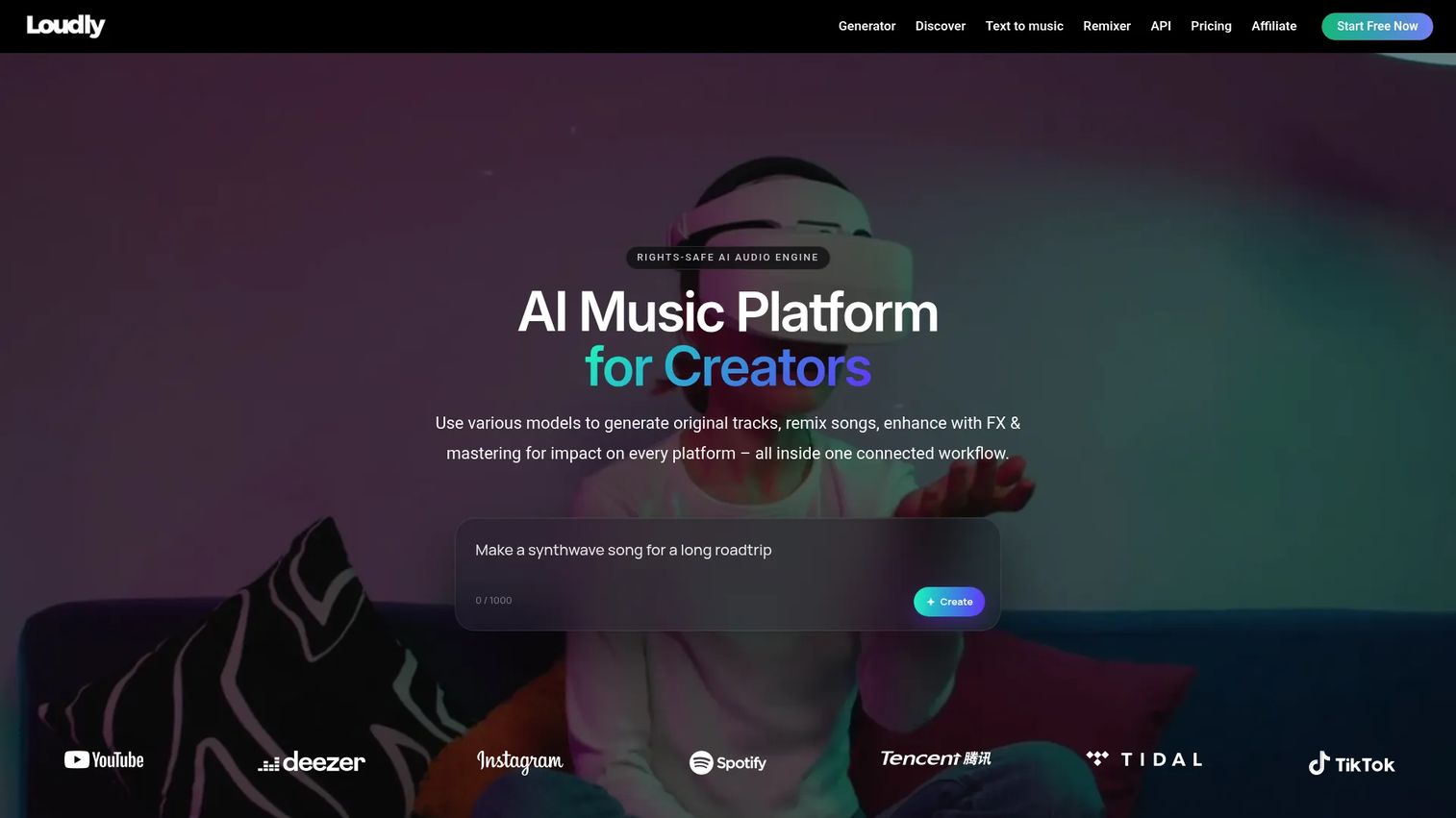
Loudly is an AI music creation platform that covers generation, remixing, mastering, and distribution for royalty-free audio. The platform lets you generate tracks from text prompts, split stems, remix existing audio, apply AI mastering, and send finished tracks to distribution platforms. It also provides a music API for developers and platforms that need to integrate generated audio into their own products.
For marketers, Loudly works well when the campaign needs consistent background audio rather than experimental full-song output.
Best for: Creators, producers, and marketing teams who need royalty-free AI-generated music for social content, product videos, and distribution.
Key features
- AI music generation and text-to-music prompts
- AI song remixing and stem splitting
- AI mastering and music distribution
- Royalty-free music catalog with samples and sample packs
- Music API for developer and platform integration
Why choose Loudly: The combination of generation, mastering, and distribution in one platform removes several production steps that usually require separate tools. If your team produces audio for multiple channels and needs distribution as part of the workflow, Loudly covers more ground than a pure generation tool. Verify the specific royalty-free terms by plan before publishing in paid campaigns.
Loudly pricing: Free plan available, covering approximately 90% of features with usage limits. Personal and Pro paid plans are available on monthly or annual billing. Contact Loudly directly or check the pricing page for current figures.
4. Artlist

Artlist is an AI-powered creative platform that combines generative AI tools with a royalty-free library covering music, sound effects, footage, templates, and related creative assets. The AI generation tools support video, images, voiceovers, and music, alongside access to 100+ AI models and 70+ AI apps. The platform includes a Premiere Pro extension and an asset organization layer called Artboards.
For marketers already using a licensed creative library, Artlist is the option that adds AI text-to-music without leaving an existing licensing workflow.
Best for: Agencies and marketing teams that want AI music generation inside a broader licensed creative asset platform.
Key features
- AI generation for video, images, voiceovers, and music
- Royalty-free music, stems, sound effects, footage, templates, LUTs, and plugins
- Artlist Studio for end-to-end AI production
- 100+ AI models and 70+ AI apps
- Premiere Pro extension and Artboards for asset organization
Why choose Artlist: For teams already paying for licensed creative assets, Artlist consolidates AI music generation into a platform where everything is already licensed for commercial use. That reduces the "will legal approve this?" friction that comes with standalone AI music tools. Free access is a limited trial rather than a permanent free plan.
Artlist pricing: AI Starter is $11.99/month billed annually. AI Core is $23.99/month billed annually. AI Creator is $41.67/month billed annually. Max plans start at $50.66/month billed annually. Max Business is $399/month billed annually. A free trial with limited access is available.
5. Udio
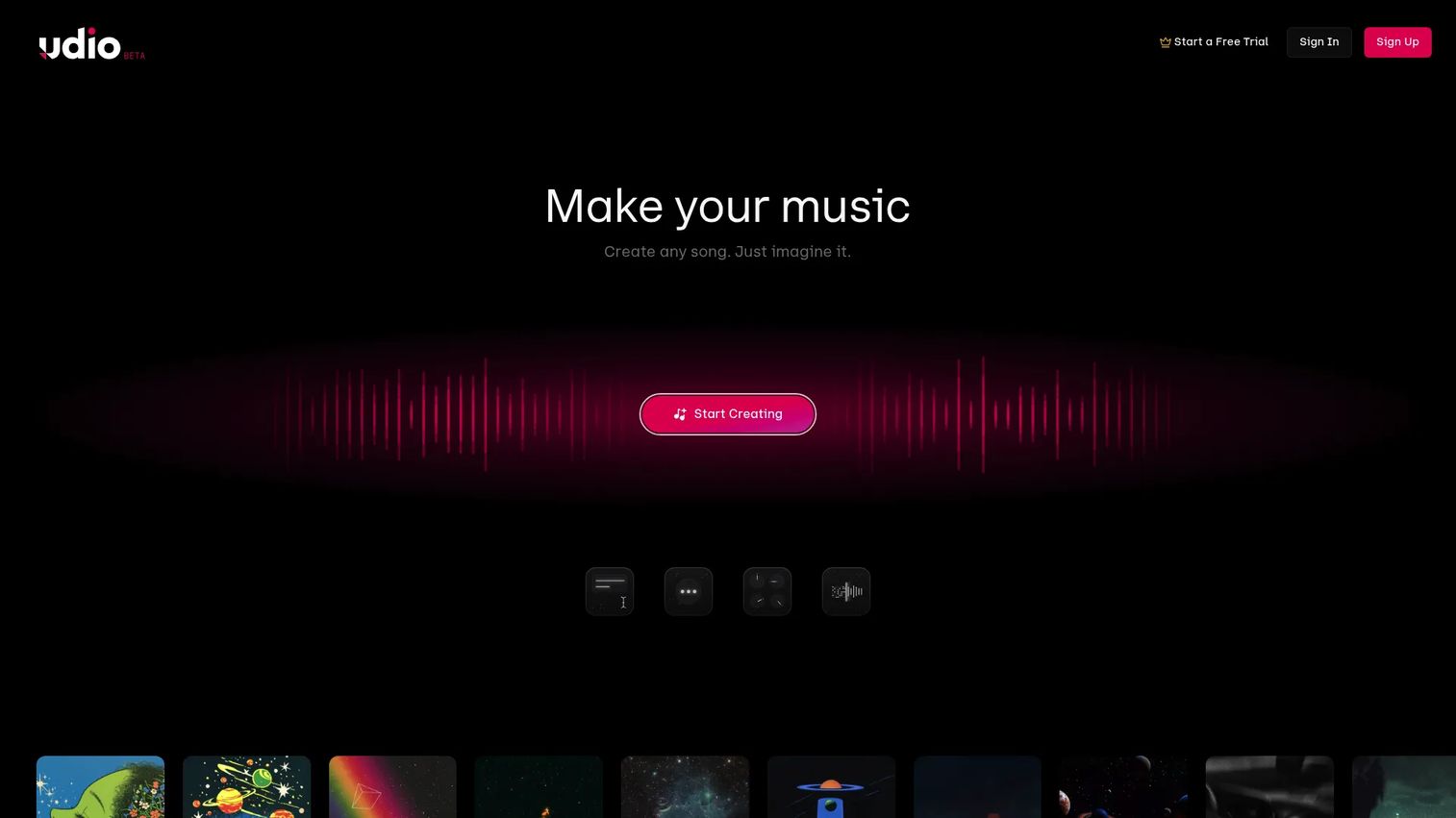
Udio is an AI music generation platform for creating, editing, remixing, and sharing songs from text prompts or audio references. It supports audio-to-audio remixing, stem downloads, inpainting for editing specific sections of a track, and shareable lyric videos. Style references let you point the generation toward a specific sound rather than relying purely on text description.
For marketers, Udio is useful for concepting branded audio directions, testing how a campaign theme translates into different musical styles, and producing tracks for launch videos and social-first creative.
Best for: Creators and marketing teams testing polished AI song directions with detailed style control and iterative editing.
Key features
- Text-prompt music generation
- Audio-to-audio remixing with style references
- Stem downloads for vocals and instruments
- Inpainting for editing specific track sections
- Shareable lyric videos
Why choose Udio: The style reference feature and inpainting give Udio more precision than a pure prompt-in, track-out workflow. It is better suited for teams who want to refine output through iteration rather than generate and accept. Verify rights and plan details before using generated tracks commercially.
Udio pricing: Free tier available with daily and monthly credit limits. Standard is $10/month. Pro is $30/month. Annual pricing is available; check the pricing page for current annual figures.
6. Mubert
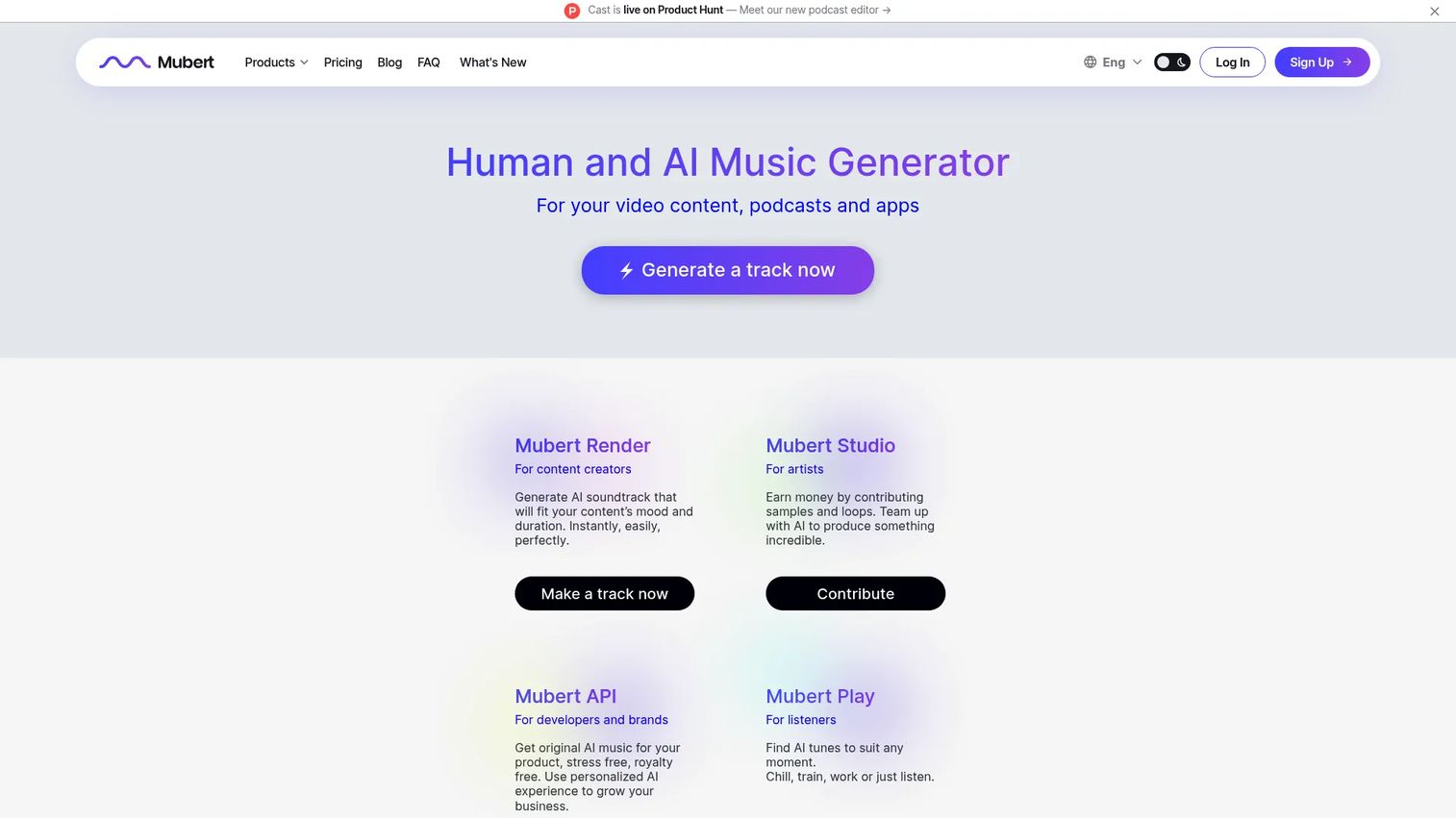
Mubert is a human-and-AI music generator built for content creators, podcasters, app developers, and agencies who need scalable instrumental audio. Tracks are generated from text, images, mood, genre, and BPM inputs. The platform includes a Quick Remix feature, track editing for structure and duration, a library of 12,000 curated tracks, and an API for generating or streaming music inside other products.
For marketing teams, Mubert is practical when the campaign needs functional background music for video, podcasts, or branded content, not a song with vocals.
Best for: Marketing teams and content creators who need scalable, AI-generated background music for video ads, podcasts, and branded content.
Key features
- AI music generation from text, images, mood, genre, and BPM
- Quick Remix and track editing including stems, structure, duration, and key
- Royalty-free MP3 and lossless WAV export
- 12,000-track Staff Picks library
- API for generated and real-time streaming music
Why choose Mubert: Mubert's API and scalable generation make it the stronger pick for teams running high-volume content or building music generation into their own workflow. Commercial use requires the Pro plan ($39/month) or Business plan. The Creator plan is non-commercial; confirm the right tier before publishing in paid campaigns.
Mubert pricing: Free Ambassador plan includes 25 tracks and 5 downloads per month. Creator is $14/month (or $11.69/month billed annually). Pro is $39/month (or $32.49/month billed annually) and includes commercial usage. Business is $199/month (or $149.29/month billed annually).
G2 rating: 3.7/5
7. Soundraw
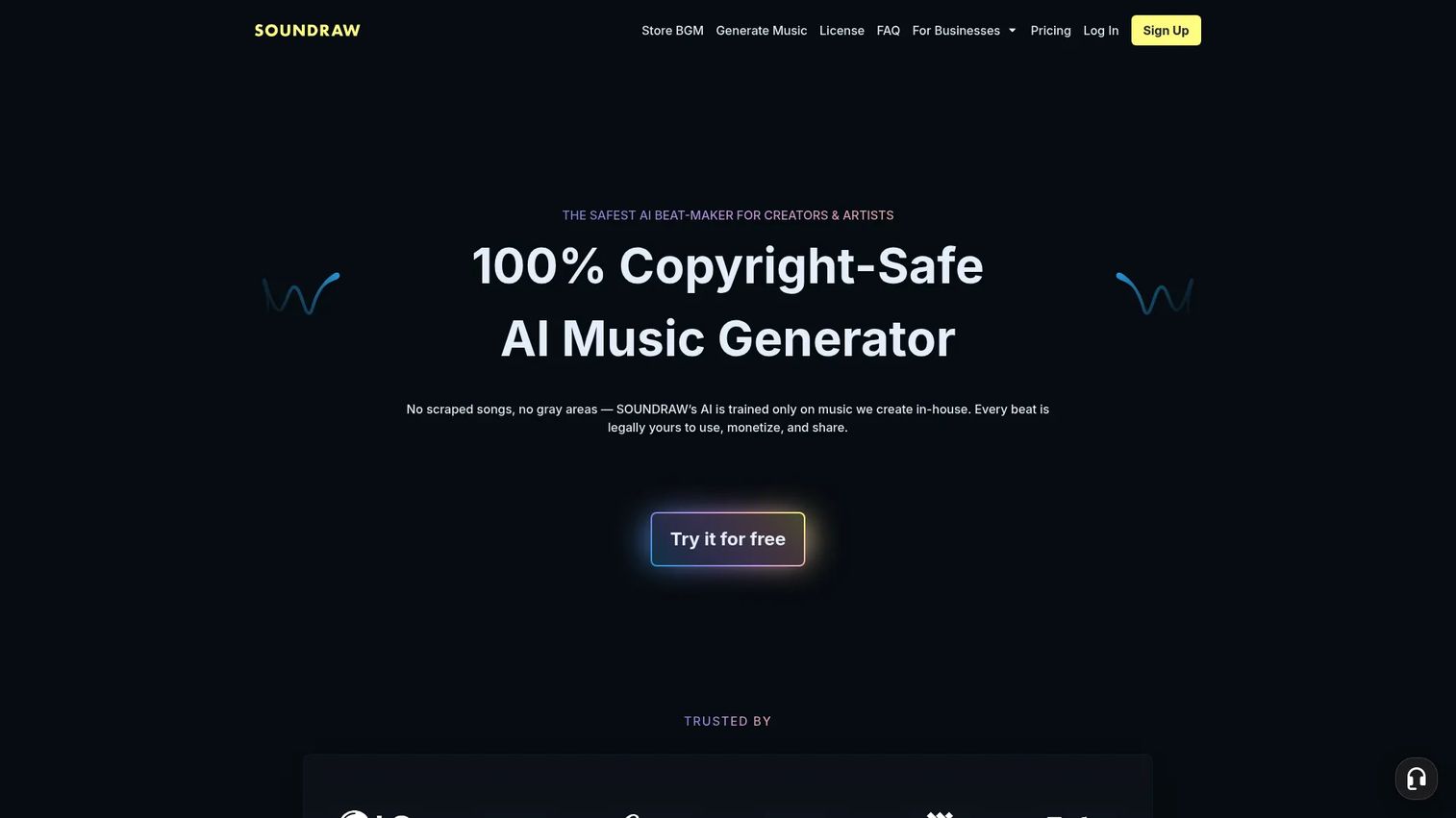
Soundraw is an AI music generator for creating customizable, royalty-free music and beats. The platform generates tracks based on mood, genre, and theme, and allows bar-level editing of instruments, intensity, and track length after generation. Plans include MP3, WAV, and STEM downloads depending on tier, plus commercial use and music distribution licensing on applicable plans.
For digital marketers, Soundraw is a reliable option for producing music beds that fit specific video lengths without requiring any audio editing skills beyond adjusting sliders.
Best for: Content creators and marketing teams who need editable background tracks that fit a specific scene length for videos, paid social, and YouTube.
Key features
- AI-generated royalty-free music with genre blending
- Bar-level editing of instruments, intensity, and track length
- Unlimited track generation on applicable plans
- MP3, WAV, and STEM downloads by plan
- Commercial use and music distribution licensing
Why choose Soundraw: The bar-level editing makes Soundraw more production-friendly than tools that only output a finished file. For teams editing video who need a track that matches a specific duration or energy curve, adjusting the structure inside Soundraw is faster than finding a pre-made track that fits. The site displayed EUR pricing at time of verification; check the current pricing page for your local currency equivalent.
Soundraw pricing: Creator plan starts at €5.83/month billed annually with unlimited MP3 downloads. Artist Starter is €10.75/month billed annually (10 downloads). Artist Pro is €12.42/month billed annually with MP3, WAV, and STEM downloads. Artist Unlimited is €17.42/month billed annually with unlimited downloads across all formats. Enterprise is available at custom pricing.
G2 rating: 4.1/5
8. AIVA
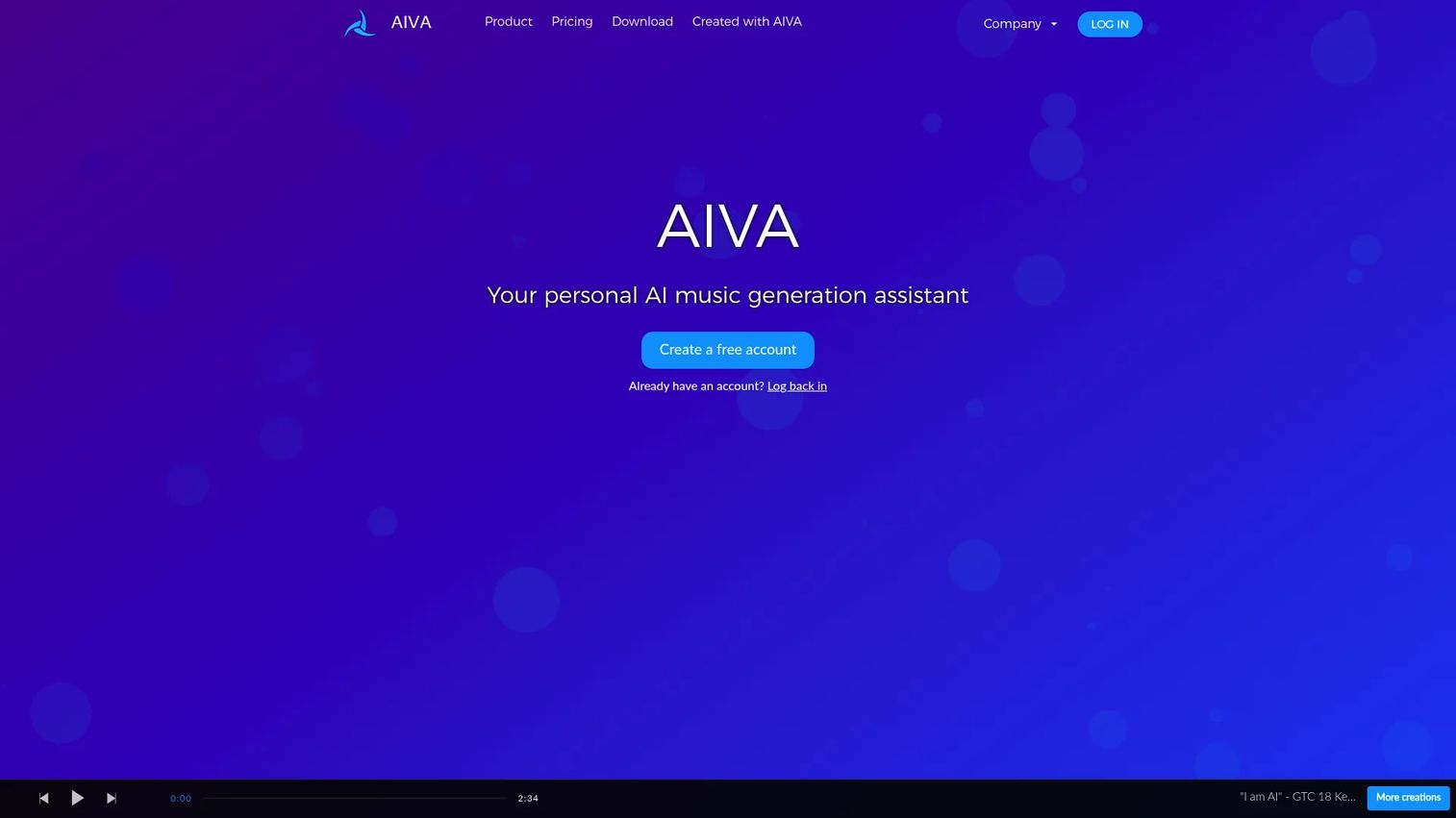
AIVA is an AI music generation assistant for creating original compositions in more than 250 styles. The platform covers instrumental generation, custom style model creation, audio and MIDI influence uploads, track editing, and composition downloads in multiple file formats. Licensing tiers range from non-commercial use with attribution to full copyright ownership on the Pro plan.
For marketers working on brand films, cinematic product videos, or launch content that needs a scored soundtrack rather than a pop hook, AIVA handles that type of structured composition better than prompt-first song generators.
Best for: Marketing teams and content creators who need composed instrumental music for brand films, cinematic ads, and polished product videos.
Key features
- Generates compositions in more than 250 styles
- Custom style model creation
- Upload audio or MIDI influences to guide generation
- Edit generated tracks within the platform
- Download in multiple formats including MIDI
Why choose AIVA: AIVA is the right pick when the output needs to feel scored rather than generated. The style preset range and MIDI export make it usable by teams with some audio production knowledge who want to refine the composition further. The free plan requires attribution and limits commercial use; the Standard plan ($11/month billed annually) adds limited monetization on social platforms, while Pro ($33/month billed annually) provides full copyright ownership.
AIVA pricing: Free plan available for non-commercial use with attribution. Standard is €11/month billed annually. Pro is €33/month billed annually, with full copyright ownership and unrestricted monetization.
Considerations when choosing text to music software
Commercial rights and licensing
Check whether the plan allows paid ads, client work, YouTube monetization, and resale before subscribing. Rights language differs by vendor and changes by plan tier. Free plans on most tools do not include commercial rights. Mubert requires the Pro plan for commercial use. Suno requires the Pro plan. TextSong.ai gates commercial licensing to paid tiers. AIVA's Standard plan covers limited social monetization; full copyright ownership requires Pro.
Full songs versus background tracks
Decide whether the campaign needs vocals and lyrics or a clean instrumental bed before evaluating tools. Suno, TextSong.ai, and Udio produce full songs. Mubert, Soundraw, and AIVA are stronger for instrumental and background output. Using a full-song tool when you need a background bed wastes credits and produces audio that competes with the voiceover instead of sitting under it.
Creative control
Evaluate how much input the tool accepts. A single prompt box generates fast but gives limited direction. TextSong.ai, Soundraw, and AIVA offer more explicit controls over genre, mood, tempo, instruments, and structure. When creative feedback gets specific ("the track needs to drop at 12 seconds"), tools with detailed controls produce usable results faster than prompt-only generators.
Export formats and workflow fit
MP3 works for most use cases. WAV is required for broadcast or high-quality production. MIDI export (available in TextSong.ai and AIVA) matters when a producer needs to edit the composition further. Stem downloads (Suno, Udio, Soundraw Artist Pro and above) let you separate vocals from instruments for more precise editing. Confirm the format is available on the plan you intend to buy.
Cost per usable campaign asset
Compare generation credits, failed-generation policies, and commercial tier requirements against the number of usable tracks your team needs per month. A $14/month plan that produces 10 campaign-ready tracks costs less per asset than a $39/month plan where most generations require rework. Run a prompt through the free tier before committing to a paid plan.
Conclusion
For most marketing teams starting with text to music software, the clearest path is to pick one full-song tool and one background track tool, then run the same brief through both.
Suno is the strongest starting point for full AI songs, with vocals, editing, stem separation, and a free tier to test output quality before committing to the Pro plan. TextSong.ai gives more explicit input controls and a useful MIDI export for teams with production resources. Loudly and Artlist are the better fits when the priority is commercial licensing clarity inside an existing creative workflow. Mubert and Soundraw handle background music more predictably, with Soundraw's bar-level editing giving marketers more control over track structure. AIVA is the right call when the output needs to feel composed and cinematic rather than prompt-generated.
Before publishing anything in a paid campaign, confirm the commercial rights on the specific plan you are using. Output quality from a free tier and commercial rights from a paid tier are separate conversations.
When you are also showing software products or campaign tools through interactive product demos on landing pages and in sales flows, Guideflow handles that side of the creative stack.
Start your journey with Guideflow today!
FAQs
Text to music software uses AI models to convert written prompts, mood descriptions, lyrics, or genre specifications into generated audio. Some tools produce full songs with vocals and lyrics. Others generate instrumental background tracks for videos, ads, and podcasts. The category is also called a text to music generator or AI music generator from text.
The answer depends on what the campaign needs. For full songs with vocals, Suno, TextSong.ai, and Udio are the strongest options. For background music that sits under video or podcast audio, Mubert and Soundraw are more reliable. Teams that want AI music generation inside a licensed creative platform should look at Artlist. Start with the free tier of two tools and compare output on the same brief before subscribing.
Yes. Suno, TextSong.ai, and Udio all generate songs with AI vocals from text prompts. The degree of vocal control varies: TextSong.ai allows vocal style and instrument customization, while Suno supports voice cloning from a short recorded clip. Test vocal quality and pronunciation on your specific use case before using the output in public-facing campaigns.
Sometimes, but commercial use rights depend on the tool, the plan tier, and the jurisdiction. Free plans typically do not include commercial rights. Suno requires the Pro plan ($8/month billed annually) for commercial use. TextSong.ai gates commercial licensing to paid tiers. Mubert requires the Pro plan ($39/month) for commercial usage. AIVA's Standard plan covers limited social monetization, while full copyright ownership requires the Pro plan. Review the specific vendor terms before using any generated audio in paid ads, client work, or monetized content. This is not legal advice.
Include mood, genre, tempo, use case, and vocal style where they matter. A vague prompt produces a generic result. A prompt written for a specific campaign moment produces more usable audio. Example for a short-form video: "Upbeat indie pop track for a 20-second product launch video, female vocal, optimistic mood, clean chorus, no guitar solo." Longer, more specific prompts generally outperform short ones in tools that support detailed input like TextSong.ai and Soundraw.
Free tiers are useful for testing output quality and learning which tool produces the right sound for a given brief. For campaign publishing, paid plans usually matter: Commercial rights are gated, higher-quality exports require a paid tier, and credit limits on free plans restrict how many variations you can generate before running out. Test on free, then subscribe at the tier that covers your commercial rights.
Text to music covers the full range of output types: Instrumental tracks, background loops, and complete songs. Text to song specifically implies vocals, lyrics, and song structure. If you need background music for a video, a text to music generator like Mubert or Soundraw fits better. If you need a song with a vocal hook, a text to song tool like Suno or TextSong.ai is the right starting point.
Mubert and Soundraw are the most reliable for predictable instrumental background tracks. Mubert generates from text, image, mood, and BPM inputs and works well for high-volume content workflows. Soundraw provides bar-level editing for teams that need to adjust a track's energy or length after generation. AIVA is the better option when the background music needs a cinematic or orchestral feel. Check export and licensing terms before using any output in distributed campaigns, and confirm that the plan covers your intended use.
Suno's free plan includes 50 credits per day, which covers meaningful experimentation before committing to a paid tier. TextSong.ai and AIVA also offer permanent free plans with usage limits. Mubert's free Ambassador plan is non-commercial. Artlist offers a limited trial rather than a permanent free tier. Udio provides daily and monthly credit limits on its free plan. For most teams, Suno's free plan gives enough output to evaluate whether the tool fits before subscribing.