Your buyer has already checked two or three review sites before your AE opens the first deck. According to the G2 2024 Buyer Behavior Report, 85% of B2B buyers consult online reviews when evaluating vendors, and 51% say independent review sites are more valuable than analyst firms during discovery. The question is not whether review platforms matter. The question is which two or three platforms actually influence your buyers, and which ones are just badge factories that consume team time without moving pipeline.
For Series B founders, this is a capital allocation decision. A scattered review motion across every directory produces noise. A focused one, built around where your ICP already validates vendors, produces external credibility your new VP can use in board decks, competitive positioning, and late-stage procurement diligence. The platforms in this guide span software review sites, B2B services directories, partner marketplaces, and employer reputation tools, because buyers use all of them depending on what they are validating.
What's inside
This guide compares 17 B2B services review platforms for 2026, ranked by relevance to SaaS founders and GTM leaders deciding where to invest review effort.
- Who it is for: SaaS founders, heads of marketing, RevOps leaders, and agency operators choosing where to build third-party credibility
- What was compared: buyer audience fit, review verification model, category coverage, lead quality potential, pricing transparency, and founder-level usefulness
- Selection criteria: platforms were chosen based on buyer trust, category relevance, pricing accessibility, and real use in B2B vendor evaluation
- How to use it: identify two primary platforms your buyers already use, add one ecosystem marketplace if relevant, and build a quarterly review motion around those
TL;DR
- Best overall for B2B software credibility: G2, because buyers already use it to compare software categories and it offers buyer-intent data alongside reviews
- Best for service-provider discovery: Clutch, because it focuses on agencies, consultants, and B2B services firms with verified client reviews
- Best for enterprise software validation: Gartner Peer Insights, especially when large-company procurement and security diligence require analyst-adjacent credibility
- Best for ecosystem service partners: HubSpot Solutions Directory and Salesforce AppExchange Consultants, when ecosystem fit drives the buying decision
- Best for local and branded search trust: Google Reviews, because your profile appears before a prospect reaches your site
- Best for employer and culture proof: Glassdoor and Comparably, when buyers check team stability before trusting a long services engagement
What is a B2B services review platform?
B2B services review platforms are third-party sites where business buyers discover, compare, and evaluate software vendors, agencies, consultants, implementation partners, and service providers using reviews, ratings, profiles, rankings, and marketplace signals.
The category spans several distinct platform types, and knowing the difference matters before you invest in profile optimization:
Software review platforms help buyers compare SaaS tools by category, pricing, features, and peer ratings. G2, Capterra, GetApp, and Software Advice are the main examples. Buyers use these when shortlisting vendors in competitive categories.
Services directories help buyers evaluate agencies, consultants, and implementation partners. Clutch, GoodFirms, and DesignRush fall here. These platforms weight portfolio proof, delivery quality, and client references rather than feature grids.
Partner marketplaces validate providers tied to a specific platform. HubSpot Solutions Directory and Salesforce AppExchange Consultants are the two most relevant for SaaS-adjacent buyers. They reduce risk by showing ecosystem certification alongside reviews.
Reputation platforms collect and manage customer reviews across public surfaces. Trustpilot and Google Reviews are the clearest examples. They prioritize review volume, fraud detection, and brand trust over category comparison.
Culture review platforms show operational maturity and employee sentiment. Glassdoor and Comparably matter when buyers evaluate services firms and want evidence that the people delivering the work are stable and credible.
Key features to look for across these platforms:
- Verified customer reviews with named reviewers or linked accounts
- Category pages and comparison grids that organize vendors by use case
- Vendor or provider profile pages with response capabilities
- Review collection workflows and moderation
- Buyer intent signals or lead generation programs
- Badges and awards that can be used in marketing and sales assets
- Integrations with CRM or marketing automation systems
The platform choice should map to your ICP. Enterprise software buyers, SMB service buyers, and ecosystem buyers do not validate vendors in the same place. Pick platforms based on where your buyers already go, not where you can earn the most badges.
When to use B2B services review platforms
Build trust before the first sales call
Buyers validate credibility before they speak with sales. A well-maintained review profile gives your champion external proof they can forward internally without asking your AE to send another case study. For a Series B company moving upmarket, this matters: Procurement teams, security reviewers, and CFOs all want to see third-party validation before approving a purchase.
Capture demand from active vendor research
Category pages, comparison lists, and buyer intent data surface prospects already researching a problem. G2 buyer intent signals, for example, tell you which companies are actively browsing your category. When pipeline quality matters more than raw lead count, review platforms shift from passive credibility tools to active demand sources.
Prove partner or service quality
Implementation partners, agencies, and service-heavy SaaS vendors need more than product claims. Buyers choosing a Salesforce consulting partner or a development agency want proof of delivery quality, not just a capabilities slide. Platforms like Clutch, GoodFirms, and the Salesforce AppExchange Consultants directory reduce perceived risk by surfacing verified client reviews alongside certification signals.
B2B services review platform comparison
The table below covers all 17 platforms, sorted by the order covered in the guide. Pricing reflects verified data from official pricing pages. G2 ratings are sourced from each platform's live G2 listing where one exists.
| # | Product | Best for | Key differentiator | Pricing | G2 rating |
|---|---|---|---|---|---|
| 1 | G2 | B2B software credibility and buyer intent | Buyer intent data plus category comparison grids | Free profile; paid from $2,999/yr | 4.6/5 |
| 2 | Capterra | Software discovery and shortlisting | Gartner Digital Markets reach across buyer research | Free for buyers | 3.9/5 |
| 3 | Clutch | Agency and services provider discovery | Verified client reviews for B2B services firms | Free profile; Verified at $499/yr | 3.2/5 |
| 4 | Trustpilot | Review collection and public reputation | Automated review invitations with fraud detection | Free; paid from $99/mo per domain | 3.3/5 |
| 5 | Gartner Peer Insights | Enterprise software validation | Analyst-adjacent verified reviews for enterprise tech | Complimentary for vendors | 4.6/5 |
| 6 | SourceForge | Technical and open-source software discovery | Developer and IT audience with software comparison | Free listing; paid programs (quote-based) | 4.2/5 |
| 7 | GetApp | App comparison for SMB and mid-market | Data-driven recommendations alongside user reviews | Free for users | 4.0/5 |
| 8 | Software Advice | Guided vendor shortlisting | One-on-one advisor support for software buyers | Free for buyers | 4.0/5 |
| 9 | GoodFirms | Software and services dual visibility | Leader Matrix rankings across software and services | Free; PRO at $49/mo billed annually | 4.3/5 |
| 10 | DesignRush | Agency visibility with portfolio proof | Agency directory plus awards and sponsored placement | Free listing; sponsorships from $500/mo | N/A |
| 11 | Google Reviews | Local search and branded trust | Appears in Google Search and Maps before your site | Free (Google Business Profile) | 4.6/5 |
| 12 | HubSpot Solutions Directory | HubSpot ecosystem partner discovery | Certification signals inside the HubSpot buyer journey | Partner program required | N/A |
| 13 | Salesforce AppExchange Consultants | Salesforce consulting partner validation | Ecosystem-specific certification and verified project reviews | Salesforce partner program required | N/A |
| 14 | Glassdoor | Employer brand and culture proof | Employee reviews informing buyer diligence on services firms | Free employer profile; paid branding (quote-based) | 4.0/5 |
| 15 | Comparably | Workplace culture and leadership ratings | Culture, compensation, and leadership scores alongside reviews | Quote-based paid programs | 3.3/5 |
| 16 | TopBusinessSoftware.com | Secondary software directory coverage | Broader citation and comparison coverage beyond top platforms | Quote-based listing options | N/A |
| 17 | Slashdot | Developer and IT software discovery | Technology-heavy audience for technical software products | Quote-based listing and advertising | N/A |
Best 17 B2B services review platforms for 2026
1. G2
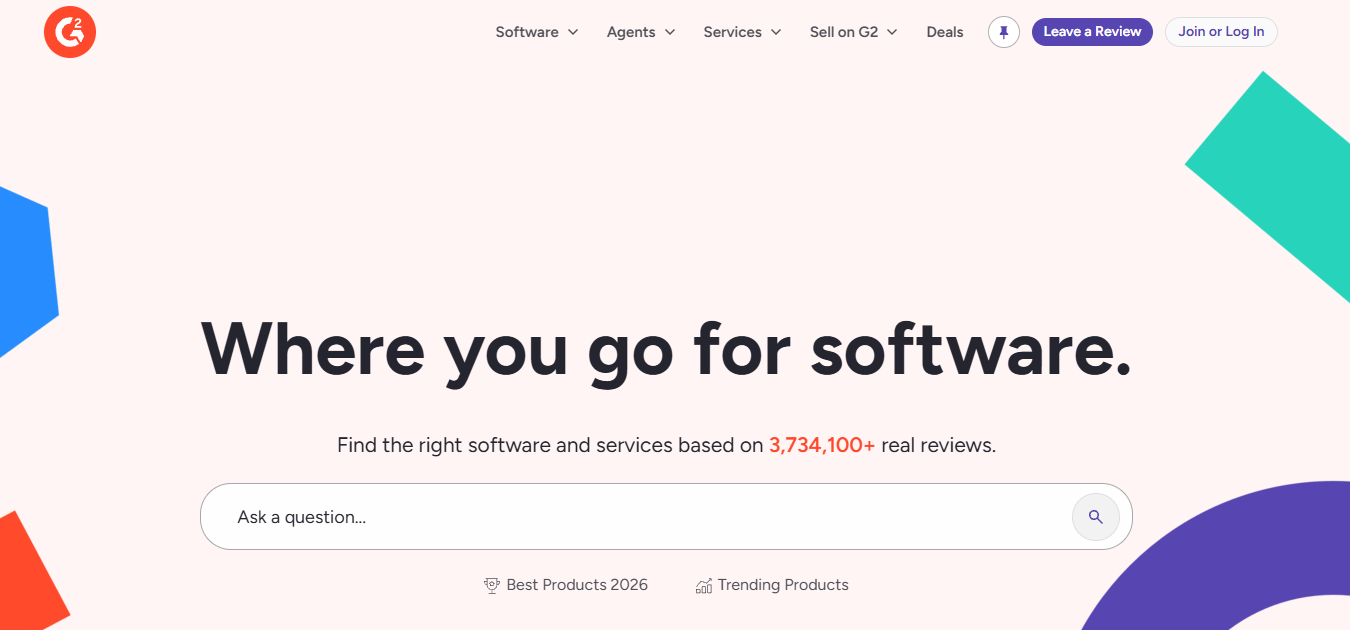
G2 is the largest software and services review marketplace for business buyers. The platform organizes software into categories with comparison grids, peer ratings, quarterly reports, and badges that vendors can use in sales and marketing. For founders building third-party credibility, G2 is typically the first platform worth owning, because buyers already use it to compare vendors before a discovery call.
Best for: B2B software companies that need recognized category credibility and buyer validation alongside pipeline-generating intent data.
Key features
- Verified user reviews with profile-linked submission requirements
- Category comparison grids across CRM, ERP, HR, marketing, and hundreds more
- Buyer intent data showing which companies are browsing your category
- Vendor profile pages with customizable CTAs and review collection
- Badges and quarterly reports for sales and marketing use
Why choose G2: G2 matters most when your buyers are in a competitive software category and research options before taking a call. The buyer intent signals are the differentiator over other software directories, giving your GTM team signals on in-market accounts before they fill out a form.
G2 pricing: A free profile includes basic review collection, badge licensing, and standard seller access. Paid Starter plans begin at $2,999 for the first year (billed annually), with Professional at $18,000 and Enterprise at $34,000 per year. Paid tiers add review campaigns, buyer intent data, market intelligence, and visitor identification.
G2 rating: 4.6/5 on G2's own seller profile listing.
2. Capterra
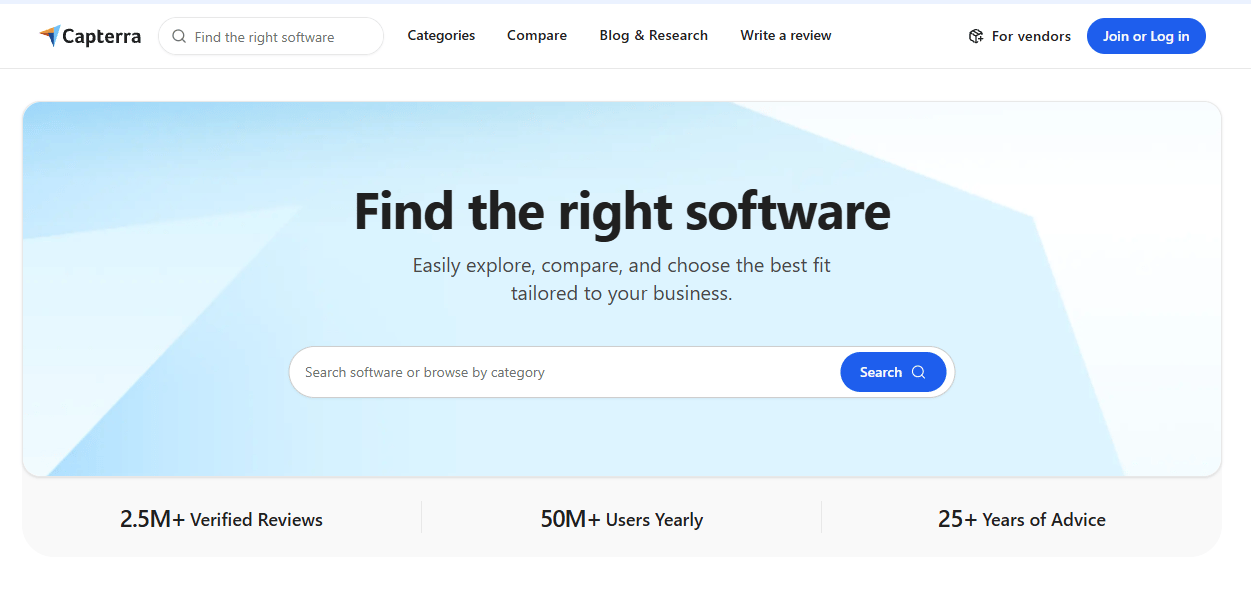
Capterra is a software discovery and comparison platform operating under Gartner Digital Markets. It helps buyers research, compare, and shortlist software using verified user reviews, side-by-side comparisons, filtering by feature and price, and rankings by category. For software vendors, Capterra provides visibility in buyer research flows across a broad range of business categories.
Best for: SaaS vendors that want discovery-stage visibility with buyers comparing software options across practical categories with feature and pricing context.
Key features
- Software category directories with hundreds of segments
- Verified user reviews with structured rating criteria
- Side-by-side product comparisons and shortlist building
- Filtering by price, features, deployment, and industry
- Gartner Digital Markets reach shared with GetApp and Software Advice
Why choose Capterra: Capterra works when your buyers are in active comparison mode and want practical feature, pricing, and review context in one place. It sits alongside GetApp and Software Advice in the Gartner Digital Markets portfolio, meaning a single vendor relationship can cover three buyer-facing surfaces.
Capterra pricing: Capterra is free for software buyers. Vendor listing programs and lead generation options exist. Contact Gartner Digital Markets for paid vendor program details.
G2 rating: 3.9/5 on G2.
3. Clutch
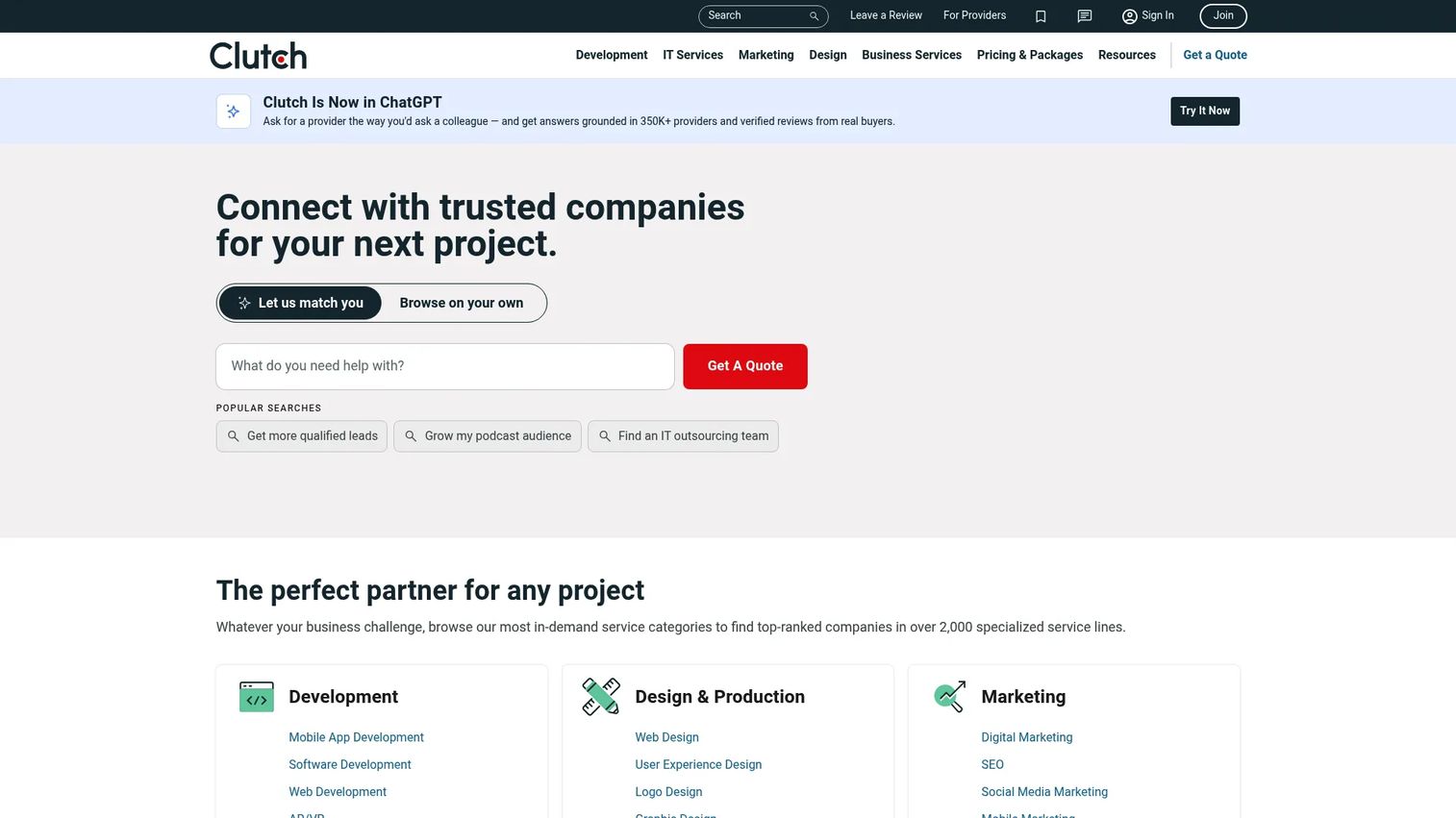
Clutch is a B2B ratings and reviews marketplace focused on service providers, agencies, development firms, and consultants. It organizes providers into 2,000+ service categories, allowing buyers to filter by budget, location, industry focus, and client review scores. Verified client reviews are the platform's core signal, and they require direct interviews with the referenced client rather than a simple submission form.
Best for: Agencies, consultants, development firms, and service-heavy B2B providers competing on delivery quality rather than product features.
Key features
- Verified client reviews sourced through direct client interviews
- Provider listings across 2,000+ service categories
- Filter and compare providers by budget, location, and specialty
- AI-powered provider matching and project brief intake
- Free company profile with review collection and basic analytics
Why choose Clutch: Clutch fits buyers who are evaluating services firms and need to validate delivery quality before committing budget. For founders whose implementation services or consulting partnerships influence revenue, Clutch is where the proof of delivery lives.
Clutch pricing: Basic profiles are free. A Verified plan runs $499 per year and adds enhanced visibility and profile features. Advertiser placement pricing requires a sales conversation.
G2 rating: 3.2/5 on G2.
4. Trustpilot
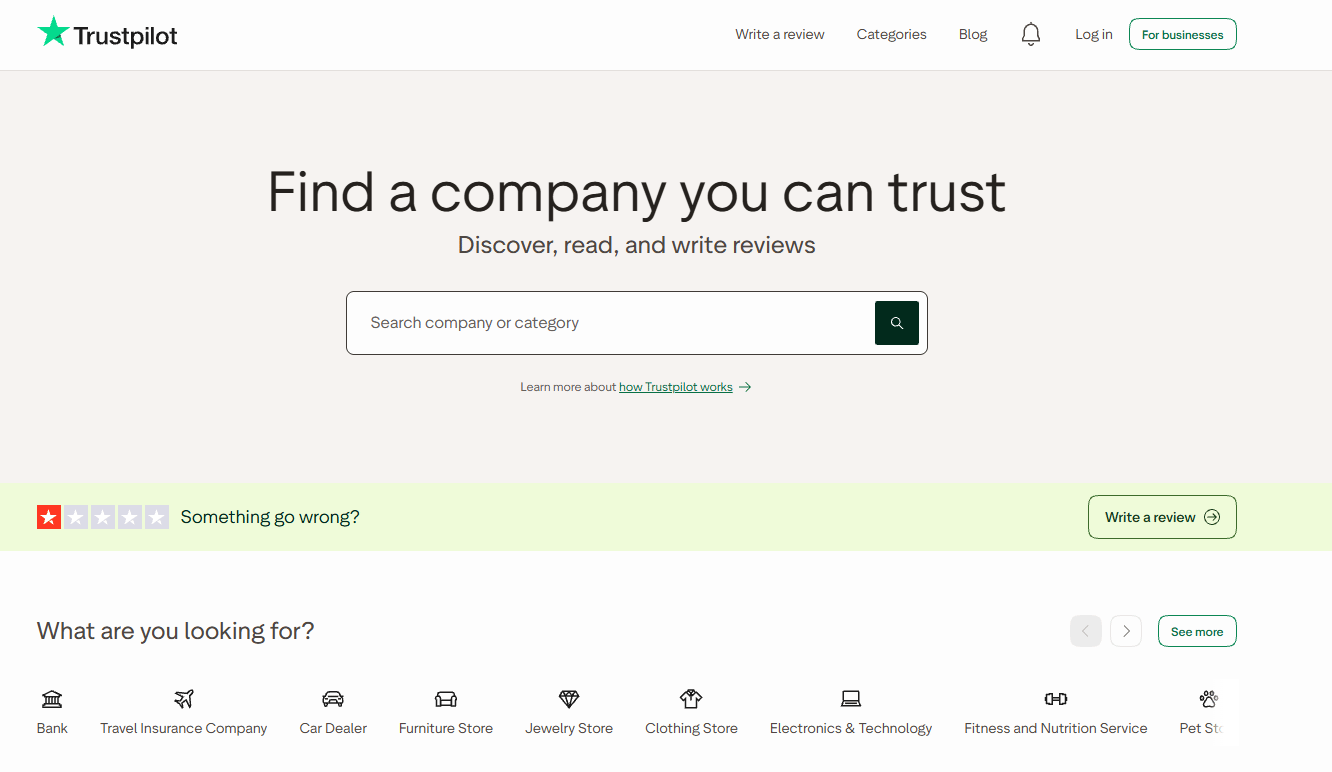
Trustpilot is an independent review platform that helps companies collect, manage, and display customer reviews across public surfaces. It emphasizes automated review collection, fraud detection, and trust signals that appear in branded search, marketing materials, and AI-generated search results. For founders running B2B businesses with a meaningful customer base, Trustpilot functions as a review collection engine rather than a category comparison site.
Best for: Companies that need a systematic review collection program, reputation monitoring, and trust signals that appear across buyer touchpoints beyond a single directory.
Key features
- Automated review invitation workflows with multiple delivery channels
- TrustScore and star ratings displayed on-site and in search
- Review response tools and fraud detection and flagging
- Trustpilot widgets and marketing assets for embedding ratings
- Sentiment analytics and product review page support
Why choose Trustpilot: Trustpilot is strongest when you want to build review volume at scale and display that social proof across your website, email, and sales assets. It is less useful as a category discovery platform and more useful as a reputation layer that follows buyers across touchpoints.
Trustpilot pricing: A free plan is available. Paid Starter plans begin at $99 per month per domain, billed annually. Plus runs from $319 per month, Premium from $799 per month, and Enterprise pricing requires a sales conversation.
G2 rating: 3.3/5 on G2.
5. Gartner Peer Insights
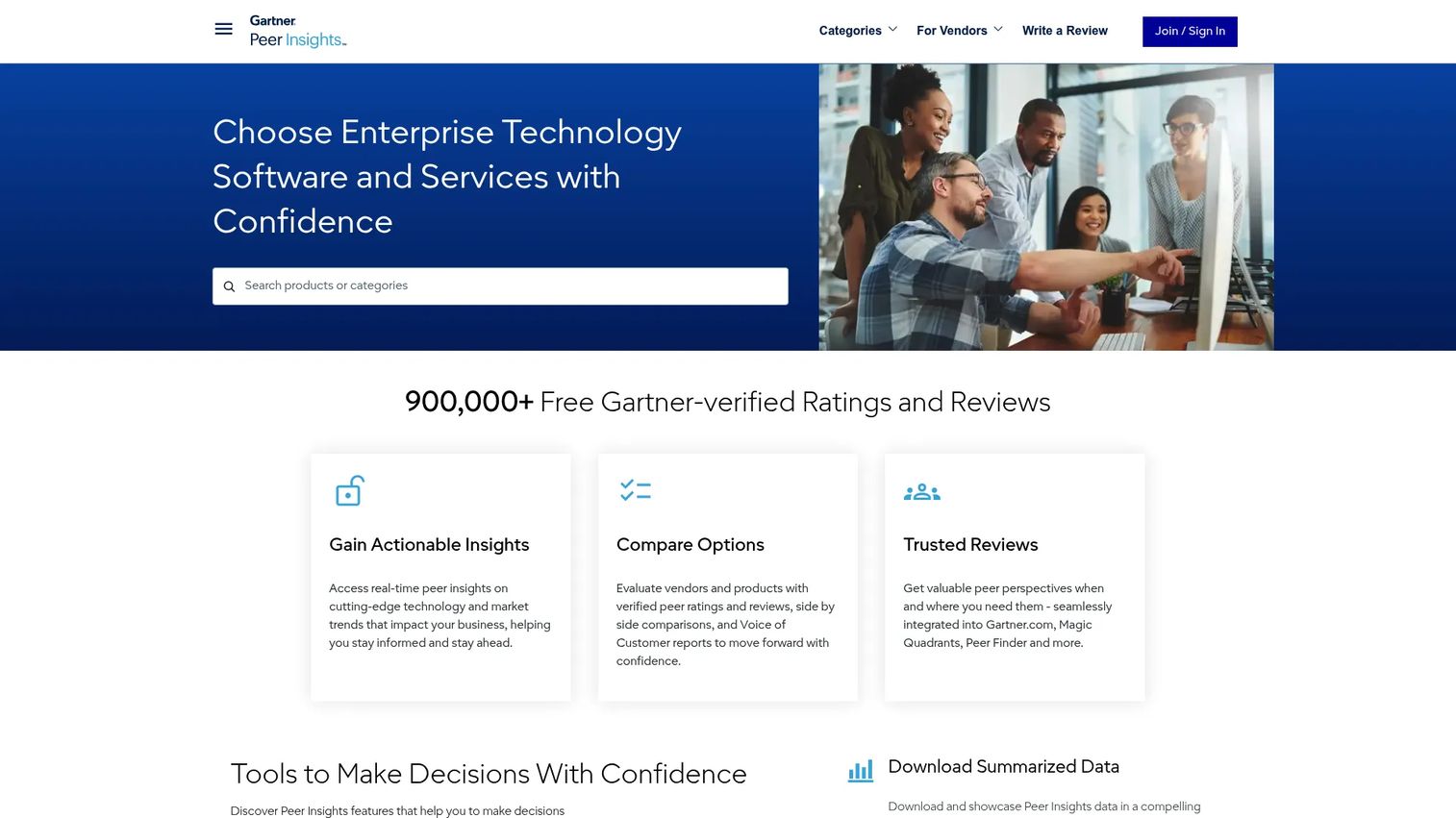
Gartner Peer Insights is a Gartner platform providing verified ratings and reviews of enterprise technology software and services. Reviews go through a structured verification process that ties feedback to named reviewer profiles with confirmed employment and purchasing involvement. The platform integrates with Gartner Magic Quadrant research, making it the reference point for enterprise buyers who want analyst-adjacent third-party validation.
Best for: Enterprise software vendors moving upmarket where security reviews, procurement diligence, and executive buying committees require rigorous peer validation rather than anonymous star ratings.
Key features
- Verified enterprise technology reviews with reviewer identity confirmation
- Product comparison pages across major technology categories
- Integration with Gartner research and Magic Quadrant positioning
- Downloadable summarized review data for vendor use
- Vendor profile tools with response capabilities
Why choose Gartner Peer Insights: This platform matters specifically when enterprise buyers want review credibility tied to documented purchasing experience. For founders moving from mid-market to enterprise, a strong Gartner Peer Insights profile can support security questionnaires, procurement submissions, and executive briefings.
Gartner Peer Insights pricing: The platform is described as complimentary for vendors, with no paid pricing tiers listed on official pages. Vendor participation details are available through Gartner's vendor resources portal.
G2 rating: 4.6/5 on G2.
6. SourceForge
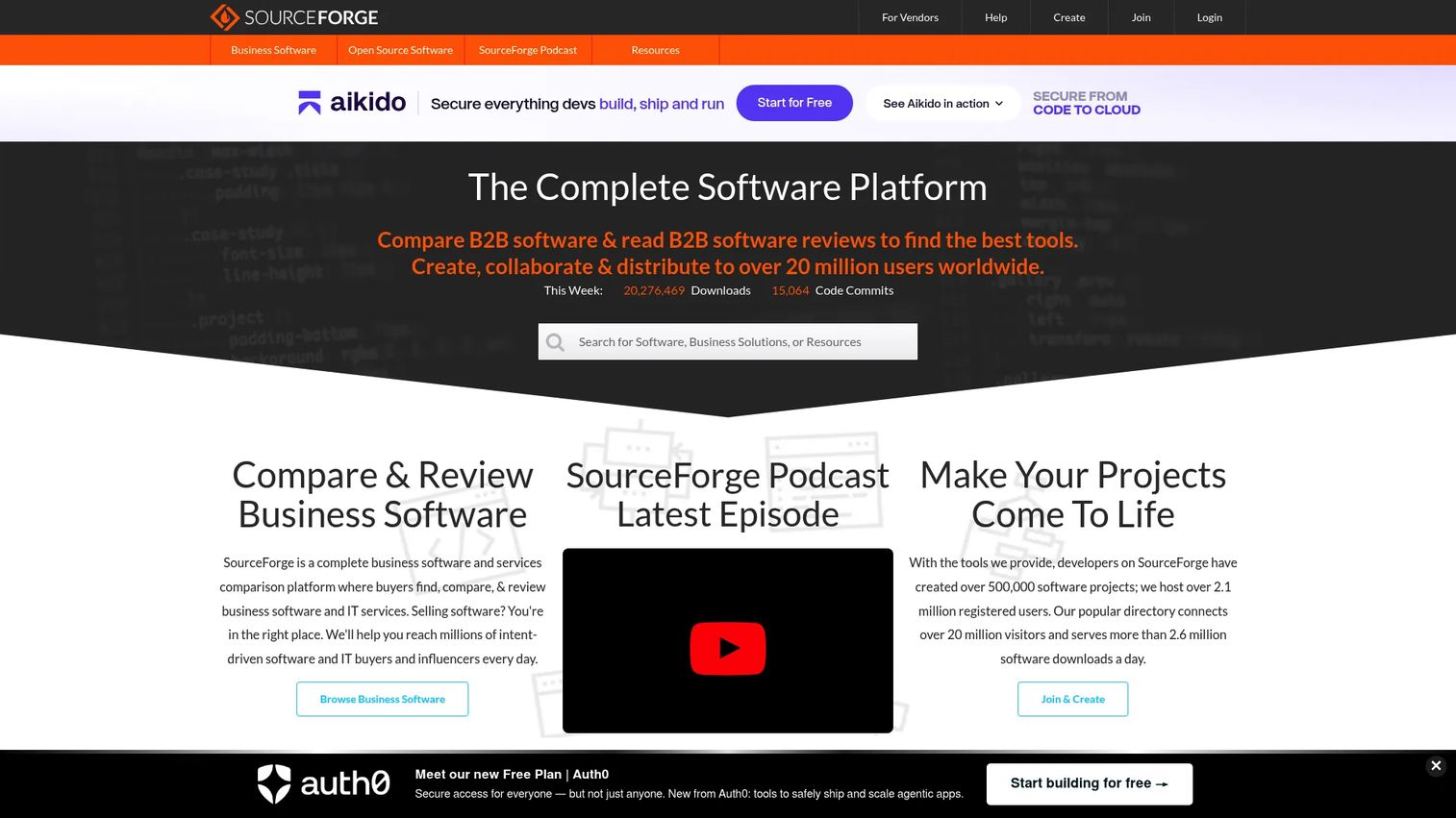
SourceForge is a software discovery, review, comparison, and open-source development platform with a long-standing technical audience. It hosts software listings, user reviews, and comparison tools, while also providing open-source code hosting, download distribution, and developer collaboration features. For software vendors targeting IT decision-makers, developers, and technical evaluators, SourceForge provides a discovery channel where technical buyers already research options.
Best for: Software vendors targeting technical buyers, open-source communities, and IT-heavy categories where developer credibility and peer reviews influence evaluation.
Key features
- Software directory with category browsing and comparison pages
- User reviews and ratings from a developer and IT-weighted audience
- Download hosting with global mirrors for open-source projects
- Lead generation and advertising programs for paid vendor participants
- Community features including forums, issue tracking, and project pages
Why choose SourceForge: SourceForge works as a complement to broader SaaS review platforms when your product serves a technical audience that researches software in developer-oriented communities. Its buyer base skews toward IT, DevOps, and open-source ecosystems rather than business function buyers.
SourceForge pricing: Basic open-source project hosting and listing features are free. Paid vendor programs (PLUS, PREMIUM, AMPLIFY, PRECISION ABM, and ENTERPRISE) are available, but pricing is not displayed on the public pricing page. Contact SourceForge for a vendor program quote.
G2 rating: 4.2/5 on G2.
7. GetApp
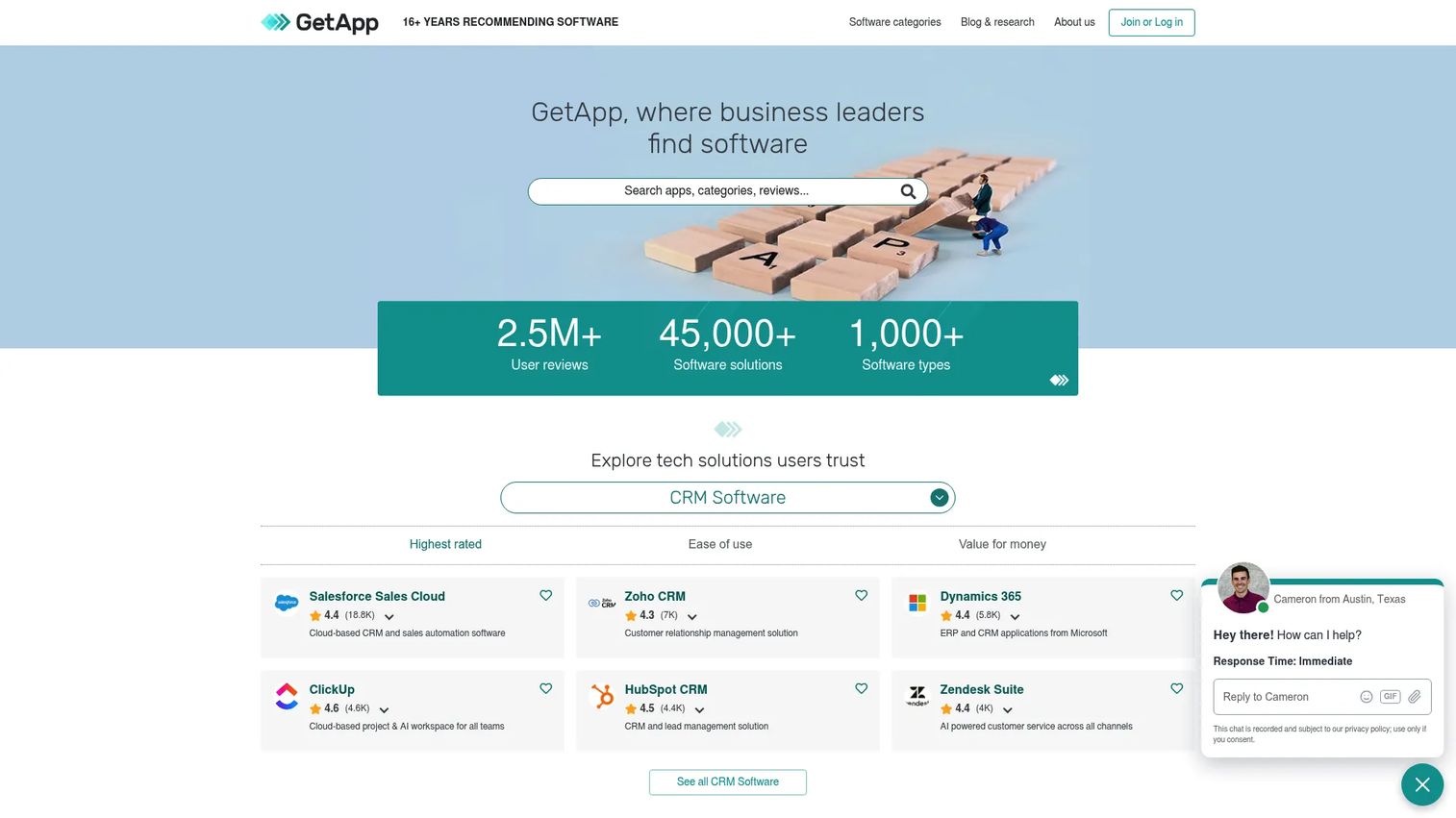
GetApp is a free software discovery and comparison platform within the Gartner Digital Markets portfolio. It helps buyers evaluate business apps through data-driven recommendations, user reviews, and side-by-side feature comparisons. Buyers use it to narrow a category shortlist before deeper evaluation, making it a top-of-funnel awareness surface for software vendors.
Best for: SaaS companies targeting SMB and mid-market buyers who are in active comparison mode and need quick category context across competing products.
Key features
- Software discovery with category-based browsing
- Data-driven product recommendations alongside user reviews
- Verified user ratings and feature comparison tools
- Product profiles with integration details and pricing information
- Shared Gartner Digital Markets reach with Capterra and Software Advice
Why choose GetApp: GetApp is useful when your product sits in a crowded app category where buyers need comparison shortcuts. It works well as part of a Gartner Digital Markets presence alongside Capterra and Software Advice, since all three surfaces share buyer traffic from the same portfolio.
GetApp pricing: GetApp is free for buyers. Vendor listing and lead generation programs exist, but pricing requires a conversation with Gartner Digital Markets. No public paid pricing is displayed on GetApp's site.
G2 rating: 4.0/5 on G2.
8. Software Advice
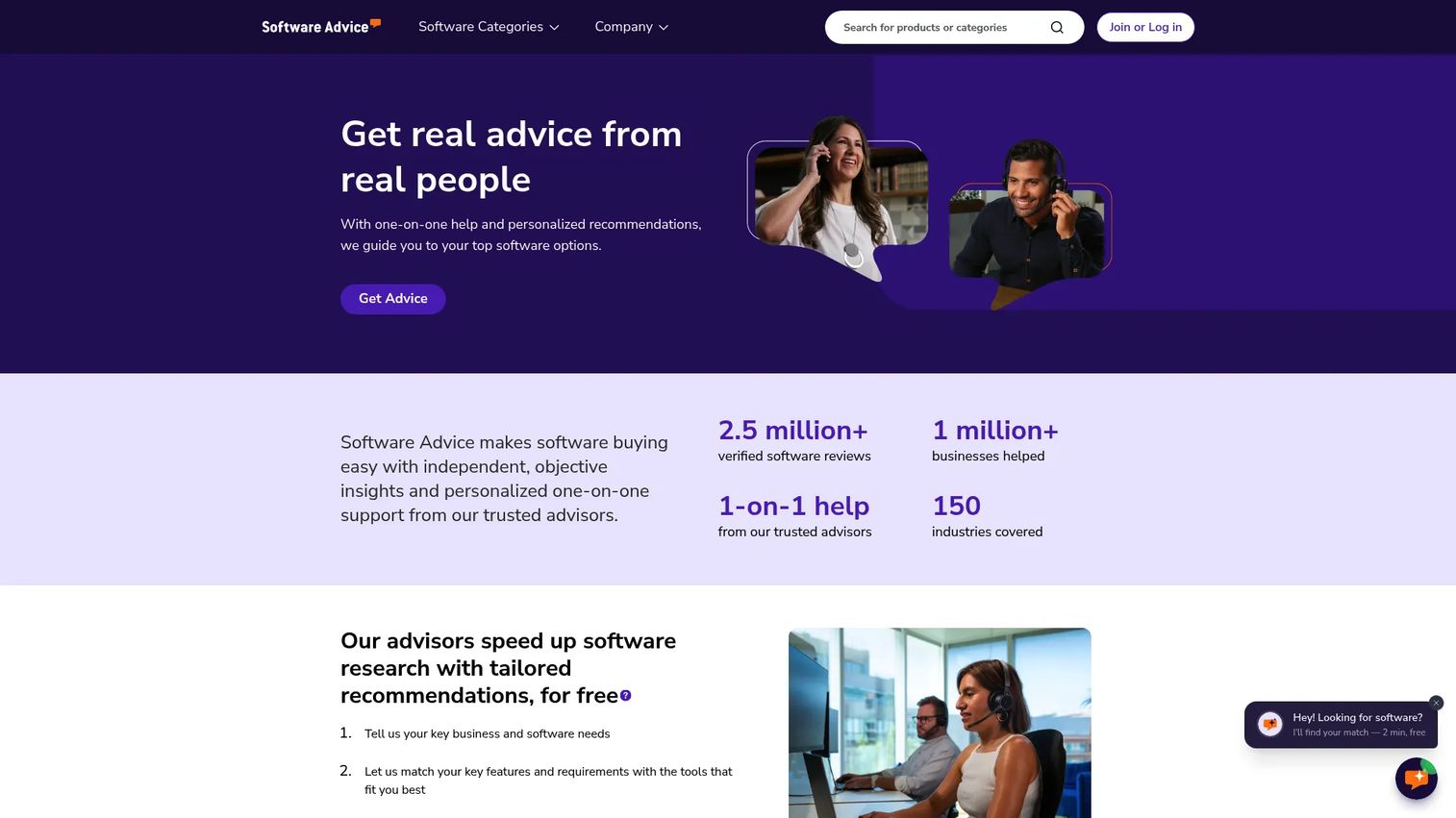
Software Advice helps business buyers research, compare, and shortlist software through user reviews, buying guides, and personalized one-on-one advisor consultations. It is the most advisory-oriented property in the Gartner Digital Markets portfolio, connecting buyers who want guided help narrowing their options with human experts who specialize in specific software categories.
Best for: Software vendors in categories where decision complexity slows the buying process and buyers benefit from guided shortlisting rather than self-serve browsing.
Key features
- Software reviews and ratings with structured evaluation criteria
- Category buying guides and comparison resources
- Personalized one-on-one software recommendations from human advisors
- Product profiles with feature, pricing, and deployment detail
- Integration with Capterra and GetApp buyer traffic
Why choose Software Advice: Software Advice fits when your buyers want help narrowing options rather than browsing a large grid independently. For categories with complex feature requirements or compliance considerations, the advisor-assisted model can accelerate evaluation for buyers who would otherwise stall.
Software Advice pricing: Advisory services are free for buyers. Vendor programs and lead generation pricing require a Gartner Digital Markets conversation. No standalone first-party paid pricing is displayed publicly.
G2 rating: 4.0/5 on G2.
9. GoodFirms
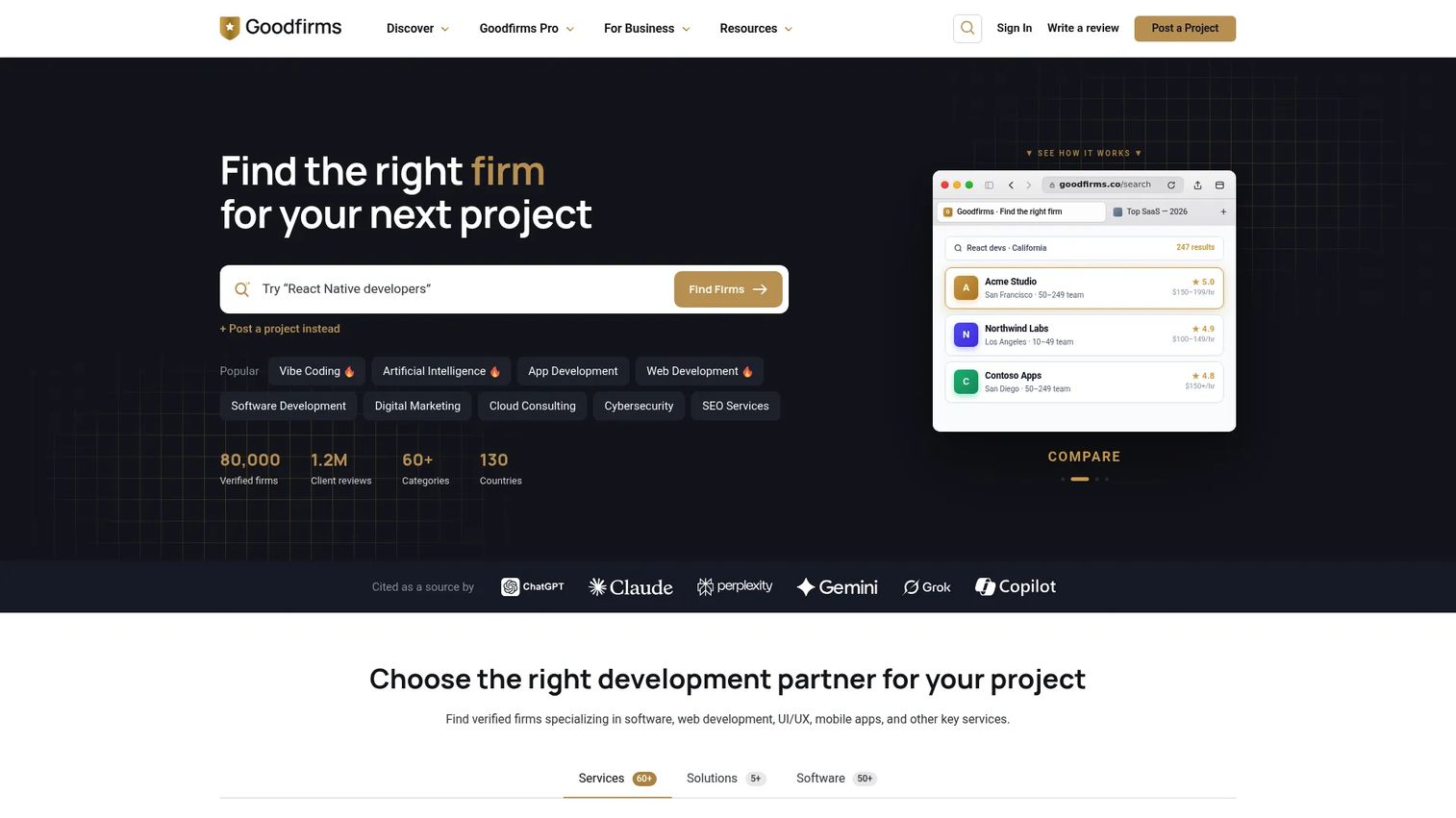
GoodFirms is a B2B marketplace and research platform covering software companies, agencies, and service providers. It publishes verified client reviews, Leader Matrix rankings by category, and project-matching tools that connect buyers with qualified providers. Companies that offer both a software product and professional services, common at the Series B stage, find GoodFirms useful because it spans both directory types in one platform.
Best for: Businesses seeking verified agencies, and agencies or software vendors seeking category rankings plus review visibility across both software and services segments.
Key features
- Verified client reviews with structured evaluation across service quality, timeliness, and cost
- Leader Matrix rankings published by category and updated regularly
- Software and service category directories with filtering and comparison
- Buyer project matching and RFP submission access
- Free company profile with verification, rankings visibility, and review collection
Why choose GoodFirms: GoodFirms is especially relevant for development, IT, design, and outsourcing categories, and for companies that straddle software and services. The Leader Matrix rankings carry weight with buyers evaluating multiple providers and needing a third-party signal beyond raw review counts.
GoodFirms pricing: A free listing is available and includes verification, a public profile, reviews, rankings visibility, and limited RFP access. PRO plans run $49 per month, billed annually at $588 per year. Sponsorship pricing is available on request.
G2 rating: 4.3/5 on G2.
10. DesignRush
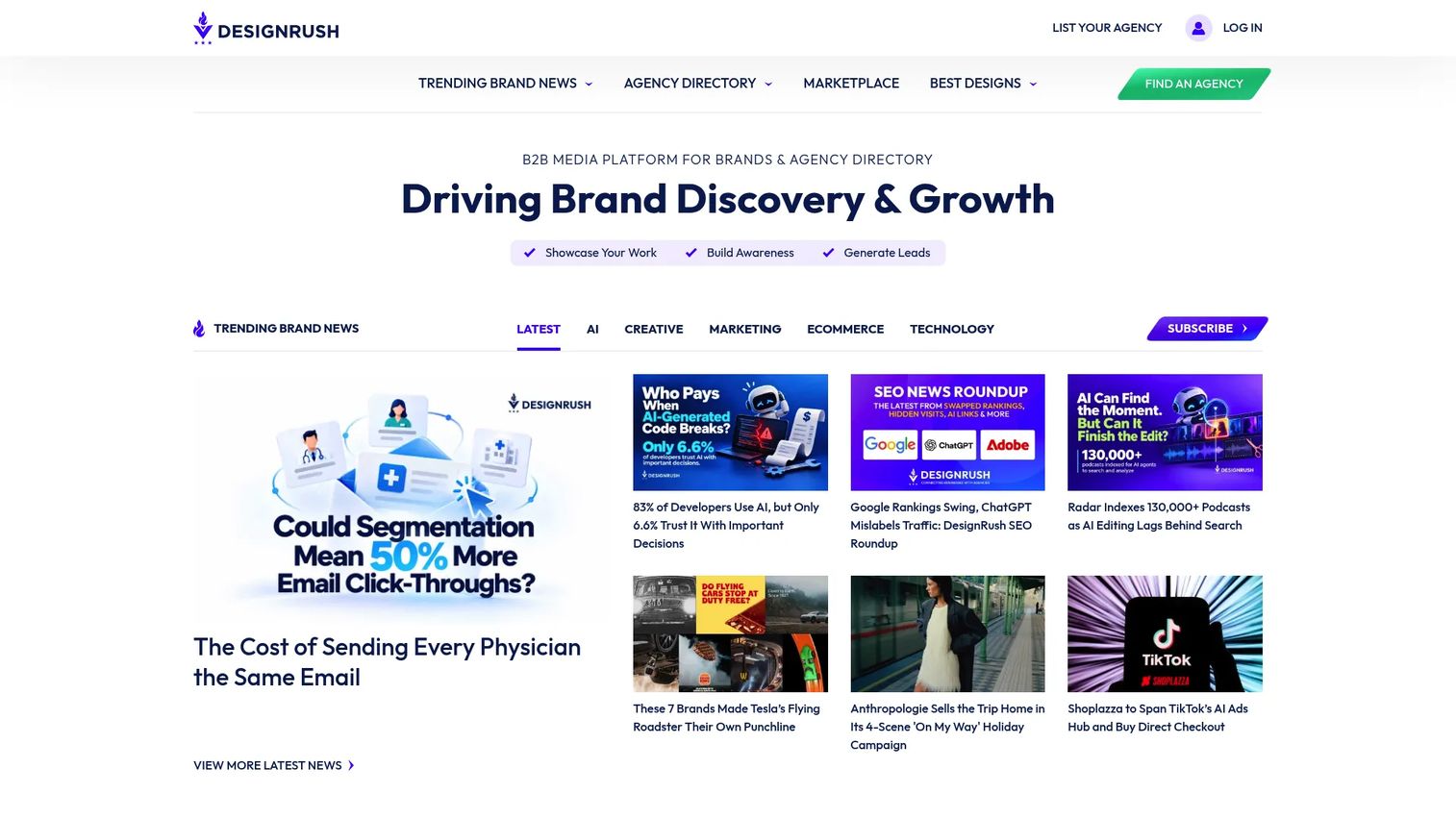
DesignRush is a B2B agency directory, marketplace, and media hub connecting brands with agencies across design, development, marketing, and technology services. Beyond a standard directory listing, it operates a marketplace where buyers submit project briefs and receive introductions to vetted agencies. It also runs a best-design awards program and publishes trend content, making it a visibility play as much as a pure review site.
Best for: Agencies and service firms competing for buyer attention in creative and technology categories where portfolio proof, visual work, and awards carry weight alongside reviews.
Key features
- Agency directory with filtering by category, location, budget, team size, and hourly rates
- Marketplace matching buyers with vetted agency candidates via project briefs
- Agency profiles with portfolios, team bios, service details, and client reviews
- Best-design awards and showcase platform for portfolio visibility
- Marketing trends, industry news, and media coverage for featured agencies
Why choose DesignRush: DesignRush is strongest when buyers care about seeing portfolio work and creative execution rather than just reading text reviews. The marketplace matching model adds a lead-generation layer beyond passive directory listing, which is useful for agencies that want qualified introductions rather than waiting for inbound profile views.
DesignRush pricing: Free agency listings are available. Paid sponsorship plans start at $500 per month, billed quarterly. Standard sponsorship runs from $2,000 per month and Premium from $5,000 per month. Each tier adds increasing ranking visibility, marketplace access, and promotional features.
11. Google Reviews
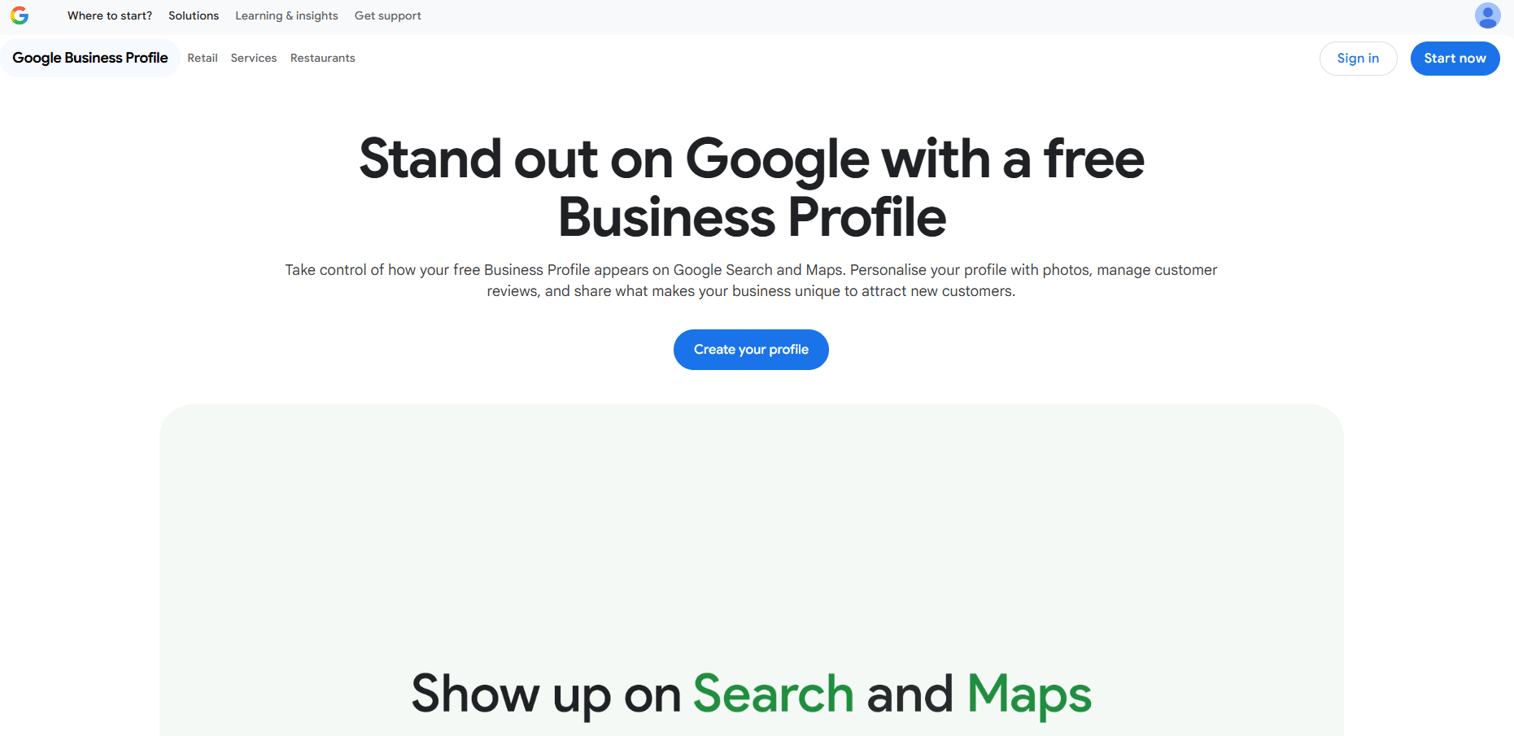
Google Business Profile lets eligible businesses manage their presence on Google Search and Maps, including business information, photos, posts, and customer reviews. Google Reviews appear directly in branded search results and local map packs, meaning they are often the first social proof signal a prospect encounters, before they ever reach your website.
Best for: Regional service providers, consultants, agencies, and B2B companies where local search visibility and branded search trust influence early buyer confidence.
Key features
- Public star ratings and review responses tied to Google Search and Maps
- Google Business Profile with business information, hours, and category
- Local map pack presence for geography-based searches
- Photo, video, post, and event publishing from the profile
- Review collection and owner response tools
Why choose Google Reviews: Google Reviews appear before a prospect reaches your site. For founders running service-heavy or location-sensitive businesses, this is foundational reputation infrastructure rather than an optional directory. Even for pure SaaS companies, branded search review snippets appear in AI-generated search results and directly influence first impressions.
Google Reviews pricing: Google Business Profile is free to create and manage. Paid search visibility runs separately through Google Ads.
G2 rating: 4.6/5 on G2 (listed as Google My Business).
12. HubSpot Solutions Directory
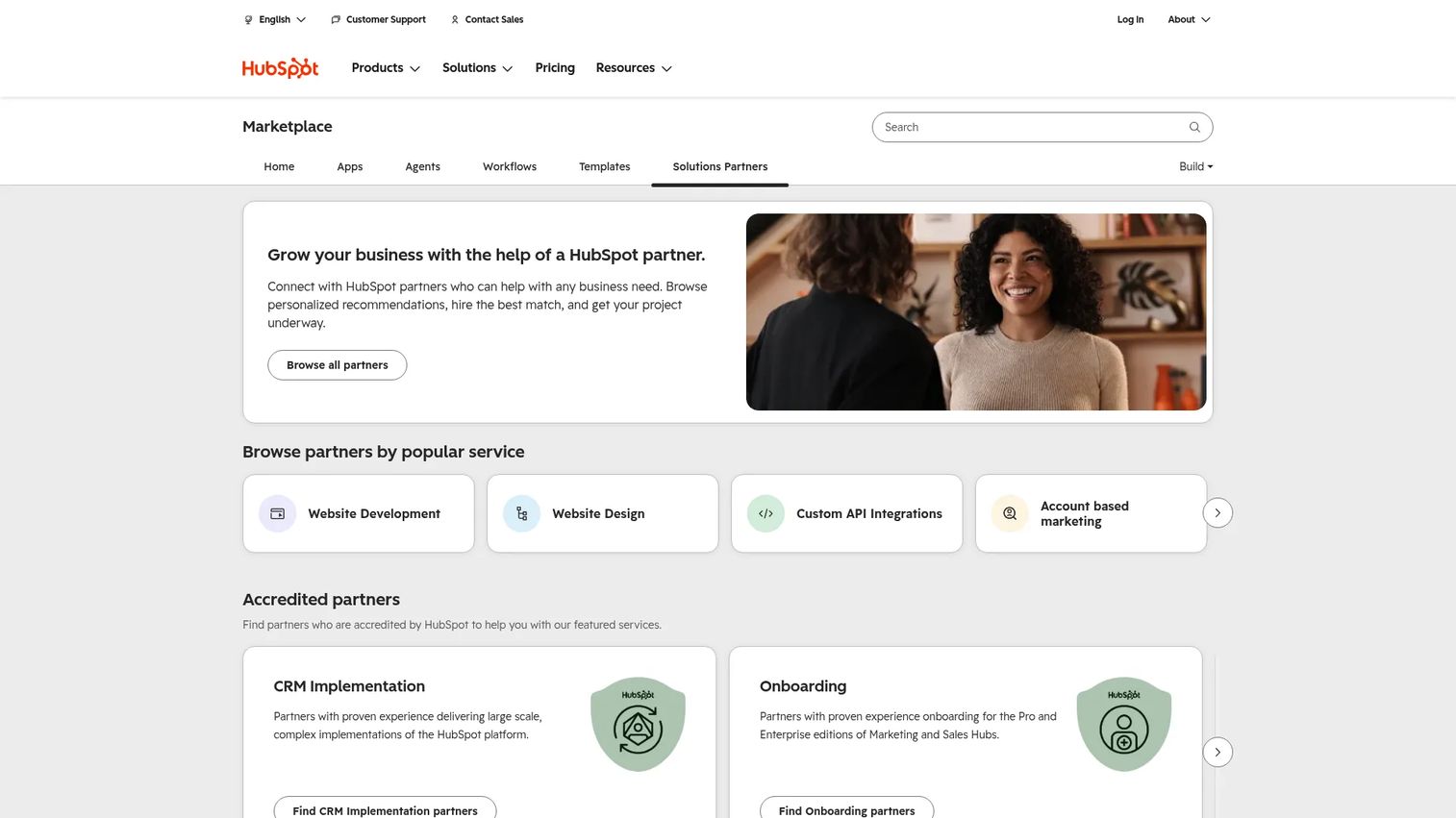
HubSpot Solutions Directory is a marketplace for finding and hiring HubSpot solutions partners across website development, CRM implementation, integrations, onboarding, training, sales enablement, and marketing services. Buyers who already run HubSpot or plan to adopt it use this directory to find partners with verified certifications and client reviews inside the HubSpot ecosystem.
Best for: HubSpot partners, implementation consultants, inbound agencies, and RevOps service providers that want visibility with buyers specifically evaluating HubSpot-adjacent services.
Key features
- Partner profiles with certification signals, service categories, and client reviews
- Filtering by service type including CRM implementation, integrations, and marketing
- Partner tier visibility reflecting HubSpot certification levels
- Buyer-side discovery flow built into the HubSpot customer journey
- Contact and proposal workflow for connecting buyers with partners
Why choose HubSpot Solutions Directory: This platform matters specifically when buyers already run HubSpot or are evaluating it as their CRM or marketing automation platform. Ecosystem credibility carries more weight here than generic agency reviews, because buyers are validating partner fit within a platform they have already committed to. If your business listing management software or RevOps services involve HubSpot implementation, this directory is worth owning.
HubSpot Solutions Directory pricing: Directory participation requires active HubSpot partner program membership. Pricing is not displayed on the public directory page; contact HubSpot's partner team for current program and tier requirements.
13. Salesforce AppExchange Consultants
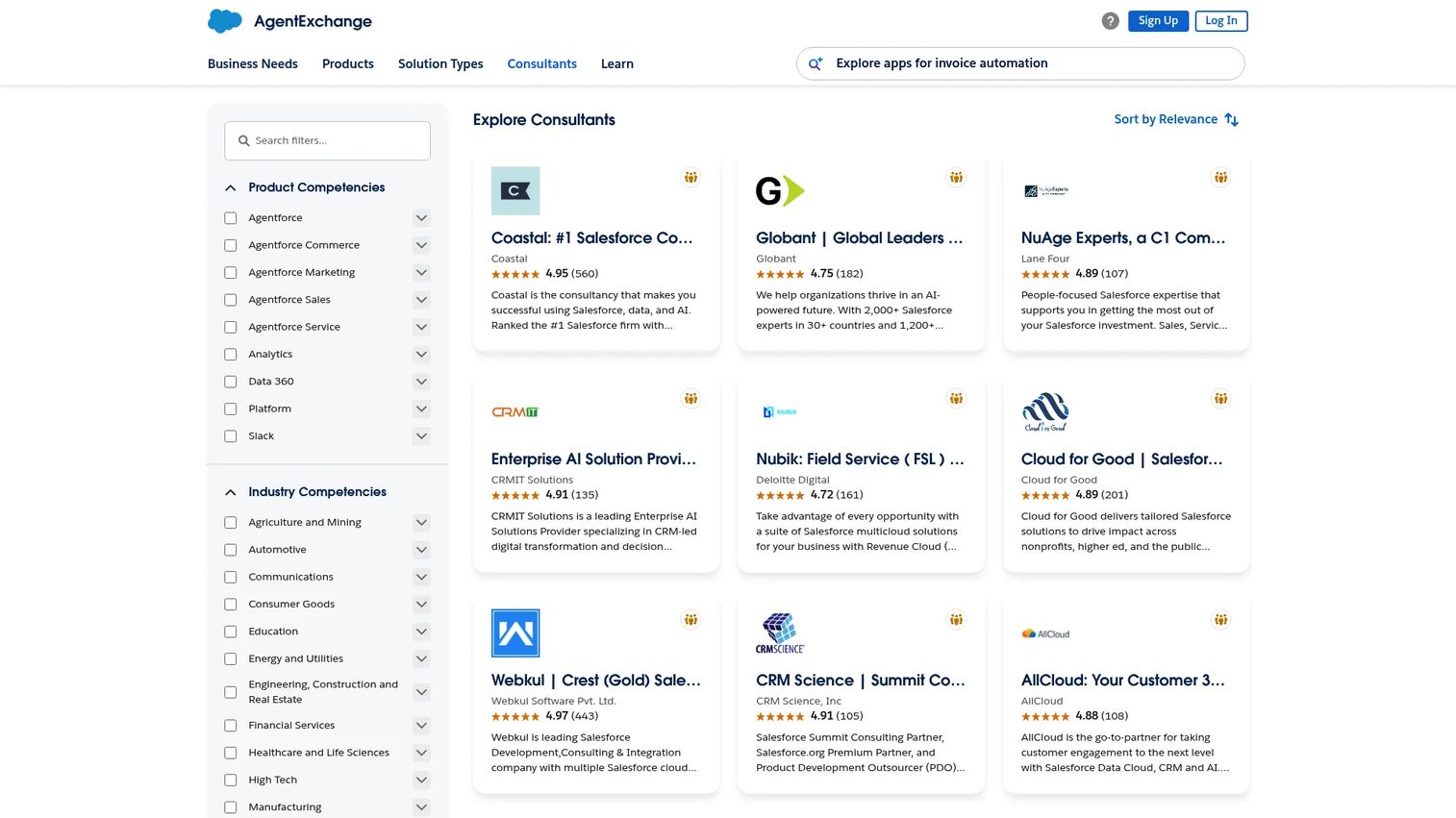
Salesforce AppExchange Consultants is a marketplace for finding and evaluating Salesforce consulting partners and implementation service providers. Buyers use it to identify partners with specific Salesforce product expertise, certifications, industry focus, and verified project reviews. For Salesforce-adjacent SaaS companies or implementation partners, this directory is the primary buyer discovery surface for that ecosystem.
Best for: Salesforce consultants, implementation partners, SI firms, and buyers selecting Salesforce services partners for CRM implementation, migration, or managed services.
Key features
- Searchable consultant listings with Salesforce product and industry filtering
- Consultant profiles with certifications, expertise descriptions, and project history
- Verified project reviews and customer ratings linked to Salesforce accounts
- Filtering by practice size, location, and Salesforce-specific credentials
- AppExchange ecosystem discovery integrated with Salesforce's own platform
Why choose Salesforce AppExchange Consultants: This directory matters when a buyer needs Salesforce-specific implementation proof. Broad B2B services directories rarely carry the same credibility for buyers whose problem lives inside the Salesforce ecosystem. For agencies or technical partners whose work centers on Salesforce, this is the most relevant surface to own.
Salesforce AppExchange Consultants pricing: Listing requires active Salesforce partner program membership. Contact Salesforce's partner team for current requirements.
14. Glassdoor
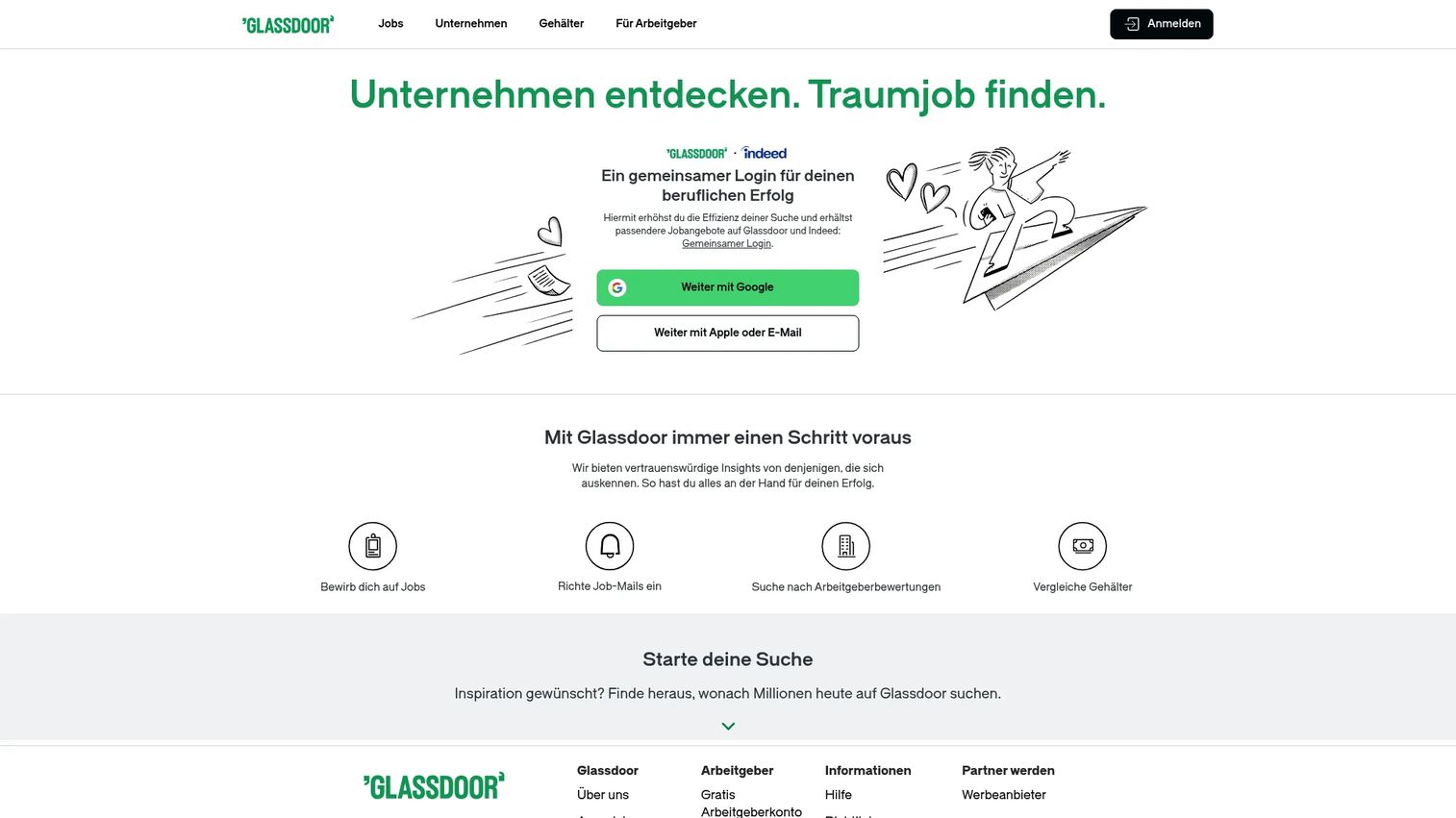
Glassdoor is a jobs and recruiting platform that provides company reviews, salary information, interview insights, and employer branding tools. While it is not a customer review platform, it functions as an indirect trust signal for buyers evaluating services firms. Buyers considering a multi-month consulting engagement or an outsourced development team may check Glassdoor before trusting the relationship, using employee sentiment as a proxy for delivery culture and team stability.
Best for: Employers seeking employer-brand visibility, and services providers that want to signal team stability and culture quality to buyers doing comprehensive pre-purchase diligence.
Key features
- Employee reviews with structured ratings across company culture, leadership, compensation, and work-life balance
- Employer responses and profile management tools
- Salary and compensation data by role, company, and location
- Job listings integrated with company profile
- Employer analytics, benchmarking, and review trend insights
Why choose Glassdoor: Glassdoor matters when the services firm's people are the product. Buyers choosing an outsourced team or a consulting partner for a long engagement may weigh employee sentiment as a delivery risk signal. For founders managing employer brand as part of a talent acquisition strategy, Glassdoor also influences candidate quality.
Glassdoor pricing: A free employer profile is available with review tools, company updates, and basic analytics. Enhanced Employer Profile pricing is not displayed on Glassdoor's public pricing page; contact Glassdoor for paid branding program details.
G2 rating: 4.0/5 on G2.
15. Comparably
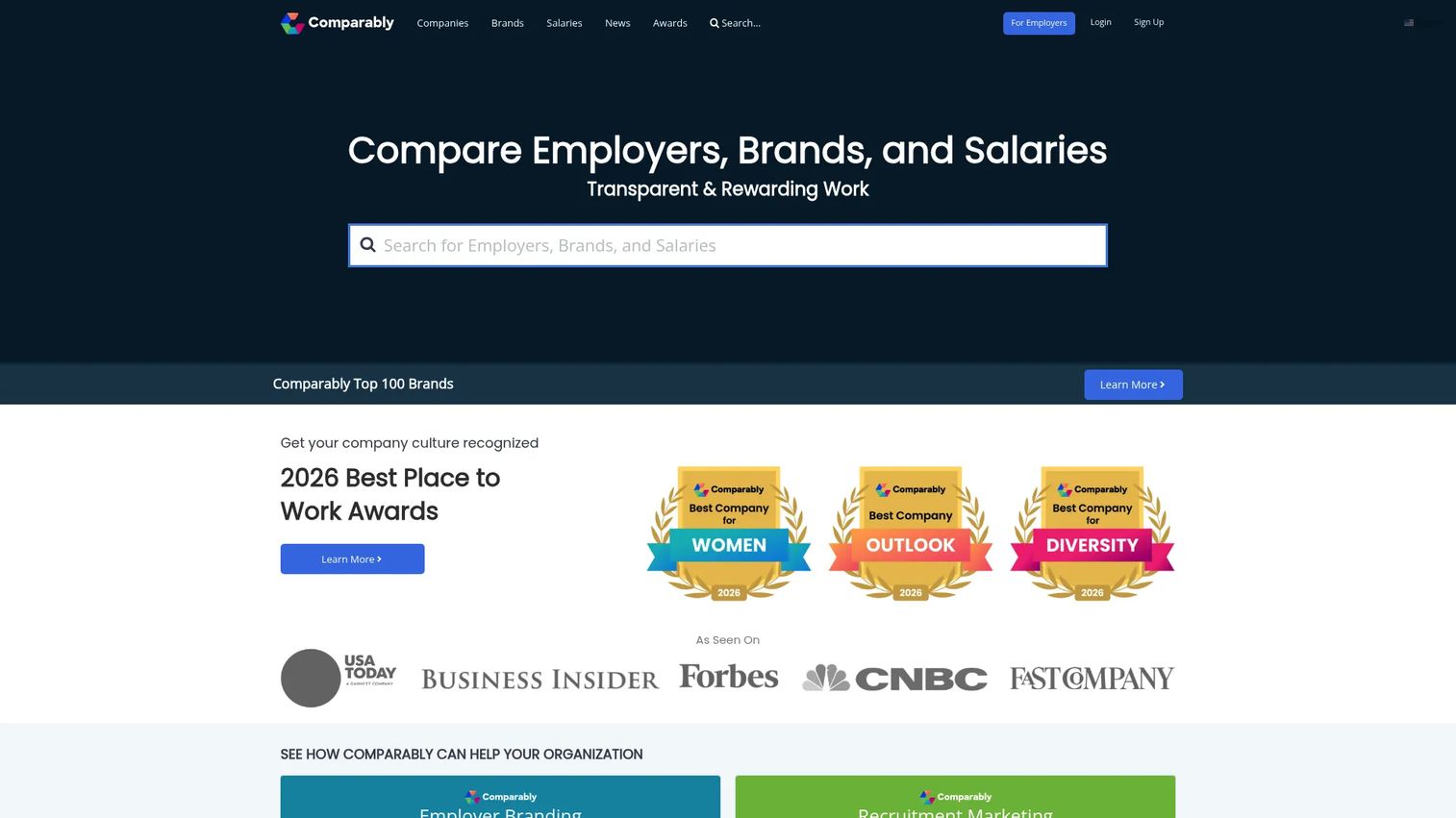
Comparably provides compensation and workplace culture insights for employees, alongside employer branding tools for companies. It publishes culture ratings, leadership scores, compensation benchmarks, and workplace awards based on employee feedback. Like Glassdoor, it is an indirect trust signal for buyers evaluating services providers, particularly when team culture, leadership quality, and compensation competitiveness matter as proxies for delivery capability.
Best for: Services providers and employers that want culture proof alongside customer-facing review profiles, especially when buyers value evidence of stable, well-led teams.
Key features
- Culture ratings covering workplace environment, management, and career growth
- Leadership scores based on employee feedback
- Compensation benchmarks by role and market
- Employer branding tools and workplace awards programs
- Company profile pages with culture narrative and team data
Why choose Comparably: Comparably is best used as supporting proof rather than a primary buyer review platform. When combined with customer-facing reviews on Clutch or G2, a strong Comparably culture score can address procurement and buyer concerns about delivery team quality before they become objections in the sales process.
Comparably pricing: Paid employer branding and program pricing requires contacting Comparably directly.
G2 rating: 3.3/5 on G2.
16. TopBusinessSoftware.com
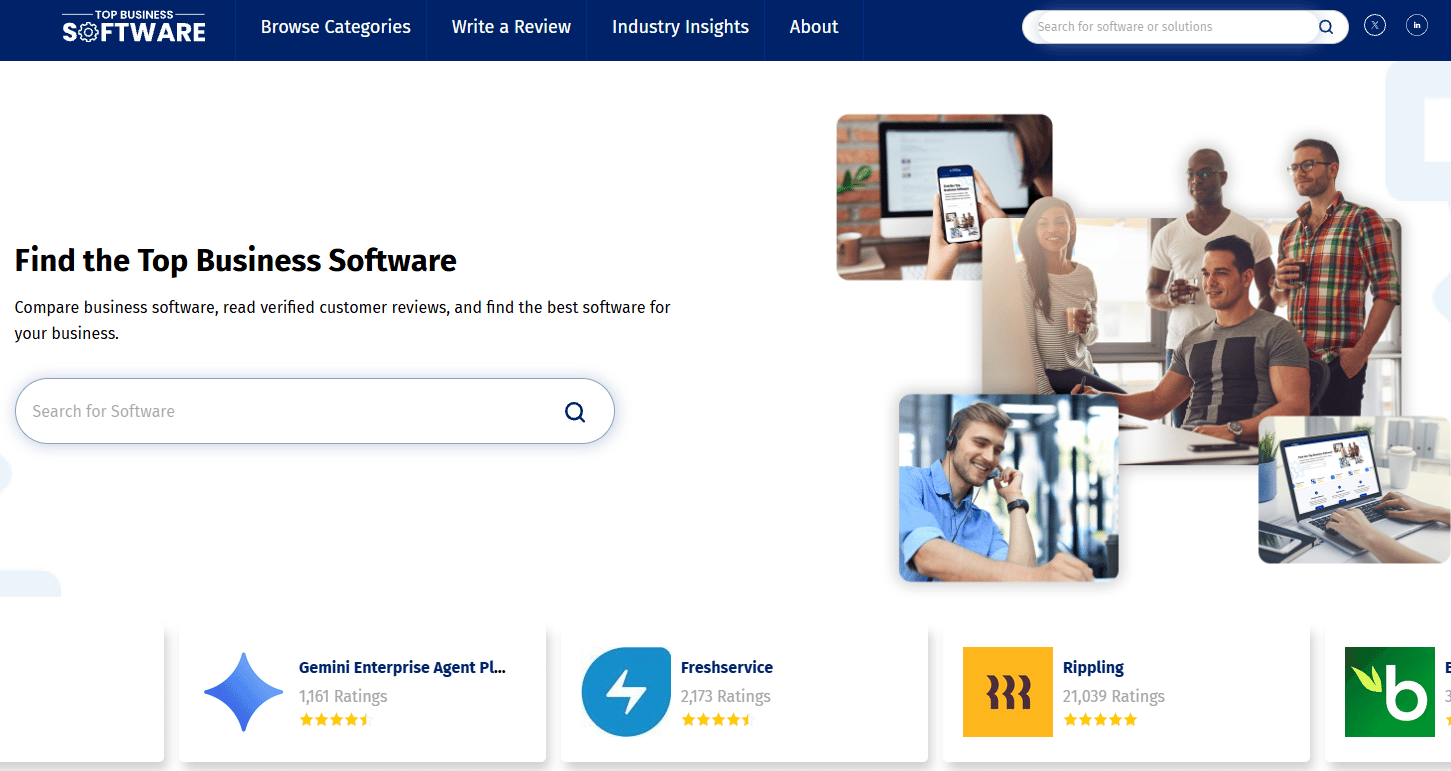
TopBusinessSoftware.com is a B2B software discovery, review, and comparison platform that helps buyers research products across software categories. It functions as a secondary directory for software vendors that want broader citation coverage beyond the highest-authority review platforms.
Best for: Software vendors seeking additional directory visibility and citation coverage to support organic discovery and comparison across a wider range of buyer research surfaces.
Key features
- Software directory with category browsing and filtering
- Software comparison tools for side-by-side evaluation
- User reviews and product ratings
- Vendor profile pages with product details
- Category pages supporting SEO-driven buyer discovery
Why choose TopBusinessSoftware.com: This platform works as a complement to higher-authority review sites, not a replacement. It can help software vendors appear in a broader range of buyer research paths and comparison searches without requiring the investment of primary platforms. Treat it as a supporting citation channel, similar to how secondary links support a broader SEO strategy around your account management software or other tool categories.
TopBusinessSoftware.com pricing: Listing and advertising options are available, but pricing requires direct contact with the platform. No figures are displayed on public pages.
17. Slashdot
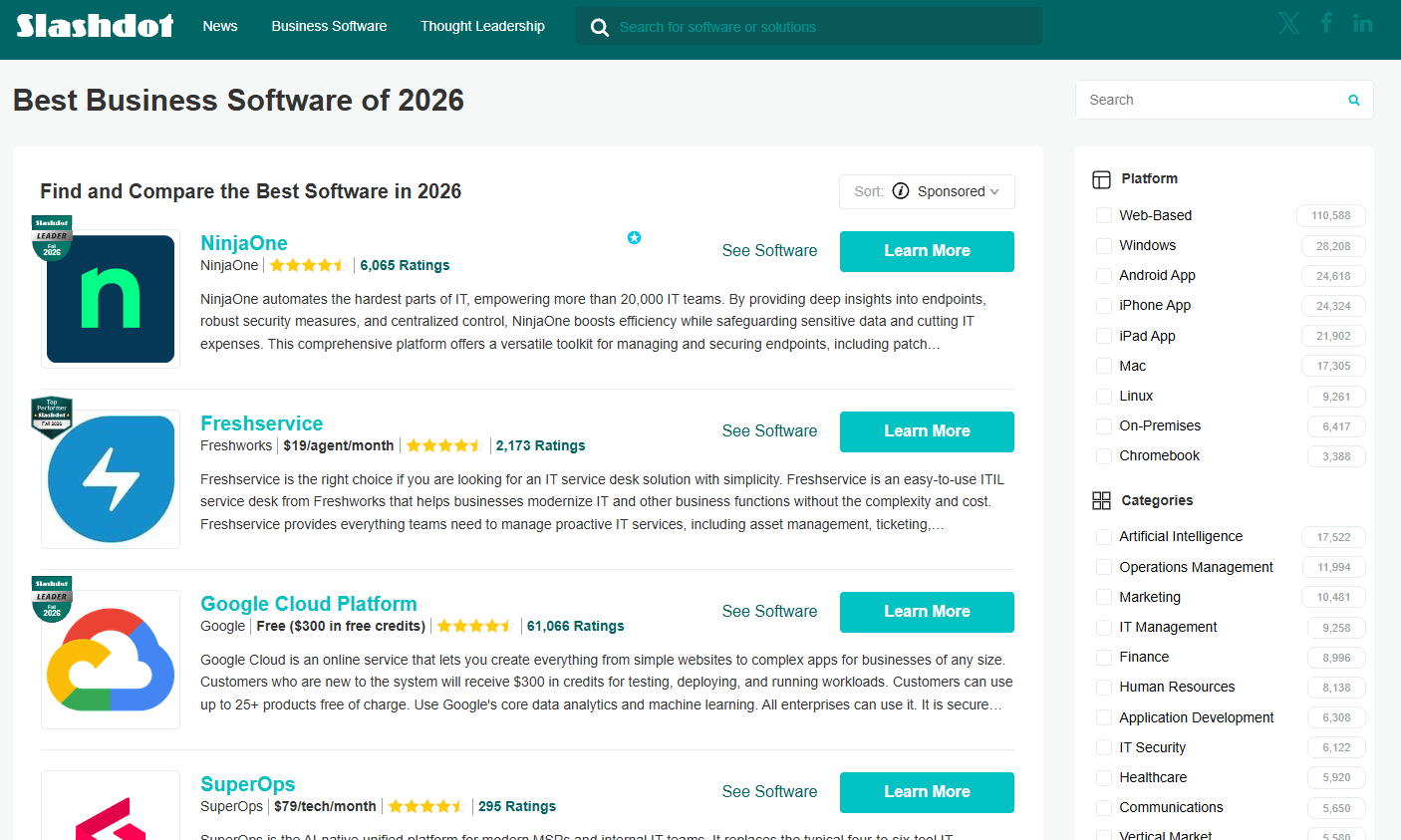
Slashdot operates a business software comparison and review platform within its broader technology media presence. It helps users research, compare, and select software solutions with a database of product listings, user reviews, and filtering by features, price, operating system, and region. The buyer audience skews heavily toward developers, IT professionals, and technical decision-makers.
Best for: Technical software products and vendors targeting developer, DevOps, or IT audiences who research tools in technology-oriented communities.
Key features
- Software comparison database with structured filtering by price, features, OS, and region
- Software reviews and user feedback from a technical community audience
- Vendor information and product profiles
- Integration with Slashdot's broader technology media readership
- Comparison pages for technical software categories
Why choose Slashdot: Slashdot fits software vendors whose core buyers live in technical communities. Treat it as a complementary discovery channel for developer tools, infrastructure software, or IT management products rather than a primary services review platform. It carries less weight for business function buyers evaluating CRM, marketing automation, or professional services.
Slashdot pricing: Listing, advertising, and vendor profile options are available, but pricing requires direct contact with Slashdot.
Considerations when choosing a B2B services review platform
Match the platform to your buyer's research path
Start with where buyers already validate vendors in your category. Software buyers, agency buyers, and ecosystem buyers use different surfaces. A SaaS founder selling into mid-market IT teams will get more signal from G2 and SourceForge than from DesignRush. An agency founder competing for enterprise consulting mandates will find Clutch and Gartner Peer Insights more relevant than a software comparison grid.
Check how reviews are verified
Review quality varies significantly across platforms. G2 requires LinkedIn-linked profiles and purchase confirmation. Clutch conducts direct client interviews. Trustpilot uses invitation workflows with fraud detection. Gartner Peer Insights ties reviews to documented enterprise purchasing involvement. A handful of rigorously verified reviews often carries more weight in a board deck or procurement conversation than dozens of anonymous submissions.
Look for category fit before badge value
Chasing every available badge dilutes focus without improving buyer trust. A niche marketplace with high buyer intent, such as the Salesforce AppExchange Consultants directory for a Salesforce-adjacent services firm, can outperform a broad platform with weak relevance to your ICP. Evaluate whether your buyers are actually on a platform before investing in a profile.
Measure lead quality against pipeline outcomes
Track profile referral sessions in your analytics, demo requests attributed to each platform, and sourced or influenced opportunities in your CRM. Profile views and badge downloads are activity metrics. Win-rate lift by segment and sales cycle impact are the numbers worth reporting in a board review. Build that attribution model before you scale review collection effort.
Assign ownership before you start collecting reviews
A review motion without a named owner degrades quickly. Assign one person from customer marketing, lifecycle marketing, RevOps, or the founder office to own review collection, response, and platform maintenance. Budget for quarterly review campaigns rather than relying on spontaneous submissions, and set a cadence for auditing profile accuracy as your product and positioning evolve.
Conclusion
B2B services review platforms are not interchangeable. The right ones for your business depend on where your buyers validate risk, not on which directories offer the most badges.
For software credibility, G2 and Capterra are where most SaaS buyers start. For service-provider discovery, Clutch and GoodFirms validate delivery quality where product feature grids cannot. For enterprise upmarket moves, Gartner Peer Insights carries analyst-adjacent weight that procurement teams recognize. Google Reviews handles branded search trust before a prospect ever reaches your site. HubSpot Solutions Directory and Salesforce AppExchange Consultants matter specifically when ecosystem fit drives the buying decision. Glassdoor and Comparably are supporting signals, not primary platforms.
The founder-level recommendation is simple: Pick two primary platforms, one ecosystem or niche marketplace, and one reputation surface. Build a quarterly review collection motion around those four, not a scattered effort across every directory. Assign an owner, track pipeline attribution, and report the outcomes your board will recognize.
Once those buyers land on your site after completing their review-site research, give them a self-serve product experience that completes the story. Start your journey with Guideflow today!
FAQs
B2B services review platforms are third-party sites where business buyers discover, compare, and evaluate software vendors, agencies, consultants, and service providers through reviews, ratings, profiles, marketplace listings, and reputation signals. They span several types, from software comparison directories like G2 and Capterra to services-focused marketplaces like Clutch and GoodFirms to ecosystem-specific partner directories like the HubSpot Solutions Directory and Salesforce AppExchange Consultants. The category also includes reputation platforms like Trustpilot and employer review sites like Glassdoor that support indirect buyer trust signals.
G2 is typically the highest-priority platform for SaaS companies, because buyers already use it to compare software categories and it offers buyer intent data alongside reviews. Capterra, GetApp, and Software Advice matter for discovery-stage visibility in competitive software segments. If your product serves technical buyers or open-source communities, SourceForge adds relevant reach. For companies moving upmarket into enterprise, Gartner Peer Insights carries the verification standard that procurement and security teams expect.
Clutch is the primary platform for agencies, because it focuses specifically on B2B services firms with verified client reviews sourced through direct client interviews. GoodFirms adds category ranking and discovery for agencies competing on service specialization and regional presence. DesignRush works for agencies where portfolio proof and visual work drive buyer decisions. Google Reviews handles local search trust for regionally active firms, and should be maintained alongside category-specific directories.
Yes, when buyers already use them during vendor research. At Series B, you are moving upmarket, hiring VPs who need external proof for their board and procurement conversations, and competing in categories where buyers shortlist vendors through review sites before taking sales calls. The G2 2024 Buyer Behavior Report found that 61% of B2B buyers weigh online reviews as heavily as case studies or analyst reports. The ROI question is which platforms your specific buyers use, not whether reviews matter in general.
Two primary platforms, one ecosystem or niche marketplace, and one reputation surface is a reasonable operating model for most Series B companies. More than that without a named owner and quarterly review cadence produces scattered effort and thin profiles. The goal is depth on the platforms your buyers already trust, not breadth across every directory. Audit which platforms appear in your branded search results and which ones your won customers mention during sales calls before deciding.
Software review sites validate the product: Features, pricing, ease of use, and integration fit. Services review sites validate delivery: Project management quality, communication, timeliness, and outcomes. Companies that sell both a software product and implementation or consulting services may need presence on both types. The deciding factor is what your buyers are validating at the point in their journey where third-party proof matters most.
Some do. G2 buyer intent data shows which companies are actively browsing your category, giving your GTM team early signals on in-market accounts. SourceForge offers lead generation programs with similar intent-adjacent reach. Platforms like Clutch, GoodFirms, and the Gartner Digital Markets properties generate inbound leads through their comparison and matching flows. Employer review platforms like Glassdoor and Comparably do not generate buyer intent signals in the same way. Validate lead quality from any platform against your CRM outcomes before scaling spend.
Track referral traffic from each platform in your analytics, demo requests where the source can be attributed, and sourced or influenced opportunities in your CRM. Then compare win rate and sales cycle length for opportunities that touched a review platform against those that did not. Profile views and badge usage are activity metrics; pipeline influence and win-rate lift by segment are the outcomes worth bringing to a board review. Set that baseline before your first quarterly review campaign so you have something to compare against.