One wrong phone number sinks a location. A prospect searches your business, taps the listing, calls the number, and reaches a line that got disconnected two years ago. They don't call back. They call the competitor whose listing is right.
That's the quiet cost of listing drift. It isn't dramatic. It's a slow leak across dozens of directories, maps apps, and profiles that nobody on your team is watching until a store manager complains that walk-ins dropped.
The market has grown up around this problem fast. The local listing management software market was worth about USD 3.66 billion in 2025 and is projected to reach USD 10.0 billion by 2035, a CAGR of 10.6%, according to WiseGuyReports (2025). That growth tracks a real operational headache: multi-location teams juggling spreadsheets, manual GBP edits, and inconsistent NAP data across directories they can't manually monitor.
If you're a growth marketer or local SEO lead evaluating tools to consolidate that chaos, this guide ranks seven platforms by how well they actually reduce listing chaos, not by how many directories they claim to reach.
What's inside
This guide is built for multi-location marketers, franchise operators, and local SEO teams comparing listing management software before a demo or trial. Here's how we picked and scored:
- Directory sync coverage: how broadly and reliably the tool pushes accurate data across directories and maps
- GBP and profile control: depth of Google Business Profile management, bulk updates, and duplicate suppression
- Local SEO visibility: rank tracking, geo-grid reporting, and Google Maps rank tracking
- Reviews and reputation: whether review workflows sit alongside listing updates
- Consolidation value: whether the tool replaces spreadsheets and scattered point tools
We weighted consolidation and reporting over raw feature volume, because a tool nobody trusts to report accurately gets abandoned.
TL;DR
- Best for enterprise control: Uberall, for multi-location brands managing listings, reviews, and local social from one hub.
- Best for AI-assisted recommendations: RightChoice.ai, for teams that want profile audits and AI-led listing updates.
- Best for local SEO teams: BrightLocal, for citation building, Active Sync, and geo-grid rank tracking.
- Best for Semrush users: Semrush Listing Management, if you already live inside the Semrush stack.
- Best for review-driven brands: Birdeye, for reputation and messaging layered on listings.
- Best for franchise and multi-location brands: Yext, for large-scale governance and verified brand data.
- Best for budget-conscious teams: Moz Local, for simple distribution and citation accuracy.
What is business listing management software
Business listing management software is a platform that centralizes and syncs your business information, such as name, address, phone, hours, and category, across Google Business Profile, maps apps, online directories, and review platforms from one dashboard.
The category exists because location data spreads faster than any team can manually maintain. A single business can appear on dozens of directories, each capable of showing a different phone number or address if left unmanaged.
Core capabilities you'll find in most business listings management platforms:
- NAP consistency: keep name, address, and phone identical everywhere, the foundation of local trust signals
- Bulk updates: change hours, categories, or descriptions across all locations at once
- Directory sync: push accurate data to directories and maps and keep it current automatically
- Duplicate listing suppression: find and remove or merge duplicate profiles that split ranking signals
- Google Business Profile management: edit, post, and manage GBP at scale, often the single highest-impact surface
- Reviews and reputation management: monitor and respond to reviews next to listing updates
- Local SEO visibility: track local rankings and Google Maps rank tracking by location
Good local business listing management ties these together so one edit propagates everywhere, and one dashboard tells you whether it worked.
When to use business listing management software
Keep location data consistent across directories
Spreadsheets work until you hit roughly five locations. Past that, manual edits across directories become a full-time job nobody owns. If you're copying hours into GBP, then Bing, then a dozen directories every holiday season, that's the signal. Dedicated software handles directory sync so one change updates every profile, and NAP consistency stops depending on someone remembering to check.
Improve local search visibility at scale
Single-store visibility is easy to eyeball. Multi-location visibility is not. When local SEO depends on ten, fifty, or five hundred profiles each ranking in their own map pack, you need Google Maps rank tracking that reports by location and geo-grid. That's when you graduate from checking rankings by hand to a tool that flags which locations slipped and why.
Manage reviews and reputation alongside listings
Reviews and listings live on the same profiles. When a customer response workflow needs to sit next to profile updates, splitting them across two tools creates gaps. Teams reach for platforms that combine reviews and reputation management with listing control once review volume outpaces manual monitoring, usually as location count climbs.
Comparison table
Here's how the seven platforms compare on intended buyer, differentiator, entry pricing, and G2 rating. Verify current pricing on each vendor's site before you commit, since tiers change.
| # | Product | Best for | Key differentiator | Pricing | G2 rating |
|---|---|---|---|---|---|
| 1 | RightChoice.ai | AI-led audits and local SEO | AI content, geo-grid rank tracking, profile protection | Paid plans from a low monthly rate, billed yearly; custom Enterprise | Not listed |
| 2 | Uberall | Enterprise multi-location brands | Listings across 150+ directories plus local social | GEO Starter from $109/mo | 4.4/5 |
| 3 | Semrush Listing Management | Existing Semrush users | GBP integration inside the Semrush suite | Local Pro $60/mo per location, billed annually | 4.5/5 |
| 4 | BrightLocal | Local SEO teams and agencies | Active Sync, citation building, geo-grid maps | Track from $29/mo | 4.6/5 |
| 5 | Birdeye | Review-driven multi-location brands | Reviews, messaging, and listings in one platform | Custom pricing | 4.7/5 |
| 6 | Moz Local | Budget-conscious teams | Simple distribution and citation accuracy | Lite from $16/mo | 4.2/5 |
| 7 | Yext | Franchise and enterprise governance | Knowledge Graph, 200+ publisher distribution | Emerging from $4/week, billed annually | 4.4/5 |
Best business listing management software for 2026
1. RightChoice.ai
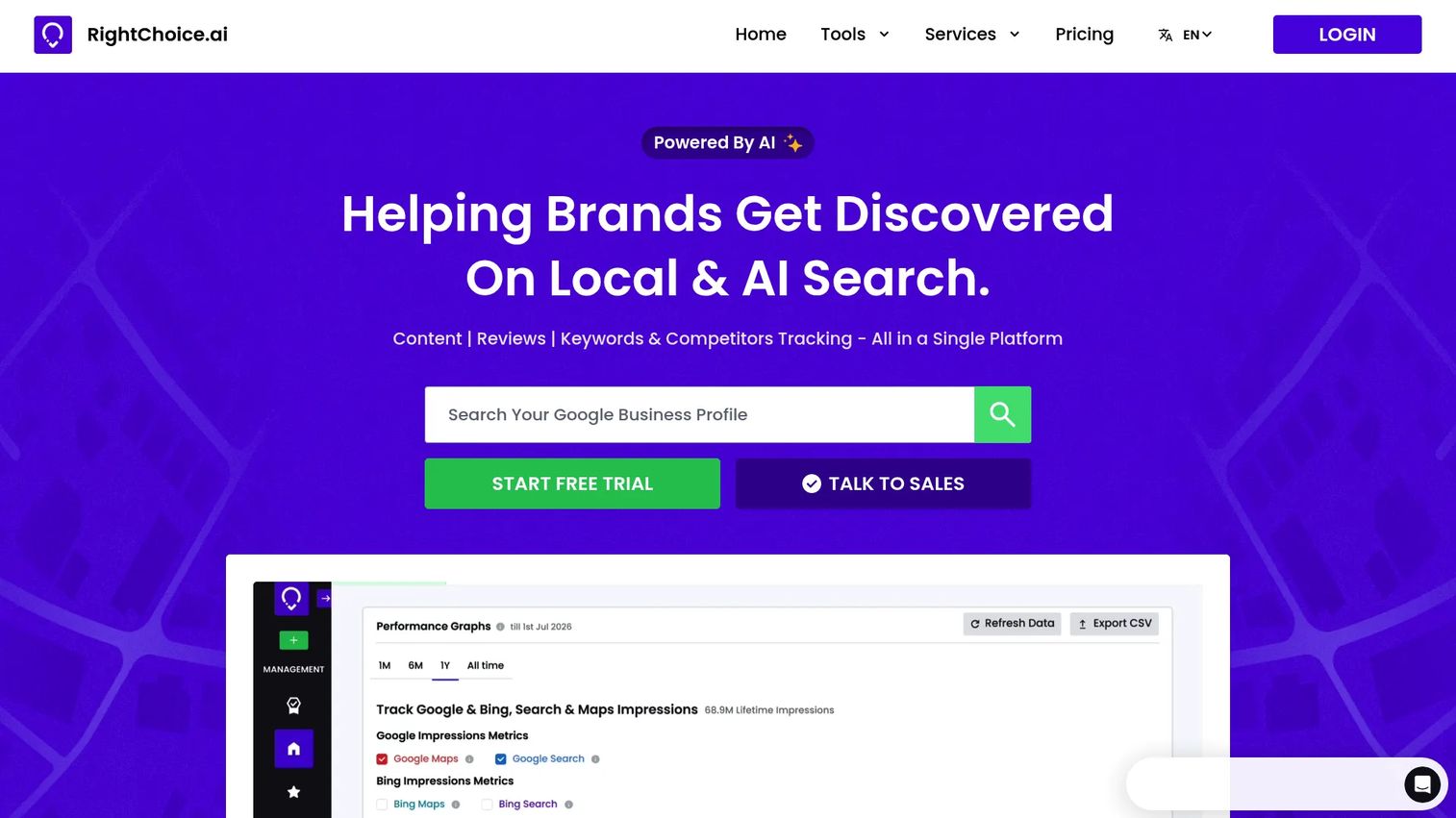
RightChoice.ai is an AI-powered local SEO and business listing management platform built around profile auditing, rank tracking, and profile protection. It leans on AI to generate listing content and automate review responses, which suits teams that want the software to suggest updates rather than wait for manual input. The geo-grid rank tracking gives location-level visibility that's hard to reconstruct from a spreadsheet.
Best for: Local businesses and agencies managing Google and Bing listings, reviews, and local SEO at multi-location scale.
Key strengths
- Local keywords rank tracking by location
- Competitor tracking and geo-grid rank tracking
- AI content generation and review automation
- Profile protection against unwanted edits
Why choose RightChoice.ai: Choose it when you want AI-assisted listing updates and audits to carry more of the load, and when geo-grid competitor tracking matters to how you report local wins.
RightChoice.ai pricing: Paid plans are Solo, Business, and Agency, each displayed at a low monthly rate billed yearly, plus a custom Enterprise plan. There is no free tier.
2. Uberall
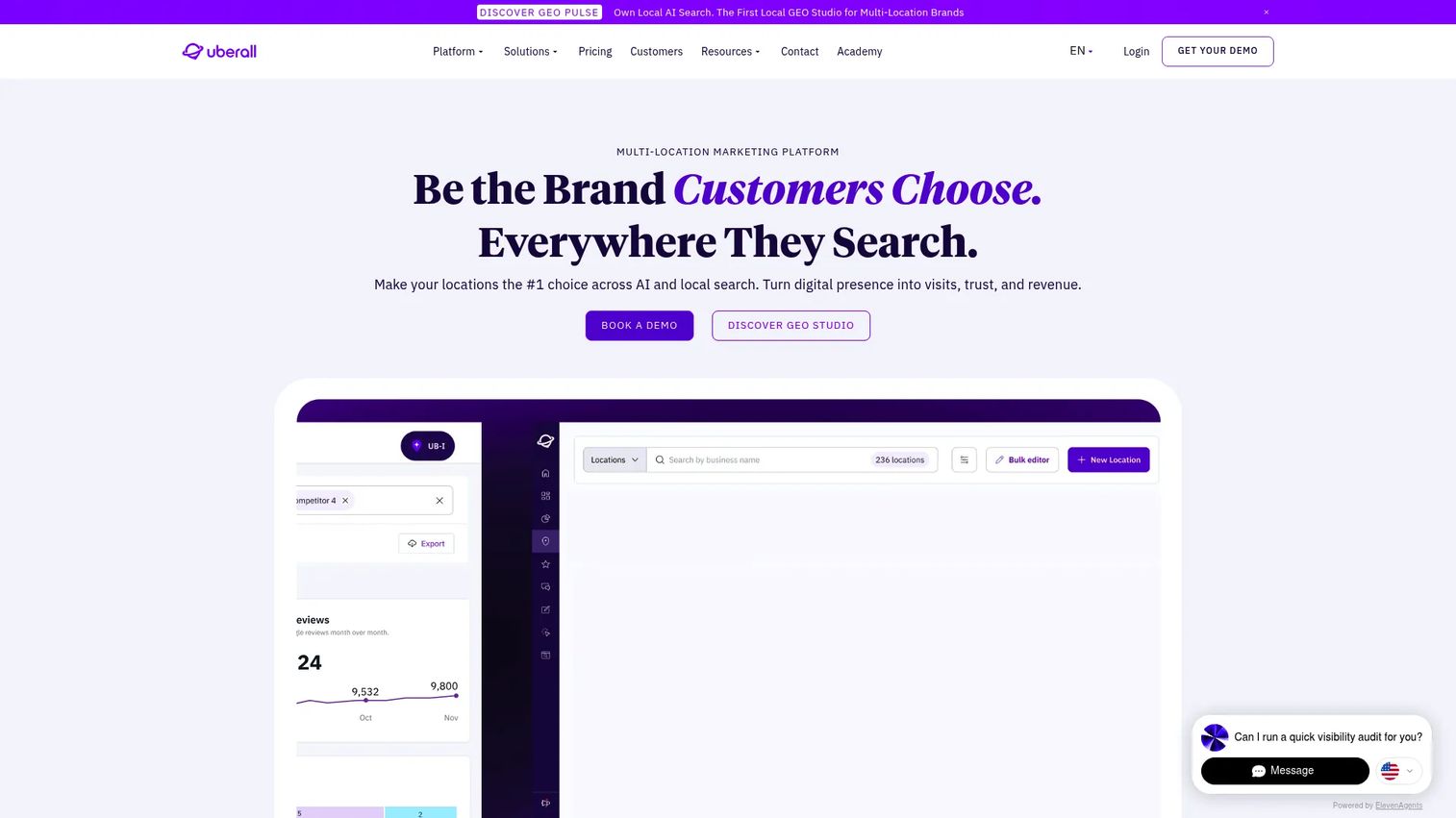
Uberall is a multi-location marketing platform that puts listings management first, then layers reviews, local social, and location pages on top. It distributes business data across 150+ directories and adds AI-generated review responses, which makes it a fit for enterprise brands coordinating hundreds of profiles. The breadth here is the point: one hub for listings, reputation, and local presence.
Best for: Multi-location brands needing centralized local presence management.
Key strengths
- Listings management across 150+ directories
- Review management with AI-generated responses
- Local social publishing and scheduling
- Analytics across the location network
Why choose Uberall: Choose Uberall when you're running local presence at enterprise scale and want listings, reviews, and social to report from one place rather than three point tools.
Uberall pricing: Public GEO Studio plans start with GEO Starter at $109/month, GEO Scale at $449/month, and a custom GEO Enterprise tier. Core platform bundles use request pricing.
3. Semrush Listing Management
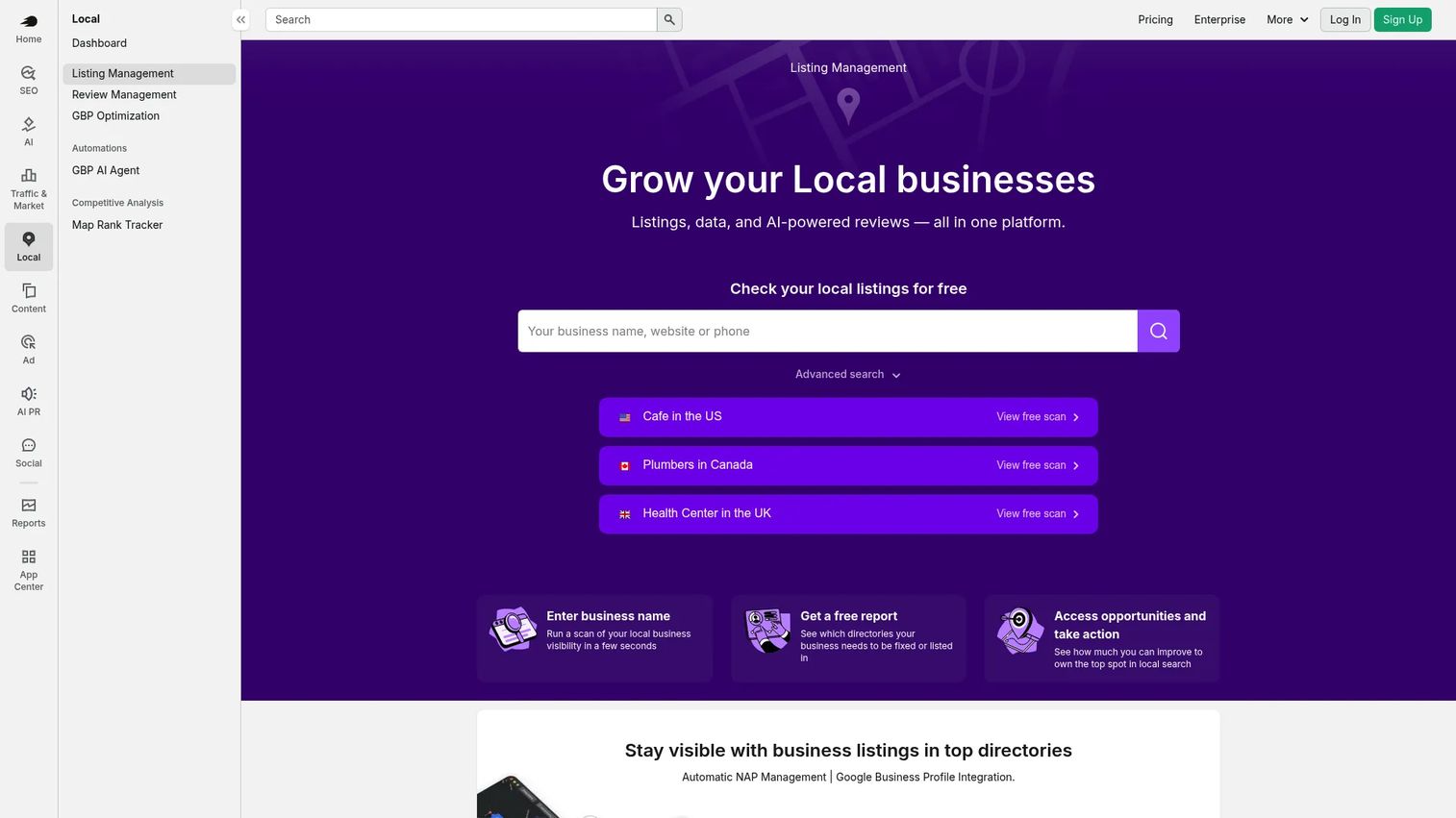
Semrush Listing Management distributes and maintains business information across online directories, with automatic NAP management and Google Business Profile integration. If your team already runs SEO inside Semrush, keeping local listings in the same suite removes a tab and a login. It handles duplicate deletion and syncs core business data across directories.
Best for: Businesses needing centralized local listings, GBP management, and review workflows.
Key strengths
- Automatic NAP management across directories
- Google Business Profile integration
- Duplicate deletion
- Local rank monitoring inside the Semrush suite
Why choose Semrush Listing Management: Choose it when you already pay for Semrush and want local listing management software that lives beside your keyword and rank data instead of in a separate platform.
Semrush Listing Management pricing: It's included in Semrush Local Pro at $60/month per location, billed annually. Local Base is $30/month per location, and Local Business is contact-sales.
4. BrightLocal
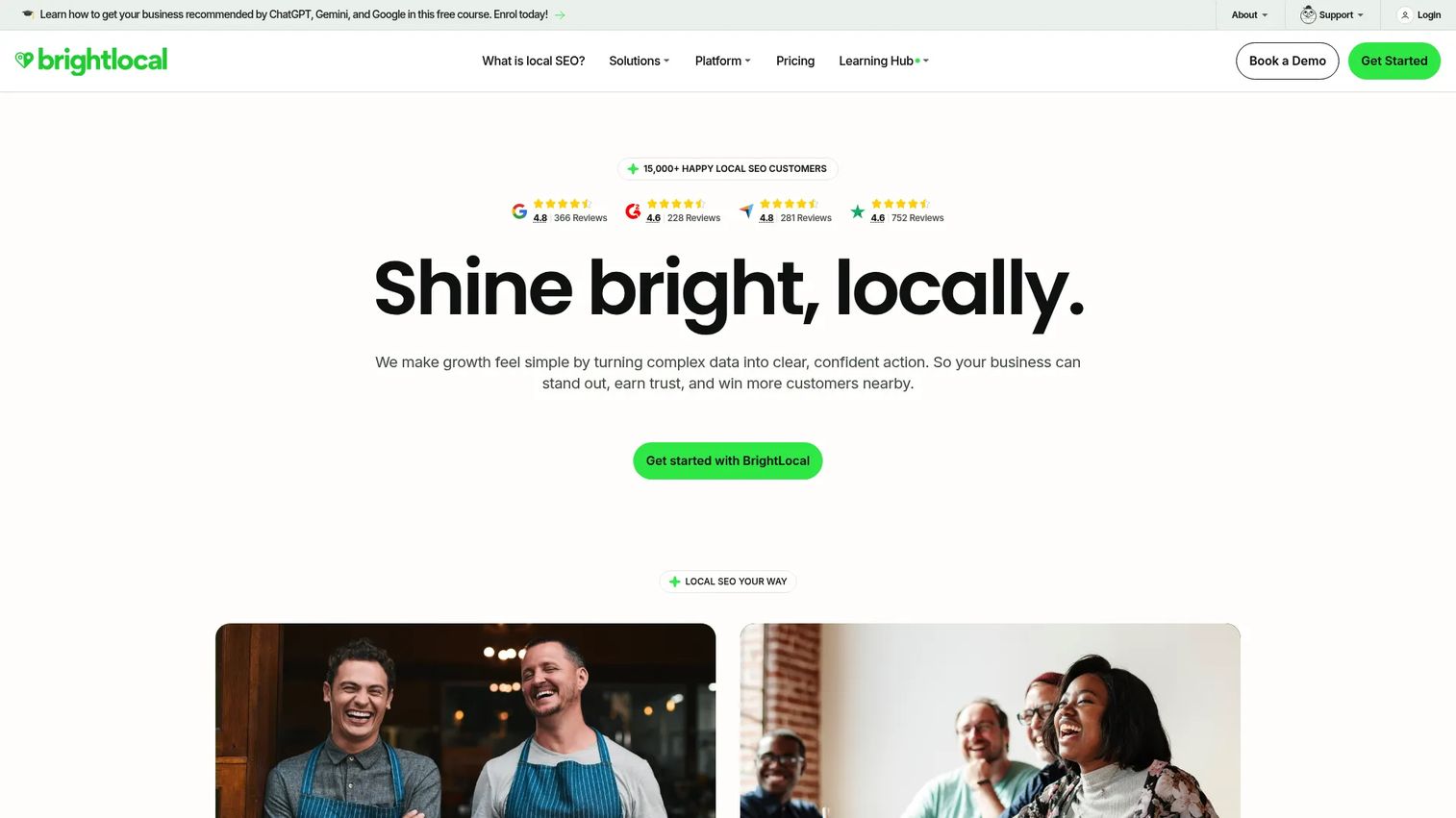
BrightLocal blends citation building, Active Sync, and local rank tracking into a workflow built for local SEO teams and agencies. Its geo-grid visibility maps show exactly where a location ranks across a grid of nearby points, which is the kind of detail that wins client reporting arguments. The citation builder and portability positioning give agencies control over the listings they create.
Best for: Agencies and multi-location businesses needing local SEO visibility, listings, and reputation management.
Key strengths
- Local rank tracking and geo-grid visibility maps
- Listings management and citation building
- Review monitoring and response tools
- Active Sync for ongoing directory updates
Why choose BrightLocal: Choose BrightLocal when local SEO is the core job and you want rank tracking, citations, and duplicate listing suppression in one tool priced for agencies and lean teams.
BrightLocal pricing: Track starts at $29/month, Manage at $37/month, and Grow at $44/month. There's a 14-day free trial, plus pay-as-you-go citation building from $2 per citation and custom API solutions.
5. Birdeye

Birdeye is an agentic marketing platform for multi-location brands, spanning reviews, listings, social, search, and messaging. Its AI agents handle review responses, listing updates, and customer messaging, and it integrates with a large app catalog. For brands where reputation drives foot traffic, having reviews and listings governed together is the draw.
Best for: Multi-location businesses needing centralized reputation and local marketing automation.
Key strengths
- AI agents for reviews, listings, social, and search
- Integrations with 3,000+ apps
- Multi-location customer messaging and surveys
- Reporting and chatbot capabilities
Why choose Birdeye: Choose Birdeye when reviews and reputation management drive your local strategy and you want messaging, surveys, and listings managed by one platform across every location.
Birdeye pricing: Birdeye uses a customized pricing configurator rather than public plan prices. You provide business details to see a tailored quote.
6. Moz Local
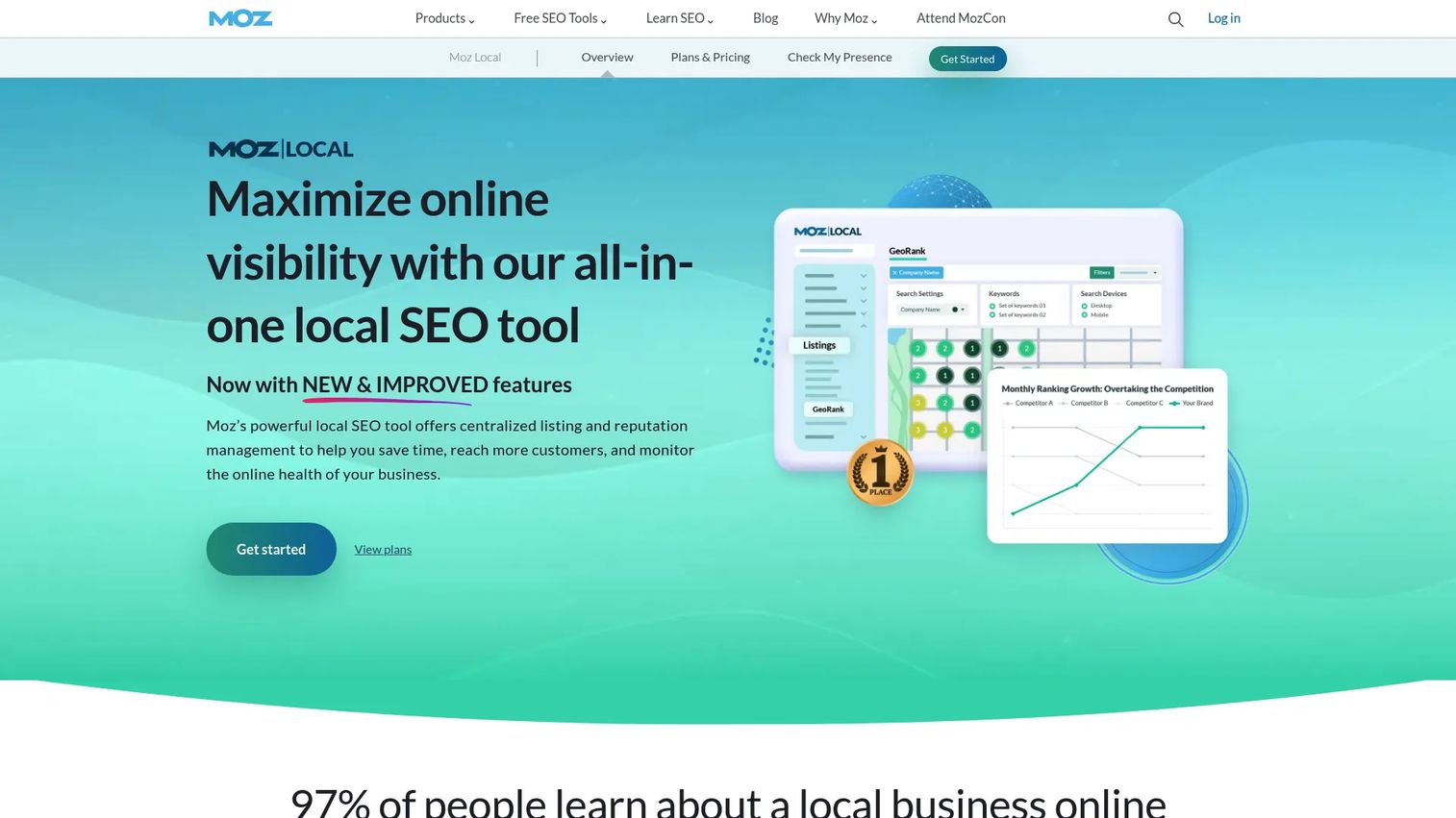
Moz Local focuses on straightforward listing distribution, review monitoring, and citation accuracy. It's the pick for smaller teams that want reliable directory sync without a heavy platform. The interface keeps the job simple: distribute accurate data, watch reviews, report on local search.
Best for: Businesses and agencies managing local listings at scale.
Key strengths
- Listing management across directories
- Review monitoring and response tools
- Local search optimization and reporting
- Simple setup for smaller teams
Why choose Moz Local: Choose Moz Local when you want dependable distribution and citation accuracy at a low entry price, and you don't need the fuller local social or AI layers of the enterprise tools.
Moz Local pricing: G2 lists three editions: Lite at $16/month, Preferred at $24/month, and Elite at $33/month. Confirm current figures on Moz's own pricing page before purchase.
7. Yext
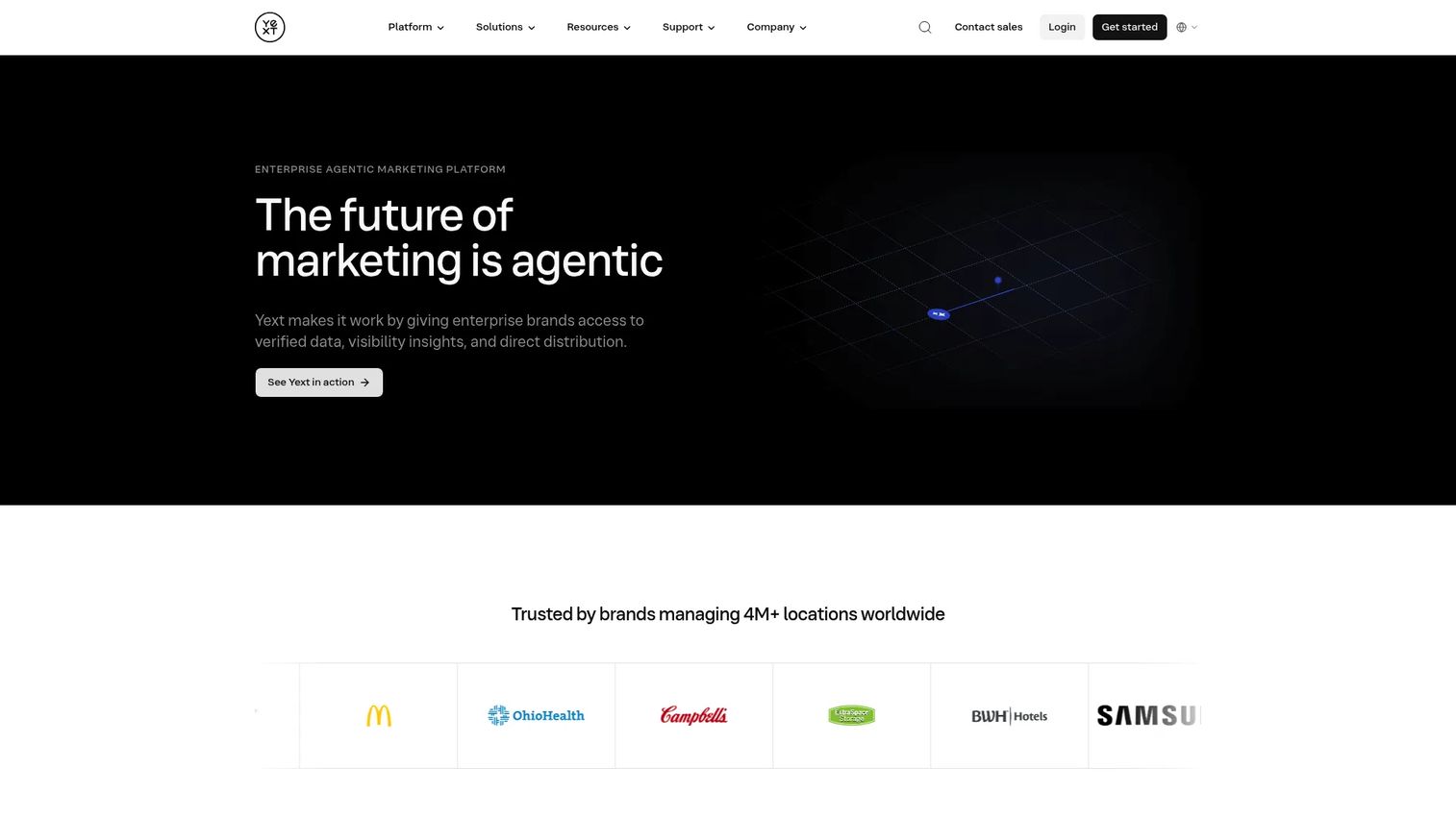
Yext is an enterprise platform for managing verified brand data across search, listings, reviews, pages, and social. Its Knowledge Graph stores canonical brand facts and distributes them to 200+ publishers, which is how large franchises keep every location's data governed from one source of truth. Brand protection and scale are the headline here.
Best for: Multi-location brands needing centralized listings, reviews, and AI-ready brand data management.
Key strengths
- Knowledge Graph for verified brand facts
- Listings distribution to 200+ publishers
- Reviews monitoring and response workflows
- Enterprise-grade governance controls
Why choose Yext: Choose Yext when franchise or enterprise governance is non-negotiable and you need a single source of truth feeding hundreds of locations across many publishers.
Yext pricing: Public PowerListings plans are Emerging at $4/week (billed $199 annually), Essential at $9/week (billed $449 annually), Complete at $10/week (billed $499 annually), and Premium at $19/week (billed $999 annually).
Considerations
Before you commit, run each shortlisted tool through this checklist. The differences that matter show up here, not on the feature grid.
Verify directory coverage against the vendor's current site
Directory counts change, and a claimed number isn't the same as reliable, ongoing sync. Confirm which directories and maps apps the tool actually pushes to, and whether updates propagate automatically or need a manual trigger.
Check GBP, maps, and review workflow support
Google Business Profile management and Google Maps rank tracking are the highest-impact surfaces for most local businesses. Confirm the tool manages GBP at scale and sits reviews next to listing edits, so you're not stitching two products together.
Confirm bulk update speed and governance controls
Test how fast one change reaches every location, and who's allowed to make it. Multi-location listing management lives or dies on bulk updates and role-based governance, especially across franchise networks where local managers edit their own profiles.
Verify pricing model and contract terms
Per-location pricing scales very differently from flat-rate. Model your real location count against each tier, and check billing frequency and contract length before you sign.
Look for duplicate suppression and profile protection
Duplicate listing suppression protects ranking signals that duplicates split. Profile protection guards against unwanted third-party edits. Confirm both are included at your tier, not gated behind an enterprise plan.
Conclusion
The right pick comes down to your location count, your reporting needs, and whether reviews sit at the center of your local strategy.
For enterprise teams coordinating hundreds of profiles, Uberall centralizes listings, reviews, and local social in one hub. For SEO-first operators and agencies, BrightLocal gives you rank tracking, citations, and geo-grid maps at a price lean teams can carry. Teams already inside the Semrush stack get the least friction from Semrush Listing Management, since local data lives beside keyword and rank work. And for AI-led workflows and profile audits, RightChoice.ai leans on AI-assisted listing updates and geo-grid competitor tracking.
If reviews drive your foot traffic, Birdeye pairs reputation with listings. If governance across a franchise network is the priority, Yext feeds verified brand data to 200+ publishers. On a tight budget, Moz Local covers distribution and citation accuracy without the overhead.
Start with the tool that matches your location count, reporting depth, and review workflow, then run a trial on real locations before you scale it across the network.
FAQs
It's a platform that centralizes your business information and syncs it across Google Business Profile, maps apps, directories, and review sites from one dashboard. The goal is NAP consistency, so name, address, phone, and hours stay identical everywhere, and one edit propagates to every profile automatically.
You enter your canonical business data once, then the tool distributes it to a network of directories and maps and monitors for drift. When something changes, you update it in the dashboard and the tool pushes the correction out. Most platforms also detect duplicate profiles and surface local ranking and review data by location.
Coverage varies widely by platform, from a few dozen core directories to 200-plus publishers. Google Business Profile, Bing, Apple Maps, and major data aggregators are almost always included. Always confirm the current directory list on the vendor's site, since counts and partnerships shift over time.
Consistent, accurate listings support the local trust signals that feed Google Business Profile ranking, and duplicate listing suppression prevents split signals that can hurt it. Listings management isn't the only ranking factor, but inconsistent NAP data actively works against you, so cleaning it up removes a known drag.
Match location count to the pricing model first, since per-location tiers scale very differently from flat-rate plans. Then confirm GBP management, directory sync reliability, Google Maps rank tracking, and whether reviews and reputation management are included. Run a trial on your real locations before committing across the network.
Bulk updates and governance controls. Multi-location listing management stands or falls on whether one change reaches every profile fast, and whether you can control who edits what across a franchise network. After that, prioritize location-level reporting and duplicate suppression so you can see and defend results per site.
Many listings management software platforms bundle reviews and reputation management, but depth varies. Some offer full monitoring, response workflows, and AI-assisted replies, while others only surface review counts. If reviews drive your local strategy, confirm the specific response and automation features before you choose.