Every claim you review costs money. Every claim you don't review closely enough costs more. That is the tension every claims operation lives with. Slow down to catch fraud and you frustrate honest policyholders, blow past service targets, and pile up backlog. Speed up and you leak money out the back door on claims that never should have paid in full.
The stakes are getting bigger, not smaller. The global insurance fraud detection market is projected to grow from USD 8.52 billion in 2026 to USD 20.22 billion by 2031, an 18.87% compound annual growth rate, according to Mordor Intelligence (2026). That spend is not vanity. It reflects a real shift: fraud signals now sit buried across claims history, public records, provider behavior, and relationship data that no adjuster can piece together by hand at volume.
The right insurance fraud detection software fixes the tradeoff instead of picking a side. It scores risk on intake, routes clean claims to straight-through processing, and flags the suspicious ones to investigators with the evidence already attached. Good claims triage is not about reviewing everything. It is about reviewing the right things, fast, and leaving the rest alone.
One more shift matters for buyers in 2026. Claims teams no longer accept black-box flags. A model that says "this claim is risky" without saying why creates work instead of removing it. Adjusters need reason codes. Investigators need a defensible trail. Regulators need explainable AI they can audit. The tools worth your budget explain their scores, not just produce them.
What's inside
This guide is for insurance operations leaders, SIU teams, claims managers, and the product or platform buyers who own fraud tooling decisions. It covers eight platforms that touch claims fraud, from focused claims screening to broad enterprise fraud analytics in insurance.
We selected and ranked tools on four criteria that actually predict success in a claims workflow:
- Claims workflow fit - does it plug into intake, triage, and investigation, or is it a bolt-on?
- Fraud detection capability - quality of risk scoring, anomaly detection, and network analysis.
- Explainability - reason codes and transparent models, not opaque flags.
- Data enrichment and integration - access to public records, government records, and relationship data, plus how well it connects to your core systems.
The shortlist spans triage, network analysis, and investigator prioritization so you can match a tool to your actual bottleneck.
TL;DR
- Best overall for claims teams: FRISS, for automated triage, fast screening, and measurable fraud savings across the P&C policy lifecycle.
- Best for data scale and network detection: Verisk, for ClaimSearch breadth, provider scoring, and digital media forensics.
- Best for enterprise fraud operations: SAS, for explainable models, model governance, and a 360-degree view across internal and external data.
- Best for investigative workflows: Tracers, for records enrichment, due diligence, and right-party contact.
- Best for AI-led claims automation: Shift Technology, for AI decisioning across claims, fraud, and payment integrity.
- Best for workflow orchestration: Pega, for tying fraud logic into broader claims decisioning and case handling.
What is fraud claims software?
Fraud claims software is a category of insurance claims fraud detection software that scores, routes, and investigates suspicious claims so insurers pay legitimate claims faster while catching the fraudulent ones. It sits inside the claims workflow rather than beside it, turning raw signals into decisions an adjuster or investigator can act on.
The core capabilities span the full claim lifecycle:
- AI and ML risk scoring with reason codes, so a score comes with an explanation.
- Claims triage that routes low-risk claims to straight-through processing and high-risk ones to review.
- Anomaly detection across claim attributes, timing, and amounts.
- Network analysis and link analysis to expose connections between claimants, providers, vehicles, and addresses.
- Data enrichment from claims history, public records, and government records.
- Investigator routing that prioritizes cases by expected value and severity.
- Explainable outputs that hold up in an audit or a courtroom.
Must-have capabilities for a serious buyer:
- Real-time or near-real-time scoring at intake.
- Transparent, auditable reason codes.
- Configurable triage rules alongside predictive models.
- Case management that consolidates enrichment into one view.
- Integration with claims, policy, and payment systems.
Here is where it differs from general analytics or generic case management. A business intelligence platform tells you fraud went up 8% last quarter. A generic case tool stores notes. Fraud claims software makes a decision on this claim, right now, and shows its work. Claims teams need triage and investigation support built into the flow, not a dashboard they check after the money is gone.
When to use fraud claims software
Speed up first-pass claims triage
When daily volume outpaces the number of adjusters who can review each claim carefully, manual triage breaks down. Every claim gets the same shallow glance, and the subtle ones slip through. Risk scoring with reason codes changes the math. Clean, low-risk claims route straight through to payment. Medium-risk claims get a targeted check on the specific flag. High-risk claims stop and go to an investigator. The adjuster spends attention where it moves the needle instead of spreading it evenly across everything.
Expose hidden fraud rings
A single claim can look completely clean on its own. The fraud only appears when you connect it to five other claims sharing the same repair shop, the same medical provider, or the same phone number across different names. Reviewing claims one at a time will never catch that pattern. Network analysis and link analysis surface the relationships. Picture three auto claims from unrelated policyholders that all route to one body shop and one clinic within a two-week window. Individually invisible. As a network, obvious.
Improve investigator productivity
SIU teams are expensive and finite. Every hour an investigator spends on a low-value claim is an hour stolen from a real case. The fix is better investigator prioritization plus enrichment that removes the busywork. When a case lands with claims history, public records, prior loss data, and relationship links already pulled into one view, the investigator starts investigating instead of gathering.
- Rank open cases by expected recovery and fraud probability.
- Auto-attach enrichment so no one manually pulls records.
- Consolidate related claims into a single case file.
- Track outcomes to feed the model and tune future scoring.
Comparison table
The table below compares fit, core differentiation, and pricing visibility. Use it to shortlist, then read the detailed sections for the two or three that match your bottleneck. Pricing in this category is mostly quote-based, so treat public figures as directional.
| # | Product | Intent | Key differentiation | Pricing | G2 rating |
|---|---|---|---|---|---|
| 1 | FRISS | Claims triage and fraud screening for P&C insurers | Real-time risk assessment across policy, underwriting, and claims | Contact sales | Not published |
| 2 | Verisk | Broad claims data and network fraud detection | ClaimSearch data scale, provider scoring, media forensics | Xactimate from $850/3 months | Not published |
| 3 | SAS | Enterprise fraud analytics and financial crimes | Explainable models, governance, 360-degree entity view | Request a quote | 4.3/5 |
| 4 | Tracers | Investigative records enrichment and due diligence | Public and private records search, batch and API access | Quote-based | Not published |
| 5 | Shift Technology | AI-led claims and fraud decisioning | AI agents for claims, fraud, and payment integrity | Contact sales | 4.0/5 |
| 6 | BAE Systems Detica | Large-scale fraud analytics and financial crime | Intelligence-grade data exploitation at scale | Contact sales | 1.5/5 |
| 7 | IBM | Enterprise AI, analytics, and decision support | Hybrid cloud and AI depth across a broad portfolio | Cloud Object Storage from USD 10/TB/month | 4.3/5 |
| 8 | Pega | Workflow orchestration and claims decisioning | AI decisioning tied to end-to-end claims workflows | Contact sales | Not published |
1. FRISS
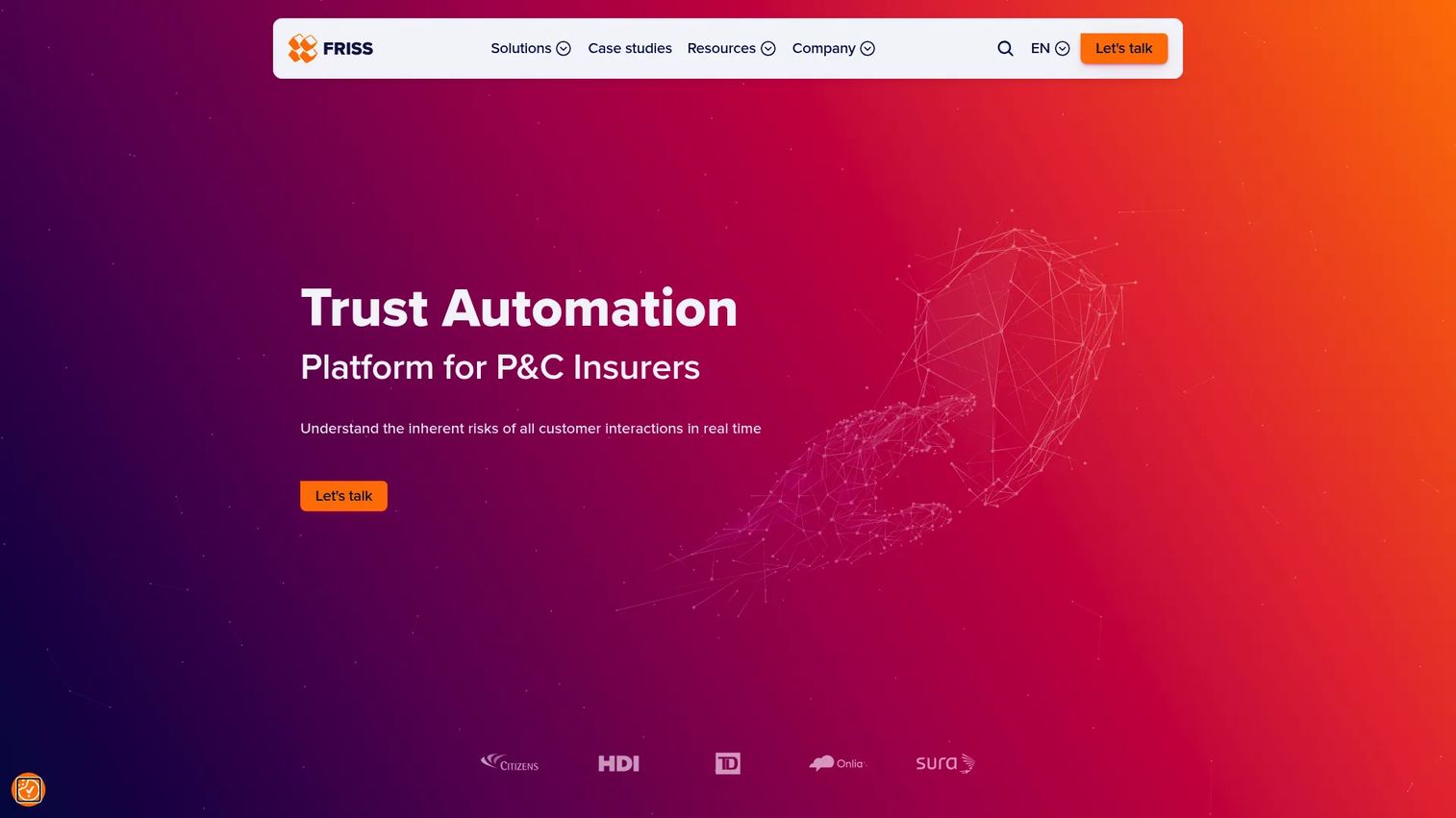
FRISS is trust automation software built specifically for P&C insurers. It runs real-time risk assessment across policy requests, renewals, and claims, which means the same fraud intelligence follows a policyholder from underwriting through the claim. That lifecycle view is what makes it strong at claims triage: a claim from an applicant who already scored risky at underwriting gets treated accordingly.
Best for: Operational P&C claims teams that want automated triage and measurable fraud savings without building detection from scratch.
Key strengths
- Real-time claims scoring: Screens claims on intake and returns a risk score fast enough to drive routing decisions.
- Score-based routing: Sends clean claims to straight-through processing and flags high-risk claims to investigators automatically.
- Investigation support: Case handling tools consolidate context so SIU teams work from one view.
Why choose FRISS: If your primary goal is fewer false positives and faster handling on legitimate claims, FRISS is purpose-built for that outcome. It is not a general analytics platform stretched to fit insurance. It was designed around the P&C claim, which shows up in how naturally it maps to intake, triage, and investigation. Insurers that want fraud detection embedded in the claims flow rather than bolted onto a BI stack tend to land here.
FRISS pricing: FRISS uses contact-sales pricing and does not publish public figures. Expect an enterprise engagement scoped to your claim volume, lines of business, and integration needs. Ask for a pilot tied to a specific line so you can measure loss leakage reduction against a real baseline before committing.
2. Verisk
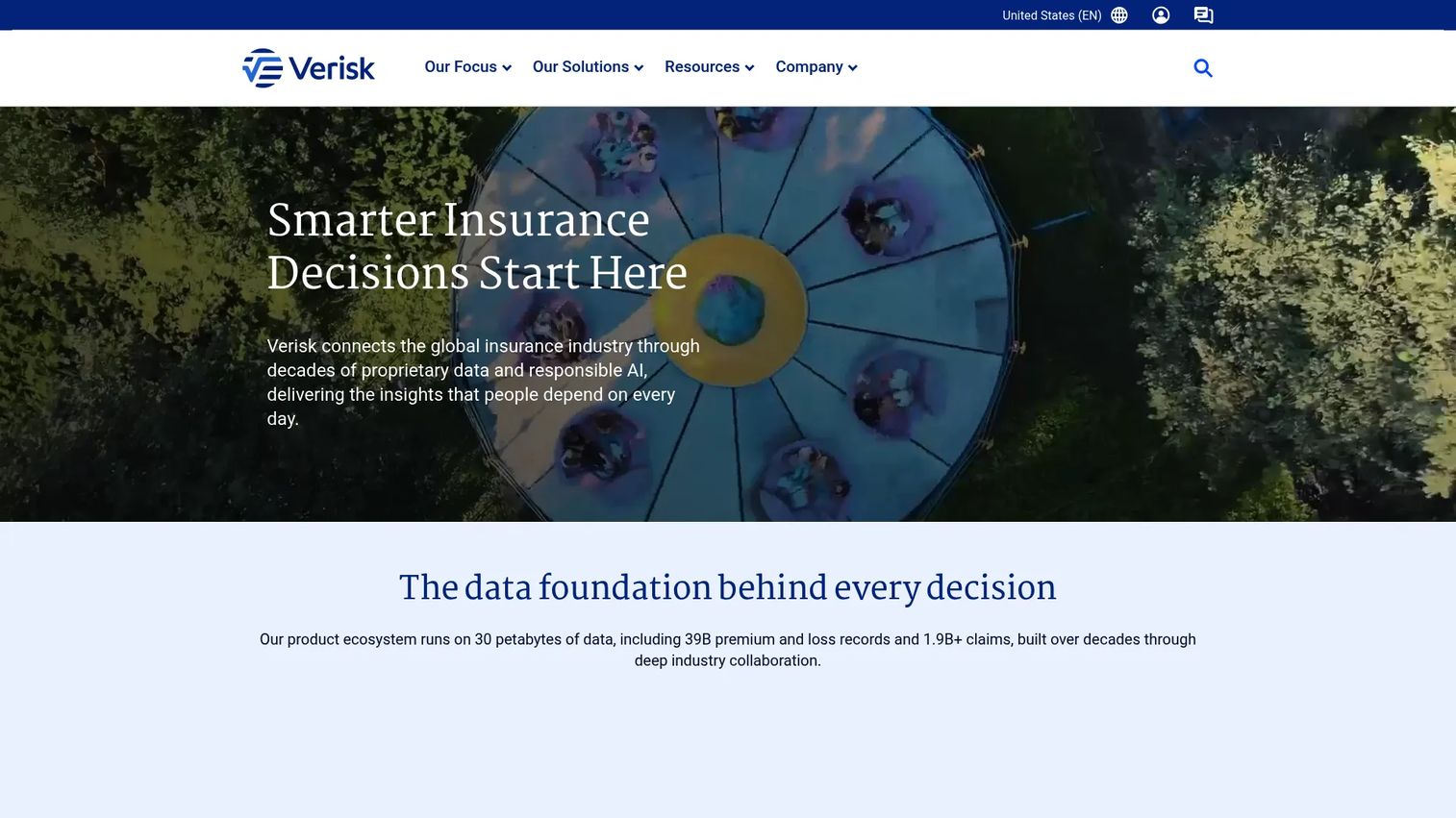
Verisk brings something the others can't easily match: data scale. Through ClaimSearch and its wider anti-fraud claims tooling, Verisk sits on one of the largest claims data assets in the industry. That depth powers network analysis, provider scoring, and digital media forensics that flag manipulated photos and documents. For fraud that only appears across carriers, that cross-industry data footprint is a genuine advantage.
Best for: Claims organizations that want broad data access and deep fraud ecosystem coverage, especially for cross-carrier and provider fraud.
Key strengths
- ClaimSearch data scale: Cross-industry claims history exposes patterns invisible inside a single carrier's data.
- Network and provider scoring: Surfaces suspicious relationships between claimants, providers, and repair networks.
- Digital media forensics: Detects tampered images and documents submitted with claims.
Why choose Verisk: The case for Verisk is data you cannot build yourself. A repair shop or medical provider running a scheme across a dozen carriers looks clean in your book but lights up against industry-wide data. If your fraud problem is organized and cross-carrier, that breadth is hard to replicate. Verisk also provides estimating and claims tooling, so it can anchor a wider claims stack.
Verisk pricing: Verisk is a broad company rather than a single product. Its Xactimate estimating subscription shows public pricing starting at $850 for three months or $2,100 annually, but the anti-fraud and ClaimSearch products use contact-sales pricing. Scope pricing against the specific data services and modules your claims team needs.
3. SAS
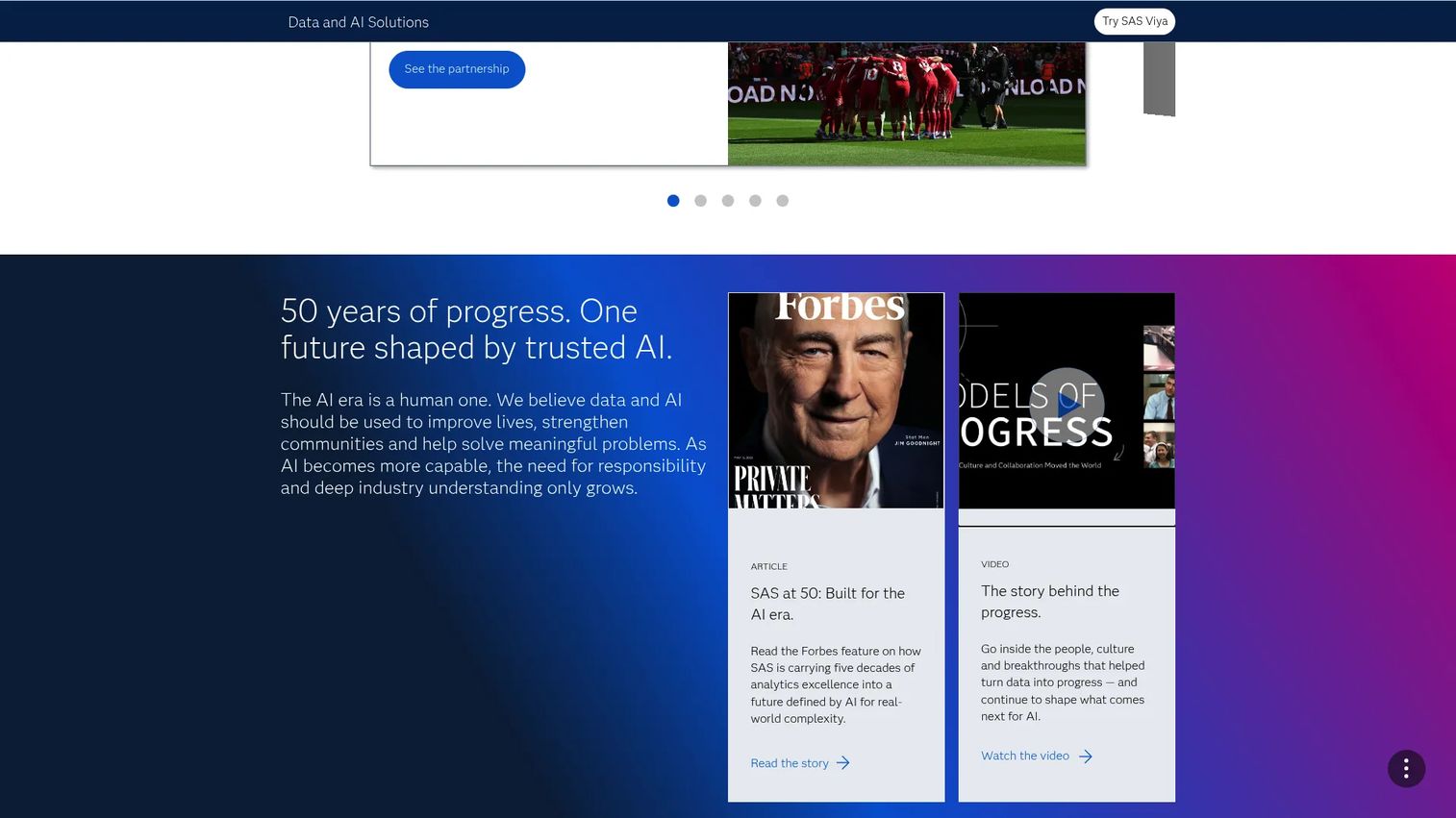
SAS is an enterprise data and AI platform, and its fraud and financial crimes capabilities are built for organizations that take model governance seriously. This is where SAS earns its place on a claims list: it pairs strong predictive analytics with transparent, explainable models. When a regulator or auditor asks why a claim was flagged, SAS gives you an answer you can defend, not a shrug.
Best for: Enterprise fraud operations that need interpretability, model governance, and a consolidated view across internal and external data.
Key strengths
- Explainable AI: Transparent models produce reason codes adjusters and auditors can act on.
- 360-degree entity view: Consolidates internal claims data with external sources for a full picture of a claimant or provider.
- Financial crimes overlap: Shared infrastructure across fraud, AML, and financial crime suits large carriers with multiple mandates.
Why choose SAS: SAS fits teams that answer to governance requirements and cannot ship black-box scoring. Its ability to bring internal and external data into one decisioning layer helps claims teams make defensible calls at scale. It carries a 4.3/5 rating on G2. The tradeoff is that SAS is a broad platform, so expect an enterprise implementation rather than a plug-in claims module.
SAS pricing: SAS directs most buyers to request a price quote rather than publishing list pricing. Pricing scales with the SAS Viya deployment, data volume, and the specific fraud and decisioning capabilities you license. Ask for scoping around your claims fraud use case specifically, not the whole platform.
4. Tracers
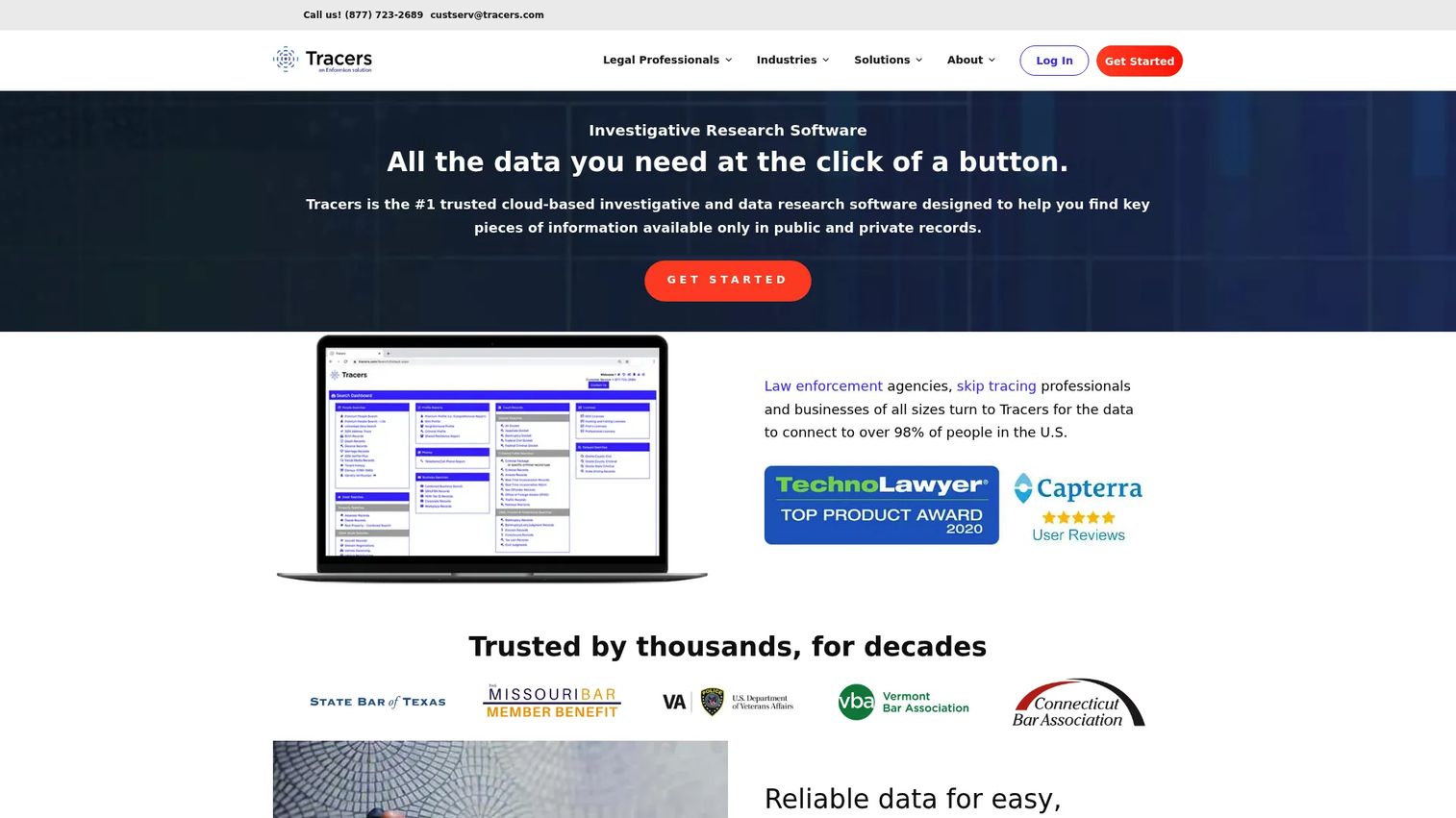
Tracers is cloud-based investigative and data research software. It is the enrichment and records layer, not the scoring engine, and that is exactly why investigators value it. When a case needs people, address, and phone searches, skip tracing, or right-party contact, Tracers pulls public and private records fast. Batch processing and API access let claims operations wire that enrichment into existing workflows.
Best for: Investigators, SIU teams, and legal or collections staff who need deep records research and due diligence inside a broader claims operation.
Key strengths
- Records enrichment: People, address, and phone searches plus public and government records in one place.
- Batch and API access: Enrich claims in bulk or wire enrichment directly into your case workflow.
- Right-party contact: Skip tracing and locate data help investigators reach the correct person quickly.
Why choose Tracers: Tracers is strongest as the investigation and records layer sitting underneath your detection stack. It does not score claims for you, and it does not pretend to. What it does is remove the manual hunt for records that eats investigator hours. Pair it with a scoring engine like FRISS or SAS and you get flagged cases that arrive pre-enriched.
Tracers pricing: Tracers has not exposed a verifiable first-party pricing page, and public third-party listings suggest an entry point but should not be treated as confirmed. Because pricing and access modes vary by use case, request current pricing directly and confirm which record sources are included for insurance investigation work.
5. Shift Technology
Shift Technology is AI decisioning software for insurers, spanning claims, fraud, underwriting, and payment integrity. Its focus is AI-led assessment and automation: the platform uses AI agents to work claims and fraud workflows, and it draws on a cross-carrier insurance data network to sharpen detection. For insurers modernizing detection at scale, that AI-first posture is the draw.
Best for: Insurers and health plans modernizing fraud detection at scale who want AI decisioning across claims and payment integrity.
Key strengths
- AI agents for claims and fraud: Automates assessment across claims and fraud workflows to lift throughput.
- Payment integrity for health plans: Extends detection into healthcare claims and payment accuracy.
- Cross-carrier data network: Uses industry data to improve detection beyond a single carrier's book.
Why choose Shift Technology: Shift fits carriers that want automation and AI-led claims assessment rather than a rules-heavy legacy system. The cross-carrier network and payment integrity coverage make it a fit for both P&C and health plan use cases. It holds a 4.0/5 rating on G2. If your roadmap is about scaling detection with AI rather than adding more manual review, Shift belongs on the shortlist.
Shift Technology pricing: Shift does not publish public pricing; engagements are quote-based and scoped to your lines of business and volume. Push for a proof of value on a defined claims segment so you can measure detection lift and loss ratio improvement against a baseline.
6. BAE Systems Detica

BAE Systems Detica is the legacy Detica fraud and analytics brand, now repositioned under BAE Systems Applied Intelligence. Its heritage is intelligence-grade security and large-scale data exploitation, which translates into strength on complex, high-volume fraud patterns. For organizations operating in large-scale or high-risk environments, that analytics depth is the value.
Best for: Government bodies and enterprise-scale organizations facing complex fraud and financial crime that demands intelligence-led analytics.
Key strengths
- Large-scale data exploitation: Built to find patterns across very large, complex data estates.
- Financial crime analytics: Detection tuned for organized and sophisticated fraud schemes.
- Intelligence-grade security: Heritage in national-scale security carries into risk analytics.
Why choose BAE Systems Detica: This is an option for public-sector and enterprise-scale risk environments where fraud is organized, complex, and hidden in massive data. It is less a plug-and-play claims module and more an analytics capability you integrate into a wider program. Because the Detica brand was folded into BAE Systems Applied Intelligence, product information is spread across BAE pages, and third-party ratings are thin, so validate current fit directly with the vendor.
BAE Systems Detica pricing: No public pricing is available; engagements are scoped and quote-based, consistent with enterprise and government contracting. Expect a consultative sales process and confirm current product packaging given the rebrand history.
7. IBM
IBM is an enterprise technology company offering software, consulting, and infrastructure across hybrid cloud and AI. For fraud claims work, its relevance is analytics depth and decision support delivered on a broad AI and data foundation. Large insurers already standardized on IBM data or AI infrastructure can extend that footprint into fraud analytics without adding a disconnected point tool.
Best for: Large enterprises already running IBM data or AI infrastructure that want to extend it into claims fraud analytics and decision support.
Key strengths
- Hybrid cloud and enterprise AI: Deep AI and data capabilities that scale to enterprise claims volumes.
- Broad portfolio: 600+ products and services span the data, analytics, and infrastructure a fraud program touches.
- Governance and integration: Enterprise-grade data governance supports auditable, defensible decisions.
Why choose IBM: IBM makes sense when fraud analytics is one workload inside a much larger enterprise AI and data strategy. The value is consolidation: run fraud detection on the same governed infrastructure as the rest of your analytics rather than standing up a separate stack. It carries a 4.3/5 rating on G2. If you are not already an IBM shop, weigh the integration effort against more focused claims tools.
IBM pricing: IBM does not publish a single corporate price. As a reference point, IBM Cloud Object Storage lists a One-Rate plan as low as USD 10/TB per month, with pay-as-you-go standard pricing and free Lite tiers on some products. Fraud and analytics workloads are priced separately, so scope pricing around the specific products your program needs.
8. Pega
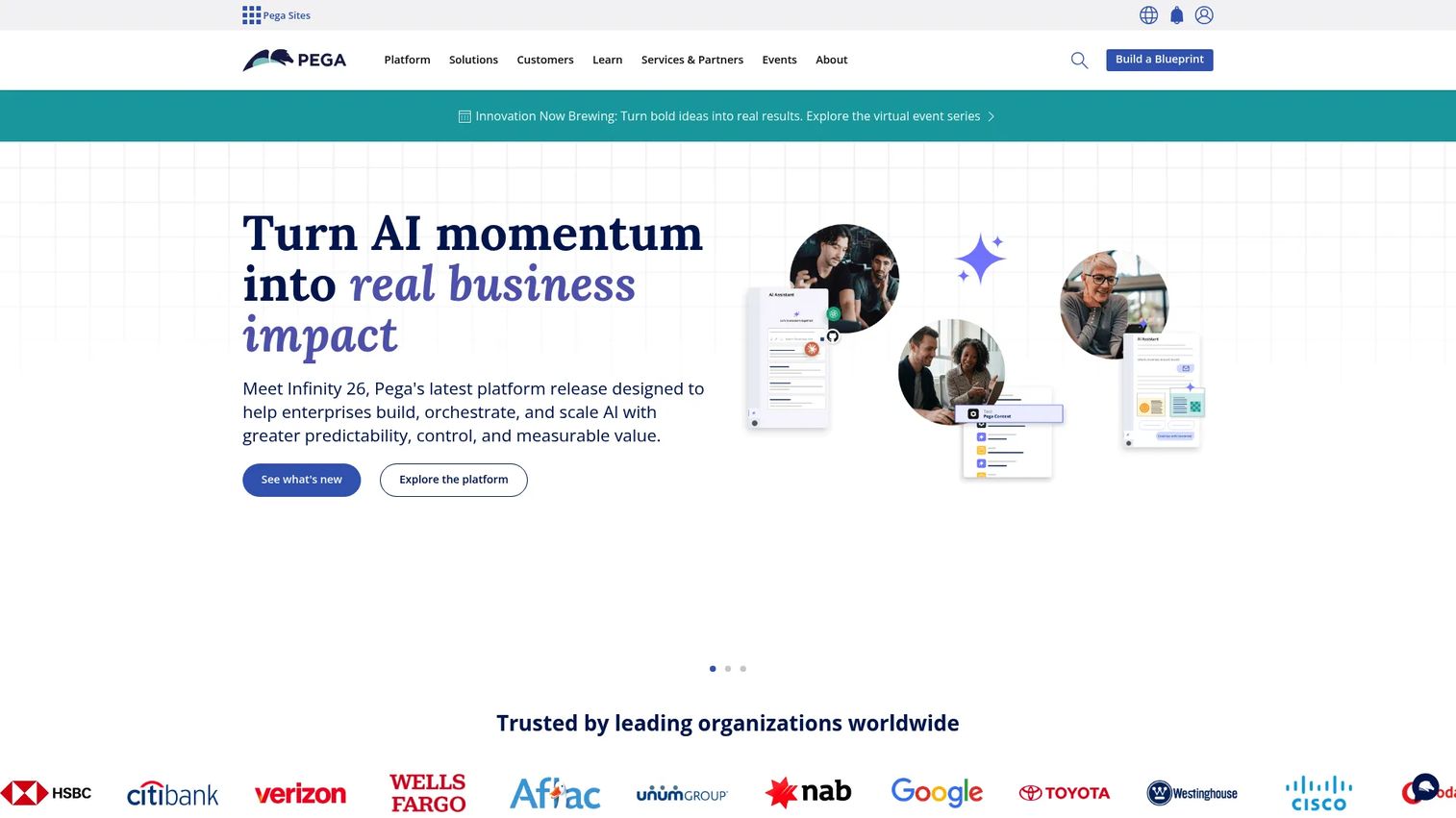
Pega is an enterprise AI software platform for workflow automation, decisioning, and low-code app development. Its role in fraud claims is orchestration: Pega ties fraud logic into the broader claims process, routing claims, standardizing decisions, and coordinating case handling end to end. Rather than being the detection engine, it is the workflow layer that makes detection actionable across the claim lifecycle.
Best for: Organizations that want fraud logic embedded in end-to-end claims workflows and standardized case handling, not a standalone scoring tool.
Key strengths
- AI-powered decisioning: Applies decision logic consistently across claims, including fraud rules and scores.
- Workflow automation: Routes claims and coordinates case handling from intake to resolution.
- Low-code app development: Lets teams build and adjust claims workflows without heavy engineering cycles.
Why choose Pega: Pega fits when your bottleneck is process, not detection. If claims stall because routing is manual and decisions are inconsistent, orchestration is the lever. Pega can ingest scores from a detection engine and act on them inside a governed workflow, tying fraud handling to the rest of claims operations. Pair it with a dedicated scoring tool when you need best-in-class detection plus orchestration.
Pega pricing: Pega does not publish public pricing and positions it as deal-specific. Engagements scale with users, workflow complexity, and deployment scope. Ask for pricing scoped to your claims use case and confirm what is included versus what requires additional modules.
Considerations before you buy
The right choice depends on your bottleneck, not the longest feature list. Work through these criteria before you shortlist.
Claims workflow fit
Does the tool sit inside intake, triage, and investigation, or beside them? A scoring engine that returns risk after payment is too late. Confirm real-time or near-real-time scoring at intake and native routing into straight-through processing for clean claims.
Explainability and reason codes
Insist on transparent reason codes and explainable AI. A flag without a reason creates review work instead of removing it, and it will not survive an audit or a dispute. If a vendor cannot show you why a claim scored the way it did, keep looking.
Data enrichment and coverage
Fraud detection accuracy tracks data quality. Check which sources feed the model: claims history, public records, government records, provider data, and relationship links. Cross-carrier and network data catch schemes your own book hides.
Integration and maintainability
Fraud tools that don't connect to your claims, policy, and payment systems become shelfware. Confirm APIs, supported systems, and how models are retrained as fraud patterns shift. Ask who owns tuning after go-live.
Measurable ROI
Baseline before you buy. Track loss leakage reduction, false-positive rate, investigator productivity, and loss ratio improvement against a defined starting point. A pilot on one line of business gives you real numbers before an enterprise commitment.
Conclusion
The eight platforms here fall into four clean buckets, and the right pick depends on which one matches your problem. Triage-first teams that want automated screening and measurable claims automation should look hard at FRISS and Shift Technology. Network-analysis-first teams chasing organized, cross-carrier fraud lean toward Verisk. Investigation-first teams that need records enrichment want Tracers as their evidence layer. Enterprise-platform-first teams that need explainable models, governance, or workflow orchestration should weigh SAS, IBM, BAE Systems Detica, and Pega.
Your next step is simple. Name your bottleneck first. If it is speed and false positives, you need screening and triage. If it is missed evidence, you need enrichment. If it is stalled, inconsistent handling, you need orchestration. Then run a pilot on one line of business with a real baseline so you can prove loss leakage reduction before you scale. The best fraud claims software is the one that fixes your specific leak, not the one with the most badges.
FAQs
Fraud claims software is a category of insurance tools that score, route, and investigate suspicious claims inside the claims workflow. It flags high-risk claims for review, sends clean ones to fast-track payment, and gives investigators the evidence to act. The goal is catching fraud without slowing legitimate claims.
It combines predictive models, anomaly detection, reason codes, and data enrichment. Models score each claim on intake using historical patterns and claim attributes, anomaly detection flags outliers in timing or amount, and enrichment pulls in public records and relationship data. Reason codes explain why a claim scored the way it did.
Prioritize claims triage, explainability, network analysis, integration, and investigator workflow support. Triage routes claims by risk, explainability gives defensible reason codes, and network analysis exposes fraud rings a single-claim review misses. Integration and investigator tooling determine whether the software fits your operation or becomes shelfware.
No. SIU teams benefit from prioritization and enrichment, but claims and operations teams gain just as much. Claims adjusters use risk scoring to triage and fast-track clean claims, and operations leaders use it to cut loss leakage and improve loss ratios. The value is cross-functional across the whole claims workflow.
It automates first-pass screening so clean, low-risk claims move straight through to payment without manual review. High-risk claims get routed to the right reviewer with evidence attached, and better prioritization keeps investigators on high-value work. The result is fewer manual reviews and faster cycle times on legitimate claims.
Claims history, government records, public records, provider data, and relationship or network data all sharpen detection. Cross-carrier data is especially valuable because it exposes schemes that look clean inside one insurer's book. Data quality matters as much as data quantity; enrichment from stale or incomplete sources produces noisy flags.
Track loss leakage reduction, loss ratio improvement, investigator productivity gains, and false-positive reduction. Set a baseline on those metrics before rollout so you can attribute change to the tool. A pilot on a single line of business gives you clean numbers before committing to an enterprise contract.
Claims fraud detection is workflow-specific: it scores, triages, and routes individual claims inside the claims process and gives investigators actionable cases. General fraud analytics in insurance often stops at reporting and trend analysis. Claims teams need triage and investigation support that acts on a claim in real time, not just a dashboard reviewed after the money is gone.