
Your controller just spent four days rebuilding a lease amortization schedule in a spreadsheet because someone renegotiated a warehouse lease mid-quarter. The formula broke. The disclosure numbers no longer tied to the general ledger. And the auditors are asking questions you cannot answer without opening seven tabs.
That is the reality of manual lease tracking. It works until the portfolio grows, a standard changes, or a variable payment throws the whole schedule off. Then it becomes a compliance risk that shows up in board decks and due diligence.
The lease accounting software market reached USD 2.29 billion in 2024 and is projected to hit USD 4.5 billion by 2032, according to WiseGuy Reports. Cloud deployment already leads, valued at USD 1.19 billion versus USD 0.76 billion for on-premises systems. The growth is not vanity. It reflects a real shift: finance teams are moving lease accounting out of spreadsheets and into systems that produce audit-ready outputs on demand.
For a scaling SaaS company, this is less about accounting theory and more about operational leverage. The right platform removes a recurring source of manual work, keeps compliance clean enough to survive investor scrutiny, and does not turn into another internal dependency that routes through one overworked controller. If you are evaluating your broader finance and operations stack, comparisons like this one and our guide to contract lifecycle management software help you see how these systems fit together.
What's inside
This guide compares the best lease accounting software for compliance depth, automation, audit readiness, ERP fit, and portfolio visibility. It is written for finance leaders, controllers, and operations-minded founders who already know they need a system and are now choosing between vendors.
We evaluated each platform on four criteria: standards coverage across ASC 842, IFRS 16, and GASB 87; workflow automation for schedules, journal entries, and disclosures; ERP and finance-stack integration; and audit controls including traceable data and internal controls. Pricing and ratings reflect verified values only. Where a vendor hides pricing, we say so rather than guess.
TL;DR
- Best all-around lease accounting software: FinQuery, for broad standards coverage, automation, and ERP fit that scales with a growing portfolio.
- Best for enterprise real estate portfolios: Accruent Lucernex, for lease accounting embedded in full real estate lifecycle management.
- Best for unified lease management plus accounting: Visual Lease, for portfolio control and compliance workflows in one platform.
- Best for AI-assisted document work: Trullion, for traceable AI lease abstraction and audit-ready outputs.
- Best for complex enterprise governance: LeaseAccelerator and Nakisa, for large multi-entity portfolios with heavy controls.
- Best for straightforward mid-market compliance: EZLease, for practical ASC 842 support without heavy implementation.
What is lease accounting software?
Lease accounting software is a system that automates the recognition, measurement, and reporting of lease obligations under standards like ASC 842, IFRS 16, and GASB 87, replacing manual spreadsheets with a centralized lease database and audit-ready outputs.
Most platforms fall into two camps. Some are accounting-first, focused on schedules, journal entries, and disclosures. Others combine lease administration software with accounting, adding portfolio management, document storage, and workflow controls on top. Understanding which camp you need depends on portfolio complexity and whether your team also manages leases operationally, not just financially.
Core capabilities to expect:
- Dual-standard reporting across ASC 842, IFRS 16, GASB 87, and often FRS 102 or local GAAP
- Automated journal entries and amortization schedules generated from lease data
- Disclosure reports and roll-forward schedules for financial reporting automation
- Lease classification and measurement logic applied consistently across the portfolio
- Handling for variable payments, catch-up adjustments, and lease modifications
- A centralized lease database that serves as the single source of truth for audit
- ERP integrations to sync journal entries and eliminate re-keying
- An audit trail capturing every change for internal controls and compliance reporting
The distinction between lease accounting software and broader lease management software matters when you evaluate vendors. Accounting-only tools keep the books compliant. Lease management plus accounting platforms also track renewals, options, and portfolio decisions. Related disciplines like contract management and audit management software often sit adjacent to these systems in a mature finance stack.
When to use lease accounting software
Not every trigger is the same. Here is how to pattern-match your situation.
Preparing for ASC 842 or IFRS 16 compliance
If you are adopting a lease standard for the first time or restating under IFRS 16 software requirements, spreadsheets stop being defensible fast. A dedicated ASC 842 software platform applies classification and measurement logic consistently, so your initial recognition holds up under review. This is the most common entry point for teams buying their first system.
Replacing spreadsheets and manual amortization schedules
Manual amortization schedules break the moment a lease is modified, terminated early, or hit with a catch-up adjustment. Lease tracking software regenerates schedules automatically and keeps journal entries tied to the ledger. If your controller dreads month-end because of lease math, this is the fix.
Centralizing lease data for audit and reporting
Scattered lease documents and inconsistent data are an audit nightmare. A centralized lease database with a full audit trail means your team can answer auditor questions in minutes, not days. This matters most when you are preparing for a fundraise, an acquisition, or your first real audit.
Handling multi-entity or complex lease portfolios
Multi-entity organizations, GASB 87 software needs in the public sector, and portfolios mixing real estate and equipment all demand deeper lease portfolio management. If you operate across regions or standards, dual-standard reporting and parallel compliance become non-negotiable.
Comparison table
The table below compares each platform on intent, key use case, verified pricing, and G2 rating. Use it as a fast filter, then read the item sections for depth on automation, standards coverage, and implementation fit.
| # | Product | Intent | Key use case | Pricing | G2 rating |
|---|---|---|---|---|---|
| 1 | FinQuery | Contract-driven accounting automation | Lease accounting across multiple standards with ERP fit | Quote-based | 4.6/5 |
| 2 | Accruent Lucernex | Enterprise real estate lifecycle | Lease accounting inside real estate operations | Quote-based | 4.0/5 |
| 3 | Visual Lease | Unified lease management plus accounting | Portfolio control with compliance workflows | Quote-based | 4.4/5 |
| 4 | Trullion | AI-assisted accounting and audit | Traceable lease abstraction and audit-ready output | Demo-based | 4.7/5 |
| 5 | LeaseAccelerator | Enterprise compliance governance | Complex multi-entity lease accounting | Quote-based | Not listed |
| 6 | Nakisa Lease Accounting | Global enterprise scale | Parallel multi-standard compliance | Quote-based | 3.8/5 |
| 7 | EZLease | Straightforward compliance | Practical ASC 842 and GASB support | Quote-based | 4.5/5 |
| 8 | MRI ProLease | Real estate and equipment portfolios | Lease accounting plus administration for occupiers | Quote-based | 4.1/5 |
1. FinQuery
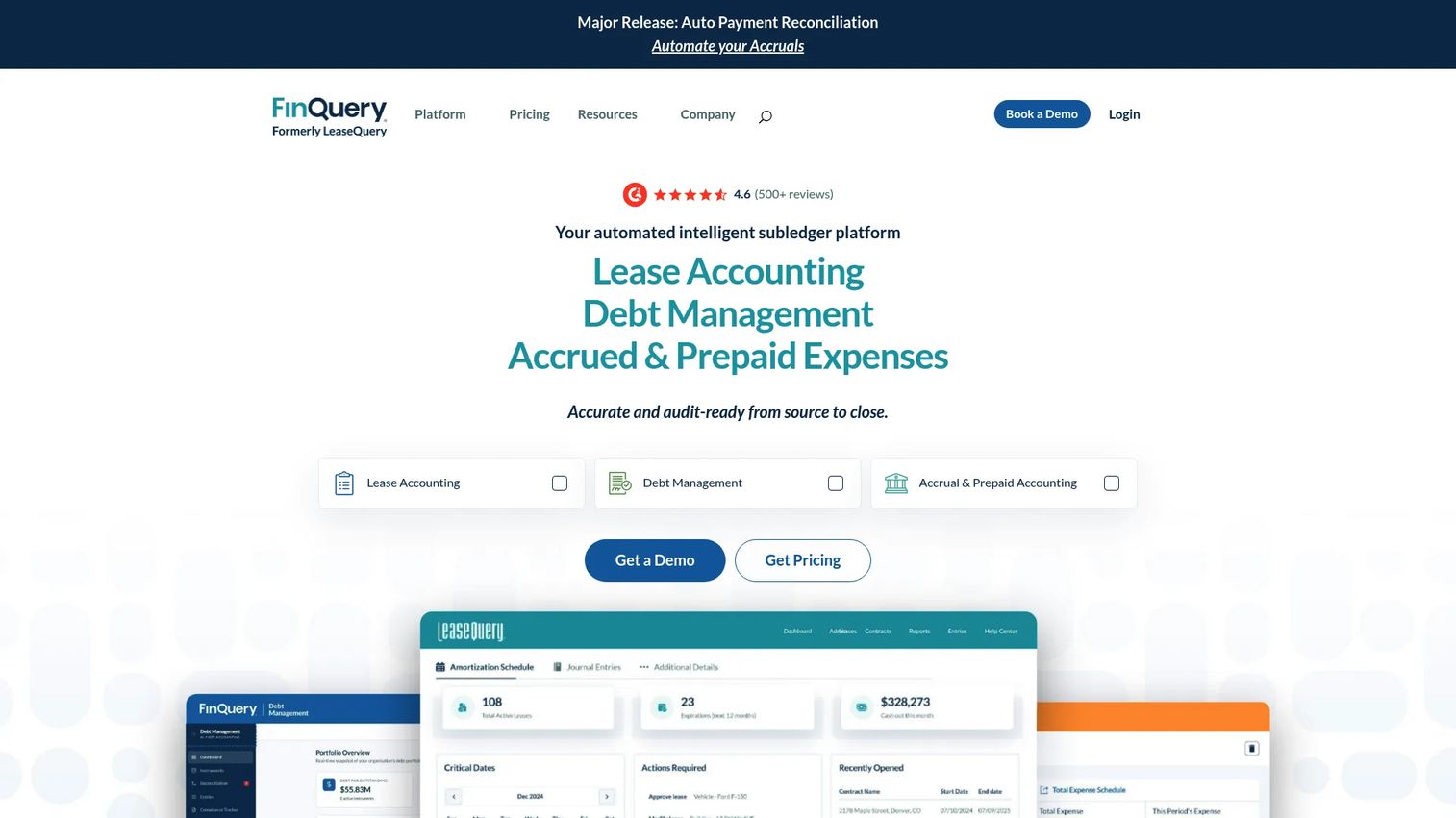
FinQuery is accounting automation software built for finance teams that want contract-driven automation across leases, debt, and accruals. Its lease accounting product, previously known as LeaseQuery, covers the widest standards footprint on this list and pairs it with strong ERP fit. For a growing company that wants one system to handle both lease compliance and adjacent accounting workflows, it is the strongest all-around pick.
Best for: Finance teams that want deep lease accounting plus broader contract-driven automation in a single platform.
Key strengths
- Broad standards coverage: Amortization schedules, journal entries, and disclosure reports for ASC 842, IFRS 16, FRS 102, GASB 87, and SFFAS 54.
- Debt management: Continuous covenant monitoring and accounting automation alongside leases.
- Accrual and prepaid accounting: Recognition automated directly from source documents.
Why choose FinQuery: If your team is tired of stitching together separate tools for leases, debt, and accruals, FinQuery consolidates them under one accounting automation umbrella. The dual-standard reporting depth means multinational teams and public-sector organizations can run parallel compliance without a second system. That consolidation is exactly the kind of stack simplification a scaling finance function wants.
FinQuery pricing: FinQuery does not publish public pricing. The pricing page routes to a request-a-quote flow, so you get a custom quote based on portfolio size and modules. Its lease accounting product holds a 4.6/5 rating on G2, the highest verified rating among the broad-coverage platforms here.
2. Accruent Lucernex
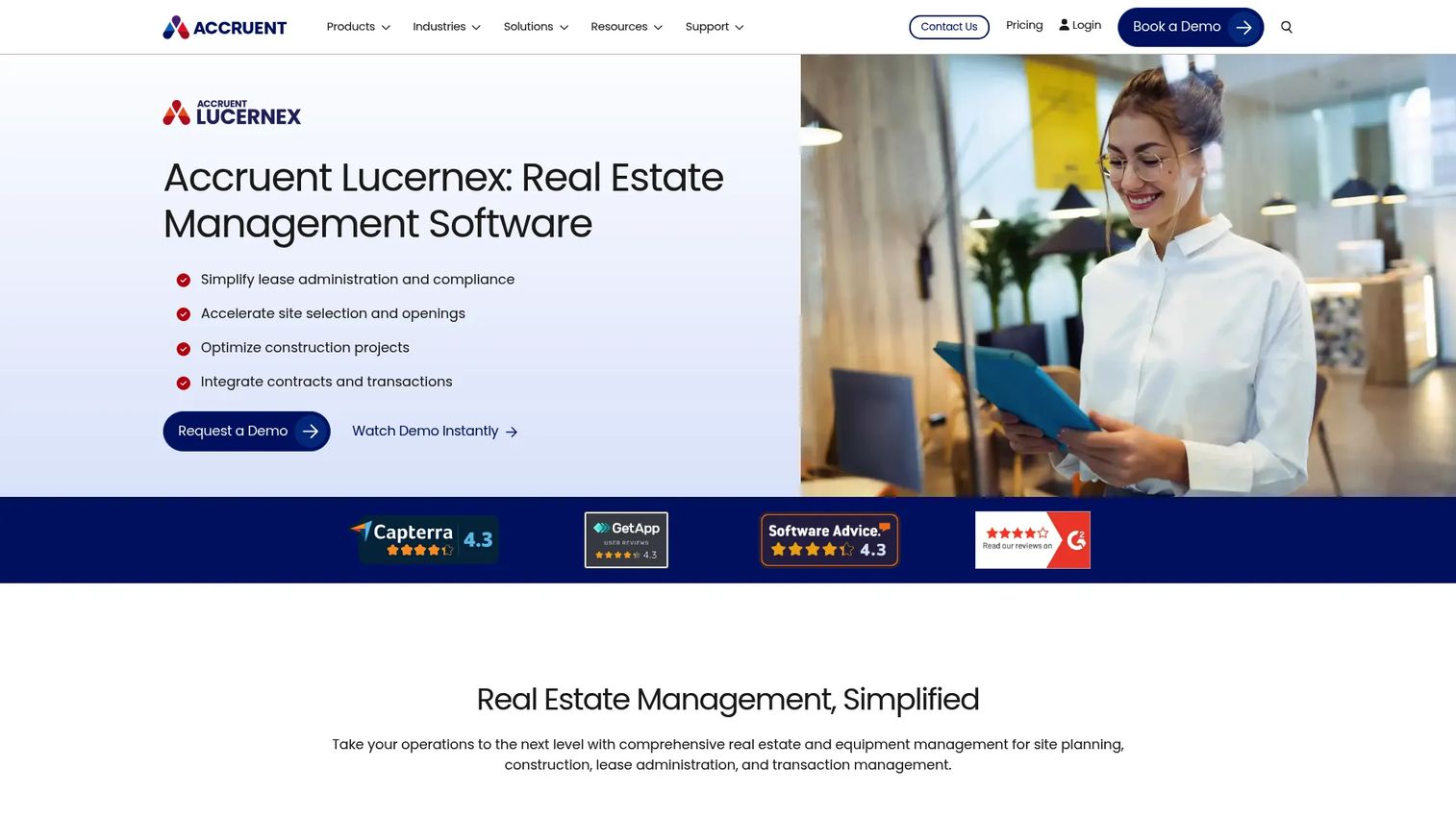
Accruent Lucernex is cloud-based real estate management and lease accounting software that spans the full real estate lifecycle. It fits organizations where leases are inseparable from broader real estate operations: site selection, construction, and transaction management all live in the same platform. If your leases are property-heavy and cross multiple sites, embedding accounting inside that operational context reduces handoffs.
Best for: Enterprises managing leases, real estate portfolios, and capital projects across many locations.
Key strengths
- Lease administration and compliance: Accounting workflows tied directly to lease administration.
- Site selection and openings: Manage the property lifecycle from selection through opening.
- Construction and transaction management: Capital projects and contract workflows in one system.
Why choose Accruent Lucernex: For property-intensive organizations, keeping lease accounting inside a real estate platform means one centralized lease database drives both operational and financial reporting. Retail, healthcare, and multi-site operators get audit trails and controls that map to how they actually run their portfolios. That alignment is harder to achieve when accounting sits in a separate tool from administration.
Accruent Lucernex pricing: Accruent does not publish Lucernex-specific pricing on its site, so expect a custom quote scoped to portfolio and modules. Lucernex holds a 4.0/5 rating on G2. Pricing confidence here is low, so validate scope carefully during evaluation.
3. Visual Lease
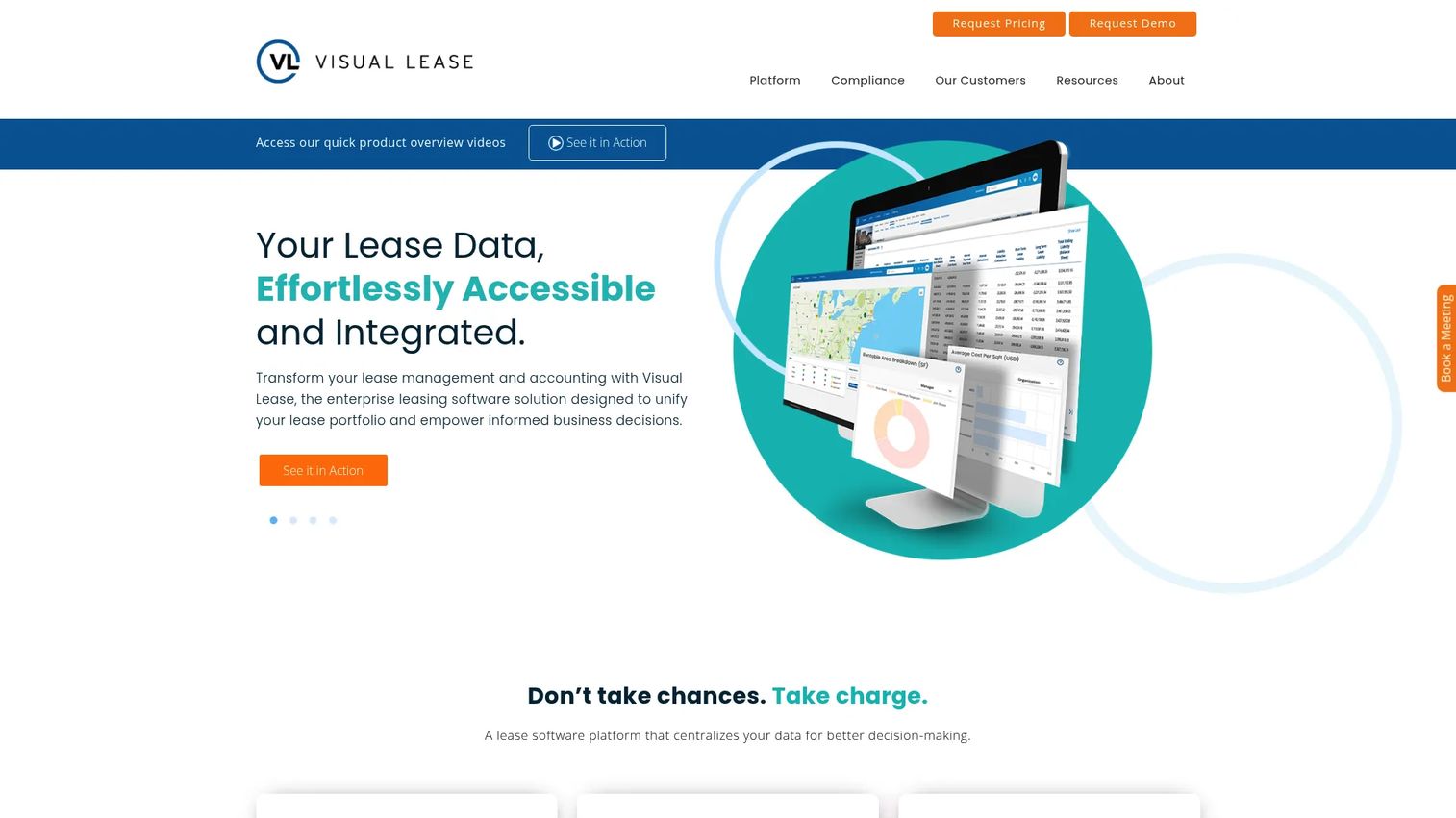
Visual Lease is enterprise lease management and accounting software built around compliance, controls, integrations, and portfolio visibility. It is widely recognized in the category and positions itself as a unified home for both lease management and lease accounting. For teams that want portfolio control and accounting compliance in the same place, it is a natural shortlist entry.
Best for: Large enterprises managing lease accounting, compliance, and portfolio controls together.
Key strengths
- Lease management plus accounting: Both disciplines unified in one platform.
- AI-powered lease abstraction: Extract lease data from documents to reduce manual entry.
- Sustainability reporting and platform controls: Advanced controls and integrations for governance.
Why choose Visual Lease: If your organization treats leases as an ongoing portfolio to manage, not just a set of numbers to report, Visual Lease keeps administration and accounting in sync. The AI lease abstraction speeds up onboarding of new leases, and the platform controls support the internal controls auditors expect. Sustainability reporting is a bonus for teams facing ESG disclosure pressure.
Visual Lease pricing: Visual Lease uses customized, request-based pricing rather than public plan prices. The site directs you to request a quote scoped to your portfolio. It holds a 4.4/5 rating on G2, reflecting solid satisfaction among enterprise users.
4. Trullion
Trullion is AI-powered accounting software for accounting and audit teams that live in document-heavy workflows. Its differentiator is auditable AI: the platform extracts, validates, and tests lease data with a traceable path from source document to journal entry. For teams drowning in lease abstraction, this is where AI lease abstraction actually earns its place.
Best for: Accounting and audit teams that need traceable AI automation for document-heavy lease work.
Key strengths
- Auditable AI: Automation for accounting and audit workflows with a traceable data lineage.
- Agents and workflows in one platform: Combines AI agents, workflows, and knowledge.
- Traceable extraction and testing: Lease data extraction, validation, and substantive testing.
Why choose Trullion: The knock on AI in accounting is that you cannot trust it without a paper trail. Trullion answers that directly with traceable extraction, so every AI-derived number ties back to a source. For finance teams that want to cut manual document work without losing audit defensibility, that combination is the point. It reduces the abstraction bottleneck that slows month-end.
Trullion pricing: Trullion uses demo-based pricing and does not publish a public price list. Expect a scoped quote after a demo conversation. It holds a 4.7/5 rating on G2, the highest on this list, signaling strong user satisfaction with its AI-driven workflows.
5. LeaseAccelerator
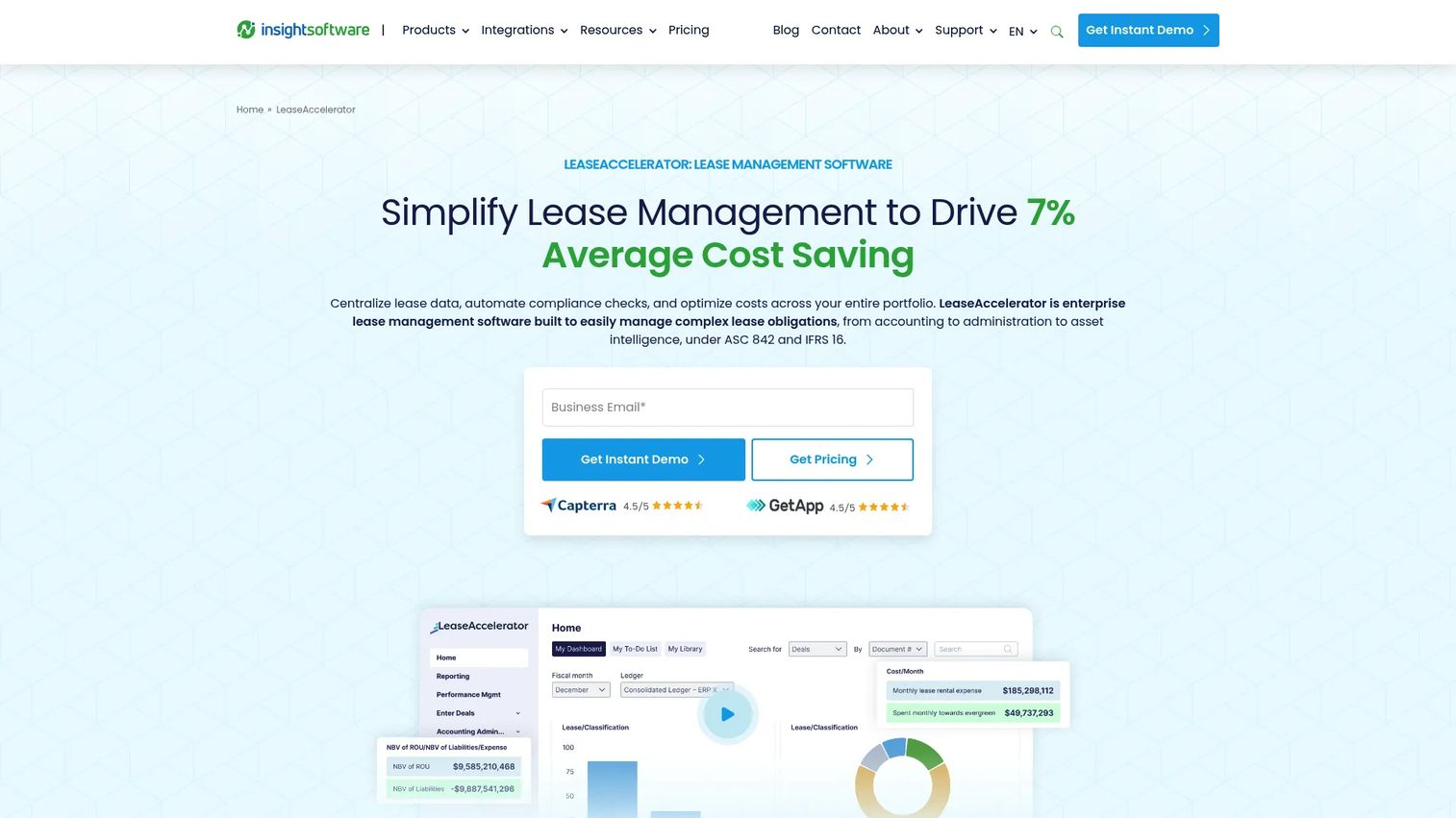
LeaseAccelerator is enterprise lease accounting software focused on ASC 842 and IFRS 16 compliance for large organizations. It targets complex lease accounting and administration at scale, with lease-versus-buy analysis for organizations making ongoing portfolio decisions. If your governance requirements are heavy and your portfolio is large, it belongs on the shortlist.
Best for: Large organizations managing complex lease accounting and compliance workflows.
Key strengths
- Lease accounting automation: Schedules, journal entries, and compliance for ASC 842 and IFRS 16.
- Lease administration: Portfolio administration alongside accounting.
- Lease vs. buy analysis: Financial modeling for procurement and portfolio decisions.
Why choose LeaseAccelerator: For enterprises where lease decisions are frequent and financially material, the lease-versus-buy analysis adds a dimension most accounting-only tools skip. Combined with compliance automation and administration, it supports both the reporting side and the decision side of lease portfolio management. That makes it a fit for organizations with dedicated leasing functions.
LeaseAccelerator pricing: LeaseAccelerator does not publish public pricing, and the accessible pages route to demos and support rather than plan details. Expect an enterprise quote scoped to portfolio complexity. A current G2 rating was not verified at the time of writing, so weigh peer references heavily during evaluation.
6. Nakisa Lease Accounting
Nakisa Lease Accounting is enterprise lease accounting software for global organizations with large, complex portfolios. It covers the full lease lifecycle from abstraction through reporting and runs parallel compliance across IFRS 16, ASC 842, and local GAAP. Native ERP integrations and mass data import make it a fit for cross-functional finance and real estate teams operating at scale.
Best for: Global enterprises with large, complex lease portfolios and multi-standard compliance requirements.
Key strengths
- End-to-end lifecycle: Lease abstraction, administration, accounting, compliance, auditing, and reporting.
- Parallel compliance: Simultaneous IFRS 16, ASC 842, and local GAAP reporting.
- Native ERP integrations: Mass data import via APIs or flat files.
Why choose Nakisa: For multinational enterprises running multiple standards at once, parallel compliance without a second system is the headline. The native ERP integrations mean journal entries flow into the general ledger without re-keying, which matters when your portfolio spans thousands of leases and multiple entities. It is built for the 5,000-person organization, not the 50-person one.
Nakisa pricing: Nakisa does not publish public pricing, so pricing is scoped through sales. It holds a 3.8/5 rating on G2 based on a small number of reviews, so treat the rating as directional and rely on a proof of concept to validate fit for your portfolio.
7. EZLease
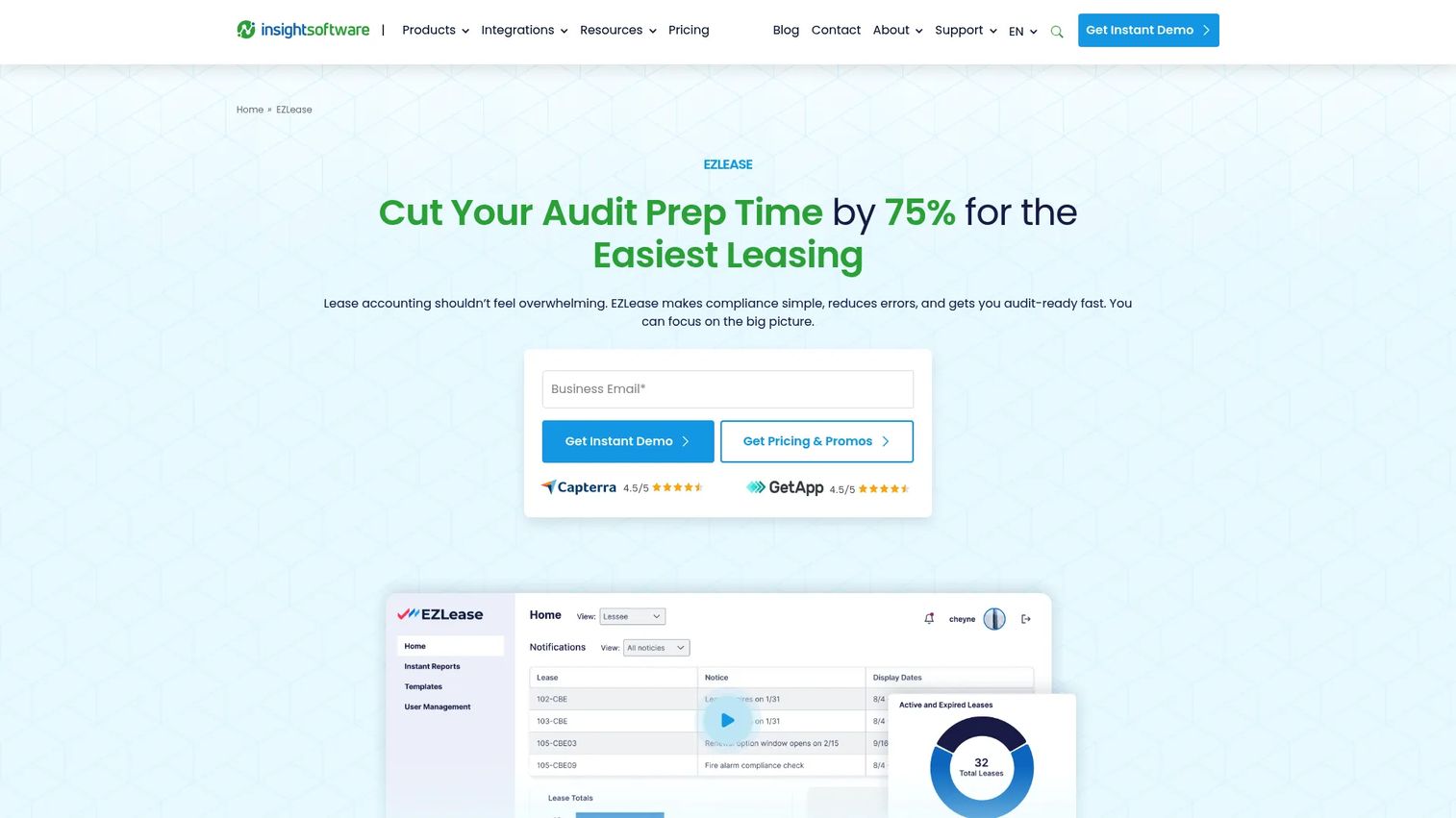
EZLease is lease accounting software focused on compliance and lease data management without unnecessary complexity. It supports ASC 842, GASB 87, GASB 96, and IFRS, with bulk import and accounting controls that keep implementation practical. For mid-market teams that need clean compliance without an enterprise-scale rollout, it hits the mark.
Best for: Organizations that need straightforward lease accounting and compliance automation.
Key strengths
- Multi-standard support: ASC 842, GASB 87, GASB 96, and IFRS compliance.
- Bulk import: Load leases, attachments, impairments, and early terminations in bulk.
- Accounting controls: Locking periods and system options for internal controls.
Why choose EZLease: Not every team needs a full lease management platform. If your priority is compliant accounting with journal entries and disclosure support, EZLease delivers that without the implementation weight of enterprise systems. The locking periods and bulk import features handle the practical realities of month-end and onboarding without turning setup into a project.
EZLease pricing: EZLease does not publish public pricing, so expect a quote scoped to your lease count and standards. It holds a 4.5/5 rating on G2, strong for a platform positioned around practicality and ease of use for mid-market teams.
8. MRI ProLease
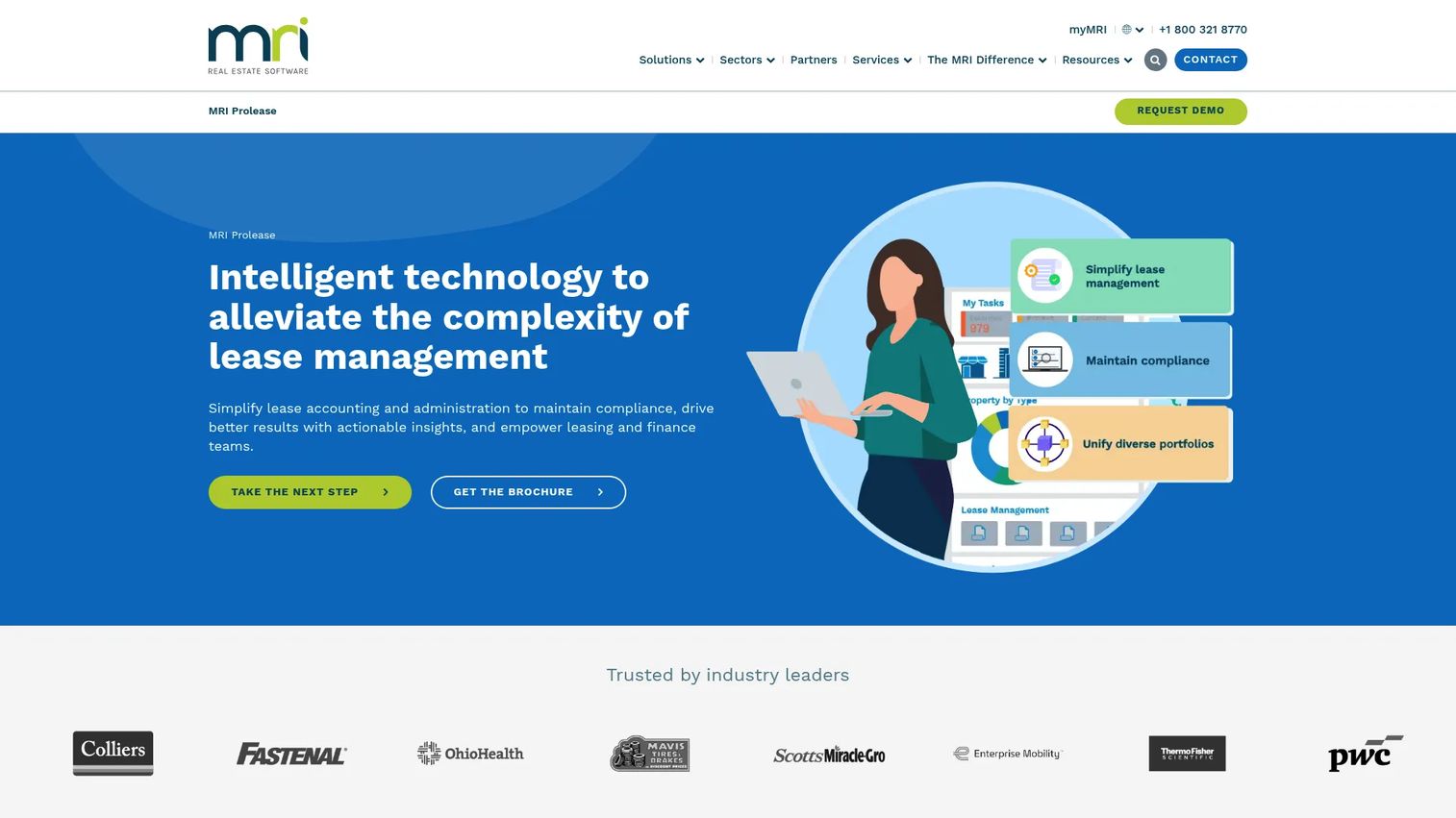
MRI ProLease is lease accounting and management software for occupiers with property-heavy and mixed asset portfolios. It combines compliance across ASC 842, IFRS 16, GASB 87, and FRS 102 with lease administration for real estate, equipment, and subleases. AI lease abstraction and automated workflows round out a platform built for operational visibility.
Best for: Mid-sized to large organizations managing complex real estate and equipment lease portfolios.
Key strengths
- Broad compliance: ASC 842, IFRS 16, GASB 87, and FRS 102 support.
- Lease management: Real estate, equipment, and sublease administration.
- AI lease abstraction: Automated workflows that reduce manual data entry.
Why choose MRI ProLease: For organizations where real estate and equipment leases sit side by side, ProLease keeps administration and accounting under one roof. The sublease handling matters for occupiers who lease space and then re-lease part of it, a scenario many accounting-only tools handle poorly. Combined with AI abstraction, it reduces the manual load of onboarding a mixed portfolio.
MRI ProLease pricing: MRI does not publish public pricing on its product pages, opting for demo and contact CTAs instead. Expect a scoped quote. ProLease holds a 4.1/5 rating on G2, reflecting steady adoption among real estate-centric organizations.
Considerations before you buy
The right platform depends less on feature checklists and more on how well it fits your compliance scope, portfolio, and finance stack. Run every shortlist candidate through these criteria.
Standards coverage matches your reality
Confirm the platform supports every standard you report under, including IFRS 16 software needs, GASB 87 software requirements for public-sector teams, and any local GAAP for multinational operations. If you run parallel compliance, verify dual-standard reporting is native, not a workaround.
Automation depth for your workflows
Look past the demo. Ask how the platform handles variable payments, catch-up adjustments, lease modifications, and early terminations. These are where manual schedules break, so automated journal entries and amortization schedules that survive complexity are what separate the strong platforms from the basic ones.
ERP integration and data flow
A platform that does not sync cleanly with your ERP creates re-keying and reconciliation work. Confirm the ERP integrations you need exist and are supported, not just theoretically possible. This is often the difference between a system that reduces work and one that adds it.
Audit readiness and internal controls
Evaluate the audit trail, access controls, and whether the vendor holds a SOC 1 Type 2 report. Audit readiness is not a nice-to-have when you are facing due diligence or your first real audit. A traceable trail from source document to journal entry is what lets your team answer questions fast.
Implementation fit and support
Ask how long implementation takes for a portfolio your size and who owns migration. A platform that takes two quarters to stand up is a different commitment than one live in weeks. For lean teams, implementation effort and support quality often matter more than any single feature.
Conclusion
The best lease accounting software depends on three things: your compliance scope, your portfolio complexity, and whether you need accounting only or a broader lease management system.
For most growing companies, FinQuery is the strongest all-around choice, with broad standards coverage, automation, and ERP fit that scales. Enterprises with property-heavy portfolios should look hard at Accruent Lucernex or MRI ProLease, where accounting lives inside real estate operations. Visual Lease fits teams wanting unified lease management plus accounting, while Trullion is the pick for those prioritizing traceable AI lease abstraction. For heavy enterprise governance, LeaseAccelerator and Nakisa handle complex multi-entity portfolios, and EZLease covers mid-market teams that want clean compliance without a heavy rollout.
The next step is straightforward: shortlist two or three platforms that match your standards and portfolio, then run each through a proof of concept using your own lease data and audit requirements. That is the only way to know which one actually reduces manual work rather than shifting it around. Prioritize audit readiness and ERP fit, because those are the criteria that hold up under investor and auditor scrutiny.
FAQs
Lease accounting software automates how a company recognizes, measures, and reports lease obligations under standards like ASC 842, IFRS 16, and GASB 87. It replaces manual spreadsheets with a centralized lease database that generates amortization schedules, automated journal entries, and disclosure reports, giving finance teams audit-ready outputs on demand.
Yes, standards coverage is the core function of these platforms. Every tool in this guide supports ASC 842, and most also handle IFRS 16, GASB 87, and additional standards like FRS 102 or local GAAP. Confirm the specific standards you report under before buying, especially if you run parallel compliance across multiple frameworks.
Audit readiness comes down to a complete audit trail, strong internal controls, and traceable data from source document to journal entry. Look for role-based access controls, locking periods, and a vendor that holds a SOC 1 Type 2 report. These features let your team answer auditor questions in minutes rather than reconstructing schedules by hand.
Most platforms offer ERP integrations that sync journal entries directly into the general ledger, eliminating manual re-keying and reducing reconciliation work. Integration depth varies, so confirm the specific ERP connectors you need are supported natively. Some platforms, like Nakisa, emphasize native ERP integrations with mass data import via APIs or flat files.
Lease accounting software focuses on compliance: schedules, journal entries, and disclosures under the standards. Lease management software adds operational tracking like renewals, options, critical dates, and portfolio decisions. Many platforms combine both, so if your team manages leases operationally as well as financially, look for a unified lease management plus accounting system.
Yes, many enterprise platforms support dual-standard reporting, running parallel compliance across IFRS 16, ASC 842, and local GAAP simultaneously. This matters for multinational organizations reporting under multiple frameworks at once. Verify the capability is native rather than a manual workaround, since parallel compliance done by hand reintroduces the errors software is meant to remove.
AI lease abstraction is worth it when the AI-derived data is traceable back to the source document. Platforms like Trullion pair extraction with validation and audit trails, so the automation cuts manual document work without sacrificing audit defensibility. For teams onboarding large or document-heavy portfolios, this can materially reduce the abstraction bottleneck that slows month-end.
Any organization with more than a handful of leases across multiple standards benefits, and SMEs are one of the fastest-growing segments, projected to grow at 7.5% CAGR according to Market Research Future. The trigger is usually complexity, not size alone. Once manual spreadsheets break under modifications, variable payments, or audit pressure, a dedicated system pays for itself in reduced risk and reclaimed time.