Fuel is one of the largest line items on any fleet's balance sheet, and it leaks in ways that are hard to see. A driver fills up twice on the same day. A receipt never makes it into the system. A card gets used 40 miles off route. None of these show up in a spreadsheet until the monthly reconciliation, and by then the money is gone and the trail is cold.
The category exists to close that gap. The global fuel management software market is valued at about USD 1.4 billion in 2025 and projected to reach USD 3.0 billion by 2035 at a 7.5% CAGR, according to Future Market Insights (2025). North America already accounts for 38.6% of global fuel management system revenues, at roughly USD 695.4 million in 2025, per MarketIntelo (2025). Fleets are not buying dashboards for the sake of dashboards. They are buying cleaner data and tighter control.
If you manage a fleet, or you own the operational systems behind one, the real question is not whether fuel software helps. It is which platform matches your data sources, your reporting requirements, and your fleet's complexity. This guide compares seven of the strongest options for 2026, from telematics-first platforms to hardware-plus-software setups to lightweight mobile logging tools.
What's inside
This guide is for fleet operators, operations leads, and product or systems owners who need to compare fuel management software before they commit. It covers seven platforms across the spectrum: telematics-heavy suites, maintenance-first fleet systems, hardware-backed fuel control, and simple mobile logging.
We evaluated each tool on the criteria that actually move the needle: fuel transaction tracking quality, fuel card integrations, reporting depth (including cost per mile and fuel efficiency reporting), fraud and anomaly detection, mobile fuel logging, and compliance support like IFTA reporting. Pricing and ratings reflect what each vendor publicly listed as of mid-2026. Where a vendor gates pricing behind sales, we say so rather than guess.
TL;DR
- Best for all-in-one fleet operations: Fleetio ties fuel transaction tracking into maintenance, assets, and reporting in one place.
- Best for telematics-heavy fleets: Geotab turns engine and GPS data into fuel intelligence at scale.
- Best for hardware plus software control: Fill-Rite pairs physical fuel transfer equipment with management and reporting.
- Best for straightforward logging: AUTOsist keeps fuel expense monitoring, receipt capture, and imports simple and practical.
- Best for real-time operational visibility: Samsara and Motive frame fuel inside a broader connected operations platform.
- Best for large fleets needing broad oversight: Verizon Connect scales tracking, reporting, and fuel usage visibility across big operations.
What is fuel management software?
Fuel management software is a system that captures, tracks, and analyzes fuel purchases and consumption across a fleet, so operators can control spend, detect fraud, and report accurately. It replaces the manual spreadsheet-and-shoebox approach with automated ingestion from fuel cards, telematics, and driver-submitted receipts.
Think of it as a data pipeline, not just a cost tracker. Raw fuel events flow in from multiple sources, the system validates and enriches them, and the output is a set of reports and alerts that tell you where money is going and where it is leaking. A good fleet fuel management system does not just record transactions. It flags the ones that do not make sense.
The core model rests on a handful of capabilities:
- Fuel transaction tracking: Automatic capture of every fill-up, tied to a vehicle, driver, and location.
- Fuel card integrations: Direct feeds from major fuel card providers so purchases post without manual entry.
- Reporting and dashboards: Fuel efficiency reporting, cost per mile, spend by vehicle or driver, and exportable summaries.
- Fraud and anomaly detection: Alerts for duplicate fills, tank-capacity mismatches, and off-route purchases.
- Mobile capture: Driver receipt capture and mobile fuel logging from the field.
- IFTA and tax support: Mileage and fuel records structured for IFTA reporting and audits.
Most modern platforms lean on telematics integrations to validate fuel data against actual vehicle movement. That cross-check is what turns fuel monitoring software from a ledger into a control system.
When to use fuel management software
Not every fleet needs the same depth. Here is how to pattern-match your situation to the category.
Control fuel spend across a growing fleet
Spreadsheets work until they don't. At five vehicles, a manual log is annoying but survivable. At 30, it collapses. You lose track of which card belongs to which driver, approvals happen after the money is spent, and nobody can answer "what did we spend per mile last quarter?" without a week of cleanup. Fuel management software gives you spend visibility and approval structure before the leaks compound.
Reduce fraud, theft, and duplicate transactions
Fuel theft prevention is the reason many fleets buy in the first place. When a fuel card purchase can be validated against GPS location and tank capacity, the anomalies surface fast: a 40-gallon fill on a vehicle with a 25-gallon tank, a purchase logged while the truck sat in the yard, two fills within an hour. Automated fuel anomaly alerts catch these patterns that human review misses at scale.
Improve reporting and compliance
If you cross state lines, IFTA reporting is a recurring headache. Fuel management software structures mileage and fuel purchase data so quarterly filings pull from clean records instead of reconstructed guesses. The same data feeds audits, tax recordkeeping, and the fuel efficiency reporting that operations leaders use to defend budgets.
Comparison table
Here is how the seven platforms compare on intent, differentiation, pricing, and rating. Fleetio leads because it balances fuel transaction tracking with the broadest fleet operations coverage for most teams.
| # | Product | Intent | Key differentiation | Pricing | G2 rating |
|---|---|---|---|---|---|
| 1 | Fleetio | All-in-one fleet operations | Fuel data tied into maintenance, assets, and reporting | From $4 per vehicle/month | 4.6/5 |
| 2 | Geotab | Telematics-first fleets | Engine and GPS data drives fuel intelligence | Quote-based | 4.5/5 |
| 3 | Fill-Rite | Hardware plus software control | Physical fuel transfer equipment with management | From $316 one-time | Not listed |
| 4 | AUTOsist | Straightforward logging | Maintenance, inspections, and fuel in one simple system | From $6 per vehicle/month | 4.8/5 |
| 5 | Samsara | Connected operations | Real-time fleet visibility with fuel insights | Quote-based | 4.5/5 |
| 6 | Motive | Unified fleet command | AI-driven telematics, safety, and spend | Quote-based | Not listed |
| 7 | Verizon Connect | Large-fleet oversight | Scaled tracking, reporting, and fuel usage visibility | Quote-based | 3.8/5 |
Best fuel management software for 2026
Each section below covers what the platform does, who it fits, its key strengths, why you would choose it, and pricing. Read for fit, not just features.
1. Fleetio
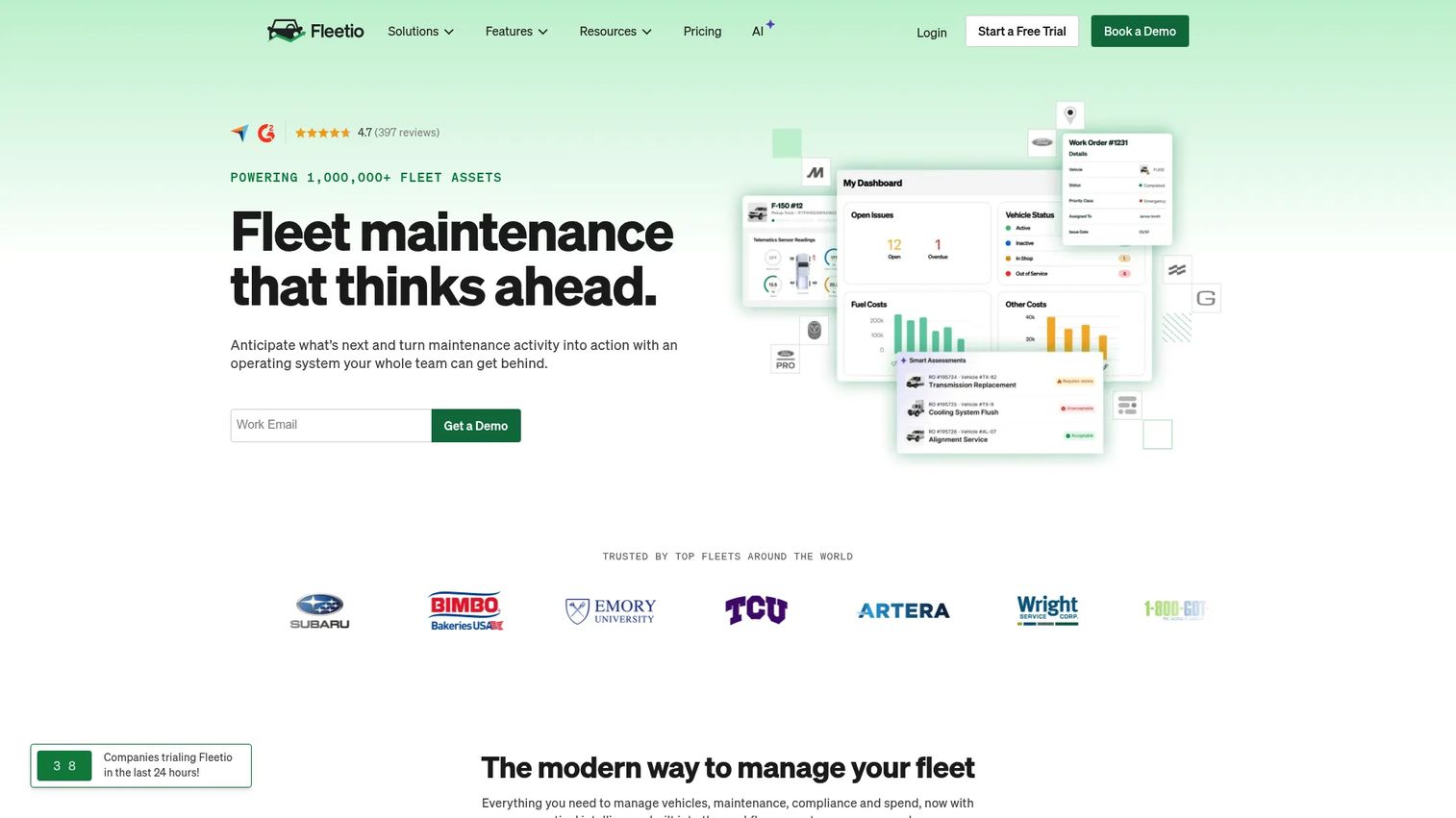
Fleetio is fleet management software for tracking, maintaining, and optimizing fleets and equipment, with fuel management built into a larger operations platform. Instead of treating fuel as a standalone silo, Fleetio connects fuel transaction tracking to maintenance history, asset records, and fleet dashboards. That means a fuel efficiency dip on one vehicle sits right next to its service history, so you can tell whether the problem is driver behavior or a mechanical issue.
Best for: Fleets that want fuel data tied into maintenance, assets, and reporting in one centralized system.
Key strengths
- Asset management: Every fuel event links to a specific vehicle or piece of equipment, giving clean per-asset cost per mile.
- Fleet dashboards and reporting: Fuel efficiency reporting, spend trends, and exportable summaries live alongside maintenance data.
- Maintenance and service tracking: Fuel anomalies get context from service history, so you diagnose the cause, not just the symptom.
Why choose Fleetio: If fuel is one problem among several, and you want maintenance, inspections, and fuel in a single system rather than three tools stitched together, Fleetio fits. It suits operations teams that treat fuel data as one input into overall fleet health, not an isolated expense report.
Fleetio pricing: Fleetio publishes three plans. Essential starts at $4 per vehicle per month billed annually, or $5 billed monthly. Professional is $7 per vehicle per month billed annually. Premium is $10 per vehicle per month billed annually. A 14-day free trial is available, and pricing scales with fleet size, contract, and payment terms. Fleetio holds a 4.6/5 rating on G2.
2. Geotab
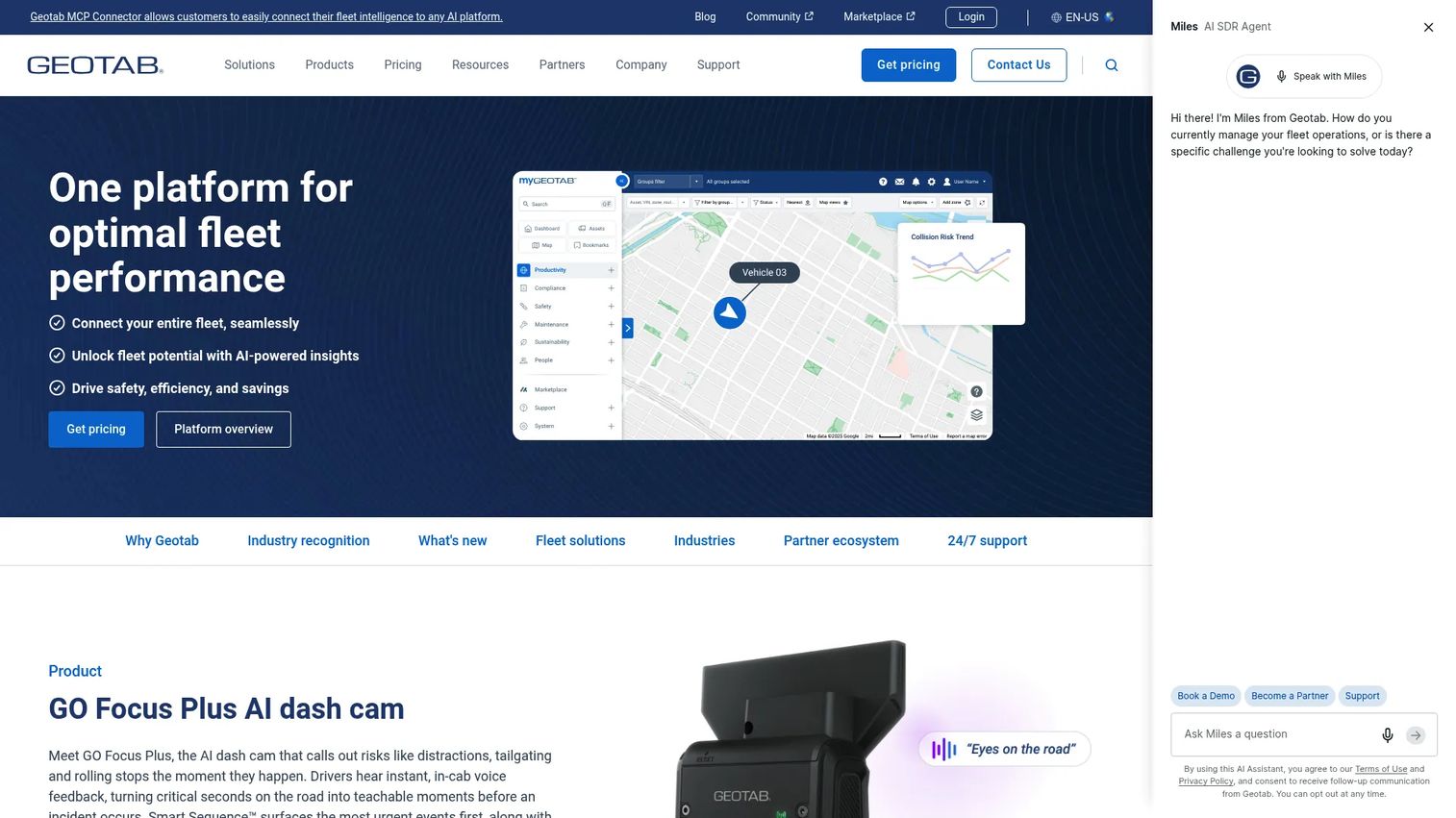
Geotab is a connected vehicle and asset management platform built around telematics. For fleets that already run on engine and GPS data, Geotab turns that stream into fuel intelligence. It reads fuel consumption directly from the vehicle, cross-references it against GPS movement, and surfaces idling, harsh driving, and route inefficiency that quietly inflate fuel bills.
Best for: Fleets that use telematics as their core operating system and want fuel analysis to draw from engine-level data.
Key strengths
- Real-time GPS tracking and fleet visibility: Fuel usage gets validated against actual vehicle location and movement.
- Driver behavior monitoring and safety analytics: Idling and aggressive driving patterns tie directly to fuel waste.
- Maintenance scheduling and engine/vehicle data reporting: Engine data feeds both maintenance and fuel efficiency reporting.
Why choose Geotab: Geotab makes the most sense when telematics integrations are already central to how you run the fleet. Rather than importing fuel data from cards alone, it pulls consumption from the vehicle itself, which sharpens fraud detection and cost per mile accuracy. It scales from small fleets to large, compliance-heavy operations.
Geotab pricing: Geotab publicly lists a GO Core plan and a GO Plan with feature summaries, but does not display numeric pricing on its site. Pricing runs through a "Get Pricing" or contact-sales flow. Geotab holds a 4.5/5 rating on G2.
3. Fill-Rite
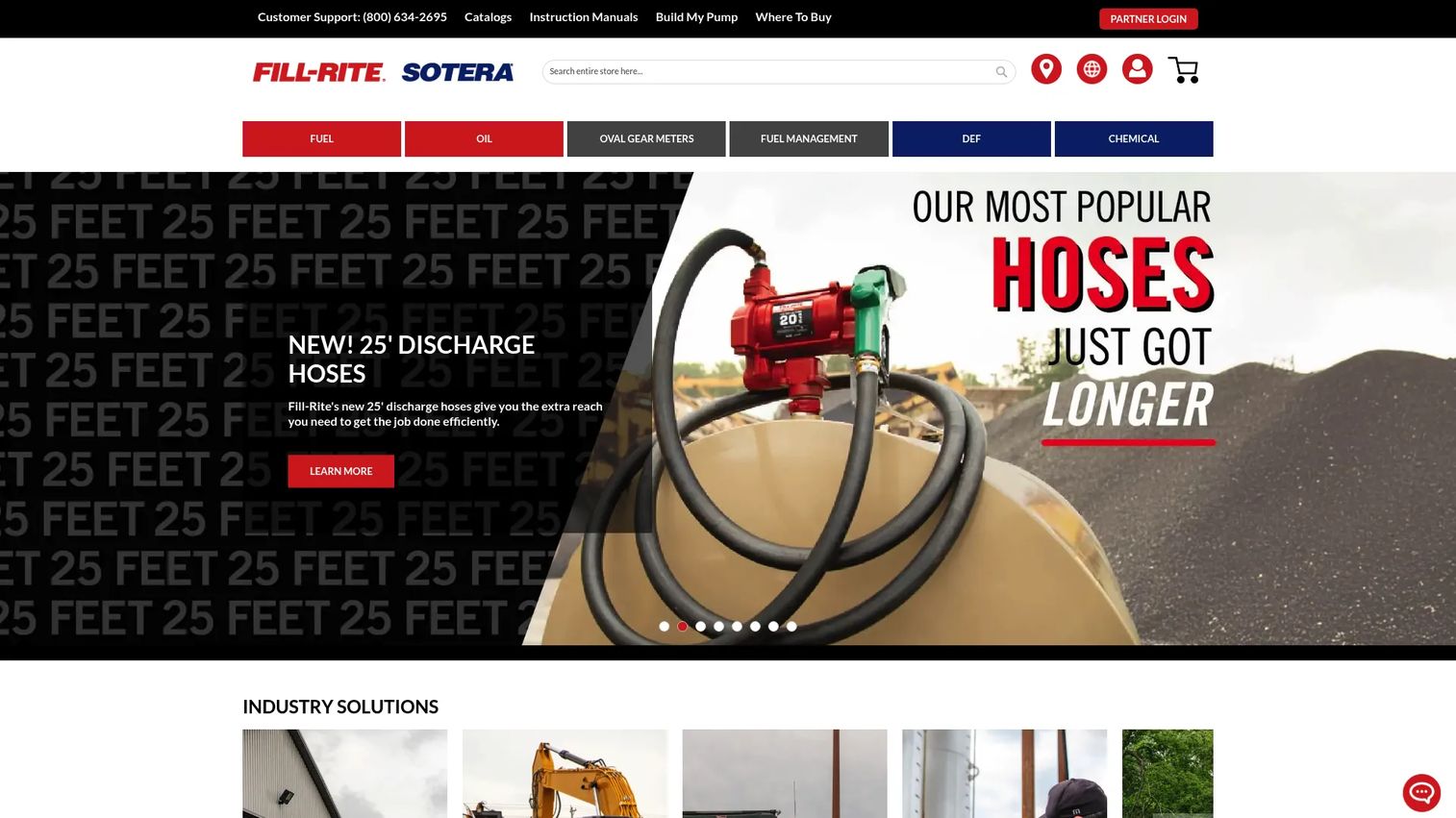
Fill-Rite takes a different angle. It manufactures fuel, oil, chemical, and DEF transfer equipment, and pairs that hardware with a fuel management system for control and reporting. This is the option for fleets that store and dispense their own fuel on-site. When you own the pump, you can meter every gallon at the source, which closes the gap between what left the tank and what a vehicle actually used.
Best for: Fleets and businesses that manage on-site fuel storage and need hardware-backed fuel and fluid transfer control.
Key strengths
- Fuel transfer pumps and accessories: Physical metering at the dispensing point captures every gallon accurately.
- Chemical transfer pumps and meters: Handles fuel plus DEF, oil, and chemical transfer for mixed operations.
- Fuel management system: Layers access control, reporting, and automation on top of the hardware.
Why choose Fill-Rite: Choose Fill-Rite when your fuel management challenge is infrastructure, not just software. If drivers fill from a company tank rather than retail stations, metering at the source gives you tighter fuel spend control and cleaner tax workflows than card data alone. It fits operations that want physical oversight of dispensing.
Fill-Rite pricing: Fill-Rite shows public product pricing on its site rather than SaaS-style subscriptions. The FR8 Series starts at $316, the FR1200 Series at $493.37, and the FR4200 Series at $617, all one-time purchases. Some products are quote-based. No G2 rating was verified for Fill-Rite.
4. AUTOsist
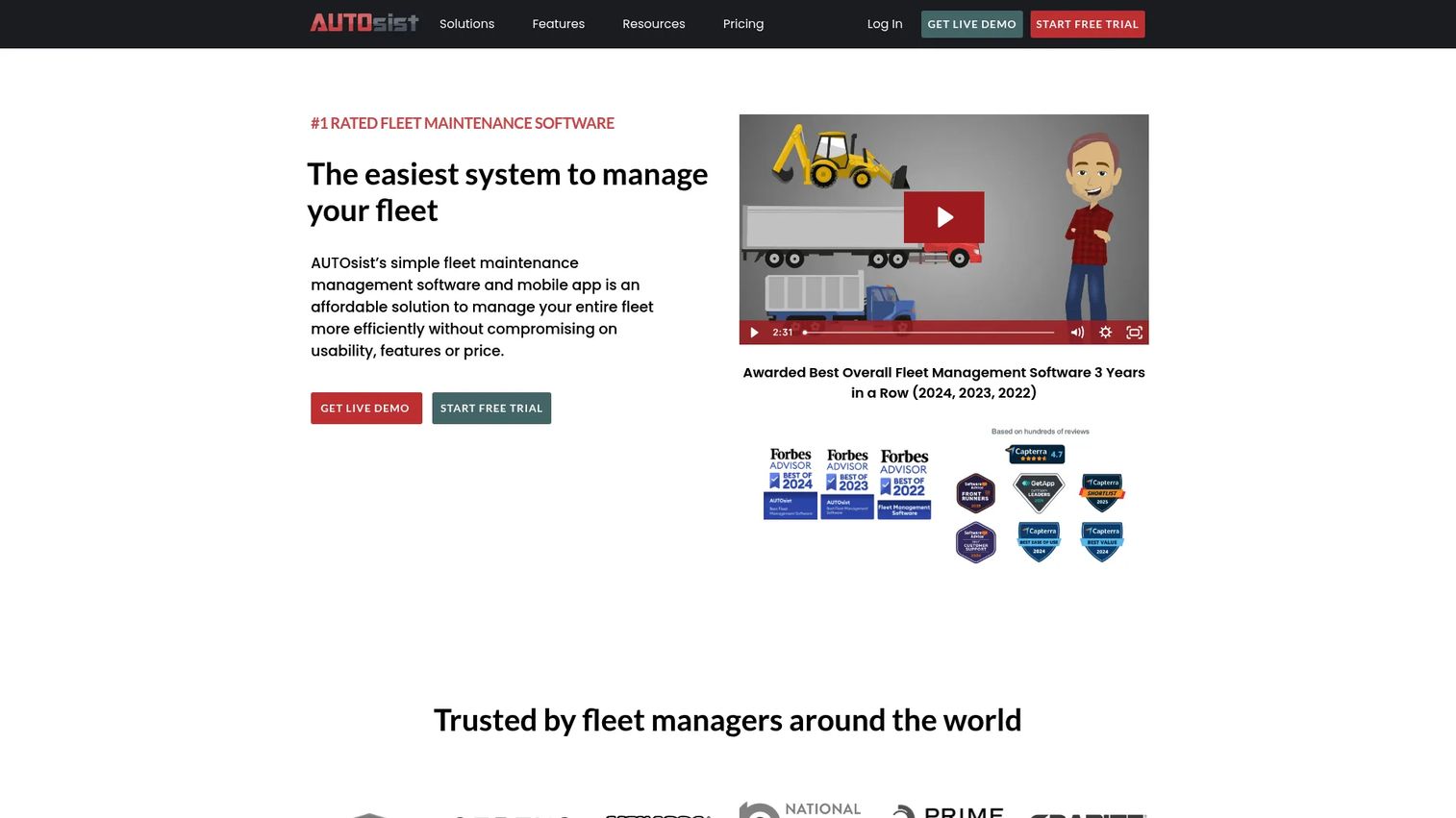
AUTOsist is fleet maintenance and management software that keeps fuel expense monitoring practical and low-friction. It covers preventative maintenance, digital inspections, and fuel in one system, with mobile receipt capture and CSV or Excel imports that make backfilling historical data straightforward. For teams that want clean fuel records without a heavy telematics rollout, AUTOsist keeps the workflow simple.
Best for: Fleet operators who need straightforward logging, mobile fuel logging, and cost control without complex setup.
Key strengths
- Preventative maintenance schedules, reminders, and work orders: Fuel logs sit alongside service tracking for full asset context.
- Custom DVIR digital inspections and compliance forms: Driver-submitted forms keep inspection and fuel data audit-ready.
- Parts inventory, fuel card integration, GPS tracking, and safety cameras: Fuel card feeds and imports keep transaction data current.
Why choose AUTOsist: AUTOsist fits teams that value speed and simplicity over deep telematics. Drivers capture receipts on their phones, admins import bulk data via CSV, and the audit trail stays clean. It works well for smaller fleets or operations that want fuel and maintenance handled in one uncomplicated tool.
AUTOsist pricing: The All-in Maintenance Package starts at $6 per vehicle per month billed annually, or $7 monthly. Adding GPS and telematics moves it to $28 per vehicle per month billed annually, and the package with safety cameras runs $55 per vehicle per month billed annually. A 14-day free trial is available, with a 5-vehicle minimum on the GPS and camera plans. AUTOsist holds a 4.8/5 rating on G2, based on a small review sample.
5. Samsara
Samsara is a connected operations platform for fleets, equipment, sites, and workers, with fuel insights sitting inside a broader real-time visibility layer. Rather than isolating fuel, Samsara surfaces it next to GPS routing, driver safety, and asset tracking. That framing helps operations teams see fuel waste as part of a bigger picture: idling that burns diesel, routes that add miles, and behavior that drives cost per mile up.
Best for: Mid-market to enterprise operations teams managing fleets, assets, and job sites who want fuel inside a unified platform.
Key strengths
- AI dash cams and video safety: Driver behavior data connects to fuel efficiency and route context.
- Fleet telematics with GPS tracking, routing, and compliance: Real-time visibility validates fuel usage against actual movement.
- Asset/equipment tracking, maintenance, and reporting: Fuel sits alongside maintenance and asset data for whole-fleet analytics.
Why choose Samsara: Samsara fits when fuel is one dimension of a larger operations problem you want to coordinate in real time. If you already need telematics, safety, and asset tracking, folding fuel visibility into the same platform reduces tool sprawl and gives operations a single source of truth across the fleet.
Samsara pricing: Samsara does not display public pricing. Its pricing page asks for company size and routes prospects to a quote or sales conversation. Samsara holds a 4.5/5 rating on G2.
6. Motive
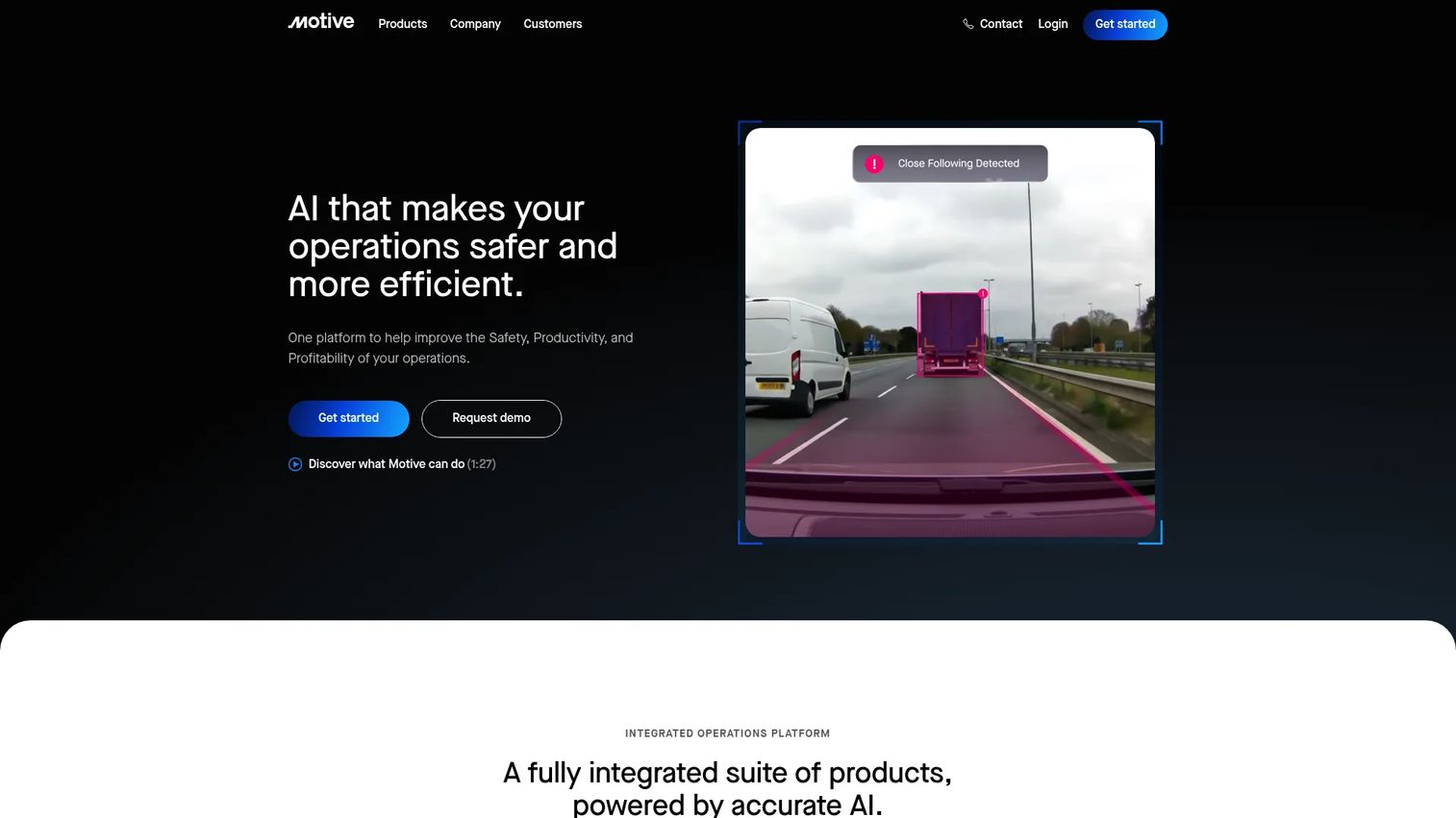
Motive is an AI-powered integrated operations platform that brings telematics, safety, compliance, and spend management under one roof. Fuel management fits into a broader command layer, where fuel card workflows, driver behavior context, and AI-driven insights combine to explain not just what you spent, but why. For fleets that want fuel decisions informed by driver and equipment data, Motive ties the threads together.
Best for: Fleets that want a unified command layer combining fuel, safety, telematics, and spend management.
Key strengths
- Driver Safety: Behavior data connects directly to fuel consumption and route efficiency.
- Fleet Management: Telematics and fuel card workflows feed a single operational view.
- Equipment Monitoring: Engine and asset data enrich fuel efficiency reporting and anomaly detection.
Why choose Motive: Motive suits teams that want AI to surface patterns across fuel, safety, and equipment rather than reviewing each in isolation. If your goal is a single fleet command layer that connects spend to driver behavior, Motive's integrated approach reduces the number of tools your operations team has to reconcile.
Motive pricing: Motive does not publish fixed public pricing on its site and directs prospects to sales or a demo for a quote. A Help Center note indicates its Workforce Management product has a free tier alongside a paid subscription, but no public price is shown. A current G2 rating was not verified in this review.
7. Verizon Connect
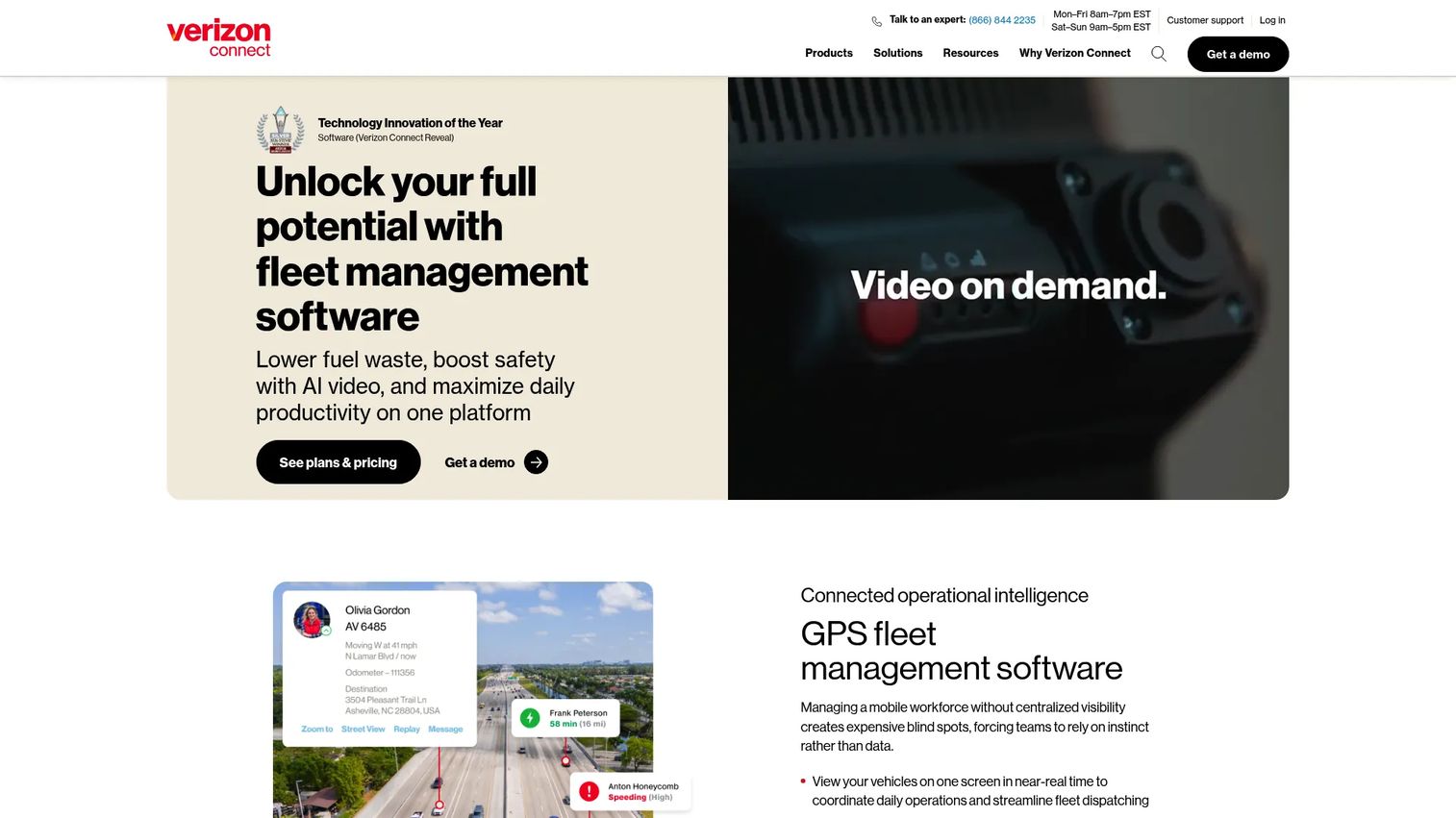
Verizon Connect is fleet management and telematics software built for tracking vehicles, assets, and driver activity at scale. Its strength is breadth of visibility across large operations, with fuel usage reporting folded into fleet-wide tracking and compliance workflows. For fleets running dozens or hundreds of vehicles, the reporting and driver identification features give operations leaders the oversight they need to spot fuel waste across the whole fleet.
Best for: Larger fleets that need broad tracking, driver monitoring, and operational reporting with fuel usage visibility.
Key strengths
- Vehicle tracking: Fleet-wide GPS data validates fuel usage against location and movement.
- Driver ID / driver identification: Ties fuel and driving behavior to specific drivers for accountability.
- Reports and compliance reporting: Structured reporting supports fuel oversight, audits, and compliance needs.
Why choose Verizon Connect: Verizon Connect fits larger operations that prioritize scale and broad oversight. When you need to monitor fuel usage, driver activity, and compliance across a big fleet from one reporting layer, its telematics-driven visibility helps operations leaders manage at volume.
Verizon Connect pricing: Verizon Connect does not display public subscription pricing. The site routes prospects to request a demo or quote and notes a minimum of five tracking units. Verizon Connect holds a 3.8/5 rating on G2.
Considerations
Before you commit, run every shortlisted platform through this checklist. The right tool depends less on feature counts and more on whether it ingests your data cleanly and reports on the metrics you actually defend.
Transaction capture quality
Check every path your fuel data can arrive by. Does the tool support direct fuel card integrations, driver receipt capture, bulk CSV import, and API feeds? A platform that only reads card data misses cash purchases and on-site dispensing. The more sources it ingests cleanly, the fewer blind spots in your fuel transaction tracking.
Reporting depth
Look past the default dashboard. Can you pull cost per mile, fuel economy by vehicle, spend by driver, and custom exports? Cost per mile visibility is the metric most operations leaders use to defend budgets, yet many tools bury it. Confirm the reports you need exist before you buy, not after.
Fraud and anomaly controls
Evaluate how the tool catches problems. Does it fire fuel anomaly alerts for duplicate transactions, tank-capacity mismatches, and off-route purchases? Location checks that validate a fuel card swipe against GPS position are the backbone of real fuel theft prevention. Weak exception handling means you find fraud during reconciliation, too late to act.
Mobile workflow support
Drivers live in the field, so the mobile experience matters. Confirm that mobile fuel logging and receipt capture are fast and usable on a phone. If logging a fill takes more than a few taps, drivers skip it, and your data develops holes.
Compliance and tax support
If you cross state lines, verify IFTA reporting and audit workflows directly. Ask whether mileage and fuel records export in the format your filing process needs. Clean compliance support turns a quarterly scramble into a routine pull.
Conclusion
There is no single best fuel management software, only the best fit for your data maturity and fleet complexity. If you want fuel folded into maintenance and asset management, Fleetio leads. If telematics is already your operating system, Geotab or Samsara turn engine data into fuel intelligence. If you dispense your own fuel, Fill-Rite meters it at the source. If you want simple logging without a heavy rollout, AUTOsist keeps it practical. Motive and Verizon Connect suit teams that need fuel inside a broader command and oversight layer at scale.
The smart next step is not picking a name. It is mapping your transaction sources and reporting requirements first. List where your fuel data comes from, the metrics you have to report, and how much telematics you already run. Then match that profile to the platform that ingests it cleanly. Start with the tool that fits your fleet's data reality, not the one with the longest feature list.
FAQs
Fuel management software captures, tracks, and analyzes fuel purchases and consumption across a fleet so operators can control spend, detect fraud, and report accurately. It pulls data from fuel cards, telematics, and driver receipts, then turns it into reports and alerts. The operational benefit is visibility: you see cost per mile, spot anomalies, and stop guessing where fuel money goes.
Fuel card integrations feed every purchase directly into the software, tied to a vehicle, driver, and location, without manual entry. This removes the reconciliation lag that lets duplicate or off-route transactions slip through. Because the data posts automatically, your fuel transaction tracking stays current and your fuel efficiency reporting reflects real spend.
Yes. Modern platforms cross-reference fuel card purchases against GPS location and tank capacity to surface anomalies. A fill larger than the tank holds, a purchase logged while the vehicle sat idle, or two fills within an hour all trigger fuel anomaly alerts. Automated fuel theft prevention catches patterns that manual review misses at scale.
Yes. Fuel management software structures mileage and fuel purchase data so IFTA reporting pulls from clean records instead of reconstructed estimates. It tracks miles by jurisdiction and fuel bought per state, then formats that data for quarterly filings. The same records support audits and tax recordkeeping.
Beyond raw fuel spend, track cost per mile, fuel economy by vehicle, idling time, spend by driver, and anomaly counts. Cost per mile visibility is the single most useful metric for defending budgets and comparing vehicles. Pairing fuel data with telematics integrations makes these numbers far more accurate.
Yes, especially for fleets with cash or off-network fuel purchases that cards miss. Mobile fuel logging lets drivers snap a receipt in the field so the transaction enters the system immediately. It closes data gaps, keeps records audit-ready, and reduces the manual entry that admins would otherwise chase down.
It depends on your data maturity. If fuel is your only pressing problem and you want simplicity, a focused fuel monitoring software or logging tool works well. If fuel is one of several operational challenges, a broader fleet fuel management system that folds in telematics, maintenance, and safety reduces tool sprawl and gives you a single source of truth.