A data subject access request lands in a shared inbox on a Friday afternoon. The clock starts. Somewhere across your stack, that person's data sits in a CRM, a support tool, three databases, a marketing platform, and a folder nobody has opened in two years. You have a legal deadline that does not care how many systems you run or how short-staffed the team is.
That gap, between a fixed compliance clock and real-world data sprawl, is why teams buy DSAR software. The pressure is not theoretical. According to Precedence Research, data subject requests surged 43% year over year in 2024, climbing from 859 to 1,215 requests per 5 million unique visitors. The same research found that only 22% of companies still processed DSARs manually in 2025. The manual era is ending because it does not scale, and because incomplete or late responses create real legal exposure.
For privacy, legal, security, and product teams, this is a workflow and governance problem before it is a legal one. Requests have to be received, verified, routed, fulfilled, and logged in a way that holds up under scrutiny. The right data subject access request software turns a fire drill into a repeatable process. This guide compares the platforms worth shortlisting in 2026 by the criteria that actually matter: workflow fit, automation depth, data discovery coverage, human review support, and auditability. If your data governance program touches user data, dsar automation software belongs on your evaluation list.
What's inside
This guide covers eight DSAR software platforms across the full request lifecycle: intake, identity verification, data discovery, human review, response delivery, deletion, and audit trails. We selected tools based on five criteria that matter for defensible privacy operations: workflow automation depth, data discovery coverage across structured and unstructured systems, human review and redaction support, breadth of compliance features, and cross-functional usability across privacy, legal, security, and product teams. It is written for teams that need defensible request handling, not a legal checkbox. Whether you process a handful of requests a month or thousands, the goal here is to help you match a platform to your data complexity and compliance maturity.
TL;DR
- Best overall for complex data environments: BigID, for deep discovery and classification across sprawling data sources.
- Best for secure request intake and guided workflows: Osano, for a clean requester experience and operational visibility.
- Best for enterprise privacy automation suites: OneTrust Privacy Automation, when DSARs are one part of a larger privacy program.
- Best for cross-functional request coordination: DataGrail, for keeping privacy, legal, and data owners aligned.
- Best for AI-assisted compliance operations: Securiti, for automation plus broad privacy and governance coverage.
- Best for modern data rights workflows and automation: Transcend, for flexible, technically deep request handling.
- Best for established privacy governance programs: TrustArc, for mature programs that need records and policy support.
- Best for centralized privacy operations visibility: MineOS, for a streamlined operational layer across DSARs and related privacy work.
What DSAR software is
DSAR software is privacy compliance software that helps organizations receive, locate, review, and fulfill data subject access and deletion requests under laws like GDPR, CCPA, CPRA, and PIPEDA. It replaces shared inboxes, spreadsheets, and manual approvals with a structured, auditable workflow.
Core capabilities of dsar management software typically include:
- Request intake and identity verification: a secure portal or form that captures requests and confirms the requester is who they claim to be.
- Data discovery across structured and unstructured systems: automated matching that finds a person's data in databases, SaaS apps, files, and collaboration tools.
- Human review and redaction: controls that let a person inspect, approve, and redact third-party or sensitive data before anything ships.
- Response delivery and deletion handling: secure packaging of access responses and execution of data deletion requests, including right to be forgotten workflows.
- Audit trails and reporting: time-stamped logs, case history, and metrics that prove the request was handled correctly.
These capabilities are what separate real subject rights management from a glorified ticket queue. The tools in this guide implement them in different ways, which is exactly why workflow fit matters more than a feature checklist.
Why it matters now
Privacy requests are operationally expensive because data is fragmented. A single person's information can live across email, dozens of SaaS apps, collaboration tools like Slack, production databases, data warehouses, and unmanaged files. A manual response means someone has to remember every system, query each one, collect the results, review them, and document the whole thing before the legal deadline expires.
That is hard at one request a week. It is unmanageable at hundreds. The 43% year-over-year jump in request volume reported by Precedence Research in 2025 means yesterday's manual process becomes today's compliance risk. Add cross-team coordination between privacy, legal, IT, security, and data owners, and the cost of a missed or incomplete response climbs fast. The DSAR software market reflects this pressure: DataHorizzon Research valued it at USD 1.7 billion in 2023 and projects USD 5.6 billion by 2033.
What strong DSAR software should do
The best data subject request software does six things well:
- Centralize requests into one queue with consistent intake and tracking.
- Automate matching and collection so data discovery does not depend on tribal knowledge.
- Support human-in-the-loop review so a person signs off before fulfillment.
- Produce defensible logs that document every action with timestamps.
- Manage deletion and response workflows, including erasure across systems.
- Support multiple privacy laws and jurisdictions so one workflow covers GDPR DSAR, CCPA DSAR, CPRA privacy requests, and PIPEDA obligations.
When to use DSAR software
Not every team needs a platform on day one. These are the signals that you have outgrown manual handling.
When manual processing is breaking down
If requests live in a shared inbox, get tracked in a spreadsheet, and rely on ad hoc Slack approvals, you are one busy week away from a missed deadline. When the team spends more time coordinating than fulfilling, and when nobody can quickly answer "where does this request stand," the process has become the risk. That is the moment to centralize request intake and routing.
When you have data spread across many systems
Multi-system data discovery is the single biggest trigger for buying DSAR software. If a person's data could live in ten or more systems, manual collection is slow and error-prone. Automated matching across structured databases and unstructured stores like files and collaboration tools is the capability that makes timely, complete responses realistic.
When compliance needs to be defensible
If a regulator, auditor, or your own legal team asks "prove you handled this correctly," you need more than a sent email. You need a complete audit trail: who requested what, when, what data was found, who reviewed it, what was redacted, and when the response went out. Repeatable, time-stamped records that stand up to scrutiny are the difference between a defensible program and a hopeful one.
Comparison table
The table below helps you scan the shortlist by intent, key differentiation, pricing, and G2 rating. Most of these platforms use quote-based pricing tied to data sources, users, or asset inventory, so treat the pricing column as a structural signal, not a fixed quote. Use it to narrow to two or three finalists, then validate against your own data sources and request volume.
| # | Product | Intent | Key differentiation | Pricing | G2 rating |
|---|---|---|---|---|---|
| 1 | BigID | Complex data environments | Deep discovery and classification across structured and unstructured data | Quote-based; free trial available | 4.3/5 |
| 2 | Osano | Secure intake and guided workflows | All-in-one privacy platform with clean requester experience | Quote-based; 30-day free trial | 4.5/5 |
| 3 | OneTrust Privacy Automation | Enterprise privacy suites | Centralized privacy operations with evergreen data mapping | Quote-based (Base and Suite tiers) | 4.4/5 |
| 4 | DataGrail | Cross-functional coordination | Live Data Map plus full DSR automation | Quote-based; self-service options | 4.7/5 |
| 5 | Securiti | AI-assisted compliance ops | Data + AI command platform with PrivacyOps workflows | Quote-based | 4.7/5 |
| 6 | Transcend | Modern data rights workflows | Technically deep, flexible request automation | Quote-based | 4.6/5 |
| 7 | TrustArc | Established governance programs | AI-powered platform with trust center and audit trails | Quote-based | Contact vendor |
| 8 | MineOS | Centralized operations visibility | Live data map with embedded AI agents for DSRs | Free portal plus premium plans | Contact vendor |
1. BigID
BigID is an enterprise data security, privacy, and governance platform built around one core strength: knowing exactly where your sensitive data lives. For DSARs, that matters more than any other single capability. You cannot fulfill a request accurately if you do not know every place a person's data resides, and BigID's discovery and classification engine is designed to map that across sprawling environments.
The platform connects data discovery and sensitive data classification with privacy and compliance workflows, so a DSAR is not a separate manual hunt. It scans data sources, identifies the individual's records, and feeds them into a review process. BigID also layers in data security posture management, access governance, and AI data governance, which means privacy requests sit inside a broader picture of where data lives and who can touch it.
Best for: enterprises with fragmented, high-volume data environments that need unified discovery before they can fulfill requests confidently.
Key strengths
- Data discovery and classification: finds and labels sensitive data across structured and unstructured systems, the foundation of accurate request fulfillment.
- Privacy and compliance workflows: ties discovery directly into DSAR handling, assessments, and AI data governance.
- Security and remediation: DSPM, access governance, and DLP give privacy teams context on risk, not just request status.
Why choose BigID: if your biggest DSAR problem is "we do not actually know where all the data is," BigID solves that first. It fits organizations whose data complexity has outpaced their ability to track it manually, and where privacy is one part of a larger data governance mandate spanning security and AI.
BigID pricing: BigID does not publish public pricing. The vendor states that cost depends on factors like the number of data sources, apps and connectors, deployment type, and the level of services and support. A free trial is available. Expect a quote-based conversation scoped to your environment.
2. Osano
Osano is a data privacy management platform that covers consent, DSARs, vendor risk, and broader privacy operations in one place. Privacy teams gravitate to it for the requester experience and operational visibility. The intake side is clean, and the workflow side gives the team a clear view of where every request stands.
For DSAR handling, Osano pairs secure subject rights intake with workflow orchestration and identity verification, then moves requests through to compliance-oriented fulfillment. Because consent management and vendor risk live in the same platform, teams that want privacy request management alongside cookie consent and third-party tracking get a unified operational layer rather than a point tool.
Best for: teams that want an all-in-one privacy compliance platform with a strong requester-facing experience.
Key strengths
- Subject rights and DSAR automation: structured intake and fulfillment workflows that keep requests moving and visible.
- Cookie consent management: consent and DSARs in one platform, so privacy operations stay consolidated.
- Vendor risk management: third-party risk assessment alongside request handling for a fuller privacy picture.
Why choose Osano: Osano fits privacy teams that value a polished requester experience and want consent, DSARs, and vendor risk under one roof. It works well for organizations that prefer a consolidated platform over assembling several specialized tools.
Osano pricing: Osano does not display a public price. The pricing page invites you to schedule a demo or start a free 30-day trial. Plan packaging is handled through sales, so scope a conversation around your request volume and the modules you need.
3. OneTrust Privacy Automation
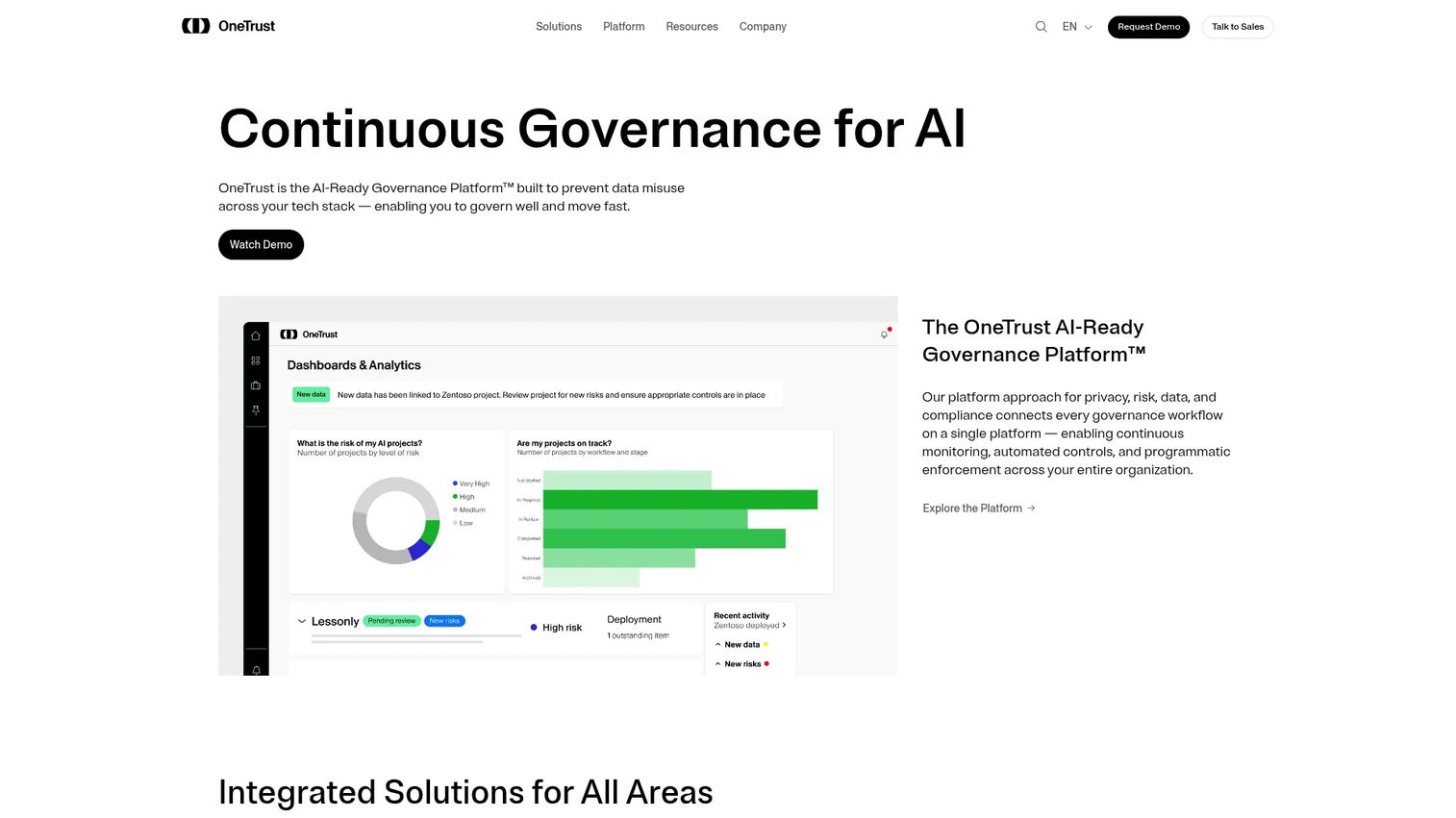
OneTrust Privacy Automation is built for enterprises that treat DSARs as one workflow inside a larger privacy program. It centralizes and automates privacy compliance operations, with data subject requests sitting alongside data mapping, assessments, and vendor risk management.
The platform's strength is breadth. An automated, evergreen data and activity map keeps your understanding of data flows current, which feeds directly into request fulfillment. Privacy impact assessment and mitigation workflows, plus vendor privacy risk, DPA, and data transfer management, mean DSARs are not handled in isolation. They are part of a connected privacy operation. For teams already running other compliance work in OneTrust, adding DSAR workflow support keeps everything in one system.
Best for: enterprises that need to centralize and automate privacy compliance operations, with DSARs as one component of a broader program.
Key strengths
- Evergreen data and activity map: keeps data flow understanding current, which underpins accurate request fulfillment.
- Assessment and mitigation workflows: privacy impact assessments and risk mitigation built into the platform.
- Vendor risk and transfer management: DPA, data transfer, and third-party risk handling in the same suite.
Why choose OneTrust Privacy Automation: if your team manages privacy across many obligations and wants DSARs in the same platform as data mapping, assessments, and vendor risk, OneTrust covers that scope. It fits organizations that prefer one comprehensive privacy program over separate tools.
OneTrust Privacy Automation pricing: OneTrust offers Privacy Automation in Base and Suite tiers but does not show public numeric pricing. Cost is request-based and tied to users and privacy asset inventory. Plan a scoped sales conversation to size it against your program.
4. DataGrail
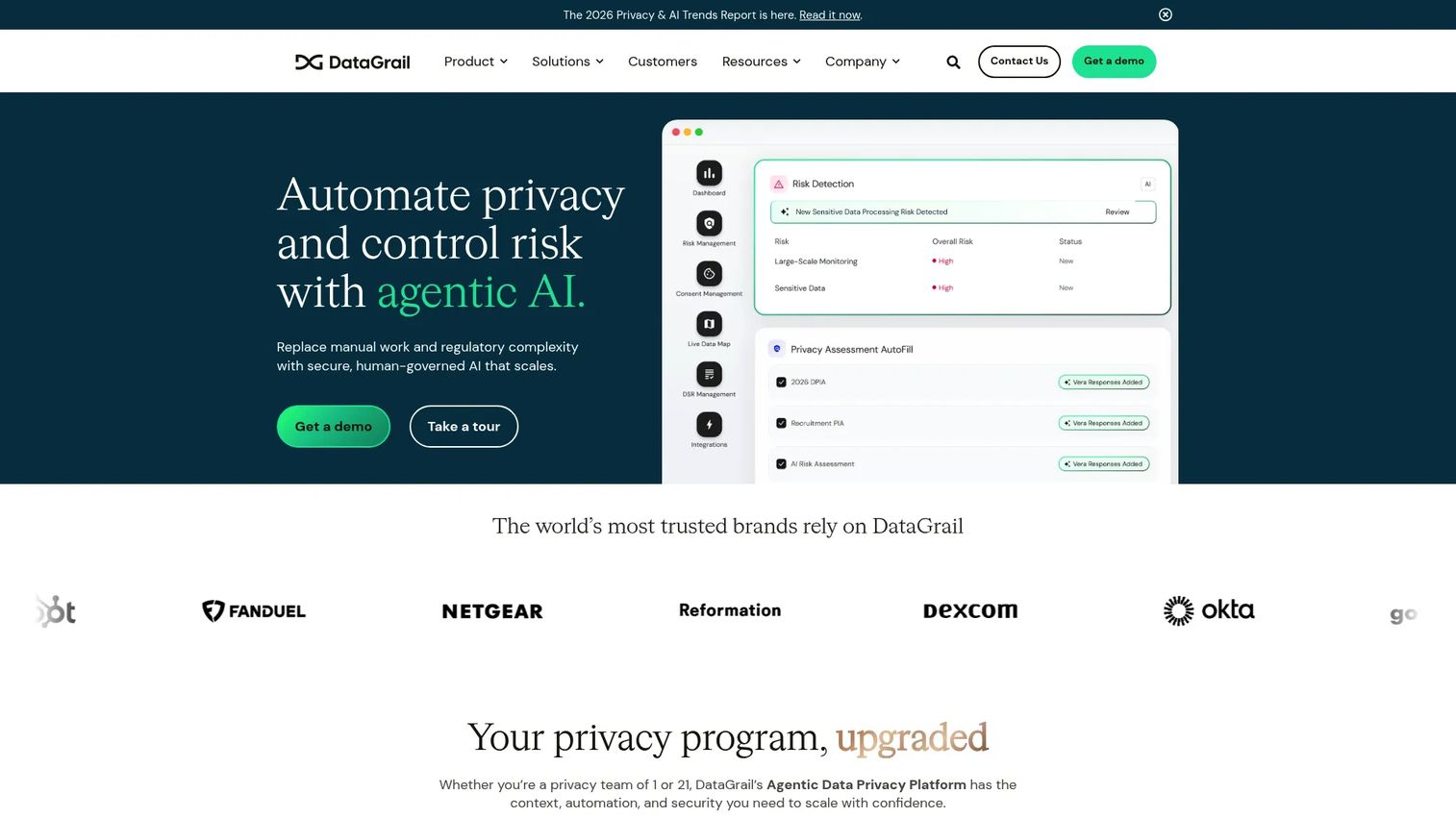
DataGrail is a privacy management platform built for coordination. It connects data discovery, full DSR automation, consent enforcement, and privacy assessments, with a focus on keeping privacy, legal, and data owners aligned through the request lifecycle. For teams where DSARs require handoffs across functions, that coordination is the differentiator.
The platform's Live Data Map handles data discovery and mapping, so requests route to the right systems automatically. Full DSR automation moves a request from intake through fulfillment with less manual lifting, while 24/7 consent enforcement and automated privacy assessments round out the privacy operation. The practical value shows up in request routing and visibility: everyone involved can see where a request stands and what is needed next.
Best for: privacy, legal, and security teams managing DSRs, consent, and privacy risk at scale who need clean cross-functional coordination.
Key strengths
- Live Data Map: continuous data discovery and mapping that powers accurate request routing.
- Full DSR automation: moves requests from intake to fulfillment with less manual handoff.
- Consent enforcement and assessments: 24/7 consent enforcement plus automated privacy assessments in one platform.
Why choose DataGrail: DataGrail fits organizations where DSAR handling spans multiple teams and request routing matters as much as fulfillment. Its 4.7/5 G2 rating reflects strong sentiment from privacy teams that need automation plus visibility across functions.
DataGrail pricing: DataGrail does not publish a public price. The company states it offers pricing and packaging for all company sizes, with self-service or à la carte options. Scope packaging against your request volume and the systems you need to connect.
5. Securiti
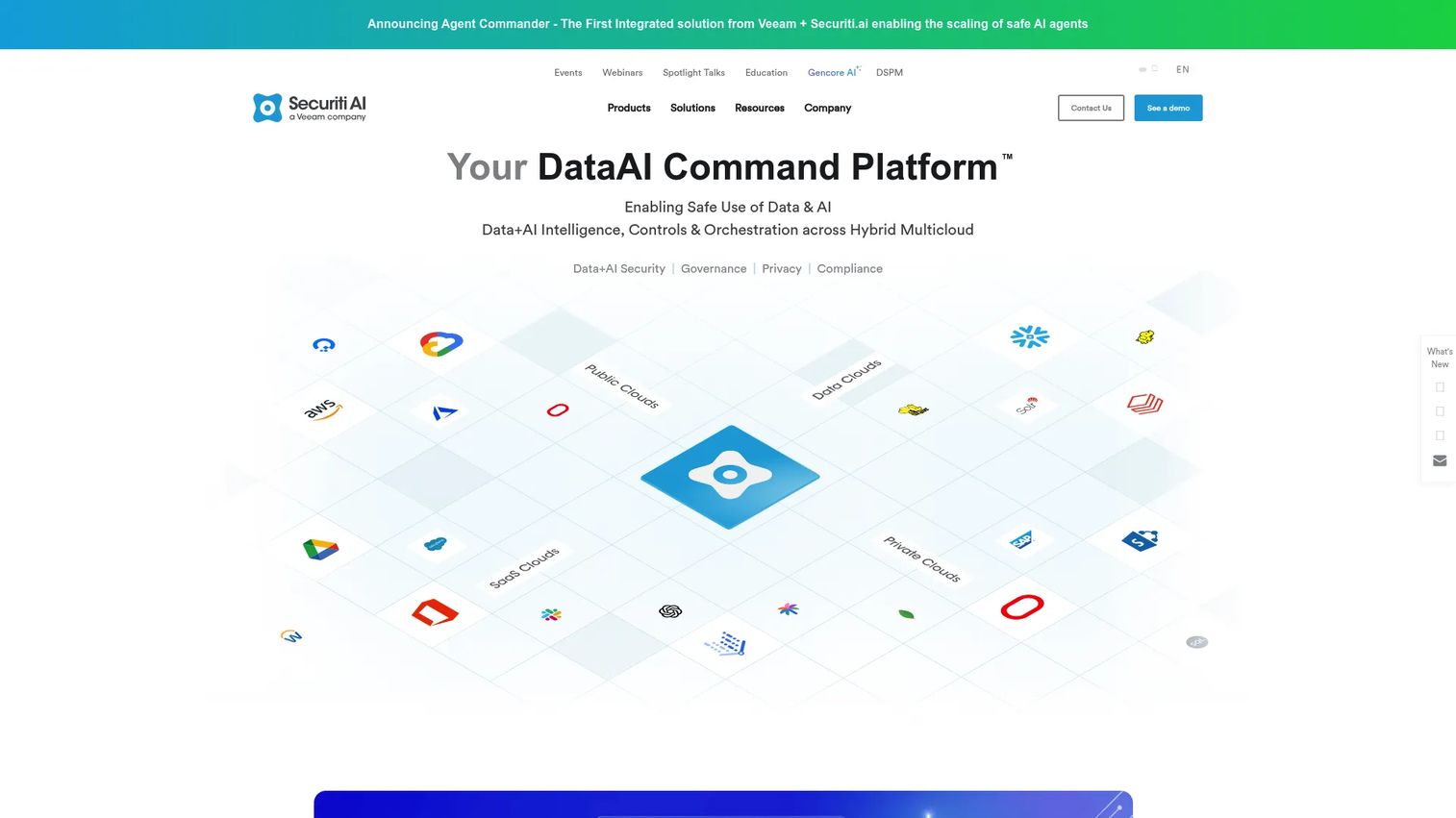
Securiti positions itself as a Data + AI Command Platform spanning data security, privacy, governance, and compliance. For DSARs, that means request handling sits inside a broad automation engine, with AI assisting across discovery, classification, and workflow execution. Teams that want privacy operations plus governance visibility in one platform tend to shortlist it.
The PrivacyOps workflows cover DSRs, assessments, vendor risk, and consent, all backed by data discovery and classification. Securiti also brings data security posture, access governance, and data flow governance, so privacy requests connect to a fuller understanding of where data lives and how it moves. For organizations adding AI systems to their stack, the platform's governance reach is a meaningful draw.
Best for: large enterprises that need unified privacy, data security, and governance automation with AI assistance.
Key strengths
- Data discovery and classification: locates and labels sensitive data as the basis for accurate fulfillment.
- PrivacyOps workflows: DSRs, assessments, vendor risk, and consent handled in one automated flow.
- Security and flow governance: posture, access, and data flow governance connect privacy to broader data risk.
Why choose Securiti: Securiti fits enterprises that want AI-assisted automation across privacy, security, and governance rather than a standalone DSAR tool. Its 4.7/5 G2 rating reflects strong reception among teams consolidating privacy and data governance.
Securiti pricing: Securiti does not publish public pricing; cost is handled through a quote-based order form. Scope a conversation around your data environment, the workflows you need, and the AI governance scope that applies to your stack.
6. Transcend
Transcend takes a modern, engineering-friendly approach to privacy request workflows. It appeals to teams that want flexible data rights operations, broad system coverage, and automation that fits a technical, data-driven environment. For organizations where privacy and engineering work closely, that orientation is the draw.
Transcend's focus on data rights workflows, deletion handling, and automation makes it a strong fit for teams that treat privacy operations as a system to be wired into their stack rather than a manual process to be staffed. Its 4.6/5 G2 rating reflects positive sentiment among privacy and engineering teams evaluating data privacy management software.
Best for: teams that want flexible, technically deep data rights workflows and broad system coverage.
Key strengths
- Modern data rights workflows: automation built for flexible, system-level privacy request handling.
- Deletion and erasure handling: structured workflows for data deletion requests and right to be forgotten obligations.
- Broad system coverage: designed to connect across a wide range of data sources in technical environments.
Why choose Transcend: Transcend fits organizations with strong engineering involvement in privacy, where workflow automation and broad integration matter. It is a fit for data-driven teams that want request handling wired into their infrastructure.
Transcend pricing: Transcend does not publish public pricing on its site. Plan a scoped sales conversation to size the platform against your data sources, request volume, and the workflows you need to automate.
7. TrustArc
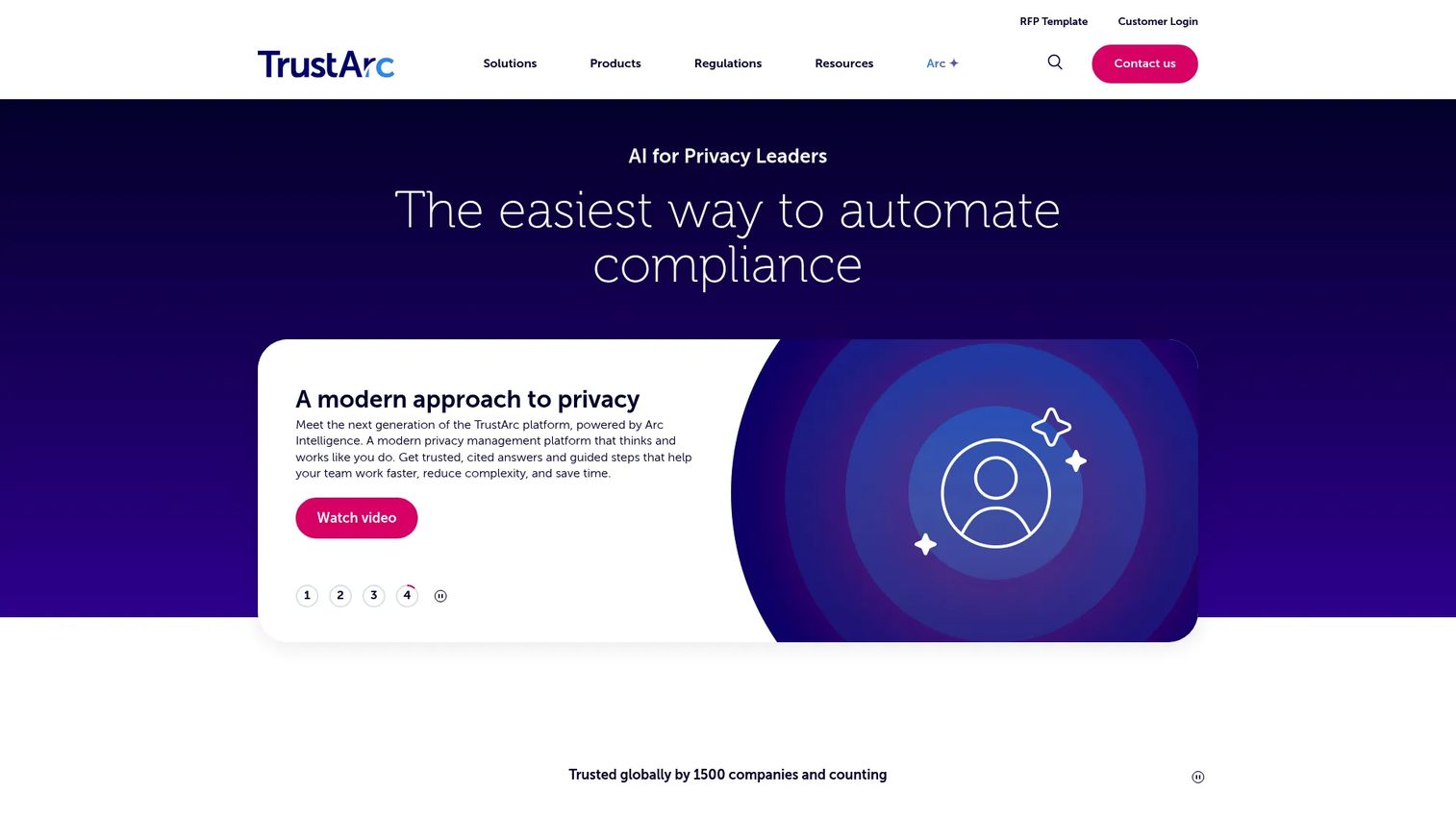
TrustArc is an established privacy management platform with deep roots in governance and compliance. Mature privacy programs evaluate it for automation, audit trails, and policy support, plus its AI-powered Arc Intelligence layer. For enterprises that need a platform built around defensible records and certification, TrustArc is a familiar name.
The platform handles data subject request automation with audit trails, consent and preference management, and a Trust Center for publishing privacy, security, and compliance content. TrustArc also offers assurance and certification programs for data privacy frameworks, which appeals to programs that need to demonstrate compliance externally, not just track it internally. The emphasis is on records, policy, and workflow that stand up to scrutiny.
Best for: enterprises that need a privacy compliance platform with strong automation, audit trails, and trust-center capabilities.
Key strengths
- DSR automation with audit trails: request handling backed by the time-stamped logs defensible programs require.
- Consent and preference management: consent handling alongside request workflows.
- Trust Center and certification: publish compliance content and pursue framework certifications.
Why choose TrustArc: TrustArc fits established privacy programs that prioritize defensible records, policy support, and external certification. It is a strong evaluation candidate for mature enterprises that have outgrown ad hoc compliance tracking.
TrustArc pricing: TrustArc does not display public pricing and directs visitors to contact sales. Scope a conversation around your program's scale, the frameworks you need to support, and your certification requirements.
8. MineOS
MineOS is an autonomous privacy, risk management, and compliance platform built around centralized operational visibility. For teams that want a streamlined layer to run DSARs and related privacy work from one place, MineOS focuses on continuous discovery and embedded automation rather than a sprawling suite.
The platform runs on one live data map for continuous discovery and classification, with embedded AI agents handling DSRs, vendor assessments, and risk monitoring. End-to-end workflow automation with no-code integrations means privacy teams can connect systems and route requests without heavy engineering lift. For organizations that want centralized privacy operations visibility, the single-map model keeps everything in view.
Best for: teams that want a streamlined, centralized operational layer for DSARs and related privacy work.
Key strengths
- One live data map: continuous discovery and classification that keeps data visibility current.
- Embedded AI agents: automated handling of DSRs, vendor assessments, and risk monitoring.
- No-code workflow automation: end-to-end automation and integrations without heavy engineering involvement.
Why choose MineOS: MineOS fits teams that want centralized visibility and automation without standing up a large privacy suite. The no-code integration model and embedded AI agents suit organizations that want to move quickly with limited engineering support.
MineOS pricing: MineOS does not display public price amounts. The site indicates a free portal plus premium plans with monthly fees on an annual commitment. Scope a conversation around the modules and integrations you need.
Considerations before you buy
Feature lists blur together fast. These are the criteria that actually decide whether a platform fits your operation.
Data source coverage
Verify the tool can search the real systems where your data lives. A platform that connects beautifully to your CRM but cannot touch your data warehouse, file stores, or collaboration tools leaves gaps in every response. Map your top 15 data sources first, then confirm coverage before you sign. Coverage of unstructured data, not just databases, is where many evaluations fall apart.
Identity verification and requester security
Secure request intake protects you from fulfilling a request to the wrong person, which is itself a breach. Weak identity verification turns your DSAR process into an attack vector. Evaluate how the platform confirms identity, how it handles the requester-facing experience, and whether verification scales with your request volume.
Human review and redaction controls
Automation collects the data; a person should sign off before it ships. Defensible fulfillment needs human-in-the-loop review and redaction, so third-party or sensitive information does not leak into an access response. Check how the tool surfaces data for review, how redaction works, and whether approval steps are enforced rather than optional.
Audit trails and reporting
Logs, metrics, and case history are what you hand a regulator or your legal team. Strong compliance reporting documents every action with timestamps: request received, identity verified, data found, reviewed, redacted, delivered. Evaluate whether the audit trail is complete, exportable, and clear enough to defend a specific decision months later.
Deletion and right to be forgotten workflows
Erasure deserves its own evaluation, not a footnote. Right to be forgotten and data deletion requests require executing deletion across systems and proving it happened. Confirm the platform can orchestrate deletion across your real data sources, handle exceptions, and log the result. An access workflow that cannot reliably delete is only half a solution.
Conclusion
DSAR software exists to close the gap between a fixed legal deadline and the reality of data spread across dozens of systems. The right platform turns a Friday-afternoon scramble into a repeatable, defensible process.
For complex, high-volume data environments, BigID leads on discovery and classification. Osano fits teams wanting secure intake and a clean requester experience. OneTrust Privacy Automation suits enterprises running DSARs inside a broader program, while DataGrail excels at cross-functional coordination. Securiti brings AI-assisted automation across privacy and governance, Transcend serves technically deep data rights workflows, TrustArc fits mature governance programs, and MineOS offers a streamlined, centralized operational layer.
Before you pick, map three things: your actual data sources, your current and projected request volume, and your compliance maturity. Then choose a platform that matches both today's load and tomorrow's governance needs. A practical next step is to shortlist two finalists and run them against the criteria above, especially data source coverage and deletion workflows, with your own systems in the room.
FAQs
DSAR software is privacy compliance software that helps organizations receive, verify, locate, review, and fulfill data subject access and deletion requests. It replaces shared inboxes and spreadsheets with a structured workflow that automates data discovery, supports human review, and produces audit trails. For privacy teams, it turns an error-prone manual scramble into a repeatable process that meets legal deadlines and stands up to scrutiny.
The features that matter most are data source coverage, secure request intake with identity verification, automated data discovery across structured and unstructured systems, human review and redaction controls, deletion workflows, and complete audit trails. Coverage and auditability tend to be the deciding factors, since a tool that cannot search your real systems or document its actions leaves gaps no feature list can fill.
Yes. Most platforms in this guide handle data deletion requests and right to be forgotten obligations alongside access requests. The key is whether the tool can execute deletion across your actual data sources and prove it happened. Evaluate erasure workflows separately from access workflows, because the ability to delete reliably across systems is harder than collecting data for an access response.
Strong DSAR software supports multiple privacy laws and jurisdictions through configurable workflows, so one process can handle a GDPR DSAR, a CCPA DSAR, CPRA privacy requests, and PIPEDA obligations. The platform maps each law's requirements to intake fields, deadlines, verification rules, and response formats. This lets teams operating across regions handle different legal regimes without building a separate manual process for each.
Manual handling relies on shared inboxes, spreadsheets, and people remembering every system that holds data. It is workable at low volume but slow, error-prone, and hard to document. DSAR automation software centralizes intake, automates data discovery and collection, enforces human review, and logs every action. Given the 43% year-over-year rise in request volume reported by Precedence Research in 2025, automation is increasingly the only approach that scales without adding compliance risk.
Human review is essential for defensible fulfillment. Automation finds and collects the data, but a person should inspect and approve a response before it ships, especially to redact third-party or sensitive information. Without human-in-the-loop review, an access response can leak data about people other than the requester, which creates its own compliance exposure. Look for tools that enforce review and redaction as required steps, not optional ones.
Start by mapping your top data sources, including databases, SaaS apps, file stores, and collaboration tools. Then evaluate each platform on whether it can actually connect to and search those systems, with particular attention to unstructured data. Platforms with strong data discovery, like BigID, Securiti, and DataGrail, tend to fit complex environments because accurate fulfillment depends on finding every place a person's data lives.
Product teams should evaluate workflow automation, instrumentation and reporting, integration with the existing data and analytics stack, and maintainability across frequent releases. Because product owns constraints like privacy and compliance, the goal is a platform that scales across data sources and segments without constant engineering interrupts. Prioritize tools with clear audit trails, strong segmentation, and integrations that fit your stack, so request handling stays defensible as the product changes.