You booked the booth. You shipped the crates. You trained the staff. Then the show ends, and 300 badge scans sit in a spreadsheet nobody touches for two weeks. By the time sales follows up, the leads have gone cold and your finance team is asking what the event actually returned.
That gap between spending on a trade show and proving it worked is the real problem exhibitor teams face. Booth sales live in one tool, exhibitor onboarding in another, lead capture in a third, and follow-up somewhere in a CRM that never got the data. Every handoff leaks time and money.
The market reflects how much this matters. The global exhibitor management software market was valued at USD 1.2 billion in 2025 and is projected to reach USD 2.8 billion by 2034, growing at an 11.4% CAGR from 2026 to 2034, according to MarketIntelo (2025). Buyers are consolidating fragmented event tooling into platforms that cover the full workflow.
The question every buyer asks is the right one: what does this replace, and how much manual work does it remove? A good exhibition management software platform should collapse booth sales, exhibitor portals, lead retrieval, and reporting into one system your team actually uses. This guide compares the tools worth shortlisting.
What's inside
This guide is for event marketers, exhibitor operations teams, and trade show organizers who need software that handles the full exhibitor lifecycle, not just one slice of it. We compared platforms across five criteria that map to real workflow pain:
- Exhibitor workflow depth: onboarding, portals, task management, and communications
- Booth and floor plan support: inventory, selection logic, and reservations
- Lead capture and reporting: scanning, exports, and ROI dashboards
- Integrations: CRM, marketing automation, and adjacent event modules
- Usability: how fast teams and exhibitors can actually adopt it
Every tool below earns its place by covering more than one workflow stage. Where possible, we cite verified pricing and G2 ratings so you can shortlist with real numbers.
TL;DR
- Best all-around enterprise option: ExhibitForce, for exhibit houses running complex logistics, inventory, and ERP-style operations.
- Best for centralized exhibitor portals and task management: Cvent, for teams already standardized on a large event ecosystem.
- Best all-in-one exhibition management platform: Eventleaf, for registration, booth sales, floor plans, and lead retrieval in one tool.
- Best for modern, easy setup: ExpoGenie, for teams that want fast booth and sponsor sales without heavy implementation.
- Best for broad event stack buyers: eShow, for organizers needing multiple event functions under one roof.
- Best for lead capture-heavy shows: Expo Pass, for fast onsite check-in, badging, and lead retrieval.
- Best for exhibitor and sponsor operations: Eventflow, for organizers standardizing across many exhibitor teams.
- Best for AI-forward sales automation: Nexby Exhibitor, for teams that want offline lead capture and follow-up analytics.
What is exhibitor management software?
Exhibitor management software is a platform that helps event organizers and exhibitors handle the full trade show workflow, from booth sales and exhibitor onboarding through lead capture and post-event ROI reporting, in one connected system.
Instead of stitching together spreadsheets, email threads, and disconnected point tools, an exhibitor management tool centralizes the operational work that surrounds every booth. The strongest platforms cover these core areas:
- Exhibitor registration: sign-up, company profiles, and booth staff enrollment
- Booth sales and floor plan management: interactive maps, inventory, and reservation logic
- Exhibitor portals and self-service workflows: a single place for exhibitors to update details, submit forms, and track deadlines
- Lead retrieval and qualification: badge or QR scanning, notes, and exports
- Communications and task automation: deadline reminders, chasers, and standardized manuals
- Reporting and ROI dashboards: booth performance, lead volume, and revenue attribution
- Integrations: connections to CRM and adjacent event registration and exhibitor workflows
The category overlaps with broader trade show management software, but the emphasis here is on the exhibitor side of the equation: getting exhibitors set up, giving them tools to capture value onsite, and closing the loop on what the event produced. An exhibitor self-service portal is often the difference between a smooth event and a week of manual back-and-forth.
When to use exhibitor management software
Not every event needs a full platform. Here is how to pattern-match your situation.
Streamline exhibitor onboarding
When your team is fielding the same exhibitor questions over email, resending the same forms, and manually tracking who submitted what, a self-service exhibitor portal earns its keep. Exhibitors update their own company profiles, register booth staff, and see their deadlines in one place. That cuts the back-and-forth and frees your ops team to handle exceptions instead of chasing basics.
Manage booth sales and floor plans
When an event sells booth inventory, you need visibility into what is available, reserved, and paid. Interactive booth sales and floor plan management lets exhibitors pick and reserve space, applies pricing and package logic, and prevents double-booking. This matters most for conferences, expos, and any show layering in sponsor packages on top of standard booths.
Capture and route leads after the event
When the priority is turning booth conversations into pipeline, lead retrieval software is the core need. QR or badge scanning, quick notes, clean exports, and CRM sync mean leads reach sales while they are still warm. Faster follow-up is the single clearest driver of event ROI, so this workflow deserves real attention when you evaluate tools.
Comparison table
This table helps you shortlist by workflow fit before you read the full sections. Sort by what matters most to your team: enterprise logistics, exhibitor portals, all-in-one coverage, or lead capture. Pricing and G2 ratings reflect verified values at the time of writing; some vendors use quote-based pricing.
| # | Product | Intent | Key use case | Pricing | G2 rating |
|---|---|---|---|---|---|
| 1 | ExhibitForce | Enterprise exhibit ERP | Logistics, inventory, and event ROI | From $70/mo (via Capterra) | 3.1/5 |
| 2 | Cvent | Ecosystem event platform | Exhibitor portal and workflow automation | Quote-based; diagramming from $49/mo | 4.3/5 |
| 3 | Eventleaf | All-in-one exhibition management | Registration, booth sales, lead retrieval | Free up to 100 attendees; $1/attendee | 4.7/5 |
| 4 | ExpoGenie | Exhibitor and sponsor sales | Booth selection and floor plans | Free first event; from $1,500/event/yr | 4.6/5 |
| 5 | eShow | Broad event stack | Exhibits, conferences, and onsite | Quote-based | 4.3/5 |
| 6 | Expo Pass | Lead capture and onsite ops | Check-in, badging, lead retrieval | From $2,495 | 4.7/5 |
| 7 | Eventflow | Exhibitor and sponsor ops | Digital exhibitor manuals and tasks | From £2,400/yr (via G2) | 5.0/5 |
| 8 | Nexby Exhibitor | AI lead automation | Offline lead capture and analytics | Custom | Not listed |
1. ExhibitForce
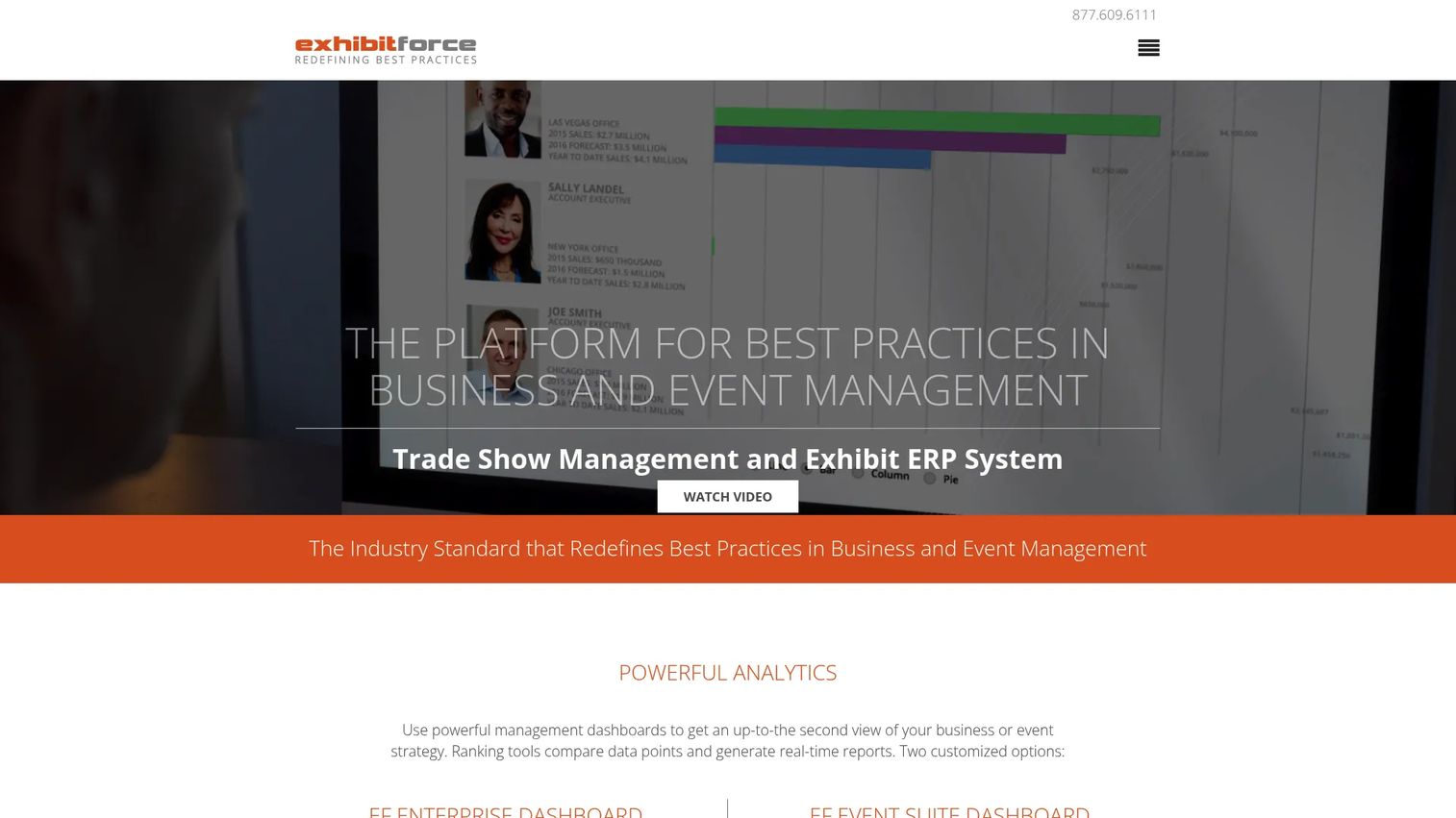
ExhibitForce is a cloud-based trade show management and exhibit ERP platform built for teams running operationally complex event programs. Where lighter tools stop at registration and booths, ExhibitForce goes deep into the physical logistics: barcoding, inventory, crate and shipment tracking, budgeting, and real-time dashboards. If your team manages the props, kits, and freight behind dozens of shows a year, this is the operational backbone.
Best for: Exhibit houses and enterprise event teams managing trade shows, inventory, and event ROI across many shows.
Key strengths
- Real-time dashboards and analytics: See booth, budget, and inventory status live, so nothing gets lost between shows.
- Barcoding and shipment tracking: Track crates, kits, and inventory from warehouse to show floor and back.
- Registration, lead capture, and budgeting: Cover the operational and financial workflow in one platform rather than three.
Why choose ExhibitForce: If your pain is logistics, not just lead capture, ExhibitForce fits. It is built for teams where the hardest part of an event is moving physical assets and reconciling budgets across a portfolio of shows. Smaller teams running a handful of events may find the depth more than they need, but enterprise exhibit operations get a system that ties spend to outcomes.
ExhibitForce pricing: No public first-party price was listed on the ExhibitForce site during research, though it offers a free trial. Capterra lists EF Enterprise with a Basic plan starting at $70.00 flat rate per month. ExhibitForce holds a 3.1/5 rating on G2. Because pricing scales with operational complexity, request a quote for accurate numbers tied to your show volume.
2. Cvent
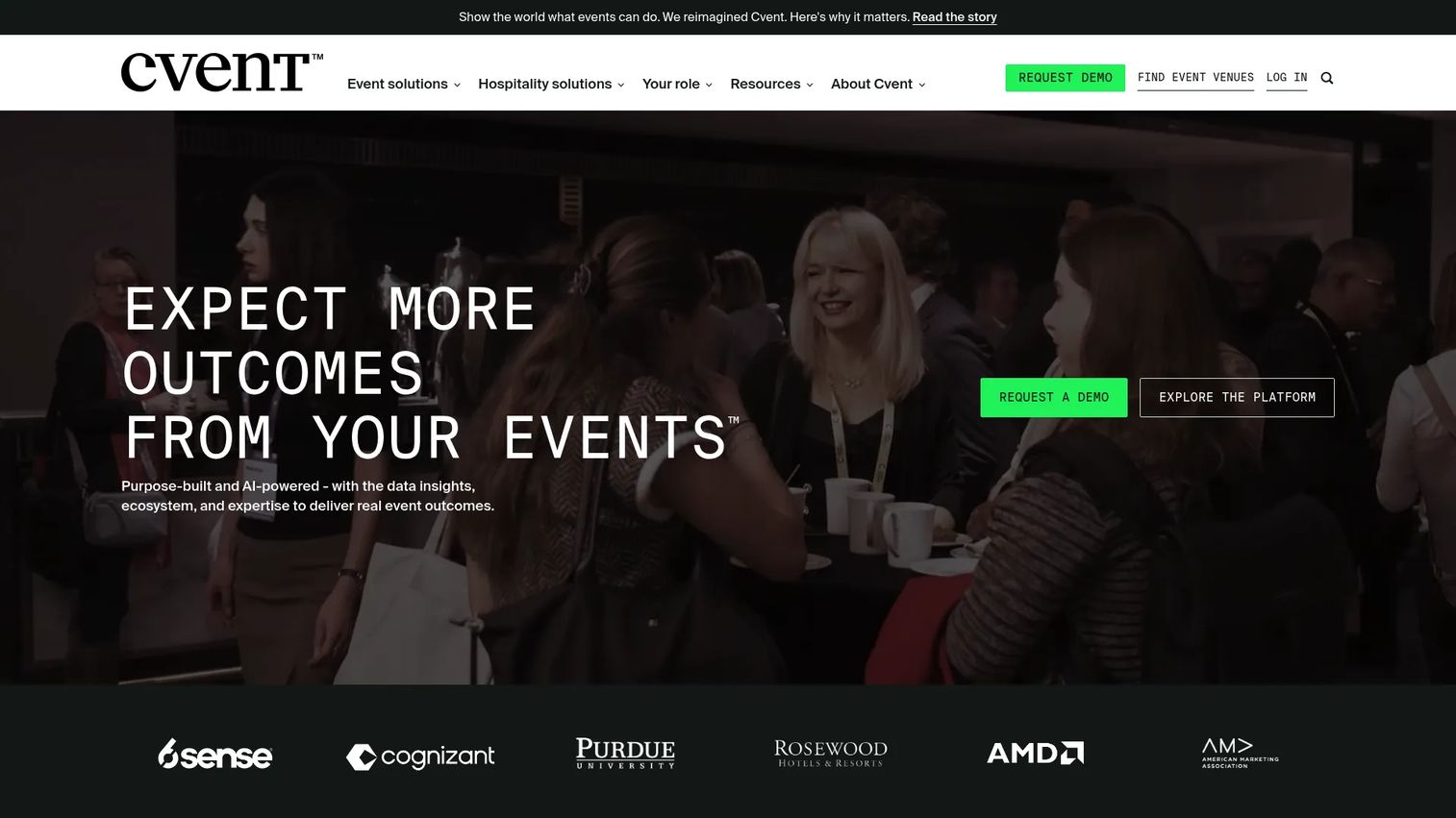
Cvent is an event marketing and management platform for in-person, virtual, and hybrid events, with a dedicated exhibitor management layer. Its exhibitor portal centralizes booth management, task tracking, appointment scheduling, and email automation, giving exhibitors one branded destination to manage their presence. For organizers already running registration and marketing on Cvent, adding exhibitor workflows keeps everything in one ecosystem.
Best for: Organizations running complex in-person, virtual, or hybrid events at scale that want exhibitor workflows inside their existing platform.
Key strengths
- Event registration and marketing: Run attendee and exhibitor registration alongside campaign tools in one place.
- Attendee Hub for engagement: Power virtual and hybrid experiences and networking from a single hub.
- OnArrival for check-in and badging: Handle onsite check-in, badge printing, and attendance tracking natively.
Why choose Cvent: Cvent makes the most sense when you are already invested in its ecosystem or need one vendor across registration, marketing, and exhibitor operations. The exhibitor portal simplifies the exhibitor-facing side while your team keeps a unified view. Teams running a single small show may find it heavier than needed, but scale and breadth are the payoff.
Cvent pricing: Cvent's core event management pricing is request-a-quote only. Its separate Event Diagramming product shows public plans: Free at $0, Standard at $49 per month (or $480 annually), and Pro at $150 per month (or $1,500 annually). Cvent holds a 4.3/5 rating on G2. For the full exhibitor platform, contact Cvent for a quote scaled to your program.
3. Eventleaf
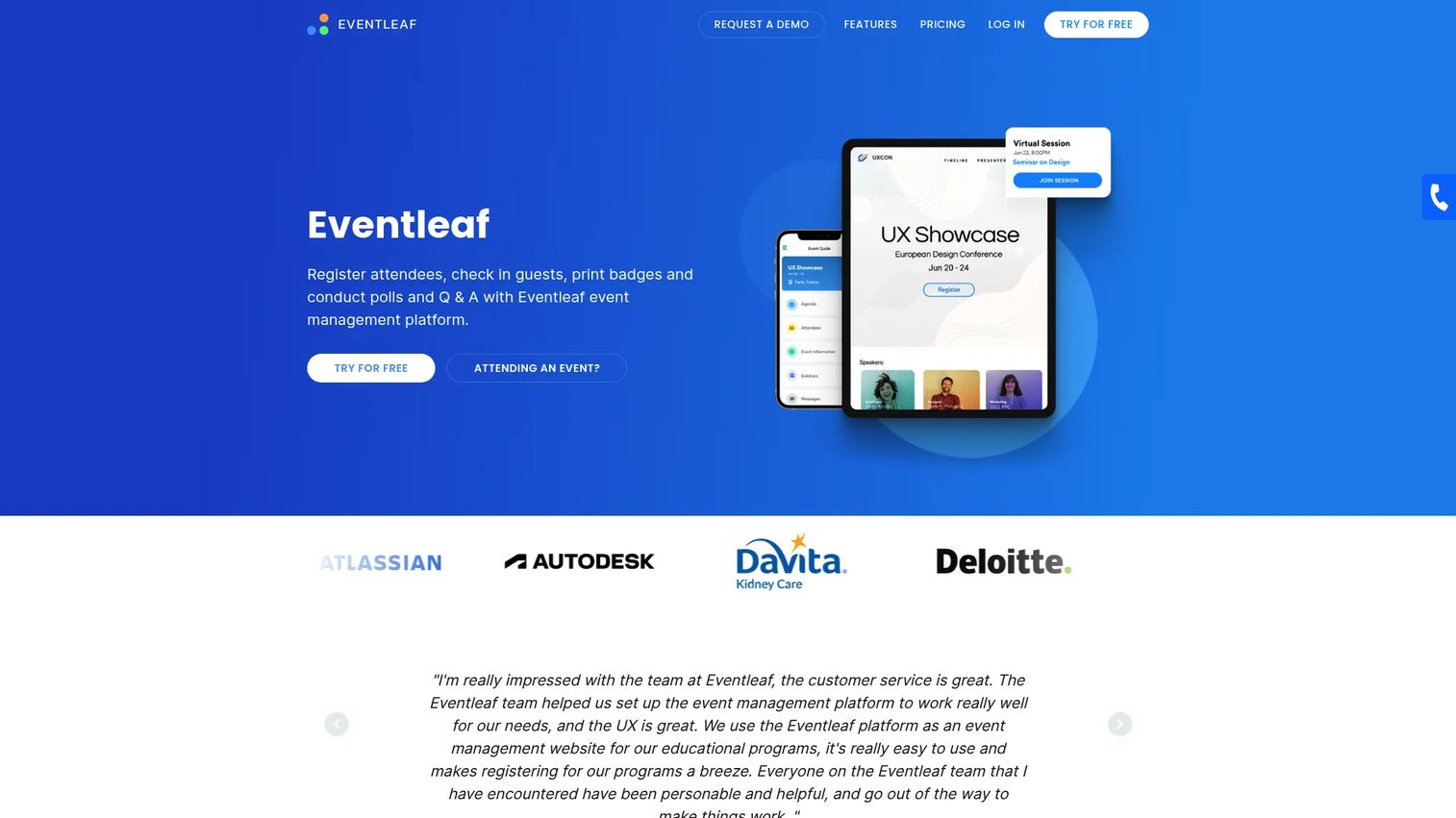
Eventleaf is event management software covering registration, check-in, badge printing, attendee engagement, and exhibitor lead capture in one tool. For exhibitor teams, its combination of interactive floor plans, booth sales, secure payments, exhibitor badges, and lead retrieval makes it a practical all-in-one for running an event end to end. It handles the day-of execution as well as the sales lead-up.
Best for: Organizations that need an all-in-one event registration and onsite operations platform with exhibitor tools built in.
Key strengths
- Registration and ticketing: Manage attendee and exhibitor sign-up with a single workflow.
- Check-in and badge printing: Speed up the door with onsite check-in and printed badges.
- Lead retrieval and exhibition management: Give exhibitors QR-based lead capture and organizers full exhibition control.
Why choose Eventleaf: Eventleaf balances breadth and usability, which is why it fits teams that want one platform without a heavy implementation. You get registration, floor plans, and lead retrieval without piecing together three vendors. Its per-attendee pricing keeps small and mid-size events affordable while scaling with attendance.
Eventleaf pricing: Eventleaf's Starter plan is free for up to 100 attendees per year. Basic is $1 per attendee, Professional is $2 per attendee, and Ultimate is custom pricing. Eventleaf holds a 4.7/5 rating on G2. The free tier makes it easy to trial on a small event before committing to a larger show.
4. ExpoGenie
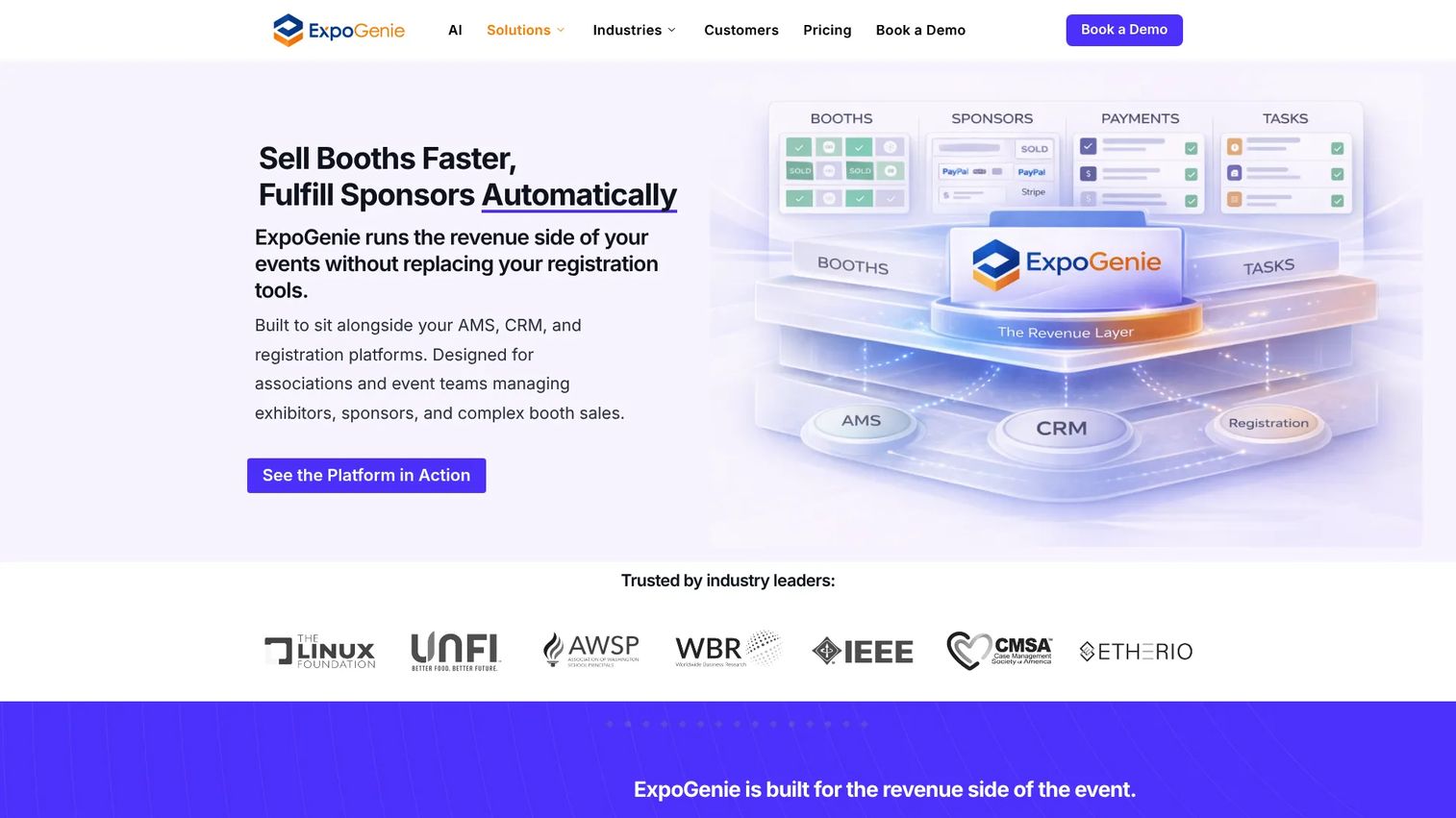
ExpoGenie is event management software focused on exhibitor, sponsor, and partner programs. It centers on the revenue side of events: a real-time interactive floor plan, online booth selection, sponsorship sales, task collection, and AI-powered revenue intelligence. For teams that want to sell booths and sponsorships fast without a long setup cycle, ExpoGenie leans modern and approachable.
Best for: Trade shows, conferences, and expos that need exhibitor and sponsor sales plus floor plan management.
Key strengths
- Real-time interactive floor plan: Let exhibitors see and select available booths live.
- Booth and sponsorship sales: Sell space and sponsor packages online without manual coordination.
- AI revenue intelligence: Surface chat-based insights on booth sales and revenue performance.
Why choose ExpoGenie: ExpoGenie fits teams that want booth sales and floor plan management up and running quickly, without the implementation overhead of enterprise-heavy options. The per-event pricing model is friendly to organizers who run a defined number of shows and want predictable costs. It is a strong middle ground between lightweight tools and full ERP platforms.
ExpoGenie pricing: ExpoGenie licenses per event, per year. The Launch plan is free for your first event (100 booths and under), then starts at $1,500. Grow starts at $3,500 per event per year, and Scale starts at $5,000 per event per year. ExpoGenie holds a 4.6/5 rating on G2. The free first event is a low-risk way to test booth sales workflows.
5. eShow
eShow is event management software spanning registration, conferences, exhibits, mobile apps, event websites, and onsite services. Its breadth is the point: exhibition management with floor plans and exhibitor tools sits alongside conference management, sponsorships, networking, and lead retrieval. For event teams that want many event functions consolidated into one configurable platform, eShow covers a wide surface.
Best for: Trade shows, associations, and conference teams needing a configurable all-in-one event management platform.
Key strengths
- Registration with onsite check-in and badging: Handle attendee flow and printing from one system.
- Exhibition and sponsorship management: Manage floor plans, exhibitor tools, and sponsor sales together.
- Conference tools, mobile app, and websites: Extend beyond exhibits into the full event experience.
Why choose eShow: eShow suits organizers who would rather configure one platform than integrate several. If your events span conferences, exhibits, and sponsorships, consolidating reduces vendor sprawl and data handoffs. The trade-off is that a configurable platform rewards teams willing to set it up thoroughly, which pays back in fewer moving parts.
eShow pricing: eShow does not publish public pricing on its site; it routes visitors to book a demo or submit an RFP and describes customized solutions. eShow holds a 4.3/5 rating on G2. Because packages are tailored, expect a scoping conversation that maps pricing to the event functions you actually need.
6. Expo Pass
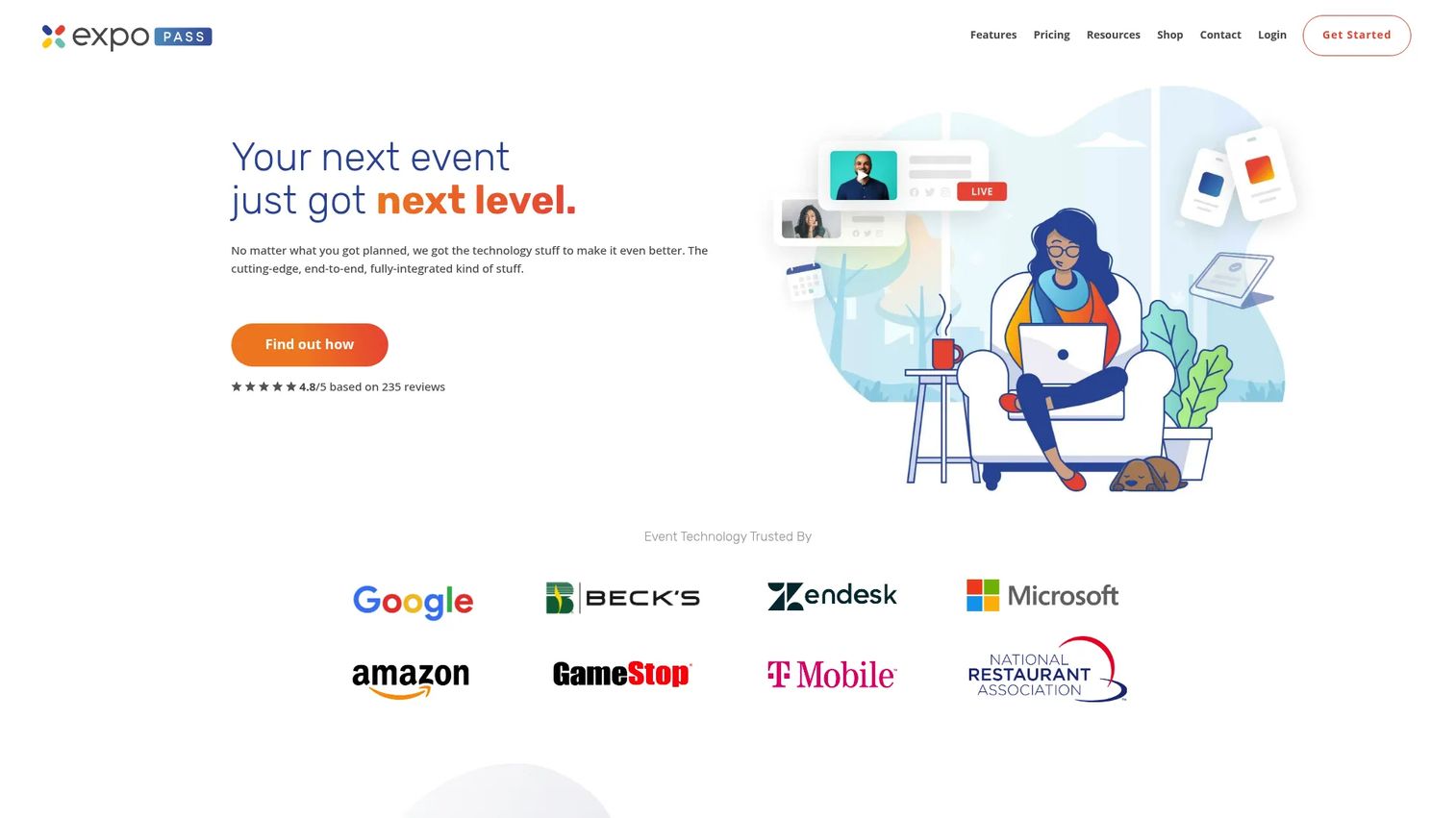
Expo Pass is an event technology platform for live, virtual, and hybrid events, with a strong focus on onsite operations and lead capture. Registration, check-in, badge printing, lead retrieval, attendance tracking, and an event app come together to make the day-of experience fast. For exhibitors, the lead retrieval and follow-up workflow is the standout: scan, capture, and route without friction.
Best for: Event teams needing registration, onsite check-in, badge printing, and attendee tracking in one platform.
Key strengths
- Lead retrieval: Give exhibitors a fast trade show lead capture app for scanning and notes.
- Check-in and badge printing: Move attendees through the door quickly with onsite badging.
- Attendance tracking and event app: Track participation and engagement across sessions.
Why choose Expo Pass: Expo Pass is a strong pick when lead capture and onsite speed are the priority. Exhibitors get a simple scanning experience, and organizers get clean attendance and lead data. If your events lean heavily on booth conversations converting to pipeline, the lead retrieval focus pays off in faster sales follow-up.
Expo Pass pricing: Expo Pass uses custom quote pricing, and its site states pricing starts at $2,495. There is no public free tier. Expo Pass holds a 4.7/5 rating on G2. Request a quote to scope pricing against your event size and lead retrieval needs.
7. Eventflow
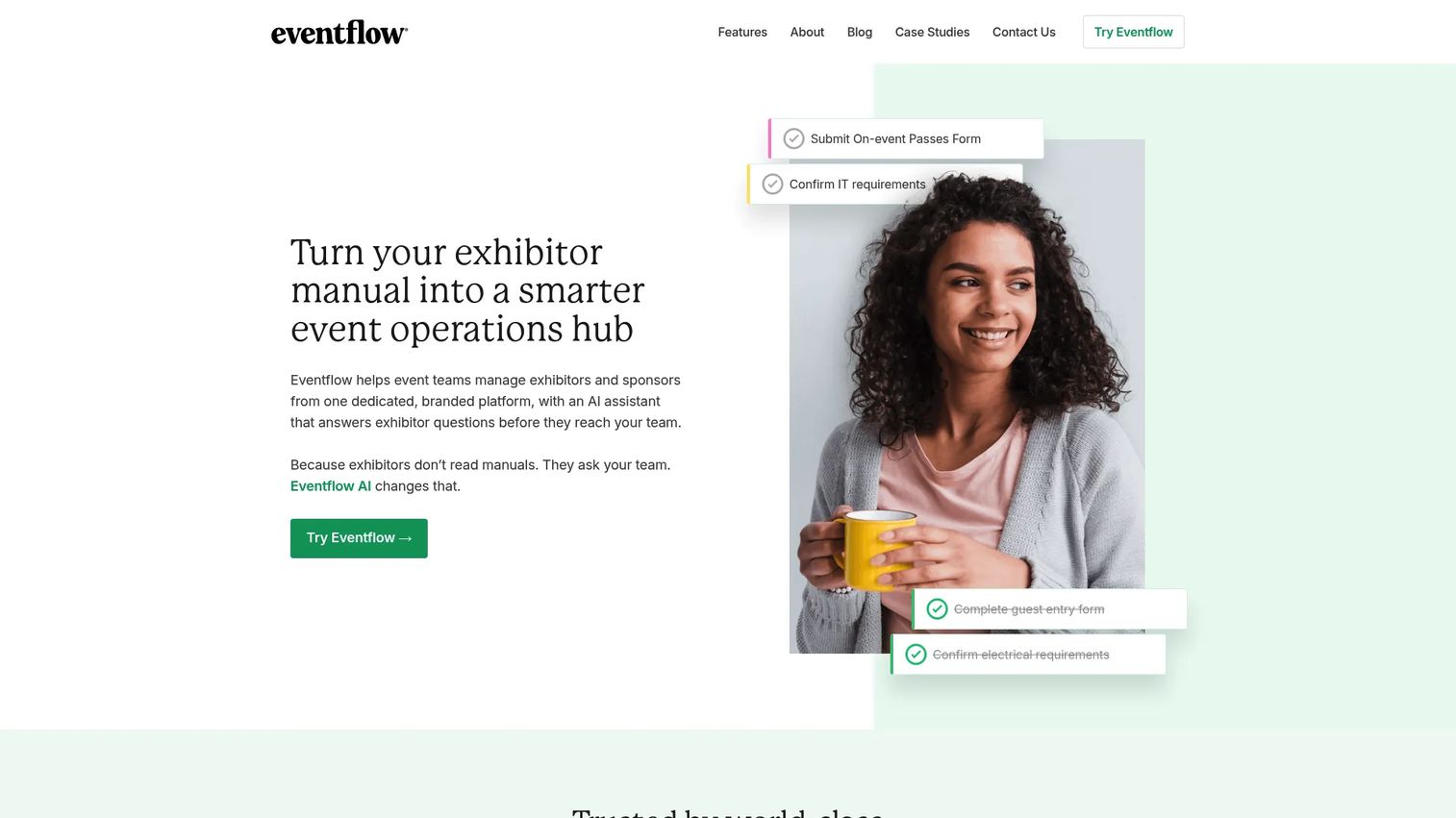
Eventflow is event management software for exhibitor and sponsor operations, built to replace static exhibitor manuals with a branded, interactive platform. Its focus is operational consistency: a branded online exhibitor manual, interactive task lists with automated email chasers, digital forms, and exhibitor team invitations. For organizers wrangling many exhibitor teams across complex shows, it standardizes the communication and deadline chaos.
Best for: Event organizers managing exhibitors and sponsors across complex trade shows or conferences.
Key strengths
- Branded online exhibitor manual: Replace PDFs and email threads with a single living exhibitor portal.
- Interactive task lists with automated chasers: Keep exhibitors on deadline without manual follow-up.
- Digital forms and team invitations: Collect submissions and enroll booth staff through structured workflows.
Why choose Eventflow: Eventflow shines when exhibitor communications automation is your bottleneck. If your team spends hours chasing forms and deadlines, the automated chasers and digital manual remove that manual load. It is purpose-built for organizers who need the same clean process across a large volume of exhibitor teams.
Eventflow pricing: No public first-party pricing page was found on Eventflow's site during research; the site offers demos and free trials. G2 lists a Starter plan at £2,400 per year and a Growth plan at £3,600 per year, provided by Eventflow. Eventflow holds a 5.0/5 rating on G2. Contact Eventflow for pricing scoped to your exhibitor volume.
8. Nexby Exhibitor
Nexby Exhibitor, through its Expo Insight product, brings AI-forward lead capture and analytics to trade show sales. It is built around offline-capable mobile lead capture, OCR-based business card scanning, and a real-time analytics dashboard. For exhibitor teams that want more automation around sales follow-up and cleaner visibility into booth performance, Nexby leans into the AI and data side of the workflow.
Best for: Exhibitors and event teams needing offline lead capture and follow-up automation.
Key strengths
- Offline-capable mobile lead capture: Scan and capture leads even when the venue wifi drops.
- OCR business card scanning: Turn stacks of cards into structured, exportable lead data.
- Real-time analytics dashboard: See booth visitor and lead activity as it happens.
Why choose Nexby Exhibitor: Nexby fits exhibitor teams that prioritize lead quality and follow-up speed over broad event operations. The offline capability solves a real trade show problem: unreliable venue connectivity that kills lead capture at the worst moment. It is a focused, forward-looking option for teams that want AI-assisted follow-up rather than a full event stack.
Nexby Exhibitor pricing: Public numeric pricing for Expo Insight was not available on accessible first-party pages during research. The product page lists a Basic Plan and a Pro Plan without published prices. No G2 rating was confirmed. Contact Nexby directly for current pricing and plan details.
Considerations before you buy
Before you commit, run every shortlisted tool through these criteria.
Workflow coverage vs. what you already pay for
The core question is consolidation: what does this replace? If a platform covers registration, booth sales, and lead retrieval, but you already pay for a separate registration tool, map the overlap. The best value comes from removing tools, not stacking another tab onto the pile.
Booth sales and floor plan depth
If you sell booth inventory, test the booth sales and floor plan management directly. Can exhibitors self-select space? Does it enforce pricing and package logic? Does it prevent double-booking? A weak floor plan tool creates manual reconciliation work that eats your team's time.
Lead retrieval and export quality
Lead retrieval is only useful if the data reaches sales cleanly. Check how leads export, whether scanning works offline, and how notes attach to contacts. Faster, cleaner lead follow-up is the most direct lever on event ROI, so this deserves a hands-on test.
CRM and integration fit
Confirm the tool connects to your CRM and marketing automation. Lead data trapped in a platform is lead data that goes cold. Verify which systems are supported natively versus through exports before you sign.
Conclusion
Exhibitor management software has consolidated into platforms that cover far more of the workflow than they did a few years ago. The right pick depends on where your pain lives.
If logistics and inventory dominate your programs, ExhibitForce gives enterprise exhibit teams an ERP-grade backbone. If you want exhibitor portals and workflow simplification inside a larger ecosystem, Cvent fits. For all-in-one event operations, Eventleaf and eShow cover registration through lead retrieval, while ExpoGenie makes booth and sponsor sales fast to launch. When lead capture drives your ROI, Expo Pass and Nexby Exhibitor put scanning and follow-up first, and Eventflow standardizes exhibitor communications across high-volume programs.
The next step is simple: shortlist two or three tools that match your primary workflow, then compare exhibitor onboarding, lead retrieval, and reporting side by side. Run a small event through each if you can. The platform that removes the most manual work while getting leads to sales fastest is the one that will pay for itself.
FAQs
The features that matter most are exhibitor onboarding portals, booth sales and floor plan management, lead retrieval, communications automation, and ROI reporting. Prioritize the workflow where your team loses the most time. For most exhibitor operations, lead retrieval and reporting drive the clearest return because they tie booth activity to pipeline.
They overlap but are not identical. Trade show management software often covers the whole event, including attendee registration and agendas. Exhibitor management software focuses on the exhibitor side: onboarding, booth sales, exhibitor portals, and lead capture. Many platforms do both, so check whether a tool leads with exhibitor workflows or attendee experience.
Eventleaf, ExpoGenie, and eShow all offer interactive floor plans and booth selection. ExpoGenie centers heavily on booth and sponsor sales with a real-time interactive floor plan, while Eventleaf and eShow fold floor plans into broader all-in-one platforms. Test the selection logic and double-booking prevention before you decide.
A good exhibitor self-service portal lets exhibitors update company profiles, register booth staff, submit forms, and track deadlines without emailing the organizer. It should replace static PDFs and email threads with a single branded destination. Eventflow and Cvent both center their exhibitor experience on this kind of portal.
Lead retrieval software lets exhibitors scan attendee badges or QR codes to capture contact details, add notes, and qualify on the spot. The best lead capture for trade shows works offline in case venue wifi drops, then syncs and exports cleanly to a CRM. Expo Pass and Nexby Exhibitor both focus on fast, reliable lead capture.
Most established exhibitor management tools integrate with major CRMs, either natively or through exports. This matters because lead data trapped in a platform goes cold before sales acts on it. Before buying, confirm which CRMs are supported natively and how quickly leads flow through after the event.
For large, operationally complex conferences, ExhibitForce and Cvent are the strongest fits. ExhibitForce handles logistics, inventory, and budgeting at scale, while Cvent covers registration, marketing, and exhibitor portals in one ecosystem. eShow is also worth evaluating for associations and conference teams wanting a configurable all-in-one platform.
Evaluate ROI by measuring lead volume, lead follow-up speed, booth revenue, and how much manual work the platform removes. Tie captured leads to closed pipeline through your CRM to see real revenue attribution. The clearest ROI signal is faster follow-up: leads worked within days of the event convert far better than leads left cold in a spreadsheet.