You ordered 400 units of a style in the wrong size curve. Half sit in a warehouse in three colors nobody wants. The other half stocked out in week two, right when demand peaked. Both mistakes cost margin. Both trace back to the same root problem: your inventory data lives in spreadsheets, and spreadsheets do not understand that one style is really 40 SKUs across color and size.
Apparel operators lose money in the gaps. Stockouts on hero styles. Overstock on the ones that miss. Dead stock that eventually gets marked down to break-even or worse. Seasonality that turns a good forecast into a bad one in six weeks. And underneath all of it, a finance team reconciling numbers by hand because the order system and the accounting system do not talk.
The global apparel ERP software market reached $2.8 billion in 2025 and is projected to hit $6.1 billion by 2034 at a 9.1% CAGR, according to Dataintelo (2025). That growth is not vanity spend. It reflects operators replacing fragmented tooling with systems built for the specific way apparel moves: by style, color, size, location, season, and channel.
For a founder or operator, the pressure is sharper. You need clean numbers your board trusts, operations that run without you in every purchase order, and margin protection that holds quarter over quarter. Generic ERP does not model a size-color matrix natively. Apparel ERP does. This guide compares the platforms that actually fit how fashion businesses run.
What's inside
This guide compares apparel ERP platforms built for the complexity fashion and apparel teams actually face: inventory by style, color, size, and location; multichannel order management; demand planning and forecasting; costing and multi-currency finance; and production and supply chain workflows.
We selected and ranked platforms on four criteria that matter most to apparel operators:
- Apparel-specific workflows - native style-color-size matrix, seasonal planning, and PLM fit
- Inventory and planning depth - forecasting, allocation, and multichannel fulfillment
- Integration and scalability - APIs, ecommerce, EDI, and room to grow
- Implementation fit - deployment model, onboarding, and realistic time-to-value
Pricing and G2 ratings reflect verified values where publicly available. Where a vendor gates pricing behind sales, we say so instead of guessing.
TL;DR
- Best all-in-one apparel suite: ApparelMagic - ERP, PLM, CRM, inventory, and B2B ecommerce in one fashion-native platform
- Best global cloud ERP: NetSuite - unified financials and operations for mid-market to enterprise scale
- Best for enterprise fashion operations: Infor - industry-specific cloud ERP with deep SCM and analytics
- Best for apparel operational control: A2000 - native warehouse, financials, and AI analytics for apparel and footwear
- Best for configurable mid-market: Trimit - apparel ERP on Microsoft Dynamics 365 Business Central
- Best for wholesale and DTC brands: AIMS 360 - multichannel order management with EDI and PLM
What is apparel ERP software?
Apparel ERP software is an enterprise resource planning system built specifically for fashion and apparel businesses, modeling inventory, orders, production, and finance around the style, color, size, and location structure that defines apparel operations.
Generic ERP treats a product as a single SKU with a quantity. Apparel is different. One "product" is a matrix: a style available in multiple colors, each color in a full size run, each variant stocked in different locations and sold across different channels. A single dress can be 60 sellable units. Systems that cannot model this natively force teams into spreadsheets, and that is where margin leaks.
Core modules in apparel ERP systems include:
- Style-color-size-location inventory - track and allocate stock at the matrix level, not the aggregate
- Multichannel order management - wholesale, retail, DTC, and marketplace orders in one system
- Demand planning and forecasting - seasonal, AI-assisted inventory forecasting to reduce dead stock and markdowns
- Costing and multi-currency accounting - landed cost, margin by style, and finance for global sourcing
- Vendor, production, and supply chain workflows - POs, cut tickets, sourcing, and concept-to-consumer traceability
- Cloud visibility and dashboards - role-based reporting for founders, planners, and finance
Cloud deployment now accounts for 54.7% of apparel ERP revenue, making it the leading model in the segment, per Dataintelo (2025). The shift matters because cloud ERP gives distributed teams and multi-location operators real-time visibility without on-premise infrastructure. For fashion ERP buyers, that visibility is the difference between reacting to a stockout and forecasting around it.
When to use apparel ERP software
Not every apparel business needs a full ERP on day one. Here is when the investment pays off.
Managing complex SKUs across seasons and channels
If you carry hundreds of styles across multiple colorways and size runs, and you sell into wholesale, retail, and ecommerce at once, spreadsheets stop scaling. Apparel management software tracks inventory at the matrix level and allocates the right units to the right channel, so you stop overselling one channel while another stocks out.
Replacing spreadsheets and disconnected systems
When your order system, warehouse, and accounting do not sync, someone reconciles by hand. That work is slow, error-prone, and impossible to audit at board scrutiny. An ERP for the apparel industry consolidates order, inventory, and finance into one source of truth, which is exactly what a founder needs to hand operations off to a team.
Improving forecasting, margins, and supply chain control
Seasonality punishes bad forecasts. Clothing ERP software with demand planning uses sell-through history and AI forecasting to plan buys, cut dead stock, and avoid the markdown spiral. Tighter landed-cost and margin visibility protects gross margin, the number your board watches most.
Comparison table
Here is a decision-oriented view of the nine platforms. Pricing and ratings reflect verified public values where available; several apparel ERP vendors gate pricing behind a sales conversation.
| # | Product | Intent | Key use case | Pricing | G2 rating |
|---|---|---|---|---|---|
| 1 | ApparelMagic | All-in-one apparel suite | ERP, PLM, CRM, inventory, B2B ecommerce for fashion brands | From $255/mo (annual) | 4.9/5 |
| 2 | NetSuite | Global cloud ERP | Unified financials and operations at mid-market to enterprise scale | Quote-based | Not listed |
| 3 | Infor | Enterprise fashion ERP | Industry-specific cloud ERP with SCM, WMS, and analytics | Quote-based | 3.9/5 |
| 4 | A2000 | Apparel operational control | Native warehouse, financials, and AI analytics | Quote-based | Not listed |
| 5 | Aptean Apparel (RLM) | Structured apparel operations | Concept-to-consumer visibility and inventory control | Quote-based | 4.2/5 |
| 6 | BlueCherry | Supply chain depth | End-to-end SCM, PLM, WMS, and EDI for fashion | Quote-based | Not listed |
| 7 | Trimit | Configurable mid-market | Apparel ERP on Microsoft Dynamics 365 Business Central | Quote-based | 4.7/5 |
| 8 | Apparel Business Systems | Apparel ERP and WMS | Multi-channel sales, finance, and warehouse for apparel | Quote-based | Not listed |
| 9 | AIMS 360 | Wholesale and DTC brands | Multichannel order management with EDI and PLM | Quote-based | 4.4/5 |
1. ApparelMagic
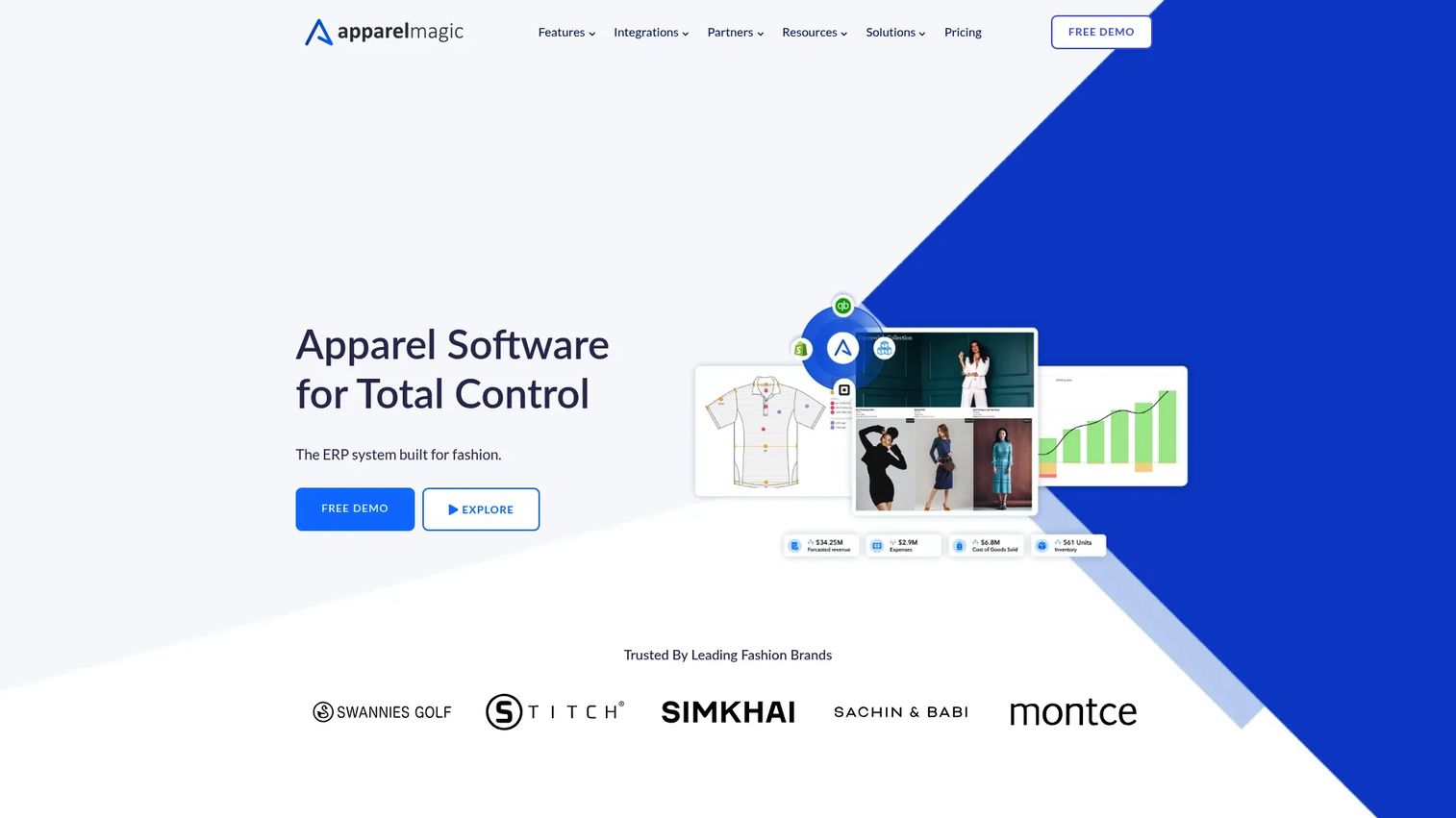
ApparelMagic is a fashion-industry ERP that brings inventory, PLM, CRM, accounting, and B2B ecommerce into one platform built specifically for how apparel brands operate. Instead of stitching a generic ERP to bolt-on apparel modules, you get style-color-size logic, order management, and warehouse control in a single system. For a growing brand tired of running operations across four disconnected tools, that consolidation is the whole pitch.
Best for: Fashion brands that want an apparel-specific ERP covering inventory, PLM, and B2B sales workflows in one place.
Key strengths
- Fashion-native ERP, CRM, and PLM: manages the full apparel lifecycle from design to sale without generic ERP workarounds
- Inventory and warehouse management: tracks stock at the style-color-size-location level with real allocation
- B2B ecommerce and order management: built-in wholesale ordering and multichannel order handling
Why choose ApparelMagic: If you are a small to mid-sized fashion brand that wants apparel-specific workflows out of the box, ApparelMagic fits the way you already think about product. The published pricing and clear tier structure also make it easier to budget than the quote-only enterprise platforms, which matters when you are protecting cash at an early stage.
ApparelMagic pricing: Public pricing lists a Professional plan from $255/month and an Enterprise plan from $495/month when paid annually, with monthly-commitment billing at $305 and $595 respectively. An Ultimate tier is custom-quoted. There is no free tier. This transparency is rare among apparel ERP vendors and helps you compare total cost before a sales call.
2. NetSuite
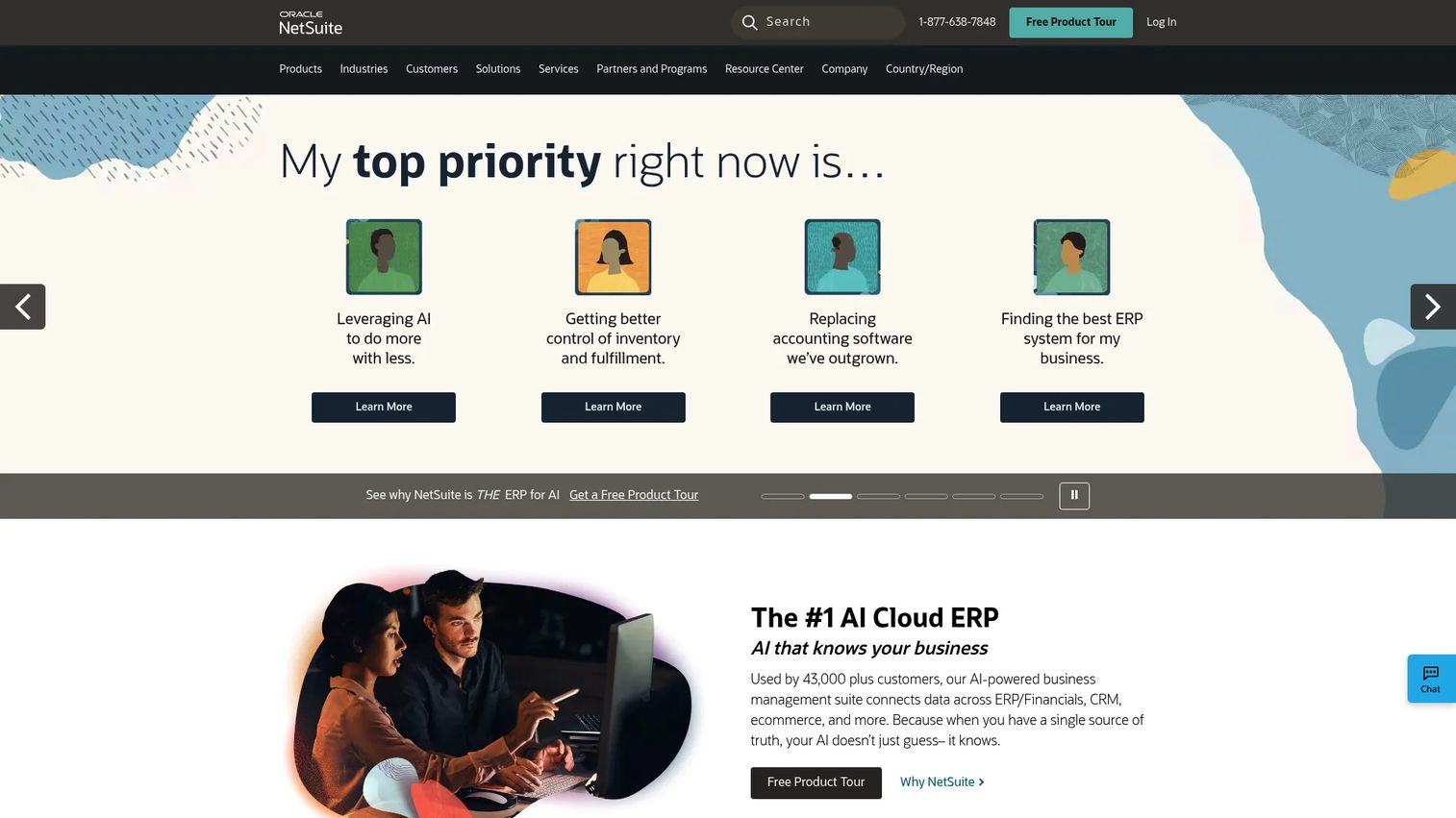
NetSuite is a cloud ERP and business management platform covering finance, operations, CRM, and commerce. It is not apparel-only, but its unified data model and deep financials make it a common choice for scaling apparel companies that have outgrown point tools and need one system for the whole business. Apparel-specific inventory and matrix handling come through configuration and industry add-ons rather than native design.
Best for: Mid-market to enterprise apparel businesses that want a single cloud ERP spanning finance, operations, and commerce.
Key strengths
- Unified ERP and financial management: one ledger across entities, currencies, and channels
- SuiteCloud customization and APIs: configure workflows and integrate the rest of your stack
- Subscription and billing management: SuiteBilling supports recurring and complex billing models
Why choose NetSuite: For a founder preparing for a fundraise or scaling across regions, NetSuite gives finance and operations one clean source of truth that survives due diligence. The trade-off versus apparel-native tools is that matrix inventory and fashion workflows require configuration, so budget for an experienced implementation partner.
NetSuite pricing: NetSuite does not publish public pricing; it is quote-based and typically depends on modules, users, and add-ons. There is no public free tier. Expect an annual license plus implementation cost, so factor total first-year spend into your evaluation.
3. Infor
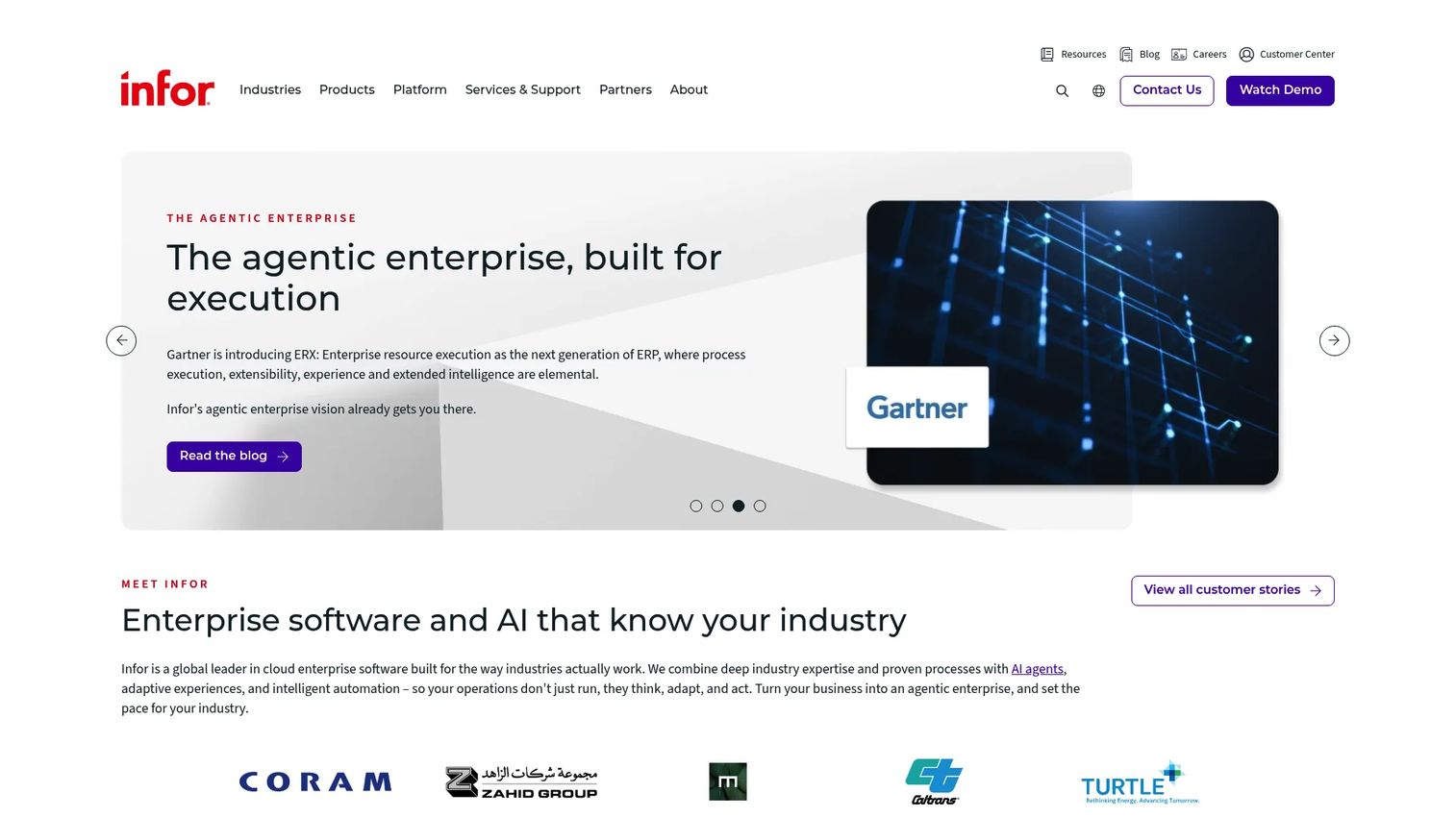
Infor is an enterprise cloud software vendor with industry-specific ERP suites, including a fashion and apparel offering built around the concept-to-customer lifecycle. It pairs core ERP with supply chain management, warehouse management, PLM, and analytics, plus AI agents and automation through its Velocity Suite. This is a platform aimed at larger and multi-region apparel operations.
Best for: Large or mid-market fashion organizations needing deep, industry-specific ERP with integrated SCM and analytics.
Key strengths
- Industry-specific cloud ERP: fashion and apparel suites tuned to sector workflows
- AI agents and automation: Infor Velocity Suite drives analytics and process automation
- Integrated SCM, WMS, PLM, and MES: end-to-end operations under one vendor
Why choose Infor: If you run apparel operations across multiple regions with complex production and warehousing, Infor's role-based dashboards and multi-region readiness fit that scale. It is heavier than a lean brand needs, so it makes most sense once complexity, not just revenue, has grown.
Infor pricing: Infor does not publish a public starting price; the site emphasizes subscription pricing and directs buyers to request a quote. Given the enterprise positioning, plan for a formal procurement and implementation cycle rather than a quick sign-up.
4. A2000
A2000 is an apparel-focused ERP for fashion, footwear, and home goods businesses. It emphasizes operational control with native warehouse management and native financials, so inventory, fulfillment, and accounting run inside one system rather than across integrations. AI analytics and automated reporting round out the operational picture for teams that want tight day-to-day control.
Best for: Mid-market apparel, footwear, and home goods companies that need industry-specific ERP with strong operational control.
Key strengths
- Native warehouse management: scanning, RFID, and wave picking built into the ERP
- Native financials: GL, AP, AR, and bank reconciliation without a separate accounting system
- AI analytics and dashboards: automated report distribution and operational insight
Why choose A2000: For an apparel operator whose pain is fulfillment accuracy and financial reconciliation, A2000's native warehouse and finance modules remove the integration seams where errors hide. That single-system control appeals to teams replacing a patchwork of disconnected tools.
A2000 pricing: A2000 does not publish public pricing; its FAQ references pricing but shows no numeric figure, so plan to request a quote. As with most apparel-specific ERPs, cost will depend on users, modules, and deployment scope.
5. Aptean Apparel (RLM Edition)
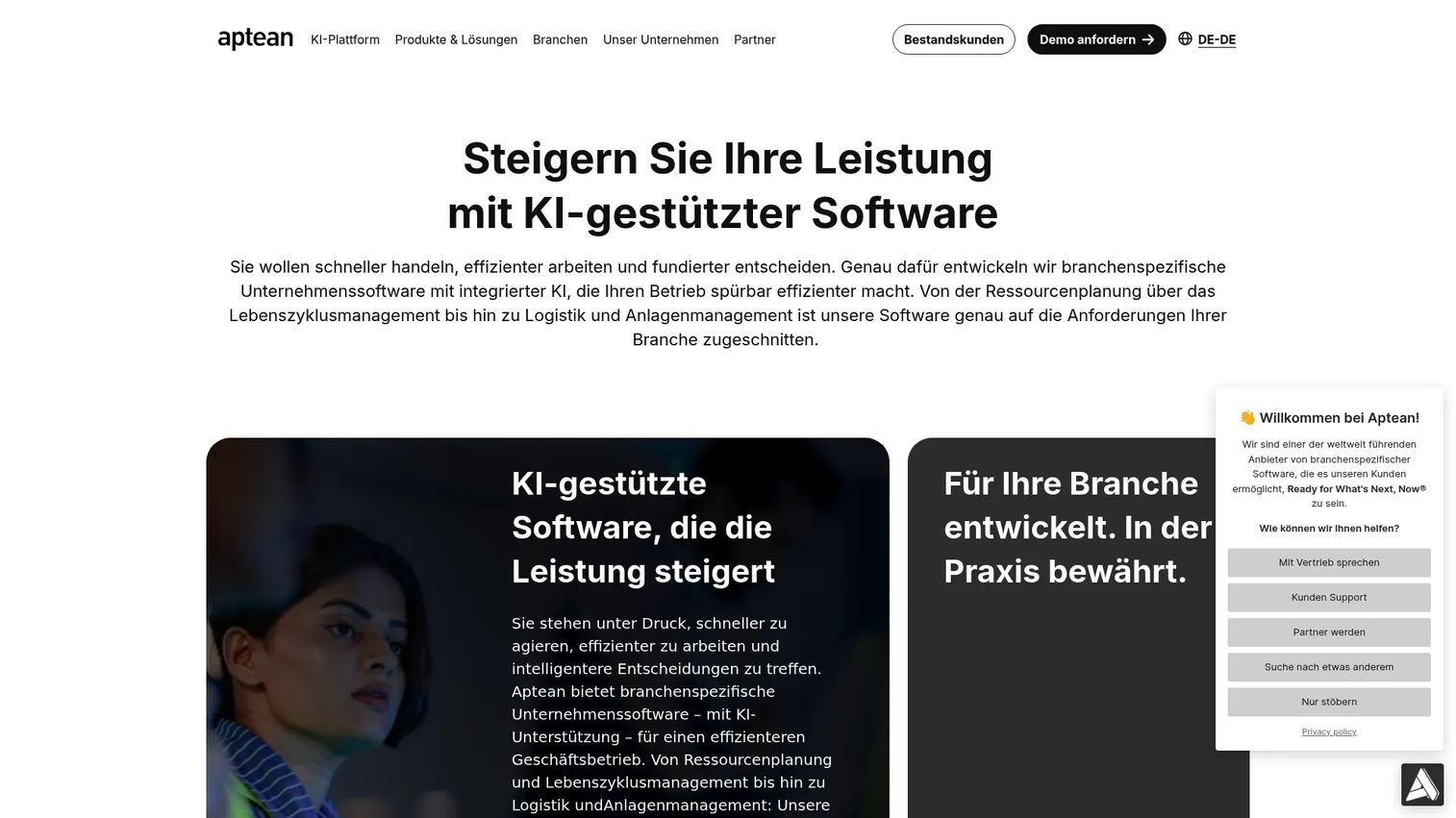
Aptean Apparel (RLM Edition) is an industry-specific ERP for apparel, footwear, and fashion businesses, built around real-time visibility from concept to consumer. It combines built-in warehouse management, financial reporting, and sales order management with ecommerce integration, giving structured apparel operations one system for planning and control.
Best for: Fashion and apparel companies that need an integrated ERP for structured operations and inventory control.
Key strengths
- Concept-to-consumer visibility: real-time view across styles, inventory, sourcing, and financials
- Built-in warehouse and financial reporting: operations and finance in one system
- Sales order management and ecommerce integration: connect wholesale and online channels
Why choose Aptean Apparel: If your operation needs structured planning and traceability across sourcing and production, Aptean's concept-to-consumer model gives you that end-to-end line of sight. It suits teams that value process discipline over lightweight flexibility.
Aptean Apparel pricing: Aptean does not display public pricing; the product page and datasheet direct visitors to request a demo and quote. Expect a sales-led evaluation with pricing scoped to your operation.
6. BlueCherry
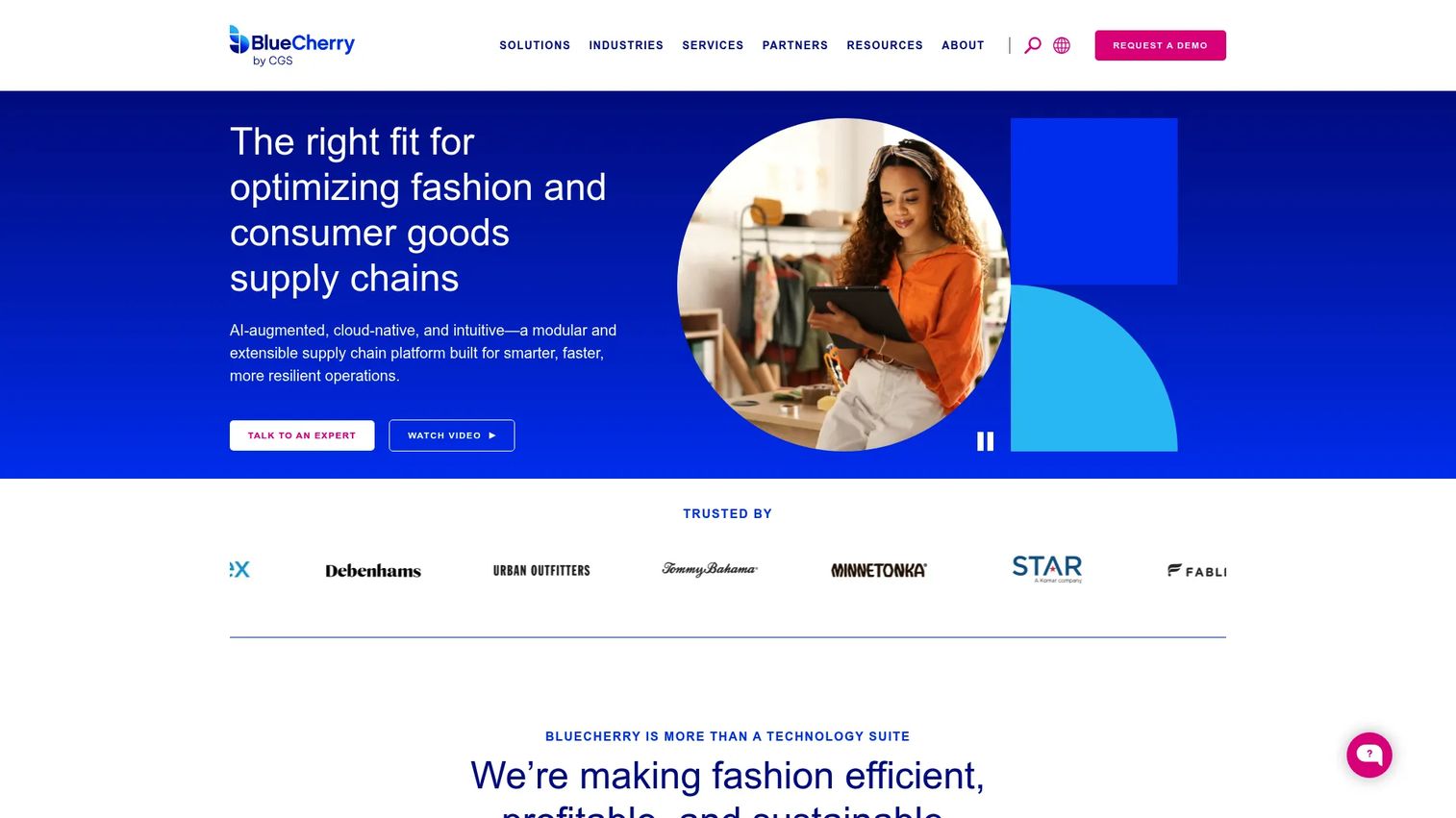
BlueCherry is an AI-augmented supply chain platform for fashion, apparel, footwear, and consumer goods brands. Its strength is breadth: modular solutions spanning ERP, PLM, MES, WMS, BI, and EDI, with real-time visibility from concept to delivery. For brands where the supply chain is the hard part, BlueCherry treats it as the core rather than an add-on.
Best for: Fashion and consumer goods companies that need a specialized, end-to-end supply chain platform.
Key strengths
- End-to-end supply chain management: concept-to-delivery coverage in one platform
- Modular ERP, PLM, MES, WMS, BI, and EDI: adopt the pieces your operation needs
- Real-time visibility and analytics: track and analyze across the full chain
Why choose BlueCherry: For mid-market and enterprise brands whose margin depends on supply chain execution, BlueCherry's modular depth lets you run production, warehousing, and trading-partner EDI under one roof. The modularity means you can scope to current pain and expand as complexity grows.
BlueCherry pricing: BlueCherry does not publish public pricing on its site; it operates on a contact-sales model. Given the modular structure, cost will track the modules and scale you deploy, so define scope before the pricing conversation.
7. Trimit
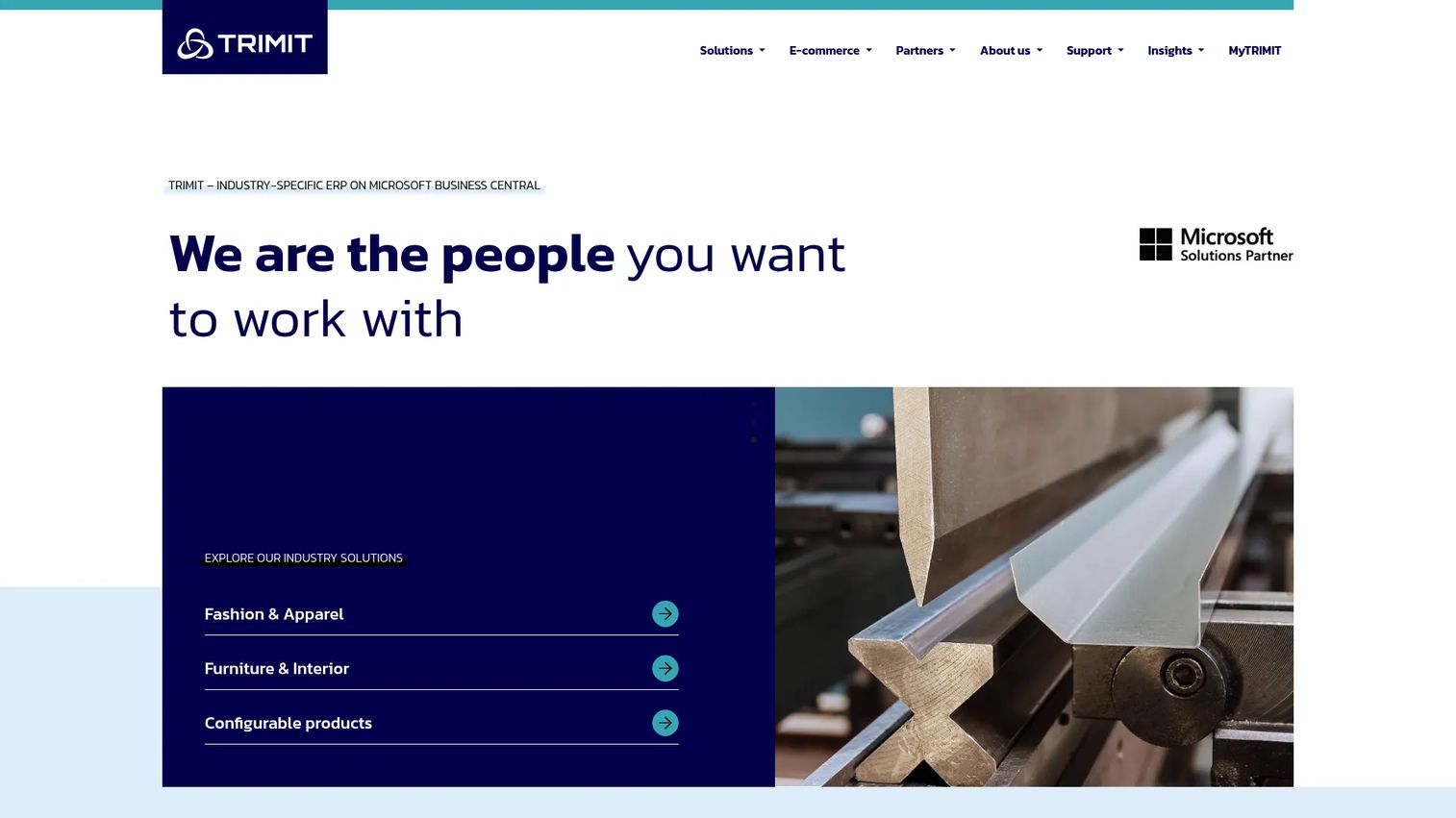
Trimit is an industry-specific ERP built on Microsoft Dynamics 365 Business Central, with a dedicated fashion and apparel edition. That foundation matters: if your team already lives in the Microsoft ecosystem, Trimit layers apparel-specific workflows on top of a platform your finance and IT teams already know. Configurable product handling, B2B webshop, and sales agent portals round out the fashion feature set.
Best for: SMBs in fashion and apparel that want configurable ERP workflows on a familiar Microsoft foundation.
Key strengths
- Fashion-specific functionality on Business Central: apparel workflows on a proven ERP core
- CPQ and product configuration: variant pricing, quotes, and configurable products
- B2B webshop and sales agent portal: live availability and pricing for wholesale buyers
Why choose Trimit: For a mid-market apparel team that wants configurable workflows without leaving the Microsoft ecosystem, Trimit balances apparel depth with a platform IT already supports. That familiarity can shorten onboarding and reduce the change-management burden on your team.
Trimit pricing: Trimit is priced as a monthly subscription, billed monthly or annually, but no public numeric price is listed; you contact sales for a quote. Because it runs on Business Central, factor in the underlying Microsoft licensing as part of total cost.
8. Apparel Business Systems
Apparel Business Systems is an ERP and warehouse management platform for apparel, footwear, accessories, and home goods businesses. It covers multi-channel sales, finance, warehouse management, apparel manufacturing, inventory control, ecommerce, and EDI, with SaaS, cloud, and on-premise deployment options. The flexibility on deployment makes it a candidate for teams with specific hosting or data requirements.
Best for: Apparel and footwear companies that need industry-specific ERP and warehouse management with flexible deployment.
Key strengths
- Multi-channel sales and finance: orders, accounting, and inventory in one system
- Apparel manufacturing and inventory control: production workflows built for the industry
- Flexible deployment: SaaS, cloud, or on-premise to match your requirements
Why choose Apparel Business Systems: If you are replacing fragmented tools and want manufacturing, warehouse, and finance under one apparel-specific system, ABS covers that ground with deployment options many cloud-only vendors do not offer. That flexibility suits teams with particular compliance or infrastructure constraints.
Apparel Business Systems pricing: ABS does not publish public pricing; the site indicates consultation and demo-based sales with SaaS licensing scoped to users and functionality. Plan for a sales-led evaluation to get a figure for your setup.
9. AIMS 360
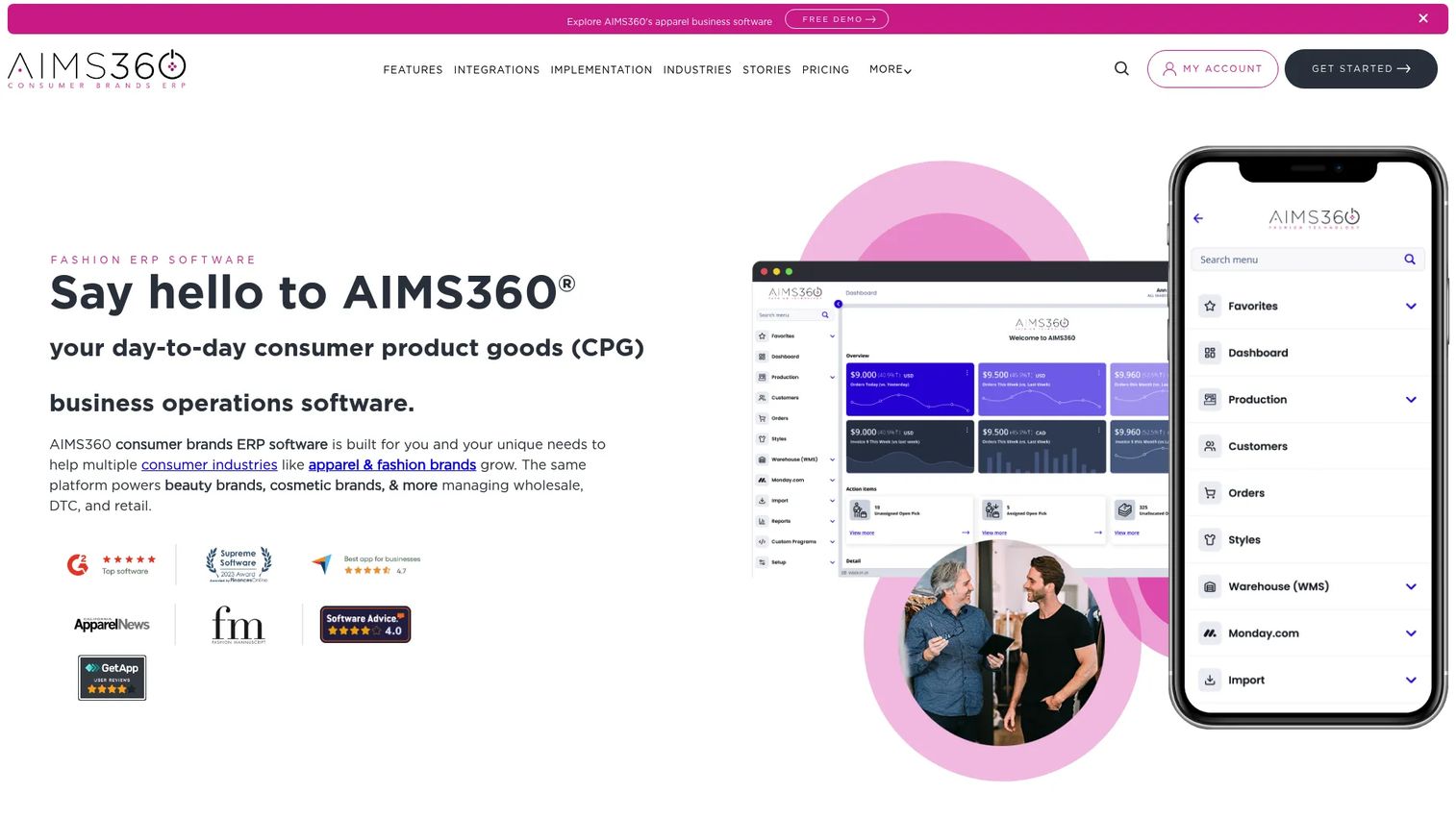
AIMS 360 is a cloud ERP for consumer brands, with a strong focus on apparel and fashion. It centers on multichannel order management and covers PLM, WMS, CRM, accounting, and reporting, plus B2B/B2C, EDI, shipping, and integrations. For wholesale and DTC apparel brands that live and die by order accuracy and retailer EDI, that coverage is directly on point.
Best for: Fashion and consumer brands that need a specialized ERP for wholesale, DTC, and EDI workflows.
Key strengths
- Multichannel order management: wholesale, DTC, and marketplace orders in one place
- PLM, WMS, CRM, and accounting: apparel operations and finance combined
- EDI, shipping, and integrations: connect retailers and logistics partners cleanly
Why choose AIMS 360: For a wholesale-heavy or DTC apparel brand, AIMS 360's order management and EDI depth handle the retailer compliance work that breaks generic systems. Its tiered plans scale with user count, so a smaller brand can start and grow into it.
AIMS 360 pricing: AIMS 360 offers three plans, Bronze (from 3 users), Silver (from 5 users), and Gold (from 10 users), all billed quarterly. It does not list public dollar figures and provides itemized quotes instead, with no free tier. Ask for the itemized quote to compare tiers against your seat count.
Considerations before you buy
Shortlisting is easy. Choosing right takes a checklist tied to your actual operating model. Evaluate every platform against these.
Apparel-specific data model
Confirm the system models style, color, size, and location natively, not through bolt-on fields. If matrix inventory is an add-on rather than the core, you will feel it every day. Ask to see a size-color grid handled in the demo, not described in a slide.
Forecasting and planning depth
Look at how the platform handles demand planning, seasonal buys, and inventory forecasting. AI forecasting is common now, but ask how it uses your sell-through history. The goal is fewer stockouts on winners and less dead stock on misses.
Integrations and channel coverage
Check native support for your channels: wholesale, retail, DTC, marketplaces, and the EDI your retailers require. Confirm the APIs and connectors for your ecommerce platform, 3PL, and accounting so you are not building brittle middleware.
Implementation fit and total cost
Most apparel ERPs are quote-based, so first-year total cost includes license plus implementation. Ask for a realistic timeline, a named implementation partner, and what your team owns. Match deployment (cloud, on-premise, hybrid) to your infrastructure and compliance needs.
Conclusion
There is no single best apparel ERP, only the best fit for how your business runs today and where it is heading. If you want an apparel-native suite with transparent pricing, ApparelMagic is the cleanest starting point. If you are scaling toward a fundraise and need one system for the whole business, NetSuite gives finance and operations a source of truth. Enterprise fashion operators with complex supply chains lean toward Infor or BlueCherry, while A2000 and Aptean suit teams that want tight operational control. Configurable mid-market teams on Microsoft should look hard at Trimit, and wholesale or DTC brands built on EDI will find AIMS 360 directly on point.
Start from your pain, not the feature list. Rank your top three problems, whether that is matrix inventory, forecasting accuracy, or finance reconciliation, then book demos and make each vendor show that exact workflow live. The system that handles your hardest problem in the demo is the one worth your shortlist.
FAQs
Apparel ERP software is an enterprise resource planning system built for fashion and apparel businesses. It manages inventory, orders, production, and finance around the style, color, size, and location structure that defines apparel operations, so a single style with many variants is handled natively rather than in spreadsheets.
Generic ERP treats a product as one SKU with a quantity. Apparel ERP models the style-color-size matrix natively, so one style can be dozens of sellable units across colors and sizes. It also adds fashion-specific workflows like seasonal planning, cut tickets, landed cost, and retailer EDI that generic systems only handle through heavy configuration.
Prioritize native style-color-size-location inventory, multichannel order management, demand planning and forecasting, landed-cost and margin visibility, and production and supply chain workflows. Integrations with your ecommerce, 3PL, and accounting stack matter just as much, since they determine whether the system becomes one source of truth or another silo.
Cloud ERP now leads the apparel segment, accounting for 54.7% of revenue in 2025 per Dataintelo. For multi-location and distributed teams, cloud gives real-time inventory and finance visibility without on-premise infrastructure. On-premise or hybrid still makes sense for businesses with specific data residency or compliance requirements.
Purpose-built apparel ERPs treat a style as a grid: rows for colors, columns for sizes, with stock, cost, and allocation tracked at each intersection and location. This lets you buy, allocate, and report at the variant level, which is essential for avoiding stockouts on hero sizes while overstock piles up elsewhere.
Yes. Most apparel ERP systems support multichannel order management across wholesale, retail, DTC, and marketplaces, often with built-in B2B ordering portals and retailer EDI. Confirm native support for your specific channels and the EDI standards your retail partners require before you commit.
Look for a realistic timeline, a named implementation partner, and clarity on what your team owns versus the vendor. Since most apparel ERPs are quote-based, evaluate total first-year cost including implementation, and insist the vendor demo your hardest workflow live rather than a generic tour.
Timelines vary with scope, data migration, and integrations. A focused mid-market rollout can run a few months, while a multi-region enterprise deployment with complex supply chain and EDI can take considerably longer. Ask each vendor for a phased plan and a first-value milestone so you know when the system starts paying off.