
You know a competitor just doubled their paid spend. You can feel it in your CPMs. But you cannot prove it, you cannot see their creatives, and you cannot tell your CFO where their budget is actually going. So you guess. Then you defend the guess in a planning meeting where everyone has an opinion and no one has data.
That gap is the entire reason digital advertising intelligence software exists. The advertising intelligence software market was valued at USD 2.5 billion in 2024 and is forecast to reach USD 6.7 billion by 2033, growing at an 11.4% CAGR, according to LinkedIn industry analysis (2024). Marketers are not buying these tools for fun. They are buying visibility they cannot get anywhere else: competitor ad spend, creative rotation, share of voice, and cross-media coverage they can defend in a room full of skeptics.
The problem is that "ad intelligence software" means very different things depending on the vendor. Some platforms specialize in display and social. Others go deep on mobile and app install campaigns. A few report across TV, CTV, print, and audio. If you pick the wrong one, you get clean dashboards covering the channels your competitors barely use. The right ad intelligence tool matches your channel mix, your geography, and your reporting depth.
If you are also evaluating adjacent stacks, it helps to look at neighboring categories like best competitive intelligence tools, best brand intelligence software, and best audience intelligence platforms, since digital ad intelligence often overlaps with all three. This guide narrows the field to eight platforms and tells you which buyer each one actually fits.
What's inside
This guide is for growth marketers, performance marketers, brand teams, agency strategists, and competitive intelligence leads who need to see how rivals advertise and where budget flows. We selected platforms based on four things: cross-media coverage across the channels you actually run, refresh rate and real-time updates, creative tracking and benchmarking depth, and exportable insights that plug into existing reporting. Each entry includes an overview, key strengths, a best-fit reader, and pricing context where a public figure is available. No vendor paid for placement.
TL;DR
- Best for cross-media benchmarking: AdClarity, for share of voice and creative comparison across display, social, video, and CTV.
- Best for multi-channel ad spend tracking: MediaRadar, for daily-refreshed monitoring across 30-plus channels.
- Best for digital traffic plus ad context: Similarweb, for teams already living in website analytics.
- Best for mobile and app-first teams: Sensor Tower and AppMagic, for app advertising and market intelligence.
- Best for paid media creative analysis: Pathmatics and SocialPeta, for spend visibility and creative tracking.
- Best for broad, verified media coverage: Nielsen Ad Intel, for teams needing TV, CTV, digital, and print under one taxonomy.
What is digital advertising intelligence software?
Digital advertising intelligence software is a category of competitive intelligence tools that track, collect, and report on how brands advertise across digital and traditional media channels. It tells you who is running ads, where, with what creative, at roughly what spend, and how loud their share of voice is relative to yours.
These platforms work by collecting ad data at scale, through human panels, crawlers, SDK networks, and partnerships, then harmonizing it into a single taxonomy you can filter, benchmark, and export. The output is competitor ad monitoring you can act on instead of speculation.
Core features to expect from an ad intelligence platform:
- Cross-media coverage: display, social, video, native, search, CTV, and in some tools TV, print, audio, and out of home.
- Ad spend tracking: estimated spend and impression data by advertiser, brand, channel, and time period.
- Creative tracking: a searchable library of competitor ad creatives, landing pages, and messaging over time.
- Benchmarking and share of voice: your spend and presence measured against named competitors and category averages.
- Campaign monitoring: alerts and trend analysis that flag new campaigns, channel shifts, and spending spikes.
- Reporting dashboards and exportable insights: dashboards, scheduled reports, and API or CSV export for your own stack.
- Audience analysis: demographic and behavioral signals on who competitor campaigns target.
The broader context matters here. The global digital advertising market is forecast to grow from USD 354.9 billion in 2026 to USD 588.93 billion by 2030 at a 13.5% CAGR, according to Research and Markets (2026). As spend climbs, the cost of flying blind climbs with it. That is what these tools are built to fix.
When to use ad intelligence software
Benchmark your spend before a planning cycle
When budget season hits, "we should spend more on paid social" is not an argument. It is a vibe. Ad intelligence software turns it into a defensible case by showing where competitors concentrate spend and where share of voice is contested. You walk into planning with media benchmarking, not opinions.
Catch a competitor's channel shift early
Markets move when someone changes their mix. A rival pouring budget into CTV or launching a heavy YouTube push is a signal you want before your CPMs react. Campaign monitoring and ad trend analysis flag these moves close to real time, so you adjust instead of scramble.
Pull creative inspiration from what already works
Creative fatigue is expensive. Instead of starting from a blank brief, creative tracking lets you study the ads competitors keep running, which usually means they convert. You see angles, formats, and hooks across the category, then build smarter tests of your own.
Comparison table
Here is the shortlist at a glance. Pricing for most of these platforms is sales-led and customized by coverage, so public starting figures are rare. G2 ratings reflect current listings at the time of writing.
| # | Product | Intent | Key use case | Pricing | G2 rating |
|---|---|---|---|---|---|
| 1 | AdClarity | Cross-media competitive intelligence | Share of voice and creative benchmarking | Custom (sales-led) | 4.0/5 |
| 2 | MediaRadar | Multi-channel ad monitoring | Daily ad spend tracking across 30+ channels | Custom (sales-led) | 4.5/5 |
| 3 | Similarweb | Digital traffic and ad intelligence | Competitive benchmarking with website data | Custom; free trial; AEO from $99/mo | 4.5/5 |
| 4 | Sensor Tower | Mobile and app intelligence | App advertising and competitor tracking | Custom (sales-led) | 4.3/5 |
| 5 | Pathmatics by Sensor Tower | Digital ad spend intelligence | Spend, creative, and share of voice | Custom (sales-led) | 4.3/5 |
| 6 | SocialPeta | Creative intelligence | Ad creative discovery and competitor research | Custom (sales-led) | 4.8/5 |
| 7 | AppMagic | App market intelligence | App growth and mobile ad behavior | Custom (sales-led) | 4.8/5 |
| 8 | Nielsen Ad Intel | Verified cross-media intelligence | TV, CTV, digital, and print benchmarking | Custom (sales-led) | 4.0/5 |
1. AdClarity
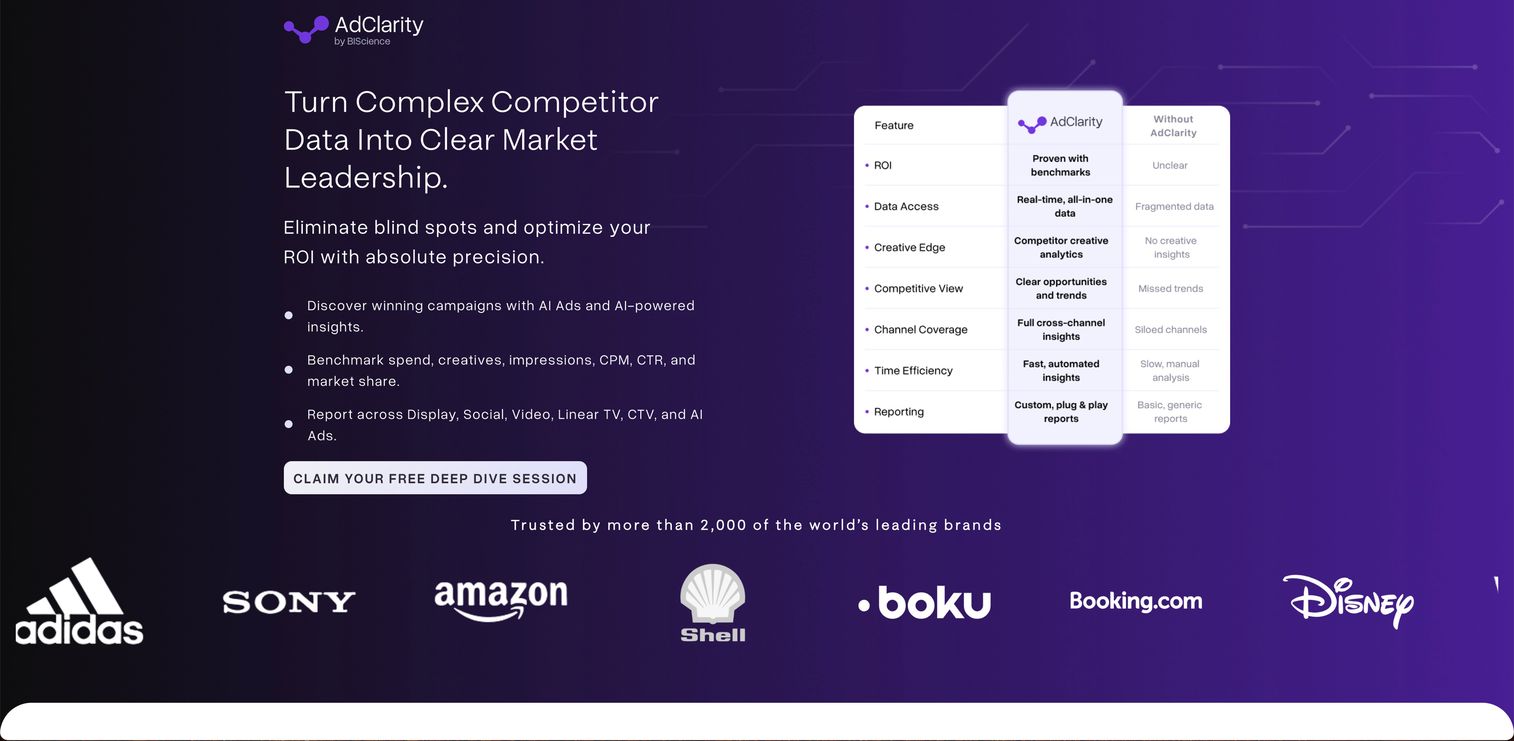
AdClarity is an AI-powered, cross-media ad intelligence platform built for competitive benchmarking and ROI reporting. It tracks how brands advertise across display, social, video, and CTV, then turns that into share of voice, spend, impression, and creative comparisons you can defend internally. Reviewers point to its strength in surfacing real competitor ad examples, with one noting it helps uncover examples of B2B ads in their industry they would never have found manually.
Best for: Agencies and brands that need cross-media competitive intelligence and clean ROI reporting in one place.
Key strengths
- Real-time competitive insights: monitoring across display, social, video, and CTV so you see the full digital picture, not one channel.
- Benchmarking depth: share of voice, spend, impressions, and creative comparison against named competitors and category averages.
- Reporting and export: custom dashboards, scheduled reports, and data export or API access for your own stack.
Why choose AdClarity: If your core job is proving how your paid presence stacks up against rivals across multiple digital channels, AdClarity is built around that exact question. The cross-media coverage and creative library make it a strong fit for agency teams who report to clients and brand teams who report to a CMO. The benchmarking framing matters when you have to justify budget shifts to people who want numbers, not narratives.
AdClarity pricing: AdClarity uses sales-led pricing. No public starting price or self-serve tier was listed on its site at the time of writing, and premium modules are quoted based on coverage and scope. Plan on requesting a demo to get a quote tied to your channels and competitor set. The platform holds a 4.0/5 rating on G2.
2. MediaRadar
MediaRadar is a marketing and advertising intelligence platform focused on monitoring competitive ad spend, creative, and media trends across channels. It collects and harmonizes millions of media, creative, and campaign data points, giving sales, brand, agency, and adtech teams a daily-refreshed view of how the market is moving. The breadth here is the headline: coverage spans a large universe of brands across more than 30 media channels.
Best for: Sales, brand, agency, and adtech teams that need competitive ad monitoring with daily data refresh.
Key strengths
- Cross-channel monitoring: competitor ad spend and creative tracking across 30-plus channels in one platform.
- Daily-refreshed intelligence: media data that updates frequently so campaign monitoring reflects current activity.
- Creative library and alerts: a searchable creative archive plus alerts and benchmarking dashboards that flag market shifts.
Why choose MediaRadar: The daily refresh and wide channel coverage make MediaRadar a strong pick when you need to spot market movement before it shows up in your own performance data. It leans more product-forward than editorial, which suits teams that want to live inside the dashboards rather than pull occasional reports. CTV and cross-channel visibility are recurring strengths for media teams tracking where competitor budgets flow.
MediaRadar pricing: MediaRadar does not publish a public price. The site routes you to a demo or sales conversation, and quotes depend on your channel coverage and team size. It carries a 4.5/5 rating on G2 from a substantial review base, which is a strong signal for a platform in this category.
3. Similarweb
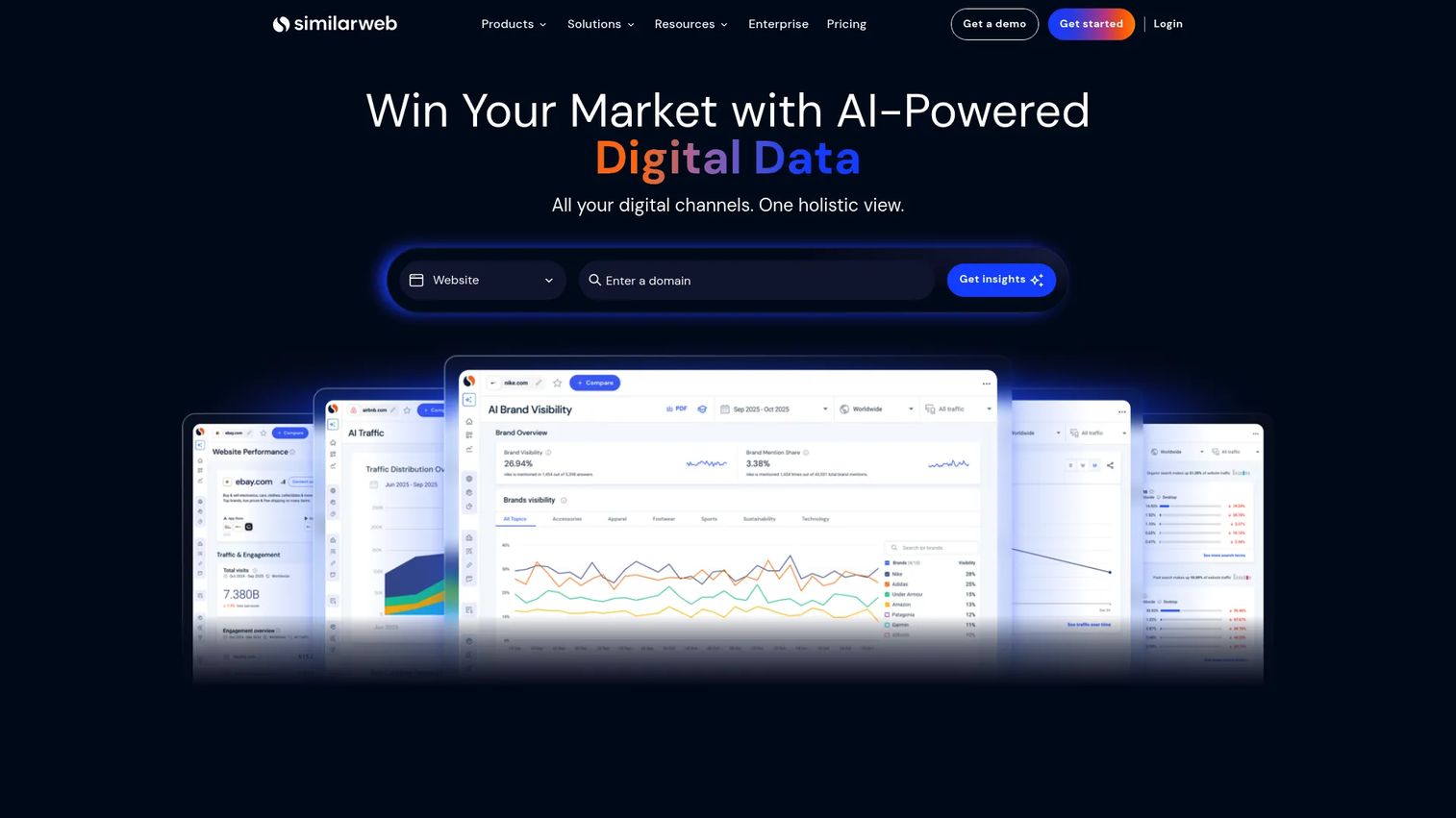
Similarweb is a digital intelligence platform spanning competitive, market, SEO, app, sales, and retail analysis. For ad intelligence specifically, its value is context: you see competitor website traffic, engagement, audience, and channel mix alongside paid activity, which is hard to get from ad-only tools. Teams already running website analytics often find it the most natural place to add digital ad intelligence without bolting on a separate system.
Best for: Teams that already use website analytics and want competitive digital intelligence with ad and traffic context together.
Key strengths
- Traffic and engagement analysis: daily, weekly, and monthly traffic trend insights across competitor sites.
- Competitive benchmarking: audience insights and channel mix so you see where rivals win attention.
- Search and SEO visibility: keyword and search tools that connect paid and organic strategy in one view.
Why choose Similarweb: Similarweb shines when ad intelligence is one part of a broader competitive picture. If you want to understand not just what competitors advertise but where their traffic comes from and how engaged it is, the combined view is hard to match. Performance marketers who already benchmark traffic get incremental ad context without learning a whole new tool. This overlaps naturally with best business intelligence software and broader competitive intelligence workflows.
Similarweb pricing: Similarweb offers a free trial and a mix of self-serve and sales-led plans. Its core Web Intelligence package is quoted as a custom, sales-led plan, while at least one self-serve plan (AEO Intelligence) starts around $99 per month. Expect a custom quote for the full competitive and ad intelligence feature set. It holds a 4.5/5 rating on G2.
4. Sensor Tower
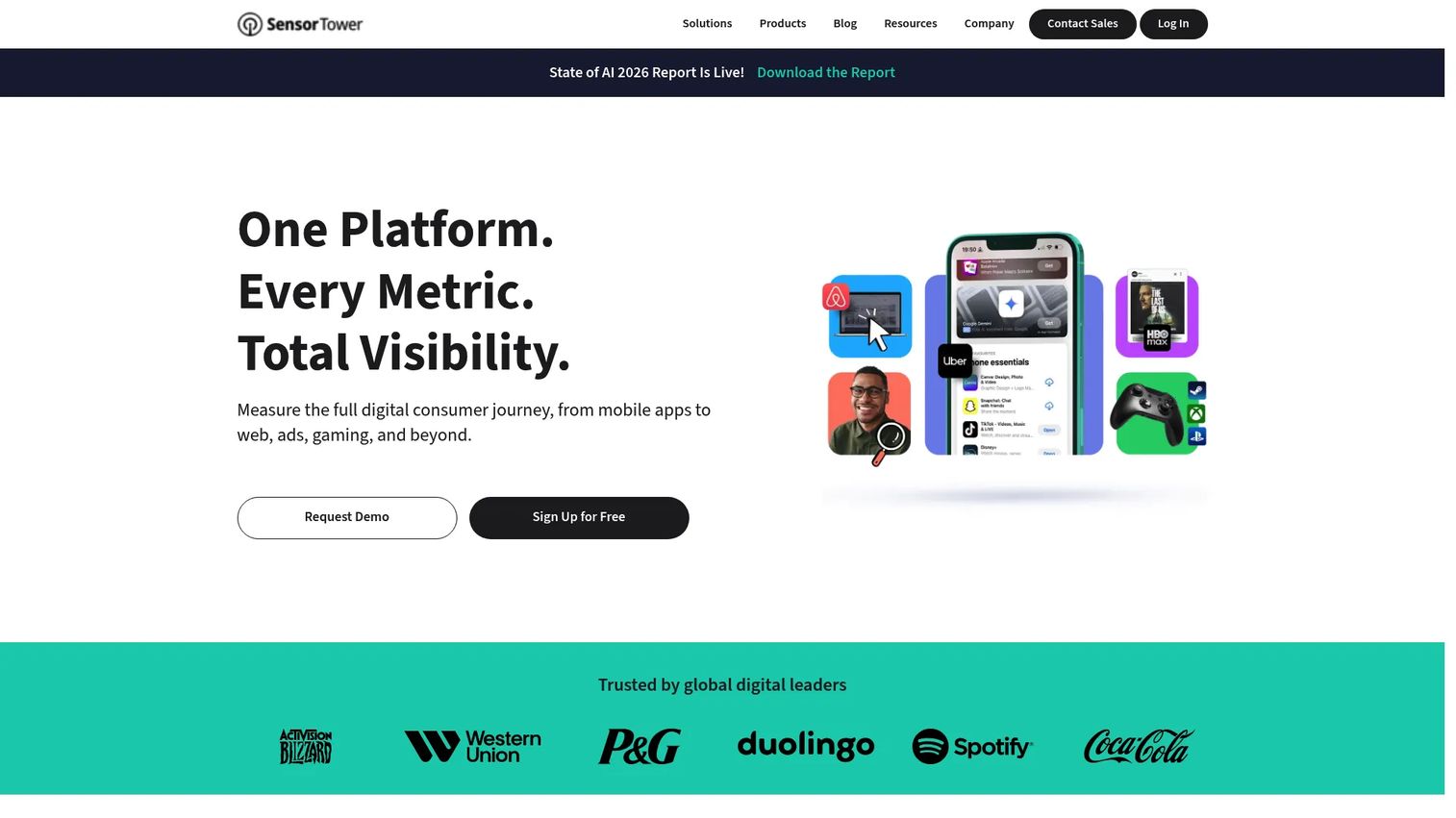
Sensor Tower is a digital intelligence platform covering app, web, ads, gaming, and audience insights. Its advertising intelligence lets you see ads served, spend and impression estimates, share of voice, and more across key channels, with particular depth in the mobile and app ecosystem. For teams whose growth depends on app installs and mobile campaigns, it is one of the most relevant ad intelligence tools available.
Best for: Teams that need competitive intelligence on mobile apps, digital ads, and gaming markets.
Key strengths
- App performance insights: download, revenue, and usage data on competitor apps for market benchmarking.
- App advertising insights: ads served, spend and impression estimates, and share of voice across channels.
- Gaming and audience signals: category-level intelligence and audience analysis for app-first growth teams.
Why choose Sensor Tower: If a meaningful share of your acquisition runs through mobile and app channels, Sensor Tower gives you visibility that general digital tools miss. The combination of app market data and advertising insights helps growth teams connect creative and spend signals to install behavior. It is the natural fit when your competitors live in the app stores, not just on the open web.
Sensor Tower pricing: Sensor Tower does not display public pricing on its main site. It offers a free sign-up path and a request-demo flow, with pricing customized by customer and coverage needs. Plan on a sales conversation to scope a quote. The platform holds a 4.3/5 rating on G2.
5. Pathmatics by Sensor Tower
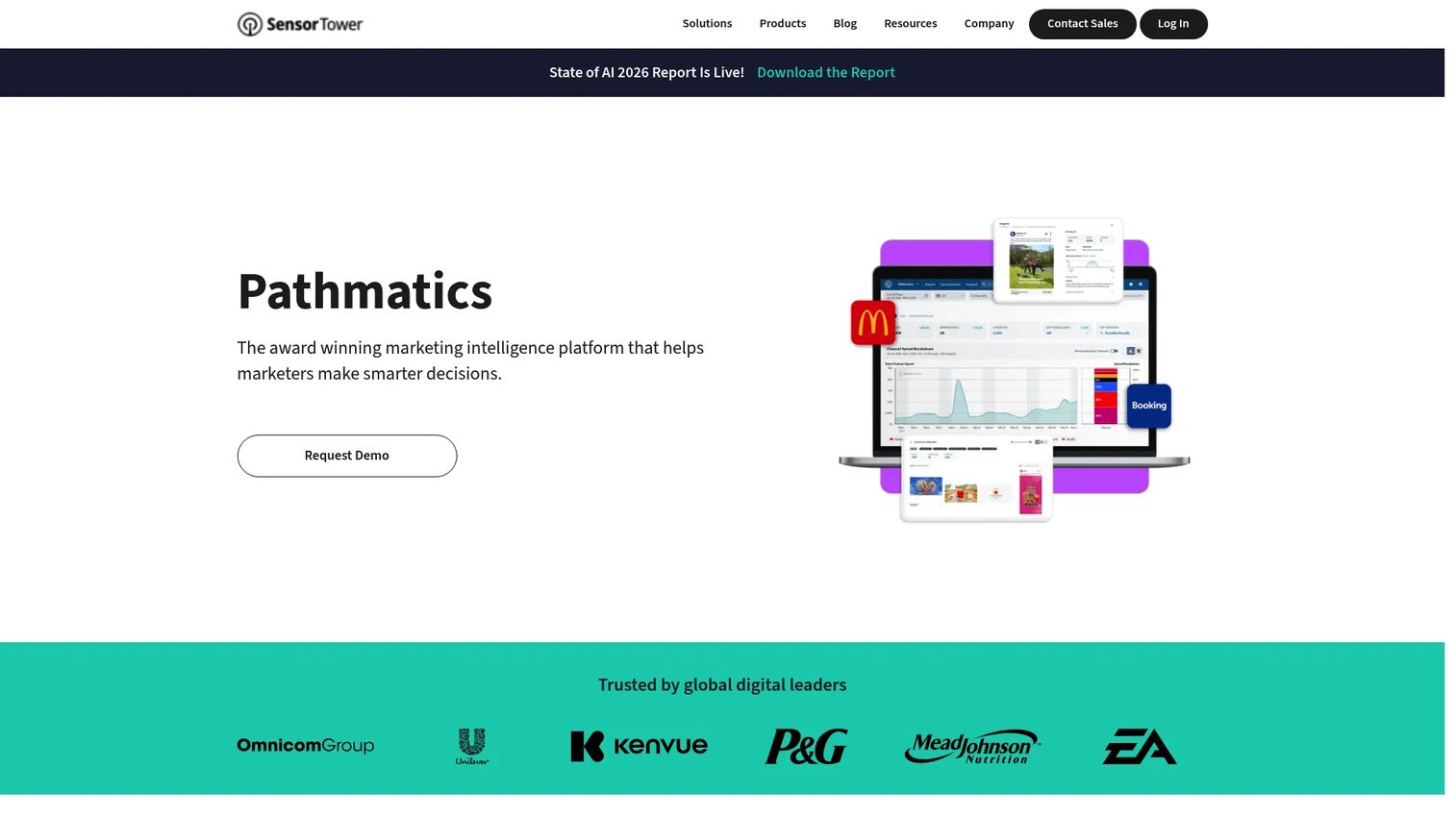
Pathmatics by Sensor Tower is a digital advertising intelligence platform focused on competitive ad spend and creative analysis. It surfaces ad spend and impression estimates across major digital channels, plus creative, placement, and audience or targeting insights. For paid media teams, the draw is detailed competitive comparison, share of voice, and historical trend analysis in one view.
Best for: Paid media teams that need competitive digital ad intelligence and media planning insights.
Key strengths
- Spend and impression estimates: ad spend tracking across major digital channels by advertiser and brand.
- Creative and placement insights: creative tracking with placement and audience or targeting detail.
- Competitive comparison: share of voice and historical trend analysis to see how spend shifts over time.
Why choose Pathmatics: Pathmatics is built for the paid media practitioner who wants to plan against real competitor data, not guesses. The cross-channel ad intelligence and historical trend view make it useful for both reactive monitoring and forward planning. As part of the Sensor Tower portfolio, it pairs naturally with app and broader digital intelligence if you need both web and mobile visibility.
Pathmatics pricing: Pathmatics uses sales-led pricing with no public starting figure. Quotes depend on channel coverage and the advertiser set you want to track, so a demo is the path to a number. It carries a 4.3/5 rating on G2.
6. SocialPeta
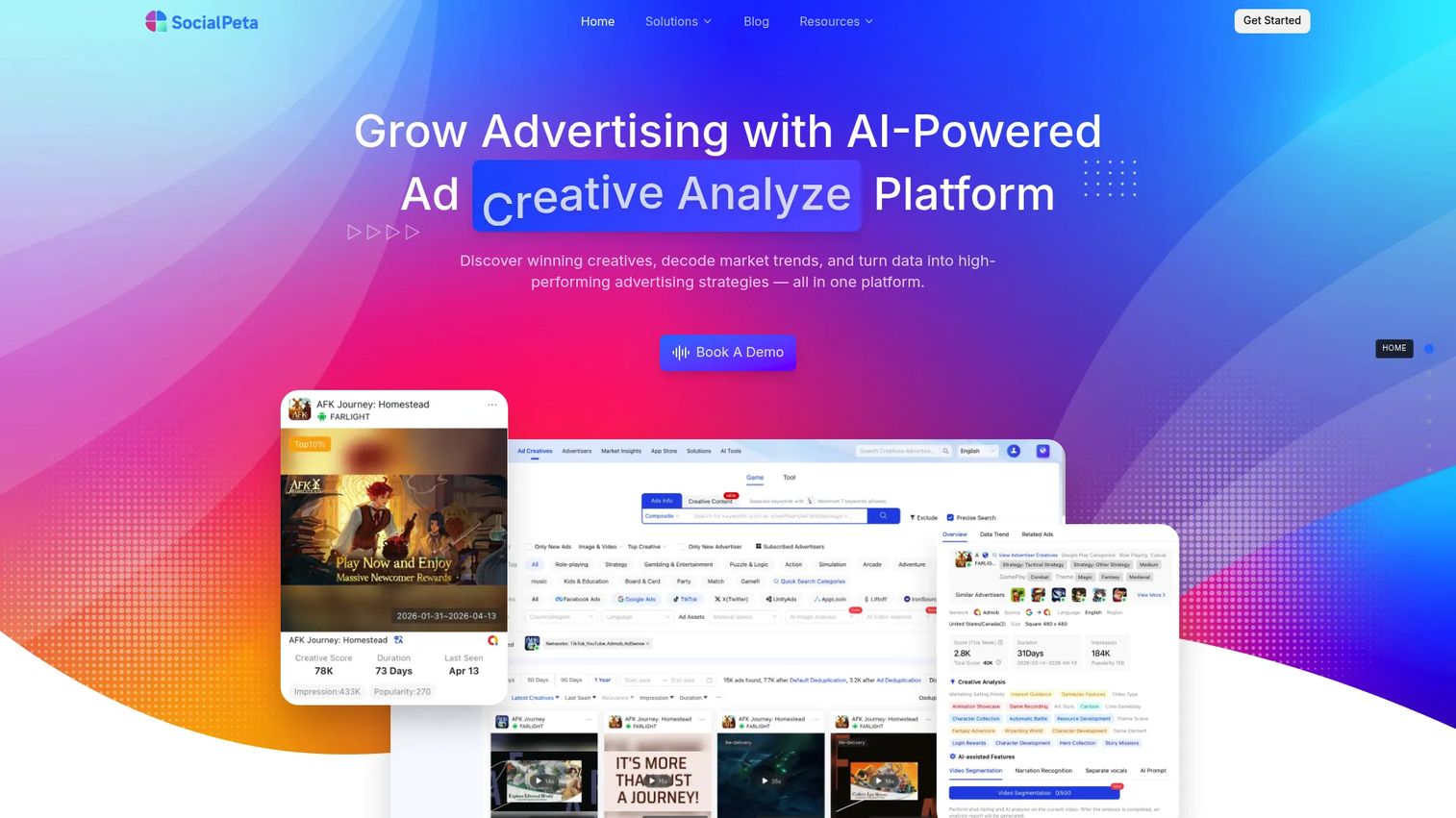
SocialPeta is an ad intelligence platform built for discovering creatives, tracking competitors, and analyzing advertising strategy. Its strength is breadth of creative data, with cross-platform ad monitoring and real-time ad tracking across a large universe of ad creatives. Marketing teams use it to study what is working in the market and reverse-engineer winning angles.
Best for: Marketing teams and agencies that need ad creative intelligence and competitor research at scale.
Key strengths
- Cross-platform ad monitoring: competitor ad tracking across many channels and regions in one library.
- Real-time ad tracking: fresh creative data so you catch new campaigns as they launch.
- Creative analysis and trends: creative tracking with trend insights to spot category-wide patterns.
Why choose SocialPeta: SocialPeta is the pick when creative is your bottleneck. Instead of guessing at angles, you study a deep library of competitor ads and identify formats and hooks that keep running, which usually means they convert. Agencies and growth teams that ship a high volume of creative tests get the most from the creative pattern analysis and ad trend analysis.
SocialPeta pricing: SocialPeta does not publish public pricing on its own site, and access is quoted by scope. Request a demo to get a quote tied to the channels and creative volume you need. It holds a 4.8/5 rating on G2, one of the higher scores in this group.
7. AppMagic
AppMagic is a mobile app market intelligence platform that helps teams track app revenue, downloads, and competitor behavior, with ad and creative insights layered on top. For mobile-first businesses, it pairs app analytics with advertising signals so you can see how competitors grow and how their ad activity maps to results. It is a focused tool for teams whose growth story is told in the app stores.
Best for: Teams tracking app growth and mobile ad behavior who need market intelligence and competitor research.
Key strengths
- App market intelligence: competitor revenue, download, and ranking data for benchmarking.
- Ad and creative insights: ad creative tracking that connects spend signals to app performance.
- Product and growth signals: market-level data to spot rising apps and shifting category dynamics.
Why choose AppMagic: AppMagic fits mobile-first teams who want app market data and advertising context without juggling two separate tools. The combined view helps you see not just that a competitor is advertising, but how that activity tracks against their downloads and revenue. It is a practical pick for growth and product teams whose primary battleground is the app store.
AppMagic pricing: AppMagic does not list public pricing on its site, and plans are scoped to your needs. A demo or sales conversation is the route to a quote. The platform holds a 4.8/5 rating on G2, which signals strong satisfaction among its mobile-focused user base.
8. Nielsen Ad Intel
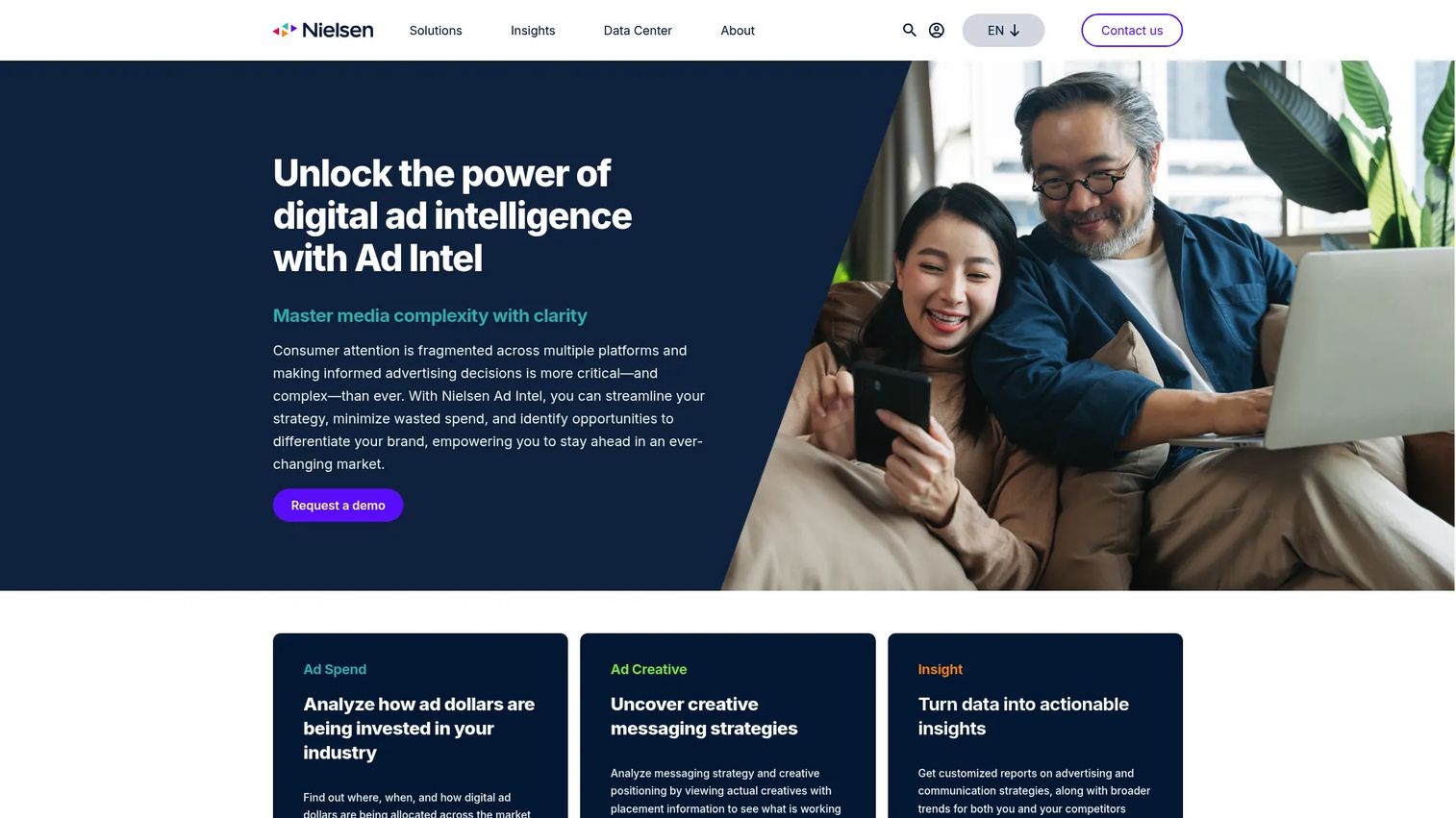
Nielsen Ad Intel is a competitive advertising intelligence platform that reports ad spend and creative activity across major media channels and markets. Its differentiator is verified, harmonized cross-media coverage: TV, CTV, digital, social, audio, print, out of home, and cinema under one independent taxonomy. For teams that plan across traditional and digital media, that breadth is the point.
Best for: Media and brand teams benchmarking competitor advertising spend and creative across many channels and markets.
Key strengths
- Full cross-media coverage: reporting across TV, CTV, digital, social, audio, print, out of home, and cinema.
- Global market depth: coverage across 90-plus international and 29-plus local markets.
- Harmonized taxonomy: an independent, consistent advertiser and market taxonomy across data sources.
Why choose Nielsen Ad Intel: Nielsen Ad Intel earns its place when your media plan spans more than digital. If you benchmark against competitors running TV and CTV alongside paid social, the harmonized taxonomy keeps the comparison honest across channels. It fits more traditional intelligence stacks and is well suited to brand, agency, and media planning teams that need verified, broad media visibility.
Nielsen Ad Intel pricing: Nielsen does not publish public pricing for Ad Intel. The product page routes you to a demo or sales contact, and quotes reflect the channels and markets you cover. It holds a 4.0/5 rating on G2.
Considerations before you buy
Channel and media coverage
Match the platform's coverage to your real channel mix, not the impressive logo wall. A tool that excels at TV and print does little for a team running only paid social and search. Confirm coverage across the exact channels and ad formats your competitors use, including CTV if that matters.
Geography and market depth
Coverage thins out by region. A platform with deep US data may be sparse in your priority markets, which quietly undermines benchmarking. Ask for sample data in the specific countries you care about before committing.
Refresh rate and real-time updates
Stale data leads to late decisions. If you need to catch competitor moves early, prioritize daily refresh and real-time updates over monthly snapshots. Ask vendors exactly how often each channel updates, since refresh rate often varies by media type.
Exportable insights and integrations
A dashboard you cannot export is a dead end for reporting. Confirm CSV and API export, scheduled reports, and how cleanly the data flows into your existing reporting dashboards. For marketers fighting tool sprawl, clean exports decide whether a tool earns its seat.
Creative and benchmarking depth
The difference between a spend estimate and a usable insight is creative context and competitive framing. Verify the depth of the creative library, the freshness of creative tracking, and whether benchmarking lets you compare against the named competitors and category averages you actually plan against.
Conclusion
There is no single best digital advertising intelligence software, only the best fit for your channel mix, geography, and reporting depth. For cross-media benchmarking and share of voice, AdClarity and Nielsen Ad Intel cover the widest ground. For daily-refreshed multi-channel monitoring, MediaRadar is hard to beat. Similarweb wins when you want ad context alongside traffic and audience data. For mobile and app-first growth, Sensor Tower and AppMagic go deepest, while Pathmatics and SocialPeta lead on paid media spend visibility and creative tracking.
The next step is simple: shortlist two or three tools that match your channels, then compare them on coverage, refresh rate, and benchmarking outputs using sample data in your priority markets. Run the same competitor query through each and see which one gives you an answer you would defend in a planning meeting. That is the real test. For adjacent evaluation, it is worth scanning best audience intelligence platforms and best brand intelligence software so your competitive stack covers spend, creative, audience, and brand together.
Start your journey with Guideflow today!
FAQs
Digital advertising intelligence software tracks how brands advertise across digital and traditional channels, reporting who runs ads, where, with what creative, and at roughly what spend. It turns competitor ad monitoring into benchmarking and share of voice you can act on. Marketers use it to plan campaigns, defend budgets, and spot market shifts. It overlaps with broader competitive intelligence and brand intelligence categories.
These platforms collect ad data at scale through human panels, crawlers, SDK networks, and data partnerships, then harmonize it into a single taxonomy. That lets them estimate spend and impressions, capture creatives, and measure share of voice by advertiser, channel, and time period. The result is campaign monitoring you can filter, benchmark, and export rather than guess at.
Match coverage to your real channel mix. Most digital teams need display, paid social, video, native, search, and increasingly CTV. Brand and media teams often also need TV, audio, print, and out of home, which favors platforms with verified cross-media coverage like Nielsen Ad Intel. Always confirm coverage in your priority geographies, since data depth varies by market.
Ad intelligence focuses specifically on advertising activity: spend, creative, placement, and share of voice. General market intelligence is broader, covering traffic, audiences, pricing, and overall competitive positioning. The two overlap, and platforms like Similarweb blend them. If your job is defending media budget and tracking competitor creative, you want a tool built around digital ad intelligence first.
Marketers use benchmarking to measure their spend and presence against named competitors and category averages, then translate that into budget and channel decisions. It supports media benchmarking in planning cycles, flags when a competitor gains share of voice, and gives exportable insights that hold up in a room full of stakeholders. Defensible numbers beat opinions when budget is on the line.
Both, but the fit differs. Agencies often value broad creative libraries and client-ready reporting, which suits tools like AdClarity and SocialPeta. Brands frequently need deep benchmarking against a fixed competitor set and verified cross-media coverage, which favors Nielsen Ad Intel and MediaRadar. The better question is which platform matches your channels, markets, and reporting workflow.
Compare channel and media coverage, geographic depth, refresh rate, creative tracking depth, benchmarking and share of voice, and exportable insights. Request sample data in your priority markets and run the same competitor query through each shortlisted tool. Pricing for most ad intelligence platforms is sales-led, so scope a quote around the channels and advertisers you actually need.
It depends on how fast you need to react. Teams catching competitor moves early should prioritize daily refresh and real-time updates, while strategic planners may be fine with weekly or monthly data. Refresh rate often varies by channel within the same platform, so ask vendors how frequently each media type updates before you commit.