Fuel is one of the largest controllable line items in any fleet budget, and it rarely behaves. A driver fills a personal truck on the company card. An odometer reading looks off but nobody catches it. A quarter closes and someone spends two days rebuilding IFTA numbers from paper receipts. None of these are exotic problems. They are Tuesday.
Fleet fuel management software exists to close those gaps. The category tracks fuel purchases, validates them against vehicle data, flags exceptions, and turns raw transactions into cost-per-mile and fuel economy reporting you can actually act on. The global fuel management system market sits at roughly USD 1.88B in 2026 and is forecast to reach USD 2.96B by 2032, according to Research and Markets, which tells you how many operators are trying to solve the same spend problem you are.
The hard part is not finding a tool. It is choosing an architecture. Some platforms lead with telematics and vehicle data. Some lead with fuel card integration and transaction records. Some lean on hardware sensors at the tank or pump. Each approach changes what your fuel management system can prove, how much validation it delivers, and how it fits the rest of your stack.
This guide breaks down eight platforms through that lens: how each one captures fuel data, what it validates, and which fleet type it fits. If you care about reducing spend, catching unauthorized fuel purchases, and supporting IFTA reporting without a spreadsheet marathon, read on.
What's inside
This is a decision brief for fleet managers, operations leaders, and product or finance teams evaluating fuel management software. We selected the eight platforms below based on four criteria: how they capture and validate fuel data (telematics, card, or hardware), depth of fraud and exception detection, reporting and IFTA support, and how cleanly they integrate with fuel cards and existing fleet systems. We prioritized tools that solve a real operational job, not feature lists. Pricing and ratings reflect publicly verifiable sources at the time of writing; where a vendor keeps pricing behind sales, we say so instead of guessing.
TL;DR
- Best all-around fleet operations plus fuel: Fleetio pairs strong maintenance and asset tracking with fuel transaction imports and exception alerts.
- Best telematics-first depth: Geotab and Samsara lead when vehicle data and driver behavior context matter most for validating fuel use.
- Best safety-plus-fuel stack: Motive fits fleets that want fuel monitoring inside a broader driver safety and compliance platform.
- Best for vendor discovery: GetApp helps you compare fuel management systems and scan verified reviews before shortlisting.
- Best lean or simple tracking: VEC Fleet and Fuel Tracker suit teams wanting focused fuel logging without heavy deployment.
- Best hardware-led tracking: Verizon Connect anchors telematics-heavy deployments many fleets evaluate alongside fuel tools.
What is fleet fuel management software?
Fleet fuel management software is a system that tracks fuel purchases, usage, and exceptions across a fleet so operators can reduce waste, catch fraud, and improve cost visibility. It ingests transaction data from fuel cards, cross-checks it against vehicle location and mileage from telematics, and surfaces anomalies before they quietly drain the budget.
Under the hood, most fuel monitoring software combines a few core capabilities. The strongest platforms do all of them well.
- Fuel transaction tracking: Every purchase logged by date, vehicle, driver, location, gallons, and cost, imported automatically through fuel card integration.
- Telematics cross-checking: GPS position and odometer validation compared against each transaction to confirm the right vehicle fueled at the right place.
- Fraud detection: Alerts when a purchase exceeds tank capacity, happens far from the vehicle, or clusters in a suspicious pattern, driving unauthorized fuel purchase detection.
- Fuel economy reporting: MPG, L/100km, or km/l calculated per vehicle, route, or depot, feeding cost-per-mile analysis.
- IFTA reporting: Quarterly fuel tax records organized by jurisdiction for interstate and cross-border fleets.
- Dashboards and reporting: Trend views of fuel spend by vehicle, location, and time so patterns surface early.
The software segment now holds roughly 49% of the broader fleet management market, per Global Market Insights (2025), and monitoring alone accounted for about 42.6% of the fuel management software market in 2025, according to Future Market Insights. Cloud and SaaS delivery dominates, which matters if you want fast rollout and CSV migration rather than an on-premise project.
When to use a fuel management system for fleet operations
Not every fleet needs the same architecture. Match the tool to the problem you actually have.
Control fuel spend and prove cost per mile
If fuel is a top-three cost and you cannot break it down by vehicle or route, you need reporting depth. Look for platforms that normalize fuel economy across MPG, L/100km, and km/l, then roll it into cost-per-mile views. This is where finance-minded teams get the most leverage.
Catch fraud and unauthorized purchases
When card statements and vehicle activity do not line up, you need validation, not just records. Telematics-first tools cross-check GPS and odometer data against each transaction, flagging purchases that exceed tank capacity or occur nowhere near the vehicle. That is the core of unauthorized fuel purchase detection.
Stay compliant across jurisdictions
Interstate and cross-border fleets carry an IFTA reporting burden every quarter. If that describes you, prioritize a fuel tracking software that organizes fuel records by jurisdiction and helps generate the quarterly filing instead of forcing manual reconstruction.
Comparison table
Here is how the eight fleet fuel management solutions stack up across intent, key use case, pricing visibility, and G2 rating. Use it to shortlist by architecture first, then dig into the item sections.
| # | Product | Intent | Key use case | Pricing | G2 rating |
|---|---|---|---|---|---|
| 1 | Fleetio | Fleet ops plus fuel | Maintenance, asset tracking, fuel imports | Free trial; plans by fleet size | 4.6/5 |
| 2 | Geotab | Telematics-first | Real-time tracking, reporting, fuel validation | Contact sales (GO Core, GO Plan) | 4.5/5 |
| 3 | VEC Fleet | Lean fleet ops | Fleet management, contact for quote | Contact vendor | Not yet rated |
| 4 | GetApp | Vendor discovery | Compare tools, read verified reviews | Free for users | 4.0/5 |
| 5 | Fuel Tracker | Simple fuel logging | Fuel and mileage logs, spend trends | $5.99 one-time; in-app subscription | Not rated |
| 6 | Samsara | Connected operations | GPS tracking, diagnostics, fuel context | Contact sales | 4.5/5 |
| 7 | Motive | Safety plus telematics | Fuel monitoring, safety, compliance | Contact sales | 4.4/5 |
| 8 | Verizon Connect | Hardware-led telematics | GPS tracking, alerts, fuel monitoring | Contact sales | 3.8/5 |
1. Fleetio
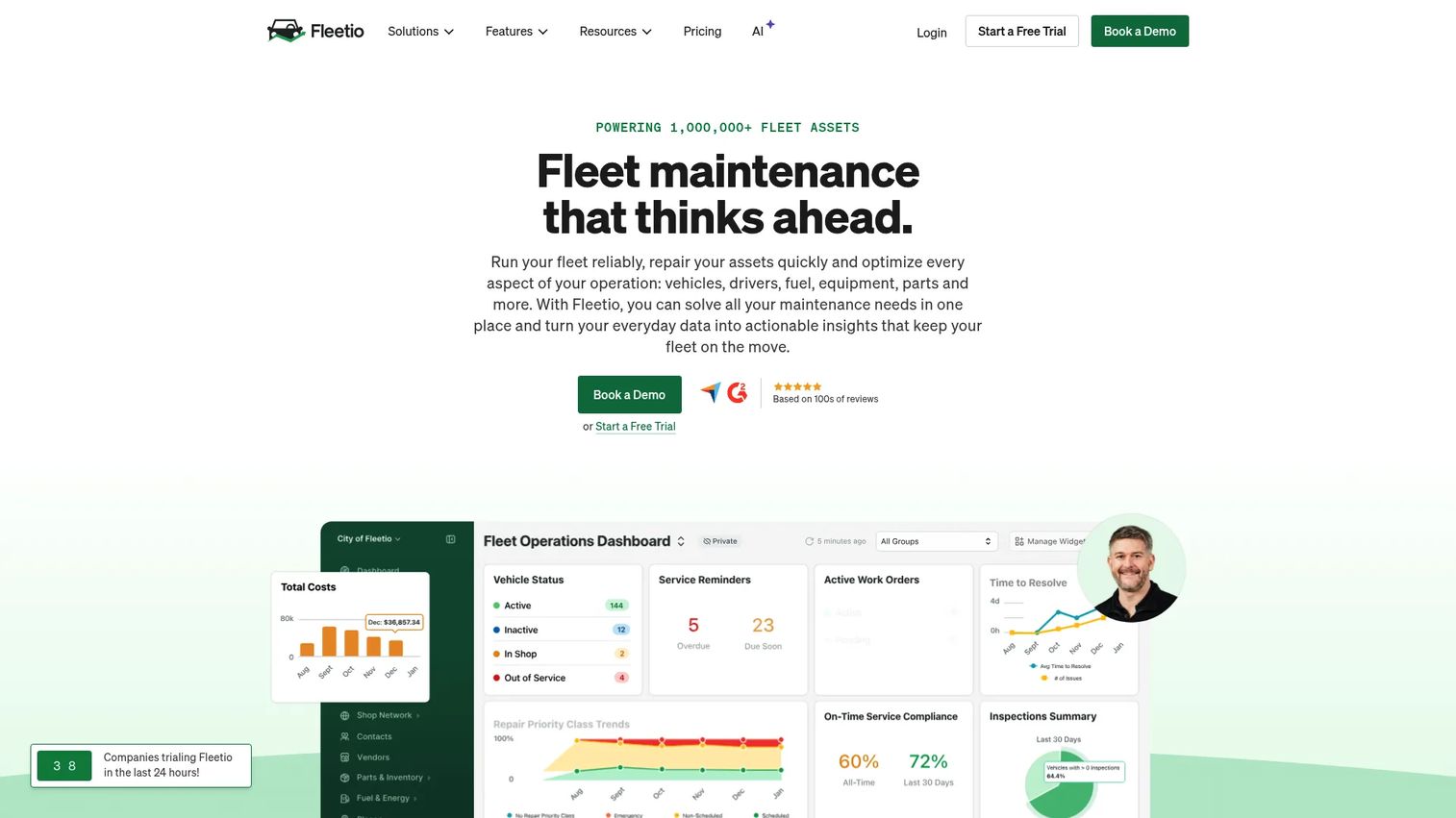
Fleetio is fleet management software for tracking vehicles, equipment, maintenance, fuel, inspections, and related operations from one system. Fuel sits inside a broader operations platform, so transactions land next to maintenance history, inspections, and total cost of ownership. That context is what makes fuel data useful rather than isolated.
For fuel specifically, Fleetio imports transactions through fuel card integration, ties them to the right vehicle, and lets you build fuel economy reporting alongside odometer readings. Because it already tracks mileage and service records, the platform can surface fuel exceptions in the same place you manage the rest of the asset. That reduces the tab-switching that kills adoption.
Best for: Fleet operators who want a centralized maintenance and asset-management system with fuel tracking built in, not bolted on.
Key strengths
- Asset management and TCO tracking: See fuel spend inside total cost of ownership per vehicle, not as a standalone number.
- Maintenance work orders and preventive maintenance: Connect fuel economy trends to service events that explain them.
- Inspections, parts inventory, and fleet reporting: Pull fuel data into the same dashboards and reporting you already use for operations.
Why choose Fleetio: If your real problem is fragmented fleet data, Fleetio consolidates it. Fuel becomes one signal among many, which helps operations teams spot when a rising cost per mile is a maintenance issue rather than a fueling one. It fits fleets that want strong reporting without a heavy telematics deployment.
Fleetio pricing: Fleetio offers subscription plans based on plan selection and fleet size range. The public pricing page does not expose numeric plan prices, so confirm your tier directly. A free trial is available with no credit card required. Fleetio holds a 4.6/5 rating on G2.
2. Geotab
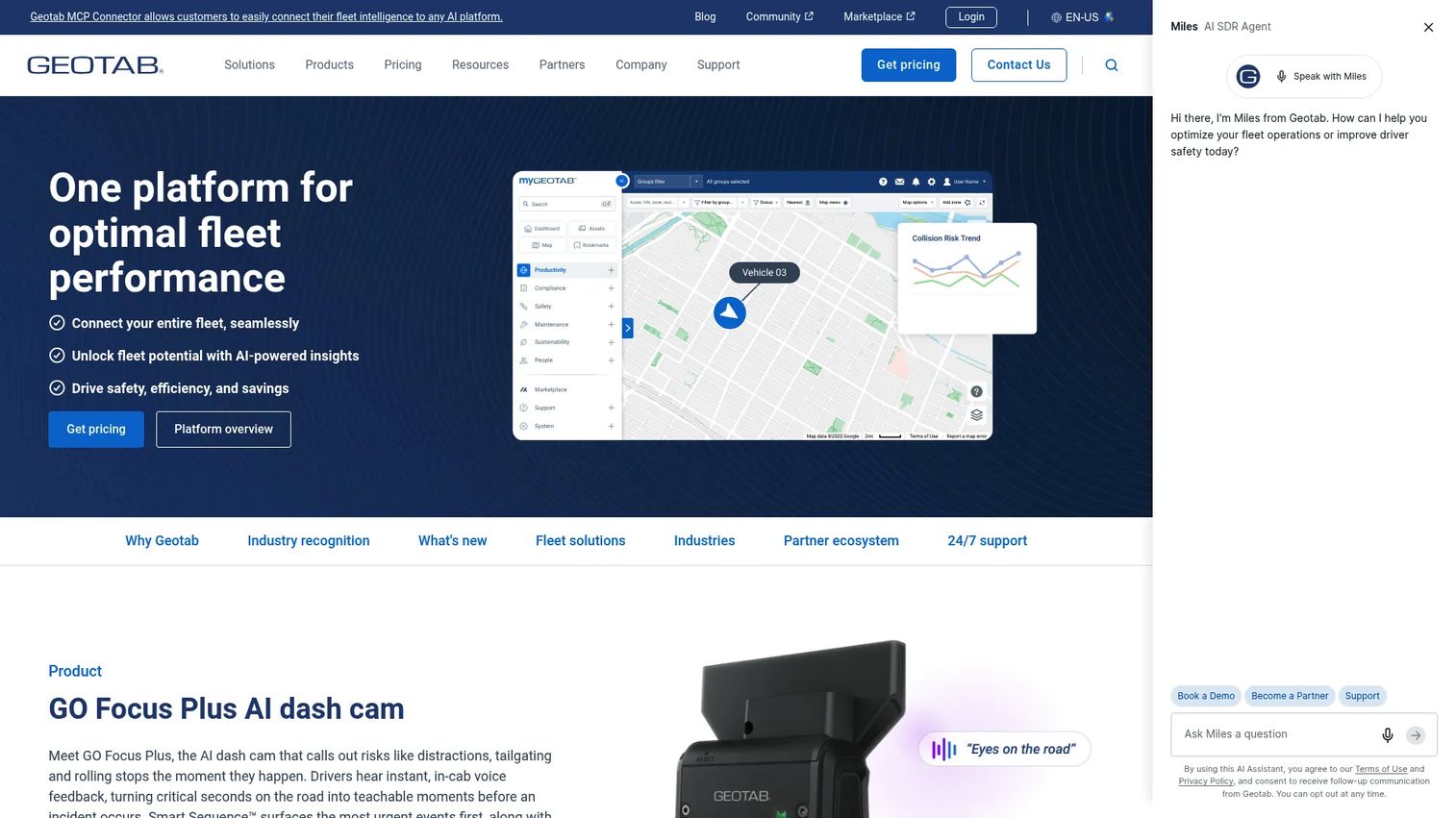
Geotab provides connected vehicle and fleet management telematics software and hardware for tracking, safety, compliance, reporting, and maintenance. This is a telematics-first architecture, which changes what your fuel data can prove. Instead of trusting a transaction on its own, Geotab validates it against real vehicle position and engine data.
That matters for fraud. When telematics confirms where a vehicle actually was, a fuel purchase forty miles away becomes an obvious exception. Add driver behavior context, such as idling and harsh acceleration, and you can explain why fuel economy drops on specific routes or drivers. Geotab's add-in and marketplace ecosystem also lets you layer specialized fuel tools on top of the core platform.
Best for: Fleet operators who need telematics, compliance, and vehicle visibility at scale, with fuel validation grounded in hardware data.
Key strengths
- Real-time vehicle and asset tracking: GPS cross-checking that confirms which vehicle fueled where and when.
- Fleet reporting and dashboards: Fuel economy and cost-per-mile views tied to actual driving data.
- Maintenance scheduling and reminders: Connect fuel trends to vehicle health across the fleet.
Why choose Geotab: Telematics depth is the differentiator. If unauthorized fuel purchase detection and driver-level fuel economy matter more than a simple ledger, the vehicle data does the heavy lifting. The marketplace ecosystem gives larger fleets room to extend fuel monitoring over time.
Geotab pricing: Geotab describes two subscription packages, GO Core and GO Plan, with hardware included in both. The public site does not list a numeric starting price and directs larger fleets to contact sales. Geotab holds a 4.5/5 rating on G2.
3. VEC Fleet
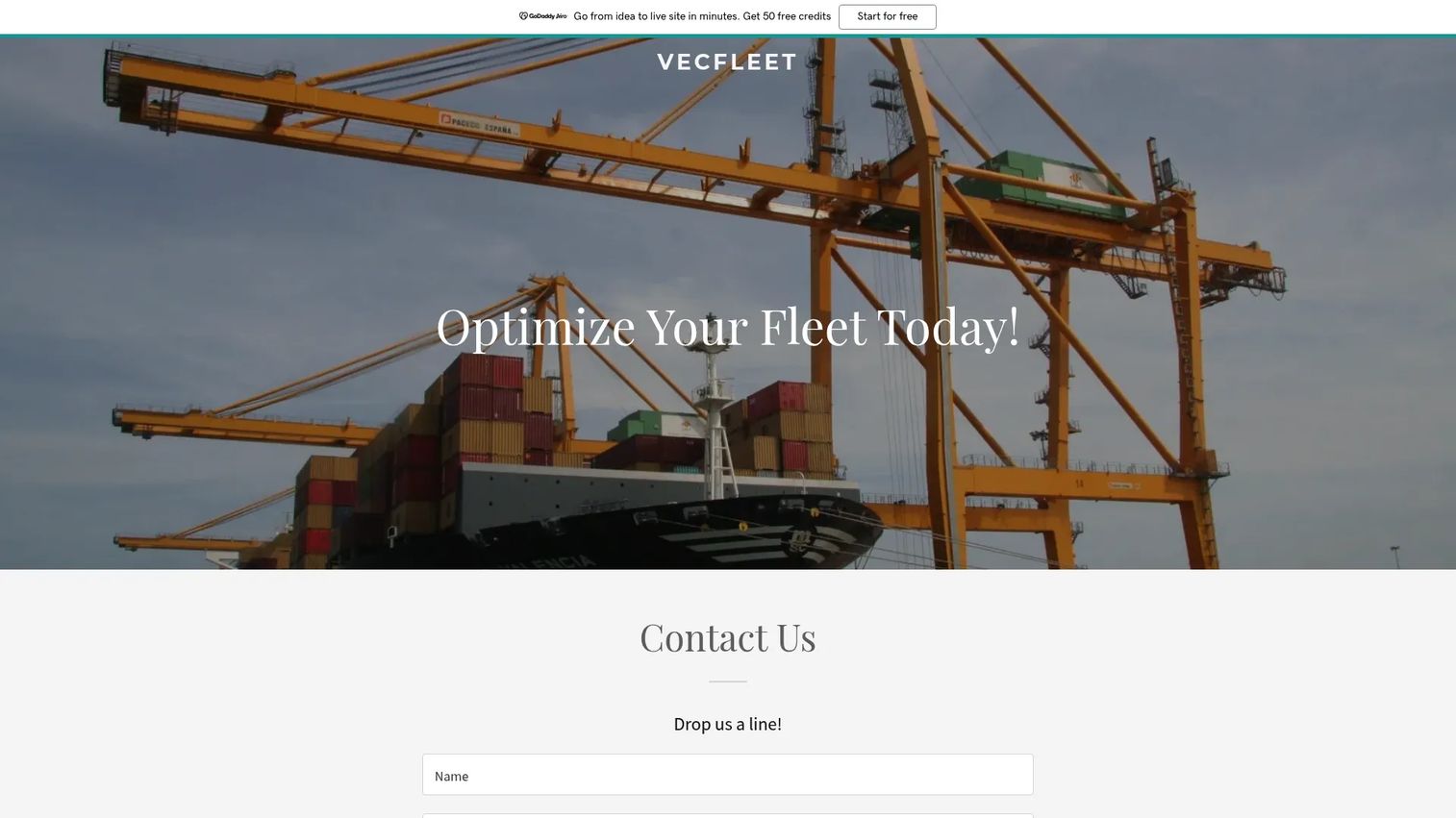
VEC Fleet is a fleet management software brand with a contact-focused presence, positioned for organizations that want to reach out for a demo or quote. Public feature and pricing detail is limited on the homepage, so treat this as a lean, operations-focused option worth a direct conversation rather than a self-serve evaluation.
In the context of fuel, a fleet-focused platform like this typically centers on capturing fuel card data, running anomaly detection against usage, and centralizing accounting control so finance has one source of truth. If your team prefers a guided sales process and a scoped deployment over browsing tiers, that path fits some buyers well.
Best for: Organizations that want a fleet management vendor they can contact directly for a tailored demo or quote.
Key strengths
- Fuel card data capture: Centralize transactions for accounting and reconciliation in one place.
- Anomaly detection: Flag unusual fuel usage for faster exception handling.
- Detailed fuel reports: Give finance the spend visibility it needs to control cost.
Why choose VEC Fleet: Choose it when you prefer a consultative buying process and a scoped rollout over self-serve setup. Because public detail is thin, ask pointed questions about fuel card integration, IFTA reporting, and how the platform validates transactions before committing.
VEC Fleet pricing: No public pricing is listed. Contact the vendor for a quote. G2 does not yet show enough reviews to provide a rating.
4. GetApp
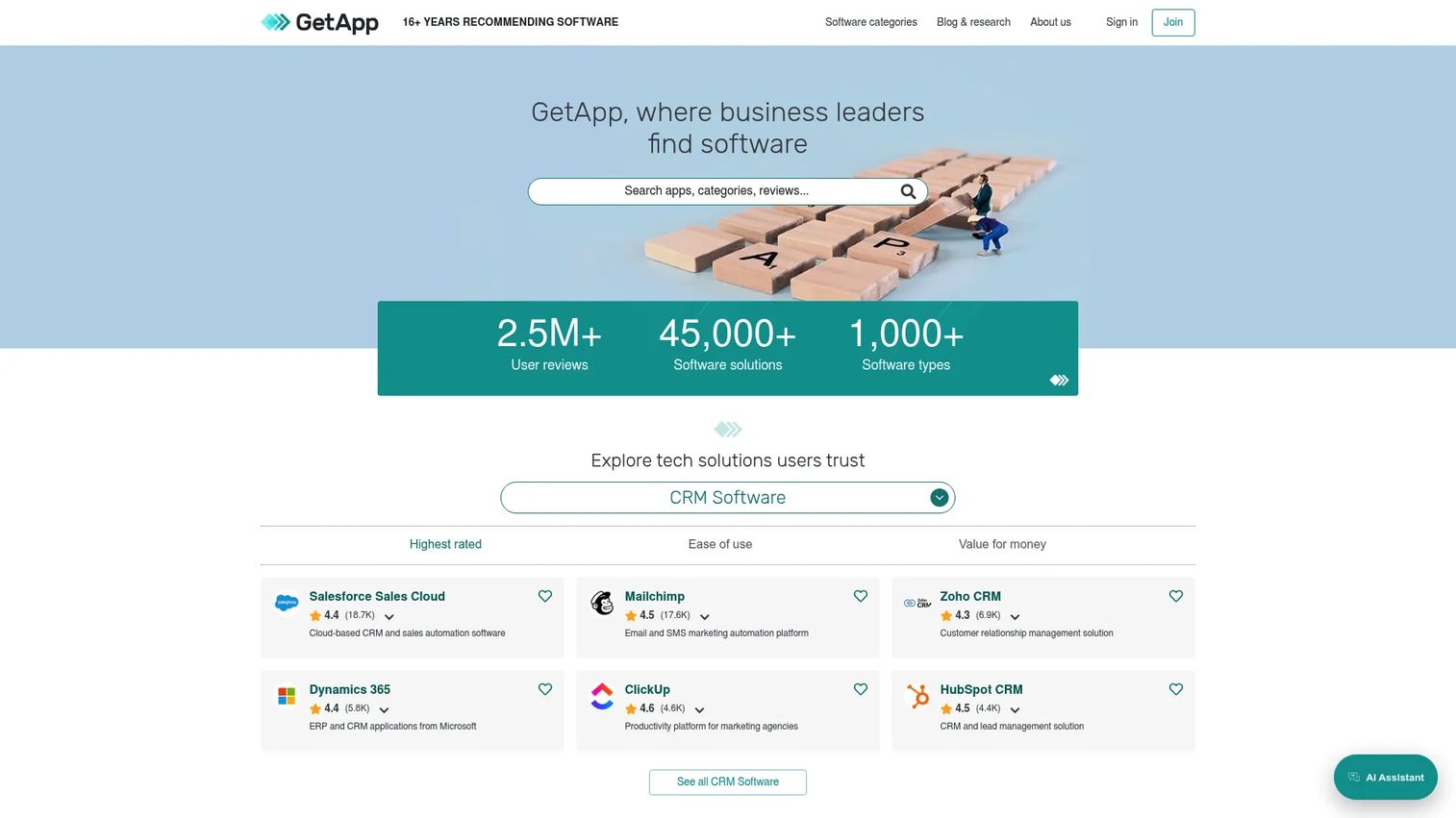
GetApp is a software discovery and comparison platform for business buyers, not a fuel management system itself. In a shortlist like this, it plays a different role: it helps you compare fuel management systems side by side, filter by features, and scan verified reviews before you ever talk to a vendor.
For a product or operations team running an evaluation, that is genuinely useful. You can pattern-match your requirements, such as fuel card integration, telematics, and IFTA reporting, against a broad catalog and narrow the field before demos. Treat it as a discovery resource rather than a system of record.
Best for: SMBs and evaluation teams comparing software options and reading verified reviews before shortlisting.
Key strengths
- Software comparison: Line up fuel tracking software candidates against your feature checklist.
- Verified user reviews: Read real operator feedback on reporting depth and support.
- Data-driven recommendations: Surface category leaders to seed your shortlist.
Why choose GetApp: Use it at the top of your process, not the end. It will not track a single gallon of fuel, but it shortens the research phase and reduces the risk of missing a strong fit. Pair it with hands-on trials once you have three or four finalists.
GetApp pricing: GetApp is free for users, with no paid user-facing plans. It holds a 4.0/5 rating on G2.
5. Fuel Tracker
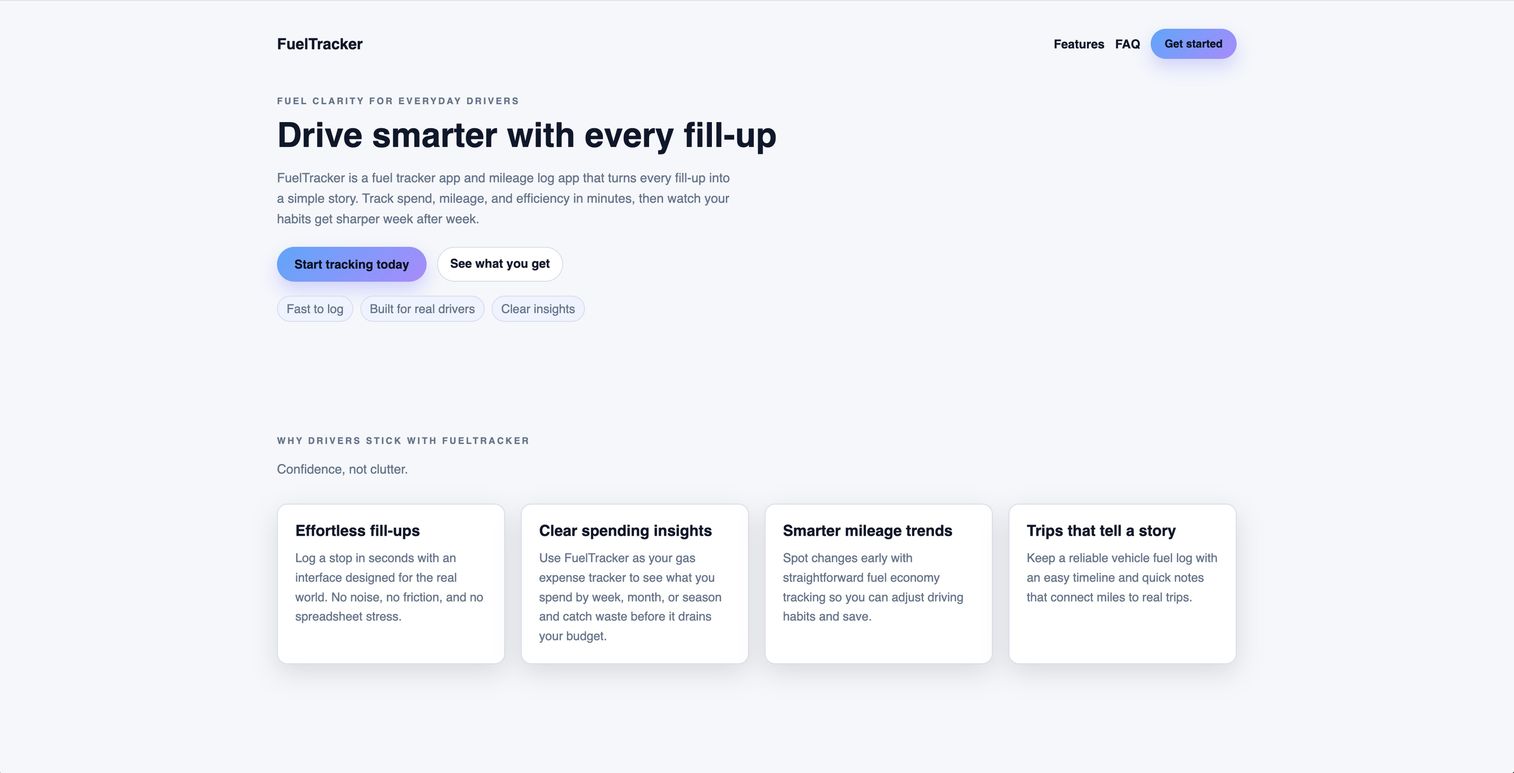
Fuel Tracker is a fuel and mileage log app for tracking fuel costs, charging, mileage, and vehicle spending. It sits at the simple end of the category. Rather than a full fleet fuel management system with telematics validation, it focuses on clean logging and spend visibility across one or several vehicles.
For very small fleets, owner-operators, or teams that want a lightweight starting point, that focus is a feature, not a gap. You log purchases, track mileage, and watch spending trends without deploying hardware or configuring integrations. It is a practical way to establish a baseline before graduating to a heavier platform.
Best for: Drivers or small teams that want a straightforward fuel and mileage log without deployment overhead.
Key strengths
- Fuel purchase and mileage logging: Capture every fill and odometer reading in one place.
- Multi-vehicle support: Track more than one vehicle from a single app.
- Reports and spending trends: Spot cost patterns over time without a spreadsheet.
Why choose Fuel Tracker: Choose it when scope is small and simplicity wins. It will not cross-check transactions against GPS or generate IFTA filings, so growing fleets will eventually want more validation. For a first pass at fuel visibility, it does the job cheaply.
Fuel Tracker pricing: The Google Play listing shows a $5.99 one-time purchase, and the app offers a monthly in-app subscription after a full-access trial period. Pricing is shown in-app; no exact website price is published.
6. Samsara
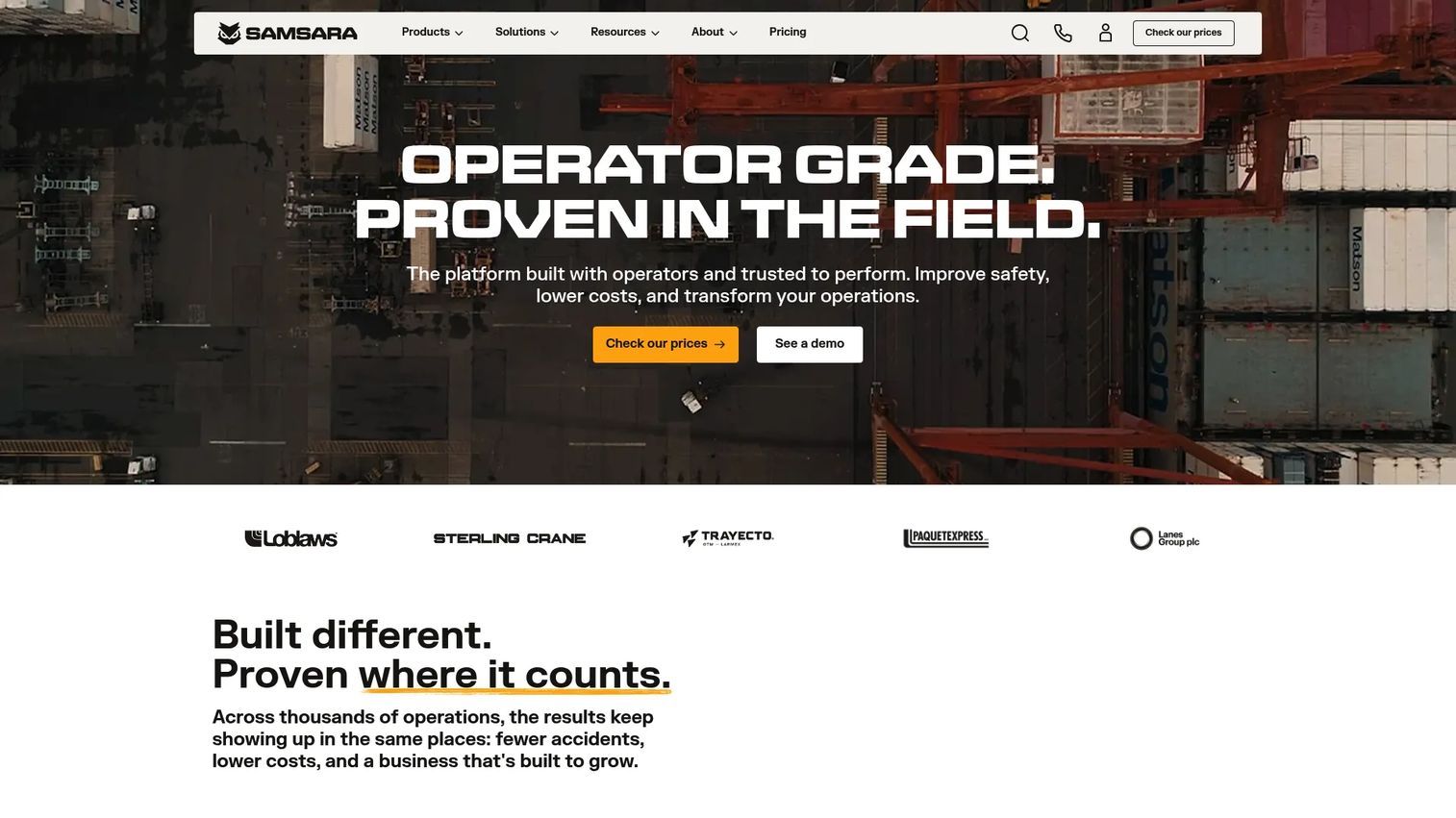
Samsara is a connected operations platform for fleets, equipment, and sites. Like Geotab, it leads with telematics, giving fuel oversight a foundation of real-time vehicle data. Fuel efficiency and driver behavior sit inside a broader operations picture, which appeals to teams that want one platform across the whole fleet rather than a point tool.
Because Samsara captures GPS, diagnostics, and routing data, it can put fuel economy in context. A route change, an idling pattern, or a maintenance issue all show up next to the fuel numbers. For operations-heavy fleets, that single-platform visibility reduces the number of systems people have to reconcile.
Best for: Operations-heavy fleets and physical businesses that want connected visibility and workflow automation alongside fuel oversight.
Key strengths
- Real-time GPS fleet tracking: GPS cross-checking that grounds every fuel transaction in vehicle location.
- Vehicle diagnostics and routing/dispatch: Explain fuel economy shifts through route and engine data.
- AI platform, workflows, and developer APIs: Extend fuel monitoring into custom dashboards and reporting.
Why choose Samsara: Pick it when you want fuel management as one workflow inside a connected operations platform, not a separate tool. The telematics depth supports strong fuel economy reporting and cost-per-mile analysis, and the API surface lets larger teams build exactly the views they need.
Samsara pricing: Samsara routes pricing through sales; no public price or plan table is published. Samsara holds a 4.5/5 rating on G2.
7. Motive
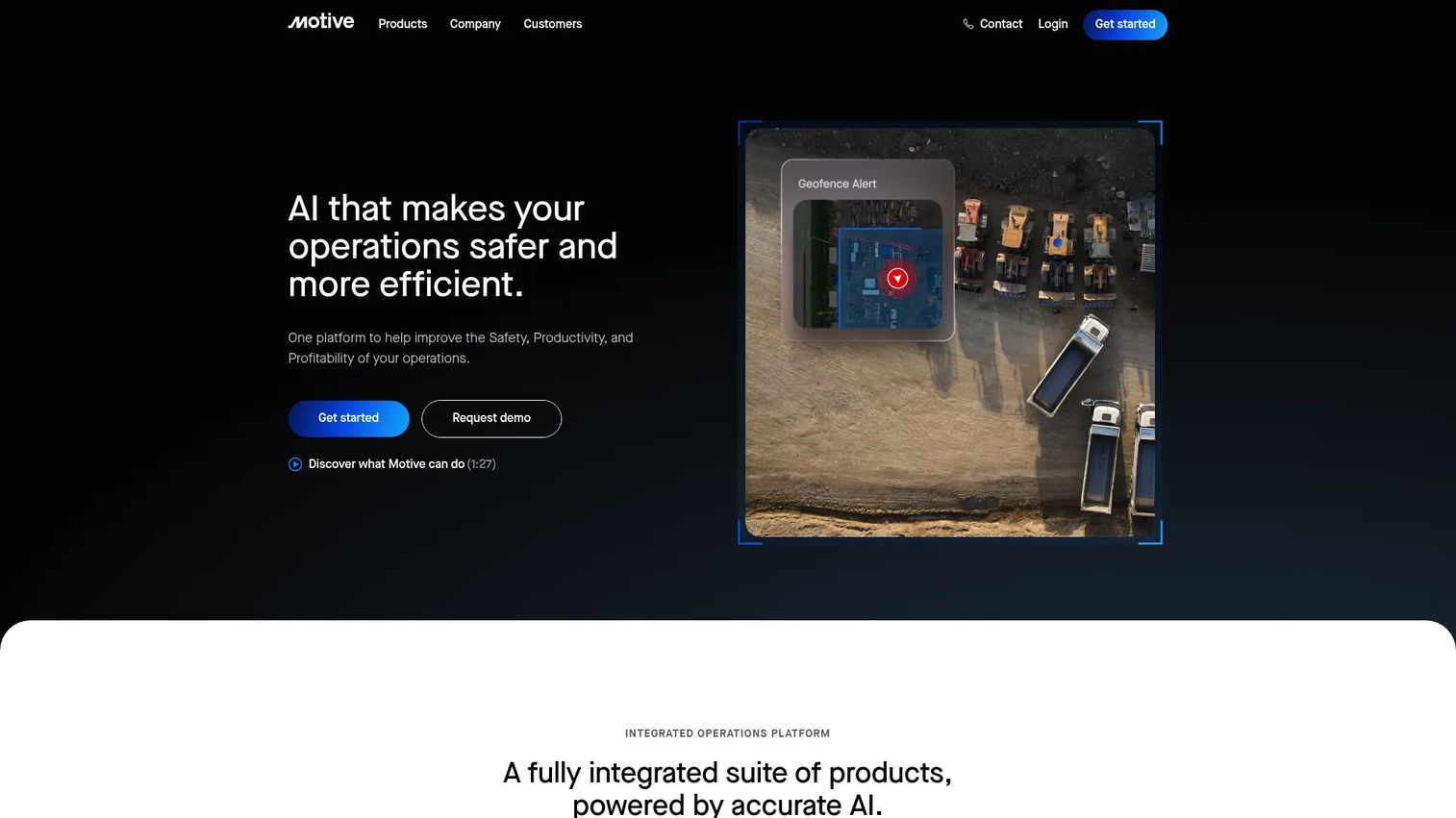
Motive is an AI-powered fleet management platform spanning driver safety, equipment monitoring, spend management, and workforce management. Here, fuel monitoring lives inside a broader safety and telematics stack. That framing fits buyers who want fuel oversight as part of a wider operations and compliance strategy rather than a dedicated fuel tool.
Because Motive combines GPS telematics with AI dash cams and safety scoring, fuel data connects to driver behavior in a direct way. Harsh driving and excessive idling both hit fuel economy, and having safety and fuel signals in one platform makes those links visible. For fleets prioritizing safety and compliance, folding fuel into the same system reduces tool sprawl.
Best for: Fleet operators who want an integrated safety and telematics platform with fuel monitoring included.
Key strengths
- AI dash cams for fleet safety: Tie driver behavior to fuel economy outcomes.
- Fleet telematics with GPS tracking: Ground fuel transactions in real vehicle location.
- Fleet dispatch workflow tools: Connect routing decisions to fuel and cost-per-mile trends.
Why choose Motive: Choose it when fuel management is one piece of a larger operations stack that includes safety and compliance. The telematics and AI layer supports unauthorized fuel purchase detection through location context, and the unified platform keeps safety, spend, and fuel in one view.
Motive pricing: Motive routes pricing inquiries to sales; no public numeric pricing is shown on the site. Motive holds a 4.4/5 rating on G2.
8. Verizon Connect
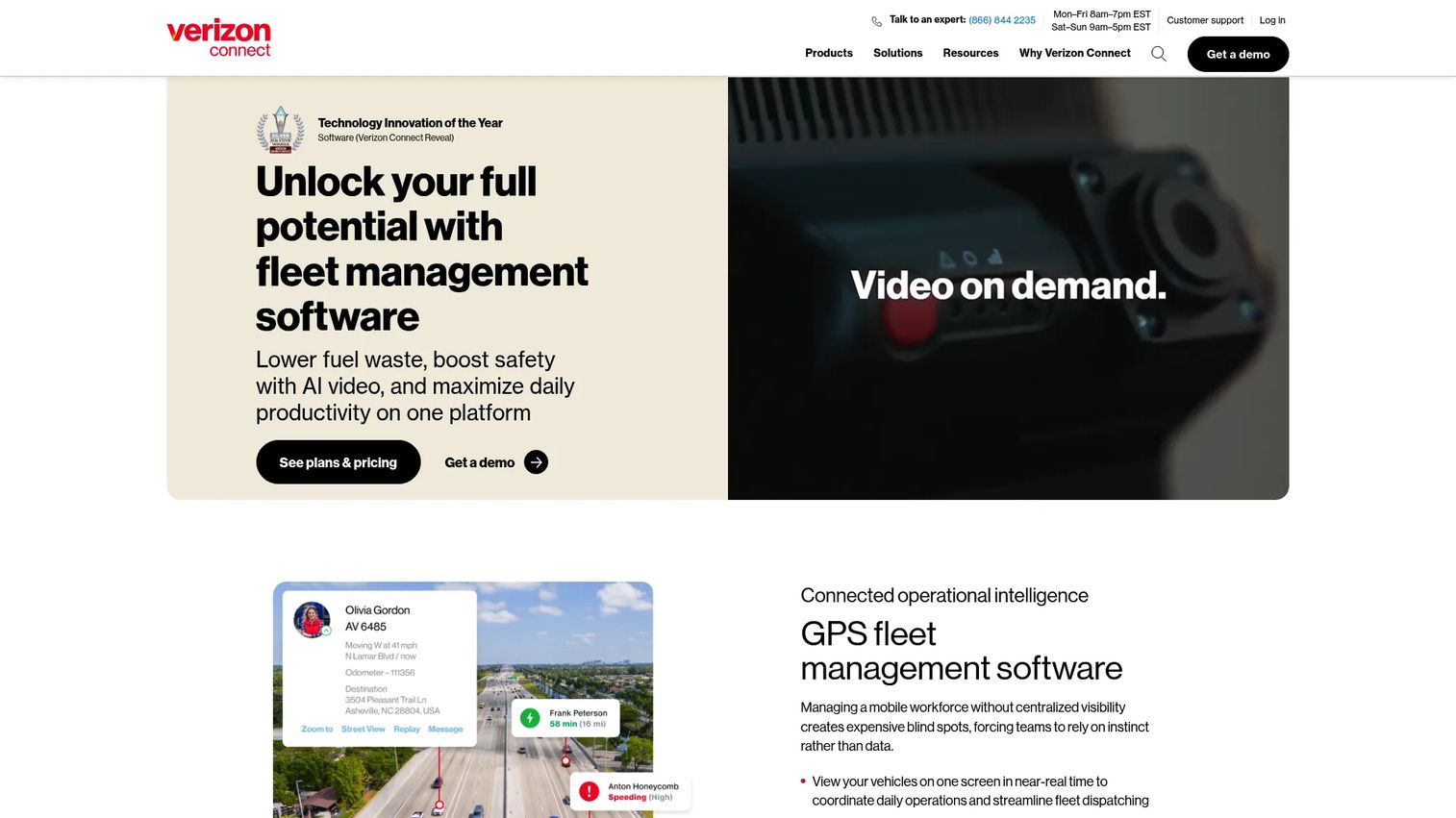
Verizon Connect is fleet management software for tracking vehicles, assets, drivers, and field operations. It closes this list as a telematics-heavy, hardware-based platform that many fleets evaluate right alongside dedicated fuel tools. If your deployment already runs on GPS hardware, layering fuel monitoring onto that foundation is a natural extension.
The platform pairs a near real-time live map and route history with geofences and custom alerts, so fuel oversight benefits from the same location backbone. Maintenance tracking and safety scorecards round out the operational picture. For fleets that value hardware-based deployment patterns and want fuel visibility inside a mature telematics system, it fits the profile.
Best for: Businesses managing fleets that need GPS tracking, compliance, and operational visibility with fuel monitoring layered in.
Key strengths
- Near real-time live map and route history: GPS data that validates where and when vehicles fuel.
- Geofences and custom alerts: Trigger notifications on unusual fuel activity for faster exception handling.
- Maintenance tracking, safety scorecards, and mobile apps: Connect fuel trends to vehicle health and driver behavior.
Why choose Verizon Connect: Pick it when hardware-based telematics is your anchor and fuel monitoring is part of a broader tracking and compliance need. The location and alert infrastructure supports fraud detection through geofencing and route validation.
Verizon Connect pricing: Verizon Connect uses a quote-based, sales-led model; no public numeric price is published. It holds a 3.8/5 rating on G2.
Considerations before you buy
Once you have a shortlist, evaluate on the factors that decide whether a fuel management system actually reduces spend or just reports it.
Architecture fit
Decide up front whether you need telematics-first, card-first, or hardware-first. Telematics-first tools validate transactions against vehicle data, which is where the strongest unauthorized fuel purchase detection lives. Card-first tools center on transaction records and reconciliation. Match the architecture to how much validation and context you actually need.
Fraud and exception detection
Look closely at how each platform catches problems. The best detect purchases that exceed tank capacity, occur far from the vehicle, or break a driver's normal pattern. GPS cross-checking and odometer validation are the mechanisms that turn a suspicious transaction into an actionable alert.
Reporting depth and metrics
Confirm the tool reports the metrics you manage against: fuel economy in your preferred unit, cost per mile, spend by vehicle or depot, and exception rate over time. Flexible fuel economy reporting across MPG, L/100km, and km/l matters for cross-border fleets.
Integrations and migration
Check fuel card integration coverage, especially multi-provider support, and confirm the platform connects to your telematics and accounting stack. Ask about CSV migration for historical fuel data, because onboarding quality directly affects how reliable your first quarter of reporting will be.
Compliance support
If you run interstate or cross-border, verify IFTA reporting support in detail. Some platforms organize fuel records by jurisdiction and help generate the quarterly filing; others leave it manual. This one factor can save days every quarter.
Conclusion
There is no single best fleet fuel management software, only the best fit for your fleet type and decision style. If you want fuel folded into broad fleet operations, Fleetio consolidates maintenance, assets, and fuel in one system. If validation and fraud detection are the priority, telematics-first platforms like Geotab and Samsara let vehicle data do the proving. Motive fits teams that want fuel monitoring inside a safety and compliance platform, while Verizon Connect anchors hardware-led telematics deployments.
For leaner needs, VEC Fleet offers a consultative, scoped path, and Fuel Tracker delivers simple logging for small fleets. GetApp is your discovery layer for comparing fleet fuel management solutions before you commit.
The next step is to shortlist by architecture first, then pressure-test each finalist on reporting depth, fraud controls, and fuel card integration. Run a short trial with real transactions and confirm the numbers reconcile against your telematics and accounting. Choose the tool that fits your stack and your quarter-end reality, not the longest feature list.
FAQs
Fleet fuel management software tracks fuel purchases, usage, and exceptions across a fleet so operators can reduce waste and improve cost visibility. It typically integrates with fuel cards to capture transactions automatically and with telematics to validate them against vehicle location and mileage. The goal is turning raw fuel spend into actionable reporting.
It cross-checks each transaction against vehicle data. GPS cross-checking confirms the vehicle was near the pump, tank capacity limits flag fills that are physically impossible, and odometer validation catches mileage mismatches. When something looks wrong, the system raises an alert so exceptions get handled fast instead of surfacing at quarter-end.
Telematics-first platforms lean on vehicle data, validating fuel transactions against real GPS and engine readings for stronger fraud detection. Card-first platforms lean on transaction records and reconciliation. Choose based on how much validation and context you need: telematics-first delivers deeper unauthorized fuel purchase detection, while card-first keeps the focus on clean accounting.
Some platforms help generate quarterly IFTA reporting by organizing fuel records by jurisdiction and calculating fuel tax obligations. Support varies widely by vendor, so confirm it directly if you run interstate or cross-border. For fleets crossing jurisdictions regularly, strong IFTA support can save days of manual reconstruction every quarter.
Many platforms support CSV or bulk migration so you can bring historical fuel records into the new system. This matters during implementation because trend analysis and cost-per-mile baselines depend on having enough history. Onboarding quality directly affects reporting reliability, so ask how migration is handled before you commit.
Focus on fuel economy in your preferred unit, cost per mile, fuel spend by vehicle or location, exception rate, and trends over time. Segment by fleet type or depot to spot outliers rather than averaging problems away. These metrics tell you not just what you spent, but where the controllable waste actually lives.
Most fuel management systems connect to major fuel card providers and centralize purchases automatically through fuel card integration. Multi-provider support is a key deciding factor if you use more than one card program across your fleet. Confirm your specific card providers are supported before shortlisting, since coverage varies by platform.
Evaluate architecture first: telematics-first, card-first, or hardware-first, based on how much validation you need. Then compare integrations, reporting depth, fraud controls, compliance support like IFTA, and ease of rollout including CSV migration. Approach it as a comparison of fit against your stack, not a race for the longest feature list.