Last updated: October 2026
A major software renewal arrives on the CFO's desk. Nobody ran a competitive quote. The previous rate got auto-renewed because it was easier than building an RFP from scratch in a shared spreadsheet. Finance finds out after the invoice clears.
That scenario repeats itself at most Series B companies at least a few times a year. The global sourcing software market was valued at $5.0 billion in 2025 and is projected to reach $10.7 billion by 2033, according to Grand View Research (2026). The reason for that growth is not budget. It is operational pressure: Procurement events happen in email threads, supplier records live in someone's personal drive, and the founder becomes the default escalation path for every exception.
Strategic sourcing software gives finance, operations, and procurement a shared way to compare suppliers, run RFx events, document award decisions, and connect negotiated terms into the purchasing process before the next renewal arrives unannounced.
What's inside
This guide is for founders and finance leaders evaluating whether to formalize their sourcing process, and which platform fits their operating model.
- 10 platforms reviewed: from broad enterprise spend suites to focused source-to-contract tools
- Selection criteria: RFx depth, supplier management, spend visibility, contract handoff, and implementation fit
- Enterprise vs. mid-market fit: each entry distinguishes when a full suite is appropriate and when a focused platform is enough
- Verified pricing and ratings: checked against vendor pages and G2 in October 2026
TL;DR
- Best for broad enterprise spend management: Coupa, for organizations that need sourcing, contracts, invoices, and expenses in one connected operating model
- Best for complex sourcing and supplier collaboration: JAGGAER, when sourcing events span multiple evaluators, direct and indirect categories, and detailed supplier documentation
- Best for Workday-centered finance teams: Workday Strategic Sourcing, for companies already running financial operations on Workday
- Best for enterprise source-to-pay breadth: GEP SMART or Ivalua, where GEP suits global transformation programs and Ivalua suits organizations with complex workflow configuration requirements
- Best for sourcing automation: Zycus, for lean procurement teams that need AI-supported intake and source-to-pay orchestration
- Best for mid-market procurement control: Proactis, when the company has outgrown spreadsheet buying but does not need the broadest global footprint
What is strategic sourcing software?
Strategic sourcing software helps companies identify suppliers, run competitive sourcing events, evaluate bids, document awards, and connect supplier decisions to contracts, purchasing, and spend controls.
It is a category of sourcing management software that sits upstream of procurement execution. While a purchase order system handles what gets bought, strategic sourcing software handles how the supplier was chosen and why.
Core capabilities
- Supplier discovery and qualification: Find and vet suppliers, collect documentation, validate certifications, and maintain approved supplier records
- RFx management: Create and distribute RFIs, RFPs, and RFQs with standardized requirements and structured response formats
- Bid analysis and award decisions: Normalize supplier responses, score bids against weighted criteria, model scenarios, and document the award rationale
- Sourcing optimization and auctions: Model cost, capacity, and risk tradeoffs for complex categories; run reverse auctions for commodity spend
- Contract and procurement handoff: Move negotiated terms into contracts, catalogs, purchase approvals, and invoice controls
- Spend analysis and savings tracking: Identify sourcing opportunities from spend data and measure whether negotiated savings reach the P&L
- Supplier risk and performance: Monitor supplier risk exposure, ESG data, delivery reliability, and compliance evidence
What strategic sourcing software is not
A purchase order system handles buying execution, not supplier selection. A contract repository stores agreements after they are signed, not the sourcing event that produced them. Spend analytics alone shows what was spent but does not support the decision of which supplier to use next.
Many enterprise platforms combine all of these into a broader source-to-pay or source-to-contract suite. Standalone sourcing platforms focus on the supplier selection process and hand off to a separate contract or ERP system.
| Capability | Strategic sourcing software | Procurement software |
|---|---|---|
| Primary job | Supplier selection and RFx events | Buying execution and approval workflows |
| Typical users | Procurement, finance, operations leaders | Finance, purchasing teams, approvers |
| Key workflows | RFI, RFP, RFQ, bid scoring, award decisions | Purchase requests, POs, invoices |
When to use strategic sourcing software
Run competitive sourcing events without spreadsheet sprawl
A sourcing event involving multiple suppliers, weighted scoring criteria, legal review, and a high-value contract outcome needs more than a shared folder. Sourcing software standardizes requirements, tracks supplier responses in one place, and produces an auditable record of why a supplier won.
Bring supplier and contract decisions into one operating process
When supplier records, negotiated rates, renewal dates, and purchasing data live across different tools, finance cannot produce a reliable spend view before a board meeting. A sourcing platform gives ownership of supplier data to a process rather than to an individual.
Build a repeatable purchasing process before spend scales further
The trigger is not headcount alone. It is recurring software spend, fragmented renewals, vendor risk exposure, or a new finance leader who needs clean infrastructure on day one. Sourcing software removes the founder from the approval chain and gives the VP of Finance a defensible process to run.
You are ready if:
- Annual vendor spend is growing faster than the team managing it
- Finance cannot explain renewal exposure or negotiated savings at quarter close
- Multiple departments buy overlapping tools without coordination
- RFx events happen in email or spreadsheets with no audit trail
- The founder still approves sourcing exceptions
Strategic sourcing software comparison
Enterprise pricing across this category depends on modules selected, sourcing-event volume, supplier count, integration scope, and implementation requirements. All pricing and G2 ratings below were verified in October 2026 from vendor pricing pages and current review listings.
| # | Product | Best for | Key differentiator | Pricing | G2 rating |
|---|---|---|---|---|---|
| 1 | Coupa | Enterprise spend management | Connected sourcing, contracts, invoices, and expenses | Custom pricing | 4.2/5 |
| 2 | JAGGAER | Complex sourcing and supplier collaboration | Deep RFx and supplier workflows across direct and indirect categories | Custom pricing | 4.3/5 |
| 3 | Workday Strategic Sourcing | Workday-centered finance teams | Source-to-contract workflow integrated with Workday data | Custom pricing | Not listed |
| 4 | GEP SMART | Global source-to-pay transformation | Unified source-to-pay suite with spend analytics | Custom pricing | 4.3/5 |
| 5 | Ivalua | Highly configurable enterprise procurement | Configurable supplier and spend management with broad workflow coverage | Custom pricing | 4.3/5 |
| 6 | SAP Ariba | Global supplier networks and SAP environments | Large supplier network and procurement integration for global buying | Price on request | 4.1/5 |
| 7 | Zycus | AI-supported source-to-pay operations | Procurement automation and sourcing intelligence across the full lifecycle | Custom pricing | 3.7/5 |
| 8 | Synertrade | Source-to-contract programs | Strategic sourcing and contract workflows with usage-based pricing | Custom pricing | 4.0/5 |
| 9 | Proactis | Mid-market procurement control | Modular source-to-pay for service-led organizations | Custom pricing | 4.8/5 |
| 10 | Basware | Invoice-led procurement transformation | AI-powered AP automation and e-invoicing with procure-to-pay coverage | Custom pricing | 4.2/5 |
Pricing and ratings verified October 2026 from vendor pricing pages and G2 listings.
Best 10 strategic sourcing software tools for 2026
The right choice depends on whether your company needs full source-to-pay transformation, focused RFx capability, supplier intelligence, or a manageable first procurement operating layer. Read each entry for the founder-relevant fit signal.
1. Coupa
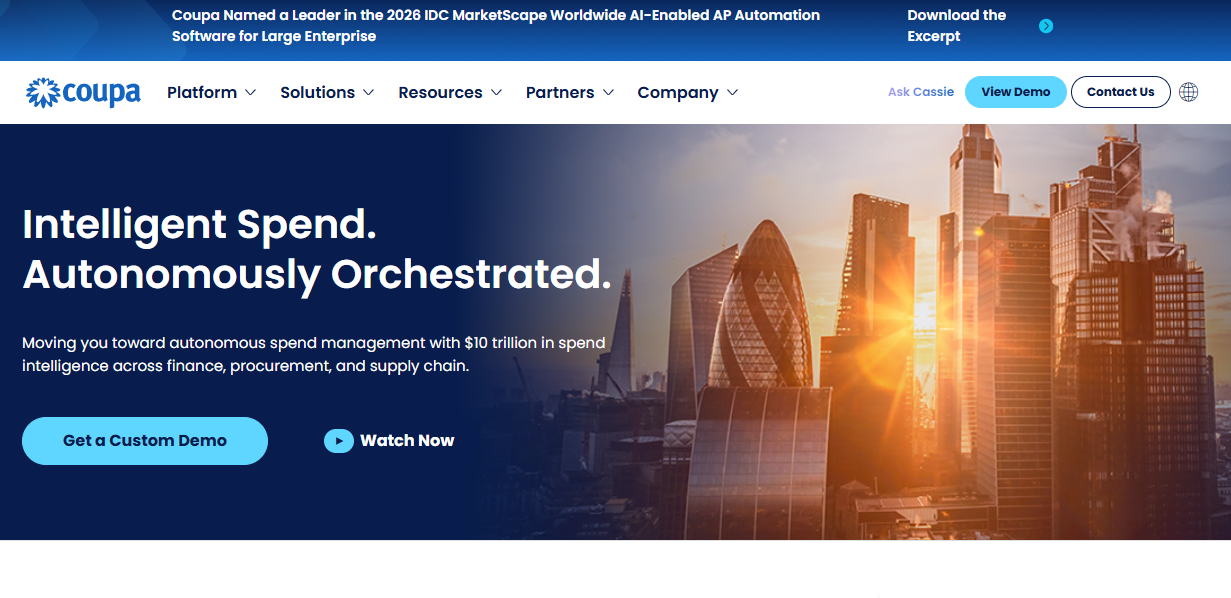
Coupa is a cloud-based business spend management platform that unifies procurement, invoices, expenses, contracts, and sourcing into one operating model. Its positioning centers on giving organizations a single view of what is being spent, with whom, and under what terms. For companies where buying decisions are fragmented across departments and systems, Coupa is designed to connect those processes rather than add another layer on top.
Best for: Large organizations that need sourcing, procurement, supplier management, expenses, and invoice workflows to operate as connected processes rather than separate tools.
Key features
- RFx event creation and supplier collaboration portal
- Bid analysis and sourcing award workflows
- Spend visibility and savings opportunity identification
- Supplier risk and compliance controls
- Contract and procurement workflow integration
Why choose Coupa: Coupa fits companies whose biggest challenge is fragmentation across sourcing, buying, invoicing, and supplier governance. It is often more platform than an earlier-stage company needs, but the breadth pays off when spend complexity justifies a unified operating model.
Coupa pricing: Coupa does not display customer pricing on its website. Subscriptions are packaged as Platform Standard or Platform Plus. Contact Coupa for a quote based on modules, user roles, and supplier network scope.
G2 rating: 4.2/5 (verified October 2026).
2. JAGGAER
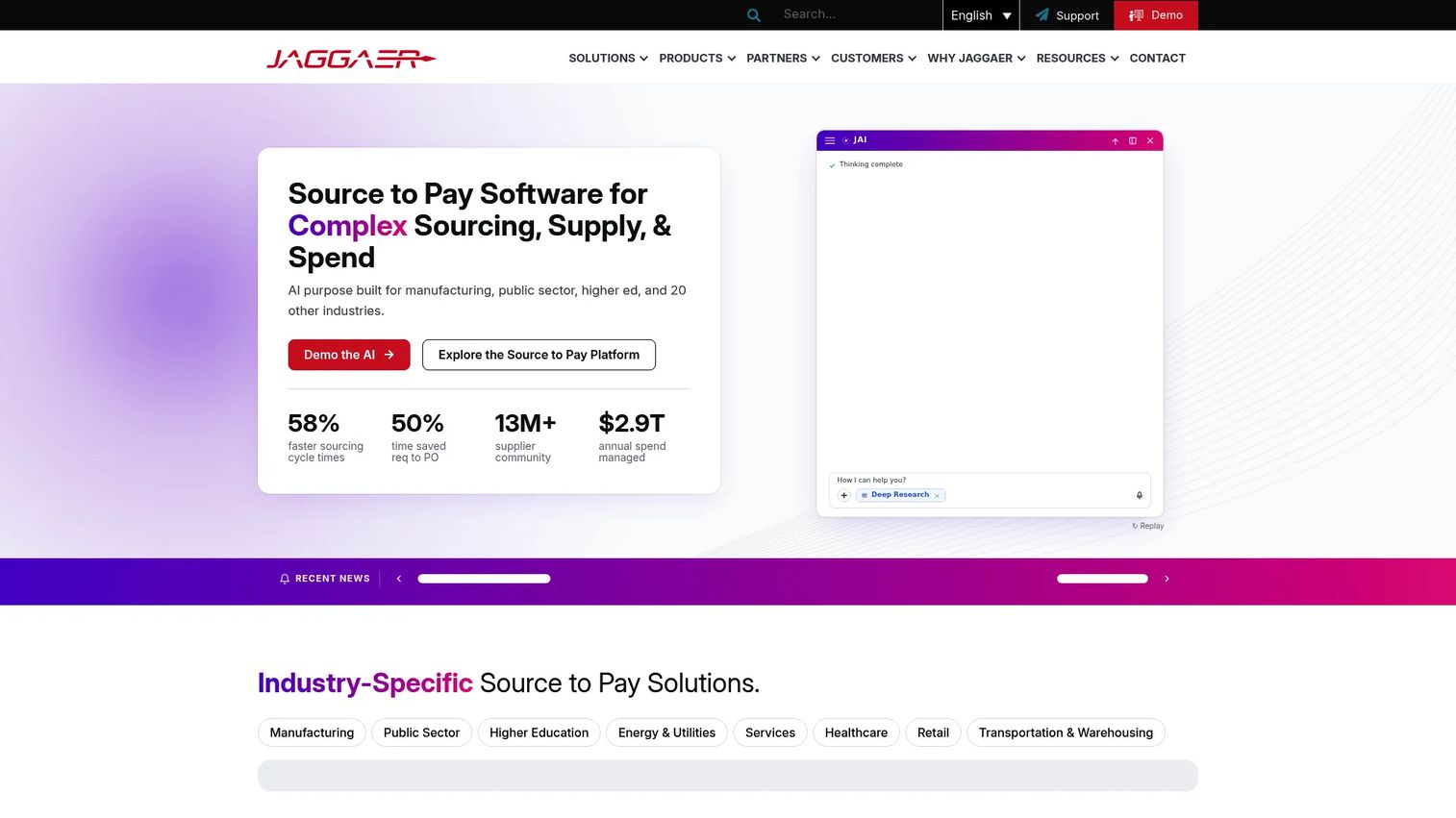
JAGGAER is an AI-supported source-to-pay platform built around complex procurement organizations. Its sourcing module handles structured RFx events with multiple evaluators, weighted scoring, and supplier documentation requirements across both direct and indirect spend categories. The platform also covers contract lifecycle management, supplier risk, and spend analytics in a connected suite.
Best for: Procurement teams managing complex sourcing events with multiple stakeholders, formal supplier qualification requirements, or industry-specific procurement categories.
Key features
- RFI, RFP, and RFQ event workflows with weighted scoring
- Supplier onboarding and qualification
- Contract lifecycle management with AI review
- Direct and indirect procurement support
- Spend analytics and embedded AI insights
Why choose JAGGAER: The platform's value shows when sourcing involves multiple evaluators, detailed supplier requirements, and formal documentation. If a new procurement leader needs durable process controls rather than a temporary workaround, JAGGAER provides the depth to standardize across categories.
JAGGAER pricing: JAGGAER uses custom enterprise pricing. Contact JAGGAER directly for a quote; no standard price tiers appear on the website.
G2 rating: 4.3/5 (verified October 2026).
3. Workday Strategic Sourcing
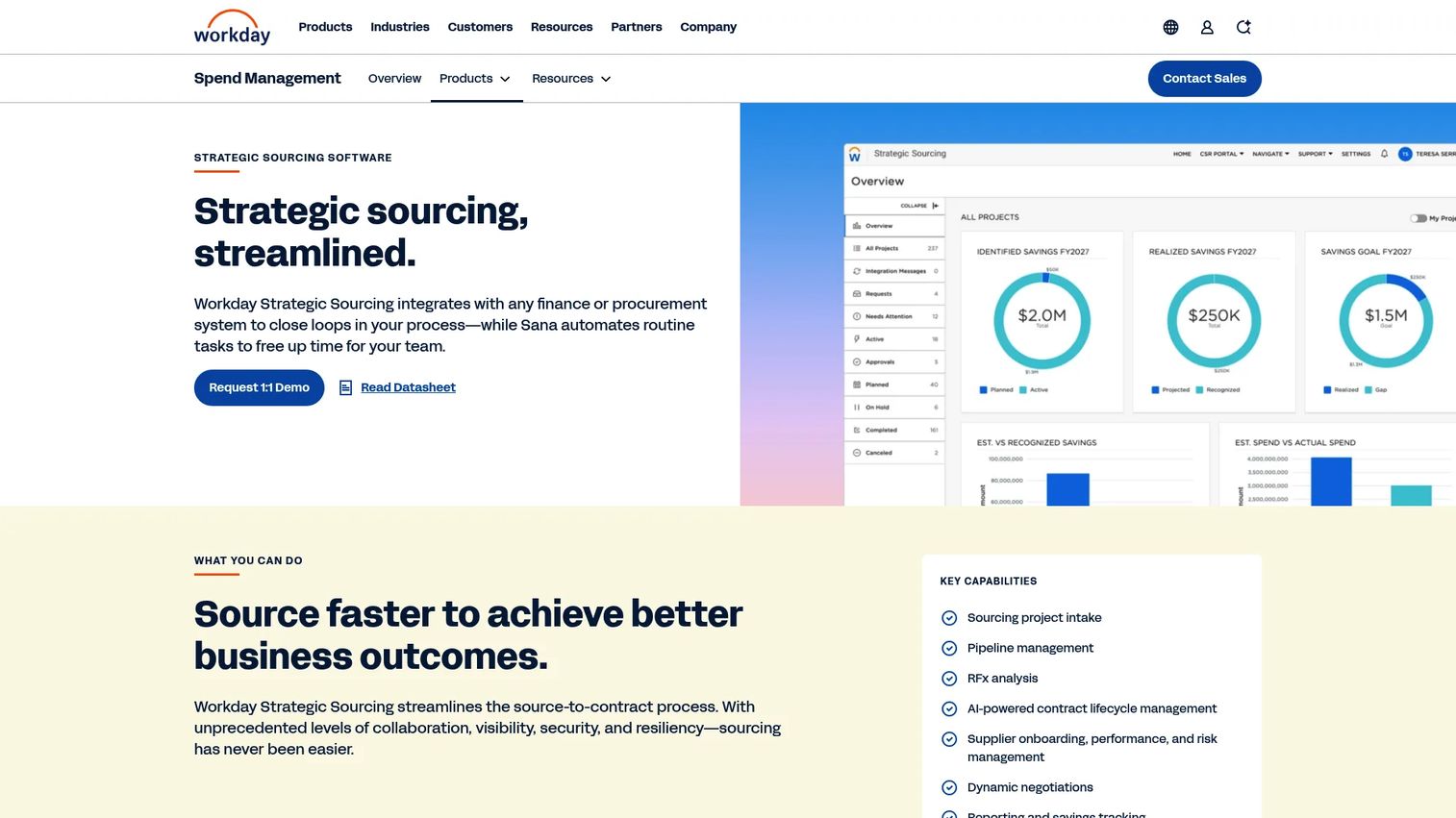
Workday Strategic Sourcing is a source-to-contract platform that handles sourcing project intake, RFx analysis, dynamic negotiations, reverse auctions, bid comparison, and AI-powered contract lifecycle management. Supplier onboarding, performance tracking, risk management, diversity data, and savings reporting are also included. Its strongest case is at organizations already running financial or workforce operations on Workday, where sourcing data connects directly to Workday's planning and financial records without a separate integration project.
Best for: Companies with Workday at the center of finance operations that want sourcing workflows connected to the same data environment rather than a separate sourcing silo.
Key features
- Sourcing project intake and pipeline management
- RFx analysis, dynamic negotiations, and reverse auctions
- AI-powered contract lifecycle management
- Supplier onboarding, performance, risk, and diversity management
- Savings tracking and reporting
Why choose Workday Strategic Sourcing: The integration and operational alignment case is the primary reason to choose this platform. Companies outside the Workday environment should assess integration depth carefully before committing, since the value proposition is closely tied to Workday's broader data model.
Workday Strategic Sourcing pricing: Workday directs prospects to contact sales for pricing. No standard tiers or price ranges appear on the product page.
G2 rating: No current G2 listing was verified for this product (October 2026).
4. GEP SMART

GEP SMART is an AI-powered, cloud-native source-to-pay platform covering spend analysis, sourcing (including RFx and e-auctions), contract management, supplier lifecycle management, and procure-to-pay automation. GEP positions the platform for large enterprises running global procurement transformation programs. The product also connects to GEP's broader managed services and procurement consulting practice, which makes it a common choice for organizations that want technology and operational expertise from the same vendor.
Best for: Enterprises seeking a unified source-to-pay platform with strong spend analytics and procurement process coverage across multiple regions.
Key features
- Sourcing events and e-auction management
- Spend analysis and savings opportunity identification
- Contract management and compliance workflows
- Supplier lifecycle management and performance tracking
- Procure-to-pay automation
Why choose GEP SMART: The platform earns its cost when adoption spans multiple procurement processes and regions. A company that buys GEP SMART for sourcing alone and skips spend analytics or contract management will get less value than one deploying across the full lifecycle.
GEP SMART pricing: GEP does not display standard pricing. Contact GEP for a proposal based on modules, spend scale, and implementation scope.
G2 rating: 4.3/5 (verified October 2026).
5. Ivalua
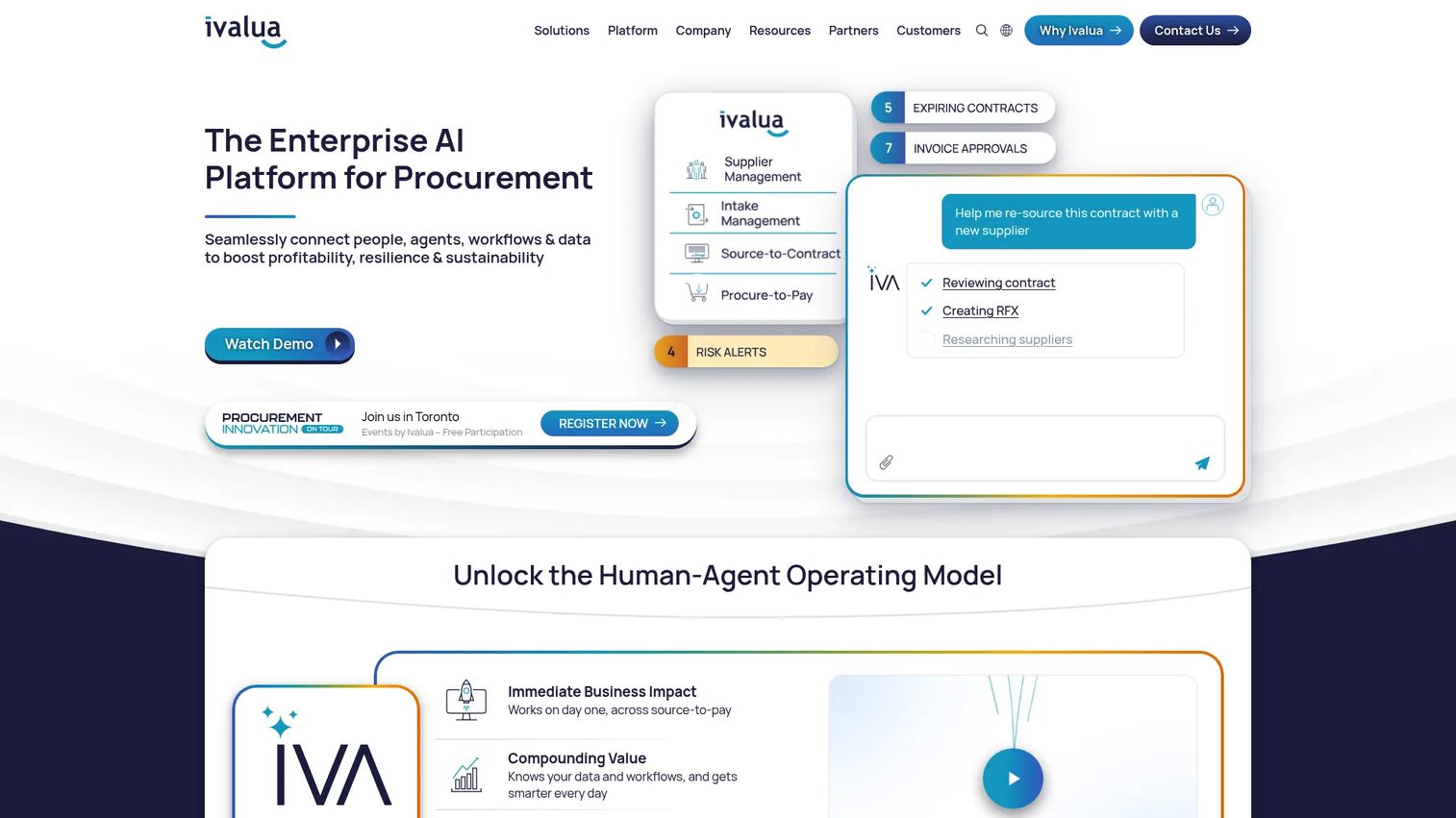
Ivalua is an AI-powered source-to-pay procurement platform covering intake, sourcing, contracts, supplier management, eProcurement, and accounts payable automation. Its primary differentiator is configurability: The platform supports complex custom approval paths, supplier information models, and workflow orchestration through no-code and low-code configuration tools. Ivalua also includes an AI agent called IVA that handles governed automation, analytics, and workflow execution across the platform.
Best for: Enterprises with complex supplier data requirements, custom approval logic, or procurement processes that do not fit a rigid standard template.
Key features
- Supplier information management with configurable data models
- RFx and sourcing event management
- Contract lifecycle management and compliance
- Configurable approval workflows and spend controls
- AI agent IVA for workflow automation and analytics
Why choose Ivalua: Ivalua is the right call when flexibility matters more than fast, narrow rollout. That tradeoff becomes relevant after a company adds regional entities, acquires new vendor categories, or inherits procurement processes that do not map cleanly to a standard module. Configuration depth is not the same as configuration simplicity, so implementation planning matters here.
Ivalua pricing: Ivalua does not display pricing. Prospects are directed to contact sales for pricing based on deployment requirements and module selection.
G2 rating: 4.3/5 (verified October 2026).
6. SAP Ariba
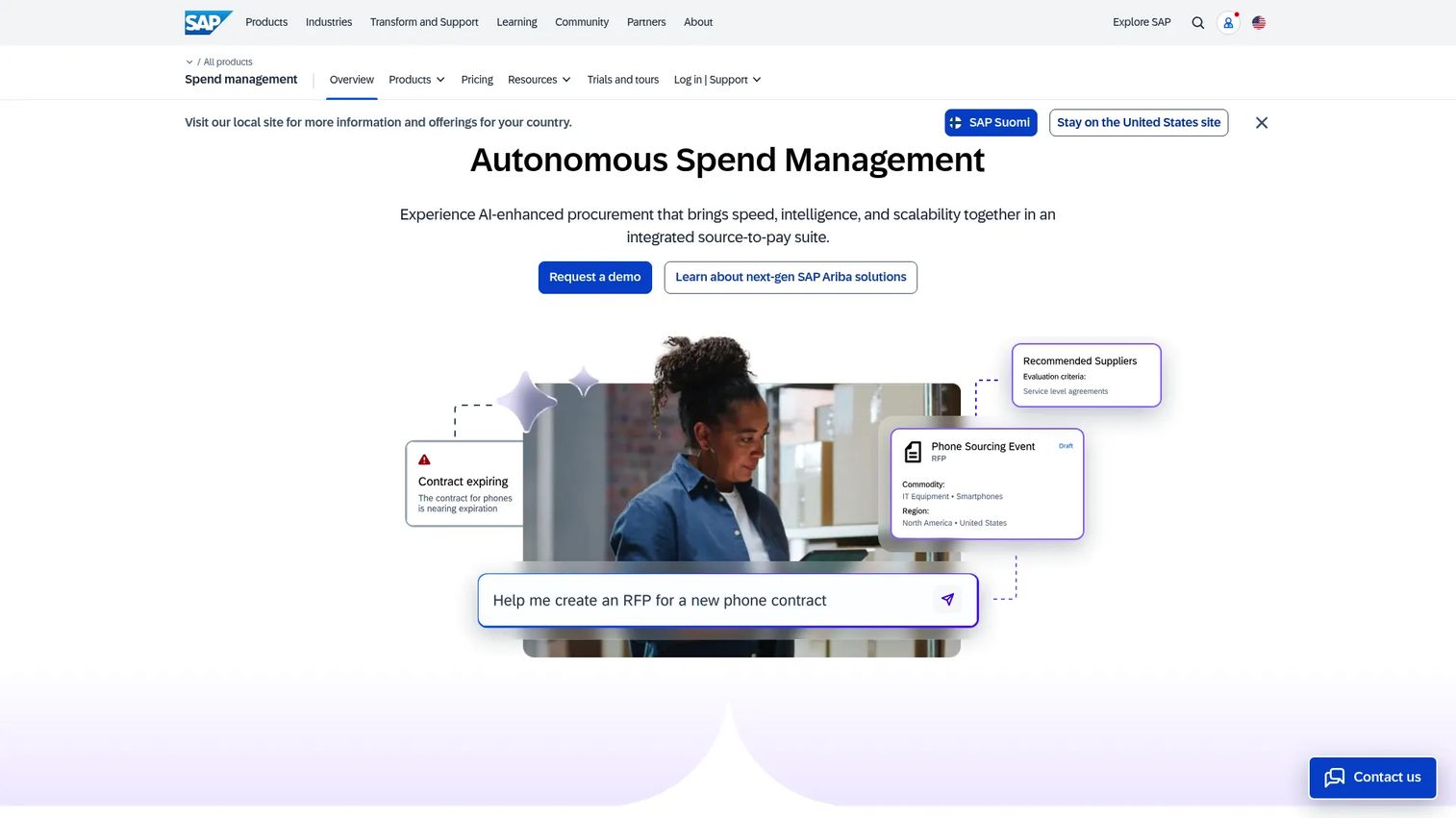
SAP Ariba is an enterprise procurement and sourcing platform known for large-scale supplier network connectivity, strategic sourcing events, contract management, and compatibility with SAP-centered finance environments. The platform connects buyers to one of the largest supplier networks available, which shortens supplier discovery time for organizations with complex category requirements. Pricing is measured by total spend processed through the platform, with contracts typically running three to five years on an annual entitlement basis.
Best for: Global procurement teams managing supplier networks across regions and categories, particularly in organizations already running SAP for ERP or finance.
Key features
- Strategic sourcing and RFx workflows
- Supplier network connectivity and onboarding
- Bid evaluation and award management
- Contract and buying workflow integration
- Spend analysis with machine learning
Why choose SAP Ariba: Scale and supplier network reach are the primary reasons to choose this platform. Organizations outside the SAP ecosystem should evaluate integration complexity upfront, since the product's depth is tied to the SAP data model. Implementation planning and data governance need a clear owner before the contract is signed.
SAP Ariba pricing: SAP Ariba is priced on request, measured by total spend processed. Contracts typically run three to five years on an annual entitlement structure. Contact SAP for a quote.
G2 rating: 4.1/5 (verified October 2026).
7. Zycus
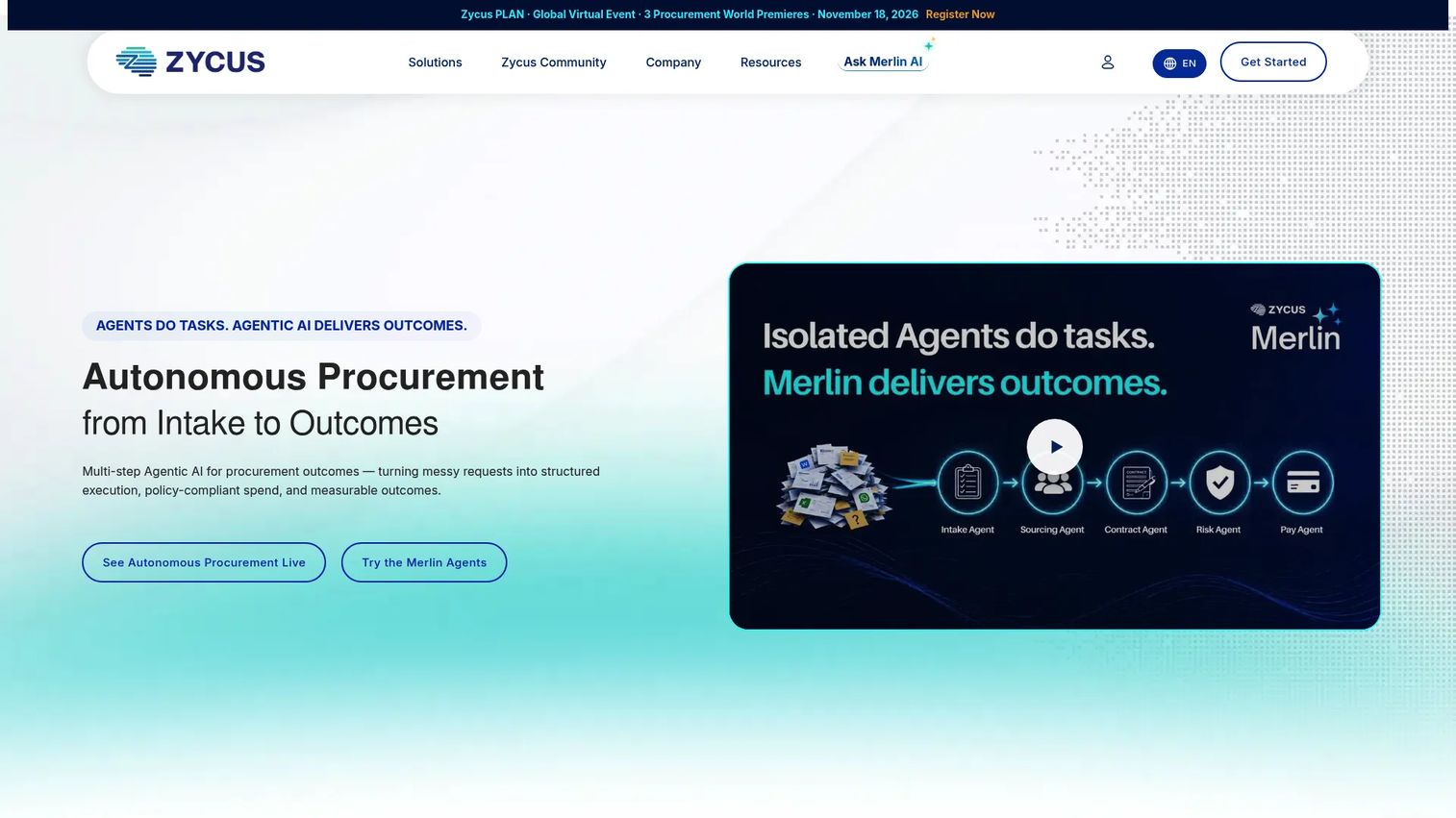
Zycus provides an AI-powered source-to-pay platform covering intake, sourcing, contracting, supplier management, purchasing, catalog management, and e-invoicing. Its Merlin Agentic Platform introduces AI procurement agents for autonomous sourcing workflows and tail-spend management. Merlin ANA, the tail-spend automation product, uses consumption-based pricing at approximately $15 per purchase order rather than per-user licensing. The broader Zycus platform pricing is not publicly displayed.
Best for: Procurement organizations that need scalable source-to-pay workflows with AI-supported intake and autonomous sourcing tasks, without expanding headcount proportionally.
Key features
- RFx event management and supplier management workflows
- Merlin AI agents for autonomous sourcing and tail-spend management
- Contract lifecycle management
- eProcurement and catalog management
- E-invoicing and accounts payable automation
Why choose Zycus: The automation and sourcing intelligence capabilities are the relevant differentiator for lean procurement teams. Where Zycus stands out is at the intake and orchestration layer, routing requests to the right sourcing process without manual triage. Teams should verify which AI capabilities apply to their specific source-to-pay scope before committing.
Zycus pricing: Merlin ANA uses consumption-based pricing at approximately $15 per purchase order. Broader platform pricing requires a custom quote from Zycus.
G2 rating: 3.7/5 (verified October 2026).
8. Synertrade
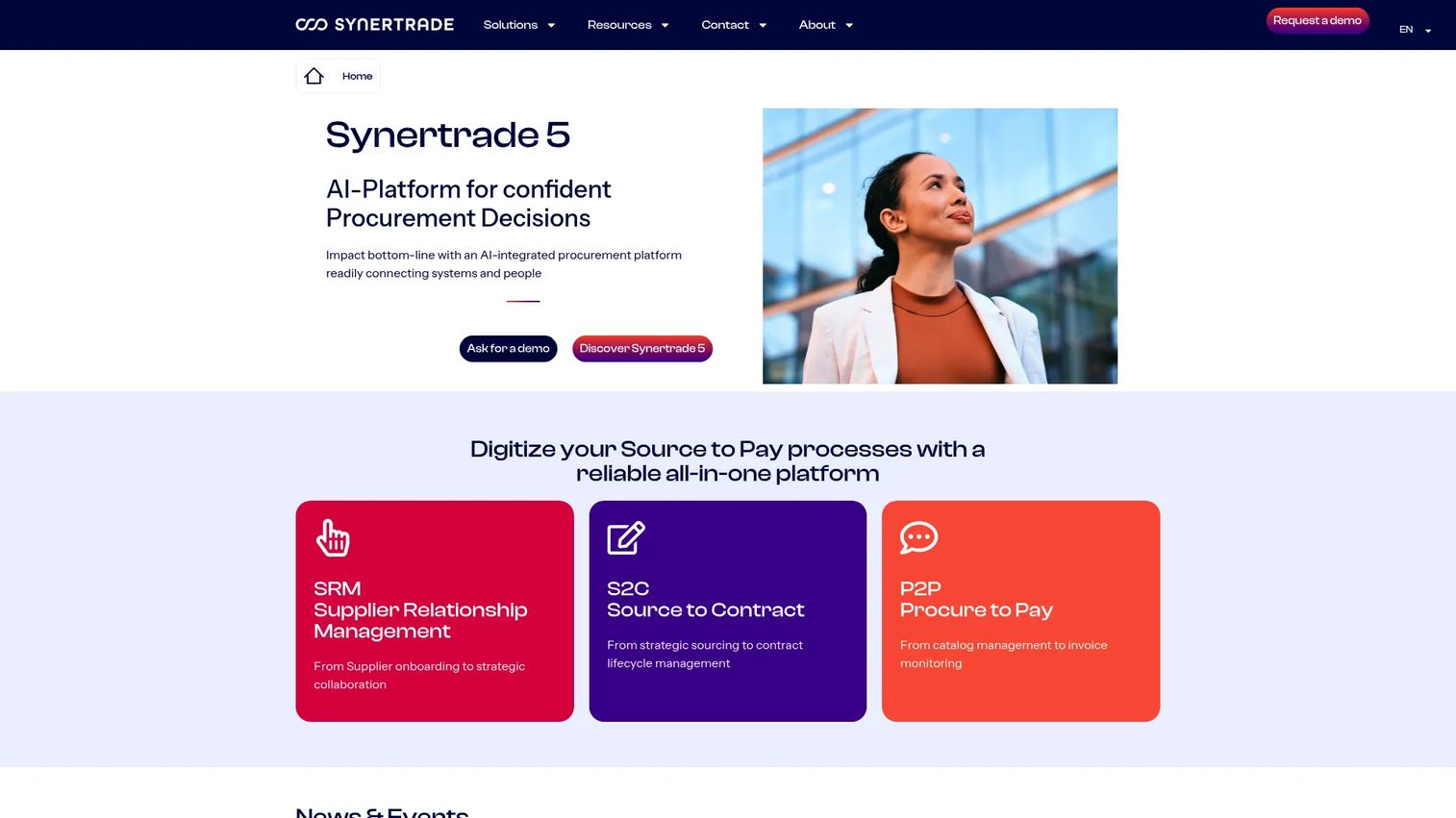
Synertrade is a procurement platform covering supplier relationship management, source-to-contract, and procure-to-pay. Its sourcing module handles structured RFx events and supplier collaboration; its contract module includes AI contract analysis and DocuSign integration; and its procure-to-pay layer covers catalogs, eProcurement, invoice matching, and automated workflows. Synertrade uses usage-based pricing with unlimited user seats rather than per-seat licensing, which changes the cost model for organizations with a large number of occasional users.
Best for: Larger procurement teams that want source-to-contract depth with supplier risk management, without leading their technology selection with an expense or AP automation product.
Key features
- Supplier onboarding, qualification, risk, and performance management
- Strategic sourcing and contract lifecycle management with AI analysis
- Procure-to-pay with invoice matching and automated workflows
- DocuSign integration for contract execution
- Usage-based pricing with unlimited user seats
Why choose Synertrade: The platform fits organizations that want to standardize sourcing and contract processes across categories without paying per seat for every occasional user. Sourcing should be a repeatable organizational process rather than an occasional finance project before this investment makes sense.
Synertrade pricing: Usage-based pricing with unlimited user seats. No public price figure was found; contact Synertrade for a quote based on usage scope.
G2 rating: 4.0/5 (verified October 2026).
9. Proactis
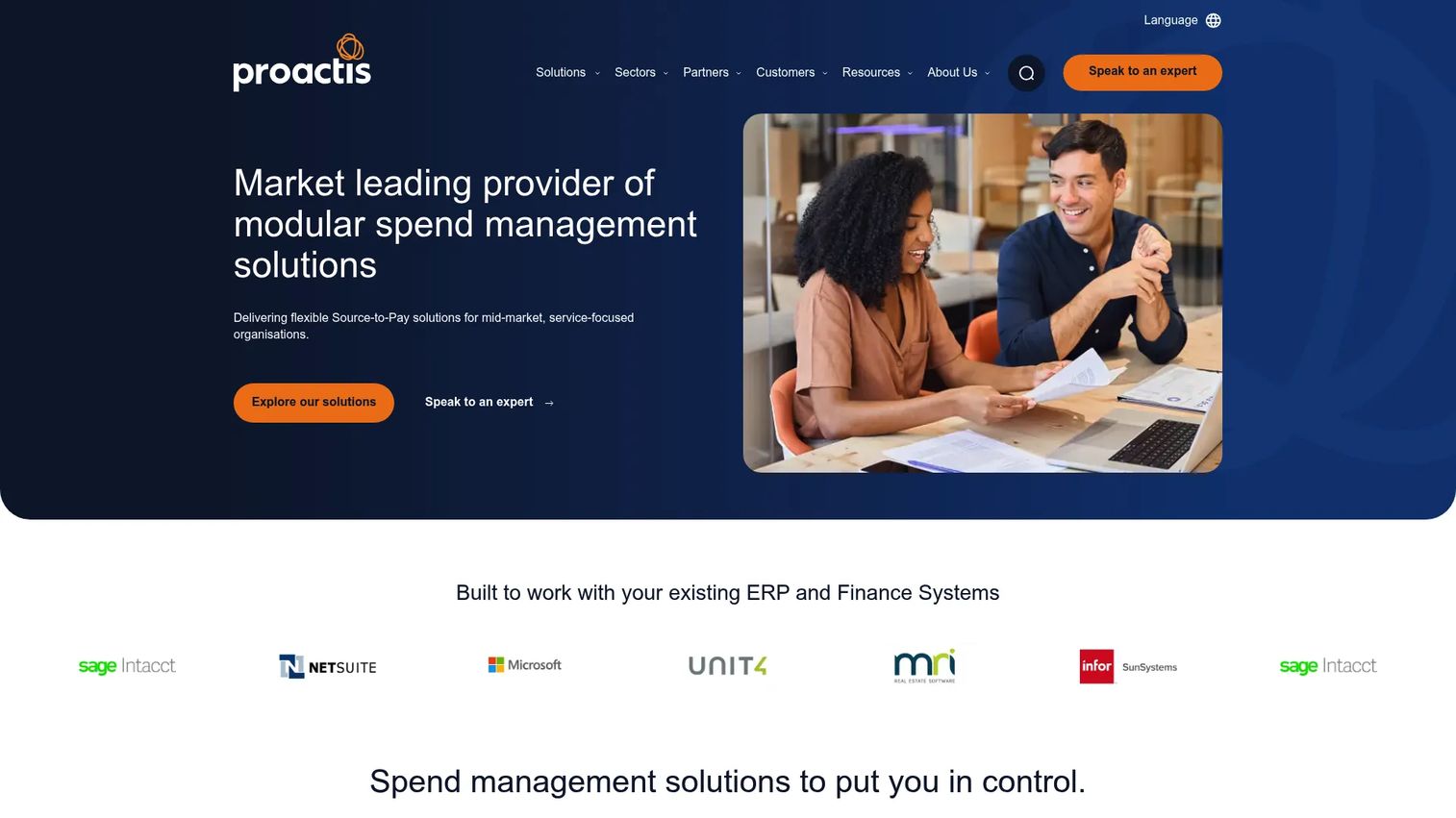
Proactis is a modular cloud-based source-to-pay platform positioned for mid-market, service-led organizations. Its modules cover supplier relationship management, eSourcing, contract management, a guided buying marketplace, purchase-to-pay, and accounts payable automation. The modular structure means organizations can deploy the sourcing and supplier modules without committing to the full suite upfront, which reduces implementation scope for companies that need procurement control without enterprise-scale complexity.
Best for: Mid-market organizations that have outgrown spreadsheet procurement and need structured supplier management, sourcing events, and contract controls without a global enterprise operating model.
Key features
- Supplier relationship management and onboarding
- eSourcing and quotation workflows
- Contract management and compliance controls
- Guided buying marketplace
- Purchase-to-pay and accounts payable automation
Why choose Proactis: Proactis earns a place on the shortlist for companies whose sourcing volume and supplier complexity are real but not global-enterprise in scale. Validate regional coverage and integration requirements before committing, particularly if ERP or finance system connections are on the critical path.
Proactis pricing: Proactis does not display pricing on its website. Contact Proactis for a quote based on modules and organization requirements.
G2 rating: 4.8/5 (verified October 2026).
10. Basware
Basware provides AI-powered accounts payable automation, procure-to-pay, and e-invoicing for globally operating organizations. Its core strength is downstream procurement: Invoice capture and coding, purchase requisitions, receiving, invoice matching, payment, and a supplier e-invoicing network that connects to 250-plus ERP systems. Strategic sourcing relevance comes when the buyer wants downstream invoice and purchasing controls to be connected to the supplier selection process from the start.
Best for: Organizations whose procurement transformation begins with invoice automation and procure-to-pay discipline, and who want those downstream controls connected to supplier records.
Key features
- AI-powered invoice capture, coding, routing, and matching
- Procure-to-pay automation spanning requisitions through payment
- E-invoicing network with broad supplier connectivity
- Integration with 250-plus ERP systems
- Spend and payment visibility
Why choose Basware: Basware fits buyers who feel invoice-process pain first. Finance teams dealing with manual invoice handling, ERP integration gaps, or AP backlogs will find the core product directly addresses those problems. Validate RFx and advanced sourcing depth separately if competitive supplier events are a primary requirement.
Basware pricing: Basware uses custom subscription pricing based on organization size, modules, and existing systems. Contact Basware for a quote.
G2 rating: 4.2/5 (verified October 2026).
Considerations when choosing strategic sourcing software
Match platform depth to sourcing maturity
A founder should not buy a global enterprise suite because the company wants better renewal discipline. Separate what is needed in the next six months, such as vendor intake and structured RFQs, from longer-horizon requirements like multi-region supplier governance and sourcing optimization. Buying ahead of maturity creates implementation burden without proportional value.
Check where supplier data will live
Ask whether supplier profiles, certifications, risk records, contracts, and payment terms will live in one trusted record that the team can maintain. Fragmented supplier data across the platform, the finance system, and a shared drive creates duplicate work and weak audit trails. The platform needs a clear data owner, not just a license.
Treat implementation as an operating change
Deploying sourcing software forces decisions about approval thresholds, supplier ownership, sourcing templates, contract policies, and ERP integration. The implementation plan needs an executive sponsor and a defined first category to launch. Teams that skip this step typically under-adopt and over-customize.
Verify the downstream handoff
A sourcing event is only useful if supplier awards, negotiated terms, and savings targets flow into contracts, purchase requests, purchase orders, and renewal controls. Ask each vendor to walk through what happens after the award decision and where that data goes in your finance stack.
Measure realized value, not activity
Track sourcing cycle time, competitive bids per event, approved supplier adoption, spend under management, and realized savings against budget. A high count of RFx events is not evidence of impact. Savings that stay in the sourcing system but do not change what the company actually pays are not savings.
For a related look at how contract data connects to sourcing decisions, see our guide on best contract lifecycle management software and best contract management software tools.
Conclusion
The right strategic sourcing platform depends on where your organization sits today, not where you hope to be in three years.
Choose Coupa, GEP SMART, Ivalua, SAP Ariba, or JAGGAER when spend complexity, multi-region operations, or supplier governance requirements justify a broad enterprise suite. Choose Workday Strategic Sourcing when Workday is already central to finance and the goal is a connected sourcing process rather than a separate system. Consider Zycus when procurement automation and AI-supported intake matter more than breadth of manual workflow coverage. Consider Synertrade when source-to-contract depth and unlimited user seats fit the cost model. Consider Proactis when the company needs structured procurement control without the implementation weight of a global platform. Consider Basware when finance is feeling invoice-process pain first and wants downstream purchasing controls built on a reliable foundation.
Before booking demos, map one live sourcing event from intake through supplier award, contract, purchase approval, and invoice. The gaps in that workflow tell you exactly what category depth you need.
Looking for related tools? Our guides on best contract analytics software and bid management software cover adjacent categories worth evaluating alongside your sourcing platform.
Start your journey with Guideflow today!
FAQs about strategic sourcing software
Procurement software manages buying execution: Purchase requests, approvals, purchase orders, invoices, and payments. Strategic sourcing software focuses earlier in the lifecycle on supplier discovery, RFx events, bid evaluation, negotiations, and supplier selection. Many enterprise platforms combine both into a source-to-pay suite, but the sourcing layer handles the decision of which supplier to use, while procurement handles the transaction.
Core features include supplier management and qualification, RFI, RFP, and RFQ workflows, bid comparison, weighted scoring, approval workflows, contract handoff, and spend analysis. Advanced requirements add reverse auctions, scenario modeling, supplier risk monitoring, and multi-region supplier collaboration. The right feature set depends on sourcing volume, category complexity, and how much of the lifecycle will be managed in the platform.
Practical triggers include annual vendor spend rising faster than the team managing it, finance being unable to explain renewal exposure at quarter close, multiple teams buying overlapping tools without coordination, and RFx events happening in spreadsheets with no audit trail. A company can start with a focused workflow for one spend category before adopting a full source-to-pay suite.
Yes. The platform standardizes requirements across suppliers, distributes the event, collects and normalizes responses, applies weighted scoring, and supports the award decision. It also creates an audit-ready record of requirements, supplier responses, scoring rationale, and who approved the outcome.
Most enterprise vendors in this category price by quote. Cost typically depends on modules selected, total spend processed, number of suppliers, sourcing-event volume, integration requirements, and implementation services. Zycus's Merlin ANA product uses consumption-based pricing at approximately $15 per purchase order, which is one of the few publicly verified figures in the category.
Source-to-contract software connects the full path from supplier discovery and sourcing events through negotiations, award decisions, and contract execution. It sits between strategic sourcing, where the supplier is chosen, and broader procure-to-pay operations, where the purchasing transaction happens. Synertrade and Workday Strategic Sourcing are examples of platforms with strong source-to-contract coverage.
It can, but only if the system connects sourcing awards and negotiated terms to actual purchasing behavior. Projected savings are the discount negotiated. Negotiated savings are what gets recorded in the contract. Realized savings are what actually changes in the budget or P&L. Most sourcing platforms track the first two; realized savings measurement requires the handoff from sourcing to purchasing and invoice controls to be working correctly.
Ask which spend category will launch first and who owns supplier data for that category. Ask which finance system, ERP, and contract tool must connect and on what timeline. Ask what the approval model looks like for purchase requests above a given threshold. Ask how the platform measures realized savings, not just awarded contracts. Finally, ask what the first-quarter deliverable looks like for a company at your current spend scale and procurement maturity.