

A bid lands in someone's inbox on Tuesday. A subcontractor invite goes out from a shared drive on Wednesday. An approval sits in a Slack thread nobody checks until Friday. By the time you piece it together, the due date is tomorrow and no one owns the follow-up.
That is what bid operations look like without a system. Bids scatter across email, spreadsheets, and project channels. Invites go unsent. Approvals stall. Nobody can answer the simple question: what is the status of everything we are bidding on right now?
The stakes keep rising. The construction-specific bid management software market is projected to grow from $1.21 billion in 2026 to $3.35 billion by 2035, a 12.03% CAGR, according to Business Research Insights (2024). Adoption has already exceeded 68% among data-driven B2B organizations, per Market Growth Reports (2024). Teams are consolidating fragmented workflows into single systems because the manual version does not scale.
This guide compares eight bid management platforms. Each one takes a different path to the same goal: make active bids visible, keep invites and approvals moving, and give operators a repeatable process instead of a scramble.
What's inside
This guide is for construction founders, operators, estimators, and preconstruction leaders who need to run bid operations without chasing everything by hand.
We chose tools based on four criteria that matter to a founder-led team:
- Bid tracking and a live bid board that shows owners, status, and due dates
- Invitation handling, reminders, and an approvals workflow across roles
- Subcontractor and supplier coordination, including qualification and vendor communication
- Reporting and stack fit with the estimating, project management, and Microsoft 365 tools you already run
We favored platforms with real bid board functionality, structured invite handling, and role-based workflows over generic document storage.
TL;DR
- Best for all-in-one preconstruction teams: PlanHub, with a bidding network and planroom in one place
- Best for centralized construction workflows: Autodesk Construction Cloud, tying bidding to the broader project lifecycle
- Best for vendor communication and workflow controls: Beyond Intranet Bid Management Software, built on SharePoint
- Best for Microsoft 365-native document collaboration: Microsoft SharePoint Bid Management System
- Best for bid solicitation and leveling: Procore Bid Management
- Best for connecting bids to accounting: Sage Construction Management
- Best for small to mid-sized contractors: Buildern, with a lighter adoption curve
- Best for residential builders and remodelers: Buildertrend
What is bid management software
Bid management software is a system for creating, tracking, organizing, and managing bids in one place, so a construction team stops chasing invites and approvals across email and spreadsheets.
At its core, it replaces scattered files with a single source of truth. The people who need to see status can see it. The people who need to approve can approve. And the invite list stops living in one person's head.
Most construction bid software shares the same building blocks:
- Bid board: a live view of active bids with owner, status, and due date
- Bid invitations: structured invites to subcontractors and suppliers, with reminders
- Approvals workflow: multi-level review and sign-off before submission or award
- Bid tracking: status history across the full bid lifecycle
- Bid collaboration: shared documents, comments, and role-based access
- Subcontractor management: contact organization, supplier qualification, and vendor portals
- Reporting: exportable records that survive client, board, or procurement scrutiny
The category overlaps with a few related terms. A bid management system usually refers to the broader platform. Construction bidding software emphasizes the preconstruction and solicitation side. Tender management software is the same idea framed for procurement and public sector work, often with heavier RFI RFQ RFP management and supplier qualification requirements.
The right system does one thing above all: it makes workload visible. A founder or operator can look at one screen and know what is in flight, who owns it, and what is at risk. That visibility is what turns bid operations from a founder-dependent scramble into a process the team can run without you.
When to use
Centralize bid intake and tracking
You know it is time when bids start slipping. One arrives by email and never makes it to the spreadsheet. Another gets logged but no one assigns an owner. A centralized bid board fixes this by making ownership, status, and due dates obvious at a glance. For a founder or operator, that single live view is the difference between guessing and knowing what the team is actually bidding on.
Coordinate invites, follow-up, and approvals
Use a system the moment multiple reviewers need to sign off on submissions or invitations. Manual coordination breaks down fast when three people have to approve a bid before it goes out. Automated notifications and reminders keep the process moving without someone playing air traffic controller. Structured collaboration across estimators, project managers, and leadership means the approvals workflow reflects how your team actually works, not how a tool assumes it does.
Manage subcontractors, suppliers, and vendor communication
When the invite list grows past what one person can track, relationship management stops being optional. You need to qualify vendors, keep contact history in one place, and communicate at scale. Tools with vendor portals, automatic matching, and supplier qualification handle the coordination so you spend less time chasing responses and more time comparing real bids.
Comparison table
Read the table left to right: the "Best for" column tells you who each tool fits, "Key differentiator" tells you what sets it apart, and pricing plus G2 rating give you a quick commercial read. All figures were verified against vendor pages and G2 listings at the time of writing.
| # | Product | Best for | Key differentiator | Pricing | G2 rating |
|---|---|---|---|---|---|
| 1 | PlanHub | All-in-one preconstruction teams | Bidding network plus planroom | Subcontractor Premier from $1,999/year | 4.5/5 |
| 2 | Autodesk Construction Cloud | Centralized construction workflows | Bidding tied to full project lifecycle | Quote-based | 4.4/5 |
| 3 | Beyond Intranet Bid Management Software | Vendor communication and controls | SharePoint-based tender workflows | From $299/month | 4.0/5 |
| 4 | Microsoft SharePoint Bid Management System | Microsoft 365-native teams | Document collaboration on SharePoint | From $5.00/user/month | 4.0/5 |
| 5 | Procore Bid Management | Bid solicitation and leveling | Side-by-side bid comparison | Quote-based | 4.6/5 |
| 6 | Sage Construction Management | Bids tied to accounting | Cloud PM with financial integration | Quote-based | 3.9/5 |
| 7 | Buildern | Small to mid-sized contractors | Estimating plus PM in one platform | Starter from $250/month | 4.9/5 |
| 8 | Buildertrend | Residential builders and remodelers | Client and project management with bids | Custom pricing | 4.2/5 |
Best 8 tools for bid management in 2026
1. PlanHub
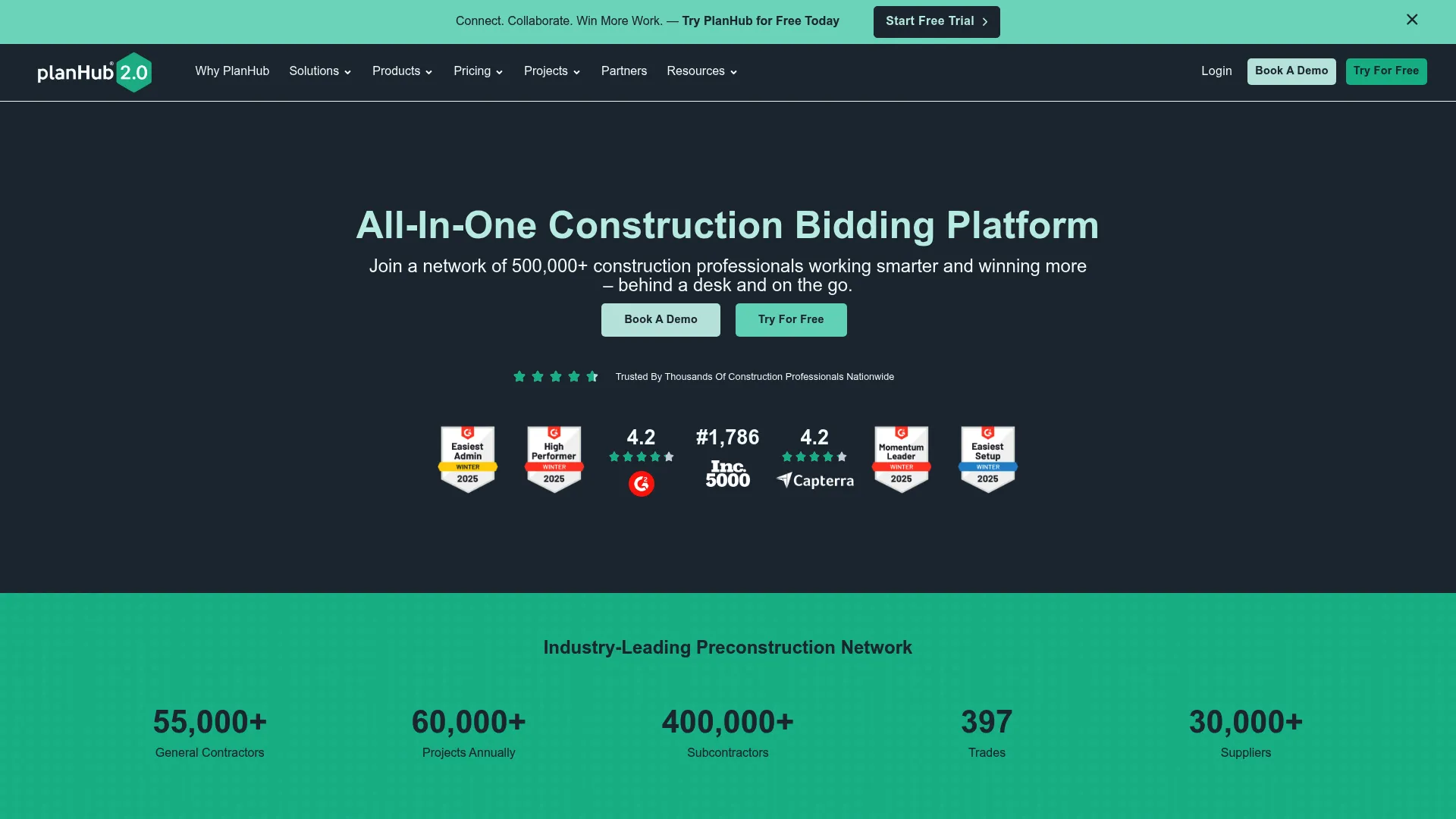
PlanHub is a construction bidding and preconstruction platform built for contractors, subcontractors, and suppliers. It pairs a bidding network with a planroom workflow, so teams can find projects, send and level bids, and manage documents in one place. The network effect matters here: general contractors post projects, subcontractors discover and bid on them, and both sides work off shared plans. That combination makes PlanHub a strong fit for teams that want bid flow and discovery, not just internal tracking.
Best for: Construction teams that need a bidding network alongside a planroom workflow.
Key strengths
- Project posting and finding across a contractor network
- Bid management and bid leveling in one view
- Document management and bid collaboration
- Role-based functionality for GCs, subs, and suppliers
Why choose PlanHub: If your bottleneck is finding work and coordinating bids across a network, PlanHub's discovery and matching give you reach that internal-only tools cannot. It suits teams that value breadth and network access over a lightweight setup.
PlanHub pricing: General contractors start on a free Essentials tier, with paid Pro and Premier plans. Subcontractor plans begin at $1,999 per year for Premier, with region-based options and add-ons available.
2. Autodesk Construction Cloud
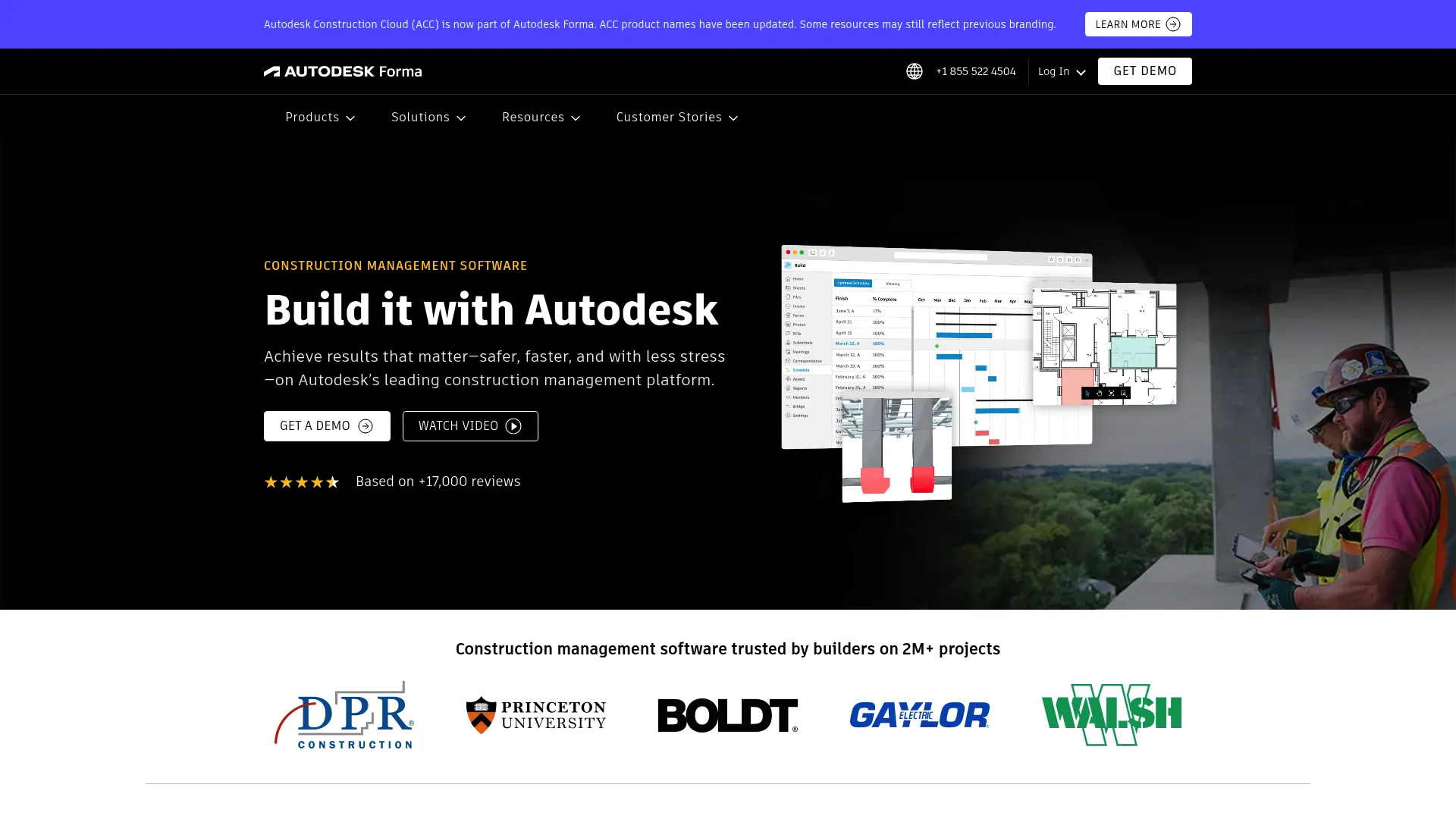
Autodesk Construction Cloud is a construction management platform that coordinates project data, teams, and workflows across the building lifecycle. Bid management sits inside a broader system that also handles project management, document management, and model coordination. For teams that want preconstruction and bidding connected to the rest of the project, that integration is the draw. Bids do not live in a silo; they feed into the same environment where the project gets built.
Best for: General contractors, specialty contractors, and owners managing connected construction workflows.
Key strengths
- Bid management within a full project platform
- Document management and model coordination
- Project management across the building lifecycle
- Integrations with 400+ tools
Why choose Autodesk Construction Cloud: Choose it when you want bid management to be one part of a connected construction workflow rather than a standalone tool. It fits teams that already think in terms of the full project lifecycle and want their bidding data to flow into it.
Autodesk Construction Cloud pricing: Pricing is quote-based on the public pricing page, with no public starting price shown. A free educational plan is available for eligible educators.
3. Beyond Intranet Bid Management Software
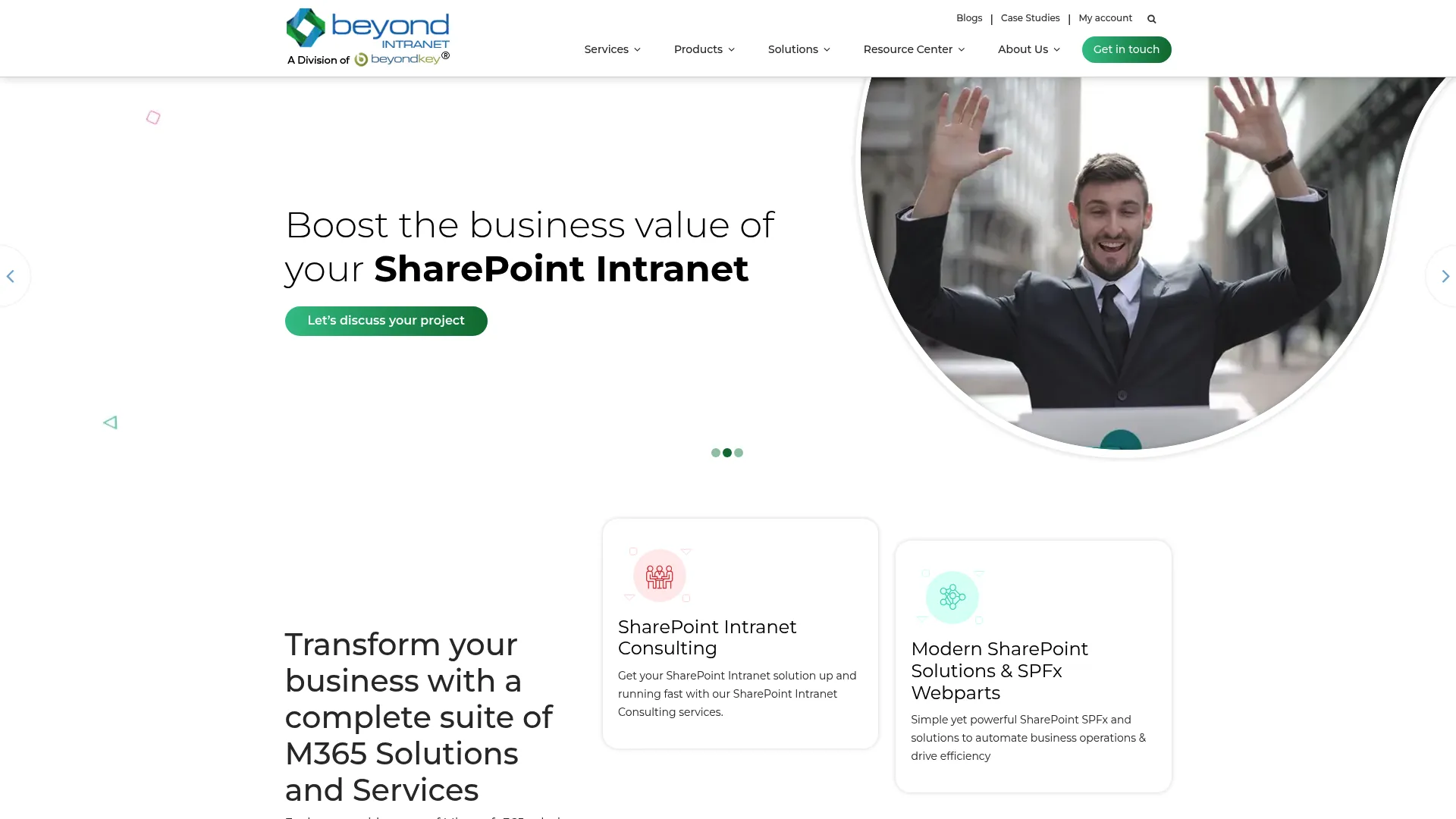
Beyond Intranet Bid Management Software is a SharePoint-based bid and tender management tool for managing RFIs, RFQs, RFPs, approvals, and vendor collaboration. Teams already standardized on Microsoft favor it because it lives inside the environment they use daily. You create and publish tenders from templates, automate notifications and reminders, and give vendors a portal to submit and track bids. Governance and workflow automation are the emphasis, which fits procurement-heavy and compliance-conscious organizations.
Best for: Teams that need a SharePoint-based bid and tender workflow with vendor collaboration.
Key strengths
- Create and publish tenders with templates
- Automated bid notifications, reminders, and approvals workflow
- Vendor portal with bid submission and evaluation
- Dashboard tracking across the tender lifecycle
Why choose Beyond Intranet Bid Management Software: It suits Microsoft ecosystem teams that want structured tender management with strong approval controls and vendor portals. If your organization runs on SharePoint and needs auditable procurement workflows, it slots in where your documents already live.
Beyond Intranet Bid Management Software pricing: The product page offers tailored quote-based pricing, while a store listing shows a Global Plus monthly subscription at $299.00 (USD) per month. A 7-day free trial is advertised.
4. Microsoft SharePoint Bid Management System
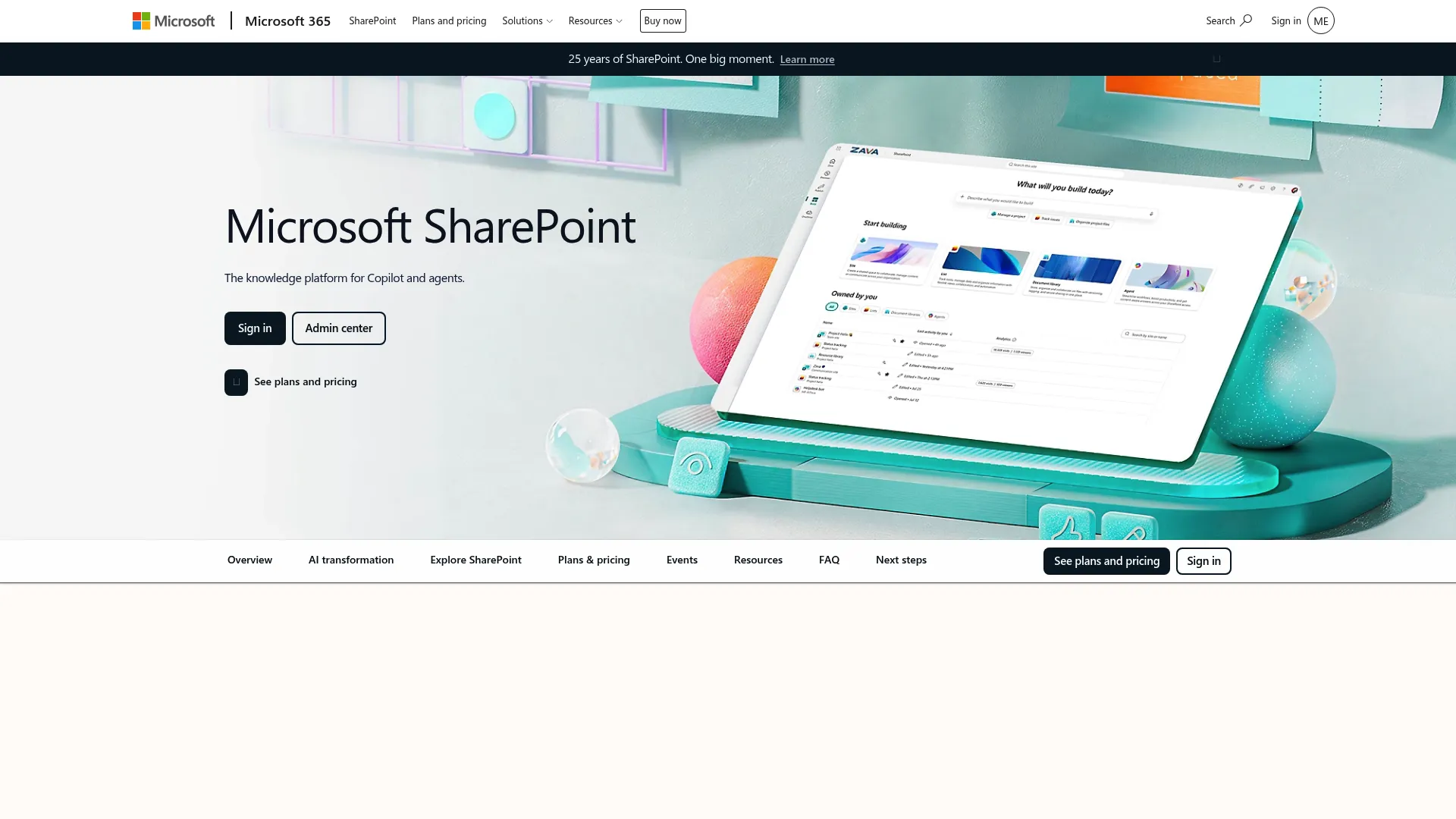
Microsoft SharePoint is a web-based collaboration and document management platform that many teams adapt into a bid management system. When your organization already runs on Microsoft 365, SharePoint becomes a low-friction way to digitize bid workflows: store and version documents, set up multiple approval levels, and collaborate in real time. It is not a purpose-built bidding tool, but for teams that want to avoid adding new software, it turns existing infrastructure into a workable bid tracking and approvals setup.
Best for: Organizations needing intranet, team sites, and secure document collaboration for bids.
Key strengths
- Share files securely and coauthor in real time
- Manage content in document libraries with versioning
- Access control and multiple approval levels
- Search and discover people and content
Why choose Microsoft SharePoint Bid Management System: Choose it when your team is already standardized on Microsoft 365 and wants low-friction adoption for non-technical staff. It keeps bid documents and approvals in the same environment your people log into every day.
Microsoft SharePoint pricing: SharePoint (Plan 1) starts at $5.00 per user per month, paid yearly. Microsoft 365 Business Standard (no Teams) is listed at $9.29 per user per month, paid yearly.
5. Procore Bid Management

Procore Bid Management is construction bid management software for managing bid invitations, collecting bids, and tracking coverage in one platform. It is built for general contractors and project teams juggling multiple bids at once. You create and send invitations, collect responses, and compare bids side by side with bid leveling, all from centralized tracking. The focus is operational visibility: standardized templates and one place to see where every solicitation stands.
Best for: Construction teams that need centralized bid solicitation and bid leveling.
Key strengths
- Create, manage, level, and track bid invitations
- Compare bids side by side
- Standardized templates for consistent solicitation
- Centralized tracking of bid coverage
Why choose Procore Bid Management: It fits general contractors who run many bids across projects and need clear coverage tracking and apples-to-apples comparison. If bid leveling and solicitation are your daily reality, the side-by-side comparison earns its place.
Procore Bid Management pricing: Procore's bid management page uses a pricing request CTA and does not show a public price. Contact Procore for a quote.
6. Sage Construction Management
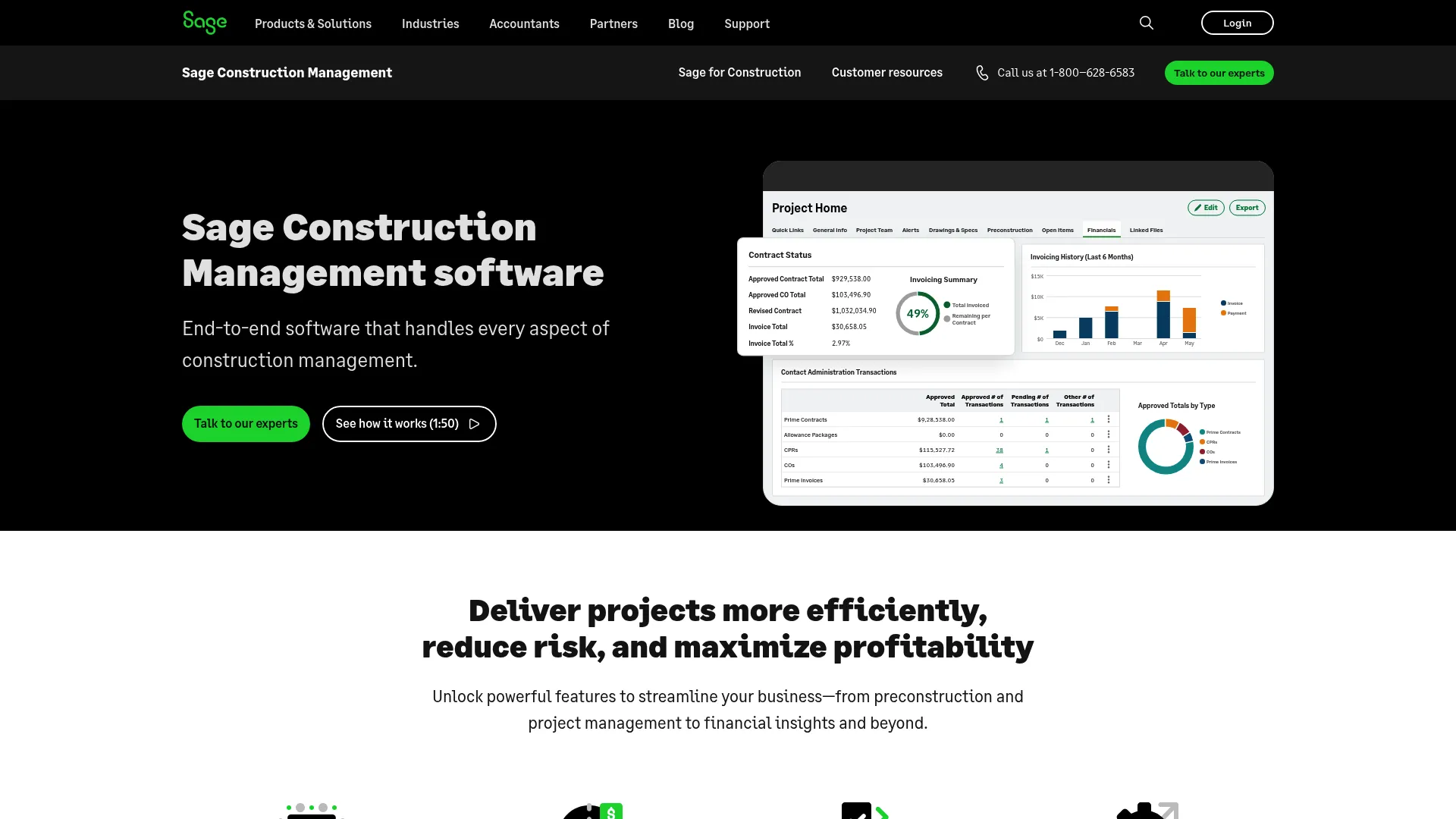
Sage Construction Management is cloud construction management software covering leads, estimating, projects, collaboration, and financial integration. Its edge is connecting bid data to the broader financial and project management picture. For construction finance and operations teams, that means bids do not stop at award; they tie into estimating and accounting workflows. If you want bid management that feeds job costing rather than sitting apart from it, Sage is built around that connection.
Best for: Construction firms needing cloud project management tied to accounting workflows.
Key strengths
- Lead tracking and bid management
- Estimating and project/contract management
- Subcontractor communication and collaboration
- Accounting integrations for connected financials
Why choose Sage Construction Management: Choose it when bid data needs to connect to estimating and accounting, not live in isolation. It fits finance-conscious construction teams that want project management and financial workflows in one system.
Sage Construction Management pricing: Sage describes a standard pricing plan and calls its pricing competitive, but no public numeric price is shown on the product page. Contact Sage for a quote.
7. Buildern
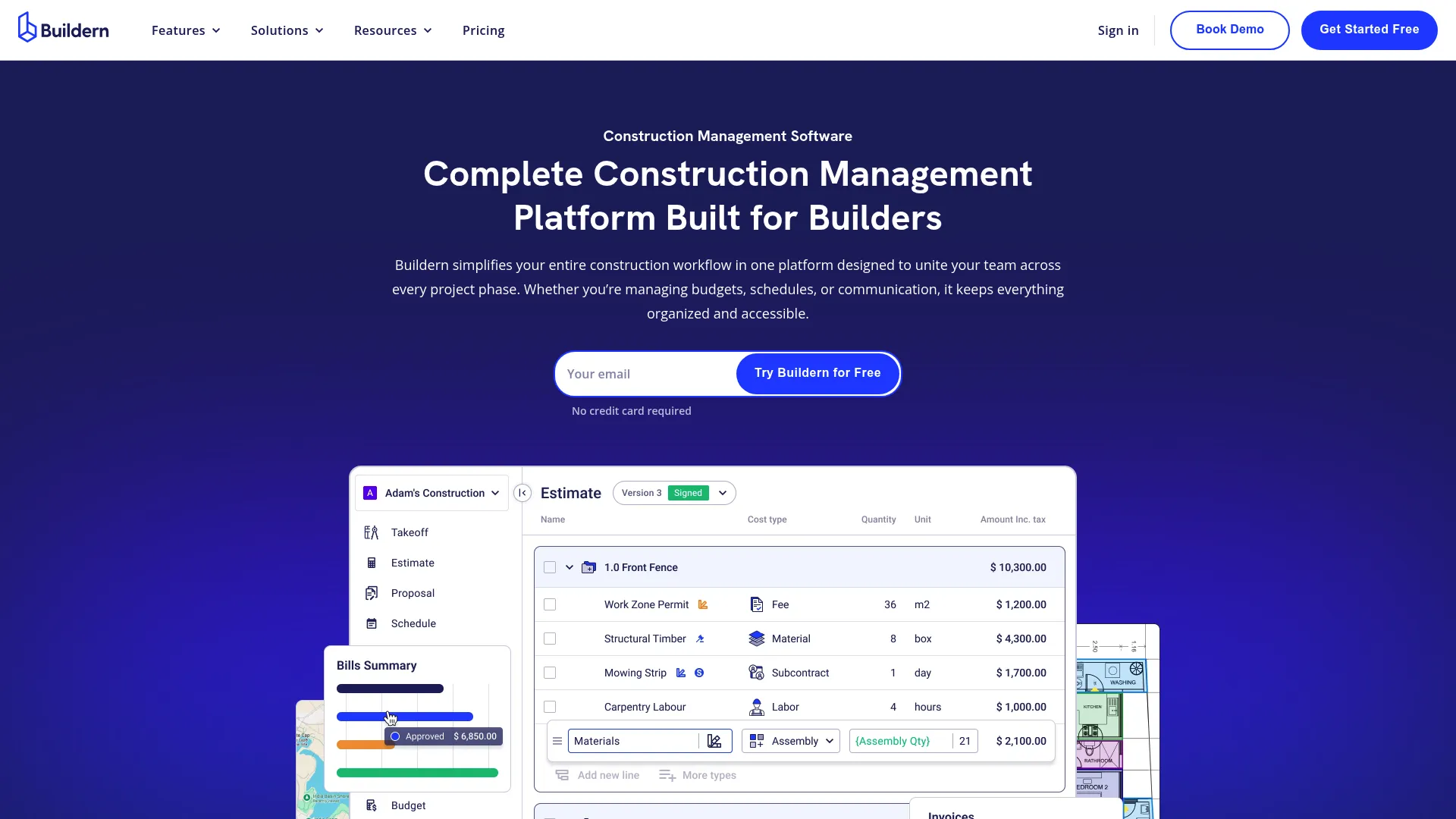
Buildern is construction management software for builders and contractors that brings bid management, estimating, communication, and job coordination into one platform. Small to mid-sized contractors often prefer it for an easier adoption curve than heavier enterprise systems. The value is visibility with lightweight team coordination: estimating, proposals, takeoff, scheduling, and document management in a system teams can actually get running without a long implementation.
Best for: Construction teams needing estimating, project management, and financial workflow in one platform.
Key strengths
- Estimating and proposals
- Takeoff and cost catalog
- Scheduling, tasks, and document management
- Bid management with team coordination
Why choose Buildern: It suits small to mid-sized contractors who want an integrated platform without a steep learning curve. Unlimited free external users and a fast start make it approachable for lean teams.
Buildern pricing: Starter is $250 USD per month and includes 2 seats. Professional is $400 USD per month and includes 4 seats. Both offer unlimited free external users and a 7-day free trial. Enterprise is custom.
8. Buildertrend
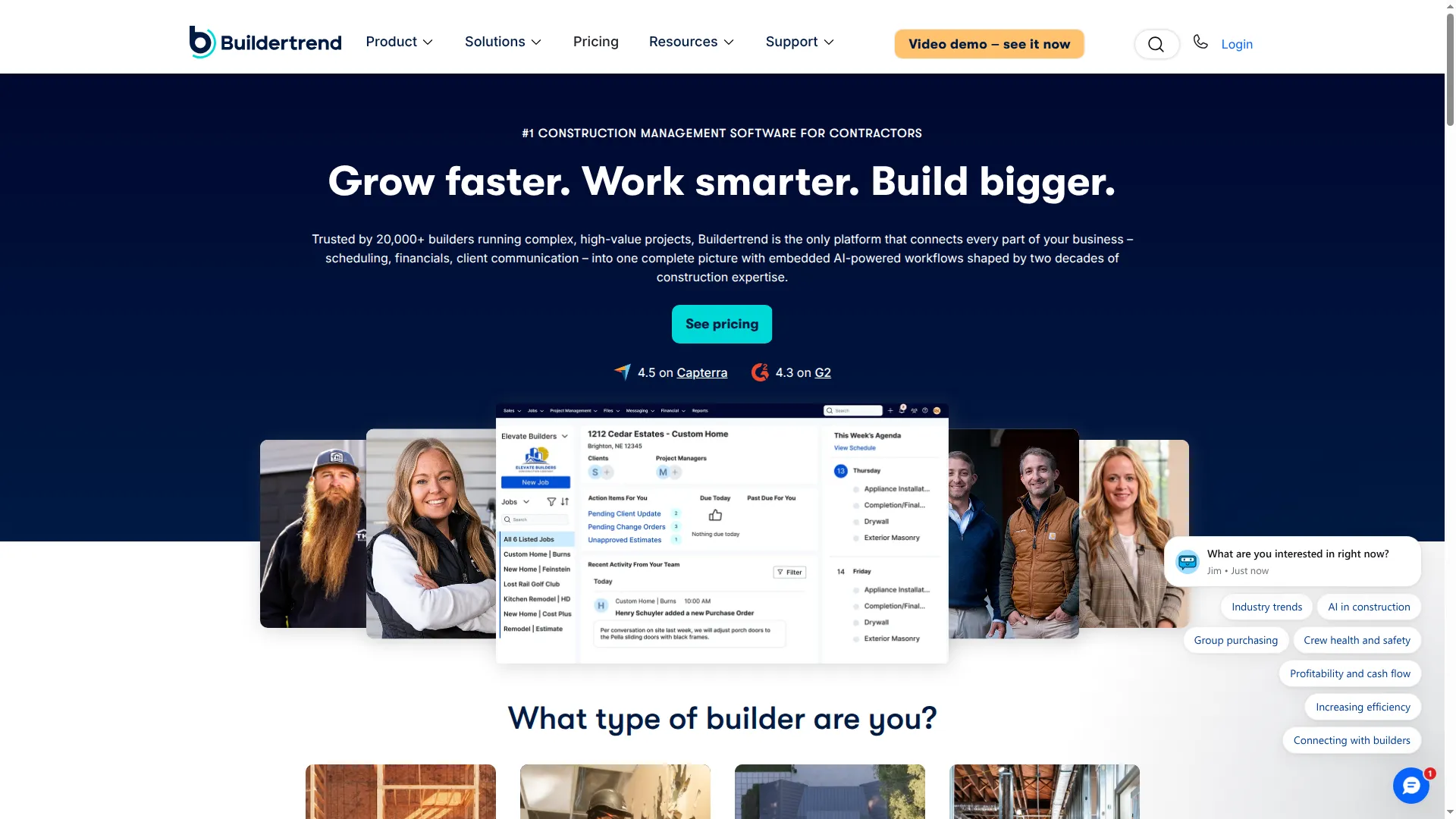
Buildertrend is cloud-based construction management software for builders, remodelers, and specialty contractors. Bid tracking sits alongside estimating, subcontractor communication, and client-facing project management. That breadth is the point: residential builders and remodelers manage bids in the same system they use for change orders, daily logs, client portals, and payments. If you need construction management as a whole and not just a bidding tool, Buildertrend covers the full workflow.
Best for: Residential construction businesses that want an all-in-one project, client, and financial management platform.
Key strengths
- Sales management: lead management and proposals
- Project management: change orders, daily logs, scheduling
- Financials: estimates, invoices, and payments
- Customer communication with a client portal
Why choose Buildertrend: Choose it when you need broad construction management that folds bid tracking into client and project workflows. It fits residential teams that want one platform across sales, projects, and financials.
Buildertrend pricing: Pricing is custom and requires contacting Buildertrend for a quote. No public starting price is shown.
Considerations
Bid board and visibility
Ask whether the system gives your team one live view of active bids, owners, and due dates. A real bid board is the fastest way to see what is in flight without a status meeting. For founders and operators, visibility is what proves the process is repeatable rather than dependent on one person's memory.
Collaboration and approvals
Check that invite, approval, and notification workflows match how your team actually works. A tool that forces too much manual coordination just relocates the chasing. Look for an approvals workflow with automated reminders and role-based sign-off so bids move without someone nudging every reviewer.
Vendor and subcontractor management
Assess how the tool handles contact organization, supplier qualification, vendor portals, and relationship history. This matters more as the invite list grows. Strong subcontractor management means you find the right vendors fast and keep communication in one place instead of scattered threads.
Reporting and auditability
Look for exportable records, status history, and reporting that survive board, client, or procurement scrutiny. Clean data is what lets you make decisions and defend them later. Weak reporting shows up at the worst possible moment, when someone asks for a record you cannot produce.
Stack fit and implementation
Verify whether the tool fits the Microsoft 365, project management, CRM, or estimating systems you already run. Then weigh implementation effort, training, and migration risk honestly. A platform that earns its place fits your stack and shows a first win early, not after a quarter of setup.
Conclusion
The right pick depends on your scenario. For all-in-one preconstruction with a bidding network, PlanHub leads. For centralized construction workflows tied to the full project lifecycle, Autodesk Construction Cloud fits. If your organization runs on Microsoft, Beyond Intranet Bid Management Software or the Microsoft SharePoint Bid Management System keep bids where your documents already live. Procore Bid Management is the pick for bid solicitation and leveling at scale.
For teams that want bids connected to accounting, Sage Construction Management works. Smaller contractors who want a fast start should look at Buildern, and residential builders managing bids alongside client work should shortlist Buildertrend.
Start by naming your real bottleneck: discovery, approvals, vendor coordination, or reporting. Then shortlist two tools that solve that first, run a trial, and check for a first win in week one. The best system is the one your team runs without you in every bid.
FAQs
The bid management process covers everything from receiving or initiating a bid to submitting and tracking its outcome. It typically includes intake, assigning owners, sending bid invitations, collecting responses, running an approvals workflow, and reporting on wins and losses. Software makes each step visible so nothing slips between email and spreadsheets.
Construction bid software centralizes bid intake, invites subcontractors and suppliers, tracks status on a bid board, and manages approvals before submission or award. It replaces scattered files with one source of truth. That gives estimators and operators a live view of every active bid and who owns it.
Bid management usually describes the contractor side: creating, tracking, and coordinating bids. Tender management software frames the same workflow for procurement and public sector buyers, often with heavier RFI RFQ RFP management, supplier qualification, and compliance requirements. The core building blocks overlap, but tender tools lean more on governance and auditability.
Spreadsheets work until the invite list and reviewer count grow. Then ownership blurs, versions conflict, and approvals stall in threads nobody checks. A bid management system fixes visibility and coordination that spreadsheets cannot: live status, automated reminders, and an audit trail. If bids are slipping, that is the signal.
Construction founders, operators, estimators, and preconstruction leaders use it most. General contractors run solicitation and leveling; subcontractors track invites and responses; finance teams tie bids to job costing. Procurement teams use tender-focused versions for supplier qualification and compliance. Anyone accountable for bid outcomes benefits from the visibility.
Prioritize a live bid board, structured bid invitations, an approvals workflow with reminders, and subcontractor management with vendor portals. Then check bid tracking, bid collaboration, and reporting that survives client or procurement scrutiny. Stack fit with your estimating, project management, and Microsoft 365 tools matters just as much.
Start with your biggest bottleneck: discovery, approvals, vendor coordination, or reporting. Shortlist two tools that solve it directly, confirm they fit your existing stack, and run a trial. Watch for a first win in week one and a workflow your team can run without founder involvement.
Pricing varies widely. Some tools publish figures: Microsoft SharePoint starts at $5.00 per user per month, Buildern's Starter plan is $250 per month, and PlanHub's subcontractor Premier begins at $1,999 per year. Others, including Autodesk Construction Cloud, Procore, Sage, and Buildertrend, use quote-based or custom pricing. Verify current figures on each vendor's page before you commit.