You signed a vendor contract 14 months ago. It auto-renewed last week at a 9% price increase. Nobody caught it because the PDF was buried in someone's inbox and the renewal owner left the company in March.
That is not a rare story. It is the default state of contracts stored on shared drives and email threads.
Contracts are revenue and risk documents. They define what you owe, what you are owed, when obligations trigger, and when renewals lock in. When they live in scattered folders, you lose visibility into all of it. You miss notice windows. You over-pay on renewals. You scramble during audits and due diligence.
The market has noticed. The global contract repository software market was valued at $3.8 billion in 2025 and is forecast to reach $10.2 billion by 2034 at a 13.5% CAGR, according to MarketIntelo (2025). Cloud deployment already represented 69.4% of the total contract software market share in 2024, per Business Research Insights (2024). Teams are moving off shared drives fast.
This guide ranks 8 contract repository software tools built to fix that. If you are also weighing interactive product experiences elsewhere in your stack, Guideflow covers a different job, but for contracts, these are the tools that matter.
What's inside
This guide is for anyone who owns contract visibility: legal ops, procurement, finance, RevOps, and the account executives who get dragged into procurement-heavy deals.
We selected and ranked these tools on the criteria that separate a real contract repository system from a glorified folder:
- Searchability: OCR, metadata tagging, and full-text contract search
- Renewal tracking: alerts, deadline workflows, and obligation ownership
- Access control and audit trails: permissions, version history, and evidence
- Integrations: ERP, CRM, procurement, and e-signature connections
- Compliance support: audit readiness and governed access
Every pricing figure and rating below was verified against first-party pricing pages and current G2 listings.
TL;DR
- Best for straightforward repository needs: ContractWorks. Unlimited users, OCR search, and alerts at a flat monthly price.
- Best for SaaS vendor management: CloudEagle.ai. Ties contracts to spend intelligence and renewal visibility.
- Best for third-party risk and vendor spend: Gatekeeper. Combines repository, vendor management, and obligation tracking.
- Best for enterprise AI contract intelligence: Workday Contract Lifecycle Management. AI-native extraction and governance at scale.
- Best for procurement-heavy workflows: Ironclad and Agiloft. Deep workflow automation on top of the repository.
- Best for lightweight document workflows: PandaDoc. Storage, approvals, and e-signature in one place with a free tier.
What is contract repository software
Contract repository software is a centralized system that stores, organizes, searches, and governs an organization's contracts as a single source of truth. It replaces scattered shared drives, email attachments, and local folders with one searchable, permission-controlled home for every agreement.
At its core, a contract repository system does more than store files. It extracts key data, tracks deadlines, and gives you an audit trail of who touched what and when. A good repository turns a pile of PDFs into structured, queryable data.
Core capabilities of contract repository tools include:
- Centralized storage: one home for every executed and in-progress contract
- Contract search: OCR and full-text search across scanned and digital documents
- Metadata tagging: extract and tag parties, dates, values, and clause types
- Version control: track drafts, redlines, and executed versions
- Access control: role-based permissions on who sees and edits what
- Renewal tracking: automated alerts on renewals, expirations, and notice windows
- Audit trails: a complete record of access and changes for compliance
Repository vs CLM: A contract repository focuses on storing, finding, and governing contracts you already have. Contract lifecycle management (CLM software) adds the front end: drafting, negotiation, redlining, approval routing, and e-signature. Every CLM includes a repository. Not every repository is a full CLM. The distinction matters because you should not buy workflow automation you will not use, and you should not buy a plain vault if your bottleneck is getting contracts drafted and signed.
Most contract lifecycle management platforms have absorbed repository features, so the line blurs. The right question is where your pain lives: finding and tracking existing contracts, or moving new ones through creation and execution.
When to use contract repository software
Centralize scattered contracts
Shared drives work until they don't. Once contracts live across three drives, two inboxes, and one person's laptop, nobody can answer "what did we agree to?" without a hunt. A repository becomes worth it when contract volume outgrows anyone's memory, usually somewhere past 50 to 100 active agreements or when more than a couple of teams touch contracts.
Prevent missed renewals and obligations
The most expensive contract problem is the one you did not see coming. Auto-renewals fire, notice windows close, and price escalators kick in while nobody is watching. Contract repository management with renewal tracking assigns an owner, sets alerts on notice dates, and surfaces obligations before deadlines pass. That single feature often pays for the software.
Support procurement and legal review
Governed buying needs evidence. When procurement or legal reviews a deal, they need to see the current version, who approved it, and what changed. Access control keeps sensitive terms restricted. Audit trails and version history give you a defensible record during audits, disputes, and due diligence.
Comparison table
Here is how the 8 tools compare on fit, differentiator, pricing, and rating. Pricing reflects publicly listed first-party figures where available.
| # | Product | Best for | Key differentiator | Pricing | G2 rating |
|---|---|---|---|---|---|
| 1 | ContractWorks | Straightforward repository with unlimited users | OCR search plus flat monthly pricing | From $600/mo | 4.6/5 |
| 2 | CloudEagle.ai | SaaS vendor and spend management | Contracts tied to SaaS spend intelligence | Custom | 4.7/5 |
| 3 | Gatekeeper | Third-party risk and vendor spend | Unified vendor management plus contracts | Custom | Not listed |
| 4 | Workday CLM | Enterprise AI contract intelligence | AI-native extraction and workflows | Custom | 4.6/5 |
| 5 | DocuSign CLM | End-to-end lifecycle automation | Repository plus drafting and execution | Custom | Not listed |
| 6 | Ironclad | Legal ops and workflow automation | No-code workflows plus AI review | Custom | 4.4/5 |
| 7 | Agiloft | Configurable enterprise CLM | No-code configuration plus AI extraction | Custom | 4.5/5 |
| 8 | PandaDoc | Lightweight document workflows | Docs, approvals, and e-signature in one | From $0 | 4.7/5 |
Best contract repository software for 2026
1. ContractWorks
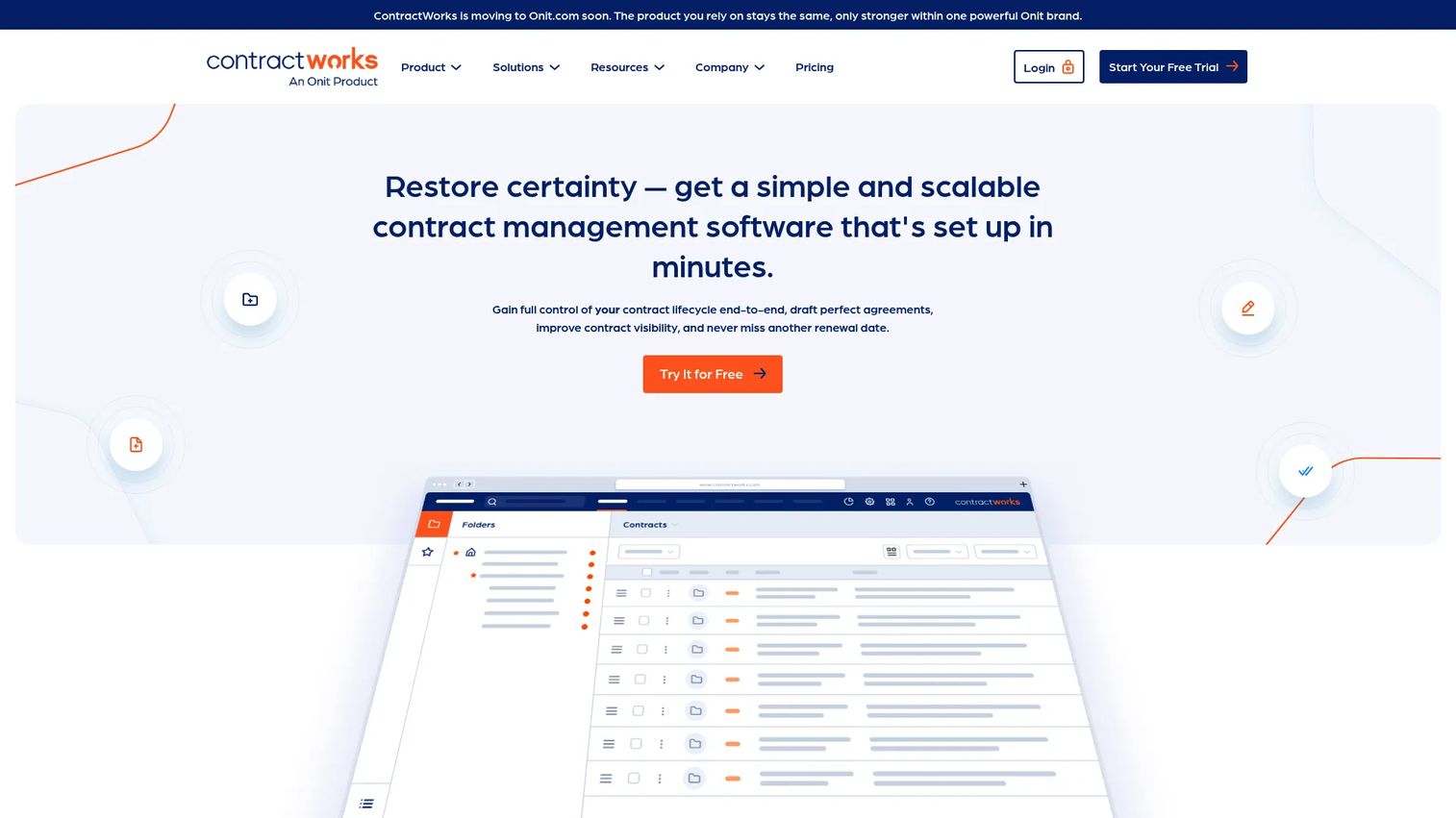
ContractWorks is contract lifecycle management software focused on organizing, searching, and managing contracts without the enterprise price tag. It leans into repository fundamentals: get every contract in one place, make it searchable, and never miss a date. For teams moving off shared drives, it hits the core jobs without forcing a heavy rollout.
Best for: Teams that need a straightforward, affordable repository with unlimited users.
Key strengths
- OCR-powered search and auto-tagging
- Custom reporting and alerts
- Built-in electronic signature
- Unlimited users on every plan
- Version control and audit trails
Why choose ContractWorks: If your pain is finding contracts and catching renewals, not building elaborate approval workflows, ContractWorks fits. Unlimited users mean you are not penalized for giving finance, legal, and procurement all access. It is the practical pick for a repository-first team.
ContractWorks pricing: Three plans, all with unlimited users. Standard is $600/month, Professional is $900/month, and Premium is $2,000/month. A free trial is available.
2. CloudEagle.ai
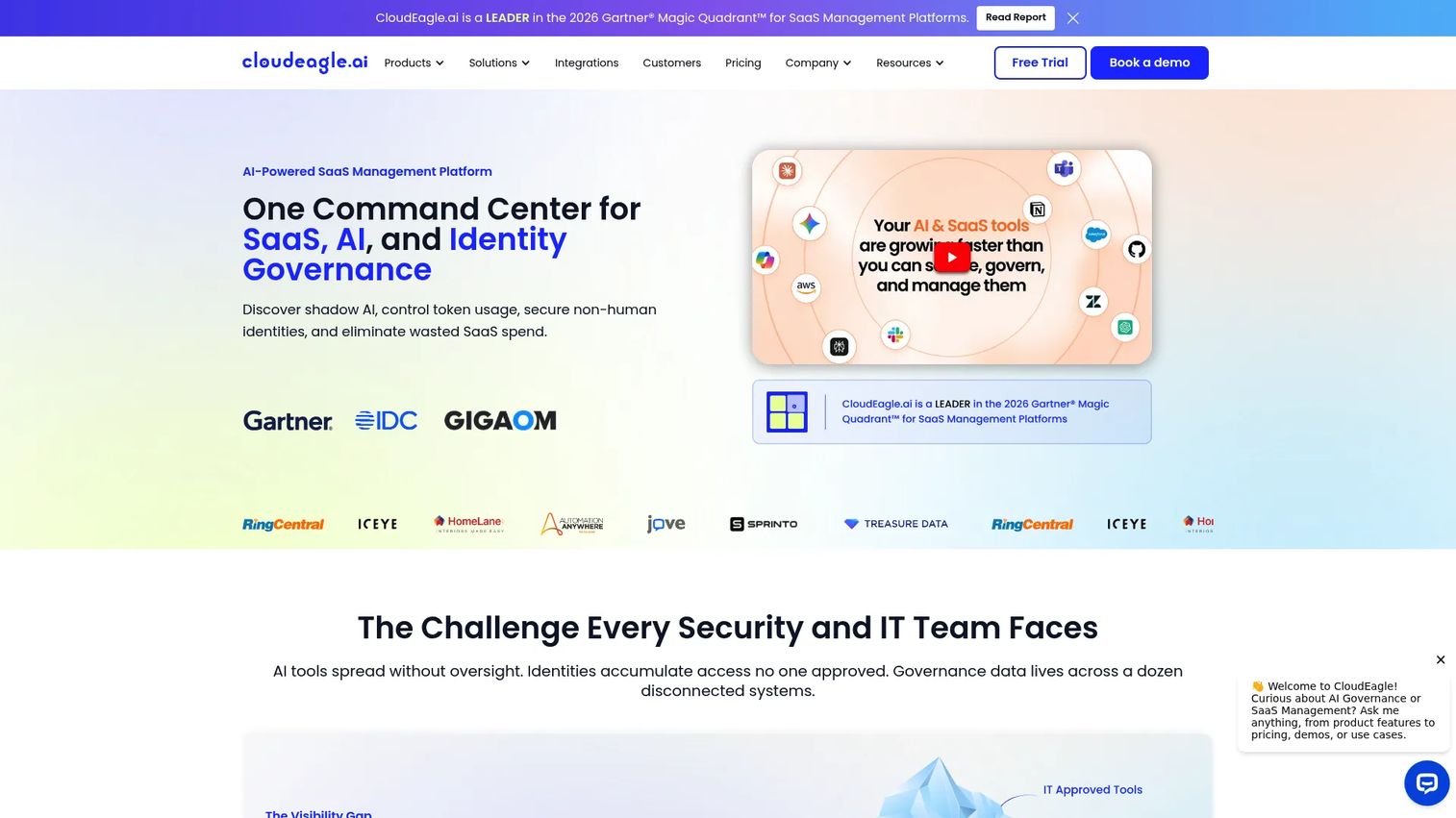
CloudEagle.ai approaches contracts through the lens of SaaS spend. It is an AI-powered SaaS management, security, identity governance, and procurement platform, so your vendor contracts sit next to what you actually pay and use. For teams drowning in SaaS renewals, that context is the differentiator.
Best for: Enterprises needing SaaS governance, security, and spend control alongside contract visibility.
Key strengths
- 500+ direct integrations
- AI governance and AI usage control
- SaaS security, identity governance, and procurement modules
- Renewal visibility tied to spend data
- Contract intelligence across the SaaS stack
Why choose CloudEagle.ai: If most of your contracts are SaaS subscriptions, storing them in a plain vault misses half the picture. CloudEagle.ai connects the contract to usage and cost, so you can kill dead subscriptions and negotiate renewals with real data. It fits SaaS-heavy finance and IT teams.
CloudEagle.ai pricing: Pricing is not publicly listed on the first-party page, which shows module-based offerings and a free trial. Contact sales for a quote.
3. Gatekeeper
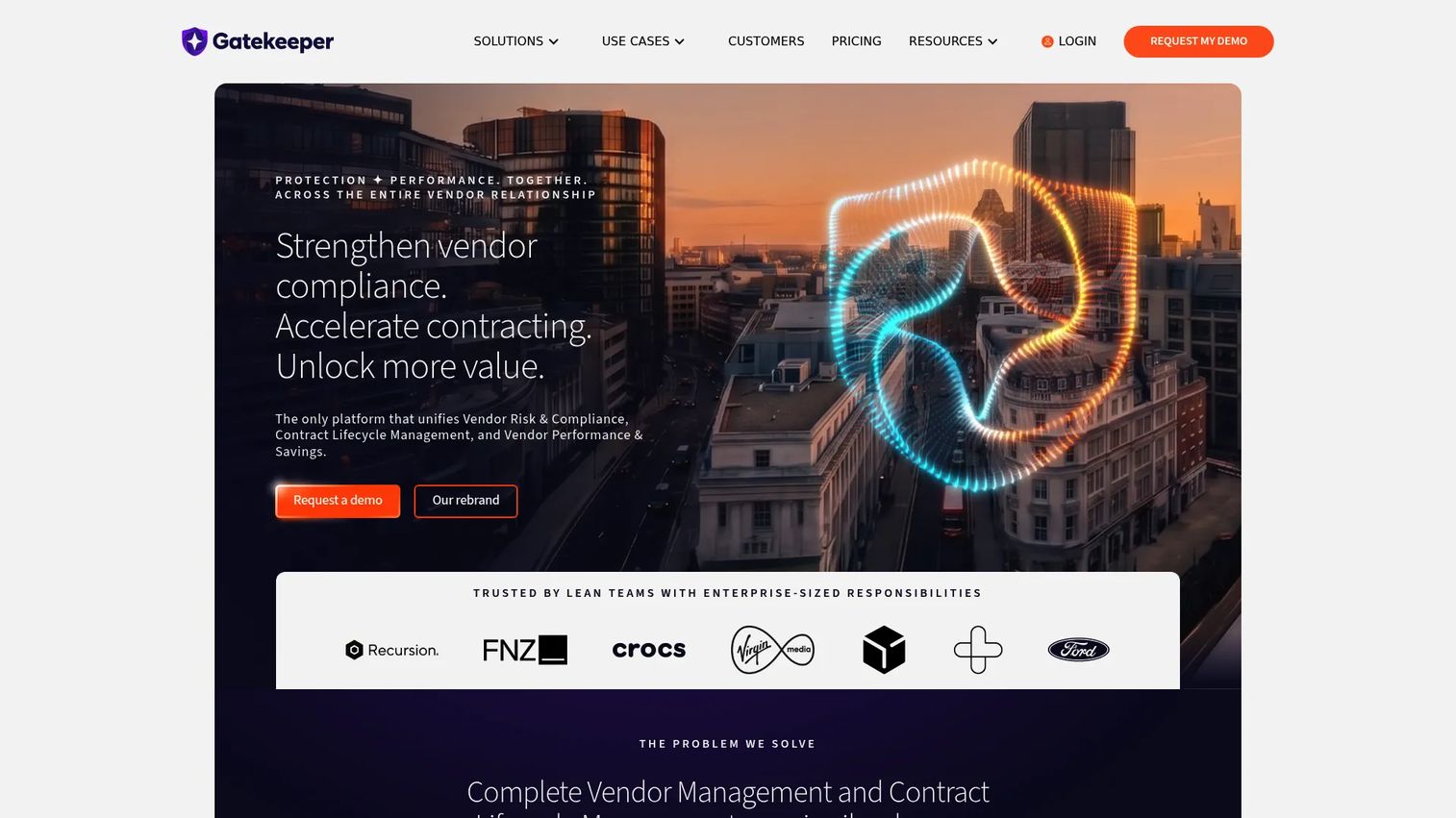
Gatekeeper is a unified vendor management platform covering contract lifecycle, third-party risk, and spend management. It treats contracts as one part of a broader vendor relationship, which suits teams that need to track risk and obligations alongside the agreement itself. AI agents handle screening, clause review, and obligations.
Best for: Mid-market and enterprise teams managing third-party risk, contracts, and vendor spend in one system.
Key strengths
- Unlimited users and contracts
- AI agents for risk screening, clause review, obligations, and savings
- Vendor onboarding and contract review
- Risk assessment and spend tracking
- Obligation and renewal tracking
Why choose Gatekeeper: When vendor risk matters as much as the contract, Gatekeeper's combined view wins. You are not toggling between a risk tool and a repository. Unlimited users and contracts keep pricing predictable as you scale vendor coverage.
Gatekeeper pricing: Plans are Pro, Enterprise, and Enterprise Plus, all billed annually. Public dollar amounts are not listed; a trial and demo are offered. Contact sales for pricing.
4. Workday Contract Lifecycle Management
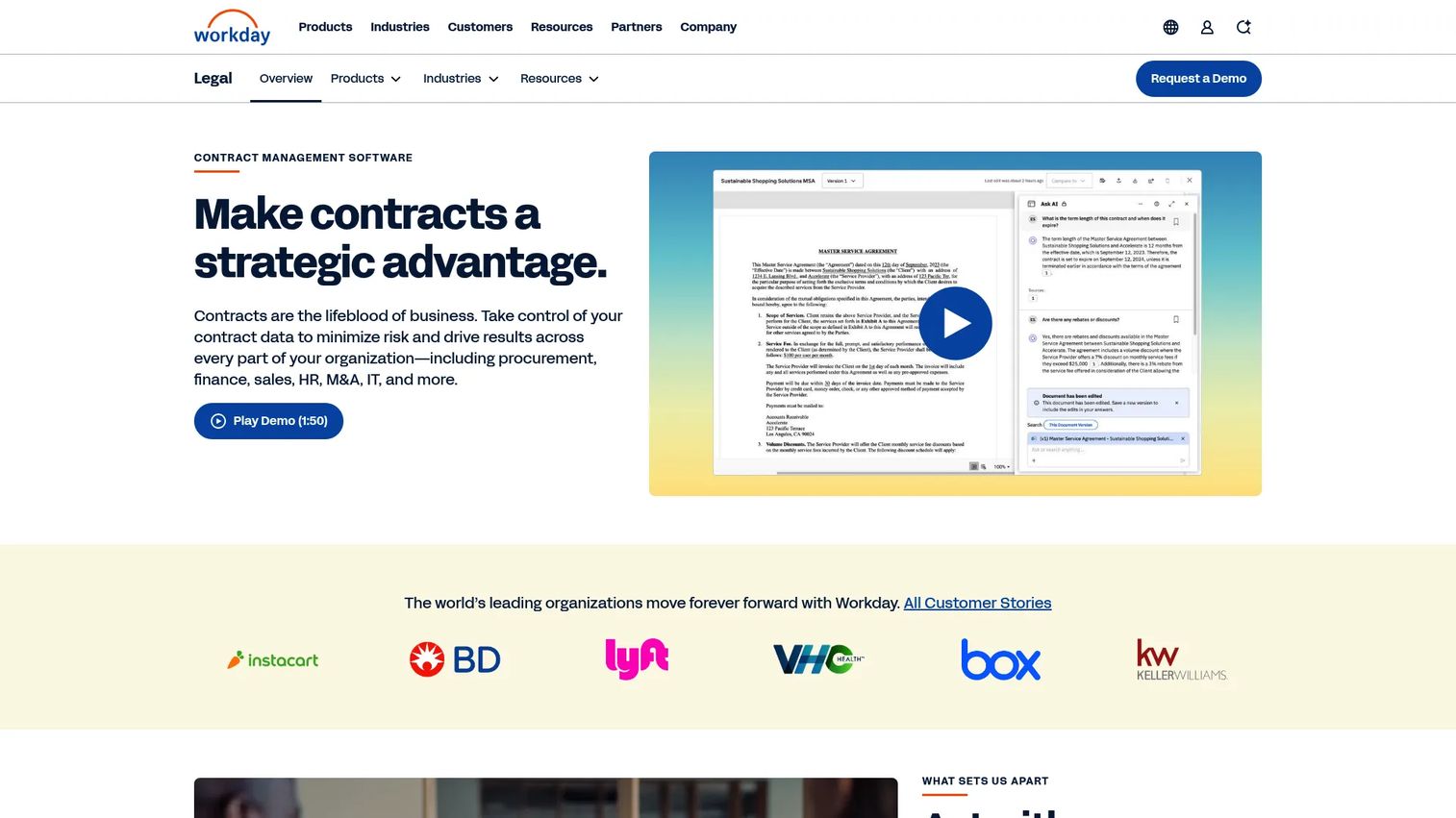
Workday Contract Lifecycle Management is AI-powered contract lifecycle management software for drafting, negotiating, executing, and monitoring contracts. Powered by Evisort, it brings AI-native extraction and search to the repository, then layers enterprise workflow automation on top. For organizations already on Workday, the fit is obvious.
Best for: Enterprises needing AI-assisted contract management with workflow automation and repository search.
Key strengths
- End-to-end AI-powered workflows
- Automated redlining
- Clause library and contract templates
- AI-native metadata extraction and search
- Enterprise governance and reporting
Why choose Workday CLM: If you run Workday for finance or HR, adding CLM keeps contract data in the same governed environment. The AI extraction turns legacy PDFs into structured, searchable records without manual tagging. It is built for enterprise scale and control.
Workday CLM pricing: Pricing is not publicly displayed. Workday prompts visitors to contact sales for a quote.
5. DocuSign CLM
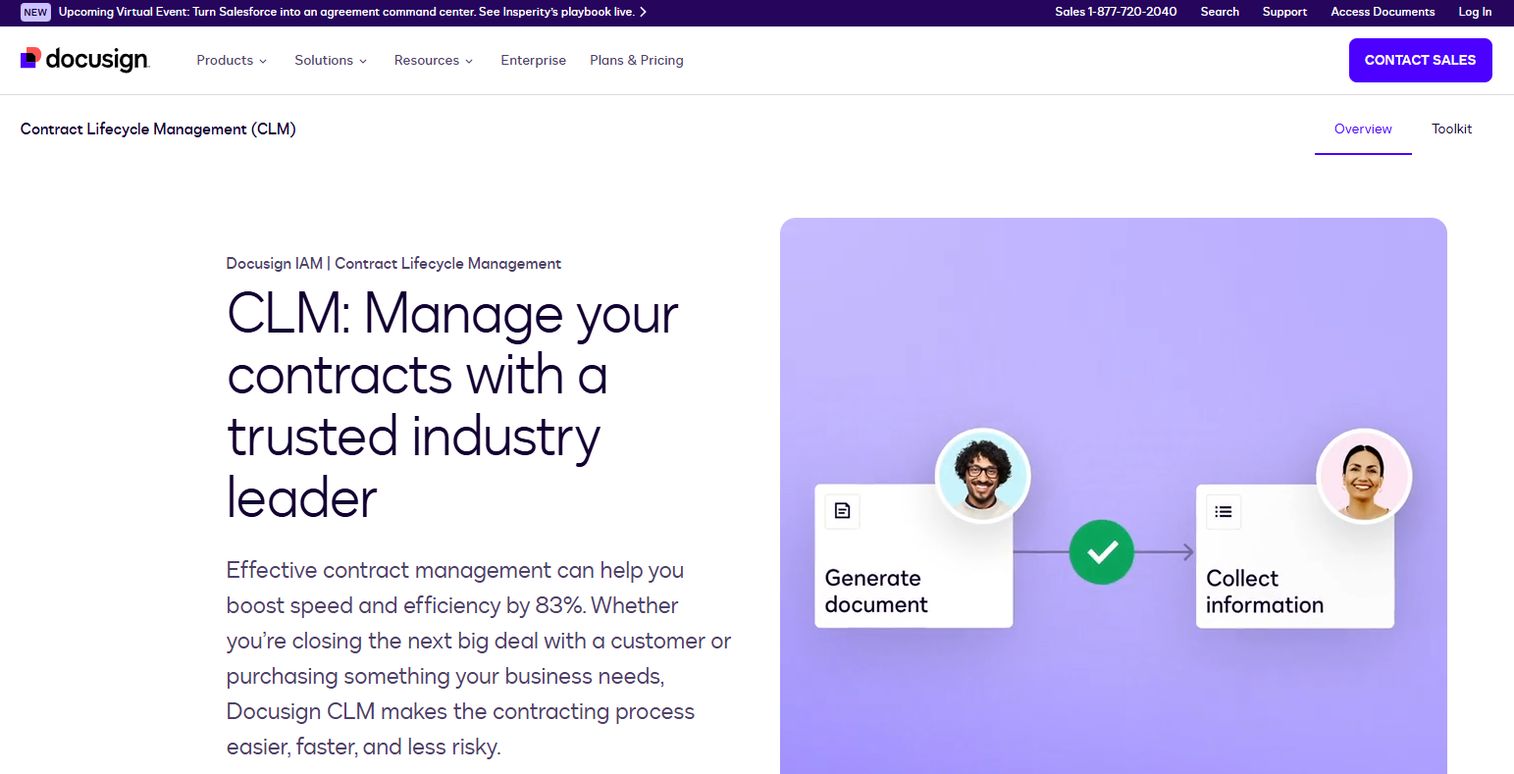
DocuSign CLM extends the DocuSign e-signature you likely already use into full contract lifecycle management. It covers creating, negotiating, routing, storing, and analyzing agreements in one place. The central searchable repository comes with analytics, so execution and storage live together.
Best for: Enterprises needing end-to-end contract lifecycle automation on top of DocuSign signing.
Key strengths
- Automated document generation and templates
- Workflow automation with drag-and-drop editor
- Central searchable agreement repository
- Contract analytics and reporting
- Native DocuSign e-signature integration
Why choose DocuSign CLM: If DocuSign is already your signing standard, CLM removes the gap between signed and stored. Contracts flow from execution straight into a searchable repository with no manual filing. It fits teams that want lifecycle and repository under one vendor.
DocuSign CLM pricing: No public price is shown on the product page. DocuSign directs visitors to plans and pricing or to contact sales.
6. Ironclad
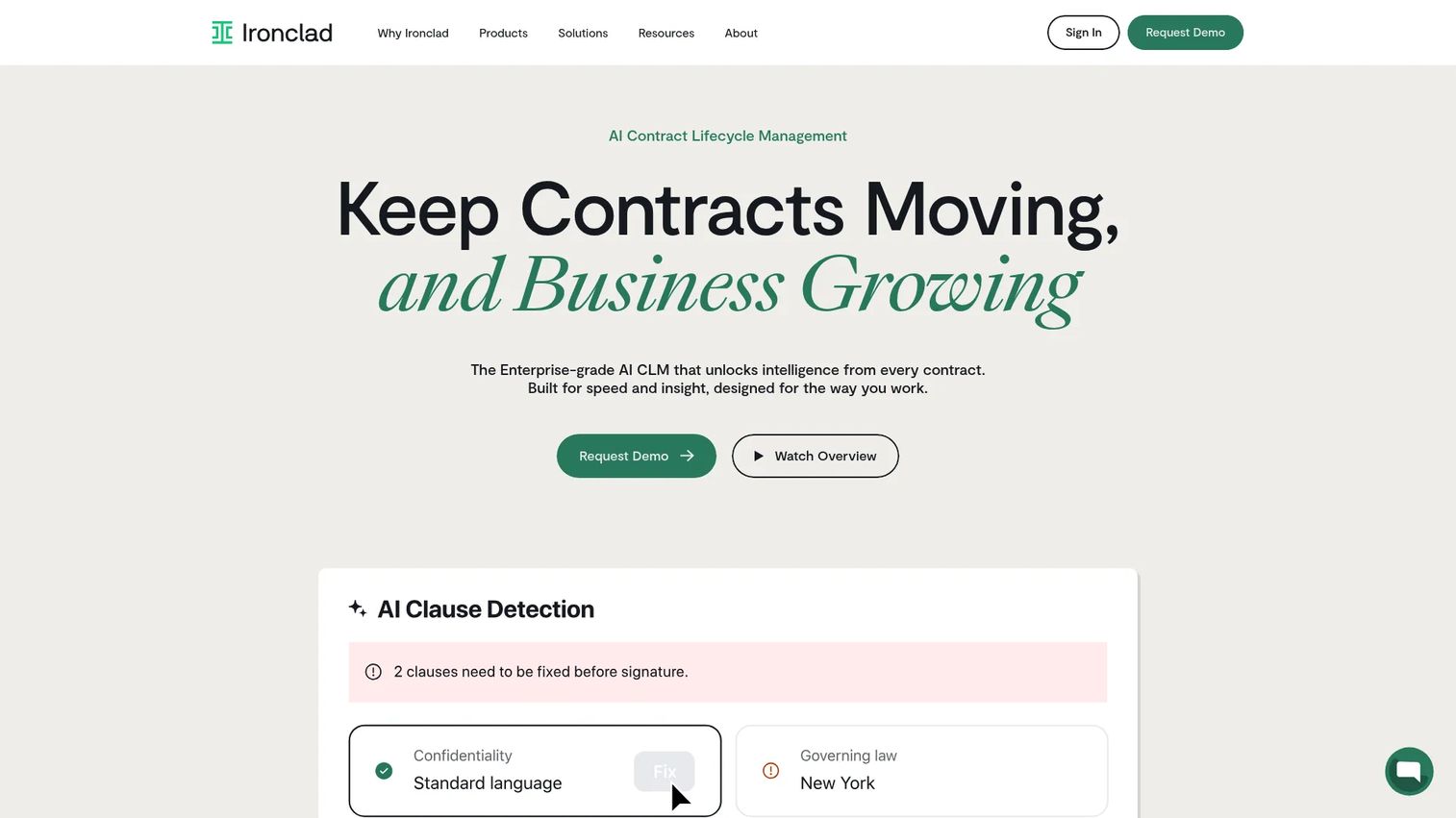
Ironclad is an AI-powered contract lifecycle management platform for creating, managing, and analyzing contracts. It pairs a centralized repository with no-code workflow automation and AI drafting and review, which makes it a favorite of legal operations teams. Clause search and workflow depth are where it stands out.
Best for: Mid-market and enterprise legal teams needing end-to-end contract lifecycle management.
Key strengths
- No-code workflow automation
- AI contract drafting and review
- Centralized contract repository
- Clause search and extraction
- Approval routing and version control
Why choose Ironclad: Legal teams that spend hours routing approvals and searching clauses get the most from Ironclad. The no-code workflows mean legal can build processes without engineering. It is a strong pick when the bottleneck is contract creation and negotiation, not just storage.
Ironclad pricing: No public price is listed. Ironclad's pricing page directs you to select products and add-ons, then request a demo for cost details.
7. Agiloft
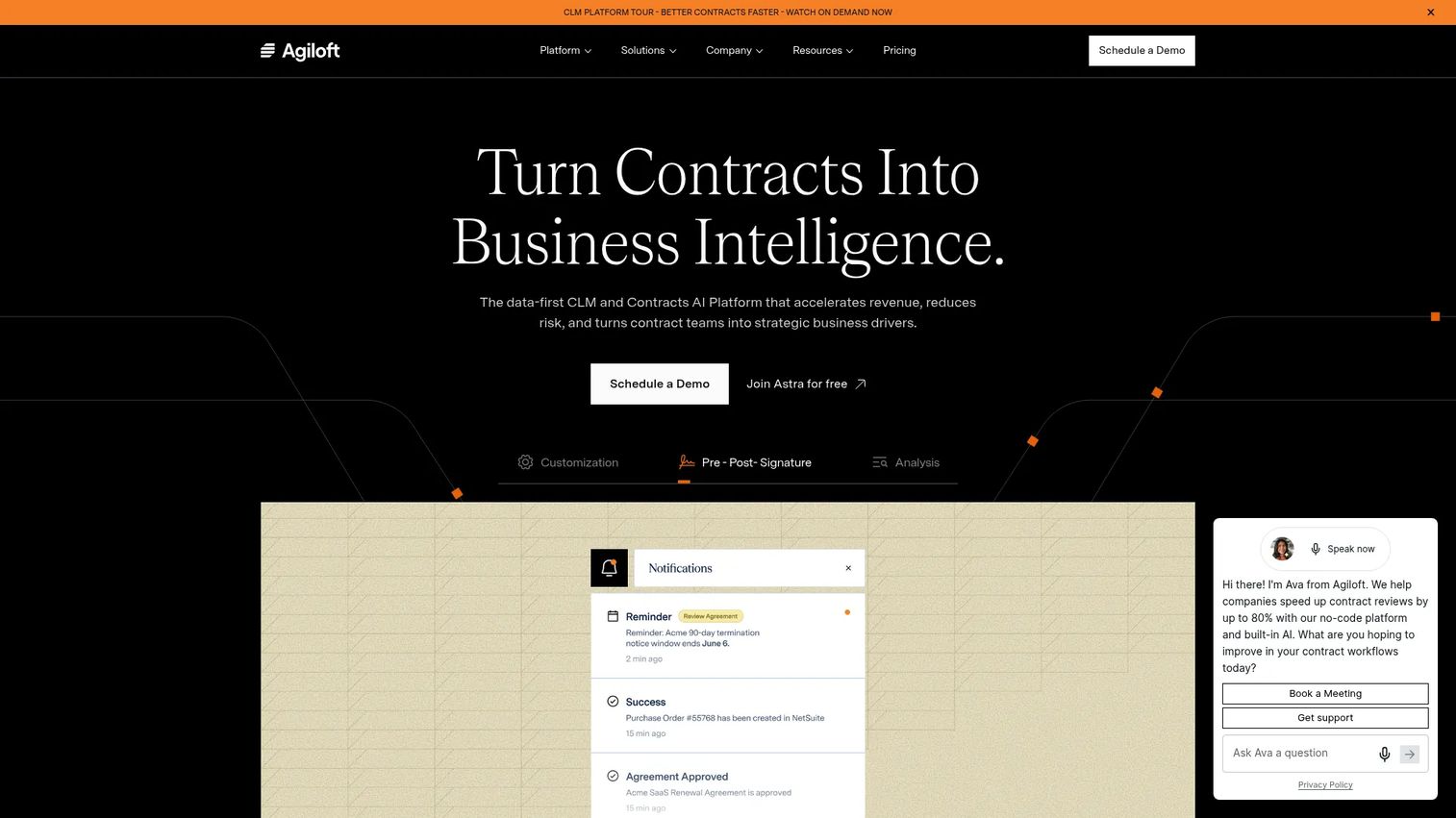
Agiloft is an AI-powered contract lifecycle management and contracts AI platform known for deep configurability. Its no-code engine lets enterprise teams shape workflows, fields, and rules to match how they actually work, then layer on AI extraction and real-time dashboards. For complex compliance and admin needs, the flexibility is the draw.
Best for: Enterprise teams needing configurable CLM with AI-assisted contract intelligence.
Key strengths
- No-code contract lifecycle management
- Advanced search and AI extraction
- Real-time dashboards and reporting
- Configurable workflows and permissions
- Compliance and audit controls
Why choose Agiloft: When off-the-shelf workflows do not match your process, Agiloft's configurability closes the gap without custom code. Enterprise admins get granular control over access, rules, and reporting. It suits regulated teams with specific compliance requirements.
Agiloft pricing: Public pricing is not shown on the main CLM page. The separate Agiloft Astra product is described as having a free plan, but the core CLM platform is custom-priced. Contact sales for a quote.
8. PandaDoc
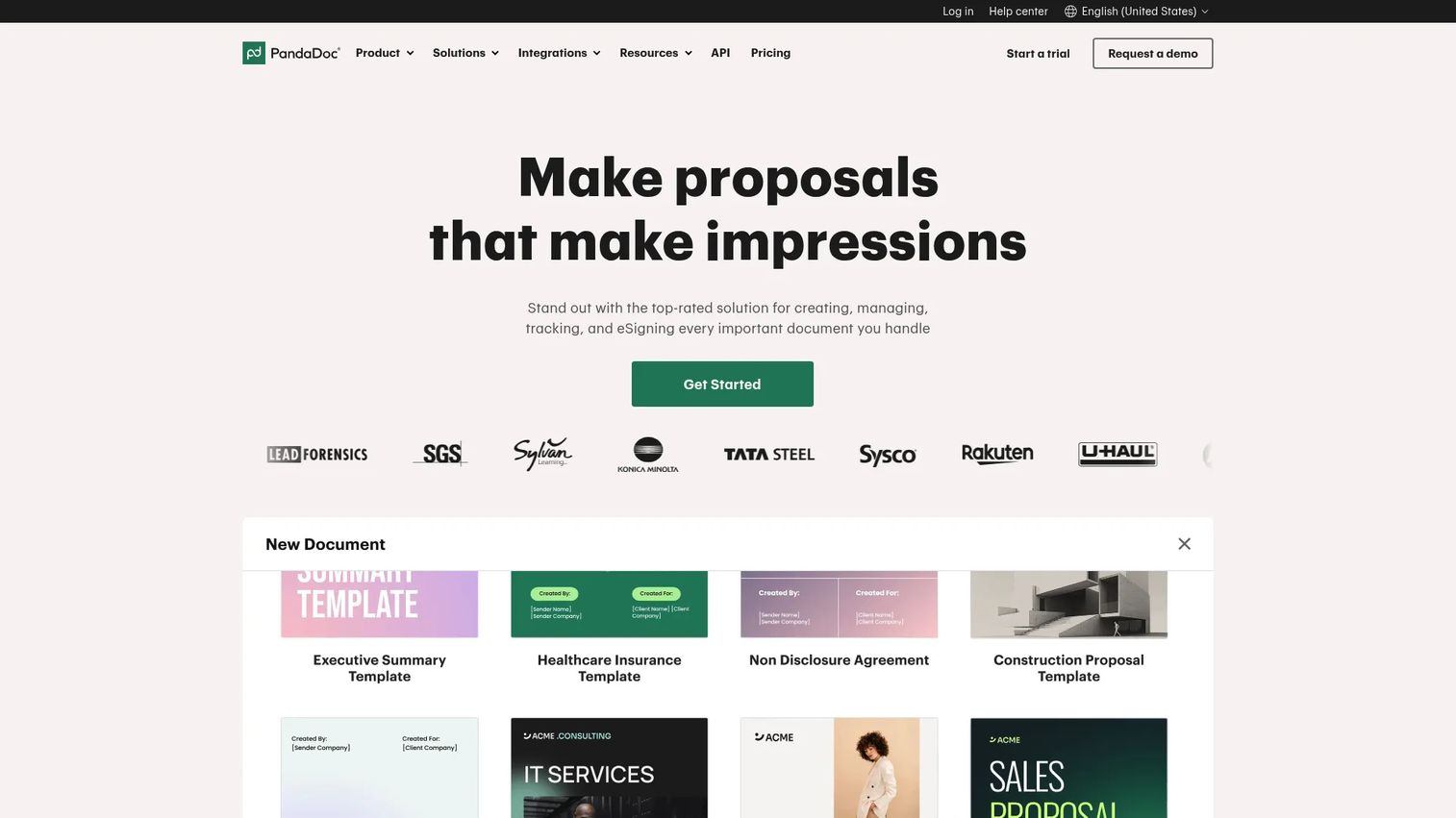
PandaDoc is document automation and e-signature software for creating, sending, tracking, and signing business documents. It is lighter-weight than the enterprise CLM platforms, which is the point. For sales and operations teams that need document storage, approvals, and e-signature without a heavy legal rollout, it covers the essentials with a free tier.
Best for: Sales and operations teams that need proposal, contract, and e-signature workflows in one tool.
Key strengths
- Drag-and-drop document editor
- E-signatures and document tracking
- Quotes and pricing tables
- Workflow automation and approvals
- Document storage and version tracking
Why choose PandaDoc: If your contract volume is moderate and your team is sales-led, PandaDoc handles storage, signing, and approvals without enterprise overhead. The free tier lets you start small. It fits teams that treat contracts as part of a broader document workflow rather than a standalone legal function.
PandaDoc pricing: Free plan at $0/month. Starter is $19 per seat per month, Business is $49 per seat per month, both billed annually. Enterprise is custom-priced. A free trial is available.
Considerations
Searchability and metadata
The difference between a repository and a folder is search. Check whether the tool runs OCR on scanned documents so you can find text inside image-based PDFs. Then look at metadata: does it auto-extract parties, dates, and values, or do you tag everything by hand? Set naming conventions early. A consistent scheme for parties, contract types, and dates makes both search and reporting far more reliable.
Renewal and obligation tracking
This is where the software earns its cost. Verify that alerts trigger on notice windows, not just expiration dates, because notice periods are where auto-renewals sneak through. Confirm you can assign an owner to each renewal so nobody assumes someone else is watching. Look for a dashboard that surfaces upcoming deadlines across the whole portfolio.
Access control and audit trails
Governed contracts need governed access. Evaluate role-based permissions: can you restrict sensitive terms to specific people while giving others read-only views? Check that the audit trail logs every access and change, not just edits. During disputes, audits, and due diligence, that history is your evidence.
Integrations and migration
A repository that does not talk to your ERP, CRM, and e-signature tools creates double entry. Confirm the integrations you need exist before you buy. Then plan migration: how will you get existing contracts in, and will the tool run OCR and metadata extraction on them during import? Migration is the step most teams underestimate.
Repository vs full CLM
Be honest about your bottleneck. If finding and tracking existing contracts is the problem, a repository-first tool like ContractWorks is enough. If drafting, redlining, and approvals are eating your team's time, a full CLM like Ironclad, Agiloft, or Workday earns its extra scope. Do not pay for workflow automation you will not use.
Conclusion
The right contract repository software depends on where your pain lives. If you need a searchable, affordable vault with renewal alerts and unlimited users, ContractWorks is the clean pick. For SaaS-heavy teams, CloudEagle.ai ties contracts to spend so renewals stop surprising you. Gatekeeper wins when vendor risk sits alongside the contract.
Need enterprise AI intelligence and governance? Workday Contract Lifecycle Management and Agiloft handle scale and configurability. If drafting and approvals are the bottleneck, Ironclad and DocuSign CLM bring full lifecycle automation on top of a solid repository. And for lighter, sales-led document workflows, PandaDoc covers storage, signing, and approvals with a free tier to start.
Next step: shortlist two or three tools that match your actual bottleneck, then run a repository-first evaluation. Migrate a sample of your messiest contracts, test the search and renewal alerts, and check who can access what. The tool that surfaces your worst hidden renewal in a five-minute test is the one worth buying.
FAQs
A contract repository focuses on storing, searching, and governing contracts you already have. Contract management software, or full CLM, adds the front end: drafting, negotiation, redlining, approval routing, and e-signature. Every CLM includes a repository, but a repository is not always a full CLM. Choose based on whether your bottleneck is finding existing contracts or creating new ones.
Contract lifecycle management covers the full journey of a contract, from creation and negotiation through execution, storage, and renewal. You need CLM software if drafting, redlining, and approval routing eat significant team time. If your main problem is that existing contracts are scattered and renewals slip through, a contract repository system alone may be enough.
Start by gathering contracts from every source: shared drives, inboxes, and local folders. Run them through the tool's OCR and metadata extraction so scanned PDFs become searchable and tagged. Apply a consistent naming convention as you import, and prioritize active contracts with upcoming renewals first. Budget more time than you expect; migration is the step most teams underestimate.
The essentials are OCR-powered contract search, metadata tagging, version control, access control, renewal tracking, and audit trails. Search and renewal alerts deliver the fastest payback because they solve the two most expensive problems: not finding contracts and missing renewal windows. Integrations with your ERP, CRM, and e-signature tools matter next to avoid double entry.
Yes, and it is often the single feature that justifies the purchase. Renewal tracking sets alerts on notice windows and expiration dates, assigns an owner to each renewal, and surfaces upcoming deadlines on a dashboard. That prevents auto-renewals from firing unnoticed and gives you time to renegotiate before price escalators lock in.
It creates a defensible record. Access control restricts sensitive terms to authorized people, version control tracks every change, and audit trails log who accessed or edited each contract and when. During audits, disputes, and due diligence, that history is your evidence. Centralized storage also ensures reviewers always work from the current executed version.
SaaS teams should connect contracts to spend and usage data, not just store them. Look for renewal tracking tied to subscription costs, integrations with your finance and identity stack, and visibility into which tools are actually used. That context lets you cancel dead subscriptions and negotiate renewals with real data instead of guesswork.
For a handful of contracts touched by one person, maybe. Past 50 to 100 active agreements or once multiple teams get involved, shared drives break down. You lose search, you miss renewals, and you have no audit trail for compliance. A contract repository system replaces the hunt with structured, permission-controlled, searchable data.