It's a Saturday morning in peak season. Three parties are standing at your dock. Two of them booked the same pontoon because someone wrote the reservation on a paper calendar and someone else took it over the phone. A fourth customer just called, got voicemail, and rented from the operator two docks down instead.
That is the real cost of running a rental fleet on phone calls, DMs, and a spreadsheet. Not just the awkward double booking. The bookings you never see because nobody picked up, the deposits you forgot to collect, the waivers a guest signed on a clipboard that you cannot find when it matters.
The category exists because rental demand keeps rising while the margin for manual error keeps shrinking. The global boat rental market is projected to grow from USD 25.5 billion in 2026 to USD 37.1 billion by 2033, a 5.5% CAGR, according to Persistence Market Research (2026). The marine management software market that supports it is forecast to rise from USD 4.96 billion in 2026 to USD 7.61 billion by 2031 at an 8.95% CAGR, per Mordor Intelligence (2026), with cloud platforms already holding roughly 55% share. Growth like that means more competition for the same slot on the same weekend, and the operator with 24/7 online booking wins the customer the one with a voicemail box loses.
This guide compares seven boat rental management software platforms on the operational things that actually move revenue: how they take bookings, how they prevent conflicts, how they handle deposits and waivers, and what they let you see about your own business.
What's inside
This is a buyer's shortlist for operators evaluating boat rental software for repeatable revenue and cleaner operations, not a feature dump. Every tool here was assessed against the criteria that decide whether software earns its place in your stack:
- Booking automation: self-service online booking, booking widgets, and 24/7 reservations that stop leaking to missed calls
- Fleet scheduling and availability control: conflict prevention, calendars, and real-time availability across the fleet
- Payments and checkout: deposits, damage holds, and checkout automation
- Waivers and pre-check-in: e-signatures, document collection, and faster dockside turnarounds
- Reporting and integrations: utilization, revenue visibility, and fit with the rest of your stack
Pricing and ratings reflect what was publicly verifiable at the time of writing. Where a vendor keeps pricing behind a demo request, that is noted rather than guessed.
TL;DR
- Best for omnichannel booking and conversion: Let's Book, which pairs branded online booking with fleet management and multiple payment methods.
- Best for deep marina and boat club operations: SpeedyDock, built for rentals, clubs, dry stack, and slip reservations in one system.
- Best for booking plus upsells and waivers: Booking Central, strong on direct booking, add-ons, dynamic pricing, and customer messaging.
- Best for tour and activity operators who also run boats: TRYTN, with a service-fee model instead of a monthly subscription.
- Best for larger, operationally complex fleets: Storable Marine, with 24/7 reservations and dynamic pricing built for marinas.
- Best for full marina, boatyard, and yard operations: DockMaster, an industry-specific suite spanning reservations, billing, and service.
- Best for membership-based clubs: Boat Club Software, focused on member reservations, recurring billing, and fleet upkeep.
What is boat rental management software?
Boat rental management software is a platform that runs the operational side of a boat rental business: online reservations, fleet scheduling, payments, waivers, and reporting in one system instead of scattered tools. It replaces the phone-and-spreadsheet workflow with a booking engine your customers use directly and an admin backend your staff runs the day from.
Most platforms in this category cover a consistent set of core functions:
- Online booking and reservation management: a customer-facing booking flow, embeddable widgets, and 24/7 self-service reservations that capture demand outside business hours.
- Fleet scheduling and availability control: a real-time calendar across every boat, with conflict prevention that blocks the double bookings a manual system invites.
- Payments, deposits, and checkout automation: card capture, damage deposits, security holds, and automated checkout so money is collected before the boat leaves the dock.
- Waivers, e-signatures, and pre-check-in: digital liability waivers signed before arrival, plus document collection that speeds up the handoff at the dock.
- Reporting and integrations: utilization and revenue dashboards, plus connections to website builders, calendars, messaging, accounting, and payment processors.
The stronger platforms treat these as one connected workflow. A reservation triggers a deposit, the deposit unlocks a waiver, the signed waiver flags the boat as ready, and every step lands in a report you can read on Monday. That connective tissue is what separates real boat reservation software from a glorified calendar.
When to use boat rental management software
Reduce manual bookings
If a real share of your reservations still comes through phone calls, texts, and email threads, you are losing revenue you never see. Every missed call during a busy afternoon is a booking that went to a competitor with an online widget. Self-service booking lets customers reserve and pay at midnight without you touching a phone, and it turns your website and social profiles into a 24/7 sales channel instead of a brochure.
Prevent double bookings and conflicts
When two staff members can each commit the same boat for the same slot, calendar chaos is not a maybe, it is a matter of time. This is the moment to move to boat rental scheduling software with real availability control. A single source of truth for the fleet means a boat that is reserved simply cannot be reserved again, and maintenance blocks keep a boat that is out of service from ever showing as available.
Clean up checkout and compliance
If deposits get skipped, waivers pile up on clipboards, and dockside handoffs drag while someone hunts for paperwork, checkout is your bottleneck. Boat rental booking software that automates deposits, damage holds, and e-signed waivers before arrival turns a ten-minute dock scramble into a scan-and-go. Fewer errors, faster turnarounds, and a signed record you can actually retrieve if a claim ever comes up.
Comparison table
The table below narrows the shortlist fast. Scan the intent and key use case columns to find the platforms built for your operation, then read the full sections for pricing detail and fit. Ratings and pricing are shown only where a verifiable source existed at the time of writing; blanks mean the value was not publicly confirmed, not that it does not exist.
| # | Product | Intent | Key use case | Pricing | G2 rating |
|---|---|---|---|---|---|
| 1 | Boat Rental Management Software | Boat-rental-specific booking | Online booking and reservation management | Not publicly listed | Not listed |
| 2 | Let's Book | Omnichannel booking and fleet ops | Branded bookings, scheduling, payments | Free tier; Pro €150/mo | Not listed |
| 3 | SpeedyDock | Marina and boat club operations | Rentals, clubs, dry stack, slips | From $99/mo | Not listed |
| 4 | Booking Central | Booking with upsells and waivers | Direct booking, add-ons, messaging | Demo-based; free trial | Not listed |
| 5 | TRYTN | Tour, activity, and boat booking | Reservations and POS | 5% per website booking | 4.9/5 |
| 6 | Storable Marine | Larger, complex fleets | 24/7 reservations, dynamic pricing | Not publicly listed | Not listed |
| 7 | DockMaster | Marina, boatyard, yacht club | Reservations, billing, service | From $165/mo | Not listed |
1. Boat Rental Management Software
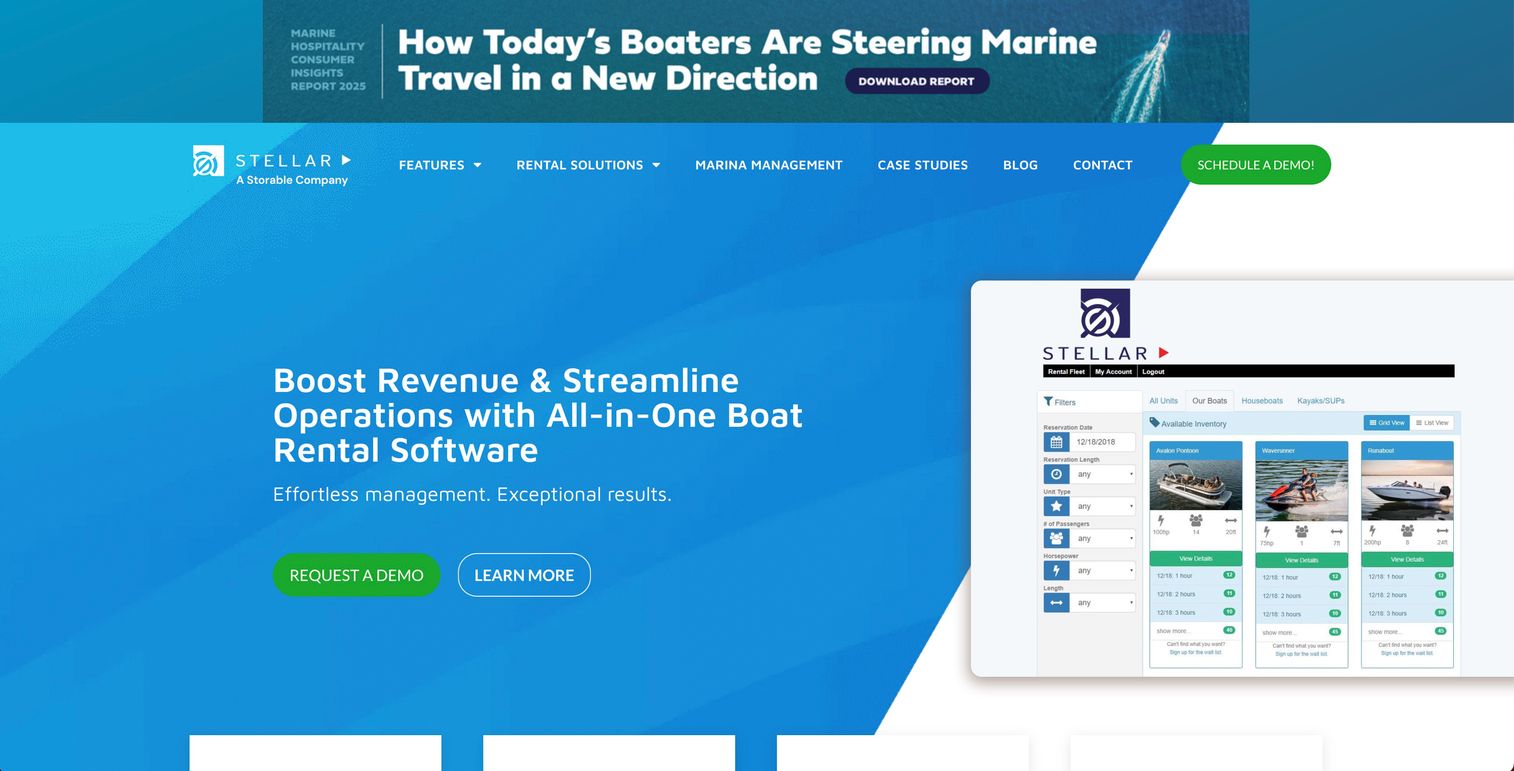
Boat Rental Management Software is a rental-specific platform built around online booking and reservation management, aimed at operators who want a customer-facing booking engine without adopting a broad marina suite. Its own site centers the booking grid and a mobile-responsive reservation flow, which is the piece most operators feel the pain of first when they are still taking reservations by phone.
The product keeps its scope tight. The booking grid gives staff a visual view of what is reserved and what is open, and the mobile-responsive flow means customers can book from a phone on the beach without pinching and zooming through a broken layout. For an operator whose main leak is missed calls, that focus on getting the reservation captured cleanly is the whole point.
Best for: Boat rental operators who need straightforward online booking and reservation management without the overhead of a full marina platform.
Key strengths
- Online booking: A customer-facing reservation flow that captures bookings around the clock instead of during phone hours only.
- Mobile responsiveness: A booking experience that holds up on the phones customers actually reserve from.
- Booking grid: A visual reservation view that gives staff a clear read on availability at a glance.
Why choose Boat Rental Management Software: If your single biggest problem is that reservations live in your head and on a paper calendar, a focused booking-first tool solves that faster than a sprawling operations suite you will only half-use. It fits operators who want the booking bleeding stopped first and can layer on complexity later.
Boat Rental Management Software pricing: The company does not publish pricing on its own site, and no verifiable price was available at the time of writing. Operators will need to contact the vendor directly for a quote based on fleet size and booking volume.
2. Let's Book
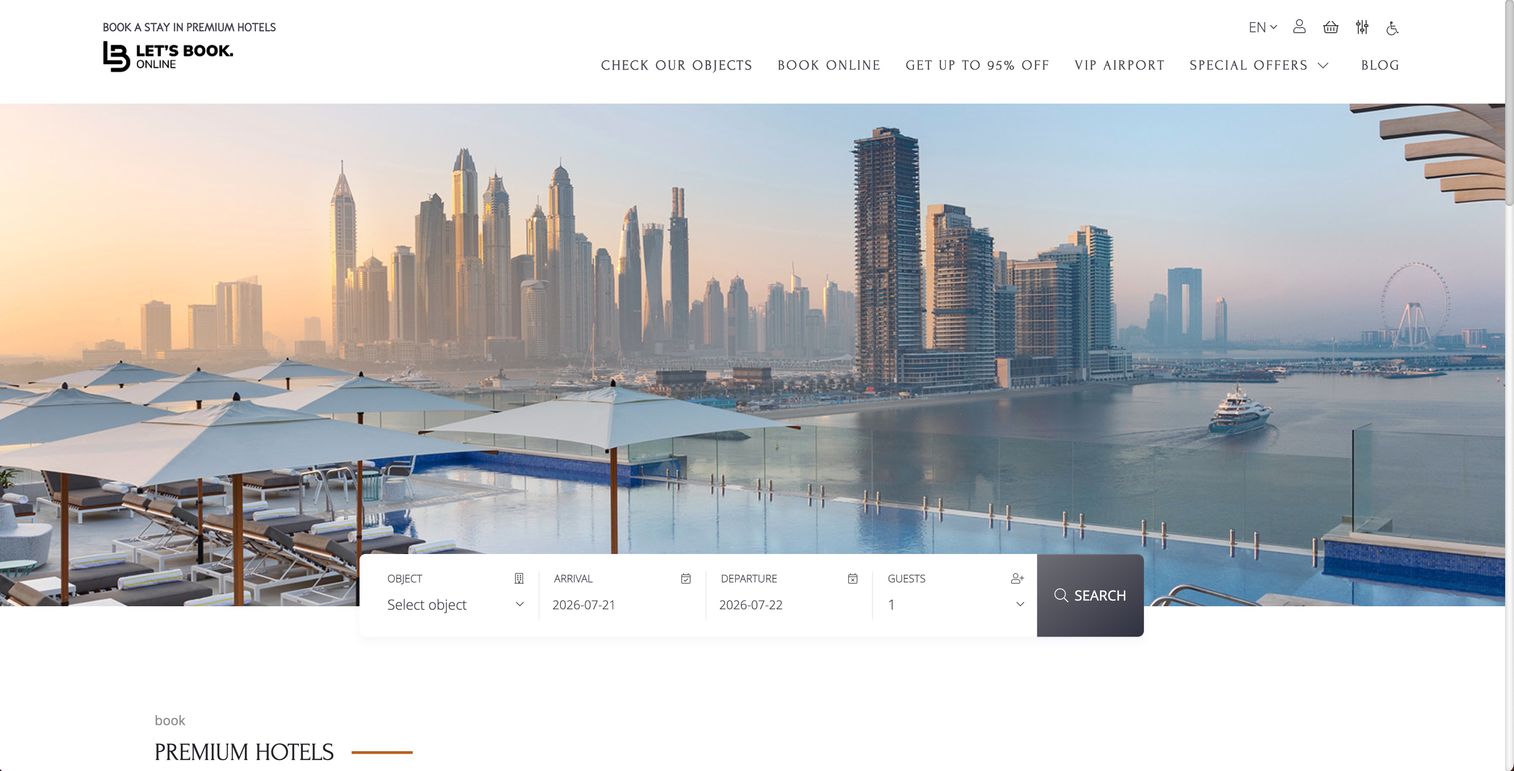
Let's Book is boat rental booking software built around omnichannel bookings, fleet management, scheduling, payments, and customer management in one platform. It leans hard into the conversion side of the business: a branded booking flow, website integrations, and multiple payment methods so the reservation experience feels like part of your brand rather than a bolted-on third-party form.
The pitch that resonates for a founder or operator is that the booking experience is a revenue lever, not a cost center. A branded, mobile-friendly flow embedded on your own site converts traffic you already pay for, and a connected fleet dashboard keeps availability accurate as those bookings land. The CRM and customer-management layer means repeat renters are records you can market to, not names you half-remember.
Best for: Boat rental companies that care about booking conversion and want online bookings and fleet operations managed in one branded system.
Key strengths
- Online booking integration: A branded booking flow that embeds on your website and captures reservations directly.
- Fleet management dashboard: A connected view of the fleet that keeps availability accurate across channels.
- CRM and customer management: Customer records that turn one-time renters into a base you can re-market to.
Why choose Let's Book: Choose it when your website already gets traffic and the gap is conversion. A branded, self-serve booking experience with real payment options captures demand that a phone number or contact form lets slip. It fits operators who think in terms of channels and repeatable revenue, not just daily logistics.
Let's Book pricing: G2 lists a Standard plan starting at €0.00 per month and a Pro plan at €150.00 per month, with pricing provided by Let's Book. The free tier makes it approachable for smaller operators testing online booking before committing to the paid plan.
3. SpeedyDock
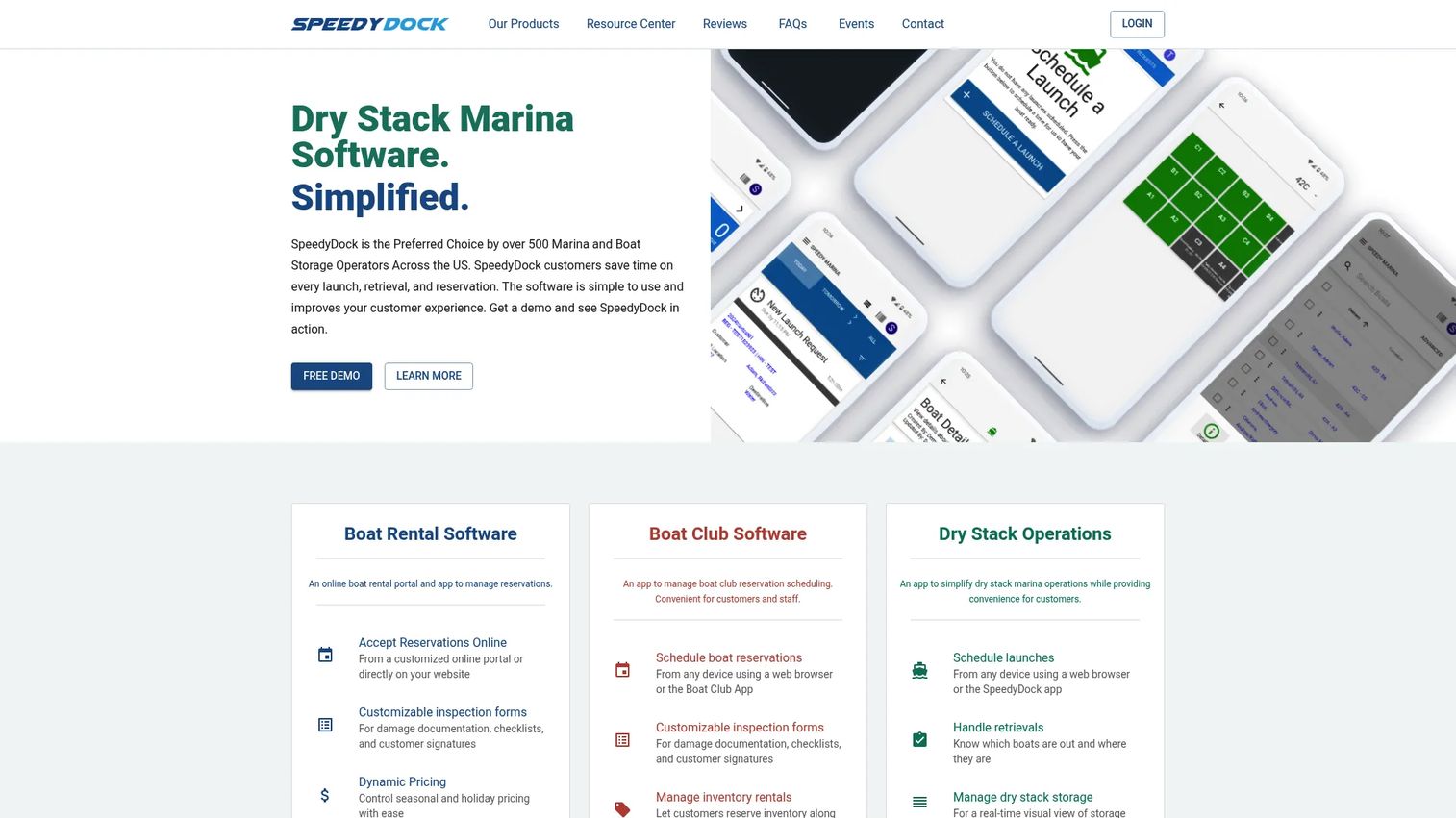
SpeedyDock is marina software that spans boat rentals, boat clubs, dry stack operations, slip reservations, and point of sale. Where a booking-first tool stops at the reservation, SpeedyDock keeps going into the operational depth marinas and clubs actually run on: memberships, recurring billing, marina POS, and slip management under one roof.
That breadth is the reason to look at it. An operator running rentals alongside a boat club and a dry stack facility does not want three systems that do not talk to each other. SpeedyDock consolidates those motions, which matters for a founder trying to reduce tool sprawl while keeping clean visibility across every revenue line. Online booking and fleet management sit alongside club reservations and recurring member billing, so the same platform handles the walk-up renter and the annual member.
Best for: Marinas and boat clubs that need a specialized operations platform covering rentals, memberships, dry stack, and slips.
Key strengths
- Online rental booking and fleet management: Self-service reservations with availability control across the rental fleet.
- Boat club reservations, memberships, and recurring billing: Member-facing booking plus the recurring revenue engine clubs depend on.
- Dry stack operations, slip reservations, and marina POS: Deeper marina workflows that a rental-only tool does not touch.
Why choose SpeedyDock: Choose it when rentals are only part of the operation. If you also run a club, a dry stack, or slips, consolidating onto one platform beats stitching together point tools. It fits operators whose complexity has outgrown a simple booking widget.
SpeedyDock pricing: SpeedyDock publishes product-specific pricing rather than a single company-wide plan. Marina Point of Sale starts at $99 per month, with Slip Reservations and Dry Stack Marina Software each listed at $200 per month. Products are customized, so final pricing varies by configuration and there is no free tier.
4. Booking Central
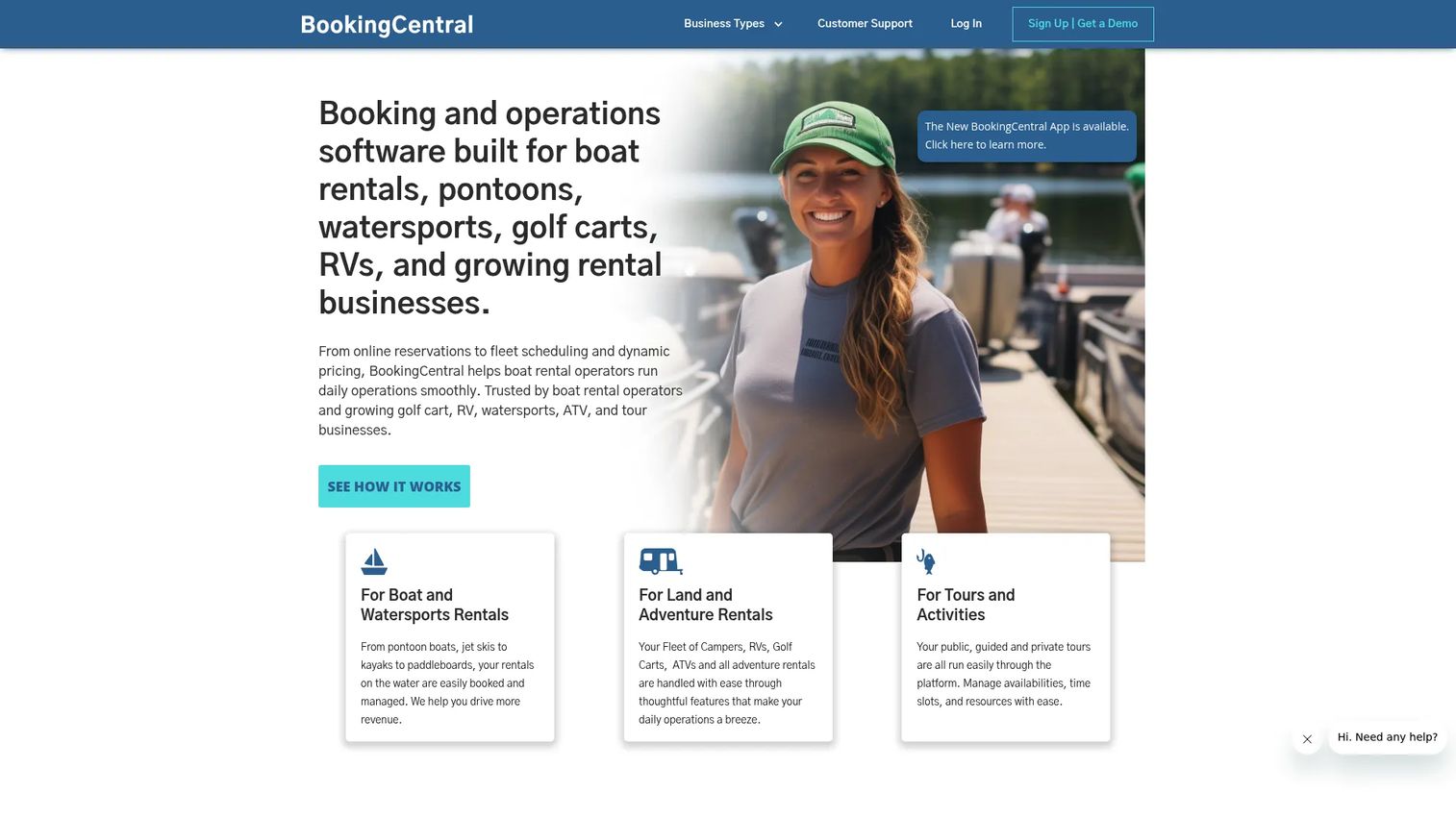
Booking Central is an all-in-one booking and operations platform for rental and tour businesses, with boat and watersports operators squarely in its target market. It covers the booking mechanics operators care about most: direct online booking, fleet scheduling, dynamic pricing, waivers, add-ons, and customer communication, all in one system.
What makes it a strong fit is the combination of straightforward booking and revenue-per-booking levers. Dynamic pricing lets you charge more for a Saturday afternoon than a Tuesday morning, and add-ons turn a boat rental into a boat rental plus tubes, fuel, and a captain. The waiver and customer-messaging pieces close the loop between reservation and dockside handoff, so pre-check-in is done before the guest arrives. A mobile app and reporting dashboard round out the day-to-day.
Best for: Rental and tour operators who want bookings, fleet scheduling, waivers, and customer messaging in one system with room for upsells.
Key strengths
- Online booking and dynamic pricing: Direct reservations with rules that raise rates on high-demand slots automatically.
- Waivers and customer communication: E-signed waivers and automated messaging that finish pre-check-in before arrival.
- Add-ons and reporting: Upsells attached to each booking, plus a dashboard that shows what is actually earning.
Why choose Booking Central: Choose it when you want clean booking operations that also grow the value of each reservation. The add-on and dynamic pricing tools are direct revenue levers, and the waiver plus messaging combination cuts dockside friction. It fits operators who run both rentals and tours and want one system for both.
Booking Central pricing: Booking Central does not display numeric plan pricing on its site; the pricing path routes to a demo request. Some business-type pages reference a free trial, so operators can evaluate the platform before committing, but you will need a demo to get a firm quote.
5. TRYTN
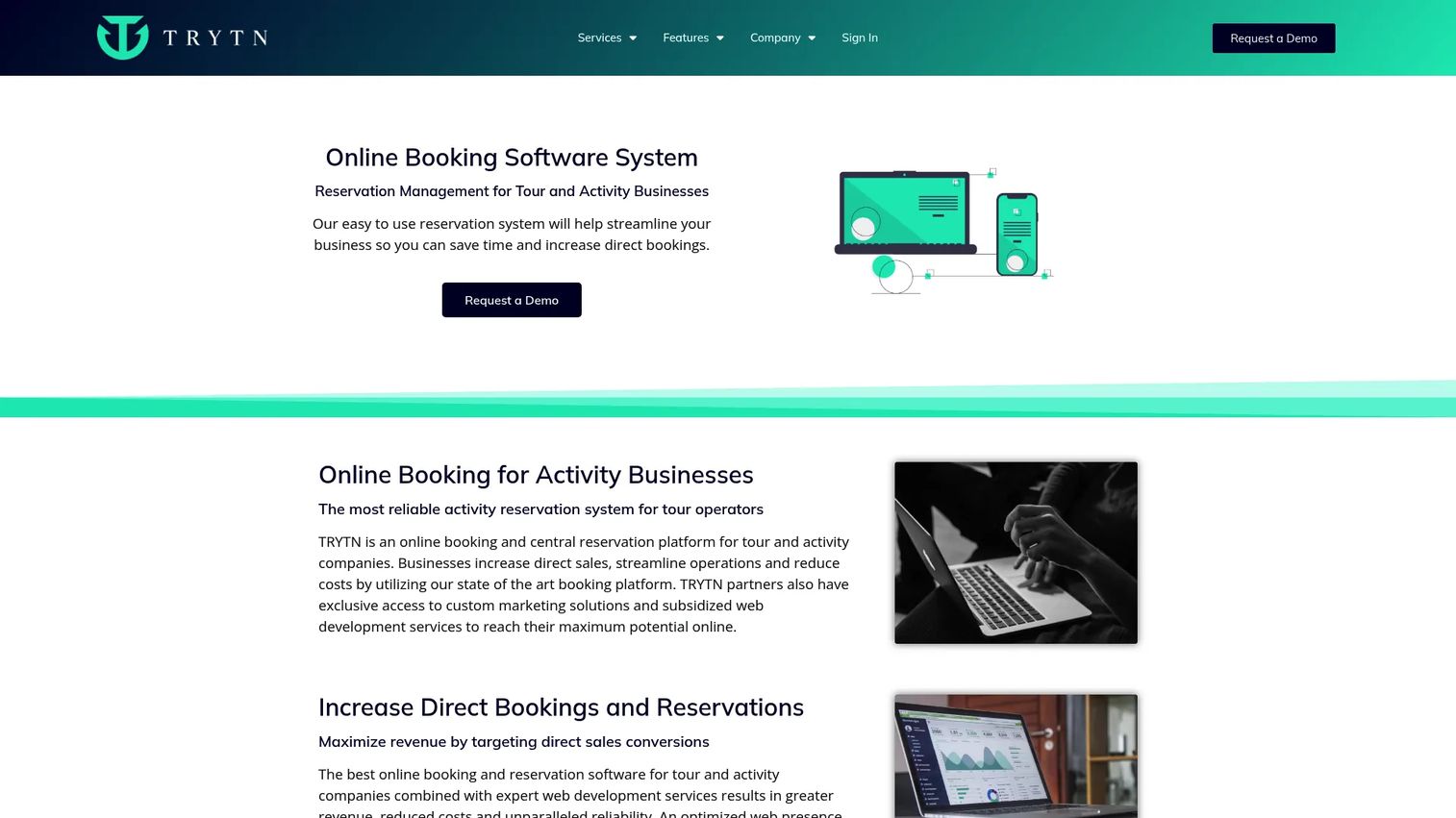
TRYTN is tour and activity booking and reservation management software that fits boat operators running trips, charters, and watersports alongside straight rentals. It combines an online and in-store reservation system with a point-of-sale mode that handles payments and receipts, plus flexible pricing tiers, discounts, deposits, and fees.
The differentiator is the pricing model. TRYTN charges booking service fees rather than a monthly subscription, which changes the math for seasonal operators. In a slow month you are not paying a fixed platform fee for bookings you did not take, and the fee structure varies by booking type and payment method. The POS mode means the same system handles the customer who books online and the walk-up at the dock, keeping reservations and revenue in one place.
Best for: Tour and activity operators, including boat and watersports businesses, that want booking, POS, and reservation management without a monthly subscription.
Key strengths
- Online and in-store reservation system: One system for both self-service web bookings and staff-entered reservations.
- Point-of-sale mode: Payments, receipts, and walk-up transactions handled inside the same platform.
- Flexible pricing tiers, discounts, deposits, and fees: Granular control over how each booking type is priced and secured.
Why choose TRYTN: Choose it when seasonality makes a fixed monthly fee feel wrong. Paying a percentage per booking aligns cost with revenue, which suits operators whose volume swings hard between peak and off-season. The 4.9/5 G2 rating signals strong reviewer sentiment among the operators using it.
TRYTN pricing: TRYTN states it charges no monthly or hidden fees, only booking service fees. Website bookings carry a 5% fee, back-end bookings paid by credit card carry a 1% fee, and back-end bookings paid by cash or external methods carry no fee. OTA bookings add no extra charge. There is no free subscription tier because there is no subscription.
6. Storable Marine boat rental software
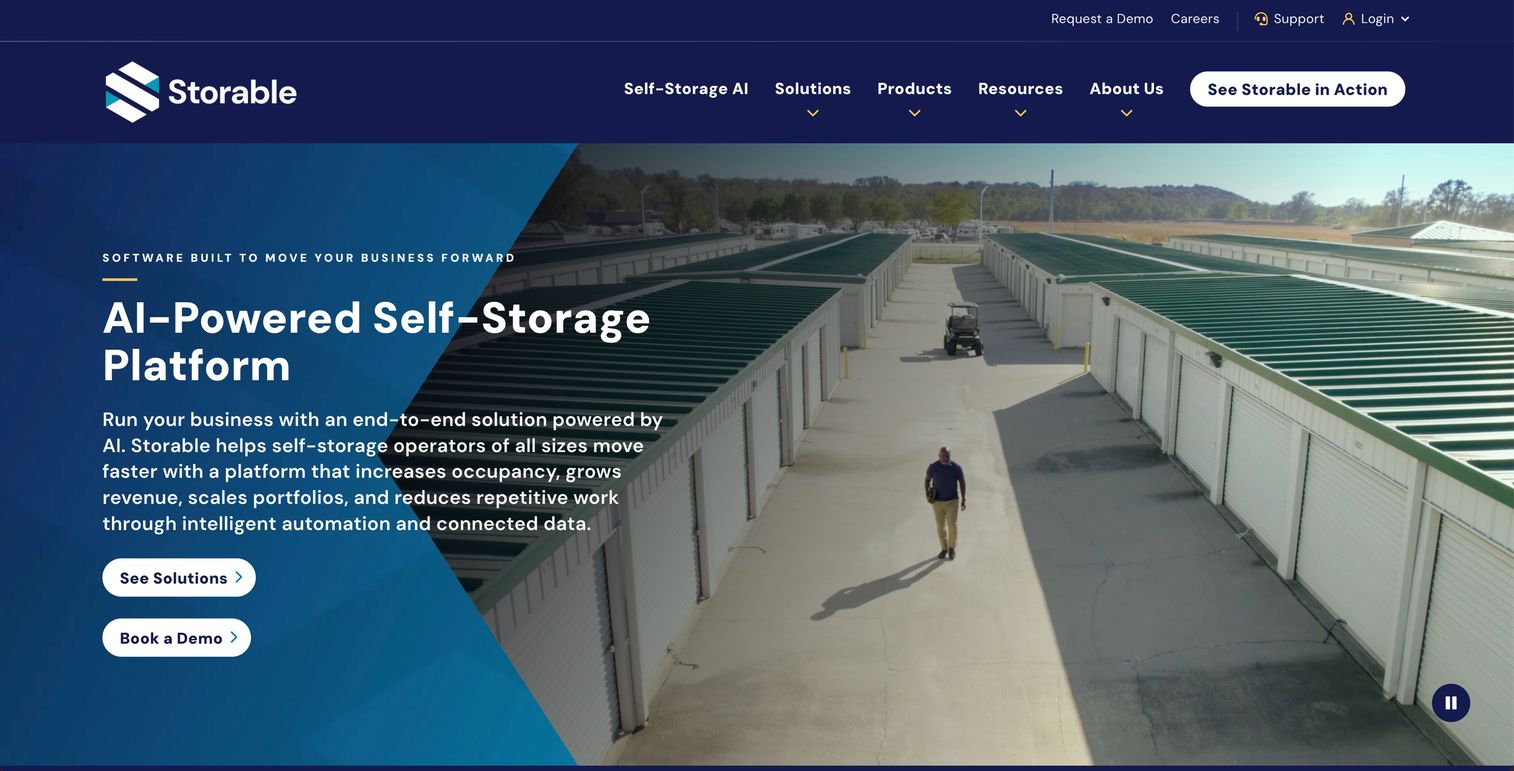
Storable Marine is cloud-based boat rental management software built for marinas, boat clubs, and rental operators that need more operational muscle than a lightweight booking widget provides. Its product page leads with 24/7 online reservations backed by real-time availability, dynamic pricing, and automated checkout.
The reason to consider it is scale and operational control. Larger or more complex fleets need availability that stays accurate across many boats and channels, pricing that adjusts to demand without manual work, and a checkout flow that collects payment automatically. Storable's marine product sits inside a broader company known for self-storage and rental operations software, which signals a platform built for businesses that treat rentals as serious, systematized revenue rather than a side hustle.
Best for: Marinas and boat rental operators with larger or more operationally complex fleets that need reliable online booking and fleet management.
Key strengths
- 24/7 online reservations with real-time availability: Around-the-clock booking that reflects true fleet availability instantly.
- Dynamic pricing and automated checkout: Demand-based rates and payment capture that run without staff intervention.
- Mobile-friendly booking and staff tools: A responsive experience for customers and an admin toolset for the team running the day.
Why choose Storable Marine: Choose it when your fleet and volume have outgrown a simple booking form and you need a platform that treats operations as infrastructure. The automated checkout and dynamic pricing reduce manual work at scale, which is exactly the leverage an operator wants when headcount cannot grow as fast as bookings.
Storable Marine pricing: Storable does not publish a public price on its marine boat rental software pages, and no verifiable figure was available at the time of writing. Pricing is quote-based, so operators should contact Storable directly for a plan scoped to fleet size and operational complexity.
7. DockMaster
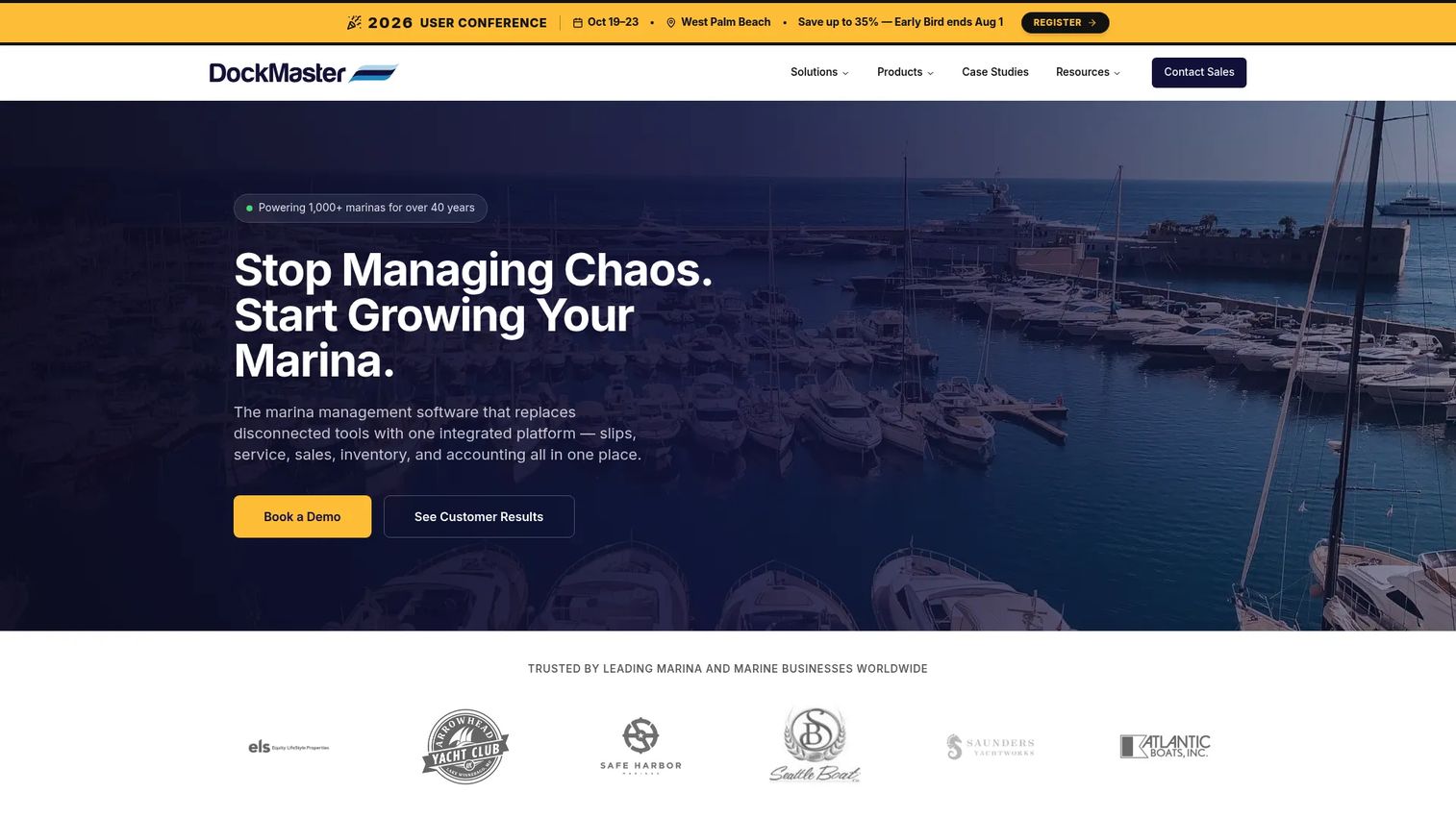
DockMaster is marina management software with desktop, web, and mobile products built for marinas, boatyards, and yacht clubs. It reaches well beyond rentals into full operations: a desktop ERP for reservations, billing, service, inventory, boat sales, and accounting, plus a web CRM and offline-first mobile field service.
DockMaster fits later in the buyer journey, when an operator has outgrown booking-first tools and needs an industry-specific suite that runs the entire business. The web CRM includes a customer portal, e-signatures, and payments, so booking and compliance are covered, but the real draw is the operational depth: AI-powered service management, inventory, and accounting in one system. The offline-first mobile field service means the yard crew can track jobs and log voice notes even where connectivity is spotty.
Best for: Marinas, boatyards, and yacht clubs that need an industry-specific operations suite spanning reservations, billing, service, and accounting.
Key strengths
- Desktop ERP: Reservations, billing, service, inventory, boat sales, and accounting in one back office.
- Web CRM with customer portal: E-signatures, payments, and AI-powered service management on the customer-facing side.
- Offline-first mobile field service: Job tracking, scheduling, attachments, and voice notes that work without a connection.
Why choose DockMaster: Choose it when rentals are one line item in a much larger marine operation. If you also handle service, boat sales, and yard work, a suite that unifies all of it beats running rentals on one tool and the rest of the business on another. It fits established operators, not first-time rental startups.
DockMaster pricing: DockMaster's own site presents products and a Contact Sales path without a public price. Capterra lists a Basic plan at $165.00 per feature, per month. There is no free tier, and the per-feature model means final cost depends on which modules you enable.
8. Boat Club Software
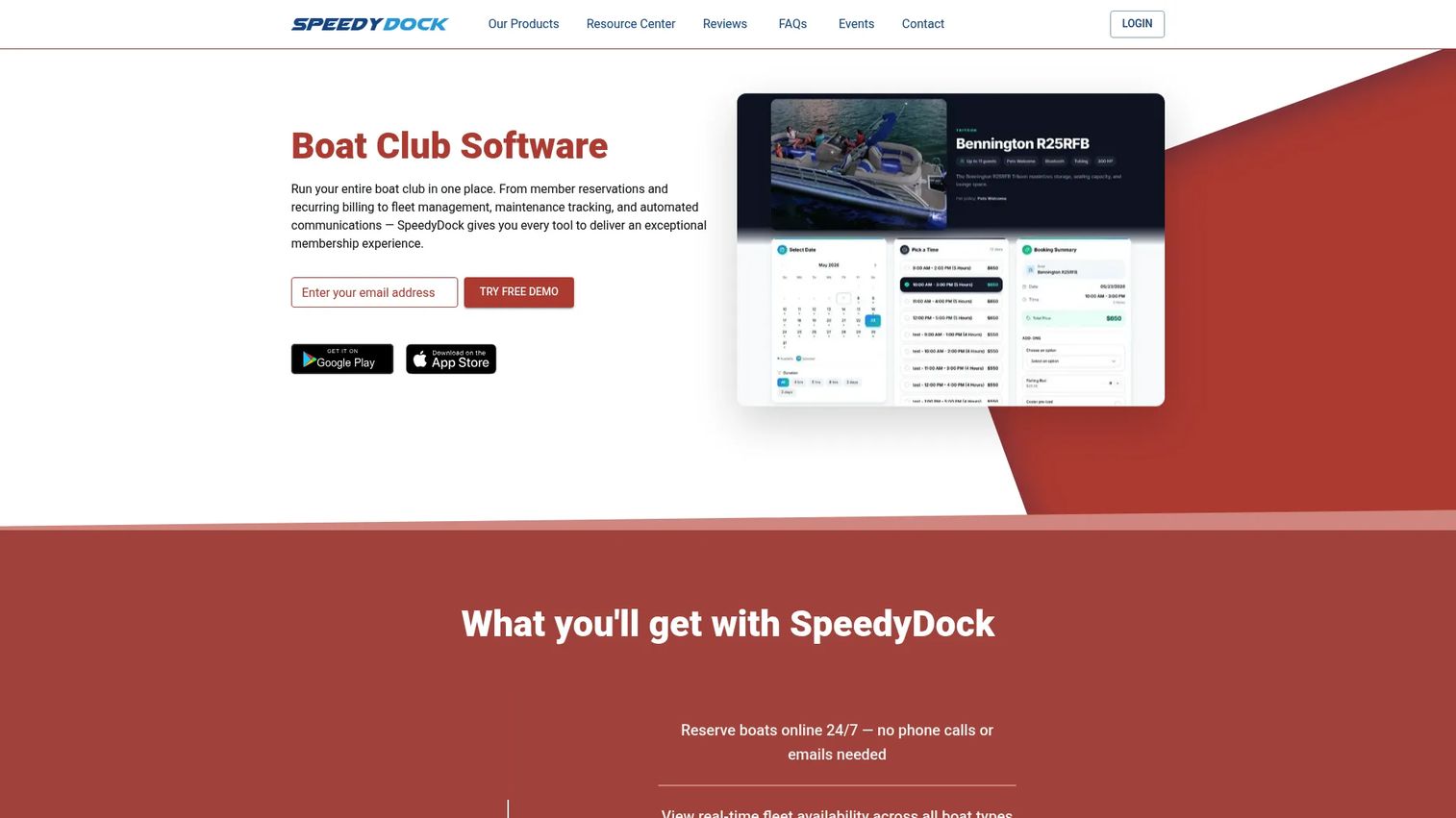
Boat Club Software is boat club and marina management software focused on reservations, billing, fleet management, maintenance, and member communications. It differs from pure rental booking tools in its center of gravity: the recurring member relationship rather than the one-time renter.
That distinction matters. A rental operator sells a boat for an afternoon; a boat club sells ongoing access, which means recurring billing, member reservations, and fleet upkeep are the core workflows, not add-ons. Boat Club Software builds around online member reservations, recurring billing and invoicing, and fleet and maintenance management, so the platform is shaped by the membership model. For a club, maintenance tracking is not a nice-to-have. A boat that is down is a promise you cannot keep to paying members.
Best for: Boat clubs and marina operators running a membership model who need reservations, recurring billing, and fleet maintenance in one place.
Key strengths
- Online member reservations: A booking flow built for recurring members rather than one-time renters.
- Recurring billing and invoicing: The subscription-style revenue engine a membership club runs on.
- Fleet and maintenance management: Upkeep tracking that keeps promised boats available to members.
Why choose Boat Club Software: Choose it when your model is membership, not per-trip rental. The recurring billing and member-reservation workflows fit a club far better than a rental tool retrofitted for members. It fits operators whose revenue is predictable and relationship-based rather than transactional.
Boat Club Software pricing: No public pricing was available on the company's site at the time of writing, and no verifiable third-party figure was confirmed. Operators will need to contact the vendor for a quote based on membership size and fleet.
Considerations before you buy
Before you commit, run each shortlisted tool through the criteria that decide whether it earns its place in your stack.
Booking model fit
Match the software to how you actually sell. A per-trip rental operation, a membership club, and a tour business each have different core workflows. A platform built for one-time renters will feel wrong for a club that runs on recurring billing, and vice versa. Start with your revenue model, not the feature list.
Availability control and conflict prevention
Verify that a reserved boat genuinely cannot be double-booked, across every channel and every staff member. Ask how maintenance blocks work, whether availability updates in real time, and what happens when two people try to book the same slot at once. This is the single feature that pays for the software.
Payments, deposits, and waivers
Confirm the platform collects deposits and damage holds automatically and captures e-signed waivers before arrival. Skipped deposits and missing waivers are direct financial and legal exposure. Check which payment processors are supported and whether waivers are stored where you can retrieve them under pressure.
Reporting and integrations
Decide what visibility you need before Monday morning. Utilization, revenue per boat, and channel performance should be readable without exporting to a spreadsheet. Then check the integrations that matter: your website builder, calendar, messaging tools, accounting software, and payment processor. A tool that does not connect to your stack creates the fragmentation you were trying to escape.
Conclusion
The right choice comes down to how you sell and how complex your operation is. If your biggest leak is missed calls and manual bookings, a conversion-focused platform like Let's Book or a booking-first tool captures the demand you are losing. If you run rentals alongside a club, dry stack, or slips, SpeedyDock consolidates the whole operation. Booking Central fits operators who want clean bookings plus upsells and waivers, and TRYTN suits seasonal businesses that would rather pay per booking than a fixed monthly fee.
For larger fleets and full marine operations, Storable Marine and DockMaster bring operational depth that booking widgets cannot match, while Boat Club Software is purpose-built for the membership model.
The next step is simple. Take your top two candidates and test them against your real numbers: current booking volume, fleet size, and how much waiver and deposit complexity you actually carry. The tool that handles a peak Saturday without a double booking, a missed deposit, or a lost waiver is the one that earns its place.
FAQs
Boat rental management software is a platform that runs the operational side of a rental business: online reservations, fleet scheduling, payments, deposits, waivers, and reporting in one system. It replaces phone-and-spreadsheet workflows with a customer-facing booking engine and an admin backend, so bookings, availability, and compliance stay connected instead of scattered across tools.
It maintains a single real-time source of truth for the entire fleet. When a boat is reserved for a slot, the availability calendar updates instantly across every channel and every staff member, so the same boat cannot be committed twice. Maintenance blocks work the same way, hiding any boat that is out of service so it never shows as bookable.
Prioritize self-service online booking, real-time availability control, automated deposits and payments, e-signed waivers, and reporting on utilization and revenue. Then confirm the integrations you depend on, such as your website builder, calendar, accounting software, and payment processor. Match the core booking workflow to your model, whether that is per-trip rental, membership, or tours.
Most modern platforms do. Digital waivers with e-signatures let guests sign a liability release before they arrive, as part of pre-check-in, so the dockside handoff is faster and every signed document is stored and retrievable. Platforms like Booking Central and DockMaster include waiver and e-signature workflows directly in the booking flow.
Yes. Strong platforms capture payment at the time of booking, collect damage deposits or security holds, and automate checkout so money is secured before the boat leaves the dock. Check which payment processors each tool supports and whether deposits are handled as holds or charges, since that affects both your cash flow and the customer experience.
The integrations that keep your stack from fragmenting: your website or booking widget, a calendar system, customer messaging, accounting software, and a payment processor. If a scheduling tool cannot push data into the systems you already run, you end up re-entering information by hand, which reintroduces exactly the manual error the software was meant to remove.
Yes, though the fit varies by tool. Platforms like SpeedyDock and DockMaster extend well beyond rentals into slip reservations, dry stack, service, and marina operations, while Boat Club Software is built around the membership model with recurring billing and member reservations. Marinas and clubs should prioritize platforms that handle their operational depth, not just the rental booking piece.
Start with your operational complexity. If your main problem is capturing bookings you currently lose to missed calls, a focused booking-first tool solves that quickly and cheaply. If you run multiple revenue lines such as rentals, clubs, service, and slips, a full fleet and operations suite consolidates them and prevents the tool sprawl that fragments your data. Buy for the operation you run now, with room for the one you are building toward.