Your planners open six tabs before they route a single truck. A spreadsheet for lanes. A carrier portal. A mapping tool. The TMS for tenders. Email for exceptions. And a whiteboard for the stuff no system tracks.
Then a pickup fails at 9:40 a.m. and the whole plan gets rebuilt by hand.
This is the real state of transportation planning in most operations. Not a lack of data. A lack of connected decisions. The route optimization software market hit USD 12.3B in 2025 according to the IMARC Group, and 77.77% of users run route planning daily per Globe Newswire. Daily planning at that volume breaks when it runs on manual overrides.
Transportation optimization software exists to fix the decision layer: routing, load consolidation, mode selection, dispatch, carrier assignment, and real-time replanning when execution changes. This is a buyer guide, not a feature tour. The goal is to help you match a tool to your network, your integrations, and the way your team actually plans.
What's inside
This guide is for operations leaders, logistics managers, supply chain teams, and product managers evaluating logistics optimization software in 2026.
We chose the seven tools below on four criteria that matter when you are picking a system, not a widget:
- Optimization depth: how well the math handles constraints, not just distance
- Multimodal and network support: FTL, LTL, parcel, rail, ocean, and network design
- Real-time execution: dispatch, rerouting, and exception handling
- Integration fit: how cleanly it connects to your TMS, ERP, WMS, and telematics
We also separate route-only tools from broader transportation platforms, because buying the wrong layer is the most common mistake in this category.
TL;DR
- Best for category research and vendor comparison: Sophus, strong on network design and clear planning taxonomy.
- Best for last-mile route planning: Route4Me, deep route automation, dispatch, and tracking.
- Best for complex freight optimization software needs: Optym, AI transportation optimization across load, route, and resource planning.
- Best for multimodal operations: Neurored, Salesforce-native TMS and SCM with broad mode coverage.
- Best for scalable route planning: PTV OptiFlow, API-first optimization and scenario simulation.
- Best for enterprise delivery: FarEye, AI orchestration with control-tower visibility.
- Best for orchestration-heavy teams: Princeton TMX, unified transportation management across truck, rail, barge, and intermodal.
Transportation optimization software is broader than route planning software. Routing is one decision. Optimization plus execution plus integration is the whole system, and that is what moves cost reduction, on-time delivery, fleet utilization, and emissions together.
What is transportation optimization software?
Transportation optimization software is a class of logistics tools that use algorithms and, increasingly, AI to make better transportation decisions across planning and execution: which lanes, which modes, which carriers, which loads, and which routes.
The category spans several planning layers:
- Route optimization: sequencing stops to cut miles, empty time, and driver hours
- Load and shipment assignment: consolidating orders into efficient loads
- Mode optimization: choosing FTL, LTL, parcel, rail, air, or ocean by cost and service
- Dispatch and rerouting: assigning drivers and adjusting in real time
- Network design: modeling facilities, flows, and long-term capacity
- What-if analysis: simulating scenarios before committing capital or capacity
Key capabilities buyers evaluate:
- Constraint handling (time windows, vehicle capacity, driver rules, service levels)
- Multimodal transportation optimization across mixed networks
- Real-time routing and exception handling
- Carrier selection and rate logic
- Integration with a transportation management system, ERP, and WMS
How it differs from a TMS: a transportation management system is usually the system of record and execution layer. It manages tenders, tracking, documents, and settlement. Transportation optimization software focuses on decision quality: the math that decides the best plan. Many teams run both, with the optimization engine feeding plans into the TMS.
When to use transportation optimization software
Reduce transportation cost without breaking service levels
Optimization earns its keep when you have miles to cut, capacity going out half empty, or drivers idling between stops. For fleets, carriers, and delivery networks, better route planning and optimization lowers empty miles and overtime while protecting delivery promises. The point is not the cheapest plan. It is the cheapest plan that still hits your service window.
Plan across multiple modes and constraints
When your network mixes FTL, LTL, parcel, rail, air, or ocean, you need logic that consolidates shipments and weighs cost against transit time and reliability. Multimodal transportation optimization handles the constraints a spreadsheet cannot: capacity limits, time windows, hazmat rules, and carrier commitments across every mode at once.
Replan in real time when execution changes
Plans survive until the first delay. Traffic, a failed pickup, a demand spike, a driver callout. Real-time routing and dispatch optimization let planners rebuild the day without starting over. Connect this to control-tower workflows and your team sees the exception, the options, and the cost of each choice in one place.
Transportation optimization software comparison
The table below sorts by relevance to transportation optimization, not alphabetically. Pricing and ratings shift, so confirm both against each vendor's live pricing page and current G2 listing before you shortlist. Many freight optimization software vendors quote by network size, so expect custom pricing at the enterprise end.
| # | Product | Best for | Key differentiator | Pricing | G2 rating |
|---|---|---|---|---|---|
| 1 | Sophus | Network design and vendor comparison | Planning taxonomy plus quantum-assisted solving | Quote-based | 5/5 |
| 2 | Route4Me | Last-mile route planning | Route automation, dispatch, and tracking depth | Free; from $9.99/mo | Not listed |
| 3 | Optym | Complex freight optimization | AI planning across load, route, and resource | Custom | 3.5/5 |
| 4 | Neurored | Multimodal operations | Salesforce-native TMS and SCM | From $100/user/mo | 4.6/5 |
| 5 | PTV OptiFlow | Scalable route optimization | API-first optimization and scenario simulation | Custom | Not listed |
| 6 | FarEye | Enterprise delivery | AI orchestration with control-tower visibility | Custom | 4.7/5 |
| 7 | Princeton TMX | Orchestration-heavy teams | Unified multimodal TMS | Custom | 4.7/5 |
Best 7 transportation optimization software tools for 2026
1. Sophus
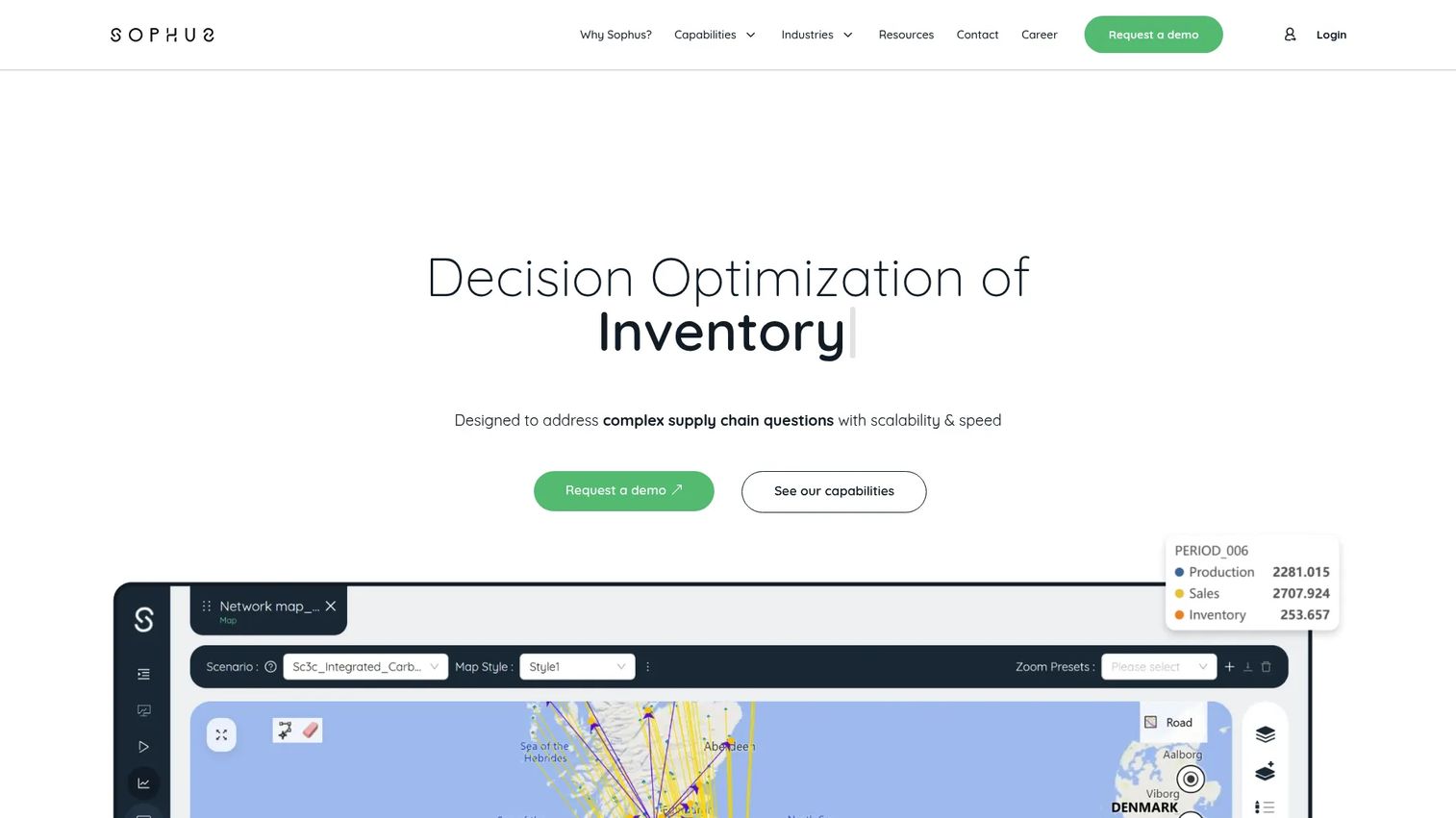
Sophus is supply chain network design and optimization software that covers strategic, tactical, and operational planning. If you are still mapping the category and comparing vendors, Sophus stands out for how clearly it frames the planning layers, from network design down to transportation optimization. It positions itself as a platform for teams that need to model their whole network, not just sequence stops on a route.
The buyer-guide framing is the differentiator. Sophus explicitly separates network design, production optimization, inventory optimization, and transportation optimization, which helps a buyer understand what problem each layer solves before committing. That clarity matters when you are trying to justify a system to a board that keeps asking why routing alone is not enough.
Best for: mid-market and enterprise supply chain teams that need network design and want to understand the optimization landscape before they buy.
Key strengths
- Cloud-native access with on-premises deployment support
- AI-driven data automation and quantum solving
- Network design, production, inventory, and transportation optimization in one platform
Why choose Sophus: it fits teams that want a planning platform and a clear map of the category, not only a standalone execution tool. If your near-term need is purely real-time dispatch, pair it with an execution-first system. If your need is strategic network modeling with a route layer underneath, this is a strong start.
Sophus pricing: public pricing is not published; the platform is offered as a subscription and quoted after a demo. Sophus also offers a free costed map of your supply chain as a baseline, which is not a free software tier. G2 shows a 5/5 rating, though from a very small review sample.
2. Route4Me
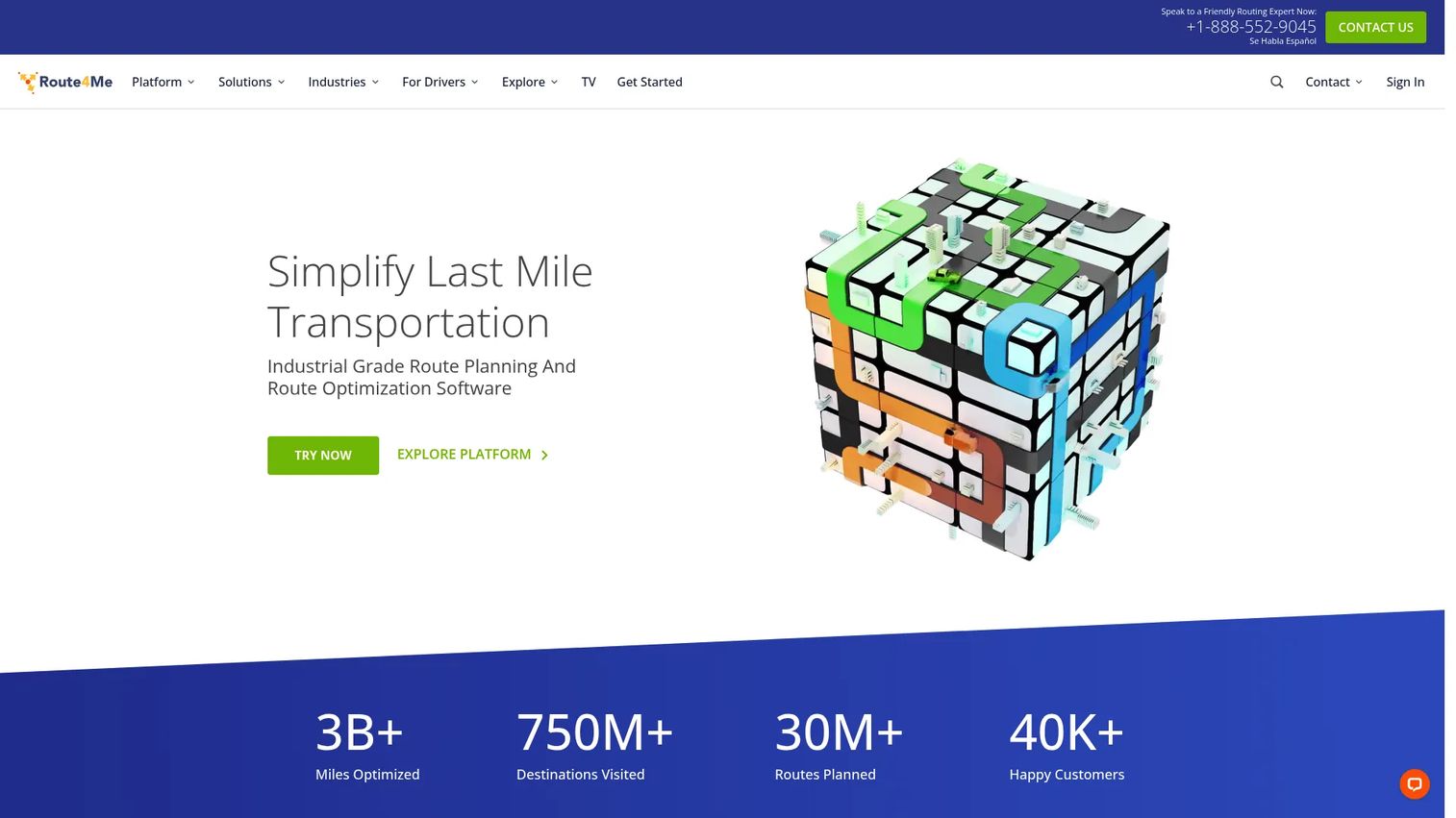
Route4Me is last-mile route optimization and dispatch software built for teams running high volumes of stops. It handles route planning and optimization, dispatch, real-time tracking, driver navigation, and proof of delivery. For delivery networks and field operations, it turns a daily routing scramble into a repeatable workflow.
Route4Me is strong where the job is get-many-vehicles-to-many-stops-efficiently. Route automation cuts the manual sequencing that eats planner time, and dispatch plus tracking give you visibility once trucks roll. Driver navigation and proof of delivery close the loop on the last mile, which is where most service complaints originate.
Best for: delivery, service, and field operations that need dependable last-mile route planning at scale.
Key strengths
- Route planning and optimization
- Dispatch and real-time tracking
- Driver navigation and proof of delivery
Why choose Route4Me: route-first tools like this are enough when your core problem is last-mile efficiency and driver workflow. If your operation also needs deep multimodal planning or network design, plan to pair it with a broader platform rather than stretch a routing tool past its strength.
Route4Me pricing: the public mobile app plans include a Free tier at $0/month, a Monthly plan at $9.99/month, and an Annual plan at $79.99/year. Broader business platform pricing is package-based and quoted through a Route4Me routing expert, with many enterprise features shown as contact-us.
3. Optym
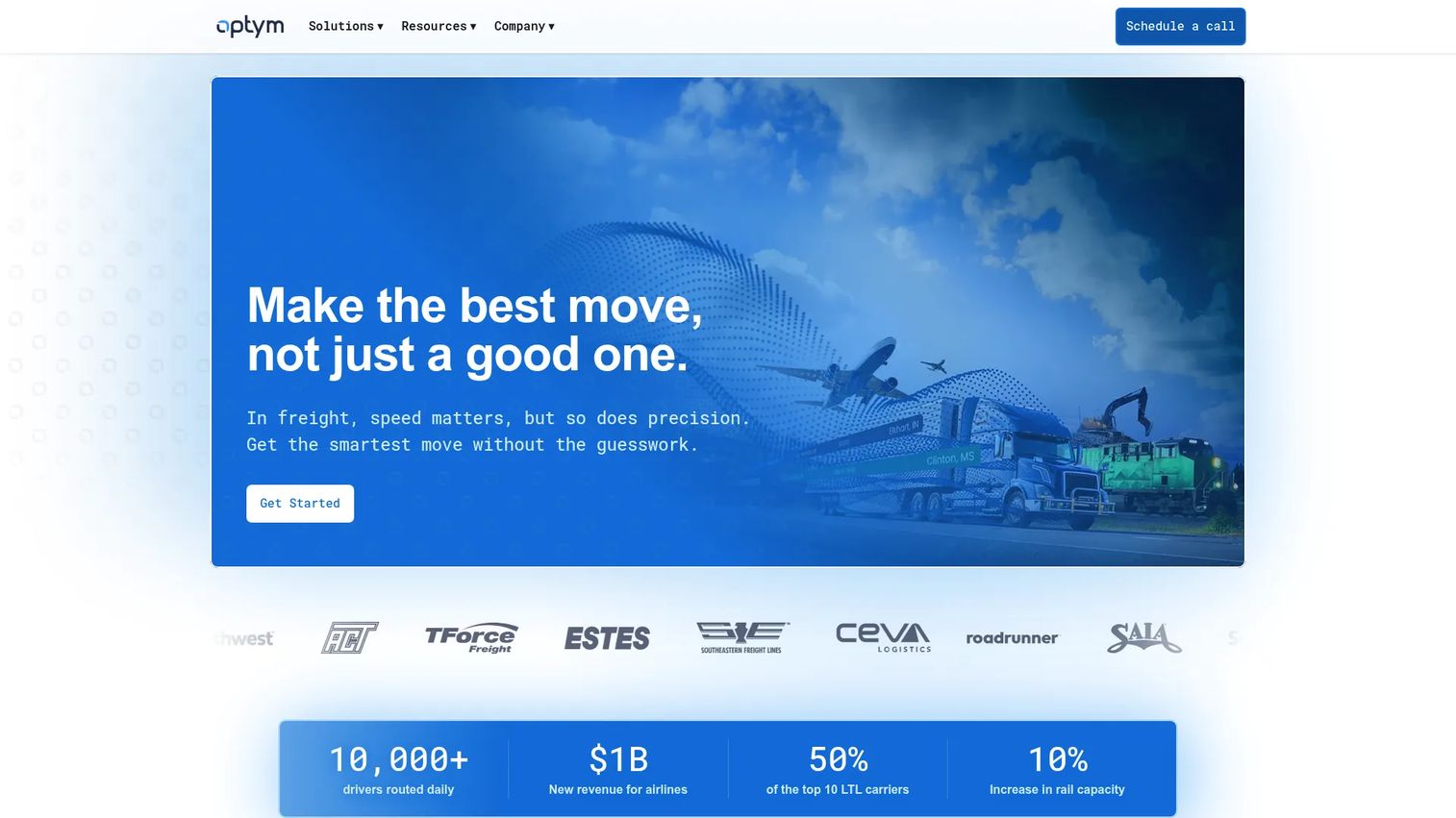
Optym is transportation optimization software built for freight operations with heavy constraints. It applies AI transportation optimization across network planning, load optimization, route optimization, and resource planning, then supports real-time execution and rerouting. This is a tool for operators whose planning problems are genuinely hard: many loads, many constraints, and real money riding on the answer.
Optym fits freight networks, trucking, and rail, where the difference between a good plan and a great one shows up directly in cost and asset utilization. The emphasis on load, route, and resource planning together is what separates it from route-only tools. It is solving the whole freight puzzle, not one edge of it.
Best for: large transportation and logistics operators that need optimization depth across planning and dispatch.
Key strengths
- AI-powered network planning
- Load, route, and resource optimization
- Real-time execution and rerouting
Why choose Optym: it suits enterprise freight teams whose constraints defeat simpler tools. The trade-off is that this depth targets complex networks, so smaller operations may not use its full range. Verify solver fit against your specific lane and constraint mix before buying.
Optym pricing: no public pricing is published on the brand site; expect a custom quote based on network scope. G2 shows a 3.5/5 rating from a small review sample, so weight your own reference calls heavily.
4. Neurored
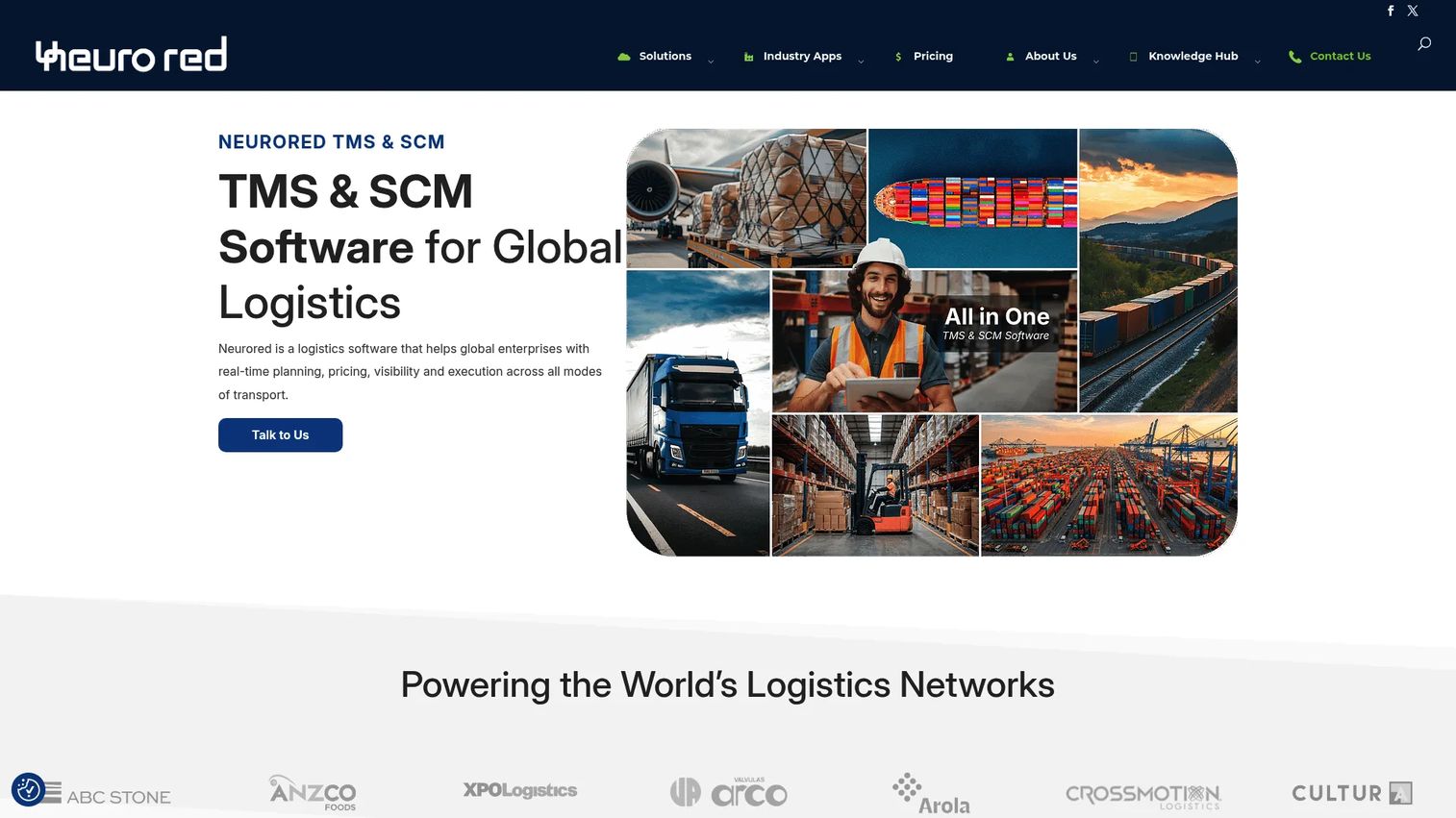
Neurored is a Salesforce-native TMS and SCM platform for global logistics, freight forwarding, visibility, and transportation operations. It spans transport orders, scheduling, yard, warehousing, loading, and last-mile routing, which makes it a fit for teams whose operations do not fit inside a single mode or a single warehouse.
The Salesforce and EDI integration is the headline differentiator. If your commercial data already lives in Salesforce, running your TMS on the same platform removes a layer of integration work and keeps customer, order, and transport data in one place. That native connection is a real advantage for teams that value multimodal transportation optimization sitting close to CRM and order data.
Best for: global logistics teams that want a modular, Salesforce-native TMS and SCM platform.
Key strengths
- Multimodal transportation planning and execution
- Supply chain visibility and control-tower capabilities
- Freight rates management and quotation workflows
Why choose Neurored: its breadth is strongest when you need one platform across freight, transport, warehousing, and visibility rather than a stack of point tools. That breadth is the reason to choose it, and the reason to scope your rollout carefully.
Neurored pricing: bundled pricing starts at 100 users and scales in 100-user increments. Standalone pages list visibility at $100/user/month and TMS/logistics optimization at $100 to $200/user/month, with implementation fees on top. A "Try For Free" option appears on the pricing page. G2 shows a 4.6/5 rating.
5. PTV OptiFlow
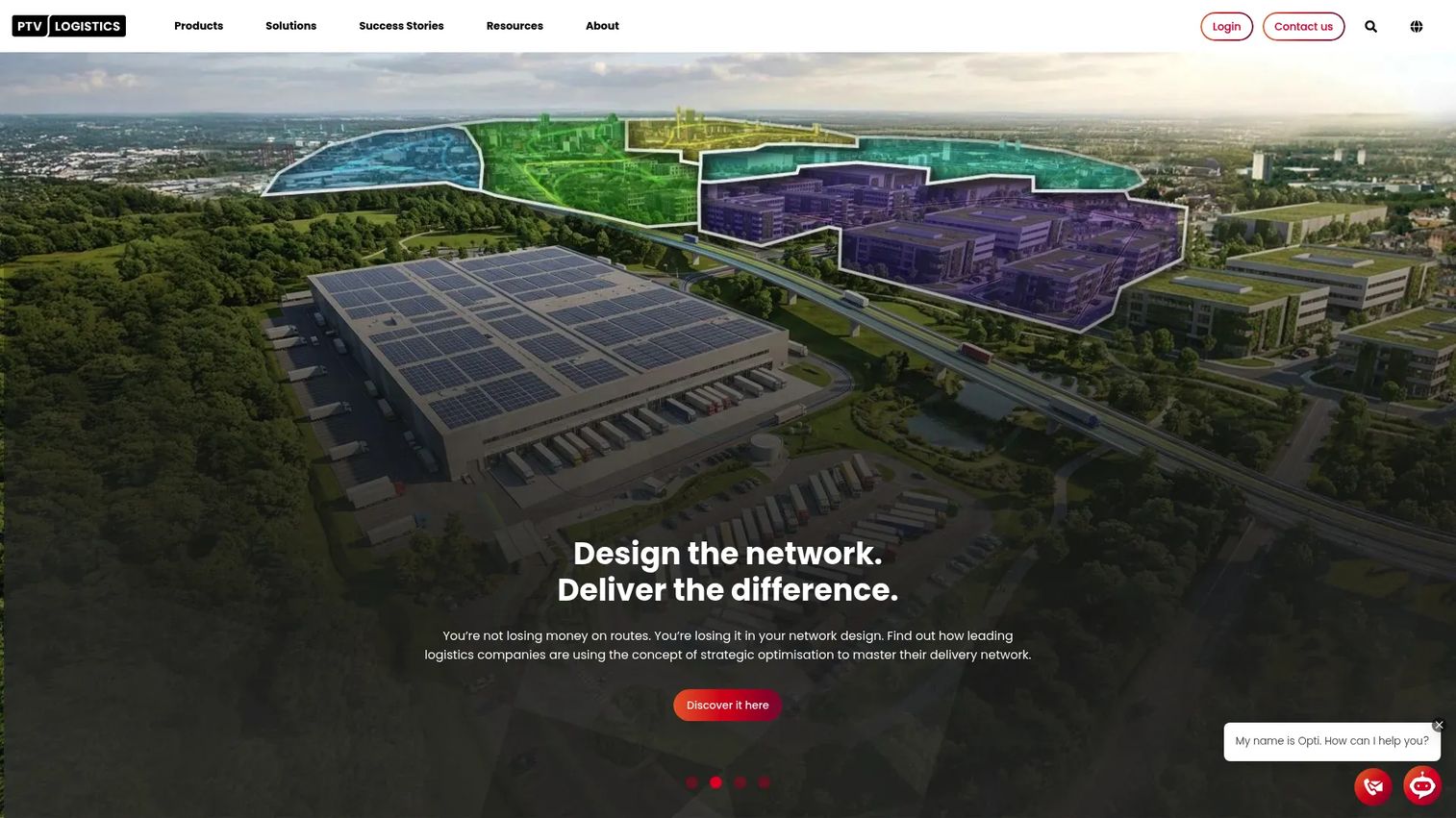
PTV OptiFlow is cloud-based route optimization software for planning, optimizing, and scaling logistics operations. It combines route planning and optimization with long-term network design, and its API-first design connects into a transportation management system, ERP, and telematics stack. That makes it a fit for teams that want optimization as a service inside their existing systems rather than a separate silo.
The scenario tooling is a practical strength. You can simulate and compare plans and fold in traffic data, which helps planners test a change before it hits the road. AI-powered optimization handles the heavy lifting on constraint-rich routes, and the API-first approach means the output lands where your dispatchers already work.
Best for: medium to large logistics teams that need scalable route optimization and scenario planning.
Key strengths
- AI-powered optimization
- Simulate and compare plans
- Incorporate traffic data
Why choose PTV OptiFlow: it fits teams that value fast, scalable planning and clean integration over an all-in-one execution suite. If you already own a TMS and want a stronger optimization engine feeding it, an API-first tool like this slots in without ripping out your stack.
PTV OptiFlow pricing: no public price is published; the upgrade page directs buyers to contact sales for a quote. Scope your pricing conversation around volume, users, and the modes you plan to optimize.
6. FarEye
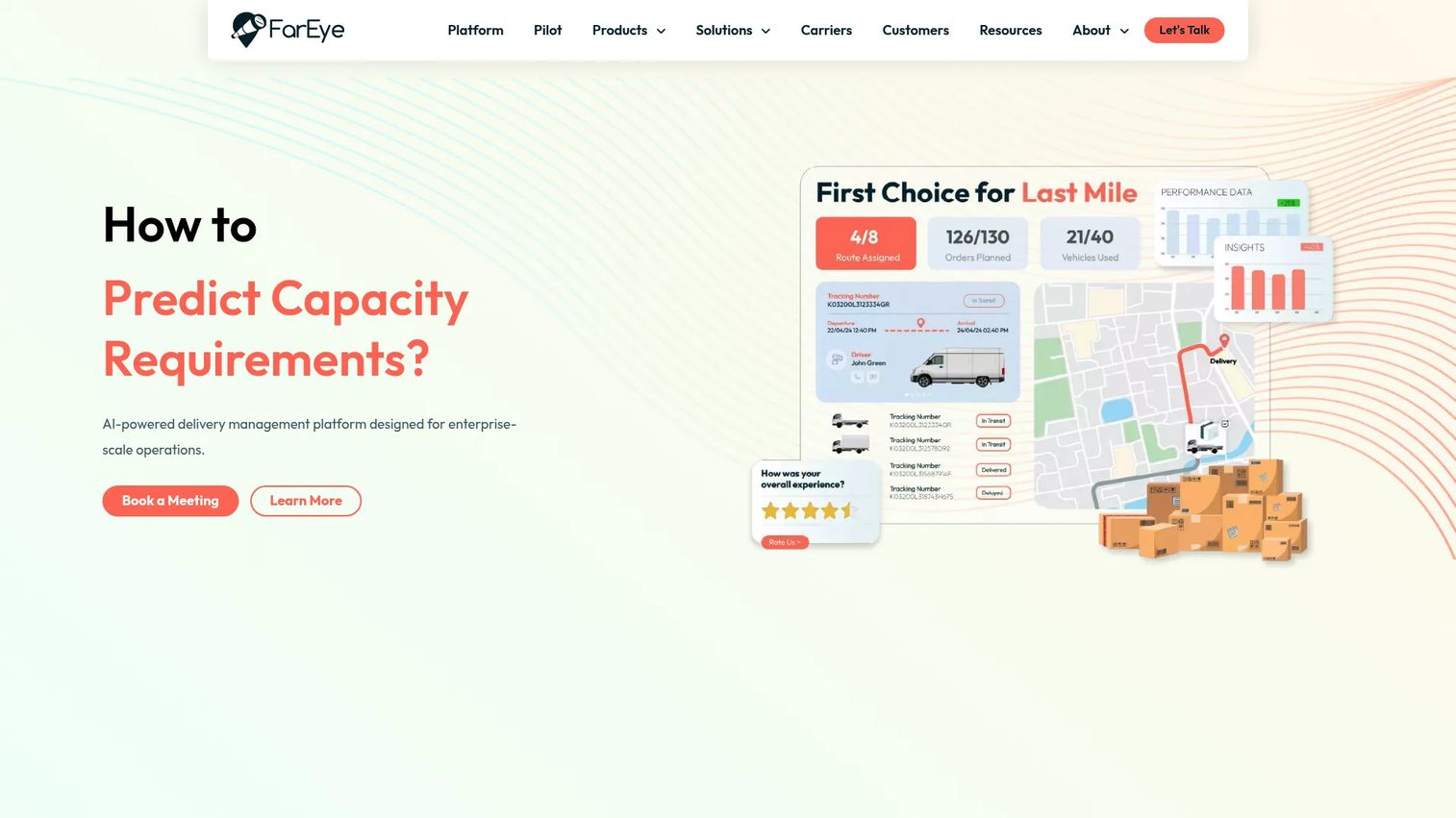
FarEye is an AI-driven last-mile delivery logistics platform for orchestration, real-time visibility, routing, and customer experience. It connects AI route planning with control-tower tracking and a branded delivery experience, which lets enterprise shippers and carriers manage complex last-mile operations from one place. This is delivery optimization with the customer-facing side built in.
FarEye excels where fleet productivity, accurate ETAs, and delivery cost reduction matter together. The orchestration layer coordinates routing, tracking, and exceptions, while the customer experience module handles branded tracking and returns. For teams judged on both cost and delivery experience, that combination is the draw.
Best for: enterprise shippers and carriers managing complex, high-volume last-mile delivery.
Key strengths
- AI-driven orchestration and routing
- Real-time shipment tracking and control-tower visibility
- Branded customer delivery experience and returns
Why choose FarEye: it gives enterprise teams operational control across the whole last mile, from route to doorstep to return. If your priority is orchestrating a large delivery network with strong customer-facing tracking, it earns a shortlist spot. G2 shows a 4.7/5 rating.
FarEye pricing: no public pricing is published on the brand site; pricing is quoted based on scope. Build your evaluation around your shipment volume, integration needs, and the modules you actually plan to use.
7. Princeton TMX
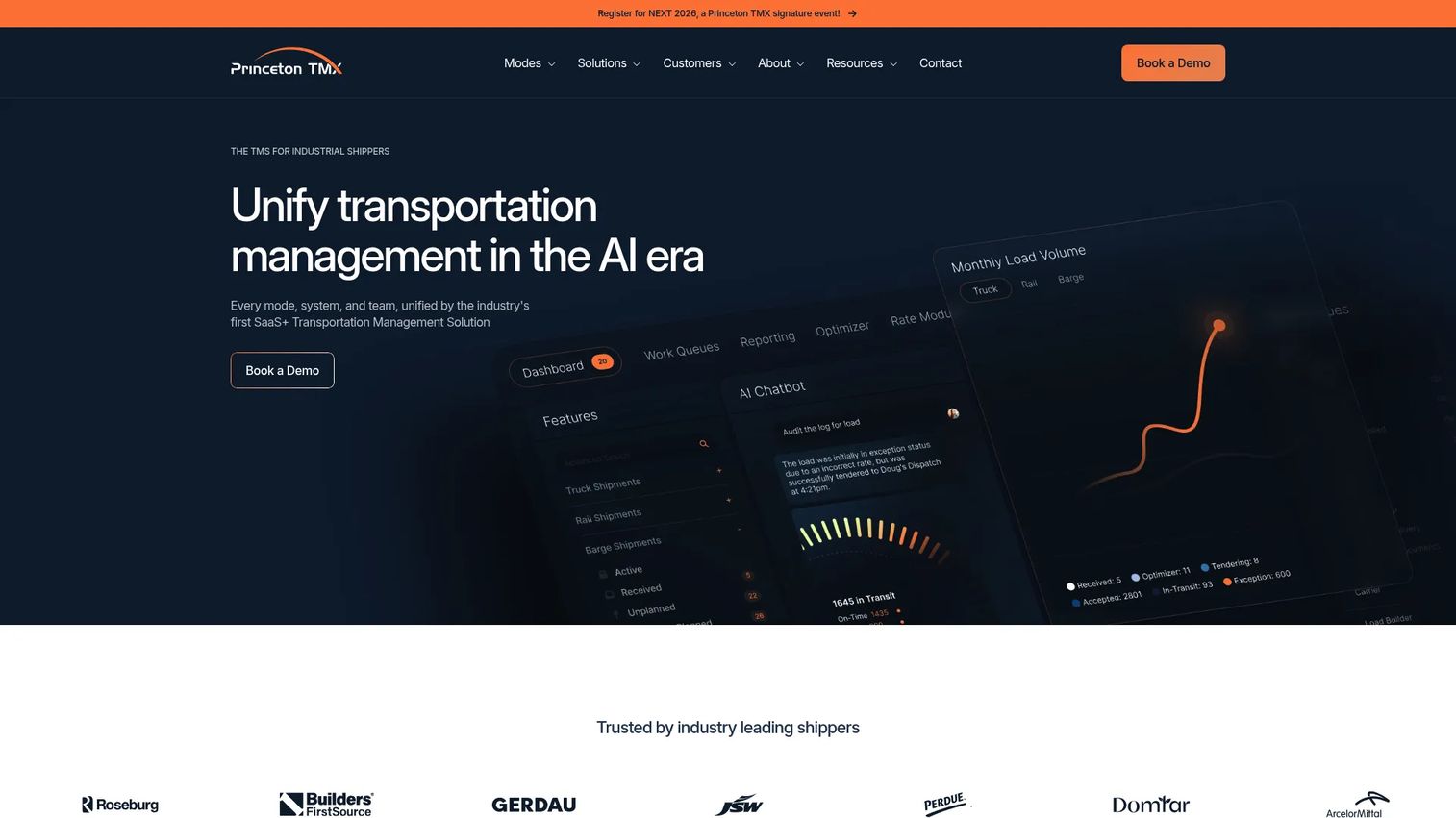
Princeton TMX is a cloud-based unified transportation management system for industrial shippers. It orchestrates routing, load planning, dock scheduling, and invoice and audit workflows across truck, rail, fleet, barge, and intermodal. This is the broad end of the category: less a routing tool, more a transportation control tower for teams whose operations span several modes.
The workflow coverage is the differentiator. Where route-only tools solve one decision, Princeton TMX chains planning, execution, and settlement into one system, with AI analytics and reporting layered on top. For industrial shippers moving freight across truck, rail, and barge, that end-to-end orchestration reduces the number of disconnected systems planners juggle.
Best for: industrial shippers that need a unified TMS with automation and analytics across multiple transport modes.
Key strengths
- Workflow automation
- Multimodal execution across truck, rail, fleet, barge, and intermodal
- AI analytics and reporting
Why choose Princeton TMX: it sits well above route-only tools when your problem is orchestrating a multimodal network end to end, including settlement and audit. Choose it when you need a control tower, not just a route planner. G2 shows a 4.7/5 rating.
Princeton TMX pricing: no public pricing is published on the brand site; expect a custom quote scoped to your modes, volume, and workflows. Confirm which modules are included before you sign.
Considerations before you buy
Optimization depth versus your real constraints
The math is only useful if it models your actual constraints: time windows, driver hours, vehicle capacity, and service commitments. Run a scenario test on your own lane or fleet data before you trust a demo. A tool that looks great on a clean dataset can stumble on your messy one.
ERP integration and WMS integration
Good optimization that cannot reach your systems of record is a science project. Check for clean ERP integration and WMS integration so plans flow into execution without manual re-entry. Ask exactly which connectors are prebuilt versus custom.
TMS fit and telematics integration
Confirm how the tool sits next to your transportation management system and whether it feeds plans in or replaces execution. For fleets, telematics integration matters: live vehicle data is what makes real-time routing accurate rather than theoretical.
Real-time execution and exception handling
Planning-only tools and execution-capable tools solve different jobs. If your day breaks with failed pickups and delays, verify dispatch optimization and live rerouting are first-class features, not roadmap promises.
Proof, scale, and total cost
Ask for reference customers with networks like yours. Validate scale against your peak volume, not your average. And build a full cost picture that includes implementation and integration, since license price is rarely the whole number.
Conclusion
Transportation optimization is not one decision. It is planning plus execution plus integration, working together.
Match the tool to the job. Sophus fits teams doing category research and network design. Route4Me owns last-mile route planning. Optym handles the hardest freight optimization problems. Neurored is the pick for multimodal operations, especially on Salesforce. PTV OptiFlow and FarEye bring route and execution depth, one API-first and one enterprise-delivery focused. Princeton TMX is built for orchestration-heavy teams running multiple modes.
The core lesson holds across all seven: a great routing engine that cannot integrate is a spreadsheet with better graphics. Buy for the whole system, not one clever feature.
Your next step is concrete. Shortlist two or three tools that match your network profile. Validate their integrations against your TMS, ERP, WMS, and telematics. Then run a scenario test on live data from your own lanes or fleet, and measure the plan against cost reduction, on-time delivery, fleet utilization, and emissions before you commit. Supply chain optimization is won in the details, and the details only show up on your own data.
FAQs
Transportation optimization software uses algorithms and AI to plan, assign, route, and replan transportation more efficiently. It decides the best lanes, modes, carriers, loads, and routes given your constraints. The goal is lower cost and better service, not just shorter distances on a map.
A transportation management system is usually broader for execution and management: tenders, tracking, documents, and settlement. Optimization software focuses on decision quality and planning logic, the math that decides the best plan. Many teams run both, with the optimizer feeding plans into the TMS.
Shippers, carriers, 3PLs, fleets, distributors, and any logistics-heavy operation benefit. The more complex your network, the more you gain, since manual planning breaks down fast across many stops, modes, and constraints. Simple single-route operations may get by with lighter route planning tools.
Many platforms do, but depth varies widely. Look for genuine mode selection across FTL, LTL, parcel, rail, air, and ocean, plus consolidation and constraint handling. Some tools optimize one mode well and treat others as an afterthought, so test against your real network mix.
Some tools support live replanning and real-time routing, while others are planning-only. If delays, failed pickups, and demand changes are part of your day, confirm dispatch and exception handling are built in. Ask to see a live reroute during evaluation, not just a static plan.
Look for integration with a TMS, ERP, WMS, OMS, telematics, CRM, and EDI. Integration is often the difference between good math and usable operations, because plans that cannot reach execution systems create manual re-entry. Confirm which connectors are prebuilt before you buy.
Run a scenario test on your own lane, fleet, or network data, not the vendor's clean demo set. Review integrations, ask for proof of value from similar customers, and check workflow fit for your planners. Freight optimization software earns its price only when the plans actually run in your operation.