

A senior engineer on your team just accepted an offer elsewhere. Two weeks later, a role opens up three desks over that would have kept her. She never knew it existed.
That gap is the core problem internal mobility software solves. Opportunity lives in scattered systems, hiring managers post to external boards first, and employees cannot see a path forward inside their own company. So they leave.
The stakes are rising. In 2024, 39% of roles were filled by internal candidates, up from 32% previously, according to SkillPanel (2026). The internal mobility software market hit $2.5 billion in 2025 and is projected to grow at a 15% CAGR through 2033, per Archivemarketresearch (2026). Companies are investing because external hiring is slow, expensive, and does nothing for the skills gaps sitting inside their own workforce.
Internal talent mobility is not just about promotions. It covers lateral moves, project assignments, rotations, and mentorship. Done well, it lifts retention, closes skills gaps faster than recruiting, and builds workforce agility. Done poorly, it becomes another dashboard nobody opens.
What's inside
This guide is for HR leaders, people ops, talent acquisition, and L&D teams comparing internal mobility platforms in 2026. If you already know the category and need help shortlisting vendors, start here.
We selected tools based on four criteria that matter most for buyers:
- Skills-based matching: quality of skills profiles and role recommendations
- Opportunity visibility: how well the platform surfaces roles, projects, and rotations
- Analytics and reporting: ability to track fills, movement, and retention impact
- Deployment fit: workflow configurability, security, and integration with your HR stack
TL;DR
- Best for enterprise skills matching: Gloat, the deepest talent marketplace for large-scale opportunity visibility
- Best for transparent career pathways: Fuel50, built around employee-driven career journeys
- Best for AI skills intelligence: Eightfold AI, strongest when skills inference and data quality lead the decision
- Best for broad talent suite coverage: SAP SuccessFactors and Workday Talent Marketplace, ideal when you want mobility inside an existing HCM
- Best for mentoring plus mobility: MentorcliQ, when development programs and mobility sit together
The right internal mobility platform depends on whether you prioritize skills matching, workflow control, suite consolidation, or development programs.
What is internal mobility software
Internal mobility software is a talent platform that helps employees discover and move into internal roles, projects, rotations, and career paths, while giving HR teams the tools to match, route, and measure that movement.
It replaces the fragmented mix of static job boards, spreadsheets, and manager networks that keep opportunity hidden. Instead, it creates an internal opportunity marketplace where skills, interests, and open roles meet.
Core capabilities to expect:
- Opportunity marketplace: a central hub for open roles, gigs, projects, and mentorships
- Skills profiles and matching: structured skills data plus AI recommendations
- Workflow routing and approvals: rules for who approves moves and how requests flow
- Analytics and reporting: dashboards for fills, participation, movement patterns, and retention
- Career path visibility: transparent career pathways so employees own their development
The category goes by several names, and the differences are mostly emphasis. An internal mobility platform stresses movement between roles. A talent mobility platform covers broader movement including gigs and cross-border transfers. Career mobility software leans into the employee experience and long-term career pathways. Most enterprise tools span all three.
When to use internal mobility software
Fill critical skills gaps without external hiring
When a team loses a key contributor or a new project needs specialized skills fast, internal mobility software lets you redeploy talent already inside the building. Skills-based matching surfaces employees who fit, even from unexpected teams. This shortens time-to-fill and strengthens succession planning by making bench strength visible.
Improve retention by making growth visible
Employees leave when they cannot see a future. An internal opportunity marketplace changes that. When people can browse roles, projects, and career pathways on their own, they own their development instead of waiting for a manager to notice. Transparent access reduces churn risk because growth feels reachable.
Support project-based and lateral movement
Mobility is not only about climbing. It includes lateral moves, rotations, stretch assignments, and short-term projects. These build skills and engagement without requiring a promotion. Good internal mobility platforms treat gigs and swaps as first-class movement, not an afterthought, which keeps more people learning and contributing.
Comparison table
The eight platforms below are sorted by relevance to internal mobility buyers. Most vendors in this category use quote-based pricing, so contact each vendor for a figure tied to your headcount and modules. G2 ratings reflect current listings where verified.
| # | Product | Best for | Key differentiator | Pricing | G2 rating |
|---|---|---|---|---|---|
| 1 | Gloat | Enterprise skills matching | AI talent marketplace with workforce graph | Custom pricing | 4.4/5 |
| 2 | Workday Talent Marketplace | Workday-centric HR teams | Native HCM alignment | Custom pricing | 4.4/5 |
| 3 | Avature Internal Mobility | Global, policy-heavy orgs | Workflow configurability | Custom pricing | 4.4/5 |
| 4 | Eightfold AI | AI skills inference | Talent intelligence and matching | Custom pricing | 4.2/5 |
| 5 | Fuel50 | Transparent career pathways | Employee-driven skills layer | Custom pricing | 4.4/5 |
| 6 | Phenom | Talent experience layer | End-to-end candidate and employee experience | Custom pricing | Not listed |
| 7 | MentorcliQ | Mentoring plus mobility | Mentor-mentee matching | Custom pricing | 4.7/5 |
| 8 | SAP SuccessFactors | Suite consolidation | Integrated HCM suite | From $4.66/user/month | Not listed |
Best internal mobility software for 2026
1. Gloat
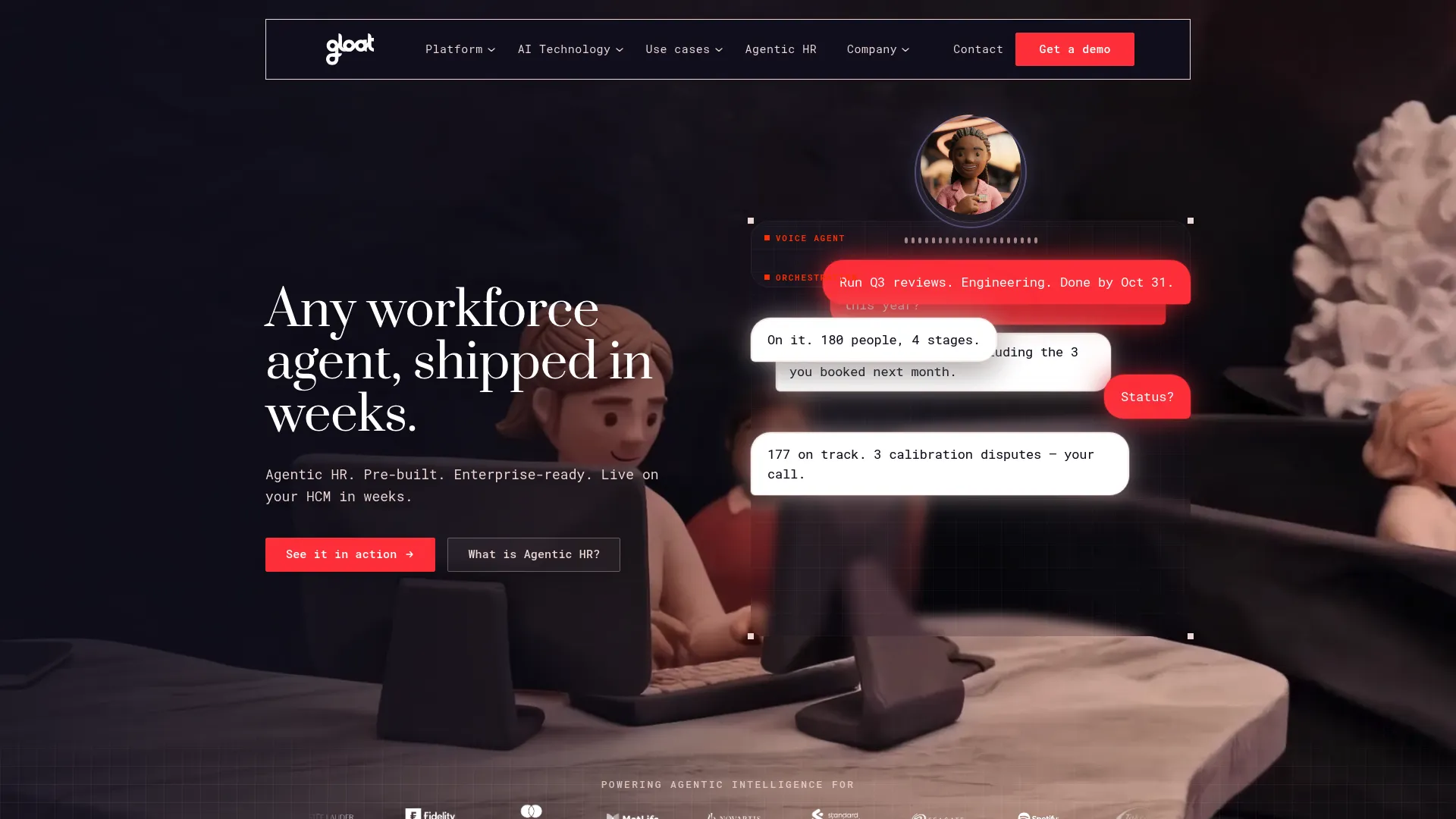
Gloat is the market leader for internal talent marketplaces and skills-based mobility. It uses an AI talent marketplace to match employees to roles, projects, mentors, and learning, all built on a workforce graph that maps skills across the organization. Large enterprises use it to drive both internal mobility and skills-based workforce planning.
Best for: Enterprise teams that want broad opportunity visibility paired with AI matching.
Key strengths
- AI talent marketplace for roles, projects, mentors, learning
- Workforce graph for skills-based organization planning
- Microsoft Teams integration for in-workflow opportunity access
- Depth across large-scale internal opportunity marketplaces
Why choose Gloat: If you are building a large-scale internal talent marketplace and want skills inference woven into every match, Gloat is the reference point. It fits enterprises with the headcount to make a marketplace liquid, meaning enough open opportunities and interested people for matches to actually happen.
Gloat pricing: Pricing is quote-based and not publicly listed. Contact Gloat for a figure tied to your workforce size and modules.
2. Workday Talent Marketplace
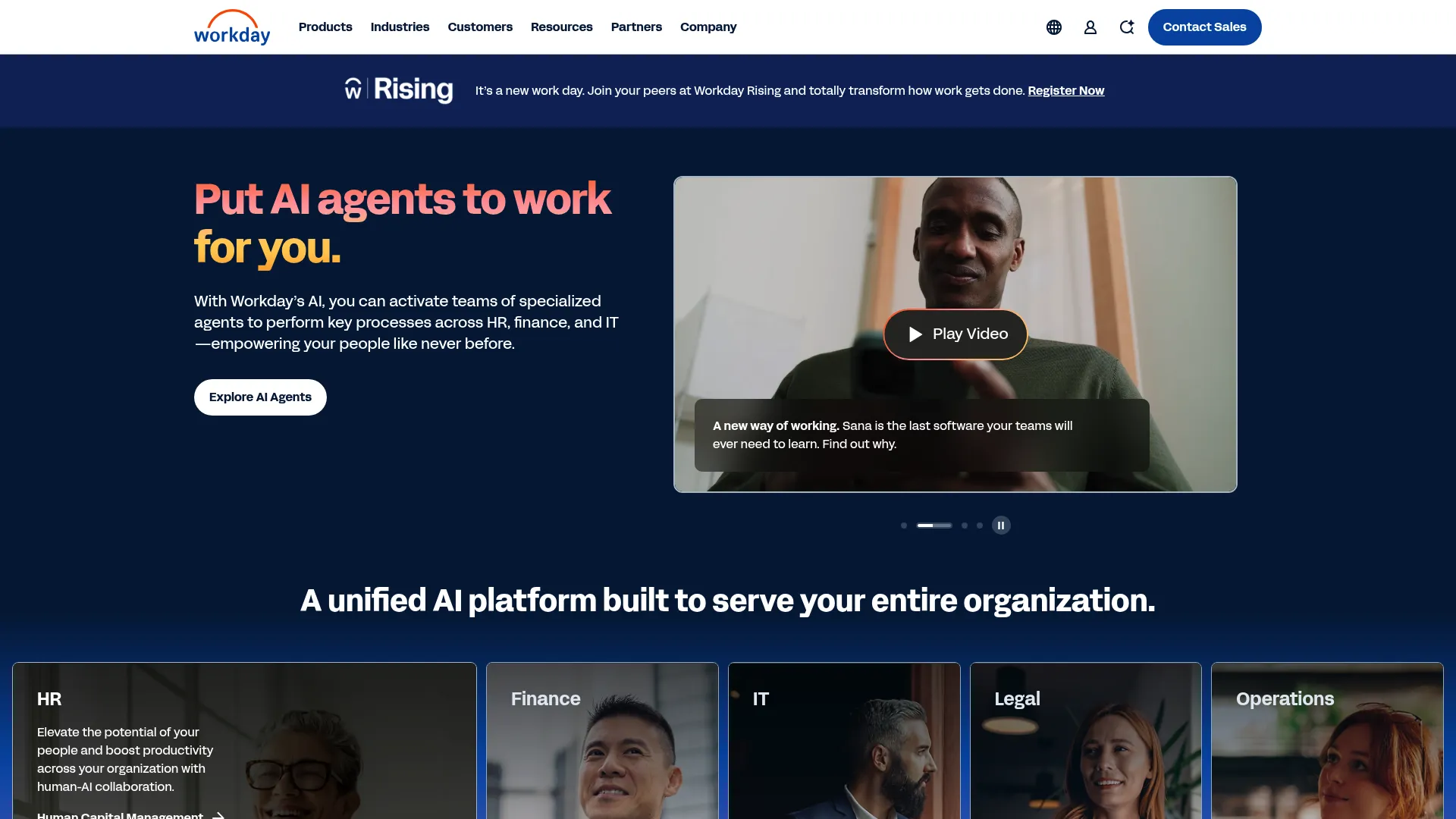
Workday Talent Marketplace brings internal mobility inside the broader Workday HCM. It uses AI-assisted matching to connect employees with projects, gigs, and internal opportunities based on skills and interests. For teams already running Workday, mobility lives where employee data already sits.
Best for: Existing Workday customers who want mobility without a separate system.
Key strengths
- AI-assisted internal mobility matching
- Skills and interests matching to opportunities
- Project and gig talent matching
- Native alignment with the Workday HCM
Why choose Workday Talent Marketplace: The pull here is ecosystem fit. If your people data, payroll, and performance already live in Workday, running mobility on the same platform keeps operations centralized and reduces integration work. It suits organizations that value one system of record over standalone specialization.
Workday Talent Marketplace pricing: Workday does not publish standalone pricing for Talent Marketplace. Pricing is contact-sales only and depends on your existing Workday footprint.
3. Avature Internal Mobility
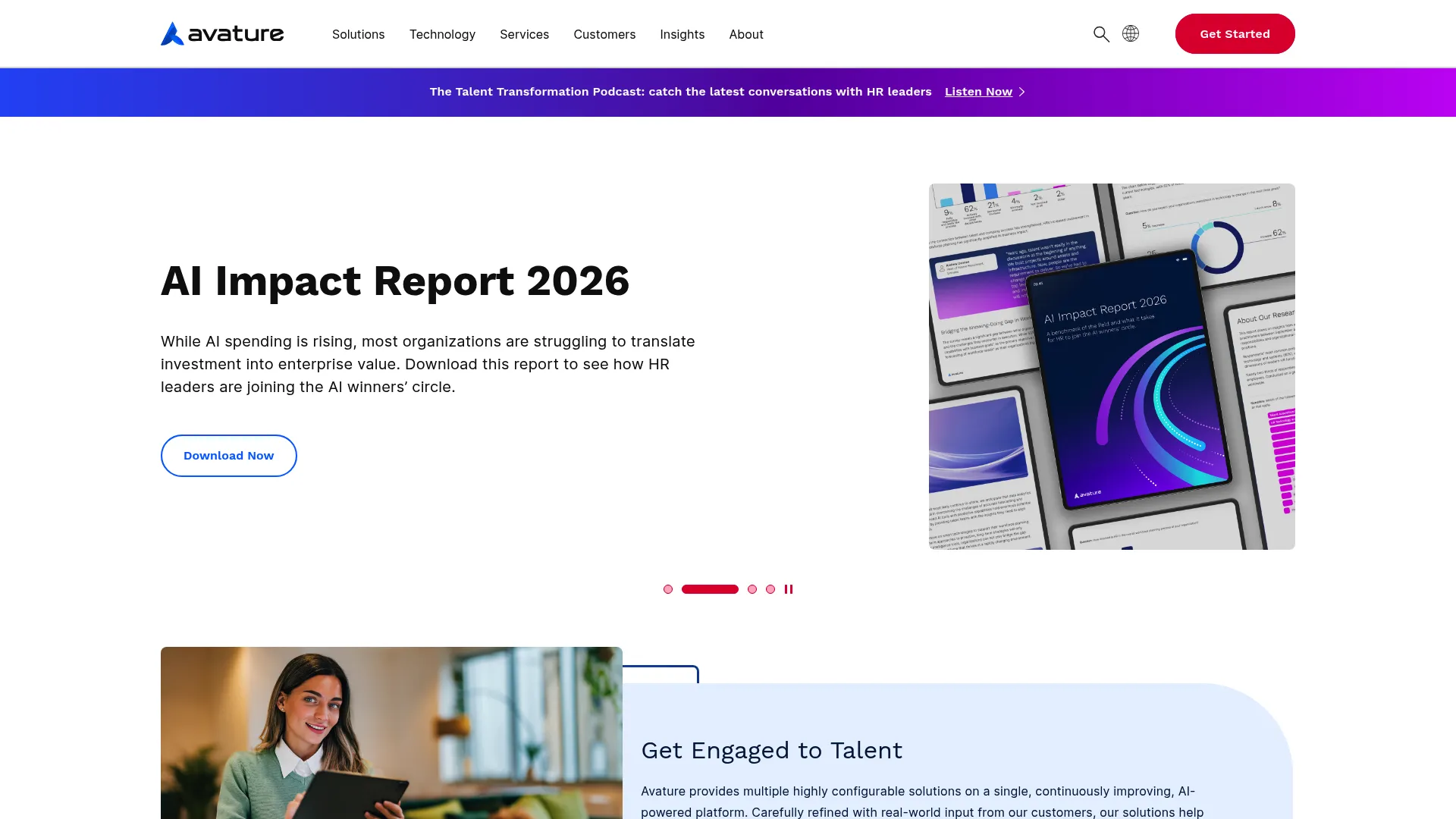
Avature Internal Mobility is an enterprise-grade platform built for organizations with complex policy and compliance needs. It combines AI-powered opportunity matching with a branded internal talent marketplace and skills-gap analysis. Global companies use it to run mobility across regions, business units, and varied approval rules.
Best for: Global organizations with complex governance and policy requirements.
Key strengths
- AI-powered opportunity matching
- Branded internal talent marketplace
- Skills-gap analysis and analytics
- Deep workflow configurability
Why choose Avature Internal Mobility: Avature stands out on configurability. If your mobility program spans multiple countries with different approval chains, seniority rules, and data policies, its workflow engine bends to fit. It suits enterprises that need governance and reporting to hold up under scrutiny.
Avature Internal Mobility pricing: Avature uses quote-based pricing with no public figures. Contact the vendor for pricing tied to your deployment scope.
4. Eightfold AI
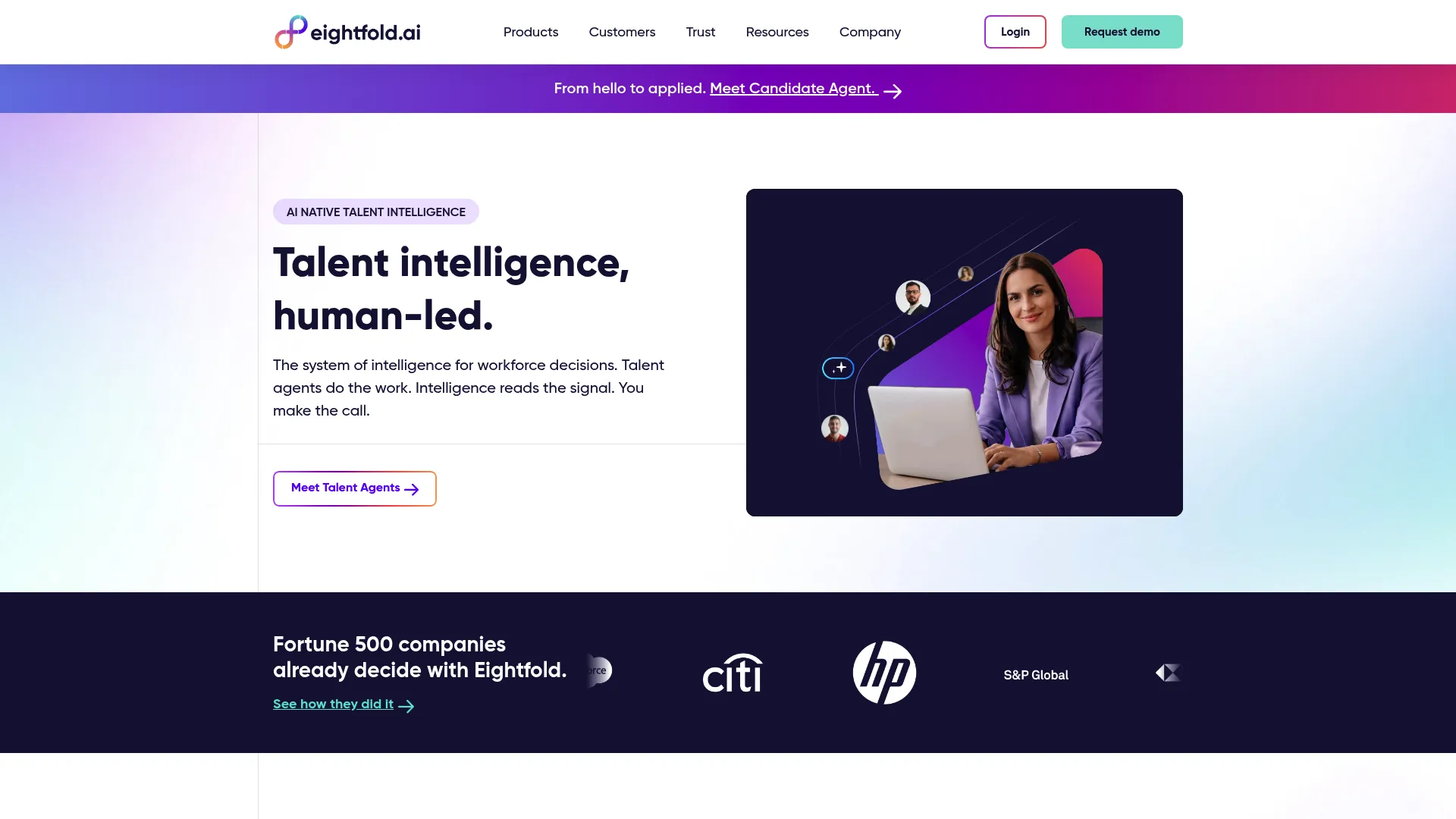
Eightfold AI is an AI-native talent intelligence platform spanning hiring, development, and workforce planning. Its internal mobility use cases sit inside a broader engine that infers skills from experience, not just self-reported profiles. Enterprises pick it when skills data quality and inference are the deciding factors.
Best for: Companies that prioritize AI-driven skills inference over manual skills entry.
Key strengths
- Talent acquisition with AI matching
- Talent management for internal mobility and upskilling
- TalentForge for building custom talent applications and agents
- Workforce insights and career path support
Why choose Eightfold AI: The case for Eightfold is skills intelligence. Its engine infers capabilities employees may not have listed, which improves match quality when your skills data is incomplete. It suits enterprises that want AI to fill the gaps rather than relying on employees to keep profiles current.
Eightfold AI pricing: Eightfold does not display public pricing and routes buyers through demo and quote flows. Contact the vendor for a figure.
5. Fuel50
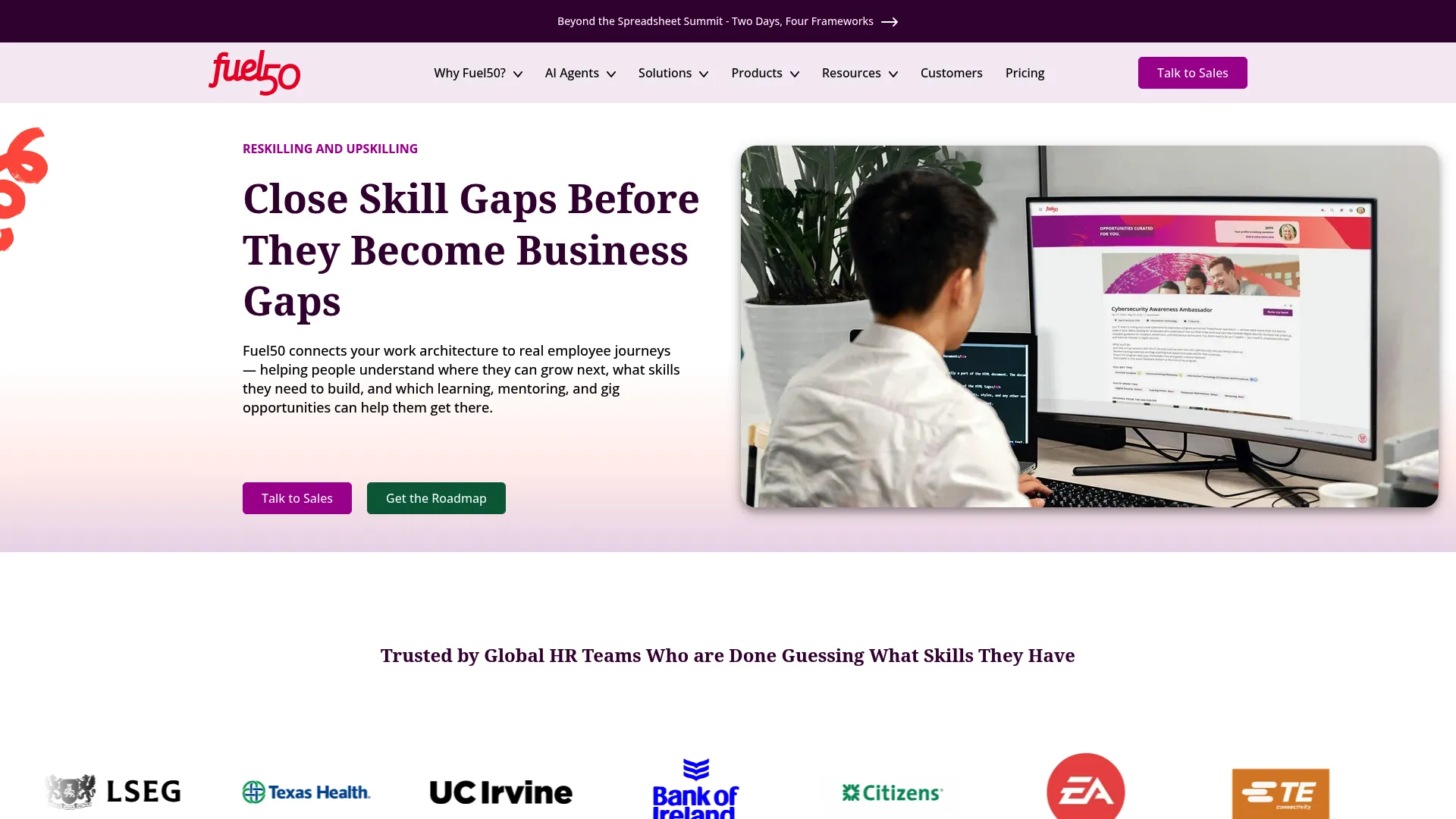
Fuel50 is a talent intelligence platform built around skills, internal mobility, and career development. It centers the employee experience, giving people visible career pathways and a talent marketplace for internal opportunities. A governed skills layer keeps recommendations consistent across the organization.
Best for: Organizations that want employee-driven career pathways front and center.
Key strengths
- Skills intelligence layer
- Talent marketplace and internal mobility
- AI agents and governed talent recommendations
- Employee development journeys and career pathways
Why choose Fuel50: Fuel50 wins when the employee experience is your main buying lens. If you want people to own their growth through clear, visible career pathways rather than navigating a recruiting-first tool, its journey-focused design fits. It suits enterprises building a governed skills foundation with development at the core.
Fuel50 pricing: Fuel50 uses customizable, quote-based pricing. The pricing page directs buyers to sales, so contact Fuel50 for a plan tied to your needs.
6. Phenom
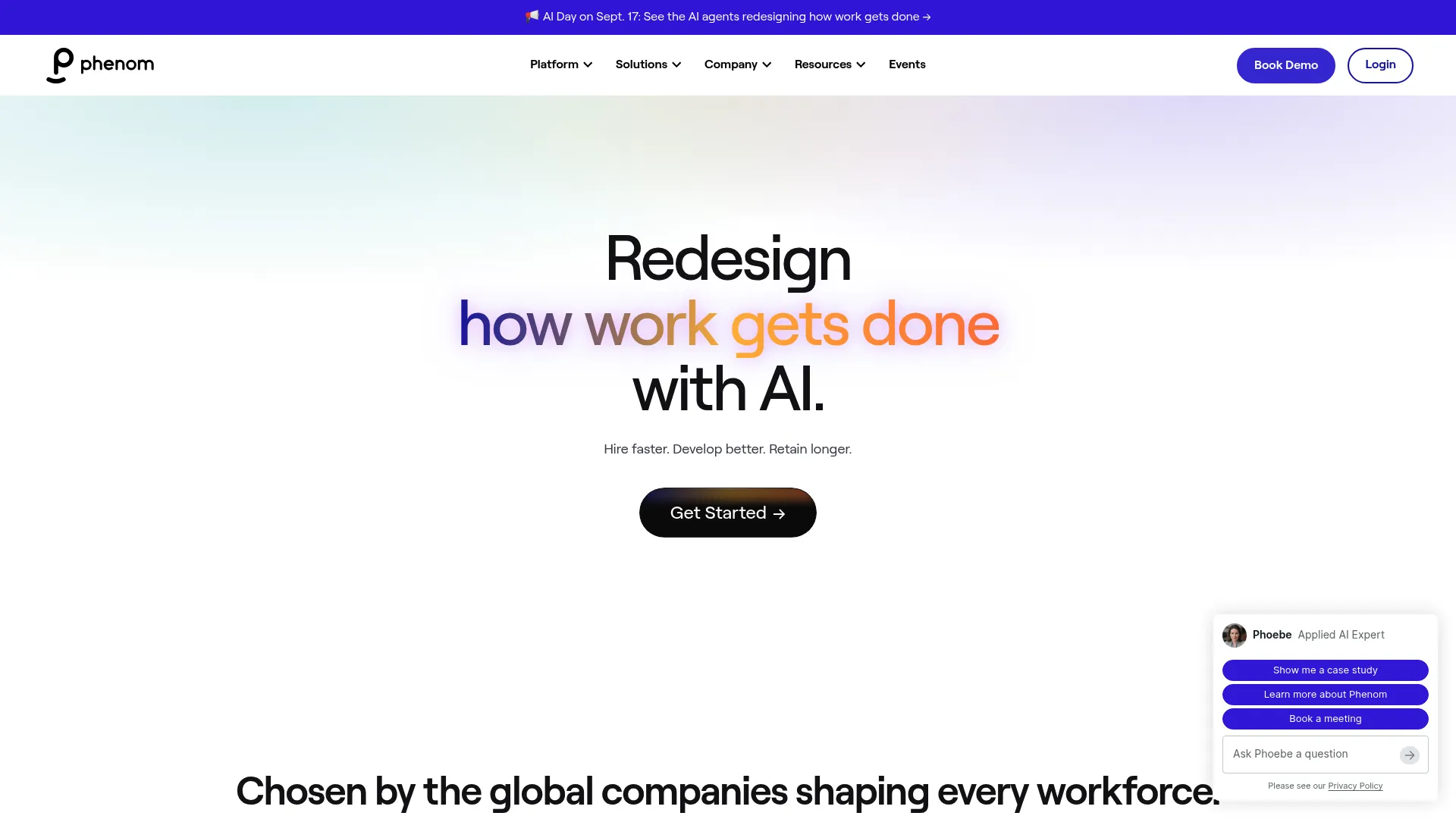
Phenom is an AI-powered talent experience platform for hiring, developing, and retaining employees. It layers candidate, employee, and recruiter experiences into one system, with internal opportunity surfacing built into the employee side. Large teams choose it when they want an end-to-end talent experience rather than a narrow point tool.
Best for: Large teams that want employee-facing talent experiences across the lifecycle.
Key strengths
- Candidate experience layer
- Employee experience with internal opportunity surfacing
- Recruiter experience tooling
- Skills insights and engagement features
Why choose Phenom: Phenom fits when you want mobility inside a full talent experience, not bolted on. If your team cares about a consistent experience from hire through internal growth, its unified layer connects those stages. It suits enterprises consolidating candidate and employee journeys under one roof.
Phenom pricing: Phenom does not display public pricing. Its pricing page routes visitors to contact sales or submit an RFP, so request a quote directly.
7. MentorcliQ
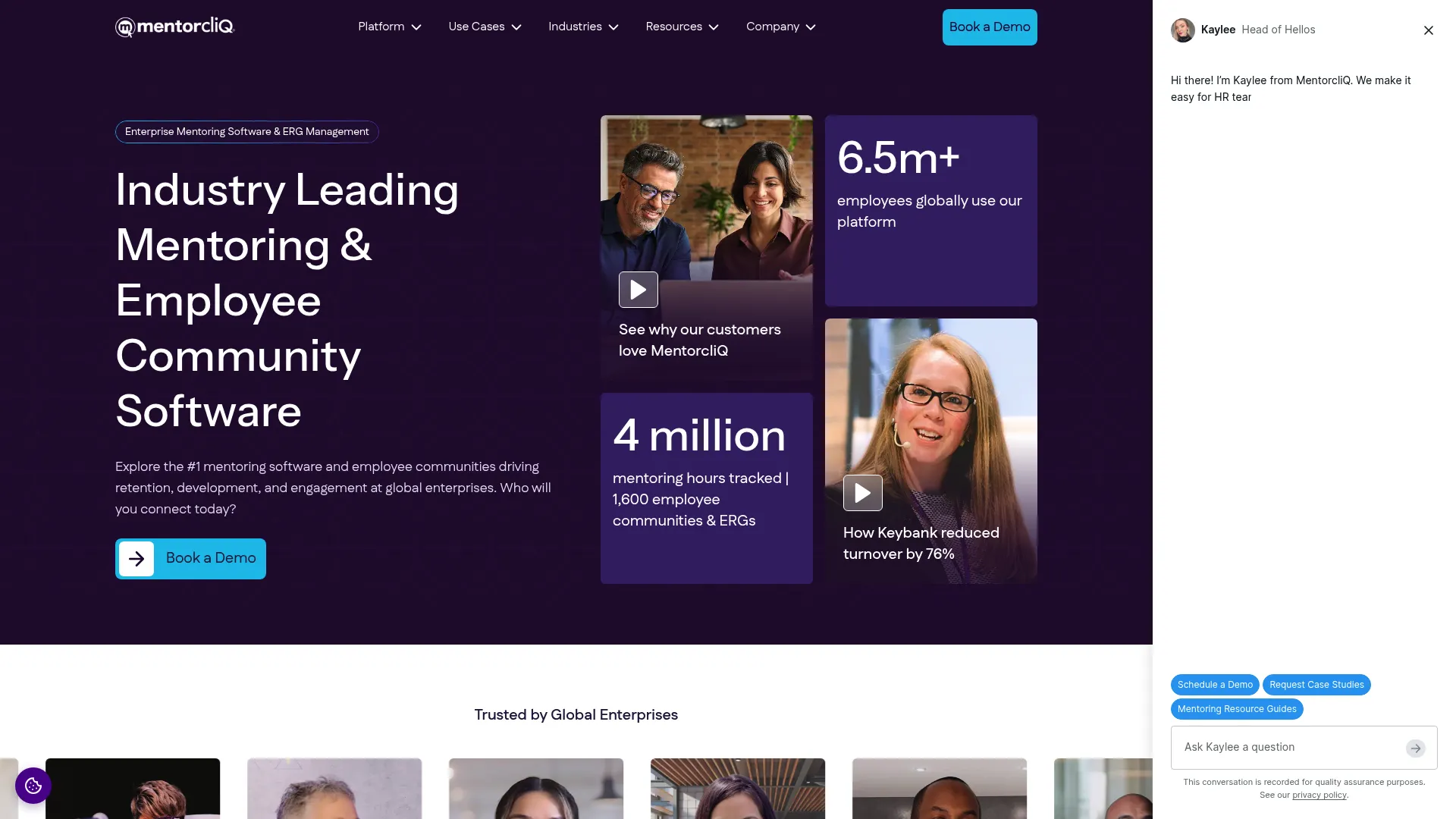
MentorcliQ is enterprise mentoring and employee community software that supports internal mobility as part of broader development. It handles mentor-mentee matching, program tracking, and employee community management. Global organizations use it to run mentoring, leadership development, and ERG programs alongside mobility.
Best for: Teams that treat mobility as part of mentorship and development programs.
Key strengths
- Mentor-mentee matching
- Program tracking and analytics
- Employee community and ERG management
- Career development support
Why choose MentorcliQ: MentorcliQ fits organizations that see mobility and mentorship as one motion. If your development strategy pairs internal movement with structured mentoring and communities, it keeps both in a single platform. It suits HR and L&D teams building growth culture, not just filling roles.
MentorcliQ pricing: MentorcliQ does not show public numeric pricing and emphasizes demo requests. Contact the vendor for a plan tied to your program size.
8. SAP SuccessFactors
SAP SuccessFactors is a cloud HCM suite covering core HR, recruiting, onboarding, learning, performance, and talent management. Its mobility features suit organizations already standardized on SAP that want career development inside the suite. Buyers pick it for consolidation over standalone specialization.
Best for: SAP customers who want mobility folded into a broader HCM suite.
Key strengths
- Core HR and Employee Central
- Recruiting and onboarding
- Learning, performance, and talent management
- Suite-wide HR data centralization
Why choose SAP SuccessFactors: The draw is consolidation. If your HR data already lives in SAP, running mobility and career development inside the same suite centralizes reporting and reduces vendor sprawl. It suits mid-market to enterprise teams that prioritize an integrated HCM over a specialized mobility tool.
SAP SuccessFactors pricing: SAP publishes product-specific pricing. Some offerings show public per-unit rates, such as SmartRecruiters for SAP SuccessFactors at USD 4.66 per user per month, while others route to request-a-quote. Contact SAP for suite pricing.
Considerations
Before you commit, run each platform through this buyer's checklist.
Skills data quality
Match quality is only as good as your skills data. If profiles are thin or self-reported inconsistently, recommendations suffer. Ask how each platform builds and maintains skills profiles, and whether it can infer skills from experience rather than relying on manual entry.
Workflow configurability
Global organizations rarely run one approval process. Evaluate whether the platform handles rules by geography, seniority, and business unit. Check how routing and approvals flow, and whether managers can configure policies without engineering help.
Analytics and reporting
You will need to prove the program works. Look for analytics and reporting that track fills, movement patterns, participation rates, and retention over time. Without baseline metrics before launch, you cannot show ROI to leadership later.
Equity and bias mitigation
Matching algorithms can hide bias. Ask how each vendor mitigates it, whether through blind screening, transparent matching logic, or auditable recommendations. Employees should trust that opportunities are surfaced fairly, not filtered by hidden assumptions.
Security and compliance
Employee data is sensitive. Treat security as a checklist item: confirm SOC 2, ISO, and where relevant FedRAMP, plus GDPR and regional privacy handling. For global rollouts, verify the platform supports data residency and consent rules across the regions you operate in.
Conclusion
The best internal mobility software depends on what you are optimizing for. If skills matching and marketplace depth lead, Gloat and Eightfold AI are the reference points. If transparent career pathways and employee ownership matter most, Fuel50 fits. For teams already committed to an HCM, Workday Talent Marketplace and SAP SuccessFactors keep mobility inside the suite. And if mentorship and development sit alongside movement, MentorcliQ pairs the two.
Start by naming your primary driver: skills, workflow control, suite consolidation, or development programs. Then shortlist two or three platforms, request quotes tied to your headcount, and ask each vendor to show how it tracks retention and fills over time. That measurement story is what will justify the investment internally.
The organizations that win at internal talent mobility in 2026 treat it as a retention and workforce agility system, not a job board. Pick the platform that fits that ambition.
FAQs
Internal mobility software is the broad category for tools that move employees into new roles, projects, and rotations. A talent marketplace is a specific model inside it, a central hub matching people to opportunities by skills and interest. Most modern platforms are built around a marketplace, so the terms often overlap in practice.
It makes growth visible. When employees can see and pursue internal roles, projects, and career pathways on their own, they stay because a future feels reachable. Instead of leaving to grow elsewhere, they move within. Transparent opportunity access is one of the strongest levers against churn.
Prioritize skills-based matching, an internal opportunity marketplace, and analytics and reporting that track fills and retention. Workflow configurability matters for global teams with varied approval rules. Career path visibility is what keeps employees engaged, so weight it heavily if the employee experience is your main lens.
Track internal fill rate, the share of roles filled by internal candidates, then layer on movement patterns, participation rates, and retention among people who moved. Set a baseline before launch so you can show change. Time-to-fill for internal versus external hires is another strong ROI signal.
Yes. Most talent mobility platforms treat gigs, projects, rotations, and stretch assignments as first-class movement alongside permanent roles. This lets employees build skills and stay engaged without waiting for a promotion, and it helps teams staff short-term needs from internal talent.
Ask vendors how their matching logic works and whether it is auditable. Options include blind screening that hides demographic signals, transparent matching that shows why a person was surfaced, and regular audits of recommendation patterns. The goal is opportunities surfaced on skills and interest, not hidden assumptions.
Look for workflow configurability across geographies, seniority levels, and business units, plus strong data residency and privacy handling. Confirm the platform supports multiple languages and regional approval rules. Enterprise-grade security and analytics that roll up across regions are essential for proving impact at scale.