Real estate leads come from everywhere at once. Portals, IDX forms, paid ads, open house sign-ins, referrals, listing pages, phone calls. The problem is rarely a shortage of leads. The problem is that they scatter across disconnected tools, follow-up breaks in three different places, and by the time you try to explain which campaign drove the most appointments, the attribution is already a mess.
According to the National Association of REALTORS® (2025), 52% of buyers found their home online that year. Mobile devices drove 70% of home searches. That's a lot of digital surface area to manage, and most teams are stitching it together with a mix of CRM entries, email blasts, and spreadsheets.
Real estate marketing software exists to close that gap. The right stack connects lead capture to follow-up, listing promotion to reporting, and creative production to attribution. The global real estate software market reached $12.8 billion in 2025 (Grand View Research, 2026), which tells you how many vendors are trying to solve this. The harder question is which tools actually belong in your workflow.
What's inside
This guide covers 15 real estate marketing tools evaluated for agents, teams, brokerages, and commercial real estate marketers. Tools were selected based on four criteria:
- Real estate workflow fit: CRM, IDX, MLS compatibility, listing promotion, and follow-up automation
- Marketing workflow coverage: Lead capture through attribution and reporting
- Pricing transparency: Verified from vendor pricing pages and current review data
- Stack fit by org size: Solo agents, growing teams, brokerages, and CRE organizations
The goal is not to help you buy 15 tools. It's to help you identify the four or five that fix your highest-value workflow gaps.
TL;DR
- Best overall real estate CRM: Wise Agent for agents and small teams that need contact management, drip campaigns, transaction workflows, and predictable pricing
- Best for lead routing at scale: Follow Up Boss for growing real estate teams that need fast lead response and accountability across agents
- Best for broad marketing automation: HubSpot for brokerages that need CRM, email, landing pages, and reporting in one platform
- Best for CRE marketing operations: SharpLaunch for commercial property websites, document portals, lead capture, and asset-level reporting
- Best creative pairing: Canva for fast listing graphics plus Matterport for immersive virtual property tours
What is real estate marketing software?
Real estate marketing software is a set of digital tools that helps agents, teams, brokerages, and property marketers attract leads, promote listings, automate follow-up, manage contacts, and measure campaign performance.
Core categories
- CRM and lead management: Contact records, activity history, pipeline stages, and agent assignment
- IDX websites and landing pages: Property search, listing display, and lead capture forms with MLS integration
- Email and SMS follow-up: Drip campaigns, automated nurture, and one-to-one outreach
- Social media publishing: Scheduling, monitoring, and multi-channel content calendars
- Listing design and creative production: Flyers, postcards, social graphics, and presentation templates
- Virtual tours and property visualization: 3D walkthroughs, digital twins, and floor plans
- Call tracking and attribution: Trackable phone numbers, source attribution, and conversation intelligence
- AI-assisted content creation: Copy drafts, listing descriptions, and campaign ideation
- CRE property marketing operations: Property websites, document portals, and investor or tenant lead management
Key features to look for
- Lead capture forms with source tracking and routing rules
- CRM records with full activity history and drip automation
- IDX or MLS compatibility where the workflow requires it
- Website and landing page builder with real estate templates
- Social scheduling and content calendar
- Property flyer, brochure, and listing asset creation
- Call tracking tied to ad sources and campaign reporting
- Dashboard reporting by channel, property, or agent
What makes real estate different from generic marketing
Real estate marketing operates under local search dynamics, MLS rules, listing timelines, transaction stages, and high-value offline conversions. Many high-intent prospects still convert by phone, which means call attribution matters more here than in most SaaS categories. Fair housing considerations also apply to advertising copy and targeting. Always review AI-generated content and campaign materials against your brokerage policies and applicable advertising rules before publishing.
When to use real estate marketing software
Capture and route leads faster
Use a dedicated real estate CRM or lead platform when your team gets leads from multiple sources and response speed matters. Speed without context creates low-quality handoffs. The right tool shows source, property interest, activity history, and the next suggested action before the agent picks up the phone.
Turn listings into repeatable campaigns
Use listing marketing tools when each new property requires building assets from scratch. Good software pulls from a central listing record to generate flyers, social posts, property pages, email campaigns, and seller reports, cutting the time between live listing and full campaign deployment.
Prove which channels drive appointments and pipeline
Use call tracking and CRM attribution when leadership asks which campaigns drive revenue. Real estate marketers need source-level reporting across forms, calls, paid ads, and CRM stages. Without it, you're optimizing for clicks while the actual pipeline signal sits in a phone log nobody checks.
Real estate marketing software comparison
The table below sorts tools by workflow category. Don't buy the whole list. Start with the tool that fixes the biggest gap between your current lead volume and your current conversion rate.
| # | Product | Best for | Key differentiator | Pricing | G2 rating |
|---|---|---|---|---|---|
| 1 | Wise Agent | Real estate CRM for agents and small teams | CRM, drip campaigns, transactions, real estate workflows | From $49/mo | N/A |
| 2 | Follow Up Boss | Lead routing and team follow-up | Fast lead response, smart lists, action plans, integrations | From $69/user/mo | 4.6/5 |
| 3 | HubSpot | Broad CRM and marketing automation | CRM, email, forms, landing pages, reporting | Free; paid from $7/seat/mo | 4.4/5 |
| 4 | Market Leader | Lead generation plus CRM | Buyer and seller leads with CRM and marketing center | Teams from $329/mo | 3.2/5 |
| 5 | AgentFire | Real estate websites and local SEO | IDX websites, lead capture, hyperlocal content | Setup from $800; monthly from $165 | 4.9/5 |
| 6 | Placester | Agent and brokerage website building | IDX websites, templates, managed services | From $5/mo per active site | 3.5/5 |
| 7 | SharpLaunch | CRE marketing operations | Property websites, document portals, lead capture, CRE reporting | From $399/mo (annual) | 4.7/5 |
| 8 | MAXA | Branded listing marketing assets | AI-powered data pipelines (see entry for context) | Free tier available | N/A |
| 9 | Matterport | 3D virtual property tours | Immersive digital twins, floor plans, AI property media | Free; paid from $12/mo | 4.1/5 |
| 10 | Canva | Fast creative production | Listing graphics, social posts, brand kits, templates | Free; Pro from $144/yr | 4.7/5 |
| 11 | Hootsuite | Social media scheduling | Multi-channel publishing, monitoring, reporting | From $99/mo | 4.3/5 |
| 12 | Mailchimp | Email marketing for smaller teams | Email campaigns, templates, audience journeys | Free; paid from $13/mo | 4.3/5 |
| 13 | ActiveCampaign | Marketing automation and nurture | Email automation, CRM, lead scoring, campaign workflows | Contact-volume pricing; free trial | 4.4/5 |
| 14 | CallRail | Call attribution and source tracking | Call tracking, form tracking, conversation intelligence | From $50/mo | 4.5/5 |
| 15 | ChatGPT | AI-assisted marketing drafts | Listing copy, email drafts, ad concepts, content planning | Free; Plus from $20/mo | 4.6/5 |
Best 15 real estate marketing software tools for 2026
1. Wise Agent
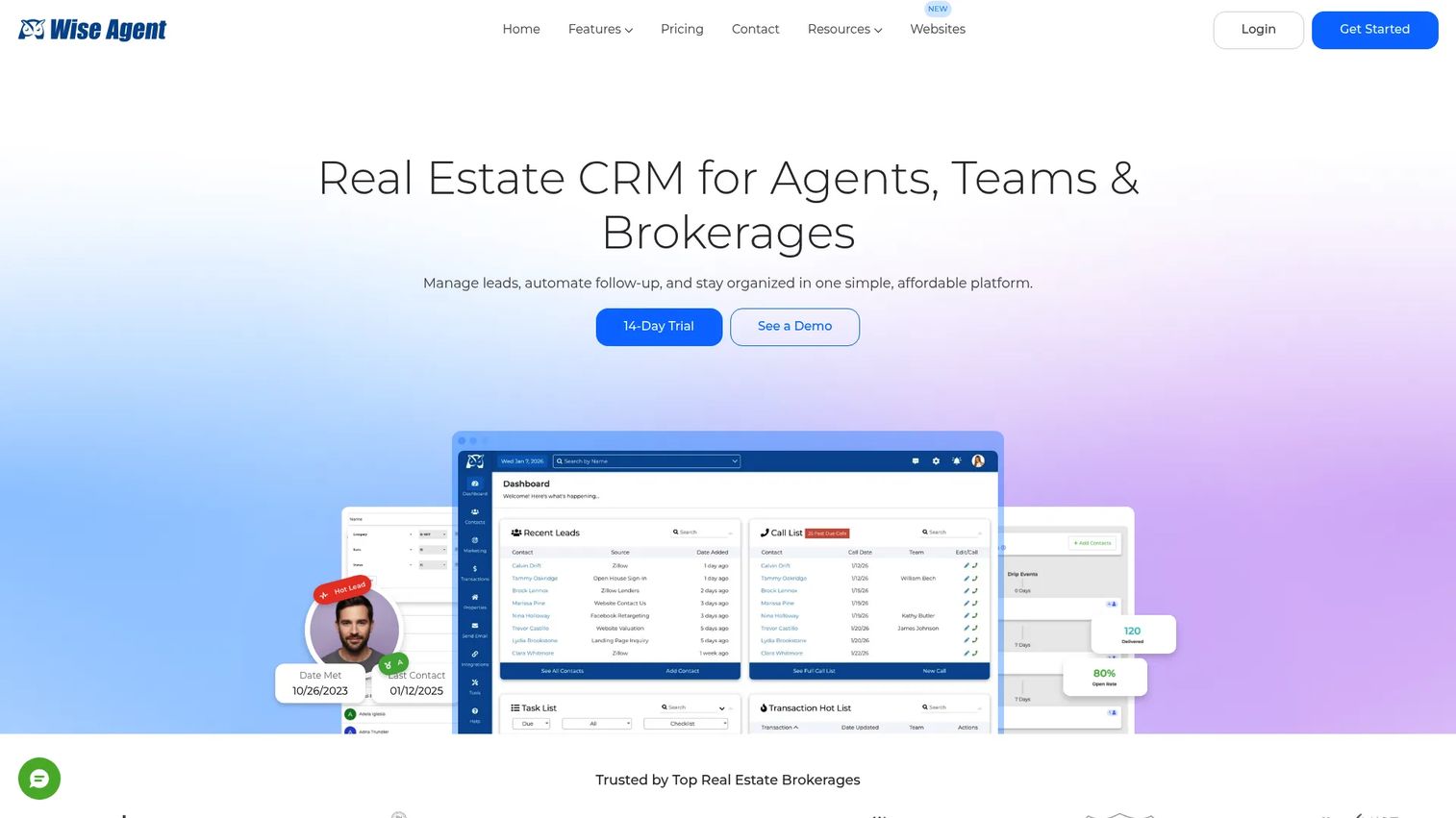
Wise Agent is a real estate CRM built specifically for agents, teams, and brokerages. It covers contact management, lead automation, drip marketing via email and text, transaction checklists, and team collaboration tools in one platform. The interface is purpose-built for real estate workflows rather than adapted from a generic CRM, which saves significant setup time.
Best for: Solo agents and small teams that need a real estate-specific CRM without paying for enterprise complexity.
Key features
- Contact and relationship management with lead source tracking
- Email, text, and drip marketing campaigns
- Transaction management with checklists and milestones
- Team collaboration, lead assignment, and reporting
- Mobile web app with 24/7 support
Why choose Wise Agent: The real estate-specific workflow fit is the main reason to choose it. If you need one tool to handle contacts, properties, tasks, and follow-up without separate integrations, Wise Agent is structured for that from the start.
Wise Agent pricing: Plans start at $49/month (or $42/month billed annually) and include up to five team members. The CRM plus WiseSocial plan is $69/month. Enterprise pricing for teams of 15 or more agents is custom.
2. Follow Up Boss
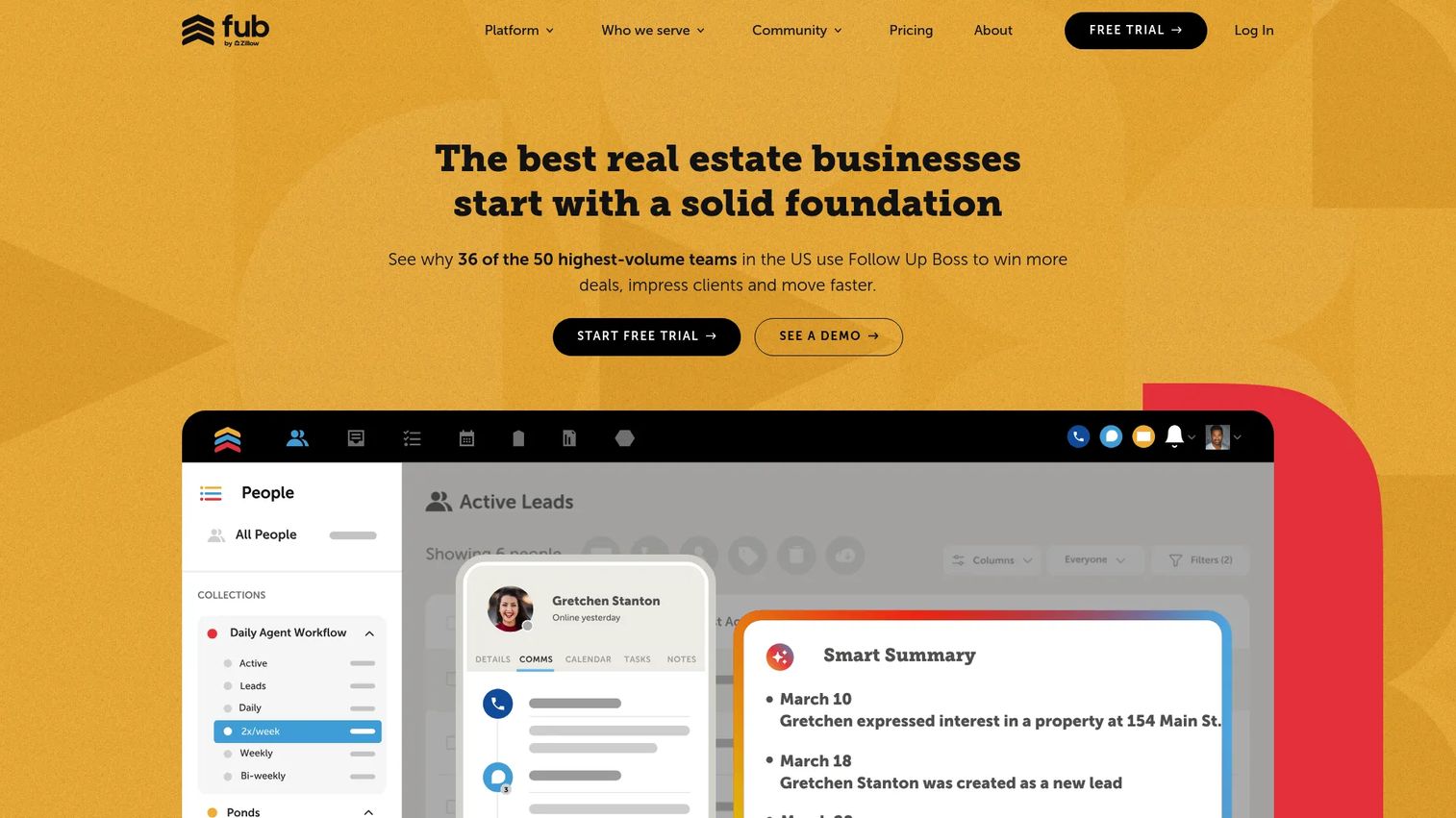
Follow Up Boss is a real estate CRM focused on lead response speed and team accountability. It centralizes leads from multiple sources, routes them to agents, and gives team leads visibility into pipeline activity, call volume, and follow-up compliance. AI features include smart summaries, suggested tasks, and predictive lead prioritization.
Best for: Growing real estate teams that need faster lead response, consistent follow-up, and clear performance visibility across agents.
Key features
- Lead-source integrations and automated lead distribution
- Smart Lists and automated follow-up action plans
- Integrated calling, texting, and email within the CRM
- Reporting and team performance tracking
- AI-assisted smart summaries and lead prioritization
Why choose Follow Up Boss: It fits teams that already have multiple lead sources running and need to stop losing deals to slow or uneven follow-up. The accountability layer is what separates it from simpler CRMs.
Follow Up Boss pricing: The Grow plan starts at $69/user/month (or $58 billed annually). The Pro plan covers 10 users at $499/month. The Platform plan covers 30 users at $1,000/month. Calling is an add-on on the Grow plan. All plans include a 14-day free trial.
G2 rating: 4.6/5
3. HubSpot

HubSpot is a broad customer platform covering CRM, email marketing, landing pages, marketing automation, sales pipeline, and reporting. It is not real estate-specific, but brokerages and growth-focused teams use it as a scalable marketing system that connects campaign execution to pipeline data. The free CRM tier is a genuine entry point, not a limited demo.
Best for: Brokerages and growth marketing teams that need CRM, campaign execution, and attribution reporting without a real estate-native platform.
Key features
- Free CRM with contact, deal, and activity records
- Email campaigns and marketing automation workflows
- Landing pages and form builders
- Reporting dashboards across marketing and sales
- Integrations with hundreds of real estate and marketing tools
Why choose HubSpot: HubSpot is strongest when you need a scalable marketing system rather than a narrowly real estate-specific CRM. The tradeoff is setup time and the cost of Marketing Hub at scale.
HubSpot pricing: Free tools available at $0. Starter begins at $7/seat/month. Professional starts at $800/month with a required $3,000 onboarding fee. Enterprise starts at $3,600/month.
G2 rating: 4.4/5 (Marketing Hub)
4. Market Leader
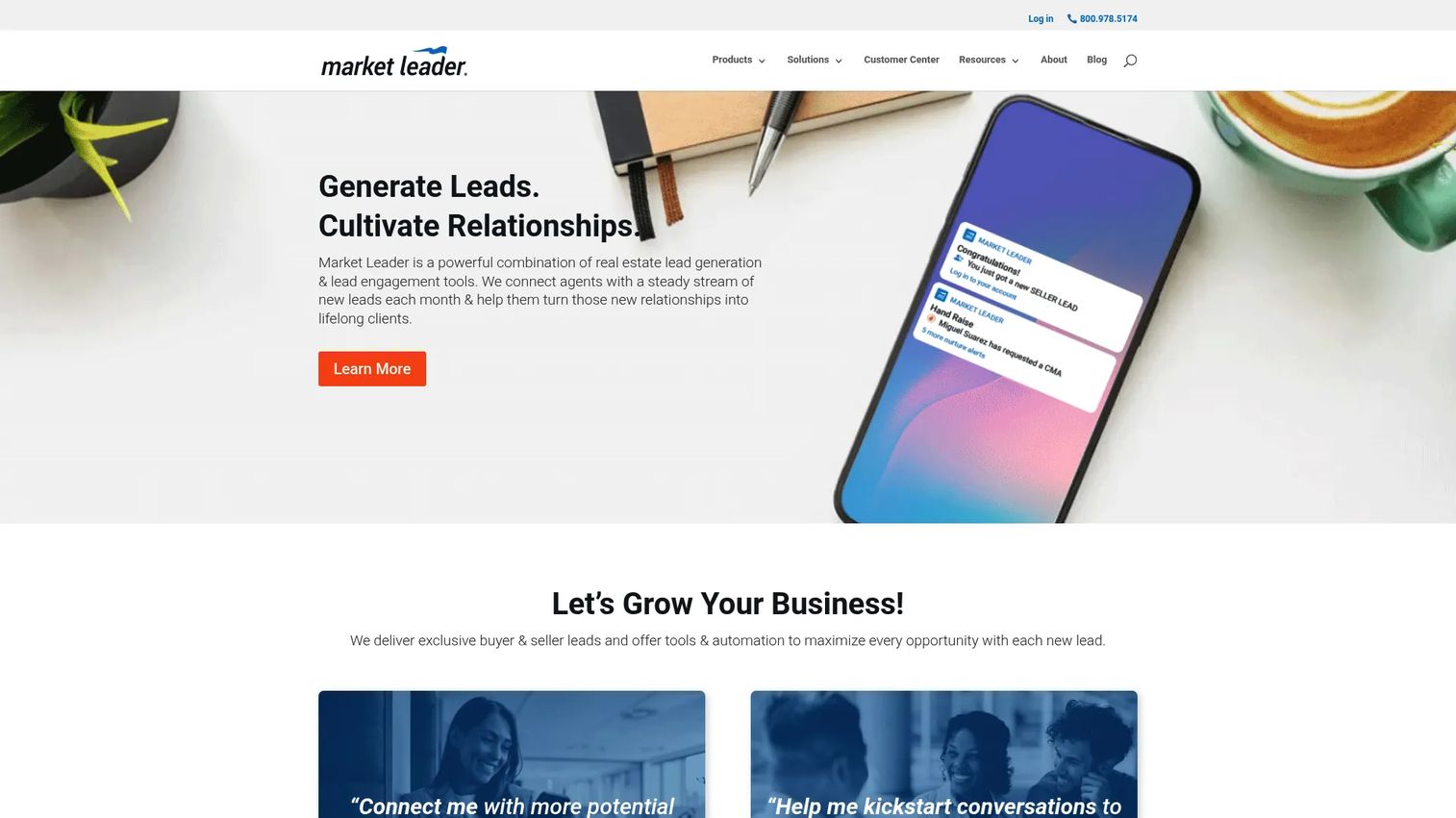
Market Leader combines real estate lead generation with CRM and a marketing center. The platform delivers exclusive buyer and seller leads directly into the CRM, alongside a customizable IDX-enabled website, email and SMS nurture automation, and a library of over 1,500 print and email templates. Lead exclusivity by territory is a core part of the value proposition.
Best for: Agents and small teams that want paid lead flow packaged with the CRM and follow-up infrastructure to work those leads.
Key features
- Exclusive buyer and seller lead generation by territory
- Real estate CRM with automated email and SMS nurture
- Drag-and-drop IDX website builder with lead capture
- Marketing Center with 1,500+ print and email templates
- Mobile app for contact management and notifications
Why choose Market Leader: It fits teams that want to stop sourcing leads separately and managing follow-up in a different tool. Before buying, compare lead quality, territory availability, and contract terms against your current cost per lead.
Market Leader pricing: The Teams plan is publicly listed at $329/month. Professional pricing requires contacting sales. No free tier is available.
G2 rating: 3.2/5
5. AgentFire
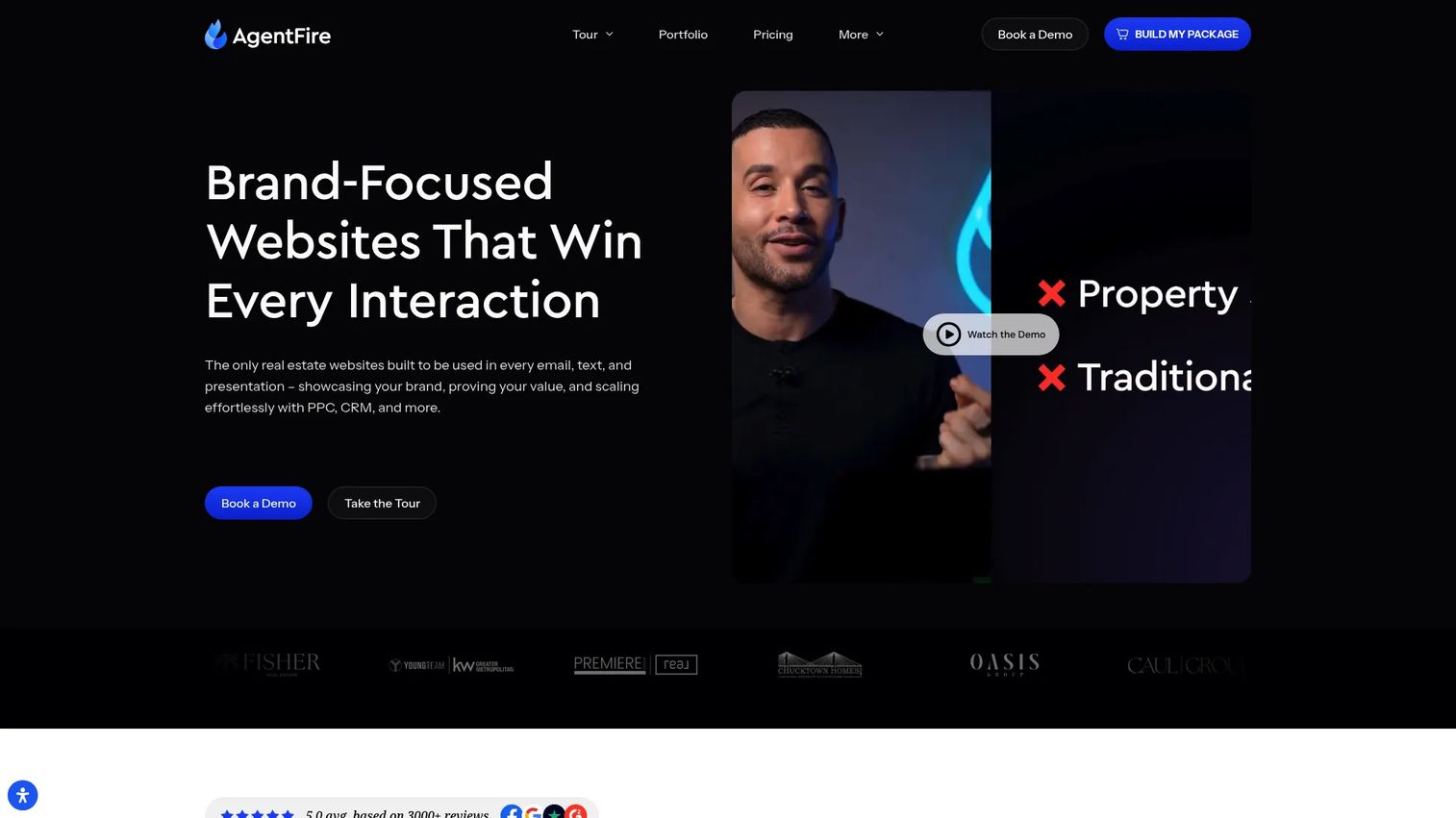
AgentFire builds branded real estate websites with IDX integration, lead capture, hyperlocal content, and AI-powered marketing tools. The platform is designed around local authority: Neighborhood pages, automated market reports, home valuation tools, and a listings hub that makes agent websites work as actual lead engines rather than digital brochures.
Best for: Agents and teams that treat their website as a primary lead source and want strong local search positioning.
Key features
- IDX-enabled real estate websites with lead capture
- Area Guides, neighborhood pages, and automated market reports
- Home valuation tools and listings hub
- AI-powered content and marketing with #DRIP and Content Magic
- CRM and PPC integrations, plus AgentFire Go mobile app
Why choose AgentFire: If website conversion and local SEO are the highest-priority workflows, AgentFire is structured for exactly that. It's not a full CRM, so pair it with a dedicated CRM for lead follow-up.
AgentFire pricing: Design packages start at $800 (Ignite), $2,750 (Custom), or $6,500 (Firebrand) as one-time setup fees. Monthly plans run $165 (Pro) or $215 (Plus). IDX is included. Add-ons such as local SEO setup and home value tools cost extra.
G2 rating: 4.9/5
6. Placester
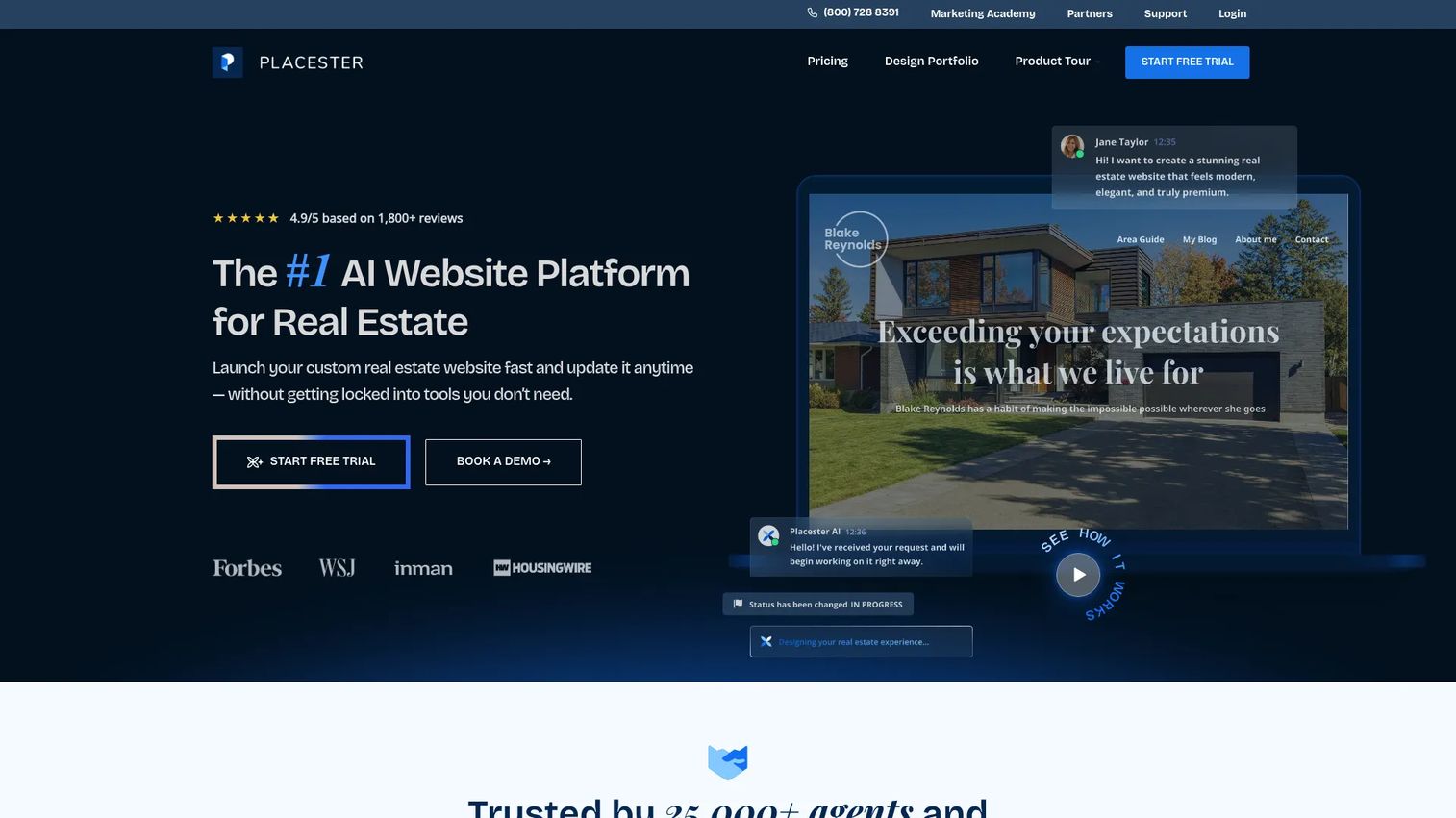
Placester provides real estate websites for agents, teams, and brokerages with IDX property listings, lead management, blogging, social automation, and managed service options. The platform uses AI-assisted editing and offers brokerage-level site management, making it practical for organizations that need multiple agent sites from one account.
Best for: Agents and brokerages that need an IDX website without the overhead of a custom web build or a high setup fee.
Key features
- AI-powered website editing with IDX property listings
- Lead management and CRM
- Blogging, content publishing, and social automation
- Mortgage calculator and property landing pages
- Managed services for hands-off site management
Why choose Placester: It is strongest when a generic website builder creates too much manual setup and a custom build isn't in the budget. The managed service option is useful for agents who don't want to touch the site at all.
Placester pricing: Placester uses usage-based active-agent pricing at $5/month per active site under broker subscriptions, plus a $25/month IDX support fee per approved IDX integration. Full plan pricing should be confirmed directly with Placester, as the public pricing page was not fully accessible at generation time.
G2 rating: 3.5/5
7. SharpLaunch
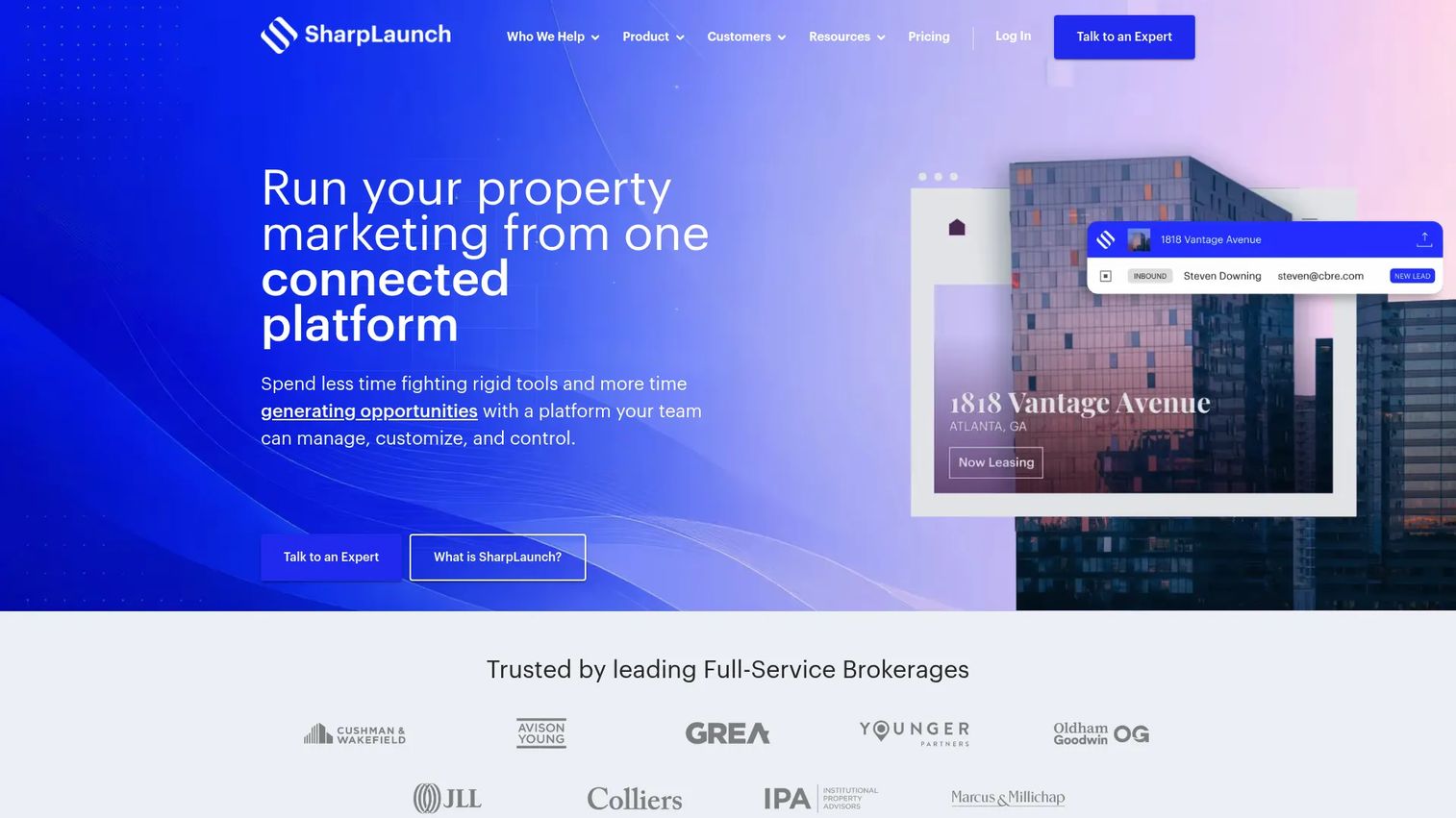
SharpLaunch is built for commercial real estate teams that need property-level marketing operations. It covers property websites, document portals with prospect activity tracking, email marketing campaigns, interactive site and floor plans, lead management, and a marketing intelligence dashboard. CRE marketers have fundamentally different needs than residential agents, and SharpLaunch is designed around those differences.
Best for: CRE owners, asset managers, and brokerage teams marketing commercial property listings to investors and tenants.
Key features
- Property websites with no-code customization and real-time publishing
- Document portal with prospect activity tracking
- Email marketing campaigns with performance tracking
- Interactive property maps, site plans, and floor plans
- Marketing intelligence dashboard and lead management
Why choose SharpLaunch: CRE marketers need property-level reporting, controlled document access, and stakeholder-facing asset presentation. Residential CRM tools rarely cover these workflows without significant custom configuration.
SharpLaunch pricing: Plans start at $399/month billed annually. Custom pricing is available via a sales walkthrough. No free tier is offered.
G2 rating: 4.7/5
8. MAXA
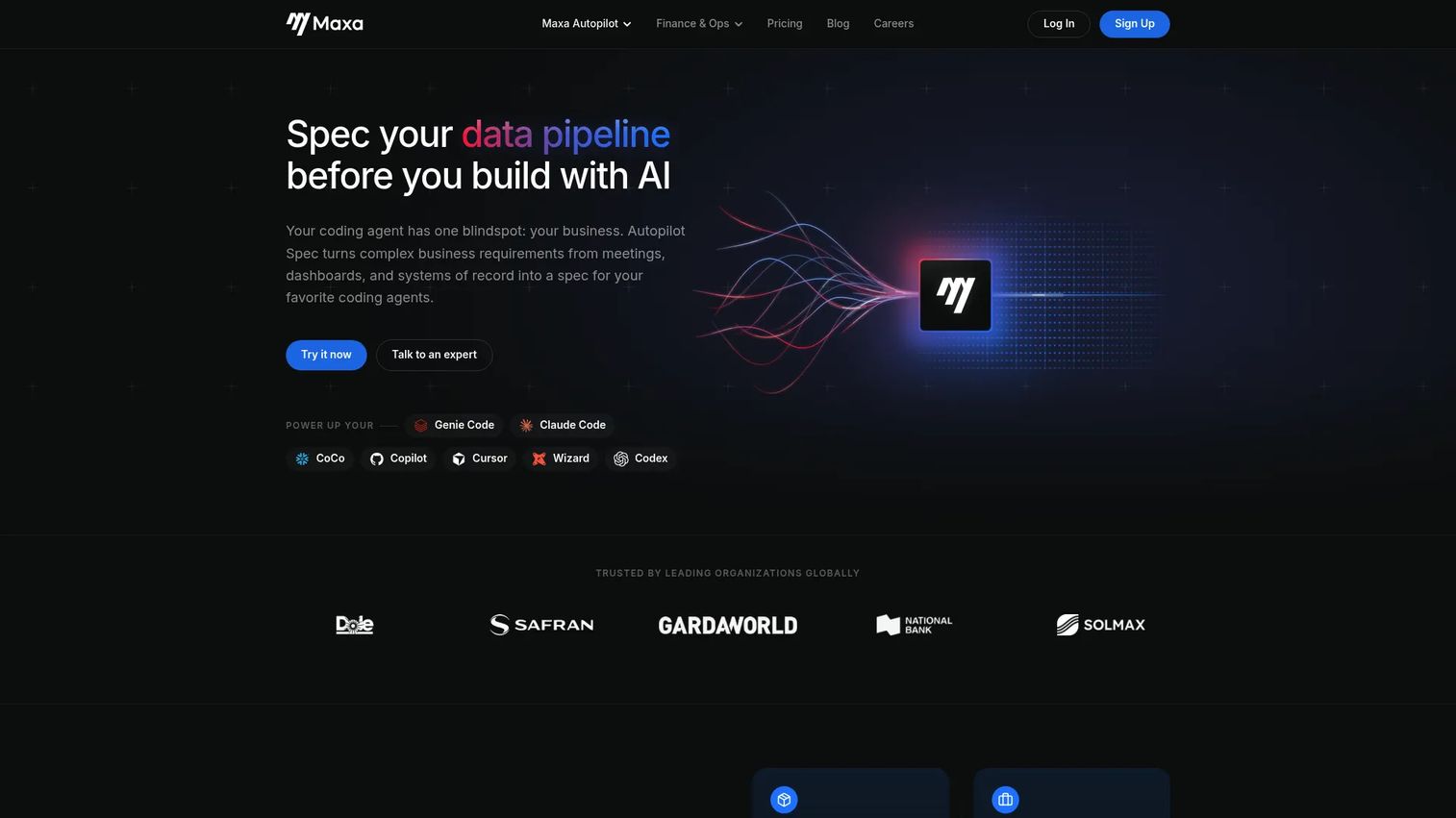
MAXA at maxa.ai is an AI-powered data pipeline platform for finance, operations, and data teams. It is not a real estate marketing design tool. The MAXA included in this list serves a different workflow than listing flyers or branded templates. If you are evaluating a real estate listing design and brand management platform under the MAXA name, confirm the specific product and vendor before purchasing.
Best for: Finance and operations teams building auditable enterprise data pipelines; not a fit for listing design workflows based on the verified product at maxa.ai.
Key features
- Autopilot Spec converts business requirements into data pipeline specifications
- Autopilot Pipeline generates production-grade dbt projects and documentation
- MAXA Analyst provides plain-language auditable analysis with source traceability
Why choose MAXA: Relevant for data teams that need AI-assisted pipeline generation and analysis, not for real estate listing marketing.
MAXA pricing: Free tier includes $500 in one-time capacity. Growth is pay-as-you-go with volume discounts. Enterprise pricing is custom.
9. Matterport
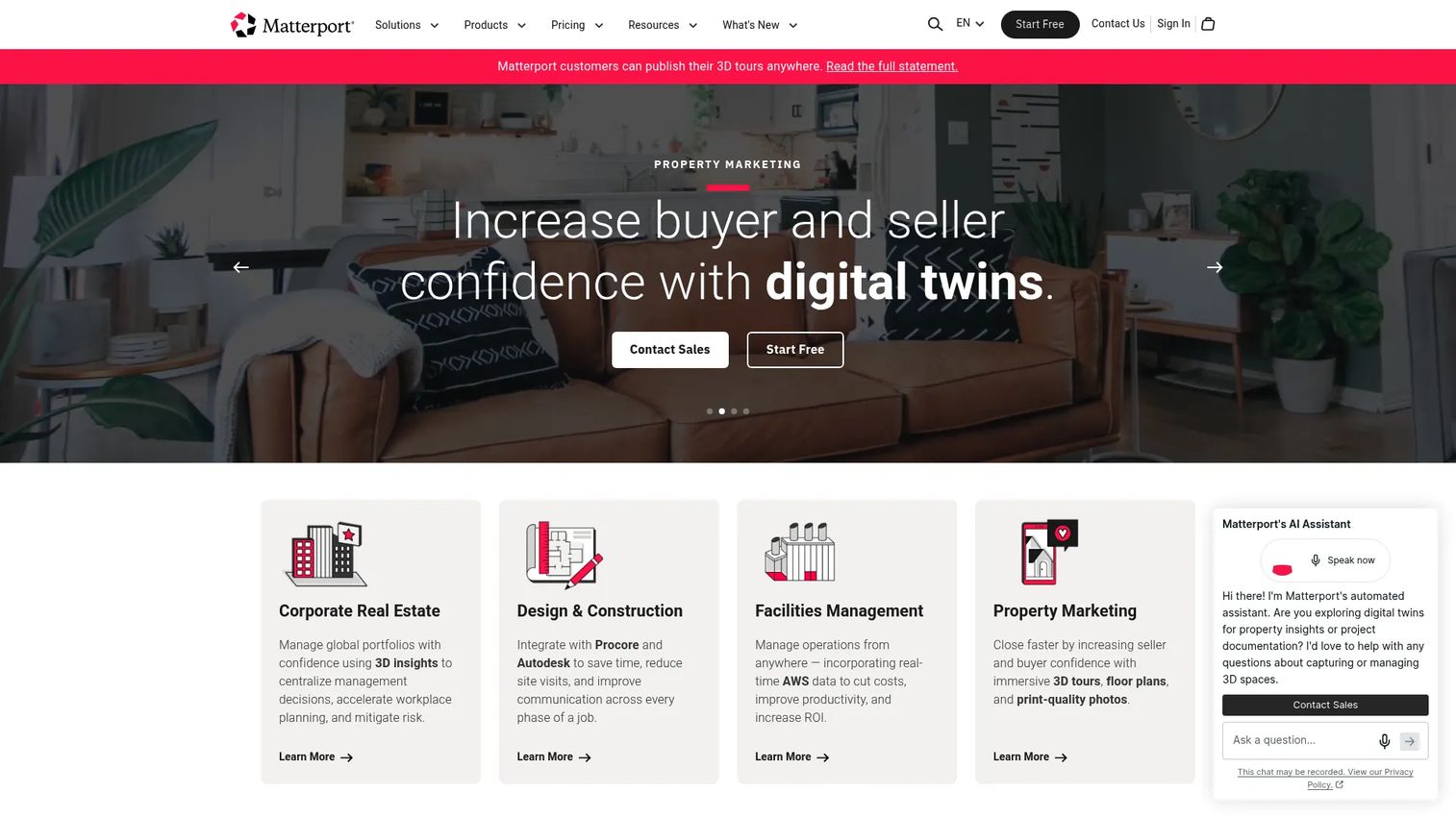
Matterport is a 3D data platform for creating immersive digital twins of physical spaces. Agents and property marketers use it to capture walkable virtual tours, precise floor plans, and AI-powered property media. Buyers and tenants can explore a property remotely before scheduling a showing, which reduces unqualified visits and supports faster decisions on complex or high-value listings.
Best for: Teams marketing properties where visual confidence drives showing requests, especially luxury residential, commercial, or multi-family properties.
Key features
- Immersive 3D tours captured via phone, tablet, 360 camera, or Matterport camera
- Digital twins with precise measurements and floor plan generation
- AI-powered tools including defurnishing, face blurring, and photo galleries
- Virtual showings and remote property collaboration
- Property Intelligence insights and spatial data
Why choose Matterport: It reduces the number of in-person showings required before serious interest by giving remote buyers and tenants a complete spatial understanding of the property.
Matterport pricing: Free plan available. Starter begins at $12/month billed annually. Professional is $58/month billed annually. Business is $296/month billed annually. Enterprise pricing requires contacting sales. Pricing scales by Active Spaces.
G2 rating: 4.1/5
10. Canva
Canva is an online visual design platform with AI-assisted creation, templates, and collaborative brand management. Real estate marketers use it to produce listing graphics, open house flyers, social posts, email headers, presentations, and branded collateral without waiting on design. The Brand Kit feature keeps all team assets consistent across agent output. For more context on social media marketing tools, Canva pairs well with dedicated social scheduling platforms.
Best for: Agents and marketing teams that need polished campaign assets fast, without a design team or production bottleneck.
Key features
- Real estate templates for flyers, social posts, and presentations
- Brand Kits with fonts, colors, and approved assets
- AI-assisted design, image generation, and content tools
- Video editing and social content scheduling
- Team collaboration with approvals and content planning
Why choose Canva: It covers a wide range of everyday creative production at a price point that works for solo agents and large teams alike. It is not a CRM or a scheduling platform, so plan to pair it with tools that handle distribution and attribution.
Canva pricing: Free plan available. Pro is $144/year per person. Business is $250/year per person. Enterprise pricing requires contacting sales.
G2 rating: 4.7/5
11. Hootsuite

Hootsuite is a social media management platform for scheduling, publishing, monitoring, and reporting across multiple channels. Real estate teams use it to maintain consistent posting schedules across property listings, market updates, and brand content. The unified social inbox and AI-assisted content tools reduce the manual effort of managing multiple brand accounts.
Best for: Teams managing multiple agent accounts, listing channels, or brand profiles who need repeatable social publishing workflows.
Key features
- Social media scheduling and multi-channel publishing
- Unified social inbox for engagement management
- Social media analytics and performance reporting
- Social listening and sentiment monitoring
- AI-powered content creation and scheduling suggestions
Why choose Hootsuite: It fits teams that have moved past ad hoc posting and need operational control over social output. The reporting layer connects post performance to content decisions. For deeper social media analytics, it pairs well with standalone analytics platforms.
Hootsuite pricing: Standard plan starts at $99/month. Professional is $199/month. Advanced is $399/month. Enterprise pricing is custom. A 14-day free trial is available without a credit card.
G2 rating: 4.3/5
12. Mailchimp

Mailchimp is an email and SMS marketing platform with automation, audience segmentation, customer journeys, and campaign reporting. Real estate teams use it for buyer nurture newsletters, seller education sequences, listing update announcements, and past-client touchpoints. It is approachable for smaller teams that want email marketing running before they need a full CRM overhaul.
Best for: Smaller real estate teams that need email marketing and basic automation without the complexity of a full-stack marketing platform.
Key features
- Email campaigns with customizable templates
- Audience segmentation and behavioral targeting
- Customer journeys and automated marketing flows
- Signup forms and landing pages
- Campaign performance reporting
Why choose Mailchimp: It is the easiest entry point for teams that want newsletters, drip sequences, and audience segments. When lead volume grows and nurture logic gets complex, most teams graduate to a platform with deeper CRM integration.
Mailchimp pricing: Free plan supports up to 250 contacts. Essentials starts at $13/month. Standard starts at $20/month. Premium starts at $350/month. Contact-based pricing applies at higher tiers.
G2 rating: 4.3/5
13. ActiveCampaign
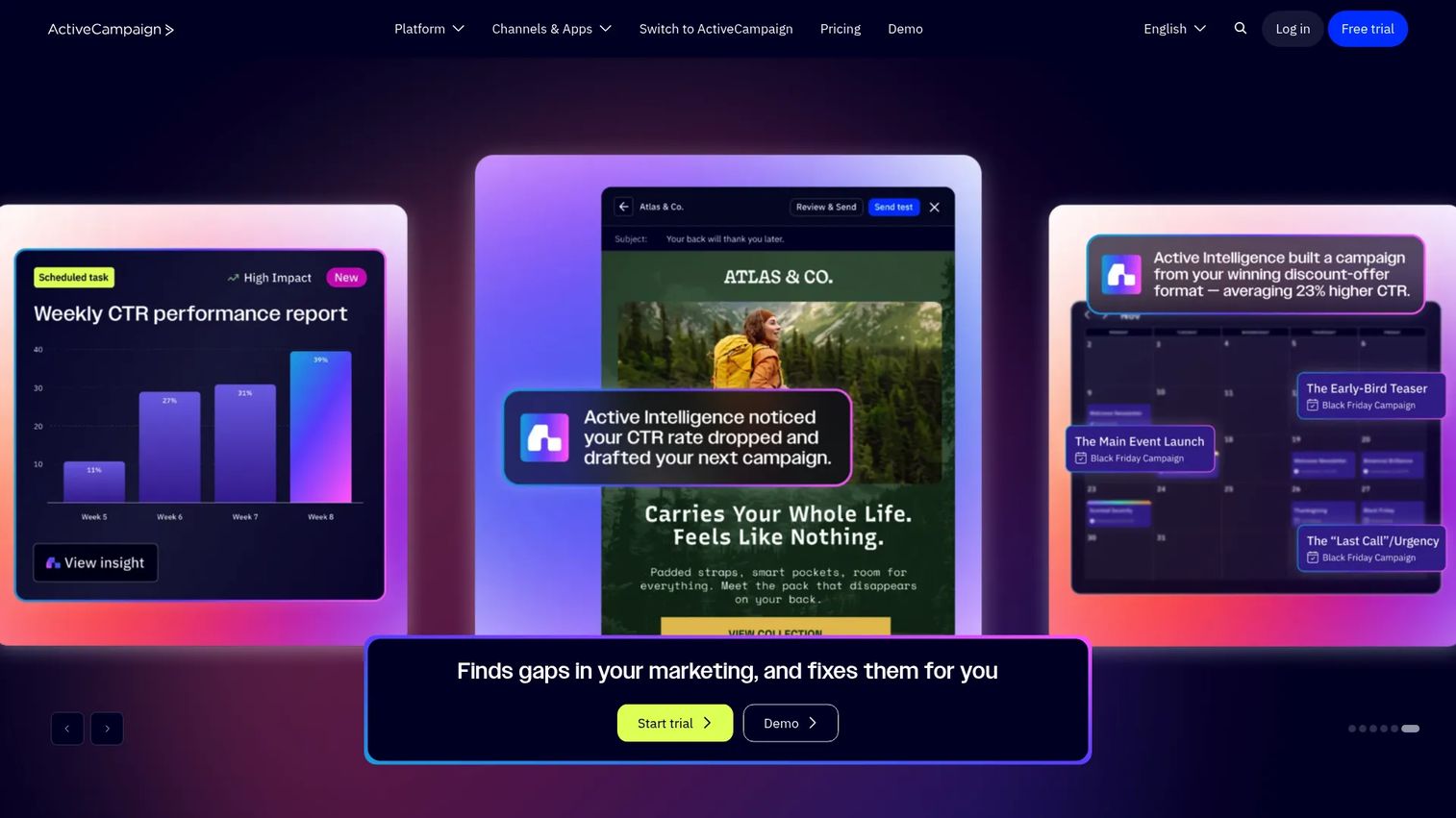
ActiveCampaign is an AI-powered marketing automation platform with email, CRM, lead scoring, segmentation, and multi-step campaign workflows. Real estate teams use it when they have distinct buyer, seller, investor, or past-client journeys that require behavior-triggered sequences rather than simple drip campaigns. It handles SMS and WhatsApp alongside email.
Best for: Real estate teams that need advanced nurture automation with behavioral triggers and CRM-integrated lead scoring.
Key features
- Multi-step marketing automation with behavior-based triggers
- Email marketing and AI-assisted campaign builder
- CRM with lead scoring and pipeline management
- SMS and WhatsApp messaging alongside email
- Landing pages, forms, and 1,000+ integrations
Why choose ActiveCampaign: It works best when a team has separate journeys for buyers, sellers, investors, and long-term nurture contacts, and needs automation logic that routes people correctly without manual intervention.
ActiveCampaign pricing: Starter, Plus, Pro, and Enterprise plans are available, with pricing based on contact volume billed annually. The pricing page lists plan names and features but requires a quote for specific amounts. A 14-day free trial is available.
G2 rating: 4.4/5
14. CallRail
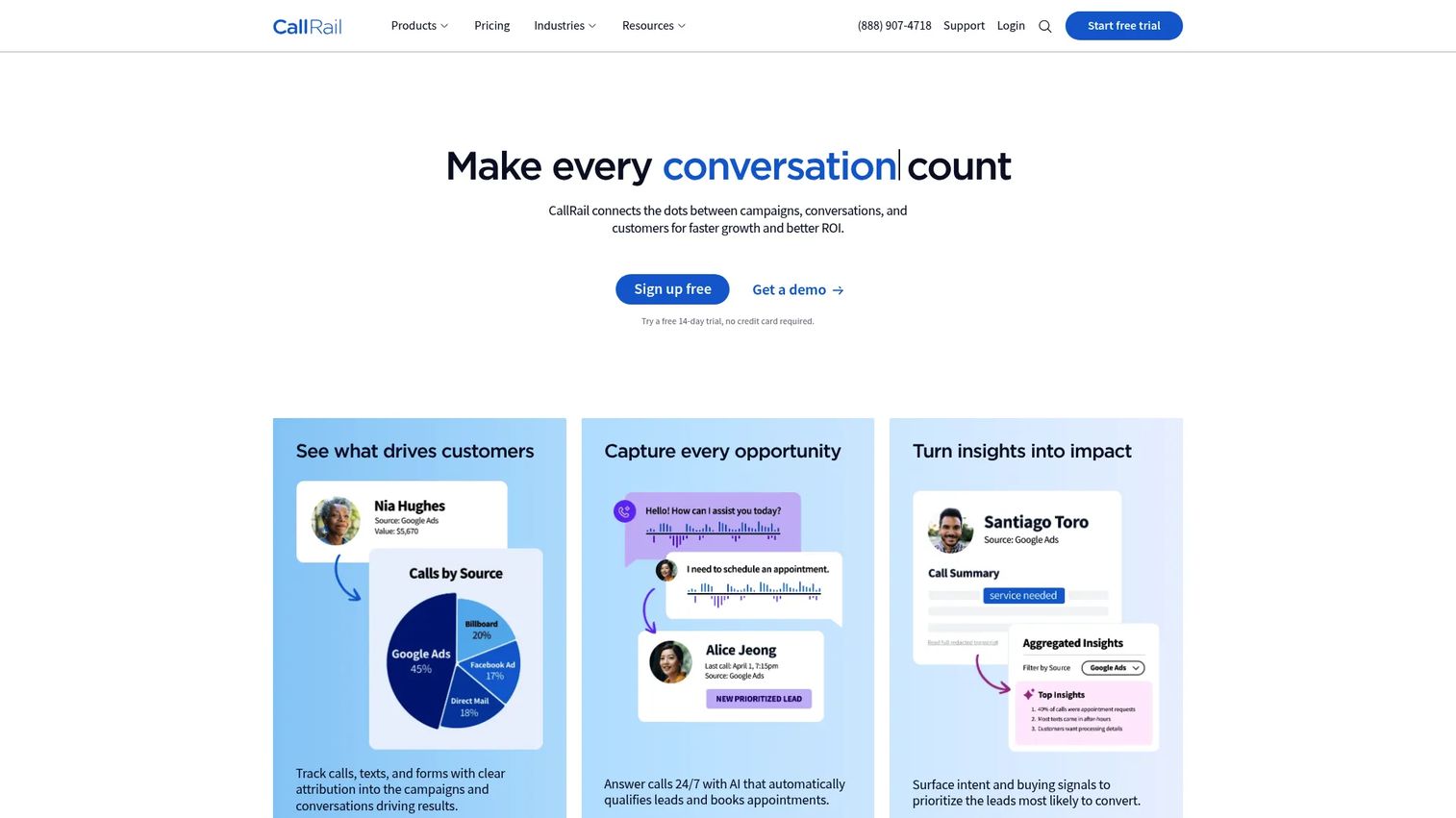
CallRail is a lead intelligence platform for tracking calls, texts, forms, and conversations tied to marketing sources. Real estate marketers use it to connect paid search ads, listing pages, yard signs, and local directories to actual phone inquiries. Conversation Intelligence features summarize calls, analyze sentiment, and tag conversions. For deeper call tracking coverage, see the linked guide.
Best for: Real estate marketers who need to prove which campaigns drive phone calls and identify which lead sources convert to appointments.
Key features
- Call and text tracking with source attribution
- Form tracking and attribution across marketing channels
- Call recording, routing, and transcription
- Premium Conversation Intelligence with summaries and sentiment analysis
- AI Voice Assistant for after-hours lead capture
Why choose CallRail: Real estate conversions happen offline more often than in most categories. Without call tracking, your attribution model misses a significant share of high-intent activity, especially from paid local search and listing campaigns.
CallRail pricing: Lead Tracking starts at $50/month. Lead Tracking Complete is $95/month. Lead Conversion is $150/month. Lead Conversion Complete is $195/month. AI Voice Assistant starts at $95/month as an add-on. A 14-day free trial is available.
G2 rating: 4.5/5
15. ChatGPT
ChatGPT is a conversational AI assistant for writing, research, coding, analysis, and creative work. Real estate marketers use it to generate first drafts of listing descriptions, email sequences, social captions, ad copy variations, and campaign outlines. It does not replace a CRM, a website, or a call tracking platform. It reduces blank-page time and helps iterate on messaging faster.
Best for: Marketers who need faster first drafts and want to test copy variations without waiting on a copywriter.
Key features
- Listing description drafts and property copy
- Email, SMS, and ad copy variations
- Social media caption and campaign idea generation
- Market update summaries and blog outlines
- File, image, and data analysis
Why choose ChatGPT: It shortens the distance between a marketing brief and a working draft. That said, all AI-generated real estate copy needs human review before publication. Listing descriptions, neighborhood characterizations, and ad targeting language carry fair housing implications that require careful human judgment on every draft.
ChatGPT pricing: Free plan available. Plus is $20/month. Pro is $200/month. Team plan is $25/user/month billed annually (or $30/month billed monthly). Enterprise pricing requires contacting sales.
G2 rating: 4.6/5
Considerations when choosing real estate marketing software
Start with the revenue leak
Before evaluating any tool, identify whether the biggest revenue leak is lead capture, follow-up speed, listing promotion, or attribution. The right first tool fixes the workflow closest to revenue. Adding a social scheduling tool when follow-up is broken makes the problem worse, not better.
Check real estate data fit
IDX and MLS compatibility, lead source tracking, transaction stage data, and open house records are not standard in generic marketing tools. A tool that works in SaaS or retail marketing may require custom integration work to handle real estate-specific data structures. Confirm compatibility before committing.
Audit integrations before buying
Check how each tool connects to your CRM, website, email platform, paid ad accounts, call tracking, transaction management system, and calendar. A long integration logo wall on a vendor's site doesn't guarantee the connection you need works reliably. Test the specific integrations that matter to your stack.
Review pricing at team size
Per-seat pricing, contact limits, call minute allowances, setup fees, and managed-service packages change the real monthly cost significantly. A tool that appears affordable for one agent can cost ten times more at a 20-person team. Run the numbers at your actual team size before signing.
Build a three to five tool stack first
Buying 15 tools at once creates adoption failure and attribution chaos. A practical starting stack covers CRM, website or landing page, email automation, creative production, and attribution tracking. Add tools only when a specific workflow gap is proven and a new tool demonstrably replaces manual work.
Conclusion
The real estate marketing stack that proves ROI is not the longest one. It's the one where each tool covers a workflow gap and connects cleanly to the tools around it.
Wise Agent and Follow Up Boss are the strongest starting points for CRM and lead management, with Wise Agent suited to solo agents and small teams, and Follow Up Boss built for team-level accountability. HubSpot and ActiveCampaign handle broader marketing automation when the workflow complexity outgrows real estate-specific CRMs. AgentFire and Placester both address website-led lead capture, with AgentFire stronger on local SEO and Placester more flexible for brokerage-scale site management. SharpLaunch is the most relevant option for CRE-specific marketing operations. Matterport, Canva, Hootsuite, Mailchimp, CallRail, and ChatGPT each fill specific workflow gaps across listing visualization, creative production, social publishing, email nurture, attribution, and AI-assisted drafting.
Start with the workflow that has the highest cost when it breaks. Fix that first. Then add the next layer.
Start your journey with Guideflow today!
FAQs
The best tool for agents depends on which workflow is currently broken. For contact management and follow-up, a real estate-specific CRM like Wise Agent handles contacts, drip campaigns, and transaction workflows at an agent-friendly price. For website-led lead generation, AgentFire or Placester cover IDX and local search. For listing visuals, Canva handles everyday creative production without a design background.
Most agents use a combination of tools across categories: A CRM for contact and follow-up management, an IDX website for lead capture, an email platform for newsletters and drip sequences, a design tool for listing assets, and social channels for property promotion. Some agents also add call tracking to connect phone inquiries back to ad spend and campaign sources.
A CRM manages contacts, activity records, pipelines, deal stages, and follow-up tasks. Real estate marketing software is a broader category that includes websites, email campaigns, social scheduling, listing design, virtual tours, call tracking, and AI-assisted content creation. Most real estate stacks include a CRM plus several marketing tools on top of it.
Automation makes the most sense when a team has multiple lead sources, long nurture cycles, or inconsistent follow-up across agents. Behavior-triggered sequences, drip campaigns, and lead routing rules reduce the manual work of staying in touch with leads across different stages and timelines. Automation should support personal outreach, not replace it entirely.
Brokerages need tools that support multiple agents, maintain brand governance across output, route leads to the right agents, and provide reporting at both the agent and team level. HubSpot works well as a scalable CRM and marketing platform. MAXA was included in this list but points to a data pipeline product rather than a brokerage marketing tool, so verify any brokerage-specific design and asset management platform directly with the vendor before purchasing.
CRE marketers need property websites, document portals, investor and tenant lead capture, 3D virtual tours, call attribution, and property-level reporting. SharpLaunch is the most purpose-built CRE marketing platform in this list. Matterport adds immersive 3D tours that work well for commercial property presentations. Residential CRM tools rarely cover CRE-specific document access controls and stakeholder reporting without significant custom work.
Lightweight tools start under $20/month (Mailchimp's Essentials tier, Matterport Starter). Real estate CRMs typically run $49 to $499/month depending on team size and plan. Brokerage and CRE platforms often start at several hundred dollars per month and may use custom pricing for larger organizations. Per-seat tools like Follow Up Boss scale the cost by user count, so calculate your real cost at actual team size before committing.
No. AI tools like ChatGPT generate copy drafts and campaign ideas faster, but they do not maintain CRM records, power IDX websites, route leads, run call attribution, or publish to social channels on a schedule. AI is a drafting and ideation layer that works alongside the platforms that handle data, workflow, and distribution. Every AI-generated real estate draft still requires human review before publication.