You launched a points program last quarter. Signups looked healthy. Then you pulled the numbers, and 45% of members never came back to redeem anything.
That gap is the real problem with loyalty. According to Open Loyalty citing Gartner (2026), only 55% of loyalty program members are active in the programs they joined. Meanwhile, customers in North America and Western Europe belong to an average of 16.6 programs each. Enrollment is easy. Repeat purchases are not.
The loyalty management market reflects both the appetite and the pressure. Mordor Intelligence (2026) puts the global market at USD 16.44B in 2026, growing to USD 32.52B by 2031 at a 14.62% CAGR. More brands are buying customer loyalty software, but most of them are stitching it across POS, ecommerce, CRM, and wallet tools that barely talk to each other.
That fragmentation is what a good loyalty platform fixes. The right rewards program software should reduce tool sprawl, tie retention to attributable revenue, and give you clean analytics you can defend in a budget review. The wrong one adds another dashboard nobody checks.
What's inside
This guide is for growth marketers, ecommerce leads, and retention managers comparing customer loyalty platforms in 2026. It covers seven loyalty program platforms across small business, ecommerce, and enterprise use cases.
We picked tools based on four criteria that actually matter when you have to prove impact:
- Omnichannel support: works across POS, ecommerce, app, and wallet
- Integration depth: connects to your CRM, marketing automation, and ecommerce stack
- Analytics and ROI: measures retention, redemption, and attributable revenue
- Pricing clarity: transparent enough to model before you commit
TL;DR
- Best for enterprise and custom builds: Open Loyalty. API-first, composable, built for complex loyalty logic.
- Best for ecommerce and DTC: LoyaltyLion. Tight Shopify and Klaviyo integration, tiers built around repeat purchases.
- Best for small business: Loopy Loyalty. Wallet-based stamp cards, live in an afternoon.
- Best for retail and hospitality: Marsello. Loyalty plus email and SMS marketing in one platform.
- Best for broad ecommerce loyalty: Smile.io. Points, referrals, and VIP tiers with a generous free plan.
- Best if you already run Klaviyo: Klaviyo. Turns loyalty data into lifecycle messaging fuel.
- Best for white label loyalty: White Label Loyalty. Fully branded, event-based, enterprise-flexible.
What is loyalty program software?
Loyalty program software is a platform that lets brands reward repeat customer behavior through points, tiers, referrals, or other incentives, then measures the impact on retention and revenue. It handles enrollment, reward rules, redemption, and reporting across the channels where customers buy.
Modern loyalty management software goes past a punch card. It captures first-party data, segments members by behavior, and connects redemption across online and in-store touchpoints. Most platforms now support analytics, segmentation, and omnichannel redemption as standard.
Core capabilities to expect from a customer loyalty platform:
- Points and tiers: earn-and-burn mechanics plus VIP levels that reward higher spend
- Referrals and challenges: member-driven acquisition and gamified engagement
- Rewards and store credit: discounts, free products, early access, and credit
- Analytics and ROI: repeat purchase rate, redemption rate, and lifetime value tracking
- Automation: triggered messaging for enrollment, tier changes, and win-back
- Integrations: connections to POS and ecommerce integrations, CRM, and email or SMS tools
- Omnichannel redemption: consistent earning and spending across web, app, and store
The difference between a program that lifts revenue and one that quietly dies usually comes down to two things: how well the software fits your existing stack, and how honestly you can measure what it returns.
When to use loyalty program software
Launch a repeat-purchase program
If your acquisition cost keeps climbing and your second-purchase rate is flat, a structured rewards program gives customers a reason to come back. Loyalty software works best when you already have repeat-purchase potential but no mechanism to nudge it. Points, tiers, and store credit turn one-time buyers into a measurable retention curve.
Connect online and in-store behavior
Retail and hospitality brands lose customer data at the register. A customer buys online, then in-store, and the two profiles never merge. Omnichannel loyalty solves this by unifying identity across POS and ecommerce, so a member earns and redeems the same balance everywhere. This is where integration depth stops being a nice-to-have and becomes the whole point.
Automate lifecycle retention campaigns
Loyalty data is some of the richest behavioral signal you have. Tier status, points balance, and redemption history feed welcome flows, tier-change nudges, and win-back campaigns. When loyalty software syncs cleanly into your email and SMS stack, retention marketing stops being a manual guessing game and starts running on live customer signals.
Comparison table
Pricing below reflects publicly listed figures at the time of writing. Several enterprise platforms use custom pricing tied to active members or order volume, so treat those as directional. The ranking prioritizes fit for a specific buyer, not raw feature count. A platform that suits an enterprise team can be overkill for a single-location shop, and vice versa.
| # | Product | Best for | Key differentiator | Pricing | G2 rating |
|---|---|---|---|---|---|
| 1 | Open Loyalty | Enterprise, custom programs | API-first, composable loyalty engine | Custom, based on active members | 4.7/5 |
| 2 | LoyaltyLion | Ecommerce and DTC | Deep Shopify and Klaviyo integration | From $199/mo | Not listed |
| 3 | Loopy Loyalty | Small business | Wallet-based digital stamp cards | From $25/mo | Not listed |
| 4 | Marsello | Retail and hospitality | Loyalty plus email and SMS marketing | From $60/mo per site | 4.4/5 |
| 5 | Smile.io | Broad ecommerce loyalty | Points, referrals, VIP tiers, free plan | Free, paid from $15/mo | Not listed |
| 6 | Klaviyo | Existing Klaviyo users | Loyalty data feeding lifecycle messaging | Free, paid varies | 4.5/5 |
| 7 | White Label Loyalty | White-label enterprise | Fully branded, event-based engine | Custom quote | 4.0/5 |
1. Open Loyalty
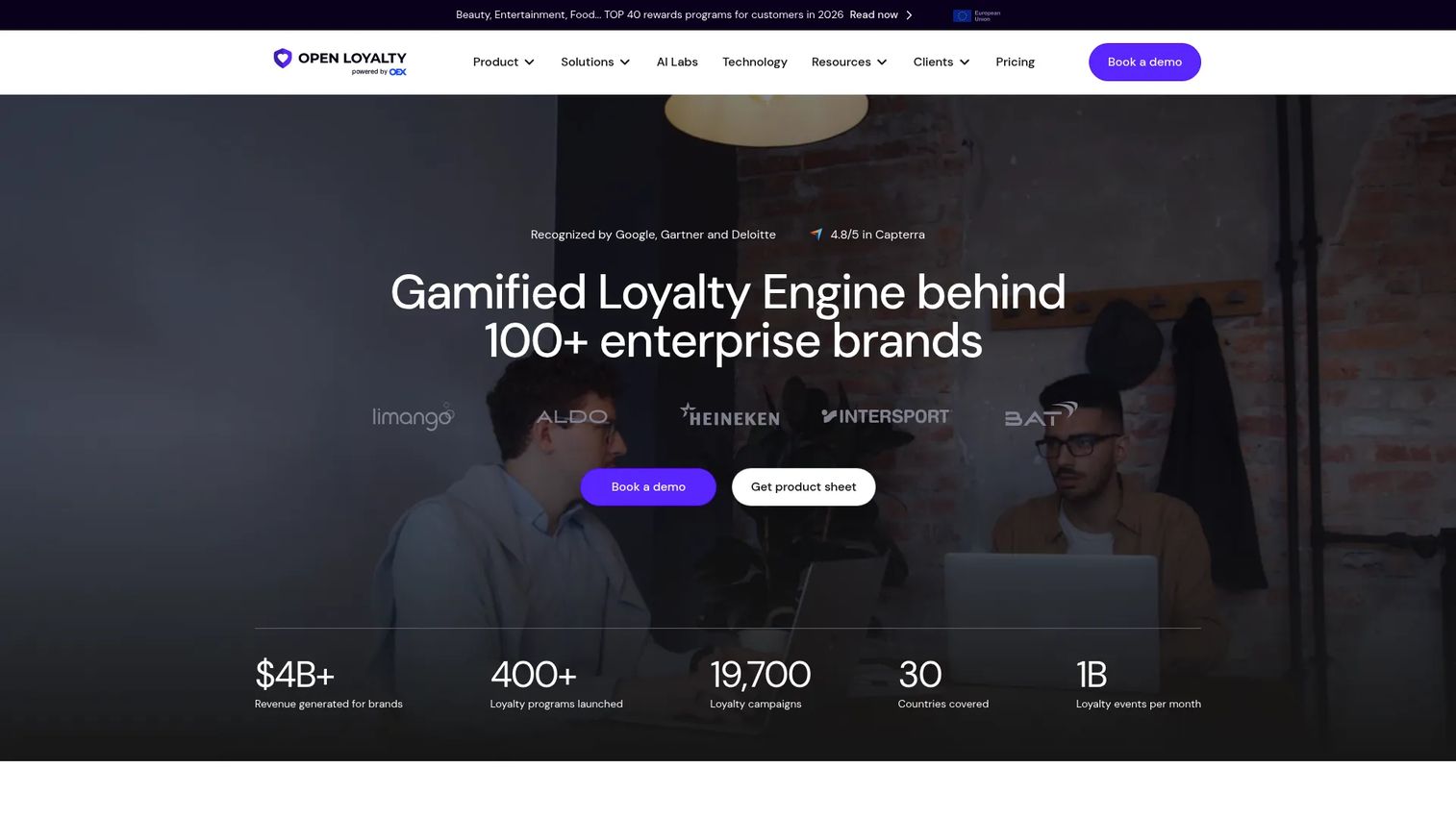
Open Loyalty is an API-first loyalty platform built for enterprises that need to design their own mechanics rather than adopt someone else's template. It ships as a set of composable modules, so you assemble points, tiers, referrals, and gamification into whatever logic your business runs on. If your loyalty program has to match a complex membership model or a multi-brand structure, this is the layer that bends to fit.
The tradeoff for that flexibility is that Open Loyalty rewards teams with engineering bandwidth. It is not a plug-in you enable in an afternoon. But for a mid-market or enterprise brand that has outgrown off-the-shelf rules, the control pays back.
Best for: Enterprises building or scaling a customizable loyalty program through an API.
Key strengths
- Composable modules: points, tiers, rewards, referrals, wallets, badges, coupons, challenges, and code scanning
- Loyalty analytics: customer loyalty reporting and a full loyalty program API
- Architecture: multitenant, cloud-based platform built for scale
Why choose Open Loyalty: Choose it when your program logic is the differentiator and no templated tool can express it. The API-first model means your loyalty engine plugs into your CRM, POS, CDP, and marketing automation as a service, not a silo. Teams without developer resources will find simpler platforms faster to launch.
Open Loyalty pricing: Public pricing is not listed. Open Loyalty estimates cost based on active members, combining a platform fee and an allowance fee. Request a quote through their pricing page for a tailored estimate.
2. LoyaltyLion
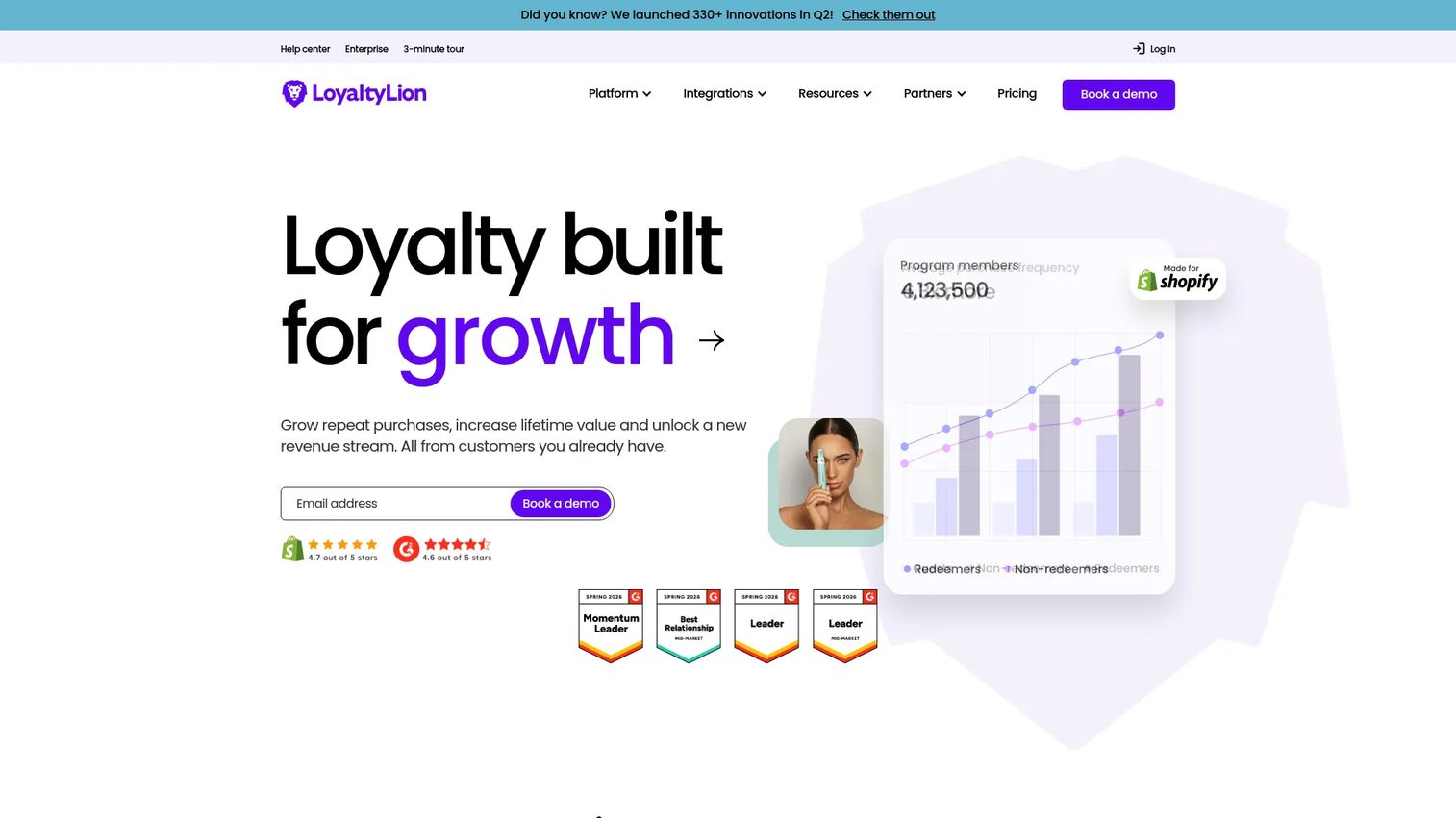
LoyaltyLion is a customer loyalty platform built specifically for ecommerce brands, with the deepest gravity around Shopify and DTC teams. It ties rewards directly to repeat purchase behavior, so points, tiers, and VIP status map onto the actual buying journey rather than sitting off to the side.
Where it earns its keep is the integration layer. LoyaltyLion pairs closely with Klaviyo, which means loyalty events (points earned, tier reached, reward available) become triggers inside your lifecycle email and SMS flows. For a growth marketer trying to prove that loyalty drives incremental revenue, that connection is the difference between a guess and an attribution.
Best for: Ecommerce brands that want a configurable loyalty program with tiers, rewards, and Klaviyo automation.
Key strengths
- Branded loyalty page: a custom loyalty page built for your store
- Earning rules: pre-built rules for on-site and off-site actions
- Lifecycle automation: Klaviyo integration and automated email flows
Why choose LoyaltyLion: Choose it if you run a Shopify-heavy DTC operation and want loyalty wired into your existing email stack. It suits brands optimizing repeat-purchase rate and customer lifetime value. Highly custom enterprise builds with bespoke logic may prefer an API-first platform instead.
LoyaltyLion pricing: Pricing is based on average monthly order volume. The Classic plan starts at $199/month for up to 500 orders. Advanced and Plus are custom-priced. A free plan is available for stores processing 400 or fewer orders per month, plus a 14-day trial via the Shopify App Store.
3. Loopy Loyalty
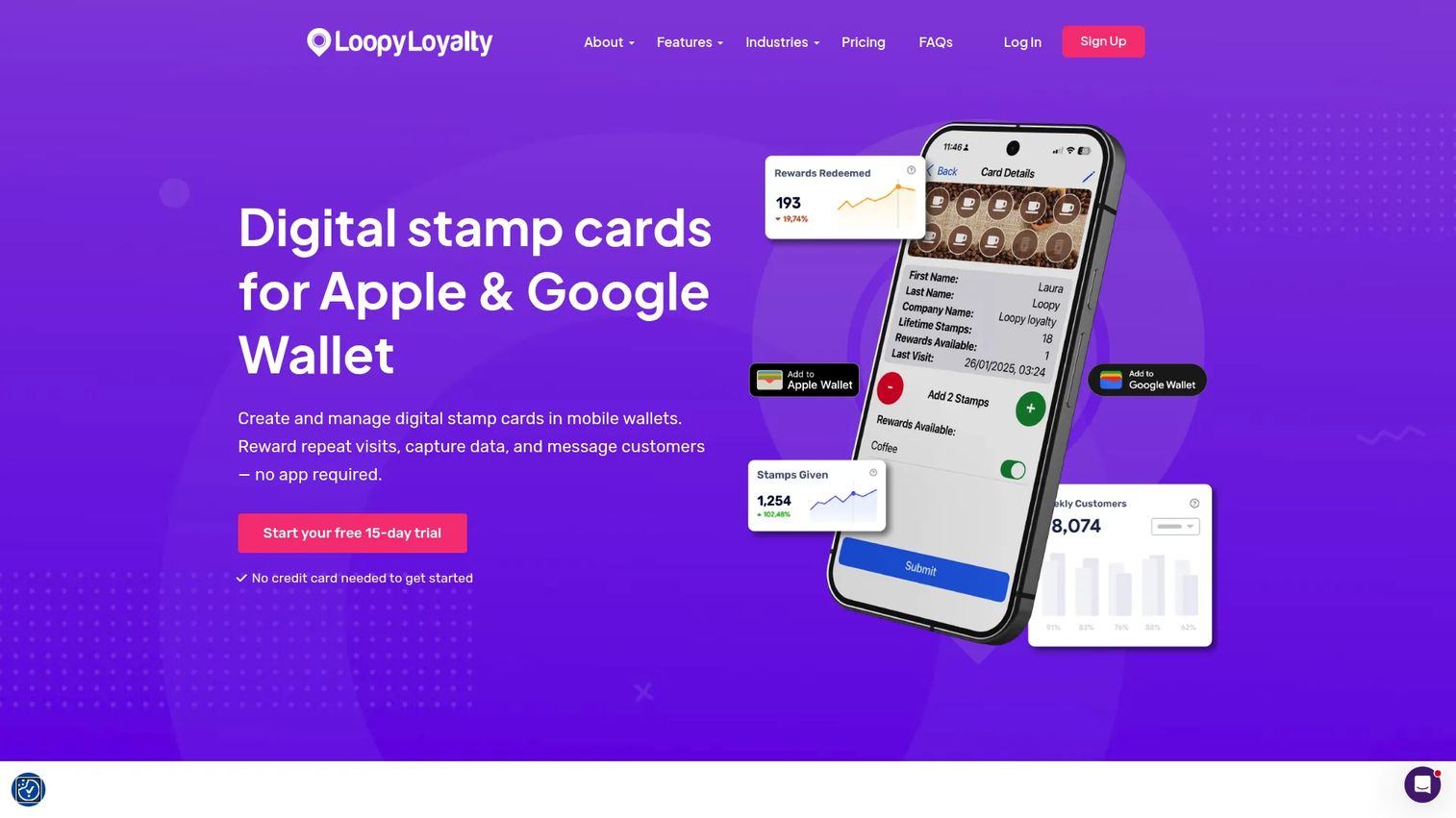
Loopy Loyalty is the fastest path from zero to a working program for a local business. It builds digital stamp cards that live in Apple Wallet and Google Wallet, so customers add a card to their phone and start collecting. No app to build, no POS integration project, no engineering.
For a coffee shop, salon, or single-location retailer, speed beats sophistication. You design a stamp card in a web dashboard, enroll customers through a QR code or link, and stamp cards from a companion app at the counter. That is the whole loop, and it works within an afternoon.
Best for: Small to mid-sized businesses running stamp-card loyalty programs.
Key strengths
- Wallet-native cards: digital stamp cards for Apple Wallet and Google Wallet
- Easy enrollment: signup via QR codes, links, posters, and landing pages
- Operations: Stamper app, smart messaging, reporting, and multi-location support
Why choose Loopy Loyalty: Choose it when you need a program live now and complexity is the enemy. It fits service businesses and small retailers who want retention without a technical lift. Brands that need points, tiers, referrals, and omnichannel ecommerce redemption will outgrow stamp cards and should look at a fuller platform.
Loopy Loyalty pricing: Three paid plans: Starter at $25/month, Growth at $69/month, and Ultimate at $95/month. A free 15-day trial is available with no credit card required, and annual billing is discounted.
4. Marsello
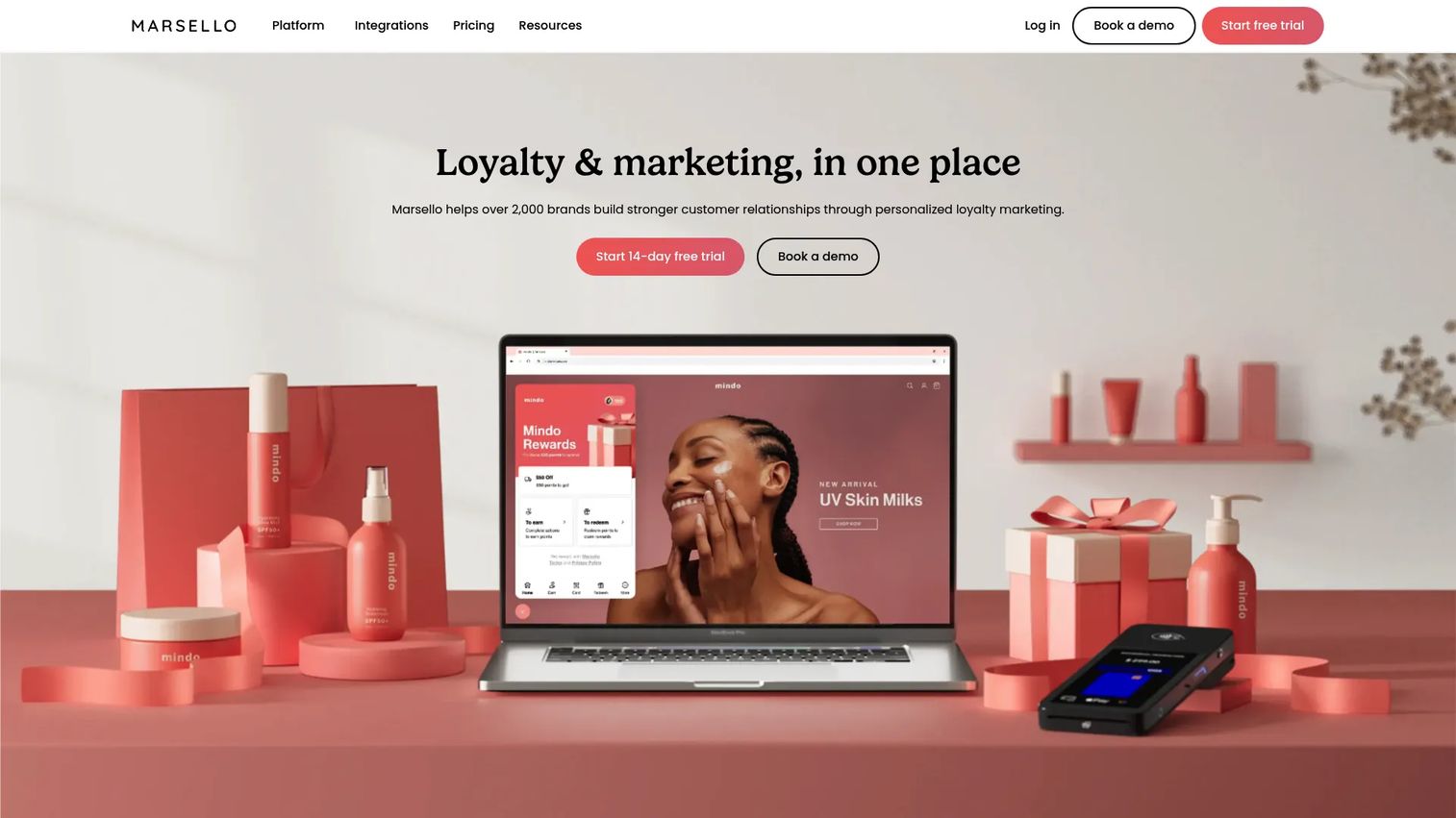
Marsello is an omnichannel loyalty and marketing platform aimed at retail and hospitality brands that sell both in-store and online. Its edge is combining loyalty mechanics with a built-in marketing layer, so email and SMS campaigns fire off the same customer data that powers points and rewards. You are not exporting a list to a separate tool.
That consolidation is the pitch for marketers tired of tool sprawl. Loyalty, segmentation, and lifecycle messaging run from one place, connected across POS and ecommerce integrations. For a multi-location retailer, the unified customer profile across every store and the web is the part that actually moves retention.
Best for: Retailers and hospitality businesses that want loyalty plus marketing in one platform.
Key strengths
- Loyalty mechanics: points, rewards, VIP tiers, referrals, and wallet passes
- Marketing built in: email marketing and automation plus an SMS add-on
- Omnichannel data: works across POS and ecommerce with synced reporting
Why choose Marsello: Choose it when you run multiple locations and want loyalty and marketing under one roof rather than bolted together. Behavior-driven rewards and segmentation let you trigger campaigns off real purchase activity. It suits retail and hospitality teams that value consolidation over deep API customization.
Marsello pricing: Loyalty Launch starts at $60/month per site and Loyalty Accelerate at $120/month per site, both working across POS and ecommerce. Enterprise is custom-priced. Marketing add-ons start at $15 per 1,000 customers and SMS at $0.028 per credit. All plans include a 14-day free trial.
5. Smile.io
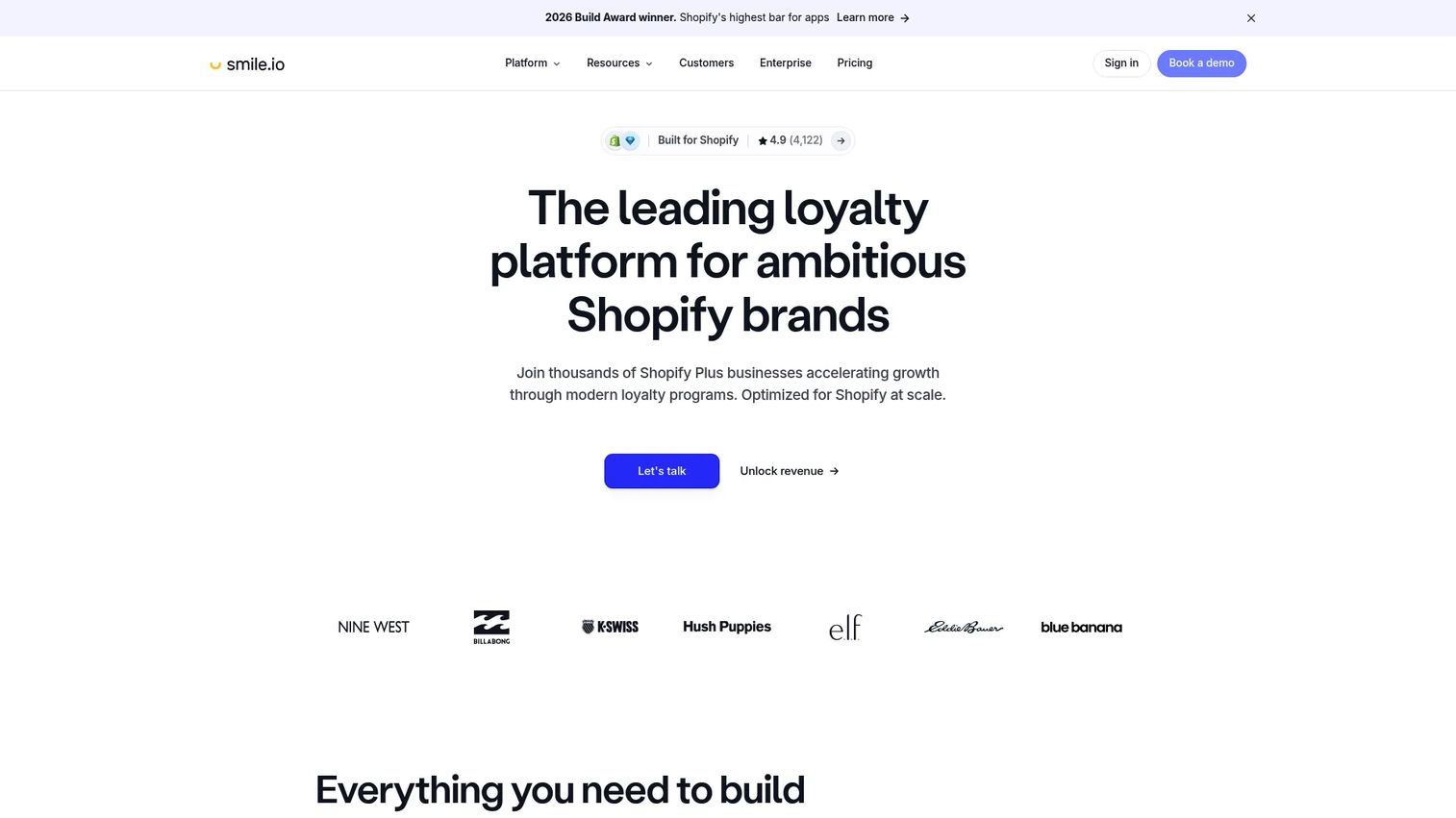
Smile.io is a broad, user-friendly loyalty layer popular with Shopify brands that want points, referrals, and VIP tiers without a heavy setup. It is one of the more approachable customer loyalty companies for teams that want to launch a solid program quickly and scale it as revenue grows.
The appeal is the breadth of mechanics packaged simply. You get earn-and-burn points, a referral engine, and tiered membership, all managed from one dashboard. The free plan lets smaller stores start capturing first-party data and driving repeat purchases before committing budget, which lowers the barrier to a working retention program.
Best for: Shopify merchants wanting a branded loyalty and referrals program.
Key strengths
- Points and referrals: earn-and-burn points plus a member referral engine
- VIP programs: tiered and membership loyalty structures
- Analytics: built-in reporting on program performance
Why choose Smile.io: Choose it when you want a proven ecommerce loyalty program with minimal setup and room to grow. It suits DTC brands focused on repeat-purchase lift and first-party data capture. Multi-channel retailers with heavy in-store volume may prefer a platform built around unified POS data.
Smile.io pricing: Smile.io offers a Free plan, then Essential at $15/month, Standard at $79/month, and Growth at $199/month. Plus is priced at $999 on annual billing, and Enterprise is contact-sales. The free tier makes it easy to test before scaling.
6. Klaviyo
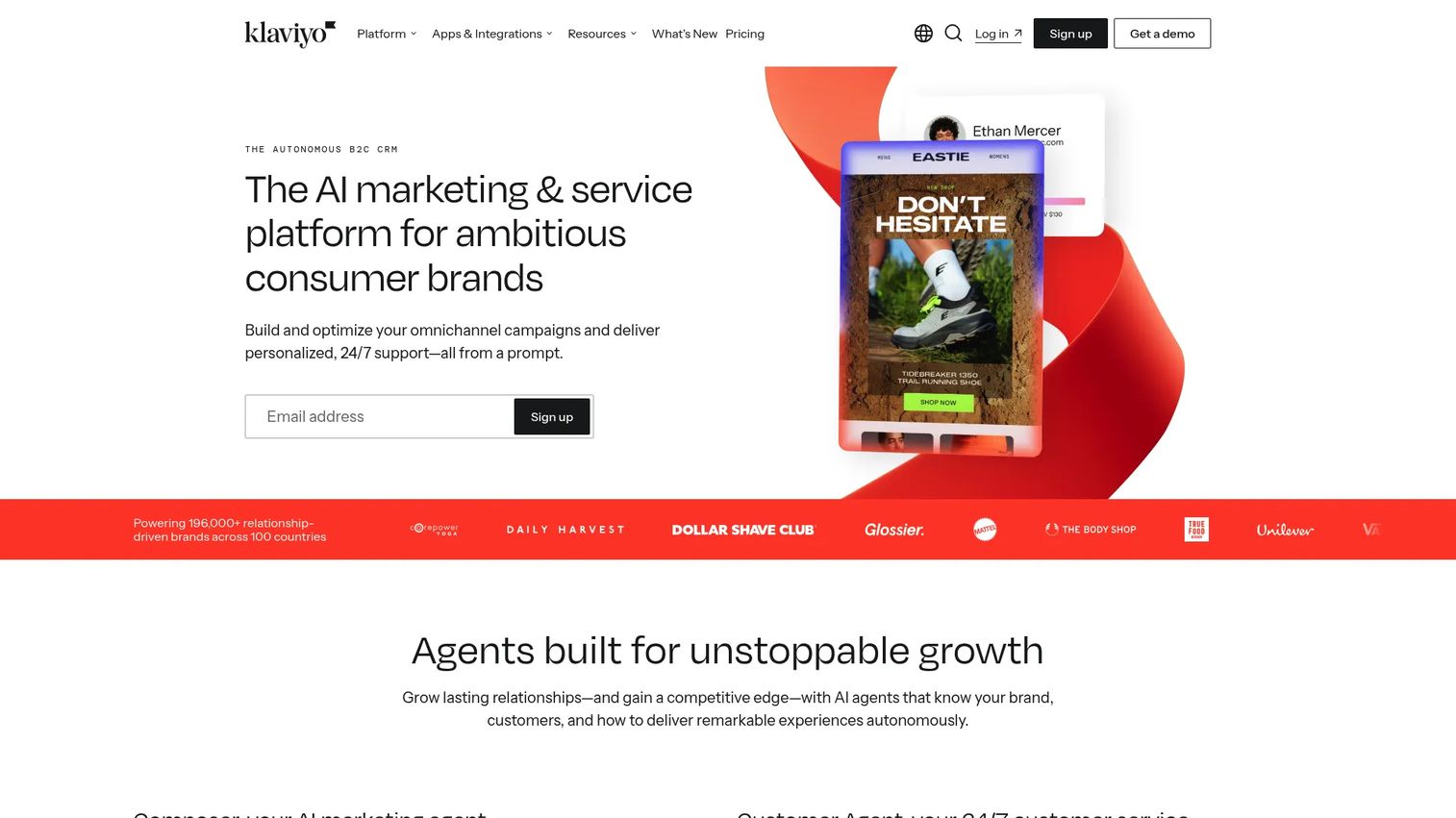
Klaviyo is a B2C marketing and customer data platform for email, SMS, and analytics, and its role in a loyalty stack is specific. It is less a standalone loyalty engine and more the layer that turns loyalty data into personalized messaging. When a member hits a new tier or has points about to expire, Klaviyo is what sends the reminder.
Be honest with yourself about the fit here. Klaviyo makes the most sense when you already run it for email and SMS, and you want your loyalty program (often through a partner like LoyaltyLion or Smile.io) to feed segmentation and automation. As the connective tissue of a retention stack, its 350+ integrations and deep customer profiles are hard to beat.
Best for: Ecommerce brands that want unified email, SMS, and customer data automation.
Key strengths
- Customer data: rich profiles and behavioral segmentation
- Automation: triggered email, SMS, and push flows
- Integrations: 350+ pre-built integrations and open APIs
Why choose Klaviyo: Choose it when loyalty needs to plug directly into lifecycle messaging and you already live inside Klaviyo. It powers reward reminders, tier updates, and win-back flows off loyalty events. Brands wanting a dedicated points-and-tiers engine will still pair it with a purpose-built loyalty tool.
Klaviyo pricing: Klaviyo offers a free plan, with paid marketing and data plans scaling by contact and message volume. Professional services and enterprise tiers are sales-assisted. Check the pricing page for a build tailored to your list size.
7. White Label Loyalty
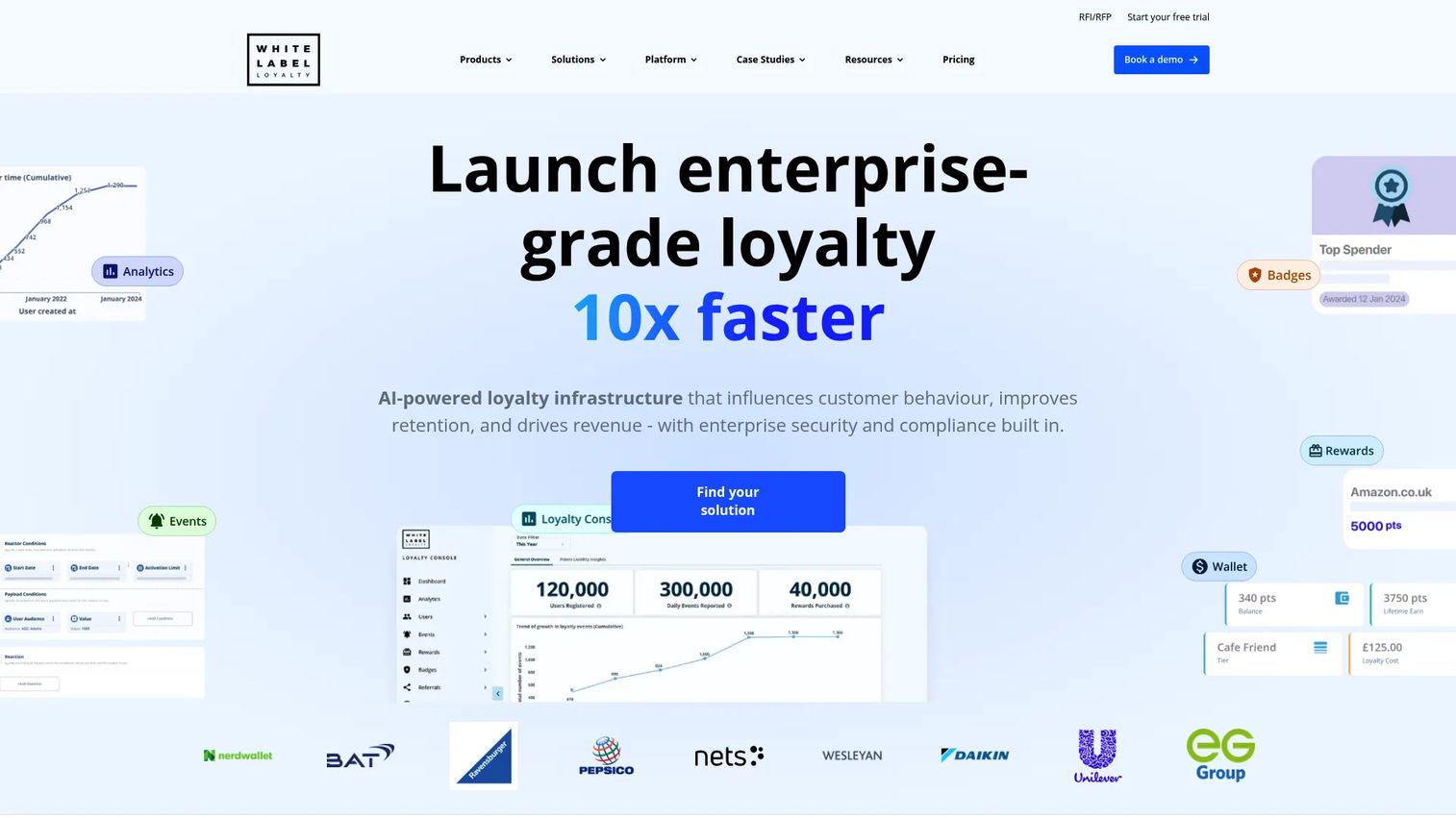
White Label Loyalty is a modular, API-first platform for brands that need a fully branded, custom loyalty program under their own name. The event-based engine is the distinguishing idea: instead of only rewarding purchases, you reward any customer action you define, then build rules around those events across channels.
This is enterprise territory. Teams that need tailored customer journeys, flexible reward logic, and complete brand control get a loyalty engine they can shape, not a template they have to accept. The white-label layer means customers experience your brand end to end, with no third-party logo in sight.
Best for: Mid-market and enterprise brands needing a customizable loyalty engine with API integrations.
Key strengths
- API-first platform: build custom loyalty logic through a flexible API
- Loyalty console: a dashboard for managing rules, rewards, and members
- Customization: configurable interfaces and modules under your brand
Why choose White Label Loyalty: Choose it when brand control and event-based flexibility outweigh speed of setup. Cross-channel execution and data-driven segmentation suit enterprise teams with defined loyalty strategies. Teams wanting a launch-in-a-day program will find a wallet or app-based tool faster to stand up.
White Label Loyalty pricing: Pricing is customized by monthly active users, setup complexity, integrations, and the solution you choose. There is no public price list; request a tailored quote through their pricing page.
Conclusion
There is no universal winner in loyalty software, only the right fit for your channel complexity, data needs, and how much control you want over mechanics.
Small businesses and single-location shops should shortlist Loopy Loyalty for wallet-based speed. Ecommerce and DTC brands should compare LoyaltyLion and Smile.io, with LoyaltyLion edging ahead when Shopify and Klaviyo integration matters most. Retail and hospitality teams selling across POS and web should test Marsello for its combined loyalty and marketing layer. If you already run Klaviyo, use it as the messaging engine on top of a dedicated loyalty tool rather than a replacement for one.
Enterprise teams building custom programs should focus on Open Loyalty or White Label Loyalty, choosing between API-first composability and fully branded, event-based flexibility.
Your next step: pick two platforms that match your stack and business model, run their free trials or request quotes, and measure the same metric across both. Repeat purchase rate and redemption rate will tell you more than any feature list.
FAQs
Loyalty program software helps brands reward repeat customer behavior through points, tiers, referrals, or other incentives, then measures the effect on retention and revenue. Modern customer loyalty software also supports analytics, segmentation, and omnichannel redemption, so members earn and spend consistently across web, app, and in-store.
At minimum, look for points and tiers, rewards, referrals, analytics, integrations, and automation. Points and tiers drive engagement, referrals fuel acquisition, and analytics prove ROI. If you sell both online and in-store, omnichannel support that unifies POS and ecommerce data is essential rather than optional.
The best choice depends on your platform stack and loyalty strategy. LoyaltyLion suits Shopify and DTC brands wanting deep Klaviyo integration. Smile.io is a strong broad option with a free plan. Klaviyo fits when you want loyalty data feeding lifecycle messaging inside an existing email and SMS setup.
Pricing ranges from around $25/month for small business tools like Loopy Loyalty to custom enterprise contracts from platforms like Open Loyalty and White Label Loyalty. Cost typically scales with order volume, active members, number of locations, integration depth, and support level, so model against your own volume before comparing plans.
Yes, provided the platform supports omnichannel data and redemption. Tools like Marsello unify customer profiles across in-store and online so a member earns and spends the same balance everywhere. This is a key buyer criterion for retail and hospitality brands, where fragmented data quietly undermines retention.
Beyond points, effective programs use tiers, referrals, challenges, badges, gamification, and store credit. Tiers reward higher spend, referrals drive member-led acquisition, and challenges add engagement. Stronger programs usually combine several mechanics rather than relying on points alone, which keeps members active instead of passively accumulating a balance.
Track repeat purchase rate, customer lifetime value, redemption rate, retention rate, and revenue attributable to loyalty members versus non-members. Integration quality directly affects measurement quality: the cleaner your loyalty data syncs into your CRM and analytics stack, the more defensible your ROI numbers are in a budget review.