Your hiring team can already source more people than it can process. That has never been the hard part. The hard part is proving you are expanding reach without quietly adding bias, and doing it without slowing the pipeline to a crawl.
Most teams discover the gap the same way. A board member, an enterprise customer, or an RFP asks for diversity numbers. Someone exports a spreadsheet, stitches together a few stages, and realizes the data does not hold up. You can see who applied. You cannot see where underrepresented candidates dropped out, or whether your sourcing was ever broad enough to matter.
That is the real job of diversity recruiting software: connect wider sourcing to clean, auditable funnel data so you can show reach, spot drop-off, and report outcomes without inventing process. The category is growing for a reason. The diversity recruiting software market reached roughly $3.3 billion in 2025 with a 9.4% CAGR through 2033, according to Data Insights Market (2025), and 67% of organizations now use AI somewhere in recruitment, per SNS Insider (2025).
This guide is built for founders and operators who think in funnels, not slogans. If you are also rethinking the broader stack, our roundups on ai recruiting software and marketing analytics cover adjacent tooling, and the piece on how analytics platforms drive roi frames the reporting mindset that makes any of these tools worth the spend.
What's inside
This is a comparison of eight diversity recruiting tools that actually move the metrics founders care about: sourcing reach, pipeline diversity analytics, bias mitigation in hiring, ATS integration, inclusive job postings, and DEI reporting. We chose tools based on four criteria: use case fit (sourcing, compliance, or analytics), reporting depth, workflow fit with an existing hiring stack, and how fast a team can adopt them without a heavy implementation. The list spans sourcing engines, compliance platforms, talent intelligence systems, and community-led recruiting. It is written for SaaS founders and operators who need hiring systems that scale, not a theory deck on DEI.
TL;DR
- Best overall for sourcing plus pipeline visibility: Gem, for teams that want broad sourcing and clean funnel analytics in one platform.
- Best for compliance-heavy teams: Mitratech Circa, for federal contractors and anyone living under OFCCP audits.
- Best for outreach and candidate reach: PowerToFly and Mogul, for teams tapping into established underrepresented talent communities.
- Best for analytics-first buyers: Eightfold, for talent intelligence, matching, and DEI measurement at scale.
- Best for deep search: SeekOut and hireEZ, when reach and search precision on hard-to-fill roles matter most.
These diversity recruiting platforms solve different parts of the same problem. The right pick depends on where your funnel is leaking.
What is diversity recruiting software?
Diversity recruiting software is a category of talent acquisition software that helps teams source wider candidate pools, reduce bias in sourcing and screening, track diversity through the hiring funnel, and report on equitable hiring outcomes.
In practice, these tools do a handful of jobs that overlap with, but extend beyond, a standard ATS or generic candidate sourcing software. The category exists because reach and reporting usually live in different systems, and DEI measurement falls through the cracks between them.
Here is what the category typically covers:
- Diverse sourcing: Surface qualified, underrepresented candidates from databases, communities, and the open web rather than one network.
- Funnel visibility: Track pipeline diversity analytics stage by stage, so drop-off is visible by role, team, or geography.
- Inclusive job distribution: Push roles to niche and community job boards, not just the mainstream feeds.
- Bias mitigation: Apply structured screening, inclusive job postings, and language checks that reduce subjective filtering.
- ATS and HRIS integration: Sync candidates, stages, and outcomes into the system of record for clean hiring analytics.
- Accountability reporting: Produce DEI reporting and audit trails for boards, customers, and compliance.
The strongest diversity recruiting tools treat these as one connected workflow. Reach feeds the funnel, the funnel feeds the reporting, and the reporting tells you where to fix the next leak.
What diversity recruiting software should help you do
Not every tool does every job well. Use these six dimensions to judge fit before you judge features.
Expand candidate reach across channels and networks
LinkedIn alone narrows your pool to the people already on one platform, optimizing for the same signals everyone else chases. Strong diverse candidate sourcing pulls from multiple databases, community networks, and the open web. The goal is a wider qualified top of funnel, not just more volume.
Measure diversity through the funnel
Sourcing reach means nothing if candidates vanish at the phone screen. Pipeline diversity analytics should show representation at every stage, segmented by role and team, so you can pinpoint exactly where the funnel narrows and why.
Reduce bias in sourcing and screening
Bias mitigation in hiring works best as structure, not vibes. Look for inclusive job postings tools, language checks, structured hiring workflows, and screening that surfaces qualified candidates without leaning on proxies like school or company name.
Connect to ATS and reporting infrastructure
ATS integration for recruiting is the difference between a tool you use and a tool you abandon. If candidates, stages, and outcomes do not sync into your system of record, your hiring analytics stay fragmented and your reporting stays manual.
Support inclusive job postings and distribution
Job distribution to niche and community boards widens the funnel before sourcing even starts. Inclusive job postings, debiased language, and targeted reach get qualified candidates into the pipeline who would never have seen the role otherwise.
Maintain compliance and auditability where needed
If you sell to enterprise or hold federal contracts, OFCCP compliance tools and clean audit trails are not optional. The tool should document outreach, distribution, and outcomes in a form that survives scrutiny.
When to use diversity recruiting software
You do not need this category on day one. You need it when a specific bottleneck shows up.
Your sourcing surface is too narrow. If every candidate comes from the same network, you are competing for the same shortlist as everyone else. Diversity recruiting tools widen the top of funnel before the competition does.
You suspect funnel drop-off but cannot prove it. When you sense underrepresented candidates are leaving at a particular stage but lack the data, pipeline diversity analytics turn a hunch into a number you can act on.
You need repeatable inclusive hiring, not one-off pushes. Diversity sprints fade the moment attention moves. Software bakes inclusive hiring into the everyday workflow so it survives a busy quarter.
You have reporting or compliance obligations. Board diligence, enterprise procurement, and OFCCP audits all demand consistent tracking and documentation. Manual spreadsheets do not survive that pressure for long.
Comparison table
Here is how the eight diversity recruiting tools compare on intent, differentiation, pricing, and G2 rating. Pricing reflects publicly available figures at publishing time; several vendors quote custom pricing only.
| # | Product | Intent | Key differentiation | Pricing | G2 rating |
|---|---|---|---|---|---|
| 1 | Gem | Sourcing + analytics | All-in-one sourcing, CRM, and pipeline diversity analytics | Custom | 4.7/5 |
| 2 | Mitratech Circa | Compliance | OFCCP compliance plus community job distribution | Custom | 4.2/5 |
| 3 | SeekOut | Sourcing | 1B+ profile search with diversity filters | $149/mo (annual) | 4.5/5 |
| 4 | Eightfold | Talent intelligence | AI matching, internal mobility, DEI analytics | Custom | 4.2/5 |
| 5 | hireEZ | Sourcing | Outbound sourcing and ATS rediscovery at scale | Custom | 4.6/5 |
| 6 | PowerToFly | Outreach | Underrepresented talent community plus employer branding | Custom | 4.8/5 |
| 7 | Mogul | Outreach | AI sourcing plus white-glove diverse recruiting | $250/mo | 5.0/5 |
| 8 | Yello | Sourcing | Campus and early-talent recruiting at high volume | Custom | 4.4/5 |
The rows are ordered by relevance to teams that need both reach and reporting. Sourcing-and-analytics tools lead; compliance and community-led tools follow based on the bottleneck they solve.
1. Gem
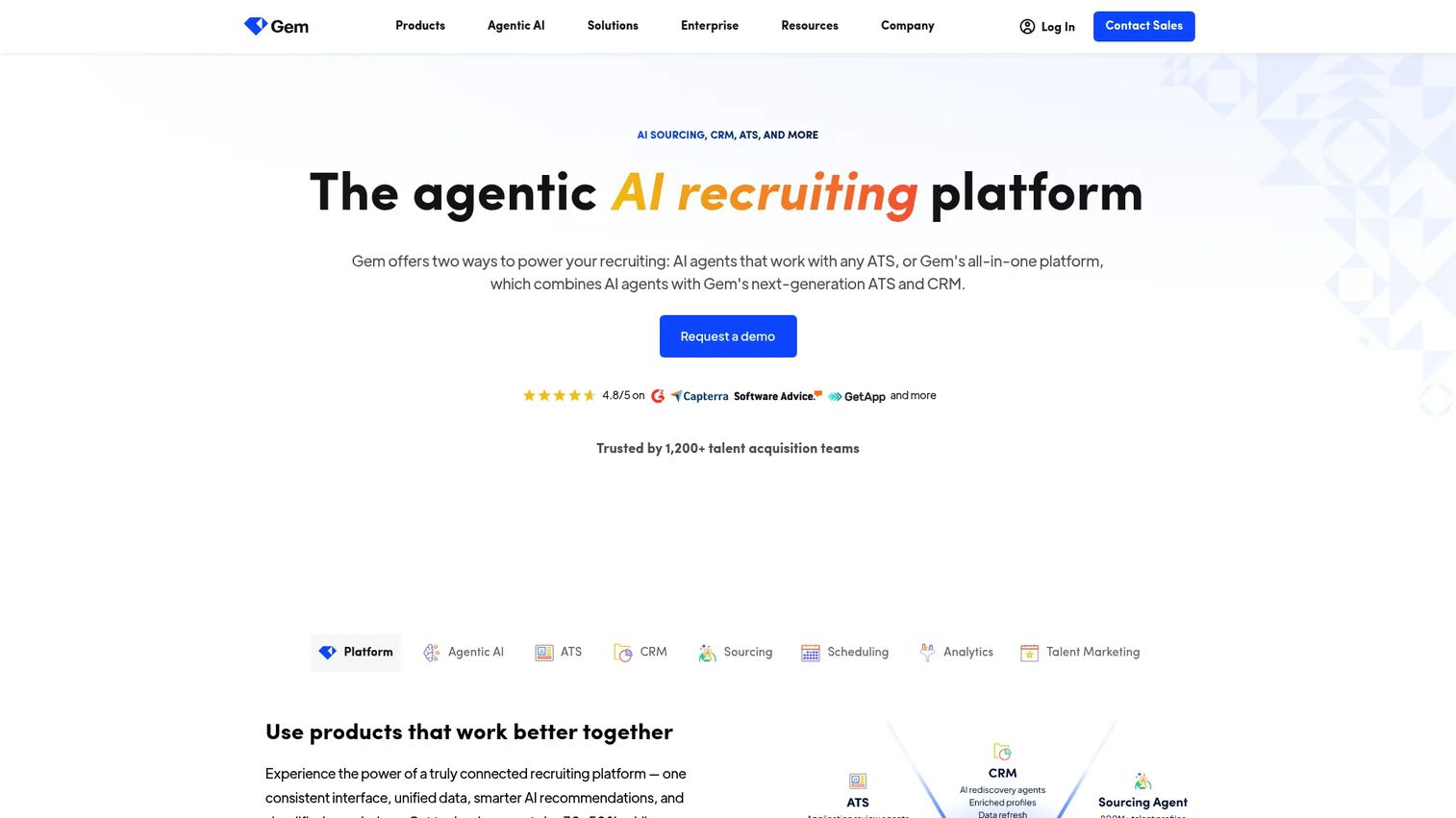
Gem is an AI-first recruiting platform that unifies sourcing, CRM, ATS, scheduling, and analytics in one stack. For diversity recruiting specifically, it pairs broad multi-channel sourcing with pipeline analytics that show where your funnel narrows. That combination is why it leads this list: most tools do reach or reporting, Gem does both in the same system.
Best for: Talent acquisition teams that need wide sourcing and clean funnel visibility without stitching together two platforms.
Key strengths
- AI sourcing at scale: Surface candidates across 800M+ public profiles, widening the top of funnel beyond a single network.
- Unified CRM and ATS: Keep candidates, stages, and outcomes in one record, so hiring analytics stay clean instead of fragmented.
- Pipeline diversity analytics: Track representation and drop-off by stage, turning sourcing reach into measurable funnel outcomes.
Why choose Gem: If your core problem is that sourcing and reporting live in different tools, Gem closes that gap. It fits founders who want one platform that produces both the pipeline and the dashboards a board will ask about, rather than another point tool to maintain.
Gem pricing: Gem lists three plans, Startups, Growth, and Enterprise, with pricing shown as custom and quoted by sales. AI Sourcing is metered at 500 credits per month on the Startups tier and unlimited on Growth and Enterprise. No public numeric starting price is shown. Gem holds a 4.7/5 rating on G2.
2. Mitratech Circa
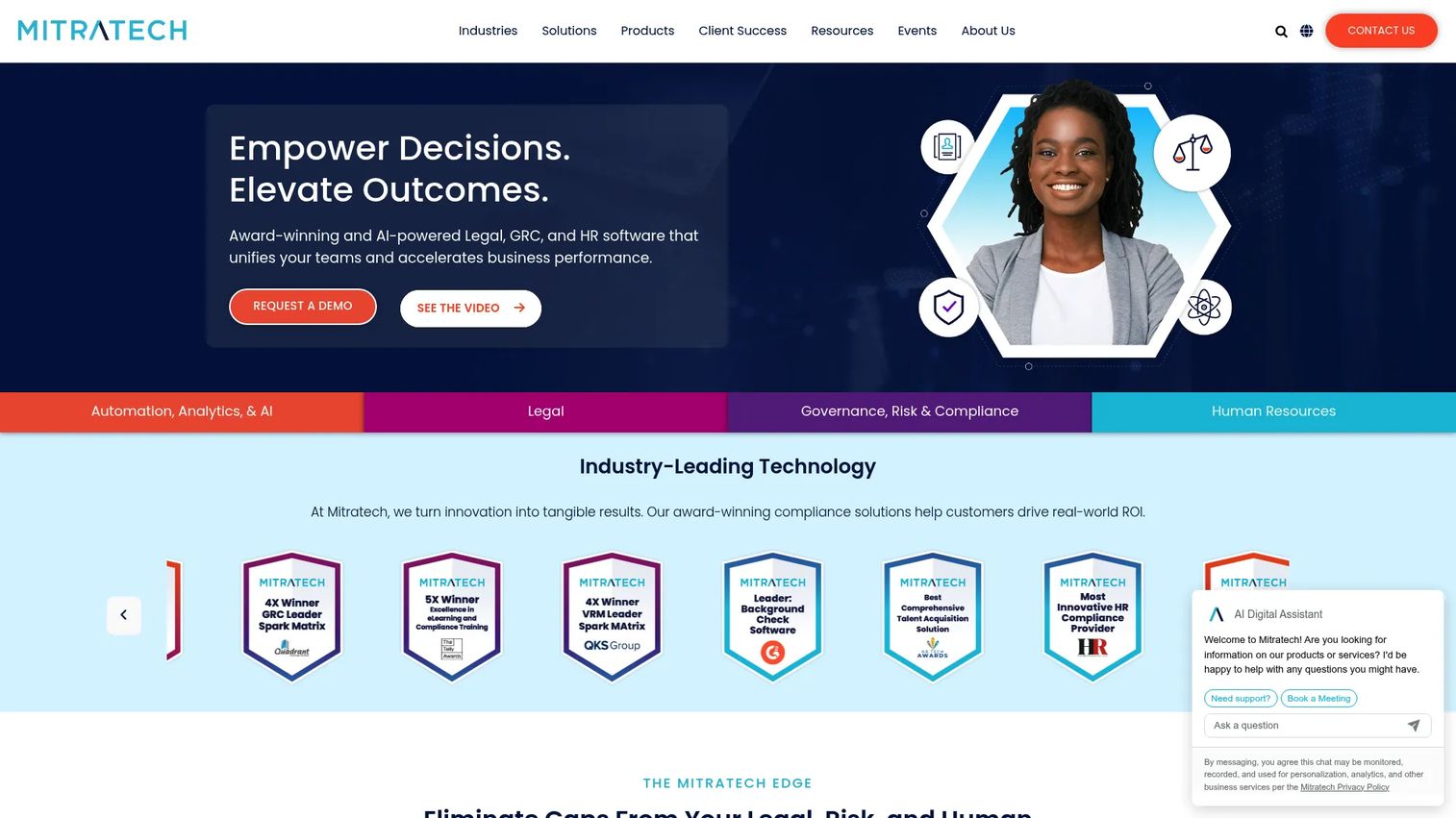
Mitratech Circa is a talent acquisition and OFCCP compliance platform built for inclusive recruiting and federal contractor obligations. Where most tools optimize for reach, Circa optimizes for documented, auditable inclusive outreach. It connects job distribution to thousands of community organizations and tracks the paper trail audits demand.
Best for: Federal contractors and regulated teams that need inclusive recruiting plus OFCCP compliance support in one place.
Key strengths
- Community job distribution: Push roles to niche and local job boards, widening reach into underrepresented talent pools.
- Outreach management: Connect to 15,000+ community-based organizations for targeted, documented diverse candidate sourcing.
- OFCCP audit tracking: Maintain compliance documentation and audit trails that hold up under federal scrutiny.
Why choose Mitratech Circa: Compliance is the deciding factor here. If your hiring sits under OFCCP obligations or enterprise procurement that demands documented outreach, Circa turns inclusive distribution into an auditable system rather than a manual scramble. Teams without that pressure may not need its depth.
Mitratech Circa pricing: Mitratech does not publish a public price for Circa on its site; pricing is quoted directly. Circa holds a 4.2/5 rating on G2 across more than 200 reviews.
3. SeekOut
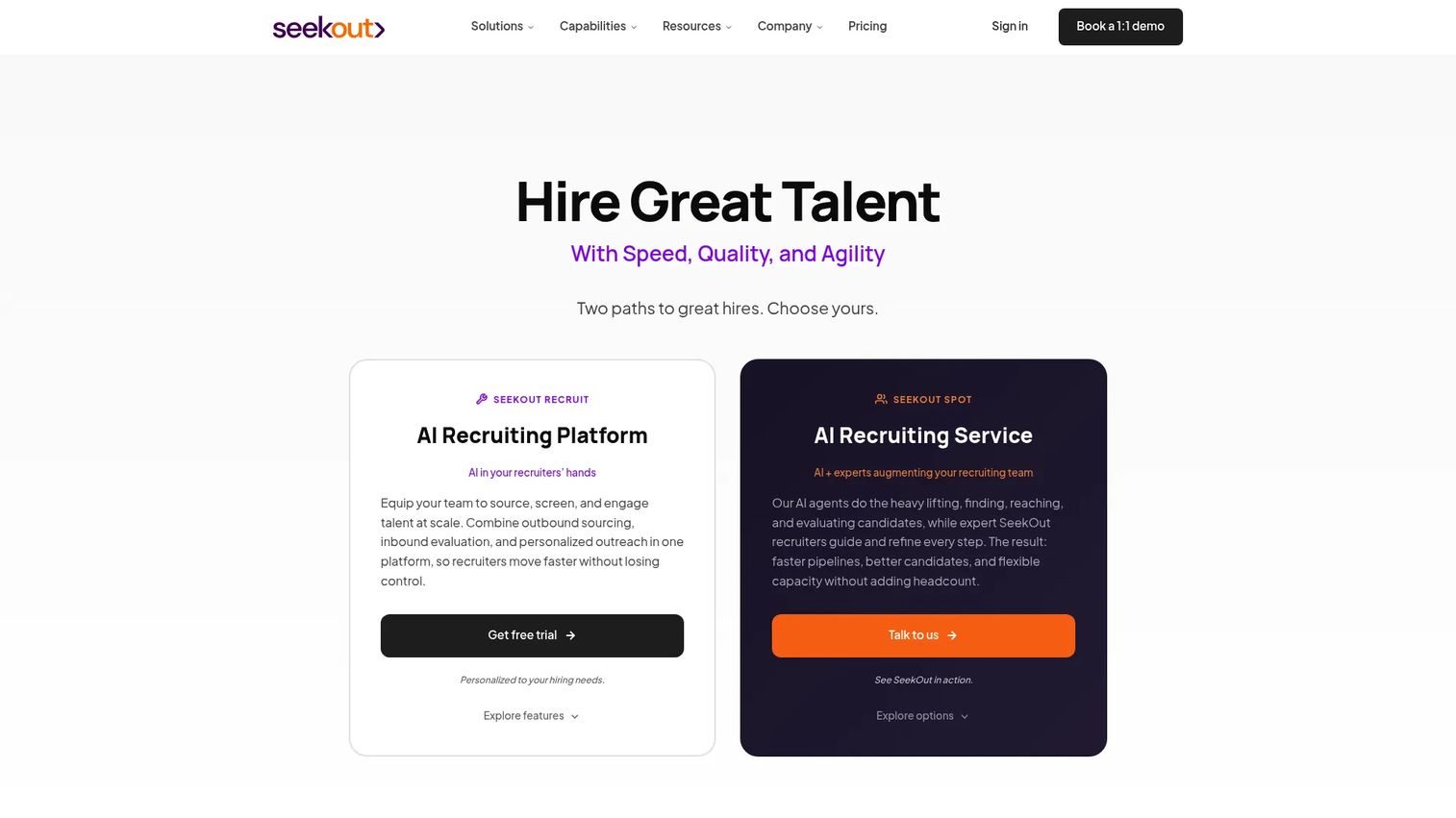
SeekOut is an AI recruiting platform built for sourcing, screening, and engaging talent at scale. Its draw for diversity recruiting is search depth: a candidate database of more than a billion profiles with filters that surface underrepresented and hard-to-find talent. When reach and search precision are the bottleneck, SeekOut is built for it.
Best for: Recruiting teams that need AI-assisted sourcing and ATS rediscovery for hard-to-fill roles.
Key strengths
- 1B+ profile search: Source from a massive candidate pool with diversity-aware filters for precise diverse candidate sourcing.
- ATS rediscovery: Resurface silver-medalist candidates already in your system, including past applicants worth a second look.
- AI matching and screening: Use context-aware matching and inbound evaluation to shortlist qualified candidates faster.
Why choose SeekOut: SeekOut earns its place when sourcing reach and precision matter more than an all-in-one stack. The Chrome extension and recruiter-led Spot services make it flexible for teams that want to scale outbound without adding headcount.
SeekOut pricing: SeekOut Recruit Core starts at $149 per month paid annually, or $179 per month billed monthly. Sourcing, integration, full-funnel, and Spot plans are custom-priced. A 14-day free trial is available with no credit card required. SeekOut holds a 4.5/5 rating on G2.
4. Eightfold
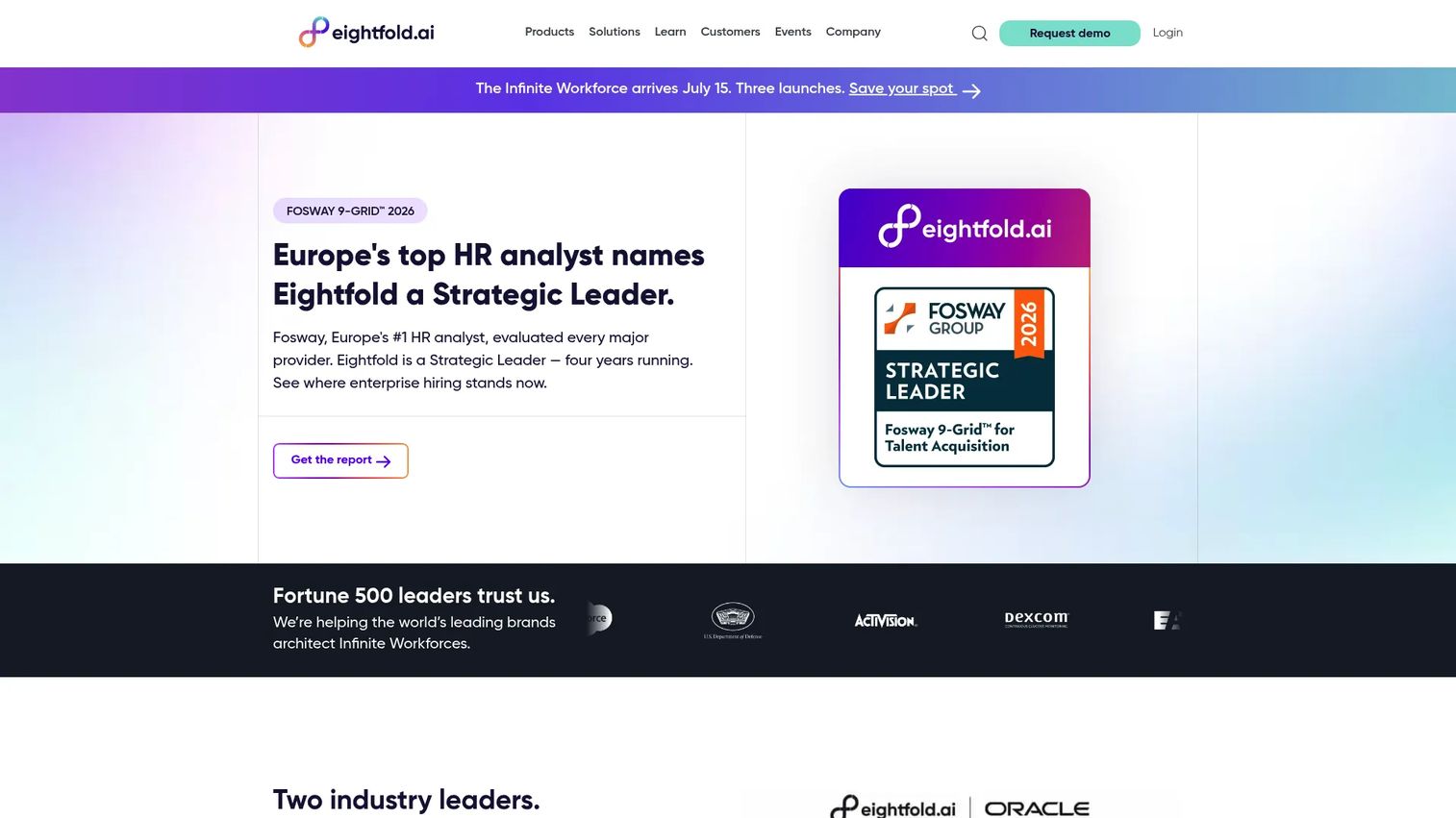
Eightfold is an AI-native talent intelligence platform covering hiring, internal mobility, workforce planning, and talent development. For diversity recruiting, its edge is analytics and matching depth. It scores candidates on capability and potential rather than pedigree, which is a structural lever against bias, and surfaces DEI measurement across the workforce.
Best for: Enterprise HR teams that need AI-driven talent acquisition and talent management with DEI analytics baked in.
Key strengths
- Talent intelligence matching: Match candidates on skills and potential, reducing reliance on biased proxies like company name.
- Internal mobility: Surface existing employees for open roles, widening diverse pipelines from within.
- DEI analytics: Measure representation and outcomes across hiring and the broader workforce for accountability reporting.
Why choose Eightfold: Eightfold fits larger organizations with complex hiring data and a need for predictive workforce planning. If your diversity question spans hiring and internal mobility together, its talent intelligence layer connects both. Smaller teams may find more capability than they need.
Eightfold pricing: Eightfold does not publish pricing on its site and directs buyers to contact sales for a quote. It holds a 4.2/5 rating on G2.
5. hireEZ
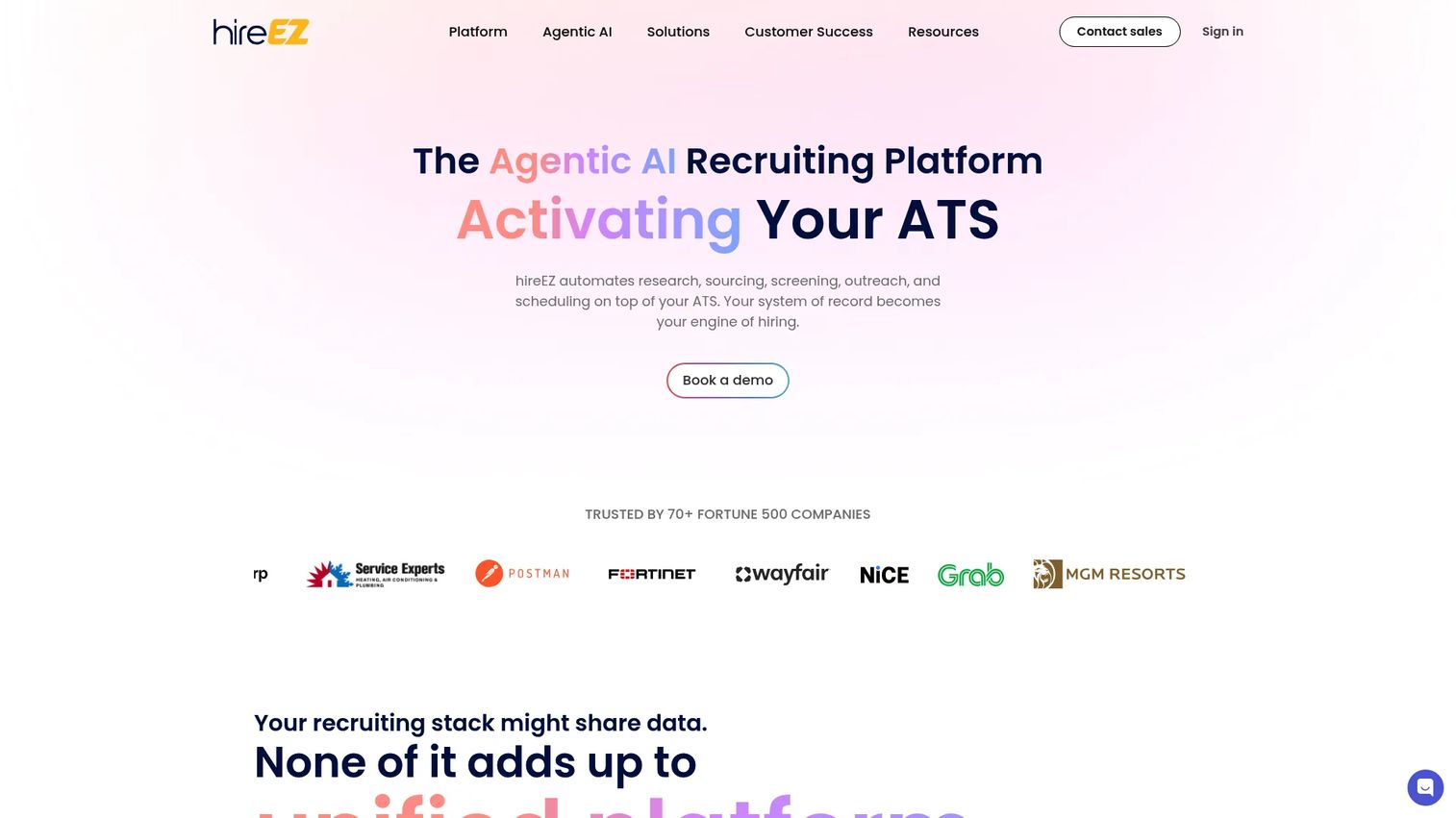
hireEZ is an AI recruiting platform focused on outbound sourcing, candidate discovery, and workflow automation layered on top of an existing ATS. Its strength for diversity recruiting is prospecting at volume and speed, with open-web sourcing and rediscovery that surface candidates a standard ATS search would miss.
Best for: Recruiting teams that need outbound sourcing and AI-assisted workflows on top of the ATS they already run.
Key strengths
- Open-web sourcing: Discover and rediscover candidates across the open web, expanding diverse candidate sourcing beyond one network.
- Workflow automation: Automate scheduling, screening, and applicant review to keep recruiter productivity high.
- Talent and market insights: Use market data and ATS integrations to target underrepresented talent with precision.
Why choose hireEZ: hireEZ is the pick when your bottleneck is outbound volume and recruiter time. It supports diverse sourcing when teams need to prospect at scale without slowing down, and it layers onto your stack rather than replacing it.
hireEZ pricing: hireEZ does not display a public price on its site and routes buyers to sales; G2 notes pricing depends on the product features selected and lists a free trial. hireEZ holds a 4.6/5 rating on G2.
6. PowerToFly
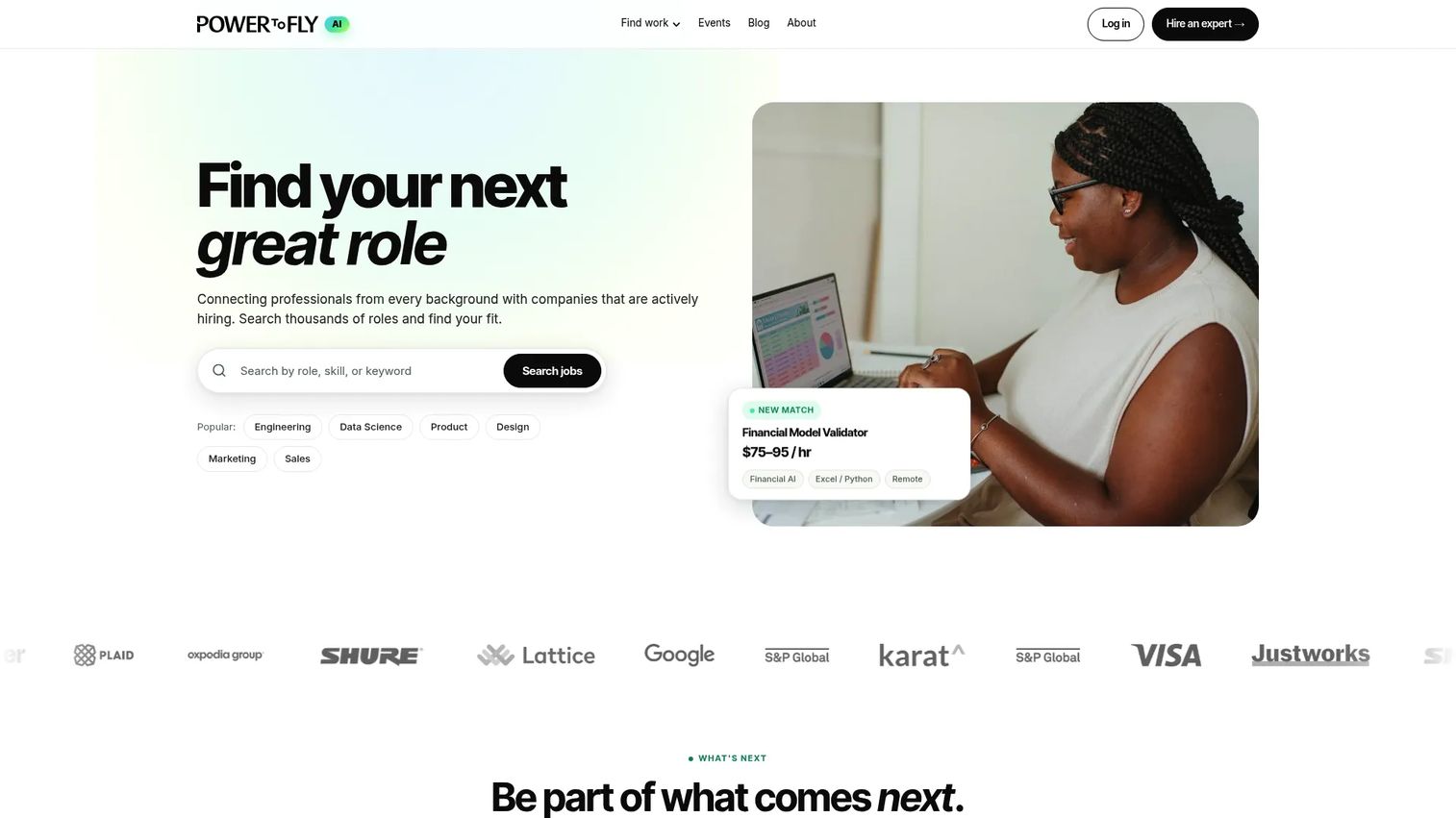
PowerToFly is a talent and workforce platform centered on inclusive hiring, employer branding, retention, and AI talent services. Its differentiator is community: direct access to an established network of underrepresented talent, paired with employer branding that helps you reach candidates who screen companies on inclusion before they apply.
Best for: Companies that want inclusive recruiting, employer branding, and access to an underrepresented talent community in one motion.
Key strengths
- Diverse talent community: Reach an established network of underrepresented candidates rather than building reach from scratch.
- Employer branding: Showcase culture and inclusion to attract candidates who evaluate employers on DEI.
- AI talent and expert services: Blend platform reach with domain-expert hiring support for harder roles.
Why choose PowerToFly: PowerToFly works when candidate reach and employer brand are the gap, not analytics. It supports both pipeline generation and the brand work that makes underrepresented candidates want to apply, which is a different job than a pure sourcing engine.
PowerToFly pricing: PowerToFly does not publish public pricing; its employer pages use book-a-call and get-started CTAs. It holds a 4.8/5 rating on G2.
7. Mogul
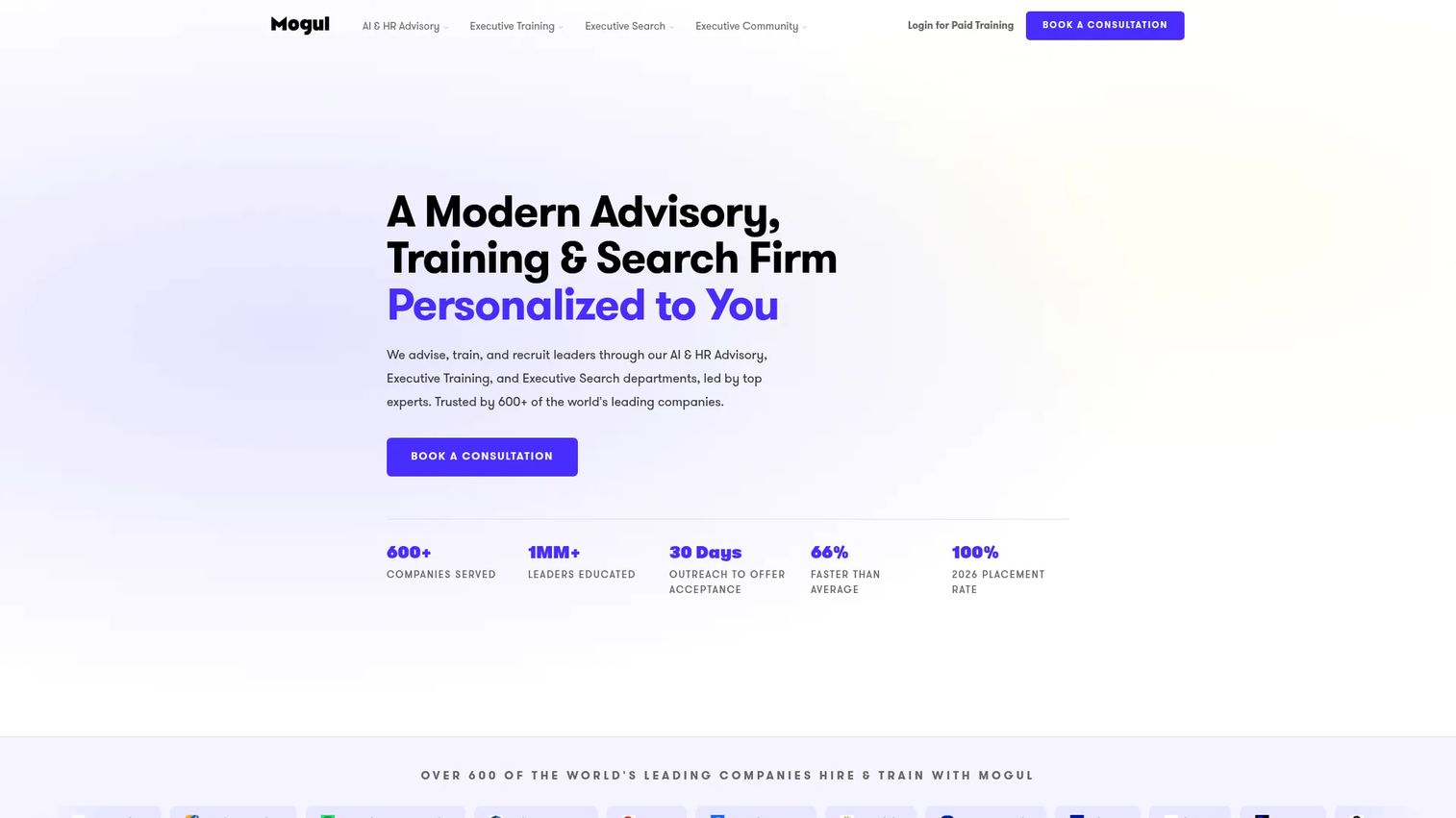
Mogul pairs an AI recruitment platform with advisory, training, and executive search. For diversity recruiting, it combines a comprehensive candidate database and AI search with community-led, targeted outreach. That mix lets teams build inclusive pipelines without starting cold, and lean on white-glove support when a role is hard.
Best for: Teams hiring with AI sourcing plus white-glove diverse recruiting support.
Key strengths
- Comprehensive candidate database: Search a broad pool with AI filters tuned for diverse candidate sourcing.
- AI resume ranking: Rank and shortlist candidates automatically, then trigger automated outreach to keep pipelines moving.
- Community-led recruiting: Tap targeted outreach into underrepresented talent communities for inclusive pipeline building.
Why choose Mogul: Mogul fits teams that want sourcing automation and human support together. The AI handles volume; the advisory and executive search arms handle the roles where reach alone is not enough. It is a strong pick when you want inclusive pipelines built fast without hiring a sourcing team.
Mogul pricing: Mogul's AI recruitment platform starts at $250 per month for one seat. Enterprise plans for one to ten-plus seats are custom-priced. No free tier is offered. Mogul holds a 5.0/5 rating on G2.
8. Yello
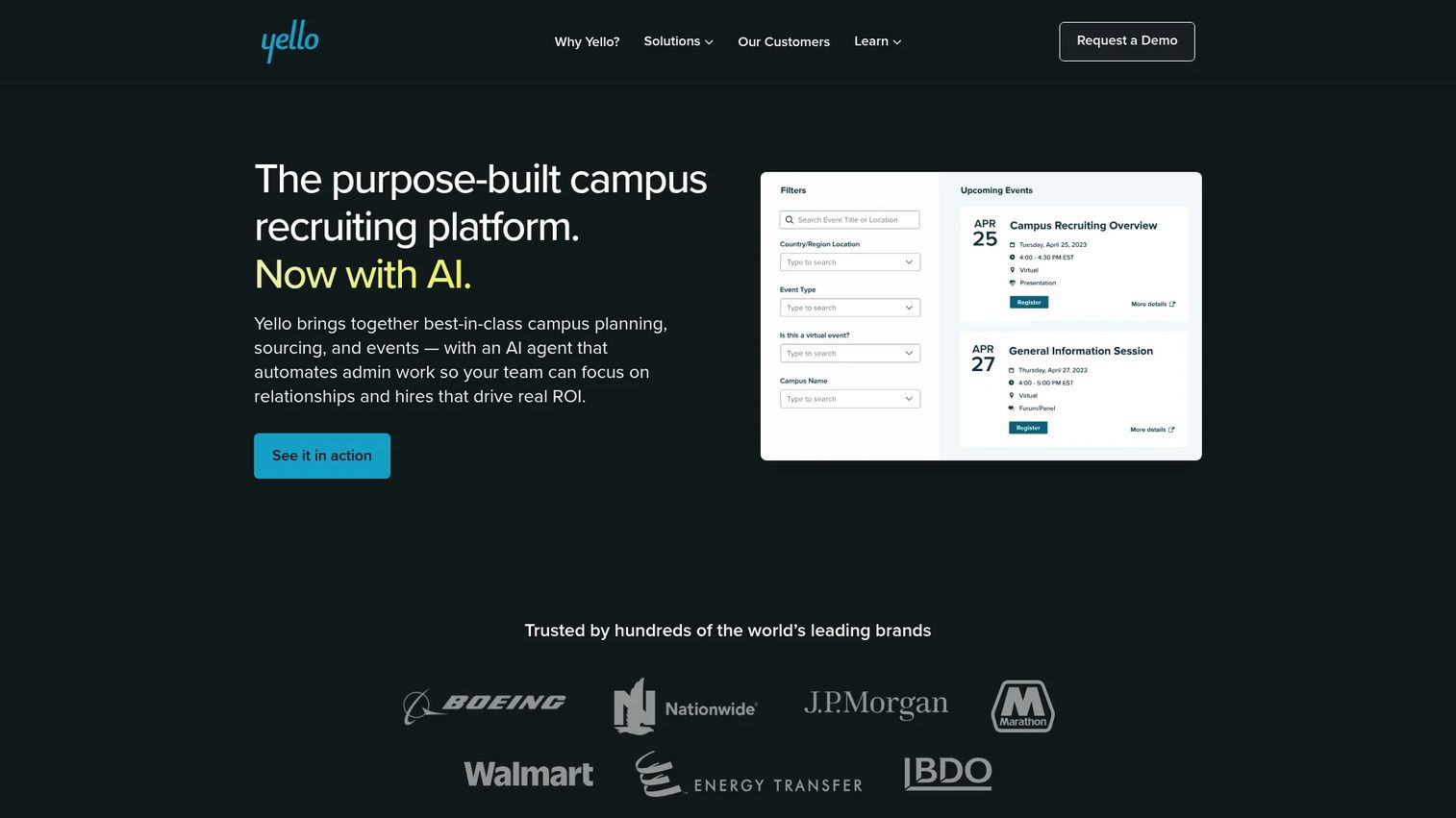
Yello is talent acquisition software built for campus, early-talent, sourcing, engagement, and recruiting operations. Its diversity angle is structural: campus and early-career programs are one of the most effective levers for building diverse pipelines, and Yello runs them at high volume with programmatic recruiting and candidate nurture.
Best for: Large employers running campus and early-career recruiting programs at scale.
Key strengths
- Campus and early-talent recruiting: Plan and run early-career programs, a proven channel for diverse pipeline building.
- Events and scheduling: Manage recruitment events, evaluations, and scheduling for high-volume hiring.
- Candidate engagement: Source, nurture, and report on candidates across large pipelines with structured workflows.
Why choose Yello: Yello fits organizations running structured, high-volume hiring where early-talent is the diversity strategy. If your reach problem is best solved at the campus and entry-level layer, its programmatic tools and relationship management handle that scale where general sourcing tools do not.
Yello pricing: Yello does not publish public pricing and uses a request-a-demo flow. It holds a 4.4/5 rating on G2.
How to choose the right tool
The eight tools above solve different bottlenecks, so the right choice depends on where your funnel actually breaks. Run through these criteria before you commit.
Match the tool to your bottleneck
If reach is the problem, lead with a sourcing engine like Gem, SeekOut, or hireEZ. If reporting is the gap, prioritize pipeline diversity analytics and DEI measurement. If compliance is the pressure, Circa is built for it. Buying for the wrong bottleneck is the most common and most expensive mistake.
Check ATS integration depth
ATS integration for recruiting determines whether the tool earns daily use or gets abandoned. Confirm it syncs candidates, stages, and outcomes into your system of record. Without that, your hiring analytics stay manual and your reporting stays fragile.
Judge reporting and accountability
Ask whether the tool can show representation by stage, role, team, and geography. Funnel analytics that stop at "applied" do not help you fix drop-off. The strongest inclusive hiring software ties source diversity to downstream outcomes you can defend in a board meeting.
Weigh speed to adoption
A tool that takes two quarters to implement loses to one that produces signal in the first week. For founders, the relevant cost is VP and recruiter time, not just license fees. Favor structured hiring workflows your team will actually adopt.
Confirm compliance fit
If you hold federal contracts or sell to enterprise, OFCCP compliance tools and audit trails are table stakes. Make sure the documentation the tool produces matches what auditors and procurement teams will ask for.
Conclusion
Diversity recruiting platforms are not interchangeable, and the strongest choice is the one that closes your specific gap. Gem leads for teams that want sourcing and pipeline diversity analytics in one stack. Mitratech Circa is the compliance-first pick for OFCCP-bound teams. SeekOut and hireEZ win on sourcing reach and search precision. Eightfold is the analytics-first option for enterprises that need talent intelligence and DEI measurement. PowerToFly and Mogul lead on community-driven outreach, and Yello owns high-volume campus and early-talent hiring.
The buying lens stays the same across all of them. Good diversity recruiting software should improve reach, give you funnel visibility, and produce accountability reporting clean enough to survive scrutiny. Skip the tool that promises everything and choose for the bottleneck in your funnel. If sourcing is narrow, fix reach first. If candidates drop off mid-funnel, buy for hiring analytics. The metric that needs to move should pick the tool, not the other way around.
FAQs
Diversity recruiting software is a category of tools that help hiring teams source wider candidate pools, reduce bias in screening, track pipeline diversity analytics, and report on equitable hiring outcomes. It extends a standard ATS by connecting reach, funnel visibility, and DEI reporting into one workflow. The aim is measurable diversity outcomes, not one-off initiatives.
Bias mitigation in hiring works through structure. These tools support inclusive job postings with debiased language, structured hiring workflows that standardize evaluation, and screening that scores candidates on skills rather than proxies like school or company name. By replacing subjective filtering with consistent criteria, they reduce where individual bias creeps into sourcing and screening.
Most leading diversity hiring tools offer ATS integration for recruiting, but depth varies. Gem unifies sourcing and ATS in one platform, while hireEZ and SeekOut are built to layer onto an existing ATS through rediscovery and sync. Confirm that candidates, stages, and outcomes flow into your system of record before committing, since shallow integrations leave reporting manual.
Yes. Strong platforms track representation at every funnel stage, segmented by role, team, and geography, so you can see exactly where underrepresented candidates drop off. That turns funnel analytics from a quarterly spreadsheet into a live diagnostic. Gem and Eightfold are particularly strong on connecting source diversity to downstream funnel outcomes.
Prioritize ATS integration, reporting depth, and speed to adoption over feature breadth. A founder should weigh VP and recruiter time, not just license cost, since a tool nobody uses produces no signal. Look for DEI measurement that ties source diversity to funnel outcomes, and pick for the specific bottleneck your funnel shows.
For regulated teams, it is essential. OFCCP compliance tools document outreach, job distribution, and outcomes in an auditable form, which manual spreadsheets cannot reliably reproduce. Mitratech Circa is built specifically for federal contractor compliance, while broader platforms add reporting that supports enterprise procurement and board diligence.
Track representation through the funnel, not just at the application stage. Look at sourcing reach, stage-by-stage drop-off by group, time-to-fill, and offer-acceptance rates segmented by demographic. If reach widens but candidates still drop at the screen, the tool exposed the problem, which is the first step to fixing it. Clean hiring analytics make the impact defensible.
Candidate sourcing software focuses on finding and contacting candidates at volume. Diversity recruiting platforms add the layers that make reach accountable: pipeline diversity analytics, bias mitigation, inclusive job distribution, and DEI reporting. Some tools, like Gem and Eightfold, combine both, while dedicated sourcing engines like hireEZ specialize in reach that you then measure elsewhere.